
Proceeding Paper

Evaluation of Cooking Oil-Based Cutting Fluid’s Performance on Turning Operation Using Taguchi Approach †

by
Kazeem Bello
1,*,
Rendani Maladzhi
1,
Mukondeleli Kanakana-Katumba
2 and
Samuel Balogun
3
1
Department of Mechanical Engineering, Durban University of Technology, Durban 4001, South Africa
2
Faculty of Engineering and Built Environment, Vaal University of Technology, Pretoria 0001, South Africa
3
Department of Mechanical Engineering, Federal University Oye Ekiti, Oye Ekiti 370111, Nigeria
*
Author to whom correspondence should be addressed.
Presented at the 4th International Conference on Applied Research and Engineering, Pretoria, South Africa, 21–23 November 2025.
Mater. Proc. 2026, 31(1), 21; https://doi.org/10.3390/materproc2026031021 (registering DOI)
Published: 23 April 2026
(This article belongs to the Proceedings of The 4th International Conference on Applied Research and Engineering)

Abstract

The performance of used cooking oil-based cutting fluids (UCO-CFs) during the turning of AISI 1020 mild steel is assessed by using the Taguchi optimisation method in this research work. Purified used cooking oil was combined with additives to improve the oil’s properties of lubrication, cooling, and resistance to corrosion. The machining parameters, cutting speed, feed rate, depth of cut, and spindle speed were optimised using an L9 orthogonal array followed by analysis through signal-to-noise ratios and ANOVA. The ANOVA analysis pointed out feed rate (Frt) as the foremost variable in surface roughness, having a contribution of 47.53% to the total variation, along with a highly significant p-value of 0.0001. Signal-to-noise (S/N) analysis determined the best conditions for reducing surface roughness as Frt = 0.4 mm/rev, dct = 0.6 mm, Ssp = 770 rev/min, and Csp = 173 mm/min. For the least cutting temperature, the parameters that gave the best results were Frt = 0.6 mm/rev, dct = 0.6 mm, Ssp = 1100 rev/min, and Csp = 120 m/min. The UCO-based cutting fluid significantly improved machining performance, achieving a minimum surface roughness of 0.270 µm and reducing tool wear to 0.180 mm under optimal conditions. The UCO-based fluids not only surpassed the conventional mineral oils but also indicated excellent performance in machining and sustainability in terms of the environment.

1. Introduction

The use of cutting fluids is a must in machining operations, as they help to minimise friction, remove heat, and increase the life of the tools while at the same time improving the surface and the accuracy of the product dimensions [1,2]. Traditional cutting fluids (CCFs), usually made from mineral oils, have been in use for a long time because of their great cooling and lubrication ability [3,4]. On the other hand, the use of these cutting fluids, which include some petroleum products, has a number of disadvantages, including the fact that they are harmful to the environment, toxic, and not biodegradable [5]. In addition, the mishandling of these liquids after use results in soil and water pollution, and the workers near the machinery are exposed to the health hazards from mists and fumes.
Research for eco-friendly and cost-effective replacements for conventional fluids ended up with the invention of biodegradable ones [6]. Consequently, UCO-CF, especially the ones coming from waste or UCO, have become of the utmost importance as alternatives among the mentioned ones. Cooking oil waste is renewable, existing in plenty, and cheap; thus, turning it into a cutting fluid is a wise way of giving a thrust to sustainable waste management and green machining [7]. The properties of oils from cooking plants, such as excellent lubricating power, biodegradability, low volatility, and high flash point, work as double-edged swords by improving both performance in machining and environmental compatibility. It has been stated that the use of vegetable oils creates films that are frictional [8] and, at the same time, reduce the wear of the tool and the roughness of the surface [9,10]. Still, a number of factors, including oxidation instability and limited storage life, have restricted their industrial use [11]. However, if additives like emulsifiers, antioxidants, corrosion inhibitors, and biocides are used to increase their thermal and oxidative stability, then these limitations can be dealt with.
Turning operations, which are the most important in metal machining, are largely dependent on the cutting speed, feed rate, and depth of cut as the main parameters that, in turn, have direct impacts on surface roughness, tool wear, and cutting temperature. AISI 1020 mild steel (manufactured by African Indusries Group, Lagos, Nigeria) is one of the most popular low-carbon steels used for machining and has excellent strength properties. It is still very much in demand and primarily used in the auto and manufacturing industries [12,13]. Unfortunately, turning sometimes generates excessive heat, leading to tool wear and poor surface finish. The cutting parameter and fluid formulation optimisation becomes necessary for sustainability and better performance at the machining stage.
The Taguchi method, which is attributed to Genichi Taguchi, is a time-tested statistical design of experiments (DOE) technique aimed mainly at product quality enhancement through parameter optimisation and at the same time noise minimisation [14]. The method employs orthogonal arrays to analyse the influence of several factors at the same time with fewer experiments, thereby lowering costs and time as well as guaranteeing the reliability of the experiments [15]. The S/N ratio is used by the method to find out the optimum condition that gives the highest performance with the least variation. The quality characteristics are divided into three types: “smaller-the-better” (e.g., surface roughness), “larger-the-better” (e.g., material removal rate), and “nominal-the-best” (e.g., dimensional accuracy) [16,17]. Additionally, the Analysis of Variance (ANOVA) method points out the factors that most influence the machining responses and provides statistical support [18].
The Taguchi method in machining optimisation has been used in many studies with very good results. Surface roughness, cutting force and power were optimised by [19] through dry turning of AISI 316L, and it was found that feed rate was the main factor affecting surface quality. References [20,21] also found that feed rate and depth of cut had a significant impact on surface roughness during dry turning. Reference [22] claimed that the increase in cutting parameters caused higher cutting temperatures and quicker tool wear, while [23] attributed the tool wear and surface finish to depth of cut and nose radius. Temperature studies by [24,25] further emphasised that cutting speed and feed rate are the main factors that govern thermal behaviour during turning operations. Comparative studies by [26,27,28] pointed out the advantage of coated tools with respect to less wear and better quality of surface.
Predictive modelling techniques like Response Surface Methodology (RSM) enhance the Taguchi approach by establishing cause-and-effect relationships and permitting the multi-response optimisation. In different machining conditions, RSM has been applied successfully to predict surface roughness and tool wear [29,30,31]. The combination of Taguchi with ANOVA and RSM offers a complete optimisation framework, integrating experimental efficiency with predictive accuracy.
Despite several studies on machining optimisation, little research has applied a Taguchi-based framework to evaluate eco-friendly cutting fluids derived from waste cooking oil. Therefore, the goal of this research is to evaluate the performance of used cooking oil-based cutting fluid (UCO-CF) in the turning of AISI 1020 mild steel using the Taguchi method. The study proposes to identify optimal machining parameters by evaluating the influences of cutting speed, feed rate, and depth of cut on tool wear, surface roughness, and cutting temperature, and by combining ANOVA and Taguchi-based Response Surface Modeling. The whole idea is to increase the efficiency of machining, to make the tools last longer, and to develop the cutting of metals in a sustainable way by using biodegradable, cooking oil-based cutting fluids. The current study’s targeted objectives are to formulate and characterise an additive-enhanced UCO, Taguchi-based optimisation of machining parameters, statistical evaluation using ANOVA, and comparative performance assessment against conventional mining.

2. Materials and Methods

2.1. Materials and Equipment

2.1.1. Workpiece

The workpiece material used in this study was AISI 1020 mild steel, a low-carbon steel widely employed in engineering applications due to its excellent machinability, moderate strength, and good weldability. Cylindrical rods of AISI 1020, each measuring 500 mm in length and 50 mm in diameter, were prepared for the turning operation. The chemical composition of the AISI 1020 steel was verified at the Central Workshop, Federal University of Technology, Akure (FUTA), to confirm the essential alloying elements before machining using a spectrometer manufactured by SPECTRO Analytical Instruments, Kleve, Germany.

2.1.2. Equipment

The equipment used to conduct this research was a high-speed lathe machine for the turning operation, and other laboratory and measuring instruments.

2.2. Preparation and Formulation of Used Cooking Oil-Based Cutting Fluid

2.2.1. Purification of Used Cooking Oil (UCO)

Used cooking oil (UCO) was collected from Portofino Eatries, Ado Ekiti, Nigeria and purified before formulation. The oil was first pre-filtered using a 100 µm stainless-steel mesh and subsequently filtered through Whatman filter paper to remove suspended food particles and solid impurities.
Degumming was conducted by heating the filtered oil to 65 °C, followed by the addition of 0.2 wt.% phosphoric acid under mechanical stirring at 600 rpm for 30 min. The mixture was allowed to settle for 24 h, and the separated gum layer was removed by decantation. Phosphoric acid used in this study was manufactured by Tizara International, Gujarat, India but sourced from a local chemical supplier, Ojo Ajayi and Son Nigeria Limited, located in Ado Ekiti, Nigeria.
Free fatty acids were reduced via alkaline neutralisation using 0.75 wt.% NaOH solution at 60 °C. The resulting soapstock was allowed to settle and was removed. The oil was then washed with approximately 10 vol.% warm distilled water until a neutral pH (~7) was attained.
Moisture removal was achieved by heating the oil at 105 °C for 60 min. The purified oil was cooled to room temperature and filtered before formulation.

2.2.2. Formulation of UCO-Based Cutting Fluid

The purified UCO was formulated into a water-soluble cutting fluid using the following composition (wt.% basis):
  • Purified UCO (base oil): 68%.
  • Emulsifier (non-ionic surfactant): 9%.
  • Corrosion inhibitor: 5%.
  • Antioxidant: 2%.
  • Biocide: 1.5%.
  • Extreme-pressure additive: 2.5%.
  • Distilled water: 12%.
All the components were blended using a mechanical stirrer (manufactured by IKA Works GmbH & Co. KG, Staufen im Breisgau, Germany) at 800 rpm for 45 min at 55 °C to ensure uniform dispersion. The formulated concentrate was diluted with distilled water at a ratio of 1:10 before application during the turning experiments under flood cooling conditions.

2.3. Materials and Equipment Used in the Study

  • Materials: AISI 1020 Mild Steel (workpiece), UCO, Phosphoric acid, emulsifier, antioxidant, anti-corrosion agent, biocide, onion extract, diluted sulphuric acid, Acetone, honey, and distilled H2O. The materials used in this study were sourced from local suppliers in Ado Ekiti, Nigeria, while their original manufacturers include Galaxy Surfactants (Mumbai, India) for emulsifiers, Camlin Fine Sciences Ltd. (Mumbai, India) for antioxidants, Gujarat Alkalies and Chemicals Limited (Vadodara, India) for anti-corrosion agents and phosphoric acid, Oxiteno (São Paulo, Brazil) for biocides, Deepak Nitrite Ltd. (Vadodara, India) for acetone, and MG Chemicals Manufacturer (Johannesburg, South Africa) for sulphuric acid. Other materials such as onion extract and honey were locally sourced within Nigeria, while distilled water was produced in the laboratory.
  • Equipment: Carbide cutting tool, spectrometer, mechanical stirrer, electronic measuring scale, filter paper, pH meter, surface roughness tester, tool wear measuring device, temperature measuring device, and other laboratory glassware. The equipment used in this study were sourced through local laboratory suppliers in Nigeria, while their original manufacturers include Sandvik Coromant (Sandviken, Sweden) for carbide cutting tools, Malvern Panalytical (Malvern, United Kingdom) for spectrometers, Heidolph Instruments GmbH & Co. KG (Schwabach, Germany) for mechanical stirrers, OHAUS Corporation (Parsippany, USA) for electronic balances, Cytiva (Whatman) (Marlborough, USA) for filter paper, Hanna Instruments (Woonsocket, USA) for pH meters, Mitutoyo Corporation (Kawasaki, Japan) for surface roughness testers, Carl Zeiss AG (Oberkochen, Germany) for tool wear measurement systems, Fluke Corporation (Everett, USA) for temperature measuring devices, and Borosil Limited (Mumbai, India) for laboratory glassware.
  • Conventional Fluid: A standard mineral oil-based soluble cutting fluid was used for comparison, consisting of 68.5% mineral oil, 9% emulsifier, 5% corrosion inhibitors, 2.5% biocides, and 20% water.

2.4. Experimental Design and Taguchi Optimisation

2.4.1. Selection of Machining Parameters

The machining parameters considered were cutting speed (m/min), feed rate (mm/rev), and depth of cut (mm). These were selected because of their strong influence on machining performance indicators such as tool wear, surface roughness, and cutting temperature. A fourth factor, spindle speed (rev/min), was also included to capture its effect on material removal efficiency and heat generation.
The experimental levels for each parameter were determined through preliminary trials and a review of the related literature to ensure a statistically meaningful study, as presented in Table 1.

2.4.2. Taguchi Experimental Design

The Taguchi design of experiments (DOE) approach was employed to optimise machining parameters while minimising the number of experimental runs. The L9 (34) orthogonal array was adopted, enabling the simultaneous investigation of four parameters at three levels each. This design allowed the systematic evaluation of surface roughness (SRns), cutting temperature (CTempt), and tool wear (Twear) as response variables under both CKO-based and conventional cutting fluid (CCF) conditions.
The experiments were designed and analysed using Minitab® software version 22.2.1 (64-bit). The design ensured adequate degrees of freedom (DoF ≥ 8), confirming the statistical validity of the Taguchi model. Each test was repeated three times under identical conditions to improve reliability, and the mean values of the responses were used for analysis.

2.4.3. Taguchi Signal-to-Noise (S/N) Ratio Analysis

The signal-to-noise (S/N) ratio was applied to determine optimal machining conditions. Since the goal was to minimise surface roughness, tool wear, and cutting temperature, the “smaller-is-better” criterion was used. The S/N ratio was calculated using Equation (1):
S N = 10   log 10 1 m k = 1 k = m y k 2
where
  • m = number of observations in each trial;
  • yk = observed response value in the kth measurement.
This analysis helped identify the combination of cutting parameters that produced the lowest variation and most stable machining performance.

2.5. Operation Setups

2.5.1. AISI 1020 Mild Steel

Cylindrical bars of AISI 1020 mild steel (500 mm × 50 mm) were used for the orthogonal turning operation. The choice of this material was based on its widespread industrial use and good machinability.

2.5.2. Cutting Tool

The carbide cutting insert (CNMG120408-QR GP1225) and tool holder (PCLNR 2020 K12) used in this study were manufactured by Sandvik Coromant, Sandviken, Sweden. This carbide tool was selected for its superior hardness, thermal resistance, and durability. All the turning operations were conducted under wet conditions, using either CKO-based or conventional cutting fluids to reduce heat generation and improve surface finish.

2.5.3. Machine Setup

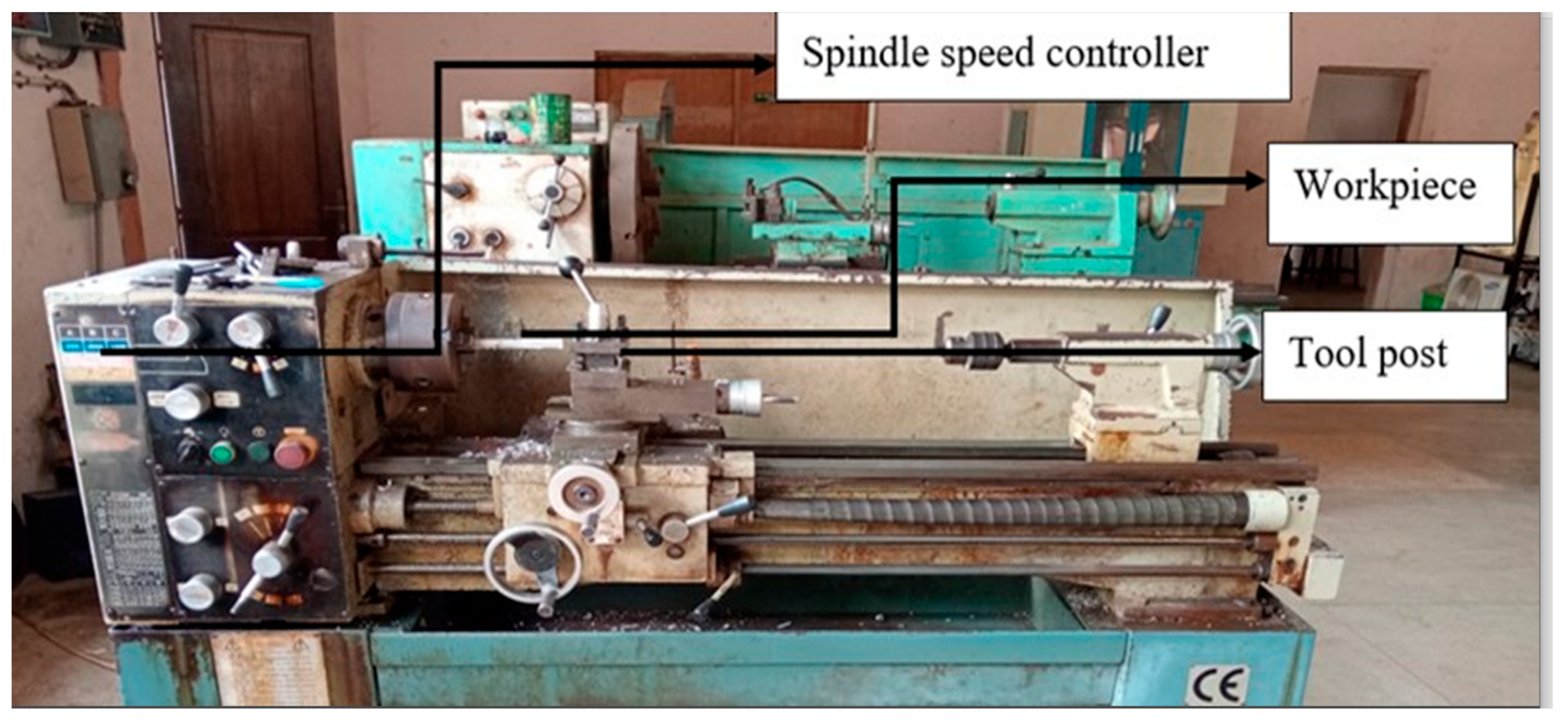
The experiments were carried out at the Central Workshop, School of Infrastructure, Mineral, and Manufacturing Engineering (SIMME), FUTA, using a Baileigh Metal Lathe (Model PL-1236E-DRO) manufactured by Baileigh Industrial, Inc., Wisconsin, United States as depicted in Figure 1.
Key specifications:
  • 36-inch distance between centres.
  • Spindle speed range: 82–2000 rev/min.
  • Spindle bore: 38 mm.
  • Power: 220 V, single-phase.
  • Weight: 645 kg.
The lathe setup ensured rigidity and precision during machining. The cutting fluids were applied by the flood method, and the tool alignment and clamping were carefully maintained for each run.

2.6. Measurement of Machining Parameters

To evaluate the performance of the cutting fluids, three key machining responses were monitored: surface roughness, cutting temperature, and tool wear.

2.6.1. Cutting Speed

Cutting speed (V) was calculated using Equation (2):
C s = π D W N S 1000
where Dn is the workpiece diameter (mm), and Ns is the spindle speed (rev/min). The speed was verified using a digital tachometer.

2.6.2. Feed Rate

Feed rate (mm/rev) was adjusted using the lathe feed control system and verified by a dial indicator to ensure consistency with preset values.

2.6.3. Depth of Cut

Measured using a digital micrometre by recording the initial and final diameters of the workpiece and dividing the difference by two.

2.6.4. Surface Roughness Measurement

Surface roughness was measured using a surface roughness tester (Model SRT-6210S) with ±10% accuracy. Three readings were taken per specimen, and the average was used for analysis.

2.6.5. Tool Wear Measurement

Tool wear was measured using a Dino-Lite Digital Microscope (manufactured by AnMo Electronics Corporation, New Taipei City, Taiwan) was connected to a computer running the Dino-Capture software. This setup provided high-resolution images for accurate measurement of wear patterns.

2.6.6. Temperature Measurement

Cutting temperature was measured at the tool–workpiece interface using a non-contact infrared thermometer with a range of −50 °C to 1100 °C was manufactured by Shenzhen Everbest Machinery Industry Co., Ltd. (CEM), Shenzhen, China. Multiple readings were taken during each trial, and the average temperature was recorded.

3. Results and Discussion

3.1. Taguchi Signal-to-Noise Ratio Analysis

The results of the S-N ratio of each FPC in UCO-based cutting fluid analysis for SRns, CTempt, and Twear are presented in Table 2.

3.2. Analysis of the Experimental Results

The UCO-based cutting fluid exhibited superior performance across various factor parameter combinations (FPCs) compared to CCF. Therefore, it is crucial to evaluate the significance of these parameters and assess their potential for modelling response variables. Statistical tools such as Taguchi and Analysis of Variance (ANOVA) are employed to assess and quantify the impact of cutting parameters and their interactions on machinability aspects [32,33]. In this analysis, the statistical index p-value (p-V) was used to determine significance, with a p-V below 5% indicating statistical significance. The analysis was conducted at a 95% confidence interval. Data from Table 3 were analysed using Minitab software, and ANOVA was performed on SRns and CTempt. The results, presented in Table 3 and Table 4, include the degrees of freedom (DFs), average S-N ratios at different experimental factor levels, contribution percentage (CP), and p-V values.

3.2.1. ANOVA Analysis for Surface Roughness

The summary of the Taguchi S-N ratios and ANOVA analysis of the SRns is presented in Table 3.
Table 3 presents the Taguchi and ANOVA analysis for SRns when using the UCO-based cutting fluid. The results reveal that the Frt is the most influential factor, contributing 47.53% to the variation in SRns, with a highly significant p-V of 0.0001. dct also plays a considerable role, accounting for 27.62% of the total contribution and showing statistical significance with a p-V of 0.0005. Csp, although less influential compared to feed rate and depth of cut, still exhibits a significant effect, contributing 10.11% and achieving a p-V of 0.0059. In contrast, spindle speed shows a relatively minor contribution of 11.41% and a p-V of 0.1965, suggesting a non-significant effect on surface roughness. The error margin stands at 3.33%, indicating a high reliability of the experimental data. Moreover, the model exhibits an excellent fit with an R2 value of 0.9967 and an adjusted R2 of 0.9934, emphasising the robustness of the Taguchi model employed. These findings align with studies by [32,33], who identified Frt and dct as dominant factors in predicting surface roughness.

3.2.2. ANOVA Analysis for Tool Surface Temperature

The ANOVA analysis of the SRns is presented in Table 4.
Table 4 details the ANOVA results for cutting temperature under the influence of the UCO-based cutting fluid. The dct emerges as the predominant factor, contributing 71.53% to the variance in CTempt, with a statistically significant p-V of 0.0001. The Frt also demonstrates a substantial impact, accounting for 26.30% of the variation with a p-V of 0.0003, supporting its critical role. Conversely, Csp and Ssp have minimal effects, with contributions of only 1.43% and 0.54%, respectively, and p-V above the typical threshold of significance (0.1307 and 0.4397). The negligible error percentage of 0.21% reflects the accuracy of the model. Moreover, the analysis yields a high R2 value of 0.9918 and an adjusted R2 of 0.9836, indicating strong model fit and the reliability of the findings in capturing the relationship between the studied factors and the cutting temperature. These results support findings from a previous study by [32], which also reported Frt and dct as critical in determining tool surface temperature.

3.2.3. Regression Analysis for Surface Roughness

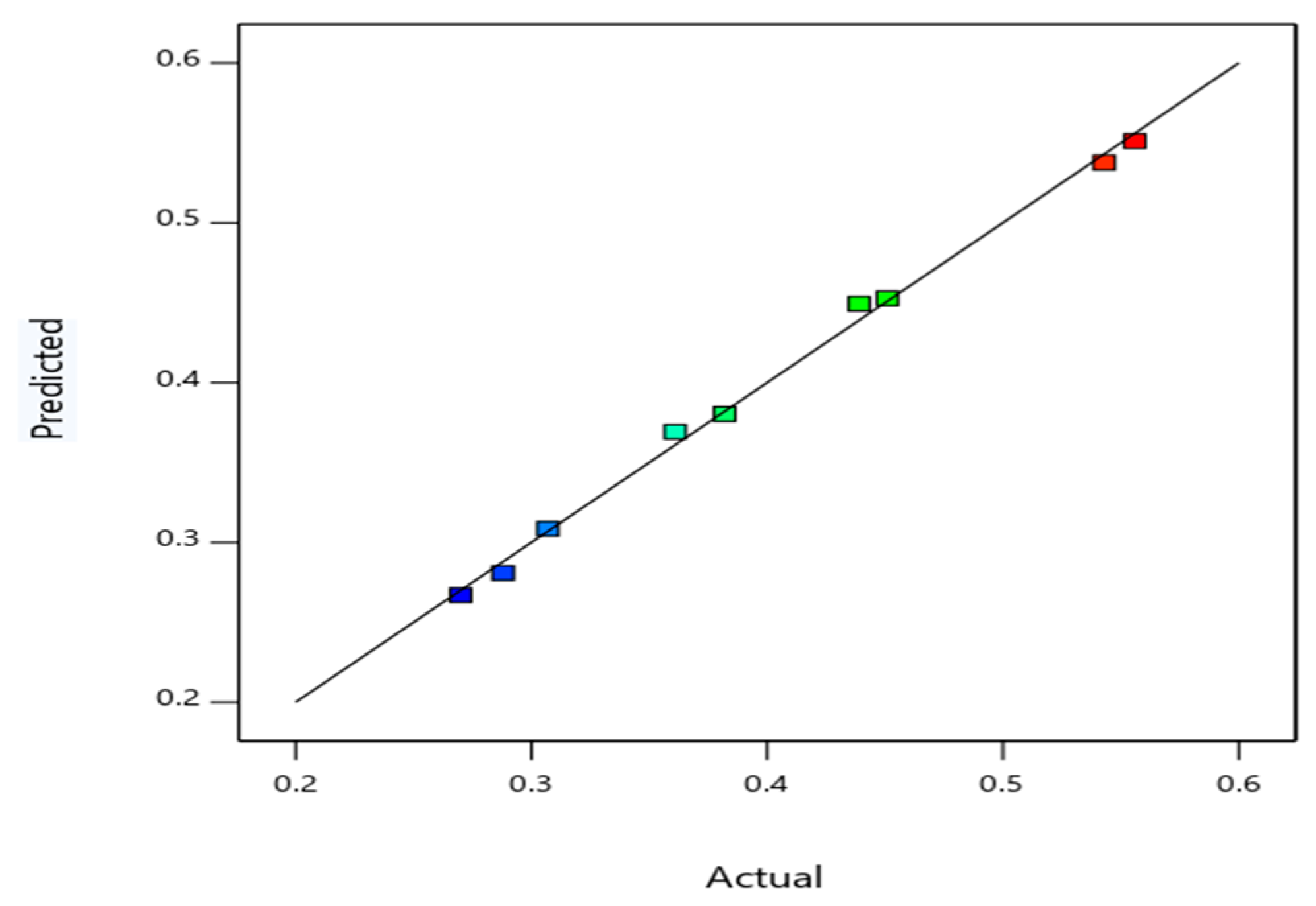
The mathematical model for predicting surface roughness, as derived from regression analysis, is expressed as Equation (3):
S R n s = 0.094 0.000396 C s p + 0.748 F r t 0.183 d c t + 0.000110 S s p
where the factors are expressed in terms of their original units, i.e., C_sp is in m/mm, F_rt in mm/rev, dct in mm, and Ssp is in rev/min.
Figure 2 demonstrates the predicted vs. actual (PvA) values. The PvA plot indicates strong agreement between the experimental and modelled values, reinforcing the model’s validity.

3.2.4. Regression Analysis for Cutting Temperature

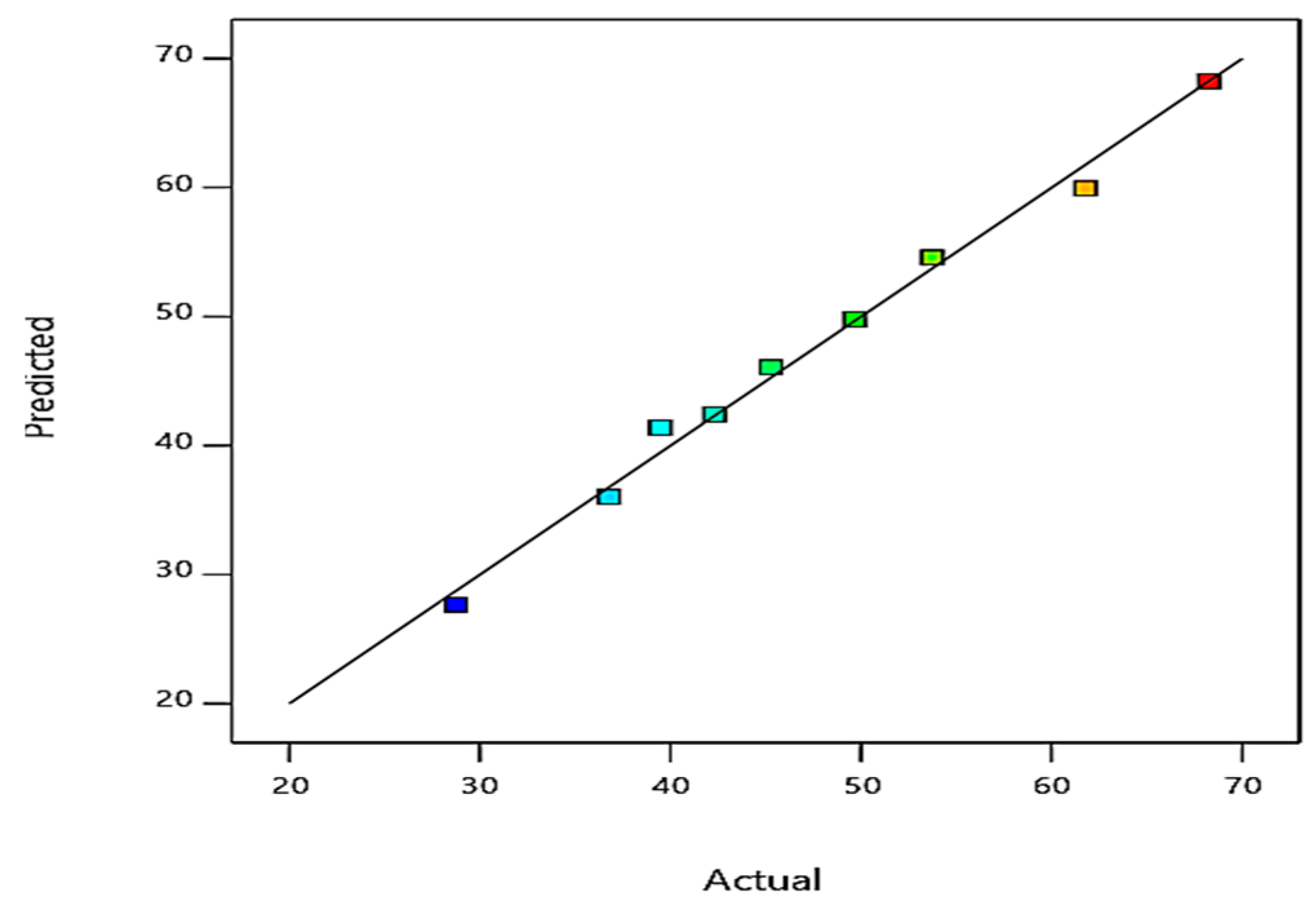
The mathematical model for predicting CTempt, as derived from regression analysis, is expressed by Equation (4).
C T e m p t = 33.86 + 0.03388 C s p 72.60 F r t + 59.87 d c t 0.00329 S s p
The PvA plot, as shown in Figure 3, confirms the accuracy of the model, with data points closely following the regression line.

3.2.5. Surface Roughness

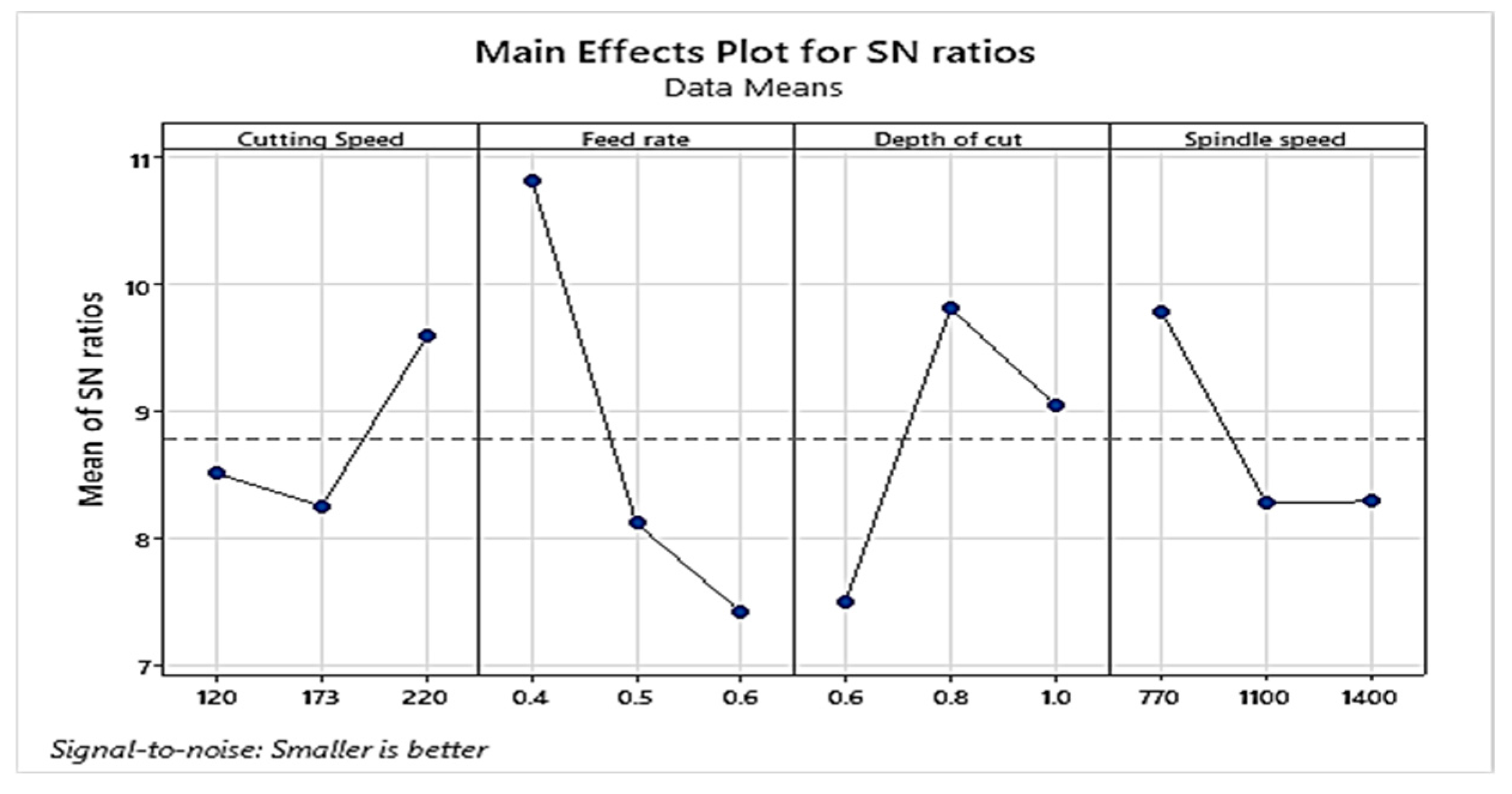
The analysis of signal-to-noise (S/N) ratios for surface roughness reveals that lower Frt, associated with higher S/N ratios, substantially enhances surface quality. As shown in Figure 4, the maximum S-N ratio of 10.814 was achieved at Level 1 of feed rate, confirming that reduced Frt yields smoother surfaces. Similarly, dct exerts a significant influence, with the highest S-N ratio of 9.809 observed at Level 2, indicating that an intermediate dct is optimal. For cutting speed, the S-N ratio increases with higher speeds, reaching a peak value of 9.594 at Level 3, suggesting that elevated Csp favours improved surface finish. On the other hand, spindle speed demonstrates minimal variation across levels, implying a minor effect on surface roughness. Therefore, the optimal conditions for minimising SRns are identified as a Frt of 0.4 mm/rev, a dct of 0.6 mm, a Ssp of 770 rev/min, and a Csp of 173 m/min.

3.2.6. Cutting Temperature

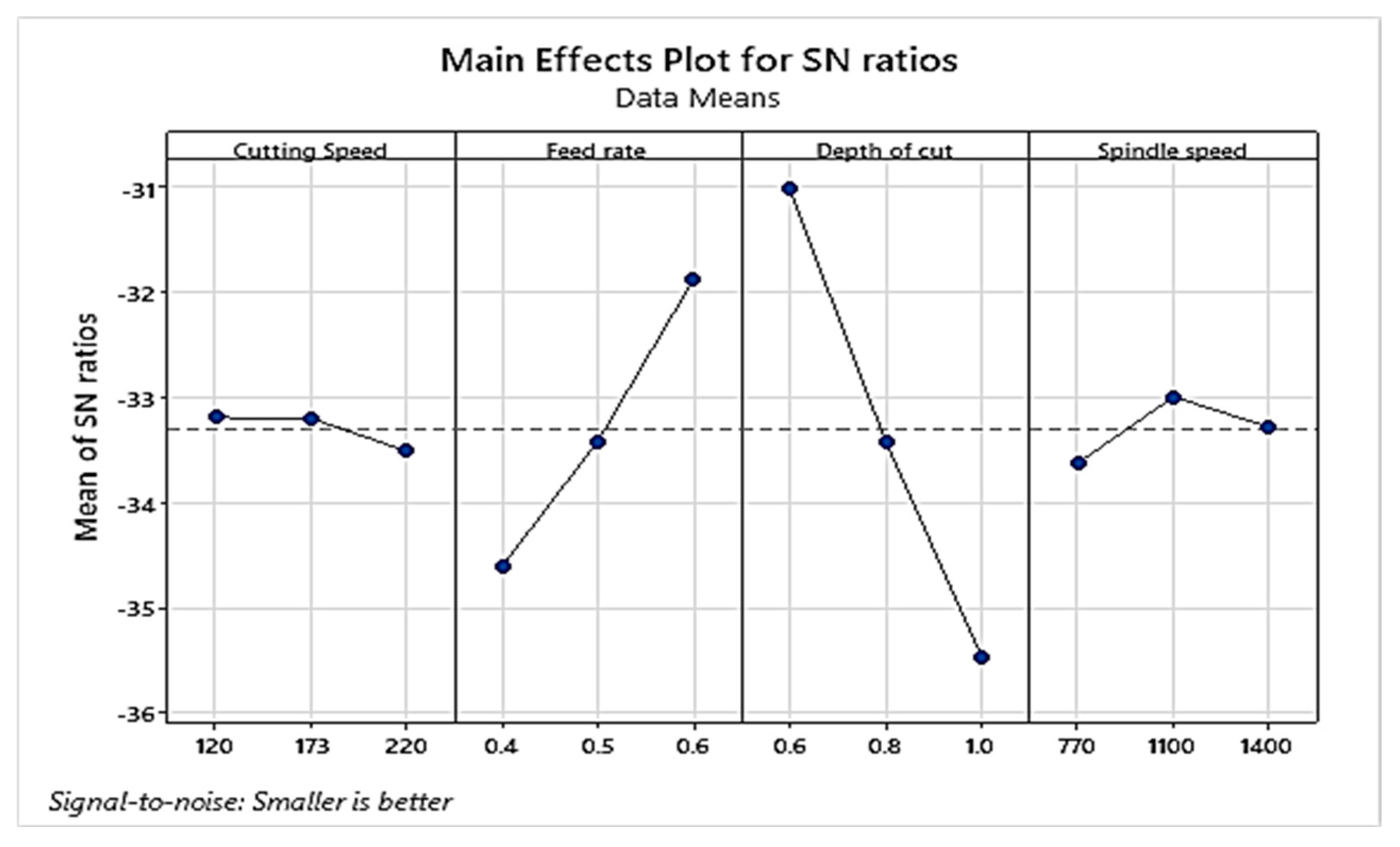
The signal-to-noise (S/N) ratio analysis for cutting temperature highlights the thermal impacts of machining parameters. As shown in Figure 5, the dct demonstrates a decreasing S/N trend from −31.01 at Level 1 to −35.47 at Level 3, indicating that increased depths significantly elevate cutting temperatures. For Frt, the S/N ratio improves as Frt decreases, with the optimal thermal condition recorded at Level 3 (−31.88). Csp and Ssp, on the other hand, exhibit minimal variations across levels, suggesting limited influence on cutting temperature under the experimental conditions. Therefore, the optimal settings for minimising cutting temperature are identified as a Frt of 0.6 mm/rev, a dct of 0.6 mm, a Ssp of 1100 rev/min, and a Csp of 120 m/min.

3.2.7. Quantitative Comparison Between Uco-Cf and Conventional Ccf

Compared with conventional CCF, the UCO-based fluid reduced surface roughness from 0.361 µm to 0.270 µm (~25% improvement), lowered tool wear from 0.260 mm to 0.180 mm (~31% reduction), and decreased cutting temperature by approximately 12% under optimal conditions.

3.2.8. Limitations of UCO-CF

Although UCO-CF demonstrated improved machining performance, several limitations exist. Used cooking oil may exhibit variability in composition depending on its source and prior thermal degradation history. Oxidation instability, limited long-term storage stability, and potential rancidity remain concerns without advanced additive enhancement. Emulsion stability under prolonged industrial recirculation conditions was not extensively evaluated. Furthermore, comprehensive physicochemical characterisation (e.g., viscosity index, acid value, flash point) was beyond the scope of this study and warrants further investigation.

4. Conclusions

This study evaluated the performance of UCO-CF in the turning operation of AISI 1020 mild steel using the Taguchi optimisation approach. The application of purified used cooking oil, mixed with functional additives like emulsifiers, antioxidants, and corrosion inhibitors, resulted in an environmentally friendly and stable cutting fluid having great lubricating and cooling properties. The results of the experiment were analysed using signal-to-noise ratios and ANOVA, which showed that the machining parameters, especially feed rate and depth of cut, greatly affected the roughness of the surface, the wear of the tool and the cutting temperature. Among these factors, the feed rate was the most significant one in influencing the quality of the surface and the life of the tool.
The UCO fluid was successful in reducing the surface roughness, lowering the tool-tip temperature and minimising the wear when compared to mineral oil-based fluids. The improved lubrication and heat dissipation at the tool–workpiece interface ended up being the main contributors in increasing the efficiency of machining and the life of the tool. The biodegradable property of the UCO fluid was another reason why it was so appealing, not only bringing about great benefits in terms of environment and economy, but also supporting the global initiatives of going green and being sustainable in the manufacturing sector.
In conclusion, UCO-based cutting fluids signify a feasible and sustainable substitute for petroleum-based lubricants in metal machining operations. Upcoming studies should focus on nano-enhanced and additive-optimised formulations to further improve their oxidation stability, thermal conductivity, and long-term storage properties, thereby advancing industrial embracing of bio-based cutting fluids for high-performance and environmentally responsible machining applications.

Author Contributions

Conceptualisation, K.B., R.M. and M.K.-K.; methodology, K.B., R.M., M.K.-K. and S.B.; software, K.B. and R.M.; validation, K.B., R.M., M.K.-K. and S.B.; formal analysis, K.B., R.M., M.K.-K. and S.B.; investigation, K.B., R.M. and M.K.-K.; resources, M.K.-K.; data curation, M.K.-K.; writing—original draft preparation, K.B., R.M. and M.K.-K.; writing—review and editing, K.B., R.M. and M.K.-K.; visualisation, K.B., R.M. and M.K.-K.; supervision, K.B., R.M., M.K.-K. and S.B.; project administration, R.M. and M.K.-K. All authors have read and agreed to the published version of the manuscript.

Funding

This research received no external funding.

Institutional Review Board Statement

This research involved experimental investigations on materials and machining processes and did not include human participants or animal subjects. Therefore, Institutional Review Board (IRB) approval was not required.

Informed Consent Statement

Informed consent was not required for this study as it did not involve human participants.

Data Availability Statement

The data that support the findings of this study are available from the corresponding author upon request.

Acknowledgments

The researchers wish to extend their sincere gratitude to the Durban University of Technology, Durban, South Africa, for the publication funding.

Conflicts of Interest

The authors declare no conflicts of interest.

References

  1. Abdelrazek, A.H.; Choudhury, I.A.; Nukman, Y.; Kazi, S.N. Metal cutting lubricants and cutting tools: A review on the performance improvement and sustainability assessment. Int. J. Adv. Manuf. Technol. 2020, 106, 4221–4245. [Google Scholar] [CrossRef]
  2. Dennison, M.S.; Jebabalan, S.K.; Barik, D. Applicability of nano-cutting fluids for enhanced cooling, low tool wear, and high tribological performance during machining—A review. Discov. Appl. Sci. 2024, 6, 663. [Google Scholar] [CrossRef]
  3. Anyanwu, B.; Olamide, O.; Owoeye, S.; Adekunle, N.; Durodola, F.; Nuga, O.; Ismaila, S.; Aiyedun, P. Performance Evaluation of Selected Animal and Vegetable Oil Based Cutting Fluids in Mild Steel Turning Operation. J. Eng. Res. 2023, 28, 13–23. [Google Scholar] [CrossRef]
  4. Wu, X.; Li, C.; Zhou, Z.; Nie, X.; Chen, Y.; Zhang, Y.; Cao, H.; Liu, B.; Zhang, N.; Said, Z.; et al. Circulating purification of cutting fluid: An overview. Int. J. Adv. Manuf. Technol. 2021, 117, 2565–2600. [Google Scholar] [CrossRef]
  5. Rajendran, S.; Al-Samydai, A.; Palani, G.; Trilaksana, H.; Sathish, T.; Giri, J.; Saravanan, R.; Lalvani, J.I.J.; Nasri, F. Replacement of Petroleum Based Products with Plant-Based Materials, Green and Sustainable Energy—A Review. Eng. Rep. 2025, 7, e70108. [Google Scholar] [CrossRef]
  6. Gan, C.K.; Liew, P.J.; Leong, K.Y.; Yan, J. Biodegradable cutting fluids for sustainable manufacturing: A review of machining mechanisms and performance. Int. J. Adv. Manuf. Technol. 2024, 131, 955–975. [Google Scholar] [CrossRef]
  7. Wang, W.; Lin, H.; Zhou, M.; Xie, H.; Dai, B.; Han, S. Formulation, characterization, mechanism, and application of vegetable oil-based nano-cutting fluids. Int. J. Adv. Manuf. Technol. 2025, 136, 909–923. [Google Scholar] [CrossRef]
  8. Rapeti, P.; Pasam, V.K.; Gurram, K.M.R.; Revuru, R.S. Performance evaluation of vegetable oil based nano cutting fluids in machining using grey relational analysis—A step towards sustainable manufacturing. J. Clean. Prod. 2018, 172, 2862–2875. [Google Scholar] [CrossRef]
  9. Shafi, W.K.; Raina, A.; Haq, M.I.U. Friction and wear characteristics of vegetable oils using nanoparticles for sustainable lubrication. Tribol.-Mater. Surf. Interfaces 2018, 12, 27–43. [Google Scholar] [CrossRef]
  10. Adlina, M.N.; Kamaleshwaran, T.; Fairuz, M.A.; Azwan, I. A Study of Surface Roughness & Surface Integrity in Drilling Process Using Various Vegetable–Oil Based Lubricants in Minimum Quantity Lubrication. Aust. J. Basic Appl. Sci. 2014, 8, 191–197. [Google Scholar]
  11. Deshpande, V.; Jyothi, P.N.; Shivaprasad, H.B.; Gouder, V.; Prasad, C.D. Physico-Chemical Properties of Bio-Oils as Cutting Fluids: A Comparative Investigation. J. Bio-Tribo-Corros. 2024, 11, 7. [Google Scholar] [CrossRef]
  12. Ali, M.M.; Shah, M.A.M.; Alias, S.K.; Pahroraji, H.F.; Abdullah, B.; Hairi, H.M.; Shamsudin, A.H. Arachis Hypogaea’S concentration effect on AISI 1020 carbon steel for corrosion protection. J. Eng. Appl. Sci. 2024, 71, 56. [Google Scholar] [CrossRef]
  13. Sharma, N.; Sharma, O.; Dewangan, S. Microstructure and Mechanical Behavior of Welded and Heat-Treated AISI 1020 Steel. J. Inst. Eng. Ser. D 2024, 106, 1381–1392. [Google Scholar] [CrossRef]
  14. Nouioua, M.; Cherfia, A. Monitoring and Optimization of the Machining Process When Turning of AISI 316L Based on RSM-DF and ANN-NGSAII Approaches. Preprint 2022. [Google Scholar] [CrossRef]
  15. Zerti, A.; Yallese, M.A.; Zerti, O.; Nouioua, M.; Khettabi, R. Prediction of machining performance using RSM and ANN models in hard turning of martensitic stainless steel AISI 420. Proc. Inst. Mech. Eng. Part C J. Mech. Eng. Sci. 2019, 233, 4439–4462. [Google Scholar] [CrossRef]
  16. Agu, C.; Lawal, S.; Abolarin, M.; Agboola, J.; Abutu, J.; Awode, E. Multi-response optimisation of machining parameters in turning AISI 304L using different oil-based cutting fluids. Niger. J. Technol. 2019, 38, 364. [Google Scholar] [CrossRef]
  17. Ramya, T.; Venu, M.; Kumar, K.T.S.; Francy, K.A. Influence of Vegetable Oil Based Lubricants with Nano Particles on Surface Roughness of AISI 1020 and AA 2024 Alloy. In Advanced Manufacturing Systems and Innovative Product Design: Select Proceedings of IPDIMS 2020; Springer: Berlin/Heidelberg, Germany, 2021; pp. 163–173. [Google Scholar]
  18. Naresh, C.; Sameer, M.D.; Bose, P.S.C. Comparative Analysis of RSM, ANN and ANFIS Techniques in Optimization of Process Parameters in Laser Assisted Turning of NITINOL Shape Memory Alloy. Lasers Manuf. Mater. Process. 2024, 11, 371–401. [Google Scholar] [CrossRef]
  19. Touggui, Y.; Belhadi, S.; Mechraoui, S.E.; Yallese, M.A.; Temmar, M. Statistical Study and Multi-Response Optimization of Cutting Parameters for Dry Turning Stainless Steel AISI 316L Using Cermet Tool. Adv. Eng. Forum 2020, 36, 28–46. [Google Scholar] [CrossRef]
  20. Nur, R.; Noordin, M.; Izman, S.; Kurniawan, D. Machining parameters effect in dry turning of AISI 316L stainless steel using coated carbide tools. Proc. Inst. Mech. Eng. Part E J. Process. Mech. Eng. 2015, 231, 676–683. [Google Scholar] [CrossRef]
  21. Ahmad, A.; Akram, S.; Jaffery, S.H.I.; Khan, M.A. Evaluation of specific cutting energy, tool wear, and surface roughness in dry turning of titanium grade 3 alloy. Int. J. Adv. Manuf. Technol. 2023, 127, 1263–1274. [Google Scholar] [CrossRef]
  22. Akbar, A.A.; Shwaish, R.R.; Hadi, N.D. Study the effect of cutting parameters on temperature distribution and tool life during turning stainless steel 316L. Al-Khwarizmi Eng. J. 2018, 14, 112–122. [Google Scholar] [CrossRef]
  23. Singh, A.; Sinha, M.K. Multi-Response Optimization During Dry Turning of Bio-Implant Steel (AISI 316L) Using Coated Carbide Inserts. Arab. J. Sci. Eng. 2020, 45, 9397–9411. [Google Scholar] [CrossRef]
  24. Rodríguez, J.; Muñoz-Escalona, P.; Cassier, Z. Influence of cutting parameters and material properties on cutting temper-ature when turning stainless steel. Rev. Fac. Ing. Univ. Cent. Venez. 2011, 26, 71–80. [Google Scholar]
  25. Sathishkumar, S.D.; Rajmohan, T. Multi-response optimization of machining parameters in CNC turning of AISI 316L stainless steel using MQL nano fluids. IOP Conf. Ser. Mater. Sci. Eng. 2018, 390, 012049. [Google Scholar] [CrossRef]
  26. Zaharudin, A.M.; Budin, S. Influence of cutting speed on coated TiCN cutting tool during turning of AISI 316L stainless steel in dry turning process. IOP Conf. Ser. Mater. Sci. Eng. 2019, 505, 012044. [Google Scholar] [CrossRef]
  27. Prasad, B.S.; Prabha, K.A.; Ganesh Kumar, P.V.S. Condition monitoring of turning process using infrared thermography technique—An experimental approach. Infrared Phys. Technol. 2017, 81, 137–147. [Google Scholar] [CrossRef]
  28. Borokinni, F.; Bello, K.A.; Bolaji, B.O. Optimization of Machining Parameters in AISI 304 Stainless Steel Using Response Surface Methodology. FUOYE J. Eng. Technol. 2026, 10, 321–325. [Google Scholar] [CrossRef]
  29. Jeyakumar, S.; Marimuthu, K.; Ramachandran, T. Prediction of cutting force, tool wear and surface roughness of Al6061/SiC composite for end milling operations using RSM. J. Mech. Sci. Technol. 2013, 27, 2813–2822. [Google Scholar] [CrossRef]
  30. Kilickap, E.; Yardimeden, A.; Çelik, Y.H. Mathematical Modelling and Optimization of Cutting Force, Tool Wear and Surface Roughness by Using Artificial Neural Network and Response Surface Methodology in Milling of Ti-6242S. Appl. Sci. 2017, 7, 1064. [Google Scholar] [CrossRef]
  31. Meddour, I.; Yallese, M.A.; Bensouilah, H.; Khellaf, A.; Elbah, M. Prediction of surface roughness and cutting forces using RSM, ANN, and NSGA-II in finish turning of AISI 4140 hardened steel with mixed ceramic tool. Int. J. Adv. Manuf. Technol. 2018, 97, 1931–1949. [Google Scholar] [CrossRef]
  32. Bagaber, S.A.; Yusoff, A.R. Multi-objective optimization of cutting parameters to minimize power consumption in dry turning of stainless steel 316. J. Clean. Prod. 2017, 157, 30–46. [Google Scholar] [CrossRef]
  33. Jadhav, P.K.; Sahai, R.; Solanke, S.; Gawande, S. Multi-objective optimization of EN19 steel milling parameters using Taguchi, ANOVA, and TOPSIS approaches. J. Alloys Met. Syst. 2024, 7, 100102. [Google Scholar] [CrossRef]
Figure 1. Baileigh metal lathe (Model PL-1236E-DRO).
Materproc 31 00021 g001
Figure 2. Plots of PvA for the surface roughness.
Materproc 31 00021 g002
Figure 3. Plots of PvA for the surface temperatures.
Materproc 31 00021 g003
Figure 4. S-N analysis for surface roughness.
Materproc 31 00021 g004
Figure 5. S-N analysis for cutting temperature.
Materproc 31 00021 g005
Table 1. Experimental levels of machining parameters.
Parameters/FactorsUnitsExperimental Levels
Cutting speed (Csp)m/mm120173220
Feed rate (Frt)mm/rev0.40.50.6
Depth of cut (dct)mm0.60.81.0
Spindle Speed (Ssp)rev/min77011001400
Table 2. S-N ratios of SRns, CTempt, and Twear in each FPC in UCO-based cutting fluid analysis (smaller is better).
FPC
(Run)
Csp
(m/mm)
Frt
(mm/rev)
dct
(mm)
Ssp
(rev/min)
SRns
(μm)
CTempt (°C)Twear
(mm)
Signal-to-Noise Ratios (S/N) of the Response Parameters
S-N-SRns
(μm)
S-N-CTempt
(°C)
S-N-Twear
(mm)
FPC-11730.40.814000.28853.7430.18610.812−34.60614.610
FPC-22200.4111000.27068.2630.20111.373−36.68413.936
FPC-32200.60.87700.30742.3150.18010.257−32.53014.895
FPC-41200.40.67700.30742.3150.18010.257−32.53014.895
FPC-51730.517700.36161.7790.2608.850−35.81711.701
FPC-62200.50.614000.43936.7980.3807.151−31.3168.404
FPC-71200.50.811000.38245.2830.2398.359−33.11912.432
FPC-81200.6114000.45149.6800.3186.916−33.9249.951
FPC-91730.60.611000.55628.7650.4925.099−29.1776.161
Table 3. ANOVA analysis of the SRns.
FactorsUnitsDFAverage S-N at Different LevelsContribution Percentage (CP)Standard Deviationp-V
123
Csp(m/mm)18.5118.2549.59410.11%±10.0059
Frt(mm/rev)110.8148.127.42447.53%±10.0001
dct(mm)17.5029.8099.04627.62%±10.0005
Ssp(rev/min)19.7888.2778.29311.41%±10.1965
Error-4---3.33% -
Total-8---100.00% -
R20.9967----- -
Adj R20.9934----- -
Table 4. ANOVA analysis of the CTempt.
FactorsUnitsDFAverage S-N at Different LevelsContribution Percentage (CP)Standard Deviation p-V
123
Csp(m/mm)1−33.19−33.2−33.511.43%±10.1307
Frt(mm/rev)1−34.61−33.42−31.8826.30%±10.0003
dct(mm)1−31.01−33.42−35.4771.53%±10.0001
Ssp(rev/min)1−33.63−32.99−33.280.54%±10.4397
Error-4---0.21% -
Total-8---100.00% -
R20.9918----- -
Adj R20.9836----- -
Disclaimer/Publisher’s Note: The statements, opinions and data contained in all publications are solely those of the individual author(s) and contributor(s) and not of MDPI and/or the editor(s). MDPI and/or the editor(s) disclaim responsibility for any injury to people or property resulting from any ideas, methods, instructions or products referred to in the content.