
Proceeding Paper

Comparison of Grain Refinement Efficiency on Pure Commercial Aluminum Using Al-Ti-B Master Alloy Sourced from Six Different Suppliers Around the World †

by
Mbavhalelo Maumela
1,*,
Maje Phasha
1,
Joseph Moema
1 and
Thokozani Buthelezi
2
1
Advanced Materials Division, MINTEK, Randburg 2194, South Africa
2
Hulamin Operations Proprietary Limited, Pietermaritzburg 3201, South Africa
*
Author to whom correspondence should be addressed.
Presented at the 4th International Conference on Applied Research and Engineering, Pretoria, South Africa, 21–23 November 2025.
Mater. Proc. 2026, 31(1), 22; https://doi.org/10.3390/materproc2026031022 (registering DOI)
Published: 27 April 2026
(This article belongs to the Proceedings of The 4th International Conference on Applied Research and Engineering)

Abstract

Foundry produces casting products with desired properties suitable for engineering applications. The grain refiners came in handy to improve the melt casting process to achieve these desired properties. Aluminum alloy casting mostly uses Al-Ti-B grain refiners that are commercially available. The study examined the efficiency of Al-Ti-B grain refiners that were sourced from six different commercial suppliers across the globe. This work serves as quality control of sourced commercial grain refiners. It was found that type GR-4 (3:1) refined cast structures more efficiently than all other five tested Al-Ti-B grain refiners on commercial pure aluminum (CPAl). A holding time of 2 to 10 min proved to be the optimum melt holding time.

1. Introduction

Aluminum castings are produced in a manufacturing process where molten aluminum alloy is poured into a mould to form semi- or final products with complex desired shapes for engineering applications. Its high strength-to-weight ratio, excellent corrosion resistance, and high thermal and electrical conductivity positioned cast aluminum products to be extensively used in a wide range of engineering applications across many industries [1]. The final properties and applications of aluminum castings depend on the composition, casting methods, mechanical and thermal treatment to produce precipitates, intermetallic and desired grain shape, size, and crystallographic texture. Aluminum grain refiners are commercially supplied by different companies around the world. Different suppliers might use different methods and processing parameters to produce similar grain refiners, for example, Al-Ti-B, which influence the properties of the final grain refiner product. It becomes a challenge for the foundries to make a well-informed decision about which supplier/manufacturer would provide an aluminum grain refiner that would be more efficient for their aluminum alloy castings. It is reported in the literature that to facilitate the casting process, reduce solidification defects, and improve casting quality, a grain refiner is added into molten metal (melt) shortly prior to pouring a melt into the mould to attain the desired properties [2]. To achieve a well refined cast structures, it is crucial to know which type of grain refiner to use, the amount of grain refiner to add, holding temperature, and time of the melt with added grain refiner before casting. Such factors ensure that a casting with improved quality and desired mechanical properties is achieved [3]. However, the commonly used grain refiners for aluminum casting (Al) and its alloys are Al-Ti-B and Al-Ti-C master alloys. The Al-Ti-B grain refiner has a different series that mainly varies with titanium (Ti) and boron (B) content and the same applies to Al-Ti-C grain refiner, which varies in titanium (Ti) and carbon (C) content.
Fan et al. have reported that Al-Ti-B master alloy contains both TiB2 particles and Al3Ti intermetallic 2-dimensional compound (Al3Ti 2DC) that are uniformly dispersed in the aluminum matrix [4,5]. These TiB2 particles, for them to have potency for grain refinement, must be surface-coated with a monolayer of Al3Ti 2DC crystal compound, thus lowering lattice misfit and solid–liquid interface strain between grain refiner particles and nucleating α-Al grain from the melt, providing nucleation sites of the eutectic α-Al grain phase during solidification through constitutional supercooling of solute atoms and heterogeneous nucleation mechanisms [4,5]. The constitutional supercooling of solute atoms and heterogeneous nucleation mechanisms encourage the columnar-to-equiaxed transition of the cast structures to occur during solidification [5,6]. This transition permits the cast structures to be wholly equiaxed cast structures that endowed cast products with desired properties. The Al-Ti-B ternary master alloys has two series, based on the Ti:B ratios, which are 5:1 and 3:1 series. Easton and John state that the mechanism of Al-Ti-B grain refinement is governed by nucleant and solute patterns [7]. The nucleant pattern refers to the heterogeneous nucleation of primary eutectic α-Al grain on TiB2 insoluble substrate, which acts as nucleation sites. The solute pattern is based on the role of solute elements on the grain refinement, but the amount of the solute elements required to facilitate this behaviour was not reported. They suggest that the solute titanium atoms segregate and restrict the growth front of the growing solid–liquid interface; thus, nucleated primary α-Al dendrite growth is prohibited, hence promoting grain refinement [8].
The present paper aims to study and compare the efficiency of six different Al-Ti-B grain refiners that were sourced from various commercial suppliers, in refining the cast structures of pure commercial aluminum (CPAl). This work provides quality control of commercial sourced grain refiners to meet customer expectations in terms of their performance. The test was conducted by adopting AA-TP1 (Standard Test Procedure for Aluminum Alloy Grain Refiners, TP-1 test), which is a standard test practice to assess the effectiveness of aluminum grain refiners. The TP-1 test eliminates all other factors, such as alloying elements, that might influence grain refinement mechanisms but only the added grain refiner has an influence on refining cast structures. The results inform which supplier has Al-Ti-B grain refiner that has a higher efficiency of grain refinement and what is an optimum residence time of grain refiner in the CPAl melt at a temperature of 750 °C. These findings were achieved through measured average grain sizes that were refined by the addition of commercial Al-Ti-B grain refiners.

2. Materials and Methods

2.1. Materials

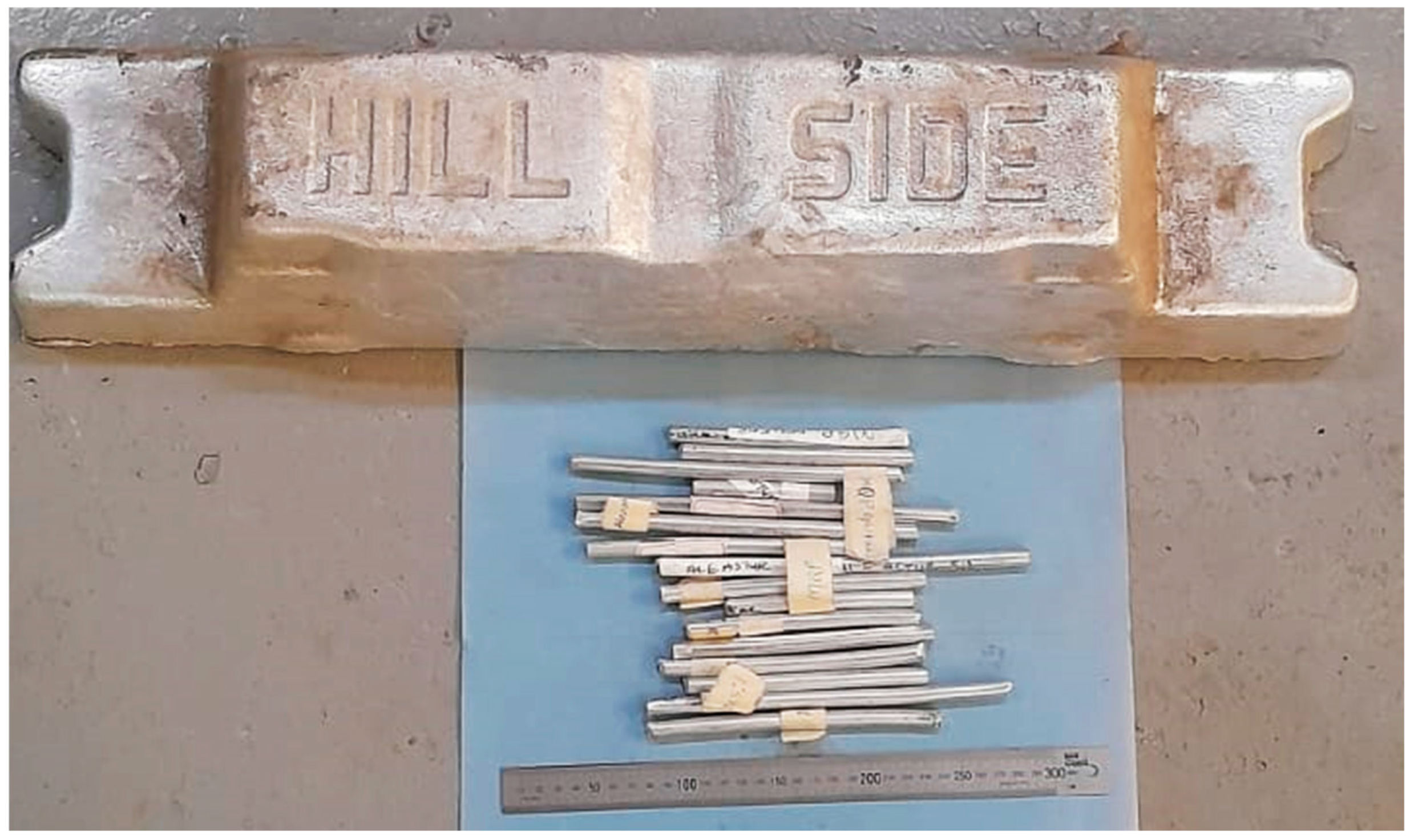
CPAl and Al-Ti-B grain refiners in the form of rods sourced from six different commercial Al-Ti-B grain refiner suppliers, see Figure 1 below, were used in this study.
A CPAl is recommended by the TP-1 test procedure for assessing the effectiveness of grain refiners [9]. The analysis of elemental composition was carried out by using an Inductively Coupled (Argon) Plasma Emission Spectroscopy (ICP) method, and results are presented in Table 1 below.
It was noted that the supplied Al-Ti-B grain refiners are in two different Ti:B weight ratios, that is 3:1 and 5:1, as shown in Table 1 above. The grain refiners GR-1, Gr-3, GR-4, and GR-5 belong to the group Ti:B 3:1 weight ratio, while GR-2 and GR-5 belong to the group Ti:B 5:1 weight ratio. CPAl shows about 99.90 wt.% Al content, which implies that the ingot is pure aluminum metal.

2.2. AA-TP1 (Standard Test Procedure for Aluminum Alloy Grain Refiners, TP-1 Test)

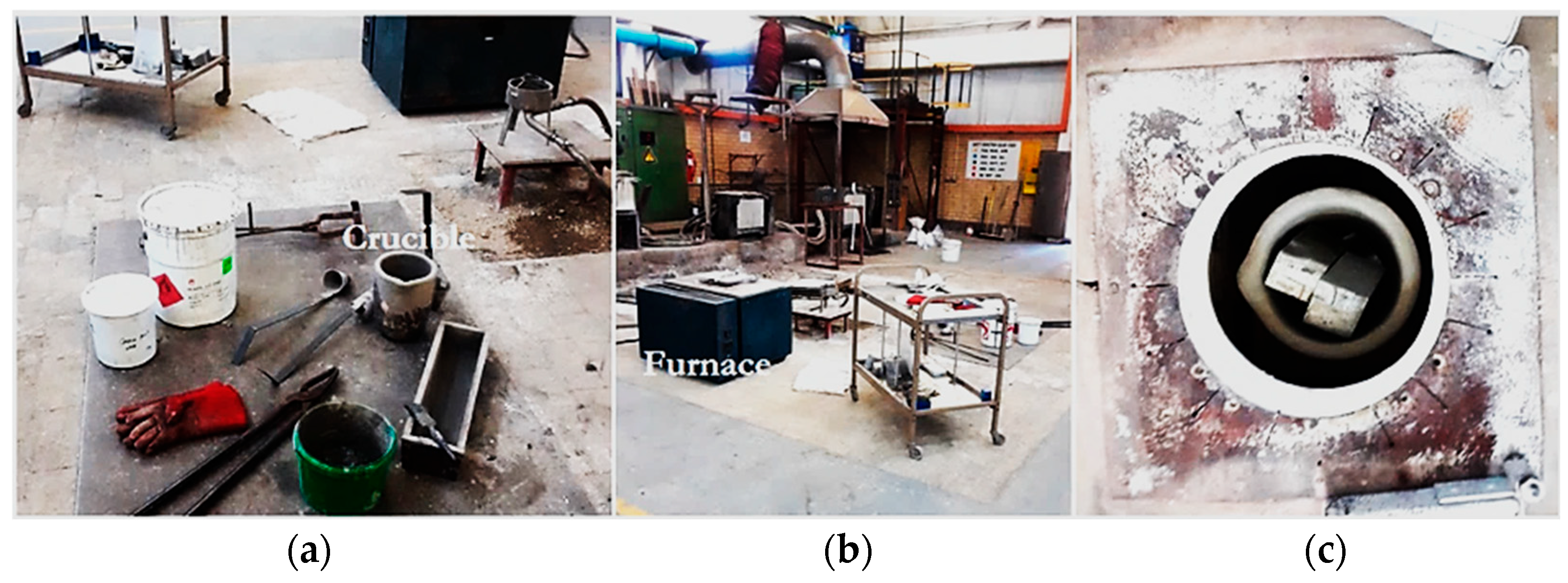
The test was guided by the TP-1 test method [9]. A clay bonded graphite crucible of 10 kg with a volume capacity of 3 litres had its inner wall brush painted with a coating paste. The coating paste was prepared by mixing Isomol 316 powder, graphite paste, and ethanol at a weight ratio of 2:1:2, respectively, to form a thin coating paste. A coated crucible was air-dried followed by curing at 250 °C for 30 min using a bench top loader electric resistance furnace (muffle furnace). A CPAl metal weighing 2.5 kg was placed in the coated crucible. The crucible with charged CPAl metal was then inserted in a muffle furnace, as shown in Figure 2c below.
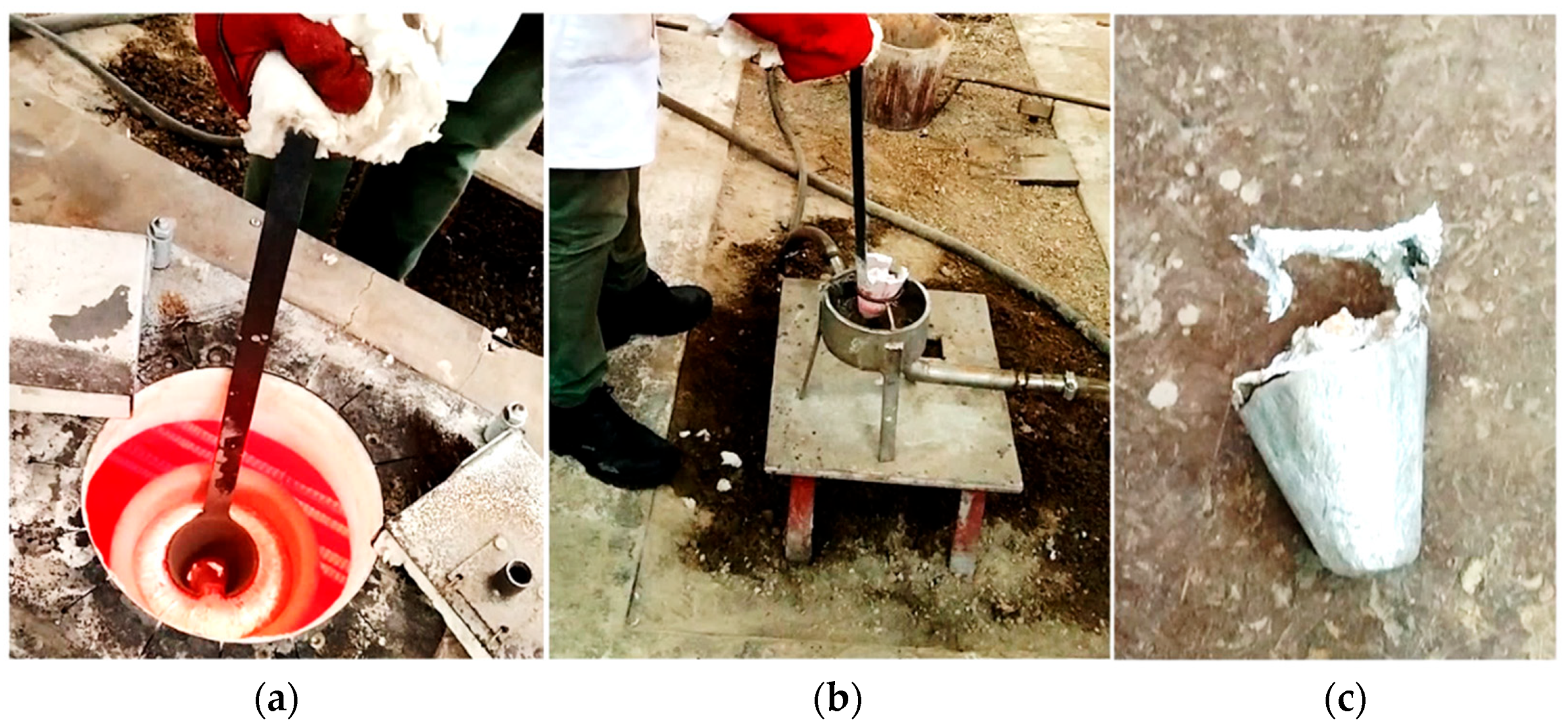
The muffle furnace was programmed to heat up from room temperature to 716 ± 5 °C at a heating rate of 60 °C per hour with crucible containing CPAl metal ingot. The furnace was given enough time to melt the CPAl metal for melt wash. After pouring out the melt wash, the crucible was placed back in the muffle furnace. Then, 5.5 kg CPAl metal was charged into the crucible and allowed to melt; see Figure 3a below. After reaching a molten state, a dross was skimmed out from the surface using a steel big spoon while ensuring minimum disturbance of the aluminum melt.
A cone steel ladle with coated inside and outside walls was preheated to 360 °C for at least 1 h, then taken out from the oven and used to tap the reference sample by submerging the cone ladle inside the CPAl melt, held vertically for 30 s, and withdrawn from the melt while ensuring that the ladle is filled up to the ladle notch; see Figure 3a above. A filled ladle was then lowered vertically onto the retaining O-ring of the water quenching tank, while ensuring that the bottom part of the cone steel ladle was 25 mm submerged onto the bottom shooting water stream quenching tank; see Figure 3b above. Thereafter, a solid reference TP1 cast sample was removed from the cone steel ladle, marked, and reserved for the metallographic examination, as shown in Figure 3c above.
The Al-Ti-B grain refiner alloy was milled into smaller filings, then poured into the CPAl melt at 716 ± 5 °C, and then stirred using graphite rod until it dissolved all within 30 s. The mass of added Al-Ti-B grain refiner alloy was determined according to Equation (1) given below:
Mass   of   grain   refiner   to   be   added   ( grams )   =   % Ti   desired × ( Mass   of   melt ) % Ti   in   Grain   Refiner   alloy
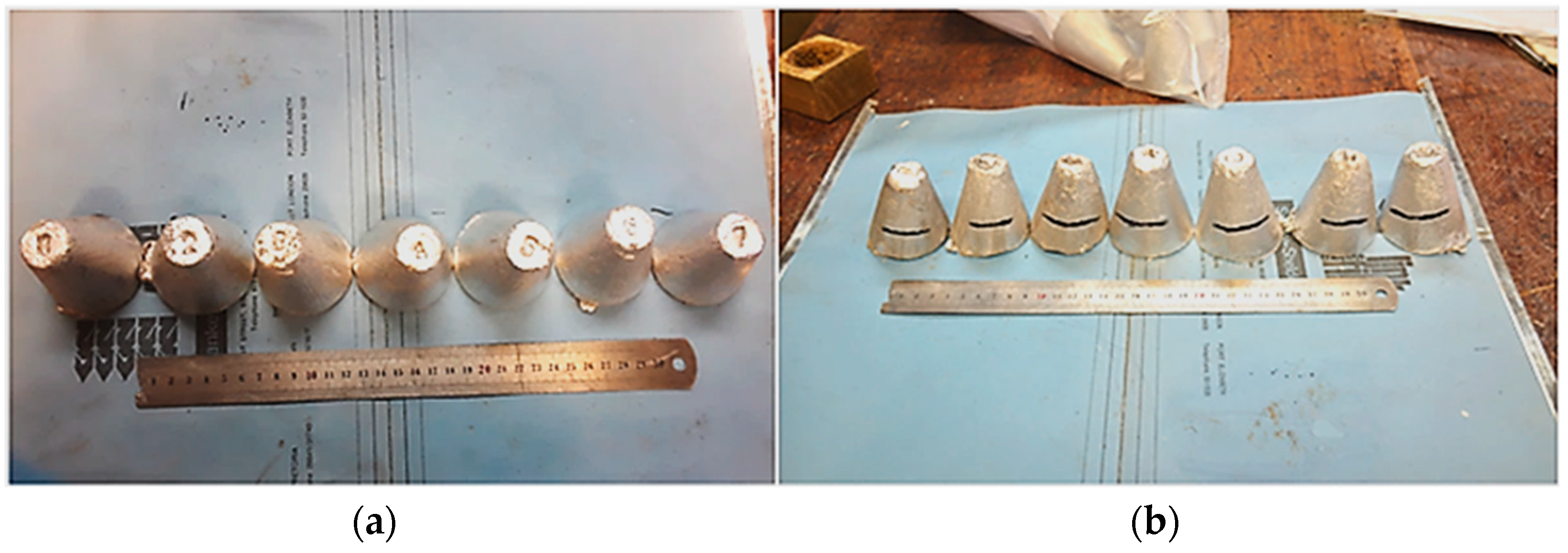
Note that the TP1 test prescribes a desired amount of 0.01 wt.% titanium (Ti) to be added and the calculation of the amount required to be added of grain refiner was calculated based on the desired titanium content of 0.01 wt.% and the weight of 5.50 kg of the melt. After 2 min had elapsed, the melt was stirred using a graphite rod for 15 s before a sample was tapped. Three (×3) preheated cone steel ladles (at 360 °C) were used interchangeably during tapping of the other TP1 samples. The samples were tapped after 2, 5, 10, 15, 20, and 25 min. All six (×6) TP1 samples were tapped similarly to show a reference TP1 sample was produced, and a total of seven (×7) TP1 samples were produced. The remaining melt was then poured into a cast iron rectangular mould that was coated and preheated under similar conditions with the cone steel ladles. All seven (×7) TP1 samples were marked accordingly and reserved for metallographic examination and grain size measurement, as shown in Figure 4a below.

2.3. Sample Preparation Methods

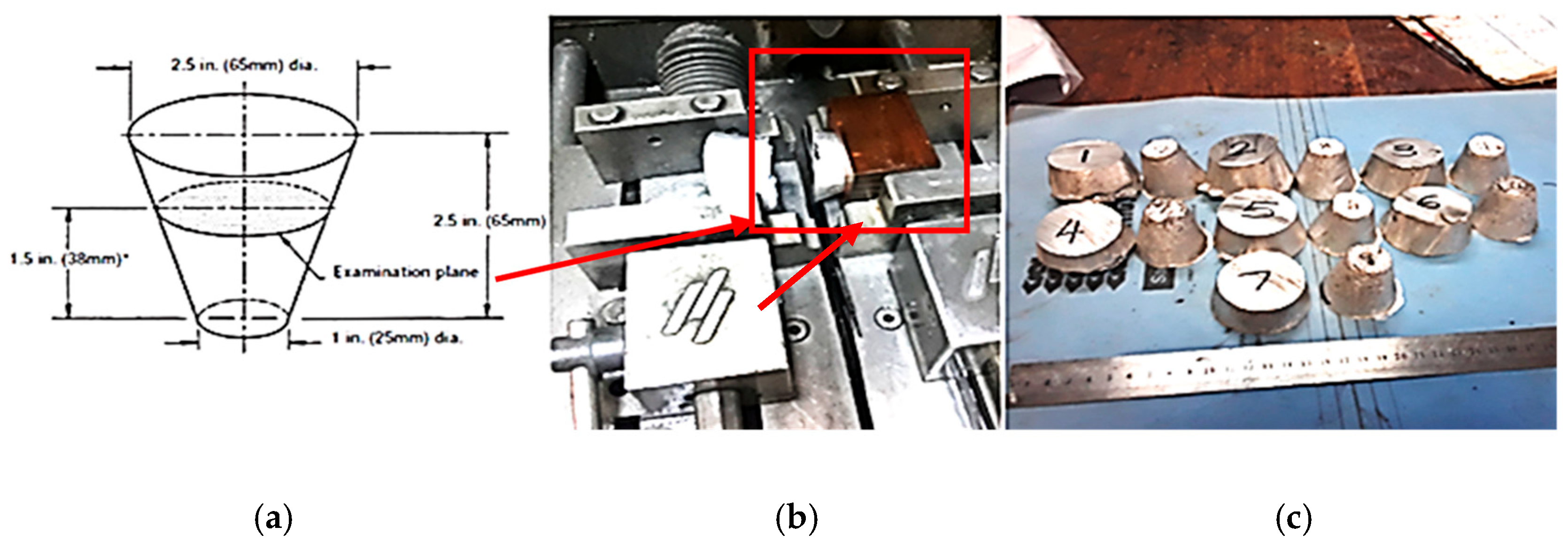
Sample preparation was done by adopting the ASTM E 3-02 standard [10]. As-cast samples were sectioned in a cross-sectional area, at a plane 38 mm from the base of the TP1 sample as measured along the slope side, and a cutting was done using a silicon carbide (SiC) cut-off wheel blade under water cooling, in a Struers Discotom 6 cutting machine, as illustrated in Figure 5a.
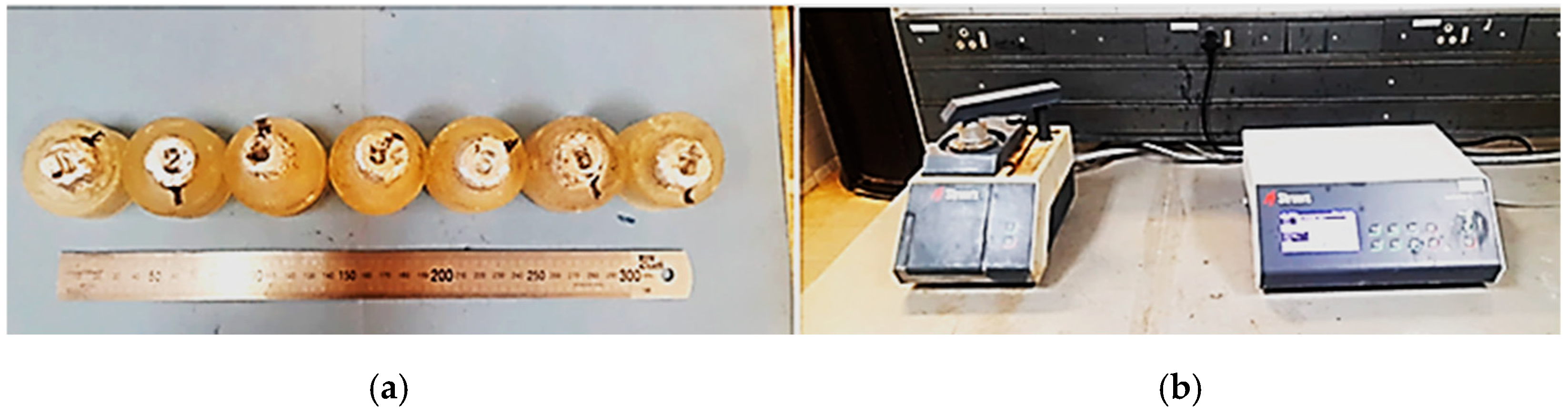
All the base pieces of TP1 samples were cold mounted in a clear resin, as shown in Figure 6a. The mounts were plane and fine ground, and thereafter polished to mirror surface finish by following the steps of SiC papers #120, #240 for plane grind and #400, # 600, #1200 for fine grind, and then polished using diamond lubricants of 9 um, 6 um, 3 um, and 1 um on magnetic disks Mol and Nap (MD-Mol and MD-Nap) polishing cloths to mirror surface finish. The grinding and polishing parameters such as force, disk, and sample holder speeds and time, from ASTM E 3-02 standard specification [11].
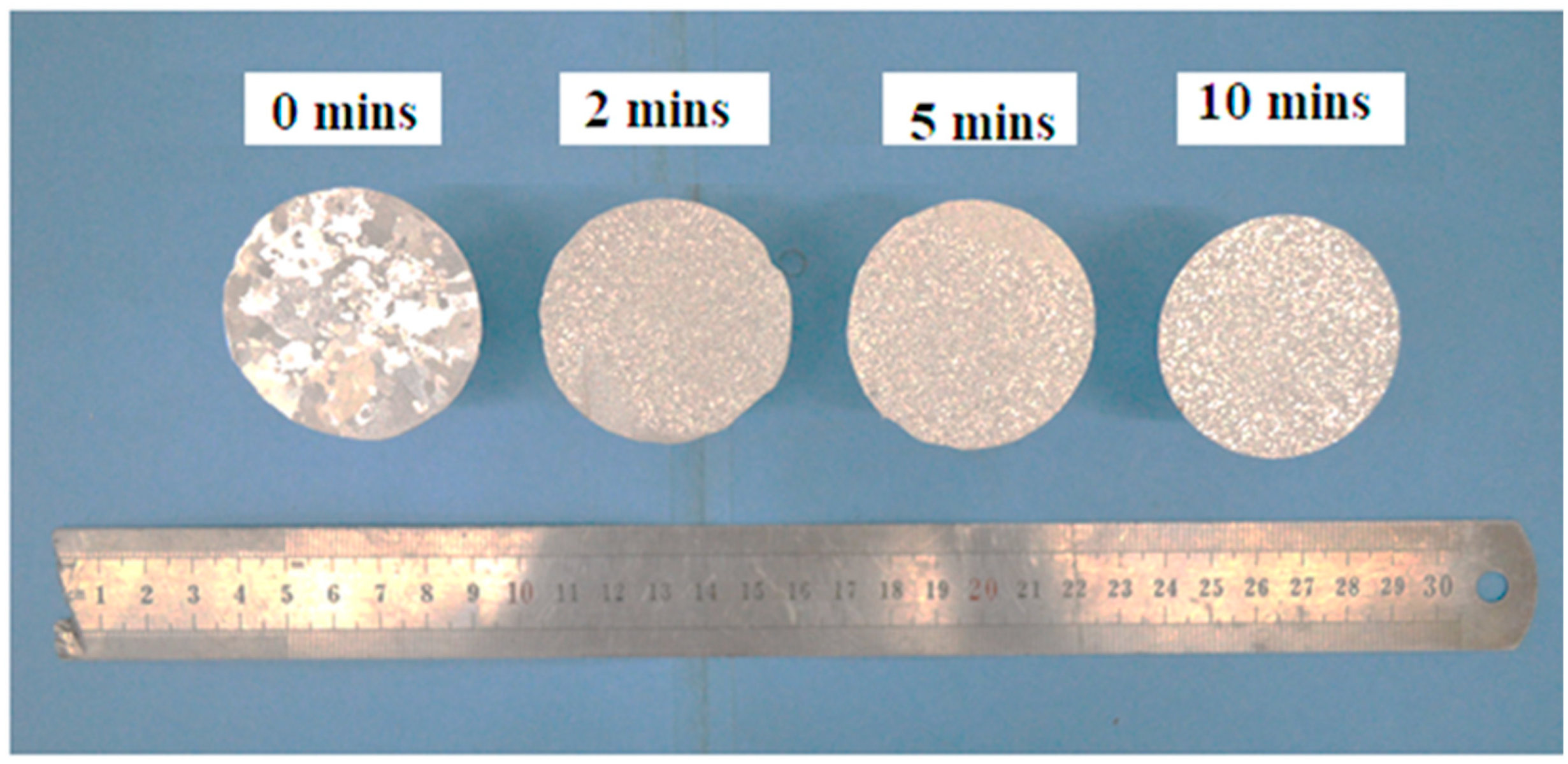
A Struers Lectro-Pol 5 electro-etching machine, see Figure 6b above, was set to 25 volts dc, flow rate of 20 mL/min, and current density of 5 A/cm2 and mounts were electro-etched for 4 min using 1.8% HBF6 electrolytic solution. The electro-etching method is known as a Barker’s reagent solution. Sample surfaces were rinsed in running tap water and dried using compressed air, then reserved for metallographic examination, as shown in Figure 7.

2.4. Microstructural Examination and Grain Size Measurement Methods

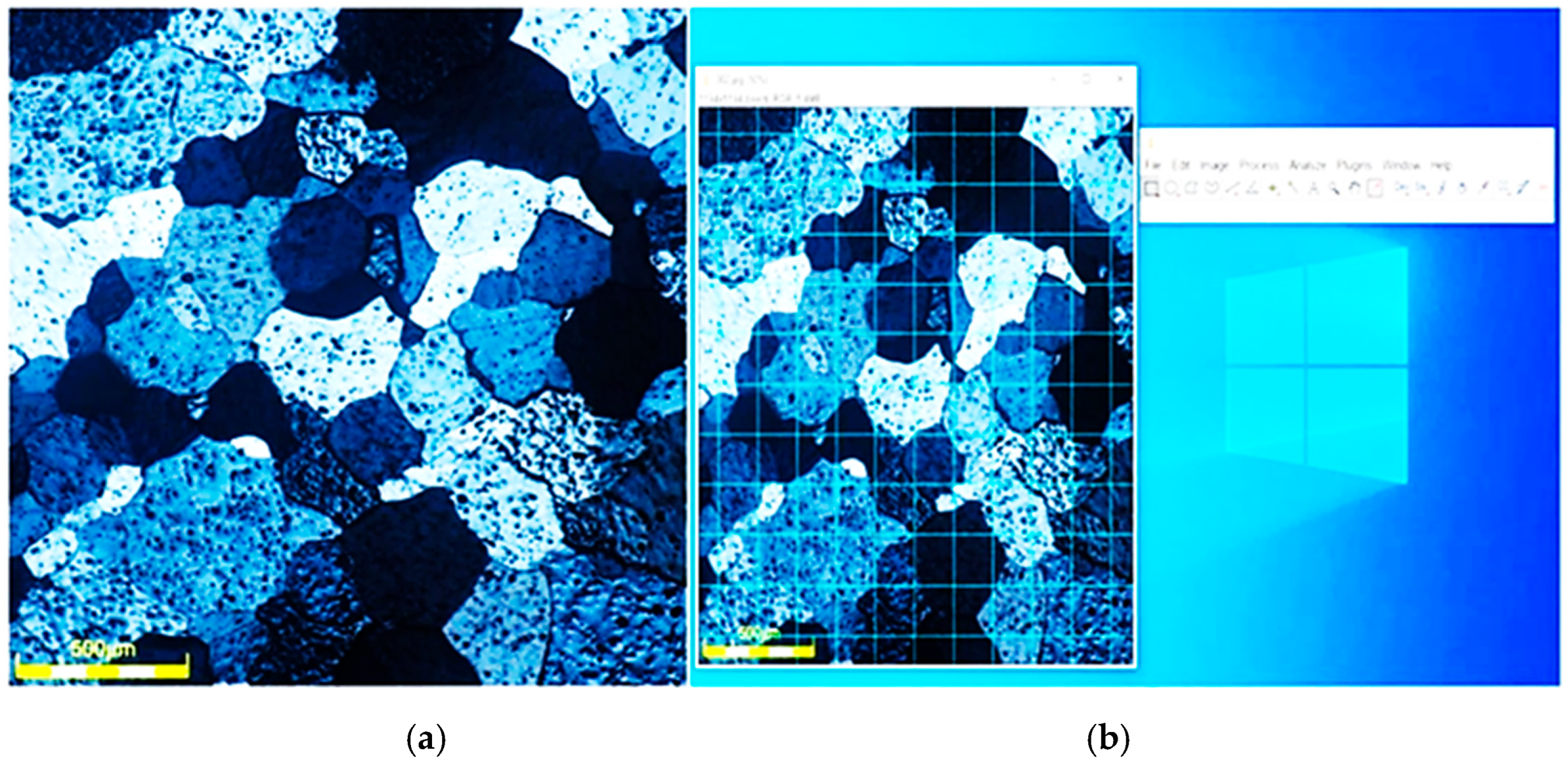
The mounts were examined and photographed under an optical light microscope, i.e., Olympus DSX50. The micrographs were acquired at two different magnifications, i.e., 139× and 277×, using the polarized light mode and were reserved to determine the average grain size of the TP1 samples. The average grain sizes were determined according to an ASTM E 112-96 standard, adopting, Heyn Lineal Intercept method, and the calculations were done based on the mean lineal intercept value equation for each micrograph/test field ( l ¯ ) [11]. The magnification of the test field used for the reference TP1 sample was 139×; see Figure 8a below. The main reason for using different magnifications is because the reference TP1 sample (0 min) has a larger grain size, in such a way that at magnification of 227×, only at most five grains were photographed, which defies the grain size measurement procedure outlined by ASTM E 112-96 standard, which states that a selected magnification has to give at least 50 grains in the test field to be counted. However, other TP1 samples with added grain refiner have a smaller grain size such that at least 50 grains were counted in test field using 227× magnification, as observed in Figure 9b below.
For the statistical analysis, 20 test lines were used, that is 10 test lines embedded horizontal and 10 test lines embedded vertical on test fields, with their lengths ranging between 899.97 µm and 917.62 μm using Image J software, version 1.49e, as seen in Figure 9b below. At least 6 test fields were used to measure the grain size of each TP1 sample, and each test field entails at least 50 grains to be counted during the analysis, and an average and standard deviation of grain size values were calculated and are reported in Table 2 in the Results Section.
Figure 9. (a) Optical light micrograph showing TP1 sample refined grain structures after addition of Al-Ti-B grain refiner; (b) an interface of Image J software that was used to determine average grain size, 227× magnification, with 500 µm yellow scale bar.
Materproc 31 00022 g009

3. Results and Discussion

3.1. Microstructural Analysis

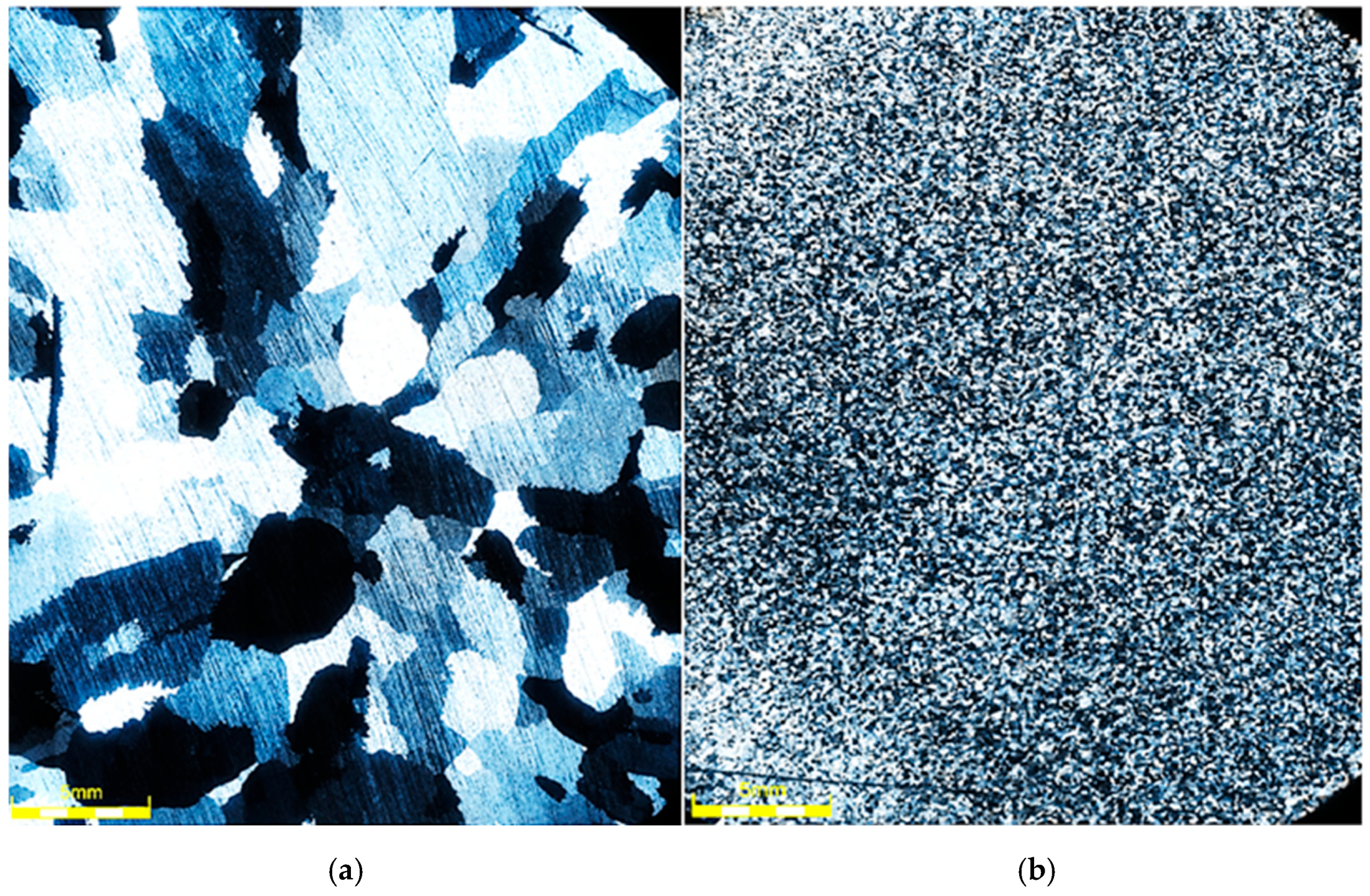
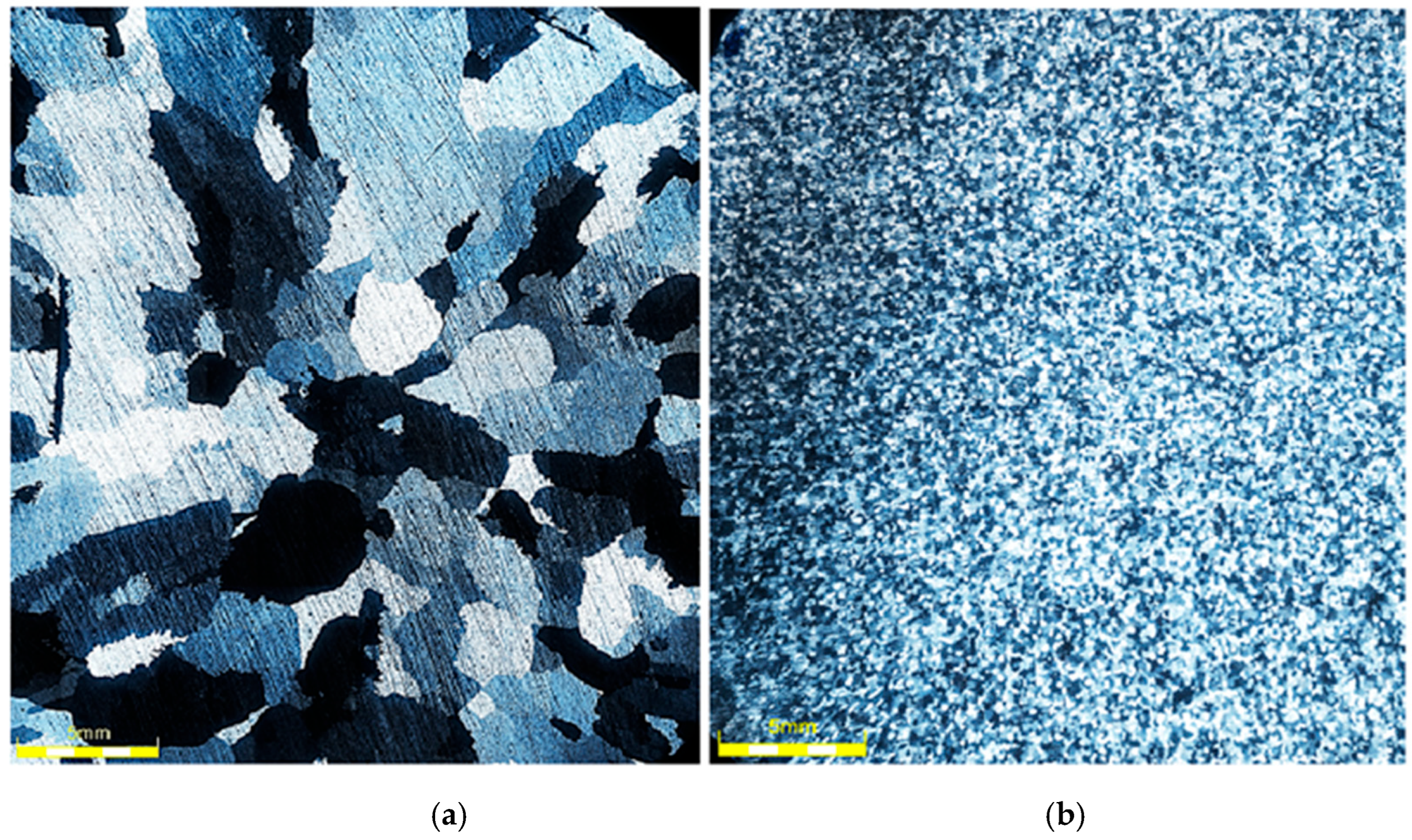
The microstructure of the TP1 reference sample, without the addition of grain refiner, revealed a mixture of equiaxed and columnar cast structures in a larger grain size, as seen in Figure 10a below.
An observation of elongated columnar grains projecting in a radial direction from the centre towards the surface of the horizontal cross-section plane of TP1 cast sample was made. These microstructural patterns are attributed to the homogenous nucleation mechanism and solidification growth front that follows a direction of heat flux extraction from the centre to the surface of the TP1 sample that occurred during the quenching stage [12]. Fan et al. reported that the observed equiaxed cast structures at the centre of the TP1 sample shown in Figure 10a above are not actual equiaxed cast structures but rather columnar cast structures width/diameter that were cross-sectioned, and these columnar cast structures were projected normal to the viewed horizontal cross-section plane [4]. This implies that the reference TP1 sample without the addition of Al-Ti-B grain refiner exhibits fully columnar cast structures although their widths are quite fine as they look like the equiaxed grain structure viewed in the centre of the micrograph given in Figure 10a above. However, after the addition of Al-Ti-B grain refiner, the whole columnar dendritic cast structures were fully refined into an equiaxed cast grain structure, as seen in Figure 10b above. The observations made in Figure 10 were the same in all tested TP1 samples produced from six different commercial manufacturers of Al-Ti-B grain refiners.
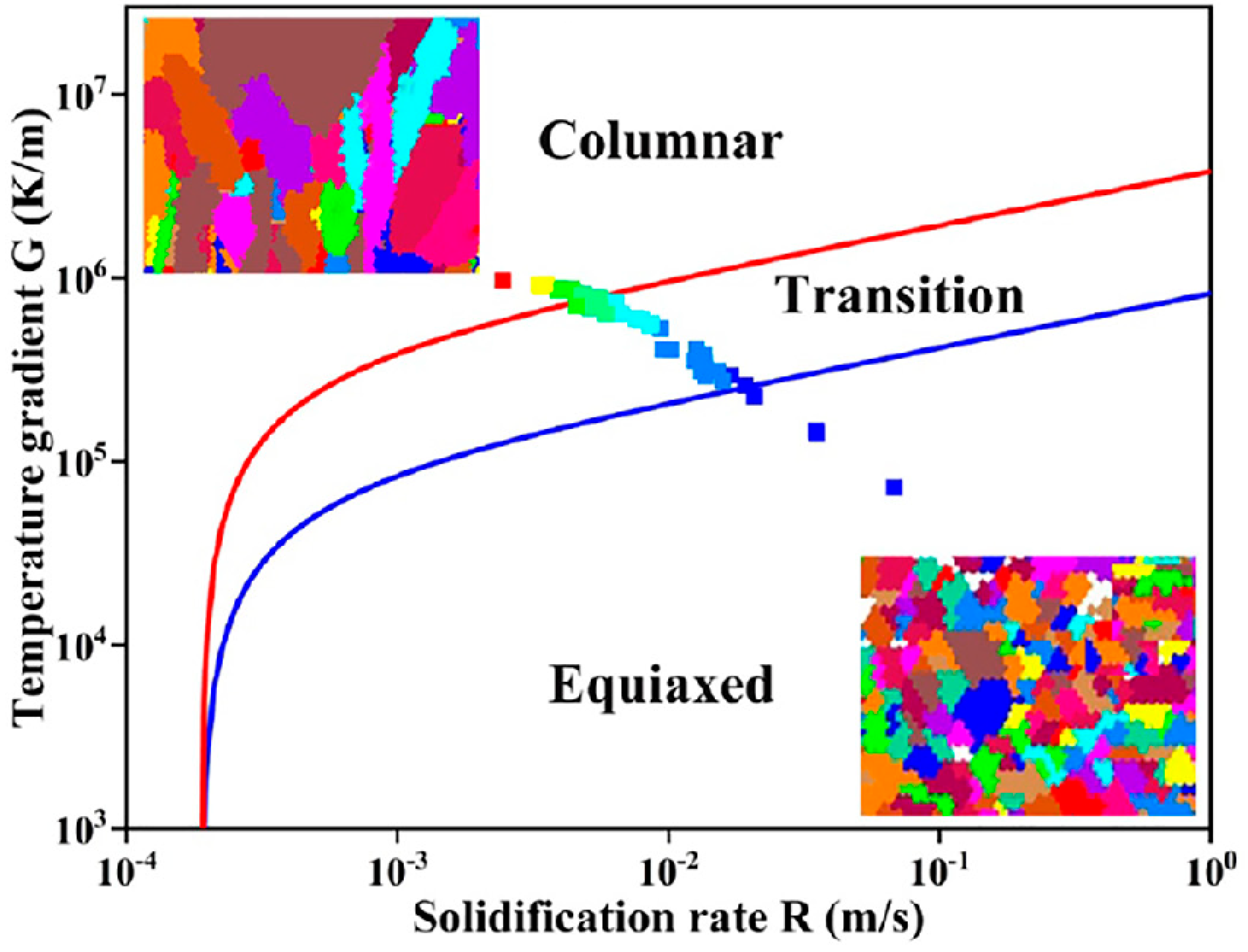
The transition of columnar cast structures to equiaxed (CET) cast structures is governed by Gibbs free energy (G), nucleation rate (R), undercooling temperature (ΔTC), and grain growth mechanisms. When the numerous finely dispersed particles of grain refiners are cast into a melt, they create numerous nucleation sites, thus increasing nucleation rates (R) at constant undercooling temperature (ΔTC). Hongge Li et al. observed that when gradient G/R curve, as shown in Figure 11 below, decreases, thus increasing R, at constant ΔTC, it favours the formation of equiaxed cast structures over columnar cast structures, consequently facilitating the CET behaviour [13]. This observation was similarly made in Figure 10 above of cast structures that were obtained with and without the addition of grain refiner.

3.2. Grain Size Analysis

The grain size was measured using a linear intercept method on micrographs (test fields); each test field contains at least 50 grains to be counted. Statistical analysis of the measured grain size was performed, and the average and standard deviation values of grain size are reported in Table 2 given below.
The standard TP-1 samples, without the addition of Al-Ti-B grain refiners, revealed coarse, larger grain size, as seen in Figure 10a above, with their average grain size values are given in Table 2 below, as noted from the 0 min row, of which all have average grain sizes greater than 2700 µm, and were obtained without the addition of grain refiners. This observation is attributed to the homogenous nucleation mechanism during the solidification process, where there is little or no nucleation sites provided for the eutectic α-Al grain to nucleate and grow into fully fine grains [8]. Hongge Li et al. made similar observations in terms of lower nucleation rate that resulted in columnar cast structure formation [13]. The resulting type of cast structures after the solidification process is columnar structures, which have features of elongated dendrites in the radial outward direction from the centre to the surface of TP1 samples. The preferred direction of dendrites is due to less strain accommodating the {001} plane and the direction of the heat flux extraction during the quenching stage of the cast. In essence, what was observed in the centre of the reference TP1 sample that looks to be an equiaxed cast structure, seen in Figure 10a above, is the width of a cross-sectioned columnar cast dendritic structure as viewed on a horizontal cross-sectional plane [4,8].
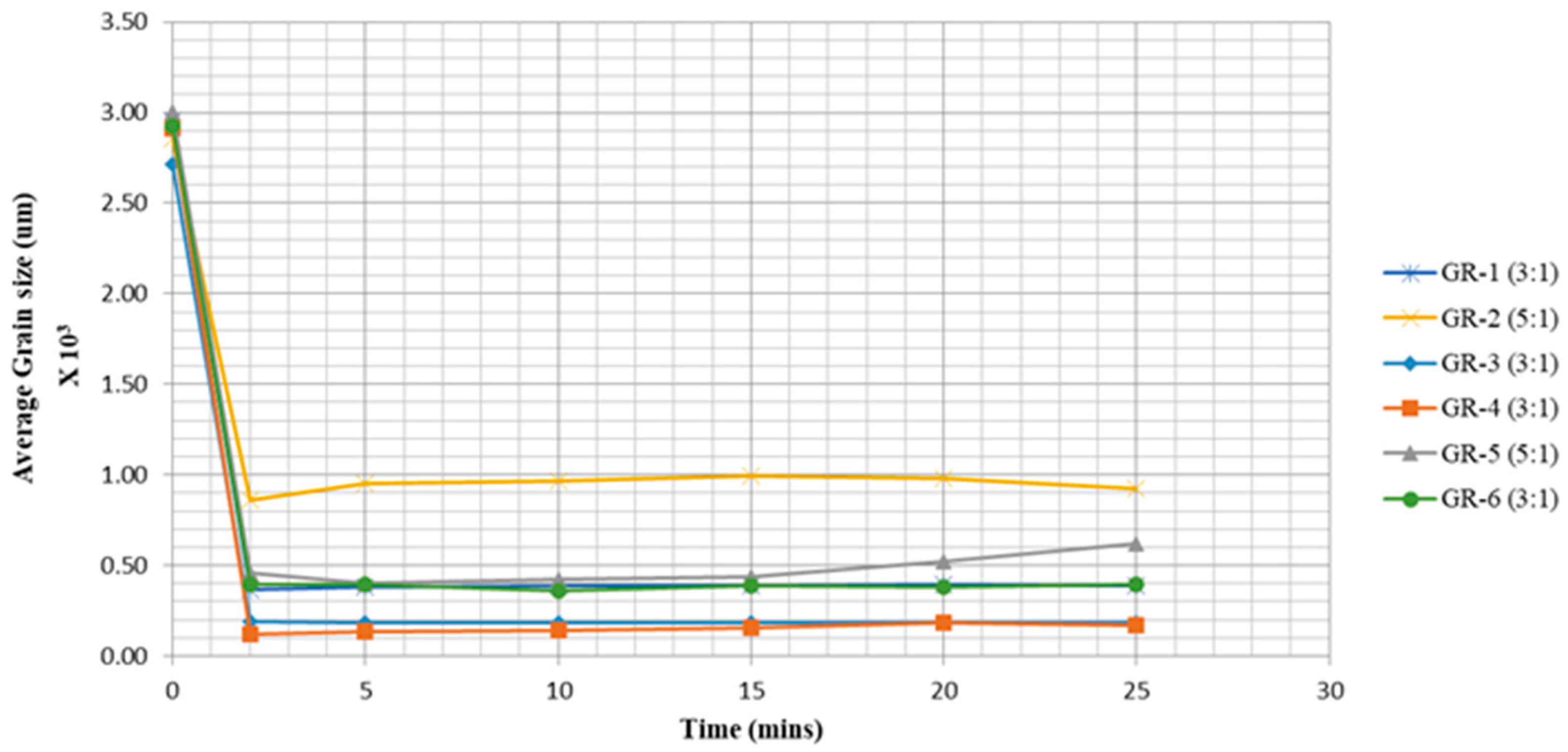
The resulting performance of grain refiners was ranked according to the finer to coarser average grain size that they produced, as noted from Table 2; the ranking will be as follows and is graphically presented in Figure 12 below.
  • GR-4 (3:1), yielded 122.84 ± 0.83 µm at 2 min.
  • GR-3 (3:1), yielded 181.38 ± 0.96 µm at 5 min.
  • GR-6 (3:1), refined 358.54 ± 0.49 µm at 10 min.
  • GR-1 (3:1), yielded 367.00 ± 0.10 µm at 2 min.
  • GR-5 (5:1) yielded 402.18 ± 0.40 µm at 5 min.
  • GR-2 (5:1), yielded 857.34 ± 0.23 µm at 2 min.

Table 2. Average grain size values of TP1 samples cast at different time intervals.
Average Grain Size (µm)
T
(min)
GR-1
(3:1)
GR-2
(5:1)
GR-3
(3:1)
GR-4
(3:1)
GR-5
(5:1)
Gr-6
(3:1)
02956.58 ± 0.332858.33 ± 0.412714.28 ± 0.252914.88 ± 0.733007.06 ± 0.122929.26 ± 0.91
2367.00 ± 0.10857.34 ± 0.23188.07 ± 0.42122.84 ± 0.83460.02 ± 0.65392.16 ± 0.35
5382.78 ± 0.74954.46 ± 0.61181.38 ± 0.96137.14 ± 0.21402.18 ± 0.40392.88 ± 0.64
10389.68 ± 0.56966.49 ± 0.75182.03 ± 0.55138.14 ± 0.67422.84 ± 0.13358.54 ± 0.49
15389.56 ± 0.31991.20 ± 0.88184.67 ± 0.47156.43 ± 0.58437.87 ± 0.81387.85 ± 0.53
20394.78 ± 0.81980.80 ± 0.12184.00 ± 0.11183.43 ± 0.93522.12 ± 0.33377.88 ± 0.13
25388.59 ± 0.77923.00 ± 0.53184.00 ± 0.73167.70 ± 0.46622.56 ± 0.90394.05 ± 0.56
GR-X (Ti:B) represents the grain refiner from X-Commercial supplier; (Ti:B) is the titanium:boron ratio.
Fan et al. have reported such findings quite well by showing vertical and horizontal cross-sectional plane views of a standard TP-1 cast sample without the addition of Al-Ti-B grain refiner [4].
However, after the addition of Al-Ti-B grain refiner, the transition of columnar-to-equiaxed cast structures had effectively occurred, wherein all columnar cast structures were fully refined and transformed into equiaxed cast structures, as seen in Figure 10b above, and lower grain sizes values were achieved, as shown in Table 2 above, from the 2 min to 25 min rows.
After 2 min of hold time, a drastic reduction in grain size was observed, as shown in Figure 12 above. It is evident that all the Al-Ti-B grain refiners from six various commercial suppliers managed to refine the cast structure well below 1000 µm from above 2700 µm average grain sizes.
It has been reported that when the grain refiner alloy rods get melted into the CPAl melt at 750 °C, the TiB2 and Al3Ti solid particles are discharged and dispersed across the melt homogenously with the aid of stirring the melt [4]. When they are suspended within the melt, they provide many nucleating sites for eutectic α-Al grains to nucleate during the solidification process. The nucleating sites initiate the heterogeneous nucleation mechanism, which promotes columnar-to-equiaxed transition and resulted in refined equiaxed cast grain structures, and this phenomenon was observed across all Al-Ti-B grain refiners that were sourced from different commercial suppliers.
The GR-4 (3:1) grain refiner effectively refined the columnar cast structures down to 122.84 µm after 2 min of melt holding time, which is better than the rest of the tested grain refiners sourced from various commercial suppliers, and GR-2 (5:1) came last out of the six grain refiners tested in terms of refinement efficiency, as seen in Figure 12 above. Surprisingly, the GR-5 (5:1) and GR-2 (5:1) grain refiners were expected to produce higher efficiency of refinement, since they have a (5:1) Ti:B ratio, which made them have higher Ti element content than the (3:1) Ti:B ratio, but they did not. The literature has reported that higher Ti content in the melt is known to increase the potency of grain refiner [6]. This effect is assumed to be stronger in the case of Al-5Ti-1B, which in turn must produce better grain refinement. It has been reported that the formation of an Al3Ti monolayer on the surface of TiB2 particles during the solidification of the inoculated alloy increases the potency of TiB2 particles for the nucleation of eutectic α-Al grains, which results in more refined cast structures as compared with the Al-3Ti-1B grain refiner that was used. This observation might be attributed to several factors such as the quality of the grain refiners sourced from different manufacturers, since they might have different particle densities and variations in particle morphologies, especially TiB2 particles with the ability to develop an Al3Ti 2DC monolayer after being added to the melt, depending on the process parameter the manufacturer used to produce them [4,14].
The current study reveals that a longer holding time of the melt at 750 °C for more than 10 min has no significant effect on cast structure refinement, but depending on the type of Al-Ti-B used; instead, the grain size started to coarsen and become larger in size, as seen from 10 min to 25 min in Figure 12. This is attributed to the settling behaviour of grain refiner particles in CPAl melt. Paul L Schaffer et al. revealed that when the grain refiner particles reside in the melt for longer times, because the density of TiB2 and CPAL are 4.5 g/cm3 and 2.3 g/cm3 respectively, the particle sink in aluminum melt will prevail [14]. Hence, the TiB2 and Al3Ti particles are no longer available to provide nucleating sites on the melt; therefore, the number of nucleating sites decreases, then the nucleating rate becomes lower and consequently the grain sizes of the eutectic α-Al phase increase with melt holding time [15,16]. However, if it happens in the plant during casting, where the melt was held for prolonged times greater than 10 min, it is advisable to re-stir the melt to agitate and uniformly disperse the grain refiner particles into the melt prior to casting.

4. Conclusions

The following conclusions were drawn from the studies conducted:
  • Al-Ti-B grain refiners that were sourced from different commercial suppliers were able to refine the cast structures of commercial pure aluminum (CPAl) material.
  • Al-Ti-B grain refiners supplied by different commercial suppliers produced different efficiencies of refined cast structures of CPAl metal.
  • The GR-4 (3:1) grain refiner showed greater efficiency than all other five (X5) Al-Ti-B grain refiners tested under similar conditions.
  • The optimum melt holding time for the GR-4 (3:1) grain refiner is 2 min and yielded 122.84 ± 0.83 µm grain size, which had grain sizes greater than 1500 µm.
  • According to the literature on Al-5Ti-1B alloy systems, Gr-5 (5:1) and GR-2 (5:1) were expected to yield greater refinement than the Al-3Ti-1B grain refiners, i.e., GR-4 (3:1), GR-3 (3:1), GR-6 (3:1), and GR-1 (3:1) [5], but the opposite case was observed in the study. This could be attributed to the quality of the supplied grain refiner.
  • After 2 min of holding grain refiner alloys in the CPAl melt at 750 °C, no significant grain refinement of cast structures were observed; instead, after just 10 min of holding melt, grain coarsening started to occur.

Author Contributions

Conceptualization, T.B., J.M., M.P. and M.M.; methodology, J.M. and M.M.; validation, M.M., T.B., M.P. and J.M.; formal analysis, M.M., M.P. and J.M.; investigation, M.M., M.P. and J.M.; resources, T.B.; data curation, M.M., M.P. and J.M.; writing—original draft preparation, M.M.; writing—review and editing, M.M., M.P. and J.M. visualization, M.M.; supervision, J.M. and M.P.; project administration, M.M. and J.M.; funding acquisition, T.B. All authors have read and agreed to the published version of the manuscript.

Funding

This research was funded by Hulamin Operations Proprietary Limited, T.B., for financial and materials resource supports.

Institutional Review Board Statement

Not applicable.

Informed Consent Statement

Not applicable.

Data Availability Statement

The raw data supporting the conclusions of this article will be made available by the authors on request.

Acknowledgments

This paper is published with the permission of MINTEK. The authors would like to thank Mintek under the Advanced Materials Division for granting access to their laboratory facilities. Gratitude is extended to Hulamin Operations Proprietary Limited in Pietermaritzburg for initiating this project through the late Patrick Ngubane, and for supplying the materials. Special thanks to Richard Mathebula (Mintek) for their contribution and assistance during the experimental work.

Conflicts of Interest

The authors declare that there are no conflicts of interest. The funders had no role in the design of the study; in the collection, analyses, or interpretation of data; in the writing of the manuscript; or in the decision to publish the results. Mintek and Hulamin Operations Proprietary Limited declare no conflicts of interest.

References

  1. Sun, Y. The use of Aluminum Alloys in Structures: Review and Outlook. In Structures; Elsevier: Amsterdam, The Netherlands, 2023; Volume 57, p. 105290. [Google Scholar]
  2. Sigworth, G.K. Grain Refinement of Aluminum Casting Alloys. In Casting ASM Handbook; Metal Park: Novelty, OH, USA, 2008; Volume 15, p. 255. [Google Scholar]
  3. Murty, M.B.S.; Kori, S.A.; Chakraborty, M. Grain refinement of aluminum and its alloys by heterogeneous nucleation and alloying. Int. Mater. 2002, 47, 3–29. [Google Scholar] [CrossRef]
  4. Fan, Z.; Wang, Y.; Zhang, Y.; Qin, T.; Zhou, X.R.; Thompson, G.E.; Hashimoto, T. Grain refining mechanism in Al/Al-Ti-B system. Acta Mater. 2015, 84, 292–304. [Google Scholar] [CrossRef]
  5. Lei, Z.; Wen, S.; Huang, H.; Wei, W.; Nie, Z. Grain refinement of aluminum and aluminum alloys by Sc and Zr. Metals 2023, 13, 751. [Google Scholar] [CrossRef]
  6. Zhao, J.; He, J.; Tang, Q.; Wang, T.; Chen, J. Grain refinement efficiency in commercial-purity aluminum influenced by the addition of Al-4Ti master alloys with varying TiAl3 particles. Materials 2016, 9, 869. [Google Scholar] [CrossRef] [PubMed]
  7. Easton, M.A.; StJohn, D. Grain refinement of aluminium alloys, Part 1, the nucleant and solute paradigms—A review of the literature. Metall. Mater. Trans. A 1999, 30, 1613–1623. [Google Scholar] [CrossRef]
  8. Johnsson, M.; Backerud, L.; Sigworth, G.K. Study of mechanism of grain refinement of aluminium after addition of Ti- and B-containing master alloys. Metall. Mater. Trans. A 1993, 24, 481–491. [Google Scholar] [CrossRef]
  9. AA TP1; Standard Test Procedure for Aluminum Alloy Grain Refiners. Aluminum Association: Arlington, VA, USA, 2012.
  10. ASTM E 3–01; Standard Guide for Preparation of Metallographic Specimen. ASTM International: Conshohocken, PA, USA, 2001.
  11. ASTM E 112–96; Standard Test Methods for Determining Average Grain Size. ASTM International: Conshohocken, PA, USA, 2004; pp. 10–13.
  12. Eskin, D.; Wang, F. Joint effect of ultrasonic vibrations and solid metal addition on the grain refinement of aluminium alloy. Metals 2019, 9, 161. [Google Scholar] [CrossRef]
  13. Li, H.; Huang, Y.; Jiang, S.; Lu, Y.; Gao, X.; Lu, X.; Ning, Z.; Sun, J. Columnar to Equiaxed transition in additively manufacturing CoCrFeMnNi high entropy alloy. Mater. Des. 2021, 197, 109262. [Google Scholar] [CrossRef]
  14. Schaffer, P.L.; Dahle, A.K. Settling behavior of different grain refiners in aluminum. Mater. Sci. Eng. A 2005, 413–414, 373–378. [Google Scholar] [CrossRef]
  15. Gyarmati, G.; Bogoly, L.; Stawarz, M.; Fegyverneki, G.; Kéri, Z.; Tokár, M.; Mende, T. Grain refiner settling and its effect on the melt quality of aluminum casting alloys. Materials 2022, 15, 7679. [Google Scholar] [CrossRef] [PubMed]
  16. Srinivasan, T.; Suresh, G.; Ramu, P.; Vignesh, R.; Harshan, A.V.; Vignesh, K. Effect of hygrothermal ageing on compressive behavior of glass fiber reinforced IPN composite pipes. Mater. Today Proc. 2021, 45, 1354–1359. [Google Scholar] [CrossRef]
Figure 1. As-received commercial pure aluminum (CPAl) ingot and Al-Ti-B grain refiner rods.
Materproc 31 00022 g001
Figure 2. Image showing the (a) consumables, (b) equipment including furnace, and (c) the coated clay bonded crucible charged with CPAl metal chunks inserted in a bench top muffle furnace.
Materproc 31 00022 g002
Figure 3. (a) Tapping melt using coated and preheated cone steel ladle, (b) quenching step in O-ring quenching tank, and (c) TP1 Al cast sample.
Materproc 31 00022 g003
Figure 4. (a) TP1 reference cast sample withdrawn before adding grain refiner (cast-1), added grain refiner, and tapping after 2 min (cast-2), after 5 min (cast-3), after 10 min (cast-4), after 15 min (cast-5), after 20 min (cast-6), and after 25 min (cast-7) using TP1 cone steel ladle. (b) Marking of the black line is for microstructure examination of the cross-section area of the sample.
Materproc 31 00022 g004
Figure 5. (a) Schematic diagram of TP1 samples showing examination cross-section plane [9], (b) wet sectioning of cast sample (see red box) in Struers Discotom 6 cutting machine, and (c) sectioned cast samples through examination plane.
Materproc 31 00022 g005
Figure 6. (a) Cold-mounted TP1 samples and (b) Struers Lectro-Pol 5 electro-etching machine with mount sample on etching unit.
Materproc 31 00022 g006
Figure 7. TP1 sample view at horizontal cross-section planes after being electro-etched using Barker’s reagent solution.
Materproc 31 00022 g007
Figure 8. (a) A view on horizontal cross-examination plane of the TP1 reference sample without the addition of Al-Ti-B grain refiner, and (b) TP1 sample with the addition of Al-Ti-B grain refiner, both at 139X magnification with 5 mm yellow scale bar.
Materproc 31 00022 g008
Figure 10. Optical micrograph on horizontal cross-section plane of TP1 sample: (a) reference sample without the addition of Al-Ti-B grain refiner, and (b) with the addition of Al-Ti-B grain refiner; 5 mm yellow scale bar.
Materproc 31 00022 g010
Figure 11. The columnar equiaxed transition (CET) model reveals the effect of G and R on the cast structure morphologies with the insert showing columnar grains (top-left) and the equiaxed grains (bottom-right) [13].
Materproc 31 00022 g011
Figure 12. Effect of various Al-Ti-B grain refiners from different suppliers on grain size of CPAl as a function of holding time of the melt at 750 °C before water quenching.
Materproc 31 00022 g012
Table 1. Al-Ti-B grain refiner and commercial pure aluminum elemental composition.
Element wt.%
Sample IDSiFeCuMnMgZnTiBAl
GR-1 (3:1)0.090.160.010.010.0050.0052.660.77996.20
GR-2 (5:1)0.100.110.010.010.0050.0054.640.96294.10
GR-3 (3:1)0.060.130.010.010.0050.0053.221.01095.50
GR-4 (3:1)0.060.130.010.010.0050.0073.081.01495.60
GR-5 (5:1)0.100.120.010.010.0050.0094.980.97793.70
GR-6 (3:1)0.070.130.010.010.0050.0033.131.05395.50
CPAl0.020.0060.010.010.0050.0050.006-99.90
GR-X (Ti:B) represents the grain refiner from X-Commercial supplier/manufacturer; (Ti:B) is the titanium::boron ratio; and CPAl is commercial pure aluminum ingot.
Disclaimer/Publisher’s Note: The statements, opinions and data contained in all publications are solely those of the individual author(s) and contributor(s) and not of MDPI and/or the editor(s). MDPI and/or the editor(s) disclaim responsibility for any injury to people or property resulting from any ideas, methods, instructions or products referred to in the content.