
Proceeding Paper

Mitigating Corrosion Rate of Mild Steel Using Pepper Tree in Acidic 0.5M H2SO4 Medium †

by
Mothibeli Pita
1 and
Lebogang Lebea
2,*
1
Department of Mechanical Engineering, Bioresources, and Biomedical Engineering, College of Science, Engineering and Technology, University of South Africa, Florida 1710, South Africa
2
Department of Mechanical and Mechatronic Engineering, Central University of Technology, Free State, Bloemfontein 9300, South Africa
*
Author to whom correspondence should be addressed.
Presented at the 4th International Conference on Applied Research and Engineering, Pretoria, South Africa, 21–23 November 2025.
Mater. Proc. 2026, 31(1), 20; https://doi.org/10.3390/materproc2026031020 (registering DOI)
Published: 21 April 2026
(This article belongs to the Proceedings of The 4th International Conference on Applied Research and Engineering)

Abstract

One of the biggest problems facing many different sectors is metal corrosion. The consequences of corrosion are of great concern globally; therefore, efforts must be made to prevent the corrosion of metals/alloys. The effect of pepper tree water as an eco-friendly inhibitor for corrosion control of mild steel in 0.5 Molar solution of H2SO4 acid has been investigated using the weight loss method. Experiments were carried out using 40–120 mL of pepper tree solution. The test samples were totally immersed in the corroding medium containing various concentrations of the inhibitor for time intervals of 24–96 h. The results were mathematically analysed, and it was observed that the maximum inhibitor volume (120 mL) had a significant influence (84.6%) on the reduction in corrosion rate as compared to volumes of 40 and 80 mL. After 48 h, the efficiency of the 80- and 120-millimeter concentrations was the same, at 62.5%. This reveals that the effectiveness of pepper tree water inhibition decreases the longer the material is in acid solution.

1. Introduction

Corrosion is the destruction of a material by a reaction, which involves chemical, biochemical or electrochemical processes, with the immediate environment [1,2,3]. It stands out amongst the most difficult issues for researchers and the building sector [4]. Corrosion of materials remains a problem that preoccupies researchers and has encouraged them to launch initiatives to remedy the destructive effects of this phenomenon, which affects the desired function of materials, especially in industries where acid is used to clean machines [5]. The traditional methods that are used for prevention of corrosion of expensive equipment are chemical coating, cathodic protection and corrosion inhibitors. Current trends in research on environmentally friendly corrosion inhibitors is taking us back to exploring the use of natural products as possible sources of cheap, nontoxic, and eco-friendly corrosion inhibitors. These natural products are either synthesized or extracted from aromatic herbs, spices, and medicinal plants [6]. The literature shows the use of plants as green corrosion inhibitors. Plant leaves, such as Ananas comosus leaves and olive leaves, are used to protect metals [7]. Many corrosion inhibitors are now available. All of them enter into a chemical reaction with products on the surface of the metal, which leads to the appearance of moisture through the creation of a dense protective film that changes the base metal [8]. These inhibitors delay the process of corrosion through various mechanisms. Depending on the mechanism of action, inhibitors are classified as hydrogen evolution poisons, adsorption-type inhibitors, scavengers, vapour phase inhibitors, and oxidizers [9].
Several factors can influence corrosion and scaling processes, including temperature, hardness, pH, acidity, alkalinity, chlorine, total dissolved solids (TDS), gases, salts, and microorganisms in the water [10]. Several studies conducted over the past 30 years on the economic issues of corrosion have shown that the annual direct cost of corrosion on the industrial economy ranges from 3 to 5% of the Gross National Product [11]. Mild steels have been one of the leading engineering materials over many years for many scientific and industrial applications, especially in the automobile and aero-system industries, be- cause of their unique properties [12,13]. Replacement of corroded parts, accidents, and pollution risks are frequent events which sometimes have severe economic impacts [14]. For many years, studies have shown that the industrial concerns surrounding engineering components in service have been increasing [15]. Mild steel corrosion is an inevitable process, particularly in the oil and gas industries, due to repetitive exposure to corrosive acidic environments during industrial cleaning, acid pickling, and acid descaling procedures [16].
Engineering equipment frequently experiences quick deterioration and catastrophic failure due to corrosion-related accidents, which has a significant negative economic impact [17]. Mild steel’s susceptibility to rusting in humid air and its high dissolution rate in acidic media is a major obstacle. Therefore, the development of corrosion-resistant mild steel has lately become of interest for investigation by numerous researchers [18]. The surface of the metal can be visually examined in the absence and presence of an inhibitor. While numerous studies have reported the use of plant-based extracts as corrosion inhibitors, the present work addresses a specific research gap that has not been adequately explored in the literature. First, to the best of the authors’ knowledge, pepper tree (Schinus molle) aqueous extract has not previously been investigated as a corrosion inhibitor for mild steel in sulphuric acid environments, specifically in a simple water-based extraction method without organic solvents. Most reported plant-based inhibitors rely on ethanol, methanol, or complex extraction routes, which limit industrial scalability. Second, unlike many studies that focus solely on short immersion times (typically ≤ 24 h), this study systematically examines the time-dependent degradation of inhibition efficiency over extended exposure periods (24–96 h). The observed reduction in inhibition efficiency with time provides new insight into inhibitor durability and adsorption stability, which are rarely discussed in previous studies. Third, the study evaluates inhibitor performance as a function of extract volume under fixed acid concentration, reflecting realistic industrial dosing conditions rather than idealized molar concentrations commonly reported in the literature.

2. Material and Equipment

The material and equipment used in this study were pepper tree solution, a gas stove, a steel pot, tap water, 0.5M H2SO4 solution, a baby grinder, acetone, measuring cylinders, beakers, mild steel, a dry cloth, analytical measuring scales, and a vernier calliper. Each experiment was conducted using four separate samples, and average values were reported. This clarification has been added to the Experimental Procedure Section.

2.1. Preparation of the Inhibitor

Pepper tree is Schinus molle L., a perennial evergreen tree belonging to the Anacardiaceae family. It is commonly known as the Peruvian pepper tree or false pepper tree and is widely distributed in tropical and subtropical regions, including Southern Africa. The leaves of Schinus molle are rich in bioactive phytochemicals such as phenolic compounds, flavonoids, tannins, and terpenoids, which have been reported to exhibit antioxidant, antimicrobial, and corrosion-inhibiting properties. Fresh pepper tree leaves were harvested from a garden in Centurion, South Africa, on the 20 March 2023 and their weight was measured on a measuring scale. Ther were then washed using tap water and placed inside a steel pot together with 2500 mL of tap water. The gas stove was used to heat up both the pepper tree and the water to the boiling point for 20 min. The solution was filtered to remove the leaves and cooled naturally overnight. The aqueous solution was then measured into varying concentrations ranging from 40 to 120 mL at intervals of 40 mL. Each of these concentrations were mixed with the already prepared 0.5M H2SO4 solution (50 mL) and was labelled for identification. Other samples were placed in 0.5M H2SO4 without any inhibitor. Weight loss experimentation was conducted from 21 March to 25 March 2023.

2.2. Experimental Procedure

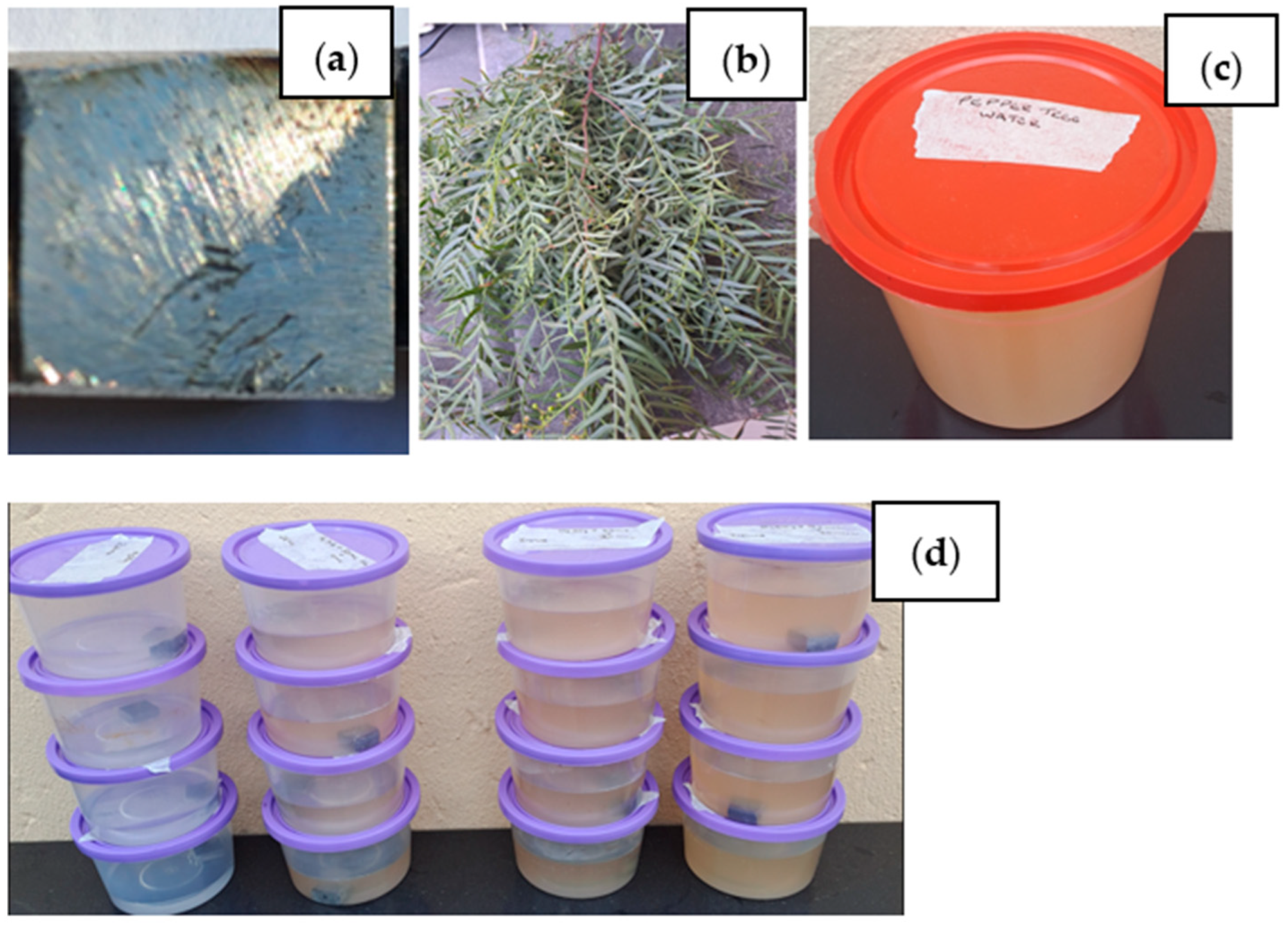
The commercial-grade mild steel used in this study was collected from the Mechanical Engineering workshop at the University of South Africa, polished with a baby grinder; one sample is shown in Figure 1. The chemical composition of the mild steel used is presented in Table 1 and the pepper tree leaves are shown in Figure 2a. Sixteen (16) mild steel samples of 20 × 20 × 10 mm were used in this study. The weight of each sample was measured before being immersed in the media. The samples were divided into four (4) groups for each of the four (4) media. Each group was immersed in a sufficient volume of the appropriate medium to cover the samples for a period ranging from 24 to 96 h, as shown in Figure 3. The samples were taken out of the media, washed in tap water, cleaned with acetone, dried, and their new weight was measured and recorded. This was conducted at intervals of 24 h, 48 h, 72 h, and 96 h, respectively. Using the results obtained, the average corrosion rate and inhibition efficiency were analysed.
The inhibitor was prepared as an aqueous extract of fixed strength, and varying volumes (40–120 mL) were added to a constant volume of acid solution. This approach was intentionally selected to simulate practical industrial dosing conditions, avoid uncertainties associated with undefined molar concentrations of complex plant extracts, and allow for direct comparison of inhibition performance as a function of extract dosage. To improve reliability, multiple samples were tested for each condition and average values are reported. The consistency of the observed trends, namely, the decreasing corrosion rate with increasing inhibitor volume and increasing immersion time, supports the repeatability of the results.
The corrosion rate (CR) and the inhibition efficiency (ηG (%)) were calculated as follows [5]:
C R = W b W a A T
η G % = C R o C R C R o × 100
where A is the surface area (m2), t represents the duration of time it takes to submerge the metal, and Wb and Wa are the sample weights (g) before the experiment and after they were immersed in solutions of sulphuric acid, respectively. CR describes the effect of the amount of inhibitor on the corrosion rate of the samples, and C0R describes the effect of the solution without inhibitor.

3. Results and Discussion

3.1. Virtual Inspection

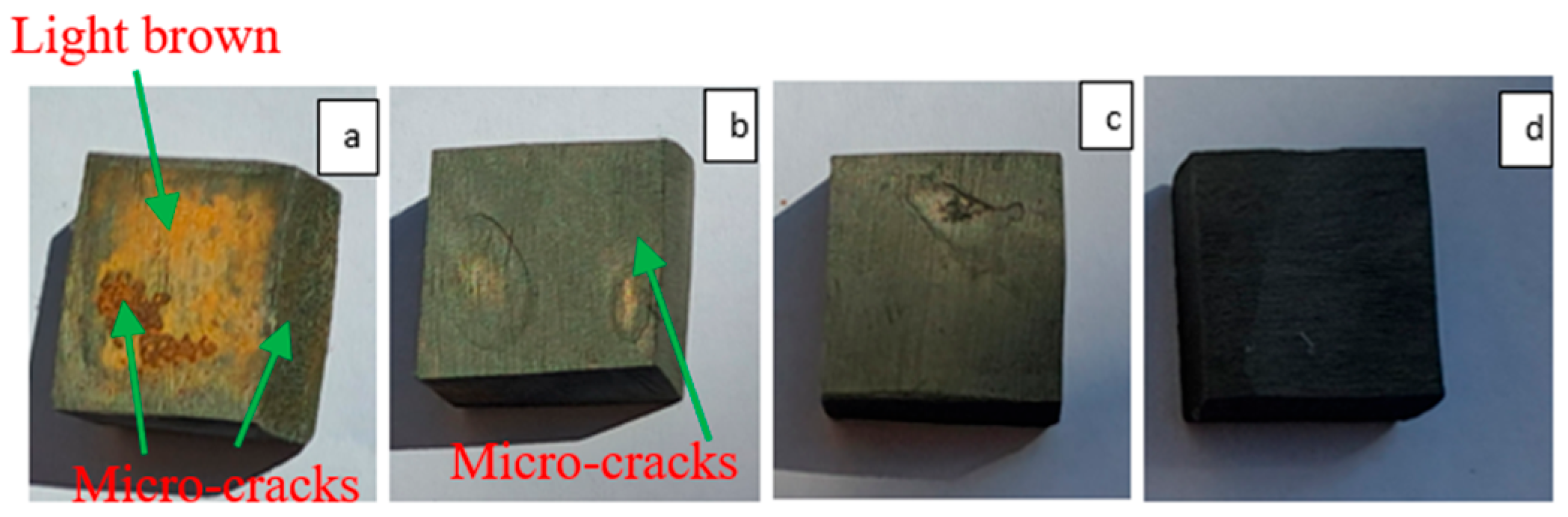
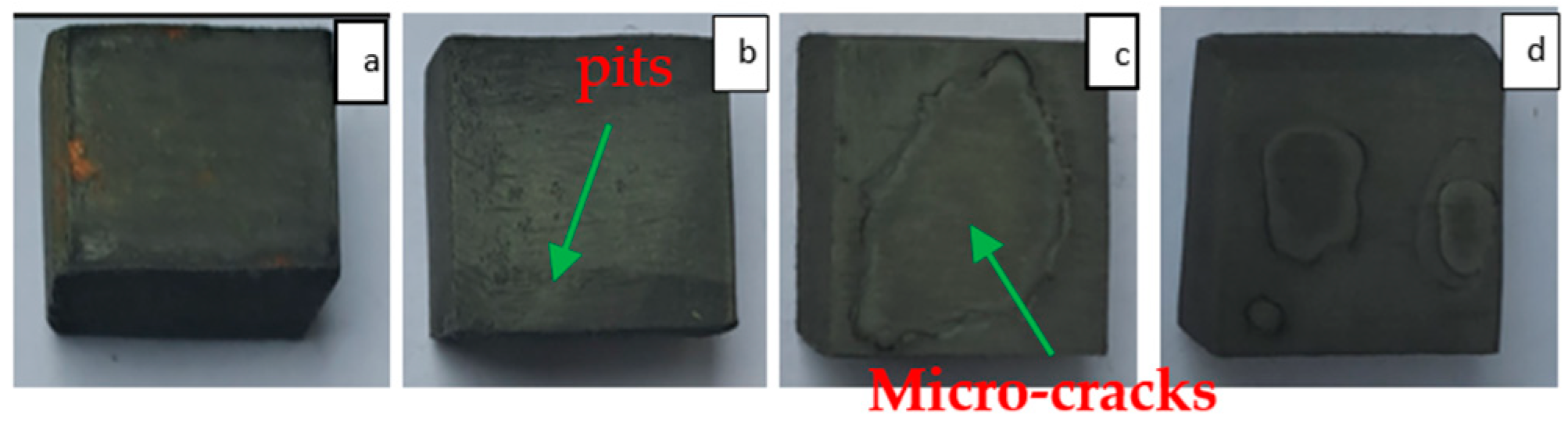
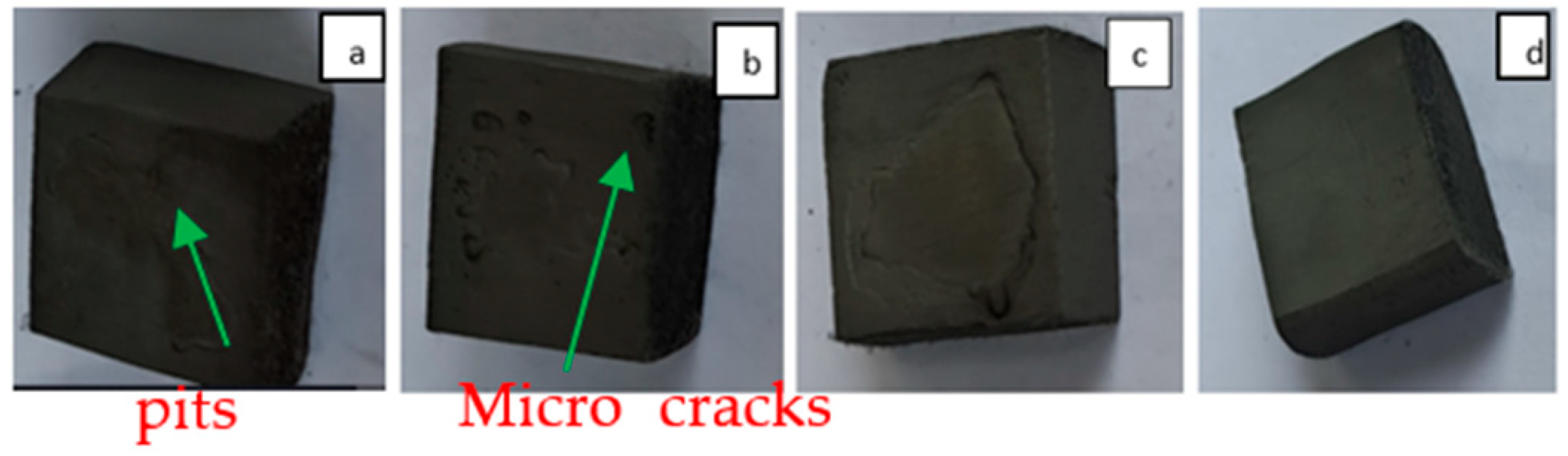
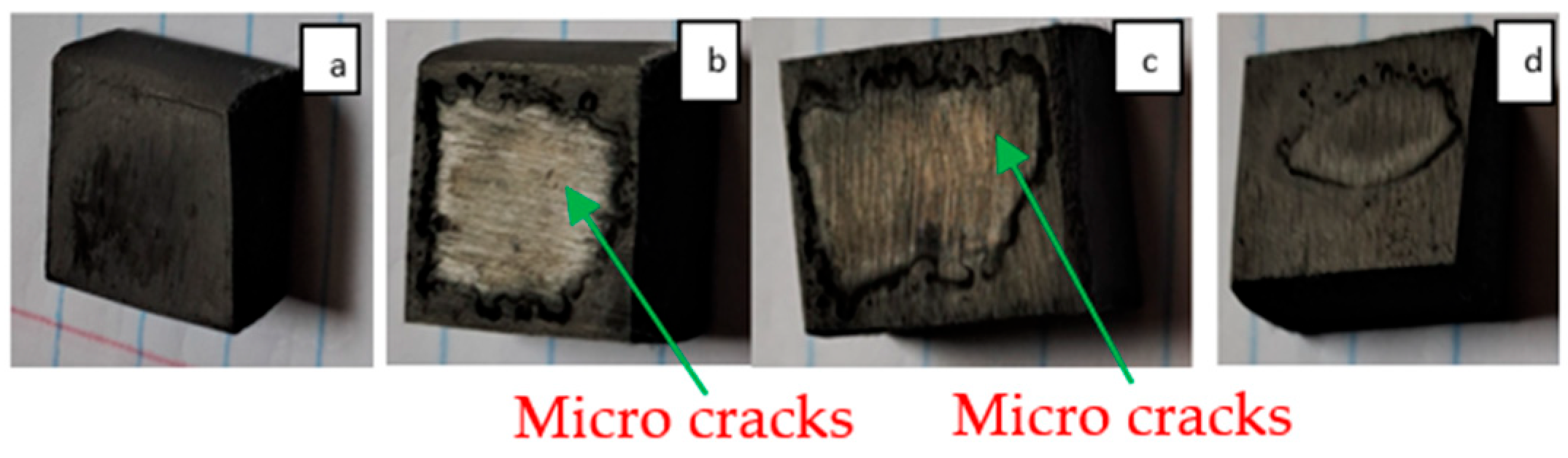
Figure 2, Figure 3 and Figure 4 illustrate the mild steel samples after being submerged for 24, 48, 72, and 96 h at various concentrations, according to the experimental procedure. It was observed that following the experimentation period, the colour of all of the samples changed from silver to dark grey. Figure 2a shows additional light and dark brown colours on top of the sample. Also, as shown in Figure 3b, there was brown colour noticed at the edge of the sample. Micro-cracks can be seen on the surface of the samples in Figure 2b,c, Figure 3c,d, Figure 4b,c and Figure 5b–d. As shown in Figure 5b–d, a light grey area was noticed, which was surrounded by a micro-crack. Pits are clearly noticeable in Figure 4b. This shows that the material was attacked by the acid, which resulted in a change in colour and micro-cracks and pits in the samples. Similar results were reported by [11] in their study of corrosion-inhibitive effects of coconut water for mild steel in acidic medium.

3.2. Corrosion Rate

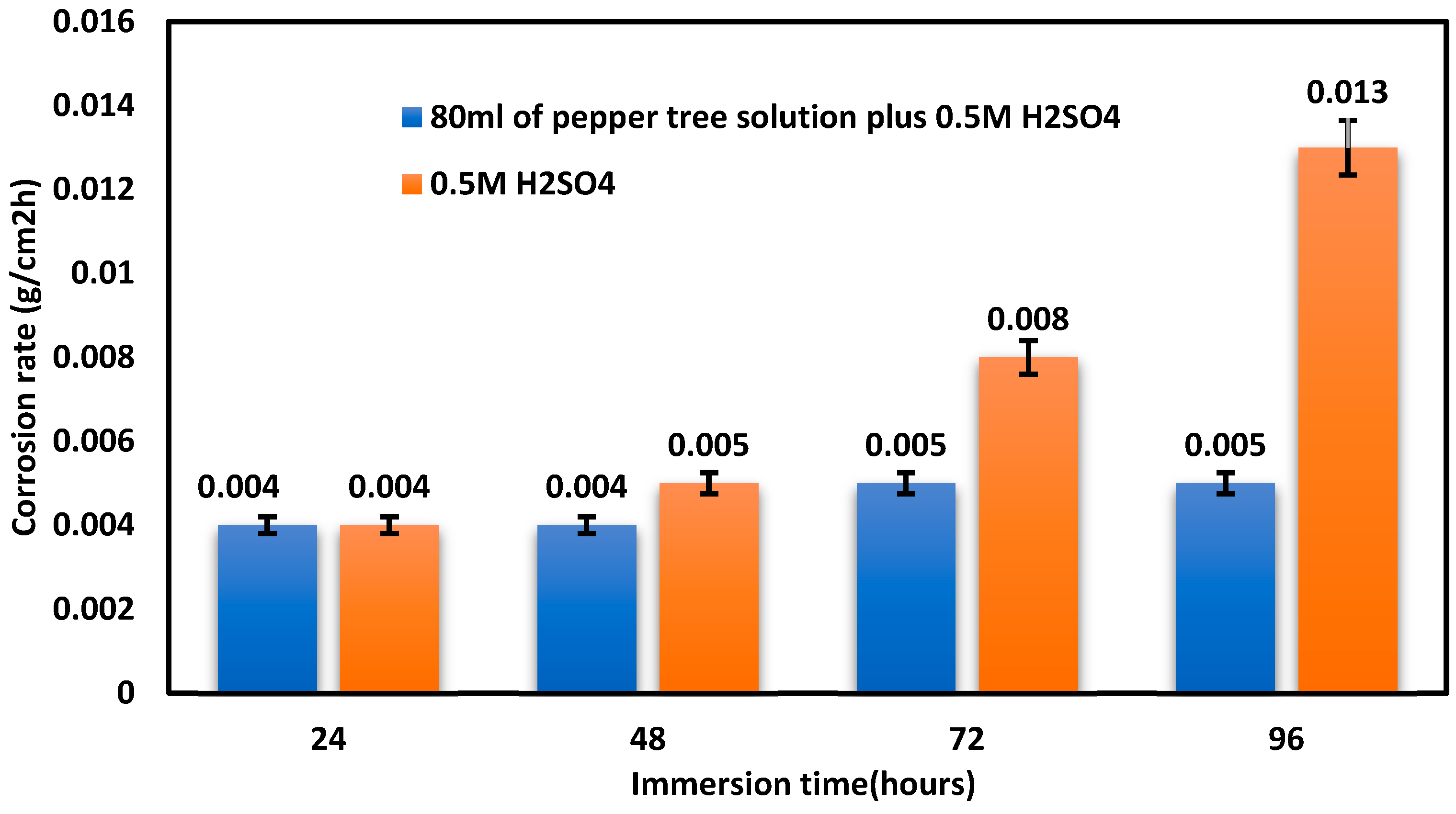
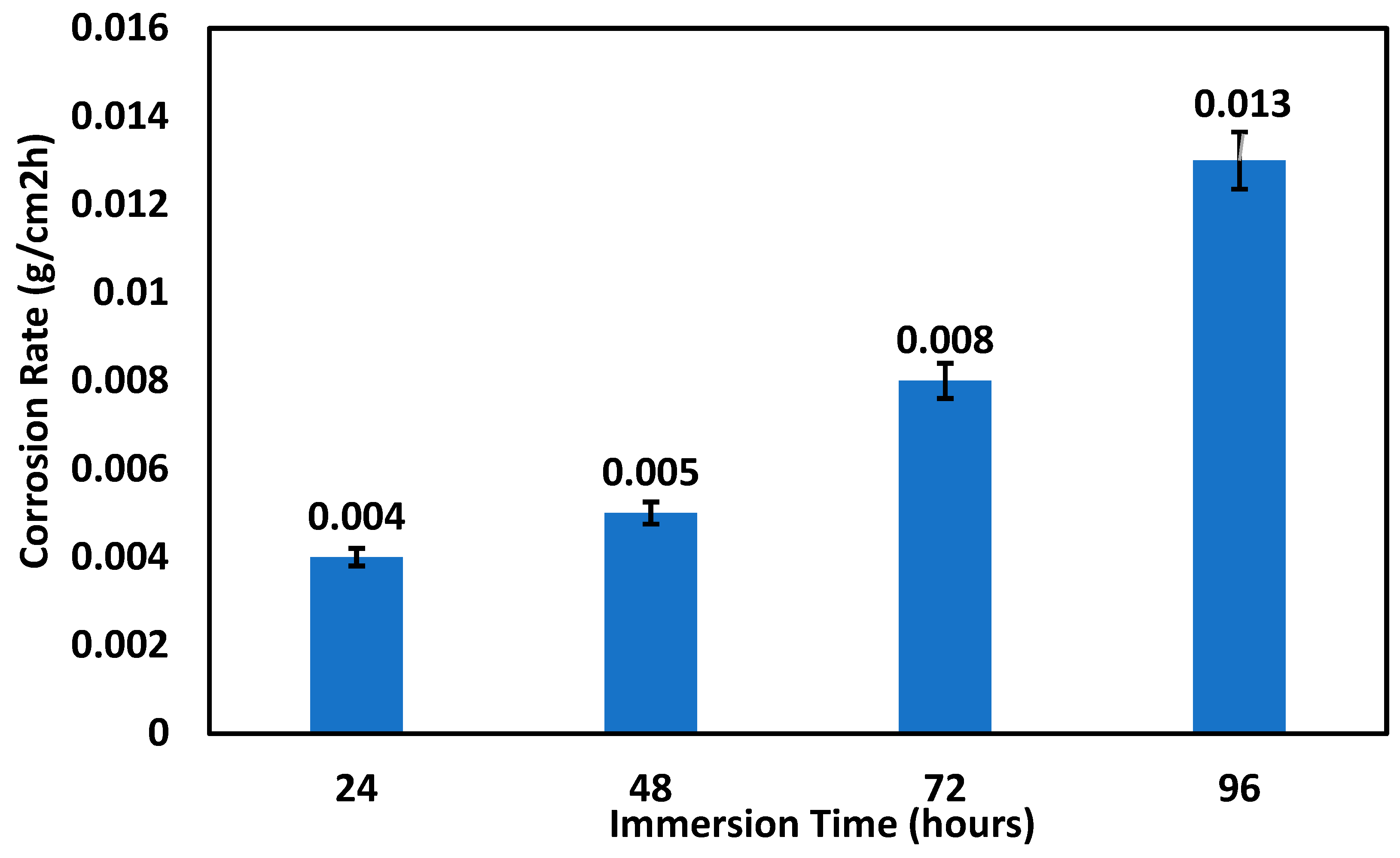
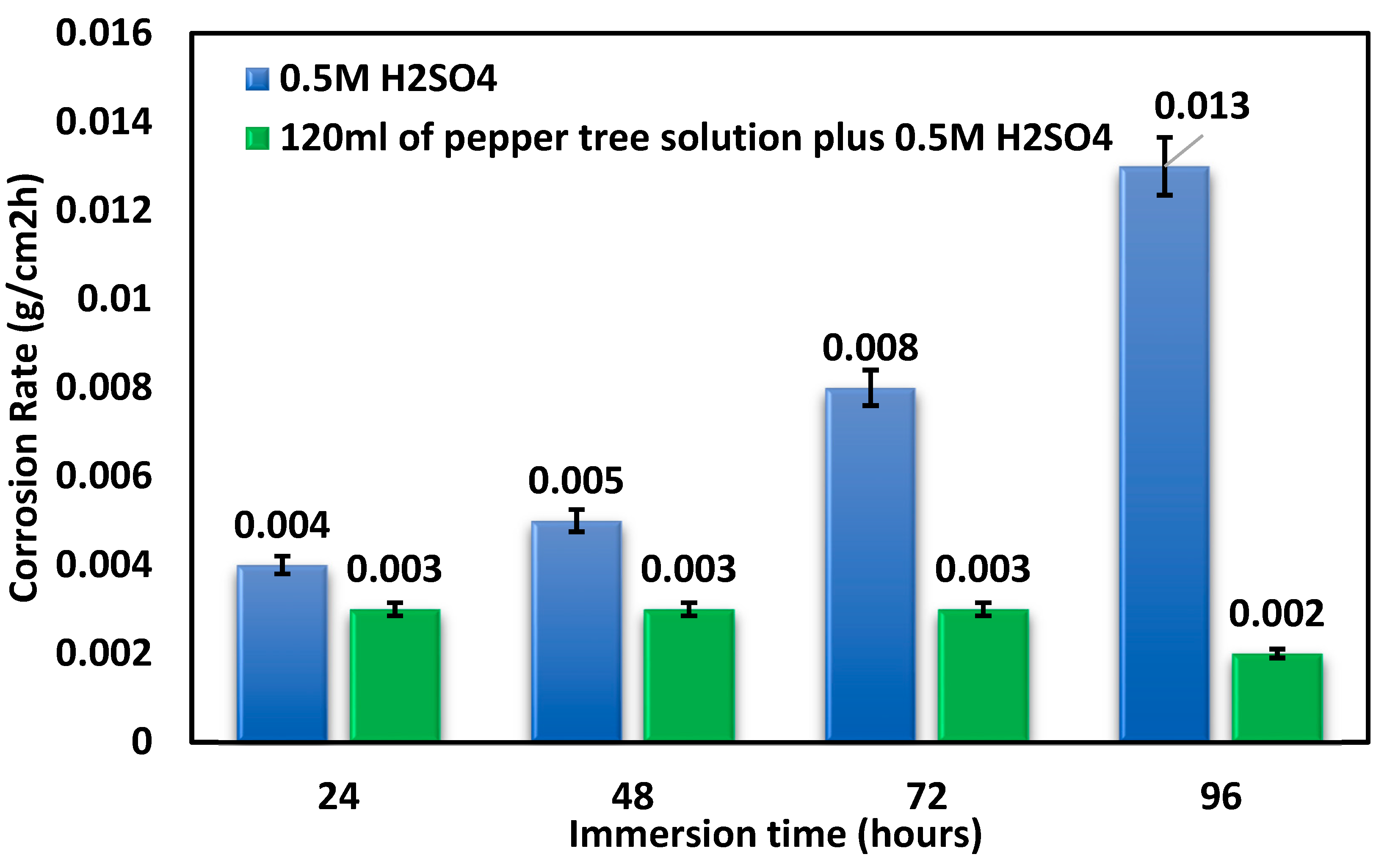
The results of the material weight loss and corrosion rate at various concentrations are presented in Figure 6, Figure 7, Figure 8 and Figure 9. Figure 6 illustrates the corrosion rate of mild steel immersed in uninhibited 0.5 M H2O4 as a function of exposure time (24–96 h). The results show a high initial corrosion rate at 24 h, followed by a progressive decrease with increasing immersion time. This behaviour is characteristic of mild steel corrosion in acidic media and can be attributed to the rapid dissolution of iron during the early stages of exposure, governed by hydrogen evolution and anodic iron oxidation reactions. As immersion time increases, the reduction in corrosion rate may be associated with the partial accumulation of corrosion products on the steel surface, which can temporarily retard the mass transport of aggressive sulphate ions to the metal surface. However, despite this apparent reduction, the corrosion rate remains significantly higher than in inhibited systems, indicating that the surface film formed in pure acid is non-protective and unstable. Similar trends have been reported by Abella and Udoye [11] for mild steel in sulphuric acid without inhibitors, where high initial corrosion rates were observed due to aggressive acid attack, followed by marginal decreases attributed to surface film formation. Fayomi et al. [18] also reported that such films do not provide long-term protection, confirming the necessity of corrosion inhibitors in acidic environments.
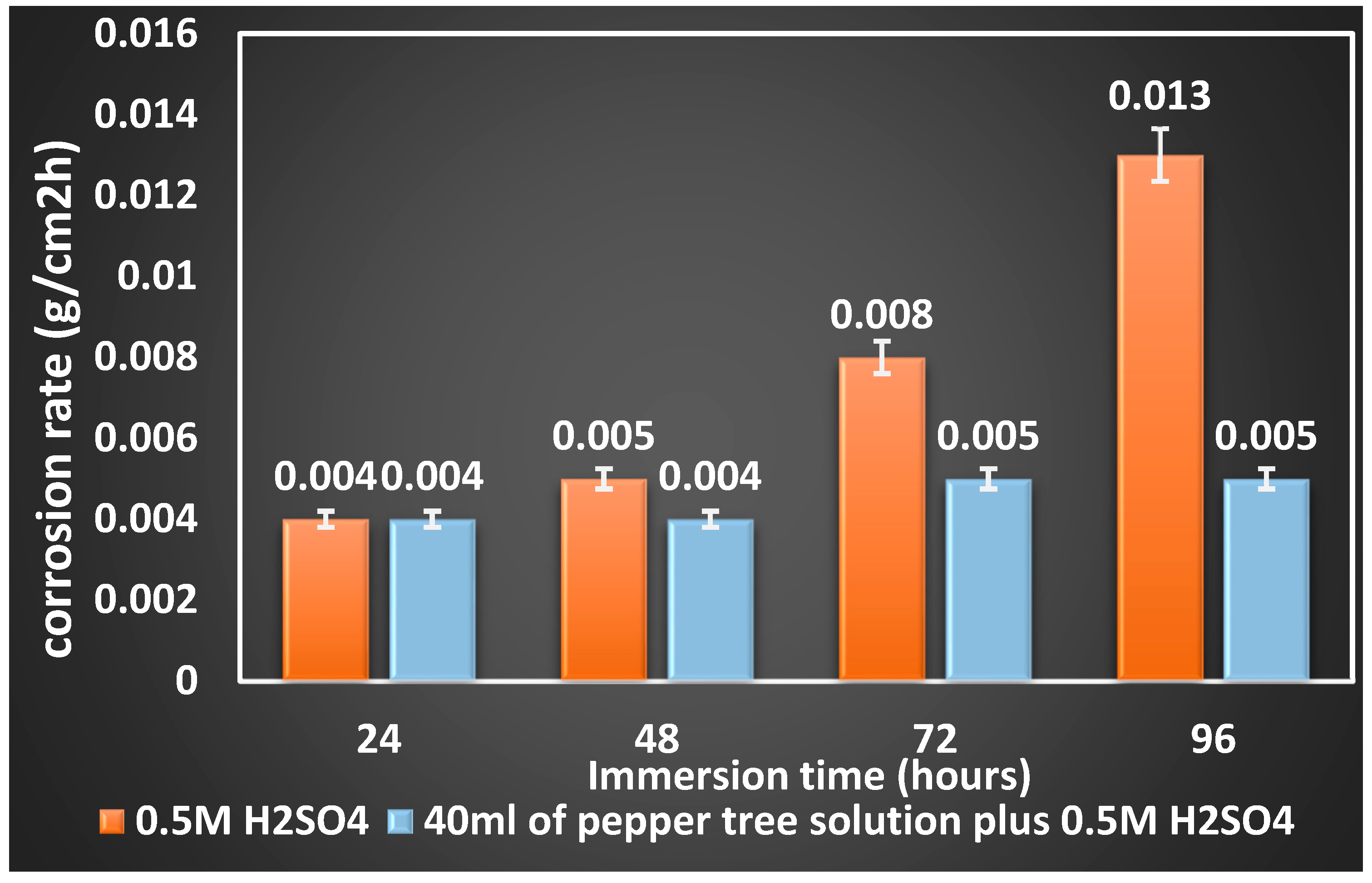
Figure 7 presents the corrosion rate of mild steel in 0.5 M H2SO4 containing 40 mL of pepper tree water extract. Compared to the uninhibited acid (Figure 2), a significant reduction in the corrosion rate is observed at all immersion times, confirming the inhibitive action of the pepper tree extract. At 24 h, the corrosion rate is markedly lower, indicating the effective adsorption of inhibitor molecules onto the steel surface, forming a protective barrier that limits metal–acid interaction. However, as immersion time increases beyond 48 h, the corrosion rate gradually increases, and inhibition efficiency declines. This suggests that the protective film formed at a lower inhibitor volume is thin and weakly adsorbed, making it susceptible to desorption or degradation in the acidic environment with prolonged exposure.
Comparable observations were reported by Mahgoub et al. [7] using Acacia nilotica extracts, where lower inhibitor dosages provided short-term protection but lost effectiveness with time. Similarly, Ibrahim and Naser [19] observed that insufficient plant extract concentration resulted in unstable adsorption layers, especially during long-term immersion. Figure 8 shows the corrosion behaviour of mild steel in the presence of 80 mL of pepper tree extract. The corrosion rate is consistently lower than both the uninhibited system and the 40 mL inhibitor system, indicating improved surface coverage and stronger adsorption of inhibitor molecules. At 24 and 48 h, the corrosion rate reaches a minimum, reflecting the formation of a more compact and coherent protective film on the steel surface.
This behaviour suggests that increasing inhibitor volume enhances the availability of active phytochemical constituents such as oxygen and nitrogen containing functional groups responsible for adsorption onto the metal surface. However, beyond 48 h, the corrosion rate begins to increase slightly, indicating partial deterioration of the adsorbed layer. This phenomenon has been widely reported in plant-based inhibitor studies and is commonly attributed to competitive adsorption between inhibitor molecules and aggressive sulphate ions, as well as possible depletion of active compounds over time. Comparable trends were reported by Okafor et al. [6] and Begum et al. [9], who observed that medium inhibitor concentrations provided optimal short-term protection but suffered from reduced long-term stability in acidic solutions. Figure 9 demonstrates the corrosion rate of mild steel in the presence of the highest inhibitor volume (120 mL).
This system exhibits the lowest corrosion rates across all immersion times, confirming that corrosion inhibition efficiency is strongly dependent on inhibitor dosage. At 24 h, the corrosion rate is minimal. This indicates near-complete surface coverage by inhibitor molecules and the formation of a dense, protective adsorbed film that effectively suppresses anodic and cathodic reactions. Even at longer immersion times (72–96 h), although some reduction in efficiency is observed, the corrosion rate remains significantly lower than in the other systems. The gradual decline in performance over time suggests that while higher inhibitor volume improves adsorption strength, desorption and chemical degradation of organic constituents still occur in highly acidic media. Similar behaviour has been reported for Artemisia-based inhibitors [4,19]. These findings align well with previous studies on green corrosion inhibitors, where plant extracts rich in heteroatoms (O, N, and S) form adsorbed protective films on mild steel surfaces [20,21,22]. Magnolia Kobus extracts [22], where high inhibitor concentrations provided superior protection but could not fully prevent long-term efficiency loss. The time-dependent decrease in efficiency highlights a known limitation of aqueous plant extracts, reinforcing the importance of dosage optimization and exposure duration in practical applications. Importantly, the present study extends existing knowledge by demonstrating that pepper tree extract provides competitive inhibition performance compared to commonly studied plant inhibitors, while offering advantages in terms of simplicity, eco-friendliness, and availability. Although a direct quantitative correlation between surface morphology and corrosion rate was not established, a clear qualitative relationship was observed. Samples exhibiting higher corrosion rates (uninhibited acid and low inhibitor volume) showed more pronounced surface degradation, including deeper pits and extensive micro-cracking. In contrast, samples exposed to higher inhibitor volumes exhibited comparatively smoother surfaces with reduced pit density and less severe cracking, consistent with the lower corrosion rates and higher inhibition efficiencies measured gravimetrically.

3.3. Inhibition Efficiency

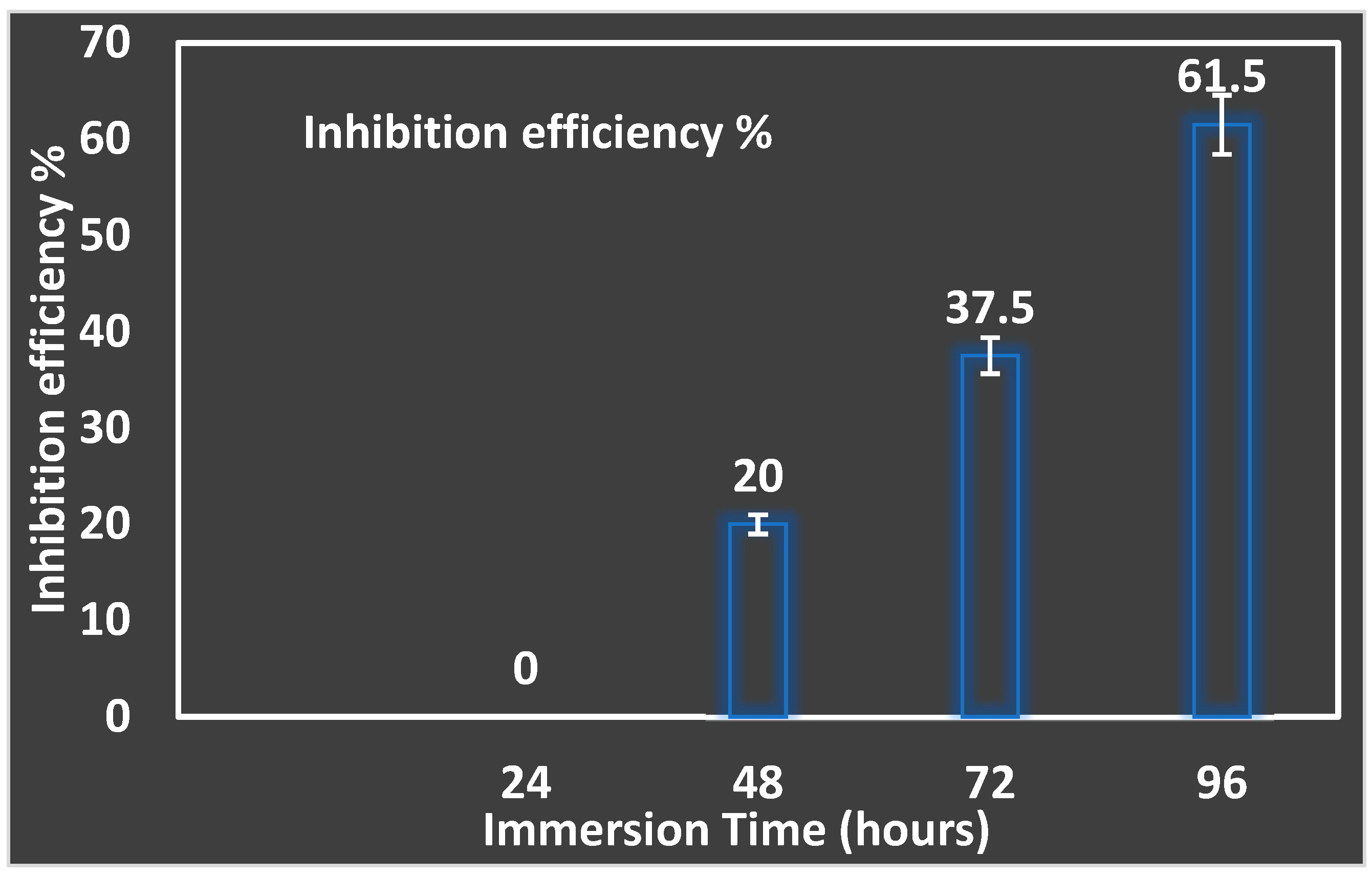
Figure 10 illustrates the inhibition efficiency of mild steel in 0.5 M H2SO4 containing 40 mL of pepper tree water extract as a function of immersion time. The inhibition efficiency is highest at 24 h and decreases progressively with increasing exposure time, reaching negligible values at 96 h.
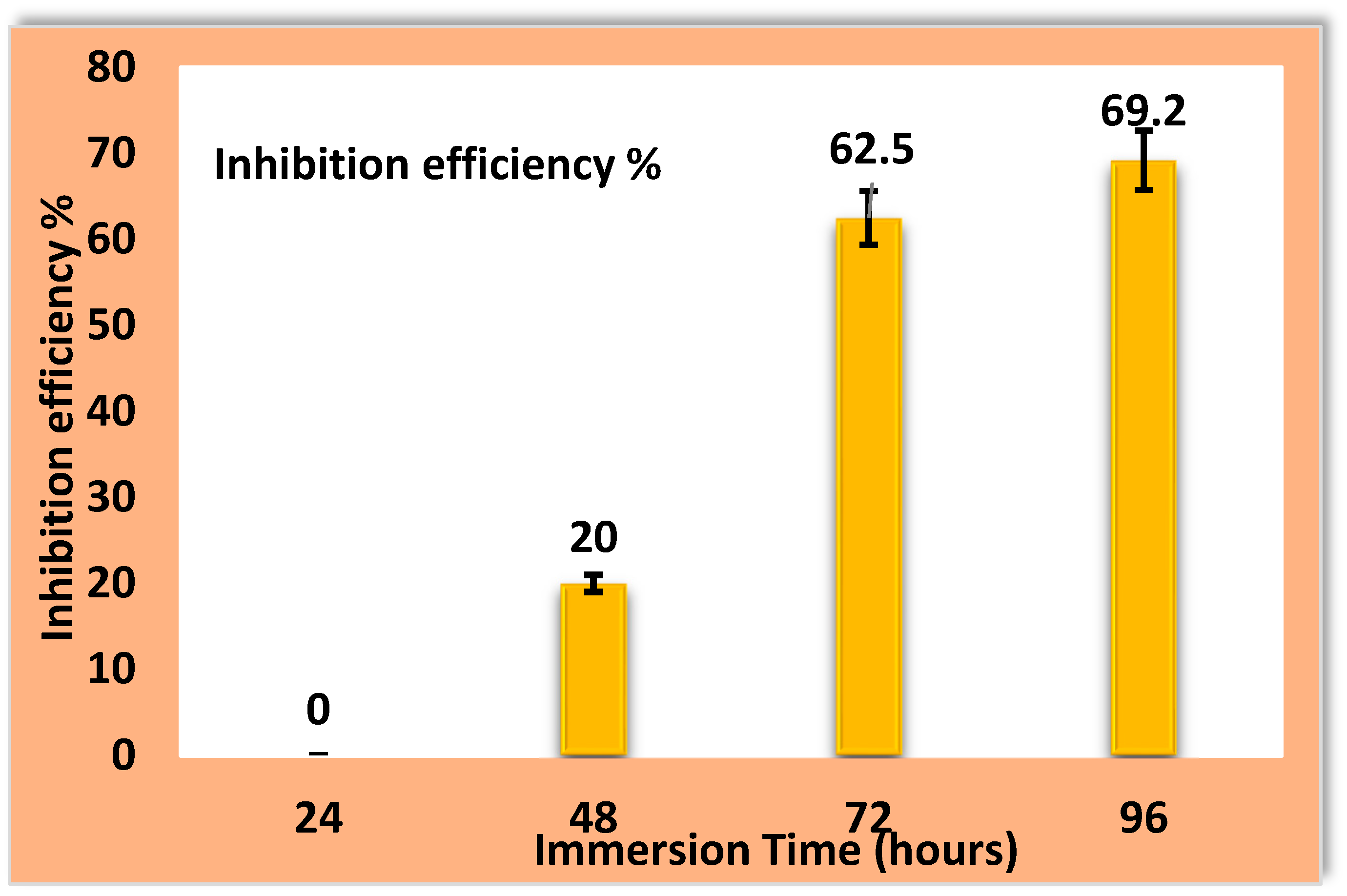
The initial high efficiency observed at 24 h indicates that the active phytochemical constituents of the pepper tree extract are able to adsorb rapidly onto the steel surface, forming a temporary protective film that reduces direct contact between the metal and the acidic medium. However, the rapid decline in efficiency with time suggests that, at this low inhibitor volume, the adsorbed layer is incomplete and weakly bonded, making it vulnerable to desorption and displacement by aggressive sulphate ions. This behaviour is consistent with findings reported by Abella and Udoye [11], who observed that low concentrations of coconut water extract exhibited a high initial inhibition efficiency that deteriorated rapidly under prolonged acidic exposure. A similar time-dependent loss of efficiency was also reported by Ibrahim and Naser [19] for Artemisia plant extract, where insufficient inhibitor dosage led to unstable adsorption films. Figure 11 presents the inhibition efficiency for mild steel immersed in 0.5 M H2SO4 with 80 mL of pepper tree extract. Compared to the 40 mL system, a substantial improvement in inhibition efficiency is observed at all immersion times, particularly within the first 48 h. The relatively high and stable efficiency at 24 and 48 h indicates the formation of a more uniform and compact protective film, attributed to increased availability of active organic molecules capable of covering a larger fraction of the steel surface.
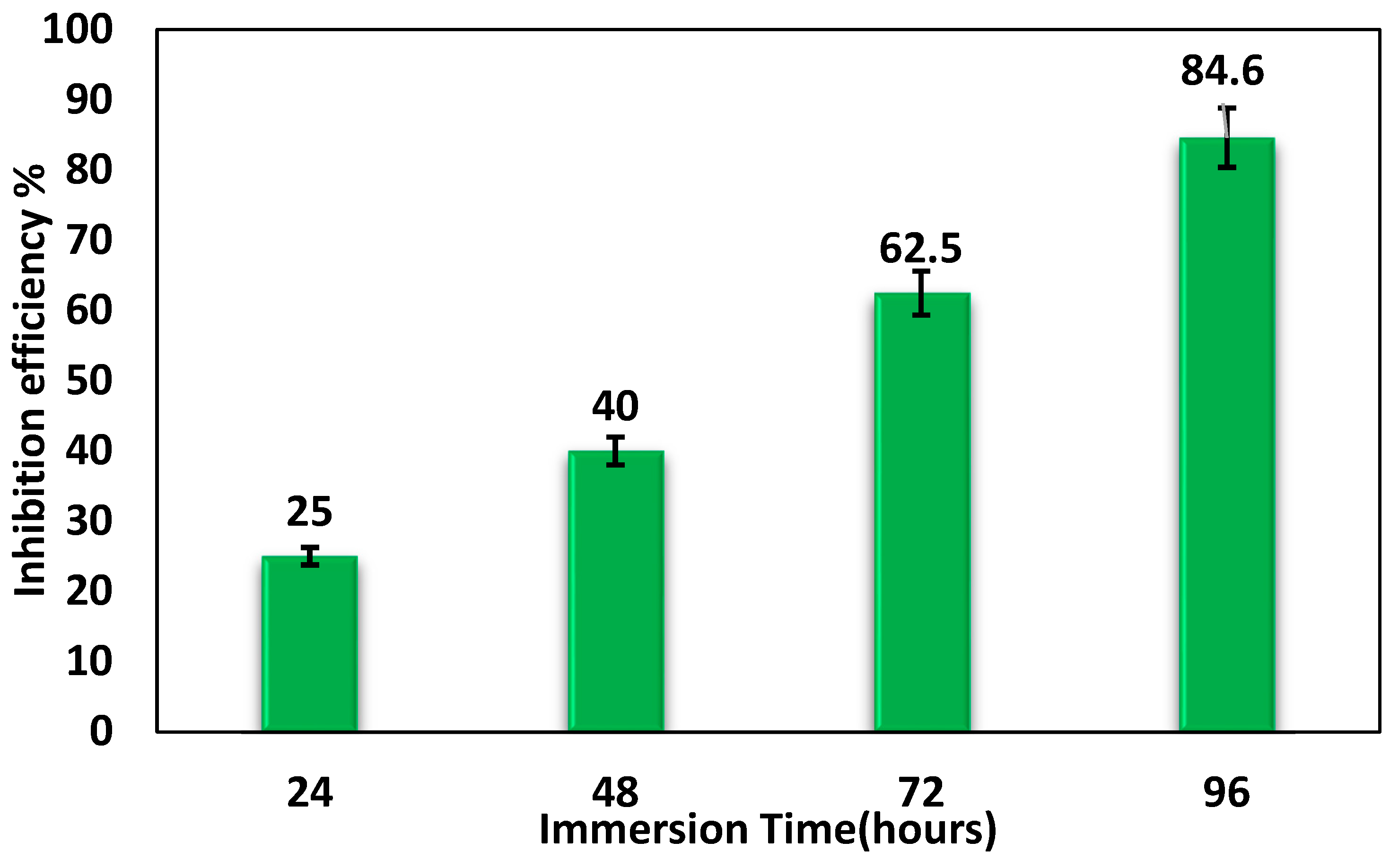
The convergence of inhibition efficiency values at 48 h for the 80 mL and 120 mL systems suggests that an optimum surface coverage is achieved at this stage. Beyond 48 h, a gradual decline in efficiency is observed, which can be attributed to the competitive adsorption of sulphate ions, depletion of active inhibitor molecules, and possible hydrolysis of organic constituents in the acidic environment. Comparable trends were reported by Okafor et al. [6] and Begum et al. [9], who observed that medium inhibitor concentrations provided a balance between effective adsorption and film stability but were still susceptible to long-term degradation in acidic media. Temperature strongly influences corrosion kinetics and inhibitor performance. Increasing temperature accelerates anodic metal dissolution, cathodic hydrogen evolution, and the transport of aggressive ions, leading to higher corrosion rates of mild steel in sulphuric acid. For plant-based inhibitors such as Schinus molle extract, temperature governs adsorption behaviour and film stability. Moderate temperature increases may enhance inhibitor adsorption due to improved molecular mobility, whereas higher temperatures promote desorption of physically adsorbed species, resulting in reduced inhibition efficiency. Since the inhibition mechanism is predominantly physisorption with possible chemisorption contributions, elevated temperatures tend to weaken the protective film and may accelerate degradation of phytochemical constituents. Consequently, inhibition efficiency typically decreases at higher temperatures. Figure 12 shows the inhibition efficiency of mild steel in the presence of the highest inhibitor volume (120 mL). This system exhibits the highest inhibition efficiency at all immersion times, confirming the strong dependence of corrosion protection on inhibitor dosage.
At 96 h, the inhibition efficiency reaches a maximum value of 84.6%, indicating near-complete surface coverage by inhibitor molecules and the formation of a dense, adherent protective film. Even after 96 h of immersion, the inhibition efficiency remains appreciable, demonstrating superior resistance to prolonged acid attack compared to the lower inhibitor volumes. The gradual decrease in efficiency with time suggests that although a higher inhibitor volume enhances adsorption strength and film thickness, long-term exposure in strong acidic media inevitably leads to partial desorption and degradation of organic compounds. This behaviour is in agreement with studies on Magnolia kobus extract [22] and Artemisia judaica extract [4], where high inhibitor concentrations significantly improved protection but could not entirely prevent time-dependent efficiency loss. One vital aspect of organic inhibitors is the existence of different functional groups and the heteroatoms sulphur, oxygen, and nitrogen in their molecular structures. They are responsible for the organic inhibitor–metal surface interaction, leading to the adsorption of organic molecules and forming the protective film which, eventually, culminate in corrosion protection [20]. However, it is worth noting that other factors are equally decisive in creating sustainable and robust corrosion protection, e.g., temperature, metal characteristics, solution corrosiveness, and type of inhibitor. In this study, the tests were carried out at room temperature; as such, future work will seek to elevate the temperate for comparison purposes. It should be noted that all of the bioactive compounds found in plant extracts do not have the capacity to inhibit corrosion reactions [21,22]. As a result, it is unclear which compound is responsible for the corrosion inhibition effects of a specific green corrosion inhibitor. Hence, the study attempts to address these challenges by analysing various techniques to minimize corrosion in mild steel material. The results confirm that pepper tree water extract acts as an effective green corrosion inhibitor, with performance comparable to widely reported plant-based inhibitors. The superior behaviour at higher inhibitor volumes is attributed to enhanced surface coverage and stronger interaction between organic functional groups and the steel surface. Importantly, the observed time-dependent decline highlights a common limitation of aqueous plant extracts and emphasizes the need for dosage optimization and exposure time consideration in practical applications. While the results demonstrate that increasing pepper tree extract volume enhances corrosion resistance, practical implementation in industrial systems requires careful consideration of economic feasibility, scalability, and operational constraints. The use of larger inhibitor volumes, although effective in laboratory-scale experiments, may raise concerns regarding material handling, storage, and dosing in large-scale applications. However, the present inhibitor system offers several advantages that support its potential scalability. The pepper tree (Schinus molle L.) is abundantly available, grows rapidly in many regions, and does not require specialized cultivation, making raw material acquisition economically viable. Furthermore, inhibitor preparation involves a simple aqueous extraction process that does not rely on costly or hazardous organic solvents, significantly reducing production costs and environmental impact. From an industrial perspective, corrosion inhibition is typically optimized by identifying a minimum effective dosage rather than maximizing inhibitor concentration. The results indicate that although the highest inhibitor volume (120 mL) provides maximum short-term efficiency, comparable inhibition levels are achieved at 80 mL after 48 h, suggesting that moderate inhibitor volumes may offer an optimal balance between performance and cost. In practical applications such as acid pickling, descaling, and equipment cleaning, exposure times are often limited to short durations. Under such conditions, the inhibitor volumes investigated in this study, particularly at moderate levels, are likely to be technically and economically viable. The observed decline in inhibition efficiency with prolonged exposure further underscores the importance of process-specific optimization rather than excessive inhibitor usage.

4. Conclusions

In this work, we focused on reducing the corrosion rate and efficiency of mild steel material by utilizing 0.5M solution of H2SO4 acid and using pepper tree as an inhibitor. The corrosion rate values obtained under different experimental conditions are relatively close in magnitude, particularly at higher inhibitor volumes. This behaviour is typical of gravimetric measurements when corrosion rates are low and the inhibitor is effective. Minor variations in corrosion rate may be attributed to experimental uncertainty inherent in weight loss measurements, including balance sensitivity, surface heterogeneity, and handling during cleaning and drying. Despite these limitations, the clear and systematic trends observed across all conditions indicate that the results are reproducible and meaningful. The corrosion rate and efficiency at which this inhibitor reduces corrosion was evaluated and is summarized as follows. The corrosion rate was found to be equivalent at (0.005 g/cm2 h) after 24 and 48 h of immersion, and at 72 and 96 h (0.004 g/cm2 h). The maximum inhibitor volume (120 mL) had a significant influence (84.6%) on the reduction in corrosion rate as compared to 40 and 80 mL volumes. After 48 h, the efficiency of 80- and 120 mm concentrations is the same, at 62.5%. This implies a 22.5% drop in the inhibition efficiency of a 120 mm solution as compared to a 24 h period. This reveals that the effectiveness of pepper tree water inhibition decreases the longer the material is in acid solution. Overall, the findings of this study provide a foundation for dose-optimization strategies and support the potential industrial applicability of pepper tree extract as a low-cost, environmentally friendly corrosion inhibitor.

Limitations of the Study

The current surface analysis was limited to visual inspection; therefore, we recommend that future studies obtain SEM images of corroded samples. The current study is limited to the weight loss method; however, future work can be done on polarization or impedance testing. Future temperature-dependent studies are therefore essential to evaluate adsorption thermodynamics, thermal stability, and the suitability of pepper tree extract for high-temperature industrial applications such as acid pickling and descaling. Future studies will include statistical error analysis and electrochemical methods to further strengthen data precision.

Author Contributions

Conceptualization, M.P.; methodology, L.L. and M.P.; validation, M.P. and L.L.; formal analysis, L.L. and M.P.; investigation, L.L. and M.P.; resources, L.L. and M.P.; data curation, L.L.; writing—original draft preparation, M.P. and L.L.; writing—review and editing, L.L. and M.P.; visualization, L.L.; supervision, M.P.; project administration, L.L. All authors have read and agreed to the published version of the manuscript.

Funding

This research received no external funding.

Institutional Review Board Statement

Not applicable.

Informed Consent Statement

Not applicable.

Data Availability Statement

No new data were created or analysed in this study.

Conflicts of Interest

The authors declare no conflicts of interest.

References

  1. Koko, S.P.; Kusakana, K. Impact of Corrosion in Carbon Steel Pipeline of Marine Wastewater Outfall during Electric Power Generation. In Proceedings of the 2023 7th International Conference on Green Energy and Applications (ICGEA), Singapore, 10–12 March 2023; pp. 252–256. [Google Scholar] [CrossRef]
  2. Oshomogho, F.O.; Akhihiero, T.E.; Edokpayi, O.; Ossai, J.E. Green corrosion inhibition of mild steel using Prunus dulcis seeds extract in an acidic medium. Glob. J. Pure Appl. Sci. 2020, 26, 171–178. [Google Scholar] [CrossRef]
  3. Lebea, L.; Ngwangwa, H.M.; Desai, D.A.; Nemavhola, F. Corrosion Resistance of 3D-Printed Titanium Alloy Ti64-ELI Parts for Dental Application. Appl. Bionics Biomech. 2022, 2022, 1804417. [Google Scholar] [CrossRef]
  4. Fouda, A.; Sahoo, K.; Alsadeag, A. Inhibitive effect of artemisia judaica extract as green corrosion inhibitor for carbon steel in sulfuric acid solution. Int. J. Petrochem. Sci. Eng. 2017, 2, 228–236. [Google Scholar] [CrossRef]
  5. Hbika, A.; Bouyanzer, A.; Jalal, M.; Setti, N.; Loukili, E.; Aouniti, A.; Kerroum, Y.; Warad, I.; Hammouti, B.; Zarrouk, A. The Inhibiting Effect of Aqueous Extracts of Artemisia absinthium L. (Wormwood) on the Corrosion of Mild Steel in HCl 1 M. Anal. Bioanal. Electrochem. 2023, 15, 17–35. [Google Scholar] [CrossRef]
  6. Okafor, P.C.; Ebiekpe, V.E.; Azike, C.F.; Egbung, G.E.; Brisibe, E.A.; Ebenso, E.E. Inhibitory action of artemisia annua extracts and artemisinin on the corrosion of mild steel in HOsolution. Int. J. Corros. 2012, 2012, 768729. [Google Scholar] [CrossRef]
  7. Mahgoub, F.M.; Hefnawy, A.M.; Abd Alrazzaq, E.H. Corrosion inhibition of mild steel in acidic solution by leaves and stem extract of acacia nilotica. Desalin. Water Treat. 2019, 169, 49–58. [Google Scholar] [CrossRef]
  8. Bondarenko, N.O.; Yuchynska, A.O.; Selivanova, T.V.; Nechipurenko, P.P. Evaluation of the Protective Effectiveness of Aqueous Plant Extracts in the Composition of Corrosion Inhibitor Extract. Екoлoгічний Вісник Кривoріжжя 2021, 6, 119–128. [Google Scholar] [CrossRef]
  9. Begum, A.A.S.; Vahith, R.M.A.; Kotra, V.; Shaik, M.R.; Abdelgawad, A.; Awwad, E.M.; Khan, M. Spilanthes acmella leaves extract for corrosion inhibition in acid medium. Coatings 2021, 11, 106. [Google Scholar] [CrossRef]
  10. Gholizadeh, A.; Mokhtari, M.; Naimi, N.; Shiravand, B.; Ehrampoush, M.H.; Miri, M.; Ebrahimi, A. Assessment of corrosion and scaling potential in groundwater resources; a case study of Yazd-Ardakan Plain, Iran. Groundw. Sustain. Dev. 2017, 5, 59–65. [Google Scholar] [CrossRef]
  11. Adzor, S.A.; Udoye, B.O. Corrosion Inhibitive Effects of Coconut (Cocos nucifera Linn) Water for Mild Steel in Acidic Medium. J. Mater. Sci. Eng. 2016, 3, 1–12. [Google Scholar]
  12. Fayomi, O.S.I.; Popoola, A.P.I. Anti-corrosion and tribo-mechanical properties of co-deposited Zn-SnO2 composite coating. Acta Metall. Sin. (Engl. Lett.) 2015, 28, 521–530. [Google Scholar] [CrossRef]
  13. Lebea, L.; Pita, M. Corrosion Inhibitive Effects of Orange Juice for Brass in Acidic Medium 5M H2SO4. Solid State Phenom. 2024, 357, 59–67. [Google Scholar] [CrossRef]
  14. Elbouchtaoui, M.C.; Anejjar, A.; Salghi, R.; Chebli, B.; Hassani, L.M.I.; Hmamouchi, M.; Hammouti, B. Inhibition of steel corrosion in 1 M HCl by the essential oil of Thymus pallidus. Der Pharma Chem. 2014, 6, 406–414. [Google Scholar]
  15. Fayomi, O.S.I.; Olawuni, A.E.; Akande, I.G. Studies on Phosphorus-Aluminum Oxide Coating Effects on Mild Steel Microstructure, Corrosion and Mechanical Behavior. Port. Electrochim. Acta 2023, 41, 315–326. [Google Scholar] [CrossRef]
  16. Mwakalesi, A.J.; Nyangi, M. Effective Corrosion Inhibition of Mild Steel in an Acidic Environment Using an Aqueous Extract of Macadamia Nut Green Peel Biowaste. Eng. Proc. 2022, 4, 41. [Google Scholar]
  17. Lebea, L.; Pita, M. The Effect of Cooling Media on the Corrosion Behavior of Mild Steel after Heat Treatment. Int. J. Emerg. Technol. Adv. Eng. 2022, 12, 158–164. [Google Scholar] [CrossRef]
  18. Fayomi, O.S.I.; Olusanyan, D.; Ademuyiwa, F.T.; Olarewaju, G. Progresses on mild steel protection toward surface service performance in structural industrial: An Overview. IOP Conf. Ser. Mater. Sci. Eng. 2021, 1036, 012079. [Google Scholar] [CrossRef]
  19. Ibrahim, I.K.; Naser, J.A. Corrosion inhibition of carbon steel in sodium chloride solution using artemisia plant extract. Plant Arch. 2020, 20, 3315–3319. [Google Scholar]
  20. Verma, C.; Olasunkanmi, L.O.; Bahadur, I.; Lgaz, H.; Quraishi, M.A.; Haque, J.; Sherif, E.S.M.; Ebenso, E.E. Experimental, density functional theory and molecular dynamics supported adsorption behavior of environmental benign imidazolium based ionic liquids on mild steel surface in acidic medium. J. Mol. Liq. 2019, 273, 1–15. [Google Scholar] [CrossRef]
  21. Ghalib, L.; Al Jaaf, H.J.M.; Abdulghani, H.A. Temperature effect on the efficiency of Eucalyptus Camaldulensis leaves in the acid corrosion of carbon steel. Mater. Today Proc. 2021, 42, 2475–2481. [Google Scholar] [CrossRef]
  22. Chung, I.M.; Malathy, R.; Priyadharshini, R.; Hemapriya, V.; Kim, S.H.; Prabakaran, M. Inhibition of mild steel corrosion using Magnolia kobus extract in sulphuric acid medium. Mater. Today Commun. 2020, 25, 101687. [Google Scholar] [CrossRef]
Figure 1. Polished mild steel, (b) Pepper tree leaves, (c) mixture of boiled pepper tree leaves and tap water and (d) Different media.
Materproc 31 00020 g001
Figure 2. Samples immersed for 24 h. (a) Acid, (b) acid +40 mL of pepper tree water, (c) acid + 80 mL of pepper tree, (d) acid + 120 mL of pepper tree water.
Materproc 31 00020 g002
Figure 3. Samples immersed for 48 h. (a) Acid, (b) acid +40 mL of pepper tree water, (c) acid + 80 mL of pepper tree, (d) acid + 120 mL of pepper tree water.
Materproc 31 00020 g003
Figure 4. Samples immersed for 72 h. (a) Acid, (b) acid +40 mL of pepper tree water, (c) acid + 80 mL of pepper tree, (d) acid + 120 mL of pepper tree water.
Materproc 31 00020 g004
Figure 5. Samples immersed for 96 h. (a) Acid, (b) acid +40 mL of pepper tree water, (c) acid + 80 mL of pepper tree, (d) acid + 120 mL of pepper tree water.
Materproc 31 00020 g005
Figure 6. Variation in corrosion rate with duration of immersion in 0.5M H2SO4.
Materproc 31 00020 g006
Figure 7. Corrosion rate of acid +40 mL of pepper tree water.
Materproc 31 00020 g007
Figure 8. Corrosion rate of acid +80 mL of pepper tree water.
Materproc 31 00020 g008
Figure 9. Corrosion rate of acid +120 mL of pepper tree water.
Materproc 31 00020 g009
Figure 10. Inhibition efficiency of acid +40 mL of pepper tree water.
Materproc 31 00020 g010
Figure 11. Inhibition efficiency of acid +80 mL of pepper tree water.
Materproc 31 00020 g011
Figure 12. Inhibition efficiency of acid +120 mL of pepper tree water.
Materproc 31 00020 g012
Table 1. Chemical composition of the mild steel as received.
CSiMnPSCrNiAlCoNbTiSnFe
0.160.170.790.0240.0100.020.010.0010.0010.0010.0010.00398.8
Disclaimer/Publisher’s Note: The statements, opinions and data contained in all publications are solely those of the individual author(s) and contributor(s) and not of MDPI and/or the editor(s). MDPI and/or the editor(s) disclaim responsibility for any injury to people or property resulting from any ideas, methods, instructions or products referred to in the content.