
Proceeding Paper

Impact of Impurities from Recycled Materials on Battery Safety and Life Cycle †

by
Tshifhiwa Moureen Masikhwa
1,
Motlalepula Nete
1,
Pheello Nkoe
1 and
Mpho Wendy Mathebula
2,*
1
Applied Chemistry, Research and Innovation Department, The South African Nuclear Energy Corporation SOC Ltd., Elias Motsoaledi Street Ext. (Church Street West), R104 Pelindaba, Madibeng Municipality 0240, South Africa
2
Department of Chemistry, University of the Free State, Bloemfontein 9300, South Africa
*
Author to whom correspondence should be addressed.
Presented at the 4th International Conference on Applied Research and Engineering, Pretoria, South Africa, 21–23 November 2025.
Mater. Proc. 2026, 31(1), 11; https://doi.org/10.3390/materproc2026031011
Published: 16 April 2026
(This article belongs to the Proceedings of The 4th International Conference on Applied Research and Engineering)

Abstract

As the global demand for lithium-ion batteries (LIBs) continues to rise, battery recycling has become a critical strategy for mitigating resource depletion, minimising environmental impact, and advancing a circular economy. However, recycled electrode materials, particularly cathode and anode powders, often contain residual impurities such as transition metals (e.g., Cu, Fe, Al), polymeric binders (e.g., PVDF), and electrolyte decomposition products. These contaminants can significantly impair the electrochemical performance, thermal stability, and overall safety of newly manufactured cells. This study aims to systematically investigate the nature, origin, and impact of impurities in recycled cathode and anode materials. A suite of analytical techniques, including inductively coupled plasma mass spectrometry (ICP-MS), infrared spectroscopy (IR), scanning electron microscopy with energy-dispersive spectroscopy (SEM-EDS), and thermogravimetric analysis (TGA), will be employed to quantify impurity levels and assess material integrity across various recycling streams. The findings are expected to inform the establishment of impurity threshold limits for battery-grade recycled materials and guide the development of enhanced purification protocols. Ultimately, this research will support the production of safer and more reliable second-life batteries, offering valuable insights to recyclers, manufacturers, and regulatory bodies committed to sustainable energy storage technologies.

1. Introduction

The global shift toward sustainable energy systems has greatly increased the demand for lithium-ion batteries (LIBs) in areas like electric vehicles (EVs), portable electronics, and stationary energy storage systems (ESSs) [1] (Dunn et al., 2021). As the use of LIBs grows, so does the number of end-of-life (EoL) batteries. This creates a significant need for effective recycling processes to recover valuable metals like lithium, cobalt, nickel, and manganese [2,3]. Recycling helps lessen dependence on mining and reduces the environmental impacts that come with extracting raw materials [4]. However, recycling materials for new battery production comes with a key challenge—impurity contamination.
Impurities in recycled LIB materials can come from various sources. These include incomplete separation of cathode and anode fractions, breakdown products from battery use, corrosion of current collectors, and cross-contamination during mechanical or chemical processing [5,6]. Common contaminants comprise metallic particles, like aluminium, copper, and iron; leftover electrolytes; binder residues like polyvinylidene fluoride (PVDF); and trace elements from processing equipment [7]. Even in small amounts, these impurities can cause undesirable side reactions, speed up electrolyte decomposition, promote the formation of lithium dendrites, and destabilise cathode crystal structures, ultimately increasing safety risks [8,9]. From a safety standpoint, metallic impurities such as iron, nickel, and copper can penetrate the separator or create conductive paths that lead to internal short circuits, which may cause thermal runaway [10]. Residual decomposition products from fluoride-containing electrolytes can produce hydrofluoric acid (HF), which harms active materials and current collectors [11]. Additionally, structural impurities like amorphous carbon or inactive oxides can block lithium-ion transport pathways. This increases internal resistance and reduces power capability [12]. Even tiny amounts of transition metals can speed up solid electrolyte interphase (SEI) breakdown and electrolyte oxidation, resulting in a shorter cycle life [12]. Furthermore, poorly managed impurity levels compromise cell-to-cell consistency, which is crucial for high-performance applications such as EV battery packs [2].
To tackle these issues, recent studies have investigated advanced purification methods, including hydrometallurgical, pyrometallurgical, and direct recycling techniques. These methods involve focused impurity removal steps [13]. However, the industry must navigate trade-offs between recovery efficiency, cost, and impurity control effectiveness. A thorough understanding of the types, sources, and impacts of impurities is essential for improving recycling processes and creating quality standards for recycled battery-grade materials.
This study systematically examines the nature and sources of impurities in recycled cathode and anode materials. Analytical techniques, including inductively coupled plasma mass spectrometry (ICP-MS), infrared spectroscopy (IR), scanning electron microscopy with energy-dispersive spectroscopy (SEM-EDS), and thermogravimetric analysis (TGA), will be used to measure impurity levels and evaluate material quality across various recycling routes. The findings aim to establish impurity limits for safe and effective battery production, inform the development of better purification methods, and support the creation of reliable second-life and recycled-content batteries. These insights will aid recyclers, manufacturers, and regulatory bodies focused on promoting safe and sustainable energy storage technologies.

2. Experimental Section

2.1. Characterisation Techniques

An Agilent inductively coupled plasma mass spectrometer (Agilent ICP-MS 7850) from Waldbronn, Germany was used for wet analysis. Scanning electron microscopy (SEM) and energy dispersive spectroscopy (EDS) analyses were performed at the University of the Free State. A Sineo microwave digestion system (6G MDS) from Shanghai, China, equipped with a 6SXF100 rotor and six polytetrafluoroethylene (PTFE) reaction vessels, was used for acid dissolution of the samples. A high-temperature Labotec oven was used for temperature treatment. A Velp CHNS-O elemental analyzer from Usmate, Italy was used for determination of total C, H, N and S. Eltra Thermogravimetric analysis (TGA) from Haan, Germany, was used to check the thermal stability of and compositional changes in the samples.

2.2. Chemical Reagents, Materials, and Sampling Procedure

A Multi-Element Standard solution 1576, containing 1000 ppm each of Mn, Al, Ni, Co, Li, and Cu, was sourced from Seagate, Dublin, Ireland. Analytical-grade reagents, 32% hydrochloric acid (HCl) and 65% nitric acid (HNO3) were obtained from ACS, Washington, DC, USA, and double-deionised water was used for all solution preparations. Each lithium-ion battery (LIB) was safely disabled in a fume hood to prevent inhalation of potentially harmful gases. Using a utility knife, the battery casing was carefully opened to remove the terminals. The battery case was opened to reach the internal parts. Then, the separator, copper current collector, and aluminium current collector were separated and stored in labelled plastic containers. Notably, the liquid electrolyte had completely evaporated. Sample digestion and instrumental measurements were conducted in triplicate to ensure reproducibility and reliability of the analytical results.

2.3. Microwave-Assisted Acid Digestion

The anode component was pre-heated at 250 °C and the cathode at 400 °C to facilitate the separation of powdered material from the current collectors. Sample digestion was performed using a Sineo microwave reaction system. This system had a 6SXF100 rotor and six polytetrafluoroethylene (PTFE) reaction vessels. Subsample aliquots of about 0.1 g, weighed precisely to 0.1 mg, were taken from the cathode components and placed into porcelain crucibles. Then, 10 mL of aqua regia was added to each sample, followed by digestion in the microwave for 30 min at 150 °C and 1 bar pressure. After digestion, the cooled solutions were examined visually to confirm the complete dissolution of the solid material. The resulting solutions were then transferred into 100.0 mL volumetric flasks for analysis by ICP-MS. The analytical results are summarised in Table 1.

3. Results and Discussion

3.1. ICP-MS Measurements

The ICP-MS analysis of the lithium-ion battery samples, as shown in Table 1, shows average concentrations of several key elements. Cobalt (Co), a critical component of cathode materials, was the most abundant element with an average concentration of 65.38%. Aluminium (Al), possibly from the aluminium current collector, was also present in significant amounts (average 11.74%). Lithium (Li), essential for battery function, was noticed at an average concentration of 5.97%. In addition to these primary elements, trace quantities of sodium (Na), magnesium (Mg), potassium (K), manganese (Mn), nickel (Ni), iron (Fe), chromium (Cr), copper (Cu), and zinc (Zn) were obtained. These trace elements are measured as impurities, which may be produced from manufacturing residues, raw materials, or battery degradation over time. The existence of impurities such as iron and copper is mostly notable because they can cause undesirable chemical side reactions during battery operation, possibly accelerating capacity loss, reducing efficiency, and compromising safety. Metallic impurities can catalyse electrolyte decomposition or form conductive bridges that increase the risk of short circuits. The relative standard deviation (RSD) values displayed generally indicated good precision in measurements, with magnesium and aluminium exhibiting low variability (1.16% and 2.37% RSD respectively), demonstrating consistent detection. Interestingly, Cu, despite having a significantly lower concentration (0.0048%) compared to zinc (0.05%), exhibited a relatively lower RSD value of 8.44% compared to 20.23% for Zn. This observation was attributed to the stability of the analytical signal for Cu compared to Zn across replicate measurements. The Zn signal was more strongly affected by analytical variability. Such variability can arise when analyte concentrations approach the instrumental detection limits, where background fluctuations, matrix effects, or spectral interferences may disproportionately influence signal intensity.

3.2. SEM-EDS Measurements

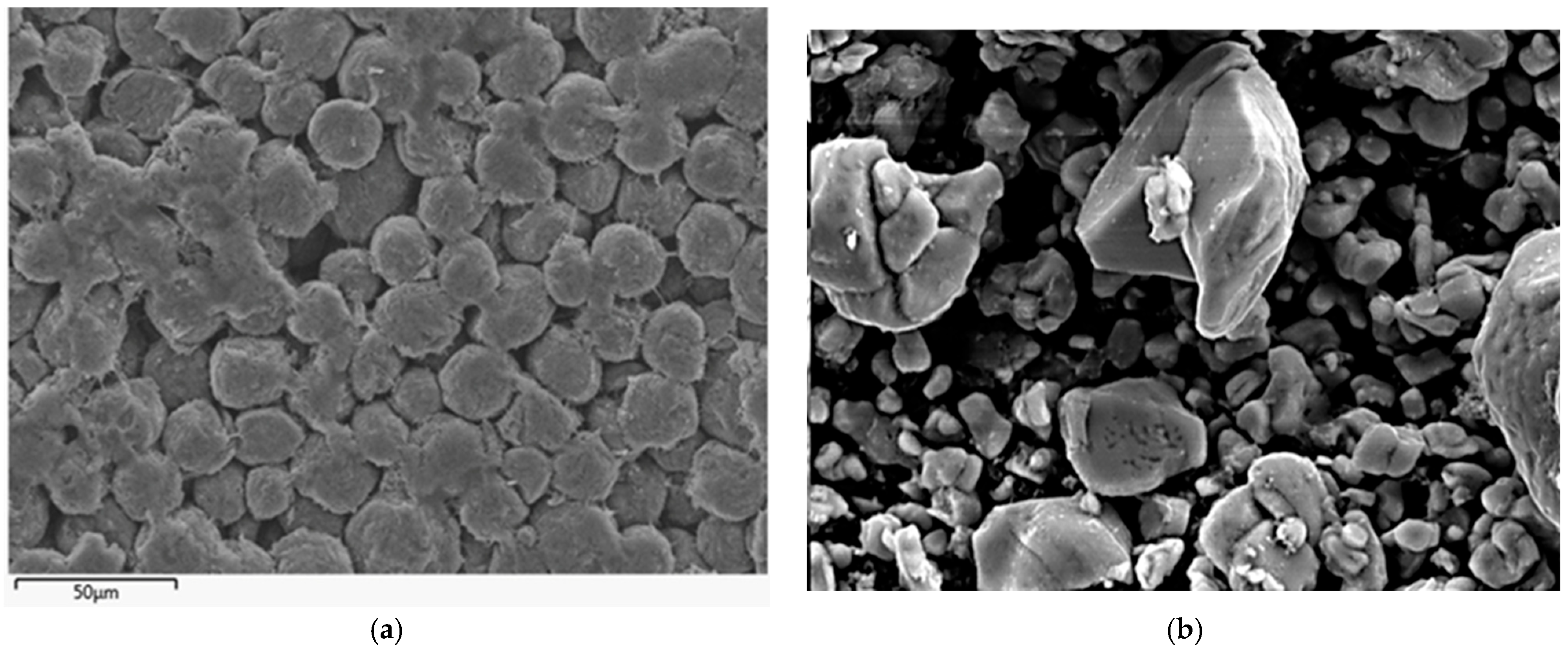
Field Emission Scanning Electron Microscopy (FE-SEM) and energy-dispersive X-ray spectroscopy (EDS) analyses were done to study the surface shape, average particle size, and elemental composition of battery cathode and anode materials. Figure 1 shows detailed FE-SEM images of these spent lithium-ion battery materials. Figure 1a shows that the anode material is made of carbon-based nanoparticles that have a uniform size and shape. This indicates that the conductive matrix stayed intact even after extensive cycling. Figure 1b shows the cathode material, with a layered or nano-sheet-like structure, which is typical of the transition metal oxides used in cathode formulations. Both materials displayed surface irregularities and particle clumping, likely due to degradation processes and the build-up of impurities during battery use and cycling. Cathode material EDS analysis revealed these impurities, including high levels of fluorine (8.4%), which often come from electrolyte breakdown and side reactions at the electrode–electrolyte interface [14]. Additionally, we observed traces of elements such as aluminium (Al), manganese (Mn), and zinc (Zn), which may come from the current collectors, mixed cathode materials, or external contamination during handling and recycling. The presence of these impurities leads to uneven particle shapes, possible clustering, and surface flaws. This can negatively affect the electrical conductivity, structural strength, and overall performance of the recovered materials.
Additional insights come from the EDS spot analyses of the cathode material, summarised in Table 2. These analyses showed consistent elemental composition at magnifications of 1000×, 500×, and 155×. The oxygen content ranged from 61.0% to 62.9%. This suggests a high degree of surface oxidation, possibly due to extended cycling or exposure to air after discharge. Fluorine levels, between 11.3% and 13.1%, result from the breakdown of the LiPF6 electrolyte and other components such as the PVDF binder. This process forms fluorinated compounds on the cathode surface. Cobalt (Co) consistently appeared at about 24.4%, indicating its role as the main transition metal in the cathode active material. Aluminium (Al) showed up only at 1000× magnification at 2.4%. This may be contamination from the aluminium current collector or leftover impurities from manufacturing. Manganese (Mn) was found in trace amounts (0.5–0.6%) and likely came from a blended-metal cathode chemistry or contamination during sample handling.
The atomic percentages obtained from the cathode were used to calculate a possible phase composition empirically, which yielded a possible composition ratio of Co5O2F10. This is further confirmed by the presence of a specific Co:F:O atomic ratio in EDS for the cathode, which is close to that of Co5O2F10, and a layered oxide structure from FE-SEM imaging. On the other hand, a high amount of fluoride is detected in the EDS spectra for the anode composition, around 13.7%. However, there is no presence of a transition metal to create a stable oxyfluoride compound, and a carbon-based structure does not create a framework for a compound to form. The high amount of fluorine in the anode composition is therefore attributed to the presence of LiPF6 degradation products [14], such as LiF and POFx, which are not present in a crystal structure and therefore cannot be assigned to a compound using EDS data analysis. This is in contrast to the cathode composition, which has a high amount of fluoride and a specific amount of transition metals, indicating that they may form a compound. This is a specific case of a compound being present in the cathode composition but not in the anode composition. This fluoride-rich cobalt oxide likely formed through the reaction of cobalt oxides with decomposition products from the fluorinated electrolyte and polyvinylidene fluoride (PVDF). The presence of impurities such as fluorine, aluminium, and manganese reflects the battery’s degradation and potential challenges to long-term stability and recyclability. Controlling and identifying these impurities is crucial for improving battery performance, safety, and material recovery in end-of-life lithium-ion batteries.
Notably, Fe and Cu were identified using ICP-MS with average concentrations of 0.33% and 0.0048%, respectively, whereas these elements were not identified using EDS spot analysis on the cathode material. This discrepancy can be explained by the inherent differences between these two analytical techniques, such as their sensitivity, volume, and detection limit. ICP-MS is a sensitive analytical tool used for bulk analysis, which can detect trace elements even at very low concentrations (ppb level), provided that the analysis is completed after the digestion of the material. In other words, ICP-MS is used to determine the total composition of the material. EDS analysis is semi-quantitative and has a higher detection limit than ICP-MS, typically ranging from 0.1 to 0.5 wt%. Moreover, EDS analysis is limited to only the surface region of the material. In addition, Fe and Cu may be present at very low concentrations and/or may be located at positions other than the EDS spot analysis region. The fact that Fe and Cu are not observed in the EDS spectra is not inconsistent with the ICP-MS data; rather, it is an indication of the complementary nature of EDS and ICP-MS.
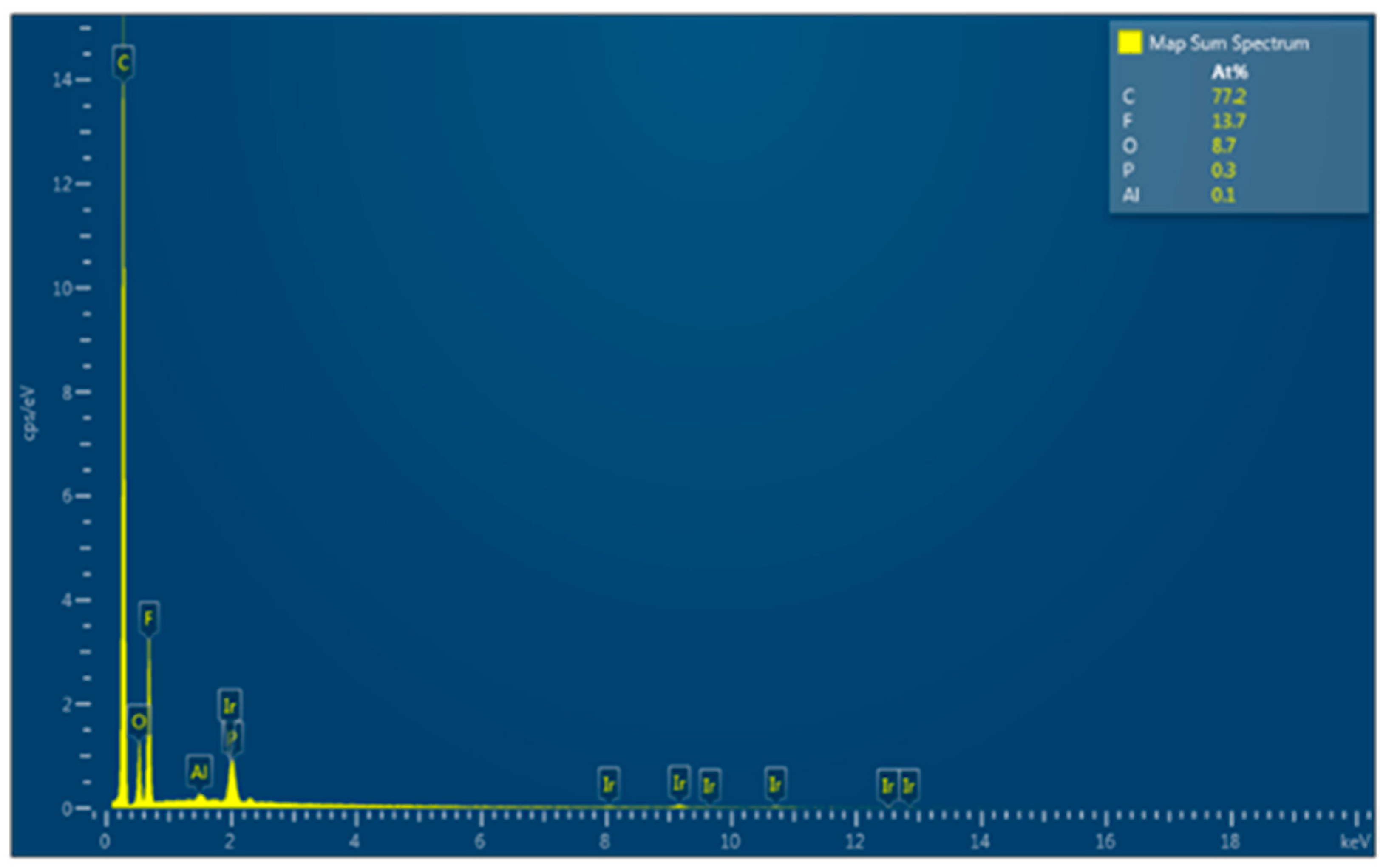
Figure 2 shows the EDS spectra of the anode sample. The EDS analysis of the used anode material reaveled carbon (C) and fluoride (F) as the major elemental components. The quantitative results indicate that the carbon content reached 77.2%, suggesting that the conductive carbon scaffold maintained most of its structure after many charge and discharge cycles. The results also showed a fluoride concentration of 13.7% for the anode. These high levels of fluorinated compounds likely came from electrolyte and binder decomposition and surface reactions during electrochemical cycling. These impurities can increase the internal resistance of the active materials and accelerate degradation. This ultimately lowers the battery’s efficiency and lifespan.

3.3. Thermogravimetric Analysis of Cathode and Anode Battery Materials

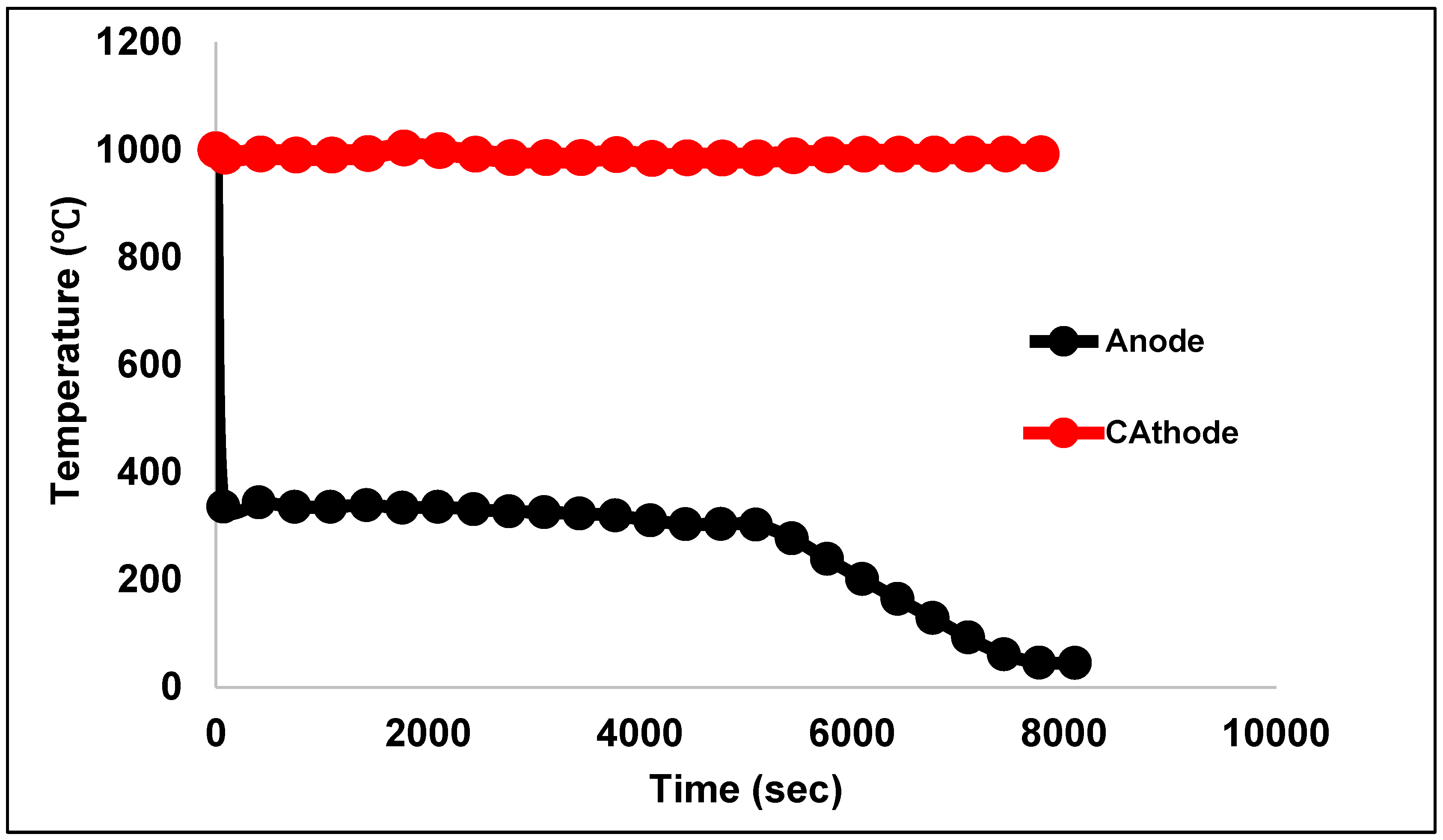
The TGA results (Figure 3) for the cathode materials showed a slight weight loss of 1.62% within the temperature range of 800 to 920 °C. This weight loss likely came from the release of trapped gases in the metal oxide material and the loss of carbon-based contaminants from the anode and electrolyte decompositions. Moreover, trace amounts of surface species, such as electrolyte salt residues or decomposition products of the solid electrolyte interphase (SEI), can also play a role in this minor weight change at high temperatures, as observed earlier in lithium-ion battery cathode materials after ageing [15,16]. After that, minor fluctuations in mass losses and gains occurred, which were due to the differences in these sample systems.
The anode sample experienced significant weight losses during the rapid temperature rise from 677 °C to 916 °C, with a total mass loss of 72.36%. The decomposition reactions continued after the temperature stabilised at 749 °C, leading to an overall mass loss of 95.42%. This was mainly due to the breakdown of carbon-based material, resulting in the loss of carbon as CO2. The extent of such mass loss was greater than expected for graphite material and can be explained by the composite nature of lithium-ion battery anode materials used commercially. In fact, lithium-ion battery anodes are composed not only of graphite material but also polymeric additives used as binders, conductive additives, residual amounts of electrolyte species such as lithium hexafluorophosphate and organic solvents, and even the solid electrolyte interphase (SEI), which is formed on the electrode material during battery operation. All these components are thermally unstable and can decompose and/or evaporate during TGA, producing gases such as CO, CO2, HF, and other volatile species [17,18]. The total decomposition process for all these components can account for significant mass loss for lithium-ion battery anode materials during TGA.

3.4. Elemental Analysis of Cathode and Anode Battery Materials

The elemental analysis of the anode material from the spent lithium-ion battery sample showed a high carbon content of 77.13% (see Table 3). This indicates that the main structure of the graphite-based anode was mostly kept intact after use. The similar carbon content found in the graphite flake reference material (76%) confirms the graphite nature of the anode. However, the detection of sulfur at 0.58% is close to the level found in the graphite flakes at 0.61%. This suggests that sulfur impurities likely originate from the original material used rather than from electrolyte breakdown products or from minor contamination during battery operation, thermal degradation, or disassembly. The absence of detectable amounts of hydrogen and nitrogen in the LIBs and graphite flakes indicates that it is possible that organic binder materials such as PVDF or additives containing hydrogen and nitrogen may have degraded or evaporated during battery usage or pre-treatment. It is also possible that this is due to the composition of lithium-ion battery anode materials containing relatively low levels of binder materials. Typically, the anode of a lithium-ion battery is made from a binder material, polyvinylidene fluoride (PVDF), which contains carbon, hydrogen, and fluorine but lacks nitrogen. Therefore, it is not unexpected that there is no presence of nitrogen in the results of the elemental analysis [19]. It is also important to note that the amounts of binder materials are relatively low in graphite anode materials in lithium-ion batteries (~1 to 5 wt%), and it is possible that the content of hydrogen is below the detection limit of the CHNS analyzer [19,20]. It is also possible that solvents of electrolyte materials may have evaporated during battery disassembly.
In contrast, the quality control sample (sulphanilic acid) showed expected levels of carbon, hydrogen, nitrogen, and sulfur, confirming the reliability of the analytical method. Therefore, the absence of hydrogen and nitrogen detection is not inconsistent with the large mass loss results from TGA but rather supports the fact that volatile components of organics, electrolytes, and products of SEI degradation play an important role in the mass loss results obtained from thermal analysis of spent lithium-ion battery anodes [17,18,21]. These results not only confirm the presence of graphite in the spent anode, but they also indicate that trace amounts of sulfur, and possibly other undetected elements, may remain as impurities. This could affect the purity and performance of recovered materials during recycling.

4. Conclusions

Spent lithium-ion battery (LIB) materials were analysed using ICP-MS, EDS, FE-SEM, and thermogravimetric analysis (TGA). The goal was to assess structural degradation, impurity accumulation, and thermal stability after extended cycling. ICP-MS analysis showed a notable leaching and movement of active metals, including cobalt (Co), nickel (Ni), manganese (Mn), and lithium (Li). This confirms partial dissolution of cathode materials during operation. In addition to the main elements, small amounts of aluminium (Al), copper (Cu), and iron (Fe) were also found. These trace elements likely originated from corrosion of the current collectors or were introduced through contamination during sample handling. Morphological characterisation through FE-SEM revealed that the anode maintained uniform carbon nanoparticle structures, which indicate strong mechanical integrity. In contrast, the cathode displayed fragmented nanosheets, showing structural strain and degradation of layered metal oxides. Elemental surface analysis (EDS) identified carbon (C), oxygen (O), fluorine (F), cobalt (Co), aluminium (Al), and manganese (Mn). High levels of fluorine and oxygen indicated significant electrolyte decomposition and surface reactions. The possible phase of Co5O2F10 suggested the formation of fluoride-rich cobalt oxides from interactions between cathode materials and electrolyte degradation products. TGA results showed that the graphite-based anode remained thermally stable. It exhibited a gradual cooling profile without major decomposition. However, the cathode faced high temperatures under isothermal conditions. This reflects its thermal resilience, despite signs of structural degradation. The substantial mass loss in both electrodes confirmed the presence of impurities, including binders, residual electrolytes, organic solvents, and volatile contaminants. These materials decompose or evaporate when heated. The anode lost 95.44% of its mass, greatly surpassing expectations for pure graphite. The cathode showed complete thermal degradation. Elemental analysis of the spent anode showed that carbon was the main component, making up about 77%, which aligns with the intact graphite structure. The anode also had small amounts of sulfur, similar to the comercial graphite flakes, which indicated that sulfur could have been an impurity in the original reagents. The lack of detectable hydrogen and nitrogen suggests that organic binders volatilized or decomposed during battery use or pre-treatment. Overall, these findings show that structural damage and the buildup of impurities greatly affect battery performance and thermal stability. This makes recycling more difficult. The results highlight the urgent need for better purification and recycling methods. These improvements are crucial to ensure the safe and sustainable recovery of lithium-ion battery materials to meet the rising global demand for energy storage technologies.

5. Future Work

Future research should focus on studying the role of impurities in recycled cathode and anode materials. It is important to understand how these impurities affect electrochemical performance, structural stability, and safety. This includes identifying the types and sources of impurities that occur during recycling, such as leftover binders, products from electrolyte breakdown, and metal contaminants. Advanced analytical techniques will be used to connect impurity profiles with changes in conductivity, capacity retention, and thermal stability. Moreover, developing directed purification methods to remove or reduce these impurities will be key to improving the quality and reliability of recycled lithium-ion battery materials. This work will directly help produce high-performance batteries in a sustainable way while decreasing the environmental impact of recycling.

Author Contributions

Conceptualization, T.M.M.; methodology, T.M.M.; validation T.M.M., M.N., P.N. and M.W.M.; formal analysis, T.M.M., M.N., P.N. and M.W.M.; investigation, T.M.M., M.N., P.N. and M.W.M.; resources, validation, T.M.M., M.N., P.N. and M.W.M., data curation and validation, T.M.M., M.N., P.N. and M.W.M., writing—original draft preparation, T.M.M., M.N. and P.N.; writing—review and editing, M.N. and P.N. All authors have read and agreed to the published version of the manuscript.

Funding

This research received no external funding.

Institutional Review Board Statement

Not applicable.

Informed Consent Statement

Not applicable.

Data Availability Statement

Data is contained within the article.

Acknowledgments

All the authors gratefully acknowledge the Fluorine Chemistry group of the South African Nuclear Energy Coporation Soc Ltd. for their continuous support and facilitation throughout the course of this research.

Conflicts of Interest

The authors confirm that there are no conflicts of interest. Necsa has no direct conflict of interest. However potential commercial conflict of interest may arise in radioactive pro-cessing activities. This particular research work has no conflict of interest.

References

  1. Dunn, J.; Slattery, M.; Kendall, A.; Ambrose, H.; Shen, S. Circularity of lithium-ion battery materials in electric vehicles. Environ. Sci. Technol. 2021, 55, 5189–5198. [Google Scholar] [CrossRef]
  2. Harper, G.; Sommerville, R.; Kendrick, E.; Driscoll, L.; Slater, P.; Stolkin, R.; Walton, A.; Christensen, P.; Heidrich, O.; Lambert, S.; et al. Recycling lithium-ion batteries from electric vehicles. Nature 2019, 575, 75–86. [Google Scholar] [CrossRef] [PubMed]
  3. Gaines, L. Lithium-ion battery recycling processes: Research towards a sustainable course. Sustain. Mater. Technol. 2018, 17, e00068. [Google Scholar] [CrossRef]
  4. Li, J.; Wang, G.; Xu, Z. Generation and detection of metal ions and volatile organic compounds (VOCs) emissions from the pretreatment processes for recycling spent lithium-ion batteries. Waste Manag. 2016, 52, 221–227. [Google Scholar] [CrossRef]
  5. Velázquez-Martínez, O.; Valio, J.; Santasalo-Aarnio, A.; Reuter, M.; Serna-Guerrero, R. A critical review of lithium-ion battery recycling processes from a circular economy perspective. Batteries 2019, 5, 68. [Google Scholar] [CrossRef]
  6. Mossali, E.; Picone, N.; Gentilini, L.; Rodrìguez, O.; Pérez, J.M.; Colledani, M. Lithium-ion batteries towards circular economy: A literature review of opportunities and issues of recycling treatments. J. Environ. Manag. 2020, 264, 110500. [Google Scholar] [CrossRef]
  7. Song, S.; Xia, S.; Wei, Y.; Lv, X.; Sun, S.; Li, Q. Fluoro-polymer-coated carbon nanotubes for improved interfacial interactions and dielectric properties in MWCNTs/PVDF composites. J. Mater. Sci. 2020, 55, 3212–3227. [Google Scholar] [CrossRef]
  8. Feng, X.; Ouyang, M.; Liu, X.; Lu, L.; Xia, Y.; He, X. Thermal runaway mechanism of lithium ion battery for electric vehicles: A review. Energy Storage Mater. 2018, 10, 246–267. [Google Scholar] [CrossRef]
  9. Zhao, Z.; Xu, W.; Wang, Z.; Qin, W.; Lei, J.; Guo, X.; Long, J. Investigation of organic impurity and its occurrence in industrial waste salt produced by physicochemical process. PLoS ONE 2021, 16, e0256101. [Google Scholar] [CrossRef]
  10. Ouyang, D.; Chen, M.; Huang, Q.; Weng, J.; Wang, Z.; Wang, J. A review on the thermal hazards of the lithium-ion battery and the corresponding countermeasures. Appl. Sci. 2019, 9, 2483. [Google Scholar] [CrossRef]
  11. Adebanjo, I.T.; Eko, J.; Agbeyegbe, A.G.; Yuk, S.F.; Cowart, S.V.; Nagelli, E.A.; Burpo, F.J.; Allen, J.L.; Tran, D.T.; Bhattarai, N.; et al. A comprehensive review of lithium-ion battery components degradation and operational considerations: A safety perspective. Energy Adv. 2025, 4, 820–877. [Google Scholar] [CrossRef]
  12. Chen, Z.; Zhang, Q.; Liang, Q. Carbon-coatings improve performance of Li-ion battery. Nanomaterials 2022, 12, 1936. [Google Scholar] [CrossRef]
  13. Zeng, G.; Zhou, R.; Hu, C.; Zhao, H.; Gao, H.; Huang, J.; Yu, J.; Luo, F.; Wang, Z.; Deng, C.; et al. Recycling of graphite from spent lithium–ion batteries via low-temperature polyvinyl chloride roasting-assisted leaching. Carbon 2025, 238, 120182. [Google Scholar] [CrossRef]
  14. Park, O.K.; Cho, Y.; Lee, S.; Yoo, H.C.; Song, H.K.; Cho, J. Who will drive electric vehicles, olivine or spinel? Energy Environ. Sci. 2011, 4, 1621–1633. [Google Scholar] [CrossRef]
  15. Xu, K. Nonaqueous liquid electrolytes for lithium-based rechargeable batteries. Chem. Rev. 2004, 104, 4303–4418. [Google Scholar] [CrossRef]
  16. Peled, E.; Menkin, S. Review—SEI: Past, present and future. J. Electrochem. Soc. 2017, 164, A1703–A1719. [Google Scholar] [CrossRef]
  17. Zhang, S.S. A review on the separators of liquid electrolyte Li-ion batteries. J. Power Sources 2006, 164, 351–364. [Google Scholar] [CrossRef]
  18. Aurbach, D.; Pollak, E.; Elazari, R.; Salitra, G.; Kelley, C.S.; Affinito, J. On the surface chemical aspects of very high energy density, rechargeable Li–sulfur batteries. J. Electrochem. Soc. 2009, 156, A694–A702. [Google Scholar] [CrossRef]
  19. Nitta, N.; Wu, F.; Lee, J.T.; Yushin, G. Li-ion battery materials: Present and future. Mater. Today 2015, 18, 252–264. [Google Scholar] [CrossRef]
  20. Wood, D.L.; Li, J.; Daniel, C. Prospects for reducing the processing cost of lithium-ion batteries. J. Power Sources 2015, 275, 234–242. [Google Scholar] [CrossRef]
  21. Ordoñez, J.; Gago, E.; Girard, A. Processes and technologies for the recycling and recovery of spent lithium-ion batteries. Renew. Sustain. Energy Rev. 2016, 60, 195–205. [Google Scholar] [CrossRef]
Figure 1. High-magnification FE-SEM images of spent lithium-ion battery materials recovered from a mobile phone brand: (a) anode and (b) cathode.
Materproc 31 00011 g001
Figure 2. EDS spectra of spent lithium-ion battery anode material recovered from a mobile phone brand, corresponding to Figure 1a.
Materproc 31 00011 g002
Figure 3. Thermogravimetric analysis (TGA) curves of the anode and cathode materials from LIBs.
Materproc 31 00011 g003
Table 1. Chemical composition of spent lithium-ion batteries.
LiNaMgAlKCrMnFeCoNiCuZn
Average5.971.470.4711.740.760.0580.510.3365.381.360.00480.05
Stdev0.830.050.010.280.030.0040.070.043.910.130.00040.01
%RSD13.943.281.162.374.136.9513.9212.265.999.728.438020.23
Table 3. Elemental analysis of different spent lithium-ion batteries (Anode material).
Sample NameC [%]H [%]N [%]S [%]
LIB77.13 0.58
Quality control sample (sulphanillic acid)42 (2)4.1 (2)8.3 (6)22 (3)
Graphite flakes76 (2)------0.61 (6)
Table 2. EDS spot analyses of cathode powder comparing full area measurements at 155×, 500×, and 1000× magnifications, corresponding to Figure 1b.
SpotO (at.%)F (at.%)Al (at.%)Mn (at.%)Co (at.%)Possible Phase
Areal analysis (at 1000×)61.011.32.40.624.6Co5O2F10
Areal analysis (at 500×)62.912.0-0.524.6Co5O2F10
Areal analysis (at 155×)62.213.1-0.624.1Co5O2F10
Average62.0 ± 1.012.1 ± 0.92.40.6 ± 0.124.4 ± 0.3Co5O2F10
Disclaimer/Publisher’s Note: The statements, opinions and data contained in all publications are solely those of the individual author(s) and contributor(s) and not of MDPI and/or the editor(s). MDPI and/or the editor(s) disclaim responsibility for any injury to people or property resulting from any ideas, methods, instructions or products referred to in the content.