


Abstract
The existing studies on Small-Scale Embedded Generation (SSEG) have not addressed the net billing framework behavior that applies to different import and export tariff rates. This paper presents the simulation and modeling of a smart net billing electricity meter for SSEG in MATLAB/Simulink R2018b. The model integrates a PV array, MPPT controller, DC-DC boost converter, three-phase voltage source inverter (VSI), LC filter, synchronous generator, and a bidirectional energy meter. A smart billing subsystem was developed to compute real-time energy costs using differential tariff rates consistent with South African utility policies. Simulations were conducted under fixed irradiance, with electrical performance evaluated over a short interval and billing dynamics assessed over an extended period. Results show stable PV generation, proper inverter synchronization with the utility grid, and accurate tracking of imported and exported energy. The system effectively calculates the net bill, demonstrating transparency, automation, and economic accuracy in line with policy-driven net billing frameworks. These outcomes validate the technical feasibility and practical relevance of smart net billing meters in modern grid-connected renewable energy applications.
1. Introduction
As the global push toward sustainable energy solutions gains momentum, the integration of small-scale renewable energy sources into existing power grids is becoming increasingly vital [1]. The rise in technologies such as solar panels, wind turbines, and small hydroelectric systems offers significant potential for localized energy generation [2]. Smart energy meters and tariff structures have been introduced to effectively manage and provide incentives for these systems. Smart energy meters are advanced devices that record electricity consumption in real time and communicate this information to both utilities and consumers. Unlike traditional meters, smart meters support two-way communication and enable dynamic pricing, remote monitoring, and accurate billing [3]. The tariff defines the pricing structure for electricity consumption and export, which distinguishes between net metering and net billing based on the value of exported electricity. In net metering, exported energy offsets consumption on a one-to-one basis using the same retail rate, whereas in net billing, exported energy is credited at a different, often lower than the import rate, making tariff design essential for fair compensation and grid sustainability [4]. However, as the tariff structure is increasingly adopted, a detailed simulation of a net billing system has not been achieved, which is addressed in this study.
Recent advances in MATLAB/Simulink-based modeling have demonstrated significant progress in simulating smart meter systems, with a predominant focus on net-metering implementations. For instance, Pathare, et al. [5] employed an IoT-enabled Simulink model to simulate residential PV systems, achieving 95% accuracy in tracking household energy balance. Similarly, Hosen, et al. [6] used MATLAB/Simulink combined with MPPT-controlled inverters to design bidirectional meters, validating grid synchronization and power flow accuracy essential for net-metering. Hassan, et al. [7] further extended this by proposing a Simulink framework integrated with IoT, which demonstrated improved billing precision through real-time data collection. These studies confirm the robustness of Simulink for device-level modeling but have primarily focused on standard net-metering or basic bidirectional flows rather than complex tariff behaviors.
In contrast, the transition from net-metering to net-billing has been extensively explored through techno-economic methodologies rather than device simulation. Benalcazar, et al. [4] and Aquila, et al. [8] utilized Net Present Value (NPV) and breakeven price analyses to compare compensation mechanisms in Poland and Brazil, respectively. Their results consistently demonstrated that Net Billing Buyback (NB-BB) schemes often yield superior financial returns for prosumers and ensure sustainability for utilities, particularly under rising electricity prices. Other studies [9,10,11] applied grid parity analysis and regional consumption modeling, finding that high-consumption households (>100 kWh/month) benefit most from net billing, while it simultaneously protects distribution utilities from financial instability. However, these findings are largely derived from economic models rather than real-time technical simulations of the metering devices themselves.
Bridging this gap, the present study addresses the lack of technical simulation for these emerging tariff structures. While Rind, et al. [12] and Bijoy, et al. [13] have proposed modular IoT architectures and hybrid hardware-Simulink approaches to improve grid stability, they did not specifically model the algorithmic behavior of net billing tariffs within the meter. Building on this body of work, this research models and simulates small-scale embedded generation (SSEG) systems using MATLAB/Simulink to technically evaluate the behavior of a net billing tariff structure, providing the necessary engineering validation to support the economic policy shifts identified in the broader literature.
The primary contributions of this research are three-fold: first, the development of a policy-aligned smart net billing meter that explicitly models differential import and export tariffs consistent with South African municipal regulations, moving beyond the conventional net-metering schemes prevalent in the current literature; second, the implementation of a real-time, tariff-aware billing logic that enables automated cost computation and bidirectional energy tracking suitable for municipal-level deployment; and third, the provision of a reusable MATLAB/Simulink-based framework integrating electrical performance with billing dynamics to offer a scalable tool for utilities and regulators to evaluate net billing policies prior to field implementation.
2. Materials and Method
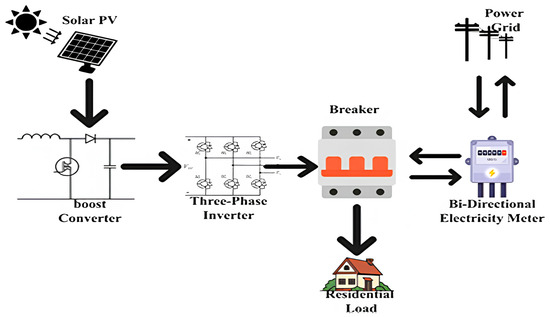
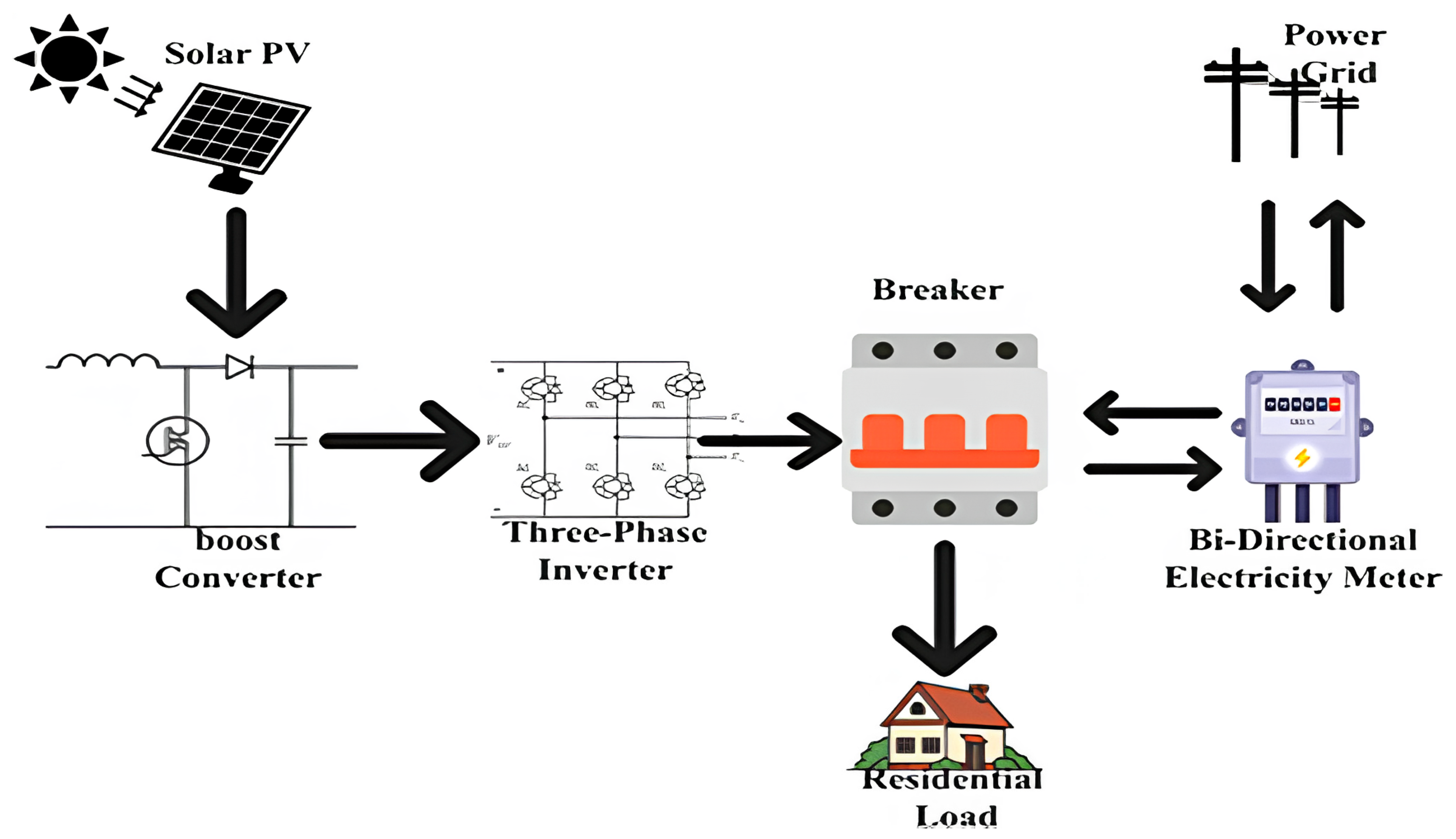
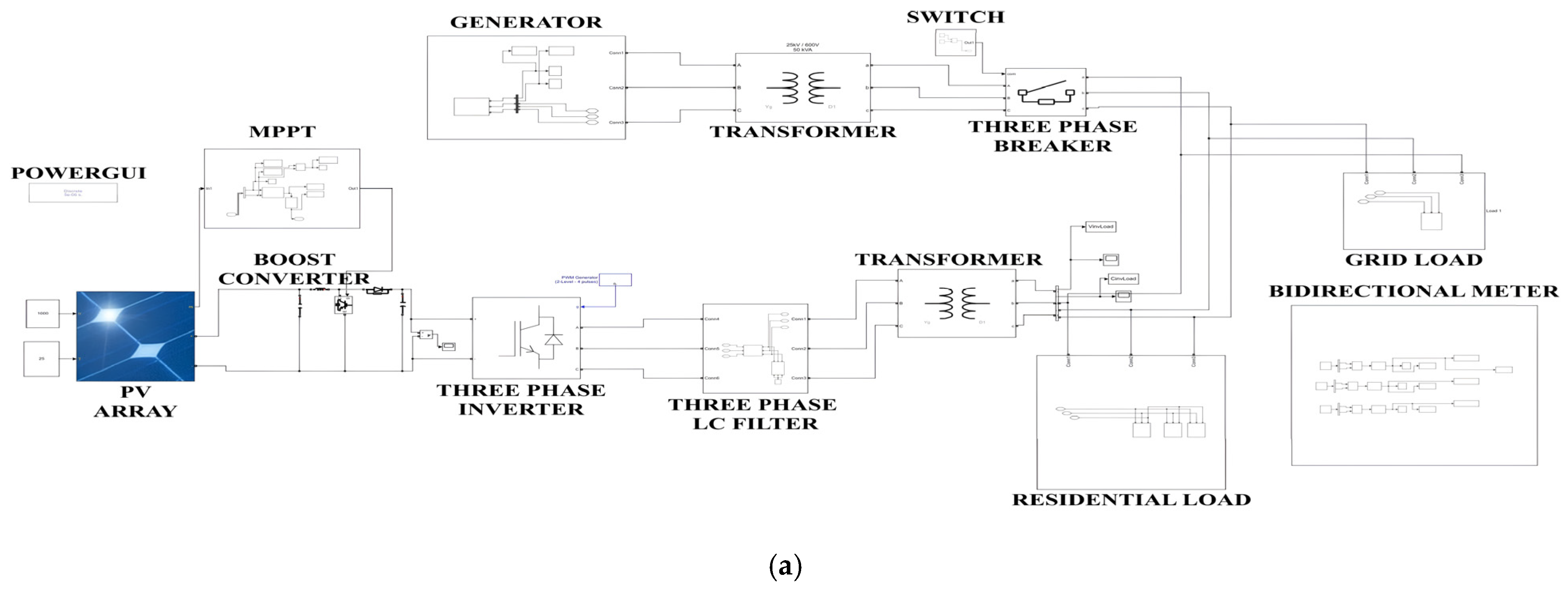
At the core of this study lies a Simulink-based model developed using MATLAB/Simulink R2018b (MathWorks, Natick, MA, USA) to simulate a smart net billing system integrated with a utility grid, as shown in Figure 1. This model incorporates essential components such as a photovoltaic (PV) array, MPPT controller, DC-DC boost converter, three-phase voltage source inverter (VSI), LC filter, and a smart energy meter. As illustrated in Figure 1, each subsystem represents a critical stage in the energy conversion and metering process, enabling accurate simulation of real-time energy production, consumption, and billing dynamics under various load and irradiation conditions. To reflect the South African energy context, where coal-fired power plants remain the dominant source of electricity generation, the utility grid is represented using a synchronous machine model, ensuring realistic interaction between the embedded PV system and the national grid.
Figure 1.
The proposed small-scale embedded generation system.
2.1. DC-AC Conversion
The power conversion stage transforms solar energy from the photovoltaic (PV) array into grid-compatible alternating current (AC) through a DC-DC boost converter and a three-phase voltage source inverter (VSI). The PV array was modeled using a standard single-diode equivalent circuit to simulate current–voltage characteristics under varying irradiance and temperature conditions.
A boost converter operating in Continuous Conduction Mode (CCM) was used to step up the PV output voltage, ensuring sufficient voltage levels for inverter operation. The VSI, controlled via a sinusoidal pulse-width modulation (SPWM) scheme, converted the DC power to synchronized three-phase AC suitable for grid interconnection. This setup enabled seamless energy transfer between the PV system and the utility grid, forming the electrical foundation for real-time metering and tariff application under the net billing framework.
2.2. Smart Metering and Billing Logic
A bidirectional meter is the critical component in the net billing framework and it is responsible for accurately measuring the energy exchange between the small-scale embedded generation (SSEG) system and the utility grid. It records the energy imported from the grid when the PV output is insufficient and energy is exported when there is excess generation. These energy values are expressed in kilowatt-hours (kWh) and derived by integrating power over time:
where is the power in watts and is time in hours. The energy balance within the system is governed by the following relationship [11]:
Here, is the total energy consumed, is the energy imported from the grid, is the energy supplied by the PV to meet the consumption, and is the surplus energy exported to the grid. These energy flows directly inform net billing calculations [11].
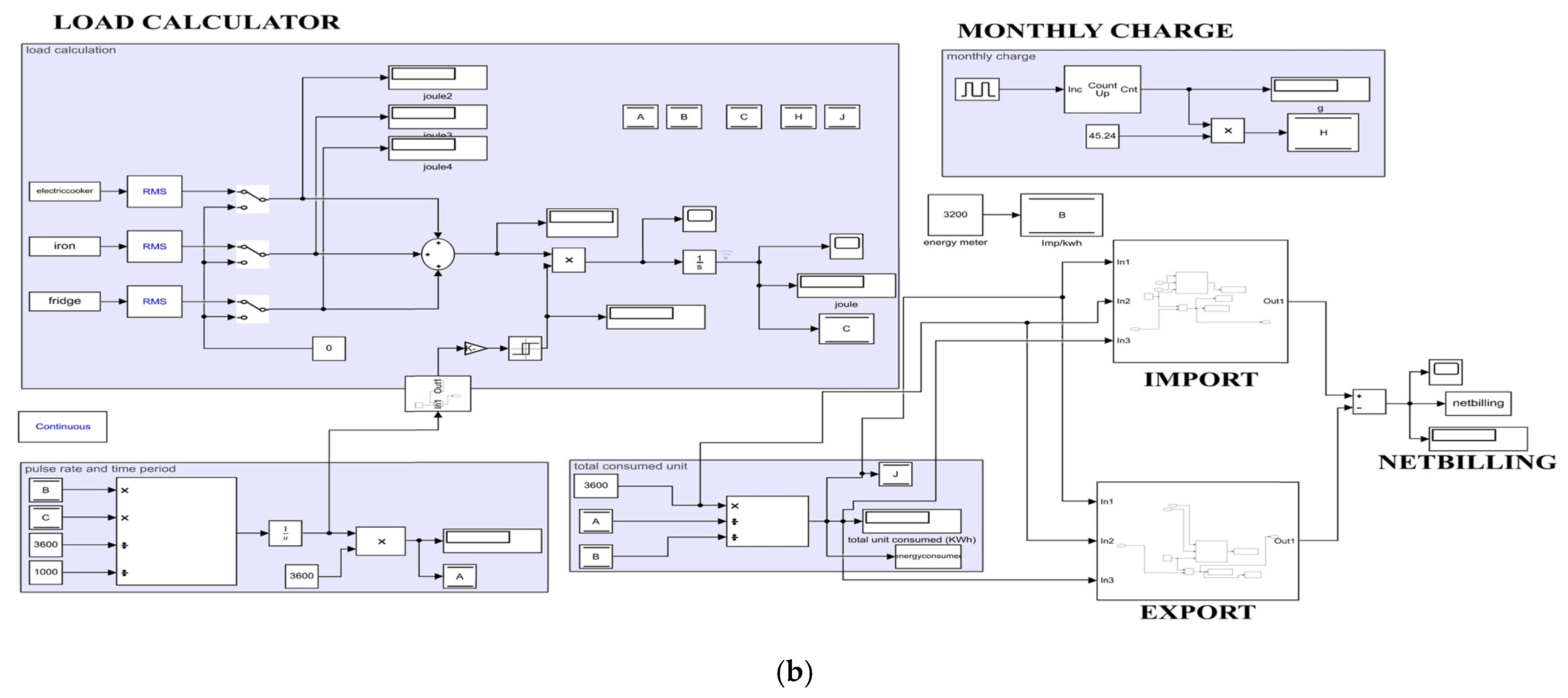
where and represent the imported and exported energies (in kWh), respectively, and are the respective tariffs (in currency per kWh). This formula was implemented in the smart metering subsystem of the Simulink model to automate real-time billing, ensuring fair compensation for grid interactions.
2.3. Simulation Setup and Parameters
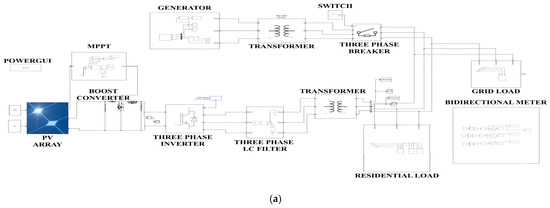
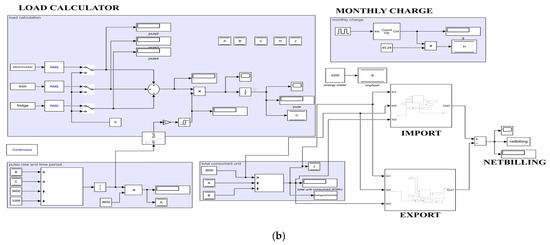
The complete system model was implemented in MATLAB/Simulink to simulate energy generation, conversion, and real-time billing under a net billing framework as illustrated in Figure 2a,b. Major components include a photovoltaic (PV) array, DC-DC boost converter, three-phase voltage source inverter (VSI), LC filter, synchronous generator, and a bidirectional smart meter. The simulation was executed under fixed environmental conditions, with irradiance set at 1000 W/m2 and ambient temperature at 25 °C, as detailed in Table 1. The photovoltaic PV array configuration have 9 parallel strings and 12 series-connected modules per string. In addition, The synchronous generator emulated the utility grid, ensuring voltage and frequency stability to support bidirectional energy exchange with the PV system. As shown smart billing subsystem was integrated to calculate import and export energy costs in real time using differentiated tariffs (R3.346/kWh import, R1.407/kWh export). The simulation ran for 1000 s to capture both electrical dynamics and economic behavior under continuous operation.
Figure 2.
(a) Simulation model of small-scale embedded generation. (b) Net billing system.
Table 1.
The system parameters.
3. Results and Discussion
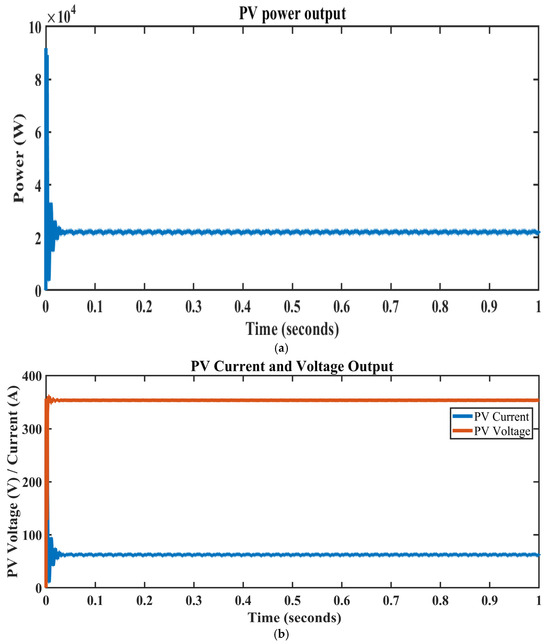
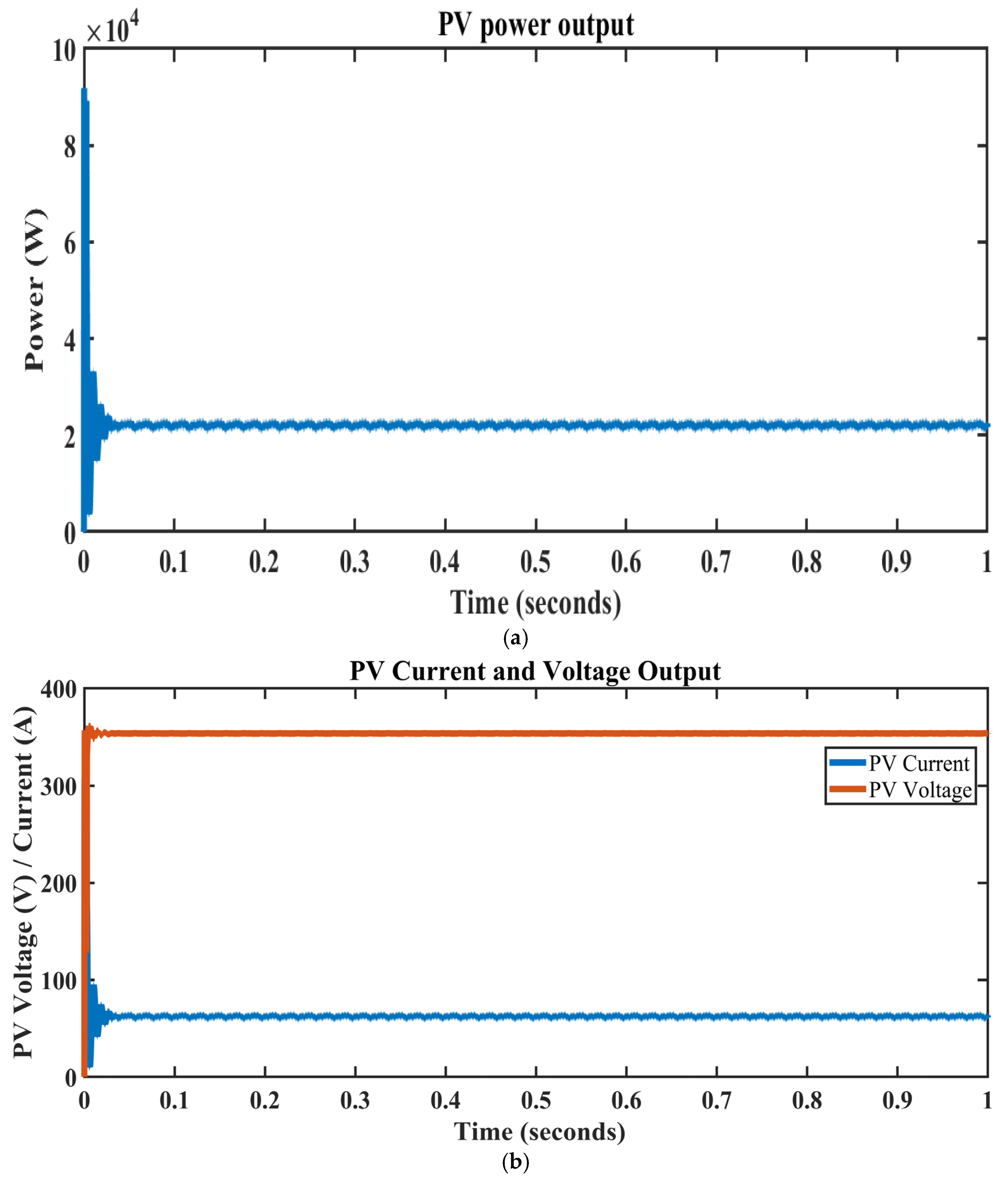
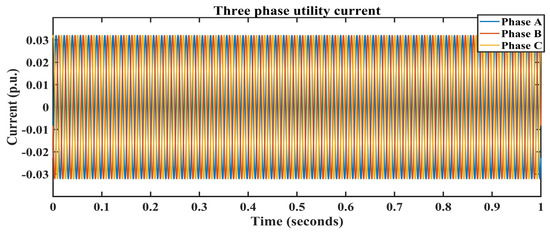
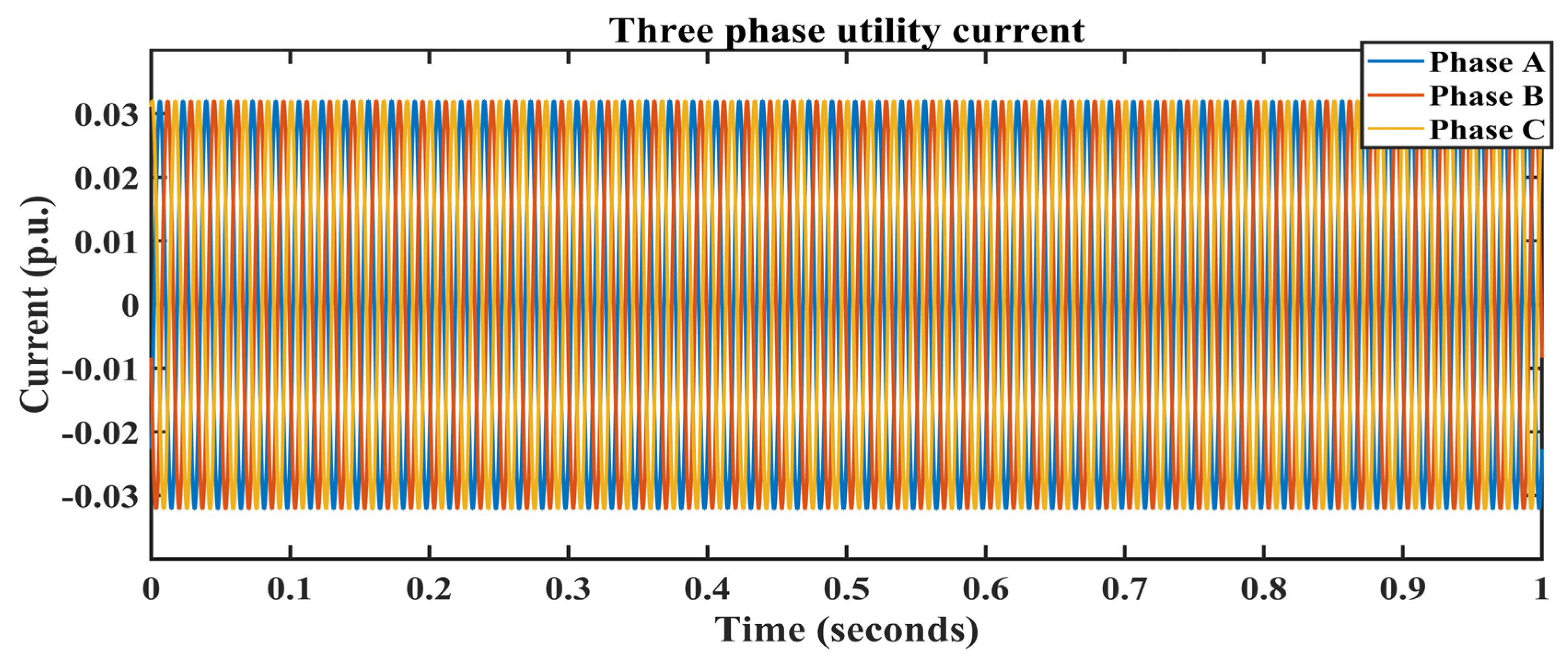
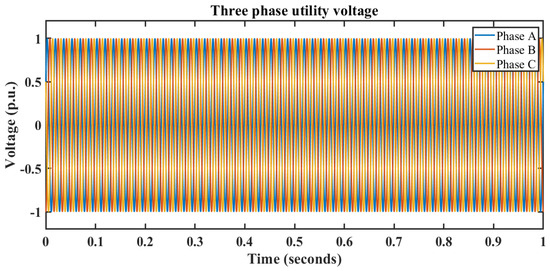
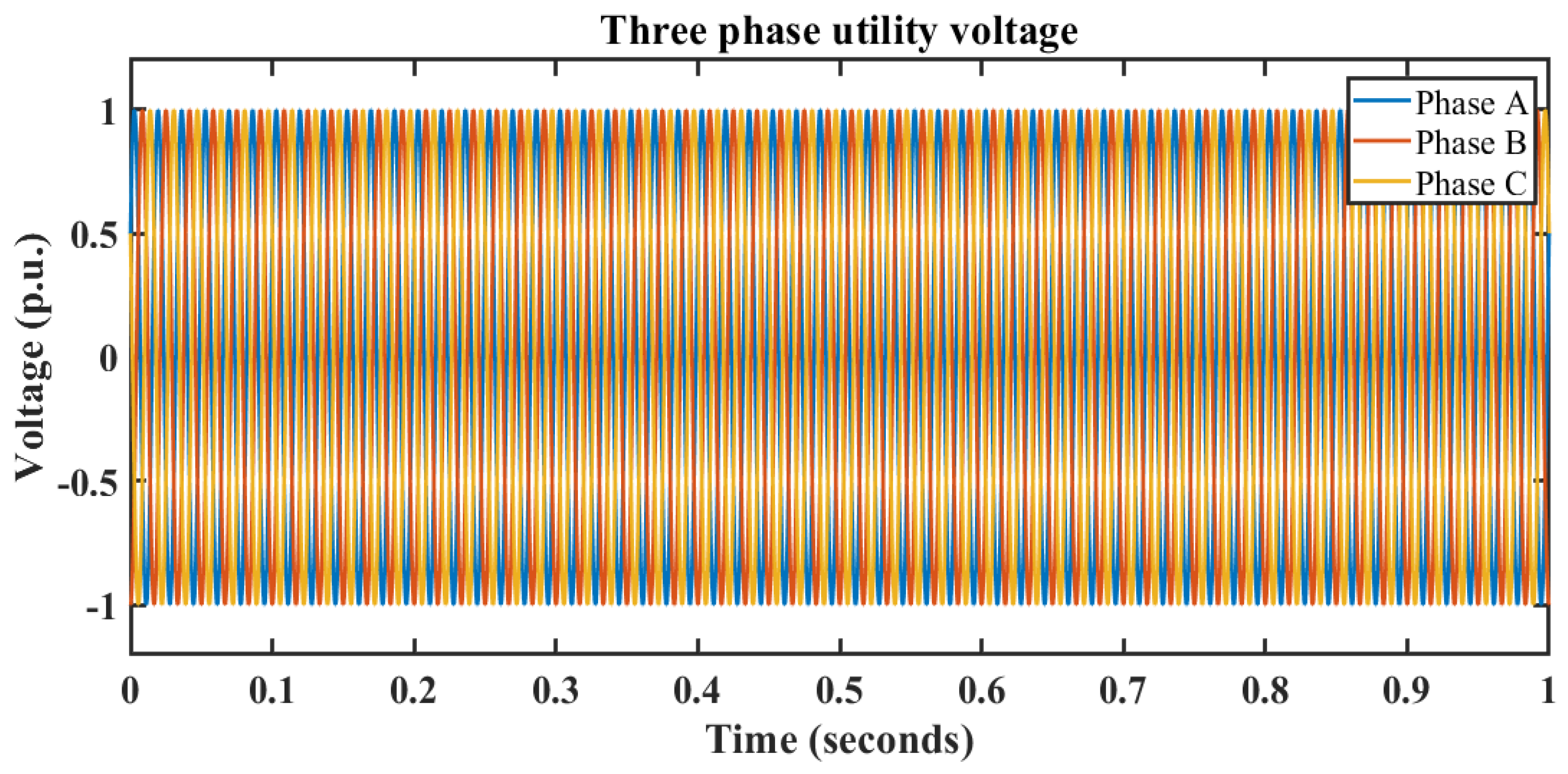
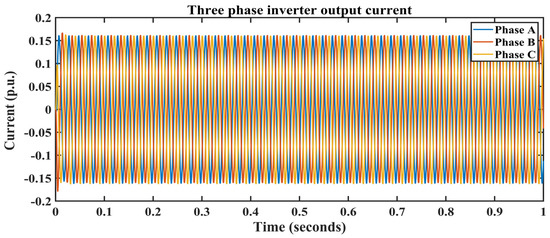
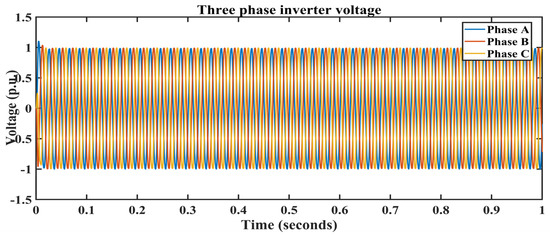
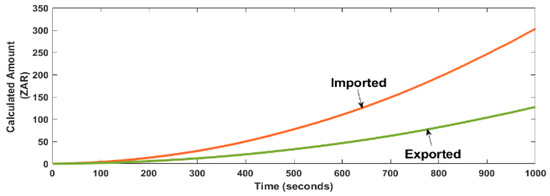
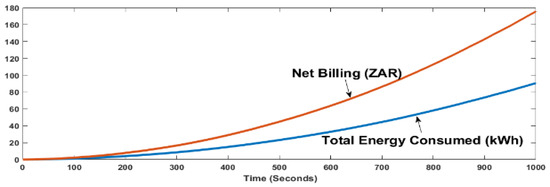
This section presents the results and performance assessment of the proposed smart net billing electricity metering system was simulated using MATLAB/Simulink under Small-Scale Embedded Generation (SSEG) conditions. Electrical performance was evaluated over a 1 s period using constant irradiance and environmental parameters, while billing and energy exchange dynamics were assessed over 1000 s. As shown in Figure 3a, the photovoltaic (PV) array produced a stable 20 kW output after an initial transient while Figure 3b indicates stable DC voltage and current at 370 V and 55 Ab, respectively. The three-phase current and voltage as shown in Figure 4 and Figure 5 which remain in a steady state waveform, demonstrating zero distortion. The inverter output shown in Figure 6 and Figure 7 maintained balanced three-phase currents and voltages, confirming efficient DC–AC conversion, grid synchronism, and accurate switching. Furthermore, the smart billing system tracked the imported and exported energy in real time using differential tariffs rate of 3.346 ZAR/kWh and 1.407 ZAR/kWh for import and export respectively. It is shown in Figure 8 the imported energy costs accumulated faster due to the higher tariff, while exported energy credits grew at a lower rate. Under the assumption of a continuous 6 kW load applied uniformly throughout the day, Figure 9 illustrates the net bill (orange curve) and total energy consumed (blue curve) with the gap reflecting cost offsets from exported energy. However, Table 2 summarizes the net billing of the total consumption of 85 kWh/day and this cost reduces from 303.30 ZAR (grid-only) to 175.80 ZAR giving a 41% saving.
Figure 3.
(a) PV power output. (b) PV current and voltage output.
Figure 4.
Three-phase current (utility).
Figure 5.
Three-phase voltage (utility).
Figure 6.
Three-phase inverter output current.
Figure 7.
Three-phase inverter output voltage.
Figure 8.
Imported and Exported Energy Cost under Net Billing Tariff.
Figure 9.
Net Billing and Total Energy Consumed.
Table 2.
Cost comparison for grid-only and net billing scenarios.
4. Conclusions
In this paper, the modeling and simulation of a smart net billing electricity meter for Small-Scale Embedded Generation was implemented using MATLAB/Simulink. The model integrates bidirectional energy measurement with real-time tariff-based billing logic, applying differentiated import (R3.346/kWh) and export (R1.407/kWh) rates in line with South African metering policies. Simulation results demonstrated stable 20 kW PV generation, efficient three-phase inverter operation with balanced waveforms, and accurate grid synchronization. The smart billing subsystem achieved a 41% cost saving compared to grid-only supply while accurately tracking energy flows under the net billing framework. The primary contributions of this research are three-fold: first, the development of a policy-aligned smart meter that explicitly models differential tariffs consistent with municipal regulations, moving beyond conventional net-metering schemes; second, the implementation of a real-time, tariff-aware logic enabling automated cost computation and bidirectional tracking; and third, the provision of a reusable MATLAB/Simulink framework integrating electrical performance with billing dynamics to assist regulators in evaluating policies prior to field implementation. By consolidating energy measurement and billing automation into a single platform, the system enhances prosumer transparency and supports equitable exchange between distributed generators and the grid. This work addresses a significant gap in the literature, where simulation-based studies of net billing remain limited. Although demonstrated under static conditions, the model provides a scalable basis for future work involving variable environmental factors, dynamic load profiles, and hardware-in-the-loop validation. These results validate the technical and economic viability of policy-aligned grid integration for sustainable energy systems.
Author Contributions
Conceptualization, M.A., D.J.R. and K.L.; methodology, M.A.; software, M.A.; validation, M.A., D.J.R. and K.L.; formal analysis, M.A.; investigation, M.A.; resources, D.J.R. and K.L.; data curation, M.A.; writing—original draft preparation, M.A.; writing—review and editing, D.J.R. and K.L.; visualization, M.A.; supervision, D.J.R. and K.L.; project administration, D.J.R. and K.L.; funding acquisition, D.J.R. and K.L. All authors have read and agreed to the published version of the manuscript.
Funding
This research received no external funding.
Institutional Review Board Statement
Not applicable.
Informed Consent Statement
Not applicable.
Data Availability Statement
Data is already contained within this article.
Conflicts of Interest
The authors declare no conflicts of interest.
References
- Joddumahanthi, V.; Knypiński, Ł.; Gopal, Y.; Kasprzak, K. Review of Power Electronics Technologies in the Integration of Renewable Energy Systems. Appl. Sci. 2025, 15, 4523. [Google Scholar] [CrossRef] [Scilit]
- Mandal, N.; Sarkar, P.; Petrović, N. Multi-Criteria Decision-Making for Ranking Renewable Energy Sources: A Case Study from the Republic of Serbia. J. Eng. Manag. Syst. Eng. 2025, 4, 109–121. [Google Scholar] [CrossRef] [Scilit]
- Hidayat, M.; Khair, M.; Syamsiana, I.N. Modeling and Simulation of Smart Bidirectional DC Watt-Hour Meter for DC House. In 2022 International Conference on Electrical and Information Technology (IEIT); IEEE: Piscataway, NJ, USA, 2022; pp. 225–230. [Google Scholar]
- Benalcazar, P.; Kalka, M.; Kaminski, J. Transitioning from net-metering to net-billing: A model-based analysis for Poland. Sustain. Energy Technol. Assess. 2024, 72, 104073. [Google Scholar] [CrossRef] [Scilit]
- Pathare, A.; Singh, R.; Sethi, D. An IoT-Enabled Smart Net-Metering System for Real-Time Analysis of Renewable Energy Generation in MATLAB/Simulink. J. Inst. Eng. India Ser. B 2024, 105, 1583–1598. [Google Scholar] [CrossRef] [Scilit]
- Hosen, M.I.; Islam, S.; Mia, M.A.; Al, A. Development of Solar Power Based Net-Metering System For Domestic Prosumers. J. Energy Eng. Thermodyn. 2022, 2, 9–46. [Google Scholar] [CrossRef] [Scilit]
- Hassan, T.; Das, D.; Rhyme, S.I.; Bal, S.; Hazari, M.R.; Jahan, E.; Hossain, C.A.; Mannan, M.A. IoT-based smart net energy meter with advanced billing feature for residential buildings including solar PV system. Int. J. Power Electron. Drive Syst. IJPEDS 2024, 15, 1254. [Google Scholar] [CrossRef] [Scilit]
- Aquila, G.; Junior, P.R.; Rocha, L.C.S.; Balestrassi, P.P.; Pamplona, E.D.O.; Nakamura, W.T. Net metering rolling credits vs. net billing buyback: An economic analysis of a policy option proposal for photovoltaic prosumers. Renew. Energy 2024, 232, 121154. [Google Scholar] [CrossRef] [Scilit]
- Fuster-Palop, E.; Prades-Gil, C.; Masip, X.; Viana-Fons, J.D.; Paya, J. Techno-Economic Potential of Urban Photovoltaics: Comparison of Net Billing and Net Metering in a Mediterranean Municipality. Energies 2023, 16, 3564. [Google Scholar] [CrossRef] [Scilit]
- Villacorta, A.R.; Guamán, J.; Mojonero, D.H.; Kuong, J.L. Technical and Economic Analysis of Residential Photovoltaic Distributed Generation: Net Billing and Self-consumption in Peru. Int. J. Renew. Energy Res. 2020, 10, 438–447. [Google Scholar] [CrossRef] [Scilit]
- Ordóñez, A.; Sánchez, E.; Rozas, L.; García, R.; Parra-Domínguez, J. Net-metering and net-billing in photovoltaic self-consumption: The cases of Ecuador and Spain. Sustain. Energy Technol. Assess. 2022, 53, 102434. [Google Scholar] [CrossRef] [Scilit]
- Rind, Y.M.; Raza, M.H.; Zubair, M.; Mehmood, M.Q.; Massoud, Y. Smart Energy Meters for Smart Grids, an Internet of Things Perspective. Energies 2023, 16, 1974. [Google Scholar] [CrossRef] [Scilit]
- Bijoy, H.; Hasan, M.M.; Jaman, M.; Bhuyan, M.; Peeroo, S. Design, Simulation, and Implementation of a Smart Net-Metering System for the Distributed PV and Grid-Connected Customers. In 2024 3rd International Conference on Advancement in Electrical and Electronic Engineering (ICAEEE); IEEE: Piscataway, NJ, USA, 2024; Volume 3, pp. 1–6. [Google Scholar] [CrossRef] [Scilit]
- eThekwini Municipality. Tariff Book 2023/2024; eThekwini Municipality: Durban, South Africa, 2023. Available online: https://www.durban.gov.za/uploads/0000/13/2025/10/27/tarrif-booklet-2025-26.pdf (accessed on 11 May 2026).

Disclaimer/Publisher’s Note: The statements, opinions and data contained in all publications are solely those of the individual author(s) and contributor(s) and not of MDPI and/or the editor(s). MDPI and/or the editor(s) disclaim responsibility for any injury to people or property resulting from any ideas, methods, instructions or products referred to in the content. |
© 2026 by the authors. Licensee MDPI, Basel, Switzerland. This article is an open access article distributed under the terms and conditions of the Creative Commons Attribution (CC BY) license.