


Abstract
This study evaluated the effectiveness of maleic anhydride polypropylene (MAPP) in improving the mechanical performance and interfacial adhesion of lignocellulosic fiber-reinforced polypropylene (PP) composites. Based on Scanning Electron Microscopy (SEM) investigations, the relationship between fiber fraction, MAPP content, mechanical characteristics, and fracture morphology was the main focus. The test results showed that the stiffness and tensile strength of the composites increased with the addition of MAPP. The esterification reaction between the anhydride groups of MAPP and the hydroxyl groups of the fibers strengthened the interphase covalent bond, with the 46:50:4 composition producing the highest elastic modulus of 79.67 MPa and maximum tensile stress of 11.01 MPa. The dense interphase zone, few gaps, and no dominant fiber tension were all confirmed by SEM morphology, and also indicated effective stress transfer from the PP matrix to the fibers. However, the toughness of the material decreased significantly with increasing stiffness. Due to strong plastic deformation in the PP matrix that is not tightly attached to the fibers, the composition without MAPP (30:70:0) shows high impact energy and breaking strain, reaching 25.39 kJ/m2 and 121.26%, respectively. The increase in chemical bonding at 4% MAPP content limits the mobility of the polymer chains, making it more brittle. In addition, even though MAPP is still present in the system, increasing the fiber fraction above 60% causes agglomeration, decreased homogeneity, and increased voids due to limited matrix wetting, ultimately deteriorating the mechanical properties. Tensile stress and elastic modulus have a very strong positive correlation (R2 = 0.93), while impact energy and strain have a good correlation (R2 = 0.89). The results overall showed that the ideal MAPP dosage is in the range of 4% before interface saturation occurs and confirmed that MAPP efficiency is determined by the balance between fiber composition, MAPP quantity, and dispersion homogeneity.
1. Introduction
1.1. Background
The development of natural polymer-based composite materials has increased significantly in the last two decades, along with the increasing demand for environmentally friendly, lightweight materials with competitive mechanical performance. Lignocellulosic natural fiber-based composites have become the main focus of various studies due to their high sustainability potential, renewable resources, and supportive physical properties for various structural and non-structural applications. However, despite their great potential, one of the main challenges in the development of natural fiber-based composites is the weak adhesion between the fiber and the polymer matrix, mainly due to the difference in polarity between the two [1].
Lignocellulosic fibers have polar characteristics because they are composed of hydroxyl groups in their main components, namely cellulose, hemicellulose, and lignin. These hydroxyl groups are highly reactive to water and are able to form hydrogen bonds, making natural fibers hydrophilic [2]. In contrast, polypropylene (PP), one of the most widely used thermoplastic matrices, is nonpolar and hydrophobic. This polarity mismatch causes weak interfacial interactions between the two phases, which ultimately reduces the ability to transfer stress from the matrix to the fiber when the material is loaded. As a result, the resulting composites tend to exhibit lower tensile and impact strengths compared to synthetic fiber-based composites such as glass fiber or carbon fiber [3,4].
In addition, the lack of compatibility between fibers and matrices often results in the formation of voids, debonding, and microcracks along the interface. This phenomenon can be observed morphologically through Scanning Electron Microscopy (SEM) analysis, where in composites without a coupling agent (compatibilizer), the fibers often appear to be detached from the matrix due to inadequate adhesion forces [5]. Therefore, one solution that is widely used to overcome this polarity mismatch is through chemical modification of both the fiber surface and the polymer matrix by adding coupling agents that function to increase surface energy and strengthen interfacial bonds [6].
In this context, maleic anhydride polypropylene (MAPP) is one of the most effective compatibilizers and is widely applied in lignocellulosic fiber-based PP composite systems. MAPP is a polypropylene derivative containing active maleic anhydride groups, which can react with hydroxyl groups on the fiber surface to form ester bonds, while interacting physically with nonpolar polypropylene chains through molecular compatibility [7]. This reaction produces a chemical bridge that increases the cohesion between the fiber and matrix phases, thereby increasing stress transfer capabilities, reducing interface defects, and increasing resistance to delamination [8].
On the other hand, the potential of palm fiber (Arenga pinnata) as a lignocellulosic reinforcement in polymer composites has still been rarely explored compared to other natural fibers such as kenaf, coconut fiber, sisal, or ramie. In fact, palm fiber has a number of significant advantages in terms of mechanical properties, water resistance, and raw material availability. Morphologically, palm fiber has a rough surface structure, a relatively large fiber diameter, and a high lignin content (more than 40%), thus providing good resistance to biological degradation and water absorption. These natural properties make palm fiber superior in applications that require resistance to humid or corrosive environments [9,10].
Palm fiber has a relatively high tensile strength, ranging from 170 to 260 MPa depending on the chemical treatment. Significant cellulose content (35–45%) and high lignin content contribute to the stiffness and dimensional stability of the fiber [11]. In addition, palm fiber is an abundant agricultural byproduct in Indonesia, especially from the sugar palm tree, which grows abundantly in tropical areas. The availability of sustainable raw materials and low production costs make palm fiber a potential alternative to replace synthetic fibers in automotive, construction, and interior panel applications [12].
However, the main limitation in the use of palm fiber in polypropylene composites is still related to the hydrophobic nature of PP as a nonpolar matrix. Polypropylene has low surface energy and does not have active polar functional groups, so it is unable to form direct chemical bonds with the hydroxyl groups of the fiber. As a result, without interfacial modification, the adhesion of the fiber to the matrix is very low, which results in fiber pull-out when the composite receives a load. This phenomenon not only reduces the tensile strength but also reduces the impact toughness of the material [13,14].
To overcome these constraints, the use of MAPP-based compatibilizers has been proven effective in various PP/natural fiber composite systems. The anhydride groups of MAPP can undergo esterification reactions with the hydroxyl groups of lignocellulosic fibers, forming strong chemical bonds at the interface. At the same time, the polypropylene chains in MAPP will physically bond with the PP matrix, producing chemical and physical bridges that improve the homogeneity of fiber dispersion and stress transfer efficiency. Thus, mechanical properties such as tensile strength, elastic modulus, and impact absorption energy can be significantly improved. In addition, the fracture morphology of the composites shows better interfacial adhesion, characterized by a decrease in the number of voids and detached fibers, as observed through SEM images [15].
Based on this background, microstructure and mechanical properties play an important role [16,17,18,19]. Research on the synergistic effect of MAPP on the tensile, impact, and microstructural properties of lignocellulosic palm fiber-reinforced polypropylene composites is highly relevant both scientifically and applicatively. This study not only contributes to the understanding of the interfacial interaction mechanism between natural fibers and thermoplastic matrices but also opens up opportunities for the utilization of local biological resources such as palm fiber as a high-value composite reinforcement material. The research results are expected to provide a scientific basis for the development of environmentally friendly composite materials that can be applied to the automotive, furniture, and lightweight construction industries with competitive mechanical performance and high material sustainability [20].
1.2. The Role of MAPP Compatibilizer and the Chemical Mechanism of Anhydride Group Reactions –OH Groups in Lignocellulose Fibers
The main problem in composite systems based on polypropylene (PP) and lignocellulosic fibers is the polarity mismatch between the nonpolar matrix (PP) and the polar reinforcement (natural fiber). PP has saturated hydrocarbon chains without reactive functional groups, is hydrophobic, and has a low surface energy. In contrast, lignocellulosic fibers—which are composed of cellulose (40–60%), hemicellulose (20–35%), and lignin (10–25%)—are hydrophilic because they contain abundant hydroxyl (–OH) groups on the surface of their microfibrils. This difference in chemical properties causes weak interfacial adhesion, which results in low stress transfer capacity and increased porosity in the composite structure.
To overcome this incompatibility, a compatibilizer based on Maleic Anhydride Grafted Polypropylene (MAPP) is used, namely polypropylene that has been chemically grafted with maleic anhydride groups (–CO–O–CO–) through a free-radical grafting process. The addition of MAPP plays a dual role, namely as a chemical link between the fiber and matrix phases and as a dispersion-enhancing agent that reduces the interfacial tension between the two components [21].
1.2.1. Chemical Reaction Mechanism of MAPP with Lignocellulose Fiber
Chemically, the anhydride group in MAPP has two carbonyl carbon atoms (C=O), which are highly reactive toward nucleophiles such as the hydroxyl group (–OH) found in cellulose and hemicellulose. During the melt blending process taking place above 170–180 °C, the anhydride group of MAPP undergoes an esterification reaction with the hydroxyl group of the fiber, forming a strong covalent ester bond (C–O–C=O) at the interface. This reaction can be simplified as follows:
where:
R–CO–O–CO–R′ + R″–OH → R–CO–O–R″ + COOH
- R–CO–O–CO–R′: anhydride group of MAPP;
- R″–OH: hydroxyl groups in lignocellulosic fibers;
- R–CO–O–R″: ester bond resulting from grafting between MAPP and fiber.
In this reaction, one of the anhydride rings of MAPP is opened by the attack of the –OH group of the fiber, producing an ester bond (C–O–C=O) and a carboxylic acid (–COOH) as a byproduct. This bond becomes a permanent chemical bridge between the fiber phase and the matrix phase. The formed –COOH group can then form additional hydrogen bonds with other –OH groups on the fiber surface, thus strengthening the interfacial bonding synergistically [22].
1.2.2. Physical Interaction Between MAPP Chain and PP Matrix
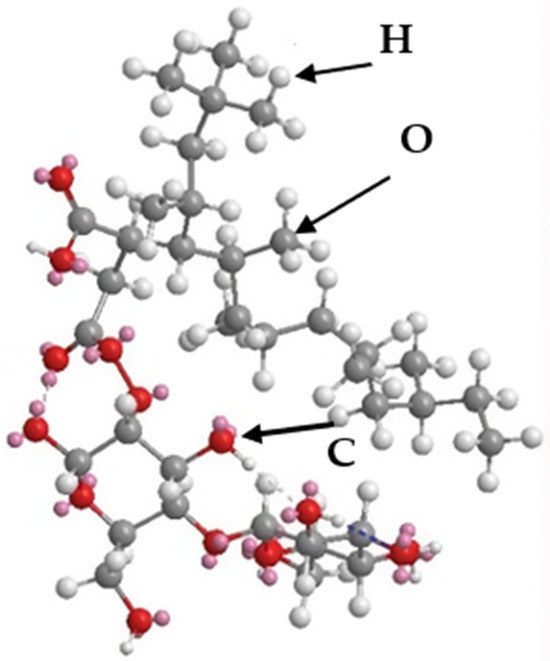
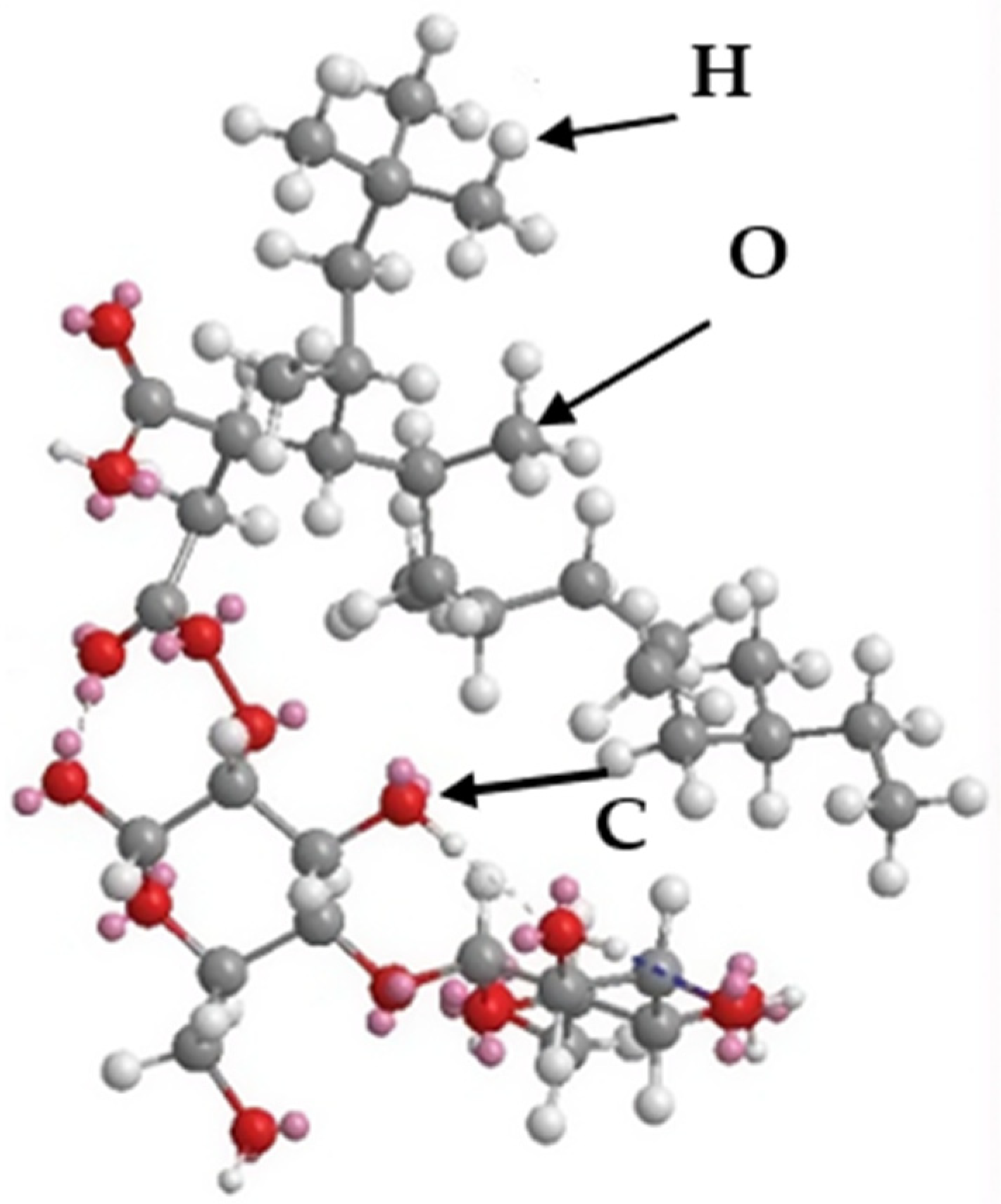
Figure 1 shows the interaction of mulecular fiber, matrix, and MAPP [23]. The chemical reactions between polar groups, MAPP also plays a role through physical interactions of polymer chain compatibility. The main chain part of MAPP is polypropylene (nonpolar), which can physically bind and interdiffuse with pure PP chains in the matrix. This results in strong molecular entanglement between PP–PP chains, so that the interface becomes more homogeneous. Thus, MAPP works as a molecular bridge: the anhydride ends chemically bind the fibers, while the PP backbone physically binds the matrix.
Figure 1.
Interaction of molecular fiber, matrix and MAPP [23].
The combination of these two effects—chemical reaction (esterification) and physical entanglement—increases the total surface energy of the system, improving the wetting of the fiber by the matrix, and reducing the interfacial tension.
1.2.3. Structural Impact on Adhesion and Mechanical Properties
The results of this interaction produce significant changes to the morphology and mechanical performance of the composite. SEM analysis in various studies shows that composites without MAPP exhibit many voids and fiber pull-out, whereas with the addition of MAPP (2–4 wt%), the fracture surface becomes more homogeneous, with fibers firmly embedded in the matrix. This indicates an increase in effective interfacial adhesion. Macroscopically, this increase in adhesion results in increased pull strength due to more efficient stress transfer from the matrix to the fibers; an increase in impact toughness due to the increased ability of the material to absorb energy through strong plastic deformation of the fiber-matrix; and a decrease in voids and porosity, which increases resistance to mechanical and moisture degradation. Recent research on PP/kenaf/MAPP composite systems shows an increase in tensile strength of 35% and impact strength of 42% at 4 wt% MAPP content, compared to composites without compatibilizer [24]. Optimization of MAPP effectiveness is greatly influenced by the concentration used. In general, the optimum concentration is in the range of 2–4% by weight of the total matrix. At low concentrations, the number of anhydride groups is not sufficient to cover the entire fiber surface, whereas at too high concentrations (>6%), MAPP can cause agglomeration and plasticization, which actually reduces mechanical strength due to the excess non-crystalline amorphous phase [25].
1.3. Limitations of Polypropylene (PP) as a Nonpolar Matrix in Fiber Composite Lignocellulose
Polypropylene (PP) is one of the most widely used thermoplastic matrices in polymer composites due to its good mechanical properties, low density (~0.9 g/cm3), high chemical resistance, and ease of processing through injection molding or melt extrusion techniques. However, in applications of natural fiber or lignocellulose-based composites, PP faces a number of fundamental limitations stemming from its chemical nonpolarity and the lack of reactive functional groups in its polymer chain [26].
1.3.1. Polarity Mismatch Between PP and Lignocellulosic Fibers
The most critical limitation of PP as a matrix is its nonpolar and hydrophobic nature, whereas lignocellulosic fibers such as palm fiber (Arenga pinnata), coconut fiber, kenaf, hemp, and jute are polar and hydrophilic due to the high hydroxyl (–OH) group content in the cellulose and hemicellulose structures. This difference in polarity causes poor wetting of the fiber by the matrix during the melt blending process, resulting in a weak and chemically unbonded interphase.
As a result, stress transfer from the PP matrix to the natural fibers during mechanical loading is not efficient, resulting in a decrease in tensile strength and impact toughness of the composites. SEM micrographs generally show numerous fiber pull-out and debonding phenomena at the fracture surface of the composites without a compatibilizer, indicating weak interfacial adhesion [27].
1.3.2. Absence of Reactive Functional Groups
Chemically, PP is a saturated polymer consisting of aliphatic hydrocarbon chains (–CH2–CH(CH3)–) without active functional groups such as carbonyl (C=O), carboxyl (–COOH), or hydroxyl (–OH). As a result, PP is unable to form covalent chemical bonds with the polar-rich surfaces of natural fibers. The interactions that occur are weak van der Waals forces, which are insufficient to withstand tensile or shear forces at the interface.
The absence of these reactive groups also results in a high dependence on compatibilizers such as maleic anhydride polypropylene (MAPP) or silane coupling agents. Without compatibilizers, PP–natural fiber composites will exhibit significantly lower mechanical properties than polar matrix-based composites such as polyamide (PA) or polyester (PET) [28].
1.3.3. Research Gaps
Many studies have investigated the effectiveness of maleic anhydride polypropylene (MAPP) in enhancing interfacial adhesion in lignocellulosic fiber-based polypropylene composites, but research specifically examining the performance of MAPP in untreated palm fiber-reinforced polypropylene systems is still very limited. Palm fiber, with its high lignin content, coarse fibril structure, and non-uniform diameter distribution, exhibits different characteristics compared to the more commonly studied kenaf, jute, or coconut fiber. These differences could potentially influence the grafting mechanism between the anhydride groups in MAPP and the fiber hydroxyl groups, but to date, there is no systematic data confirming the effectiveness of this ester bond formation in strengthening the PP–palm fiber interface. Furthermore, there are few studies that directly assess the relationship between MAPP concentration variations, fracture patterns, and interfacial bond quality through mechanical and microscopic approaches in systems that do not undergo fiber pretreatment. Data on the contribution of MAPP in reducing interphase gaps, improving stress transfer, and stabilizing fiber dispersion during processing are also limited. This condition indicates a significant scientific gap, so comprehensive research is needed that directly evaluates the effectiveness of MAPP in increasing interfacial adhesion in untreated palm fiber-reinforced PP composites.
1.3.4. Research Objectives
This study aims to analyze the synergistic effect of maleic anhydride polypropylene (MAPP) as a compatibilizer on increasing the tensile strength, impact toughness, and microstructural characteristics of lignocellulosic palm fiber-reinforced polypropylene (PP) composites without treatment chemistry (Arenga pinnata), and to explain the relationship between MAPP-induced interfacial modifications and the mechanical and morphological behavior of composites at the micro level, as well as to determine the optimum MAPP content that provides a balance between interfacial adhesion and fiber structural integrity.
1.3.5. Hypothesis
Based on research and studies, this theory also addresses the gap in previous research, that the addition of MAPP at optimum levels can increase the interfacial adhesion between palm fiber and PP matrix through the formation of ester bonds between the anhydride groups of MAPP and the hydroxyl groups on the fiber surface. This chemical reaction is expected to produce more efficient stress transfer, reduce debonding and fiber pull-out, and ultimately significantly increase the tensile strength and impact toughness of the composite. In addition, an additional hypothesis states that increased interfacial compatibility will be reflected in a smoother and more homogeneous fracture surface morphology, with fewer voids than composites without MAPP. Thus, the results of this study are expected to broaden the understanding of the interfacial bonding mechanism in PP/coir fiber composites and strengthen the scientific basis for the use of coir fiber as a potential lignocellulosic reinforcement for sustainable engineering applications in the future.
2. Research Methodology
2.1. Research Materials
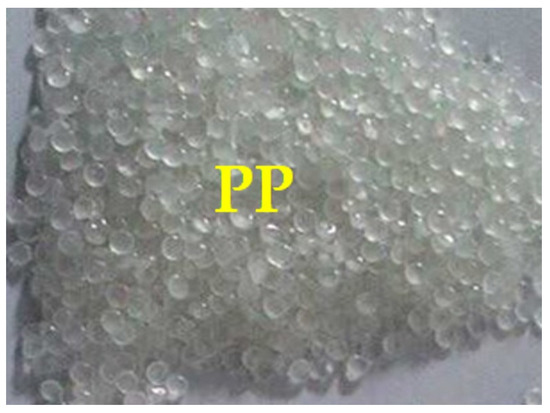
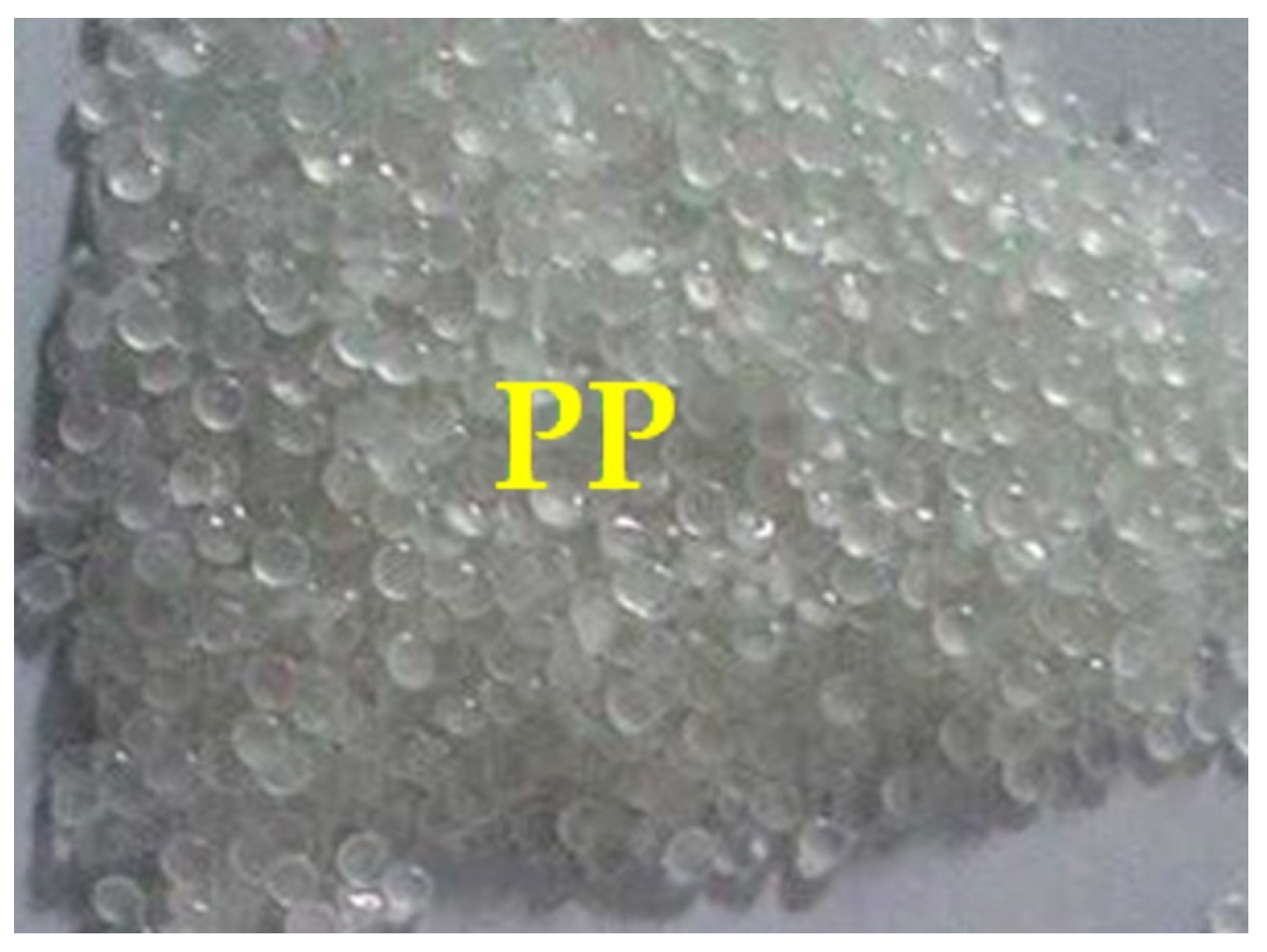
- Polypropylene (PP) homopolymer, which has moderate heat resistance up to 120 °C (see Figure 2).
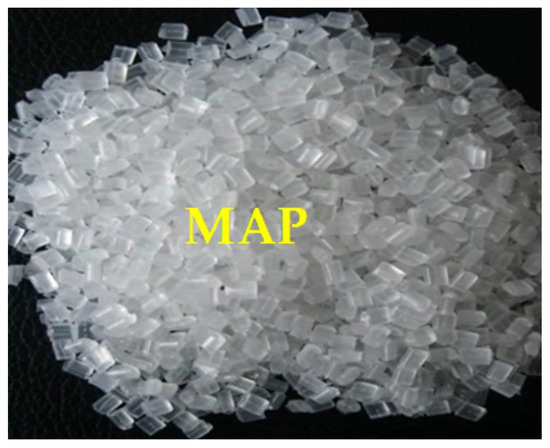
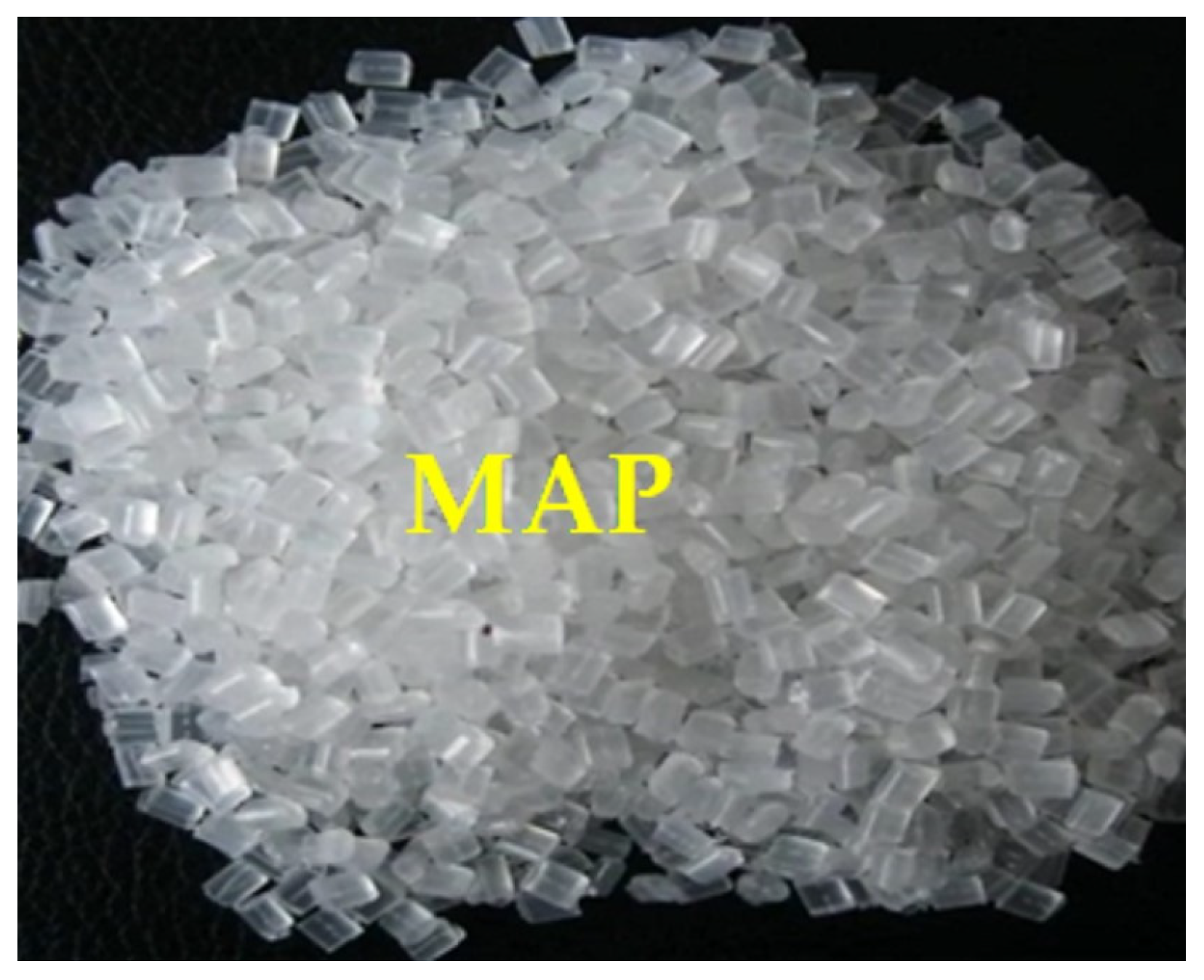
- Maleic anhydride polypropylene (MAPP), which functions as a compatibilizer, Grade NG2002 (see Figure 3).
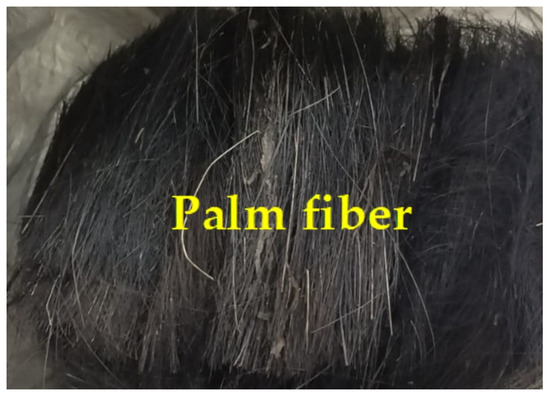
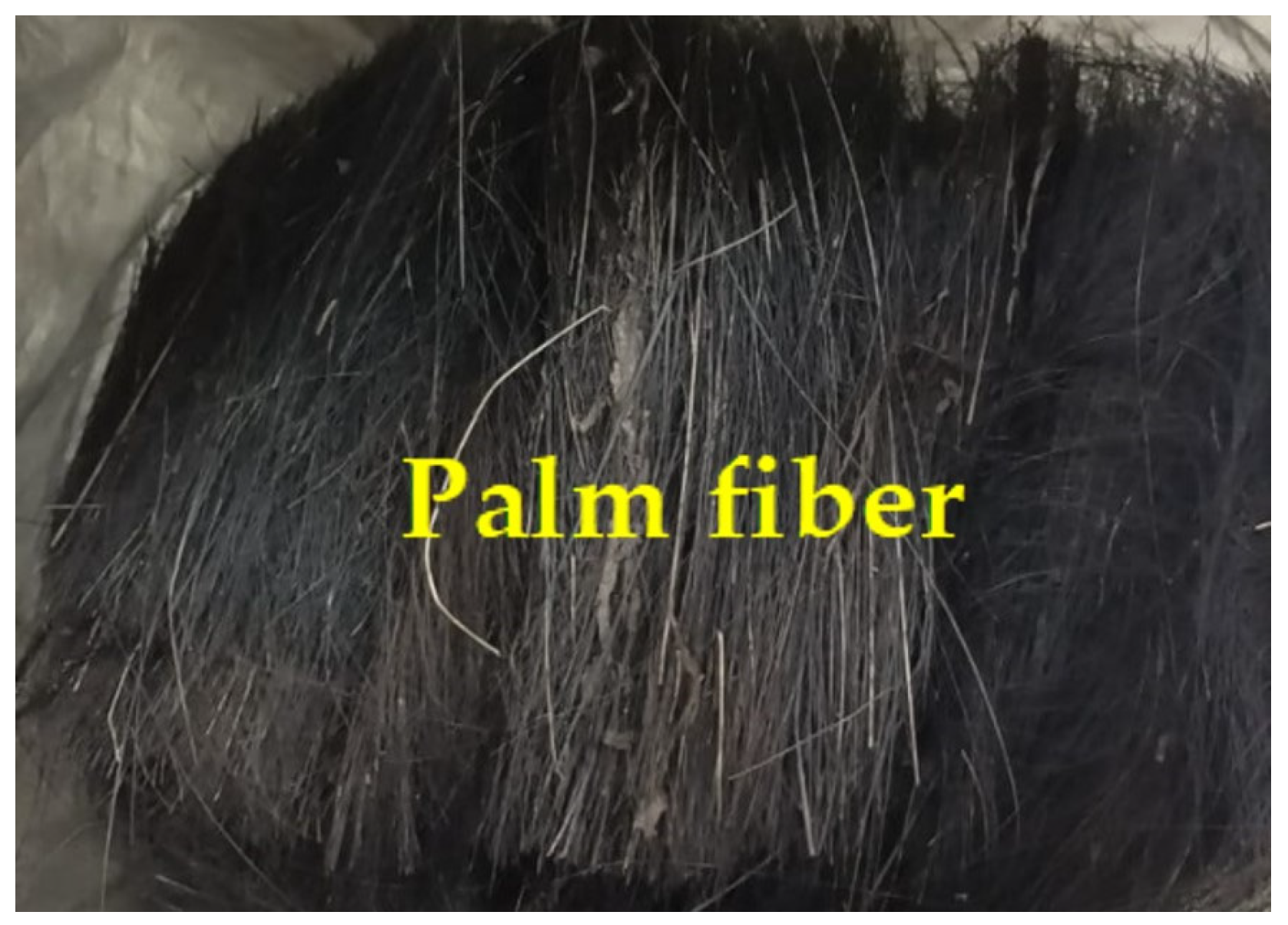
- Palm fiber, cut into ±5 mm, cleaned with water without chemical treatment, and dried at a temperature of 80 °C for 24 h (see Figure 4).
Figure 2.
Polypropylene (PP).
Figure 3.
Maleic acid polypropylene (MAPP).
Figure 4.
Palm fiber.
2.2. Making Process Composite
- Weighing—The composition of the composite material consists of:
- -
- Composition 1: 46% weight of palm fiber, 50% PP, 4% MAPP;
- -
- Composition 2: 48% weight of palm fiber, 50% PP, 2% MAPP;
- -
- Composition 3: 40% weight of palm fiber, 60% PP, 0% MAPP;
- -
- Composition 4: 34.5% weight of palm fiber, 64.5% PP, 1% MAPP;
- -
- Composition 5: 30% weight of palm fiber, 66% PP, 4% MAPP;
- -
- Composition 6: 30% weight of palm fiber, 70% PP, 0% MAPP.
- Processing—Composite material process:
- -
- Mix the composite ingredients using a single-screw extruder with a temperature of 180–200 °C to produce a pellet-shaped composite.
- -
- Cut the pellets into a size no greater than 2 mm–3 mm.
- -
- Produce specimens by molding at a pressure of ±150 bar. Tensile specimens should follow the ASTM D638 standard, and impact specimens the ASTM D256 standard.
2.3. Machine Tests Used
- -
- Machine tensile tests (mechanical testing):
- Model: WDW–5;
- Load: 5 KN;
- Serial no: 201702016.
- -
- SEM (Scanning Electron Microscopy) test machine:
- Brand: Thermo Scientific;
- Part number: 721-20000-01(MVE075722-60167-S);
- MFGYR: 2021 (1193921).
- -
- Zwick HIT 5.5P impact test machine
- -
- Print machine:
- Brand: RAY-RAN TEST EQUIPMENT LTD;
- Model: RR/TSMP;
- Serial No.: RR/TSMP/0002.
3. Research Results Data
3.1. Test Result Data
Tensile test results of stress and strain for palm fiber are presented in Table 1. Whereas the results of Modulus of elasticity and impact test are presented in Table 2.
Table 1.
Stress and starin of palm fiber.
Table 2.
Modulus of elasticity and impact of palm fiber.
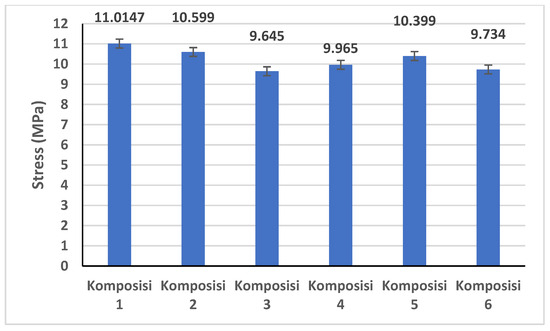
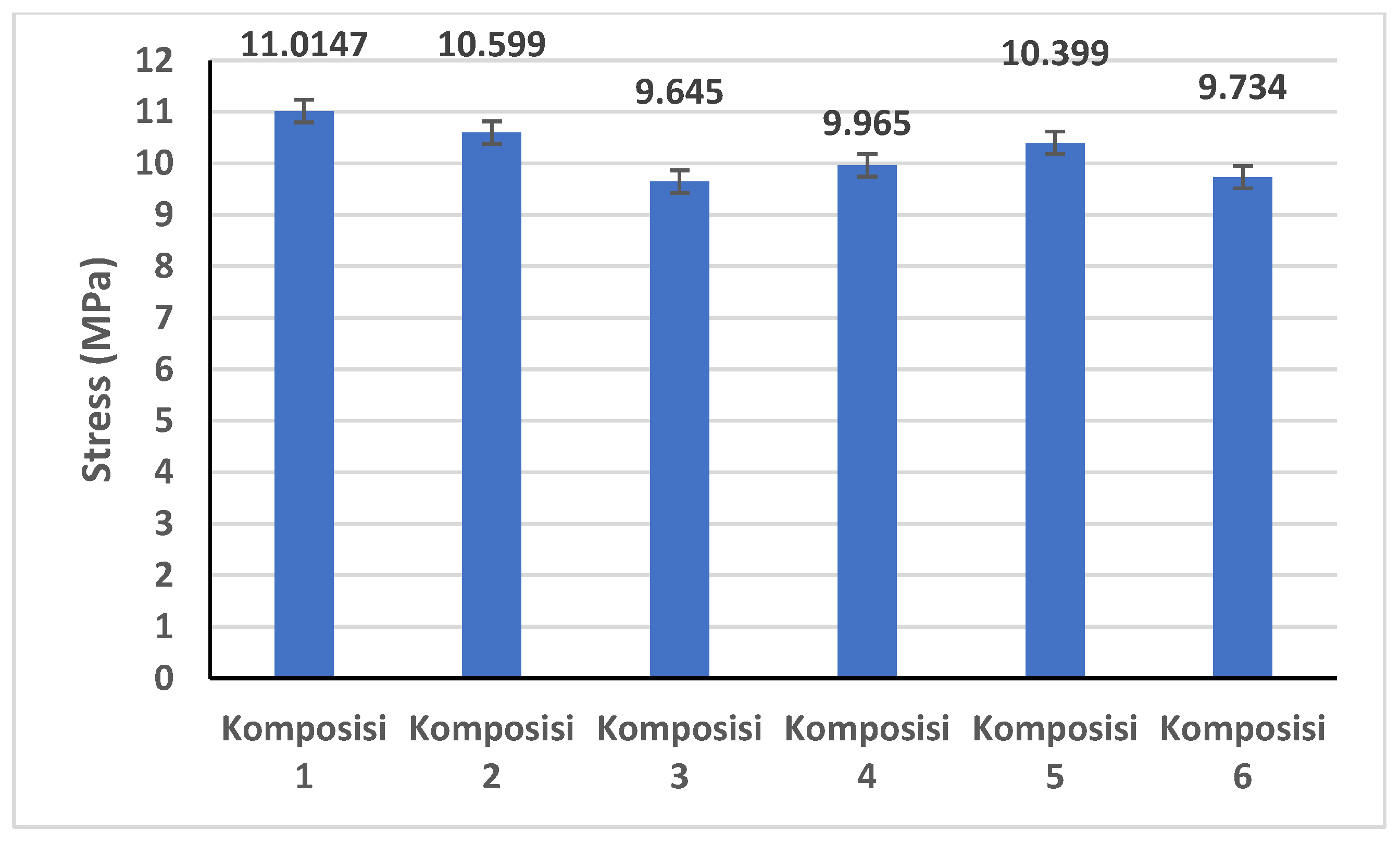
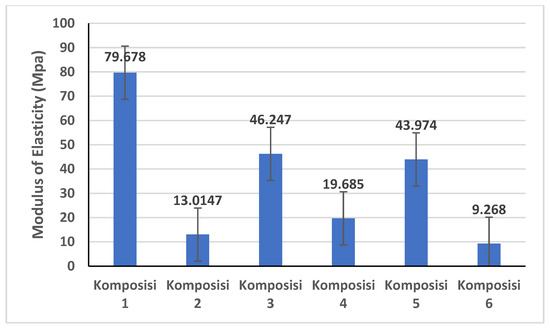
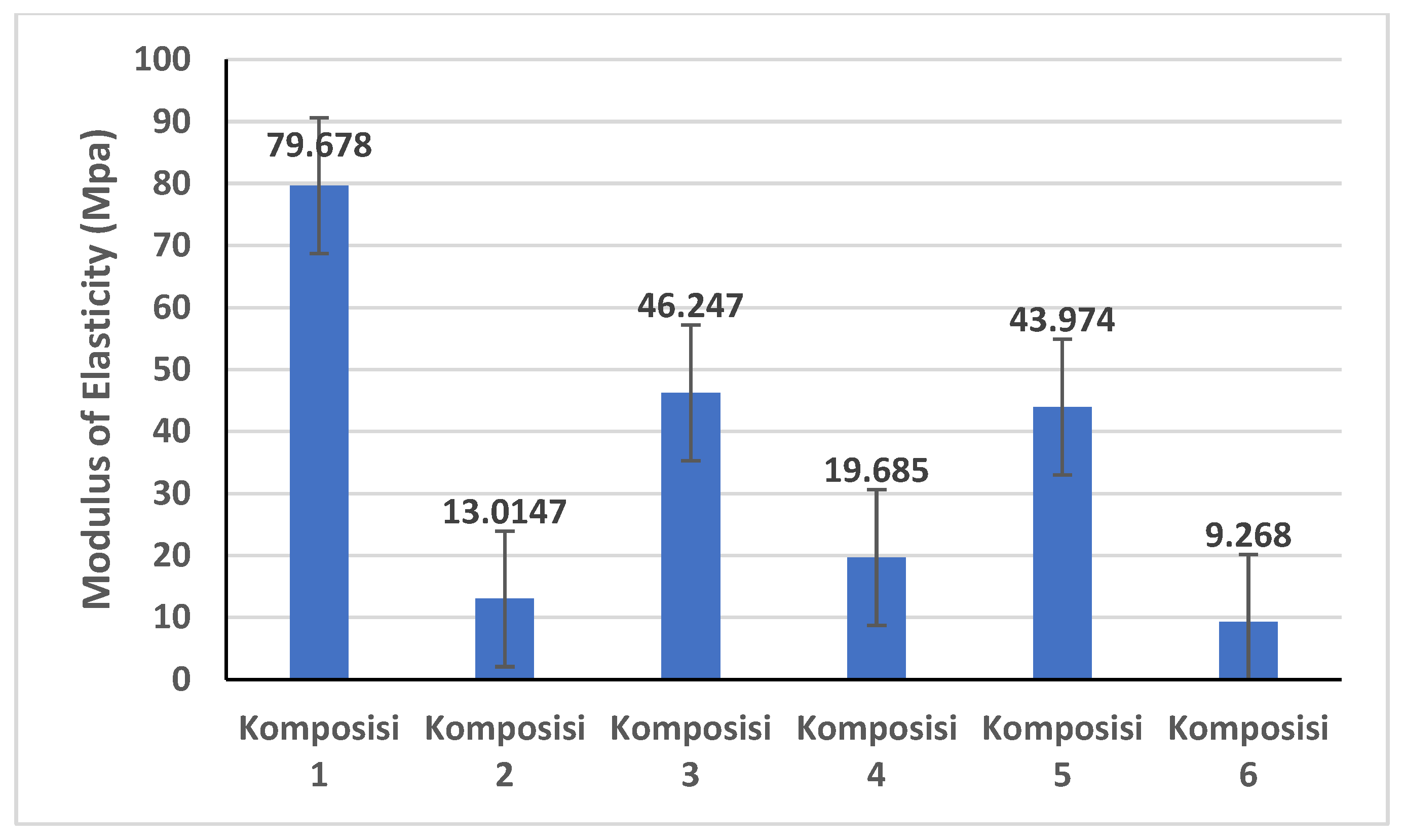
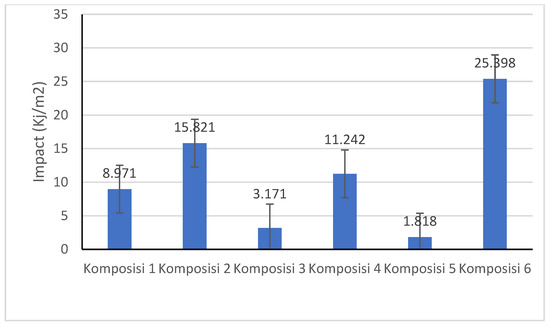
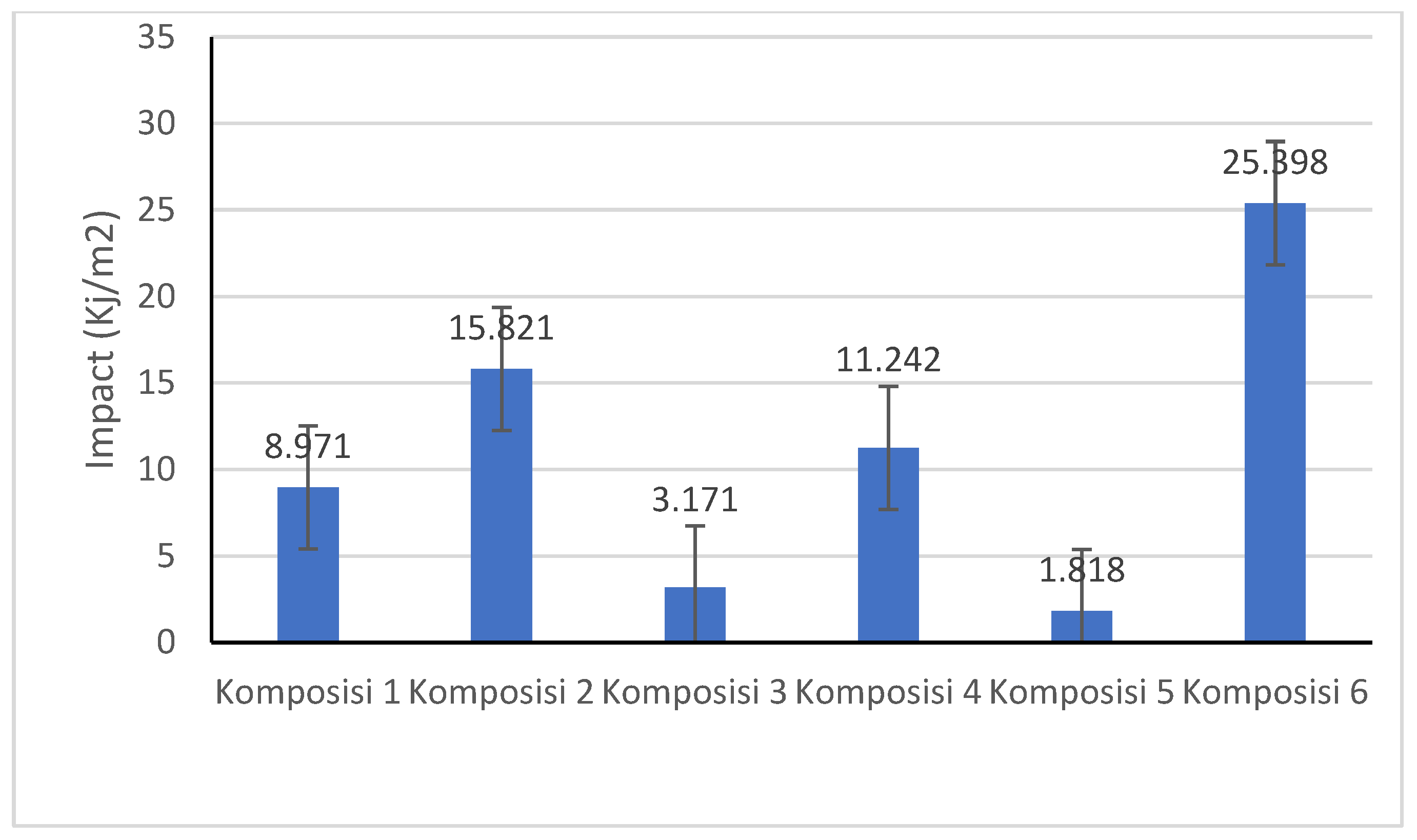
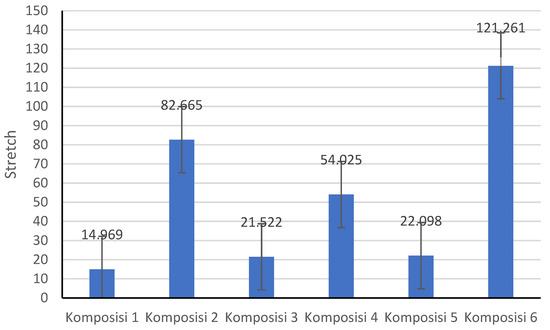
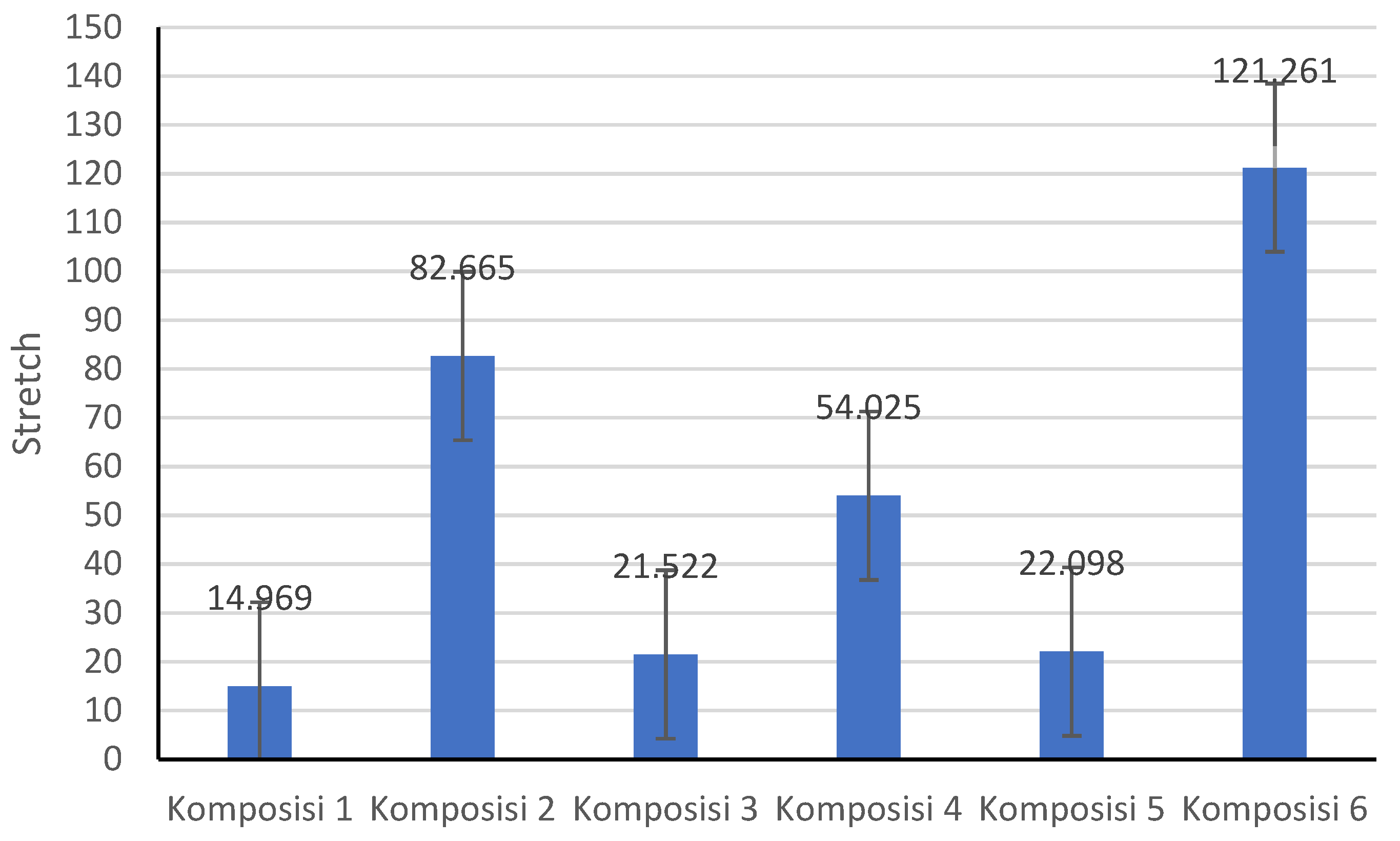
The test results are shown concisely in the following histogram image (Figure 5, Figure 6, Figure 7 and Figure 8):
Figure 5.
Histogram of average stress values (MPa).
Figure 6.
Histogram of average elastic modulus values (MPa).
Figure 7.
Histogram of average impact values (KJ/m2).
Figure 8.
Histogram of average strain values.
3.2. SEM Test Result Data
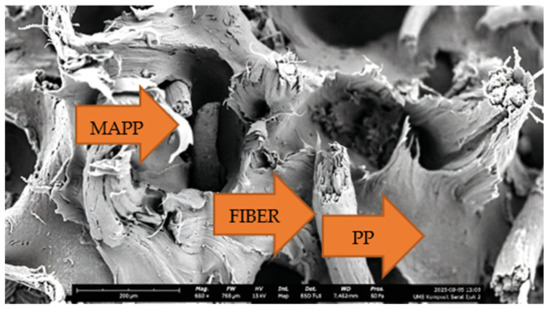
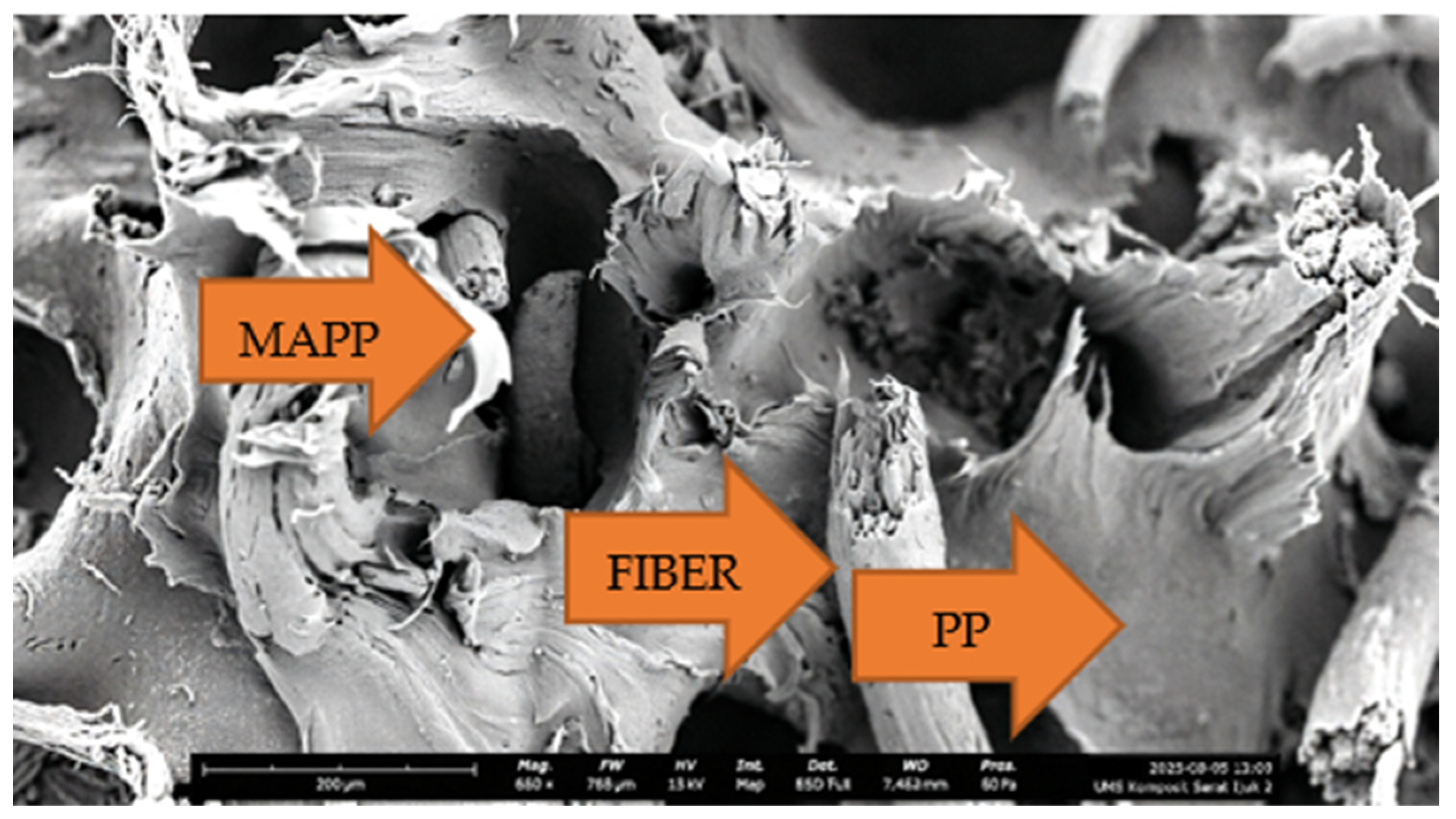
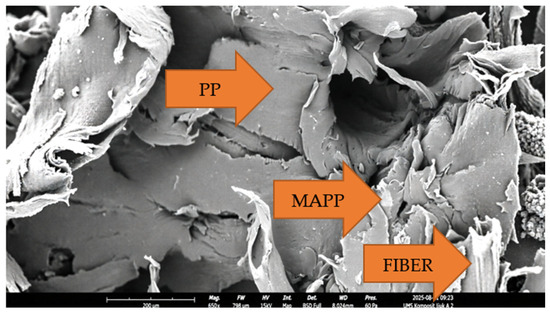
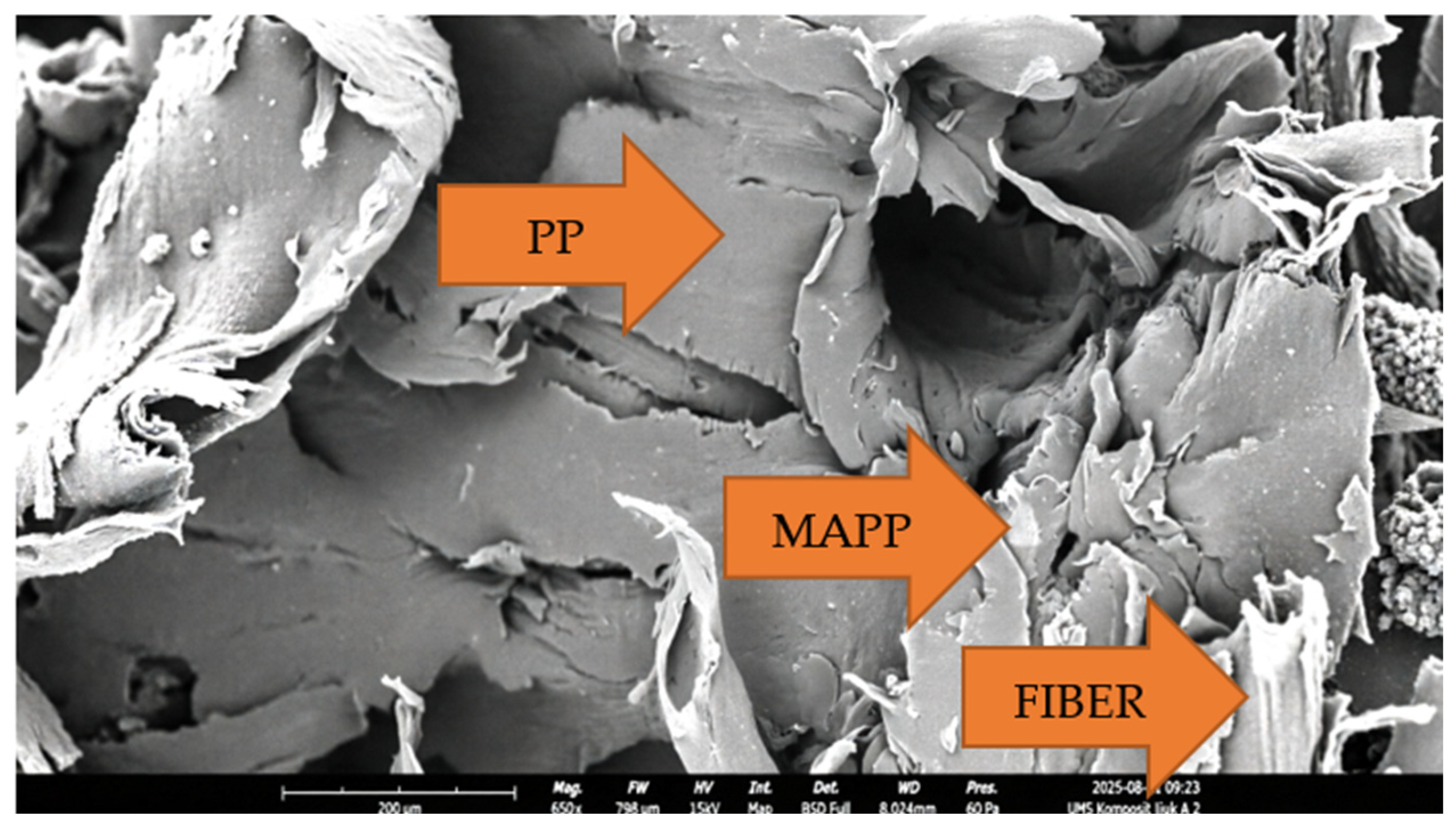
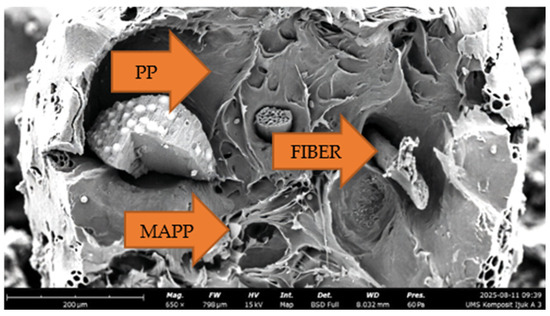
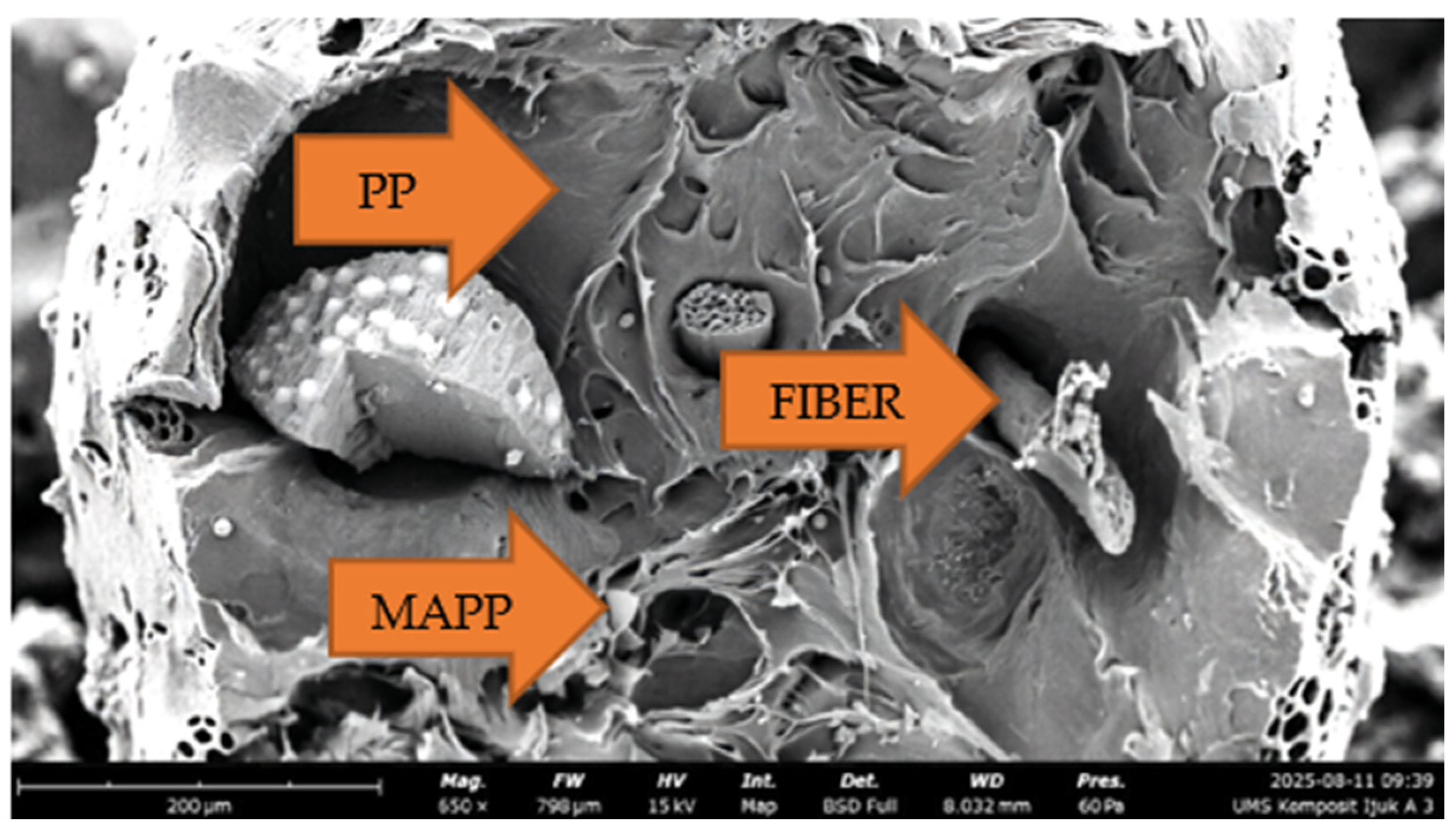
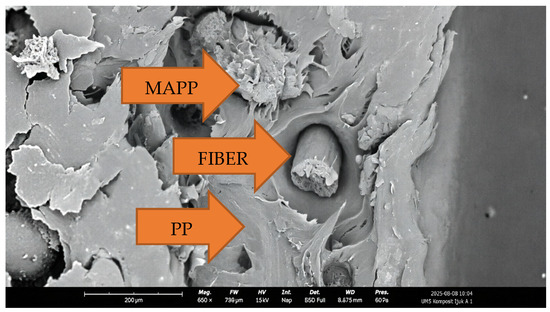
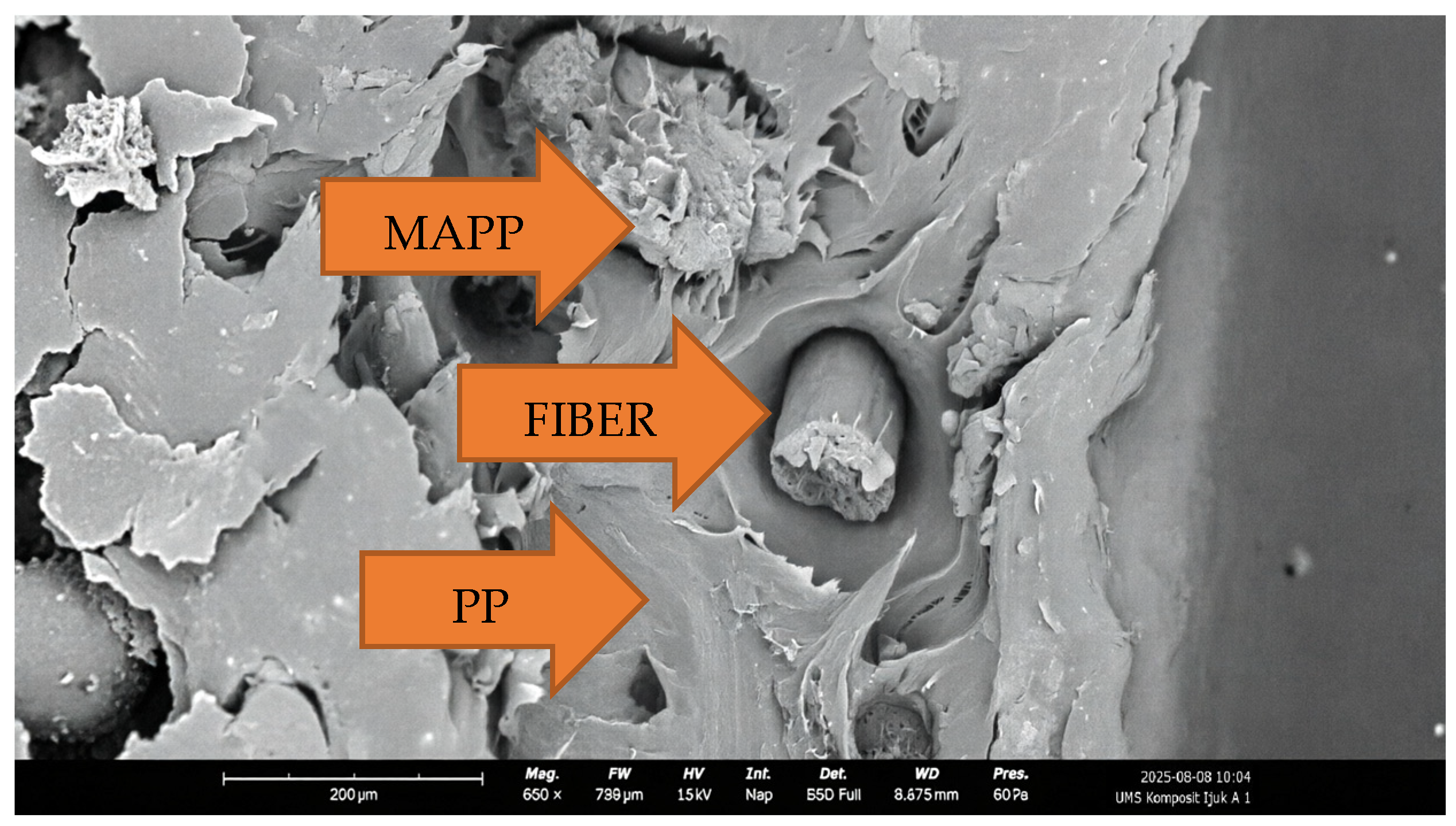
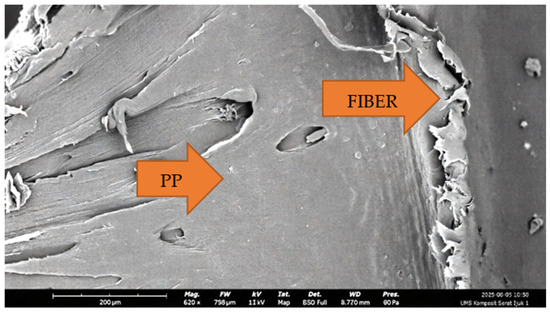
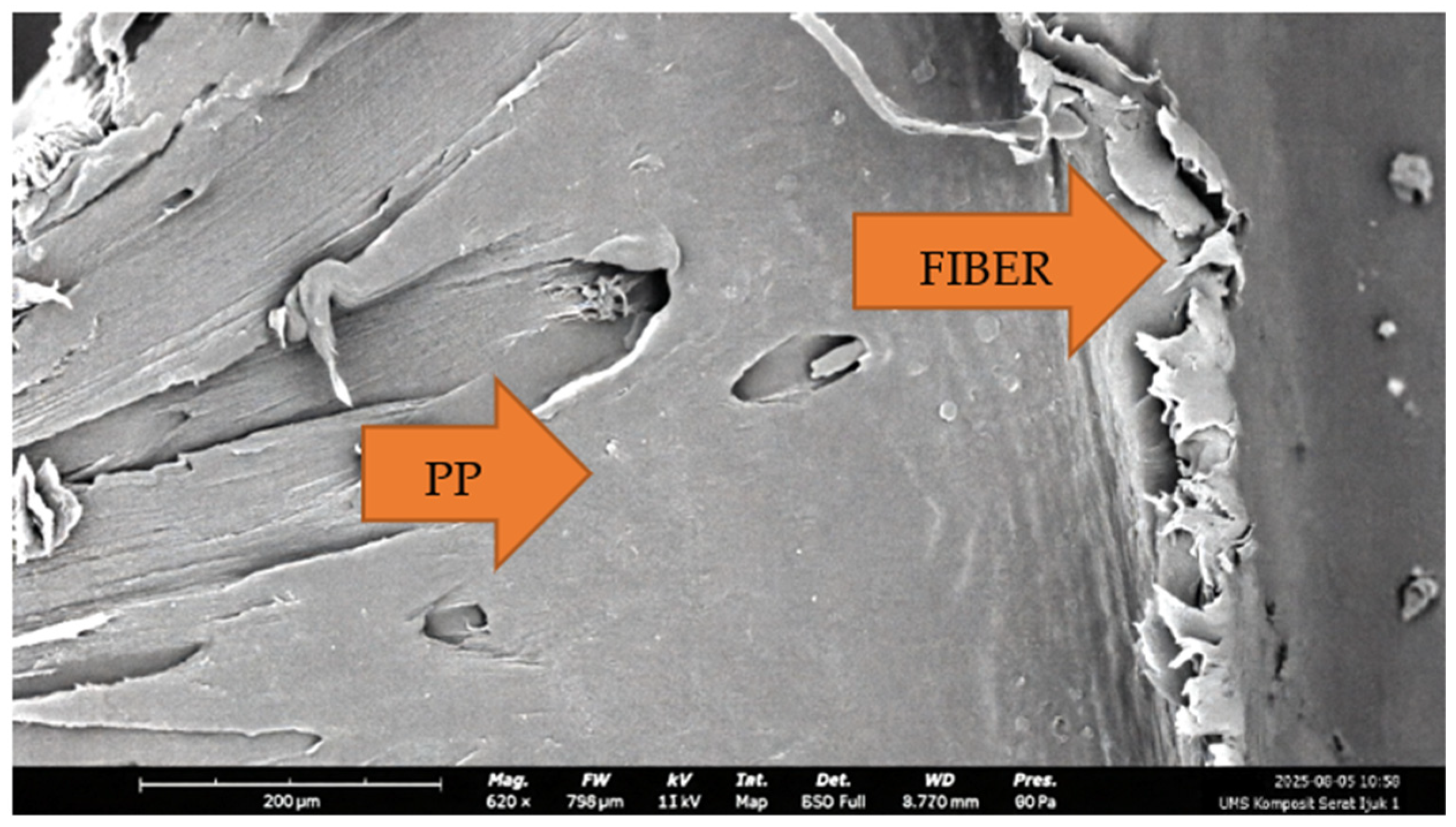
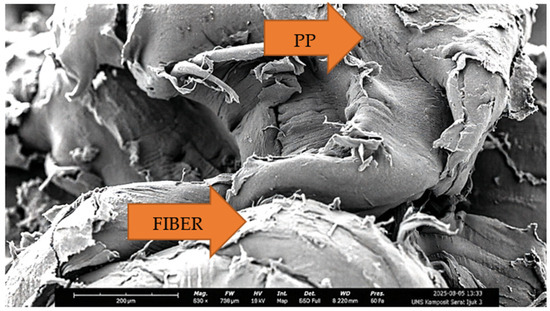
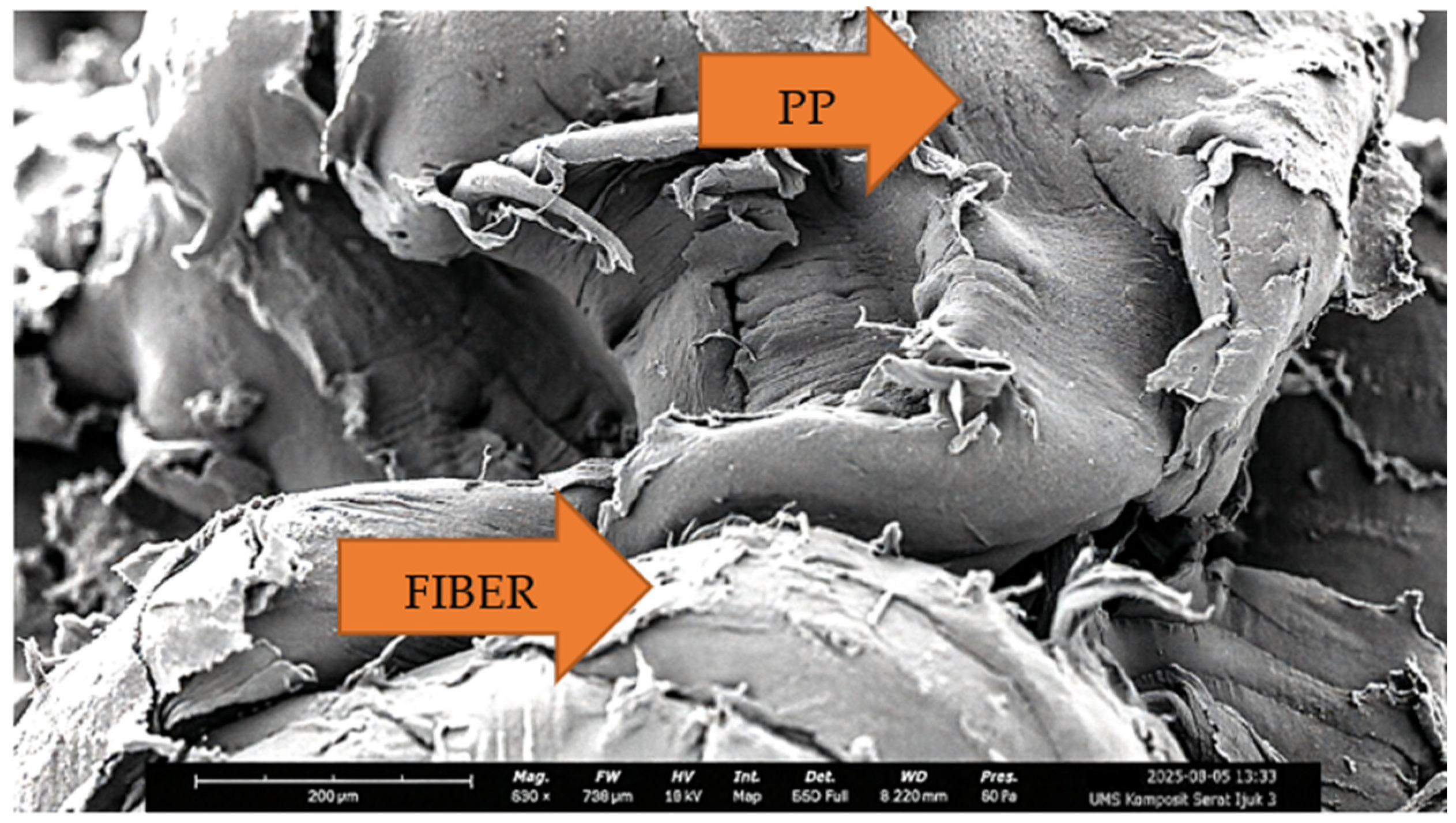
The surface morphology of the fiber composites with various compositions was examined using Scanning Electron Microscopy (SEM). The SEM results are presented in Figure 9, Figure 10, Figure 11, Figure 12, Figure 13 and Figure 14.
Figure 9.
SEM photo of fiber composition: 46, PP: 50, MAPP: 4.
Figure 10.
SEM photo of fiber composition: 48, PP: 50, MAPP: 2.
Figure 11.
SEM photo of fiber composition: 34.5, PP: 64.5, MAPP: 1.
Figure 12.
SEM photo of fiber composition: 30, PP: 66, MAPP: 4.
Figure 13.
SEM photo of fiber composition: 40, PP: 60, MAPP: 0.
Figure 14.
SEM photo fiber composition: 30, PP: 70, MAPP: 0.
4. Discussion
4.1. Effect of MAPP on Tensile Strength and Elastic Modulus
The test results data show that the addition of MAPP increases stiffness and tensile strength. The composition of 46:50:4 shows the highest modulus (79.67 MPa) and the highest stress (11.01 MPa). This occurs because the esterification reaction increases the interfacial bond between the hydroxyl groups of lignocellulose fibers and the anhydride groups in MAPP at 4% MAPP content so that it can reduce fiber pull-out and voids, as confirmed by the SEM morphology of Figure 1, Figure 2 and Figure 10. SEM images show a relatively homogeneous fracture surface morphology with good fiber-matrix adhesion. The fiber surface appears firmly embedded in the matrix without significant interfacial gaps. This phenomenon shows the effectiveness of MAPP in forming covalent bonds between the anhydride groups in MAPP and the hydroxyl groups in lignocellulose, resulting in increased chemical and mechanical adhesion. No dominant fiber pull-out was found, indicating the occurrence of efficient stress transfer from the matrix to the fiber. The dense fracture structure indicates increased stiffness and tensile strength, in line with the mechanical data (σ = 11.02 MPa; E = 79.67 MPa). This covalent bond reduces fiber tension and voids by strengthening the stress transfer from the PP matrix to the fibers. This analysis is in line with previous studies [29,30].
4.2. Effect of MAPP on Impact and Strain Toughness
Stiffness is increased, but toughness is impaired by higher MAPP concentrations. This is due to weak interfacial connections that allow significant plastic deformation in the PP matrix. The composition without MAPP (30:70:0) shows the highest impact energy (25.39 kJ/m2) and breaking strain (121.26%). In contrast, the increased covalent bonding in the 46:50:4 blend reduces the mobility of the polymer chains, making it more brittle [28,31].
4.3. Effect of Fiber Fraction and Correlation Analysis
Agglomeration occurs, dispersion homogeneity decreases, and voids increase due to limited matrix wetting when the fiber fraction is increased above 60% (48:50:2). This indicates the limited efficacy of MAPP at high fiber fractions because it causes the mechanical characteristics to decrease partially despite the presence of MAPP. Meanwhile, tensile stress and elastic modulus have a very strong positive relationship (R2 = 0.93), which indicates that stiffness increases with increasing material strength. Impact and strain values have a strong correlation (R2 = 0.89). Before interface saturation causes stiffness to decrease, the MAPP content can be increased to an optimal level of about 4% [7,32].
The morphology of the composite without MAPP shows many clear interfacial cavities and gaps around the fiber surface. A significant amount of fiber pull-out is observed, indicating weak interphase interactions. Fibers tend to detach from the matrix during the fracture process, indicating the dominance of physical bonds (van der Waals) without the involvement of chemical bonds. This condition results in a low modulus of elasticity (46 MPa) and tensile strength, but an increased strain (24.2%) due to plastic deformation of the PP matrix, which is not strongly bound to the fiber, pattern and suitability. This has been reported by researchers previously [29,31].
5. Conclusions
The overall analysis results show that the addition of MAPP significantly improves the mechanical performance of PP–lignocellulose fiber composites through strengthening the interfacial bond, especially in compositions with 4% MAPP content. The elastic modulus and tensile strength reach optimum values at the 46:50:4 composition due to the formation of covalent bonds between the anhydride and hydroxyl groups that facilitate more effective stress transfer, in line with the SEM morphology, which shows tight interfacial adhesion and minimal fiber pull-out. However, this increase in stiffness is accompanied by a decrease in toughness, because stronger interfacial bonds limit the plastic deformation of the matrix, so that the impact and strain values decrease at compositions with high MAPP content.
Author Contributions
Conceptualization, B.S.S.S. and S.; methodology, S. and R.F.; software, B.S.S.S.; validation, B.S.S.S., S. and R.F.; formal analysis, B.S.S.S. and R.F.; investigation, B.S.S.S. and S.; resources, S.; data curation, R.F.; writing—original draft preparation, B.S.S.S.; writing—review and editing, S. and R.F.; visualization, B.S.S.S.; supervision, S. and R.F. All authors have read and agreed to the published version of the manuscript.
Funding
This research received no external funding.
Institutional Review Board Statement
Not applicable.
Informed Consent Statement
Not applicable.
Data Availability Statement
The data presented in this study are available on request from the corresponding author.
Conflicts of Interest
The authors declare no conflict of interest.
References
- Hosseini, S.B.; Gaff, M.; Li, H.; Hui, D. Effect of fiber treatment on physical and mechanical properties of natural fiber-reinforced composites: A review. Rev. Adv. Mater. Sci. 2023, 62, 1–12. [Google Scholar] [CrossRef] [Scilit]
- Marcuello, C.; Chabbert, B.; Berzin, F.; Bercu, N.B.; Molinari, M.; Aguié-Béghin, V. Influence of Surface Chemistry of Fiber and Lignocellulosic Materials on Adhesion Properties with Polybutylene Succinate at Nanoscale. Materials 2023, 16, 2440. [Google Scholar] [CrossRef] [Scilit]
- Berzin, F.; Lemkhanter, L.; Marcuello, C.; Chabbert, B.; Aguié-Béghin, V.; Molinari, M.; Castellani, R.; Vergnes, B. Influence of the polarity of the matrix on the breakage mechanisms of lignocellulosic fibers during twin-screw extrusion. Polym. Compos. 2020, 41, 1106–1117. [Google Scholar] [CrossRef] [Scilit]
- Oliver-Ortega, H.; Tarrés, Q.; Mutjé, P.; Delgado-Aguilar, M.; Méndez, J.A.; Espinach, F.X. Impact Strength and Water Uptake Behavior of Bleached Kraft Softwood-Reinforced PLA Composites as Alternative to PP-Based Materials. Polymers 2020, 12, 2144. [Google Scholar] [CrossRef] [Scilit]
- Hachaichi, A.; Nekkaa, S.; Amroune, S.; Jawaid, M.; Alothman, O.Y.; Dufresne, A. Effect of alkali surface treatment and compatibilizer agent on tensile and morphological properties of date palm fibers-based high density polyethylene biocomposites. Polym. Compos. 2022, 43, 7211–7221. [Google Scholar] [CrossRef] [Scilit]
- Cichosz, S.; Masek, A.; Rylski, A. Cellulose Modification for Improved Compatibility with the Polymer Matrix: Mechanical Characterization of the Composite Material. Materials 2020, 13, 5519. [Google Scholar] [CrossRef] [Scilit]
- Venkatachalaiah, M.A.; Vasudeva Setty, R.N.; Johns, J. Effect of Compatibilizer on the Properties of Areca-Fiber Reinforced Polypropylene Composites. J. Nat. Fibers 2022, 19, 15261–15275. [Google Scholar] [CrossRef] [Scilit]
- Herráez, M.; Pichler, N.; Botsis, J. Improving delamination resistance through tailored defects. Compos. Struct. 2020, 247, 112422. [Google Scholar] [CrossRef] [Scilit]
- Imraan, M.; Ilyas, R.A.; Norfarhana, A.S.; Bangar, S.P.; Knight, V.F.; Norrrahim, M.N.F. Sugar palm (Arenga pinnata) fibers: New emerging natural fibre and its relevant properties, treatments and potential applications. J. Mater. Res. Technol. 2023, 24, 4551–4572. [Google Scholar] [CrossRef] [Scilit]
- Bahrain, S.H.K.; Masdek, N.R.N.; Mahmud, J.; Mohammed, M.N.; Sapuan, S.M.; Ilyas, R.A.; Mohamed, A.; Shamseldin, M.A.; Abdelrahman, A.; Asyraf, M.R.M. Morphological, Physical, and Mechanical Properties of Sugar-Palm (Arenga pinnata (Wurmb) Merr.)-Reinforced Silicone Rubber Biocomposites. Materials 2022, 15, 4062. [Google Scholar] [CrossRef] [Scilit]
- Asyraf, M.R.M.; Syamsir, A.; Supian, A.B.M.; Usman, F.; Ilyas, R.A.; Nurazzi, N.M.; Norrrahim, M.N.F.; Razman, M.R.; Zakaria, S.Z.S.; Sharma, S.; et al. Sugar Palm Fibre-Reinforced Polymer Composites: Influence of Chemical Treatments on Its Mechanical Properties. Materials 2022, 15, 3852. [Google Scholar] [CrossRef] [Scilit]
- Asyraf, M.R.M.; Ishak, M.R.; Norrrahim, M.N.F.; Nurazzi, N.M.; Shazleen, S.S.; Ilyas, R.A.; Rafidah, M.; Razman, M.R. Recent advances of thermal properties of sugar palm lignocellulosic fibre reinforced polymer composites. Int. J. Biol. Macromol. 2021, 193, 1587–1599. [Google Scholar] [CrossRef] [Scilit] [PubMed]
- Sh. Al-Otaibi, M.; Alothman, O.; Alrashed, M.; Anis, A.; Naveen, J.; Jawaid, M. Characterization of Date Palm Fiber-Reinforced Different Polypropylene Matrices. Polymers 2020, 12, 597. [Google Scholar] [CrossRef] [Scilit] [PubMed]
- Dong, Z.; Li, N.; Dong, A.; Ma, B.; Yu, C.; Chu, T.; Liu, Q. Enhancement of Interface between Lignocellulosic Fibers and Polypropylene Matrix via the Structure Alteration of Lignin at Elevated Temperatures. Materials 2020, 13, 5428. [Google Scholar] [CrossRef] [Scilit]
- da Silveira, P.H.P.M.; Santos, M.C.C.d.; Chaves, Y.S.; Ribeiro, M.P.; Marchi, B.Z.; Monteiro, S.N.; Gomes, A.V.; Tapanes, N.d.L.C.O.; Pereira, P.S.d.C.; Bastos, D.C. Characterization of Thermo-Mechanical and Chemical Properties of Polypropylene/Hemp Fiber Biocomposites: Impact of Maleic Anhydride Compatibilizer and Fiber Content. Polymers 2023, 15, 3271. [Google Scholar] [CrossRef] [Scilit]
- Darmawan, A.S.; Siswanto, W.A.; Febriantoko, B.W.; Hamid, A.; Sujitno, T. Predicting Surface Hardness of Commercially Pure Titanium under Ion Implantation Process. Mater. Sci. Forum 2019, 961, 97–106. [Google Scholar] [CrossRef] [Scilit]
- Hantoko, R.; Anggono, A.D.; Lubis, A.M.H.S.; Ngafwan. Microstructural Analysis of Friction Stir Welding Using CuZn and Zn Fillers on Aluminum 6061-T6: A Comparative Study. In Proceedings of the The 7th Mechanical Engineering, Science and Technology International Conference; MDPI: Basel, Switzerland, 2024; p. 6. [Google Scholar]
- Arif, M.; Yuwono, I.; Salim, A.T.A.; Dharmawan, A.; Zuriah, D.L. Experimental study the mechanical properties of gmaw welding results on S355J2+N material with post weld heat treatment (PWHT). Media Mesin Maj. Tek. Mesin 2024, 25, 1–9. [Google Scholar] [CrossRef] [Scilit]
- Anyanwu, K.O.; Nzei, H.O.; Onuoha, C.; Ehirim, V.I. The effects of heat input and electrode type on the mechanical properties of welded A309 stainless steel using a shielded metal arc welding. Appl. Res. Smart Technol. 2023, 4, 43–52. [Google Scholar] [CrossRef] [Scilit]
- AL-Oqla, F.M.; Hayajneh, M.T.; Aldhirat, A. Tribological and mechanical fracture performance of Mediterranean lignocellulosic fiber reinforced polypropylene composites. Polym. Compos. 2021, 42, 5501–5511. [Google Scholar] [CrossRef] [Scilit]
- Kobayashi, S.; Gan, J.; Osada, T.; Sakaguchi, M. Effect of compatibilizing agent on the fiber-matrix adhesion and mechanical properties of lignocellulose fiber reinforced polyolefin. Adv. Compos. Mater. 2020, 29, 377–387. [Google Scholar] [CrossRef] [Scilit]
- Kim, D.-K.; Han, W.; Kim, K.-W.; Kim, B.-J. Enhanced Interfacial Properties of Carbon Fiber/Maleic Anhydride-Grafted Polypropylene Composites via Two-Step Surface Treatment: Electrochemical Oxidation and Silane Treatment. Polymers 2023, 15, 3784. [Google Scholar] [CrossRef] [Scilit] [PubMed]
- Vallejos, M.E.; Aguado, R.J.; Morcillo-Martín, R.; Méndez, J.A.; Vilaseca, F.; Tarrés, Q.; Mutjé, P. Behavior of the Flexural Strength of Hemp/Polypropylene Composites: Evaluation of the Intrinsic Flexural Strength of Untreated Hemp Strands. Polymers 2023, 15, 371. [Google Scholar] [CrossRef] [Scilit]
- Ezenkwa, O.E.; Hassan, A.; Samsudin, S.A. Mechanical properties of rice husk and rice husk ash filled maleated polymers compatibilized polypropylene composites. J. Appl. Polym. Sci. 2022, 139, 51702. [Google Scholar] [CrossRef] [Scilit]
- Pantaloni, D.; Rudolph, A.L.; Shah, D.U.; Baley, C.; Bourmaud, A. Interfacial and mechanical characterisation of biodegradable polymer-flax fibre composites. Compos. Sci. Technol. 2021, 201, 108529. [Google Scholar] [CrossRef] [Scilit]
- Jalaee, A.; Trottman, K.; French, V.; Raghunath, S.; Brito dos Santos, F.; Foster, E.J. Improved thermomechanical and rheological properties of polypropylene composites with thermomechanical pulp for injection molding. Polym. Compos. 2024, 45, 12782–12795. [Google Scholar] [CrossRef] [Scilit]
- Sayeed, M.M.A.; Sayem, A.S.M.; Haider, J.; Akter, S.; Habib, M.M.; Rahman, H.; Shahinur, S. Assessing Mechanical Properties of Jute, Kenaf, and Pineapple Leaf Fiber-Reinforced Polypropylene Composites: Experiment and Modelling. Polymers 2023, 15, 830. [Google Scholar] [CrossRef] [Scilit]
- Várdai, R.; Lummerstorfer, T.; Pretschuh, C.; Jerabek, M.; Gahleitner, M.; Faludi, G.; Móczó, J.; Pukánszky, B. Reinforcement of PP with polymer fibers: Effect of matrix characteristics, fiber type and interfacial adhesion. Polymer 2020, 190, 122203. [Google Scholar] [CrossRef] [Scilit]
- Fajardo Cabrera de Lima, L.d.P.; Chamorro Rodríguez, C.D.; Mina Hernandez, J.H. Use of Organic Acids in Bamboo Fiber-Reinforced Polypropylene Composites: Mechanical Properties and Interfacial Morphology. Polymers 2021, 13, 2007. [Google Scholar] [CrossRef] [Scilit]
- Margoto, O.H.; Prado, K.D.S.D.; Mergulhão, R.C.; Moris, V.A.D.S.; de Paiva, J.M.F. Mechanical and Thermal Characterization of Jute Fabric-Reinforced Polypropylene Composites: Effect of Maleic Anhydride. J. Nat. Fibers 2022, 19, 1792–1804. [Google Scholar] [CrossRef] [Scilit]
- Lendvai, L.; Patnaik, A. The effect of coupling agent on the mechanical properties of injection molded polypropylene/wheat straw composites. Acta Tech. Jaurinensis 2022, 15, 232–238. [Google Scholar] [CrossRef] [Scilit]
- Jiang, L.; Wang, X.; Zhou, Y. Effects of fiber characteristics on tensile and impact properties of long fiber reinforced High-Density Polyethylene. Polym. Compos. 2024, 45, 11138–11148. [Google Scholar] [CrossRef] [Scilit]

Disclaimer/Publisher’s Note: The statements, opinions and data contained in all publications are solely those of the individual author(s) and contributor(s) and not of MDPI and/or the editor(s). MDPI and/or the editor(s) disclaim responsibility for any injury to people or property resulting from any ideas, methods, instructions or products referred to in the content. |
© 2026 by the authors. Licensee MDPI, Basel, Switzerland. This article is an open access article distributed under the terms and conditions of the Creative Commons Attribution (CC BY) license.