1. Introduction
MSMEs are essential to Indonesia’s economic recovery and growth. There are approximately 64.2 million MSMEs nationwide. They account for approximately 61% of Indonesia’s GDP and provide employment to nearly 119.6 million people, representing 97% of the workforce. These contributions make MSMEs crucial for both economic stability and social fairness [
1].
In agriculture, MSMEs play a big role in producing high-value crops, with coffee being one of the most important. Indonesia is among the top four coffee producers in the world, with smallholder farmers contributing over 95% of total production, who typically cultivate plots of 1–2 hectares [
2,
3,
4]. Most smallholder farmers operate as micro- or small-scale businesses in the primary production sector. Indonesian coffee production primarily uses Robusta and Arabica beans, which are mostly sourced from smallholder plantations.
Malang, located in East Java, has become well known for its coffee production. The region’s highland climate and volcanic soil help create distinct flavors. Dampit coffee from South Malang is a premium Robusta with a strong global reputation. Each year, producers export approximately 90% of the 13,000–15,000 tons produced to international markets. Dampit coffee offers distinctive caramel, chocolate, and sweet-bread flavor notes, and its strong association with its place of origin makes it one of Indonesia’s most competitive regional products [
5,
6].
However, despite this strong export performance, most MSMEs operate in low-value segments of the global value chain. They primarily sell unprocessed or minimally processed beans through intermediaries and engage only minimally in direct export, branding, or certification activities. As a result, they retain limited control over pricing, possess weak bargaining power, and capture only a small share of premium market margins, indicating that participation in export flows does not necessarily translate into value capture at the MSME level.
This study selects Dampit as the study case because it exemplifies a critical condition of high exposure but low value capture within Indonesia’s coffee sector. Although the region exports approximately 90% of its production to international markets, most MSMEs in Dampit remain positioned at the lower end of the global value chain, relying heavily on intermediaries and lacking control over branding and market access. This condition reflects a typical buyer-driven value chain structure, characterized by fragmented smallholder production, weak institutional coordination, and limited adoption of post-harvest standards and digital technologies. At the same time, Dampit benefits from strong agro-ecological conditions and an established product reputation, allowing this study to isolate organizational and strategic constraints rather than resource limitations.
Although origin-based coffee such as Dampit from Malang has natural advantages and a growing export reputation, most coffee MSMEs in the area remain excluded from high-value global markets. Their beans may enter international trade via intermediaries, but smallholder farmers and processors still face significant challenges. These include insufficient post-harvest equipment, the absence of standardized processing methods, limited knowledge of international quality standards, weak cooperatives, and insufficient support for certification and branding [
7]. Meanwhile, the global coffee industry is changing as more consumers want products that are certified, traceable, and sustainably sourced [
8]. Market analysts project that the global ground coffee market will grow from USD 269 billion in 2024 to USD 369 billion by 2030.
Certifications like halal, organic, and fair trade are now key requirements for entering the premium market [
9,
10]. Halal certification provides economic benefits and improves firm performance, particularly in financial and innovation aspects [
11,
12], certified organic products can be sold at higher prices than conventional products [
13], and fair trade serves as a global strategy for the internationalization of agricultural products, facilitates access to demanding markets, and supports compliance with environmental and ethical standards [
14,
15,
16]. However, MSMEs cannot adopt these certifications simultaneously due to differences in cost, audit complexity, and target market requirements. At the same time, digital technologies such as AI-powered grading, QR code traceability, and e-commerce platforms are reshaping how value is created and captured in the agri-food system.
Despite the growing body of literature on MSME competitiveness and GVC upgrading, existing studies tend to remain either diagnostic or descriptive in nature. Researchers typically use Porter’s Diamond to identify competitiveness gaps, while they apply GVC frameworks to classify upgrading pathways; however, they rarely integrate these approaches into a structured decision-making process. Moreover, most studies do not provide clear guidance on how MSMEs should prioritize upgrading strategies under resource constraints. To address this gap, this study introduces a decision-focused framework that systematically links Diamond-based competitiveness gaps to GVC upgrading categories and translates them into prioritized strategic actions using a multi-criteria decision approach. In addition, the framework extends beyond prioritization by developing a staged upgrading roadmap that aligns internal capability development with market progression and key enablers such as digital transformation and certification. This integrative approach transforms existing analytical models into a practical decision-support tool for MSMEs and policymakers.
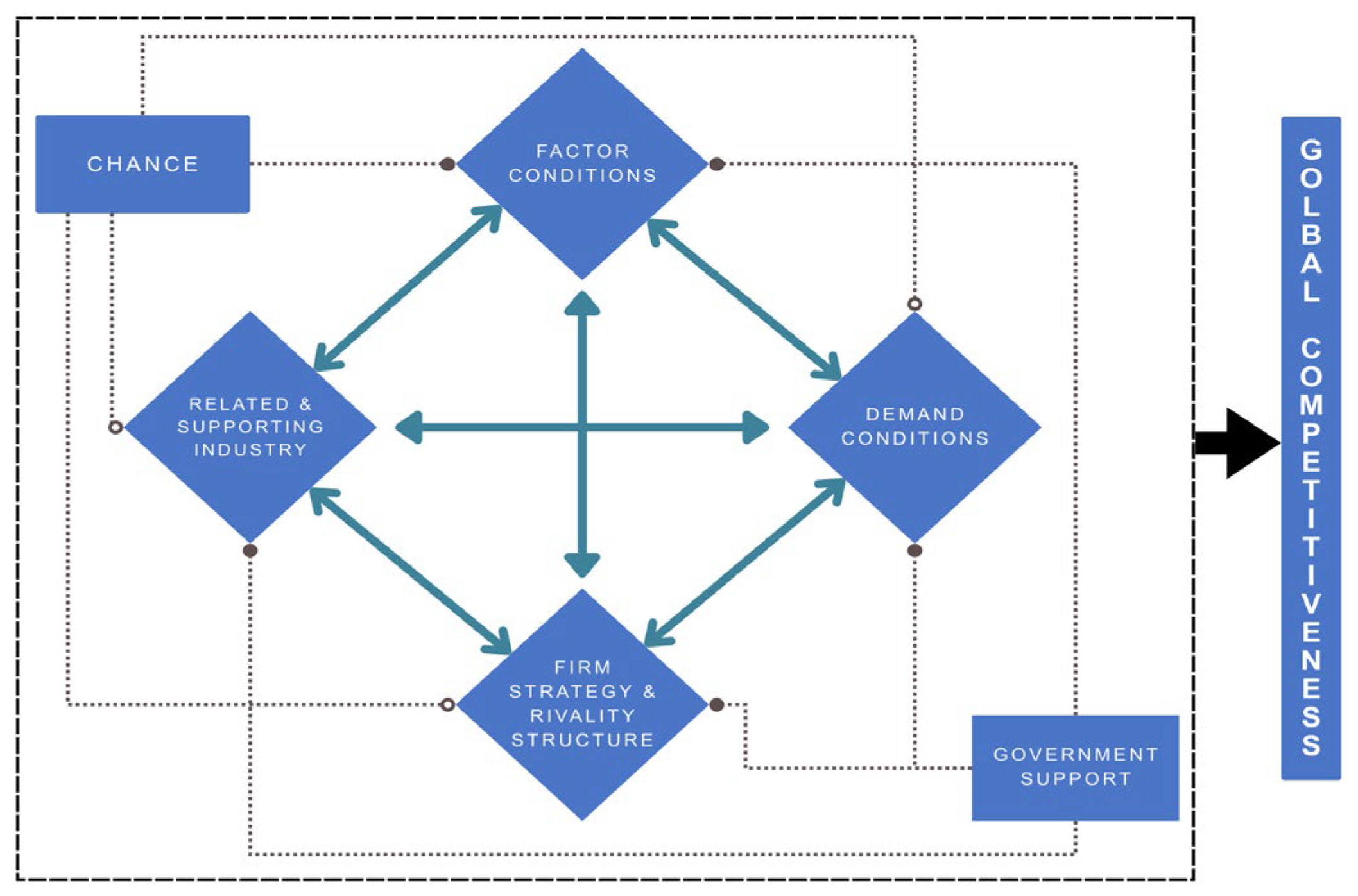
This study uses Porter’s Diamond Model to identify where Indonesian coffee MSMEs face competitiveness gaps, such as in resources, demand, supporting industries, business strategies, government support, and external factors. The study then applies GVC theory to identify ways these businesses can improve, such as making their processes more efficient, enhancing product quality, or expanding into branding. This study applies the AHP method to rank these strategies based on their urgency, practicality, and impact. Digital transformation and certification play a critical role in supporting these improvements. By combining these steps into a clear plan, the study aims to give MSMEs practical guidance for moving from low readiness to sustainable participation in global coffee markets.
3. Methodology
3.1. Competitiveness Gap Identification Using Porter’s Diamond
This study adopts a qualitative-dominant mixed approach combining field-based interviews and expert-based quantitative assessment to ensure empirical grounding of the proposed framework. The research started with a competitiveness diagnosis using Porter’s Diamond Model. This study conducted 10 in-depth, semi-structured interviews with key stakeholders in the coffee value chain, including smallholder farmers, coffee business owners, and representatives of local government agencies, and used purposive sampling to select participants to capture a range of relevant perspectives. The sample consisted primarily of smallholder farmers and MSME processors, complemented by representatives from local government and supporting institutions, ensuring both operational and institutional viewpoints were captured. The interviews focused on identifying specific constraints and weaknesses across the six dimensions of the Diamond Model. This study applied a theoretical saturation logic and observed that no substantially new themes or constraints emerged in the later interviews, indicating sufficient coverage of the key competitiveness issues, then grouped the identified issues into competitiveness gap indicators and organized them into tables for each dimension. This step provides a clear qualitative diagnosis of the competitiveness challenges faced by coffee MSMEs and serves as the basis for subsequent stages of analysis.
3.2. GVC-Oriented Gap Taxonomy and Expert Validation
After the Diamond-based diagnosis, the study mapped the competitiveness gaps using a structured Likert-scale assessment with expert input. The panel included five experts (academics, value chain consultants, and development practitioners with experience in the coffee sector) whom the study selected to provide a balanced perspective. All experts had more than 5–10 years of experience in coffee value chains and were familiar with the Indonesian context, including the Dampit/Malang region. To ensure independence, none of the experts were directly involved in the case MSMEs. Each expert received a matrix of gap indicators and independently rated the extent to which each gap constrained process, product, or functional upgrading within the GVC framework.
The study conducted the assessment using a 5-point Likert scale (1 = very weak influence to 5 = very strong influence) for each of the three upgrading dimensions. To mitigate dominance bias and groupthink, the study collected all expert evaluations individually without group discussion and ensured anonymity during the assessment process. For each gap, experts rated the extent to which it influenced each upgrading dimension. The study then calculated the average score for each upgrading type and assigned the dimension with the highest average as the main category for that gap.
When scores across dimensions appeared close or when a gap plausibly constrained multiple upgrading paths, the study interpreted the results carefully and acknowledged the presence of overlapping constraints. Although the study assigned each gap to a dominant category to maintain analytical clarity and support subsequent AHP prioritization, it also considered the relative scores across all dimensions during interpretation. This approach ensured consistent interpretation, reduced subjective bias, improved analytical rigor, and translated competitiveness findings into practical directions for strategic decision-making.
3.3. Strategic Prioritization Using AHP
This study used the AHP to rank strategic upgrading options for coffee MSMEs. AHP was selected because it allows experts to provide structured input, which is particularly helpful when quantitative data or resources are limited, as is common for smallholder-based businesses.
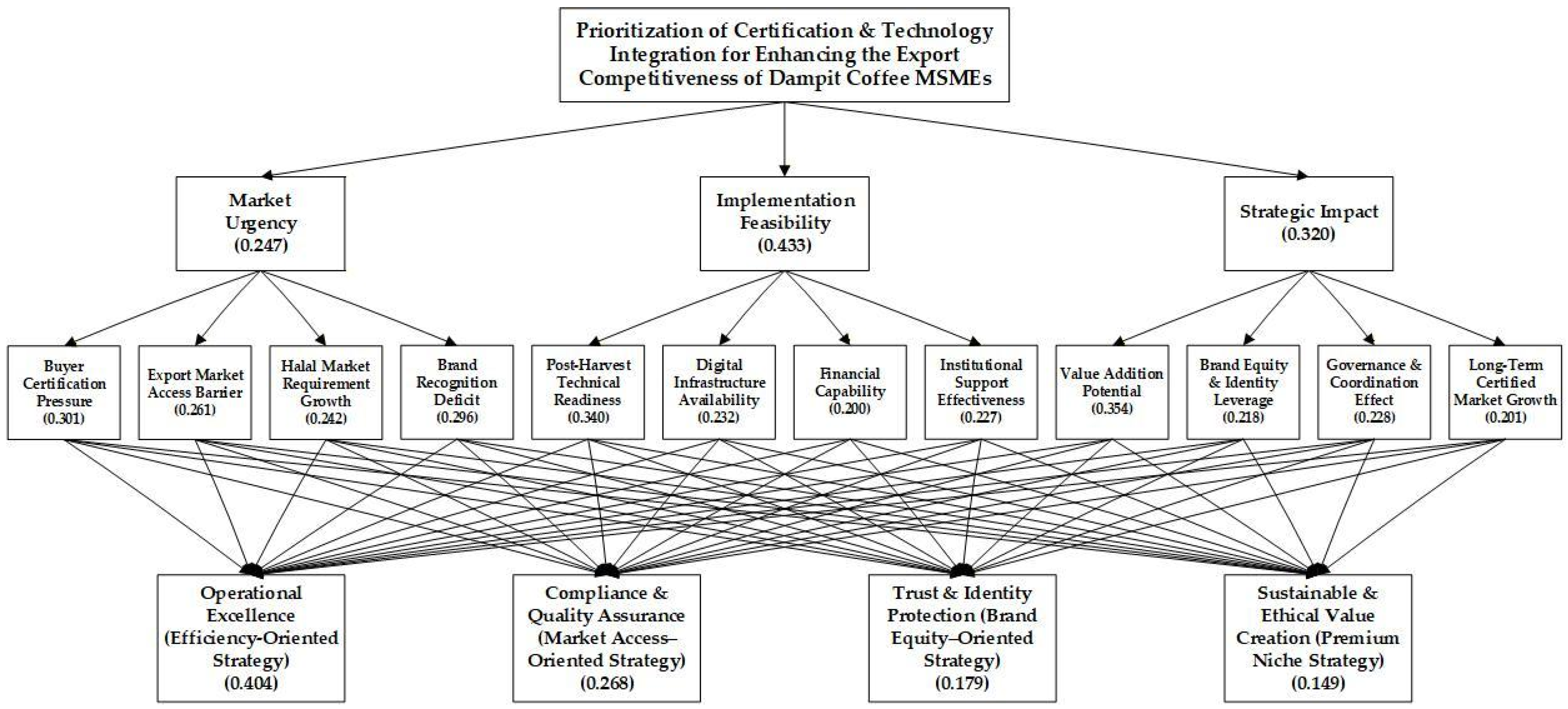
The study developed a three-level hierarchical structure to reflect the decision context. At the top level, the study defined the goal as “Prioritization of Certification & Technology Integration for Enhancing the Export Competitiveness of Dampit Coffee MSMEs.” At the second level, the study established the evaluation criteria, which comprise:
Market Urgency: how quickly buyers need the products,
Implementation Feasibility: the ability of MSMEs to carry out the strategy,
Strategic Impact: the long-term potential of the strategy to create lasting competitiveness.
At the third level, the study identified four strategic alternatives based on the literature and empirical observations of MSME response patterns:
Operational Excellence: efficiency-driven process upgrading,
Compliance and Quality Assurance: certification and standardization-driven product upgrading,
Trust and Identity Protection: branding, traceability, and market legitimacy,
Sustainable and Ethical Value Creation: premium positioning based on ethical and environmental standards.
Five experts with experience in agri-food value chains and MSME development participated in the pairwise comparison process. Each expert completed a comparison matrix for the criteria and for the alternatives under each criterion, using Saaty’s 1–9 scale. The study combined the results using the geometric mean and calculated consistency ratios (CR) to ensure logical consistency. All matrices had CR values below 0.10, confirming consistency. The study then used the final normalized weights to rank the strategic alternatives based on their overall priority scores.
3.4. Enabler Alignment and Roadmap Development
The last step in the methodology is to build the roadmap. Rather than presenting several possible upgrading paths, the roadmap will follow the top strategic option identified using the AHP. This roadmap will match upgrading efforts to different levels of market engagement: domestic, regional, and global. Digital transformation and certification will be considered important factors that play distinct roles at each stage.
Section 4 presents the roadmap development process based on the selected strategic priority.
4. Result
4.1. Mapping Local Conditions
Malang coffee MSMEs face several business challenges that hinder their growth, competition, and innovation. Knowing these obstacles is important for creating support programs that help SMEs expand in local and global markets. The application of Porter’s Diamond to Malang’s coffee sector reveals key weaknesses in resources, supporting institutions, and business strategies, despite the area’s strong agro-ecological potential.
Table 1 summarizes the competitiveness gaps identified across Porter’s diamond dimensions and their corresponding implications for upgrading.
4.2. GVC-Based Classification of Competitiveness Gaps
After identifying competitiveness gaps using Porter’s Diamond analysis, the study used a GVC upgrading perspective to better understand their structural impact. Five experts with experience in the coffee value chain contributed their insights, ensuring that the classification aligned with real-world conditions and accepted GVC concepts. Rather than treating all constraints as equivalent, the analysis examined how each gap affects the upgrading paths of MSMEs within the value chain.
The study then reviewed each gap against three upgrading dimensions to identify its main effect on the value chain. Experts assessed the extent to which each gap influenced the three types of upgrading, and the final classification indicates which pathway is most constrained. This process indicates that the challenges faced by coffee MSMEs are complex and overlapping rather than sequential, requiring careful prioritization in the subsequent analysis.
Table 2 presents the GVC-based classification of competitiveness gaps, showing the expert assessment scores for process, product, and functional upgrading dimensions.
4.3. Construction of AHP Criteria and Strategic Alternatives
Before applying the AHP method, we constructed a decision hierarchy to depict the strategic choices that coffee MSMEs in Dampit face. We selected evaluation criteria and strategic alternatives, drawing on insights from Porter’s Diamond–GVC analysis and existing research on MSME upgrading and their role in the global coffee value chain. In GVC studies, upgrading decisions are often influenced by market pressures, internal capabilities, and the long-term value of each strategy.
Based on this, we established three evaluation criteria. Market urgency measures how quickly MSMEs must respond to buyer demand, certification requirements, and changes in export markets, which drive upgrading in buyer-led value chains. Implementation feasibility assesses whether MSMEs have the resources, technology, and support required to implement upgrades. Strategic impact examines how much a strategy creates lasting value and supports real upgrading, not merely small improvements, in line with the GVC perspective.
We identified four strategic alternatives that reflect common responses by MSMEs in agri-food value chains. Operational Excellence focuses on improving efficiency and developing internal capabilities, which is a necessary step for upgrading, but it is not sufficient to change market position. Compliance and Quality Assurance are about meeting certification and standard requirements to access export markets, which is important in regulated agri-food chains. Trust and Identity Protection focus on branding, traceability, and origin recognition to lower buyer risk and reduce reliance on intermediaries. Sustainable and Ethical Value Creation targets premium markets by matching production with sustainability and ethical standards. These alternatives are clearly distinct and mutually exclusive, facilitating their prioritization using the AHP method.
Figure 2 illustrates the AHP hierarchical structure used to prioritize the strategic upgrading alternatives, including the main goal, criteria, sub-criteria, and strategic alternatives.
4.3.1. Ranking of Evaluation Criteria
Expert pairwise comparisons in the AHP produced the final normalized weights for the evaluation criteria. Implementation feasibility has the highest weight (0.433), followed by strategic impact (0.320), and market urgency has the lowest weight (0.247). This ranking indicates that internal readiness and the ability to implement strategies are the most critical considerations for coffee MSMEs.
Implementation feasibility, as the most important criterion, underscores the need to consider internal capabilities such as financial resources, technology, and management. While strategic impact remains important in evaluating options, its intermediate weight suggests that long-term value is considered alongside practical constraints. Market urgency, although still relevant, receives the lowest weight, indicating that MSMEs prioritize feasible and actionable strategies over immediate external pressures such as buyer requirements, certification demands, and export market barriers. The study used these final normalized weights to evaluate and rank the strategic alternatives in the AHP model.
The study checked the reliability of expert judgments using consistency analysis. The calculated CR for the pairwise comparison matrix is below the accepted threshold of 0.1, showing that experts were consistent in their judgments. This finding confirms that the importance assigned to the three criteria is logically consistent and not affected by inconsistency bias. As a result, the weighting structure is reliable for evaluating strategic alternatives in the AHP model.
4.3.2. Ranking of Strategic Alternatives
The study evaluated the four strategic alternatives using the AHP framework and weighted criteria. Operational Excellence received the highest overall priority score (0.404). This finding suggests that coffee MSMEs should focus on improving internal processes, consistency, and efficiency as their primary strategic priority.
The other alternatives—Compliance & Quality Assurance (0.268), Trust & Identity Protection (0.179), and Sustainable & Ethical Value Creation (0.149)—had lower priority scores. These strategies remain important, but the results suggest that they should be addressed only after strengthening basic operational capabilities. The AHP results support selecting Operational Excellence as the primary strategy and provide the basis for the strategic roadmap discussed next.
The study further assessed the consistency of expert judgments during the evaluation stage. The combined consistency ratio (CR) for sub-criteria was below the recommended 0.1 threshold, showing acceptable consistency and supporting the reliability of the rankings. The AHP results confirm Operational Excellence as the top strategy and provide a solid basis for the strategic roadmap in the next section.
4.4. Development of the Dominant Upgrading Roadmap
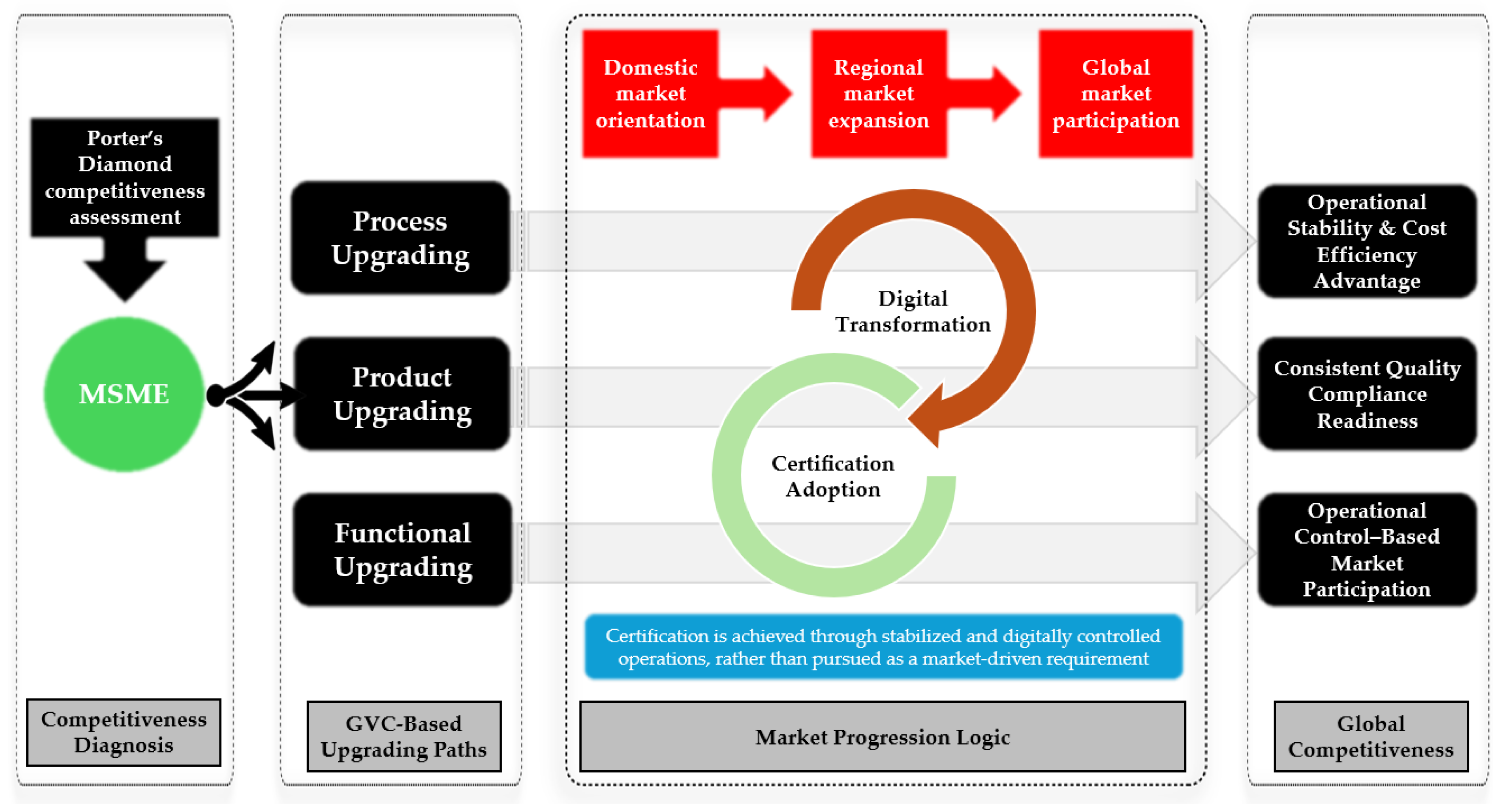
The AHP results showed that Operational Excellence is the main upgrading strategy. This finding led to the development of a structured roadmap that connects upgrading actions with steps for entering new markets. The roadmap starts by improving internal processes and efficiency, then moves toward higher-value market opportunities. Instead of handling process, product, and functional upgrades separately, these steps are combined into a single, clear framework for market growth.
The roadmap centers on how digital transformation and certification work together. Digital transformation helps improve efficiency, consistency, and coordination across all upgrade steps. Certification, on the other hand, helps MSMEs gain access and credibility as they move from local to regional and global markets. As businesses expand, certification becomes increasingly important, while digital skills help them remain prepared for new challenges.
The roadmap links upgrading actions to distinct competitiveness outcomes: process upgrading enhances operational stability and cost efficiency. The roadmap links each upgrade step to specific outcomes: process upgrades improve stability and reduce costs, product upgrades help meet quality standards, and functional upgrades support better market control. Together, these steps give Dampit coffee MSMEs a clear path from building internal strengths to staying competitive globally.
Figure 3 illustrates the proposed strategic upgrading roadmap, linking competitiveness diagnosis, GVC-based upgrading paths, digital transformation, certification adoption, market progression, and global competitiveness outcomes.
5. Discussion
This study developed a structured upgrading framework that integrates competitiveness diagnostics, value-chain upgrading perspectives, and multi-criteria decision analysis to guide Indonesian coffee MSMEs (specifically those in Dampit) toward enhanced global competitiveness. The discussion interprets empirical findings, connects them with theoretical constructions, and elaborates on practical implications for MSMEs and policymakers.
5.1. Interpreting the Weighting of AHP Evaluation Criteria
The AHP results indicate that implementation feasibility (0.433) was the most important factor, followed by strategic impact (0.320) and market urgency (0.247). Surprisingly, external pressures such as certification requirements or buyer requirements, which are typically part of market urgency, were not considered the primary factors in strategy selection.
These results suggest that internal readiness and the ability to execute plans matter more at present than external market opportunities. For MSMEs in emerging economies, achieving meaningful improvements with limited resources is often more important than pursuing a long-term strategy or responding to short-term market demands.
The greater importance of implementation feasibility underscores why capability-based views should be incorporated into GVC frameworks. Although market forces and long-term value remain important, they often take a secondary role to feasible actions, especially in the early stages when resources such as infrastructure, knowledge, and capital are limited.
5.2. Justifying Operational Excellence as the Dominant Upgrading Strategy
Among the four options considered, Operational Excellence had the highest priority score, at 0.404. It ranked above Compliance & Quality Assurance (0.268), Trust & Identity Protection (0.179), and Sustainable & Ethical Value Creation (0.149). This finding suggests that improving internal processes, consistency, and operational discipline represents the most effective strategy for coffee MSMEs at this stage.
This result does not mean that branding, certification, or sustainability strategies are unimportant. Rather, it shows that building strong operations is necessary before proceeding to other improvements. Research on upgrading often shows that efforts to improve products or functions fail when firms lack stable core processes in the initial stage.
Prioritizing Operational Excellence as the top priority indicates that process improvement is not a minor step but a key requirement for generating greater value in buyer-driven markets. For coffee MSMEs in Dampit, this means investing in post-harvest protocols, quality control, digital record-keeping, and capacity-building. While these steps may not yield immediate revenue, they are essential for long-term market success.
To operationalize Operational Excellence in the Dampit coffee context, the study defines a minimum set of priority actions and measurable performance indicators. Key actions include:
Standardizing post-harvest handling through the adoption of drying and sorting SOPs,
Implementing basic quality control practices such as moisture measurement and defect sorting, and
Introducing simple digital record-keeping for production and traceability.
Corresponding KPIs include maintaining bean moisture content within 11–12%, achieving 70–80% SOP adoption among MSMEs, reducing defect rates to below 5%, reaching a minimum cupping score of 80 for specialty-grade batches, and ensuring at least 60% digital record-keeping coverage.
In terms of feasibility, the study proposes a gradual implementation within a short- to medium-term horizon (6–18 months) and assumes low to moderate investment requirements. The study estimates that MSMEs can cover the required costs through basic equipment investments (e.g., moisture meters, drying improvements, and sorting tools) and simple digital tools (e.g., spreadsheets or mobile-based systems), which remain accessible for smallholder-based operations. This structured definition of actions and KPIs provides a practical foundation for translating the AHP prioritization into measurable and implementable outcomes.
5.3. Strategic Role of Digital Transformation and Certification
The roadmap derived from the AHP results indicates that digital transformation and certification adoption work together to support upgrading. Digital transformation improves operations, data accuracy, and traceability, while certification enhances market credibility and expands access to premium markets. Based on these findings, the study proposes a staged adoption pathway, beginning with traceability to establish basic data transparency, followed by grading systems to improve quality consistency and pricing control, and ultimately integrating e-commerce platforms to enable direct market access. Among these technologies, QR code-based traceability represents the most feasible entry-level intervention for resource-limited MSMEs due to its low cost and ease of implementation.
In parallel, certification adoption follows a staged pathway aligned with market progression and MSME capabilities. Halal certification is prioritized at the domestic stage due to its regulatory relevance and lower implementation complexity, organic certification becomes more suitable at the regional stage to support product differentiation and quality positioning, and fair trade certification is emphasized at the global stage to access premium buyers and strengthen ethical and sustainability positioning. This sequencing ensures that certification choices remain consistent with market requirements, cost constraints, and institutional readiness.
These findings extend current GVC upgrading models by showing that upgrading does not follow a simple, linear path but evolves through the coordinated development of internal systems, technology, and compliance. Digital tools such as ERP systems, IoT-based quality tracking, and e-commerce platforms play a critical role not only in improving efficiency but also in meeting certification requirements, supporting buyer audits, and strengthening supplier credibility. Each stage of the pathway requires progressively higher capabilities, ranging from basic digital record-keeping and smartphone use to technical skills in quality assessment, and eventually to digital marketing and logistics coordination.
For policymakers and development programs, the strong interdependence between digital tools and certification highlights the need for coordinated support strategies. If policymakers subsidize certification without improving digital readiness, MSMEs may struggle to comply with standards and maintain consistency. Conversely, promoting digitalization without linking it to certification and compliance may limit market access and reduce strategic impact. Therefore, integrated policy design becomes essential to ensure that MSMEs can effectively progress along both digital and certification pathways.
6. Conclusions and Implications
6.1. Summary of Key Findings
This study developed a structured framework to support the growth of Indonesian coffee MSMEs, using Dampit as an example. The framework integrates Porter’s Diamond Model, GVC-based upgrading theory, and the AHP to inform decision-making by considering both internal challenges and external market needs.
The findings show that Dampit coffee MSMEs mainly struggle with functional upgrading. Although global demand for traceable and certified coffee is rising, these businesses face challenges such as post-harvest inefficiencies, fragmented institutions, and limited access to technology.
The AHP results indicate that Operational Excellence is the top strategy, underscoring the need to stabilize internal processes and enhance efficiency. The roadmap suggests starting by building capabilities, using digital tools to improve operations, and obtaining certifications to support market growth from local to global levels.
6.2. Theoretical and Practical Implications
This study adds to the GVC upgrading literature by combining multi-criteria decision analysis with local competitiveness diagnostics. It addresses a gap in decision-focused upgrading models for MSMEs. The framework recognizes that upgrading is not just a technical or economic decision, but a strategic choice shaped by feasibility, urgency, and long-term impact. Standard models often overlook these factors.
In practice, the findings highlight the need to sequence interventions. For MSMEs, improving basic operations is not merely a step but a key enabler of future certification, branding, and sustainability efforts. The study suggests that development actors and policymakers should first focus on improving post-harvest processes, digital infrastructure, and operational management training before moving on to more advanced market strategies.
Policymakers, practitioners, and researchers can also apply the framework to other agri-food sectors or regional MSME settings facing similar challenges. Its modular design facilitates adaptation across contexts while maintaining a focus on feasibility-based priorities and aligning key enablers.
6.3. Limitations and Future Research Directions
While this study makes valuable contributions, it also has several limitations. First, the expert-based AHP assessment includes only a limited number of perspectives and may not fully represent the diverse conditions of MSMEs across Indonesia. Second, the cross-sectional design does not capture how upgrading outcomes evolve over time. Third, the study proposes a conceptually sound roadmap but does not test or validate it in real-world settings. Researchers should also interpret the transferability of this framework with caution because other Indonesian coffee regions, such as Gayo, Toraja, and Kintamani, exhibit different governance structures, certification maturity, and market orientations that may shift strategic priorities from process upgrading toward branding, traceability, or specialty market positioning.
Future research can address these limitations by using firm-level performance data, conducting long-term studies to track how upgrading evolves, or testing the roadmap in real-world policy or development programs. The decision framework could also be built into digital tools, allowing MSMEs and support organizations to prioritize and plan in real time.



 ,
,