Proceeding Paper

Hydrophobic and Icephobic Epoxy Coatings Containing Silane Agents and Functional Additives †
1
Department of Chemical, Materials and Production Engineering (DICMaPI), University of Naples Federico II, P.le Tecchio 80, 80125 Naples, Italy
2
Department of Industrial Engineering, University of Salerno, Via Giovanni Paolo II 132, 84084 Fisciano, Italy
3
Institute for Polymers, Composites and Biomaterials, National Council of Research, 80078 Pozzuoli, Italy
4
Department of Applied Science and Technology, Politecnico di Torino, Viale Teresa Michel 5, 15121 Alessandria, Italy
5
Department of Industrial Engineering, University of Naples Federico II, Via Claudio 21, 80125 Naples, Italy
*
Author to whom correspondence should be addressed.
Presented at the 15th EASN International Conference, Madrid, Spain, 14–17 October 2025.
Eng. Proc. 2026, 133(1), 148; https://doi.org/10.3390/engproc2026133148
Published: 14 May 2026

Abstract

Ice accumulation on aircraft surfaces severely affects aerodynamic performance by increasing drag and reducing lift, leading to stall conditions. Conventional thermal and pneumatic anti-/de-icing systems, although widely used, have some disadvantages, including high cost, inefficiency, and environmental unsustainability. Hydrophobic and icephobic coatings have emerged as a promising alternative to reduce ice adhesion and delay ice formation. This paper reviews the use of silane agents in epoxy-based coatings, incorporating functional additives such as natural fibers, quantum dots, and nanoparticles, to enhance hydrophobicity. Results demonstrated that the combination of silanes and functional additives affects surface features and wettability, improving hydrophobicity. These case studies show the potential of this approach in the development of coatings for advanced aircraft ice-protection applications.

1. Introduction

Ice formation on aircraft surfaces negatively interferes with airflow over the wings and tail, reducing lift and increasing the risk of aerodynamic stall, i.e., a dangerous condition that can lead to a temporary loss of aircraft control. To avoid ice formation, the most common methods employed are active anti-icing and de-icing systems. The former prevents ice formation on critical surfaces, while the latter allows limited ice accumulation before removing it [1]. Despite their widespread use, these systems present significant drawbacks: they are expensive, ineffective, and not ecological [2].
To overcome these issues, hydrophobic and icephobic coatings have emerged as an alternative, able to delay ice formation or reduce ice adhesion on aerodynamic surfaces, namely wings [3]. These coatings combine low surface energy with micro-/nanostructured roughness, which enhances water repellency [4,5]. It has been demonstrated that SiO2 particles with diameters between 20 and 100 nm can drastically reduce the probability of ice formation [6]. The wettability is generally evaluated by measuring the water contact angle (WCA), defined as the angle at which the liquid/gas interface meets the solid surface. Based on the WCA value, a surface can be categorized as hydrophilic (θ < 90°), hydrophobic (θ > 90°), or superhydrophobic (θ ≥ 150°) [7].
There are several ways to confer hydrophobicity, including plasma polymerization of suitable compounds, such as hexamethyldisiloxane [8], or the use of non-ionic surfactants such as fluorocarbon and hydrocarbon surfactants, which reduce the surface tension, leading to a more hydrophobic surface [9].
However, a common and versatile approach to impart hydrophobicity involves the use of silane agents. Silanes with hydrolyzable groups such as Si–Cl, Si–OCH3, and Si–OCH2CH3 can react with water to form silanols. These silanols can either bind to hydroxyl groups on the surface of the substrate or condense with each other to form a silicone layer with characteristic micro-/nanostructure. Additionally, the alkyl groups of silanes can reduce surface tension, acting as active sites for further tailoring [10]. In the aerospace field, epoxy resin (e.g., Bisphenol A diglycidyl ether, DGEBA) is the most widely employed polymeric matrix for designing hydrophobic coatings [11,12].
This short review aims to discuss how the wettability of polymeric epoxy composites is influenced by the synergistic interactions between silane agents and functional additives.
Furthermore, the manuscript examines and compares a variety of systems, ranging from natural fibers to nanoparticles, in order to identify recurring mechanisms governing surface wettability.

2. Natural Fibers, Chitosan, and Silanes

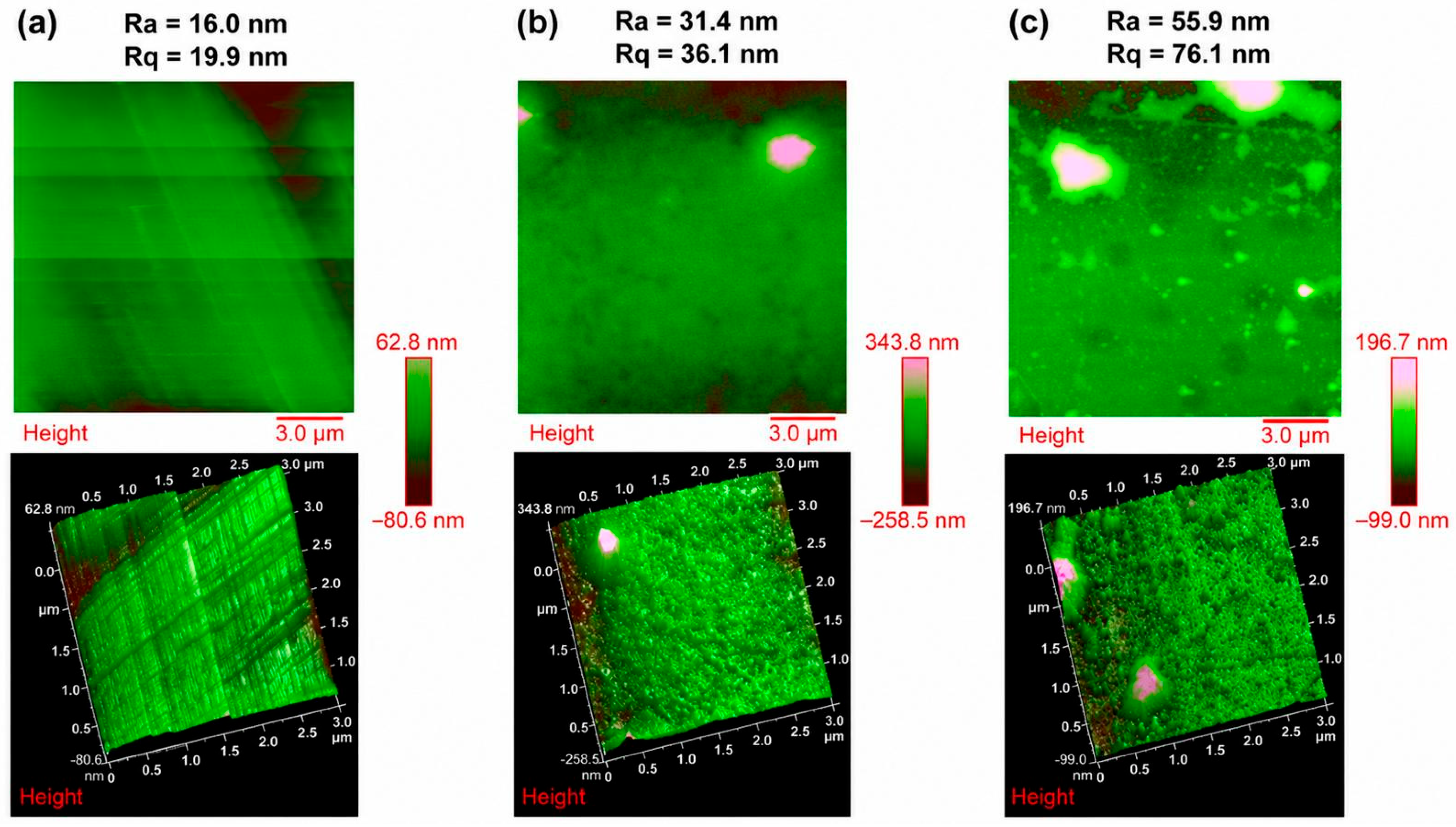
Natural fibers, such as hemp and kapok fibers or chitosan, can be functionalized with silanes and employed as fillers to obtain hydrophobic epoxy coatings. Concerning hemp fibers, hemp particles functionalized with hexadecyltrimethoxysilane (HDTMS) or 1H,1H,2H,2H-perfluorooctyltriethoxysilane (PFOTES) were incorporated into a DGEBA epoxy matrix (EH-HDTMS and EH-PFOTES) to investigate their effect on wettability and anti-icing performance, in comparison with neat epoxy and carbon fiber reinforced (CFR) aeronautical panel [13]. Wettability was evaluated through static contact angle (CA) using the sessile drop method and contact angle hysteresis (CAH), i.e., the difference between the advancing and receding CAs measured when the droplet slides down the surface [14]. CFR and the neat EPO sample exhibited hydrophilic behavior, as indicated by CA values lower than 90°, which was attributed to the presence of hydroxyl groups generated during the curing process of the resin and able to form hydrogen bonds with water molecules [15]. In contrast, EH-HDTMS and EH-PFOTES coatings showed hydrophobic features, with CA values exceeding 90°. This enhanced hydrophobicity was related to the exposure of the alkyl chains of silane agents at the solid–air interface, leading to higher CA values and lower CAH compared to neat EPO [16]. The increase in CA and the reduction in CAH observed in the epoxy coatings (EH-HDTMS and EH-PFOTES), filled by silanized hemp particles, were directly correlated with improved anti-icing performance and reduced heat-exchange at the surface of composites. The freezing test demonstrated that the use of silanes delayed the freezing time, which, in the case of EH-PFOTES, was about 113 s. Silanes not only increase the contact angle values, but also modify the surface morphology. Atomic force microscopy (AFM) (Figure 1) analysis showed that the neat epoxy had a smooth surface, while coatings with silane-functionalized hemp particles exhibited increased surface roughness. This originated from the migration of silane-modified fillers to the surfaces of polymeric composite epoxy coatings [17].
Similar trends were observed for epoxy–chitosan coatings modified with different silanes. The wettability of epoxy–chitosan systems treated with aminotrimethoxy silane (ATMS), tetraethoxy silane (TEOS), and trimethyl hexadecafluorosilane (TMHDFS) was investigated [18]. The incorporation of chitosan and silanes led to an increase in CA compared to neat epoxy, indicating a transition from hydrophilic to a more hydrophobic surface. A more pronounced hydrophobic enhancement was achieved with epoxy-chitosan-TMHDFS, which exhibited the highest CA. In addition, SEM analysis showed that the TMHDFS-containing system exhibited an increased surface roughness compared to neat epoxy, which displays a smooth surface, confirming the interaction among the silane, chitosan, and epoxy matrix.
Another kind of natural fiber used in epoxy coatings is kapok fibers (KF). KF was functionalized with [3-(methacryloyloxy) propyl]trimethoxysilane (A174) at different concentrations (1%, 3%, 5%, 7%, 9%, and 11%) and introduced into the epoxy resin [19]. CA measurements revealed a progressive increase in surface hydrophobicity with increasing silane content, indicating effective modification of the fiber surface. The untreated KF/epoxy composite had relatively low CA values due to the presence of hydroxyl groups on the fiber surface. In contrast, the silane-treated KF/epoxy system showed higher CA, reflecting a reduced availability of hydrophilic sites that can be attributed to the formation of a robust siloxane network.
All values are reported in Table 1.

3. Quantum Dots and Silanes

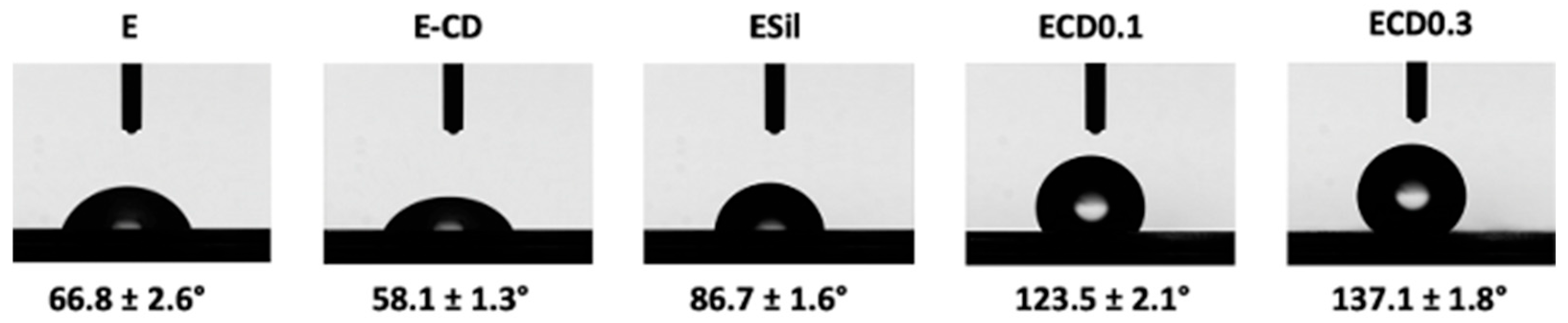
Quantum dots are widely used as semiconductor systems due to their easy synthesis and remarkable optical properties. They have been employed to enhance the light emission, UV resistance, and anticorrosive performance of epoxy nanocomposites (ENCs) [27]. Carbon dots (CDs) derived from humic acid and HDTMS were used to prepare hydrophobic ENCs [20]. The combined incorporation of CDs and HDTMS resulted in a significant increase in CA compared to neat epoxy and reference systems containing either CDs or silane alone (Figure 2). In particular, epoxy nanocomposites with higher CD amount exhibited CA values close to 150°, which is typical of a superhydrophobic surface (Table 1). During the curing process, the silanol groups of HDTMS could establish chemical or physical interactions, such as hydrogen bonds, with the hydroxyl groups of the CDs [28]. These interactions promote the migration of CDs, partially coated by the HDTMS alkyl chains, at the surface of ENCs, enhancing their surface hydrophobicity. In contrast, E-CD without HDTMS showed a hydrophilic behavior due to hydroxyl groups on the CDs, which could migrate toward the air–resin interface, resulting in a CA value lower than pristine resin [29]. Also, microscopy analysis displayed that the pristine resin exhibited a smooth surface, whereas ECD0.1 and ECD0.3 showed a rougher morphology.
In another study, the wettability of epoxy coatings containing (3-aminopropyl) triethoxysilane (APTES)-functionalized ZnO quantum dots (F-ZnO QDs), graphene oxide (F-GO), and their nanohybrids (F-GO@ZnO QDs) was investigated under alkaline conditions [21]. The incorporation of silane-functionalized nanofillers led to an increase in CA compared to pristine epoxy, indicating enhanced surface hydrophobicity. In line with the mechanisms discussed for other silane-modified epoxy systems, the observed increase in CA was mainly due to the combined contribution of nanofillers and silane functionalization. Nanofillers increased surface roughness, while silane reduced the availability of hydrophilic hydroxyl groups within the epoxy matrix, resulting in higher CA values for nanohybrid-based coatings. Moreover, the introduction of F-GO@ZnO QDs into the epoxy matrix resulted in higher surface roughness than epoxy/F-GO coatings and values comparable to epoxy/F-ZnO QDs sample. The more pronounced effect of ZnO QDs on surface roughness was ascribed to their lower tendency to agglomerate and higher exposure at the coating surface compared to GO nanosheets, which tend to aggregate within the epoxy matrix, limiting their contribution to surface topography.

4. Nanoparticles and Silanes

Nanoparticles, because of their aggregation behavior that can introduce multi-scale surface roughness, represent an effective strategy for the fabrication of hydrophobic surfaces [30].
Among nanostructured oxides, titanium dioxide (TiO2) is a semiconductor commonly employed in paints and coatings due to its refractive, UV-absorbing, and photocatalytic properties. A hybrid material (Ti-Abi) in which Ti4+ is coordinated with abietic acid (the main component of rosin, a bio-waste-derived material) was recently synthesized and incorporated into epoxy composites. Epoxy systems containing Ti-Abi and either HDTMS or PFOTES were compared with a pristine epoxy resin to evaluate their surface features and wettability behavior, which are related to antimicrobial activity as well as fire resistance [31].
Droplet impact tests performed at different heights (50, 70, and 95 cm) revealed that the incorporation of Ti-Abi and silane promoted a more water-repellent surface compared to neat epoxy [22]. Epoxy coating modified with HDTMS showed an increase in CA compared to the pristine epoxy, while those modified with PFOTES exhibited the highest CA at an impact height of 95 cm (Table 1). Moreover, droplet fragmentation observed during the impact test confirmed the hydrophobic behavior of the EPO-Ti-Abi-PFOTE’s surface.
In a subsequent study, TiO2 nanoparticles were functionalized with fluoroalkylsilane (FAS) to impart hydrophobic properties [23]. Epoxy coatings containing either bare TiO2 or FAS-functionalized TiO2 nanoparticles were compared with neat epoxy to evaluate the effect of silane modification on surface properties. While neat epoxy and epoxy/TiO2 coatings exhibited hydrophilic behavior, the incorporation of FAS-functionalized TiO2 nanoparticles resulted in a marked increase in CA, up to 121°. Moreover, results demonstrated a significant increase in surface roughness for epoxy coating containing FAS-modified TiO2 nanoparticles.
Beyond TiO2, SiO2 nanoparticles have been employed to design hydrophobic coatings. The influence of silane chemistry on wettability was demonstrated in epoxy coatings incorporating SiO2 nanoparticles functionalized with three bifunctional silanes (3-(trimethoxysilylpropyl) methacrylate (TMSPMA), bis [3-(trimethoxysilyl)propyl]amine (BTMSPA), and vinyltriethoxysilane (VTEOS), together with additional inorganic fillers, such as muscovite mica and titanium dioxide [24]. The results revealed that the surface wettability of the epoxy coatings strongly depends on the chemical structure of the silane used to modify the SiO2 nanoparticles. In particular, epoxy coating containing TMSPMA exhibited a hydrophobic behavior compared to those containing VTEOS or BTMSPA (Table 1).
SiO2 nanoparticles functionalized with (3-glycidoxypropyl) trimethoxysilane (GLYMO) were incorporated into an epoxy matrix at different loadings (10 wt.%, 20 wt.%, 30 wt.%, and 40 wt.% relative to the weight of polymer matrix) to investigate their effect on surface wettability and anti-icing performance [25]. CA measurements showed that epoxy coating containing a low amount of silane-modified SiO2 (10 wt.% and 20 wt.%) exhibited limited hydrophobicity. In contrast, higher SiO2 loadings, particularly 30 wt.%, led to a marked increase in CA, with values exceeding 150° (Table 1). The enhanced hydrophobicity was attributed to the transition from the Wenzel to the Cassie–Baxter wetting regime, promoted by the development of hierarchical micro–nano surface roughness and air entrapment at the solid–liquid interface. Moreover, epoxy coatings containing 30 wt.% silane-modified SiO2 showed enhanced anti-icing behavior, with a significant delay in both freezing onset and complete freezing time, which was 650 s. SEM analysis confirmed that increasing SiO2 content resulted in higher surface roughness due to the formation of micro–nano aggregates, further supporting the strong correlation between surface topography and wettability.
Finally, SiO2 nanoparticles functionalized with GLYMO were integrated into a bio-epoxy matrix to obtain hydrophobic coatings [26]. These coatings were compared with a bare Fe substrate and a smooth isosorbide-based epoxy coating. Results demonstrated that wettability strongly depended on the nanoparticles’ loading. An increase in SiO2 content led to the formation of superhydrophobic surfaces, while excessive filler concentration caused a partial loss of hydrophobicity due to the exposure of unmodified hydrophilic nanoparticles. Morphological analysis revealed that optimal formulations exhibited a hierarchical micro–nanostructure capable of trapping air at the solid–liquid interface, promoting a Cassie–Baxter wetting regime. The anti-icing performance of the waterborne hydrophobic bio-epoxy coatings containing GLYMO-modified SiO2 nanoparticles was also systematically evaluated. The optimized formulation (containing 50 wt.% SiO2), characterized by a superhydrophobic surface with a CA of about 153° (Table 1), showed reduced ice adhesion and delayed ice nucleation compared to both the bare metallic substrate and the smooth bio-epoxy coating.

5. Conclusions

The formation of ice on aircraft surfaces remains a critical issue, severely affecting aerodynamic efficiency and flight safety. For this reason, there is growing interest in developing innovative and sustainable anti-icing strategies. This review analyzed recent studies focusing on the use of silanes to impart hydrophobicity to epoxy systems containing various functional additives, including natural fibers, quantum dots, nanoparticles, and TiO2-based hybrid material. The analyzed studies demonstrate that the hydrophobic and icephobic behavior of these systems results from the combined effects of surface chemistry and surface morphology. In particular, the chemical structure of the silane (alkyl or fluorinated), the nature and concentration of the incorporated additives, and the resulting micro–nano surface roughness determine the final wettability and anti-icing performance. A common trend observed across the different systems is that silane functionalization lowers surface energy, while functional additives promote hierarchical roughness and migration toward the coating surface. This synergistic effect promotes the establishment of Cassie–Baxter wetting regimes, leading to increased water repellency, delayed ice nucleation, and reduced ice adhesion.
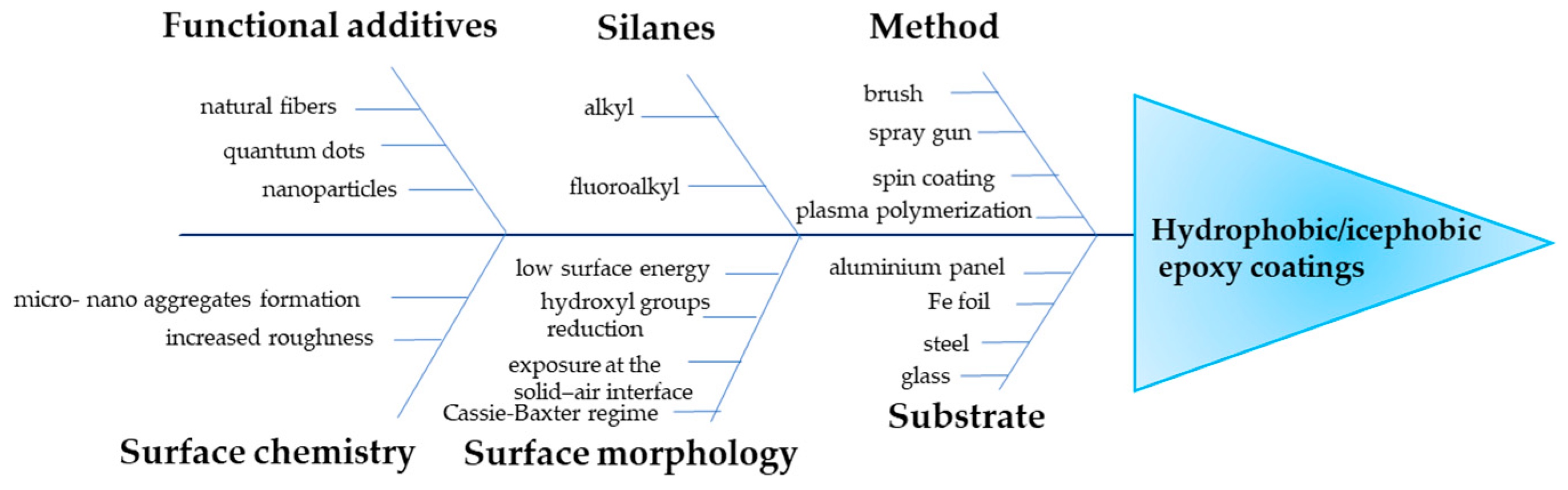
The factors that contribute to providing low wettability and icephobic characteristics of surfaces, and their relationships, are summarized in the Ishikawa diagram reported in Figure 3 [32].
These mechanisms highlight the importance of simultaneously tailoring both chemical composition and surface morphology when designing advanced icephobic coatings.
In conclusion, these insights can inspire the production of more efficient and environmentally friendly solutions for the fabrication of next-generation epoxy-based coatings in aerospace applications and ice protection of aircraft.

Author Contributions

Conceptualization, A.A. (Amedeo Amoresano), A.B., C.I., G.M., L.G., M.R. and A.A. (Antonio Aronne); methodology, A.A. (Amedeo Amoresano), C.I. and A.B.; software, V.N. and J.P.; validation, A.A. (Amedeo Amoresano), A.B., C.I., A.A. (Antonio Aronne), G.M. and L.G.; formal analysis, V.N., J.P. and P.R., investigation, A.A. (Amedeo Amoresano), A.B., C.I., V.N. and A.A. (Antonio Aronne); resources A.A. (Amedeo Amoresano), A.B., C.I. and A.A. (Antonio Aronne); data curation, V.N., A.A. (Amedeo Amoresano) and A.B.; writing—original draft preparation, V.N., A.B., C.I. and A.A. (Amedeo Amoresano); writing—review and editing, A.B., A.A. (Amedeo Amoresano), G.M., G.V. and A.A. (Antonio Aronne); visualization, A.A. (Amedeo Amoresano), A.B. and C.I.; supervision, A.A. (Amedeo Amoresano), A.B., C.I. and A.A. (Antonio Aronne); project administration, A.A. (Amedeo Amoresano), A.B. and C.I.; funding acquisition, A.A. (Amedeo Amoresano) and A.A. (Antonio Aronne). All authors have read and agreed to the published version of the manuscript.

Funding

This research received no external funding.

Institutional Review Board Statement

Not applicable.

Informed Consent Statement

Not applicable.

Data Availability Statement

The data presented in this study are available on request from the corresponding author.

Acknowledgments

The authors would like to thank Marine Work System S.p.a. for the support along the experimental study conducted by Viviana Nebbioso, and the Scientific and Organizing Committees of the 15th EASN International Conference on “Innovation in Aviation & Space towards sustainability Today & tomorrow” for giving us the opportunity to present our research.

Conflicts of Interest

The authors declare no conflict of interest.

References

  1. Bai, Y.; Zhang, H.; Shao, Y.; Zhang, H.; Zhu, J. Recent progresses of superhydrophobic coatings in different application fields: An overview. Coatings 2021, 11, 116. [Google Scholar] [CrossRef]
  2. Lin, Y.; Chen, H.; Wang, G.; Liu, A. Recent progress in preparation and anti-icing applications of superhydrophobic coatings. Coatings 2018, 8, 208. [Google Scholar] [CrossRef]
  3. Piscitelli, F.; Chiariello, A.; Dabkowski, D.; Corraro, G.; Marra, F.; Di Palma, L. Superhydrophobic coatings as anti-icing systems for small aircraft. Aerospace 2020, 7, 2. [Google Scholar] [CrossRef]
  4. Lv, J.; Song, Y.; Jiang, L.; Wang, J. Bio-inspired strategies for anti-icing. ACS Nano 2014, 8, 3152–3169. [Google Scholar] [CrossRef]
  5. Bormashenko, E.; Starov, V. Impact of surface forces on wetting of hierarchical surfaces and contact angle hysteresis. Colloid Polym. Sci. 2013, 291, 343–346. [Google Scholar] [CrossRef]
  6. Cao, L.; Jones, A.K.; Sikka, V.K.; Wu, J.; Gao, D. Anti-icing superhydrophobic coatings. Langmuir 2009, 25, 12444–12448. [Google Scholar] [CrossRef]
  7. Yuan, Y.; Lee, T.R. Contact Angle and Wetting Properties in Surface Science Techniques; Springer: Berlin/Heidelberg, Germany, 2013; pp. 3–34. [Google Scholar]
  8. Kayaoğlu, B.K.; Öztürk, E. Imparting hydrophobicity to natural leather through plasma polymerization for easy care effect. Fibers Polym. 2013, 14, 1706–1713. [Google Scholar] [CrossRef]
  9. Madhuri, A.; Parthasarathy, S.; Swain, B.P. Mechanism of the Wettability of Coating Materials. In Advances in Mechanical Coating: Processing, Properties and Applications; Springer Nature: Singapore, 2025; pp. 137–163. [Google Scholar]
  10. Li, L.; Li, B.; Dong, J.; Zhang, J. Roles of silanes and silicones in forming superhydrophobic and superoleophobic materials. J. Mater. Chem. A 2016, 4, 13677–13725. [Google Scholar] [CrossRef]
  11. Hamerton, I.; Mooring, L. The use of thermosets in aerospace applications. In Thermosets; Woodhead Publishing: Sawston, UK, 2012; pp. 189–227. [Google Scholar]
  12. Jin, F.-L.; Li, X.; Park, S.-J. Synthesis and application of epoxy resins: A review. J. Ind. Eng. Chem. 2015, 29, 1–11. [Google Scholar] [CrossRef]
  13. Passaro, J.; Bifulco, A.; Calabrese, E.; Imparato, C.; Raimondo, M.; Pantani, R.; Aronne, A.; Guadagno, L. Hybrid hemp particles as functional fillers for the manufacturing of hydrophobic and anti-icing epoxy composite coatings. ACS Omega 2023, 8, 23596–23606. [Google Scholar] [CrossRef]
  14. Hilal, N.; Ismail, A.F.; Matsuura, T.; Oatley-Radcliffe, D. (Eds.) Membrane Characterization; Elsevier: Amsterdam, The Netherlands, 2017. [Google Scholar]
  15. Bellido-Aguilar, D.A.; Zheng, S.; Huang, Y.; Zeng, X.; Zhang, Q.; Chen, Z. Solvent-free synthesis and hydrophobization of biobased epoxy coatings for anti-icing and anticorrosion applications. ACS Sustain. Chem. Eng. 2019, 7, 19131–19141. [Google Scholar] [CrossRef]
  16. Kota, A.K.; Kwon, G.; Tuteja, A. The design and applications of superomniphobic surfaces. NPG Asia Mater. 2014, 6, e109. [Google Scholar] [CrossRef]
  17. Bifulco, A.; Imparato, C.; Passaro, J.; Malucelli, G.; Gaan, S.; Aronne, A. Sol-gel Chemistry Approaches for the Manufacturing of Innovative Functional Composites for the Aerospace Sector. In Journal of Physics: Conference Series; IOP Publishing: Bristol, UK, 2024; Volume 2716. [Google Scholar]
  18. Arukalam, I.O.; Timothy, U.J.; Madu, I.O.; Achor, J.O. Improving the water barrier and anticorrosion performances of epoxy-chitosan coatings via silane modification. J. Bio- Tribo-Corros. 2021, 7, 85. [Google Scholar] [CrossRef]
  19. Das, R.; Sahu, D.P.; Bisoyi, D.K. Silane-treated kapok fiber/epoxy composites for aerospace cabin interiors: Synthesis and characterization. Polym. Compos. 2025, 46, 6270–6289. [Google Scholar] [CrossRef]
  20. Bifulco, A.; Imparato, C.; Climaco, I.; Battegazzore, D.; Perrella, M.; Vitiello, G.; Aronne, A.; Malucelli, G. Multifunctional fire-resistant and flame-triggered shape memory epoxy nanocomposites containing carbon dots. Chem. Eng. J. 2024, 484, 149327. [Google Scholar] [CrossRef]
  21. Zhou, Z.; Pourhashem, S.; Wang, Z.; Duan, J.; Zhang, R.; Hou, B. Distinctive roles of graphene oxide, ZnO quantum dots, and their nanohybrids in anti-corrosion and anti-fouling performance of waterborne epoxy coatings. Chem. Eng. J. 2022, 439, 135765. [Google Scholar] [CrossRef]
  22. Amoresano, A.; Nebbioso, V.; Roscioli, S.; Aronne, A. Characterization of hydrophobic surfaces by experimental study of static and dynamic contact angles. J. Phys. Conf. Ser. 2025, 3143, 012026. [Google Scholar] [CrossRef]
  23. Conradi, M.; Kocijan, A.; Kosec, T.; Podgornik, B. Manipulation of TiO2 nanoparticle/polymer coatings wettability and friction in different environments. Materials 2020, 13, 1702. [Google Scholar] [CrossRef]
  24. Evdokimova, E.N.; Kochina, T.A. Modification of SiO2 Nanoparticles by Bifunctional Silanes. Glas. Phys. Chem. 2024, 50, 687–694. [Google Scholar] [CrossRef]
  25. Zhang, F.; Xu, D.; Ma, L.; Wang, J.; Chen, H.; Guo, S. Preparation and properties of modified SiO2/epoxy resin superhydrophobic coating. Surf. Topogr. Metrol. Prop. 2024, 12, 035005. [Google Scholar] [CrossRef]
  26. Zheng, S.; Bellido-Aguilar, D.A.; Wu, X.; Zhan, X.; Huang, Y.; Zeng, X.; Zhang, Q.; Chen, Z. Durable waterborne hydrophobic bio-epoxy coating with improved anti-icing and self-cleaning performance. ACS Sustain. Chem. Eng. 2018, 7, 641–649. [Google Scholar] [CrossRef]
  27. Kausar, A. Epoxy and quantum dots-based nanocomposites: Achievements and applications. Mater. Res. Innov. 2020, 24, 235–243. [Google Scholar] [CrossRef]
  28. Song, T.; Zhao, Y.; Matras-Postolek, K.; Yang, P. Color-tunable carbon dots via control the degree of self-assembly in solution at different concentration. J. Lumin. 2019, 212, 69–75. [Google Scholar] [CrossRef]
  29. Passaro, J.; Bifulco, A.; Guadagno, L.; Aronne, A.; Cimino, F.; Russo, P. Eco-friendly composites with specific functional properties. J. Phys. Conf. Ser. 2024, 2716, 012042. [Google Scholar] [CrossRef]
  30. He, Z.; Ma, M.; Xu, X.; Wang, J.; Chen, F.; Deng, H.; Wang, K.; Zhang, Q.; Fu, Q. Fabrication of superhydrophobic coating via a facile and versatile method based on nanoparticle aggregates. Appl. Surf. Sci. 2012, 258, 2544–2550. [Google Scholar] [CrossRef]
  31. Varganici, C.; Climaco, I.; Rosu, L.; Rosu, D.; Amoresano, A.; Zuber, F.; Jovic, M.; Ren, Q.; Gaan, S.; Aronne, A.; et al. Design of antifouling and fire-resistant epoxy composite coatings via rosin–TiO2 hybrid particles and hydrophobic silanes. Polym. Degrad. Stab. 2025, 244, 111845. [Google Scholar] [CrossRef]
  32. Sangkhapanit, N. Non-Wetting Defective Reduction in Printed Circuit Board Assembly Processes. Master’s Thesis, Chulalongkorn University, Bangkok, Thailand, 2018. [Google Scholar]
Figure 1. AFM of coatings: (a) EPO, (b) EH_HDTMS, and (c) EH_PFOTES (reprinted with permission from [13]). Copyright (2023) American Chemical Society.
Engproc 133 00148 g001
Figure 2. Representation of contact angle values of pristine resin (E), epoxy resin filled by CDs (E-CD), epoxy resin added with HDTMS (ESil), and epoxy nanocomposites containing carbon dots (ECD0.1 and ECD0.3) (reprinted with permission from [20])—copyright (2024) Elsevier.
Engproc 133 00148 g002
Figure 3. Ishikawa diagram summarizing the synergistic role of functional additives and silanes.
Engproc 133 00148 g003
Table 1. Comparative overview of epoxy-based coatings modified with silane agents and functional additives, reporting additive and silane content, water contact angle, and surface roughness.
AdditivesAdditive ContentSilaneSilane ContentCA (°)Roughness (nm)Ref
Hemp fibers2 wt.%HDTMS1 wt.%9631.4[13]
PFOTES11555.9
Chitosan20 gATMS0.20 g110.8-[18]
TEOS98.7-
TMHDFS114.2-
Kapok fibers3.5 wt.%A1749%vol.81.3-[19]
CDs0.1 wt.%
0.3 wt.%
HDTMS1.0 wt.%123.5-[20]
137.1-
ZnO
GO
GO@ZnO QDs
0.5 gAPTES5 mL87.6-[21]
88.4-
88.5-
Ti-Abi-HDTMS-50–80 *-[22]
PFOTES66–110 *-
TiO23 wt.%FAS1%vol. 121.4702.8[23]
SiO22 gTMSPMA30 mL77-[24]
3 gBTMSPA1 g97-
2 gVTEOS30 mL 78-
SiO23 gGLYMO0.015 g152.413,040 [25]
SiO250 wt.%GLYMO-153313.84[26]
* The reported values correspond to the minimum and maximum contact angles measured during droplet impact on the coatings, attributed to the droplet fragmentation.
Disclaimer/Publisher’s Note: The statements, opinions and data contained in all publications are solely those of the individual author(s) and contributor(s) and not of MDPI and/or the editor(s). MDPI and/or the editor(s) disclaim responsibility for any injury to people or property resulting from any ideas, methods, instructions or products referred to in the content.