Proceeding Paper

Comparative Study of CFD Solvers in the Aerodynamic Analysis of a Miniature Unmanned Aerial Vehicle †
Faculty of Mechatronics, Armament and Aerospace, Military University of Technology, ul. gen. Sylwestra Kaliskiego 2, 00-908 Warsaw, Poland
*
Author to whom correspondence should be addressed.
Presented at the 15th EASN International Conference, Madrid, Spain, 14–17 October 2025.
Eng. Proc. 2026, 133(1), 140; https://doi.org/10.3390/engproc2026133140 (registering DOI)

Published: 14 May 2026

Abstract

This study is part of a research program at the Military University of Technology aimed at creating a tool to support light aircraft design at the conceptual stage. The project seeks to develop a method for optimizing a conceptual model of a small manned or unmanned aircraft based on specific mission requirements and aerodynamics. Recognizing the need for a reliable CFD analysis tool in this process, the focus was placed on investigating popular tools utilizing panel methods.

1. Introduction

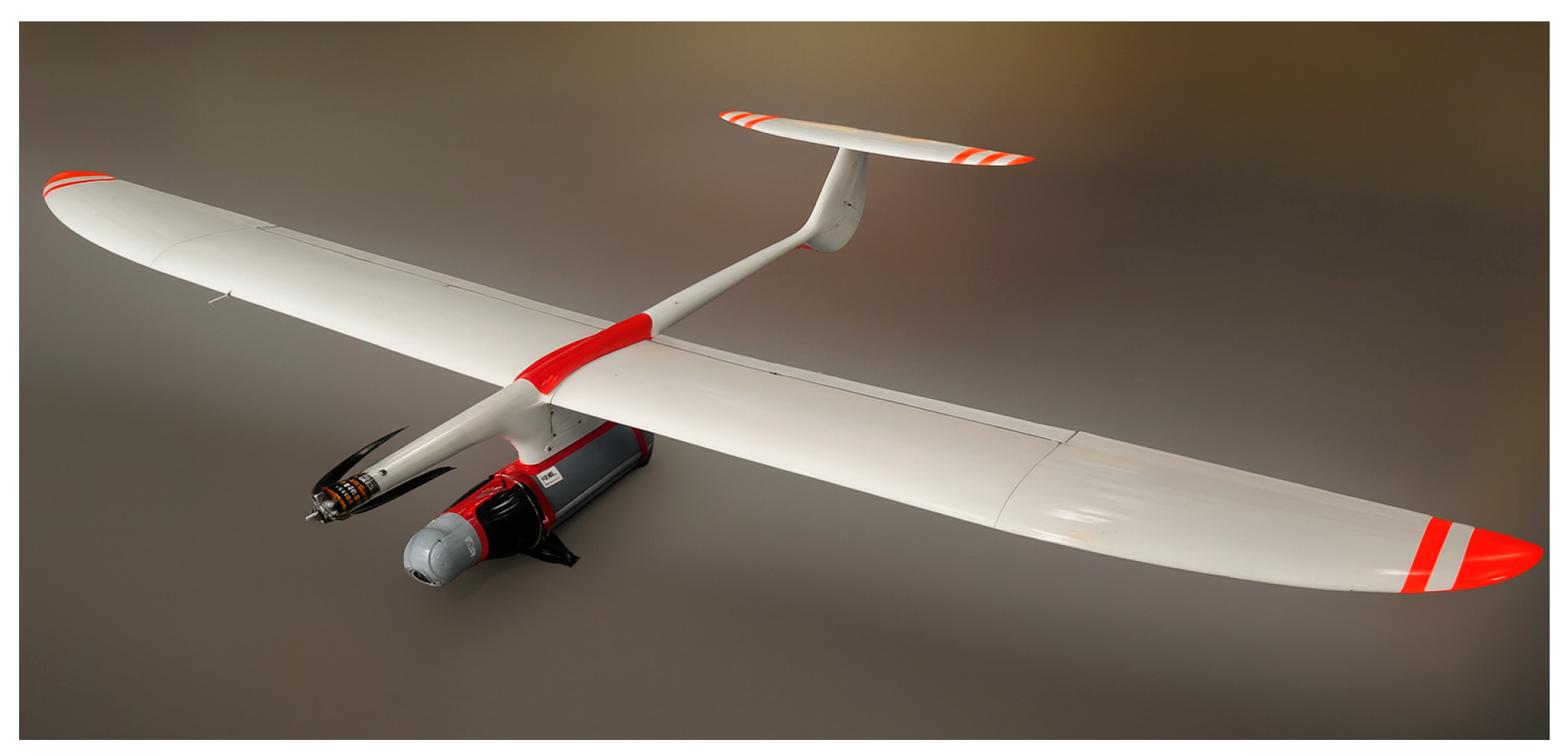
This paper presents numerical studies in computational fluid dynamics (CFD) to analyze the aerodynamic properties of the miniature unmanned aerial vehicle (UAV) called “Rybitwa” (Figure 1), designed at the Military University of Technology in Warsaw, whose design parameters are presented in Table 1. The research compared open-source (panel methods) software (XFLR5 ver. 6.62, OpenVSP ver. 3.45.4) and commercial (finite volume method—FVM) software (Fluent ver. 2024R1). The study estimated lift and drag coefficients and basic aerodynamic properties. The results were analyzed for accuracy and efficiency, identifying the strengths and weaknesses of each solution to inform the choice of CFD tools for future aerodynamic optimization of unmanned aerial systems.
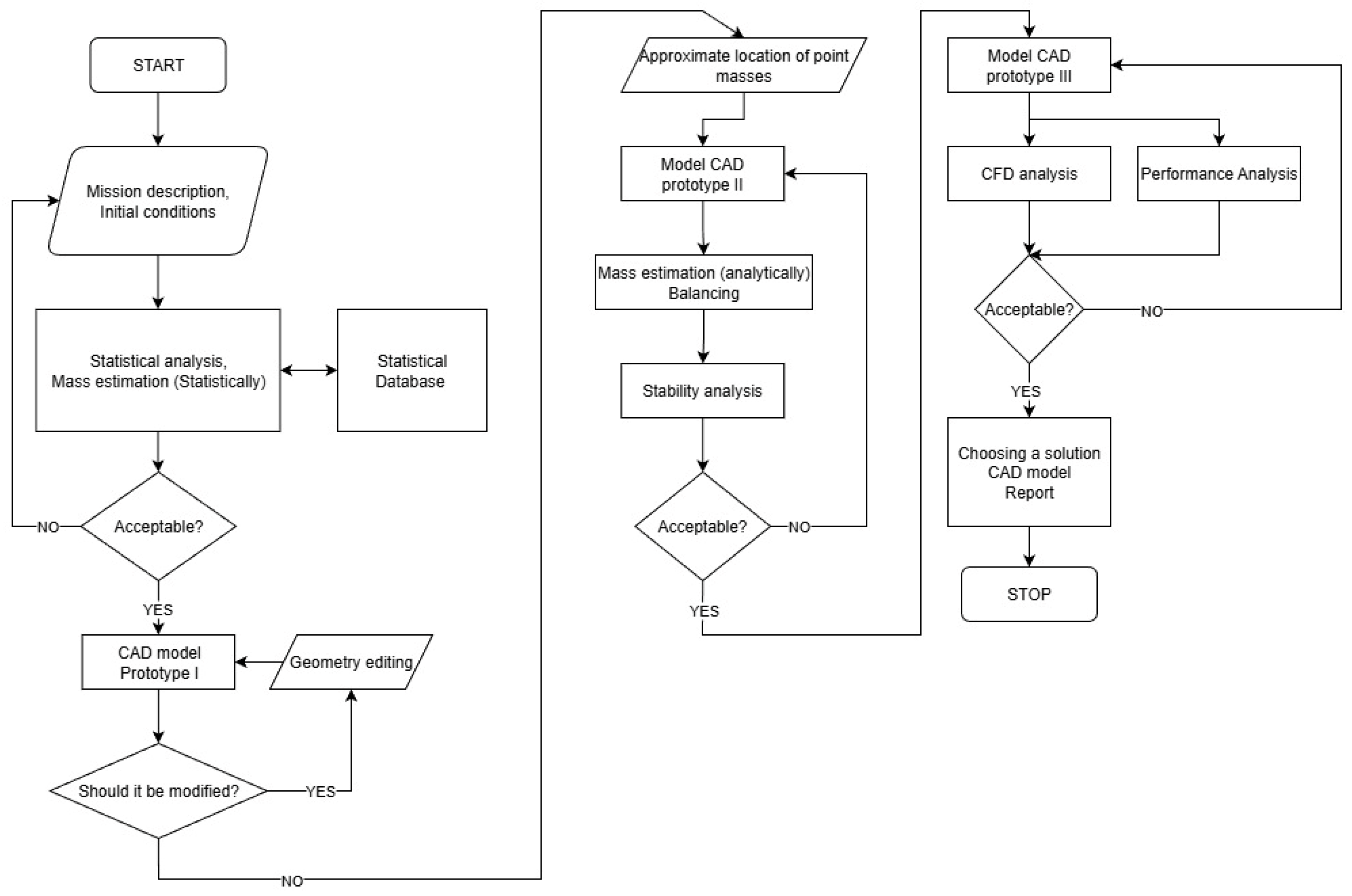
The research presented in this article was developed as part of a university project aimed at creating a smart and efficient method for optimal parametric modeling of the aerodynamic body of a manned (or unmanned) aircraft with established mission requirements. A progressively developed model of the airframe’s external geometry would be tailored to the functional requirements of a given aircraft type, while simultaneously being optimized to achieve the best possible aerodynamic properties and, consequently, the most favorable values or specific performance parameters. The ultimately developed algorithm for shaping the aircraft’s aerodynamic body is demonstrated in Figure 2. Three design stages are visible, each representing a different stage of project development. In the first stage, the so-called prototype model 1 is developed through adaptation to mission requirements, statistical analysis, and the selection of basic design parameters (basic geometric dimensions, characteristic mass characteristics, fuselage, wing, and tail shapes). In the second stage, following the distribution of equipment, installations, and onboard cargo masses, prototype model 2 is developed. The total model aircraft mass in any mission configuration should not exceed the imposed maximum value. At the same time, the desired mass balance must be ensured and the minimum stability criterion must be met. Finally, in the final third stage, the aircraft geometry is refined to achieve optimal aerodynamic properties and the best possible performance qualities.

2. Method of the Study

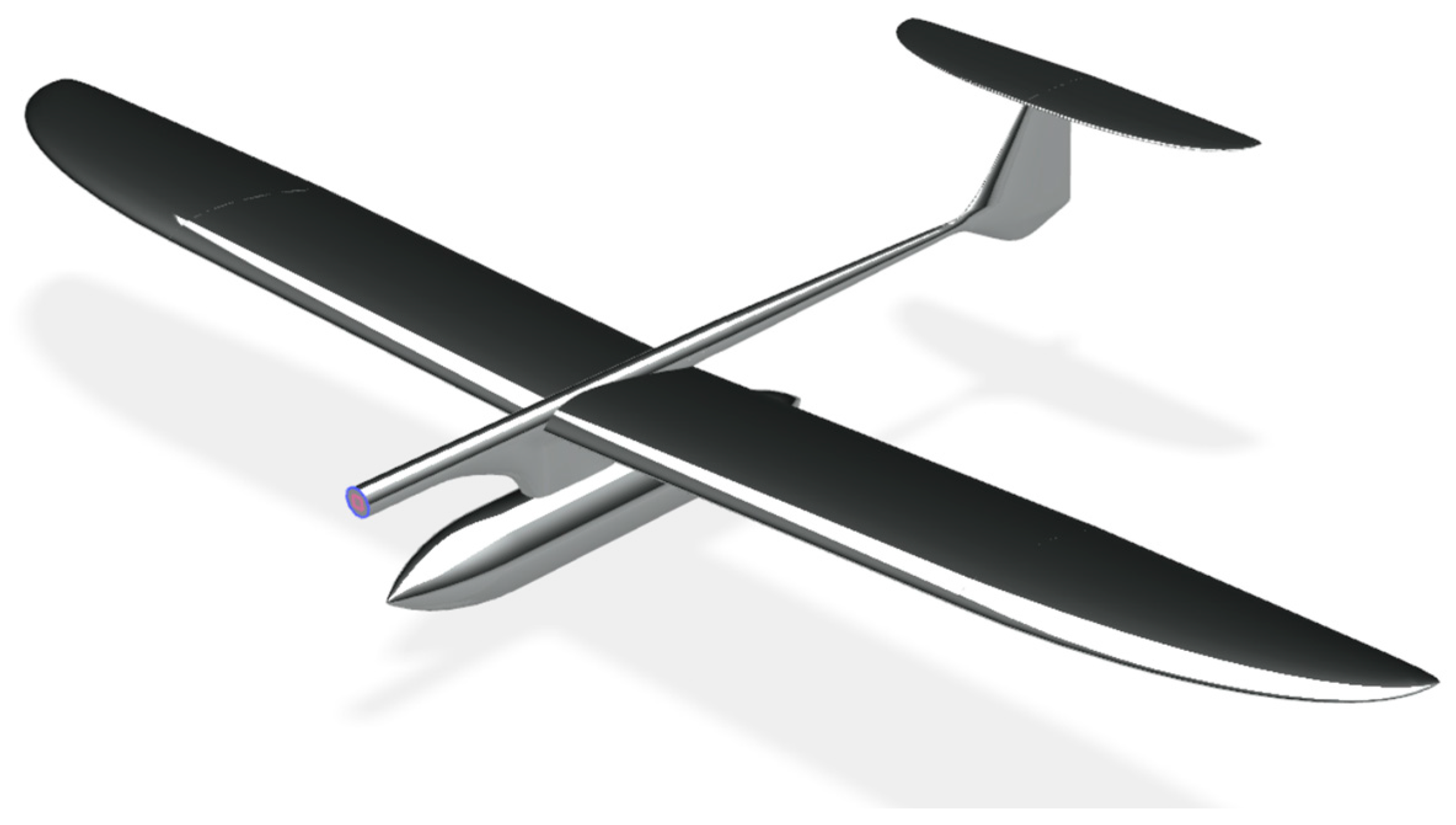
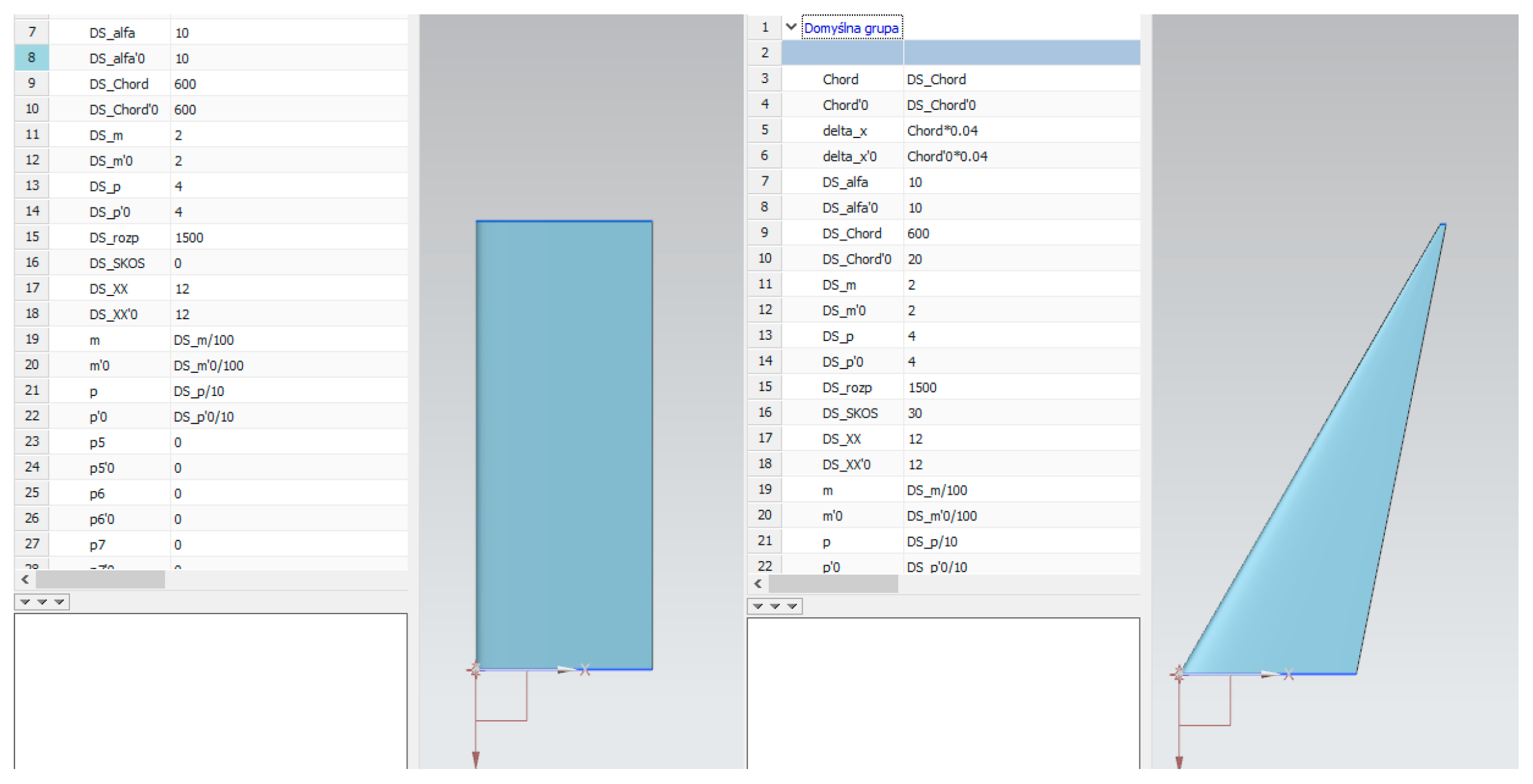
The unmanned reconnaissance aircraft “Rybitwa” is a miniature, remotely controlled unmanned aerial vehicle (mini-UAV) developed at the Military University of Technology (Warsaw, PL). It is characterized by a slender fuselage, large wingspan, and an underslung tubular payload pod housing electronic equipment such as a daylight and a thermal imaging camera. The aircraft is capable of fully autonomous flight along a pre-programmed route, including autonomous take-off, landing, and loitering. It can remain airborne for up to 50–60 min and operate within a range of approximately 12 km from the ground control station. For numerical analysis purposes, the CAD model was developed using Siemens NX software ver. 1847 (Figure 3). The modeling approach employs a simplified dimension parameterization method, utilizing semi-interactive control forms to define dimensions and functional relationships, bypassing direct drawing (Figure 4).
The aerodynamics of the Rybitwa UAV aircraft were analyzed using Ansys Fluent, XFLR5, and OpenVSP software. Fluent is commercial software included in the Ansys package. The solution to the flow problem is obtained by simulating the laws of mass conservation, momentum conservation, and energy conservation (Navier–Stokes equations). For incompressible, isothermal, constant-viscosity flows, the Navier–Stokes equations can be simplified to the following ones [1,2,3,4]:
· V = 0
ϱ u t + · V u = p x + μ 2 u + F b , x
ϱ v t + · V v = p y + μ 2 v + F b , y
ϱ w t + · V w = p z + μ 2 w + F b , z
The incompressible Navier–Stokes equations provide a reasonable model for flows of liquids and gases at relatively low speeds. The simplifications for the incompressible Navier–Stokes equations introduce the following singularities:
Continuity equation does not involve density (density is constant);
Viscosity μ is assumed constant;
No energy equation is required for isothermal flow;
If flow is not isothermal, the energy equation is decoupled from the other equations if the density, viscosity and thermal properties are constant.
XFLR5 is a potential flow solver coupled with XFOIL results, using airfoil theory, the Vortex Lattice Method (VLM), and the 3D panel method to analyze wings and aircraft models at low Reynolds numbers. Due to the limitations of the panel method, the XFLR5 program solves the flow problem under the following assumptions: incompressible, non-vortex flow outside the boundary layer (potential), low Mach numbers (typically Ma < 0.3), small angles of attack (formally small disturbances), wings treated as thin lifting surfaces, without modeling thickness in Lifting Line Theory (LLT) and Vortex Lattice Method (VLM) models [4,5]. The idea behind the panel method included in XFLR5 is to determine the velocity from the potential gradient (5) in the flow described by Laplace’s Equation (6).
V = Φ
2 Φ = 0
VSPAero (ver. 3.45.4) is a potential flow solver developed at NASA Ames. It is designed to directly utilize OpenVSP geometry through DegenGeom, a “streamlined” representation of thin surfaces. The program performs calculations according to one of two available algorithms: the Vortex Lattice Method (VLM) for thin lifting surfaces and panel method for solid bodies and stronger interference [6,7]. In addition, it allows for the analysis of propellers/wind turbines according to the actuator disk model. VSPAero returns reasonable compliance with the RANS OVERFLOW code at a fraction of the computational cost (especially with the actuator disk model) [8].

3. Numerical Analyses Performed

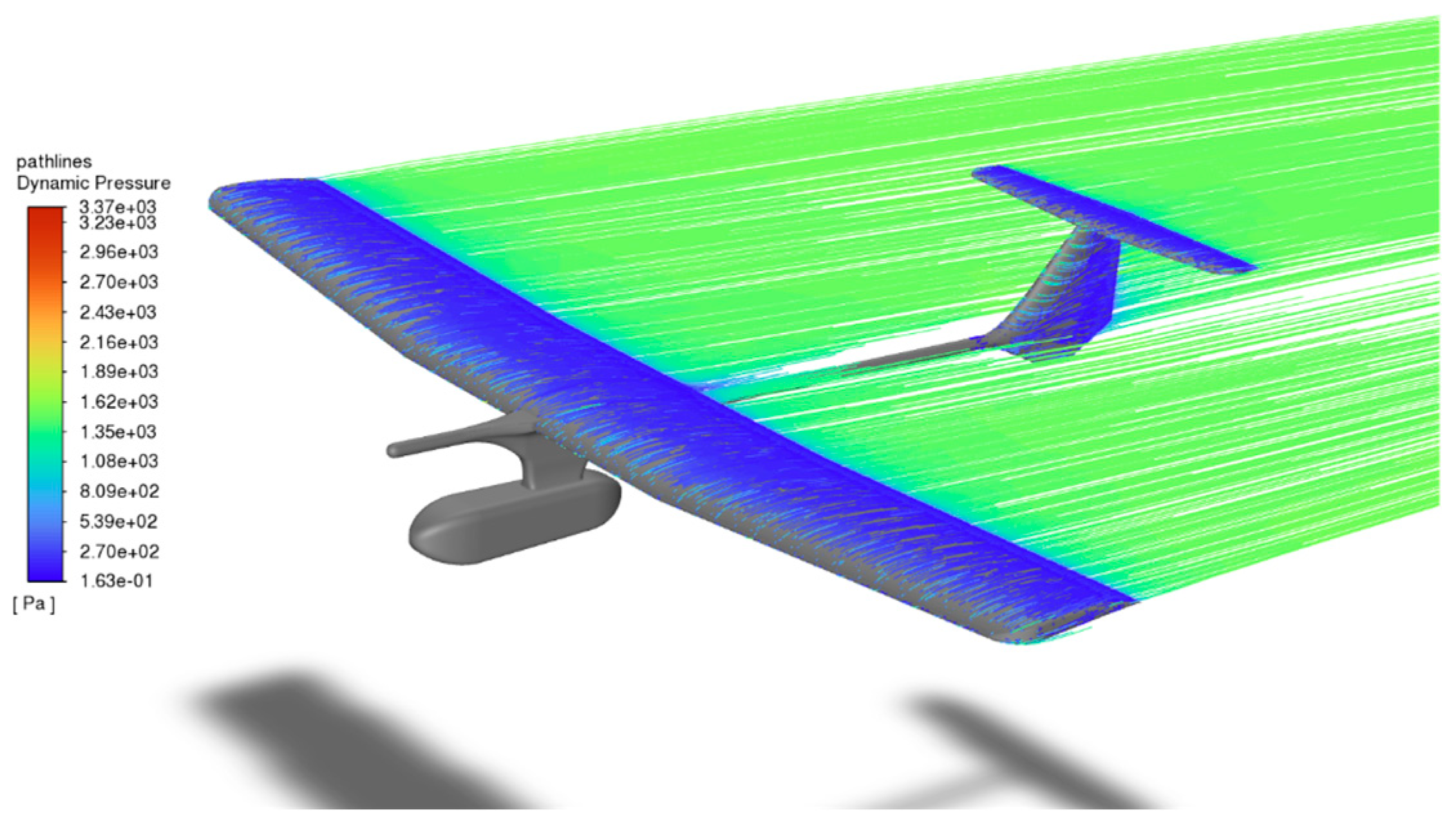
The preliminary numerical flow analysis of the mini-UAV model was performed for the flight speed value V = 20 [m/s], which means it was in fact the design cruise speed Vc = 72 km/h. First, a CFD analysis was run using the model developed on the basis of the FVM. For this purpose, the CAD model of the mini-airplane was imported into the Ansys Fluent software. The developed mesh domain had a shape of a rectangular cuboid with base dimensions of 9 × 9 m and a height of 13 m. The virtual flow space consists of approximately 2.5 million aerodynamic elements, taking into account the gradually thinned elements situated in the boundary layer zone. The analysis was carried out for the Spalart–Allmaras turbulence model (vorticity-based), using the SIMPLE scheme and Green–Gauss cell-based method, and second order accuracy for the remaining parameters in spatial discretization. Figure 5 presents the distribution of streamlines for the analyzed case: freestream velocity V = Vc, real Reynolds number R e = 467 × 103 calculated for formerly mentioned V c and for the mean aerodynamic chord of the wing c a e r = 350 mm.
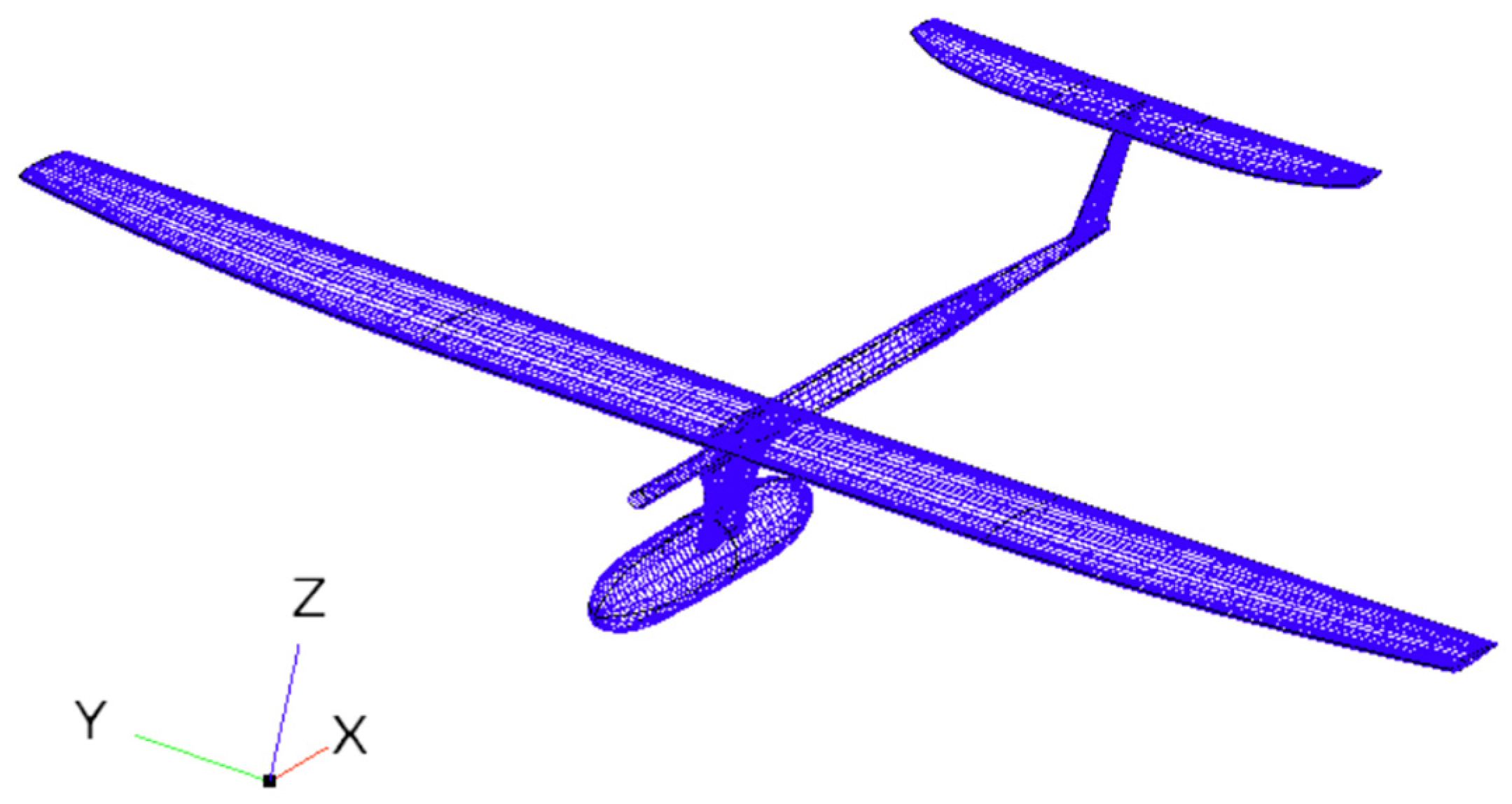
For the purposes of analysis in the VSPAero panel program, a new CAD model was created in OpenVSP (Figure 6). In the applied model, the Vortex Lattice Method (VLM) was applied.
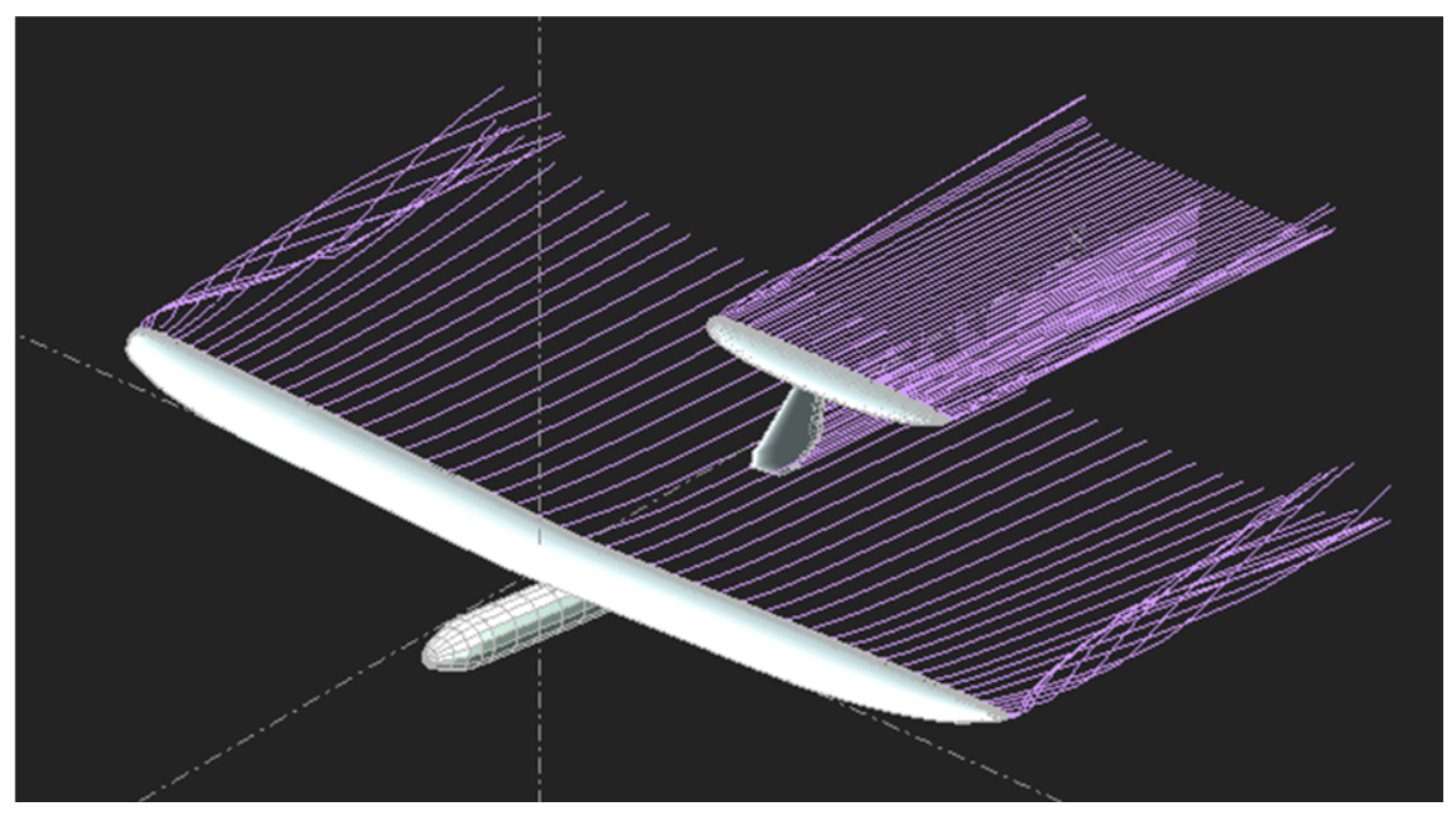
The second tool used for the fast CFD analyses was XFLR5 with VLM available. Figure 7 shows the results of the analyses performed using this program. In the calculated case, the wing discretization resulted in 702 panels, and the empennage surface consisted of 440 elements.
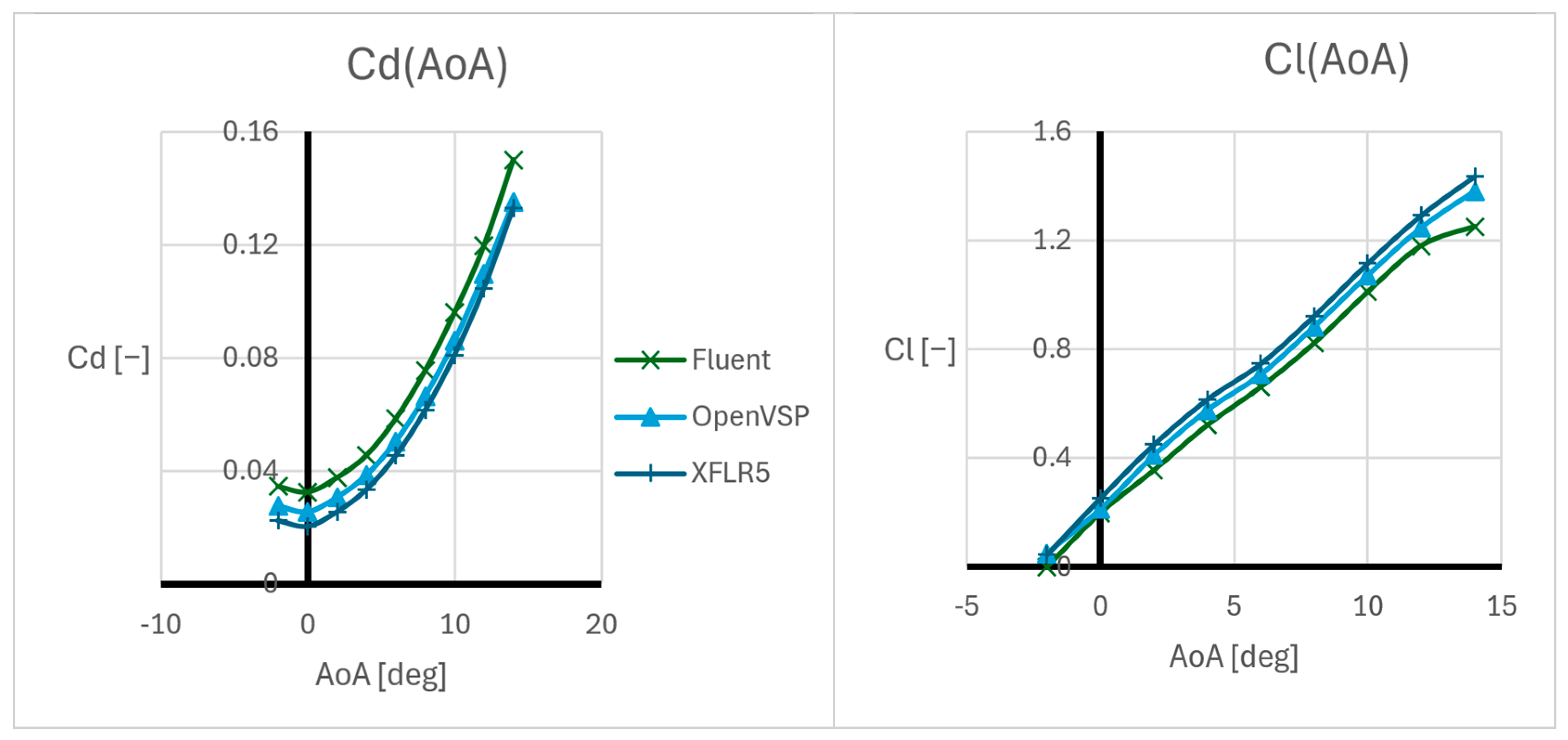
The fundamental aerodynamic characteristics obtained after analyzing the three described program models are displayed in Figure 8. As can be seen, the Cd(α) and Cl(α) dependence curves determined for the usable angle of attack ranges are relatively consistent. A slight but noticeable advantage of the Ansys Fluent spatial model is demonstrated by slightly more realistic values of the Cd and Cl coefficients. The Cd coefficients determined using the panel methods are slightly underestimated, while the Cl coefficients from both panel methods are slightly overestimated.
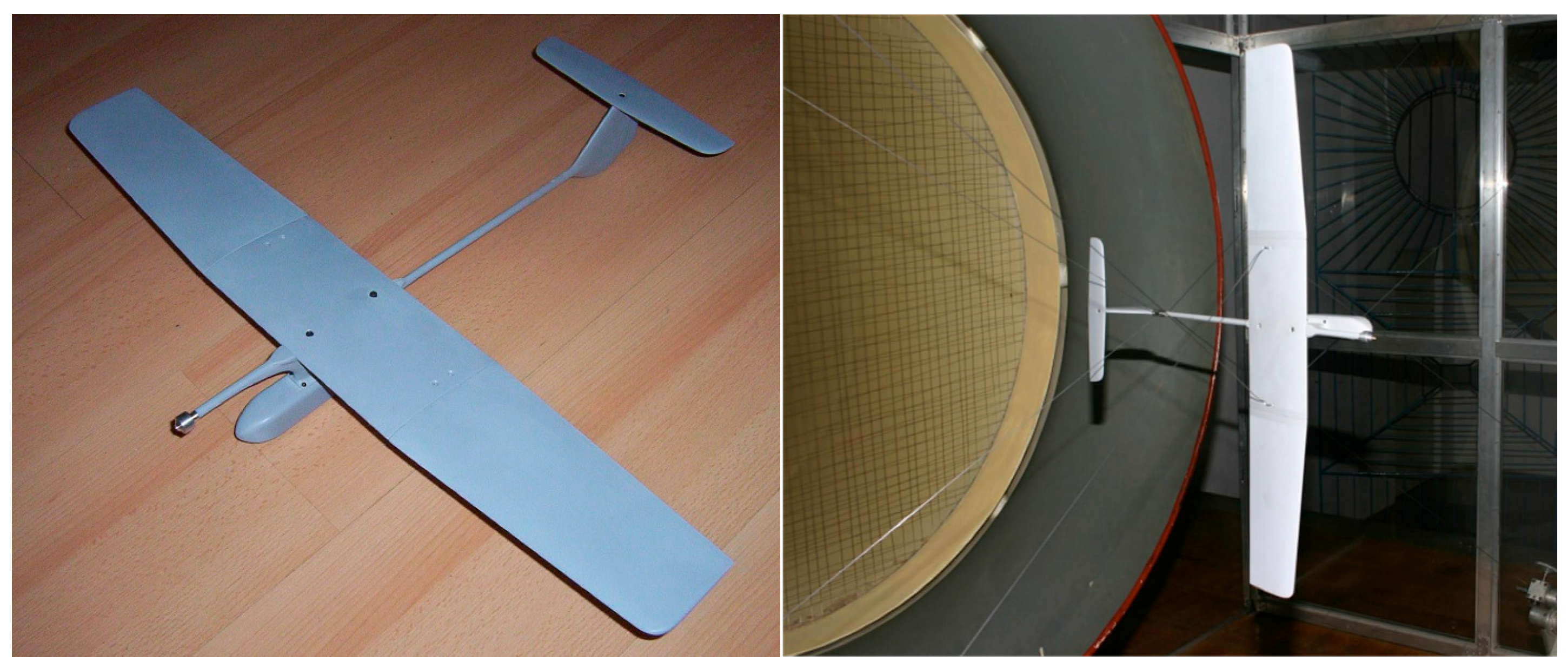
In order to assess the correctness of the created virtual flow mesh, the numerical results were compared with some experimental ones. The recently published paper [9] and the older report [10] also reveal measurement results from experimental tests of a scaled UAV model, which were performed in a wind tunnel located in the IAT FMAA MUT. Figure 9 shows the UAV scale model suspended in the duct of the wind tunnel.
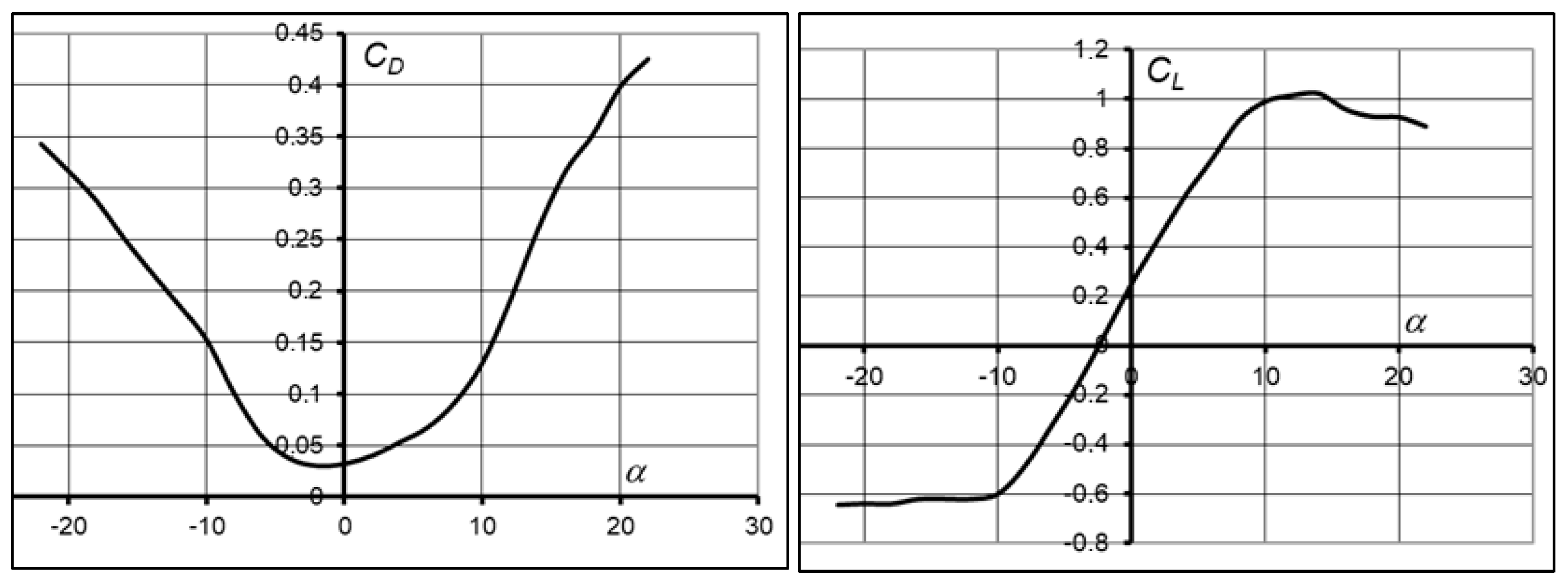
The results of the tunnel tests published in the report [10] are presented in Figure 10. Due to the limited cross-sectional diameter of the tunnel, a model used for the measurements had dimensions reduced four times compared to the actual aircraft. For the identical flow velocity V   =   V c   = 20 m/s but a four times reduced chord, the actual Reynolds number was also four times smaller than the one taken in previously described software simulations, i.e., R e   = 117 × 105. Due to the lower Re number for the flow in the tunnel, the aerodynamic coefficients determined by the experimental method will show noticeable deviations from the coefficient values obtained from numerical methods.

4. Conclusions

The individual results of the analyses are consistent with each other in terms of the C D ( α ) and C L ( α ) characteristics obtained. In addition, all programs showed a disturbance in the AoA region of six for the CL calculation case. As expected, the highest resistance coefficient was determined by Ansys Fluent, which is related to the simplified viscosity model in the flow around the solid. The C L ( α ) graph shows the tendency of panel methods to shift the critical angle towards higher values. The C L coefficients determined by the FVM method are lower than those obtained by panel methods, which raises doubts. For example, ref. [11] shows that the results of the FVM method should be higher than those obtained by LLT or VLM. This inconsistency creates a need for further research on the tested CFD models.
For the purposes of developing a tool to support the optimal design of light aircraft, it can be concluded that the solver implemented in OpenVSP, i.e., VSPAero, appears to be a promising tool. The presented results show a high degree of similarity to those obtained using the FVM method, the accuracy of which has been compared with the expert method. Nevertheless, further research is needed to achieve high accuracy and to verify the correctness of the calculations over a wide range of Reynolds and Mach numbers.

Author Contributions

Conceptualization, B.S. and R.R.; methodology, B.S. and P.C.; validation, S.K. and R.R.; formal analysis, B.S. and P.C.; investigation, B.S.; resources, B.S. writing—original draft preparation, B.S.; writing—review and editing, R.R.; supervision, R.R.; project administration, B.S.; funding acquisition, R.R. All authors have read and agreed to the published version of the manuscript.

Funding

This work was funded by the Military University of Technology (Warsaw, Poland) under the university research project no. UGB 531-000037-W200-22 entitled Algorithmization of the aerodynamic design process of light aircraft, taking into account the optimization of their wetted body geometry in order to improve performance qualities. The project was carried out at the Faculty of Mechatronics, Armament and Aerospace of the Military University of Technology, in 2025.

Institutional Review Board Statement

Not applicable.

Informed Consent Statement

Not applicable.

Data Availability Statement

The data presented in this study are available on request from the corresponding author due to the early stage of the research.

Acknowledgments

During the preparation of this manuscript/study, the authors used Midjourney AI (Midjourney.com, accessed on 27 November 2025) for the purpose of conceptual graphic preparation. The authors have reviewed and edited the output and take full responsibility for the content of this publication.

Conflicts of Interest

The authors declare no conflicts of interest.

References

  1. Tlili, O.; Mhiri, H.; Bournot, P. Empirical correlation derived by CFD simulation on heat source location and ventilation flow rate in a fire room. Energy Build. 2016, 122, 80–88. [Google Scholar] [CrossRef]
  2. Mohebbi, F.; Evans, B.; Sellier, M. On an Exact Step Length in Gradient-Based Aerodynamic Shape Optimization—Part II: Viscous Flows. Fluids 2021, 6, 106. [Google Scholar] [CrossRef]
  3. Huang, J.; Bretzke, J.-V.; Duan, L. Assessment of turbulence models in a hypersonic cold-wall turbulent boundary layer. Fluids 2019, 4, 37. [Google Scholar] [CrossRef]
  4. Alrayes, Z.O.; Gadalla, M. Development of a flexible framework multi-design optimization scheme for a hand launched fuel cell-powered uAV. Energies 2021, 14, 2951. [Google Scholar] [CrossRef]
  5. Sang, L.Q.; Phengpom, T.; Thin, D.V.; Duc, N.H.; Hang, L.T.T.; Huyen, C.T.T.; Huong, N.T.T.; Tran, Q.T. A Method to Design an Efficient Airfoil for Small Wind Turbines in Low Wind Speed Conditions Using XFLR5 and CFD Simulations. Energies 2024, 17, 4113. [Google Scholar] [CrossRef]
  6. Jesudasan, R.; Hanifi, A.; Mariani, R. Investigating planar and nonplanar wing planform optimisation for ground effect aircraft. Aerospace 2023, 10, 969. [Google Scholar] [CrossRef]
  7. Lappas, I.; Ikenaga, A. Conceptual Design and Performance Optimization of a Tip Device for a Regional Turboprop Aircraft. Aerospace 2019, 6, 107. [Google Scholar] [CrossRef]
  8. Sheridan, C.N.; Pham, D.D.; Whiteside, S. Evaluation of vspaero analysis capabilities for conceptual design of aircraft with propeller-blown wings. In Proceedings of the AIAA Aviation 2021 Forum, Virtual Event, 2–6 August 2021. [Google Scholar]
  9. Frant, M.; Kachel, S.; Maślanka, W. Gust modeling with state-of-the-art computational fluid dynamics (CFD) software and its influence on the aerodynamic characteristics of an unmanned aerial vehicle. Energies 2023, 16, 6847. [Google Scholar] [CrossRef]
  10. Olejnik, A.; Rogólski, R.; Chmaj, G.; Kiszkowiak, Ł.; Radomski, M.; Majcher, M.; Omen, Ł. Autonomous Unmanned Aerial Vehicles Equipped with Monitoring and Supervision Means Supporting the Activities of the Police and Fire Brigade (R&D Project No. OR 00011911); Report on the Conducted Industrial Research and Development Works, Cracow–Warsaw; WAT: Warsaw, Poland, 2013. (In Polish) [Google Scholar]
  11. Dharmdas, A.; Patil, A.Y.; Baig, A.; Hosmani, O.Z.; Mathad, S.N.; Patil, M.B.; Kumar, R.; Kotturshettar, B.B.; Fattah, I.M.R. An Experimental and Simulation Study of the Active Camber Morphing Concept on Airfoils Using Bio-Inspired Structures. Biomimetics 2023, 8, 251. [Google Scholar] [CrossRef] [PubMed]
Figure 1. Unmanned aerial vehicle Rybitwa (ver. 4)—classic mini-airplane with simple high-aspect-ratio wing, underfuselage pod and conventional T-type empennage.
Engproc 133 00140 g001
Figure 2. Sequenced algorithm for optimal aerodynamic body design at specified mission requirements.
Engproc 133 00140 g002
Figure 3. CAD model of the mini-UAV aerodynamic body developed in Siemens NX environment.
Engproc 133 00140 g003
Figure 4. A method of parameterizing the airframe geometry model using the example of a wing design—a wing with a given span can take on variable shapes modified as a result of the variability of parameters regulating its convergence and the sweep of its contour edges.
Engproc 133 00140 g004
Figure 5. Visualization of dynamic pressure and streamline distribution for the flow case solved for the mini-UAV in Ansys Fluent.
Engproc 133 00140 g005
Figure 6. UAV panel model developed in OpenVSP for CFD analysis.
Engproc 133 00140 g006
Figure 7. UAV panel model for XFLR5; the fuselage model was simplified by omitting the tail boom geometry.
Engproc 133 00140 g007
Figure 8. Results of numerical analyses using FVM solvers and panel methods.
Engproc 133 00140 g008
Figure 9. The scaled UAV model (scale factor 1:4) and its aerodynamic measurements in the low-speed wind tunnel in the Institute of Aeronautical Technology FMAA MUT.
Engproc 133 00140 g009
Figure 10. Aerodynamic characteristics for experimental results obtained from aerodynamic tunnel investigations [10].
Engproc 133 00140 g010
Table 1. Design parameters of the analyzed UAV.
Wingspan3.35[m]
Length1.83[m]
Take-off weight11[kg]
Maximum speed140[km/h]
Ceiling500[m]
Endurance1[h]
PropulsionElectric, 2.5[kW]
ConfigurationHigh-wing layout with T-tail-
Launch/landingHand launch/parachute + skid recovery-
Disclaimer/Publisher’s Note: The statements, opinions and data contained in all publications are solely those of the individual author(s) and contributor(s) and not of MDPI and/or the editor(s). MDPI and/or the editor(s) disclaim responsibility for any injury to people or property resulting from any ideas, methods, instructions or products referred to in the content.