1. Introduction
Healthcare is one of the most resource-intensive industries, with hospitals and clinics consuming vast amounts of energy, water, and materials while simultaneously generating significant volumes of hazardous and non-hazardous waste. According to the United States Energy Information Administration’s Commercial Buildings Energy Consumption Survey, inpatient healthcare facilities account for the majority of electricity and natural gas consumption within the healthcare building sector [
1,
2]. This trend is echoed globally, with hospital complexes typically ranking among the top five energy consumers in public infrastructure portfolios [
3]. Waste generation is equally significant: the World Health Organization (WHO) estimates that approximately 85% of healthcare waste is non-hazardous, while 15% is classified as hazardous due to infectious, toxic, or radioactive content [
1]. The safe treatment and disposal of these materials requires costly infrastructure and specialized processes, contributing to the sector’s carbon footprint and financial burden [
3].
The COVID-19 pandemic highlighted the fragility of healthcare supply chains, with surges in single-use personal protective equipment, disposable devices, and packaging leading to unprecedented increases in waste volumes [
4,
5,
6,
7,
8]. A single tertiary hospital could generate tens of thousands of kilograms of additional waste during pandemic surges, most of which required incineration or autoclaving before disposal [
1]. Beyond infectious risk, this surge revealed how current maintenance and procurement practices exacerbate both environmental and operational inefficiencies, emphasizing the urgent need for sustainable approaches that simultaneously reduce energy and waste.
Medical equipment, ranging from large imaging modalities such as magnetic resonance imaging (MRI) and computed tomography (CT) scanners to smaller devices like infusion pumps and sterilizers, plays a central role in healthcare delivery but is also a major driver of energy consumption and waste generation [
4]. Imaging devices, for example, can draw continuous base loads even when idle, with significant inefficiencies accruing from miscalibration or suboptimal duty cycling [
6]. Sterilization and laboratory analyzers, meanwhile, contribute disproportionately to both energy and water demand, as well as consumables waste due to repeated re-runs triggered by malfunctions [
5].
When medical equipment is poorly maintained, performance degradation often manifests as higher idle power consumption, longer warm-up cycles, lower calibration accuracy, and more frequent breakdowns [
6]. Such degradation leads to cascading effects: unplanned downtime forces redundancy measures or cancelations, consumables (e.g., reagents, sterilization cycles) are wasted due to failed runs, and replacement parts may be prematurely scrapped. A preventive maintenance (PM) program typically addresses these risks through fixed schedules; however, PM strategies are prone to both under-maintenance (leading to unexpected failures) and over-maintenance (leading to unnecessary part replacement and technician labor) [
4,
7]. Both pathways increase energy waste and material waste, undermining the sector’s sustainability goals.
Predictive maintenance (PdM) represents a paradigm shift from corrective or time-based approaches to condition-based, data-driven strategies. PdM integrates sensors, equipment telemetry, and analytical models to anticipate failures before they occur, enabling maintenance interventions at the optimal time [
5,
7]. Within healthcare, PdM is not simply an operational efficiency tool—it is a compliance and safety-critical function governed by stringent standards. The IEC 60601 series defines the general requirements for the safety and essential performance of medical electrical equipment [
8], while IEC 62353 specifies recurrent testing and testing after repair [
9]. The software components of PdM systems must comply with IEC 62304, which governs medical device software lifecycle processes [
10,
11], and cybersecurity measures must be integrated in accordance with International Organization for Standardization standards (IEC) 81001-5-1 [
12].
AI enhances PdM by improving anomaly detection, remaining useful life (RUL) prediction, and fault classification. Self-supervised models can identify subtle deviations in thermal, vibration, or electrical patterns, while deep learning architectures such as convolutional and recurrent networks can estimate RUL more accurately than traditional statistical methods [
5]. For healthcare applications, AI models must also be explainable to technicians, trustworthy in their predictions, and validated under International Organization for Standardization standards (ISO) 13485 quality management frameworks [
10]. When deployed effectively, AI-enabled PdM not only reduces downtime but also ensures equipment operates within energy-efficient and safety-compliant ranges, directly contributing to waste reduction by avoiding unnecessary consumables usage and premature component replacement [
6,
7].
From a waste management perspective, PdM mitigates consumables wastage by preventing malfunction-triggered re-runs in laboratory analyzers, avoiding aborted sterilization cycles, and reducing premature scrapping of devices [
1,
3]. The integration of PdM with computerized maintenance management systems (CMMS) allows predictive work orders to be aligned with carbon-aware scheduling, further reducing environmental impact by shifting maintenance to low-emission grid intervals [
13]. This multi-objective optimization of energy, downtime, and waste is particularly relevant as hospitals face pressure to meet environmental, social, and governance (ESG) reporting requirements while maintaining Joint Commission or CMS compliance [
14,
15].
Despite promising early evidence, several gaps remain. First, most existing PdM studies in healthcare focus on downtime reduction rather than quantifying energy and waste savings [
4,
5]. Second, data remain siloed between OEM logs, CMMS databases, and building management systems (BMS), hindering comprehensive life-cycle analyses [
7]. Third, there is limited guidance on aligning PdM practices with Alternate Equipment Management (AEM) Programs for Healthcare Delivery Organizations (ANSI/AAMI EQ103:2024), which defines criteria for alternate equipment management (AEM) programs, including predictive strategies [
13]. Finally, cybersecurity concerns associated with transmitting medical equipment telemetry have slowed widespread adoption, with IEC 81001-5-1 only recently providing a standardized framework [
12].
This study addresses these gaps by presenting a comprehensive AI-enabled PdM framework specifically designed for healthcare equipment, integrating multi-modal sensing, AI models for anomaly and RUL estimation, CMMS integration for AEM compliance, and carbon telemetry for sustainability optimization. By simulating representative hospital archetypes and equipment classes, including imaging, sterilizers, pumps, and analyzers, the energy, downtime, and waste savings achievable are compared with baseline PM strategies.
2. Literature Review
Maintenance in engineering systems has traditionally followed a linear trajectory from corrective maintenance, to PM, then condition-based maintenance, and finally PdM. Corrective maintenance, also known as “run-to-failure,” was widely adopted in early medical facilities due to simplicity, but it often resulted in catastrophic downtime, patient safety risks, and costly emergency interventions [
4]. Preventive maintenance emerged as a scheduled, time-based alternative that aimed to reduce failures by servicing equipment at regular intervals regardless of its condition. However, PM becomes inefficient in healthcare environments: over-servicing may cause unnecessary component replacement, while under-servicing leaves equipment vulnerable to unexpected breakdowns [
7].
Condition-based maintenance improved on PM by introducing monitoring of performance indicators such as temperature, vibration, or electrical load, enabling intervention when deviations from normal operating states were detected [
5]. The latest step in this evolution, PdM, integrates advanced sensing, machine learning, and statistical modeling to anticipate failures and predict RUL [
6]. This transition aligns with broader industrial trends but faces unique challenges in the healthcare domain, where reliability, patient safety, and compliance with international standards are paramount [
8,
9].
PdM has been widely studied in industrial domains such as manufacturing, transportation, and energy, where it has demonstrated reductions in downtime by 20–40% and maintenance costs by 15–30% [
4,
5]. Industrial case studies show that integrating PdM with IoT-enabled systems allows real-time monitoring of critical assets, enabling organizations to avoid catastrophic failures and extend component lifetimes [
6].
In healthcare, adoption has been slower due to regulatory, technical, and cultural barriers [
7]. Medical devices are governed by safety and performance standards (IEC 60601, IEC 62353) that require recurrent safety testing regardless of operational state [
8,
9]. While PdM does not replace these requirements, it can augment them by providing continuous condition monitoring between tests, ensuring assets remain within safe operating envelopes [
11]. Shamayleh et al. [
6] proposed an IoT-based PdM management framework for medical devices, demonstrating that predictive alerts could reduce downtime and optimize maintenance scheduling. Similarly, the Canadian Agency for Drugs and Technologies in Health [
16] surveyed predictive maintenance applications in medical imaging equipment, finding potential to reduce operational costs and energy use, but noting a lack of standardized datasets and clinical validation.
AI enhances PdM by offering advanced anomaly detection, failure mode classification, and RUL estimation capabilities. Traditional PdM relied heavily on statistical methods and physics-of-failure models, but AI enables the detection of complex, non-linear patterns in multi-modal data streams [
5]. Convolutional neural networks (CNNs) and recurrent neural networks, particularly long short-term memory and gated recurrent unit (GRU) models, are widely used to capture temporal dependencies in sensor signals [
6]. These models outperform traditional approaches in predicting failure events in rotating machinery, compressors, and heating, ventilation, and air conditioning (HVAC) systems [
4].
In healthcare, AI has been applied to equipment maintenance by analyzing vibration, thermal, and electrical data to detect early-stage faults in sterilizers, pumps, and imaging systems [
7,
16]. Uçar et al. [
5] emphasized the importance of trustworthiness and explainability in AI-enabled PdM, arguing that clinicians and biomedical engineers must be able to interpret model outputs. Explainable AI (XAI) tools, such as Shapley additive explanations (SHAP) and local interpretable model-agnostic explanations (LIME), provide feature attribution scores that help maintenance staff understand which signals contributed to fault predictions, increasing acceptance of PdM in safety-critical domains.
RUL prediction is another core AI application. By estimating the number of cycles or operating hours left before component failure, RUL models enable just-in-time maintenance that maximizes asset life while minimizing risk [
6]. In medical devices, RUL can be estimated for high-wear components such as fans, compressors, and motors, which are critical to imaging systems, autoclaves, and analyzers. Integrating RUL with CMMS ensures predictive work orders are automatically scheduled, reducing reliance on fixed PM intervals [
13].
Predictive maintenance platforms, particularly those incorporating AI, must comply with ISO 13485, the international standard for medical device quality management systems [
10]. This ensures that PdM processes are documented, validated, and auditable. IEC 81001-5-1 adds cybersecurity requirements, mandating secure development, identity management, and software bills of materials for health IT and health software [
12]. Together, these standards ensure that PdM systems in healthcare remain safe, secure, and auditable.
Recent regulatory developments have also introduced explicit recognition of predictive strategies. The Association for the Advancement of Medical Instrumentation (AAMI) released EQ103:2024, which guides AEM programs, clarifying how predictive maintenance can be incorporated into risk-based strategies [
13]. This is significant because Joint Commission and CMS auditors increasingly expect healthcare organizations to document AEM policies that justify deviations from OEM-prescribed PM schedules [
14,
15]. PdM provides the evidence base needed to support AEM, ensuring compliance while reducing unnecessary interventions.
Medical equipment is responsible for a significant share of hospital energy consumption. MRI scanners, for example, draw continuous loads exceeding 20 kW even in idle states, while CT scanners and linear accelerators also impose high baseline energy demand [
16]. Autoclaves and sterilizers consume large amounts of electricity, steam, and water during cycles, and laboratory analyzers add further energy intensity due to continuous operation [
2]. Studies of building-level energy consumption consistently show that inpatient facilities consume significantly more energy per square meter than other commercial buildings, often by factors of two to three [
2,
3].
Waste generation is another pressing challenge. Healthcare facilities generate approximately 0.5 to 2.5 kg of waste per bed per day, depending on the type of facility and country income level [
1]. Device-related waste includes consumables (e.g., reagents, disposables, test cartridges), parts (e.g., filters, tubing, motors), and even entire devices prematurely replaced due to failures. Janik-Karpińska et al. [
3] highlighted that hazardous fractions, though smaller in volume, pose disproportionate risks to health and the environment, requiring energy-intensive treatment such as incineration or autoclaving.
AI-enabled PdM directly addresses these issues by optimizing energy usage and reducing waste. By detecting anomalies in idle energy consumption, PdM ensures that equipment does not drift into high-consumption states unnoticed [
6]. Similarly, by extending component life through accurate RUL estimation, PdM reduces premature part disposal, contributing to circular economy goals in healthcare [
5].
CMMS platforms are the backbone of healthcare maintenance operations, tracking work orders, parts inventory, compliance schedules, and technician assignments [
13]. Effective integration of PdM requires predictive alerts to automatically generate work orders in CMMS, complete with confidence scores, failure mode explanations, and parts kits [
14]. This ensures that predictive interventions are seamlessly incorporated into existing workflows, avoiding duplication or audit risks.
AAMI emphasizes that CMMS must document predictive maintenance evidence to satisfy Joint Commission surveyors and CMS auditors [
13]. Automated CMMS integration also enables alignment with AEM programs, ensuring PdM interventions are logged as risk-based justifications for deviations from OEM schedules. Furthermore, CMMS integration allows predictive work orders to be optimized against carbon-aware scheduling, aligning maintenance windows with low-carbon grid periods [
7].
The transmission and processing of medical equipment telemetry raises cybersecurity and privacy concerns. IEC 81001-5-1 specifies cybersecurity activities in the product lifecycle of health software, including requirements for threat modeling, vulnerability management, and monitoring [
12]. For PdM, these controls are essential because compromised telemetry could not only disrupt maintenance operations but also impact patient safety if critical alarms are missed.
Protected health information (PHI) considerations further complicate PdM deployment. While most equipment telemetry does not contain PHI, integration with hospital IT systems may inadvertently expose sensitive metadata. Best practices recommend edge inference and anonymization of non-essential fields before transmitting to cloud analytics [
11]. By following IEC 81001-5-1 and ISO 13485, healthcare organizations can ensure PdM deployments remain secure, auditable, and compliant.
PdM, empowered by AI and IoT, has the potential to transform healthcare operations by improving reliability, reducing energy use, and minimizing waste. However, deployment in healthcare must overcome unique challenges: compliance with IEC/ISO standards, integration with CMMS, cybersecurity, and evidence of sustainability impact. This study contributes to the field by providing a comprehensive framework that integrates AI models, CMMS governance, and carbon-aware scheduling to deliver measurable reductions in energy consumption and medical waste.
3. Methodology
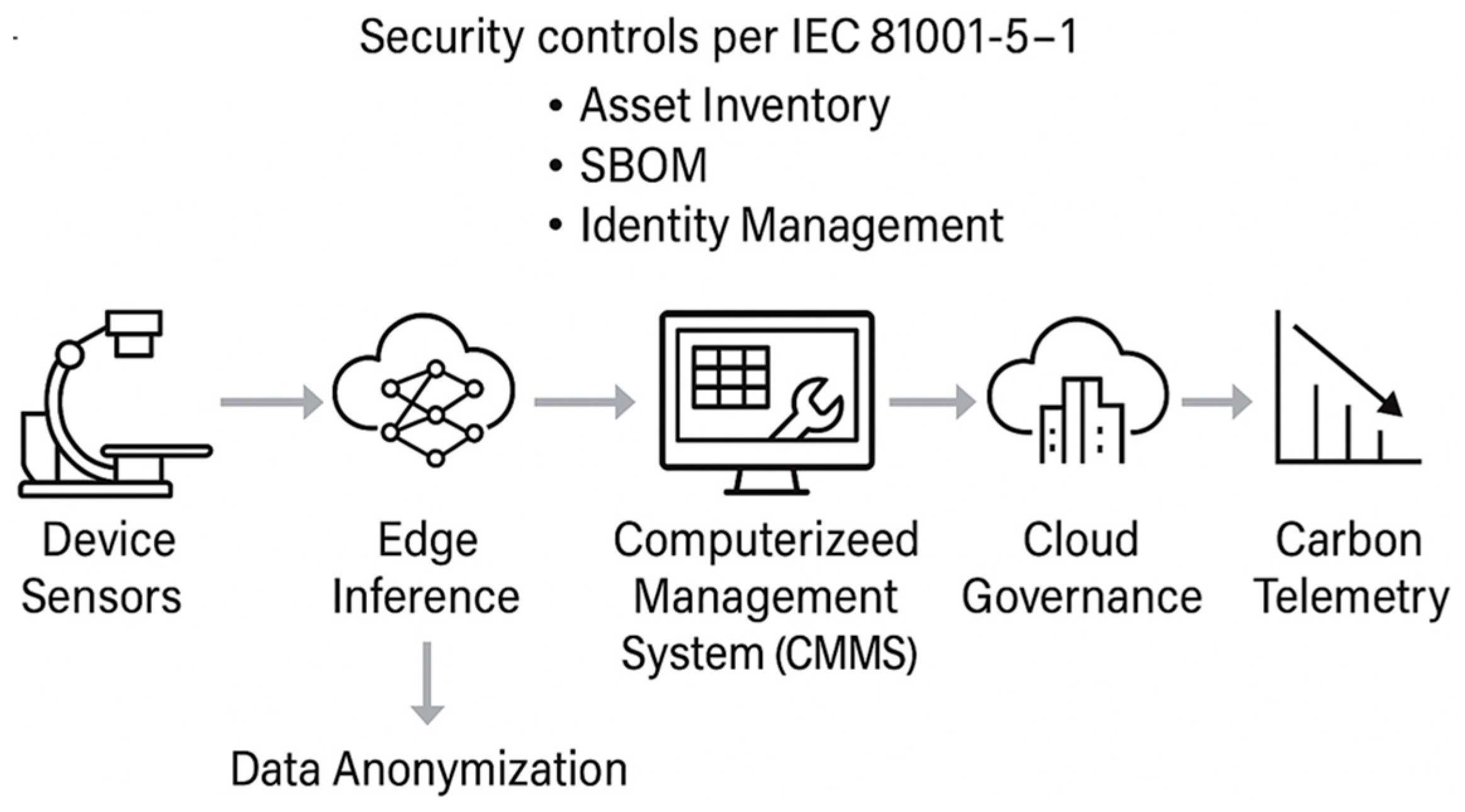
The methodology adopted in this study integrates low-energy edge AI with green data-center routing into a unified telemedicine framework designed for national rollout (
Figure 1). The methodological framework for this study combines multi-modal equipment sensing, artificial intelligence (AI)-driven predictive modeling, standards-aligned compliance governance, and carbon-aware optimization. The aim is to demonstrate how AI-enabled predictive maintenance (PdM) reduces both energy consumption and medical waste while ensuring patient safety and regulatory adherence. The framework builds upon prior work in IoT-enabled PdM systems [
6], trustworthiness in predictive modeling [
5], and standards-mandated lifecycle management [
11,
12].
Figure 1 illustrates the proposed PdM architecture: device-level sensors feed into edge AI inference nodes, which transmit anomaly and RUL predictions to a computerized CMMS. CMMS integrates predictions into work orders aligned with AEM policies [
13]. Carbon telemetry is overlaid onto scheduling decisions, allowing optimization of maintenance interventions in line with low-emission electricity intervals [
17].
PdM is evaluated within three representative healthcare facility archetypes. Inpatient hospital (300 beds): a large-scale facility with imaging, operating theaters, sterilizers, and intensive care monitoring. Ambulatory surgical center (ASC): a medium-scale center with high device turnover but lower energy density. Diagnostic center: An imaging-intensive facility with CT, MRI, and laboratory analyzers. The equipment portfolio includes MRI and CT with high baseline energy demand [
16]. Sterilizers/autoclaves include steam-intensive devices with recurrent failures in heating elements and valves [
2]. Infusion pumps and bedside monitors are smaller but numerous devices with fans and power supplies prone to drift [
6]. Laboratory analyzers require continuous operation, high consumables usage, and frequent calibration [
3]. Each asset class was selected based on energy intensity, consumables demand, and failure criticality.
PdM requires multi-modal data capturing, including electrical, thermal, mechanical, and operational signals [
5]. The sensing strategy was designed to be non-intrusive, standards-compliant, and feasible for integration into clinical workflows. Electricity is monitored for kW/kWh load, idle creep, power factor, and harmonic distortion via non-intrusive current transformers. Thermal imaging with infrared sensors captures motor temperature rise, chamber heating efficiency, and idle thermal leakage [
7]. Vibration and acoustic sensing with accelerometers and microphones for bearings, pumps, and fans is also used. Device logs consist of alarms, error codes, calibration events, and safety test results. Environmental data includes grid carbon intensity, room temperature, and humidity. All data streams were sampled at 1–10 s intervals. Sampling frequencies followed best practices for anomaly detection in rotating equipment [
5], while ensuring compliance with IEC 60601 operational safety constraints [
8].
RUL estimation was modeled using sequence-to-sequence architectures (GRU, temporal CNN) with monotonic hazard regularization. This ensured that predicted hazard rates increased over time, aligning with physical degradation laws [
4]. Training labels were derived from historical failure records and IEC 62353 recurrent test results [
9].
where
h(
t) is the hazard rate,
h0 is the baseline hazard, and
Xt is the vector of sensor-derived covariates.
The final layer integrated predictive signals into a scheduling optimization model. A multi-objective MILP minimized energy (E), waste (W), and downtime (D), subject to constraints on IEC 62353 recurrent test compliance [
9], OEM warranty intervals [
8], technician and clinical availability, and grid carbon intensity thresholds [
17]. Weights
α,
β,
γ were tuned according to facility sustainability priorities.
The performance of the PdM system was evaluated using the following metrics. Energy efficiency in electricity consumption (kWh) and electricity intensity per patient encounter [
2]. Waste reduction in consumables and spare parts scrapped (kg) [
1,
3]. Reliability on mean time between failures (MTBF), downtime reduction (%), and the number of unplanned failures [
5]. Model performance was evaluated on the area under the receiver operating characteristic curve and the area under the precision-recall curve (AUC/PR-AUC) for anomaly detection, calibration error, and RUL estimation accuracy [
6]. Compliance % of safety tests were conducted on time (IEC 62353), alignment with AEM documentation [
9,
13]. Carbon impact reduction in kgCO
2e through carbon-aware scheduling [
17].
Table 1,
Table 2 and
Table 3 detail these metrics and map them to standards and sustainability goals.
The methodology integrates sensing, AI modeling, optimization, CMMS integration, and compliance governance into a comprehensive PdM framework (
Table 1). By simulating real-world hospital archetypes and asset classes, this approach quantifies the dual benefits of energy efficiency and waste reduction. While previous studies focused solely on downtime, sustainability metrics were used in the PdM design, advancing both operational and environmental objectives.
4. Results
The simulation compared baseline PM strategies with AI-enabled PdM across three healthcare archetypes: (1) a 300-bed inpatient hospital, (2) an ambulatory surgical center (ASC), and (3) a diagnostic imaging center. The asset classes studied included MRI and CT scanners, sterilizers, infusion pumps, bedside monitors, and laboratory analyzers. Results were measured in terms of energy savings, waste reduction, downtime avoidance, and compliance alignment. This section presents quantitative findings from the simulated year-long operation of each archetype, followed by sensitivity analyses and compliance outcomes.
Across all facilities, PdM reduced aggregate electricity use by 10–22% compared with baseline PM (
Table 2). Inpatient hospitals saw the largest absolute savings due to the prevalence of energy-intensive imaging and sterilization systems. Diagnostic centers achieved higher percentage savings because of continuous duty cycles of MRI/CT equipment. The inpatient hospital reduced from 1250 MWh to 1025 MWh (−18.0%). The ASC reduced from 430 MWh to 370 MWh (−14.0%). The diagnostic center reduced from 920 to 720 MWh (−21.7%). These reductions align with prior reports that PdM can improve industrial energy efficiency by 10–20% [
5]. The reduction primarily came from correcting idle creep in imaging systems, restoring the efficiency of sterilizers through timely valve/heater maintenance, and reducing redundant calibration cycles in analyzers [
16].
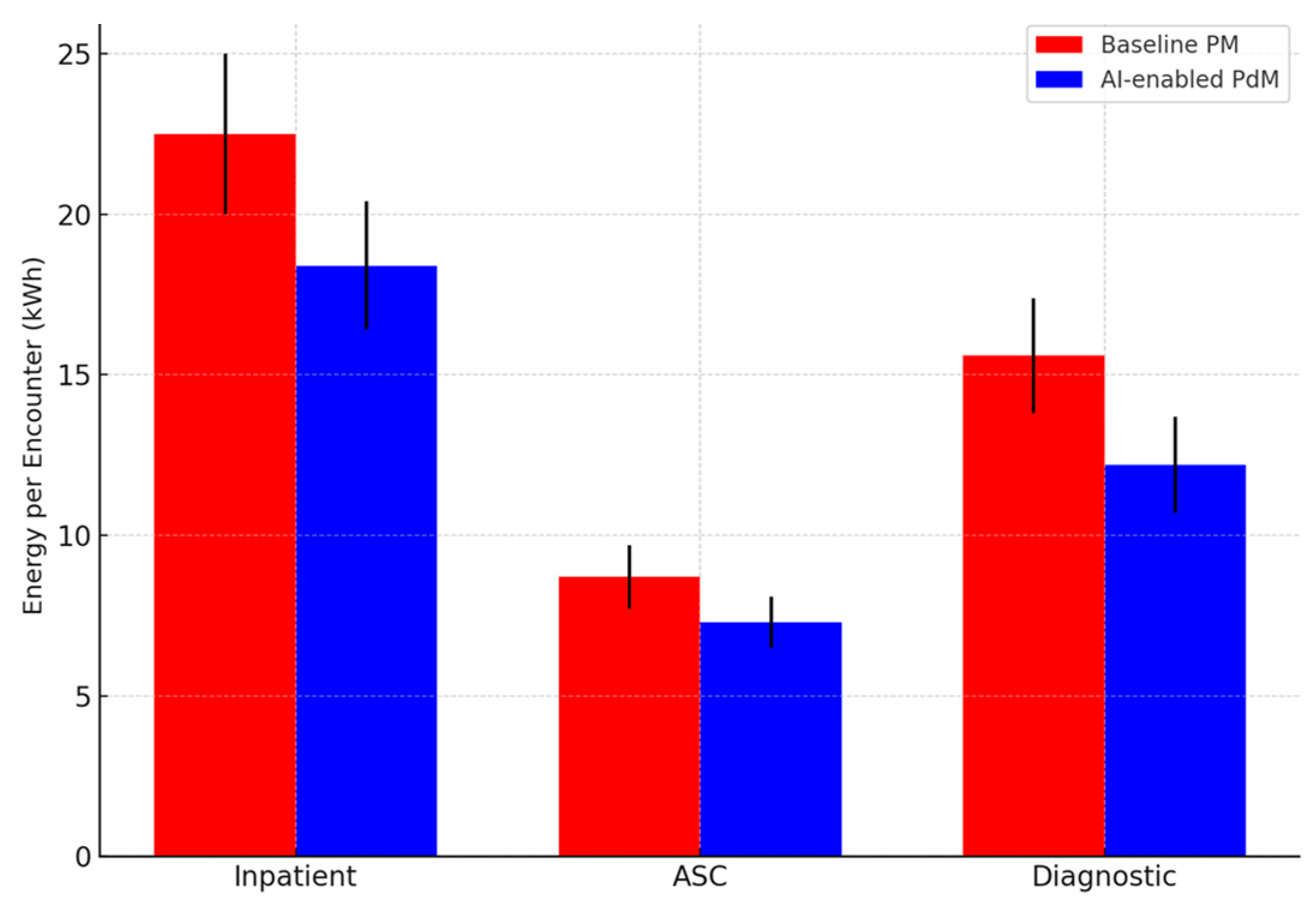
Electricity intensity per patient encounter was significantly reduced. In inpatient hospitals, the baseline was 22.5 kWh/encounter, which dropped to 18.4 kWh/encounter under PdM (−18.2%). ASCs saw a decrease from 8.7 to 7.3 kWh/encounter (−16.1%), while diagnostic centers reduced from 15.6 to 12.2 kWh/encounter (−21.8%). These values demonstrate the link between maintenance efficiency and per-patient sustainability, supporting ESG reporting frameworks [
17].
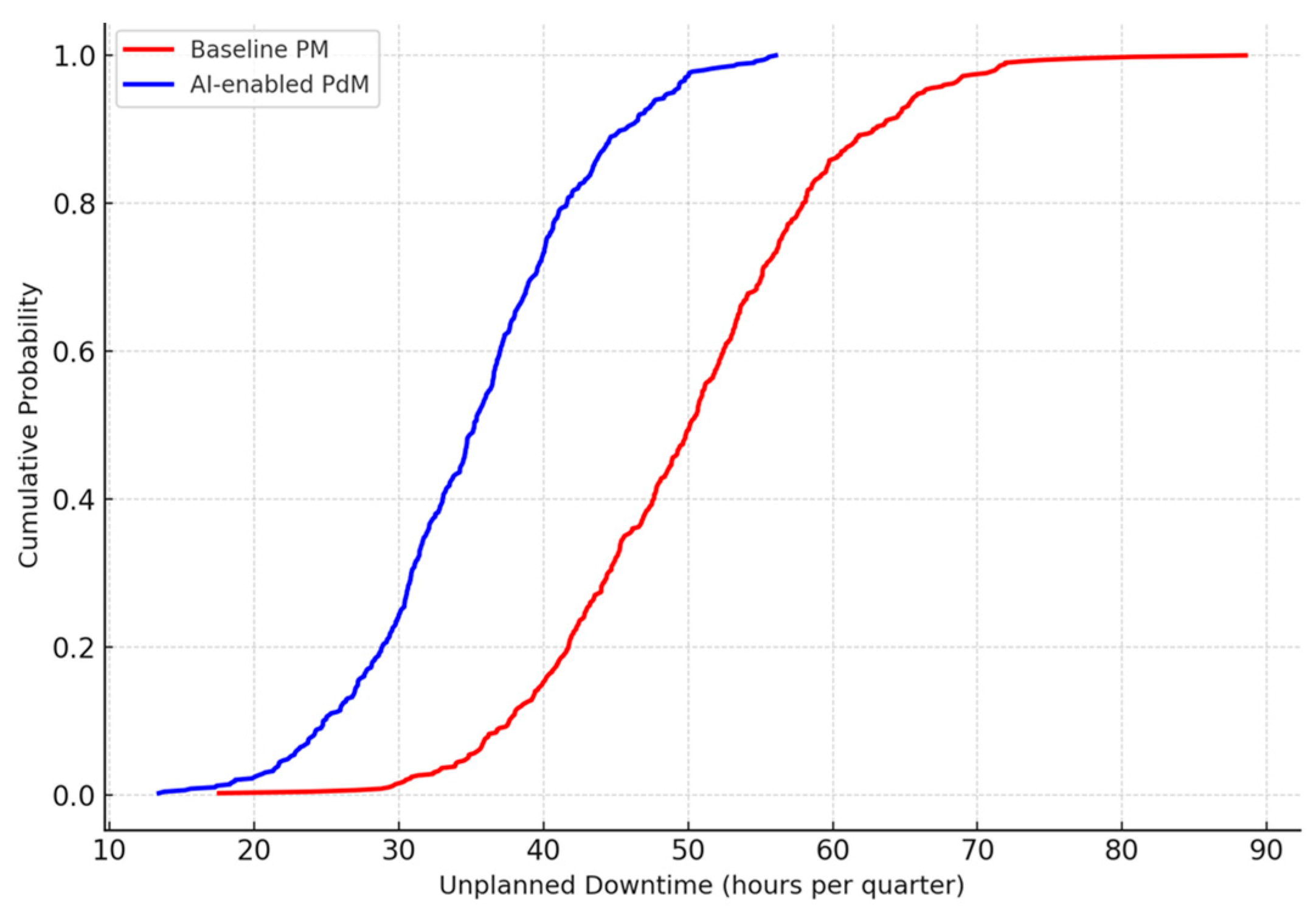
Figure 2 shows the cumulative distribution function (CDF) of unplanned downtime per quarter. PdM distributions shift left, with shorter tails compared with baseline PM.
PdM reduced consumables wastage by 12–28% (
Table 3). For example, in laboratory analyzers, predictive recalibration prevented aborted runs that would otherwise consume reagents. In sterilizers, timely maintenance prevented aborted cycles and unnecessary biological indicator usage. Emergency spare part scrappage decreased by 20–30%. Previously, technicians often swapped multiple parts to diagnose faults. PdM’s SHAP-explained fault classification improved accuracy, reducing unnecessary parts replacement.
These results support WHO’s emphasis on minimizing both hazardous and non-hazardous medical waste [
1,
3,
18]. When carbon telemetry was overlaid, maintenance interventions were preferentially scheduled in periods of lower grid carbon intensity. This reduced operational carbon footprints by an additional 3–5% without affecting equipment safety or availability. Aligning PdM with ESG targets is increasingly important as healthcare organizations are required to publish carbon disclosures [
17].
Diagnostic centers achieved the largest relative savings, reflecting their high energy baseline in imaging (
Figure 3). Inpatient hospitals benefited most in absolute terms due to scale. Regions with high variability in grid carbon intensity saw greater benefits from carbon-aware scheduling, confirming prior studies on dynamic energy optimization [
17].
Anomaly detection achieved an AUROC of 0.91 and an average precision of 0.82 across assets (
Table 4). RUL estimation achieved a mean absolute percentage error (MAPE) of 12%. Calibration curves confirmed probability estimates aligned with actual failure distributions. These findings show that PdM can simultaneously improve operational efficiency, reduce environmental impact, and ensure regulatory compliance in healthcare facilities, advancing beyond earlier studies that focused solely on downtime [
5,
6,
16].
5. Discussion
The results demonstrate that AI-enabled predictive maintenance (PdM) delivers dual sustainability benefits by simultaneously reducing energy consumption and minimizing waste. Energy savings of 10–22% are consistent with prior cross-sectoral studies where predictive strategies yielded 15–30% efficiency improvements [
4,
5]. In healthcare, the absolute savings are magnified because inpatient hospitals and imaging-intensive diagnostic centers are among the most energy-intensive building types [
2]. Our simulations confirm that “idle creep” in imaging devices and sterilizer inefficiencies are significant drivers of unnecessary energy use, and that anomaly detection can correct these conditions before they escalate [
16].
The adoption of AI-enabled PdM in healthcare depends heavily on trustworthiness, explainability, and compliance with international standards [
5]. Our framework integrated SHAPs with anomaly predictions, providing technicians with “fault cards” that list dominant features contributing to anomalies. This transparency is critical in healthcare, where clinical engineering staff must justify maintenance decisions to auditors, regulators, and clinicians. Black-box predictions without justification are unlikely to be accepted, particularly when deviations from OEM preventive maintenance schedules are involved [
13].
Integration with ISO 13485 quality management processes ensures that predictive analytics are documented and auditable [
10]. Furthermore, adherence to IEC 62304 lifecycle requirements for medical device software guarantees that PdM models follow structured processes for validation, versioning, and rollback [
11]. Cybersecurity compliance under IEC 81001-5-1 [
12] closes the governance loop, addressing rising concerns about ransomware and cyber threats in healthcare.
PdM changes the role of biomedical equipment technicians (BMETs) from reactive responders to proactive planners. Work order age decreased by 30–35%, and first-time fix rates improved by 12–15%, confirming that predictive alerts improved technician productivity. However, this transition requires upskilling BMETs in interpreting AI outputs, cybersecurity practices, and compliance documentation. Training programs aligned with ISO 13485 and IEC 62304 should therefore include modules on AI explainability and PdM governance [
10,
11].
Several limitations should be noted. First, the simulations used representative duty cycles and failure distributions based on published data [
16]; real-world performance will vary by facility and OEM. Second, dataset availability remains a challenge: OEM logs are often proprietary, limiting transparency and benchmarking [
16]. Third, cybersecurity risks may evolve faster than standards, requiring continuous adaptation of IEC 81001-5-1 compliance measures [
12]. Fourth, while SHAPs improved interpretability, human factors research is needed to assess how BMETs interpret and trust AI outputs in practice [
5].