Proceeding Paper

Synthetic Measurements of Triple-Component GNSS Meta-Signals †
by
Daniele Borio
1,*,
Melania Susi
2 and
Kinga Wȩzka
3
1
European Commission, Joint Research Centre (JRC), 21027 Ispra, Italy
2
Topcon Positioning System Inc., 41033 Concordia, Italy
3
Faculty of Geodesy and Cartography, Department of Geodesy and Geodetic Astronomy, Warsaw University of Technology (WUT), 00-661 Warsaw, Poland
*
Author to whom correspondence should be addressed.
Presented at the European Navigation Conference 2025 (ENC 2025), Wrocław, Poland, 21–23 May 2025.
Eng. Proc. 2026, 126(1), 51; https://doi.org/10.3390/engproc2026126051

Published: 23 April 2026
(This article belongs to the Proceedings of European Navigation Conference 2025)

Abstract

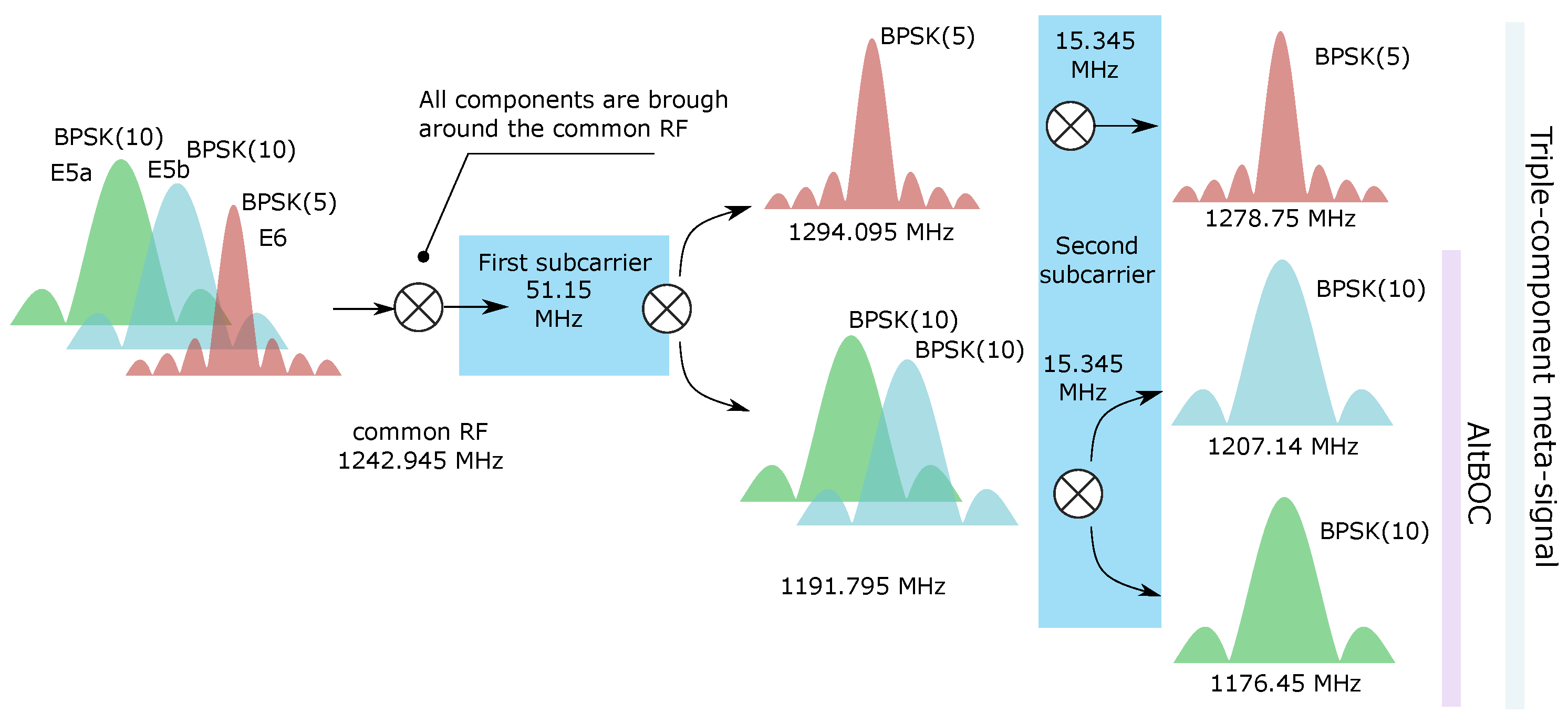
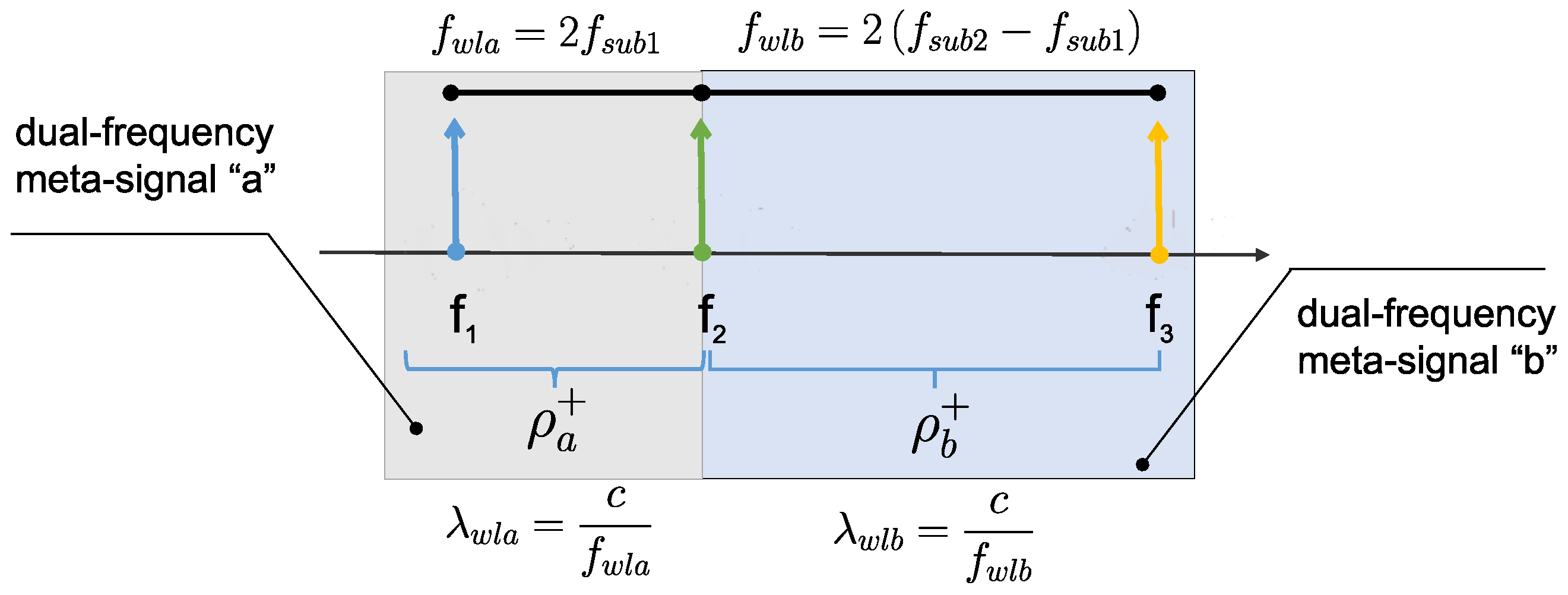
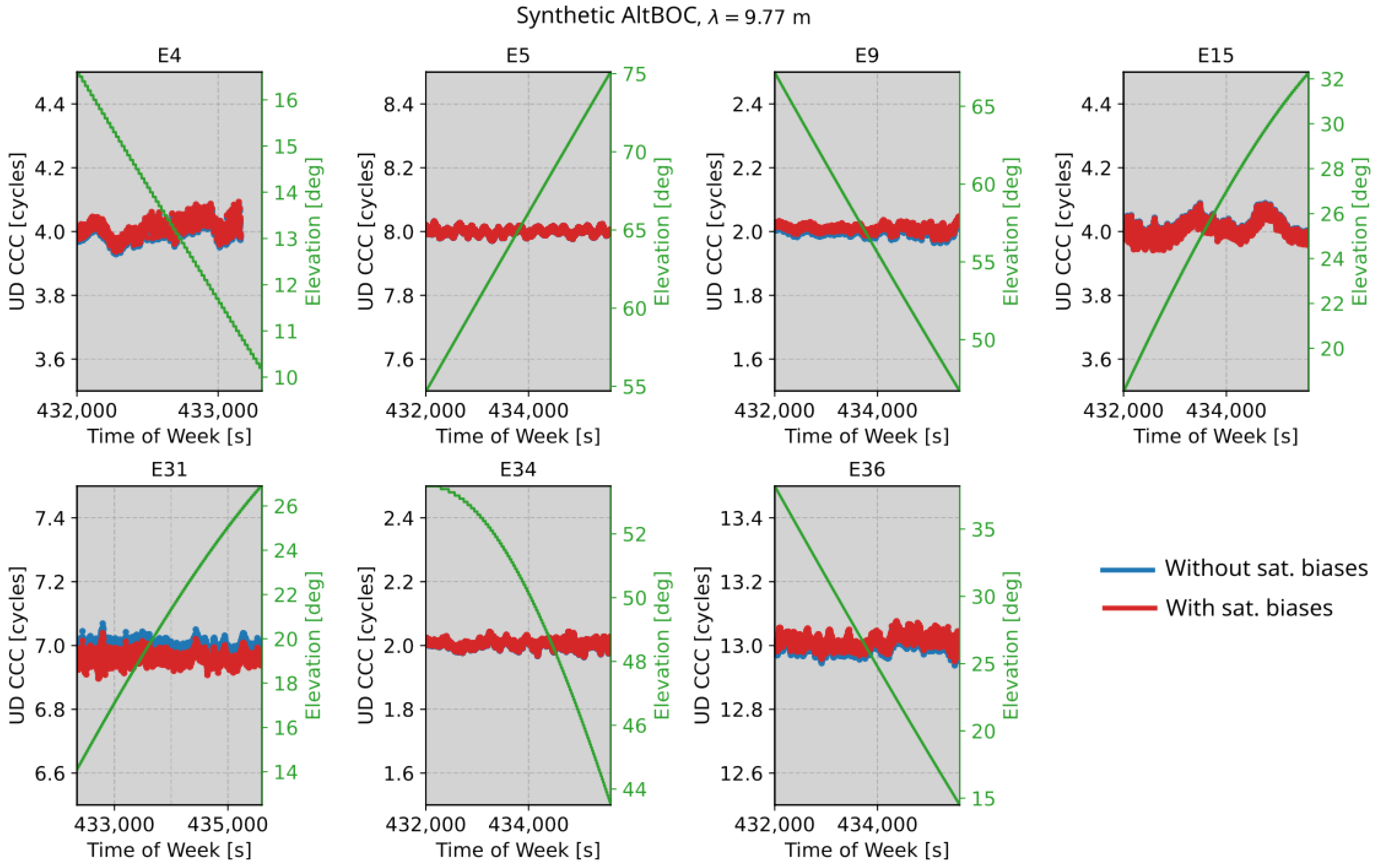
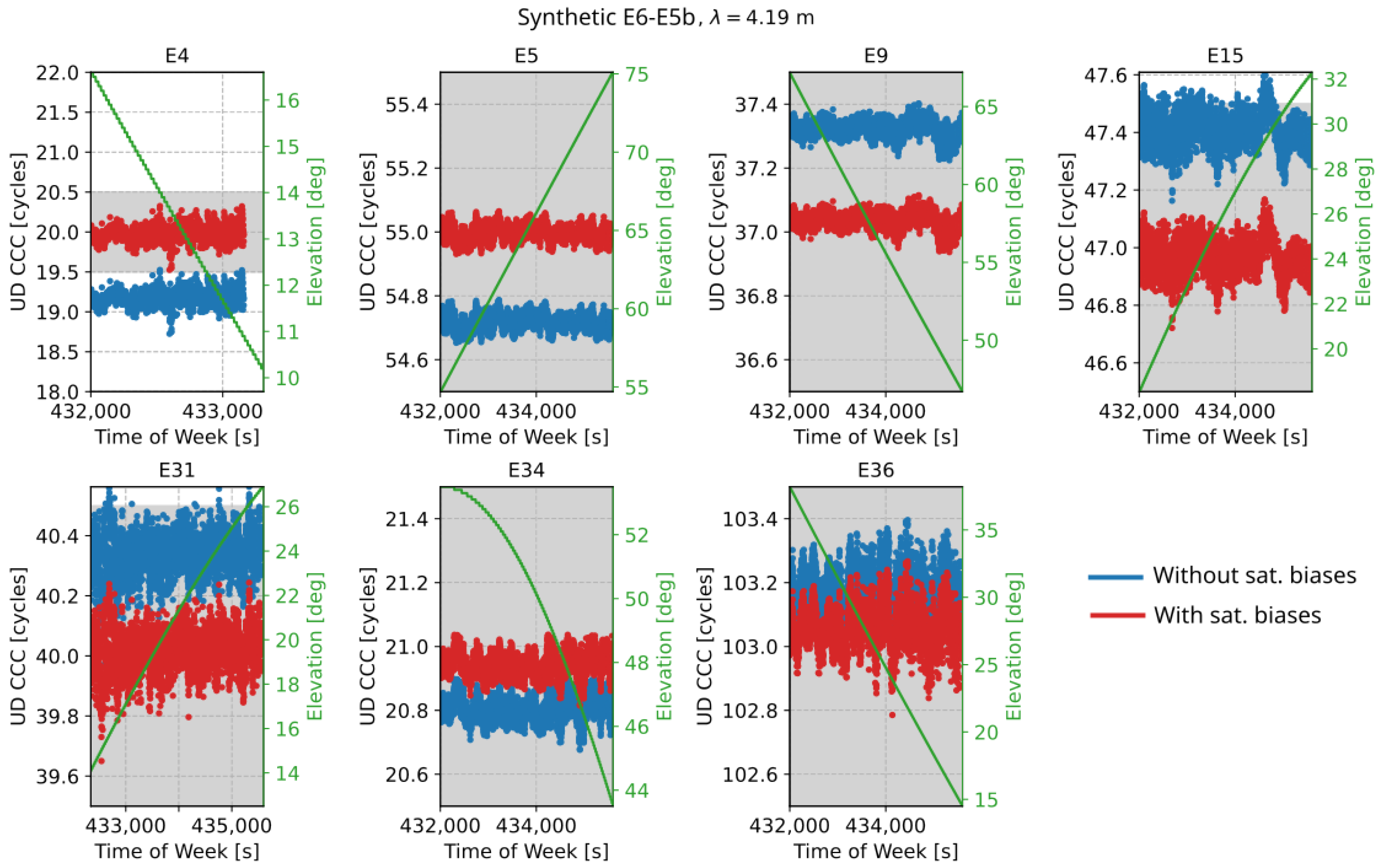
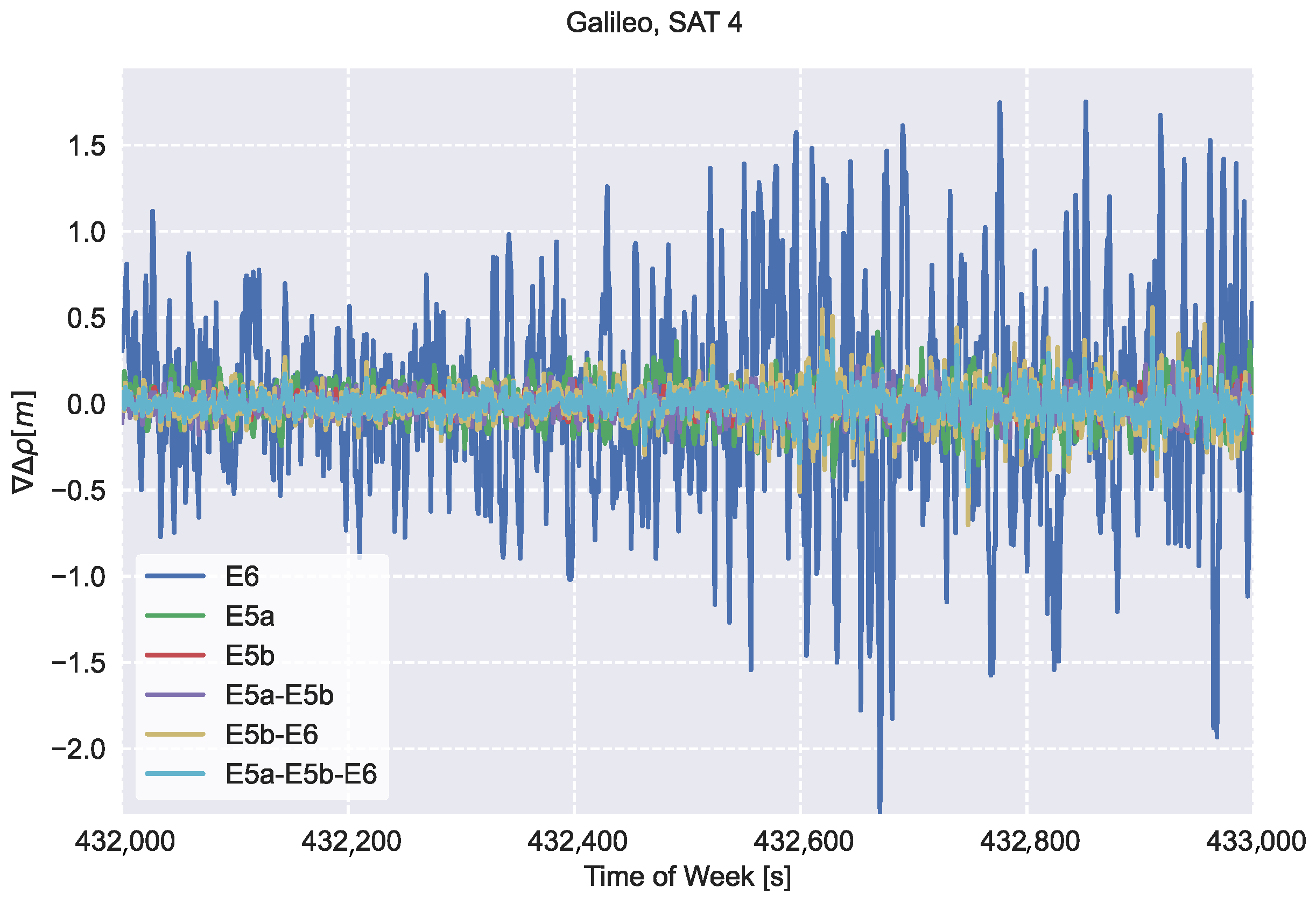
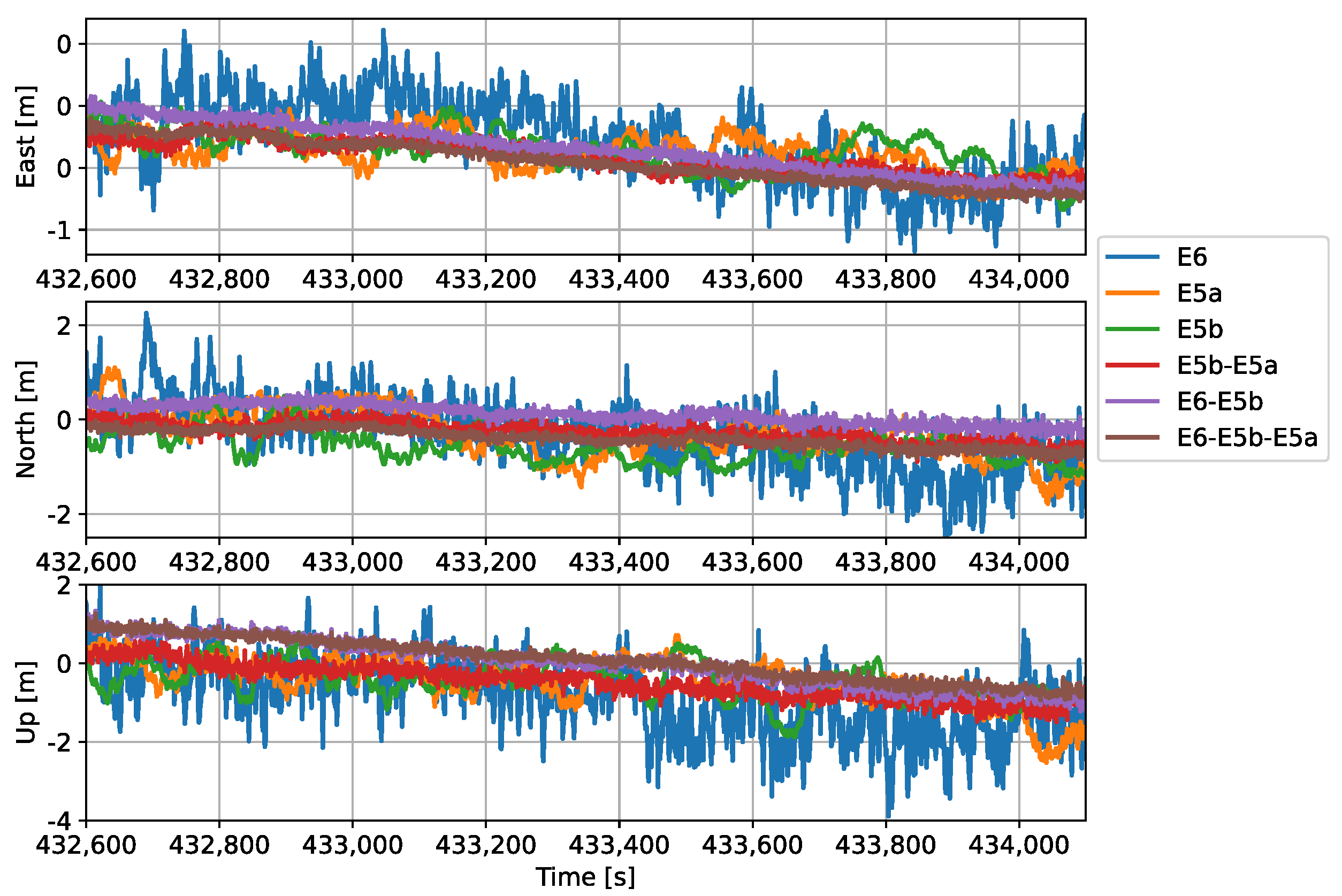
The fact that a large Gabor bandwidth promotes measurement accuracy has motivated research on Global Navigation Satellite System (GNSS) meta-signals, which are obtained by jointly processing components from different frequencies. When two side-band components are considered, the resulting meta-signal has characteristics close to that of a pure carrier and measurement ambiguities can arise: a third signal in between side-band components can alleviate this problem and help estimating the integer ambiguities. This paper provides a framework for the generation of measurements from triple-component GNSS meta-signals with the goal of reducing the ambiguity problem. The whole meta-signal is at first decomposed as two dual-component meta-signals with the central component used as pivot. Measurements on the dual-component meta-signals are computed using the synthetic approach based on the Hatch-Melbourne-Wübbena (HMW) combination. Triple-component pseudoranges are then obtained as the narrow lane combination of the pseudoranges from the dual-component meta-signals. Theoretical results have been supported through experimental analyses based on measurements from two Septentrio PolaRx5S multi-frequency, multi-constellation receivers set up in a zero-baseline configuration. Results based on the Galileo E5a, E5b and E6 components show the effectiveness of the proposed framework.
Keywords: meta-signal; triple-frequency; measurement combinations; GNSS; Gabor bandwidth meta-signal; triple-frequency; measurement combinations; GNSS; Gabor bandwidth