1. Introduction
In the Republic of Croatia, the combined sewerage system is predominant, while the separate sewerage system is less common. In the continental part of Croatia, that is, within the Danube River Basin, the combined sewerage system prevails, whereas in the Adriatic Basin, the separate sewerage system is more widespread. Given that sewerage infrastructure in Croatian cities is generally old, it can be assumed that a significant portion of the sewerage systems is relatively permeable [
1,
2].
The public sewerage system is equally important as the water supply system, both in terms of development and from a financial perspective [
3]. Wastewater treatment is anticipated to pose a significant development challenge in the coming years [
4].
Safeguarding public health in urban environments is achieved, among other factors, through the public sewerage system- a critical element of urban infrastructure demanding considerable financial investment and human resources [
5,
6]. Additionally, the importance of the public sewerage system as a key infrastructure is emphasized, particularly through the fact that this system, as an integral part of municipal water structures within the water management sector, is recognized as critical infrastructure pursuant to Article 4 of the Critical Infrastructure Act (Official Gazette 56/13, 114/22) [
7].
Ensuring the effective operation of the public sewerage system necessitates the regular maintenance of all its structural and operational components [
8]. A significant number of failures in the public sewerage system are not incidental, but represent the outcome of progressive degradation and declining system conditions [
9], thereby underscoring the critical role of preventive maintenance [
6].
A study from London proposes an improved method for predicting the remaining life of concrete sewerages and adjusting inspection intervals. It emphasizes the importance of proactive (preventive) maintenance as a key strategy for ensuring long-term sustainability and reducing costly emergency repairs in aging urban infrastructure [
10].
A comparison of public sewerage systems across European countries reveals significant differences in infrastructure development. While Austria boasts high connection rates to sewerage networks (94%) and wastewater treatment plants (95%), the average for other countries is around 50%. In areas without sewerage connections, septic tanks are often used, increasing the risk of environmental pollution [
11].
As of 2021, a total of 113 active companies were operating in the field of water collection, treatment, and supply [
12], categorized under code E 360 according to the 2007 National Classification of Activities (NKD 2007) [
13]. The aforementioned companies employed 7007 workers. Furthermore, there were 75 companies engaged in wastewater removal activities (E 370 according to NKD 2007) in 2021 [
12].
Given the importance of the effective functioning of public sewerage systems for health protection, environmental preservation, and the sustainability of urban areas, it is essential to understand how these systems are maintained in practice. For this reason, a study was conducted to provide insight into current maintenance practices of public sewerage systems in the Republic of Croatia. Particular attention was given to the distinction between preventive and reactive maintenance and their prevalence in operational settings. The collected data and respondents’ opinions help identify the challenges and needs within the sector, highlighting areas for improvement in maintenance practices and long-term planning. The results of this research can serve as a foundation for future policies, strategic management, and more efficient resource allocation in the public sewerage sector.
2. Overview of Sewerage System Indicators in the Republic of Croatia
This section of the paper presents key characteristics of the public sewerage system in the Republic of Croatia between 2001 and 2023. Selected indicators of the public sewerage system in the Republic of Croatia are shown in
Table 1.
Additionally,
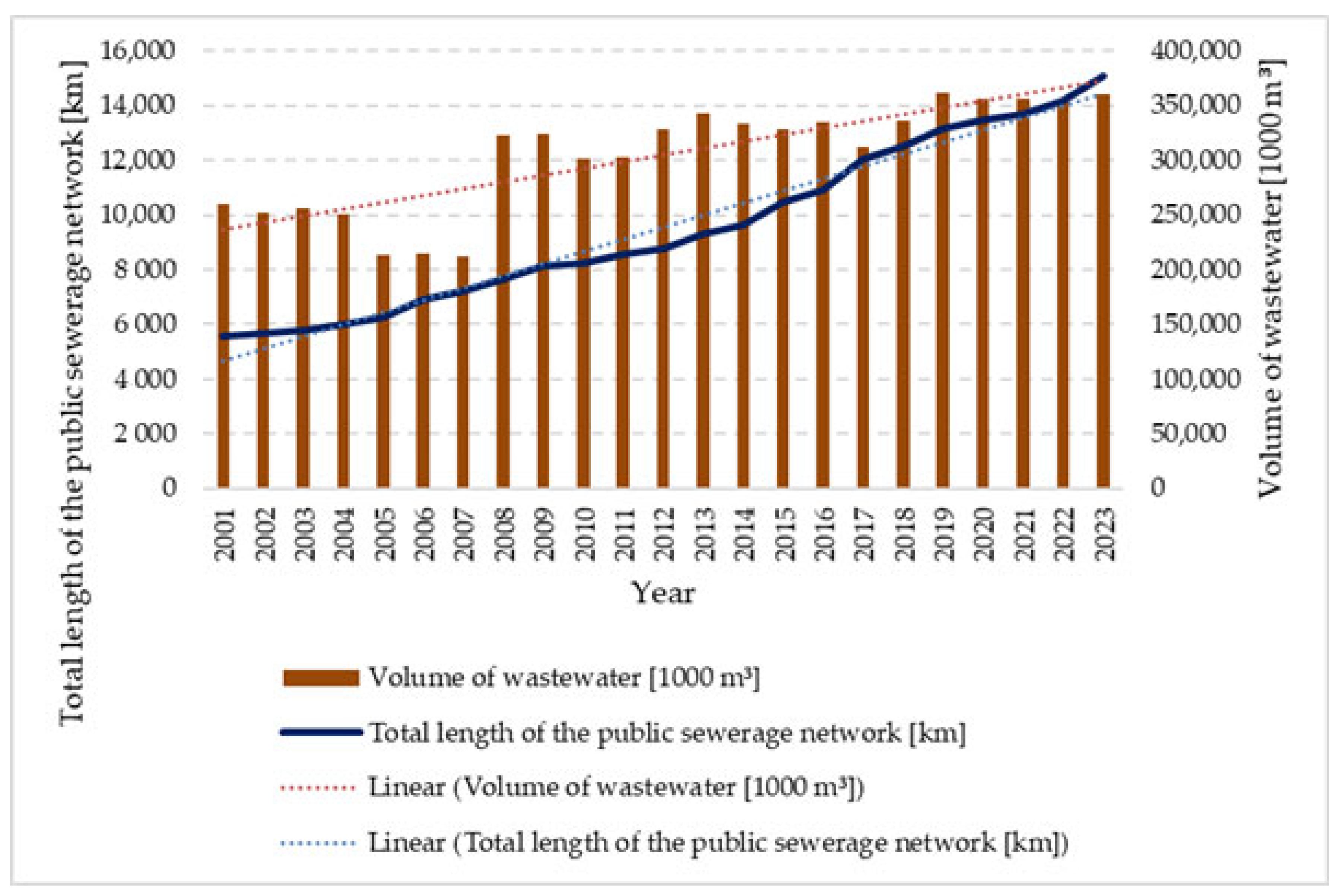
Figure 1 illustrates the trend of the total length of the public sewerage system and the volume of wastewater discharge from the public sewerage system in the Republic of Croatia for the period 2001–2023, based on data available from the official website of the Croatian Bureau of Statistics.
Between 2001 and 2023, the total length of the public sewerage system in the Republic of Croatia exhibited continuous growth. Starting at 5546 km in 2001, the network expanded to 15,079 km by 2023, representing nearly a threefold increase over just two decades. This expansion reflects substantial investment in the development of municipal infrastructure, particularly in the sewerage sector. In accordance with the EU Urban Wastewater Treatment Directive (UWWTD) [
16], Croatia has committed to ensuring that all municipal wastewater in agglomerations with more than 500 population equivalents (PE) is treated before being discharged into receiving waters. To achieve this, in addition to the construction of wastewater treatment plants, it is also necessary to develop a sewerage network and ensure that the population is connected to it.
The volume of wastewater discharged from the public sewerage system during the observed period shows certain fluctuations. Following a slight decline between 2001 and 2006, a sharp increase was recorded in 2008, with volumes rising from 211,346 to 322,718 thousand m3. After 2013, the annual volume of discharged wastewater stabilized, averaging between 330,000 and 360,000 thousand m3. The stabilization of wastewater discharge volumes is influenced by the consistent connection of the population to the sewerage network, the development of industrial technological processes that reduce wastewater pollution, as well as the circular use of wastewater within production processes.
Overall, the data indicate a steady improvement in the public sewerage infrastructure and a gradual establishment of a more efficient wastewater management system in the Republic of Croatia.
3. Analysis of Data and Questionnaire Responses
To create the database necessary for analyzing the condition of the sewerage system, a questionnaire was developed in Microsoft Excel (version Professional Plus 2021). The questionnaires were sent via email to public companies in the Republic of Croatia responsible for public sewerage and water supply. The selection of public companies involved in sewerage and management of the sewerage system was carried out by choosing smaller, medium-sized, and larger cities or settlements on the map of the Republic of Croatia. After that, the search for sewerage companies operating in those areas was conducted. The aim was to include cities of various sizes across the entire country, and naturally, the size of the sewerage systems corresponds to the size of the cities. Additionally, both continental and coastal regions of Croatia were taken into consideration.
The questionnaire requested answers to specific questions, such as the number of employees involved in sewerage system maintenance, the total length of the sewerage network, and the total number of sewerage connections. All responses to these questions were provided in numerical form. Below, the previously mentioned characteristics are presented in figures for the 13 companies that submitted completed questionnaires.
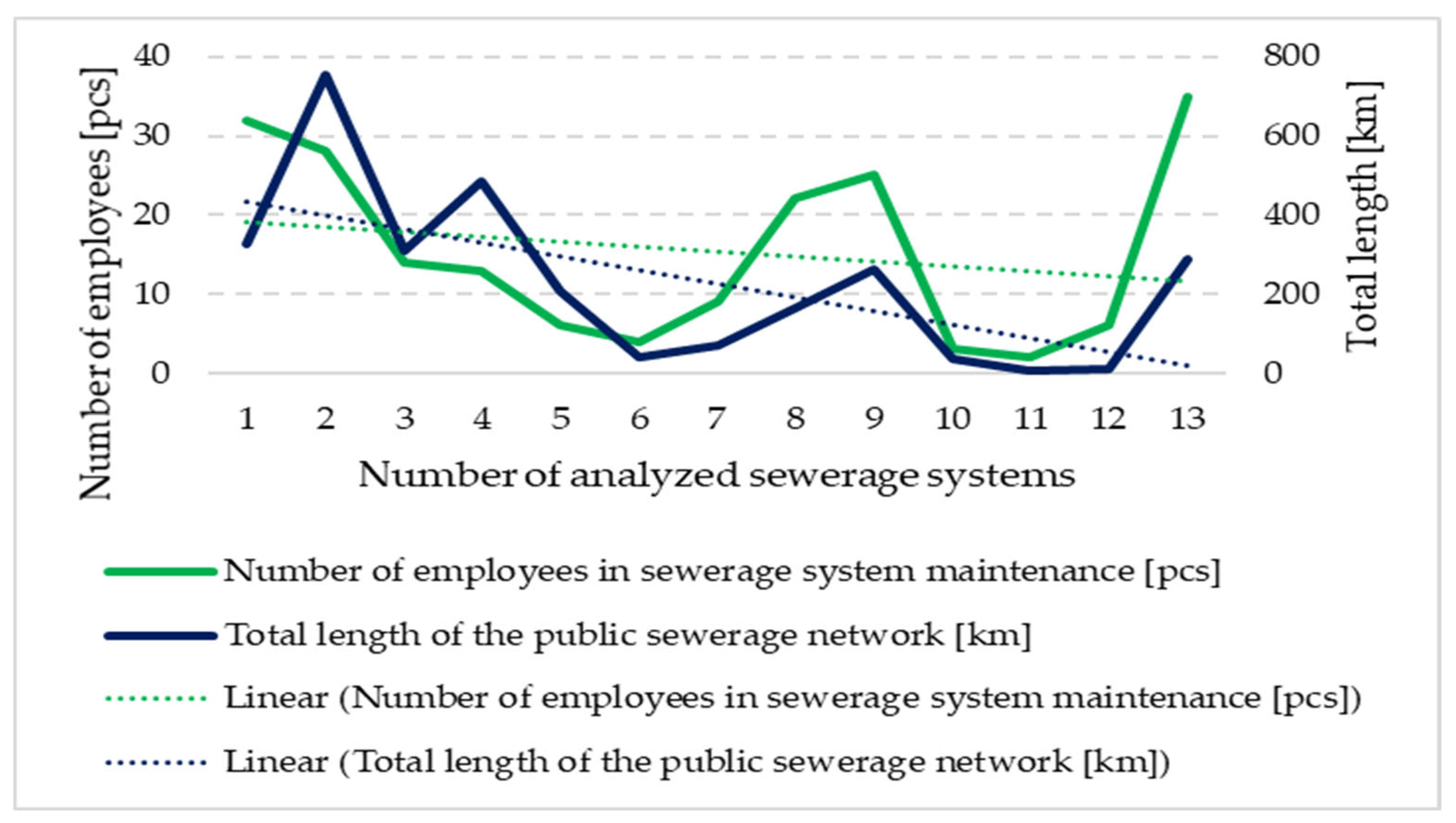
Figure 2 illustrates the length of the sewerage system and the number of employees involved in sewerage system maintenance for the 13 analyzed systems. It is evident that there is a general trend showing that as the length of the sewerage system increases, so does the number of maintenance employees; naturally, with certain deviations and exceptions.
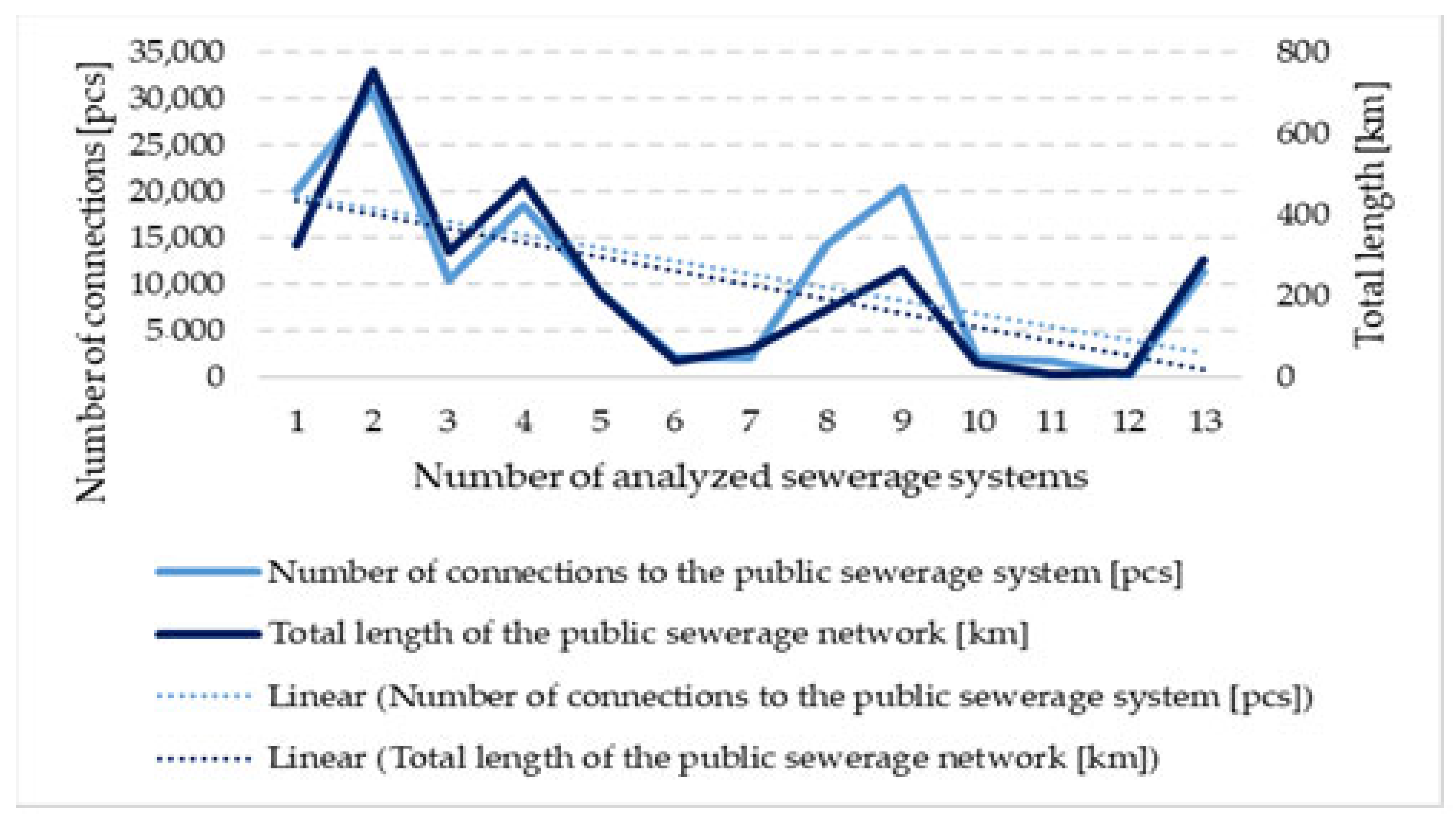
Figure 3 shows that, for the majority of the 13 analyzed sewerage systems, an increase in the length of the sewerage system is accompanied by an increase in the number of connections. It is also evident that certain sewerage systems exhibit lower connectivity compared to the others analyzed.
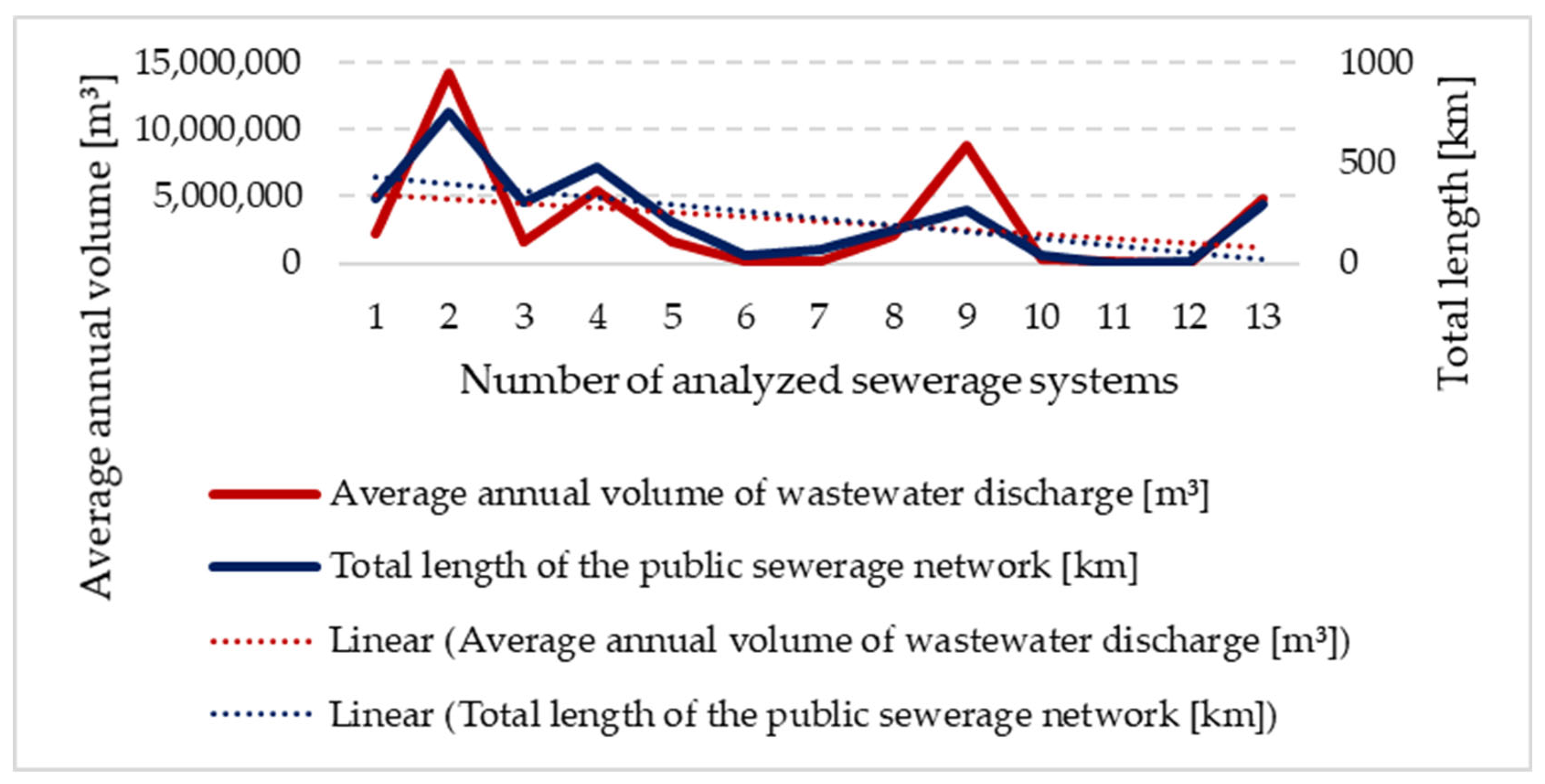
Figure 4 shows the trend of the sewerage system length and the average annual volume of wastewater discharge. It is evident that, to a large extent, a longer sewerage system corresponds to a greater volume of wastewater discharge. It should also be noted that these values represent average annual volumes, so the actual amount of wastewater in a given year may be higher or lower than the average. Additionally, some sewerage systems serve areas with more industrial activity, which typically generates higher wastewater volumes compared to primarily residential areas.
Three questions requiring answers of “yes,” “no,” or “don’t know” were posed, which are important to present as they reflect the mindset of maintenance personnel and maintenance practices, specifically whether preventive or reactive maintenance is favored. The questions were as follows:
Is sewerage system maintenance based solely on repairing faults and defects?
Is there a preventive maintenance strategy for the sewerage system for a specified period?
Do you believe preventive maintenance is more cost-effective than reactive maintenance?
A positive answer to the first question indicates that maintenance is reactive, focused only on repairing faults and defects, while preventive maintenance is neglected. The second question addresses whether a preventive maintenance strategy is in place. The third question is important because it reveals the thinking of those responsible for managing and maintaining the sewerage system, especially since the previous section demonstrated that preventive maintenance is more cost-effective and generally superior. 19 questionnaires provided answers to all three questions.
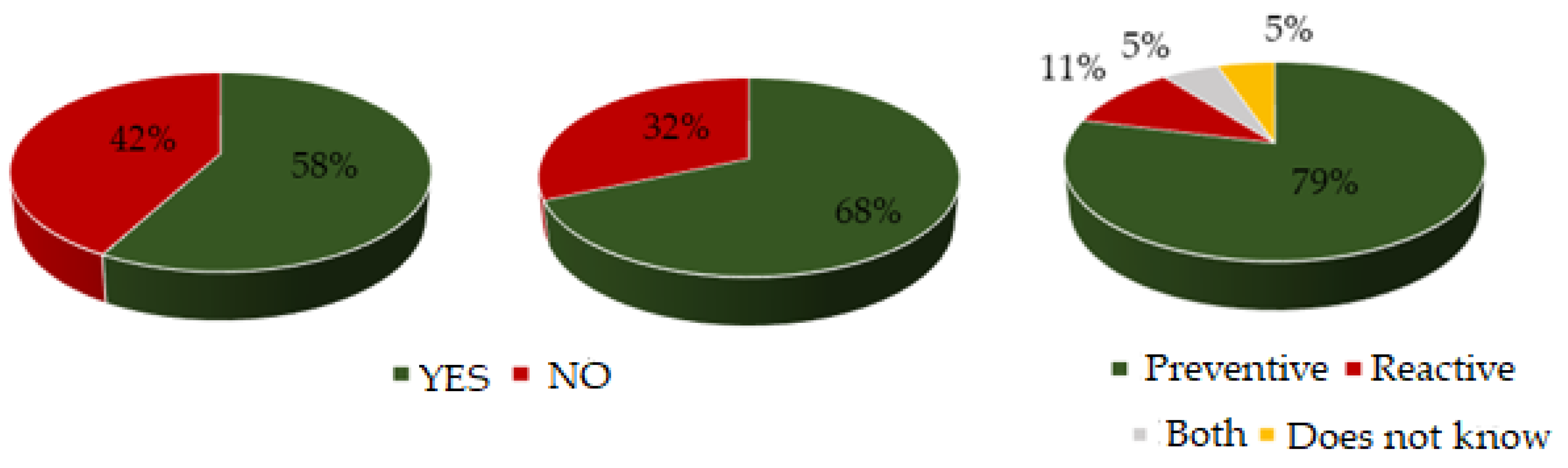
Figure 5 (left) presents the distribution of answers to the first question. 58% (11 responses) indicated that maintenance is based solely on fault and defect repair, while 42% (8 responses) reported otherwise.
Figure 5 (center) presents the distribution of responses to the second question. The share of responses indicating that maintenance is based solely on repairing faults and defects was 68% (13 responses), while 32% (6 responses) stated that no preventive maintenance strategy exists.
Figure 5 (right) presents the distribution of responses to the third question. A total of 79% (15 responses) indicated that preventive maintenance is more cost-effective, 11% (2 responses) believed reactive maintenance is more cost-effective, 5% (1 response) considered both approaches cost-effective, and 5% (1 response) responded with “don’t know.”
Analyzing the responses to the first question, it can be observed that the current maintenance practice for sewerage systems is predominantly reactive. However, the responses to the second question suggest that a preventive maintenance strategy does exist to some extent, although its actual implementation may be questionable. The third question yields perhaps the most interesting insight, as it shows that the individuals responsible for managing and maintaining the sewerage systems believe preventive maintenance is more cost-effective and are aware of its advantages. Nevertheless, as indicated by the first question, preventive maintenance is implemented to a lesser extent compared to reactive maintenance, which focuses on addressing faults and failures as they occur.
4. Conclusions
In Croatia, the combined sewerage system is more common, especially in the inland areas, while the separate system is more typical along the coast. Due to the aging infrastructure and the need for regular maintenance, the public sewerage system is crucial for public health and poses a significant challenge for future development.
Between 2001 and 2023, Croatia significantly expanded its public sewerage network, nearly tripling its length, which reflects strong investment in infrastructure. Despite some fluctuations, wastewater discharge volumes have stabilized in recent years.
The analysis of responses to the three questions indicates that reactive maintenance is prevalent in the management of sewerage systems. It can also be concluded that a certain preventive maintenance strategy exists, although the extent to which it is actually implemented remains questionable. Furthermore, it is evident that the individuals responsible for the management and maintenance of sewerage systems recognize the cost-effectiveness of preventive maintenance and are aware of its benefits. However, preventive maintenance is applied to a lesser extent compared to reactive maintenance, which is primarily focused on repairing faults and defects as they occur.
In order to obtain more reliable results, it is necessary to examine a larger number of cases (a larger sample), that is, to expand the research to include more companies across the Republic of Croatia. The level of awareness among designers and those responsible for managing sewerage system maintenance regarding the importance of preventive maintenance should be raised. Additionally, there is potential to expand the research to several countries within the European Union. To facilitate easier collection and analysis of data on sewerage system maintenance, it would be possible to develop a unified data collection system at the national level, which would enable consistent comparison of sewerage systems across the entire territory of the Republic of Croatia.
Author Contributions
Conceptualization, D.O. and M.Š.; methodology, D.O., M.Š. and D.K.; software, D.O. and M.Š.; validation, M.Š.; formal analysis, D.O. and M.Š.; investigation, D.K., M.Š. and D.O.; resources, M.Š.; writing—original draft preparation, D.O.; writing—review and editing, D.O. and M.Š.; visualization, D.O.; supervision, D.O., M.Š. and D.K.; project administration, D.O.; funding acquisition, M.Š. All authors have read and agreed to the published version of the manuscript.
Funding
This research received no external funding.
Institutional Review Board Statement
Not applicable.
Informed Consent Statement
Not applicable.
Data Availability Statement
Certain data are publicly available. However, some data are not publicly accessible as they originate from the authors’ own research.
Conflicts of Interest
The authors declare no conflicts of interest.
Abbreviations
The following abbreviations are used in this manuscript:
| km | kilometers |
| m3 | cubic meter |
| NKD | Nacionalna klasifikacija djelatnosti, National Classification of Activities |
| n/a | not available |
| pcs | pieces |
| PE | population equivalents |
References
- Hrvatske Vode. Strategija Upravljanja Vodama; Hrvatske vode: Zagreb, Croatia, 2009. [Google Scholar]
- Narodne Novine. Strategija Upravljanja Vodama; Narodne novine, Službeni list Republike Hrvatske: Zagreb, Republika Hrvatska, 2008. [Google Scholar]
- Balaji, B.; Mariappan, P.; Senthamilkumar, S. Technology options for sewerage system. Glob. J. Res. Anal. 2014, 3, 4–6. [Google Scholar]
- Reznik, A.; Jiang, Y.; Dinar, A. The Impacts of Climate Change on Wastewater Treatment Costs: Evidence from the Wastewater Sector in China. Water 2020, 12, 3272. [Google Scholar] [CrossRef]
- Kim, D.; Yi, S.; Lee, W. Life Cycle Assessment of Sewer System: Comparison of Pipe Materials. In Proceedings of the World Congress on Advances in Civil, Environmental, and Materials Research (ACEM’ 12), Seoul, Korea, 26–30 August 2012; pp. 2963–2975. [Google Scholar]
- Obradović, D. A Contribution to Increasing the Efficiency of Sewerage Systems by Applying a Maintenance Cost Estimation Model. Ph.D. Thesis, Josip Juraj Strossmayer University of Osijek, Faculty of Civil Engineering and Architecture Osijek, Osijek, Croatia, 2022. [Google Scholar]
- Narodne Novine. Zakon o Kritičnim Infrastrukturama; Narodne novine, Službeni list Republike Hrvatske: Zagreb, Republika Hrvatska, 2022. [Google Scholar]
- Kujundžić, B. (Ed.) Kanalizacija Beograda 1905–1975; NIP Export-Press: Beograd, Serbia, 1975. [Google Scholar]
- Marsalek, J.; Schilling, W. Operation of Sewer Systems. In Hydroinformatics Tools for Planning, Design, Operation and Rehabilitation of Sewer Systems; Springer: Dordrecht, The Netherlands, 1998; pp. 393–414. [Google Scholar]
- Tade, O.; O’Neill, S.; Smith, K.G.; Williams, T.; Ali, A.; Bayyati, A.; See, H. Modified sewer asset management to accommodate London’s future sustainable development. Int. J. Build. Pathol. Adapt. 2019, 37, 22–41. [Google Scholar] [CrossRef]
- Obradović, D.; Šperac, M.; Marenjak, S. Pristup uslugama vodoopskrbe i odvodnje. In Zbornik Radova GEO-EXPO 2020; Društvo za geotehniku u Bosni i Hercegovini: Tuzla, Bosnia and Herzegovina, 2020; pp. 10–16. [Google Scholar]
- Državni zavod za statistiku Republike Hrvatske, Zagreb, Tablica 2.—Poslovanje poduzeća prema djelatnosti NKD-a 2007. te veličini razreda broja zaposlenika i samozaposlenih osoba, 2024. Available online: http://web.dzs.hr/PXWeb/sq/5b02f1aa-0d32-433c-84bf-85400a6c627c (accessed on 12 February 2024).
- Narodne Novine. Odluka o Nacionalnoj Klasifikaciji Djelatnosti 2007.—NKD 2007; Narodne Novine, Službeni list Republike Hrvatske: Zagreb, Croatia, 2007. [Google Scholar]
- Državni zavod za statistiku Republike Hrvatske, Zagreb, Tablica 1.3. Mreža javne odvodnje i uređaji za pročišćavanje otpadnih voda. 2025. Available online: https://web.dzs.hr/PxWeb/pxweb/hr/Okolis/Okolis__Statistika%20voda__Javna%20odvodnja/JO13.px/ (accessed on 23 June 2025).
- Državni zavod za statistiku Republike Hrvatske, Zagreb, Tabela 1.1. Podrijetlo, pročišćavanje i ispuštanje otpadnih voda, tis. m3. 2025. Available online: https://web.dzs.hr/PxWeb/pxweb/hr/Okolis/OkolisStatistika%20vodaJavna%20odvodnja/JO11.px/ (accessed on 23 June 2025).
- European Union. Directive (EU) 2024/3019 of the European Parliament and of the Council of 27 November 2024 Concerning Urban Wastewater Treatment; European Parliament and the Council of the European Union: Luxembourg, 2024. [Google Scholar]
| Disclaimer/Publisher’s Note: The statements, opinions and data contained in all publications are solely those of the individual author(s) and contributor(s) and not of MDPI and/or the editor(s). MDPI and/or the editor(s) disclaim responsibility for any injury to people or property resulting from any ideas, methods, instructions or products referred to in the content. |