
Proceeding Paper

Multi-Criteria Decision Analysis-Supported Evaluation of Biowaste Anaerobic Digestion Options in Slovakia †

by
Miroslav Variny
*,
Martin Danielič
and
Dominika Polakovičová
Department of Chemical and Biochemical Engineering, Faculty of Chemical and Food Technology, Slovak University of Technology, Radlinského 9, 812 37 Bratislava, Slovakia
*
Author to whom correspondence should be addressed.
Presented at the 4th International Electronic Conference on Processes, 20–22 October 2025; Available online: https://sciforum.net/event/ECP2025.
Eng. Proc. 2025, 117(1), 36; https://doi.org/10.3390/engproc2025117036
Published: 28 January 2026

Abstract

Slovakia’s biomethane production potential represents up to 10% of Slovakia’s natural gas consumption, which is largely unexploited. The aim of this paper is to develop a model of each available technology (continuous, dry batch, and wet batch) as well as that of a biogas treatment unit and evaluate the energetic, economic, and environmental potential of building a new anaerobic digestion plant in Slovakia, considering four plant locations with feedstock abundance within a 30 km perimeter. Feedstock composition and availability, energy integration, and product usability are evaluated. The applied multi-criteria decision analysis (MCDA) considers four evaluation criteria: return on investment (ROI), CO2 emissions production, potential industrial biowaste revenue, and municipal density within the operational region. Biogas plant deployment analysis yielded the Levice facility as top-ranked, primarily due to its minimal environmental impact and superior logistical performance, closely followed by the Žilina, Michalovce, and Prešov facilities. When comparing biomethane production facilities, the Levice plant was excluded due to economic infeasibility, and the Žilina facility emerged as the optimal choice, particularly due to its superior ROI performance and the largest biomethane production potential of over 1 million m3 biomethane per year. Thus, biomethane station deployment in Slovakia has proved feasible and can enhance the energy self-sustainability of the country and contribute to meeting the decarbonization goals.

1. Introduction

Anaerobic digestion (AD) represents an environmentally sustainable alternative for the treatment of organic waste [1,2]. The process is conducted in either batch or continuous reactors, wherein organic substrates undergo transformation into biogas and digestate. Two primary technological approaches are differentiated based on total solids content in the feedstock: wet fermentation (<15% TS, total solids), and dry fermentation (>20% TS, total solids) [1,3]. Biogas typically consists of approximately 55% of methane, 40% of carbon dioxide, with trace quantities of nitrogen, oxygen, and hydrogen sulfide [4]. Biogas yield is substantially influenced by feedstock composition [5]. Organic waste streams, including food waste and sewage sludge, exhibit variable methane potentials ranging from 100 to 350 m3 CH4/ton vs. (volatile solids) [6]. Seasonal variations in feedstock availability require strategic planning and storage solutions, particularly for agricultural-based biogas facilities dependent on harvest seasonal materials. Produced biogas can be utilized for combined heat and power generation [7,8], or for biomethane production, comprising multiple purification steps [9,10]. Various separation technologies and pre-separation methane enrichment methods are available [11,12,13]; however, membrane separation is gaining prominence primarily due to its high efficiency [14,15]. Patel et al. [11] recently reviewed the most common methods of gas separation applied to biogas purification, including membranes, absorption, adsorption, cryogenic separation, and biological techniques. They found that the specific energy consumption of membrane separation (0.2–0.35 kWh/Nm3 biomethane) represents an above-average value compared to that of other methods. However, the premium achievable biomethane purity and methane recovery, along with the ability to partially separate nitrogen and oxygen from biomethane, the absence of liquid waste streams, and low to zero heat consumption make it a preferred method for common applications. Kuczynski showed [16] high energy consumption in absorption and cryogenic separation technologies and methane losses when employing water scrubbing or absorption, while Aguilloso et al. [17] mentioned lower membrane maintenance costs due to fewer moving parts and zero consumption of chemical reagents or solvents. Jusoh et al. [15] came to a similar conclusion, evaluating specifically biogas desulphurization techniques, stressing that well-developed methods, such as absorption or absorption, come with several drawbacks (frothing, rusting, and heat consumption), which membrane-based separations can overcome at the expense of higher power consumption.
Currently, only two biomethane facilities are operated in Slovakia; however, the country possesses the potential to substitute 10% of its annual natural gas consumption with biomethane, amounting to approximately 500 million m3, of which around 300 million m3/year could be made a reality by 2030 [18]. Existing market demand and AD could provide an effective biomethane production pathway. Given Slovakia’s dependence on natural gas imports [19] and its persisting extensive use both in industry and space heating [20], biomethane production and market development can enhance domestic industrial resilience regarding energy security [18,21] in line with initiatives supporting biomethane solutions in Central and Eastern Europe [22]. Moreover, it can contribute to reaching the country’s fossil GHG (greenhouse gases) emission reduction goals [23].
Multi-criteria decision analysis (MCDA) allows for the integration of technical, economic, and environmental indicators within a unified model, supporting transparent decision-making in contexts characterized by multiple, often conflicting objectives (such as cost, performance, sustainability, and energy efficiency) [24]. In the renewable energy domain, MCDA has been increasingly used to support decision-making processes, including economic, technical, social, and environmental aspects of alternative energy technologies and systems, demonstrating its suitability in settings analogous to biomethane deployment [24,25]. Tahir et al. recently applied MCDA to the sustainability assessment of biogas plants, comparing Germany and Pakistan [26]. A similar approach was chosen in another study examining conflicting objectives in supporting biomethane plants deployment from a European perspective [27]. The potential of biogas and biomethane production in individual countries was analyzed by MCDA in the papers by Llano et al. [28], Pehlken et al. [29], or by Lenarczyk et al. [30].
Therefore, this study employs MCDA as a structured assessment framework enabling the systematic comparison and prioritization of AD system configurations, being the pilot study applying this approach to biogas and biomethane plant deployment in Slovakia to our knowledge. A search performed in SCOPUS using the words “biogas” AND “Slovakia” AND “decision” yielded only one relevant output [31] where the authors touched on the area of decision making via a questionnaire survey, while a search using “biomethane” instead of “biogas” yielded zero results. A less constrained search in SCOPUS, omitting the word “decision” yielded several tens of results, but only the paper by Belinska et al. [32] dedicated to Strengths, Weaknesses, Opportunities, and Threats (SWOT) and eco-economic analysis of biogas plant deployment can be deemed relevant to decision-making problems in biogas and biomethane production.

2. Materials and Methods

For the successful characterization of the anaerobic digestion process, the implementation of mathematical modeling is necessary. While numerous mathematical models are documented in the literature, the majority exhibit sensitivity to feedstock variation, a common operational challenge in AD systems throughout the year, particularly in facilities processing municipal organic waste. Consequently, Anaerobic Digestion Model 1 (ADM1) was selected to describe the process dynamics. However, implementation of the standard ADM1 often presents significant computational challenges due to its complexity. Therefore, a simplified ADM1 was employed, incorporating 10 biological processes and 13 components with their respective concentrations, stoichiometric coefficients, and kinetics. Table 1 summarizes the mentioned components and processes.
Disintegration, biomass decay, and hydrolysis were modeled using first-order kinetics. Michaelis–Menten and Monod kinetics were applied to the rest of the processes [33]. The above mentioned model was implemented for both continuous stirred tank reactor (CSTR) configurations and CSTR cascade systems, which approximate plug flow reactor (PFR) behavior for both dry (20% total solids) and wet (10% total solids) processes [34].
For biogas-to-biomethane upgrading, two membrane modules arranged in series were considered, with gas compression to 0.8 MPa prior to the first module. The estimated pressure differential between modules was 0.1 MPa. Biogas entering the separation unit was assumed to contain 60% CH4 and 40% CO2, with a molar flow rate of 10 mol/s. MATLAB R2019b Simulink program was used for both biogas and biogas-to-biomethane mathematical modeling. Table 2 displays the investigated membrane materials and their permeabilities. Details of process modeling can be found in previous work [35].
Biogas production units coupled with cogeneration units produce 4 main products: power, heat, liquid digestate, and solid digestate pellets. Economic evaluation employs the following assumptions:
  • Produced electricity value, depending on installed power output: <500 kW: 152.36 EUR/MWh; for installed power between 500 and 1000 kW: 139.40 EUR/MWh; for >1 MW of installed power: 128.78 EUR/MWh [37];
  • Average produced heat value: 12 EUR/MWh [38]; heat sale throughout the year is assumed as the plants are to be built in industrial areas;
  • Average liquid digestate value of 5 EUR/t [39];
  • Solid digestate pellets average value of 150 EUR/t [40].

Annual working time of 8160 h is considered. The selling price of biomethane consists of two parts—the market price of natural gas, which varies from 40 to 50 EUR/MWh in the long term, and the biomethane certificate price, which depends on several factors [37]. The market price of natural gas used for the biomethane plant economic calculations is from the end of March 2025: 42.9 EUR/MWh [41]. Biomethane certificate price is estimated to be 25 EUR/MWh. Purchase costs for major equipment units were estimated using [38]. Total investment costs were obtained by the factor method, multiplying the cost of major equipment by a sum of factors of 2.6. The operation of an AD plant for 25 years was considered. An inflation rate of 4%, a tax rate of 19%, and linear depreciation of all assets to be completed in 9 years were assumed. Other details on economic evaluation, including operation and maintenance costs estimation, are provided in [35].
MCDA applied in this study required defining suitable alternatives for evaluation. Therefore, a preliminary geographic assessment was performed to identify potential locations for a new AD unit in Slovakia. Candidate regions were selected based on ROI, emission production, logistics (number of municipalities in the region), and potential (amount of produced industrial biowaste in the whole county). Biowaste generation was evaluated across all Slovak regions based on underlying data published in 2023 [42], and areas exhibiting the highest technically recoverable biowaste within a 30 km transport radius were shortlisted. Considering these criteria, four regions were selected as feasible alternatives: Žilina, Levice, Prešov, and Michalovce. Figure 1 describes the spatial distribution of these candidate locations within Slovakia.
The amount of biowaste available in the selected areas is summarized in Table 3. The potential amount corresponds to total regional biowaste generation, whereas the realistic amount represents the fraction currently separated and accessible for AD treatment (<34% of total municipal biowaste). Assessment of the examined alternatives was conducted following the principles of MCDA. To ensure transparent and consistent comparison, the analytic hierarchy process (AHP) was adopted as the main evaluation framework, which is a well-established approach in engineering decision-making.
The conceptual basis of AHP was originally formulated by Saaty [44]. In this work, a modified AHP method introduced by Janošovský et al. [45] was implemented to reduce subjectivity in criteria weighting. Instead of relying on expert-defined preferences supplemented with sensitivity analyses and testing scenarios [26,28,30], the modified version applies a consistency-driven algorithm that systematically explores feasible combinations of criterion weights. This procedure enhances methodological transparency, reduces in consistency, and improves the efficiency of the overall evaluation process. A detailed description of the developed method can be found in previous work [46].
Table 3. Amount of biowaste produced in selected regions calculated based on data available in [47].
LocationPotential Amount, t/DayReality (2021), t/Day
Žilina190.364.0
Levice54.418.3
Prešov146.949.4
Michalovce140.747.3

3. Results and Discussion

3.1. Anaerobic Digestion Modeling and Biogas Plants Assessment

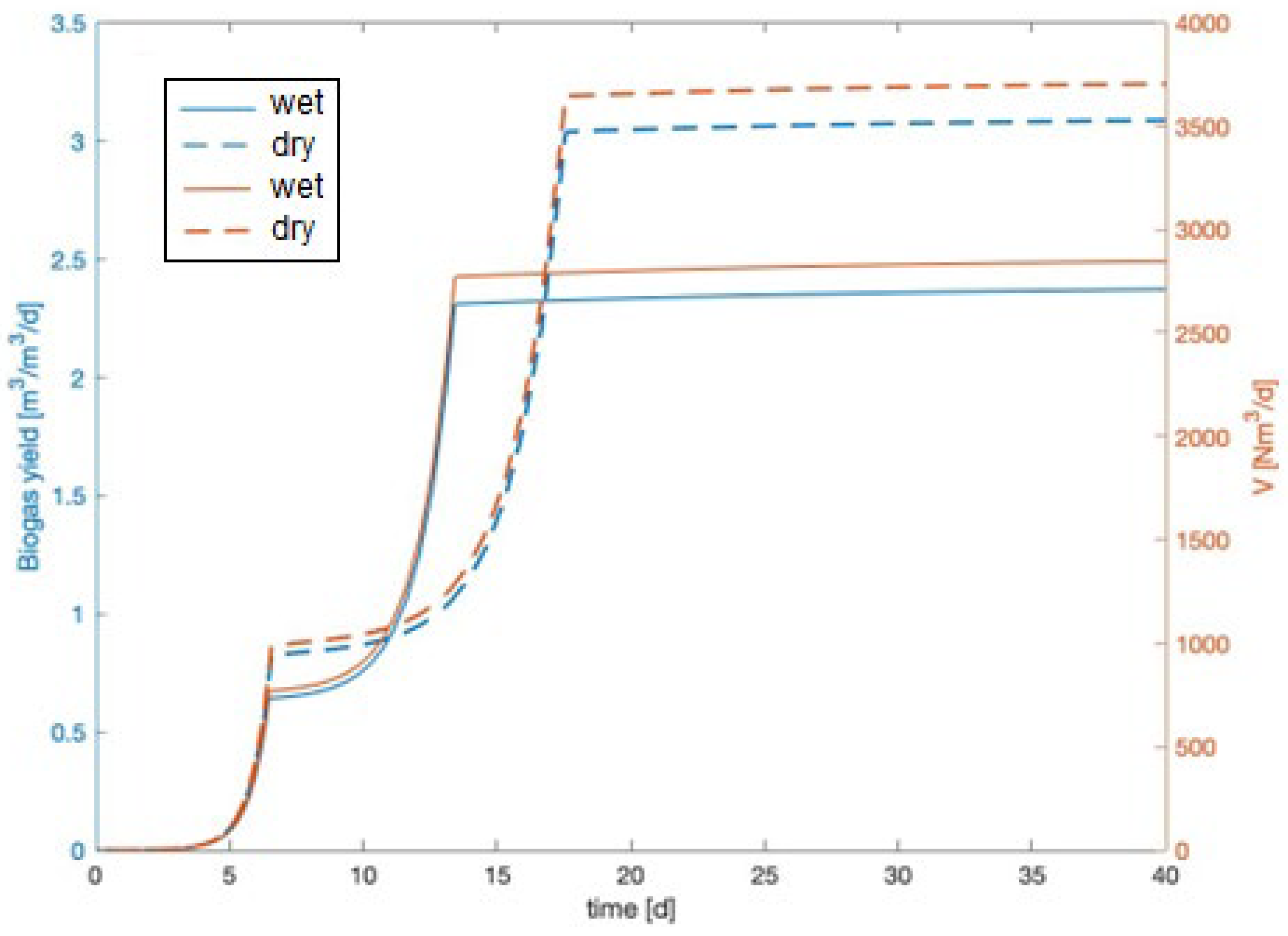
Figure 2 displays a batch-type anaerobic digestion simulation over 40 days. The double exponential trend of biogas production is caused by two bacterial families activity occurring at different times. First, hydrogenotrophic methanogenesis occurs, followed by acetate consumption. Comparable trends in biogas yields have been reported in multiple studies in the literature [48,49,50,51]. The dry regime shows a higher specific biogas yield and biogas volumetric flow rate compared to the wet regime. Especially, lower hydraulic retention time (HRT) and higher loading rates favor a dry technological approach over the wet one.
Given that biogas is converted to electricity and thermal energy through cogeneration systems, elevated specific biogas yields directly correlate with enhanced production of both energy products, consequently resulting in improved economic returns. Furthermore, higher biogas yields significantly reduce the required digester volume, thereby decreasing capital infrastructure requirements [33,34].
The assessment of emissions during anaerobic digestion (AD) constitutes a complex challenge requiring comprehensive life-cycle analysis. However, the production method represents a more critical factor in emission evaluation than the biogas yield itself. The European Parliament and Council Directive 2018/2001 establishes that emissions from biogas utilization in cogeneration systems may be quantified based on the production pathway employed. Under conditions of closed digestion utilizing biowaste as feedstock without external thermal or electrical energy input, emission reductions of 84% can be achieved relative to untreated biogas scenarios [52].
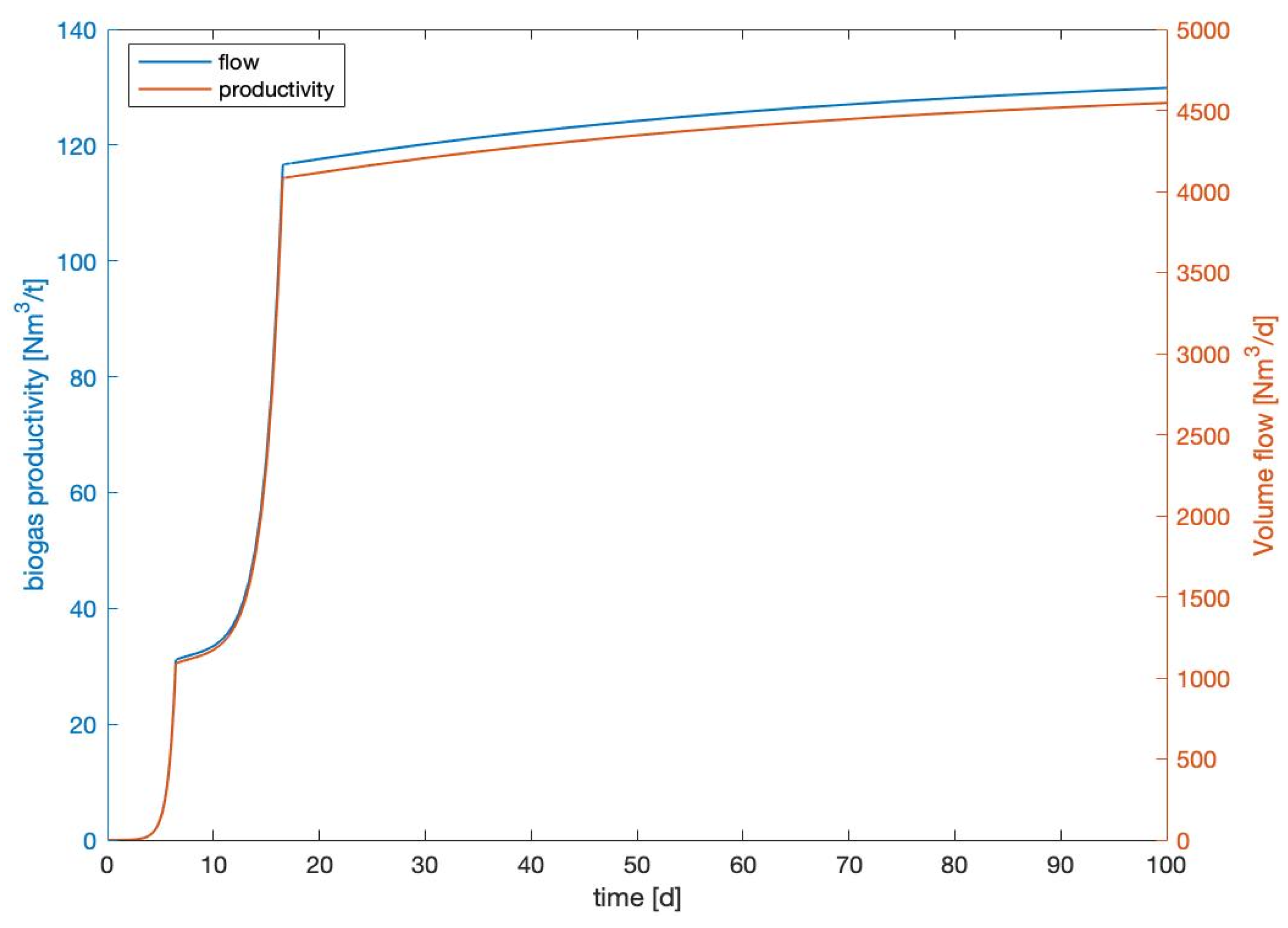
The results of continual AD simulation are displayed in Figure 3. Compared to batch-type AD, the continuous process shows visibly higher biogas production due to the rectangular shape of the digester, enhancing various factors, such as heat exchange.
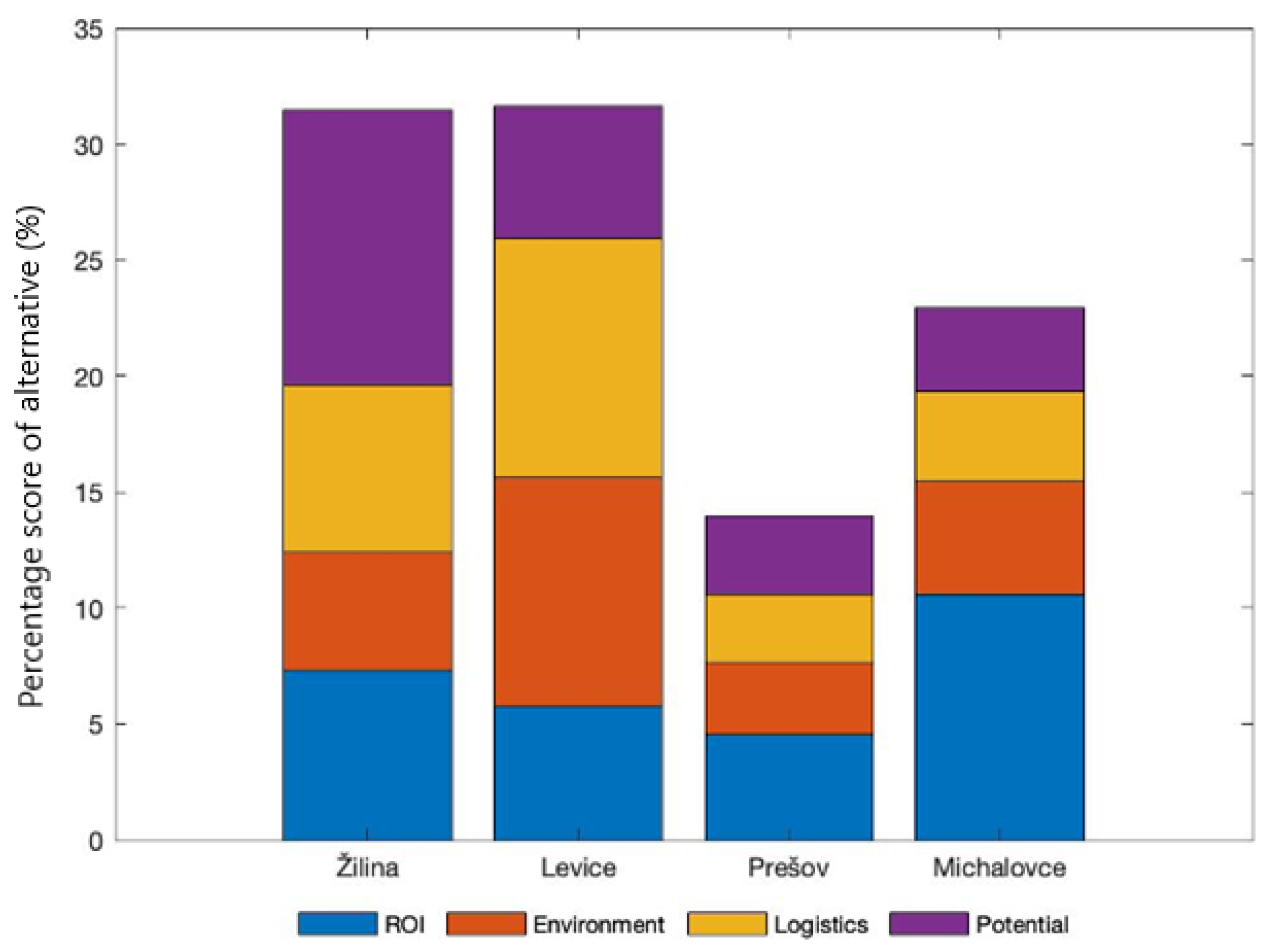
The abovementioned mathematical model was used to determine actual biogas flow rates in each location. Summarized values for individual technological regimes are displayed in Table 4. Subsequently, MCDA was applied to identify the most convenient location based on selected criteria, such as ROI, emission production, logistics—number of municipalities in the region, and potential—amount of produced industrial biowaste in the whole county, since determining the exact value in the selected region was not possible. The results of MCDA for the candidate regions are shown in Figure 4, illustrating their comparative evaluation.
Levice AD facility emerged as the most favorable option (Figure 5), primarily due to its superior performance in emission reduction and logistical efficiency. The Žilina facility was second, particularly due to its substantial capacity for incorporating industrial biowaste as feedstock. Despite exhibiting the highest ROI, the Michalovce facility was relegated to third position due to suboptimal performance across the remaining evaluation criteria.

3.2. Biogas to Biomethane Upgrade and Biomethane Plants Assessment

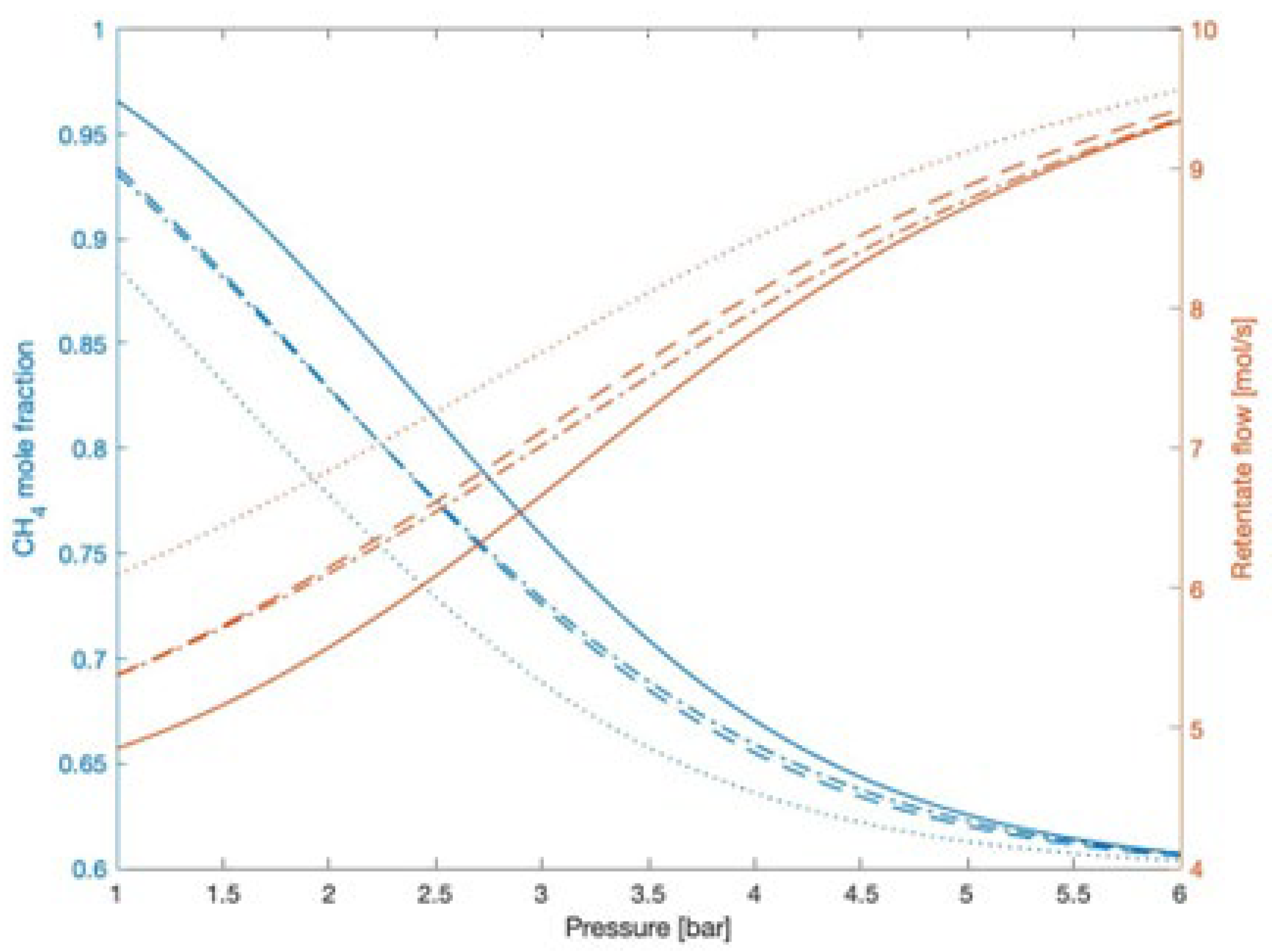
Biogas to biomethane upgrading was proposed by gas compression and membrane separation, considering only two components—CH4 and CO2. In most cases, biomethane is stipulated to contain minimally 95% of methane. Various membrane materials can be used; however, according to multiple sources, polymers show the best results [47,53]. Figure 5 presents performance characteristics of four selected membrane materials. The polyimide membrane provided satisfactory methane purity (>95%); however, it exhibited the lowest biomethane yield among the tested materials. Nevertheless, experimental validation is required to establish definitive conclusions regarding membrane performance.
Biomethane production was assessed for each region. Individual volumetric flow rates are presented in Table 5, where the total flow rate represents the combined biomethane flow enhanced with propane addition for heat value optimization.
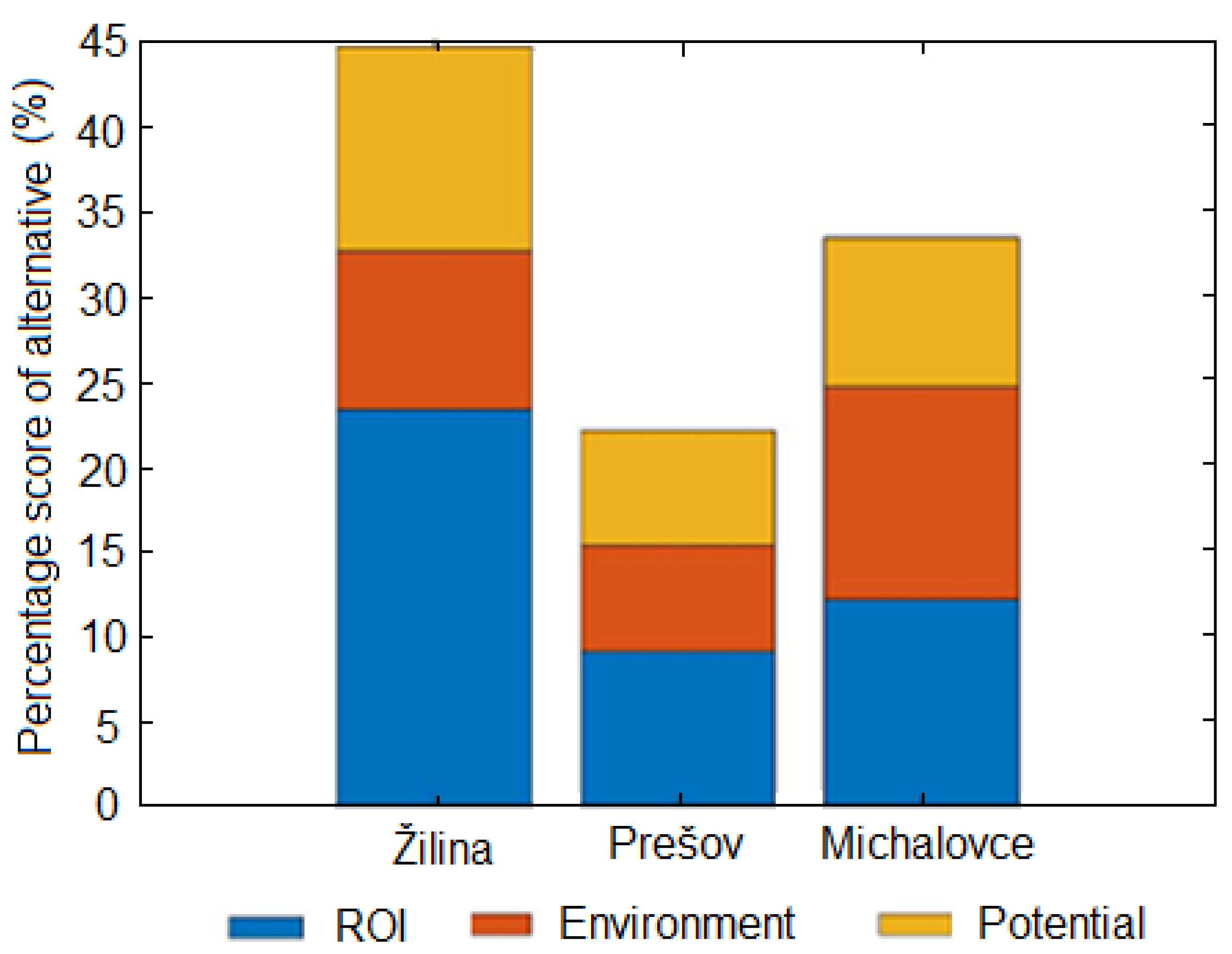
Finally, individual facilities were assessed using MCDA (Figure 6). The Levice facility was excluded from the analysis due to economic infeasibility resulting from small biomethane production potential compared to other locations. As demonstrated in Figure 6, the Žilina region exhibited the highest suitability for biomethane production, primarily due to its superior ROI. The Michalovce facility ranked second overall, demonstrating the lowest environmental impact among the evaluated options. The Prešov region consistently ranked lowest across all assessment categories.
Tahir et al. [26] argue that, despite the spatial placement of a bioenergy plant, it must be productive and efficient in terms of substrate resources so that the essence of reducing emissions and fossil consumption does not become lost. This is in line with our findings that the best performing plants, Žilina and Michalovce, were well-supplied with easily available feedstock and found placement for all products.
In addition to logistics, product placement, and efficiency issues, the building of new biogas plants in Slovakia and the operation of existing ones are hindered by low public acceptance [54], lack of trust [55], split land ownership, and lack of cooperation of waste producers, collectors, and local authorities on a regional scale [23]. All these belong to external factors that might be included in our further studies via choosing and evaluating suitable socioeconomic indicators, learning from recently published focused analysis [56] dedicated to AD plants perception in Slovakia and Czechia.

4. Conclusions

Dry thermophilic AD demonstrated the highest biogas production rates and, in combination with additional operational advantages such as reduced digester volume requirements and lower HRT, establishes dry AD as the superior regime compared to wet fermentation processes. Biogas upgrading to biomethane through membrane separation technology was proposed. Various membrane materials were evaluated, of which only polyimide membranes exhibited satisfactory results. Moreover, facility location was assessed considering multiple criteria, including biowaste generation, existing AD infrastructure, and potential industrial biowaste revenue streams. Four locations with 30 km operational radius were selected: Žilina, Levice, Michalovce, and Prešov.
MCDA was employed to determine the most favorable location for both biogas and biomethane facilities based on four evaluation criteria: ROI, emission production, potential industrial biowaste revenue, and municipal density within the operational region. Among biogas plants, the Levice facility ranked first, primarily due to its minimal environmental impact and superior logistical performance. The Michalovce facility ranked third despite achieving the highest ROI score. Finally, MCDA was applied to compare biomethane production facilities, with the Levice plant excluded due to economic infeasibility. Here, the Žilina AD facility emerged as the optimal choice, particularly due to its superior ROI performance, followed by the Michalovce facility. Inclusion of socioeconomic indicators in further studies may offer a novel look at the deployment of biogas and biomethane stations.

Author Contributions

Conceptualization, M.D. and M.V.; methodology, M.D. and D.P.; software, M.D.; writing—original draft preparation, M.D. and D.P.; writing—review and editing, M.V.; visualization, M.D.; supervision, M.V. and D.P. All authors have read and agreed to the published version of the manuscript.

Funding

This research was funded by the Slovak Research and Development Agency, grant number APVV-18-0134 and APVV-19-0170.

Institutional Review Board Statement

Not applicable.

Informed Consent Statement

Not applicable.

Data Availability Statement

The original contributions presented in this study are included in the article. Further inquiries can be directed to the corresponding author.

Conflicts of Interest

The authors declare no conflicts of interest.

Abbreviations

The following abbreviations are used in this manuscript:
ADAnaerobic digestion
ADM1Anaerobic digestion model one
AHPAnalytic hierarchy process
CSTRContinuous stirred tank reactor
HRTHydraulic retention time
MCDAMulti-criteria decision analysis
PFRPlug-flow reactor
ROIReturn on investment
TSTotal solids
VSVolatile solids
XacetogenesisAcetogenic bacteria concentration
XacidogenesisAcidogenic bacteria concentration
XmetaACAcetoclastic methanogens bacteria concentration
XmetaH2Hydrogenotrophic methanogens bacteria concentration

References

  1. Wang, Z.; Hu, Y.; Wang, S.; Wu, G.; Zhan, X. A critical review on dry anaerobic digestion of organic waste: Characteristics, operational conditions, and improvement strategies. Renew. Sustain. Energy Rev. 2023, 176, 113208. [Google Scholar] [CrossRef]
  2. Harsha Varthan, M.K.; Keerthana, V.; Saravanan, A.; Deivayanai, V.C.; Rejith Kumar, R.S.; Karunakaran Raveendran, S.; Tawfeeq Ahmed, Z.H.; Indumathi, S.M.; Prakash, P. Harnessing global biomass for bioenergy: Assessment techniques, technological advances, and environmental perspectives. Fuel 2026, 405, 136599. [Google Scholar] [CrossRef]
  3. Corigliano, O.; Iannuzzi, M.; Pellegrino, C.; D’Amico, F.; Pagnotta, L.; Fragiacomo, P. Enhancing Energy Processes and Facilities Redesign in an Anaerobic Digestion Plant for Biomethane Production. Energies 2023, 16, 5782. [Google Scholar] [CrossRef]
  4. Le Pera, A.; Sellaro, M.; Pellegrino, C.; Limonti, C.; Siciliano, A. Combined Pre-Treatment Technologies for Cleaning Biogas before Its Upgrading to Biomethane: An Italian Full-Scale Anaerobic Digester Case Study. Appl. Sci. 2024, 14, 2053. [Google Scholar] [CrossRef]
  5. Comparetti, A.; Ciulla, S.; Greco, C.; Santoro, F.; Orlando, S. State of the Art of Biomethane Production in the Mediterranean Region. Agronomy 2025, 15, 1702. [Google Scholar] [CrossRef]
  6. Zhai, X.; Mahari, W.A.W.; Li, G.; Yue, X.; Gu, H.; Peng, W.; Chen, X. Bioconversion of Biomass Waste Drives Sustainable Development. Eng. Sci. 2025, 37, 1768. [Google Scholar] [CrossRef]
  7. Akbulut, A.; Akçay, S. A comprehensive analysis of a 250 kW biogas energy plant from energy, exergy, environmental and economical (4E) perspectives: Kastamonu case study. Biomass Bioenergy 2026, 207, 108762. [Google Scholar] [CrossRef]
  8. Birgani, A.G.; Assareh, E.; Ghafouri, A.; Jozaei, A.F. Innovative biomass cogeneration system for a zero energy school building. Sci. Rep. 2025, 15, 14623. [Google Scholar] [CrossRef]
  9. Angelonidi, E.; Smith, S.R. A comparison of wet and dry anaerobic digestion processes for the treatment of municipal solid waste and food waste. Water Environ. J. 2015, 29, 549. [Google Scholar] [CrossRef]
  10. Achinas, S.; Achinas, V.; Euverink, G.J.W. A Technological Overview of Biogas Production from Biowaste. Engineering 2017, 3, 299. [Google Scholar] [CrossRef]
  11. Patel, N.; Shah, V.; Shilova, L.; Prajapati, P. A comprehensive review on post-treatment technologies for purification and enriching raw biogas. Biomass Bioenergy 2026, 207, 108710. [Google Scholar] [CrossRef]
  12. Chinea, L.; Slopiecka, K.; Bartocci, P.; Alissa Park, A.-H.; Wang, S.; Jiang, D.; Fantozzi, F. Methane enrichment of biogas using carbon capture materials. Fuel 2023, 334, 126428. [Google Scholar] [CrossRef]
  13. Deschamps, L.; Imatoukene, N.; Lemaire, J.; Mounkaila, M.; Filali, R.; Lopez, M.; Theoleyre, M.-A. In-situ biogas upgrading by bio-methanation with an innovative membrane bioreactor combining sludge filtration and H2 injection. Bioresour. Technol. 2021, 337, 125444. [Google Scholar] [CrossRef] [PubMed]
  14. Davis, R.A. Simple Gas Permeation and Pervaporation Membrane Unit Operation Models for Process Simulators. Chem. Eng. Technol. 2002, 25, 717–722. [Google Scholar] [CrossRef]
  15. Jusoh, N.; Hassan, T.N.A.T.; Suhaimi, N.H.; Mubashir, M. Hydrogen sulfide removal from biogas: An overview of technologies emphasizing membrane separation. Sep. Purif. Technol. 2025, 373, 133466. [Google Scholar] [CrossRef]
  16. Kuczyński, S. Simulation of multi-stage membrane CH4/CO2 separation for upgrading biogas to grid injectable biomethane | Symulacja wielostopniowej separacji membranowej CH4/CO2 w uzdatnianiu biogazu do biometanu przeznaczonego do zatłaczania do sieci gazu ziemnego. Przem. Chem. 2025, 104, 918–932. [Google Scholar] [CrossRef]
  17. Aguilloso, G.; Arpia, K.; Khan, M.; Sapico, Z.A.; Lopez, E.C.R. Recent Advances in Membrane Technologies for Biogas Upgrading. Eng. Proc. 2024, 67, 57. [Google Scholar] [CrossRef]
  18. International Energy Agency. Slovak Republic 2024. Energy Policy Review. Available online: https://iea.blob.core.windows.net/assets/d2f59c8b-1344-4b98-8a00-52ef074cfa06/Slovak_Republic_2024.pdf (accessed on 12 December 2025).
  19. Liptáková, E.; Rimár, M.; Kizek, J.; Šefčíková, Z. The Evolution of Natural Gas Prices in EU Countries and Their Impact on the Country’s Macroeconomic Indicators. Civ. Environ. Eng. Rep. 2021, 31, 255–273. [Google Scholar] [CrossRef]
  20. Karatayev, M.; Gaduš, J.; Lisiakiewicz, R. Creating pathways toward secure and climate neutral energy system through EnergyPLAN scenario model: The case of Slovak Republic. Energy Rep. 2023, 10, 2525–2536. [Google Scholar] [CrossRef]
  21. Biomethane Plants. Available online: https://www.energie-portal.sk/Dokument/velke-bierovce-vyroba-biometanu-bioplynova-stanica-111582.aspx (accessed on 21 September 2025).
  22. Ślusarz, G.; Twaróg, D.; Gołębiewska, B.; Cierpiał-Wolan, M.; Gołębiewski, J.; Plutecki, P. The Role of Biogas Potential in Building the Energy Independence of the Three Seas Initiative Countries. Energies 2023, 16, 1366. [Google Scholar] [CrossRef]
  23. Bencoova, B.; Grosos, R.; Gomory, M.; Bacova, K. Use of biogas plants on a national and international scale. Acta Montan. Slovaca 2021, 26, 139–148. [Google Scholar] [CrossRef]
  24. Nimako, B.K.; Carpitella, S.; Menapace, A. Novel Multi-Criteria Decision Analysis Based on Performance Indicators for Urban Energy System Planning. Energies 2024, 17, 5207. [Google Scholar] [CrossRef]
  25. Wulf, C.; Mesa Estrada, L.S.; Haase, M.; Tippe, M.; Wigger, H.; Brand-Daniels, U. MCDA for the sustainability assessment of energy technologies and systems: Identifying challenges and opportunities. Energy Sustain. Soc. 2025, 15, 45. [Google Scholar] [CrossRef]
  26. Tahir, F.; Rasheed, R.; Fatima, M.; Batool, F.; Nizami, A.-S. Sustainability Analysis of Commercial-Scale Biogas Plants in Pakistan vs. Germany: A Novel Analytic Hierarchy Process—SMARTER Approach. Sustainability 2025, 17, 2168. [Google Scholar] [CrossRef]
  27. Billig, E.; Thraen, D. Renewable methane—A technology evaluation by multi-criteria decision making from a European perspective. Energy 2017, 139, 468–484. [Google Scholar] [CrossRef]
  28. Llano, T.; Dosal, E.; Lindorfer, J.; Finger, D.C. Application of Multi-Criteria Decision-Making Tools for Assessing Biogas Plants: A Case Study in Reykjavik, Iceland. Water 2021, 13, 2150. [Google Scholar] [CrossRef]
  29. Pehlken, A.; Wulf, K.; Grecksch, K.; Klenke, T.; Tsydenova, N. More Sustainable Bioenergy by Making Use of Regional Alternative Biomass? Sustainability 2020, 12, 7849. [Google Scholar] [CrossRef]
  30. Lenarczyk, A.; Jaskólski, M.; Bućko, P. The Application of a Multi-Criteria Decision-Making for Indication of Directions of the Development of Renewable Energy Sources in the Context of Energy Policy. Energies 2022, 15, 9629. [Google Scholar] [CrossRef]
  31. Chodkowska-Miszczuk, J.; Martinat, S.; Kulla, M.; Novotný, L. Renewables projects in peripheries: Determinants, challenges and perspectives of biogas plants—Insights from Central European countries. Reg. Stud. Reg. Sci. 2020, 7, 362–381. [Google Scholar] [CrossRef]
  32. Belinska, S.; Bielik, P.; Adamičková, I.; Husárová, P.; Onyshko, S.; Belinska, Y. Assessment of Environmental and Economic-Financial Feasibility of Biogas Plants for Agricultural Waste Treatment. Sustainability 2024, 16, 2740. [Google Scholar] [CrossRef]
  33. Calise, F.; Cappiello, F.L.; D’Accadia, M.D.; Infante, A.; Vicidomini, M. Modeling of the Anaerobic Digestion of Organic Wastes: Integration of Heat Transfer and Biochemical Aspects. Energies 2020, 13, 2702. [Google Scholar] [CrossRef]
  34. Calise, F.; Cappiello, L.; Cimmino, L.; Napolitano, M.; Vicidomini, M. Analysis of the Influence of Temperature on the Anaerobic Digestion Process in a Plug Flow Reactor. Thermo 2022, 2, 92–106. [Google Scholar] [CrossRef]
  35. Danielič, M. Multifactorial Optimization of Biologically Degradable Waste Processing in Slovakia Emphasising Biomethane Production. Master’s Thesis, Slovak University of Technology, Bratislava, Slovakia, 2025. Available online: https://opac.crzp.sk/?fn=detailBiblioForm&sid=809C367C54749DCAA548A6FF7E5A (accessed on 15 December 2025).
  36. Vrbová, K.; Ciahotný, K. Upgrading Biogas to Biomethane Using Membrane Separation. Energy Fuels 2017, 31, 9393–9401. [Google Scholar] [CrossRef]
  37. Electricity Prices in Slovakia. Available online: https://www.zakonypreludi.sk/zz/2024-154 (accessed on 2 December 2025).
  38. Biogas and Biomethane Capital Costs. Available online: https://www.siea.sk/wp-content/uploads/poradenstvo/kontaktne_miesto/Kvantifikacia-energetickeho-potencialu-bioplynovych-stanic-SIEA.pdf (accessed on 30 November 2025).
  39. Dahlin, J.; Herbes, C.; Nelles, M. Biogas digestate marketing: Qualitative insights into the supply side. Resour. Conserv. Recycl. 2015, 104, 152–161. [Google Scholar] [CrossRef]
  40. Czekała, W. Solid fraction of digestate from biogas plant as a material for pellets production. Energies 2021, 14, 5034. [Google Scholar] [CrossRef]
  41. Natural Gas Prices. Burzové Ceny Elektriny a Plynu. Available online: https://www.okte.sk/sk/kratkodoby-trh/zverejnenie-udajov-dt/indexy-dt/ (accessed on 10 December 2025).
  42. Gallovič, P.; Tóthová, A.; Sebíň, M.; Halász, L.; Chovanec, J.; Filák, R.; Šimková, Z.; Blaho, R.; Cehlár, M.; Sisol, M.; et al. Biela kniha Odpadového Hospodárstva v Slovenskej Republike. Údaje, Čísla, Fakty. Available online: https://www.zopsr.sk/storage/files/shares/analyzy/Biela_kniha_odpadoveho_hospodarstva_v_Slovenskej_republike.pdf (accessed on 15 December 2025).
  43. Google Map Developers. Not associated with Google Maps. Available online: https://www.mapdevelopers.com (accessed on 10 December 2025).
  44. Saaty, R.W. The analytic hierarchy process—What it is and how it is used. Math. Model. 1987, 9, 161–176. [Google Scholar] [CrossRef]
  45. Janošovský, J.; Boháčiková, V.; Kraviarová, D.; Variny, M. Multi-criteria decision analysis of steam reforming for hydrogen production. Energy Convers. Manag. 2022, 263, 115722. [Google Scholar] [CrossRef]
  46. Kraviarová, D. Multi-Criteria Decision Analysis for Enhanced Decision-Making in Chemical Industry. Master’s Thesis, Slovak University of Technology, Bratislava, Slovakia, 2023. Available online: https://opac.crzp.sk/?fn=detailBiblioForm&sid=72C4190EA10FC8F711D500D508EF (accessed on 15 December 2025).
  47. Biowaste Analysis. Odpadový Hospodár s.r.o, “ZOP_Analýza Triedeného Zberu BRKO na Slovensku_Odpadový Hospodár”, 2022. Available online: https://www.odpadovyhospodar.sk/analyza-zber-kuchynskych-odpadov-za-rok-2021/ (accessed on 21 November 2025).
  48. Sun, Q.; Li, H.; Yan, J.; Liu, L.; Yu, Z.; Yu, X. Selection of appropriate biogas upgrading technology-a review of biogas cleaning, upgrading and utilization. Renew. Sustain. Energy Rev. 2015, 51, 521–532. [Google Scholar] [CrossRef]
  49. Coutu, A.; Hernández-Shek, M.A.; Mottelet, S.; Guérin, S.; Rocher, V.; Pauss, A.; Ribeiro, T. A Coupling Model for Solid-State Anaerobic Digestion in Leach-Bed Reactors: Mobile-Immobile Water and Anaerobic Digestion Model. Bioresour. Technol. Rep. 2022, 17, 100961. [Google Scholar] [CrossRef]
  50. Fdez-Güelfo, L.A.; Álvarez-Gallego, C.; Sales Márquez, D.; Romero García, L.I. Dry-Thermophilic Anaerobic Digestion of Simulated Organic Fraction of Municipal Solid Waste: Process Modeling. Bioresour. Technol. 2011, 102, 606–611. [Google Scholar] [CrossRef]
  51. Fdez-Güelfo, L.A.; Álvarez-Gallego, C.; Sales, D.; Romero García, L.I. Dry-Thermophilic Anaerobic Digestion of Organic Fraction of Municipal Solid Waste: Methane Production Modeling. Waste Manag. 2012, 32, 382–388. [Google Scholar] [CrossRef]
  52. Biogas and Biomethane Emissions. Available online: https://eur-lex.europa.eu/legal-content/SK/TXT/?uri=CELEX%3A02018L2001-20220607 (accessed on 3 December 2025).
  53. Al Mamun, M.R.; Torii, S.; Rahman, M.M.; Karim, M.R. Physico-chemical elimination of unwanted CO2, H2S and H2O fractions from biomethane. Sustain. Energy Fuels 2019, 3, 166–172. [Google Scholar] [CrossRef]
  54. Krejčí, T.; Martinát, S.; Dvořák, P.; Kulla, M.; Klusáček, P.; Pícha, K.; Novotný, L.; Pregi, L.; Navrátil, J. Digesting the truth: The role of energy justice in perception of anaerobic digestion plants in Central Europe rural space. Energy Res. Soc. Sci. 2025, 127, 104210. [Google Scholar] [CrossRef]
  55. Chodkowska-Miszczuk, J.; Martinat, S.; Cowell, R. Community tensions, participation, and local development: Factors affecting the spatial embeddedness of anaerobic digestion in Poland and the Czech Republic. Energy Res. Soc. Sci. 2019, 55, 134–145. [Google Scholar] [CrossRef]
  56. Dvořák, P.; Krejčí, T.; Kulla, M.; Martinát, S.; Novotný, L.; Pregi, L.; Andráško, I.; Pícha, K.; Navrátil, J. Gains or losses of biogas: The point of view of inhabitants from Central and Eastern European perspective. Renew. Energy 2025, 252, 123493. [Google Scholar] [CrossRef]
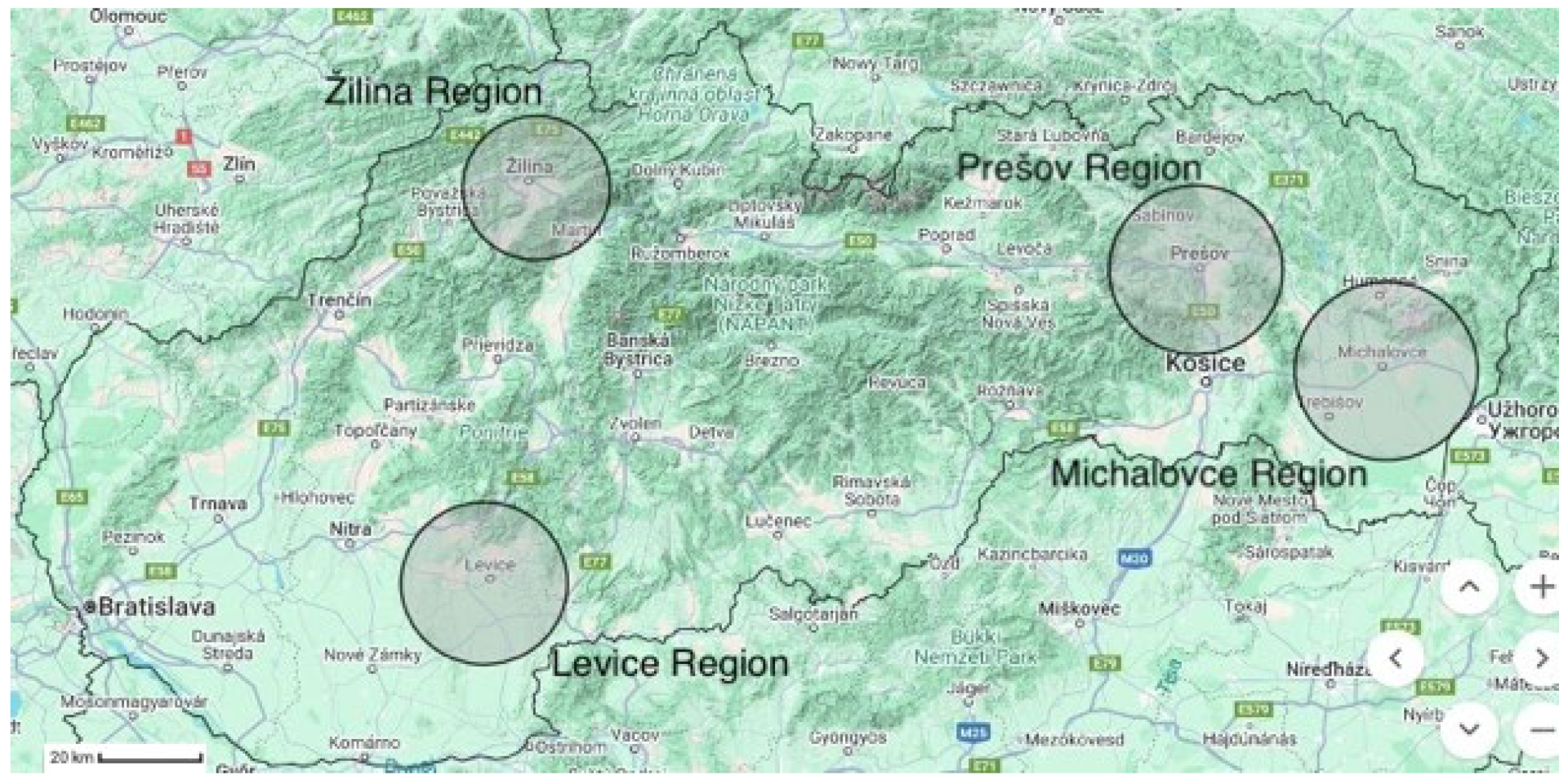
Figure 1. Potential locations for building an AD (anaerobic digestion) plant in Slovakia, elaborated using free Slovakia map from [43].
Engproc 117 00036 g001
Figure 2. Comparison of wet and dry batch anaerobic digestion simulations. V—biogas volumetric production; wet—Wet AD; dry—Dry AD. Blue lines pertain to left-hand axis, orange lines pertain to right-hand axis.
Engproc 117 00036 g002
Figure 3. Biogas production (Nm3/day) and productivity (Nm3/t) in continual digester. Blue line pertains to left-hand axis, orange line pertains to right-hand axis.
Engproc 117 00036 g003
Figure 4. Results of the MCDA of biogas plants deployment.
Engproc 117 00036 g004
Figure 5. Methane purity and retentate flow depending on permeate pressure for various membrane materials. Solid lines—polyimide, dashed lines—cellulose acetate, dotted lines—polycarbonate, dash-dotted lines—polysulfone. Blue lines pertain to left-hand axis, orange lines pertain to right-hand axis.
Engproc 117 00036 g005
Figure 6. Results of MCDA of biomethane plants.
Engproc 117 00036 g006
Table 1. Components and processes are considered in mathematical modeling. Xacidogenesis = acidogenic bacteria concentration, Xacetogenesis = acetogenic bacteria concentration, XmetaAC = acetoclastic methanogens bacteria concentration, XmetaH2 = hydrogenotrophic methanogens bacteria concentration.
ProcessComponent
DisintegrationSimple particulate organic matter represented by a mixture of carbohydrates, proteins, and lipids
HydrolysisComposite particulate matter, which includes organic and inorganic materials in particulate form, is contained in waste and biomass
AcidogenesisParticulate inert matter
AcetogenesisSoluble organic inert matter
Acetoclastic methanogenesisSoluble monomers, a mixture of sugars, amino acids, and long-chain fatty acids
Hydrogenotrophic methanogenesisMixture of organic acids—propionate, butyrate, and valerate
Xacidogenesis DecayAcetate
Xacetogenesis DecayMethane
XmetaAC DecayHydrogen
XmetaH2 DecayAcetogenic bacteria
Acidogenic bacteria
Acetoclastic methanogens bacteria
Hydrogenotrophic methanogens bacteria
Table 2. Parameters of tested membranes, permeability data were retrieved from [36].
MembraneCH4 Permeability, BarrerCO2 Permeability, Barrer
Polyimide0.2510.7
Cellulose acetate0.216.3
Polycarbonate0.134.2
Polysulfone0.255.6
Table 4. Summarized biogas volume flow rates in each location. Thermo = thermophilic regime.
Technological RegimeŽilina, Nm3/dLevice, Nm3/dPrešov, Nm3/dMichalovce, Nm3/d
Dry thermo.9380269572486935
Wet thermo.10,173290978637521
Continual thermo.11,380325387668409
Table 5. Summarized volume flow rates and membrane areas in each location.
LocationMembrane Area, m2Biomethane Flow Rate, Nm3/YearTotal Flow Rate,
Nm3/Year
Žilina2 modules á 13.51,062,2311,094,098
Levice2 modules á 2.5299,226308,801
Prešov2 modules á 9.9840,535868,272
Michalovce2 modules á 9.5793,965820,166
Disclaimer/Publisher’s Note: The statements, opinions and data contained in all publications are solely those of the individual author(s) and contributor(s) and not of MDPI and/or the editor(s). MDPI and/or the editor(s) disclaim responsibility for any injury to people or property resulting from any ideas, methods, instructions or products referred to in the content.