Proceeding Paper

A Critical Review on the Influence of Additive Manufacturing on Climate Change and Environmental Sustainability †

Department of Chemical Engineering, Vaal University of Technology, P/Bag X021, Vanderbijlpark 1900, South Africa
Presented at the 6th International Electronic Conference on Applied Sciences, 9–11 December 2025; Available online: https://sciforum.net/event/ASEC2025.
Eng. Proc. 2026, 124(1), 9; https://doi.org/10.3390/engproc2026124009
Published: 27 January 2026
(This article belongs to the Proceedings of The 6th International Electronic Conference on Applied Sciences)

Abstract

Additive manufacturing (AM), or 3D printing, has a significant, largely beneficial influence on climate change by decreasing material waste and requiring less energy use. The application of AM in the construction and industrial sectors has the potential to reduce carbon emissions. This goal may be accomplished by using material and energy-saving measures, improving manufacturing processes, designing lightweight structures, and reducing transportation operations. While 3DP has the potential to help reduce environmental degradation, it is crucial to recognize the inherent setbacks associated with the technology. Certain AM processes have the potential to emit volatile organic compounds, which contribute to air pollution and hence need improved control. Industrial 3D printers can be excessively expensive, greatly increasing the initial expenditure required to begin a project. Despite these limitations, AM can reduce greenhouse gas emissions, generate better-built environments, and provide a means to reduce energy usage while supporting global carbon neutrality objectives. Governments should extend financial assistance in the form of subsidies to help reduce equipment purchase costs. Furthermore, AM’s capacity to foster a circular economy and minimize overall environmental effects is dependent on the improvement of material recycling and scalability.

1. Introduction

Climate change continues to be the central concern of governmental policy, scientific research, and cultural dialogue. A diverse array of industrial and commercial activities has mostly led to greenhouse gas (GHG) emissions and environmental degradation, exacerbating the adverse effects of climate change. The emission of greenhouse gases contributes to global warming and the deterioration of the ozone layer. Prior studies have indicated that an increase in greenhouse gas concentrations is the principal factor contributing to environmental deterioration and climate change [1,2,3]. Examples of these gases include carbon dioxide, methane, hydrochlorofluorocarbons, chlorobromomethane, and carbon tetrachloride. Environmental degradation jeopardizes the existence of many organisms, including humans, plants, and animals, while also incurring substantial economic costs for governments globally [4,5]. Projections indicate that worldwide annual waste generated by the combustion of organic resources, including oil, coal, biomass, gas, and solid waste, would rise from over 1.3 billion to 2.3 billion tons by 2025 [6].
Pollution has markedly deteriorated the environment; thus, it is imperative to tackle this issue promptly. Researchers and scientists have used several strategies to address environmental degradation and climate change [7,8,9]. These technologies include renewable energy sources such as wind, solar, and hydropower, which possess the capacity to diminish greenhouse gas emissions. An additive manufacturing method may facilitate the achievement of this objective. Additive manufacturing (AM), sometimes referred to as three-dimensional printing (3DP), is a process that constructs intricate structures via consecutive stacking [10]. The industrial sector is a very recent adopter of this technology [11,12]. It is used across several industries to produce a diverse array of products. This manufacturing method has attained enhanced environmental sustainability by minimizing material waste throughout the production process, in contrast to prior processes. Moreover, the use of additive manufacturing technology has reduced CO2 emissions by decreasing energy consumption, leading to a subsequent reduction in gas emissions [13,14,15,16]. Indeed, significant progress has been made in the development of reversible photopolymer polymers, allowing for the production of printing materials that save resources and contribute to the reduction in plastic waste [17].
However, there are still research gaps to understand and characterize the sustainability of AM processes with regard to climate change and environmental sustainability. This article briefly reviews energy demand, gas emissions, and material waste. It also highlights the future perspective of AM technology for environmental sustainability to ensure a greener production environment. 3PD is significant in accelerating progress toward a more sustainable ecology. This provides a practical solution for lowering greenhouse gas emissions in industries such as manufacturing, construction, and agriculture by replacing traditional production processes [18,19]. Advances in material recyclability demonstrate 3D printing’s sustainability.

2. The Sustainability of Additive Manufacturing Methodologies

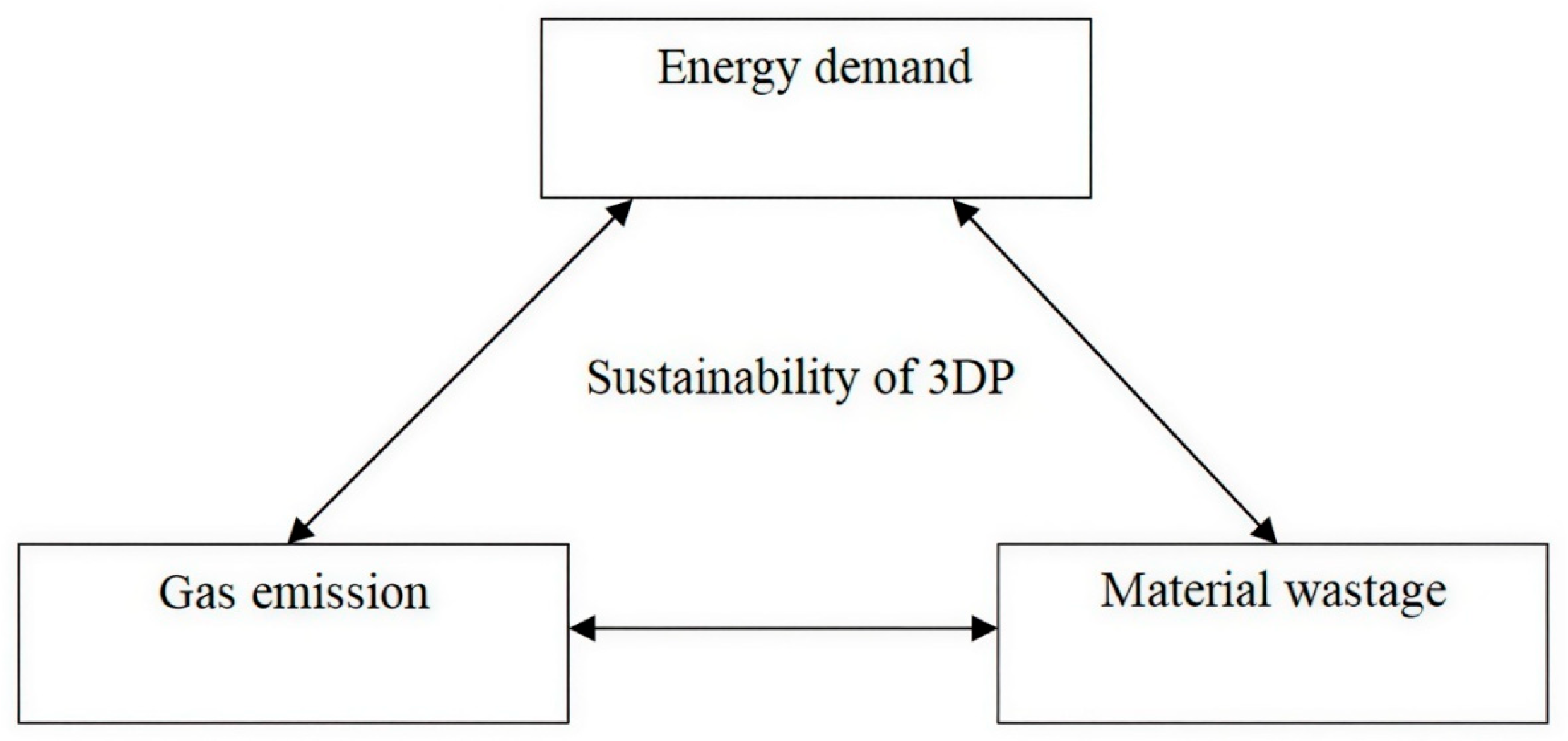
Numerous studies on the sustainability of additive manufacturing (AM) processes have been documented in the literature, including predictive modeling and simulation, analytical techniques, experimental approaches, and environmentally conscious design methods, all of which have been proposed to assess the sustainability of AM methodologies in addressing adverse climate change [20,21]. The viability of AM in addressing climate change will be examined in terms of waste management, energy usage, and greenhouse gas emissions. Figure 1 illustrates the sustainability of 3D printing in terms of energy demand, gas emissions, and material waste. These trios are major contributing factors to environmental degradation.

2.1. Energy Demand

Most industrial processes need heat to produce their products, such as metallurgical casting of engine blocks or analogous materials from the steel industry [22,23]. The smelting and casting of ores in this procedure need substantial heat. Manufacturing processes that use fewer materials may diminish energy and resource requirements during the product’s life cycle. Additive manufacturing enhances environmental management relative to traditional production methods by decreasing energy usage and minimizing the release of dangerous pollutants. Prior research suggested that the use of 3D printing technology might reduce energy consumption [24]. It is essential to acknowledge that additive manufacturing may produce particular waste and particle materials [25,26]. Initiatives have been undertaken to develop solutions that mitigate the environmental impact and waste associated with additive manufacturing. Thomas and Mishra [27] demonstrated that minimizing waste and emissions facilitated the establishment of an integrated sustainable drive supply chain, enhancing the environmental sustainability of 3D printing technology. They proposed the creation of a product recovery management system as a strategic instrument to reduce industrial waste, minimize emissions, and enhance environmental conservation. Estimates suggest that using an alternate production technique, namely 3D printing, might decrease energy use in industrial manufacturing [28,29].
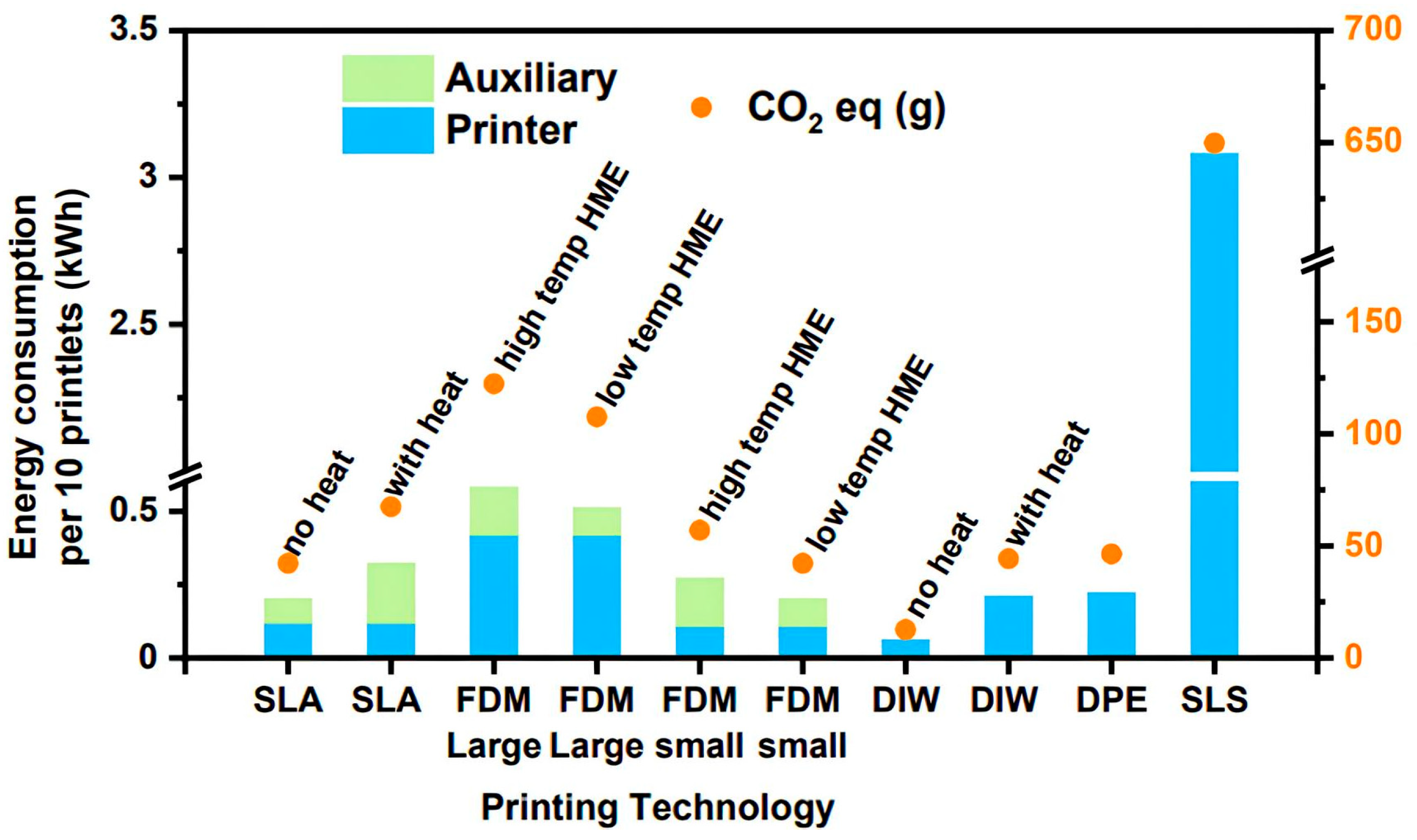
Elbadawi et al. [30] examined the energy consumption of several 3D printers. Figure 2 illustrates the average power distribution for each device. Despite capacity limitations, the printers used a significant amount of electricity, muchless than conventional methods. Moreover, the study revealed that 3D printers operating at elevated temperatures use greater amounts of power. Consequently, reducing the printer’s working temperature may significantly decrease energy consumption, hence improving environmental sustainability.

2.2. Material Wastage

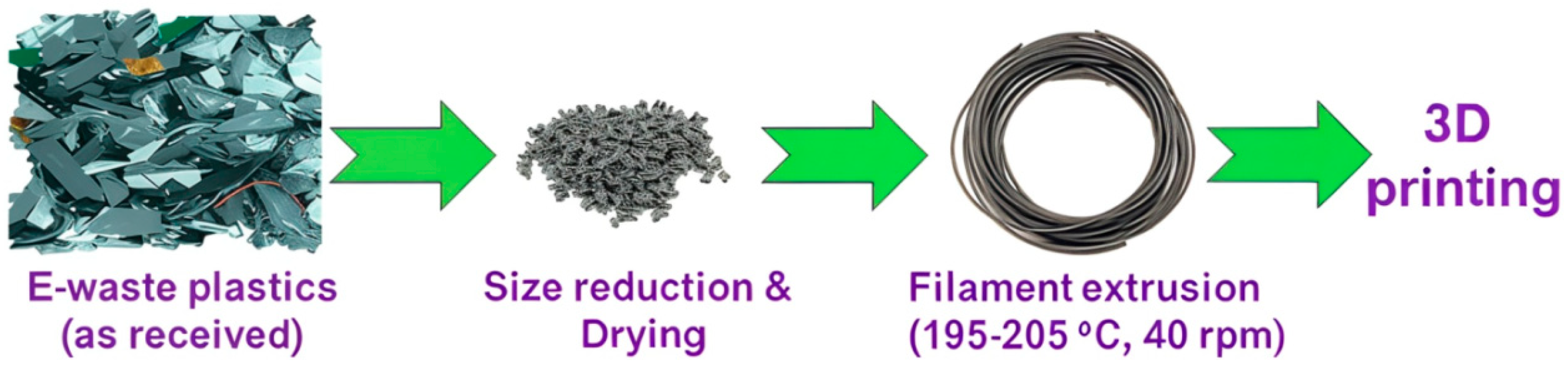
A primary benefit of additive manufacturing is its ability to significantly minimize material waste and byproducts within the community. This is accomplished by material recycling, which provides significant environmental advantages and aids in climate preservation. AM technology presents the capability to recycle waste materials, reduce raw material use, and foster the creation of more versatile and efficient product designs [31]. Plastic significantly contributes to global warming by emitting greenhouse gases during its entire life cycle. Plastic waste jeopardizes human health and the ecosystem while also presenting a considerable risk to the climate [32,33,34]. The distribution of discarded plastic across our environment significantly contributes to the deterioration of the natural world. Moreover, microplastics include poisons that contaminate the water and air we ingest [35,36,37]. Figure 3 illustrates the transformation of e-waste polymers into filament appropriate for extrusion and reutilization in additive manufacturing, therefore preventing incineration and contributing to pollution reduction [38]. Diverse methodologies are used to transform recycled polymers into an array of products, including both single-step and multi-step procedures [39,40].
Kumar and Czekanski [41] used a combination of Fused Deposition Modeling (FDM) and Selective Laser Sintering (SLS) additive manufacturing methods to minimize material waste. They advised using SLS remnants as the foundational material for FDM goods. The team demonstrated the fabrication of FDM filament with tungsten carbide and byproducts from SLS. This integration facilitated the reduction in pollutants and advanced environmental sustainability. Likewise, synthetic materials that respond well to conventional finishing techniques and undergo spontaneous degradation may be used in 3D printing, making the method more cost-effective than conventionally manufactured plastics [42,43].

2.3. Greenhouse Gas Emissions

The manufacturing sector is the principal contributor to global greenhouse gas emissions, representing over one-third and over one-fourth, respectively [44,45]. The use of AM in the construction and industrial sectors has the capacity to reduce greenhouse gas emissions. This objective may be achieved by the implementation of materials and energy conservation strategies, enhancement of manufacturing processes, design of lightweight structures, and reduction in transportation activities. Researchers estimate that greenhouse gas emissions will rise in the near future owing to rapid population growth [46,47]. However, global warming may be mitigated by the development of sustainable energy technologies [48]. AM may serve as a viable method for developing environmentally friendly technology that aims to diminish global gas emissions and foster a more sustainable ecosystem. A primary method to do this is to recycle plastic waste, which poses significant environmental and health risks, into reusable products. The incineration of plastic waste generates gaseous pollutants, mostly carbon dioxide (CO2) [49,50,51].
The aforementioned emissions originate from regions where CO2 is generated. China is the greatest emitter in Asia and globally, responsible for almost one-quarter of total emissions [52]. North America, mostly led by the United States, is the second-largest regional emitter, responsible for one-quarter of overall emissions [53]. Europe closely follows, while Africa and South America contribute very minor proportions, each representing around 3–4% of global emissions. Prior studies indicate that additive manufacturing (AM) may substantially reduce the environmental impact of greenhouse gas emissions while positively influencing the general climatic condition [54,55]. Wang et al. [8] examined the potential applications of additive manufacturing in carbon capture and storage technologies, as well as in construction and manufacturing, aiming to reduce greenhouse gas emissions in these vital sectors. The use of geopolymers as substitutes for cement-based materials in 3D printing within the construction industry may provide considerable environmental benefits. Priarone et al. [56] suggested further efficient methods for identifying the manufacturing pathway with minimal energy consumption and carbon dioxide emissions. The efficacy of the solutions was shown by enhanced process efficiency and decreased gas emissions.

3. Future of AM Technology on Environmental Sustainability

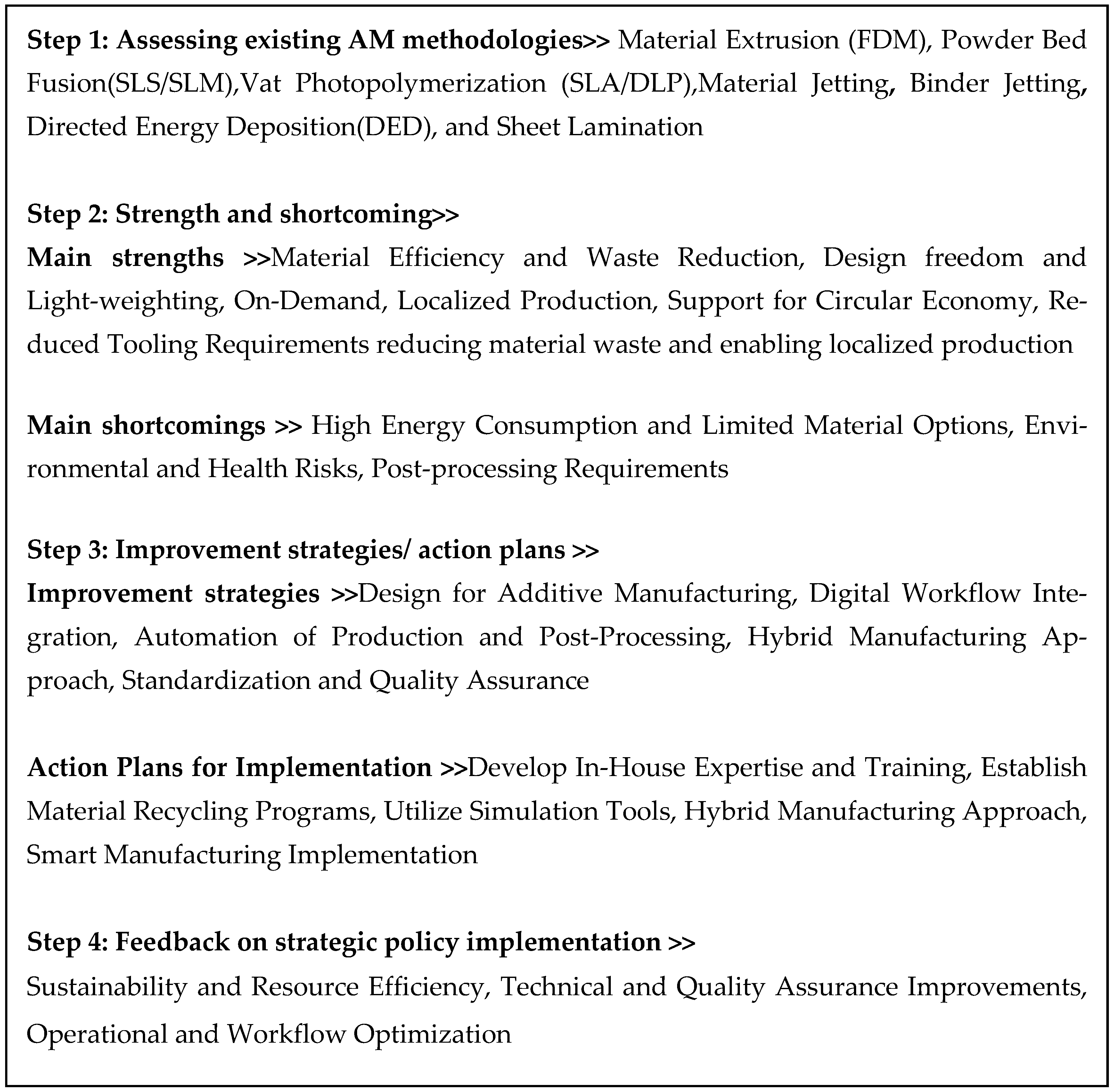
While additive manufacturing has the capacity to mitigate environmental degradation, it is crucial to acknowledge the intrinsic risk of user-induced harm. The printing process may pose various dangers to customers, contingent upon the printer and production methods used. Several chemical compounds, including polycyclic aromatic hydrocarbons, phthalates, ozone, and metallic or metalloid particulates, can be released during 3D printing processes, impacting air quality and potentially endangering workers and the environment [57,58]. The release of these contaminants mostly results from the chemicals used in the printing process. Consequently, an in-depth understanding of the chemical composition of airborne emissions during 3D printing is essential to mitigate exposure to inadvertent hazards. Moreover, to advance AM technology, personnel and the work environment must rigorously comply with essential safety protocols. Numerous factors affect the energy consumption of additive manufacturing activities, including equipment type, power input, and other variables. Nonetheless, it is crucial to acknowledge that these characteristics may vary depending on the specific printing techniques used in the manufacturing process. Moreover, since larger 3D printers use more energy than their smaller counterparts, it is imperative to develop more energy-efficient 3D printing technologies. The proposed AM sustainability framework to combat climate change is illustrated in Figure 4 to highlight some of the vital steps towards ensuring optimum utilization of 3DP for sustainable environmental management. These include assessing existing AM methodologies to comprehend their strengths and shortcomings, proposing improvement strategies and action plans to achieve the set objectives, and finally re-evaluating the outcome of the implemented process.
Numerous waste management strategies in additive manufacturing processes prioritize material reclamation and recycling [59,60,61]. The manufacture of filaments and the recycling of polymer waste may mitigate environmental effects. Additionally, non-toxic chemicals and biopolymer filaments may be used to reduce air pollution. Implementing Three-dimensional printing technology at key client sites might substantially decrease transportation expenses and environmental repercussions. The product’s design is the paramount aspect influencing AM’s energy efficiency; hence, it is essential to meticulously document all design elements that might affect energy efficiency. The best energy-efficient design must be selected, considering other mechanical and functional factors. The classification and arrangement of the material are the secondary elements influencing energy efficiency. Materials used in additive manufacturing must be engineered with a focus on energy efficiency, considering attributes such as high energy or heat absorption, along with other energy modalities necessary for material transformation. 3D printing is currently not the most economical enterprise due to its restricted adoption, especially in developing countries. Industrial 3D printers may be prohibitively costly, significantly elevating the initial investment necessary to start a project. To mitigate the expenses related to this equipment, governments should provide financial support via subsidies.
Further research in additive manufacturing materials should focus on reducing the carbon footprint of feedstock, improving recyclability, and utilizing renewable resources. Secondly, exploring low-energy finishing and curing techniques, such as ultraviolet curing or thermal management strategies that bypass energy-intensive heat treatments, will reduce high energy consumption in 3D printing. Furthermore, establishing a direct correlation between 3D printing parameters such as laser power, printing speed, layer thickness, and energy consumption can help reduce the overall CO2 emissions and promote environmental sustainability. Establishing closed-loop recycling systems for additive manufacturing, as well as implementation of ecological principles and utilization of green materials, will facilitate waste minimization, reduce carbon footprints, and enhance efficient resource management. It will also lead to significant cost savings through the reuse of high-value materials such as metal particles and engineering polymers, reduce environmental impact, and improve material efficiency. In addition, advances in AM lightweighting and energy efficiency would promote sustainability in manufacturing operations and boost economic growth. Consequently, industries will significantly reduce material waste, minimize energy consumption, and lower the carbon footprint of components during their entire lifecycle, all of which contribute to the reduction in environmental pollution.
The future of AM technology holds substantial environmental benefits by decreasing material waste, reducing global greenhouse gas emissions, lowering energy consumption, and supporting localized on-demand production. Although challenges persist in managing energy consumption and the development of sustainable materials, future solutions involving process optimization and broader adoption of recycled or bio-based materials will undoubtedly enable AM to substantially enhance environmental sustainability and mitigate current climate change.

4. Conclusions

Additive manufacturing (AM) has the capacity to significantly minimize waste and provide a more environmentally sustainable production technique. Nevertheless, contemporary 3D printers need enhancements to optimize operational efficiency, reduce energy consumption, and eradicate hazardous pollutants. Prolonging the production duration or enhancing the printing resolution may optimize productivity. Moreover, enhancing the energy efficiency of 3D printers is essential, since larger additive manufacturing machines use more energy than their smaller counterparts.
To improve the efficiency and environmental sustainability of AM, novel materials with durability, reduced weight, structural integrity, and environmental responsibility should be developed, along with the use of appropriate design strategies to optimize production outcomes. Given that AM technologies need energy for component fabrication, measuring the effect of energy efficiency is critical for the economically feasible and ethical application of these technologies, which promotes environmental sustainability.

Funding

The APC was funded by Vaal University of Technology.

Institutional Review Board Statement

Not applicable.

Informed Consent Statement

Not applicable.

Data Availability Statement

The data is available on request from the corresponding author.

Acknowledgments

The author gratefully acknowledges the technical assistance and financial support provide by the Faculty of Engineering and Technology, Vaal University of Technology, Gauteng.

Conflicts of Interest

The author declares no conflict of interest.

Abbreviations

The following abbreviations are used in this manuscript:
3DPThree-dimensional printing
AMAdditive manufacturing
CO2Carbon dioxide
SLSSelective Laser Sintering
FDMFused Deposition Modeling
GHGGreenhouse gas
DEDDirected Energy Deposition
SLMSelective Laser Melting
SLAStereolithography
DLPDigital Light Processing

References

  1. Filonchyk, M.; Peterson, M.P.; Zhang, L.; Hurynovich, V.; He, Y. Greenhouse gases emissions and global climate change: Examining the influence of CO2, CH4, and N2O. Sci. Total Environ. 2024, 935, 173359. [Google Scholar] [CrossRef]
  2. Lv, X.; Lin, A.; Cui, X.; Li, Y.; Guo, Z.; Tan, X.; Duan, G. The Interplay Between Climate Warming Driven by Greenhouse Gas Emissions and the Ecotoxicological Effects of Microplastics: Insights from a Meta-Analysis. Glob. Change Biol. 2025, 31, e70348. [Google Scholar] [CrossRef]
  3. Bilgili, M.; Tumse, S.; Nar, S. Comprehensive overview on the present state and evolution of global warming, climate change, greenhouse gasses and renewable energy. Arab. J. Sci. Eng. 2024, 49, 14503–14531. [Google Scholar] [CrossRef]
  4. Ali, I.; Rahman, A. Environmental degradation: Causes, effects and solutions. Int. J. Multidiscip. Res. 2024, 6, 1–10. [Google Scholar]
  5. Singh, V.P.; Yadav, S.; Yadav, K.K.; Yadava, R.N. An overview on environmental degradation and mitigation. Environ. Degrad. Chall. Strateg. Mitig. 2022, 28, 3–15. [Google Scholar]
  6. Ram, C.; Kumar, A. Municipal Solid Waste Management: Recent Practices. In Nanobiotechnology for Green Environment; CRC Press: Boca Raton, FL, USA, 2021; Volume 3, pp. 37–65. [Google Scholar]
  7. Yang, M.; Chen, L.; Wang, J.; Msigwa, G.; Osman, A.I.; Fawzy, S.; Rooney, D.W.; Yap, P.S. Circular economy strategies for combating climate change and other environmental issues. Environ. Chem. Lett. 2023, 21, 55–80. [Google Scholar] [CrossRef]
  8. Wang, F.; Harindintwali, J.D.; Wei, K.; Shan, Y.; Mi, Z.; Costello, M.J.; Grunwald, S.; Feng, Z.; Wang, F.; Guo, Y.; et al. Climate change: Strategies for mitigation and adaptation. Innov. Geosci. 2023, 1, 55–80. [Google Scholar] [CrossRef]
  9. Abbass, K.; Qasim, M.Z.; Song, H.; Murshed, M.; Mahmood, H.; Younis, I. A review of the global climate change impacts, adaptation, and sustainable mitigation measures. Environ. Sci. Pollut. Res. 2022, 29, 42539–42559. [Google Scholar] [CrossRef]
  10. Zhou, L.; Miller, J.; Vezza, J.; Mayster, M.; Raffay, M.; Justice, Q.; Al Tamimi, Z.; Hansotte, G.; Sunkara, L.D.; Bernat, J. Additive manufacturing: A comprehensive review. Sensors 2024, 24, 2668. [Google Scholar] [CrossRef] [PubMed]
  11. Khorasani, M.; Loy, J.; Ghasemi, A.H.; Sharabian, E.; Leary, M.; Mirafzal, H.; Cochrane, P.; Rolfe, B.; Gibson, I. A review of Industry 4.0 and additive manufacturing synergy. Rapid Prototyp. J. 2022, 28, 1462–1475. [Google Scholar] [CrossRef]
  12. Ashima, R.; Haleem, A.; Bahl, S.; Javaid, M.; Mahla, S.K.; Singh, S. Automation and manufacturing of smart materials in Additive Manufacturing technologies using Internet of Things towards the adoption of Industry 4.0. Mater. Today Proc. 2021, 45, 5081–5088. [Google Scholar] [CrossRef]
  13. Wang, D.; Zhang, T.; Guo, X.; Ling, D.; Hu, L.; Jiang, G. The potential of 3D printing in facilitating carbon neutrality. J. Environ. Sci. 2023, 130, 85–91. [Google Scholar] [CrossRef]
  14. Khan, M.; Dani, A.A.; Lim, J.B.; Roy, K. Appraising the feasibility of 3D printing construction in New Zealand housing. Buildings 2024, 14, 1084. [Google Scholar] [CrossRef]
  15. Wang, X.; Su, H.; Liu, X. The impact of green technological innovation on industrial structural optimization under dual-carbon targets: The role of the moderating effect of carbon emission efficiency. Sustainability 2025, 17, 6313. [Google Scholar] [CrossRef]
  16. Ng, Y.; Vo, T.G.; Liu, Y. 3D Printing for Solar Fuel Production: Materials Innovations and Future Directions. Adv. Funct. Mater. 2025, 12, e19263. [Google Scholar] [CrossRef]
  17. Radu, I.C.; Vadureanu, A.M.; Cozorici, D.E.; Blanzeanu, E.; Zaharia, C. Advancing Sustainability in Modern Polymer Processing: Strategies for Waste Resource Recovery and Circular Economy Integration. Polymers 2025, 17, 522. [Google Scholar] [CrossRef]
  18. Alami, A.H.; Olabi, A.G.; Ayoub, M.; Aljaghoub, H.; Alasad, S.; Abdelkareem, M.A. 3D concrete printing: Recent progress, applications, challenges, and role in achieving sustainable development goals. Buildings 2023, 13, 924. [Google Scholar] [CrossRef]
  19. Tay, Y.W.D.; Ting, G.H.A.; Panda, B.; Wong, T.N.; Tan, M.J. Towards net zero in 3DP for building & construction. Mater. Today Proc. 2022, 70, 599–602. [Google Scholar]
  20. Su, J.; Ng, W.L.; An, J.; Yeong, W.Y.; Chua, C.K.; Sing, S.L. Achieving sustainability by additive manufacturing: A state-of-the-art review and perspectives. Virtual Phys. Prototyp. 2024, 19, e2438899. [Google Scholar] [CrossRef]
  21. Maware, C.; Muvunzi, R.; Machingura, T.; Daniyan, I. Examining the progress in additive manufacturing in supporting lean, green and sustainable manufacturing: A systematic review. Appl. Sci. 2024, 14, 6041. [Google Scholar] [CrossRef]
  22. Boretti, A. Metal additive manufacturing for internal combustion engine components: A narrative review of applications, materials, processes, challenges, and future directions. Inter. J. Adv. Manufac. Technol. 2025, 139, 6355–6397. [Google Scholar] [CrossRef]
  23. Abdelshafy, A.; Franzen, D.; Mohaupt, A.; Schüssler, J.; Bührig-Polaczek, A.; Walther, G. A feasibility study to minimize the carbon footprint of cast iron production while maintaining the technical requirements. J. Sustain. Met. 2023, 9, 249–265. [Google Scholar] [CrossRef]
  24. Zakaria, S.; Mativenga, P. A scientific base for optimising energy consumption and performance in 3D printing. J. Clean. Prod. 2024, 482, 144227. [Google Scholar] [CrossRef]
  25. Dobrzyńska, E.; Kondej, D.; Kowalska, J.; Szewczyńska, M. State of the art in additive manufacturing and its possible chemical and particle hazards. Indoor Air 2021, 31, 1733–1758. [Google Scholar] [CrossRef]
  26. Hossain, S.K.M.; Toledo Vega, A.; Valles-Rosales, D.; Park, Y.H.; Kuravi, S.; Sohn, H. Particulate suspension: A review of studies characterizing particulates and volatile organic compounds emissions during additive manufacturing processes. Part. Sci. Technol. 2023, 41, 350–360. [Google Scholar] [CrossRef]
  27. Thomas, A.; Mishra, U. A sustainable circular economic supply chain system with waste minimization using 3D printing and emissions reduction in plastic reforming industry. J. Clean. Product. 2022, 345, 131128. [Google Scholar] [CrossRef]
  28. Dai, Y.; Lu, Y. How 3D printing enables sustainable supply chain business processes: Case studies of manufacturing firms. J. Bus. Process Manag. J. 2025, 19, 1–21. [Google Scholar] [CrossRef]
  29. Gao, M.; Xu, J.; Liu, K.; Zhang, S.; Tan, J. Material and energy co-optimization for additive manufacturing of scale-up prototypes based on multiple layers prediction. Rapid Prototyp. J. 2025, 31, 1039–1052. [Google Scholar] [CrossRef]
  30. Elbadawi, M.; Basit, A.W.; Gaisford, S. Energy consumption and carbon footprint of 3D printing in pharmaceutical manufacture. Int. J. Pharm. 2023, 639, 122926. [Google Scholar] [CrossRef]
  31. Islam, F.S. The Impact of Plastic Waste on Ecosystems and Human Health and Strategies for Managing It for A Sustainable Environment. Int. J. Latest Technol. Eng. Manag. Appl. Sci. 2025, 14, 706–723. [Google Scholar] [CrossRef]
  32. Gautam, B.P.S.; Qureshi, A.; Gwasikoti, A.; Kumar, V.; Gondwal, M. Global scenario of plastic production, consumption, and waste generation and their impacts on environment and human health. In Advanced Strategies for Biodegradation of Plastic Polymers; Springer: Cham, Switzerland, 2024; Volume 11, pp. 1–34. [Google Scholar]
  33. Kibria, M.G.; Masuk, N.I.; Safayet, R.; Nguyen, H.Q.; Mourshed, M. Plastic waste: Challenges and opportunities to mitigate pollution and effective management. Int. J. Environ. Res. 2023, 17, 20. [Google Scholar] [CrossRef] [PubMed]
  34. Nyamekye, P.; Lakshmanan, R.; Tepponen, V.; Westman, S. Sustainability aspects of additive manufacturing: Leveraging resource efficiency via product design optimization and laser powder bed fusion. Heliyon 2024, 10, e23152. [Google Scholar] [CrossRef] [PubMed]
  35. Yang, Z.; Wang, M.; Feng, Z.; Wang, Z.; Lv, M.; Chang, J.; Chen, L.; Wang, C. Human microplastics exposure and potential health risks to target organs by different routes: A review. Curr. Pollut. Rep. 2023, 9, 468–485. [Google Scholar] [CrossRef]
  36. Ghosh, S.; Sinha, J.K.; Ghosh, S.; Vashisth, K.; Han, S.; Bhaskar, R. Microplastics as an emerging threat to the global environment and human health. Sustainability 2023, 15, 10821. [Google Scholar] [CrossRef]
  37. Temel, H. The Impact of Microplastics on the Environment and Human (Living) Health. In Microplastics (MPs) in Wastewater: Determination-Treatment Methods and Effects on Climate Change; Springer: Cham, Switzerland, 2025; Volume 12, pp. 305–322. [Google Scholar]
  38. Gaikwad, V.; Ghose, A.; Cholake, S.; Rawal, A.; Iwato, M.; Sahajwalla, V. Transformation of E-waste plastics into sustainable filaments for 3D printing. ACS Sustain. Chem. Eng. 2018, 6, 14432–14440. [Google Scholar] [CrossRef]
  39. Merrington, A. Recycling of plastics. In Applied Plastics Engineering Handbook; William Andrew Publishing: Norwich, NY, USA, 2024; Volume 1, pp. 191–217. [Google Scholar]
  40. Sambyal, P.; Najmi, P.; Sharma, D.; Khoshbakhti, E.; Hosseini, H.; Milani, A.S.; Arjmand, M. Plastic recycling: Challenges and opportunities. Can. J. Chem. Eng. 2025, 103, 2462–2498. [Google Scholar] [CrossRef]
  41. Kumar, S.; Czekanski, A. Roadmap to sustainable plastic additive manufacturing. Mater. Today Commun. 2018, 15, 109–113. [Google Scholar] [CrossRef]
  42. Mecheter, A.; Tarlochan, F.; Kucukvar, M. A review of conventional versus additive manufacturing for metals: Life-cycle environmental and economic analysis. Sustainability 2023, 15, 12299. [Google Scholar] [CrossRef]
  43. Jandyal, A.; Chaturvedi, I.; Wazir, I.; Raina, A.; Haq, M.I.U. 3D printing–A review of processes, materials and applications in industry 4.0. Sustain. Oper. Comput. 2022, 3, 33–42. [Google Scholar] [CrossRef]
  44. Sadavarte, P.; Shindell, D.; Loughlin, D. Comparing the climate and air pollution footprints of Lithium-ion BEVs and ICEs in the US incorporating systemic energy system responses. PLoS Clim. 2025, 4, e0000714. [Google Scholar] [CrossRef]
  45. Timilsina, G.R.; Malla, S.; Heger, M.P. Economic and policy analysis of cleaner technologies for brick production in Nepal. Energy Policy 2025, 206, 114741. [Google Scholar] [CrossRef]
  46. Gowrisankar, A.; Priyanka, T.M.C.; Saha, A.; Rondoni, L.; Kamrul Hassan, M.; Banerjee, S. Greenhouse gas emissions: A rapid submerge of the world. Chaos Interdiscip. J. Nonlinear Sci. 2022, 32, 061104. [Google Scholar] [CrossRef] [PubMed]
  47. Wang, J.; Azam, W. Natural resource scarcity, fossil fuel energy consumption, and total greenhouse gas emissions in top emitting countries. Geosci. Front. 2024, 15, 101757. [Google Scholar] [CrossRef]
  48. Cheng, Y.; Yao, X. Carbon intensity reduction assessment of renewable energy technology innovation in China: A panel data model with cross-section dependence and slope heterogeneity. Renew. Sustain. Energy Rev. 2021, 135, 110157. [Google Scholar] [CrossRef]
  49. Gurgacz, N.S.; Kvale, K.; Eby, M.; Weaver, A.J. Impact of plastic pollution on atmospheric carbon dioxide. Facets 2023, 8, 1–7. [Google Scholar] [CrossRef]
  50. Shen, M.; Huang, W.; Chen, M.; Song, B.; Zeng, G.; Zhang, Y. (Micro) plastic crisis: Un-ignorable contribution to global greenhouse gas emissions and climate change. J. Clean. Prod. 2020, 254, 120138. [Google Scholar] [CrossRef]
  51. Balogh, J.M. The impacts of agricultural development and trade on CO2 emissions? Evidence from the Non-European Union countries. Environ. Sci. Policy 2022, 137, 99–108. [Google Scholar] [CrossRef]
  52. Kumar, A.; Singh, P.K.; Kumar, V. Environmental Pollution: A Global Challenge. In AI-Driven Environmental Pollution Management; Springer Nature: Cham, Switzerland, 2025; Volume 1, pp. 3–25. [Google Scholar]
  53. Olivier, J.G.; Schure, K.M.; Peters, J.A. Trends in global CO2 and total greenhouse gas emissions. PBL Neth. Environ. Assess. Agenc. 2017, 5, 1–85. [Google Scholar]
  54. Javaid, M.; Haleem, A.; Singh, R.P.; Suman, R.; Rab, S. Role of additive manufacturing applications towards environmental sustainability. Adv. Industr. Eng. Polym. Resear. 2021, 4, 312–322. [Google Scholar] [CrossRef]
  55. Khalid, M.; Peng, Q. Sustainability and environmental impact of additive manufacturing: A literature review. Comput. Aided Des. Appl. 2021, 18, 1210–1232. [Google Scholar] [CrossRef]
  56. Priarone, P.C.; Robiglio, M.; Settineri, L. On the concurrent optimization of environmental and economic targets for machining. J. Clean. Product. 2018, 190, 630–644. [Google Scholar] [CrossRef]
  57. Dobrzyńska, E.; Kondej, D.; Kowalska, J.; Szewczyńska, M. Exposure to chemical substances and particles emitted during additive manufacturing. Environ. Sci. Pollut. Res. 2022, 29, 40273–40278. [Google Scholar] [CrossRef] [PubMed]
  58. Chandan, P.B.; Bhat, P.G.; Purushothaman, S.; Krishna, D.V.; Prasad, T.S.; Thet, A.A.; Sankar, M.R. Environmental Aspects of 3D Printing Metal and Alloys. In Additive Manufacturing with Novel Materials: Process, Properties, and Applications; Wiley: Hoboken, NJ, USA, 2024; Volume 29, pp. 373–407. [Google Scholar]
  59. Prasad, G.; Arunav, H.; Dwight, S.; Ghosh, M.B.; Jayadev, A.; Nair, D.I. Advancing Sustainable Practices in Additive Manufacturing: A Comprehensive Review on Material Waste Recyclability. Sustainability 2024, 16, 10246. [Google Scholar] [CrossRef]
  60. Piepoli, A.; Lagrasta, F.P.; Pellegrino, R.; Pontrandolfo, P. Recycled vs. Virgin Materials in Additive Manufacturing: Assessing the Risk Mitigation Potential in Uncertain Supply Scenarios. Procedia Comput. Sci. 2025, 253, 2605–2614. [Google Scholar] [CrossRef]
  61. Dipta, S.D.; Rahman, M.M.; Ansari, M.J.; Uddin, M.N. A Comprehensive Review of Sustainable and Green Additive Manufacturing: Technologies, Practices, and Future Directions. J. Manuf. Mater. Process. 2025, 9, 269. [Google Scholar] [CrossRef]
Figure 1. Sustainability of AM on climate change.
Engproc 124 00009 g001
Figure 2. AM energy usage and estimated CO2 emissions. Reproduced with permission [30].
Engproc 124 00009 g002
Figure 3. Schematic illustration for converting e-waste plastic into filaments. Reproduced with permission [38].
Engproc 124 00009 g003
Figure 4. Proposed AM sustainability framework to combat climate change.
Engproc 124 00009 g004
Disclaimer/Publisher’s Note: The statements, opinions and data contained in all publications are solely those of the individual author(s) and contributor(s) and not of MDPI and/or the editor(s). MDPI and/or the editor(s) disclaim responsibility for any injury to people or property resulting from any ideas, methods, instructions or products referred to in the content.