1. Introduction
In the modern food industry, the drying of agricultural products plays a crucial role in extending shelf life, preserving nutritional quality, and reducing transportation and storage costs. For highly perishable and moisture-rich fruits such as apricots, the application of efficient drying technologies is especially important, as it helps to minimize post-harvest losses and enhance food security [
1,
2].
At the same time, the introduction of technologies aligned with the principles of sustainable development has become a global priority in agriculture and food processing. Within the framework of the United Nations 2030 Agenda for Sustainable Development, particular attention is given to
Zero Hunger (SDG 2),
Affordable and Clean Energy (SDG 7), and
Responsible Consumption and Production (SDG 12). These goals emphasize the development and implementation of energy-efficient, environmentally safe technologies that ensure high food quality while reducing resource consumption [
3].
Given the high level of solar radiation in Uzbekistan [
4,
5], open sun drying is considered one of the simplest and most cost-effective drying methods. Nevertheless, this approach suffers from major drawbacks related to sanitary conditions, limited control over the drying process, and low and non-uniform drying rates. As a result, advanced drying technologies that enable better control of process parameters have gained increasing attention in recent years. These include solar dryers, infrared drying systems, and microwave dryers. Tiwari reported that solar dryers can simultaneously improve energy efficiency and preserve key physicochemical properties of dried products, such as color and texture [
6].
Studies by Masharipova et al. demonstrated that infrared drying allows better retention of nutritional compounds, particularly vitamin
C and antioxidants, in dried fruits [
7]. Similarly, Sharshir et al. showed that microwave drying provides rapid moisture removal while effectively preserving essential minerals such as potassium, magnesium, and calcium [
8]. Despite these valuable contributions, most existing studies focus on a single drying method and lack a systematic comparison of different technologies based on elemental composition and mineral retention.
Recent works, including those by Chabane, have addressed intelligent control strategies and energy performance analysis of solar dryers for apricot drying. Nevertheless, direct comparative evaluations of product composition using spectral or elemental analysis remain limited. In particular, comprehensive assessments that simultaneously examine multiple drying methods under comparable conditions are still scarce [
9].
Apricots are recognized as an important dietary source of essential macro- and microelements, particularly potassium (K), calcium (Ca), magnesium (Mg), aluminum (Al), iron (Fe), zinc (Zn), and silicon (Si). These minerals play a crucial role in human health, including electrolyte balance, bone formation, enzymatic activity, oxygen transport, and antioxidant defense mechanisms. Potassium is especially abundant in apricots and is essential for cardiovascular and neuromuscular function, while calcium and magnesium contribute to bone metabolism and cellular signaling. Iron and zinc are vital trace elements involved in hemoglobin synthesis and immune system regulation.
During thermal processing and drying, mineral stability can be affected by oxidation, leaching, structural degradation, and prolonged exposure to high temperatures. Therefore, evaluating the retention of these specific minerals provides a reliable indicator of the nutritional quality and technological impact of different drying methods. The selected elements were chosen based on their nutritional relevance, detectability using EDXRF spectroscopy, and their sensitivity to thermal and environmental conditions during drying.
Therefore, this study presents a systematic comparison of four drying techniques: open sun drying, solar drying, infrared drying, and microwave drying applied to apricot products. The comparison is based on elemental composition analysis (
K,
Ca,
Mg,
Si,
Fe,
Zn,
Cu, and others) and spectral characterization of the dried samples [
6].
The main objective of this research is to identify the most suitable drying technology that preserves product quality while ensuring high energy efficiency and environmental sustainability. The findings aim to provide a scientific basis for sustainable food processing and contribute to the development of resilient food systems.
Despite numerous studies on individual drying technologies, a systematic comparison of solar, infrared, microwave, and open sun drying methods under identical raw material and moisture endpoint conditions, specifically focusing on mineral retention using EDXRF analysis, remains insufficiently explored.
In recent years, hybrid drying systems combining solar energy with auxiliary electric heating or forced convection have gained attention due to improved process control and reduced drying time. Similarly, combined microwave–convection systems have been investigated to enhance moisture uniformity and reduce localized overheating. These advanced configurations demonstrate the ongoing evolution of drying technologies toward higher efficiency and process stability. However, comparative evaluations of elemental retention across fundamentally different drying mechanisms remain limited [
10,
11,
12].
2. Materials and Methods
2.1. Materials, Sample Preparation, and Drying Procedures
Experimental work was carried out in late June 2024 at the Department of Automation and Digital Control laboratory of the Tashkent Institute of Chemical-Technology (TICT) and its outdoor experimental test site. Apricot fruits grown in the Tashkent region were selected as the research material.
Apricot fruits grown in the Tashkent region were selected as the research material. Apricot fruits of the Subkhoni variety were harvested at the technological maturity stage typical for Uzbekistan conditions, characterized by approximately 70–80% yellow skin coloration and 15–25% light red blush on the fruit surface. This stage corresponds to optimal ripeness for drying, ensuring sufficient sugar accumulation, stable tissue structure, and uniform raw material quality for experimental analysis. For each drying method, a 2 kg batch of apricots was prepared. Prior to drying, the fruits were visually inspected, sorted according to size and ripeness, washed with clean water, and drained under ambient conditions. Before drying, the apricot fruits were cut into halves and the stones were manually removed. This preparation step ensured more uniform drying and improved moisture removal efficiency. The average initial mass of individual apricot halves was 18–22 g. Ambient temperature during open sun drying ranged between 32–38 °C, with relative humidity of 25–35%. Solar radiation intensity during the experimental period averaged 780–920 W/m2 (measured using a portable pyranometer).
The apricot samples were dried using four different drying techniques:
Open sun drying: The fruits were placed outdoors under direct solar radiation and covered with a food-grade protective plastic mesh to prevent contamination. The mesh had small openings (approximately 1–2 mm), which allowed natural airflow while protecting the samples from dust, insects, and other environmental factors [
13].
Solar dryer: A closed-type solar dryer with passive air circulation and high energy efficiency was used [
14].
Infrared drying: Infrared drying was carried out using an infrared dryer operating in the wavelength range of 750–900 nm. The drying temperature was maintained at 55–65 °C, which is a typical range for fruit drying, to prevent excessive thermal damage and preserve the nutritional quality of the product [
10].
Microwave drying: Microwave drying was conducted using a laboratory-scale microwave dryer operating at a frequency of 2450 MHz. The process was carried out at a power level of 300–450 W, which was selected based on previous studies and preliminary tests. This range ensured rapid moisture removal while preventing overheating and surface burning of the apricot samples [
15].
The solar dryer chamber dimensions were 1 m × 1 m × 0.5 m, equipped with natural convection airflow openings. Infrared drying was performed using a calibrated infrared heater positioned at a fixed 25 cm distance from the sample tray.
All samples were loaded into the dryers simultaneously. The drying conditions, including temperature, air movement, radiation intensity, and ambient parameters, were measured in advance and maintained under controlled conditions. The microwave dryer was pre-calibrated prior to experimentation. Moisture content was determined gravimetrically using a precision balance (±0.001 g accuracy). The EDXRF device was calibrated according to the manufacturer’s standard reference material prior to elemental analysis.
2.2. Drying Kinetics and Energy Input Evaluation
The drying time required to reach a final moisture content below 20% (wet basis) was recorded for each method. Open sun drying required approximately 42–48 h under the given climatic conditions. Solar drying required 28–30 h, infrared drying required 10–12 h, and microwave drying achieved the target moisture level within 35–50 min.
Temperature profiles were monitored during drying. In open sun drying, product surface temperature fluctuated between 32–45 °C depending on solar intensity. In the solar dryer, internal chamber temperature ranged between 45–60 °C. Infrared drying was maintained at 55–65 °C, while microwave drying produced internal temperatures estimated between 70–90 °C due to volumetric heating.
Airflow in the solar dryer operated under natural convection conditions with estimated airflow velocity of 0.3–0.5 m/s.
Energy input was estimated based on rated power and operating duration. Infrared drying consumed approximately 0.8–1.0 kWh per kg of dried product. Microwave drying consumed approximately 1.2–1.5 kWh per kg. Solar drying relied exclusively on solar radiation and did not require electrical energy input.
During the drying process, samples were weighed at one-hour intervals using a digital balance. Based on these measurements, the mass reduction curves were obtained. Drying was terminated when the moisture content of the product decreased below 20% for each sample [
16].
After drying, the samples were sealed in airtight containers and transported to the laboratory for compositional analysis. The elemental composition was determined using energy-dispersive X-ray fluorescence (EDXRF) spectroscopy. This method was selected due to its minimal sample preparation requirements, rapid analysis time, and high accuracy in quantifying a wide range of elements.
Due to laboratory and instrumentation constraints, each drying experiment was performed as a single batch under controlled conditions. Although each drying method was performed as a single batch, multiple measurements were taken for each sample group. Mass measurements were recorded at one-hour intervals during drying, and elemental composition analysis was carried out three times for each sample using EDXRF to ensure measurement reliability. Therefore, the obtained results represent comparative measurements rather than statistically replicated datasets.
Each drying method was conducted as a single controlled batch due to laboratory and instrumentation constraints. Although EDXRF measurements were performed in triplicate for each dried sample to ensure analytical precision, biological replication of independent drying runs was not performed. Therefore, the results should be interpreted as comparative observations under controlled conditions rather than statistically validated population-level conclusions. Future studies will incorporate replicated drying experiments and statistical analyses (e.g., ANOVA with post hoc testing) to further validate the observed trends. Elemental analysis was performed using an energy-dispersive X-ray fluorescence spectrometer (model: Rigaku NEX CG EDXRF Analyzer with Polarization, Rigaku Corporation, Hokuto, Yamanashi, Japan). Calibration was conducted using certified reference materials provided by the manufacturer. The fundamental parameter (FP) method was applied for matrix correction and quantitative evaluation. Each sample was analyzed in triplicate to ensure measurement reproducibility.
3. Results and Discussion
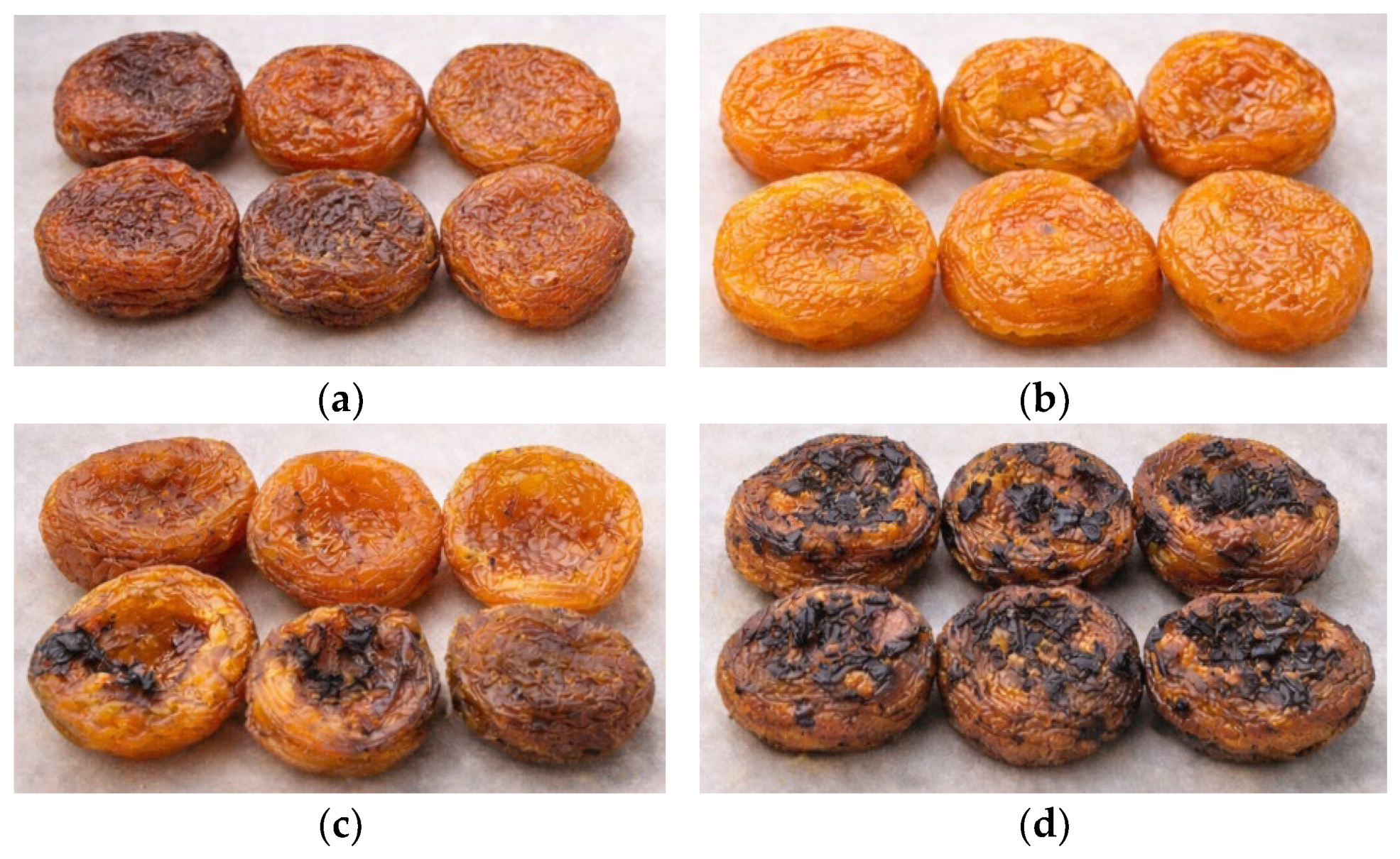
This section presents a comparative evaluation of apricot samples dried by four different methods in terms of visual quality, drying behavior, and elemental retention measured by EDXRF. First, the visual appearance of the dried samples is compared to illustrate method-dependent changes in color and surface condition (
Figure 1). Next, the elemental composition results are discussed for each method (
Table 1,
Table 2,
Table 3 and
Table 4), followed by an overall comparison of key minerals across drying techniques (
Table 5).
3.1. Elemental Composition of Open Sun-Dried Apricots
The elemental composition of apricot samples dried under open sun conditions is presented in
Table 1. Open sun drying preserved several macro- and microelements; however, their concentrations were generally lower than those observed in samples dried using controlled drying technologies.
This reduction is associated with the lack of control over environmental parameters, including temperature fluctuations, extended drying duration, and direct exposure to ambient air, which may contribute to oxidation and gradual mineral loss.
Statistical error (Stat. Err.) reflects the uncertainty related to photon counting during EDXRF measurements. The lower limit of detection (LLD) indicates the minimum detectable concentration, while the lower limit of quantification (LLQ) represents the minimum concentration that can be reliably quantified. Elements detected below the LLQ were considered trace levels and excluded from detailed comparative interpretation. These results indicate that the concentrations were too low to be quantified with high accuracy. Therefore, such values were considered as trace levels and were not used for detailed comparative analysis between drying methods.
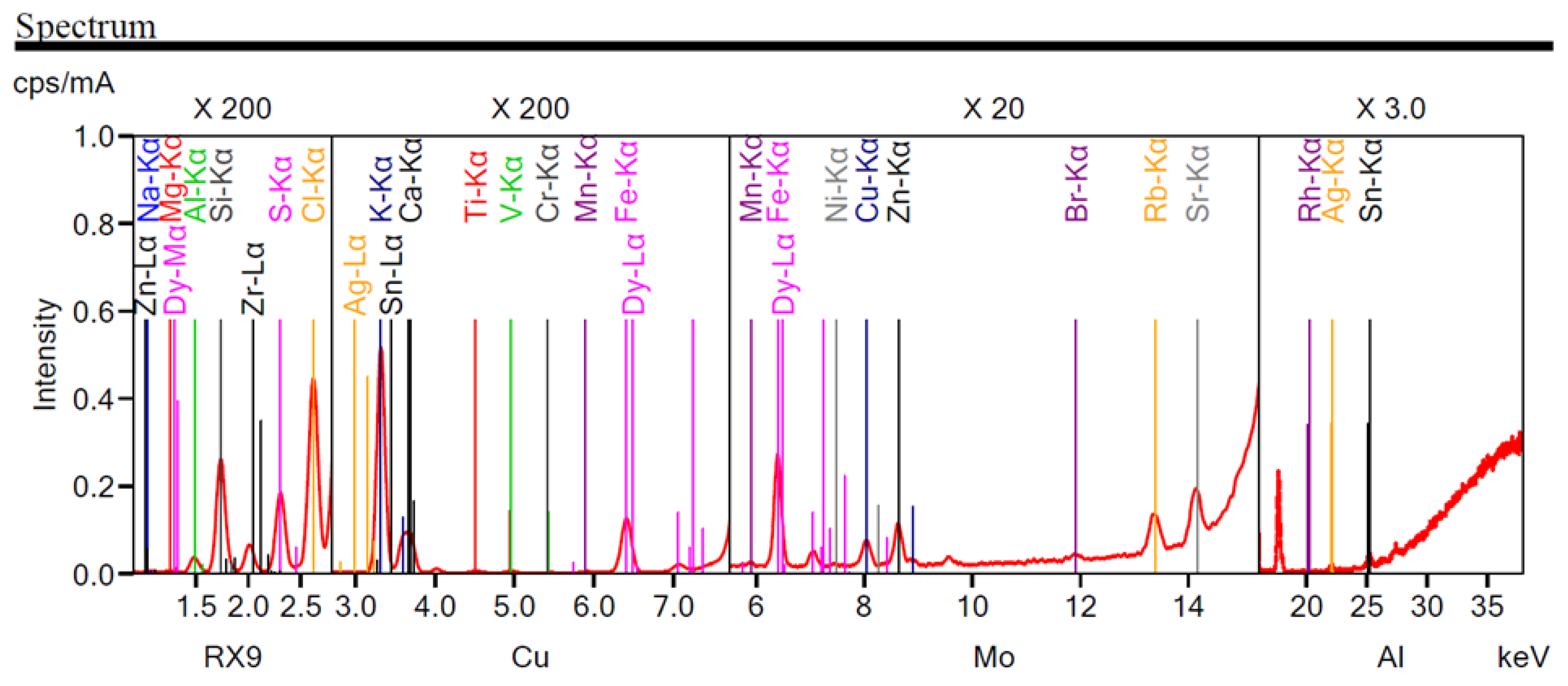
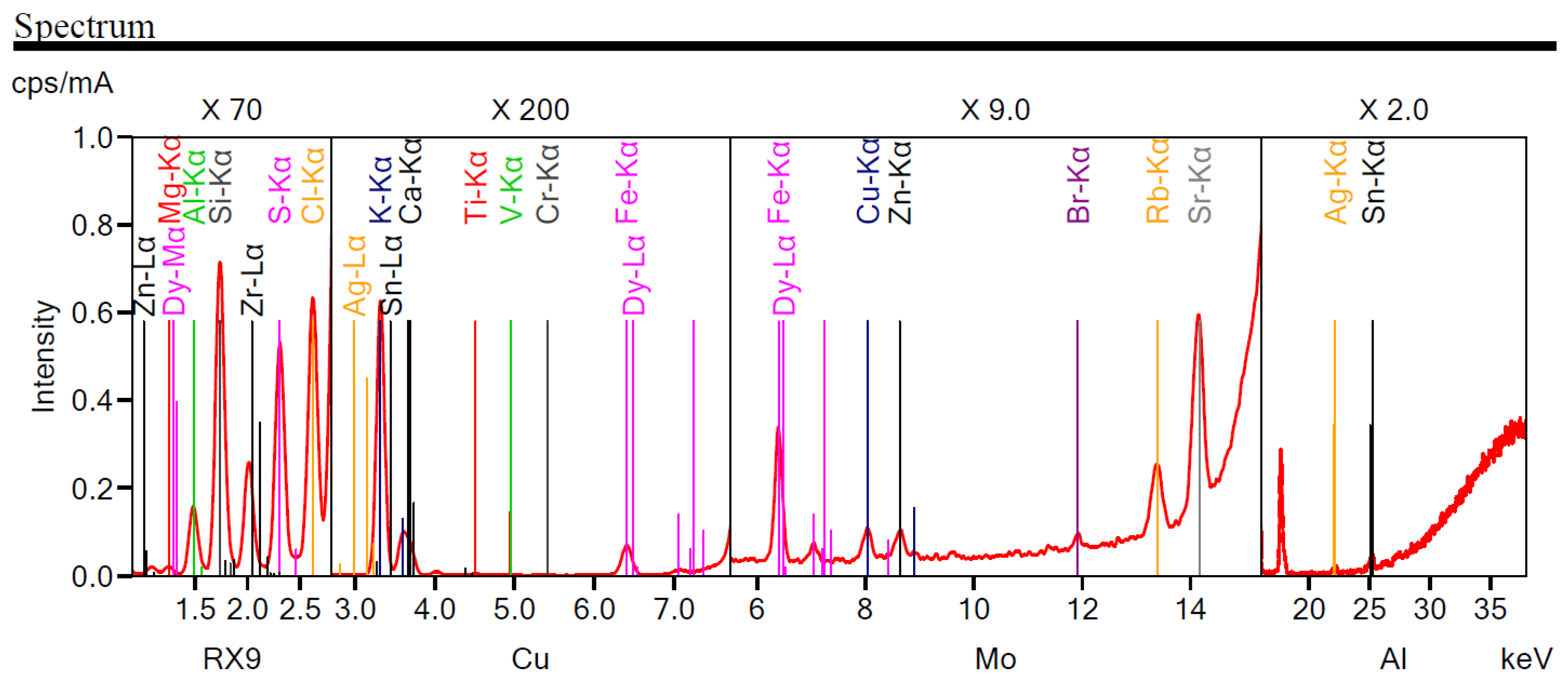
The elemental composition spectrum of apricot samples dried under open-sun conditions is presented in
Figure 2. Potassium (K) was the dominant element (1.53 mass%), followed by silicon (Si) at 0.559 mass%, aluminum (Al) at 0.245 mass%, calcium (Ca) at 0.16 mass%, and magnesium (Mg) at 0.10 mass%. Trace elements, including Fe, Mn, Zn, Cu, and Sr, were detected at low concentrations.
Open sun drying showed greater variability in mineral retention due to dependence on ambient environmental conditions and longer exposure time. Despite these limitations, key intrinsic nutrients such as potassium remained relatively preserved.
Overall, the results indicate that open sun drying maintains basic nutritional composition but presents a higher risk of mineral loss compared with controlled drying methods.
The relatively elevated concentrations of silicon (Si) and aluminum (Al) in some samples may be partially associated with environmental exposure during open sun drying. Dust particles and airborne mineral contaminants can adhere to the product surface under uncontrolled outdoor conditions. This factor should be considered when interpreting elemental composition results for open sun drying.
3.2. Elemental Composition of Solar Dryer = Dried Apricots
The elemental composition of apricot samples dried in the solar dryer is presented in
Table 2. Potassium (K) was the dominant element at 2.37 mass%, followed by silicon (Si) at 0.538 mass%, magnesium (Mg) at 0.145 mass%, sulfur (S) at 0.152 mass%, and calcium (Ca) at 0.176 mass%. These concentrations were generally higher than those observed in open sun-dried samples.
Iron (Fe) and zinc (Zn) were detected at 0.025 mass% and 0.0026 mass%, respectively, indicating retention of key microelements under controlled drying conditions. Zirconium (Zr) was measured at 0.0458 mass%, consistent with its spectral detectability in EDXRF analysis. Drying to a final moisture content of 20% helped preserve the natural composition of apricots [
4,
17].
Statistical errors ranged from 0.0002 to 0.0072 mass%, indicating acceptable measurement precision. The relatively stable elemental profile suggests that controlled solar drying conditions contributed to maintaining mineral composition during dehydration.
These results allow comparison with other drying methods (
Figure 3). Overall, solar drying showed comparatively favorable mineral retention under the experimental conditions.
3.3. Results of Apricots Dried Using an Infrared Dryer
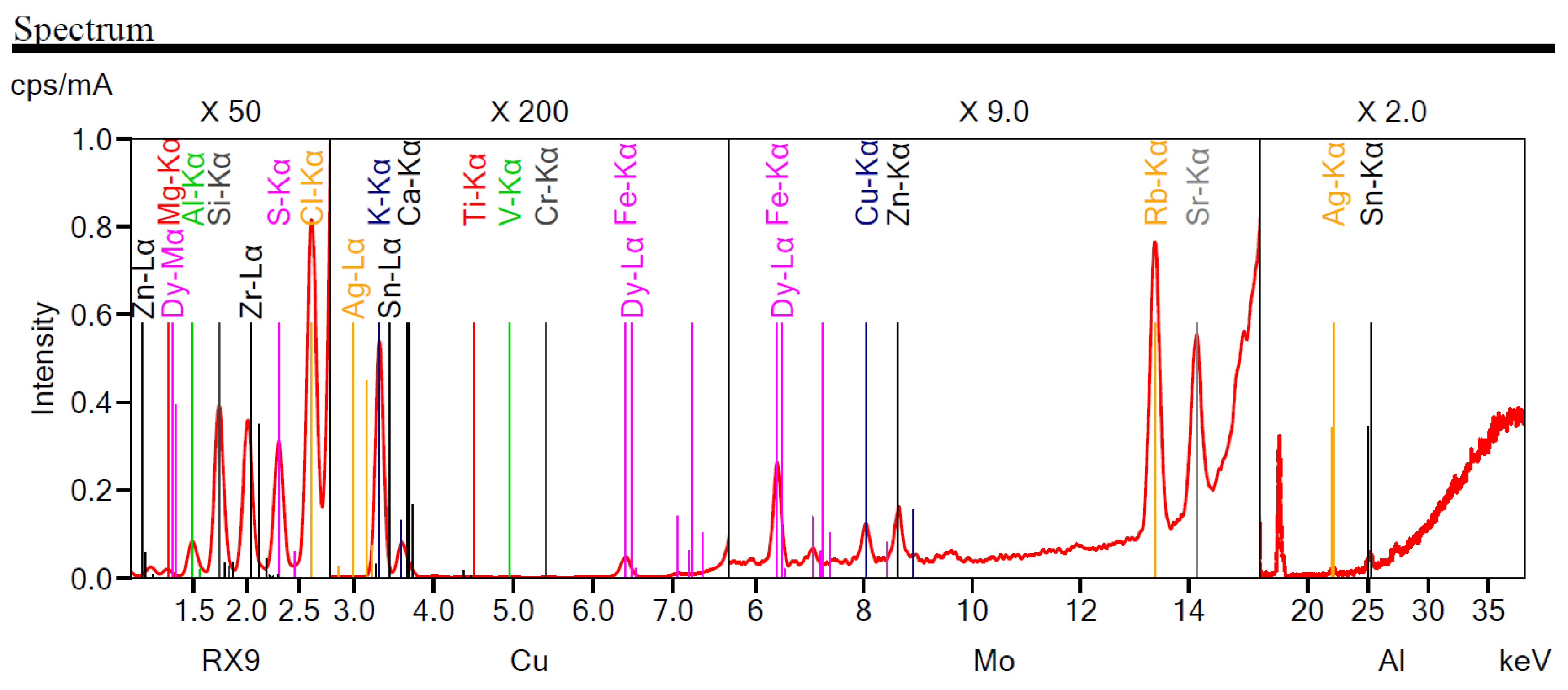
The elemental composition spectrum of apricot samples dried using the infrared dryer is shown in
Figure 4. The elemental composition of apricot samples dried using the infrared dryer is presented in
Table 3. Potassium (K) was the dominant element at 2.08 mass%, followed by silicon (Si) at 0.277 mass%, aluminum (Al) at 0.183 mass%, magnesium (Mg) at 0.106 mass%, and calcium (Ca) at 0.0585 mass%.
Trace elements, including iron (Fe), zinc (Zn), copper (Cu), and strontium (Sr), were detected at low concentrations, indicating the preservation of mineral components during infrared drying.
The results suggest that infrared drying enabled effective moisture removal while maintaining key elemental composition under the experimental conditions. Mineral retention was more stable compared with open sun drying, likely due to controlled temperature exposure and shorter drying duration.
Overall, infrared drying showed favorable performance in terms of drying efficiency and mineral preservation within the scope of this study.
3.4. Elemental Composition of Microwave-Dried Apricots
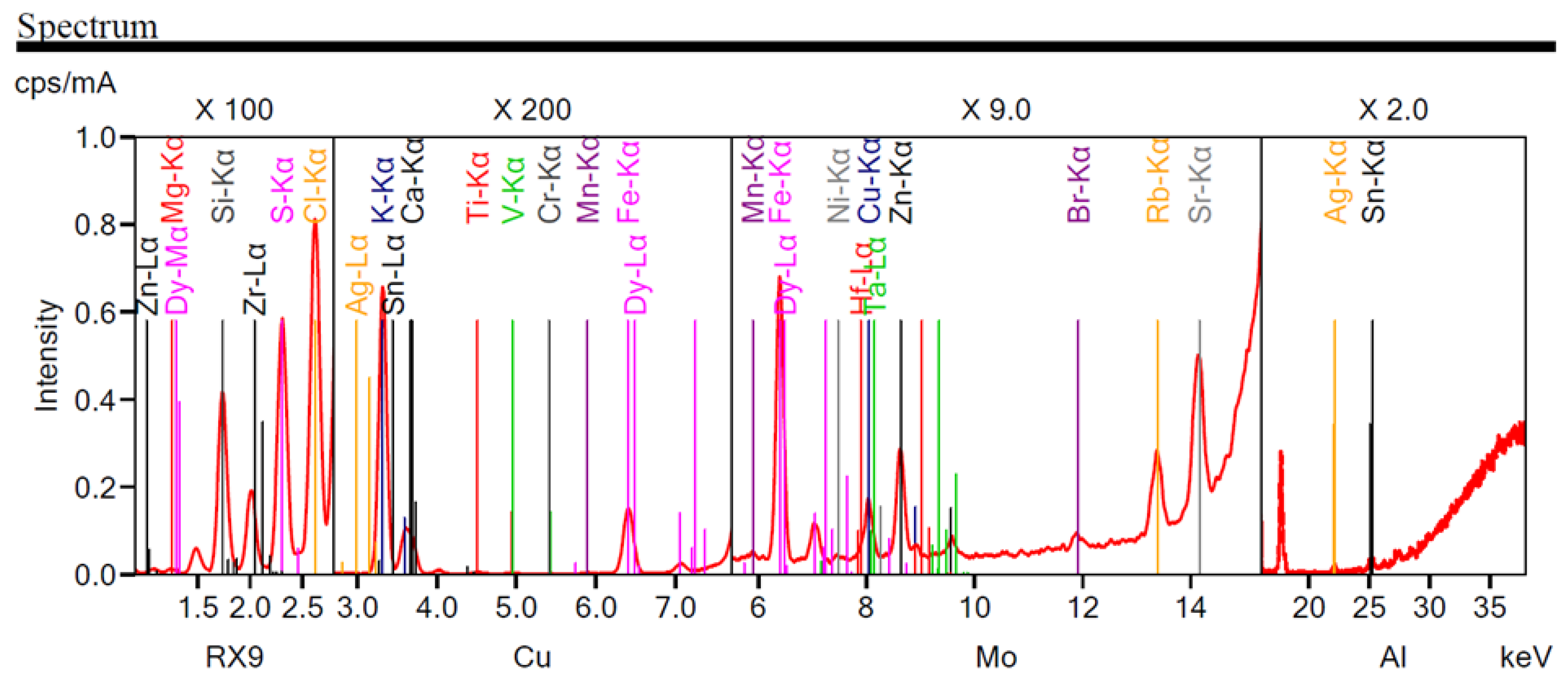
The elemental composition spectrum of apricot samples dried using the microwave dryer is shown in
Figure 5. The elemental composition of apricot samples dried using the microwave dryer is presented in
Table 4. Potassium (K) was the dominant element at 2.26 mass%, followed by silicon (Si) at 0.647 mass%, aluminum (Al) at 0.427 mass%, magnesium (Mg) at 0.162 mass%, calcium (Ca) at 0.156 mass%, and sulfur (S) at 0.091 mass%.
Trace elements, including iron (Fe), zinc (Zn), copper (Cu), manganese (Mn), strontium (Sr), titanium (Ti), zirconium (Zr), dysprosium (Dy), and chromium (Cr), were detected at low concentrations.
Microwave drying enabled rapid moisture removal due to volumetric heating. The elemental profile indicates that mineral components were retained under the applied experimental conditions. However, localized overheating may occur during microwave processing, which can influence surface characteristics.
Overall, microwave drying showed effective dehydration performance and relatively stable mineral composition within the scope of this study.
3.5. Analysis of the Research Results
The drying kinetics were evaluated based on the mass reduction recorded during the experiments. Although detailed mathematical modeling (e.g., Page or Midilli models) was not applied in the present study, the drying behavior indicated clear differences in moisture removal rates among the methods. Microwave drying exhibited the highest evaporation rate due to volumetric heating, while solar and infrared drying showed gradual moisture removal under controlled thermal conditions. Future studies will include kinetic modeling and parameter estimation to further characterize the drying process.
The comparative analysis of elemental composition indicates that microwave drying resulted in relatively high retention of several mineral components, including potassium (K), magnesium (Mg), calcium (Ca), iron (Fe), and zinc (Zn). These observations are generally consistent with previously reported findings on rapid moisture removal and mineral preservation during microwave drying.
However, certain technological limitations were observed during microwave processing. Localized overheating and non-uniform energy distribution may lead to surface darkening and internal moisture gradients, which can influence product uniformity.
In comparison, solar drying showed more stable elemental retention under controlled conditions. The process relied entirely on solar energy and did not require electrical input, indicating potential advantages in terms of energy sustainability and environmental impact.
Infrared drying demonstrated moderate performance, enabling relatively fast moisture removal while maintaining elemental composition within the experimental range.
Overall, each drying method exhibited specific advantages and limitations. Microwave drying enabled rapid dehydration but showed localized thermal effects. Solar drying provided stable mineral retention with minimal external energy input. Infrared drying offered a balance between drying efficiency and controlled temperature exposure. These observations should be interpreted within the scope of the experimental conditions and single-run design of the study.
Based on these results, the effects of different drying methods on product quality were comparatively evaluated. Solar drying showed promising performance in terms of mineral retention and energy efficiency under the tested conditions. This method may represent a practical and environmentally favorable option for agricultural product drying. To ensure full consistency and transparency of the reported results, the summary comparison table (
Table 5) has been carefully revised. All values were cross-checked directly against the primary EDXRF data presented in
Table 1,
Table 2,
Table 3 and
Table 4. The corrected
Table 5 now strictly reflects the experimentally measured mass fractions without modification or recalculation. Elements reported in the individual method sections are consistently represented in the comparative summary to avoid discrepancies and ensure data reliability.
4. Conclusions
Based on the experimental results, apricot samples dried using four different methods—open sun drying, solar drying, infrared drying, and microwave drying—were compared in terms of elemental composition, product quality, and technological efficiency. The main findings of the study can be summarized as follows.
Microwave drying ensured a high level of retention of beneficial elements in the product. However, surface burning and visual defects were observed during the drying process. In addition, high energy consumption and relatively low environmental performance limit the practical application of this method.
Infrared drying provided moderate energy consumption and acceptable drying efficiency. Nevertheless, non-uniform drying led to variations in product quality.
Open sun drying remains the simplest and least expensive method. However, it presents significant limitations in terms of sanitary conditions, drying rate, and process control.
Drying using a solar dryer showed promising results under the experimental conditions tested. The process preserved the natural color and structural integrity of the apricot samples. Elemental composition remained relatively stable, and the method showed favorable environmental performance under the experimental conditions with zero electricity consumption.
Based on these results, several recommendations can be proposed. In sustainable agriculture and food processing, energy-efficient and environmentally friendly technologies that preserve product quality are of high importance. Therefore, the wider adoption of solar dryers is strongly recommended. Although microwave dryers are efficient, the integration of intelligent control systems with automatic parameter regulation could reduce visual and structural defects. In all drying methods, real-time monitoring and optimization of key parameters such as temperature, drying time, and airflow using intelligent control strategies would improve both product quality and process efficiency. Future research should extend comparative studies to other agricultural products and focus on model-based optimization of energy use and nutrient retention.
A limitation of this study is the absence of repeated experimental runs for each drying method. Future studies will include replicated experiments and statistical analysis to further validate the observed trends.
In conclusion, the results of this study suggest the potential advantages of solar dryers for apricot drying in terms of energy efficiency, environmental safety, and product quality. This technology represents a promising solution for sustainable food production, particularly in countries with high solar potential, such as Uzbekistan.
A key limitation of this study is the absence of independent replicated drying runs for each method. Although analytical measurements were repeated to ensure instrumental reliability, biological variability in fruit composition and drying heterogeneity were not statistically evaluated. Therefore, the conclusions reflect trends observed under controlled experimental conditions and should be interpreted accordingly.




 ,
,