Proceeding Paper

AdjusTABLE: Improved Attachable, Height-Adjustable, and Portable Wheelchair Tray †
by
Cheryl Patricia C. Uy
,
Kiersten Dominique L. Hing
,
Riana Nadine E. Santiago
,
Ruzel Khyvin Marc J. Te
,
Anicka Beatriz H. Teves
,
Mateo Q. Urera
,
Jazmin Tangsoc
and
Ezekiel Bernardo
*
Department of Industrial and Systems Engineering, Gokongwei College of Engineering, De La Salle University, Manila 1004, Philippines
*
Author to whom correspondence should be addressed.
Presented at 2025 IEEE International Conference on Computation, Big-Data and Engineering (ICCBE), Penang, Malaysia, 27–29 June 2025.
Eng. Proc. 2026, 128(1), 25; https://doi.org/10.3390/engproc2026128025
Published: 12 March 2026

Abstract

Ensuring accessibility for wheelchair users is essential in promoting inclusivity and equal opportunities, yet challenges remain, especially regarding infrastructure and public furniture. One common issue is the incompatibility of standard public tables with wheelchair heights, which often results in discomfort or discourages use. While various wheelchair trays have been introduced, many lack stability, ergonomic design, and ease of attachment. To address these shortcomings, we developed AdjusTABLE—a portable, height-adjustable, and foldable tray designed with ergonomic comfort and user convenience. Using empathy maps and focus group discussions, we created a tray that holds drinks, pens, phones, and personal belongings, improving usability and independence.

1. Introduction

For inclusivity, ensuring accessibility for individuals with disabilities, particularly wheelchair users, is essential. It requires adapting infrastructure and tools to support independence and equal access to facilities, goods, and services [1] (pp. 393–413). However, despite global efforts, accessibility remains a major issue in public spaces [2]. Wheelchair users often face barriers such as the lack of ramps, the absence of handlebars, and inaccessible furniture heights. One specific and recurring challenge is the usability of tables in public establishments. This reflects a lack of integrated, user-centered design in everyday environments. Although laws such as the Philippine Accessibility Law (Republic Act 344) mandate ramps, signage, and other basic accommodations, real-world implementation is inconsistent. In Metro Manila alone, an estimated 28,000 individuals rely on wheelchairs for mobility [3], yet they continue to encounter physical barriers that restrict their independence and participation in social life. In restaurants, users report difficulties with tight layouts and incompatible table designs [4], with such environments leading to discomfort, dependence on companions, and social exclusion. In fact, 85% of disabled individuals choose to stay home rather than eat out due to these limitations [5]. This further highlights the lack of accessibility experienced by wheelchair users.
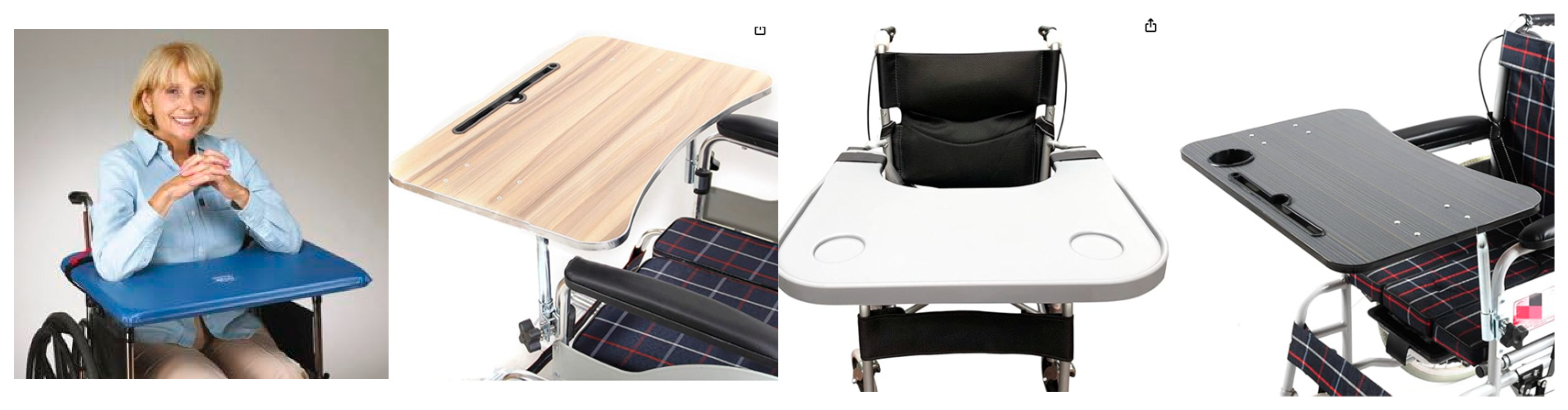
Comfort, safety, and convenience are key to evaluating accessible products for wheelchair users [6] (pp. 28–35). To address accessibility challenges, various wheelchair trays have been developed to support user independence (Appendix A). Most available models include features such as cup holders and multifunctional slots, with several offering limited width adjustments to fit different wheelchair sizes. These trays use either clamp-based or Velcro strap mechanisms for attachment, and while they range from affordable to high-end, many offer similar functionalities. However, they still present significant shortcomings. Common issues include insufficient stability, which poses safety risks and discomfort [7], and poor compatibility with the wide range of wheelchair designs [8]. The difficulty of independently attaching many trays limits user autonomy. Ergonomic limitations, such as fixed heights and minimal adjustability, also restrict usability, especially for individuals with different body types. Bulky and heavy designs pose challenges in transportation and storage, often making trays more of a burden than a support. These shortcomings hinder the effectiveness of assistive devices, which are meant to empower users. In contrast, studies show that equipment-based assistance significantly reduces task difficulty while enhancing users’ sense of independence and accomplishment [9] (pp. 384–392), [10] (pp. 413–446). For wheelchair trays to be impactful, they must be designed with stability, adjustability, and user autonomy at the forefront.
With these persistent limitations for wheelchair users, there is a need for an effective, user-centered solution. This requires the development of this paper and the design, AdjusTABLE—a height-adjustable, ergonomic, and portable wheelchair tray designed to enhance comfort, independence, and usability in everyday settings. Given that existing wheelchair trays are often non-adjustable, unstable, and incompatible with wheelchair dimensions, which limits user comfort, independence, and daily functionality, we developed a user-centered solution that addresses these gaps through an ergonomic, adjustable, and portable wheelchair tray design (see Table A1 and Table A1 for details). Specifically, we identified problems and needs of wheelchair users in public spaces, determined the lacking features in existing solutions, and developed a minimum viable product (MVP) that addresses these needs. We tested and improved the prototype based on performance results.
The developed product improves accessibility for wheelchair users by addressing challenges in public space usability, such as table height and tray limitations. By developing a functional and user-centered product, it promotes greater independence, comfort, and social inclusion for wheelchair users in daily activities. The product is limited by a small, specific sample, mostly polio-affected users of standard or sports wheelchairs, potentially limiting generalizability. It does not address users with specialized or motorized wheelchairs. Additionally, results are specific to the Philippine context and may not reflect conditions in other countries with different accessibility standards.

2. Methodology

To identify problems and explore innovative solutions not adequately addressed by existing products, data-gathering tools were selected to ensure the solution aligned with user needs. Then, qualitative data collection began with the development of an empathy map, which categorizes insights into seven areas: who the user is, what they need, what they see, say, do, hear, and what they think and feel to identify pain points [11] (pp. 182–191). Moreover, a house of quality (HOQ) analysis was used to validate user requirements and translate them into technical features [12] (pp. 373–398). The results were validated through an on-site visit to Tahanang Walang Hagdanan, a non-profit organization supporting orthopedically handicapped individuals in Cainta, Rizal.
With key features for the wheelchair tray, we recorded precise wheelchair measurements of the armrest, seat, backrest, and metal supports for prototype development. Consultations with a designer enabled continuous refinement through design iterations, ensuring the prototype met user requirements. Design iterations are discussed in the following sections.

3. Results and Discussion

3.1. User Research and Analysis

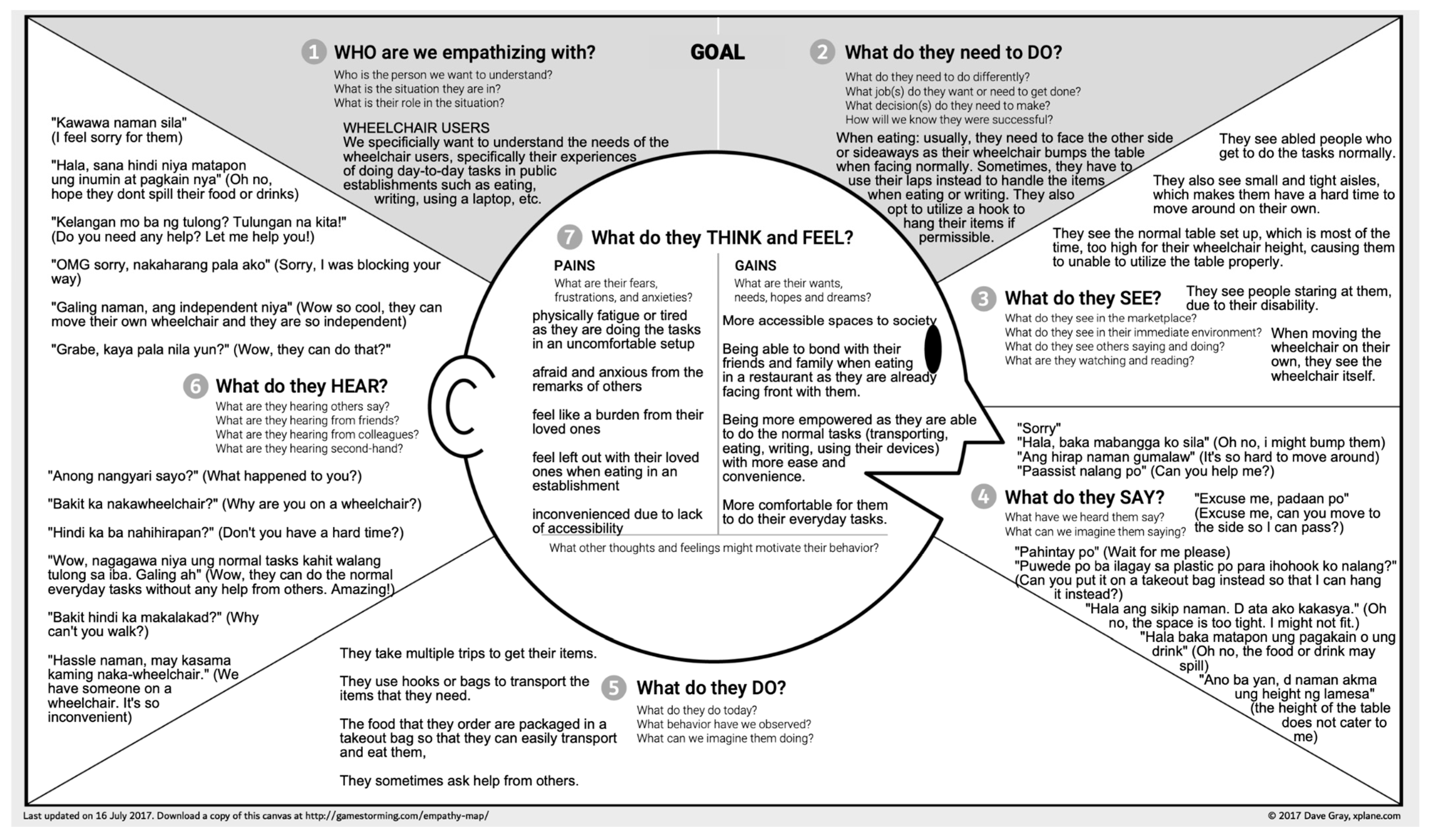
Figure 1 presents the empathy map developed for this study, focusing on wheelchair users’ daily challenges in public settings—such as eating, writing, or using devices. It was used to identify pain points, such as difficulty aligning with tables, resulting in users eating sideways or using their laps as a surface. Results were then validated through interviews. One respondent, a polio survivor and disability advocate, stressed the importance of lightweight, easy-to-attach assistive devices that do not hinder mobility. Likewise, another from the National Council on Disability Affairs emphasized comfort and universal design, noting that heavy or bulky attachments can strain users. These findings informed the initial design parameters, particularly focusing on independence, ergonomic comfort, and adaptability.
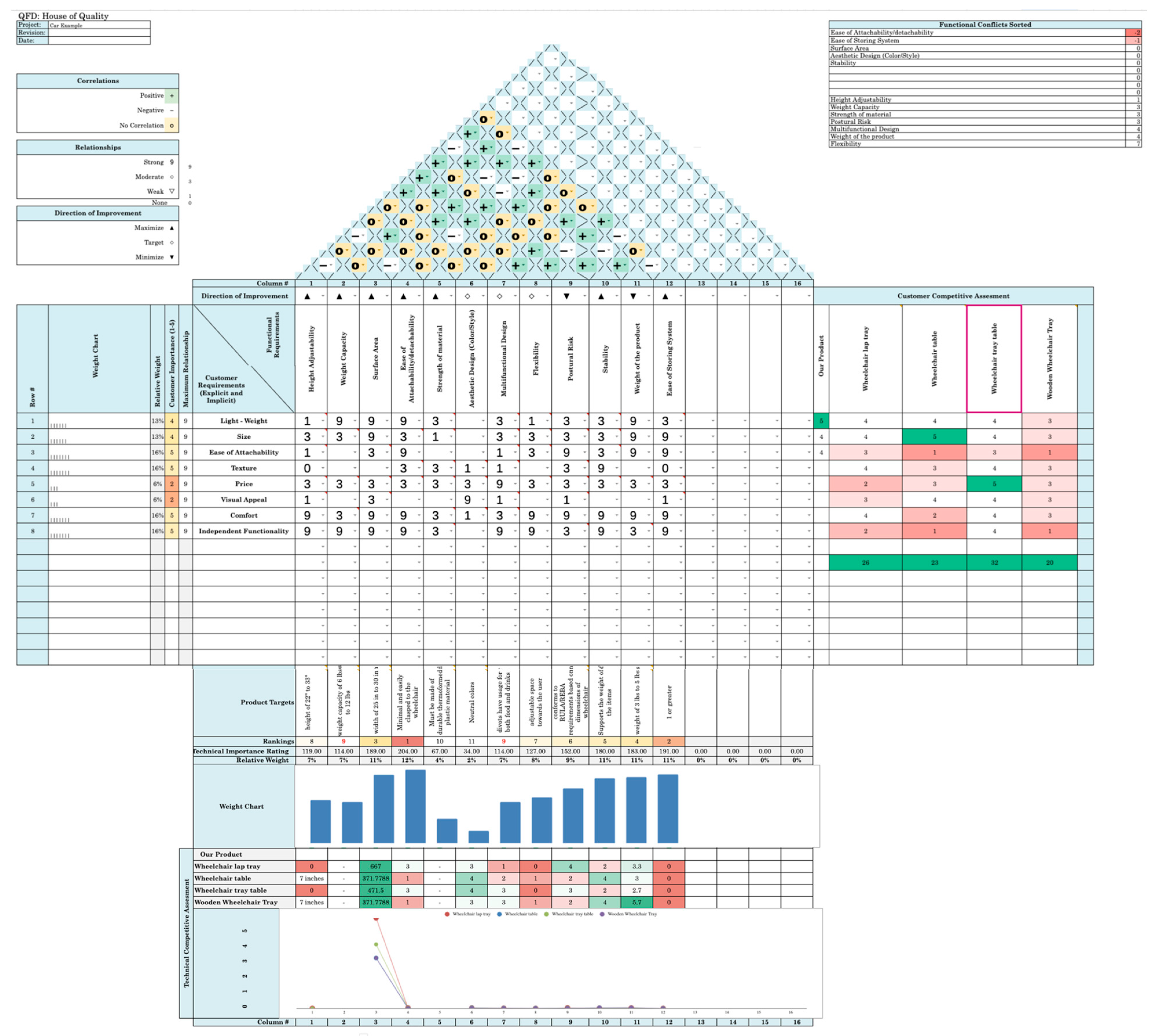
A HOQ matrix was applied as shown in Figure 2 to identify customer needs, and four commercially available wheelchair trays (Appendix B) were compared based on weight, size, attachability, texture, visual appeal, comfort, and independence.
Product 3 scored highest, serving as a benchmark for design features to incorporate or improve. On the other hand, interrelationships between technical features and user priorities were evaluated using a scoring system (9 = strong, 3 = moderate, 1 = weak). Conflicting attributes were identified using “+” and “−” indicators for design decisions and trade-offs. Based on this, technical specifications were determined and prioritized according to user impact. These findings are then validated as the team visited Tahanang Walang Hagdanan. With guidance from their PR Department Head, the researchers interviewed wheelchair users engaged in livelihood training. The site visit highlighted the variability in wheelchair types and emphasized the need for adjustability and universal design to serve a wider user base.
From the HOQ analysis and user feedback, the following features were prioritized (in descending order of importance): a minimal and easy-to-clasp attachment mechanism, foldability or storability when not in use, adjustable width (25–30 inches), adjustable height (22–33 inches), lightweight structure (3–5 lbs), load capacity of 6–12 lbs, ergonomic design conforming to rapid upper limb assessment and rapid entire body assessment guidelines, forward–backward adjustability, use of durable thermoformed plastic, integrated divots for food, drinks, or small items, a neutral and customizable visual design, and an anti-slip surface to ensure user confidence and safety.
These parameters accommodate daily needs (e.g., meals, books, devices) without compromising comfort or safety. The core innovation lies in its adjustability and universal fit—addressing gaps in existing products. Furthermore, the tray is designed for independent use, requiring no external assistance to attach or detach. Materials were selected to balance durability and lightness for everyday portability. Removing divots and non-slip surfaces enhances usability and reduces spillage risks during movement. Overall, the design integrates functional, ergonomic, and aesthetic considerations to offer a reliable assistive tool that enhances user independence and quality of life.

3.2. Alternative Design Evaluations

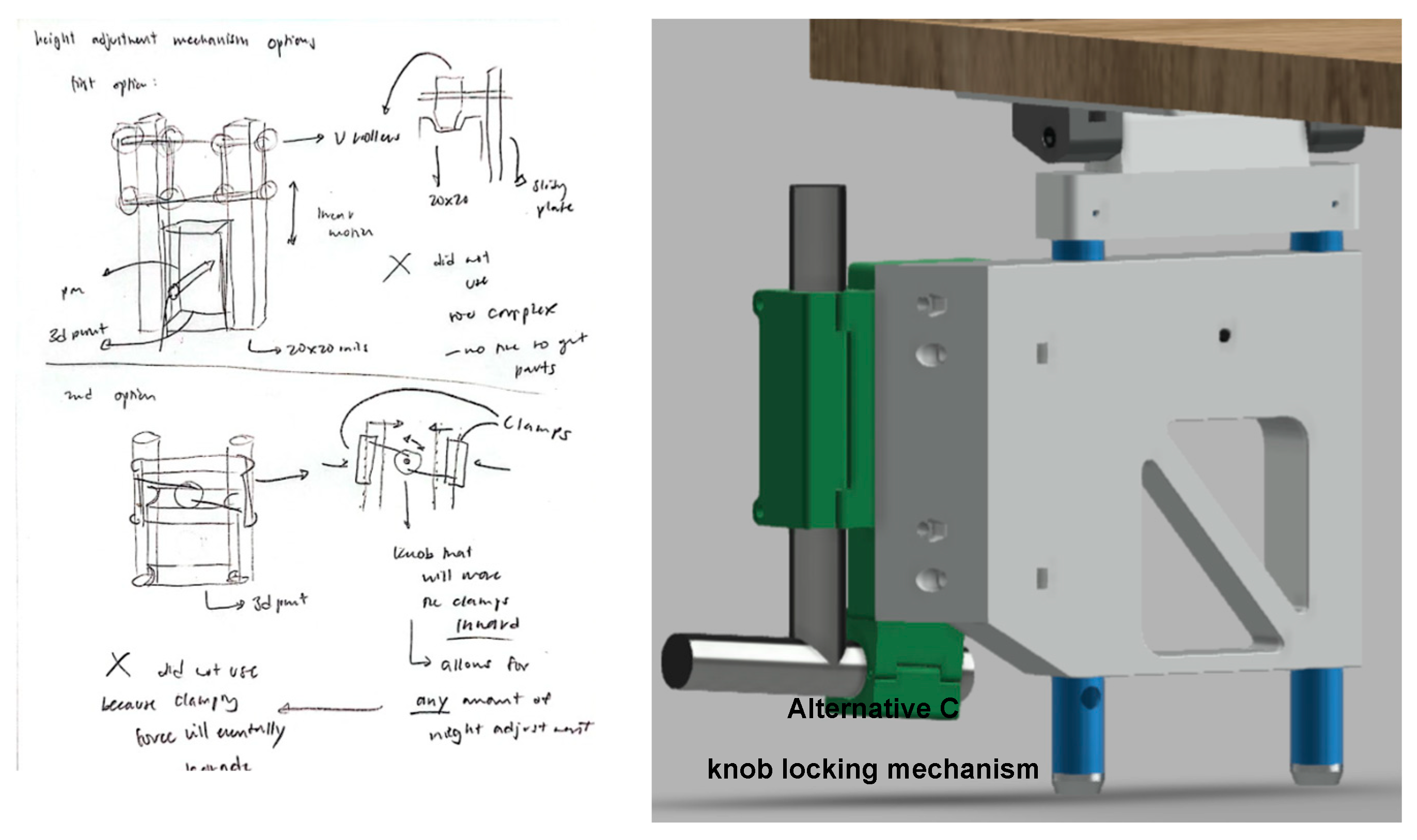
Using the key insights gathered from 10 users, various designs were created to address the issues encountered by wheelchair users. Three height adjustment mechanisms were explored (Figure 3). Alternative A used a v-roller, which met functional requirements but was costly. Alternative B applied a friction-based grip for flexible adjustment but posed risks of slippage and wear. Alternative C, the final choice, used a knob-locking system with tube railings and pre-drilled holes, offering stability, cost-efficiency, durability, and a compact form. Compared with existing clamping mechanisms, Alternative C ranked highest overall as scored using the Pugh matrix, wherein alternatives are compared based on various features. The scores of the matrix are presented in Table 1.
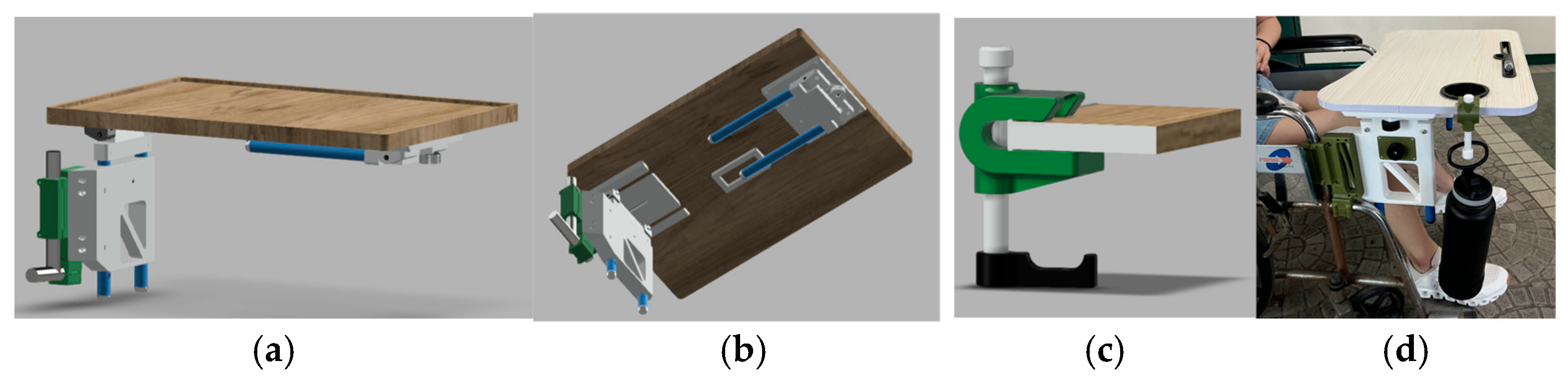
Figure 4 shows the prototype of the final foldable tray with a permanent mount clamped onto wheelchair armrests and footrests. The tray attaches via a pin-lock rail system and adjusts in height through locking knobs. Width can be adjusted to fit various wheelchair sizes. The tray includes a cup holder, pen/phone slots, and a custom side hook for personal items—enhancing both utility and comfort without crowding the user’s back.
To evaluate potential risks in the wheelchair tray design, a failure modes and effects analysis (FMEA) was conducted as shown in Table 2. The assessment considered severity, occurrence, and detection to compute risk priority numbers (RPNs) for each potential failure. While the tray breaking and issues with the mounting mechanism received high RPNs due to their severe consequences, their likelihood of occurrence remained low. In contrast, components related to tray adjustability showed lower RPNs, due to reduced severity scores. Although existing design controls help mitigate these risks, they are not sufficient enough to eliminate failure. Therefore, targeted recommendations were proposed for each failure mode to support future design improvements and ensure user safety and product reliability.

4. Conclusions

Accessibility is key to inclusivity, especially for wheelchair users who face problems in public spaces. While existing wheelchair trays attempt to address these issues, many fall short in terms of adjustability, stability, and reliability. This research aimed to bridge those gaps through the development of AdjusTABLE—a height-adjustable, ergonomic, and portable tray designed using a user-centered approach. Data were gathered through empathy mapping, interviews, and comparison with existing products using HOQ analysis. The design focused on independence, comfort, and adaptability, incorporating divots, anti-slip surfaces, and height/angle adjustments. While the current prototype is a minimum viable product, it encompasses the envisioned solution that addresses the key issues of the target users.
Future improvements are required by using stronger materials such as steel, integrating more compact attachment mechanisms, enhancing the locking system with indicators, and exploring transparency for better visibility. Despite areas for enhancement, AdjusTABLE already stands as a promising step toward greater accessibility and empowerment for wheelchair users.

Author Contributions

Conceptualization, C.P.C.U., K.D.L.H., R.N.E.S., R.K.M.J.T., A.B.H.T., M.Q.U., J.T. and E.B.; methodology, C.P.C.U., R.N.E.S. and A.B.H.T.; software, M.Q.U.; validation, C.P.C.U. and A.B.H.T.; formal analysis, C.P.C.U., K.D.L.H., R.N.E.S., R.K.M.J.T. and A.B.H.T.; investigation, K.D.L.H., R.N.E.S. and R.K.M.J.T.; resources, A.B.H.T.; data curation, K.D.L.H. and A.B.H.T.; writing—original draft preparation, C.P.C.U., K.D.L.H., R.N.E.S., R.K.M.J.T., A.B.H.T. and M.Q.U.; writing—review and editing, C.P.C.U., R.N.E.S., A.B.H.T. and M.Q.U.; visualization, K.D.L.H. and R.K.M.J.T.; supervision, E.B. and J.T.; project administration, C.P.C.U. and A.B.H.T.; funding acquisition, C.P.C.U., K.D.L.H., R.N.E.S., R.K.M.J.T., A.B.H.T. and M.Q.U. All authors have read and agreed to the published version of the manuscript.

Funding

This research received no external funding.

Informed Consent Statement

Informed consent was obtained from all subjects involved in the study.

Data Availability Statement

The raw data supporting the conclusions of this article will be made available by the authors on request.

Acknowledgments

To turn the advocacy of accessibility for wheelchair users into reality, the researchers extend their heartfelt thanks to those who made this study possible. Special thanks to Paolo Gonzales for his dedication in bringing the product to life through precise and sturdy 3D printing, ensuring both usability and durability. Gratitude is also extended to Naprey Almario, Virgie Rabino, and Erika Mae Villaflores of Tahanang Walang Hagdanan for sharing valuable insights and lived experiences, which greatly influenced the product’s relevance and design.

Conflicts of Interest

The authors declare no conflicts of interest.

Appendix A

Table A1. Existing Wheelchair Trays in the Market.
Product FeaturesPrice (PHP)Image
Nurth Wheelchair Tray
  • Mobile phone stand/card slot
  • Adjustable width
  • Mechanism: Metal clamp with knob
  • Material: Solid wood tray
94,385Engproc 128 00025 i001
Jeelathy Wheelchair Tray Table
  • 2 cup holders
  • Mechanism: Velcro hook and loop straps
  • Material: ABS plastic tray
105,496Engproc 128 00025 i002
Vonztoon
Wheelchair Tray
  • Cup holder
  • Mobile phone stand/card slot
  • Adjustable width
  • Mechanism: Metal clamp with knob
  • Material: Wooden tray
5000Engproc 128 00025 i003
Unicare Solutions Wheelchair Tray
  • 2 cup holders
  • Mechanism: ABS plastic clamp with knob
  • Material: ABS plastic
258Engproc 128 00025 i004
GBH-MED Wheelchair Tray Table
  • 2 cup indents
  • Pencil indent
  • Adjustable width
  • Mechanism: ABS plastic clamp with knob
  • Material: ABS plastic
2600Engproc 128 00025 i005

Appendix B

Figure A1. Existing wheelchair tray products.
Engproc 128 00025 g0a1

References

  1. Broderick, A. Of rights and obligations: The birth of accessibility. Int. J. Hum. Rights 2019, 24, 393–413. [Google Scholar] [CrossRef]
  2. Çubicki, M. (Ed.) Evaluation of accessibility for all in public buildings: Konya case. In OpenMETU Institutional Repository, 1st ed.; Middle East Technical University: Ankara, Turkey, 2019; Volume 1, Available online: https://open.metu.edu.tr/handle/11511/43418 (accessed on 12 December 2023).
  3. Tumaneng, P.L.; Yam, C.C. A study on the accessibility of pedestrian crossing for Filipino wheelchair users in Metro Manila. In Animo Repository, 1st ed.; Sun, J.M., Ed.; De La Salle University: Manila, Philippines, 2015; Volume 1, Available online: https://animorepository.dlsu.edu.ph/etd_bachelors/9531 (accessed on 12 December 2023).
  4. UNICEF. Wheelchairs, manual. In Assistive Product Specification for Procurement (APS), 1st ed.; UNICEF: New York, NY, USA, 2023; Volume 1, Available online: https://www.unicef.org/innovation/media/14536/file/Product_specifications_wheelchairs_and_cushions.pdf (accessed on 12 December 2023).
  5. Phillips, J. (Ed.) Disabled Foodie David Friedman Explores Accessible Restaurants Across the U.S. In Wheel: Life, 1st ed.; Wheel: Life: Atlanta, GA, USA, 2016; Volume 1, Available online: https://www.linkedin.com/pulse/disabled-foodie-david-friedman-explores-accessible-across-lisa-wells/ (accessed on 12 December 2023).
  6. Stockton, L.; Rithalia, S. Pressure-reducing cushions: Perceptions of comfort from the wheelchair users’ perspective using interface pressure, temperature and humidity measurements. J. Tissue Viability 2009, 18, 28–35. [Google Scholar] [CrossRef] [PubMed]
  7. Li, F.M.; Carrington, P. Breaking the “Inescapable” Cycle of Pain: Supporting Wheelchair Users’ Upper Extremity Health Awareness and Management with Tracking Technologies. In Proceedings of the ACM, 1st ed.; Li, Y., Ed.; ACM: New York, NY, USA, 2023; Volume 1. [Google Scholar] [CrossRef]
  8. Reid, R. Universal Design in the Restaurant Industry: Bridging the Gap Between ADA Guidelines and Customer Needs. Doctoral Dissertation, Middle Tennessee State University, Murfreesboro, TN, USA, 2021. [Google Scholar]
  9. Verbrugge, L.M.; Rennert, C.; Madans, J.H. The great efficacy of personal and equipment assistance in reducing disability. Am. J. Public Health 1997, 87, 384–392. [Google Scholar] [CrossRef] [PubMed]
  10. Srinivasan, S. Assistive technology for mobility, seating, and positioning. In BRILL eBooks, 1st ed.; Alant, E., Lloyd, L.L., Eds.; BRILL: Leiden, The Netherlands, 2011; Volume 1, pp. 413–446. [Google Scholar] [CrossRef]
  11. Siricharoen, W.V. Using empathy mapping in design thinking process for personas discovering. In Context-Aware Systems and Applications, and Nature of Computation and Communication: 9th EAI International Conference, ICCASA 2020, and 6th EAI International Conference, ICTCC 2020, Thai Nguyen, Vietnam, 26–27 November 2020, Proceedings; Nguyen, N.T., Trawiński, B., Eds.; Springer International Publishing: Cham, Switzerland, 2021; Volume 9, pp. 182–191. [Google Scholar]
  12. Clausing, D. The house of quality. In Considerations, 1st ed.; Hauser, J.R., Ed.; Elsevier: New York, NY, USA, 1988; Volume 1, pp. 373–398. [Google Scholar]
Figure 1. Empathy map used in this study.
Engproc 128 00025 g001
Figure 2. HOQ for wheelchair tray.
Engproc 128 00025 g002
Figure 3. Three design alternatives of height adjustment mechanism.
Engproc 128 00025 g003
Figure 4. Prototype of the designed wheelchair tray: (a) side view of CAD prototype; (b) bottom view of CAD prototype of the designed wheelchair tray; (c) CAD prototype of the hook for the wheelchair tray; (d) actual prototype produced.
Engproc 128 00025 g004
Table 1. Pugh matrix on choosing best alternative for the height adjustment mechanism.
AlternativeStabilityPriceWeightCompactnessLongevityTotals
Importance311128
Baseline (Clamp Mechanism)000000
Alternative A: V-Rollers through Extrusion Rail1−1−1−112
Alternative B: Gripping Mechanism1100−12
Alternative C: Knob-Locking Mechanism through Tube Railing Permanent Mount110117
Table 2. FMEA results.
Design AspectWheelchair Tray Attachment Collapse/BreakingHeight Adjustability Mechanism Failure PointsWheelchair Mounting Mechanism Failure/
Incompatibility
Tray-Related Risks
and Durability
Potential failure modeInsufficient structural strengthMechanism jam or stickingMounting mechanism not compatible with wheelchairWheelchair tray surface wear and tear
Potential failure causePoor material selection or assemblySuboptimal lock
design and/or lack of lubrication
Wheelchair
dimensions are incorrect or not within product specifications
Poor material selection
Potential failure effectTray may break/
collapse under load
Difficulty in adjusting
tray position
Inability to attach wheelchair trayScratched and or deformed tray surface and aesthetic effects
Current design controlRigorous load testingUser testingUse a general mounting mechanism that can be modifiedMaterial testing and user survey
Severity8474
Occurrence4535
Detection6797
RPN192140189140
Ranking1323
Recommended actionEvaluate and test material strengthHeight adjustment testing and lubricationProper wheelchair design compatibility testingExploration of durable materials and accelerated wear testing
Disclaimer/Publisher’s Note: The statements, opinions and data contained in all publications are solely those of the individual author(s) and contributor(s) and not of MDPI and/or the editor(s). MDPI and/or the editor(s) disclaim responsibility for any injury to people or property resulting from any ideas, methods, instructions or products referred to in the content.