1. Introduction
Robotic grippers are fundamental components in automated manipulation systems, directly influencing precision, payload capacity, and operational reliability. Among the key mechanical performance metrics of grippers, structural stiffness plays a decisive role in positioning accuracy, force transmission, and deformation resistance under load [
1,
2]. Industrial automation increasingly demands lightweight yet high-performance end-effectors. Therefore, understanding the influence of geometric parameters on stiffness has become a key research focus [
3]. The Finite Element Method (FEM) has emerged as a dominant numerical tool for evaluating the mechanical behavior of robotic structures due to its ability to model complex geometries, material nonlinearities, and realistic boundary conditions [
4,
5]. FEM-based analyses of stiffness have been extensively applied to robotic arms and manipulators; however, comparatively few studies explicitly address robotic grippers, despite their sensitivity to deformation at the contact interface [
6]. Researchers have demonstrated that even small compliance in gripper fingers can significantly influence grasp stability and positional accuracy [
7]. Geometric scaling effects on mechanical stiffness have been widely studied in structural mechanics and micro-electromechanical systems (MEMS) design, where scaling laws indicate that stiffness does not increase linearly with size [
8,
9]. In robotic applications, scaling a structure along different axes can lead to anisotropic stiffness behavior, influencing load paths and stress distributions [
10]. Studies on parallel-jaw grippers indicate that finger length has a dominant effect on bending stiffness, while width and height scaling primarily influence torsional and compressive rigidity [
11].
Topology and size optimization techniques have been successfully employed to enhance stiffness-to-weight ratios; however, these methods often require high computational cost and complex design interpretation [
12]. Similar parametric studies were conducted in [
13,
14] for structural static analysis and in [
15] for transient thermal analysis. Accurate stiffness prediction using FEM depends heavily on mesh quality, boundary condition definition, and load representation, particularly for gripper fingers subjected to concentrated contact forces [
16]. Recent research has expanded stiffness analysis to include coupled structural–dynamic effects, emphasizing that static stiffness alone may not fully characterize gripper performance during high-speed or repetitive operations [
17]. Additionally, material selection has been shown to significantly influence stiffness behavior, with advanced alloys and composite materials offering improved performance at reduced weight [
18]. Nonetheless, geometric scaling remains a primary and cost-effective design variable, particularly for grippers used in industrial environments [
19].
In summary, existing literature establishes FEM as a reliable tool for stiffness evaluation and point out the importance of geometric parameters in robotic gripper performance. However, systematic investigations that independently scale length, width, and height to quantify their individual and combined effects on stiffness remain limited. This gap motivates the present study, which aims to provide a comprehensive numerical framework to guide geometry-driven stiffness optimization of robotic grippers. Accordingly, this work presents a numerical investigation of the stiffness behavior of a robotic gripper subjected to geometric scaling in three principal dimensions—length, width, and height—using the Finite Element Method within ANSYS Workbench 2025 R1.
2. Numerical Procedure
The CAD model of the gripper was obtained from an online source [
20] and imported into the DesignModeler module of ANSYS Workbench. The CAD model corresponds to a soft robotic parallel-jaw gripper available on the Rochu Soft Robotics website [
20]. The model represents a soft pneumatic gripper used in soft robotics. The geometry was adopted as a representative structure to investigate the effects of geometric scaling on stiffness and stress. All simulations were performed in ANSYS Workbench 2025 R1. Both static and modal analyses were conducted. The material used in the simulations was silicone rubber, with the following properties: density of 1240 kg/m
3, Young’s modulus of 79.3 MPa, and Poisson’s ratio of 0.49. These material properties were obtained from [
21] and were originally reported in [
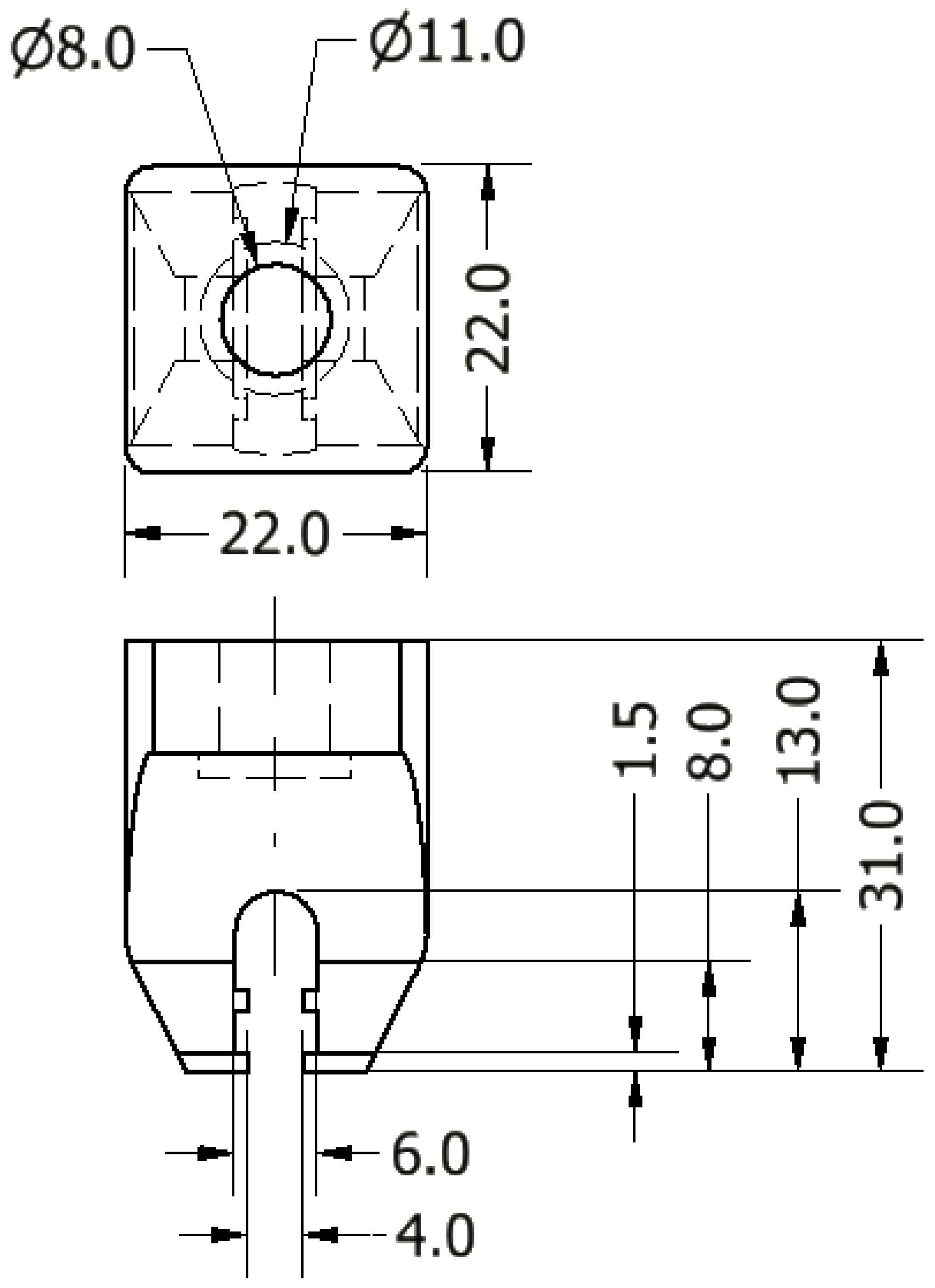
22]. Poisson’s ratio was reduced from 0.5 to 0.49 to enable bulk modulus computation. Silicone rubber was selected as the modeling material because the original gripper concept corresponds to a soft robotic gripper design. In this study, the material serves as a representative elastic medium, enabling the investigation of geometric scaling effects on structural behavior. The objective is not to reproduce a specific gripper, but rather to analyze how geometric dimensions influence stiffness and stress responses within the gripper structure. The model of the studied gripper is shown in
Figure 1.
Figure 1.
CAD model of the gripper [
20]. All dimensions are given in mm. All scaling factors are equal to 1.
Figure 1.
CAD model of the gripper [
20]. All dimensions are given in mm. All scaling factors are equal to 1.
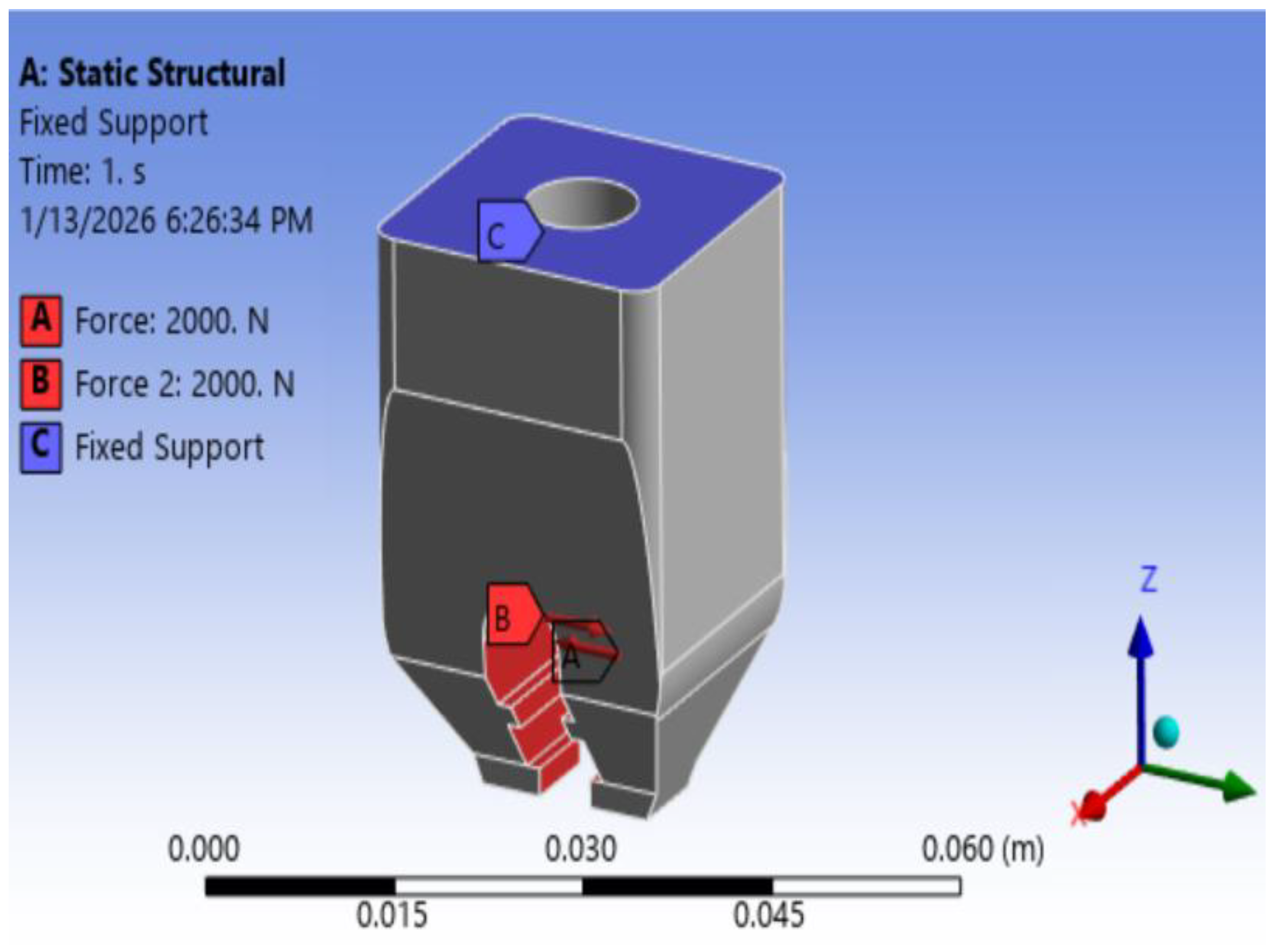
The applied loads and degrees-of-freedom (DOF) constraints defining the simulation conditions are shown in
Figure 2.
3. Results
3.1. Mesh Convergence
A mesh sensitivity analysis was performed to identify the element size that yields sufficiently accurate numerical results. Element sizes of 16, 8, 4, 2 and 1 mm were investigated. The corresponding stiffness and stress results are presented in
Table 1.
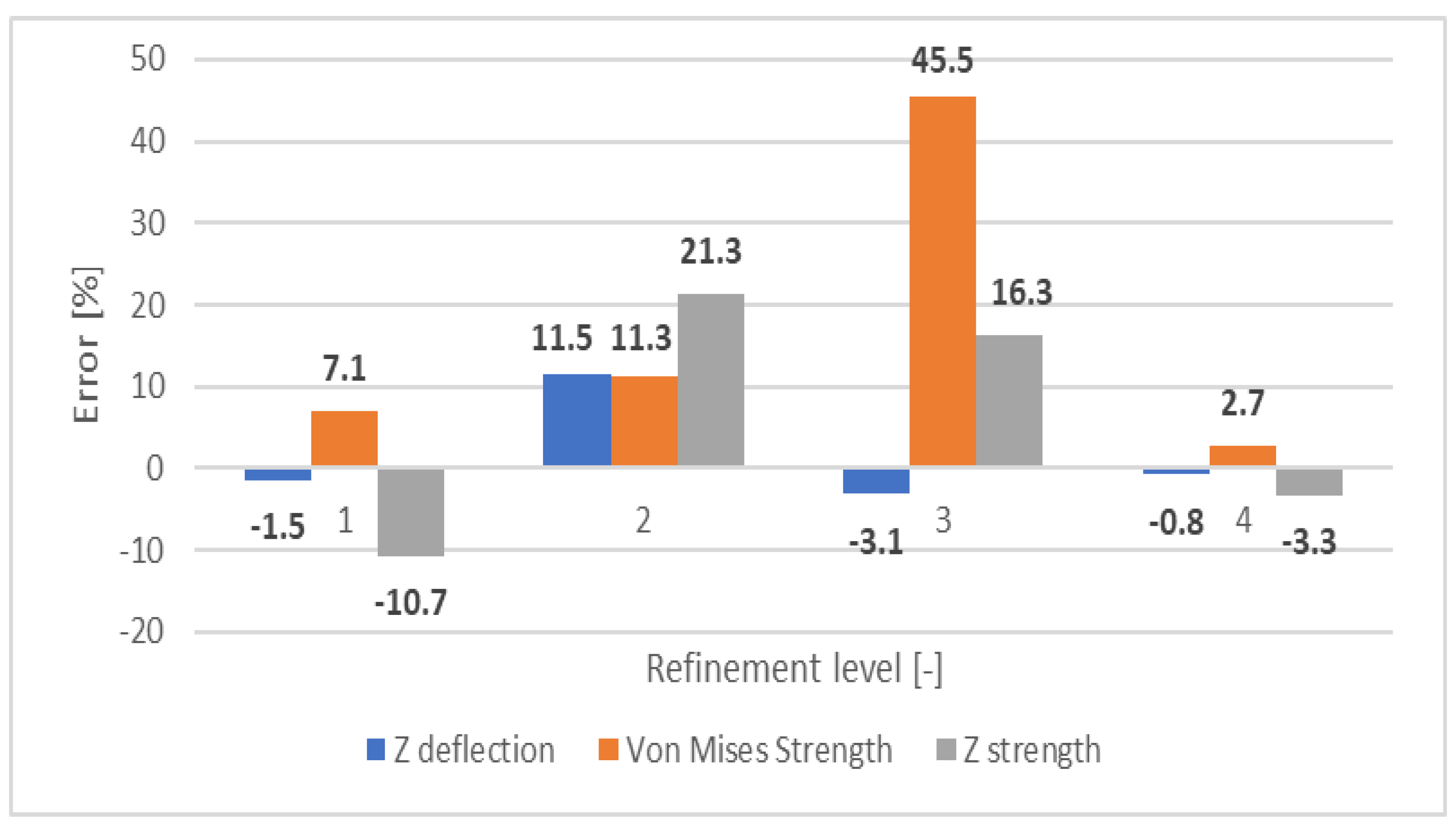
Figure 3 shows the errors from the mesh convergence analysis. The results shown in
Figure 3 were computed using Equation (1).
where
A is the y deflection, von Mises stress or Z stress.
The subscript i represents the considered element size.
The subscript i − 1 represents the previous adjacent (higher) element size.
Figure 3.
Errors obtained in the mesh convergence results.
Figure 3.
Errors obtained in the mesh convergence results.
Overall, the results indicate that displacement (Z deflection) converges more consistently than the stress-related quantities. Stress is more sensitive to mesh refinement, particularly the von Mises stress. Z deflection exhibits relatively low errors at all refinement levels, ranging approximately from −3% to +12%. In contrast, the von Mises stress shows the largest and most unstable errors. At refinement level 3, the error is particularly high (approximately 45.5%), and even at the other levels, it remains around 7–12%. The Z stress shows errors ranging from approximately −11% to +21% at lower refinement levels; however, these errors decrease significantly at refinement level 4 (approximately −3%). An element size of 1 mm was therefore selected, as it produced the lowest error among all mesh sizes considered. The number of elements and nodes for the selected mesh size (1 mm) are 149,457 and 211,570, respectively. A tetrahedral mesh was used.
3.2. Parametric Study
In the parametric study, the scaling factor was varied along one axis, while the other two scaling factors were kept equal to 1.
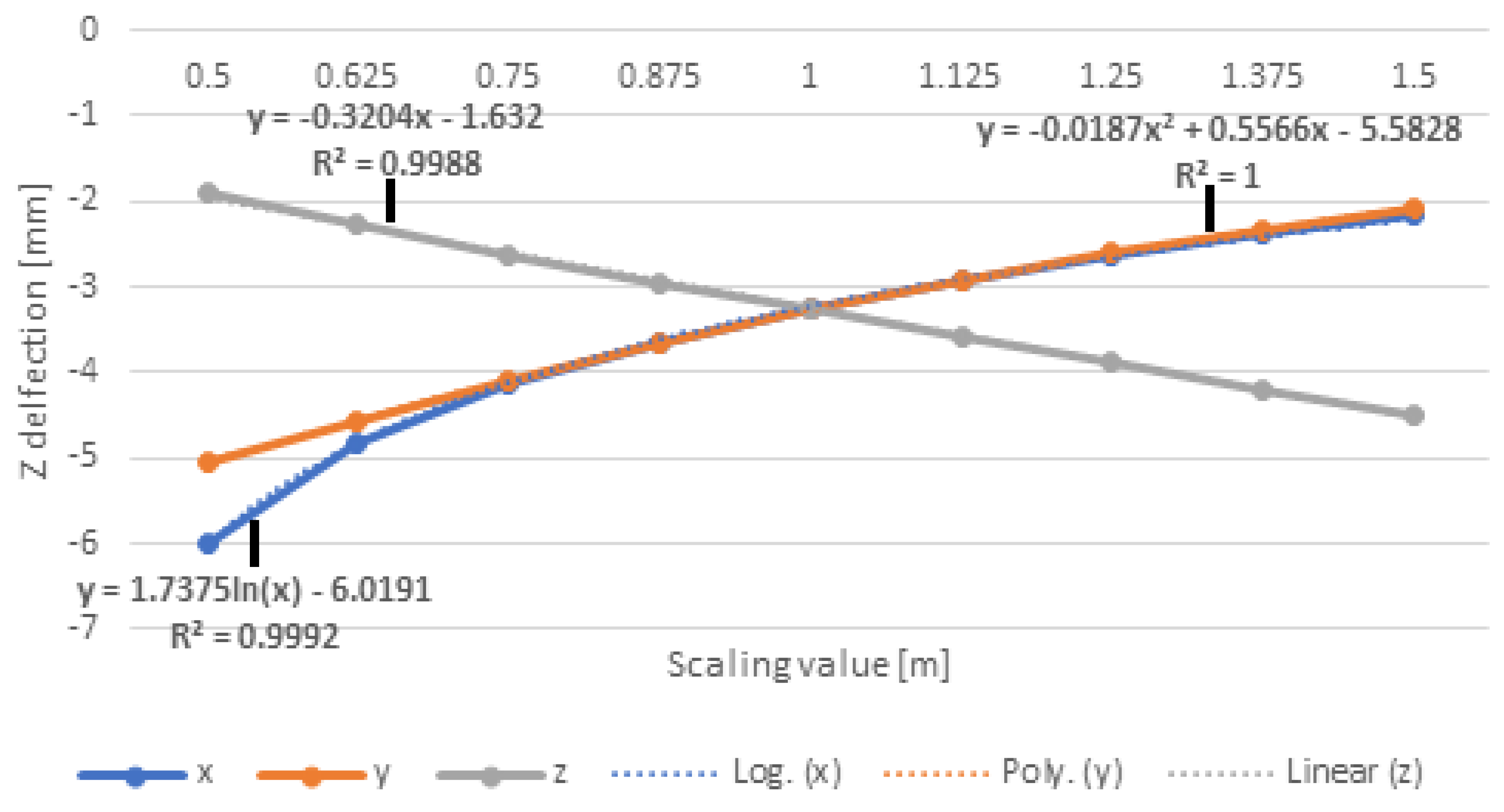
Figure 4 presents the results of the parametric study for the Z deflection.
As the scaling factor increases, the Z deflection increases in magnitude (more negative values). The fitted equations indicate that the relationships for scaling in the x and y directions are nonlinear. In contrast, scaling in the z direction exhibits an almost linear relationship, indicating a more uniform relationship in Z deflection with the scaling factor. The R
2 values associated with the fitted curves are very close to 1, demonstrating excellent agreement between the numerical data and the regression models.
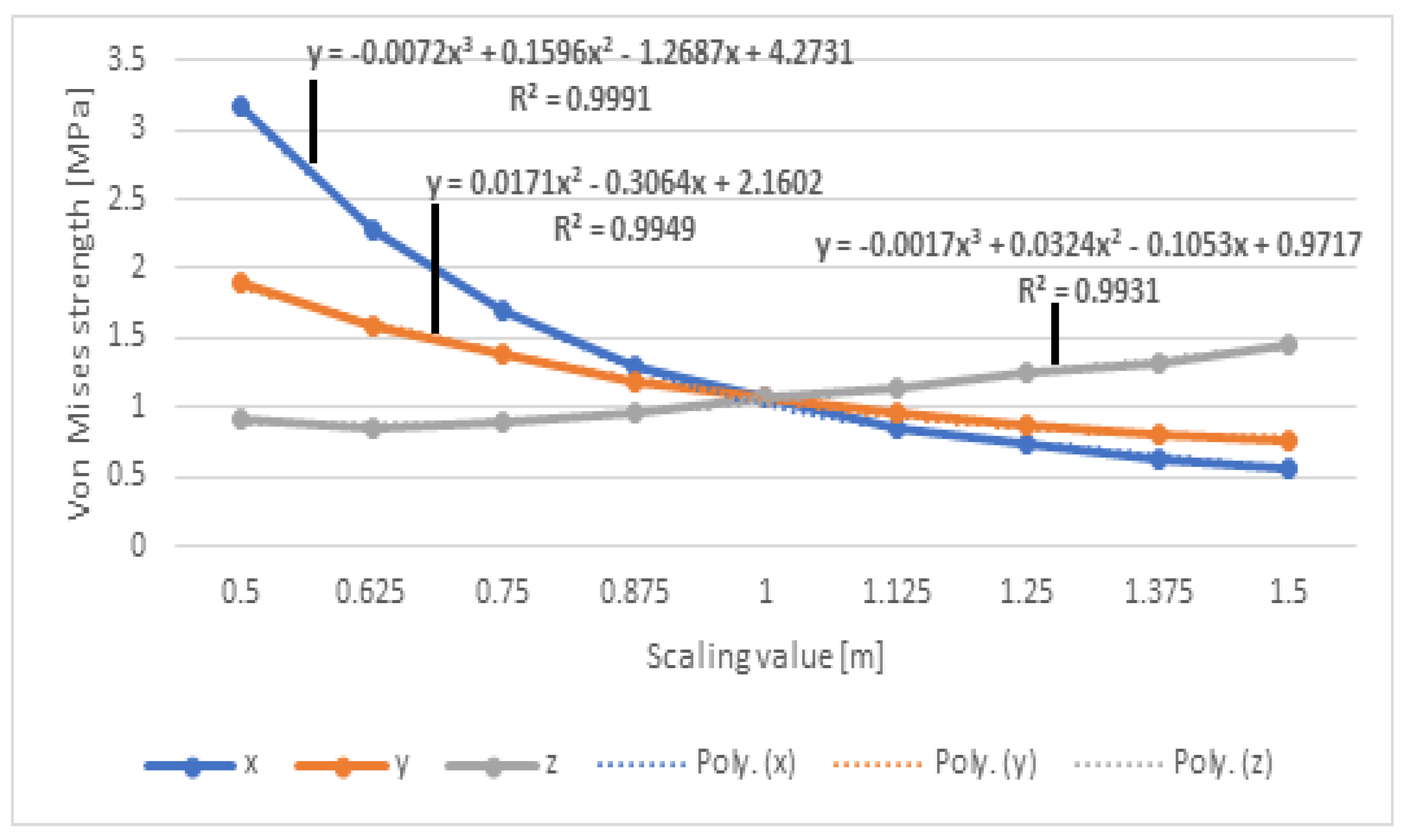
Figure 5 presents the variation of the von Mises stress with the scaling factor.
In the x and y directions, the von Mises stress decreases as the scaling factor increases, whereas in the z direction, a slight increase in stress is observed. The fitted equations indicate nonlinear relationships in all cases. The high R
2 values demonstrate that the fitted equations accurately represent the trends observed in the numerical results.
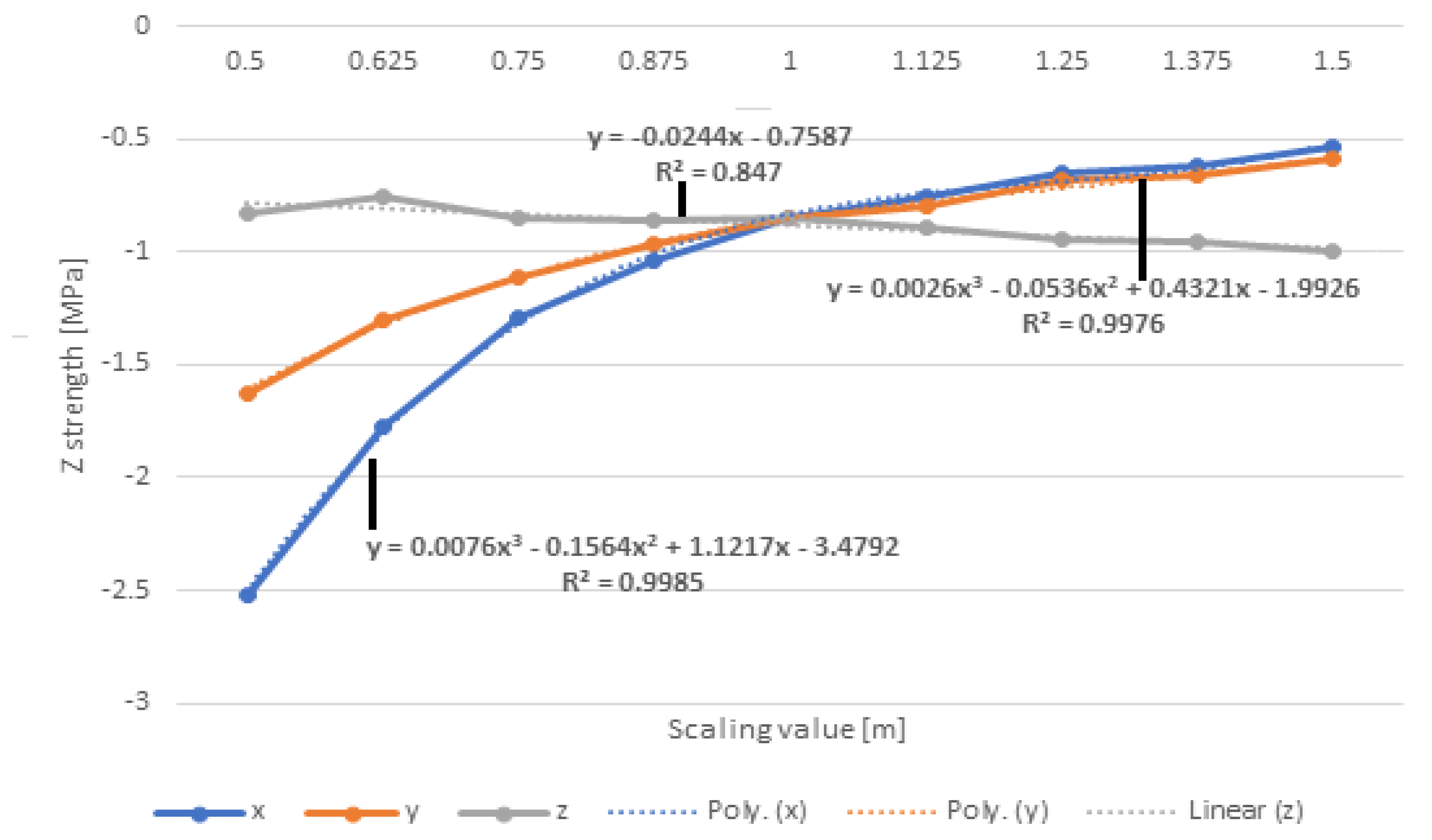
Figure 6 illustrates the variation in the Z stress with the scaling factor for the three scaling directions.
For the x and y directions, the Z stress increases (becomes less negative) as the scaling factor increases. In contrast, for the z direction, the Z stress moves towards more negative values as the scaling factor increases. The fitted equations reveal nonlinear relationships for scaling in the x and y directions, while the z direction exhibits a relatively weak and nearly linear relationship. The R2 values are high for the results corresponding to scaling in the x and y directions but lower for scaling in the z direction.
4. Discussion
The numerical results indicate that geometric scaling affects the mechanical behavior of the robotic gripper in a non-uniform and direction-dependent manner. Differences between the scaling directions indicate that the response is governed by how geometric modifications alter load paths and the distribution of bending stiffness in the gripper fingers. Changes along the main bending axis tend to have a stronger influence on deformation, while scaling in other directions primarily modifies cross-sectional rigidity and stress distribution, reflecting the anisotropic structural behavior of gripper-like components. The nonlinear trends observed in several scaling cases can be explained by the dependence of stiffness on higher-order geometric properties such as the second moment of area. As dimensions increase, these parameters evolve nonlinearly, indicating that stiffness variations cannot be described by simple proportional scaling. Consequently, even moderate geometric changes can significantly affect the structural response, highlighting the importance of numerical evaluation in addition to intuitive geometric reasoning. The stress results further illustrate how geometric modifications influence internal force redistribution. Increasing certain dimensions can improve load-carrying capacity by enlarging effective cross-sections and reducing stress concentrations, although this effect varies with direction. This emphasizes the need to evaluate stiffness and stress simultaneously when assessing design modifications in robotic grippers. The strong agreement between numerical data and regression models indicates that relatively simple analytical expressions can capture the main trends of geometric scaling, which may support rapid estimation during preliminary design stages. The mesh sensitivity analysis also confirms the reliability of the results, with smoother convergence observed for displacement than for stress, consistent with typical finite element behavior. Overall, the analysis demonstrates that geometric scaling can be used to tune the mechanical performance of robotic grippers, although its effects are direction-dependent and sometimes nonlinear, requiring careful evaluation during design.