Proceeding Paper

The Influence of Printing Parameters on the Impact Strength of FDM 3D-Printed Polylactic Acid †
Department of Mechanics, Faculty of Transport, Technical University of Sofia, 1000 Sofia, Bulgaria
*
Author to whom correspondence should be addressed.
Presented at the 17th International Scientific Conference on Aerospace, Automotive, and Railway Engineering (BulTrans-2025), Sozopol, Bulgaria, 10–13 September 2025.
Eng. Proc. 2026, 121(1), 14; https://doi.org/10.3390/engproc2025121014

Published: 13 January 2026

Abstract

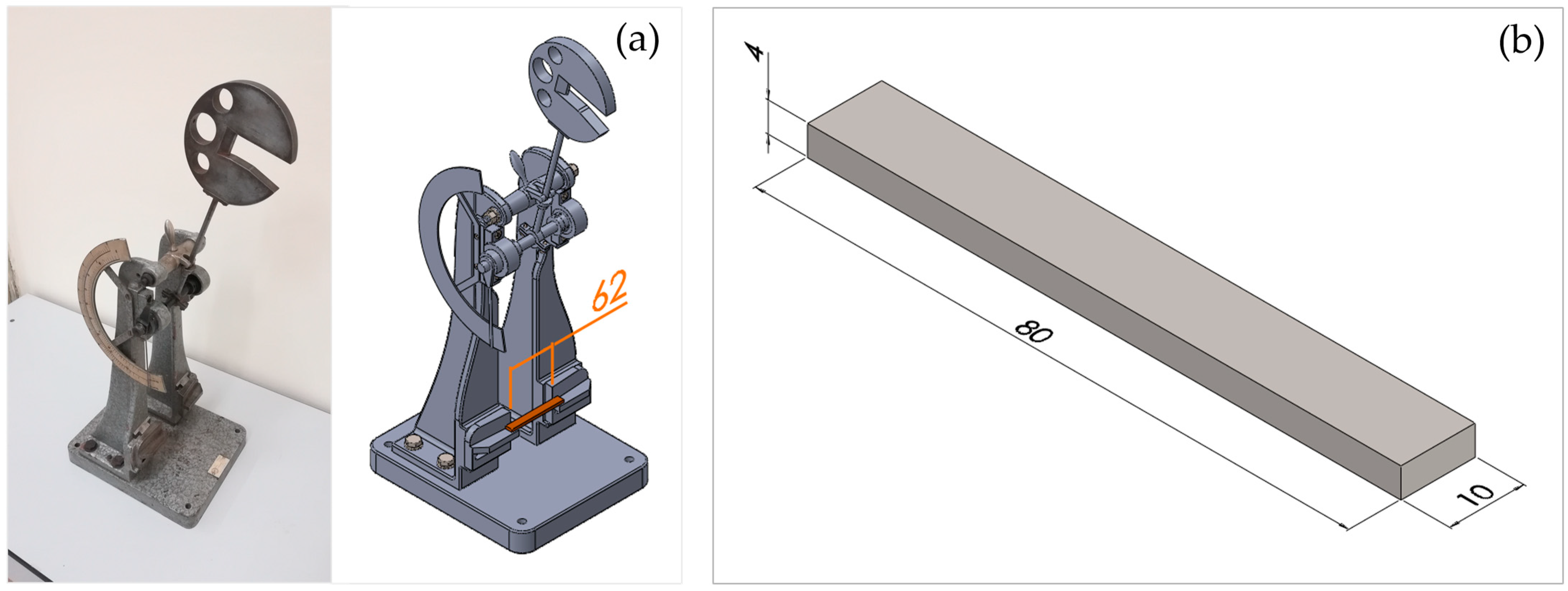
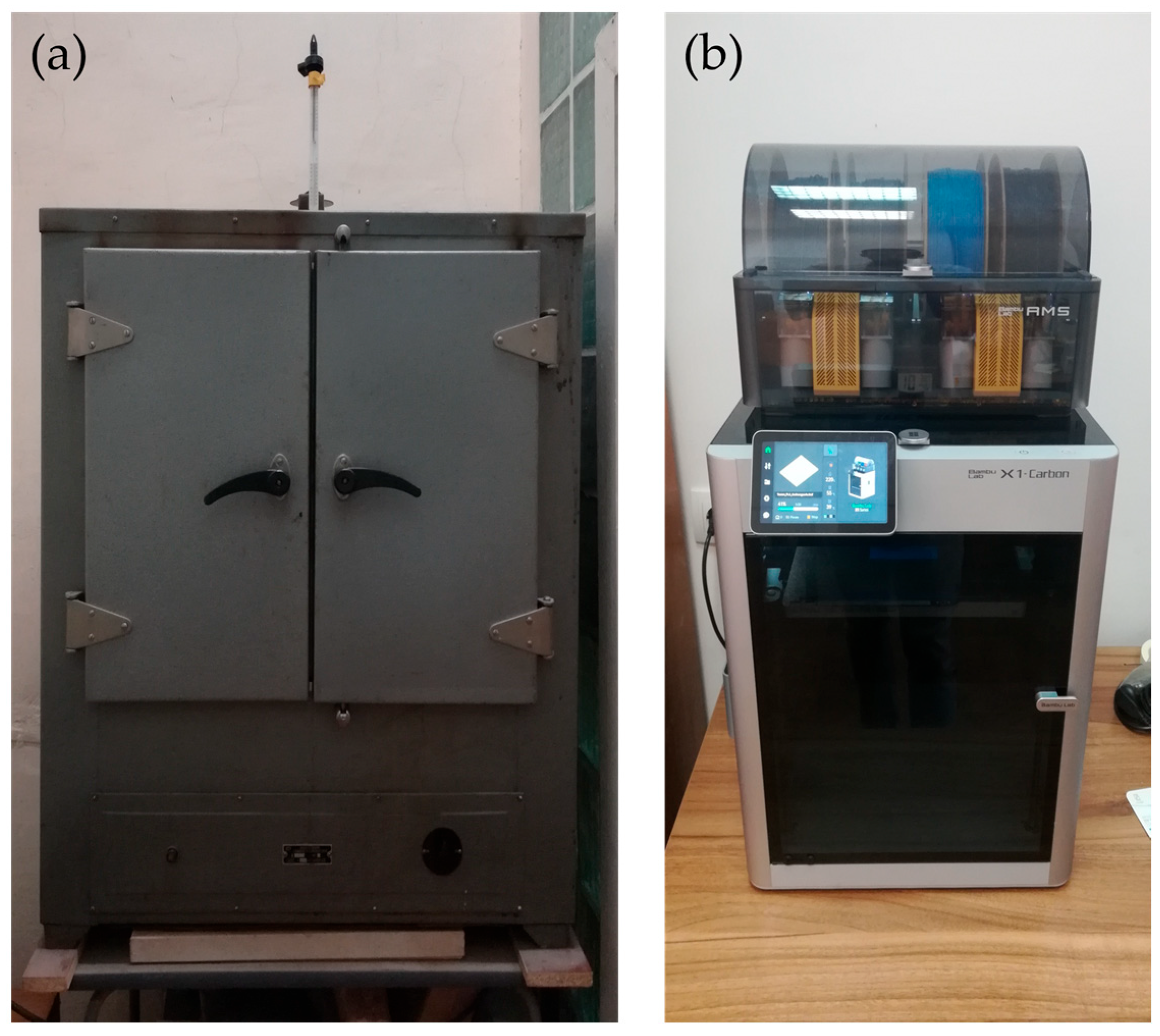
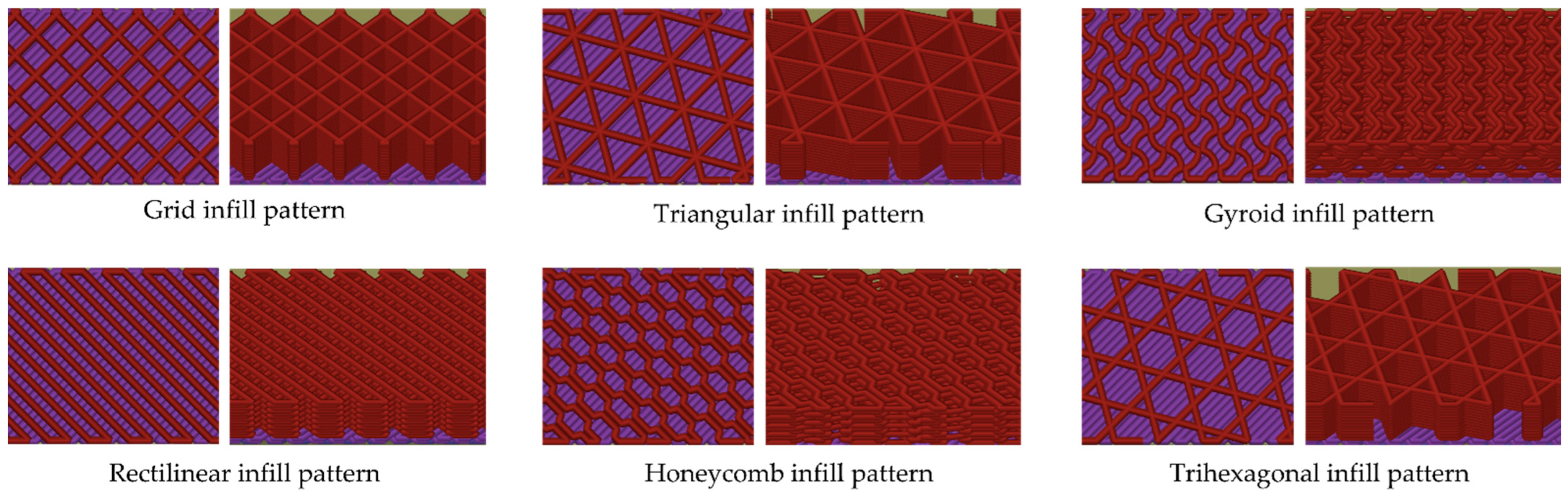
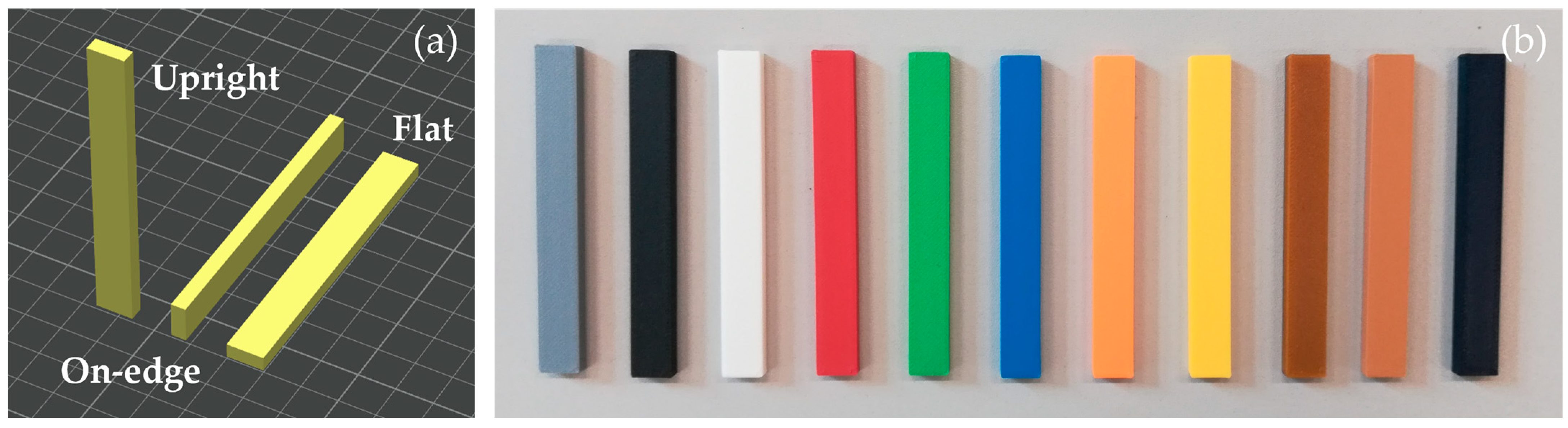
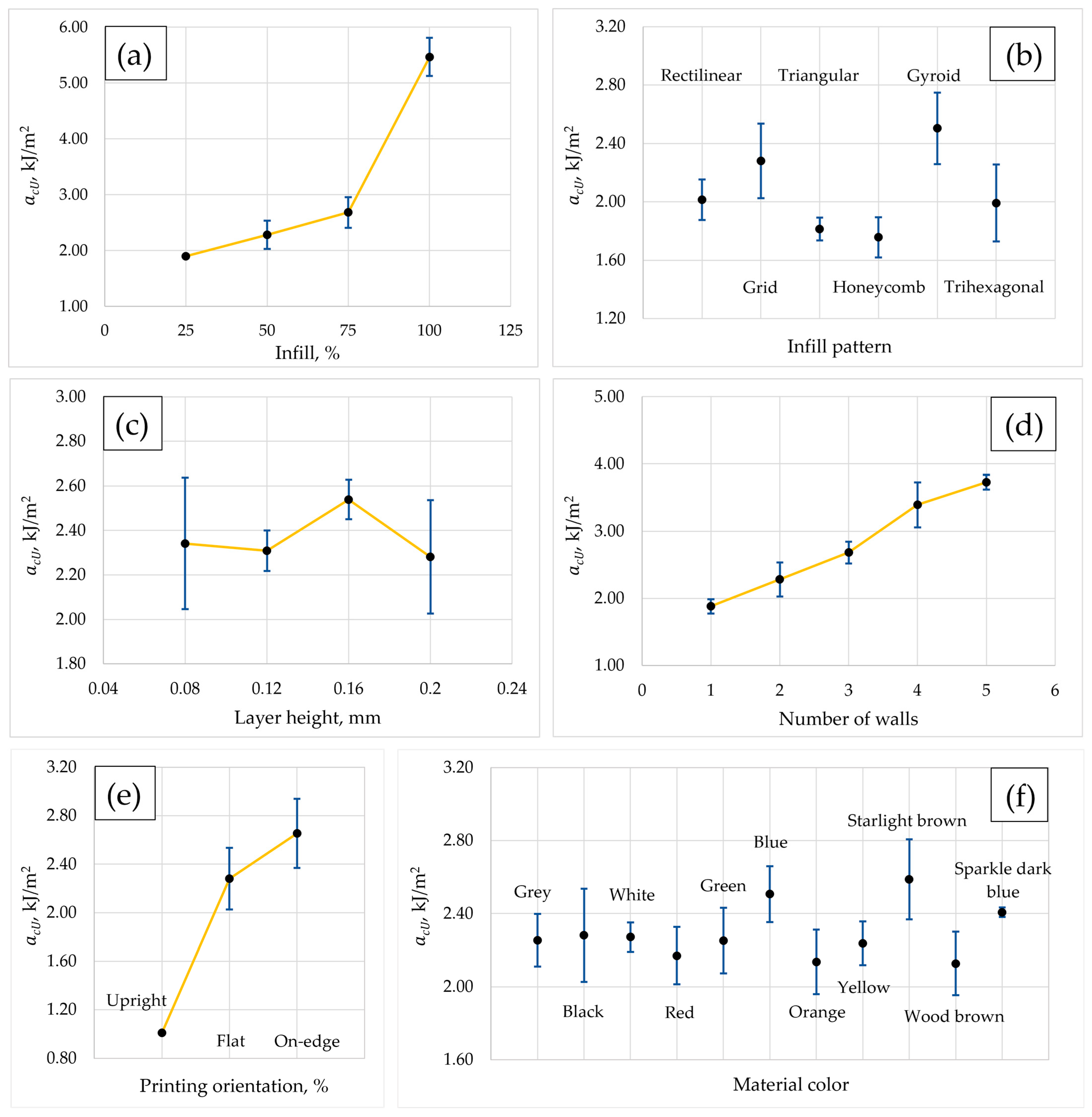
The paper investigates experimentally the influence of infill density, infill pattern, layer height, wall number, printing orientation, and material color on the impact strength of 3D-printed PLA (polylactic acid) samples by using the Charpy test method. The used printing method is FDM (Fused Deposition Modeling) performed on a desktop printer. For each parameter changed in the study, five separate unnotched specimens were produced and tested, and the average impact strength value was taken into account. The filament rolls went through a drying process before printing and were then stored in a low-humidity environment filled with desiccant in order to minimize the effect of absorbed humidity in the filament during the experiments. The conditioning and testing of samples were performed according to the EN ISO 179-1 standard. Dimensional accuracy, print times, and filament consumption were also estimated in the study. The results revealed that the infill density, infill pattern, and wall number have a larger influence on the impact energy absorbed by the samples in comparison to the layer height, printing orientation, and the PLA filament color. The best optimization of the studied mechanical property was obtained by increasing the infill percentage and the number of walls. Applying different PLA colors has a slight effect on the impact strength, yet it should be taken into consideration when designing 3D-printed products that are intended to withstand impact. Moreover, it was found out that the studied parameters have an insignificant effect on the dimensional accuracy of the produced samples.
Keywords: impact strength; 3D printing; additive manufacturing; material; PLA; polylactic acid; Charpy; Izod; FDM; polymer impact strength; 3D printing; additive manufacturing; material; PLA; polylactic acid; Charpy; Izod; FDM; polymer