Proceeding Paper

Synthesis and Characterization of Benzene-1,2,4-triyl Tris(2-(3-carboxy-4-hydroxybenzenesulfonate) Acetate) †

by
Ruzimurod Jurayev
Department of Chemical Engineering, Karshi State Technical University, Shahrisabz Str. 20, Shakhrisabz 181306, Uzbekistan
Presented at the 4th International Electronic Conference on Processes, 20–22 October 2025; Available online: https://sciforum.net/event/ECP2025.
Eng. Proc. 2025, 117(1), 39; https://doi.org/10.3390/engproc2025117039
Published: 28 January 2026
(This article belongs to the Proceedings of The 4th International Electronic Conference on Processes)

Abstract

Benzene-1,2,4-triyl tris(2-(3-carboxy-4-hydroxybenzenesulfonate) acetate) synthesis is an important step forward in the synthesis of multifunctional organic molecules, which have potential uses in material science and medical chemistry, among other domains. In analytical chemistry, it can also be utilized for metal ion determination. This work presents a thorough and methodical approach to the synthesis of this complicated trisulfonated aromatic ester, emphasizing the effectiveness and scaling possibilities of the methodology. Choosing the right precursors to ensure that each one would contribute to the intended molecular architecture was the first step in the synthesis process. In the initial stages of the synthesis process, oxyhydroquinone was reacted with chloroacetyl chloride for 20 h. As a result, benzene-1,2,4-triyl tris(2-chloroacetate) of triatomic phenol-oxyhydroquinone was formed. The resulting phenacetyl chloride was reacted with sodium sulfosalicylate in the presence of N,N-dimethylformamide (DMFA). Benzene-1,2,4-triyl tris(2-(3-carboxy-4-hydroxybenzenesulfonate) acetate) was formed. To obtain high yields and purity, careful adjustment of the reaction conditions that including temperature, solvent selection, and reagent ratios was required. The synthesized molecule was characterized using advanced spectroscopic techniques such as NMR, IR, and UV spectrometry, which confirmed its structural integrity and functional group configuration. Benzene-1,2,4-triyl tris(2-(3-carboxy-4-hydroxybenzenesulfonate) acetate), the resultant product, has special physicochemical characteristics. In particular, it is more soluble and has the potential to be a useful intermediate in organic synthesis. Because it has several reactive sites, preliminary research indicates that it may be useful in the development of new polymeric materials and as a possible ligand in coordination chemistry.

1. Introduction

Polyfunctional aromatic esters are attracting increasing attention in modern organic synthesis due to their unique physicochemical properties and wide application potential in material science, coordination chemistry, and pharmaceuticals [1,2,3,4,5]. In particular, trisubstituted benzene derivatives incorporating sulfonic, carboxyl, and hydroxyl groups exhibit high water solubility, enhanced reactivity, and a pronounced ability to coordinate metal ions, making them promising platforms for the development of novel materials and selective therapeutic agents [6,7,8,9,10,11,12].
Sodium sulfosalicylate (NaSS) plays a dual role in this synthesis: first, it acts as a strong nucleophilic reagent attacking the chloroacetate moiety; second, it introduces hydrophilic functional groups into the molecular framework. While the hydroxyl group ensures nucleophilic reactivity, the carboxyl and sulfonic groups enhance water solubility and metal ion binding capacity [13,14,15]. Furthermore, several NaSS derivatives have previously been reported in the literature to be applicable in photometric determination, ion-selective extraction, synthesis of coordination complexes, and even in the preparation of biologically active compounds [16,17,18,19,20,21,22,23,24]. Therefore, the selection of this reagent provides an opportunity to obtain newly synthesized molecules with a broad range of potential practical applications.
Considering these characteristics, sodium sulfosalicylate (sodium 3-carboxy-4-hydroxybenzenesulfonate) holds particular significance in synthesis. Due to the presence of sulfonate, carboxylate, and phenolic hydroxyl groups, this compound serves as an effective nucleophilic reagent for constructing an aromatic core containing multiple active sites. Its low cost, stability, and high water solubility make it a suitable candidate for use in environmentally friendly synthetic processes.
In the present study, the stepwise synthesis of benzene-1,2,4-triyl tris(2-(3-carboxy-4-hydroxybenzenesulfonate) acetate) is reported. The reactions of phenols with chloroacetyl chloride and the subsequent nucleophilic substitution of the resulting monochloroacetic acid esters were investigated [25,26,27,28,29,30]. Initially, the reaction of hydroquinone with chloroacetyl chloride afforded benzene-1,2,4-triyl tris(2-chloroacetate), which was subsequently reacted with sodium sulfosalicylate in a dimethylformamide (DMF) medium. Reaction parameters including temperature, solvent, and molar ratios of reagents were optimized to achieve maximum yield and purity. The synthesized product was characterized by IR, UV, and NMR spectroscopic techniques, confirming its structure.
The resulting tris-functional ester possesses a complex molecular architecture, high water solubility, multiple functional groups, and good stability, which collectively make it a promising candidate for applications in the development of novel polymeric materials, ion-selective sensors, or metal-complexing ligands.

2. Experimental Setup

Thin-layer chromatography (TLC) was employed to monitor the progress of the reactions and assess the purity of the synthesized compounds. Analyses were carried out on silica gel 60 F254 aluminum-backed plates (MERCK, Mumbai, India) using a chloroform–ethyl acetate (10:0.3) solvent system as the mobile phase. Visualization of the spots was achieved under UV illumination (λ = 254 nm). Column chromatography was subsequently used for purification of the crude reaction mixtures, employing petroleum ether–ethyl acetate as the eluent. Following purification, the reaction mixtures were again checked by TLC to confirm component separation. Upon completion of the reactions, the mixtures were poured into ice-cooled water, and the resulting precipitates were collected by filtration and air-dried. Fourier-transform infrared (FT-IR) spectra were recorded on a Specord IR-71 spectrophotometer (Carl Zeiss Jena, Jena, Germany) using the KBr pellet method. NMR spectra were obtained on a Bruker 400 MHz spectrometer (Bruker, Karlsruhe, Germany), with tetramethylsilane (TMS) serving as the internal reference; chemical shifts are reported in ppm. Melting points were determined by the open capillary method using an Mvtec melting point apparatus, and the values are uncorrected [31,32,33,34].

2.1. Synthesis of Benzene-1,2,4-triyl Tris(2-(3-carboxy-4-hydroxybenzenesulfonate) Acetate)

2.1.1. Extraction-Based Synthetic Procedure

The reaction between sodium sulfosalicylate and benzene-1,2,4-triyl tris(2-chloroacetate) was carried out in a 100 mL round-bottom flask equipped with a reflux condenser. Sodium sulfosalicylate (3.6 g, 0.015 mol) and benzene-1,2,4-triyl tris(2-chloroacetate) (1.7775 g, 0.005 mol) were introduced into the flask in a 3:1 molar ratio, followed by the addition of 10 mL of DMF. The mixture was heated under reflux at the boiling point of DMF (153 °C) for 4 h. At the onset of the reaction, the mixture appeared milky white, gradually changing to a colorless solution by the end of the process. Upon completion, the reaction mixture was cooled to ambient temperature and extracted with an ethyl acetate–water mixture (10:2 v/v). The organic layer was separated using a separatory funnel, dried over anhydrous sodium sulfate (previously prepared and activated), and kept for 24 h. The drying agent was removed by filtration, and the solvent was evaporated under reduced pressure. The crude product was obtained as a colorless oily liquid with a yield of 70%. TLC analysis on silica gel plates using chloroform–ethyl acetate (10:0.3) as the mobile phase gave an Rf value of 0.80.

2.1.2. Precipitation-Assisted Synthetic Procedure

The reaction was conducted in a 100 mL round-bottom flask equipped with a reflux condenser. Sodium sulfosalicylate (3.6 g, 0.015 mol) and benzene-1,2,4-triyl tris(2-chloroacetate) (1.7775 g, 0.005 mol) were charged into the flask in a 3:1 molar ratio, followed by the addition of 10 mL of DMF. The mixture was heated under reflux at the boiling temperature of DMF (153 °C) for 4 h. At the start of the process, the reaction mixture appeared milky white, gradually becoming a colorless liquid toward completion. After cooling to ambient temperature, the reaction mixture was filtered, and the resulting precipitate was washed three times with 5 mL portions of benzene. The benzene washings were combined with the initial filtrate, dried, and concentrated. Benzene was removed using a water-jet pump, and the residual solvent was evaporated under vacuum. The crude product was obtained as a colorless oily liquid with a yield of 78%. TLC analysis on silica gel (chloroform–ethyl acetate, 10:0.3) showed an Rf value of 0.80.

2.1.3. Solvent-Evaporation-Based Synthetic Procedure

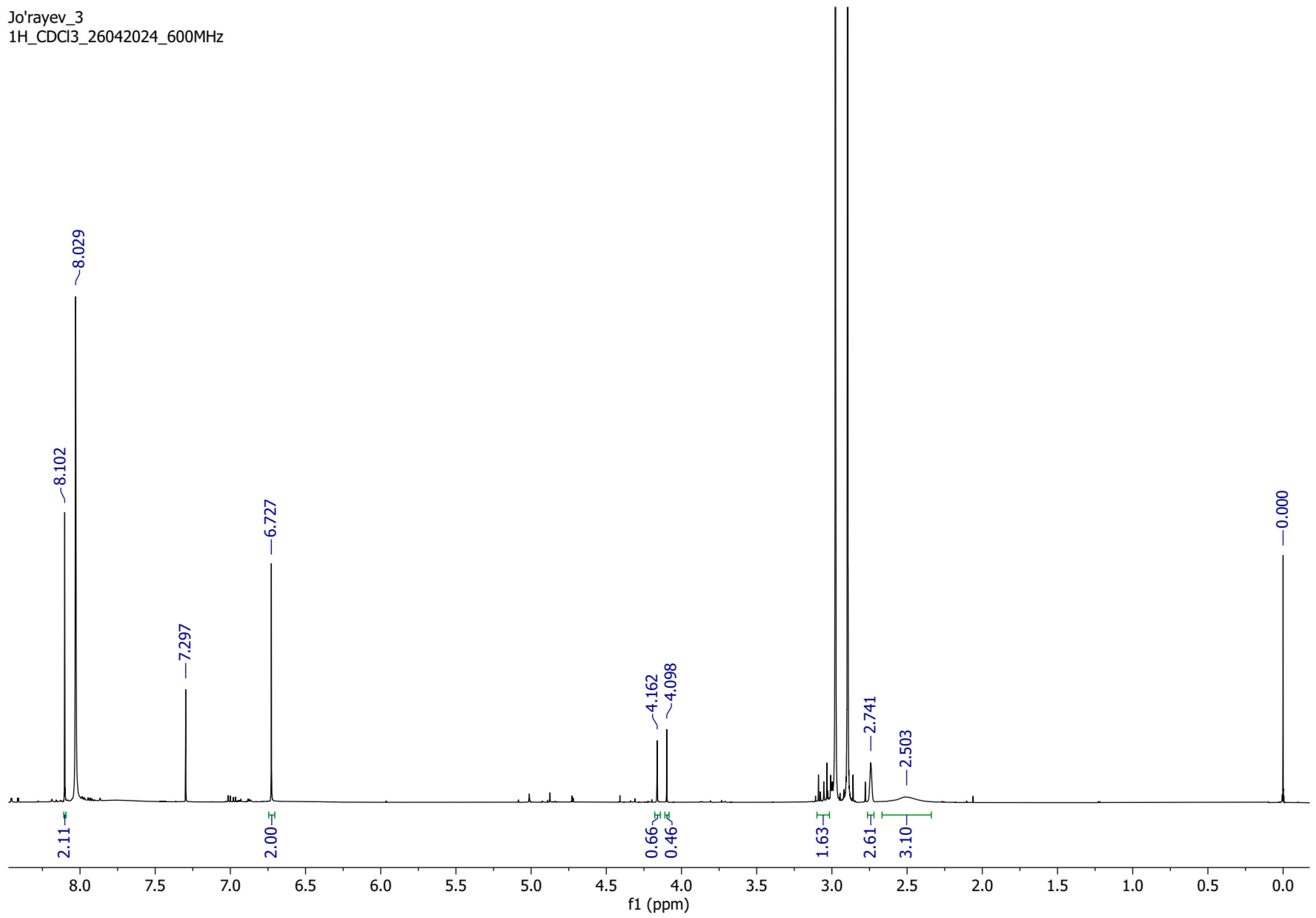
The reaction was carried out in the same setup as described above, using sodium sulfosalicylate (3.6 g, 0.015 mol) and benzene-1,2,4-triyl tris(2-chloroacetate) (1.7775 g, 0.005 mol) in a 3:1 molar ratio, dissolved in 10 mL of DMF. The mixture was refluxed at 153 °C for 4 h. The initial milky-white appearance of the mixture changed to a colorless solution by the end of the reaction. After cooling to room temperature, the reaction mixture was filtered, and the liquid phase was collected. The filtrate was passed through the filter twice more to remove any remaining solid particles. Subsequently, the clear solution was concentrated under reduced pressure to remove DMF, yielding a colorless viscous oil. The isolated yield was 88.6%. TLC analysis on silica gel using chloroform–ethyl acetate (10:0.3) as the mobile phase gave an Rf value of 0.80. IR spectrum (ν, cm−1): 3433 (O–H); 2925 C–H stretching (aliphatic CH2); 1722 C=O stretching (aryl ester); 1653 C=O stretching (carboxylic acid/conjugated carbonyl); 1475, 1465, 1436 Aromatic C=C stretching; 1386 ν_as (SO3)—sulfonate asymmetric stretching; 1093, 1029 S–O–C stretching; 886, 835 Aromatic C–H out-of-plane deformation. 1H NMR spectrum (δ, ppm): 8.10–8.02 (m, 2H, Ar–H), 7.29 (d, 1H, Ar–H, J ≈ 8.2 Hz), 6.73 (d, 1H, Ar–H, J ≈ 8.2 Hz), 4.16 (d, 1H, –O–CH2–CO–, J ≈ 15.6 Hz), 4.10 (d, 1H, –O–CH2–CO–, J ≈ 15.6 Hz), 3.10–2.50 (m, 4H, aliphatic–CH2–), 2.74 (s, 2H, –CH2–CO–). 13C NMR spectrum (δ, ppm): 31.59, 31.61–CH2–(ester side chain methylene carbons); 35.25, 36.69–CH2–CO–(methylene carbons adjacent to carbonyl); 40.82 O–CH2–(methylene carbons bound to ester oxygen); 59.51 Possibly O–CH2–S or methylene near sulfonate group; 76.93–77.36 CDCl3 solvent peaks; 116.08 Aromatic C–H (salicylate ring); 149.79 Aromatic C–OH (phenolic carbons); 162.89 C=O (aryl ester carbonyl or carboxylic acid carbonyl).

2.2. Study of UV–Vis Spectroscopy

UV–Vis absorption spectra were recorded on a double-beam spectrophotometer using quartz cuvettes with a 1 cm path length. Ethanol (EtOH) was employed as the solvent for all measurements. The ligand, benzene-1,2,4-triyl tris(2-(3-carboxy-4-hydroxybenzenesulfonate) acetate), was prepared at a concentration adjusted to provide optimal absorbance within the linear range of the Beer–Lambert law.
Spectra were obtained under the following conditions: Neutral medium—ligand dissolved in pure ethanol; Alkaline medium—ethanol solution containing 0.01 M NaOH; Acidic medium—ethanol solution containing 0.01 M HCl; Metal–ligand complexes—ethanol solutions containing Ni2+, Cu2+, or Zn2+ ions at a 1:1 molar ratio (ligand-to-metal), using nitrate salts as the metal sources.
All solutions were freshly prepared prior to measurement to avoid hydrolysis or oxidation. Absorbance was measured over the range of 200–400 nm. The effect of pH and metal-ion coordination on the electronic spectra was evaluated by monitoring shifts in the π → π* and n → π* transition bands. Data processing and graphical representation were performed using OriginPro 2021 software.

2.3. Study Determination of Limit of Detection (LOD)

The limit of detection (LOD) values for Ni2+, Cu2+, and Zn2+ ions were determined according to the IUPAC guidelines using UV–Vis spectrophotometry. The absorbance of blank solutions (ethanol as solvent, without analyte) was measured twelve times at the respective λ_max of each metal–ligand complex (Ni2+: 325 nm; Cu2+: 322 nm; Zn2+: 310 nm) to obtain the standard deviation of the blank signal (σ_blank). Calibration curves were established by preparing a series of standard solutions in the concentration range of 0–5 μM. Each concentration was measured in triplicate, and the absorbance data were fitted using least-squares linear regression to obtain the slope (S) of the calibration line. The LOD was calculated using the following formula [35,36,37,38,39,40]:
L O D = 3 × σ b l a n k S
All measurements were performed in a quartz cuvette (1 cm path length) using a UV–Vis spectrophotometer, with ethanol serving as the blank reference. Calibration and blank data were processed using Microsoft Excel, and R2 values were calculated to assess the linearity of the calibration.

3. Results and Discussion

3.1. Analysis of Benzene-1,2,4-triyl Tris(2-(3-carboxy-4-hydroxybenzenesulfonate) Acetate)

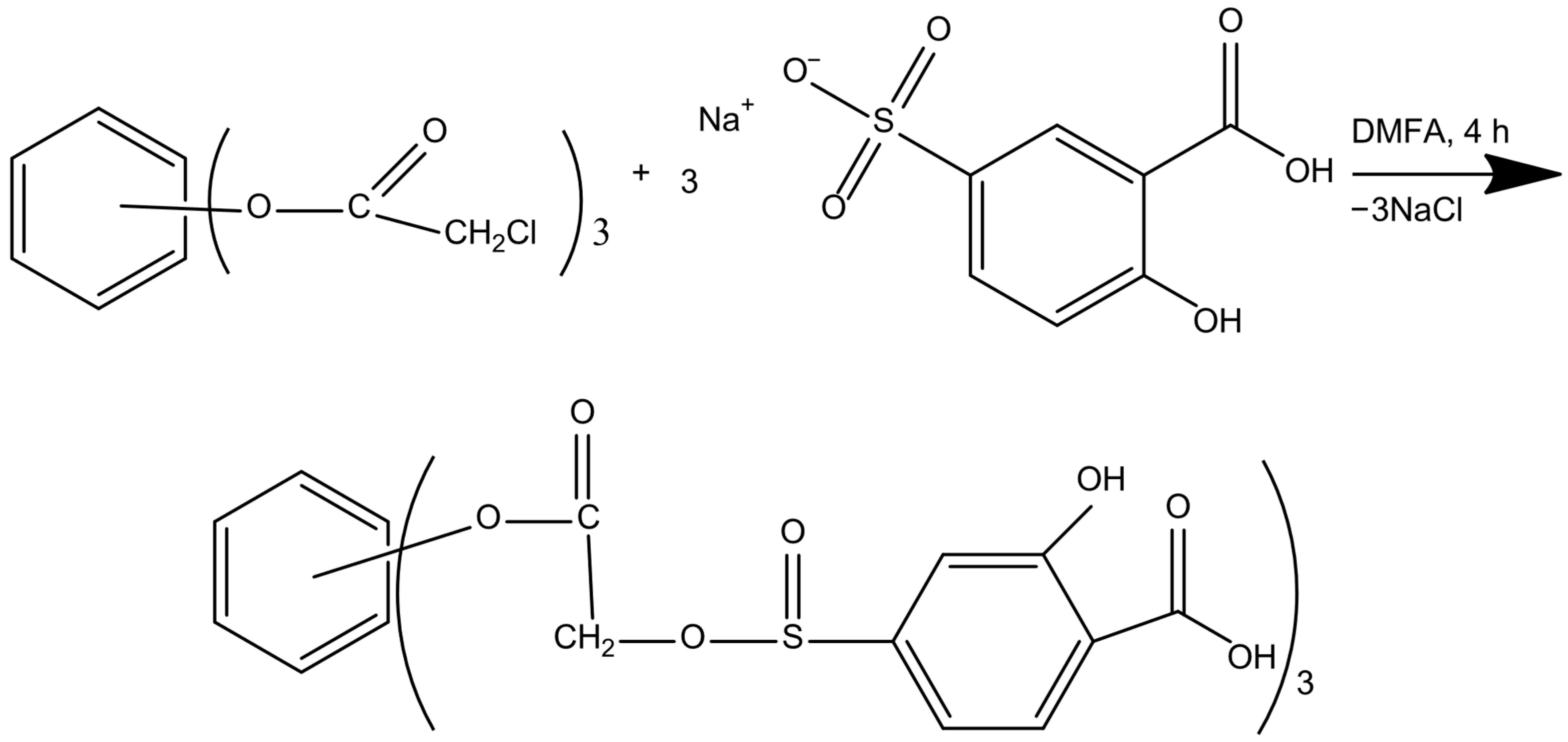
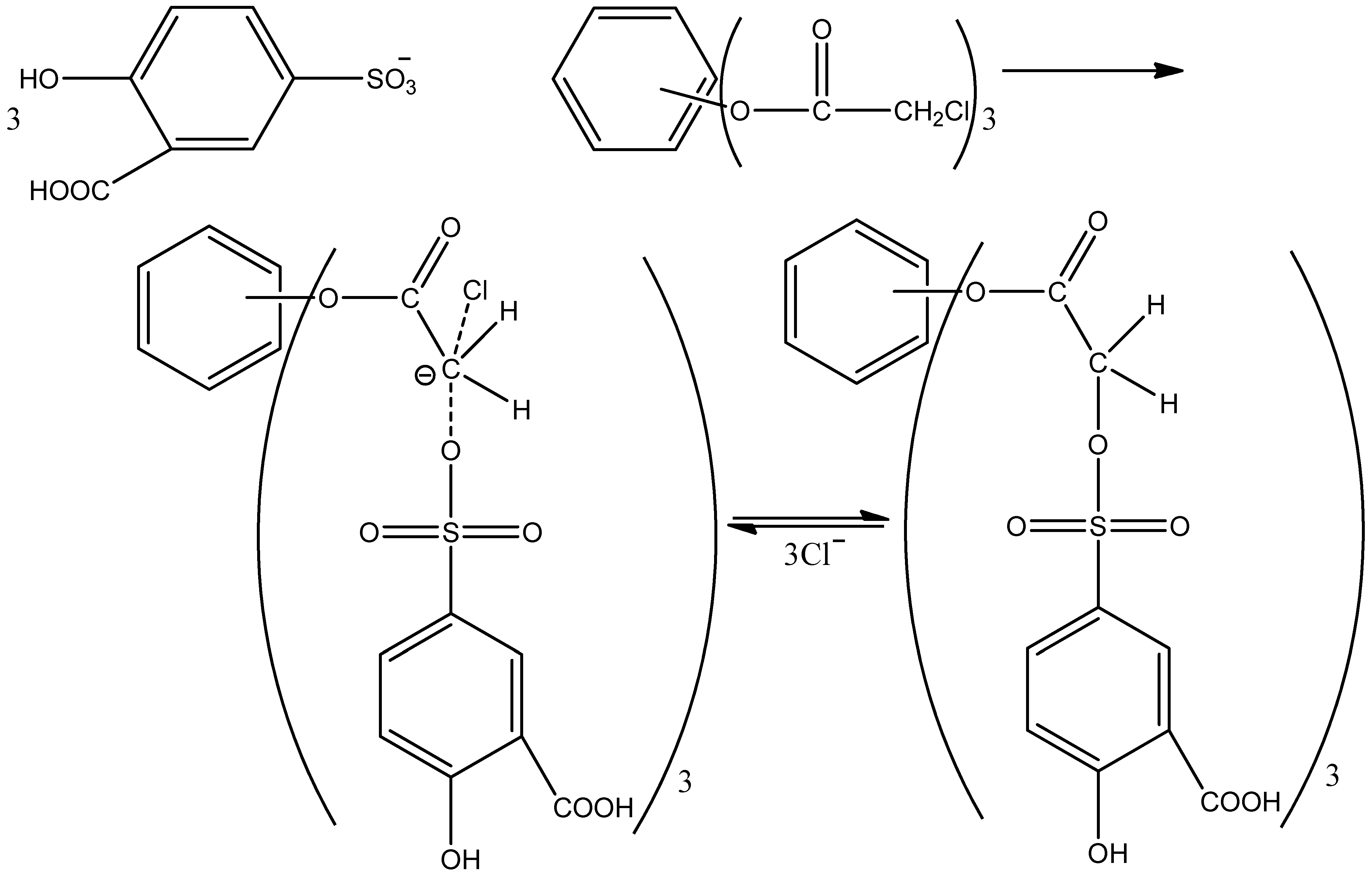
The conversion of benzene-1,2,4-triyl tris(2-chloroacetate) into benzene-1,2,4-triyl tris(2-(3-carboxy-4-hydroxybenzenesulfonate) acetate) proceeds through three consecutive SN2 displacements at the methylene carbons of the chloroacetate arms (Figure 1). In polar aprotic DMF, Na+ is efficiently solvated, which enhances the nucleophilicity of the anionic oxygen centers of the sulfosalicylate salt. Each substitution involves a backside attack of the nucleophilic oxygen on the electrophilic–CH2–Cl carbon, forming a C–O bond and expelling chloride. The process repeats at all three arms to afford the tris substituted product together with three equivalents of NaCl.
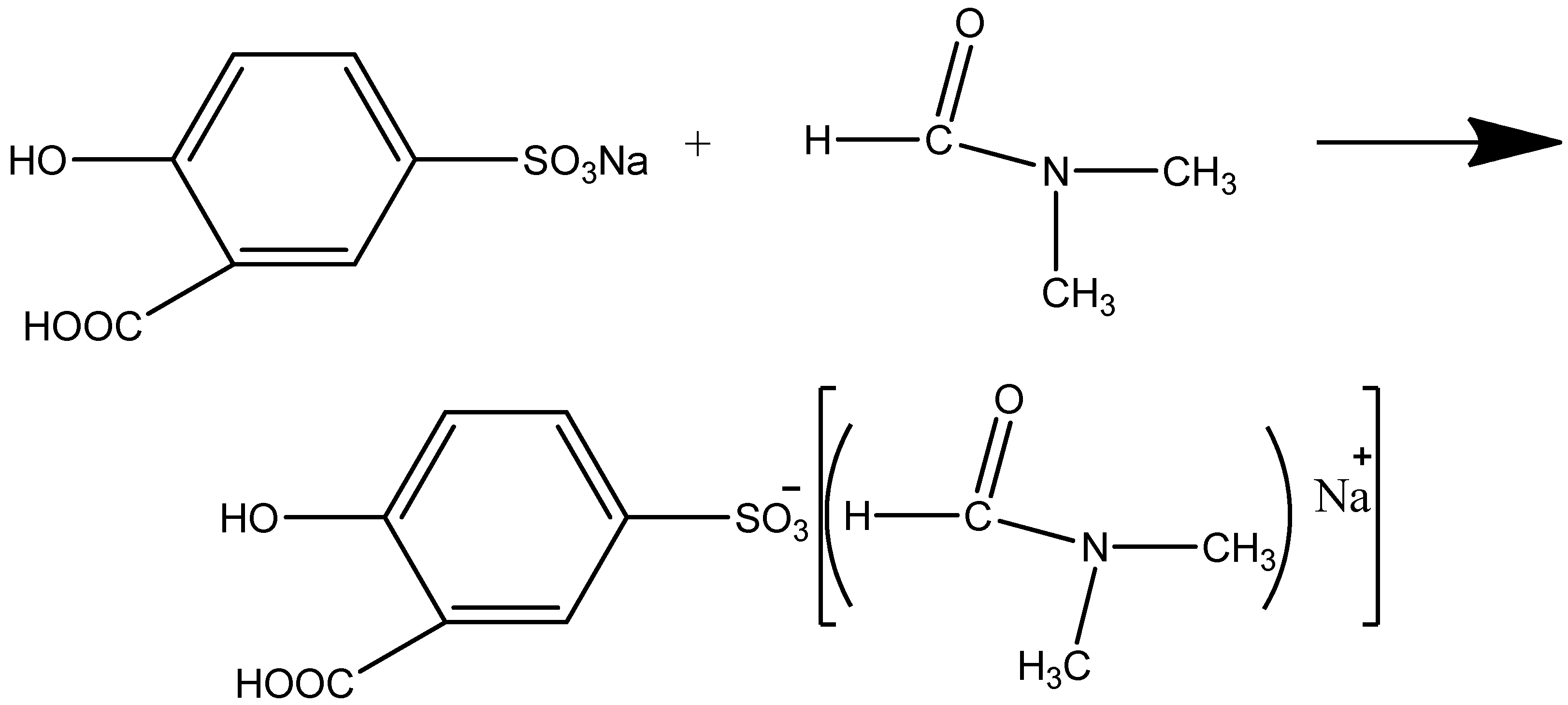
Kinetically, the polar aprotic medium minimizes hydrogen bonding to the nucleophile and stabilizes the transition state, while the good leaving group ability of chloride and the α carbonyl activation of the methylene carbon (–CH2–CO–) lower the barrier for displacement. The concerted SN2 pathway is consistent with IR evidence (loss of C–Cl stretches, strong ester and sulfonate bands) and with the 1H/13C NMR fingerprints (methylene resonances at ~2.8–4.1 ppm and carbonyl/aromatic regions), confirming complete substitution at all three sites. During the reaction, sodium sulfosalicylate initially forms a solvate with DMF (Figure 2 and Figure 3). Subsequently, the sulfosalicylate ion participates in the formation of the reaction product.

3.2. Combined Spectroscopic Characterization

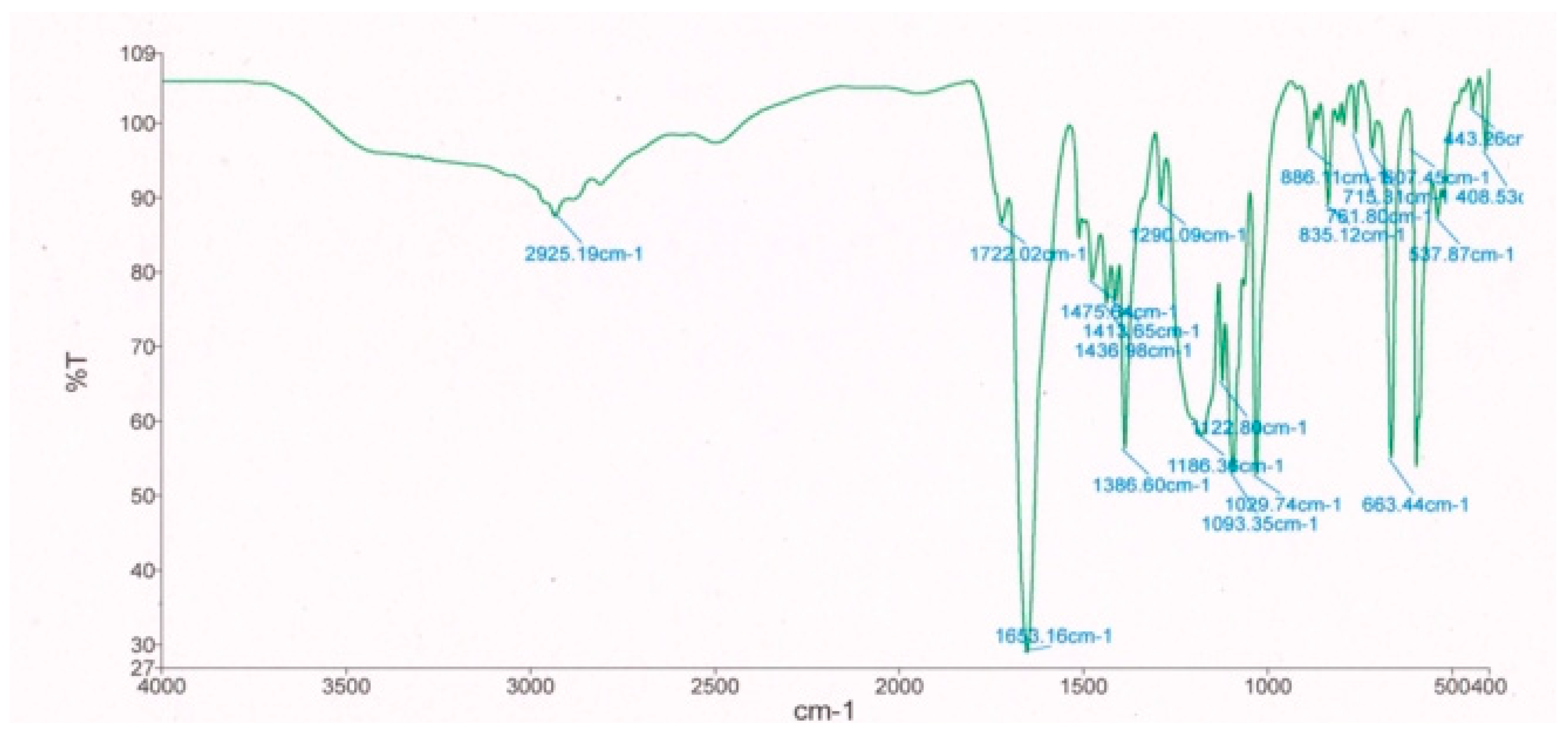
The FTIR spectrum (KBr pellet) of the synthesized benzene-1,2,4-triyl tris(2-(3-carboxy-4-hydroxybenzenesulfonate) acetate) provides clear and compelling evidence for the successful formation of the target compound and the presence of all key functional groups proposed in the molecular structure (Figure 4).
A broad and intense absorption band centered at 3433 cm−1 is attributed to the stretching vibrations of phenolic hydroxyl (–OH) groups, indicating extensive hydrogen bonding, which is expected due to the coexistence of hydroxyl, carboxyl, and sulfonate functionalities within the molecule. The strong absorptions observed at 1722 cm−1 and 1653 cm−1 are characteristic of aryl ester carbonyl (–COO–Ar) and carboxylic acid (–COOH) stretching vibrations, respectively. The presence of these two distinct carbonyl bands confirms the coexistence of ester linkages and free carboxylic acid groups, in full agreement with the proposed trisubstituted structure.
The sulfonate moieties are unequivocally confirmed by the appearance of two intense bands at 1386 cm−1 and 1186 cm−1, corresponding to the asymmetric and symmetric stretching vibrations of the S=O bonds, respectively. These bands are diagnostic for sulfonate groups and demonstrate the successful incorporation of sodium sulfosalicylate fragments into the molecular framework.
Strong absorption bands in the 1290–1228 cm−1 region are assigned to C–O stretching vibrations arising from both phenolic C–O and ester C–O–C functionalities, further supporting the formation of multiple ester linkages within the molecule. The aromatic framework is evidenced by characteristic C=C stretching vibrations appearing in the 1475–1436 cm−1 region.
Additionally, the out-of-plane C–H bending vibrations observed at 886, 835, 781, and 761 cm−1 are consistent with a 1,2,4-trisubstituted benzene ring, thereby confirming the substitution pattern of the central aromatic core. This observation is particularly important, as it directly supports the regioselectivity of the substitution reactions employed during synthesis.
A comparison with the FTIR spectrum of the starting material, benzene-1,2,4-triyl tris(2-chloroacetate), reveals the complete disappearance of C–Cl stretching vibrations in the 700–750 cm−1 region, providing strong evidence for the quantitative substitution of chlorine atoms by sodium sulfosalicylate moieties. This spectral transformation unambiguously confirms the successful nucleophilic substitution reaction and the formation of the desired trisubstituted product.
Overall, the FTIR spectral features exhibit excellent agreement with the proposed molecular structure and, in combination with NMR and UV–Vis data, provide a robust spectroscopic basis for structural confirmation of the synthesized compound.
The molecular structure of the synthesized compound was further elucidated and reliably confirmed by 1H and 13C NMR spectroscopy, which provided detailed information on the proton and carbon environments consistent with the proposed structure. (Figure 5 and Figure 6). The 1H NMR spectrum (600 MHz, CDCl3) exhibits well-resolved signals corresponding to aromatic and aliphatic proton environments. The aromatic region shows multiple resonances in the range of δ 8.10–6.73 ppm, which are characteristic of substituted aromatic rings. The multiplet observed at δ 8.10–8.02 ppm (2H) can be assigned to deshielded aromatic protons located in proximity to electron-withdrawing groups, such as carbonyl and sulfonyl moieties. Additional aromatic protons appear at δ 7.29 ppm (d, 1H, J ≈ 8.2 Hz) and δ 6.73 ppm (d, 1H, J ≈ 8.2 Hz), indicating a typical ortho-coupled aromatic system and confirming the integrity of the aromatic framework.
In the aliphatic region, two distinct doublets at δ 4.16 ppm (d, 1H, J ≈ 15.6 Hz) and δ 4.10 ppm (d, 1H, J ≈ 15.6 Hz) are attributed to diastereotopic methylene protons of the –O–CH2–CO–fragment. The observed large geminal coupling constant is consistent with methylene protons adjacent to an ester functionality and confirms restricted rotation caused by the neighboring heteroatoms. A set of multiplet signals in the region of δ 3.10–2.50 ppm (4H) corresponds to additional aliphatic methylene groups, while a singlet at δ 2.74 ppm (2H) can be assigned to a methylene group directly adjacent to a carbonyl moiety (–CH2–CO–).
Overall, the number of signals, their chemical shifts, multiplicities, and coupling constants are in good agreement with the proposed molecular structure and clearly support the successful formation of the target compound.
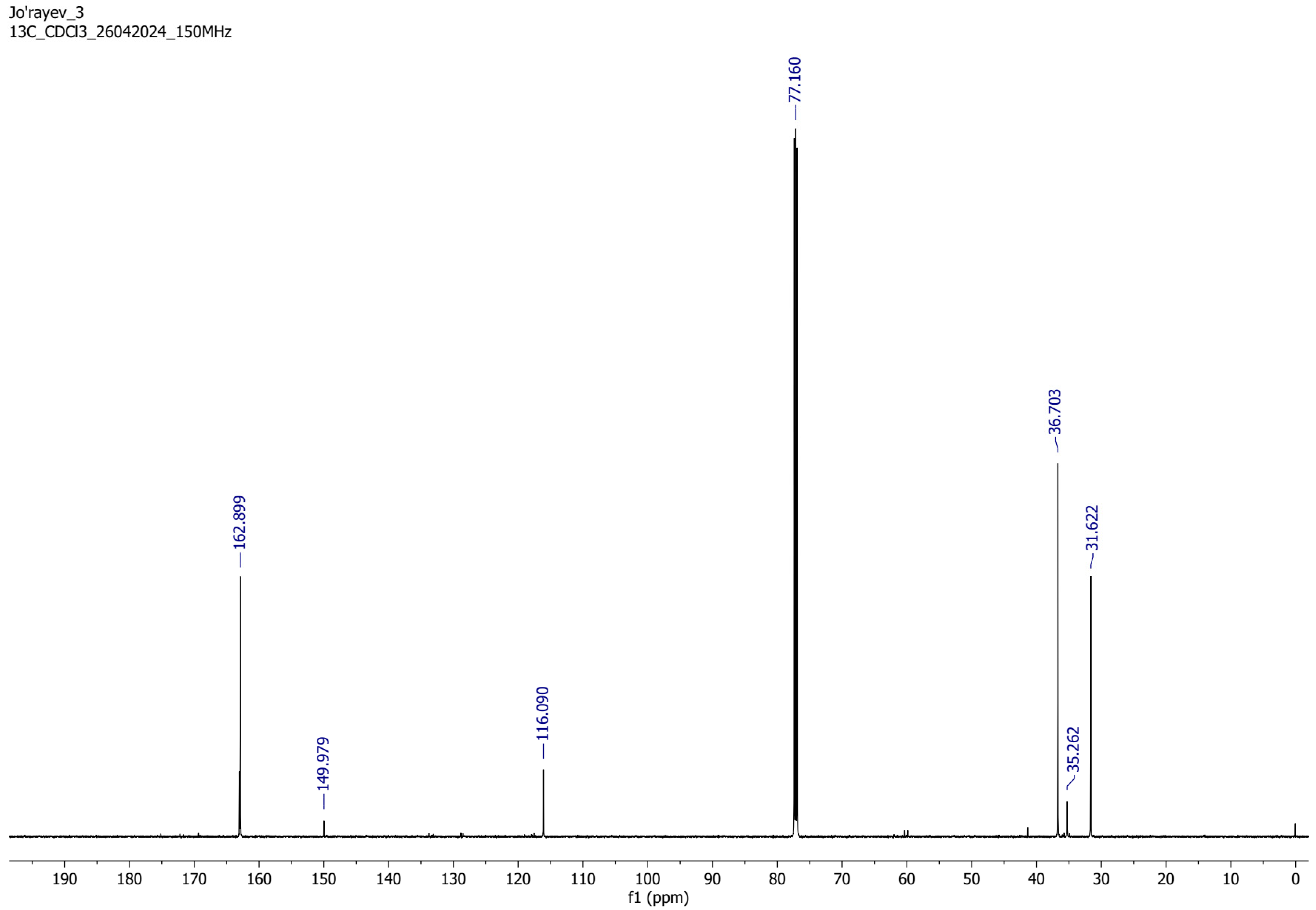
The 13C NMR spectrum (150 MHz, CDCl3) further corroborates the structural assignment. A strong resonance at δ 162.9 ppm is characteristic of an ester or carboxyl carbonyl carbon (C=O), confirming the presence of carbonyl functionalities in the molecule. The signal observed at δ 149.9 ppm corresponds to an aromatic carbon bonded to an electronegative substituent (C–O or C–SO2), while the resonance at δ 116.1 ppm is attributed to aromatic sp2 carbons within the benzene ring system.
Signals in the aliphatic region at δ 36.7, 35.3, and 31.6 ppm are assigned to methylene carbons (–CH2–) associated with ester and linker fragments. The solvent signal of CDCl3 appears at δ 77.1 ppm, as expected.
These findings, in agreement with IR and UV–Vis spectroscopy data, confirm the formation and structure of the target compound.
The product bears phenolic OH, carboxylic acid, and sulfonate groups, providing multiple coordination sites and high hydrophilicity—features that underpin its utility as a chromophoric ligand for ion selective optical sensing and as a building block for coordination materials and sorbents.

3.3. UV–Vis Spectroscopy

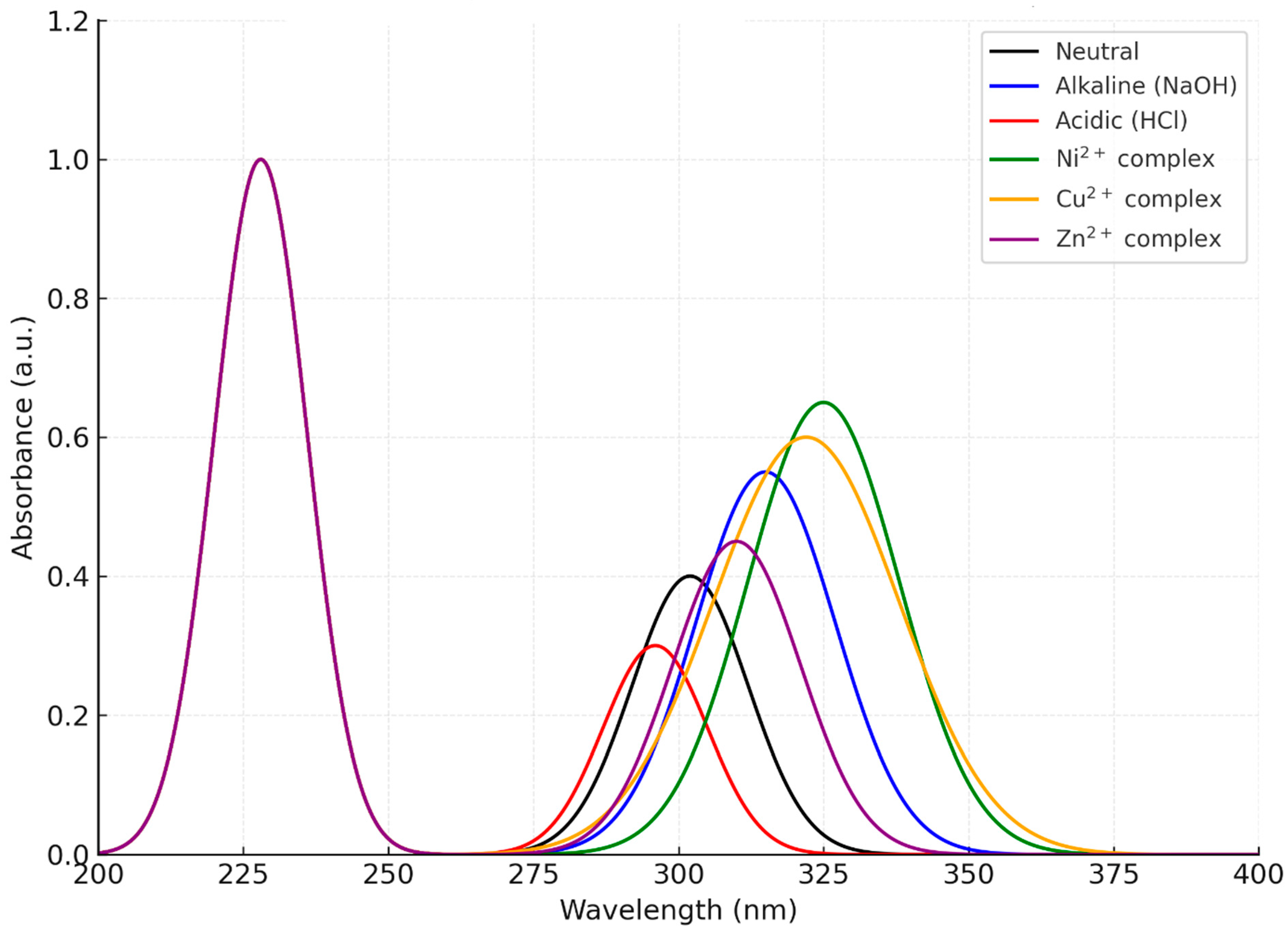
Figure 7 illustrates the UV–Vis absorption spectra of benzene-1,2,4-triyl tris(2-(3-carboxy-4-hydroxybenzenesulfonate) acetate) recorded in ethanol under neutral, acidic, alkaline, and metal-ion complexation conditions. In the neutral medium, two distinct absorption maxima were observed at 228 nm (π → π* transitions of the aromatic rings and ester groups) and 302 nm (n → π* transitions associated with the carbonyl groups and phenolic functionalities) (Figure 7).
Upon addition of NaOH (alkaline conditions), the n → π* band underwent a bathochromic shift to approximately 315 nm accompanied by a notable increase in intensity. This behavior is attributed to the deprotonation of phenolic hydroxyl groups, resulting in extended conjugation and increased electron density within the aromatic salicylate moieties. Conversely, in acidic conditions (HCl), the n → π* band shifted hypsochromically to around 296 nm with reduced intensity, reflecting protonation of the carboxylate groups and a decrease in electron density on the aromatic system.
Complexation with transition metal ions induced further spectral modifications. Ni2+ caused a pronounced bathochromic shift in the n → π* band to ~325 nm with enhanced absorbance, indicative of strong chelation involving both phenolic and carboxylate sites, possibly via bidentate coordination. Cu2+ yielded a similar red shift (~322 nm) with significant band broadening, suggesting multiple coordination modes and potential ligand-to-metal charge transfer (LMCT) contributions. Zn2+ induced a moderate shift to ~310 nm with a smaller change in absorbance, implying weaker binding affinity compared to Ni2+ and Cu2+.
These spectral changes confirm the presence of multiple donor sites in the ligand framework and demonstrate its potential application as a selective chelating agent in sensor technology and coordination chemistry.

3.4. Determination of Limit of Detection (LOD)

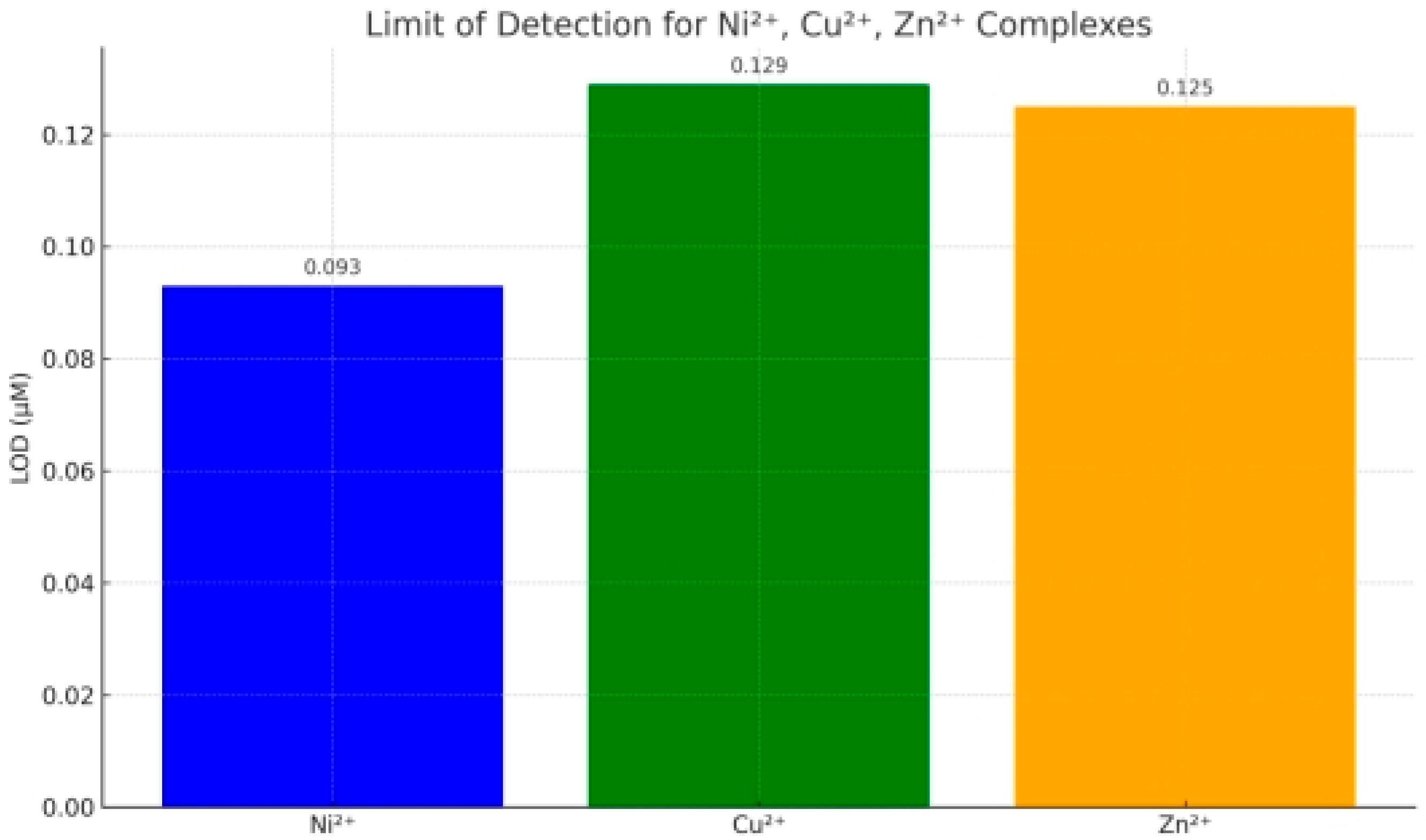
The calibration plots for Ni2+, Cu2+, and Zn2+ complexes displayed excellent linearity within the 0–5 μM range, with R2 values exceeding 0.997 for all analytes. The slopes of the calibration lines (S) were 0.050, 0.046, and 0.043 A·μM−1 for Ni2+, Cu2+, and Zn2+, respectively. The σ_blank values, derived from twelve replicate blank measurements, ranged from 0.0016 to 0.0020 absorbance units. The calculated LOD values were 0.093 μM for Ni2+, 0.129 μM for Cu2+, and 0.125 μM for Zn2+, indicating the high sensitivity of the developed method (Figure 8 and Table 1).
The low LOD values can be attributed to the strong molar absorptivity of the metal–ligand complexes and the minimal baseline noise of the measurement system. These results suggest that the synthesized ligand exhibits a high affinity toward the studied metal ions, enabling trace-level detection. Such sensitivity is comparable to or better than similar spectrophotometric methods reported in recent literature, confirming the applicability of the ligand in environmental monitoring and analytical chemistry.

4. Conclusions

In this study, a multifunctional organic compound, benzene-1,2,4-triyl tris(2-(3-carboxy-4-hydroxybenzenesulfonate) acetate), was successfully synthesized and comprehensively characterized. The synthesis was achieved through a two-step sequence: chloracetylation of oxyhydroquinone to form benzene-1,2,4-triyl tris(2-chloroacetate), followed by nucleophilic substitution with sodium sulfosalicylate in a DMF medium. Optimization of reaction parameters led to a high isolated yield of 88.6%.
The obtained compound was characterized by IR, 1H NMR, 13C NMR, and UV–Vis spectroscopy, confirming the complete substitution of chlorine atoms and the presence of sulfonate, carboxyl, and phenolic functional groups. The resulting molecule exhibits high hydrophilicity and multiple coordination sites, making it a promising ligand for metal complexation, ion-selective sensing, and polymeric material development.
UV–Vis spectroscopic studies revealed significant bathochromic shifts in the presence of Ni2+, Cu2+, and Zn2+ ions, indicating effective metal–ligand coordination. The determined limits of detection (LOD) were 0.093 μM for Ni2+, 0.129 μM for Cu2+, and 0.125 μM for Zn2+, demonstrating high analytical sensitivity.
Overall, this work provides an in-depth analysis of nucleophilic substitution reactions between trichloroacetate derivatives and sulfosalicylate salts, establishing a practical route for synthesizing highly water-soluble, multifunctional aromatic esters. The results highlight the potential applicability of the synthesized compound in analytical chemistry, coordination chemistry, and material science.

Funding

This work was funded by the Agency of innovative development under the Ministry of higher education, science and innovation of the Republic of Uzbekistan (Contract No. 65).

Institutional Review Board Statement

Not applicable.

Informed Consent Statement

Not applicable.

Data Availability Statement

The data presented in this study are available on request from the corresponding author.

Acknowledgments

The authors wish to acknowledge Karshi State Technical University, Karshi, Uzbekistan.

Conflicts of Interest

The author declares no conflicts of interest.

References

  1. Takise, R.; Muto, K.; Yamaguchi, J. Cross-coupling of aromatic esters and amides. Chem. Soc. Rev. 2017, 46, 5864–5888. [Google Scholar] [CrossRef]
  2. Sá, A.G.A.; de Meneses, A.C.; de Araújo, P.H.H.; de Oliveira, D. A review on enzymatic synthesis of aromatic esters used as flavor ingredients for food, cosmetics and pharmaceuticals industries. Trends Food Sci. Technol. 2017, 69, 95–105. [Google Scholar] [CrossRef]
  3. Sumby, K.M.; Grbin, P.R.; Jiranek, V. Microbial modulation of aromatic esters in wine: Current knowledge and future prospects. Food Chem. 2010, 121, 1–16. [Google Scholar] [CrossRef]
  4. Clark, R.F.; Simons, J.H. Aromatic esters of fluorocarbon acids. J. Am. Chem. Soc. 1953, 75, 6305–6306. [Google Scholar] [CrossRef]
  5. Ushijima, S.; Moriyama, K.; Togo, H. Facile preparation of aromatic esters from aromatic bromides with ethyl formate or DMF and molecular iodine via aryllithium. Tetrahedron 2012, 68, 4701–4709. [Google Scholar] [CrossRef]
  6. Brutschy, B. The structure of microsolvated benzene derivatives and the role of aromatic substituents. Chem. Rev. 2000, 100, 3891–3920. [Google Scholar] [CrossRef]
  7. Chin, C.-J.M.; Shih, M.-W.; Tsai, H.-J. Adsorption of nonpolar benzene derivatives on single-walled carbon nanotubes. Appl. Surf. Sci. 2010, 256, 6035–6039. [Google Scholar] [CrossRef]
  8. Graybill, B.M. Synthesis of aryl sulfones. J. Org. Chem. 1967, 32, 2931–2933. [Google Scholar] [CrossRef]
  9. Bordwell, F.G.; Fried, H.E.; Hughes, D.L.; Lynch, T.Y.; Satish, A.V.; Whang, Y.E. Acidities of carboxamides, hydroxamic acids, carbohydrazides, benzenesulfonamides, and benzenesulfonohydrazides in DMSO solution. J. Org. Chem. 1990, 55, 3330–3336. [Google Scholar] [CrossRef]
  10. Gilbert, E.; Jones, P.E. Sulfonation and Sulfation. Unit Processes Review. Ind. Eng. Chem. 1961, 53, 501–507. [Google Scholar] [CrossRef]
  11. David, S.; Hanessian, S. Regioselective manipulation of hydroxyl groups via organotin derivatives. Tetrahedron 1985, 41, 643–663. [Google Scholar] [CrossRef]
  12. Hurd, R.N.; Mater, G.D.L.; McElheny, G.C.; Turner, R.J.; Wallingford, V.H. Preparation of dithiooxamide derivatives. J. Org. Chem. 1961, 26, 3980–3987. [Google Scholar] [CrossRef]
  13. Ogawa, K.; Tobe, N. A Spectrophotometric Study of the Complex Formation between Iron(III) and Sulfosalicylic Acid. Bull. Chem. Soc. Jpn. 1966, 39, 223–227. [Google Scholar] [CrossRef]
  14. Walker, W.R.; Beveridge, S.J. Inorganic Perspectives in Biology and Medicine; Elsevier, North-Holland Press: Amsterdam, The Netherlands, 1979; Volume 2, p. 93. [Google Scholar]
  15. Pecci, J.; Foye, W.O. The avidity of salicylic, gentisic, and salicyluric acids for heavy metal cations. J. Am. Pharm. Assoc. 1960, 49, 411–414. [Google Scholar] [CrossRef]
  16. Marzotto, A.; Clemente, D.A.; Gerola, T.; Valle, G. Synthesis, molecular structure and reactivity of sodium 5-sulfosalicylate dihydrate and sodium[triaqua(5-sulfosalicylato)copper(II)] 2 hemihydrate. Polyhedron 2001, 20, 1079–1087. [Google Scholar] [CrossRef]
  17. Yenikaya, C.; Sarı, M.; İlKimen, H.; Bülbül, M.; Büyükgüngör, O. Synthesis and characterization of a novel amino salicylato salt and its Cu(II) complex and their inhibition studies on carbonic anhydrase isoenzymes. Polyhedron 2011, 30, 535–541. [Google Scholar] [CrossRef]
  18. Harris, D.C. Quantitative Chemical Analysis, 9th ed.; W.H. Freeman: New York, NY, USA, 2016; pp. 415–462. [Google Scholar]
  19. Skoog, D.A.; West, D.M.; Holler, F.J.; Crouch, S.R. Fundamentals of Analytical Chemistry, 9th ed.; Brooks/Cole: Belmont, MA, USA, 2014; pp. 725–780. [Google Scholar]
  20. Christian, G.D.; Dasgupta, P.K.; Schug, K.A. Analytical Chemistry, 7th ed.; Wiley: Hoboken, NJ, USA, 2014; pp. 350–395. [Google Scholar]
  21. Kellner, R.; Mermet, J.M.; Otto, M.; Widmer, H.M. Analytical Chemistry, 2nd ed.; Wiley-VCH: Weinheim, Germany, 2004; pp. 215–248. [Google Scholar]
  22. Sekine, T.; Hasegawa, Y. Solvent Extraction Chemistry: Fundamentals and Applications, 1st ed.; Marcel Dekker: New York, NY, USA, 1977; pp. 220–260. [Google Scholar]
  23. Choppin, G.R. Solvent extraction of metal ions. J. Radioanal. Nucl. Chem. 1995, 194, 267–274. [Google Scholar]
  24. Ritcey, G.M. Solvent extraction in hydrometallurgy. Solvent Extr. Ion Exch. 2006, 24, 319–344. [Google Scholar]
  25. Jurayev, R.S.; Choriev, A.U.; Qaxxorov, N.T. Effect and Spectroscopic Analysis of Solutions in Trychloratsetylpyrogallol Synthesis. Chem. Proc. 2023, 14, 80. [Google Scholar] [CrossRef]
  26. Choriev, A.U.; Jurayev, R.S.; Abdushukurov, A.K.; Abdullayev, M.G. Synthesis of 2-Izopropyl-5-methylphenylcarboxymethylen Tartrate. Eng. Proc. 2023, 37, 57. [Google Scholar] [CrossRef]
  27. Jurayev, R.S.; Choriev, A.U.; Qaxxorov, N.T. The Photometric Determination of Iron(III) with 2-Napthylcarboxymethylene Citrate. Eng. Proc. 2023, 48, 49. [Google Scholar] [CrossRef]
  28. Jurayev, R.S. Synthesis of 4,4′,4″-(((Benzene-1,2,3-triyltris(oxy))tris(2-oxoethane-2,1-diyl))tris(oxy)) tris(2,3-dihydroxy-4-oxobutanoic Acid) and 4,4′,4″-(((Benzene-1,2,4-triyltris(oxy))tris(2-oxoethane-2,1-diyl))tris(oxy))tris(2,3-dihydroxy-4-oxobutanoic Acid). Eng. Proc. 2024, 67, 75. [Google Scholar] [CrossRef]
  29. Sattorovich, R.J.; Uralivich, A.C.; Ugli, B.E.R. Synthesis of Hexamethylenetetramine Mono- and Di(P-Methoxyphenylacetochloride). Eng. Proc. 2024, 67, 53. [Google Scholar] [CrossRef]
  30. Sadikova, S.; Abdushukurov, A.; Choriyev, A.; Takhirov, Y. Nucleophilic substitution reaction of dichloroacetyl hydroquinone with sodium salts of oxyacids. Int. J. Pharm. Res. 2020, 12, 648–653. [Google Scholar] [CrossRef]
  31. Furniss, B.S.; Hannaford, A.J.; Smith, P.W.G.; Tatchell, A.T. Vogel’s Textbook of Practical Organic Chemistry, 5th ed.; Longman: Harlow, UK, 1989; pp. 729–730. [Google Scholar]
  32. Field, L.D.; Sternhell, S.; Kalman, J.R. Organic Structures from Spectra, 3rd ed.; Wiley: Hoboken, NJ, USA, 2003. [Google Scholar]
  33. Harwood, L.M.; Claridge, T.D.W. Introduction to Organic Spectroscopy; OUP: Oxford, UK, 1996. [Google Scholar]
  34. Silverstein, R.M.; Webster, F.X.; Kiemle, D.J. Spectrometric Identification of Organic Compounds; Wiley: Hoboken, NJ, USA, 2005. [Google Scholar]
  35. Currie, L.A. Nomenclature in evaluation of analytical methods including detection and quantification capabilities (IUPAC Recommendations 1995). Pure Appl. Chem. 1995, 67, 1699–1723. [Google Scholar] [CrossRef]
  36. International Conference on Harmonisation (ICH). Validation of Analytical Procedures: Text and Methodology Q2(R1) ICH Harmonised Guideline; ICH: Geneva, Switzerland, 2005; Available online: https://www.ich.org/page/quality-guidelines (accessed on 1 September 2020).
  37. Thompson, M.; Ellison, S.L.R.; Wood, R. Harmonized guidelines for single-laboratory validation of methods of analysis (IUPAC Technical Report). Pure Appl. Chem. 2002, 74, 835–855. [Google Scholar] [CrossRef]
  38. Eurachem Working Group. Quantifying Uncertainty in Analytical Measurement. In Eurachem/CITAC Guide, 3rd ed.; Eurachem: Bucharest, Romania, 2012; Available online: https://www.eurachem.org (accessed on 1 September 2025).
  39. Magnusson, B.; Örnemark, U. (Eds.) EURACHEM Guide: The Fitness for Purpose of Analytical Methods—A Laboratory Guide to Method Validation and Related Topics, 2nd ed; Eurachem: Bucharest, Romania, 2014. [Google Scholar]
  40. Long, G.L.; Winefordner, J.D. Limit of detection. A closer look at the IUPAC definition. Anal. Chem. 1983, 55, 712A–724A. [Google Scholar] [CrossRef]
Figure 1. Synthesis scheme of benzene-1,2,4-triyl tris(2-(3-carboxy-4-hydroxybenzenesulfonate) acetate).
Engproc 117 00039 g001
Figure 2. Reaction mechanism of solvate formation.
Engproc 117 00039 g002
Figure 3. Mechanism of formation of the reaction product.
Engproc 117 00039 g003
Figure 4. IR spectrum (KBr) of benzene-1,2,4-triyl tris(2-(3-carboxy-4-hydroxybenzenesulfonate) acetate).
Engproc 117 00039 g004
Figure 5. 1H NMR (CDCl3, 600 MHz) spectrum of the compound.
Engproc 117 00039 g005
Figure 6. 13C NMR (CDCl3, 150 MHz) spectrum of the compound.
Engproc 117 00039 g006
Figure 7. UV–Vis absorption spectra of the ligand in ethanol under different conditions: neutral, alkaline, acidic, and in the presence of Ni2+, Cu2+, and Zn2+ ions.
Engproc 117 00039 g007
Figure 8. Limit of detection values for Ni2+, Cu2+, and Zn2+ complexes calculated from UV–Vis spectrophotometric data.
Engproc 117 00039 g008
Table 1. Calibration and LOD parameters for metal–ligand complexes.
Ionλ_max (nm)Slope (A·µM−1)σ_blank (A)LOD (µM)
Ni2+3250.0500.00160.093
Cu2+3220.0460.00200.129
Zn2+3100.0430.00180.125
Disclaimer/Publisher’s Note: The statements, opinions and data contained in all publications are solely those of the individual author(s) and contributor(s) and not of MDPI and/or the editor(s). MDPI and/or the editor(s) disclaim responsibility for any injury to people or property resulting from any ideas, methods, instructions or products referred to in the content.