You are currently viewing a new version of our website. To view the old version click .
Engineering Proceedings
  • Proceeding Paper
  • Open Access

1 December 2025

Biological Response of Plants to Thermally Active Coal Mine Spoil Heap Substrates Toxicity: Upper Silesian Region in Czech Republic and Poland, Examples Comparison †

,
,
,
,
,
,
,
and
1
Department of Environmental Engineering, Faculty of Mining and Geology, VŠB–Technical University of Ostrava, 17. Listopadu 2172/15, 708 00 Ostrava, Czech Republic
2
Institute of Biology, Biotechnology and Environmental Protection, Faculty of Natural Sciences, University of Silesia in Katowice, Jagiellońska 28, 40-032 Katowice, Poland
3
Institute of Earth Sciences, Faculty of Natural Sciences, University of Silesia in Katowice, Będzińska 60, 41-200 Sosnowiec, Poland
*
Author to whom correspondence should be addressed.

Abstract

This study assessed the ecotoxicity of substrates from two hard coal heaps originating from the currently thermally active Ema heap in the Czech Republic and Czerwionka heap in Poland. Semi-chronic and contact tests were used to determine the ecotoxicity of the substrates, with germination and root inhibition of five plant species (Avena sativa L., Sinapis alba L., Brassica napus L., Lepidium sativum L. and Lactuca sativa L.). Acute toxicity occurred in thermally active areas, and similar risks were observed in both heaps. The results of the ecotoxicological assessments indicate the possibility of ecological remediation of brownfields after the cessation of thermal activity.

1. Introduction

Coal mine spoil heaps, generated during hard coal mining, represent a significant environmental problem in post-mining regions worldwide. The material forming these heaps contains substantial amounts of organic matter and reactive minerals (e.g., pyrite), making them susceptible to spontaneous thermally active spoil heap formations [1]. The thermal activity of coal mine spoil heaps presents a significant ecological challenge, as elevated temperatures, mineralogical transformations, and the release of potentially toxic substances can inhibit natural plant succession and pose risks to surrounding ecosystems [2,3]. Vegetation in thermally active areas is poorly developed, and its diversity increases with distance from zones of intensive combustion [4]. Research on coal mine heaps has mainly focused on their chemical composition [5], thermal activity monitoring [6], and general observations of vegetation cover development [7,8], while their direct impact on organisms has been less frequently addressed [9]. Therefore, phytotoxicity tests [10] provide a practical and sensitive tool for assessing the suitability of post-mining substrates for vegetation development. For plants, growth inhibition in the tested sample must not exceed 50% compared to the control; otherwise, the material is classified as ecotoxic [11]. Combining germination assays with semi-chronic toxicity tests on indicator species enables a quantitative assessment of inhibitory or stimulatory effects on plant succession [12].
This study aims to analyze the biological response of selected plant species to thermally active substrates from two hard coal mine spoil heaps in the Czech Republic and Poland, both located in the Upper Silesia region, by comparing the toxicity of the substrates using two types of tests—semi-chronic and contact—with germination index and root growth inhibition as key indices.

2. Materials and Methods

The research focused on two thermally active hard coal spoil heaps in the Upper Silesian Coal Basin: the Ema heap in Ostrava (Czech Republic; 49°50′23.3″ N 18°18′52.8″ E) and the heap in Czerwionka (Poland; 50°09′34.8″ N 18°40′45.6″ E). Both are large conical structures formed from post-mining coal waste, partially covered with woody vegetation—Ema spans 21.3 ha, while the Polish site reaches 97 ha [13,14]. In both cases, residual thermal activity is concentrated near the summit, where features such as gas vents, efflorescences, and elevated ground temperatures can still be observed. However, this activity is gradually declining, indicating ongoing natural stabilization processes.

2.1. Sample Collections and Preparation for Testing

Samples of approximately 150 g each were collected from three locations on each waste heap, at a depth of 10–50 cm, into prepared containers. Samples were then cleared of organic matter, dried, crushed (<10 mm), homogenized, and sieved for ecotoxicological analysis and contact tests [15]. Mining waste was crushed to <10 mm in accordance with ČSN EN 12457-4 [16]. The leachates for semi-chronic toxicity testing were prepared from 10 g of material at a 1:10 solid-to-liquid ratio with distilled water. The mixtures were agitated for 24 h at 5–10 rpm at 20 °C and then filtered through <0.45 µm filter paper. Saline stock solutions used as control media in semi-chronic toxicity testing were prepared according to ČSN EN ISO 6341 [17], ČSN EN ISO 7346-2 [18], and Waste Department guidelines [19]. The individual indexes were calculated and evaluated in accordance with the standards and criteria defined in the respective test methodologies. The measurement error was estimated using the exact differential method.

2.2. Semi-Chronic Toxicity Testing

The aqueous leachates were used in a semi-chronic toxicity assay to identify substances causing 50% root growth inhibition within 72 h. Following ISO 11269-1/2 and OECD TG No. 208, four plant species were tested as bioindicators [20]. Each test and control sample was prepared in 2 or 3 replicates, respectively, depending on the species: Sinapis alba L. and Brassica napus L., 20 seeds per replicate; Avena sativa L. and Lepidium sativum L., 10 seeds per replicate. Seeds were placed on filter paper in Petri dishes, treated with 5 mL of leachate or control saline, and incubated in the dark at 20 °C for 72 h. After incubation, germination rates and root lengths were measured to assess phytotoxic effects. All tests were conducted in accordance with the relevant ISO standards and Czech Regulation No. 273/2021 Sb. Samples showing more than 50% inhibition or stimulation of root growth, or with germination indices below 60%, were classified as ecotoxic and highly risky, respectively [21].

2.3. Contact Toxicity Testing

The contact phytotoxicity test evaluated the effects of mining waste on early plant growth using Lactuca sativa L. ‘Parris Island Cos’, a sensitive bioindicator species recommended by ISO and related standards [20,22,23]. Sample portions of 50 g were mixed with 50 g of reference substrate (1:1 ratio) to reduce extreme physicochemical properties. The mixtures were moistened with 40 mL of distilled water, transferred into pots, and seeded with 15 pre-germinated lettuce seedlings. For the control, 100 g of reference substrate was used and treated in the same manner. One replicate was used per treatment. The pots were then incubated in the dark at 20 °C for 5 days. After incubation, root length was measured and compared with controls. Inhibition values beyond ±50% from the control indicated toxicity; values within ±50% were considered non-toxic, and germination indices below 60% were classified as ecotoxic and highly risky [11,21].

3. Results

3.1. Semi-Chronic Toxicity Test

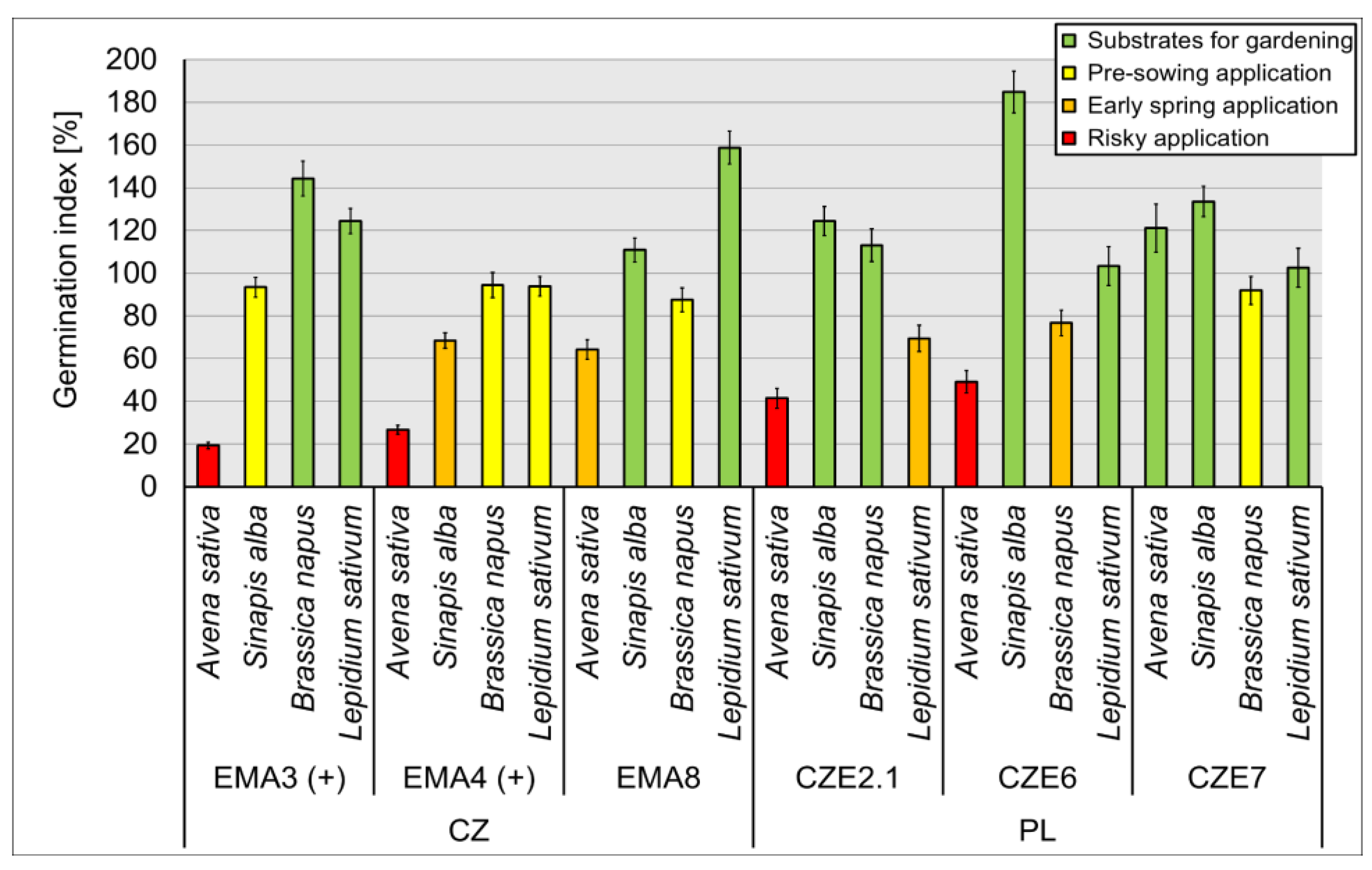
The results of the semi-chronic toxicity test, based on the calculated germination index, are presented in Figure 1. The results indicate that the following samples: EMA3, EMA4, CZE2.1 and CZE6, are highly unsuitable for further use, especially in agriculture for the cultivation of crops similar to Avena sativa. Their germination indexes range from 19.23% to 49.14%, i.e., below the critical threshold of 60%, high risk of ecotoxicity, making further use of these materials risky. In contrast, the EMA8 and CZE7 samples maintained values above 60%, and therefore met the basic safety criteria with minor limitations.
Figure 1. Graphical evaluation of germination index of selected plant species (Avena sativa L., Sinapis alba L., Brassica napus L., Lepidium sativum L.) in semi-chronic test of material collected from the Ema spoil heap (EMA) located in the Czech Republic (CZ) and from the Czerwionka spoil heap (CZE) in Poland (PL). Samples marked with (+) were taken from thermally active zones.
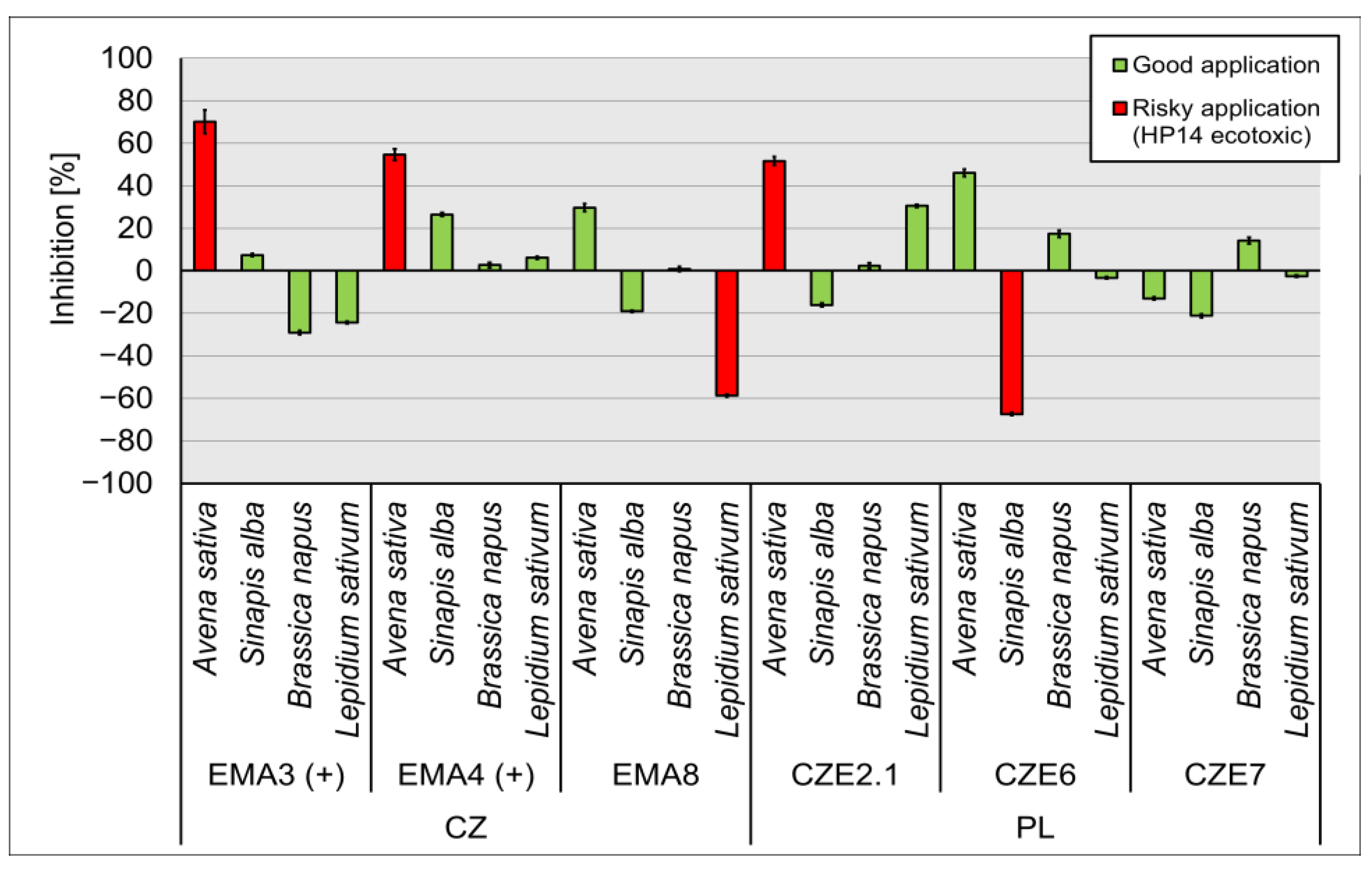
The results of the semi-chronic toxicity test, based on the calculated root growth inhibition values, are presented in Figure 2. The strongest toxic effects on Avena sativa were observed in the samples from the Ema spoil heap—especially EMA3 and EMA4—with inhibition values of 70.09% and 54.68%, respectively, which clearly classifies them as ecotoxic material from thermally active zones. A similar trend was observed for sample CZE2.1 with a growth inhibition of over 50%. In contrast, Sinapis alba exceeded the regulatory stimulation thresholds only in sample CZE6 (67.44%), which also indicates ecotoxicity. Lepidium sativum showed excessive growth stimulation in sample EMA8 (58.75%), although it originated from an inactive zone, which also places it in the ecotoxic category according to the recognized criteria.
Figure 2. Value results of root growth inhibition of plant species (Avena sativa L., Sinapis alba L., Brassica napus L., Lepidium sativum L.) in a semi-chronic test of material collected from the Ema spoil heap (EMA) located in the Czech Republic (CZ) and from the Czerwionka spoil heap (CZE) in Poland (PL).

3.2. Contact Toxicity Test

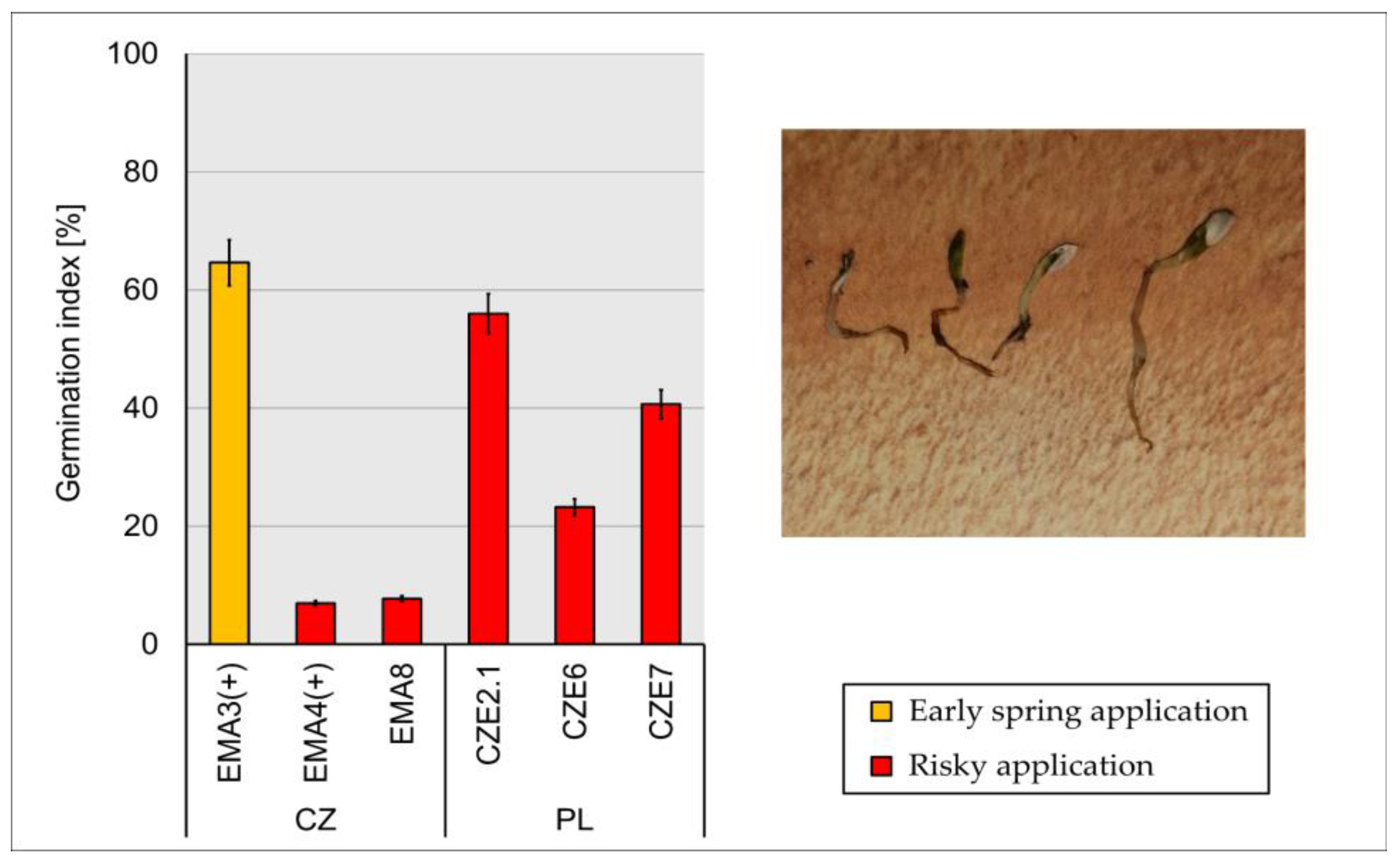
The results for the germination index parameter of Lactuca sativa in the contact toxicity test are presented in Figure 3. These results indicate that material from samples EMA4, EMA8, CZE2.1, CZE6, and CZE7 pose a considerable risk if applied, for example, in agricultural contexts, as their germination index ranged from 6.92% to 56.00%, which is below the acceptable threshold of 60%. These values indicate significant phytotoxicity and categorize the materials as unsuitable or ecotoxic in direct contact with plants.
Figure 3. Graphical evaluation of germination index of Lactuca sativa L. in contact test of material collected from the Ema spoil heap (EMA) in the Czech Republic (CZ) and from the Czerwionka spoil heap (CZE) in Poland (PL). Samples marked with (+) were taken from thermally active zones. (photo O. Novak).
In contrast, the best-performing samples were EMA3, with a germination index of 64.62%. These findings suggest that this sample may be suitable for limited or early spring application.
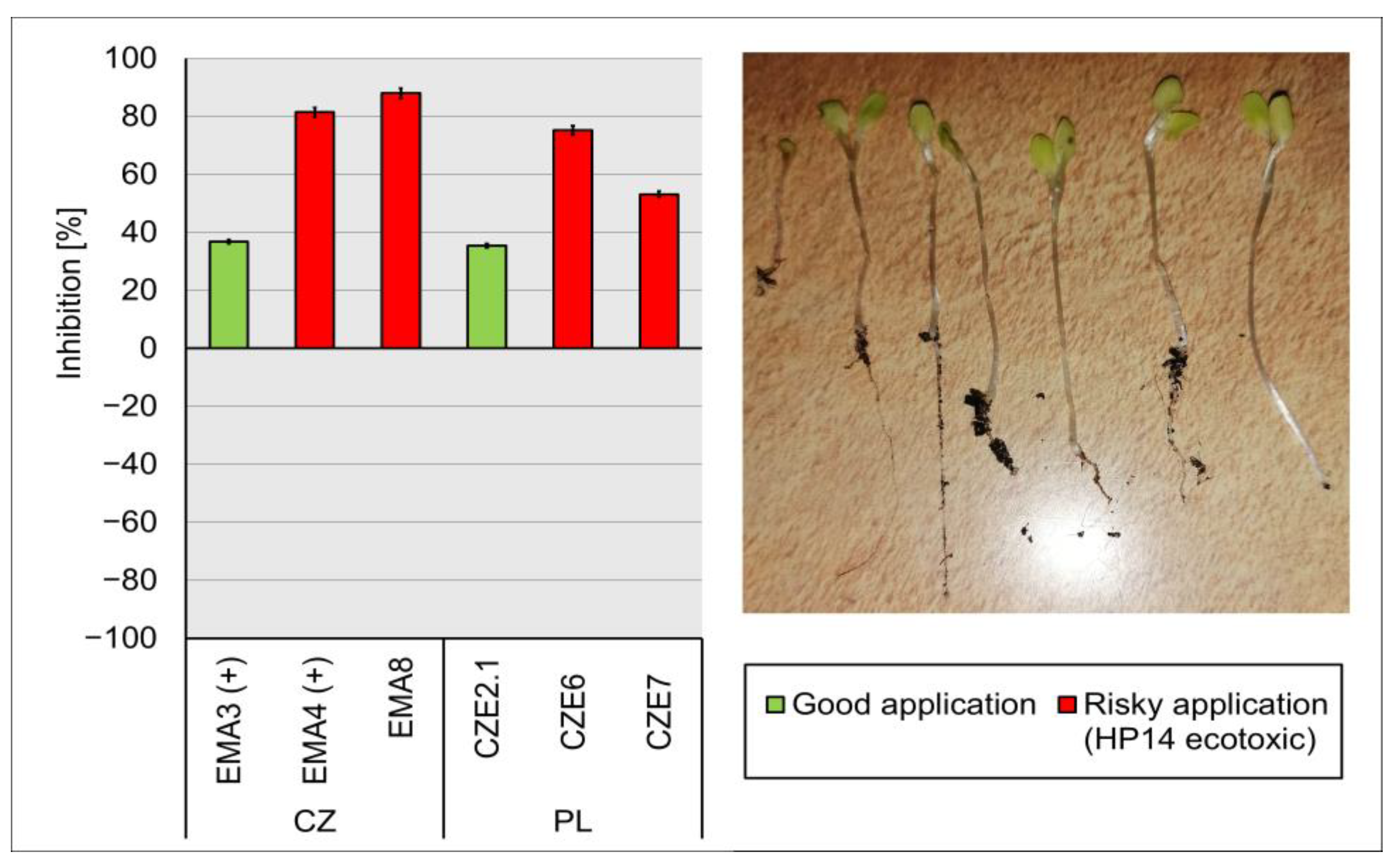
The contact toxicity test results of Lactuca sativa for samples from the EMA3 and CZE2.1 material show no toxic effect, as growth inhibition is less than 50%. However, the statutory thresholds were exceeded in samples EMA4, EMA8, CZE6, and CZE7, where growth inhibition ranged from 53.08% to 87.95% (Figure 4). This supports the classification as ecotoxic.
Figure 4. Value results of root growth inhibition of Lactuca sativa L. in contact test of material collected from the Ema spoil heap (EMA) in the Czech Republic (CZ) and from the Czerwionka spoil heap (CZE) in Poland (PL). Samples marked with (+) were taken from thermally active zones. (photo O. Novak).
Although some samples did not exceed the toxicity thresholds for all species tested, germination rates below 60% and root growth inhibition above 50% confirm the ecotoxic potential. Among the test species, Avena sativa was found to be the most sensitive, while other species showed both inhibition and stimulation depending on the sample. Overall, the substrates from the thermally active waste dumps studied pose a risk to early plant development, which may restrict their suitability for ecological restoration and pose potential risks to surrounding ecosystems.

4. Discussion

Phytotoxicity assays on Upper Silesian spoil heaps showed strong plant species- and site-specific responses, with thermal activity as the main toxicity driver [24], particularly in the case of the Ema heap. Material from Ema showed very low germination indices (<10%) and strong root inhibition (>50%), indicating severe ecotoxicity and confirming its unsuitability for reclamation or agricultural use. Contrarily, samples from the Czerwionka heap, which no longer exhibits any thermal activity, had a much weaker effect, sometimes even stimulating plant growth, indicating gradual contaminant weathering and partial nutrient release [7].

4.1. Plant Species Responses and Ecological Implications

Avena sativa consistently emerged as the most sensitive test species, with root growth inhibition values exceeding regulatory ecotoxicity limits in almost all thermally active samples [25]. Lactuca sativa also showed the expected response for a sensitive bioindicator and exhibited strong inhibition in contact tests, especially in areas with low pH and high heavy metal concentrations [22]. In contrast, Sinapis alba, Lepidium sativum and Brassica napus were more tolerant and exhibited even growth stimulation in some cases (e.g., Czerwionka heap) [8,12].

4.2. Regional and Thermal Contrasts

Thermal activity emerged as a dominant determinant of toxicity. Ema, with ongoing combustion, produced some of the lowest germination indices (<10%) and highest inhibition values, confirming observations by Pertile et al. [1,26] that persistent burning drives severe ecotoxic conditions. The Polish spoil mine heap presented a more nuanced picture. Although no longer thermally active (at the sampling site), the effects of phytotoxicity persist, albeit less acutely—most likely a residue of past spontaneous combustion events.

4.3. Novel Contributions and Implications for Reclamation

These findings refine existing literature, which often described coal waste as chemically inert or even beneficial to vegetation [27]. By comparing thermally active and inactive heaps across two countries, this study links geochemical state (pH, metal content, combustion history) directly to biological response. It also introduces a multi-species approach, demonstrating that Avena sativa and Lactuca sativa as the most sensitive bioindicators, while Sinapis alba and Lepidium sativum may support early-stage reclamation [9].
From a reclamation perspective, heaps such as Czerwionka (germination index ≥ 60%, moderate inhibition) may support gradual revegetation with soil amendments. Conversely, heaps with extreme combustion history (e.g., Ema) present a significant ecological hazard. These findings highlight the need for site-specific assessment of hard coal spoil heaps [28] and confirm that phytotoxicity testing is vital for safe post-mining land use planning.
This research introduces several novel insights. First, it combines semi-chronic germination and root inhibition assays with contact tests, offering a more detailed picture of early seedling stress and waste material phytotoxicity. Second, it cross-compares Czech and Polish spoil heaps, incorporating geological context and thermal activity history into biological interpretation—an approach rarely applied to Upper Silesia. Third, it explicitly quantifies species-specific sensitivity, revealing that Avena sativa and Lactuca sativa are the most sensitive indicators of spoil heap toxicity, whereas Sinapis alba and Lepidium sativum may serve as pioneer species for reclamation efforts. These findings support increasing calls for site-specific assessment of thermal activity coal spoil heaps [29] and demonstrate that phytotoxicity testing is an essential complement to environmental monitoring for safe and effective post-mining land use planning [30].

5. Conclusions

The physicochemical properties of thermally active waste heaps in the Czech Republic and Poland elicit a negative biological response of plants to the toxicity of the accumulated waste. Avena sativa demonstrated the highest sensitivity to the toxicity of heap material, confirming its suitability as a bioindicator for assessing the phytotoxicity of substrates from post-industrial sites. The obtained results emphasize the importance of local environmental assessments for understanding the mechanisms of impact and indicate the possibility of ecosystem restoration by recreating appropriate habitat conditions through reclamation processes.

Author Contributions

Conceptualization, E.S. (Edyta Sierka), O.N., J.C. and A.A.; methodology, O.N., E.S. (Edyta Sierka) and J.C.; software, O.N., E.S. (Edyta Sierka), M.L. and E.S. (Ewa Szwajczak); validation, E.S. (Edyta Sierka), M.L. and E.S. (Ewa Szwajczak); formal analysis, O.N. and E.S. (Edyta Sierka); investigation, O.N., E.S. (Edyta Sierka); K.L. and W.S.; resources, E.S. (Edyta Sierka), H.V. and O.N.; data curation, M.L., E.S. (Edyta Sierka), J.C., A.A. and W.S.; writing—original draft preparation, E.S. (Edyta Sierka) O.N. and E.S. (Ewa Szwajczak); writing—review and editing, K.L., E.S. (Ewa Szwajczak) and E.S. (Edyta Sierka); visualization, M.L. and E.S. (Ewa Szwajczak); supervision, E.S. (Edyta Sierka), H.V. and O.N.; project administration, E.S. (Edyta Sierka), H.V. and J.C.; funding acquisition, E.S. (Edyta Sierka) and H.V. All authors have read and agreed to the published version of the manuscript.

Funding

The research was supported by the project for Specific University Research (SGS) No. SP2024/005 by the Faculty of Mining and Geology of VŠB—Technical University of Ostrava.

Institutional Review Board Statement

Not applicable.

Data Availability Statement

The data presented in this study are available on request from the corresponding author.

Conflicts of Interest

The authors declare no conflicts of interest.

References

  1. Pertile, E.; Dvorský, T.; Václavík, V.; Syrová, L.; Charvát, J.; Máčalová, K.; Balcařík, L. The Use of Construction Waste to Remediate a Thermally Active Spoil Heap. Appl. Sci. 2023, 13, 7123. [Google Scholar] [CrossRef]
  2. Wasilewski, S.; Skotniczny, P. Mining Waste Dumps—Modern Monitoring of Thermal and Gas Activities. Gosp. Surowc. Miner. 2015, 31, 155–182. [Google Scholar] [CrossRef]
  3. Balcařík, L.; Šimáčková, B.; Shaghaghi, S.; Syrová, L. Effect of Ash from Biomass Combustion on Tailings pH. Eng. Proc. 2023, 57, 24. [Google Scholar]
  4. Hanczaruk, R.; Kompała–Bąba, A. Effect of Thermal Activity on the Differentiation of the Vegetation of the “Ruda” Postmining Heap in Zabrze (Poland). Acta Agrobot. 2019, 72, 1783. [Google Scholar] [CrossRef]
  5. Fabiańska, M.; Ciesielczuk, J.; Nádudvari, Á.; Misz–Kennan, M.; Kowalski, A.; Kruszewski, Ł. Environmental Influence of Gaseous Emissions from Self–Heating Coal Waste Dumps in Silesia, Poland. Environ. Geochem. Health 2019, 41, 575–601. [Google Scholar] [CrossRef] [PubMed]
  6. Zubíček, V.; Hudeček, V.; Orlíková, L.; Dandoš, R.; Jadviščok, P.; Adjiski, V.; Dlouhá, D. Thermal Signatures of Relict Coal Spoil, Waste and Tailing Dumps. Int. J. Min. Reclam. Environ. 2024, 38, 267–279. [Google Scholar] [CrossRef]
  7. Plohák, P.; Švehláková, H.; Rajdus, T.; Stalmachová, B. Soil Seed Bank in Ostrava Post–Mining Landscape. IOP Conf. Ser. Earth Environ. Sci. 2020, 444, 012044. [Google Scholar] [CrossRef]
  8. Misebo, A.M.; Woś, B.; Sierka, E.; Pietrzykowski, M. Soil Organic Carbon and Nitrogen in a Carboniferous Spoil Heap as a Function of Vegetation Type and Reclamation Treatment. Land Degrad. Dev. 2024, 35, 4830–4840. [Google Scholar] [CrossRef]
  9. Zloch, J.; Adamcová, D.; Šindelář, O.; Šourková, M.; Vaverková, M.D. Testing of Phytotoxicity of Mining Waste to Determine the Direction of Future Development. AIMS Environ. Sci. 2020, 7, 324–334. [Google Scholar] [CrossRef]
  10. Council Regulation (EU) 2017/997. Available online: https://www.msds-europe.com/wp-content/uploads/2018/05/council_regulation_eu_2017_997.pdf (accessed on 31 July 2025).
  11. Vyhláška č. 273/2021 Sb.: Vyhláška o Podrobnostech Nakládání s Odpady; Ministerstvo Životního Prostředí: Praha, Czech Republic, 2021.
  12. Stalmachova, B.; Sierka, E. Managed Succession in Reclamation of Postmining Landscape; Technická Univerzita v Košiciach: Košice, Slovakia, 2014; p. 86. ISBN 978-80-556-1852-3. [Google Scholar]
  13. Ciesielczuk, J.; Kruszewski, Ł.; Majka, J. Comparative Mineralogical Study of Thermally–Altered Coal–Dump Waste, Natural Rocks and the Products of Laboratory Heating Experiments. Int. J. Coal Geol. 2015, 139, 114–141. [Google Scholar] [CrossRef]
  14. Marschalko, M.; Zástěrová, P.; Yilmaz, I.; Jelínek, P.; Růžička, J.; Růžičková, K.; Duda, R. A Case Study Assessing Thermal Activity at a Significant Geotourism Locality of Ema Coal Tailing Dumps in the Mining Landscape of Ostrava, Czech Republic. Q. J. Eng. Geol. Hydrogeol. 2017, 50, 53–59. [Google Scholar] [CrossRef]
  15. ÚKZÚZ. Metodický Pokyn č. 01/AZZP—Pracovní Postupy Pro Agrochemické Zkoušení Zemědělských Půd (AZZP) v ČR v Období 2023 až 2028; ÚKZÚZ: Prague, Czech Republic, 2020; Available online: https://web2.mendelu.cz/af_221_multitext/npv2/obrazky/pracovni_postup_azzp_novy.pdf (accessed on 26 November 2025).
  16. ČSN EN 12457-4 (838005); Characterization of Waste—Leaching—Compliance Leaching Test for Granular Waste and Sludges—Part 4: One-Stage Batch Test with Liquid-to-Solid Ratio 10 l/kg for Materials with Particle Size <10 mm (Without/With Size Reduction). Český Normalizační Institut: Praha, Czech Republic, 2003.
  17. ČSN EN ISO 6341; Water Quality—Determination of Inhibition of Mobility of Daphnia magna Straus, (Cladocera, Crustacea)—Acute Toxicity Test. Český Normalizační Institut: Praha, Czech Republic, 2013.
  18. ČSN EN ISO 7346-2; Water Quality—Determination of Acute Lethal Toxicity of Substances to Freshwater Fish [Brachydanio Rerio Hamilton–Buchanan (Teleostei, Cyprinidae)]—Part 2: Renewal Method. Český Normalizační Institut: Praha, Czech Republic, 1999.
  19. Ministerstvo Životního Prostředí České Republiky. Metodický Pokyn Odboru Odpadů ke Stanovení Ekotoxicity Odpadů; Ministerstvo Životního Prostředí České Republiky: Praha, Czech Republic, 2007. [Google Scholar]
  20. OECD. Test No. 208: Terrestrial Plant Test: Seedling Emergence and Seedling Growth Test, OECD Guidelines for the Testing of Chemicals, Section 2; OECD Publishing: Paris, France, 2006. [Google Scholar]
  21. Hejátková, K. Kompostování Přebytečné Travní Biomasy: Metodická Pomůcka; ZERA: Náměšť nad Oslavou, Czech Republic, 2007. [Google Scholar]
  22. US EPA. Seed Germination/Root Elongation Toxicity Test; EG–12; Office of Toxic Substances: Washington, DC, USA, 1982. [Google Scholar]
  23. The International Organization for Standardization. Soil Quality—Determination of the Effects of Pollutants on Soil Flora—Screening Test for Emergence of Lettuce Seedlings (Lactuca sativa L.), 2nd ed.; ISO: Geneva, Switzerland, 2024. [Google Scholar]
  24. Jaishankar, M.; Tseten, T.; Anbalagan, N.; Mathew, B.B.; Beeregowda, K.N. Toxicity, Mechanism and Health Effects of Some Heavy Metals. Interdiscip. Toxicol. 2014, 7, 60–72. [Google Scholar] [CrossRef] [PubMed]
  25. Urban, F. Analýza Rizik Termicky Aktivních Odvalů Pro Životní Prostředí. Bachelor’s Thesis, Ostravská univerzita: Ostrava, Czech Republic, 2017. [Google Scholar]
  26. Misz-Kennan, M.; Fabiańska, M.J. Application of Organic Petrology and Geochemistry to Coal Waste Studies. Int. J. Coal Geol. 2011, 88, 1–23. [Google Scholar] [CrossRef]
  27. Martinec, P. Vliv Ukončení Hlubinné Těžby Uhlí na Životní Prostředí; Anagram: Ostrava, Czech Republic, 2006; ISBN 80-7342-098-8. [Google Scholar]
  28. Straková, H.; Šedina, J.; Bílá, Z. Monitoring of Heaps Using Various Technologies. Staveb. Obzor–Civ. Eng. J. 2015, 24, 2. [Google Scholar] [CrossRef]
  29. Novák, O.; Drešlová, M.; Vojtková, H. Posuzování fytotoxicity vodných výluhů termicky aktivního odvalu Ema. In Geochémia 2024: Zborník Vedeckých Príspevkov z Konferencie: Bratislava, 10.–11.4.2024; Štátny Geologický Ústav Dionýza Štúra: Bratislava, Slovakia, 2024; pp. 144–145. ISBN 978-80-8174-075-6. [Google Scholar]
  30. Santos, E.S.; Abreu, M.M.; Magalhães, M.C.F. Hazard Assessment of Soils and Spoils from the Portuguese Iberian Pyrite Belt Mining Areas and Their Potential Reclamation. In Assessment, Restoration and Reclamation of Mining Influenced Soils; Elsevier Inc.: Amsterdam, The Netherlands, 2017; pp. 63–88. [Google Scholar]
Disclaimer/Publisher’s Note: The statements, opinions and data contained in all publications are solely those of the individual author(s) and contributor(s) and not of MDPI and/or the editor(s). MDPI and/or the editor(s) disclaim responsibility for any injury to people or property resulting from any ideas, methods, instructions or products referred to in the content.

Article Metrics

Citations

Article Access Statistics

Multiple requests from the same IP address are counted as one view.