1. Introduction
Raspberries are a widespread group of plants. They originate mainly from Asia, though they have been cultivated in North America for decades, and are highly resistant to pathogens and characterized by their high dietary and commercial value [
1]. These characteristics, together with their botanical features, make raspberries an important subject of scientific research [
2,
3].
Raspberry fruits can be red, purple, or black depending on the species. In any case, raspberries have been recognized for their medicinal properties due to the presence of bioactive components, such as anthocyanins, catechins, and flavonols, which can neutralize ROS. Therefore, various studies have suggested the antioxidant, anti-inflammatory and anti-carcinogenic potential of raspberries, which also play an important role in maintaining health and preventing disease [
4,
5].
In this context, in vitro assays are essential for studying and analyzing the ROS scavenging capacity. Galvanoxyl radical emission and absorption studies, in particular, are a viable alternative for estimating the behavior of natural extracts against ROS due to the high sensitivity and reactivity of this free radical, as well as the relative ease and speed with which these experiments can be carried out [
6].
Although a great deal of research has been conducted on the antioxidant capacity of
Rubus niveus, most of this has focused on parts of the plant other than the fruit, such as the roots and stems. In fact, the biological activity of this species (including its antipyretic and antidiabetic properties, among others) is attributed to the organic extracts of its stems and roots [
7,
8], and not to its fruit, which contains most of the polyphenols. Therefore, this study aims to analyze the ROS scavenging capacity of black raspberry fruit extract (
Rubus niveus Thumb.) using galvinoxyl radical tests. Ultraviolet-Visible spectroscopy (UV–Vis) and fluorescence equipment will be used to observe the reaction (scavenging and quenching) of black raspberry extract with galvinoxyl radical using absorbance and emission spectra. These experiments represent a first approach to the antioxidant potential of the fruit of this plant species and are an essential precursor to future research in our laboratory.
Notably, this study is novel since it shows the use of UV–Vis and fluorescence spectroscopic techniques to directly evaluate the scavenging potential against the galvinoxyl radical in the fruit of Rubus niveus. While the properties of polyphenolic compounds in Rubus plant genera are well understood, this research provides information on how these components interact with the galvinoxyl radical at a molecular level using spectroscopic evidence. This specific evaluation against galvinoxyl provides new experimental evidence that helps improve our understanding of the antioxidant mechanisms of Rubus niveus, especially in extracts of its ripe fruit.
2. Materials and Methods
2.1. Materials and Equipment
PerkinElmer Lambda 35 UV–Vis Spectrophotometer, PerkinElmer LS 45 Fluorescence Spectrometer, galvinoxyl radical, Black raspberries (Rubus niveus Thumb), Ethanol. Most of these materials and equipment were purchased from Sigma Aldrich (St. Louis, MO, USA) and Perkin Elmer (Waltham, MA, USA).
2.2. Methods
2.2.1. Black Raspberry Ethanolic Extract Preparation: Solid–Liquid Extraction
The solid–liquid extraction process involved combining 2–3 g of frozen black raspberries with 20 mL of ethanol in a mortar. After resting for 10 min, the mixture was filtered, yielding a raspberry extract of approximately 10 mL.
2.2.2. UV–VIS and Fluorescence Spectra of Ethanolic Extract
For the UV–Vis and fluorescence spectra, one milliliter of concentrated extract dissolved in three milliliters of ethanol was used. The fluorescence spectra were recorded using a PerkinElmer FL 6500 fluorescence spectrometer (PerkinElmer Inc., Waltham, MA, USA), and the UV–Vis spectra were recorded using a PerkinElmer Lambda 35 spectrometer.
2.2.3. Reaction with Galvinoxyl Radical: UV–VIS and Fluorescence Study
An ethanolic solution of the galvinoxyl radical (10−5 M) was prepared and successive titrations were carried out by adding 15 microliters of black raspberry extract. The reduction in the galvinoxyl radical was measured at 427 nm every two minutes after adding the Rubus niveus ethanolic extract using a PerkinElmer Lambda 35 UV–Vis instrument. The same reaction was studied through fluorescence spectroscopy using a full-scan method with a PerkinElmer FL 6500 fluorescence spectrometer.
3. Results and Discussion
3.1. Black Raspberry Extract: Characterization
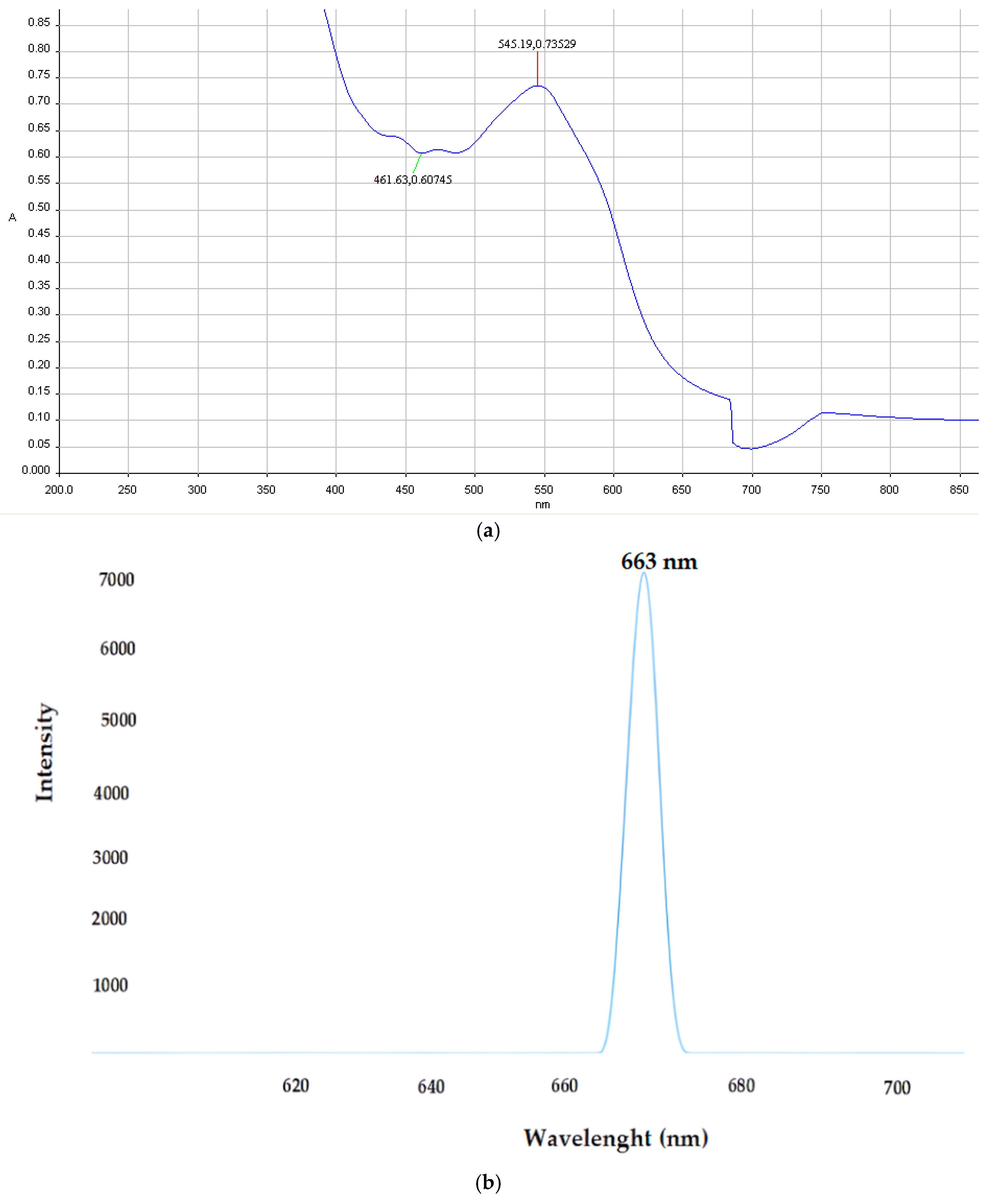
The UV–Vis spectrum of the ethanolic extract of black raspberry (
Rubus niveus) is shown in
Figure 1a, which shows an absorption band at 545 nm, corresponding mainly to the presence of anthocyanin compounds, which is to be expected given the dark purple color of the extract. In addition, the emission spectra show a fluorescent emission band close to 663 nm (see
Figure 1b). This demonstrates that black raspberry extract contains molecules that dissipate absorbed energy in the form of heat (non-radiative mechanisms) and also through radiative mechanisms, such as fluorescence [
9,
10].
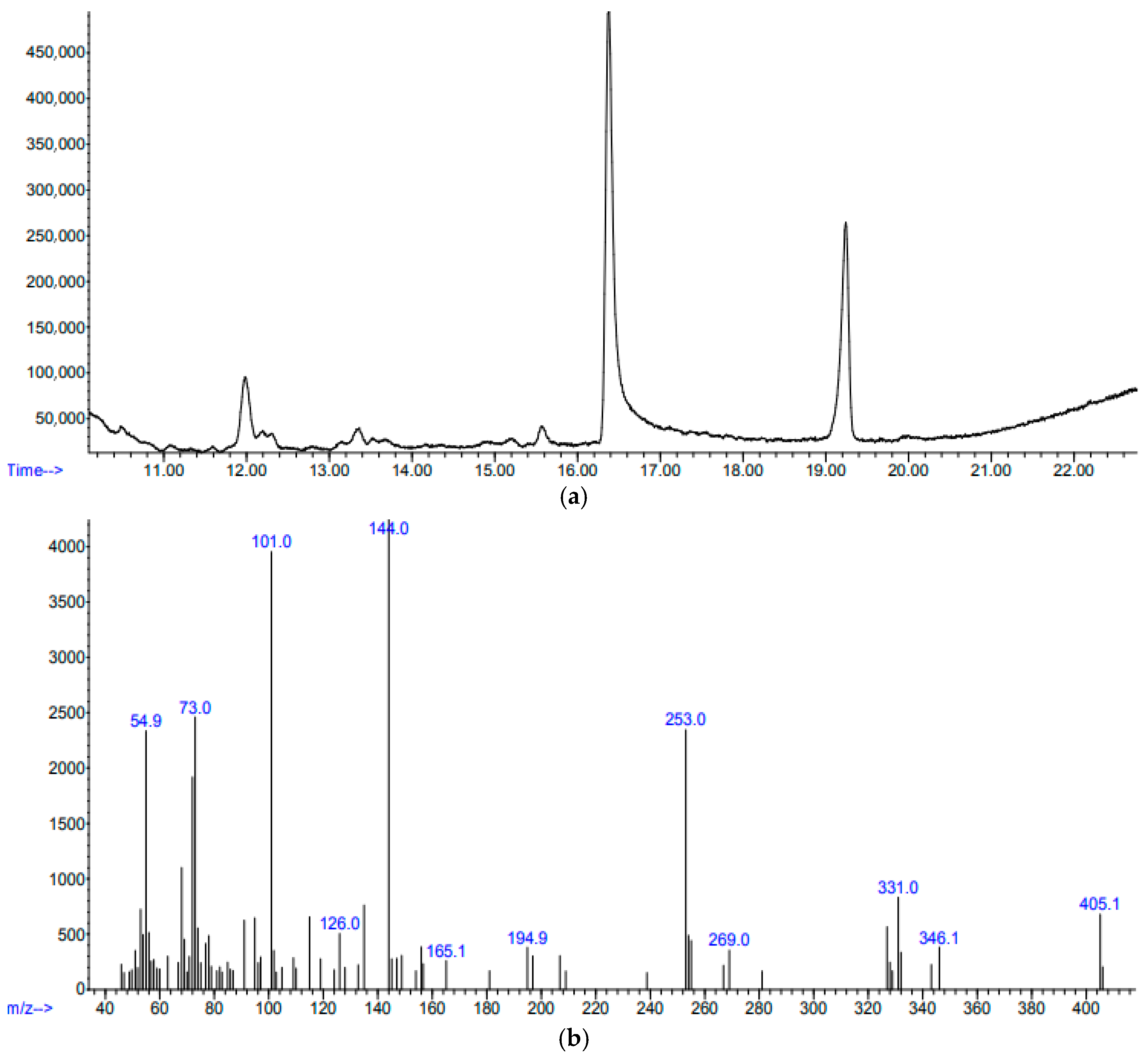
On the other hand, gas chromatography and mass spectrometry (GC-MS) spectra were obtained from the ethanolic extract of
Rubus niveus (see
Figure 2a,b). With the help of the database and the fragmentation observed in the mass spectrum, it was possible to identify some compounds derived from furfural, furancarboxaldehyde, pyran and phenols, which are typical fragments of flavonoid-derived compounds (see
Supplementary Materials Figures S1–S5).
Therefore, it can be stated that
Rubus niveus extract contains flavonoid compounds with significant antioxidant activity, especially anthocyanins, which are the most relevant group in this plant family [
11,
12]. However, fluorescence and GC-MS studies suggest that there are other components that may complement the biological activity of the plant extract from a photochemical point of view, as indicated by the fluorescence band observed in
Figure 1b.
3.2. Reaction with Galvinoxyl Radical: UV–VIS and Fluorescence Study
The reaction between the ethanolic extract and the galvinoxyl radical, determined by UV–VIS spectroscopy, is shown in
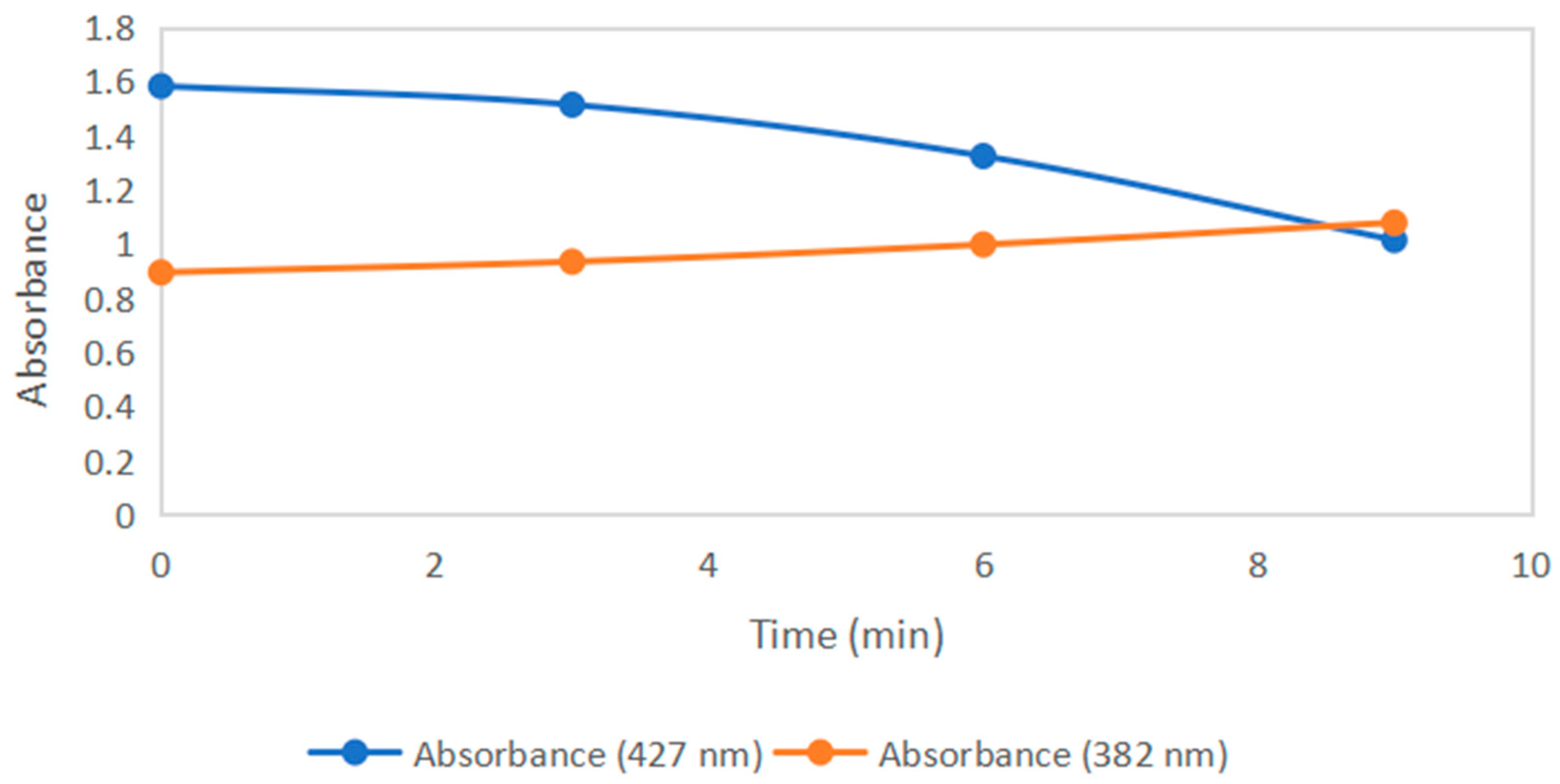
Figure 3, where it can be observed that the maximum absorbance of the galvinoxyl radical (427 nm) decreases after the addition of 15 microlitres of black raspberry ethanolic extract every two minutes. In contrast, the absorbance at ~380 nm increases with the addition of aliquots of black raspberry extract. This behavior indicates that the reduction in the galvinoxyl radical is effective at the concentrations of black raspberry extract.
The reaction shown in the figure above suggests a process in which a hydrogen atom is transferred from an antioxidant compound present in black raspberry extract to the galvinoxyl radical, which is converted into its non-radical form (possibly hydrogalvinoxyl). Thus, this neutralization process leads to a decrease in the absorbance of the galvinoxyl radical at 427 nm and an increase in the absorbance of its non-radical form at 382 nm [
6]. In this sense, it is confirmed that black raspberry extract has scavenging capacity.
On the other hand, the reaction between black raspberry extract and the galvinoxyl radical, analyzed by fluorescence, is shown in
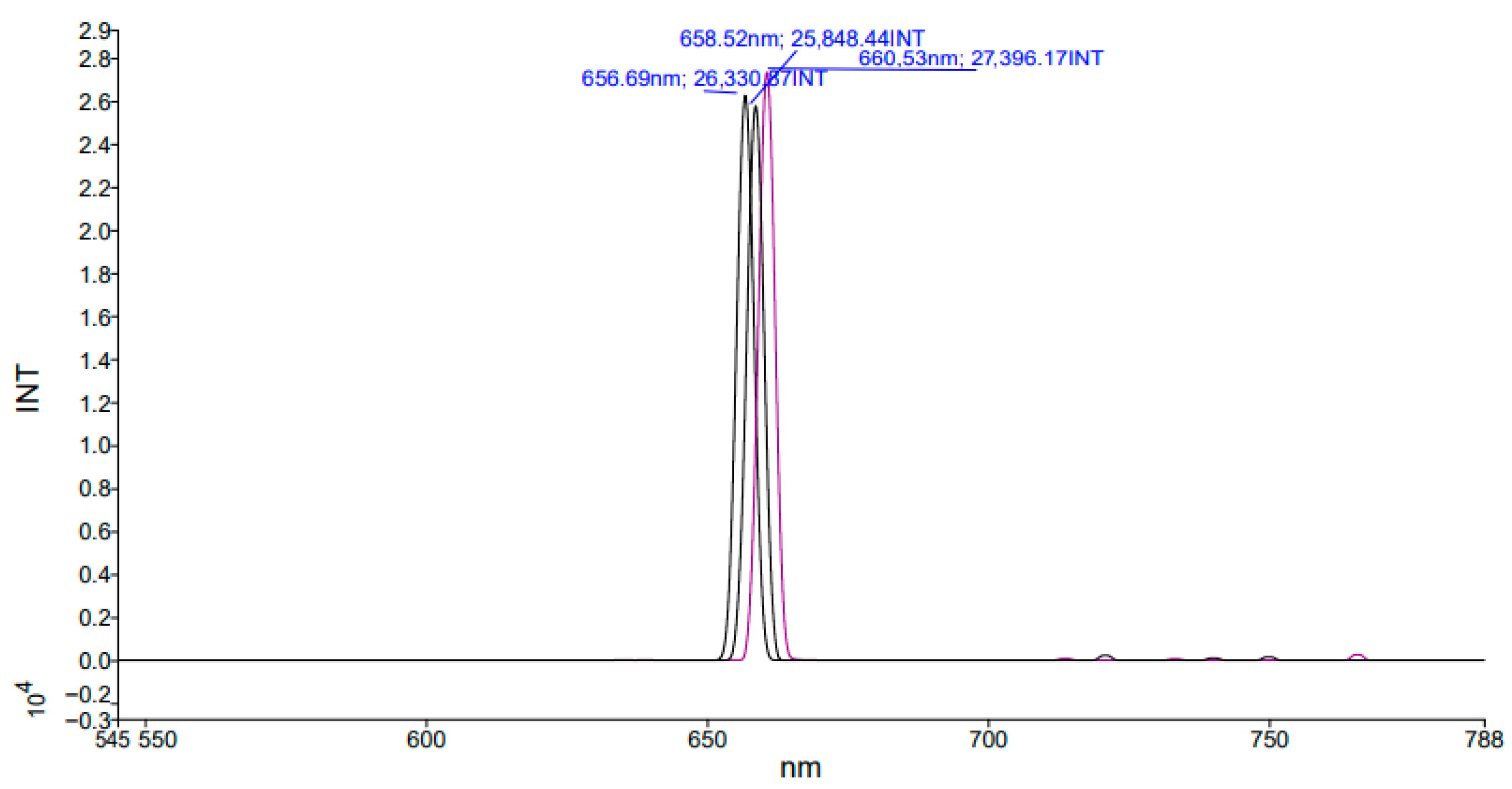
Figure 4, where three measurements with different fluorescent emission wavelengths can be observed. Thus, it can be observed that, after adding aliquots of galvinoxyl, the main fluorescent emission band of the black raspberry extract (at 660 nm) decreases in intensity. This behavior indicates that a photophysical interaction is occurring in the excited state of the components found in black raspberry extract and the galvinoxyl radical.
The deactivation of the excited state observed in
Figure 4 may suggest the effect of mechanisms other than scavenging. Note that the reaction has to be followed from right to left (from 660 nm to 656 nm). In this regard, it should be noted that the scavenging process promotes the generation of less reactive free radicals, in this case forming radicals from the bioactive compounds in the natural extract. However, fluorescence quenching reflects a more direct neutralization of the galvinoxyl radical, likely through energy transfer or electron exchange [
6,
13]. Thus, it may be supposed that bioactive compounds of
Rubus niveus have a scavenging and quenching effect on the galvinoxyl radical, as suggested by the UV–Vis and fluorescence experiments shown in
Figure 3 and
Figure 4, respectively.
4. Conclusions
In summary, Rubus niveus fruit extract has scavenging and quenching activity against the highly reactive galvinoxyl radical, as shown by UV–Vis and fluorescence assays, respectively. This behavior is mainly due to the presence of bioactive compounds, such as anthocyanins and other flavonoid derivatives, which contribute to the deactivation of reactive radicals and suggest antioxidant activity of Rubus niveus extract in vitro, which may be an aspect to consider in future research linking the properties of these extracts to health promotion and disease prevention.
Furthermore, the integration of both absorbance and fluorescence measurements affords a more comprehensive perspective on both the scavenging (via the process of radical reduction) and the quenching (via excited-state interactions) mechanisms. This dual approach, in conjunction with the specific evaluation of the galvinoxyl radical in vitro, provides novel experimental data. These results enhance the understanding of the functional antioxidant mechanisms of Rubus niveus fruit, which had not previously been characterized in this manner.
Supplementary Materials
The following supporting information can be downloaded at:
https://www.mdpi.com/article/10.3390/ecsoc-29-26909/s1, Figure S1. 2-Furancarboxaldehy,5-methyl in Black raspberry extract; Figure S2. 2-Furancarboxaldehyde, 5-(hydroxymethyl)- in Black raspberry extract; Figure S3. Furfural in Black raspberry extract; Figure S4. 4H-Pyran-4-one, 2,3-dihydro-3,5-dihydroxy-6-methyl- in Black raspberry extract; Figure S5. Phenol, 2,4-bis(1,1-dimethylethyl)- in Black raspberry extract.
Author Contributions
Conceptualization, F.V.T. and M.L.; methodology, F.V.T. and M.L.; validation, F.V.T.; formal analysis, M.L.; investigation, M.L.; writing—original draft preparation, M.L.; writing—review and editing, M.L.; supervision, F.V.T.; funding acquisition, F.V.T. All authors have read and agreed to the published version of the manuscript.
Funding
This research was funded by Instituto Venezolano de Investigaciones Científicas (IVIC), grant number is not applicable.
Institutional Review Board Statement
Not applicable.
Informed Consent Statement
Not applicable.
Data Availability Statement
The original contributions presented in this study are included in the article. Further inquiries can be directed to the corresponding author.
Conflicts of Interest
The authors declare no conflicts of interest.
Abbreviations
The following abbreviations are used in this manuscript:
| ROS | Reactive Oxygen Species |
| GC-MS | Gas chromatography–mass spectrometry |
| UV–Vis | Ultraviolet-Visible spectroscopy |
References
- Li, J.; Du, L.-F.; He, Y.; Yang, L.; Li, Y.-Y.; Wang, Y.-F.; Chai, X.; Zhu, Y.; Gao, X.-M. Chemical Constituents and Biological Activities of Plants from the Genus Rubus. Chem. Biodivers. 2015, 12, 1809–1847. [Google Scholar] [CrossRef] [PubMed]
- Lee, J.H.; Oh, M.; Seok, J.H.; Kim, S.; Lee, D.B.; Bae, G.; Bae, H.I.; Bae, S.Y.; Hong, Y.M.; Kwon, S.O.; et al. Antiviral Effects of Black Raspberry (Rubus coreanus) Seed and Its Gallic Acid against Influenza Virus Infection. Viruses 2016, 8, 157. [Google Scholar] [CrossRef] [PubMed]
- Pancholi, B.; Rana, A.C. Traditional Uses, Phytochemistry and Pharmacological Aspects of Rubus niveus thumb Plant—A Review. J. Phytopharmacol. 2020, 9, 438–444. [Google Scholar] [CrossRef]
- Muniyandi, K.; George, E.; Sathyanarayanan, S.; George Blassan, P.; Abrahamse, H.; Thamburaj, S.; Thangaraj, P. Phenolics, tannins, flavonoids and anthocyanins contents influence antioxidant and anticancer activities of Rubus fruits from Western Ghats, India. Food Sci. Hum. Wellness 2019, 8, 73–81. [Google Scholar] [CrossRef]
- Ahmad, M.; Masood, S.; Sultana, S.; Hadda, T.B.; Bader, A.; Zafar, M. Report: Antioxidant and nutraceutical value of wild medicinal Rubus berries. Pak. J. Pharm. Sci. 2015, 28, 241–247. [Google Scholar] [PubMed]
- Vargas, F.; Díaz, Y.; Carbonell, K. Antioxidant and Scavenging Activity of Emodin, Aloe-Emodin, and Rhein on Free-Radical and Reactive Oxygen Species. Pharm. Biol. 2004, 42, 342–348. [Google Scholar] [CrossRef]
- George, B.P.; Parimelazhagan, T.; Sajeesh, T.; Saravanan, S. Antitumor and Wound Healing Properties of Rubus Niveus Thunb. Root. J. Environ. Pathol. Toxicol. Oncol. 2014, 33, 145–158. [Google Scholar] [CrossRef] [PubMed]
- George, B.P.; Parimelazhagan, T.; Chandran, R.; Saravanan, S. A Comparative Study on in vitro and in vivo Antioxidant Properties of Rubus ellipticus and Rubus niveus. Pharmacologia 2014, 5, 247–255. [Google Scholar] [CrossRef][Green Version]
- Silva, V.O.; Freitas, A.A.; Maçanita, A.L.; Quina, F.H. Chemistry and photochemistry of natural plant pigments: The anthocyanins. J. Phys. Org. Chem. 2016, 29, 594–599. [Google Scholar] [CrossRef]
- Sikorska, E.; Włodarska, K.; Khmelinskii, I. Application of multidimensional and conventional fluorescence techniques for classification of beverages originating from various berry fruit. Methods Appl. Fluoresc. 2020, 8, 015006. [Google Scholar] [CrossRef] [PubMed]
- Kresty, L.A.; Mallery, S.R.; Stoner, G.D. Black raspberries in cancer clinical trials: Past, present and future. J. Berry Res. 2016, 6, 251–261. [Google Scholar] [CrossRef] [PubMed]
- Castilho Maro, L.A.; Pio, R.; Santos Guedes, M.N.; de Abreu, C.M.P.; Curi, P.N. Bioactive compounds, antioxidant activity and mineral composition of fruit of raspberry cultivars grown in subtropical areas in Brazil. Fruits 2013, 68, 209–217. [Google Scholar] [CrossRef]
- Moukette Moukette, B.; Constant Anatole, P.; Nya Biapa, C.P.; Njimou, J.R.; Ngogang, J.Y. Free radicals quenching potential, protective properties against oxidative mediated ion toxicity and HPLC phenolic profile of a Cameroonian spice: Piper guineensis. Toxicol. Rep. 2015, 2, 792–805. [Google Scholar] [CrossRef] [PubMed]
| Disclaimer/Publisher’s Note: The statements, opinions and data contained in all publications are solely those of the individual author(s) and contributor(s) and not of MDPI and/or the editor(s). MDPI and/or the editor(s) disclaim responsibility for any injury to people or property resulting from any ideas, methods, instructions or products referred to in the content. |
© 2025 by the authors. Licensee MDPI, Basel, Switzerland. This article is an open access article distributed under the terms and conditions of the Creative Commons Attribution (CC BY) license (https://creativecommons.org/licenses/by/4.0/).