
Article

Cost-Effectiveness of Pressure-Guided-Offloading-Improved Custom-Made Footwear for People with Diabetes at High Risk of Plantar Foot Ulceration

by
Sicco A. Bus
1,*,
Jaap J. van Netten
1,
Diekje R. Schouten
1 and
Marcel G. W. Dijkgraaf
2
1
Department of Rehabilitation Medicine, Amsterdam University Medical Center, University of Amsterdam, Amsterdam Movement Sciences, Meibergdreef 9, 1100 DD Amsterdam, The Netherlands
2
Department of Epidemiology and Data Science, Amsterdam UMC, University of Amsterdam, Meibergdreef 9, 1100 DD Amsterdam, The Netherlands
*
Author to whom correspondence should be addressed.
Diabetology 2026, 7(4), 70; https://doi.org/10.3390/diabetology7040070
Submission received: 29 January 2026 / Revised: 1 March 2026 / Accepted: 25 March 2026 / Published: 2 April 2026
(This article belongs to the Special Issue Prevention and Care of Diabetic Foot Ulcers)

Abstract

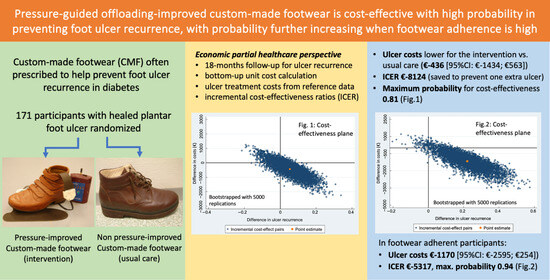
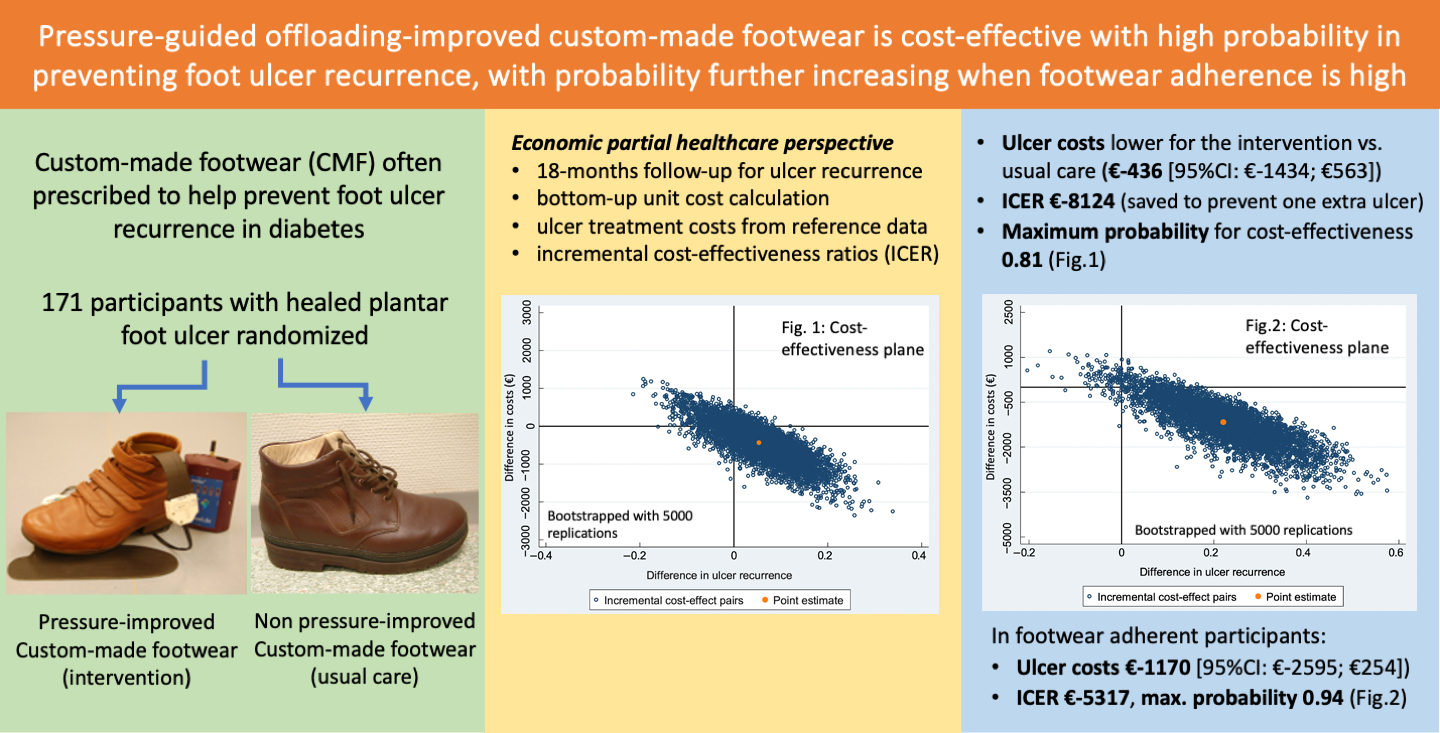
Background: Custom-made footwear that improves offloading using in-shoe pressure-guided techniques, when worn as recommended, reduces the risk of diabetic foot ulcer recurrence. We aimed to assess the cost-effectiveness of this approach, as it requires extra investments in equipment and personnel, and implementation is not yet widespread. Methods: We conducted an economic evaluation using data from the DIAFOS RCT that randomized 171 participants at high ulcer risk to either pressure-guided-offloading-improved (intervention) or non-pressure-guided (usual care) custom-made footwear. The clinical outcome was the 18-month ulcer recurrence incidence, available from the RCT. Costs were modeled from a partial healthcare perspective using bottom-up unit cost calculation, with ulcer treatment costs obtained from reference data. Univariable regression analyses were executed to obtain incremental cost-effectiveness ratios (ICERs). Bootstrapping techniques accounted for uncertainty. Results: For the intervention, costs for ulcer recurrence were non-significantly lower (€−436; 95% CI: €−1434; €563) than for usual care. The ICER was €−8124 (i.e., costs saved to prevent one extra participant from having an ulcer), and the maximum probability for cost-effectiveness was 0.81. In the subgroup of participants who were adherent to wearing their prescribed footwear, costs for the intervention were non-significantly lower at €−1170 (95% CI: €−2595; €254), with ICER of €−5317, and a maximum probability for cost-effectiveness of 0.94. Conclusions: The use of in-shoe pressure-guided-offloading-improved custom-made footwear to help prevent diabetic foot ulcer recurrence is cost-effective with high probability when ulcer treatment costs are considered. Probability further increases when users adhere to their footwear. Future economic analyses should consider a full healthcare and societal perspective and use prospectively collected data on ulcer treatment costs.

Graphical Abstract

1. Introduction

People with diabetes who have healed from a plantar foot ulcer are often prescribed custom-made footwear to help prevent ulcer recurrence [1,2]. Ulcer recurrence is a common outcome, with 40% incidence within 12 months after healing and 60% within 3 years [3]. Foot ulcers place a large burden on patients and society, lowering quality of life [4]; limiting daily functioning, well-being and participation [5]; increasing amputation risk and mortality (5-year mortality rates around 40%) [6,7]; and high treatment costs [8,9]. The total annual costs for diabetic foot disease in the UK in 2015 were around £900 million [10], and resource use is increasing [11]. Across 14 European multidisciplinary centers, foot ulcer treatment in 2005 varied between €4514 to €16,835 per episode, depending on whether foot infection and peripheral artery disease were present [8]. A single-center Dutch study in 2015 found average in-hospital costs of €9569 per foot ulcer episode [9], with similar costs per ulcer episode found in a Dutch cost-effectiveness study [12]. A systematic review from 2017 described similar costs per ulcer episode in various settings [13]. These high costs and reduced quality of life stress the need for the prevention of ulcers and their recurrence in people with diabetes.
The International Working Group on the Diabetic Foot (IWGDF) recommends that custom-made footwear with a demonstrated pressure-relieving effect is used to help prevent foot ulcers in people who have healed from a plantar foot ulcer [1]. This is based on a meta-analysis of randomized controlled trials (RCTs) showing that pressure-guided-offloading-improved footwear reduces the incidence of plantar foot ulcer recurrence, under the condition that the footwear is worn [14]. One of the RCTs in this meta-analysis studied the effectiveness of in-shoe plantar pressure assessment used as a guidance tool to modify the footwear to improve its offloading effect [2]. This approach reduced the incidence of ulcer recurrence by a statistically non-significant 11% compared to footwear that was not evaluated and modified using in-shoe pressure analysis (usual care). Participants who were adherent to wearing their footwear (i.e., for >80% of steps, prescription footwear was worn) showed a statistically significant 46% reduction over usual care [2]. Implementation of this footwear design and evaluation approach is now seen in some centers and countries [15,16].
However, for such pressure-data-driven footwear design and evaluation, investments are required in pressure measurement equipment and to train personnel, and for the time spent on such evaluation [15,16]. It remains to be demonstrated whether these investments can be offset by reduced treatment costs as a result of reduced ulcer recurrence incidence; widespread implementation is hindered by the lack of such an economic evaluation. Assessing cost-effectiveness is desirable and recommended within this context [1], as decision-making with respect to investments and reimbursement for this approach should also depend on proven cost-effectiveness [17]. The scope here is not based on cost–utility or a cost–benefit analysis, although these may also prove important and valuable. Therefore, we aimed to assess the cost-effectiveness of pressure-guided-offloading-improved custom-made footwear in helping prevent plantar foot ulcer recurrence in high-risk people with diabetes, based on the combination of previous RCT data with bottom-up costing data and reference cost data [2]. As for the original RCT, the effect of footwear adherence on cost-effectiveness was addressed in a subgroup analysis.

2. Materials and Methods

Data from the DIAbetic Foot Orthopaedic Shoe (DIAFOS) RCT were used for the economic evaluation [2]. DIAFOS was an outcome–assessor blinded multicenter 18-month follow-up RCT performed between 2007 and 2012 in 10 multidisciplinary outpatient diabetic foot clinics of community-based and academic hospitals across the Netherlands. Participants were eligible with age ≥ 18 years, confirmed type 1 or type 2 diabetes, loss of protective foot sensation as a result of peripheral neuropathy, a healed plantar foot ulcer in the 18 months preceding randomization, and a new prescription of custom-made footwear. Exclusion criteria were bilateral amputation proximal to the tarsometatarsal joint, the use of walking aids that offload the foot, severe illness that would make 18-month survival unlikely, and inability to follow the study instructions [2]. In total, 171 participants were randomly assigned to either pressure-guided-offloading-improved custom-made footwear (intervention) or to custom-made footwear that did not undergo pressure-guided evaluation and modification (usual care). Participants were followed until one of the following endpoints was reached: plantar foot ulceration, death, or end of study at 18 months [2].
At study entry and every three months thereafter, the custom-made footwear of all participants was evaluated during walking at a comfortable speed using the Pedar-X in-shoe plantar pressure measurement system (Novel GmbH, Munich, Germany). If mean peak pressures > 200 kPa were identified in the footwear of the intervention group, the shoe or insole was modified by an experienced shoe technician, until peak pressures were below 200 kPa, or until peak pressures were reduced with 25%, or until a maximum three rounds of modifications were used [18]. Per round, multiple footwear modifications were allowed. In the usual-care group, any footwear modification performed was based on participant request or clinical insights.
The primary clinical outcome was a recurrent plantar foot ulcer within 18 months, confirmed present by independent foot-care experts who were blinded to treatment allocation and assessed photographs and descriptions of the lesion [2].

2.1. Cost-Effectiveness Analysis

In contrast with the recommendations of the Dutch Healthcare Institute to use a societal perspective [19], a partial healthcare perspective was chosen because data on resource use of usual care and on family costs or productivity loss were not available, as the trial did not aim for an economic evaluation at the outset. A maximum time horizon of 18 months was chosen, and it was shorter when an ulcer recurred within this period. We included all (healthcare) costs for providing offloading-improved footwear until an endpoint was reached. Because of the time horizon of >1 year, discounting was applied to account for the positive time preference of individuals and the opportunity costs of capital. Costs and effects were discounted with rates of 4% and 1.5%, respectively, following Dutch guidelines [19].
For the cost-effectiveness analysis, we chose as the clinical outcome the incidence of plantar foot ulcer recurrence in 18 months, which was the primary outcome in the DIAFOS trial [2]. We conducted the cost-effectiveness analysis assuming that the volume and costs of regular preventative treatment (i.e., podiatric care, footwear, education) were similar between study groups as long as ulcers could be prevented, as all participants had the same ulcer risk profile and all had prescription custom-made footwear. We therefore set the regular preventative treatment costs at zero. For the cost-effectiveness analysis of the incidence of ulcer recurrence, we included downstream costs of ulcer treatment to show possible cost-savings of providing offloading-improved footwear compared to usual care, with costs based on data from other studies in similar settings and countries.

2.2. Use of Resources and Unit Costing

Resource use was prospectively recorded on the clinical report forms, pressure measurement logs and footwear design forms of the participants in both study groups. For the intervention group, resources on a participant-level included: (a) type and number of footwear modifications, and (b) number of pressure measurements; resources on the group level included training costs for the shoe technician to perform pressure measurements, and investment and depreciation costs for the system used for pressure measurements (Pedar-X, novel GmbH, Munich, Germany). For the usual-care group, resources on a participant level included the type and number of footwear modifications, while no resources on the group level were included.
Unit costs were determined by bottom-up calculation, because no reference prices were available for footwear modifications or for the use of the Pedar-X system. Such cost calculation is recommended when it is expected that large differences in costs between participants occur and when unit costs have a large share in the incremental costs [20]. We expected large differences in costs between participants because of a wide range in types and frequencies of footwear modifications. Unit costs for footwear modifications were first obtained by consulting two independent experienced shoe technicians who estimated the duration and required material for a particular type of modification (e.g., placing a metatarsal pad or a dual-density top insole layer). Second, material prices were obtained from a wholesale supplier from which the majority of shoe technicians in the Netherlands order their materials. Third, the collective labor agreement of orthopedic shoe technicians was used to obtain the gross yearly salary for the highest pay rate, combined with 39% employer charges and 44% overhead and housing costs based on Dutch costing recommendations [20]. Finally, costs for a two-minute transfer and preparation time per round of footwear modifications were added to the unit costs. We retrieved the price of the Pedar-X pressure measurement system, including the measurement insoles and necessary software, from a sales quotation and excluded the value-added tax. Costs for maintenance (5% of the total investment costs per year [20]), depreciation (ten years for the Pedar-X system and five years for the measurement insoles), system calibration, and training of the shoe technicians were added. We divided the total price by the number of participants in the intervention group to obtain the unit costs of the Pedar-X system per participant. All unit costs are shown in Appendix A.
Resource use data in relation to foot ulcers was retrieved from the literature. For each incident ulcer, the University of Texas (UT) ulcer classification system was available from the trial data [21], but no additional information related to treatment. As more-severe ulcers require more treatment, resource use data that differentiates between ulcer types was needed [13]. We therefore retrieved unit costs for ulcer treatment from the Eurodiale study (Appendix A) [8]. In that study, resource use for the different ulcer stages according to the UT system was provided, contrary to more recent data from the Netherlands [9]. In addition, one of the Dutch centers participating in Eurodiale also participated in the DIAFOS RCT, and the other centers participating in DIAFOS had a similar level of expertise. We therefore assumed that resource utilization as measured in detail during Eurodiale would be representative of ulcer-related resource use for participants who ulcerated in the DIAFOS RCT.

2.3. Costs

After all unit costs were obtained, we used national consumer price indices to adjust all unit costs to the index year 2018 in Euros [22]. All unit costs for footwear modifications and pressure measurements, for use of the Pedar-X system, and for ulcer treatment were multiplied by the number of times resources were used and then added up to calculate the total costs per participant. Unit costs for ulcer treatment were weighed for Organisation for Economic Co-operation and Development (OECD) purchasing power parities in the Eurodiale study [8,23].

2.4. Statistical Analyses

Cost-effectiveness was assessed with multiple intention-to-treat analyses. We compared baseline characteristics between study groups using descriptive statistics. The mean total cost difference between groups was calculated for the incidence of ulcer recurrence in 18 months as the outcome. The cost differences were analyzed with bias-corrected, accelerated bootstrapping per study group, using 5000 replications because of the skewed distribution of this variable and to estimate 95% confidence intervals [24]. Group differences for the incidence of ulcer recurrence were calculated using Chi-square analysis. Afterwards, univariate regression analyses were carried out for both costs and effects.
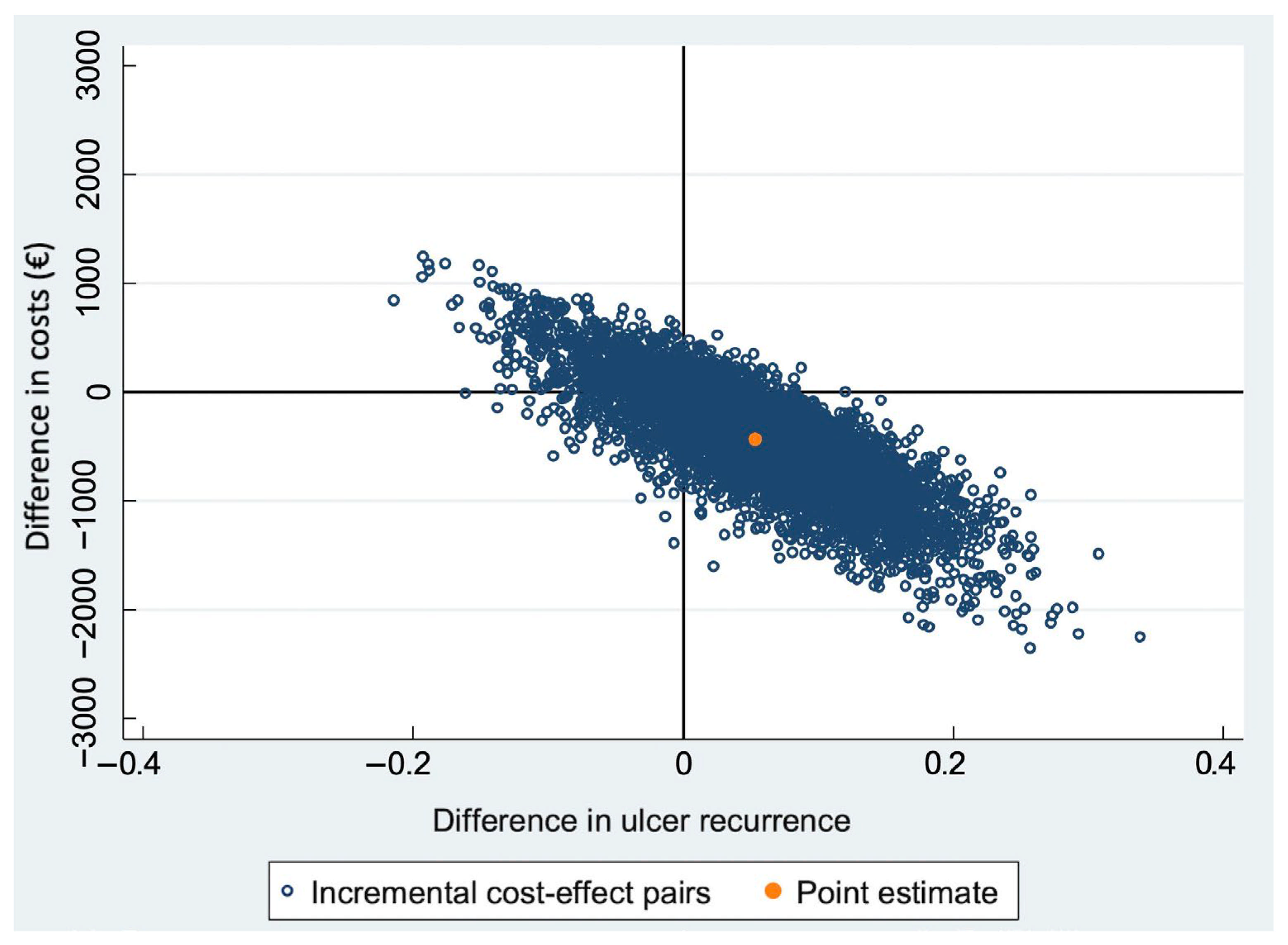
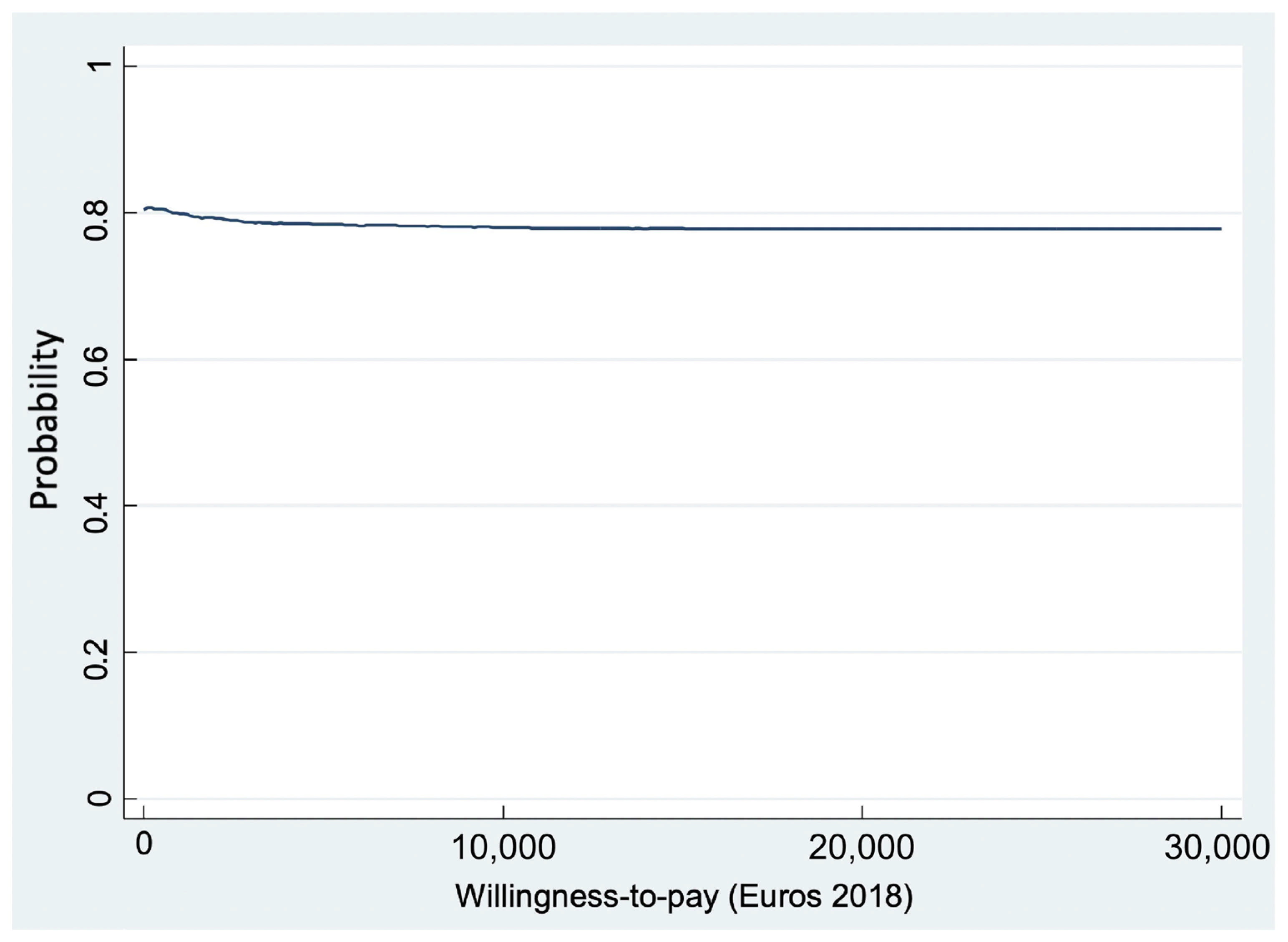
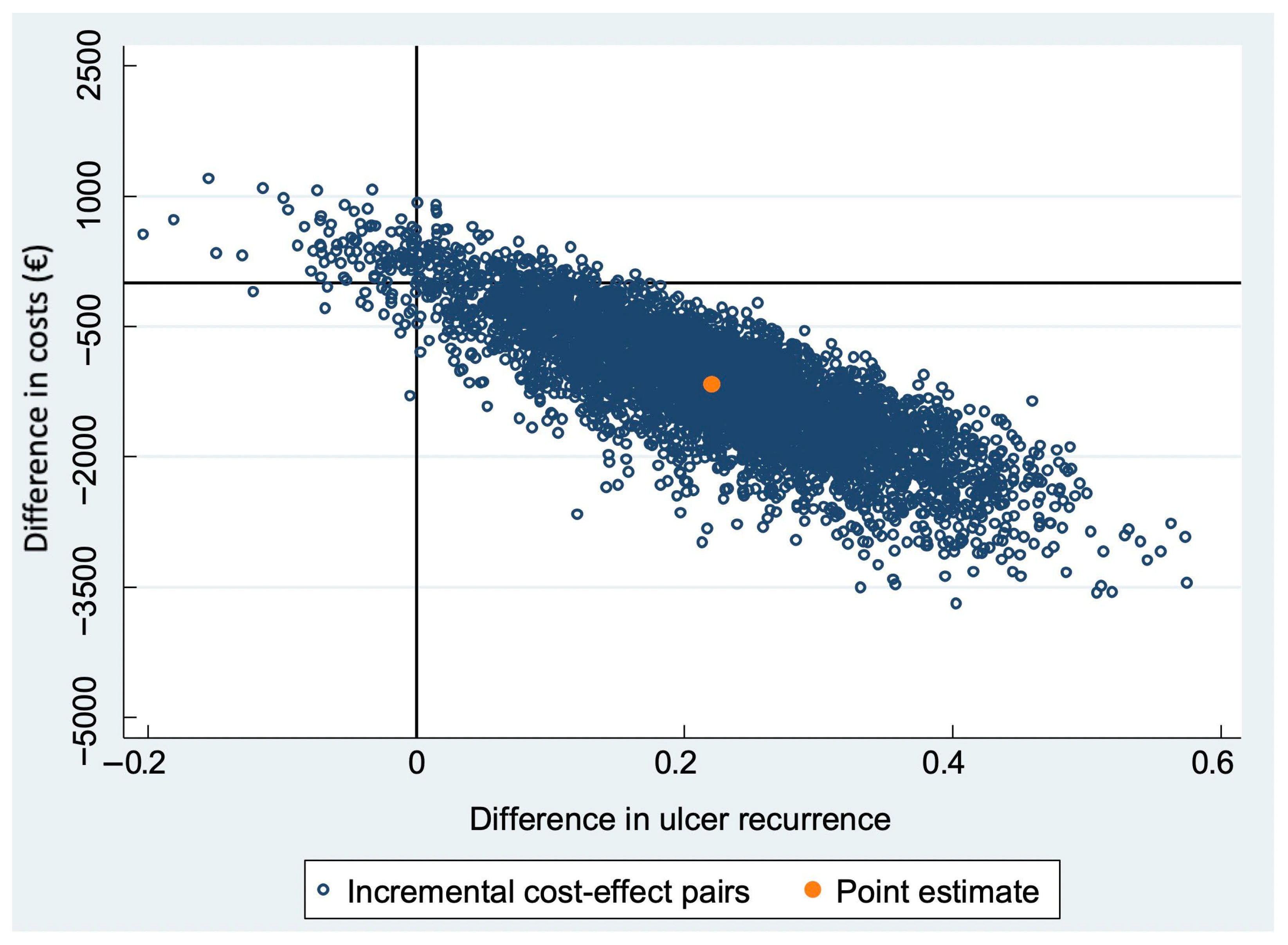
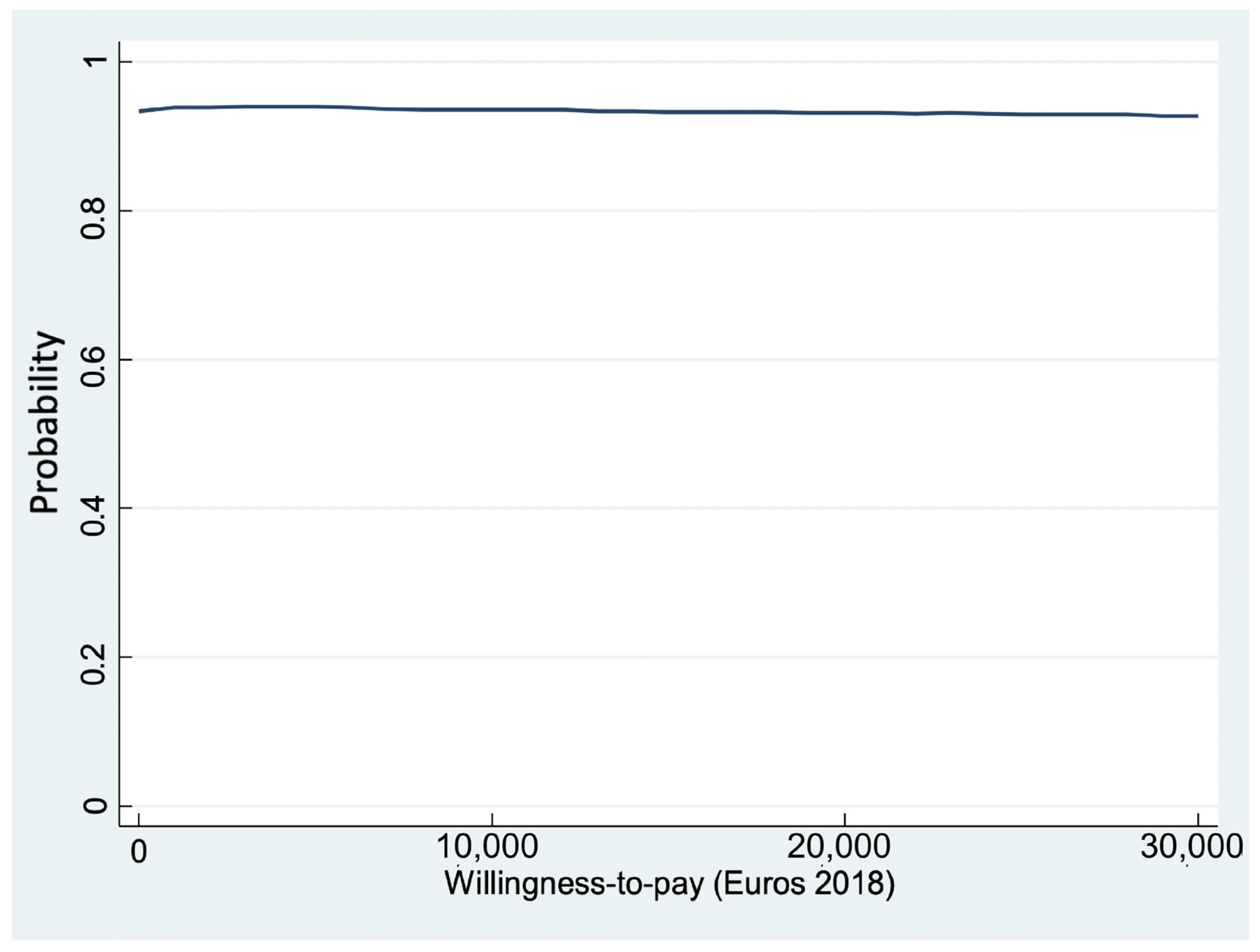
Subsequently, an incremental cost-effectiveness ratio (ICER) was calculated for the incidence of ulcer recurrence by dividing the mean total cost difference by the difference in mean effects between the study groups. To account for uncertainty around the ICER, cost–effect pairs were bootstrapped with 5000 replications. This step was graphically presented by plotting the ICERs on a cost-effectiveness plane. Finally, a cost-effectiveness acceptability curve (CEAC) was drawn to indicate the probability that the intervention will be cost-effective compared to usual care at different values of willingness to pay per prevented ulcer recurrence as ceiling ratios [25].
In the calculation of these ICERs and probabilities, it is important to note that in a cost-effectiveness analysis, the intervention is compared to its alternative (e.g., usual care) by relating the difference in costs to the difference in effects. Small mean cost savings and small mean health gains in favor of the intervention already suggest that the intervention is probably cost-effective. This probability increases if the savings and health gains (both) significantly differ. If health gains in favor of the intervention come with higher costs, then the probability for the intervention of being cost-effective not only depends on the joint uncertainty in costs and effects, but also on what society is willing to pay at maximum per extra unit of health gain generated. Given these uncertainties in economic evaluation, it is more common to determine the probability of being cost-effective for the intervention than to decide whether or not the intervention is cost-effective when compared to its alternative.
Missing data on ulcer recurrence for participants who dropped out were carried forward to the end of the time horizon. Missing data for ulcer classification were imputed based on the modus of the study arm. Statistical significance was set at p < 0.05. All analyses in this economic evaluation were performed using SPSS statistics version 24 (IBM, Armonk, NY, USA) and STATA version 13 (StataCorp, College Station, TX, USA).

2.5. Subgroup and Scenario Analyses

Subgroup analyses were carried out to assess the effect of adherence to wearing offloading-improved footwear on cost-effectiveness. Footwear adherence was objectively measured over a 7-day period using a sensor worn in the shoe and an activity monitor worn around the ankle [2]. Participants were stratified by footwear adherence, with being adherent defined as taking > 80% of their steps in their prescribed footwear [2,26].
To obtain further insights into the potential cost-effectiveness of the intervention, two scenario analyses were performed. Scenario 1 assumed that the measurement system was not used for 85 but for 170 participants, considering that with the needed time for one measurement, more participants can be measured with one system every three months, increasing efficiency in its use. Scenario 2 assumed that fewer footwear modifications were needed, a mean of 0.7 rounds instead of the original 1.2 rounds [2], based on more recent studies showing that with increased knowledge of effective footwear designs and a concomitant learning effect with the involved shoe technician, the number of footwear modifications reduces [27].
Sensitivity analyses including only the data from complete cases were not conducted due to the minimal number of missing values in the study.

3. Results

We included 171 participants (85 intervention, 86 usual care); their baseline characteristics are shown in Table 1. Six participants in the intervention group and four in usual care dropped out within 18 months; none developed an ulcer until drop-out, and drop-out was not related to the study intervention. Two recurrent ulcers, one in each study group, missed classification according to the UT system, and were imputed with the modus classification, i.e., UT 1A.

3.1. Effectiveness

In total, 71 participants developed an incident plantar foot ulcer recurrence in 18 months, 33 (38.8%) in the intervention group and 38 (44.2%) in the usual-care group (Table 1). In the intervention group, 31 ulcers (94%) were UT stage A, in the usual-care group 29 (76%). Incidence of plantar foot ulcer recurrence was not significantly different between groups (∆E 0.05; 95% CI: −0.09; 0.20; Table 1 and Table 2). In the subgroup of adherent participants, the intervention showed significantly fewer recurrent plantar foot ulcers (∆E 0.22; 95% CI: 0.01; 0.43; Table 2).

3.2. Use of the Intervention and Treatment Costs

In 18 months, a total of 1437 footwear modifications were made for the intervention, at 256 follow-up moments and in 429 rounds; for usual care, this was 40 modifications (Table 3).
Intervention costs were significantly higher than usual-care costs: a mean of €492 (95% CI: €465; €519) (Table 4). Ulcer treatment costs were non-significantly lower for the intervention compared to those of usual care: mean €−927 (95% CI: €−2003; €25). The aggregate mean cost difference between groups was a non-significant €−436 (95% CI: €−1434; €563) in favor of the intervention.

3.3. Cost-Effectiveness

Unit costs are shown in Table 3, and with more detail in Appendix A. For the incidence of ulcer recurrence, the ICER was −€8124, meaning that €8124 was saved to prevent one extra participant from having an ulcer with the intervention compared to usual care (Table 2). The maximum probability for the intervention to be cost-effective was 0.81 at a willingness to pay (WTP) of zero Euros for every extra participant in which an ulcer is prevented (Figure 1).
In the subgroup of adherent participants, the ICER was −€5317 for incidence of ulcer recurrence, meaning that €5317 was saved to prevent one extra participant from having an ulcer with the intervention compared to usual care. The maximum probability of cost-effectiveness was 0.94 at a WTP of zero per extra participant in which an ulcer is prevented (Figure 2).

3.4. Scenario Analyses

In both scenario 1 (i.e., using one pressure measurement system for more participants) and 2 (i.e., fewer rounds of footwear modifications needed), the intervention costs decreased compared with the main analysis (Table 2). As a result, the cost differences between groups compared to the main analysis were more in favor of the intervention in both scenarios (i.e., larger cost difference for incidence of ulcer recurrence). The probability of the intervention being cost-effective over usual care at a WTP of zero for the incidence of ulcer recurrence increased to 0.88 for scenario 1 and to 0.84 for scenario 2 compared to 0.81 for the main analysis. Costs saved for the intervention compared to usual care to prevent one extra participant from ulcer recurrence were €−11,172 for scenario 1 and €−9405 for scenario 2.

4. Discussion

This is the first cost-effectiveness study on custom-made footwear for people with diabetes who are at high risk of ulcer development. The analysis included estimates of costs based on study-obtained data for the intervention and reference data for ulcer treatment. The results of this economic analysis show that in-shoe plantar pressure guidance to improve the offloading of custom-made footwear costs more than not using such pressure guidance (usual care), but is likely to be cost-effective when costs related to foot ulceration are considered, with a higher probability of being cost-effective when patients are adherent to wearing their custom-made footwear. These data are instrumental for clinical, organizational and financial decision-making in using in-shoe plantar pressure analysis for the evaluation and improvement of custom-made footwear to help prevent plantar foot ulcer recurrence in people with diabetes.
In the intention-to-treat analysis of the primary outcome, fewer ulcers were found with offloading-improved footwear, and thus ulcer treatment costs were lower (mean €927 per participant) compared to usual care. The total costs (intervention and ulcer treatment) were also lower for the intervention with a difference of €436 per participant. These outcomes resulted in an ICER of −€8124 saved per participant for each ulcer prevented. The corresponding probability of cost-effectiveness for ulcer incidence of 0.81 indicates that for every four in five high-risk patients, efficient health care is offered when the intervention is chosen, and thus shows pressure-guided-offloading-improved footwear to be cost-effective.
In the subgroup of adherent participants, the intervention resulted in a significant absolute 22% reduction in ulcer incidence, as was shown in the original RCT analyses [2]. With the inclusion of the downstream costs for ulcer treatment for the incidence of ulcer recurrence, costs were non-significantly lower at €−1170 per participant for the intervention. The probability of the intervention being cost-effective based on the incidence of ulcer recurrence was a high 0.94, with a WTP of zero. This means that for every 16 out of 17 high-risk patients, efficient health care is offered when the intervention is chosen, showing pressure-guided-offloading-improved footwear to be cost-effective in those adherent to wearing their prescribed footwear.
Findings from the first scenario analysis suggest that with a more efficient use of the in-shoe pressure measurement system, i.e., increasing the number of participants measured per system, cost-effectiveness improves, with an ICER of €−11,172 saved per participant for each ulcer prevented. The results of the second scenario suggest that with fewer modifications needed, cost-effectiveness will also improve (ICER of €−9405), implying that when shoe technicians use the system and pressure measurement outcomes to train themselves and their colleagues in pressure-guided footwear modification and achieve a learning effect so that footwear can be delivered and improved requiring fewer (additional) modifications, less time is involved, thus saving costs. An in-shoe plantar pressure measurement implementation study and more recent experimental studies on the use of in-shoe plantar pressure to improve offloading of custom-made footwear show that these scenarios are realistic [16,27].
Cost-effectiveness is rarely assessed in diabetic foot ulcer prevention, while this is important with research on ulcer prevention and in preventative care, as the costs always precede the benefits [1]. A Markov analysis of foot ulcer prevention using a 5-year time horizon found that preventative care following international guidelines (i.e., education, foot care and appropriate footwear) was cost-saving at €−904 per participant (or €−1303 when indexed for 2018) for people at risk of ulcer recurrence, assuming that people are adherent [28]. This is comparable to the cost-saving we found for the incidence of ulcer recurrence in the subgroup of adherent participants, although intervention costs were composed differently and relative reductions in ulcer risk used were different between studies. Another study showed that ulcer prevention treatment according to international guidelines is cost-effective over a lifetime horizon [29], which is much longer than the 18 months in our study. Another Markov model study showed that prevention efforts for people at high ulcer risk would be cost-saving with a probability of 0.90 when the relative ulcer risk is 0.90 and the annual costs are a maximum of $150 [30]. These intervention costs are much lower than the intervention costs in the current study (€492), but the modeled ulcer treatment costs were also lower than those reported in the literature. Experimental confirmation for these outcomes comes from a cost-effectiveness study on at-home foot temperature monitoring to prevent foot ulcer recurrence, showing that the relatively small investment in foot thermometry and procedure-related costs had a 79% probability of being cost-effective in ulcer prevention (ICER of €−11,580 saved per patient for each ulcer prevented) [12]. With pressure-guided-offloading-improved footwear being cost-saving at a probability of 0.81 for the total group based on a comparable ulcer risk reduction and 0.94 for the subgroup of adherent patients based on a much larger ulcer risk reduction, our findings seem in line with these previous modeling studies.

4.1. Strengths and Limitations

A strength of this study is that we analyzed both the total group of participants and the subgroup of participants who were adherent to wearing their footwear, with adherence being objectively measured. Previous cost-effectiveness analyses did not take adherence into consideration, despite its importance in ulcer prevention [2,14]. Another strength was the bottom-up unit cost calculation for footwear modifications and pressure measurements performed. This gives more variation in costs between participants compared to using reference prices and, therefore, a more precise probability estimation for the cost-effectiveness analysis. A third strength is that almost no data was missing, both for intervention resource use and the variables and outcomes used in the study.
A limitation was that we could not apply a societal perspective for the economic evaluation because data on indirect medical costs were unavailable, and also quality-adjusted life years (QALYs) could not be included as an outcome. Both these measures are recommended for future studies [19,31]. Consequently, not all costs and utilities related to the intervention and outcome could be included. If family costs and productivity loss had been included, a larger cost difference between groups in favor of the intervention would have been likely, as foot ulceration drives these costs. We hypothesize that a societal perspective would have further strengthened the conclusions of the study. A second limitation was that costs for ulcer treatment per participant were not collected during the trial. Therefore, these costs were retrieved from Prompers et al. [8]. These cost data seem representative given that (a) a large cohort was analyzed across 14 European centers, of which the three Dutch centers also participated in the DIAFOS trial; (b) international guidelines were followed in both studies; and (c) all local costs were converted with purchasing power standards to account for different price levels between countries. In support of this, more recent data from a large community hospital in the Netherlands showed similar average cost estimates for ulcer treatment [9]. Third, the cost analysis of the DIAFOS trial was retrospectively done. Although the resource use data was prospectively collected during the trial, unit costs were added for the cost-effectiveness analysis after completion of the trial. However, it seems unlikely that the retrospective nature of the analysis affected the findings to an extent that different conclusions would be drawn. Fourth, participant drop-out may have underestimated the number of ulcer-free days, as time to drop-out and not time to ulceration was chosen in these cases. However, the drop-out rate was a low 6% (n = 10) and evenly spread across study groups, so it did not affect group comparisons. Fifth, it was assumed for the cost analysis that one Pedar-X pressure measurement system was used to measure all 85 participants in the intervention group every three months. While reasonable to assume, during the trial, more than one system was used due to the multicenter design and multiple investigators involved. These systems were used for more purposes than just the trial, and we think it is reasonable to assume that one system can be used for 85 patients. However, this assumed scenario has not been tested in real-life settings. Sixth, a time horizon of 18 months was chosen, while most ulcers recur in the first year after healing [3], and ulcers may also recur after 18 months. This likely underestimates costs and effects and, therefore, the differences found between study groups. Finally, the findings may have limited generalizability beyond the Dutch healthcare system. Differences in healthcare organization, cost structures, reimbursement policies, and footwear provision models may all affect cost-effectiveness in other settings and countries.

4.2. Future Research and Implications

Future economic evaluations of the effect and value of pressure-guided-offloading-improved custom-made footwear should have a societal perspective that includes important social dimensions and a broader social context of diabetic foot disease [5]. These evaluations should include QALYs and other patient-reported and social outcomes, collect data on ulcer treatment costs prospectively, and have a longer time horizon, so as to further help in decision-making for implementation and reimbursement. To assess cost-effectiveness over a longer time horizon, a Markov-based model analysis is recommended, as that may also include multiple subsequent ulcer recurrence episodes and can assess the probability of cost-effectiveness for a range of different costs as they occur in different settings and countries. Additional scenarios for measuring in-shoe plantar pressure in daily footwear practice should also be tested, including the use of a system with centers with small or larger eligible patient numbers, at multiple locations with one system, and with system-sharing or patient referral between centers/companies.
The implications of showing pressure-guided-offloading-improved footwear to be cost-effective are that this approach should be implemented in footwear practice for this high-risk patient population. Several centers and footwear companies have implemented this approach, as shown by a project that aimed to bring the results of the DIAFOS trial to clinical practice [16]. An important determinant of implementation and continuation thereof is coverage of the investment costs, which are currently (still) not reimbursed in Dutch healthcare. The current results may help towards reimbursement of these costs by the healthcare system (e.g., insurers, health services) and more widespread use. Furthermore, footwear adherence has been shown to be a factor in cost-effectiveness, and ways to increase adherence should be found. One possibility is to provide custom-made footwear specifically for indoors, where adherence is lowest, while weight-bearing activity is highest [26]. Recent data show that providing such footwear is biomechanically safe [32], and increases adherence substantially [33,34] and presumably with small additional costs, as such footwear is manufactured at a lower price than regular custom-made footwear and replaces the regular footwear for use indoors, potentially increasing the life-cycle of prescription footwear. Such provision will likely provide more (cost-)effective foot care for the high-risk patient.

5. Conclusions

The economic analysis of the DIAFOS trial shows that the use of pressure-guided-offloading-improved custom-made footwear to help prevent plantar foot ulcer recurrence in people with diabetes at high ulcer risk is cost-effective compared to usual care when considering downstream ulcer treatment costs. The probability of cost-effectiveness further increases when patients are adherent to wearing their prescribed footwear. These findings are instrumental for clinical, organizational and financial decision-making towards using such footwear in clinical practice.

Author Contributions

S.A.B. conceived and designed the DIAFOS trial; S.A.B., J.J.v.N., and M.G.W.D. designed the cost-effectiveness analysis and statistical analysis; D.R.S. performed data processing and analysis; S.A.B., J.J.v.N., and M.G.W.D. contributed to data analysis and interpretation; S.A.B. drafted the manuscript, and all other authors read and commented on the article. All authors have read and agreed to the published version of the manuscript.

Funding

The DIAFOS trial was supported by project grants from the Dutch Diabetes Research Foundation (project 2007.00.067), the Dutch Foundation for the Development of Orthopedic Footwear (OFOM), and the Dutch Organization for Health Research and Development (project 14350054).

Institutional Review Board Statement

The study was conducted in accordance with the Declaration of Helsinki, and approved by the Medical Ethics Committee of Amsterdam UMC (protocol code NL17525.018.07 and date of approval 25 September 2007).

Informed Consent Statement

Written informed consent was obtained from all subjects involved in the study.

Data Availability Statement

The data supporting the reported results are not archived as a publicly available dataset. Data will be made available upon reasonable request to the corresponding author.

Conflicts of Interest

The authors declare no conflicts of interest.

Appendix A

Table A1. Unit costs per resource category.
Resource CategoryUnit Costs a
(Euros 2018)
Footwear modifications
Orthopedic shoe technician/hour b37.83
Preparation for rounds of footwear modifications1.24
Replacement top cover insole5.69
Local removal of material from insole1.89
Local cushioning of insole3.25
Addition of a pad to insole3.25
Addition of a trans-metatarsal bar to insole5.16
Addition of a medial arch support to insole4.61
Adjustment of the pivot point of roller/rocker in shoe outsole12.61
Adjustment of the pivot point of roller/rocker in insole 6.78
Pronation1.89
Supination1.89
Flattening insole3.78
Flattening outsole3.78
Replacement of the shoe outsole12.61
Addition of a hallux pad to insole3.25
Flattening the trans-metatarsal bar of the insole3.78
Adjustment of the trans-metatarsal bar/pad of the insole3.78
Removal of a leather top cover of the insole0.63
Addition to sole stiffening39.35
Addition of a recess for sole stiffening28.37
Local removal of material from insole & replacement top cover insole7.58
Local cushioning & replacement top cover insole8.94
Adjustment of the pivot point of roller/rocker in shoe outsole & replacement top cover insole18.30
Addition of a trans-metatarsal bar to insole & replacement top cover insole10.85
Addition of a pad & replacement top cover insole8.94
Addition of a medial arch support to insole & replacement top cover insole10.30
Adjustment of the upward pressure & replacement top cover insole8.92
Flattening the edges & replacement top cover insole7.58
Local removal of material from insole & pronation/supination3.78
Local cushioning of insole & pronation/supination5.14
Local removal of material from insole & addition of a trans-metatarsal bar to insole7.06
Local cushioning of insole & addition of a trans-metatarsal bar to insole8.42
Local removal of material from insole & pad5.14
Local cushioning of insole & pad6.50
Local removal of material from insole & adjustment pad5.14
Local cushioning of insole & adjustment pad6.50
Local removal of material from insole & Addition of a medial arch support to insole6.50
Local cushioning of insole & Addition of a medial arch support to insole7.86
Local removal of material from insole & adjustment of the pivot point of roller/rocker in insole8.67
Local cushioning of insole & adjustment of the pivot point of roller/rocker in insole10.03
Adjustment of the pivot point of roller/rocker in outsole & adjustment of the trans-metatarsal bar/pad of the insole16.39
Local removal of material from insole & pad & replacement top cover insole10.83
Local removal of material from insole & addition of a trans-metatarsal bar to insole & replacement top cover insole12.74
Local cushioning of insole & pad & replacement top cover insole12.19
Local cushioning of insole & addition of a trans-metatarsal bar to insole & replacement top cover insole14.11
Local removal of material from insole & adjustment of the pivot point of roller/rocker in insole & replacement top cover insole14.36
Local cushioning of insole & adjustment of the pivot point of roller/rocker in insole & replacement top cover insole15.72
Local cushioning of insole & pad & addition of a medial arch support to insole11.11
Local removal of material from insole & addition of a medial arch support to insole & replacement top cover insole12.19
Pad & medial arch support & replacement top cover insole15.27
Local removal of material from insole & pad & adjustment of the pivot point of roller/rocker in insole & replacement top cover insole17.67
Other c5.05
Pressure measurements
Pedar-X system d129
Measurement insoles d116
Write-off e54.18
Maintenance f8.69
Calibration g5.34
Training orthopedic shoe technicians h17.80
Pressure measurements first round12.60
Pressure measurements second round and further9.45
Ulcer treatment *
UT stage A4596
UT stage B9887
UT stage C11,726
UT stage D20,003
a All unit costs without discounting. b Gross salary for the highest pay rate, obtained from the collective labor agreement. Salary includes 39% employer charges, and 44% overhead and housing costs. c Other means other footwear modifications or combinations than showed in the table. d Excluding value-added tax. e Ten-year depreciation for the measurement system, and 5-year write-off for the measurement insoles. f Costs for maintenance reflected 5% of the total investment costs. g Four hours of calibration every six months was needed. h 40 h of training was needed for the orthopedic shoe technician. UT = University of Texas ulcer classification system. * Based on resource costs from Prompers et al., 2008 [8].

References

  1. Bus, S.A.; Sacco, I.C.N.; Monteiro-Soares, M.; Raspovic, A.; Paton, J.; Rasmussen, A.; Lavery, L.A.; van Netten, J.J. Guidelines on the prevention of foot ulcers in persons with diabetes (IWGDF 2023 update). Diabetes Metab. Res. Rev. 2023, 40, e3651. [Google Scholar] [CrossRef] [Scilit]
  2. Bus, S.A.; Waaijman, R.; Arts, M.; de Haart, M.; Busch-Westbroek, T.; Van, B.J.; Nollet, F. Effect of custom-made footwear on foot ulcer recurrence in diabetes: A multicenter randomized controlled trial. Diabetes Care 2013, 36, 4109–4116. [Google Scholar] [CrossRef] [Scilit] [PubMed]
  3. Armstrong, D.G.; Boulton, A.J.M.; Bus, S.A. Diabetic foot ulcers and their recurrence. N. Engl. J. Med. 2017, 376, 2367–2375. [Google Scholar] [CrossRef] [Scilit] [PubMed]
  4. Khunkaew, S.; Fernandez, R.; Sim, J. Health-related quality of life among adults living with diabetic foot ulcers: A meta-analysis. Qual. Life Res. 2019, 28, 1413–1427. [Google Scholar] [CrossRef] [Scilit] [PubMed]
  5. Costa, D.; Ielapi, N.; Caprino, F.; Giannotta, N.; Sisinni, A.; Abramo, A.; Ssempijja, L.; Andreucci, M.; Bracale, U.M.; Serra, R. Social Aspects of Diabetic Foot: A Scoping Review. Soc. Sci. 2022, 11, 149. [Google Scholar] [CrossRef] [Scilit]
  6. Jupiter, D.C.; Thorud, J.C.; Buckley, C.J.; Shibuya, N. The impact of foot ulceration and amputation on mortality in diabetic patients. I: From ulceration to death, a systematic review. Int. Wound J. 2016, 13, 892–903. [Google Scholar] [CrossRef] [Scilit]
  7. Martins-Mendes, D.; Monteiro-Soares, M.; Boyko, E.J.; Ribeiro, M.; Barata, P.; Lima, J.; Soares, R. The independent contribution of diabetic foot ulcer on lower extremity amputation and mortality risk. J. Diabetes Complicat. 2014, 28, 632–638. [Google Scholar] [CrossRef] [Scilit]
  8. Prompers, L.; Huijberts, M.; Schaper, N.; Apelqvist, J.; Bakker, K.; Edmonds, M.; Holstein, P.; Jude, E.; Jirkovska, A.; Mauricio, D.; et al. Resource utilisation and costs associated with the treatment of diabetic foot ulcers. Prospective data from the Eurodiale Study. Diabetologia 2008, 51, 1826–1834. [Google Scholar] [CrossRef] [Scilit]
  9. Rinkel, W.D.; Luiten, J.; van Dongen, J.; Kuppens, B.; Van Neck, J.W.; Polinder, S.; Castro Cabezas, M.; Coert, J.H. In-hospital costs of diabetic foot disease treated by a multidisciplinary foot team. Diabetes Res. Clin. Pract. 2017, 132, 68–78. [Google Scholar] [CrossRef] [Scilit]
  10. Kerr, M.; Barron, E.; Chadwick, P.; Evans, T.; Kong, W.M.; Rayman, G.; Sutton-Smith, M.; Todd, G.; Young, B.; Jeffcoate, W.J. The cost of diabetic foot ulcers and amputations to the National Health Service in England. Diabet. Med. 2019, 36, 995–1002. [Google Scholar] [CrossRef] [Scilit]
  11. Guest, J.F.; Fuller, G.W.; Vowden, P. Cohort study evaluating the burden of wounds to the UK’s National Health Service in 2017/2018: Update from 2012/2013. BMJ Open 2020, 10, e045253. [Google Scholar] [CrossRef] [Scilit] [PubMed]
  12. Van Netten, J.J.; Aan De Stegge, W.B.; Dijkgraaf, M.G.W.; Bus, S.A. Cost-effectiveness of temperature monitoring to help prevent foot ulcer recurrence in people with diabetes: A multicenter randomized controlled trial. Diabetes Metab. Res. Rev. 2024, 40, e3805. [Google Scholar] [CrossRef] [Scilit] [PubMed]
  13. Petrakis, I.; Kyriopoulos, I.J.; Ginis, A.; Athanasakis, K. Losing a foot versus losing a dollar; a systematic review of cost studies in diabetic foot complications. Expert Rev. Pharmacoecon. Outcomes Res. 2017, 17, 165–180. [Google Scholar] [CrossRef] [Scilit] [PubMed]
  14. van Netten, J.J.; Raspovic, A.; Lavery, L.A.; Monteiro-Soares, M.; Paton, J.; Rasmussen, A.; Sacco, I.C.N.; Bus, S.A. Prevention of foot ulcers in persons with diabetes at risk of ulceration: A systematic review and meta-analysis. Diabetes Metab. Res. Rev. 2023, 40, e3652. [Google Scholar] [CrossRef] [Scilit]
  15. Gurney, J.K.; Kersting, U.G.; Rosenbaum, D.; Dissanayake, A.; York, S.; Grech, R.; Ng, A.; Milne, B.; Stanley, J.; Sarfati, D. Pedobarography as a clinical tool in the management of diabetic feet in New Zealand: A feasibility study. J. Foot Ankle Res. 2017, 10, 24. [Google Scholar] [CrossRef] [Scilit]
  16. Zwaferink, J.B.J.; Nollet, F.; Bus, S.A. In-Shoe Pressure Measurements in Diabetic Footwear Practice: Success Rate and Facilitators of and Barriers to Implementation. Sensors 2024, 24, 1795. [Google Scholar] [CrossRef] [Scilit]
  17. Husereau, D.; Drummond, M.; Petrou, S.; Carswell, C.; Moher, D.; Greenberg, D.; Augustovski, F.; Briggs, A.H.; Mauskopf, J.; Loder, E. Consolidated Health Economic Evaluation Reporting Standards (CHEERS) statement. Pharmacoeconomics 2013, 31, 361–367. [Google Scholar] [CrossRef] [Scilit]
  18. Waaijman, R.; Arts, M.L.; Haspels, R.; Busch-Westbroek, T.E.; Nollet, F.; Bus, S.A. Pressure-reduction and preservation in custom-made footwear of patients with diabetes and a history of plantar ulceration. Diabet. Med. 2012, 29, 1542–1549. [Google Scholar] [CrossRef] [Scilit]
  19. Zorginstituut Nederland. Richtlijn voor het Uitvoeren van Economische Evaluaties in de Gezondheidszorg. 2024. Available online: https://www.zorginstituutnederland.nl/documenten/2024/01/16/richtlijn-voor-het-uitvoeren-van-economische-evaluaties-in-de-gezondheidszorg (accessed on 3 December 2024).
  20. Hakkaart-van Roijen, L.; Van der Linden, N.; Bouwmans, C.; Kanters, T.; Tan, S.S. Kostenhandleiding: Methodologie van Kostenonderzoek en Referentieprijzen voor Economische Evaluaties in de Gezondheidszorg; Institute for Medical Technology Assessment: Rotterdam, The Nertherlands, 2016. [Google Scholar]
  21. Armstrong, D.G.; Lavery, L.A.; Harkless, L.B. Validation of a diabetic wound classification system. The contribution of depth, infection, and ischemia to risk of amputation. Diabetes Care 1998, 21, 855–859. [Google Scholar] [CrossRef] [Scilit]
  22. CBS (Centraal Bureau Voor de Statistiek). 2019. Available online: https://opendata.cbs.nl/statline/#/CBS/nl/dataset/83131NED/table?dl=1CB28 (accessed on 3 December 2024).
  23. Organisation for Economic Cooperation and Development (OECD) Purchasing Power Parities. Available online: https://www.oecd.org/en/data/indicators/purchasing-power-parities-ppp.html (accessed on 3 December 2024).
  24. van Dongen, J.M.; van Wier, M.F.; Tompa, E.; Bongers, P.M.; van der Beek, A.J.; van Tulder, M.W.; Bosmans, J.E. Trial-based economic evaluations in occupational health: Principles, methods, and recommendations. J. Occup. Environ. Med. 2014, 56, 563–572. [Google Scholar] [CrossRef] [Scilit]
  25. Gray, A.M.; Clarke, P.M.; Wolstenholme, J.L.; Wordsworth, S. Applied Methods of Cost-Effectiveness Analysis in Healthcare; Oxford University Press: Oxford, UK, 2011. [Google Scholar]
  26. Waaijman, R.; Keukenkamp, R.; de Haart, M.; Polomski, W.P.; Nollet, F.; Bus, S.A. Adherence to wearing prescription custom-made footwear in patients with diabetes at high risk for plantar foot ulceration. Diabetes Care 2013, 36, 1613–1618. [Google Scholar] [CrossRef] [Scilit] [PubMed]
  27. Zwaferink, J.B.J.; Custers, W.; Paardekooper, I.; Berendsen, H.A.; Bus, S.A. Optimizing footwear for the diabetic foot: Data-driven custom-made footwear concepts and their effect on pressure relief to prevent diabetic foot ulceration. PLoS ONE 2020, 15, e0224010. [Google Scholar] [CrossRef] [Scilit] [PubMed]
  28. Ragnarson Tennvall, G.; Apelqvist, J. Prevention of diabetes-related foot ulcers and amputations: A cost-utility analysis based on Markov model simulations. Diabetologia 2001, 44, 2077–2087. [Google Scholar] [CrossRef] [Scilit] [PubMed]
  29. Ortegon, M.M.; Redekop, W.K.; Niessen, L.W. Cost-effectiveness of prevention and treatment of the diabetic foot: A Markov analysis. Diabetes Care 2004, 27, 901–907. [Google Scholar] [CrossRef] [Scilit]
  30. Barshes, N.R.; Saedi, S.; Wrobel, J.; Kougias, P.; Kundakcioglu, O.E.; Armstrong, D.G. A model to estimate cost-savings in diabetic foot ulcer prevention efforts. J. Diabetes Complicat. 2017, 31, 700–707. [Google Scholar] [CrossRef] [Scilit]
  31. Mairghani, M.; Jassim, G.; Elmusharaf, K.; Patton, D.; Eltahir, O.; Moore, Z.; Sorensen, J. Methodological approaches for assessing the cost of diabetic foot ulcers: A systematic literature review. J. Wound Care 2019, 28, 261–266. [Google Scholar] [CrossRef] [Scilit]
  32. Vossen, L.E.; van Netten, J.J.; Busch-Westbroek, T.E.; Bus, S.A. Design and biomechanical function of indoor-specific versus regular custom-made footwear for people with diabetes at high risk of foot ulceration. Clin. Biomech. 2025, 127, 106605. [Google Scholar] [CrossRef] [Scilit]
  33. Keukenkamp, R.; van Netten, J.J.; Busch-Westbroek, T.E.; Bus, S.A. Custom-made footwear designed for indoor use increases short-term and long-term adherence in people with diabetes at high ulcer risk. BMJ Open Diabetes Res. Care 2022, 10, e002593. [Google Scholar] [CrossRef] [Scilit]
  34. Van Netten, J.J.; Vossen, L.E.; Driebergen, F.M.; Wolthuis, D.; Merkx, M.J.M.; Bus, S.A. Short-Term Efficacy of a Multi-Modal Intervention Program to Improve Custom-Made Footwear Use in People at High Risk of Diabetes-Related Foot Ulceration. J. Clin. Med. 2025, 14, 3635. [Google Scholar] [CrossRef] [Scilit]
Figure 1. Cost-effectiveness plane (top) and cost-effectiveness acceptability curve (bottom) for the intention-to-treat (main) analysis for incidence of ulcer recurrence.
Diabetology 07 00070 g001aDiabetology 07 00070 g001b
Figure 2. Cost-effectiveness plane (top) and cost-effectiveness acceptability curve (bottom) for the analysis of the subgroup of adherent participants for incidence of ulcer recurrence.
Diabetology 07 00070 g002aDiabetology 07 00070 g002b
Table 1. Participant characteristics for the improved-footwear and usual-care groups.
Participant CharacteristicsImproved FootwearUsual Care
All Cases
n = 85
Adherent Cases
n = 35
All Cases
n = 86
Adherent Cases
n = 44
Male [n (%)]70 (82.4)26 (74.3)71 (82.6)36 (81.1)
Age [mean (SD)]62.6 (10.2)62.0 (9.3)63.9 (10.1)63.4 (10.2)
Type II diabetes [n (%)]57 (67.1)22 (62.9)65 (75.6)31 (70.5)
Diabetes duration [mean (SD)]20.0 (15.0)22.0 (17.4)14.7 (11.2)15.3 (11.9)
BMI [mean (SD)]30.9 (6.4)30.5 (4.6)30.4 (4.9)29.7 (5.1)
Foot deformity [n (%)] a
Absent4 (4.7)4 (5.5)2 (2.3)2 (4.5)
Mild27 (31.8)24 (32.9)28 (32.6)16 (36.4)
Moderate42 (49.4)37 (50.7)35 (40.7)15 (34.1)
Severe12 (14.1)8 (11.0)21 (24.4)11 (25.0)
Location of previous ulcer [n (%)]
Hallux15 (17.6)7 (20.0)26 (30.2)11 (25.0)
Digits 2–519 (22.4)7 (20.0)15 (17.4)10 (22.7)
Metatarsal head 122 (25.9)9 (25.722 (25.6)9 (20.5)
Metatarsal head 2–527 (31.8)11 (31.4)17 (19.8)10 (22.7)
Midfoot2 (2.4)1 (2.8)6 (7.0)4 (9.1)
Plantar foot ulcer [n (%)]33 (38.8)9 (25.7)38 (44.2)21 (47.8)
UT classification [n (%)]
Stage A31 (36.5)8 (22.9)29 (33.7)16 (36.4)
Stage B2 (2.4)1 (2.9)6 (7.0)4 (9.1)
Stage C001 (1.2)0
Stage D002 (2.3)1 (2.3)
Ulcer-free days in 18 months [mean (SD)] b388.1 (200.0)433.4 (180.3)375.8 (203.4)358.3 (209.0)
n = number, SD = standard deviation. UT = University of Texas ulcer classification system. a An explanation of the different classifications can be found in the study of Bus et al. [2]. b Until study endpoint (i.e., ulcer, death, or end of follow-up).
Table 2. Cost and effect differences, ICERs, proportion of bootstrapped CE pairs for the main outcome, and probabilities of cost-effectiveness.
Outcomen∆C (95%CI)∆E (95%CI)ICERCE-Plane
Proportion of Bootstrapped CE Pairs (%)
CEAC
Probability of Cost-Effectiveness (WTP)
NESESWNWpCE (0)pCE (10,000)
Main analysis
Ulcer recurrence a171−436 (−1434;563)0.05 (−0.09;0.20)−81245.472.18.314.10.810.80
Subgroup analysis
Ulcer recurrence79−1170 (−2595;254)0.22 (0.01;0.43)−53173.394.40.41.80.940.98
Scenario analysis 1
Ulcer recurrence171−599 (−1597;399)0.05 (−0.09;0.20)−11,1721.875.712.69.90.880.79
Scenario analysis 2
Ulcer recurrence171−504 (−1505;496)0.05 (−0.09;0.20)−94053.574.010.112.40.840.78
n = number, ∆C = cost differences (in Euros), 95% CI = 95% confidence interval, ∆E = effect differences, ICER = incremental cost-effectiveness ratio (in Euros), CE-plane = cost-effectiveness plane, CE pairs = cost-effect pairs, CEAC = cost-effectiveness acceptability curve, WTP = willingness to pay. The cost-effectiveness acceptability curve shows the probability of cost-effectiveness for every level of willingness to pay. NE = north-eastern quadrant of the cost-effectiveness plane, indicating that the intervention is more expensive and more effective than usual care. SE = south-eastern quadrant of the cost-effectiveness plane, indicating that the intervention is less expensive and more effective than usual care. SW = south-western quadrant of the cost-effectiveness plane, indicating that the intervention is less expensive and less effective than usual care. NW = north-western quadrant of the cost-effectiveness plane, indicating that the intervention is more expensive and less effective than usual care. pCE = probability of cost-effectiveness. a No ulcer recurrence is coded as 1 in the dataset, ulcer recurrence as 0.
Table 3. Costs and volume per resource category.
Improved Footwear n = 85Usual Care n = 86
Resource CategoryUnit CostsnMean Volume per Participant (SD)Mean Costs per Participant (SD)nMean Volume per Participant (SD)Mean Costs per Participant (SD)Mean Cost Difference
(95% CI)
Footwear modifications a
Replacement top cover insole5.692983.5 (5.2)19.87 (29.51) 70.8 (0.3)0.46 (1.78)19.40 (13.78;25.78)
Local removal of material from insole1.892332.7 (3.7)4.94 (6.83) 20.02 (0.2)0.04 (0.29)4.90 (3.57;6.30)
Local cushioning of insole3.251321.6 (2.7)5.04 (8.81) 60.1 (0.3)0.23 (0.97)4.81 (3.21;6.75)
Local removal of material from insole & replacement top cover insole7.58790.9 (1.7)7.02 (12.65)0007.02 (4.62;9.71)
Local cushioning & replacement top cover insole8.94780.9 (1.9)8.17 (17.22)10.01 (0.1)0.10 (0.96)8.06 (4.67;11.85)
Addition of trans-metatarsal bar to insole & replacement top cover insole10.85590.7 (1.9)7.53 (20.23)0007.53 (3.96;11.62)
Adjustment of pivot point of roller/rocker in shoe outsole12.61490.6 (1.9)7.22 (23.27)60.1 (0.3)0.88 (3.77)6.34 (2.19;11.20)
Other b5.05450.5 (1.3)2.65 (6.52)130.2 (0.4)0.76 (1.98)1.89 (0.54;3.39)
Addition of trans-metatarsal bar to insole5.16360.4 (1.3)2.19 (6.82)0002.19 (0.97;3.58)
Adjustment of pivot point of roller/rocker in insole 6.78350.4 (1.4)2.79 (9.61)0002.79 (1.20;4.71)
Footwear modifications other than mentioned above16.95 c3934.6 (5.0)35.69 (44.64)50.1 (0.3)0.34 (2.23)35.35 (26.23;44.99)
Preparation for rounds of footwear modifications1.244295.0 (3.0)6.24 (3.75)360.4 (0.8)0.52 (0.96)5.72 (4.89;6.54)
Pressure measurements
Pedar-X system327 d851.0 (0)327 (0)000327 (327;327)
Pressure measurements, first round12.602853.4 (1.8)42.08 (22.24)00042.08 (37.34;46.82)
Pressure measurements, second round and further9.451491.8 (1.6)16.53 (14.74)00016.53 (13.65;19.66)
Ulcer treatment *
UT stage A459631N.A.4566 (69)29N.A.4577 (57)−11 (−43.09;21.67)
UT stage B98872N.A.9689 (280)6N.A.9821 (161)−132 (−504;241)
UT stage C11,7260N.A.01N.A.11,726 (n.a.)−11,726 (n.a.)
UT stage D20,0030N.A.02N.A.19,603 (566)−19,603 (n.a.)
Unit costs, volume, mean volume, mean costs and unadjusted mean cost differences per participant, per group, per resource category. All costs in Euros 2018, costs made in the second year are discounted with 4%. n = number, SD = standard deviation, 95% CI = 95% confidence interval, UT = University of Texas ulcer classification system. a Costs include material costs and execution time costs. b Other means other footwear modifications than addition of a pad to insole, addition of a pad or dome to insole, addition of a medial arch support to insole, pronation, supination, flattening the insole or outsole, replacement of the shoe outsole, addition of a hallux pad to insole, flattening the trans-metatarsal bar of the insole, adjustment of the trans-metatarsal bar/pad of the insole, removal of the leather top cover, addition of sole stiffening, addition of a recess for sole stiffening, adjustment of the upward pressure, flattening the edges of the insole, or adjustment of the pad on the insole. c Mean price of all other footwear modifications together. d Costs include depreciation, maintenance costs, calibration cost, measurement insoles, and 40 h training costs. The value-added tax is excluded. * Based on resource unit costs from Prompers et al., 2008 [8].
Table 4. Mean costs per participant per group and the mean cost differences per cost category in Euros 2018.
Cost CategoryImproved Footwear
[Mean (SD)]
Usual Care
[Mean (SD)]
Mean Cost Difference
(95% CI)
Main analysisn = 85n = 86
Intervention495 (123)3.34 (6.98)492 (465;519)
Ulcer treatment1893 (2511)2821 (4071)−927 (−2003;25)
Total2388 (2462)2824 (4070)−436 (−1434;563)
Subgroup analysisn = 35n = 44
Intervention533 (131)4.24 (7.67)529 (489;568)
Ulcer treatment1333 (2453)3025 (4110)−1692 (−3260;123)
Total1849 (2369)3020 (4096)−1170 (−2723;382)
n = number, SD = standard deviation, CI = confidence interval.
Disclaimer/Publisher’s Note: The statements, opinions and data contained in all publications are solely those of the individual author(s) and contributor(s) and not of MDPI and/or the editor(s). MDPI and/or the editor(s) disclaim responsibility for any injury to people or property resulting from any ideas, methods, instructions or products referred to in the content.