Article

Implementing the Physical Activity Vital Sign in a Pediatric Diabetes Center

1
Rory Meyers College of Nursing, New York University, 433 First Avenue, New York, NY 10010, USA
2
Pediatric Diabetes Center, NYU Langone Health, 135 East 31st Street, New York, NY 10016, USA
*
Author to whom correspondence should be addressed.
Diabetology 2025, 6(12), 157; https://doi.org/10.3390/diabetology6120157

Submission received: 16 October 2025 / Revised: 17 November 2025 / Accepted: 27 November 2025 / Published: 4 December 2025

Abstract

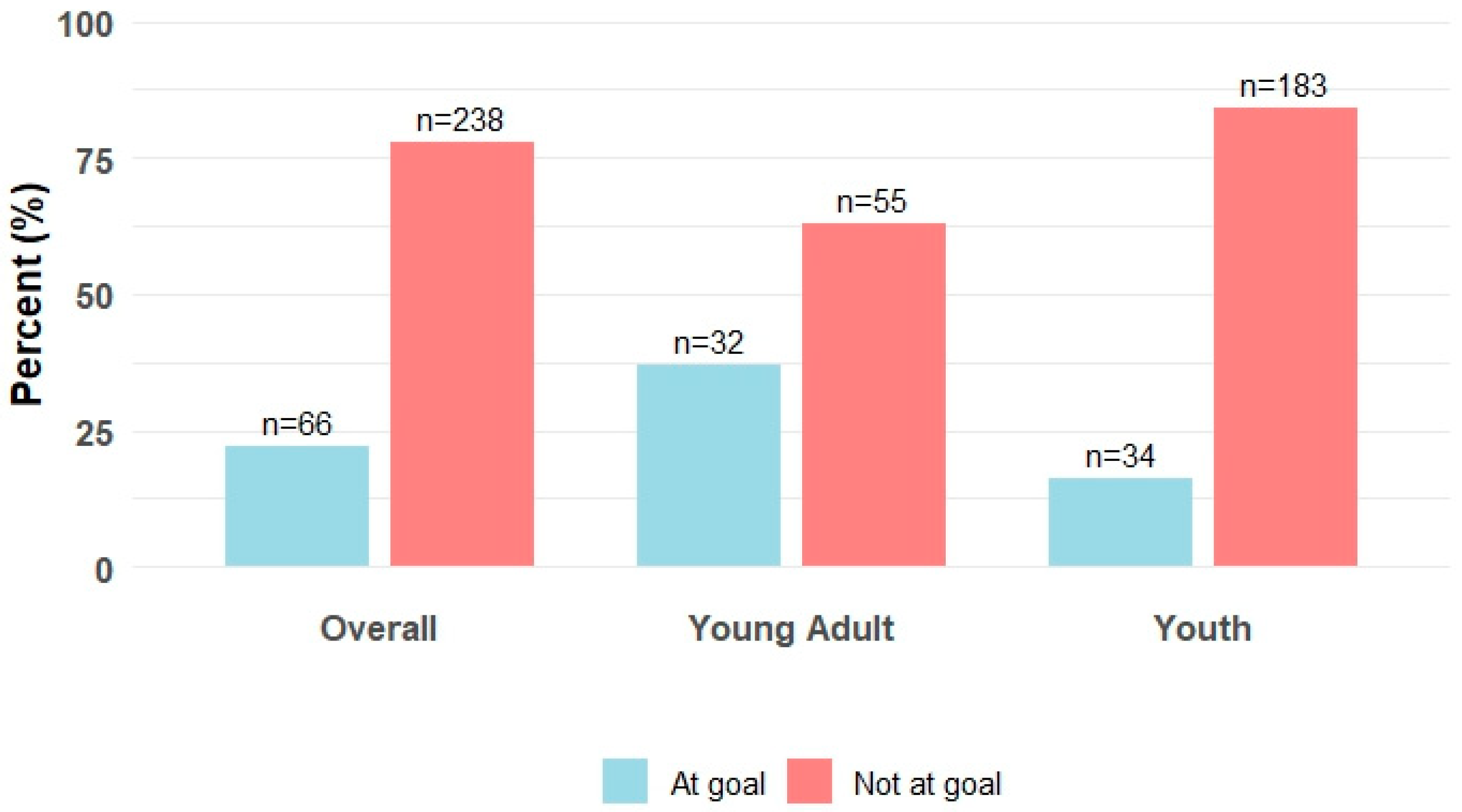
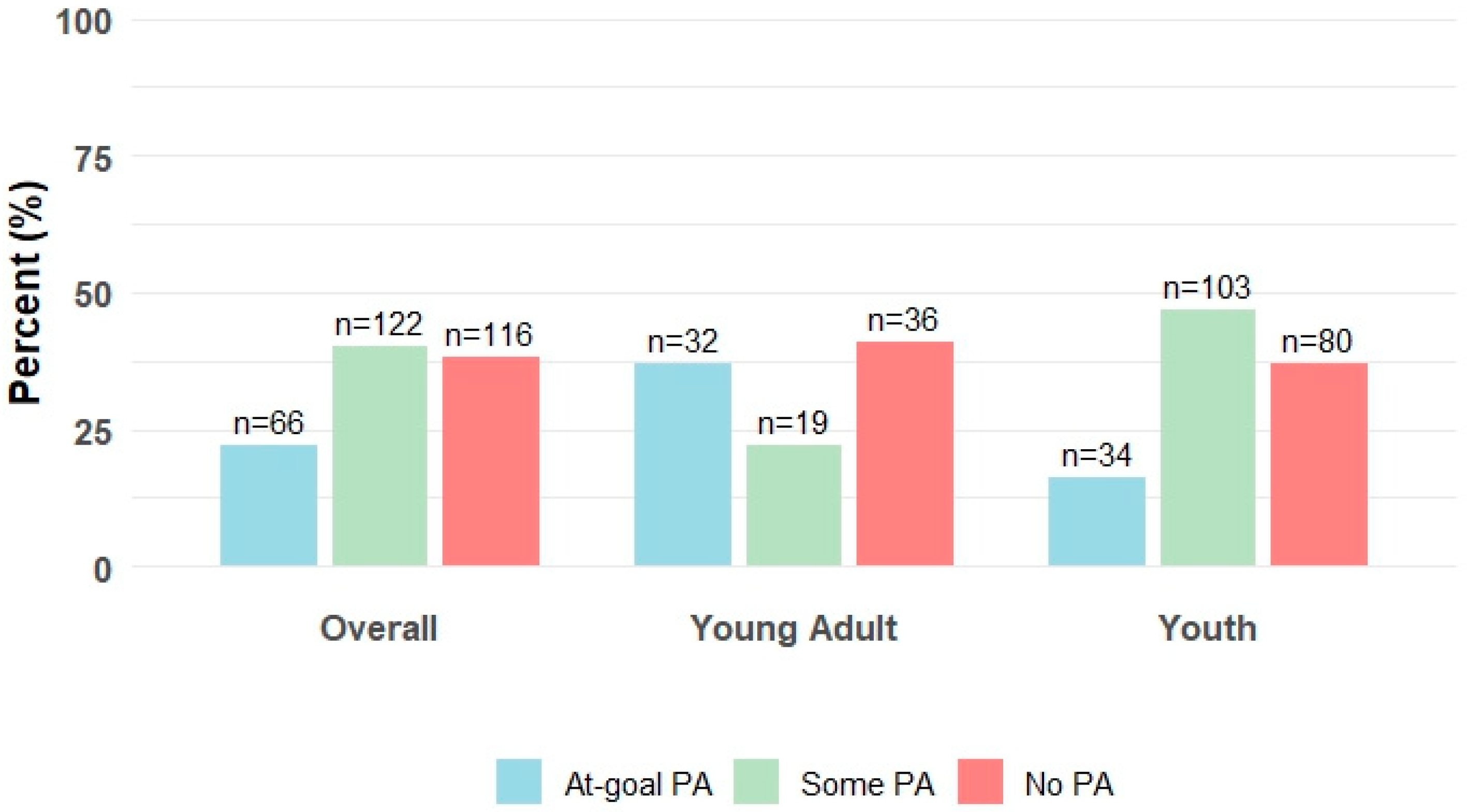
Aims: The purpose of this quality improvement (QI) initiative at a pediatric diabetes center was to integrate physical activity (PA) assessment into routine clinical care. This project had two aims: (1) to collect self-reported PA in youth and young adults with type 1 diabetes (T1D) and (2) to analyze levels of PA (none, some PA, at-goal PA, and at-goal vs. not-at-goal PA) and their relationship with demographics and clinical outcomes. PA goals were 60 min/day for youth and 150 min/week of moderate-to-vigorous aerobic PA for young adults. Methods: During clinical visits, a pediatric diabetes center used a three-question Physical Activity Vital Sign (PAVS) to assess and document PA, which was recorded as total minutes per week with intensity (light, moderate, and vigorous). We analyzed PAVS data from January 2020 to July 2022. Clinical variables were compared across the levels of PA. Results: This was a sample of 304 youth and young adults living with T1D: 87 young adults (29%) and 217 youth (71%), with a mean age of 14.2 (4.8) years. Half had an HbA1c between 7% (53.01 mmol/mol) and 9% (74.87 mmol/mol), and 56% used both continuous glucose monitoring and an insulin pump. Overall, 78% of the sample did not meet PA goals. LDL and blood pressure were significantly different across the two groups of PA achievement (not at goal vs. at goal). Only LDL levels remained significantly different across the three groups (none, some PA, and at-goal PA). Conclusions: Implementing PA assessment is feasible in a pediatric diabetes center. Next steps may include incorporating exercise prescriptions as part of routine clinical care.
Keywords: type 1 diabetes; physical activity; youth; young adults type 1 diabetes; physical activity; youth; young adults
Graphical Abstract