Article

Social Support and Maternal Mental Health: Investigating How Social Capital Influences Postpartum Depression


by
Emily E. Pulsipher
* and
Mikaela J. Dufur
Department of Sociology, Brigham Young University, Provo, UT 84602, USA
*
Author to whom correspondence should be addressed.
Women 2026, 6(1), 21; https://doi.org/10.3390/women6010021
Submission received: 22 January 2026 / Revised: 6 March 2026 / Accepted: 13 March 2026 / Published: 19 March 2026

Abstract

Social capital has been well established to have beneficial effects on a variety of behavioral, developmental, and health outcomes across the life course. In particular, social capital has been proven to be a protective factor benefiting health, particularly among young people. However, we know little about whether or how social capital might provide a protective effect against a very specific mental health challenge of young and mid-adult life: experiencing postpartum depression. Using linear regression models and restricted-use data from the National Study of Adolescent to Adult Health (five waves conducted beginning in 1995 when respondents were in grades 7–12 and following them into adulthood) on women who gave birth during early adulthood, and controlling for a variety of demographic factors (such as race, parental and partner social capital, SES), we aim to understand potential associations between social capital derived from families and romantic partners and postpartum depression symptomology. Our findings suggest the need for approaches that help pregnant women build and maintain key social connections and resources with fathers and partners.

1. Introduction

The beneficial effects of social capital on a variety of outcomes have been well established. Social capital has been proven to be negatively associated with different mental health challenges, including alleviating fear and stress from extreme global events or preventing depression relapse [1,2]. Social capital can also have various protective effects for mental health among children, adolescents, and emerging adults, such as reducing reported anxiety and depression symptoms [3]. However, we know little about how social capital might influence a common form of mental illness experienced by young women: postpartum depression. Some studies have suggested a relationship between social capital and improved postpartum outcomes [4,5,6,7]; however, these studies largely focus on small clinical populations, as well as on cultures that provide broad access to healthcare. In addition, it is unclear whether the benefits of social capital that have been observed for other kinds of mental health outcomes would extend to postpartum depression, given the specific biological mechanisms associated with pregnancy and delivery that are related to this mental health outcome [8]. Using the U.S.-based National Study of Adolescent to Adult Health (Add Health) restricted-use data and a sample of more than 1200 women who had recently given birth, we aim to understand whether social capital might act as a protective mechanism to prevent or reduce postpartum depression symptoms among American women. Our findings suggest that social capital built with partners can have a protective effect against postpartum depression symptoms. While social capital built with the birth mother’s parents is also protective, the effects are weaker than for partner social capital and are largely driven by paternal sources of social capital.

1.1. Postpartum Depression

Postpartum depression is included in the American Psychiatric Association’s Diagnostic and Statistical Manual of Mental Disorders, fifth edition (DSM-5), as a subcategory of major depressive disorder with “onset of mood symptoms occur[ing] during pregnancy or in the 4 weeks following delivery” [9] (pp. 186). However, in clinical practice and research, postpartum depression is variably defined as depression that can occur within 4 weeks, 3 months, 6 months, or up to 12 months after childbirth [10]. PPD affects approximately 1 in 7 women within the first year after childbirth [11]. Unlike “baby blues,” which is a common postpartum feeling that lasts for around two weeks, PPD is a more severe depressive condition that can last much longer [12]. This is a serious public health concern because suicide remains one of the leading causes of maternal death in the year following delivery [13], and infants whose mothers experience PPD display delayed or disrupted development [14].
When considering PPD, however, several barriers exist that make interventions that have been effective for addressing other kinds of depression less useful or effective. For example, selective serotonin reuptake inhibitors (SSRIs) are often the first choice in treating many kinds of depression, including PPD [10]. However, use of medications such as antidepressants is often met with hesitation because of concern for the fetus or the nursing child [15]. Another common intervention is cognitive behavioral therapy (CBT), but there is mixed evidence of CBT’s effectiveness in treating PPD [16]. Minorities, LGBTQ+ individuals, women who are experiencing intimate partner violence, women in poverty, and those with substance use disorders also often have a hard time getting access to these kinds of mental health treatment [17] and therefore might be at greater risk for PPD or less able to address PPD symptoms. Additionally, many women in wealthy Western countries do not seek mental health interventions because people expect their problems to resolve themselves or do not want to pay for the services [18]. This may be especially true for women who are devoting the bulk of their resources to caring for a newborn.
Because of the complexities inherent in treating PPD, interventions that go beyond medications and CBT are becoming more appealing to people living with PPD and healthcare providers trying to treat it. Some research suggests that physical activity interventions (such as yoga or walks) can be safe and effective approaches to decreasing depressive symptoms for people giving birth [19].
Acknowledging that new mothers are not only individuals but embedded in a variety of social relationships and obligations, we examine here another possible resource for addressing PPD and PPD symptoms that grows from such relationships: social capital. A few studies have proposed focusing on curating and increasing one’s social capital in response to PPD or in preparation for childbirth. For example, some studies have shown that cognitive social capital–people’s perceptions of the level of interpersonal trust, sharing, and reciprocity they enjoy–has a mediating effect on the relationship between social participation and postpartum depression [6,7,20]. However, these studies focus on small clinical populations, and there has been little research on other definitions, measures, or sources of social capital. If social capital is an effective intervention to treat or prevent symptoms of PPD, mothers, medical professionals, and public health experts alike will have access to additional, relatively inexpensive tools. Our study explores emotional social capital built between the respondent and their parents, and between the respondent and their current romantic partner.

1.2. Benefits of Social Capital and Potential Uses to Combat Postpartum Depression

Social capital refers to resources an individual holds that can be exchanged for other resources and are derived from social relationships and networks. In this way, social capital differs from financial capital, which refers to physical resources (usually, though not always, money) that can be exchanged for other resources, and from human capital, which refers to individual knowledge or skill that can be exchanged for other resources (often exchanged for financial capital). While all capital obtains its value relationally, in that it must be exchanged or desired for exchange to accrue value [21], social capital differs in that it must be generated jointly among multiple actors [22,23]. Social capital is, therefore, by necessity a resource that is gained by being embedded in active social networks. There are a few prominent theoretical approaches to social capital [24,25]; one is pioneered by Coleman [23] and focuses on social capital both as the networks in which individuals are embedded and on specific resources that flow across those networks. Coleman defines social capital as an aspect of a social structure as well as the obligations, expectations, trust, and information that flow across those structures [22] (pp. 302). Both the formation of and the “cashing in” of social capital depend on relationships between individuals. The mechanisms that move relationships from merely ties between network nodes to the generation of social, financial, and emotional goods that can be exchanged can include speaking with others, spending time with them, or developing love and emotional closeness [26]. While sometimes difficult to measure in terms of actual exchanges, the kinds of obligations and informational transactions Coleman defines as social capital are often experienced or described by those using it as feelings of emotional closeness or confidence that others will step in to help them [27,28]. Following the substantial body of research using the data we employ here to study social capital among adolescents and, increasingly, in emerging adulthood, in this study, we examine how the respondent utilizes social capital mechanisms to receive social support and emotional closeness following pregnancy and giving birth.
A robust literature connects social capital with many positive outcomes across the life course. Family and school social capital, both as measured by connections and by mechanisms such as development of emotional support and closeness, have been associated with desirable outcomes in childhood development and well-being [29,30,31]. A specific example is that family social capital has been linked to fewer externalizing problem behaviors in children [32]. Social capital is also associated with pro-social behaviors [33] and skills development in childhood [34]. Adolescents also benefit from social capital accrued within and beyond the family. Social capital from both of those sources has been connected to better academic performance in adolescence [35,36] but also has a strong negative relationship with delinquent behavior [3,37,38]. Social capital is also related to young adult attainment in terms of academic [39] and career achievement [40]. While less research has examined outcomes later in the life course, a growing literature in gerontology connects social capital to positive health and quality of life outcomes in older adults [41,42].
Especially promising in terms of the potential application of social capital as a tool to treat or prevent PPD, some literature has begun to connect greater access to social capital to mental health outcomes, specifically depression. For example, Cruwys et al. [2] demonstrate that social group membership ties and feelings of belonging help prevent depression relapse. Similarly, Hirota et al. [43] link greater social capital to better mental health outcomes for adolescents. Some research suggests similar positive associations between social capital, including the amount of contact with others and the degree of feeling close to others, and mental health for older adults (see Nyqust et al. for a scoping review on the topic among older adults [44]). Especially important for the idea of social capital providing protective effects against feelings of PPD is research linking social capital, measured as bonds, connectedness, and social support, to improved mental health for people exposed to major life changes, such as disaster [45] or the COVID-19 pandemic [46]. Since women who give birth experience a major life change, the findings from these studies showing social capital can help avoid or ameliorate depression during major life changes are suggestive that social capital might translate to helping through other life changes.
A 2005 literature review examining potential connections between social capital and PPD found that seven of eleven studies demonstrated an inverse association between social capital and PPD [47]. In other words, greater social capital had a protective effect against PPD and PPD symptoms. However, these studies defined and measured social capital in vastly different ways. For example, Glavin et al. [48] found that redesigning community postpartum care to both prevent and treat PPD resulted in statistically significant improvements in depression scores up to 12 months postpartum. People with low social support and previous experience of pregnancy loss were 10 times more likely to develop PPD [49]. One study found that people with higher individual-level social capital, as measured by items such as feelings of safety and connections to family, friends, and community during pregnancy, reported fewer depressive symptoms 6–8 weeks postpartum [4]. Social capital may be especially critical for those who have just given birth, as postpartum people are often taken out of their usual social structures and spheres. Support from communities or close network members provides new mothers with crucial time for self-care, allowing them to focus on their own mental health alongside the new baby. Taken together, these studies suggest that social capital from multiple sources might have a protective relationship against PPD for new mothers.
However, these studies were largely done on small clinical samples and mostly include data from outside of the United States of America, which has a unique culture surrounding healthcare. It is possible that the relationship between social capital and PPD in the U.S. will produce similar results to research from other countries. On one hand, social capital might be even more important to preventing or ameliorating PPD in the U.S. because the healthcare system provides less formal support than in countries with nationalized health care. Conversely, the lack of support from formal medical systems in the U.S. might cause problems for new mothers that are so severe that social capital from other resources cannot overcome them. In addition, PPD has a unique set of precedents closely linked to pregnancy and delivery; social capital mechanisms that may work for other mental health issues may not be as efficacious for the specific pathways of PPD. Our research hopes to address these possibilities. If our results suggest that social capital is protective against PPD, increasing new mothers’ access to social capital would be another way of addressing calls from health professionals for PPD treatments that are interdisciplinary, holistic, and family-centered [50].
In addition, these findings have not been able to adjudicate the degree to which different sources of social capital might be more or less efficacious in helping prevent depressive symptoms during the postpartum period. While there is much evidence that social capital derived from parents is helpful for a number of outcomes, it is less clear whether mothers and fathers serve as distinct sources of such capital. Some research suggests similar effects of capital derived from maternal and paternal sources [40]; by contrast, work on mothering and fathering suggests that mothers and fathers do distinct kinds of parenting, which may lead to the production of different kinds of social capital [51,52]. This may be especially true when dealing with depressive symptoms, where some scholars have shown differential effects of maternal and paternal intervention [53] or when dealing with pregnancy and delivery, which are inherently gendered activities in which grandmothers and grandfathers might play very different roles [54]. To explore these possibilities, we look not only at family sources of social capital, but also at whether social capital derived from mothers and from fathers exerts influence differently when considering postpartum depressive symptoms. In addition, social capital theory has often ignored romantic partners as a potential source of social capital, but previous research shows that emotional support from romantic partners is important for a number of pregnancy-related outcomes [55]. We therefore also include measures of social capital created with romantic partners during and after pregnancy.
We predict that higher levels of social capital will be associated with lower odds of self-reporting postpartum depression symptoms among young women in the United States who have given birth by Waves III and IV (ages 18–32) in the National Study of Adolescent to Adult Health, drawn from the United States. We further examine whether different sources of social capital have differing associations with reported PPD. We compare social capital from parents of the mother who has given birth to social capital from the mother’s romantic partner (if any). We also compare social capital derived from the mother’s own mother (the baby’s grandmother) and the mother’s father (the baby’s grandfather) to each other to see if parental gender is an important factor in how social capital might be helpful in addressing PPD.
H1: 
Higher levels of parental social capital will be associated with lower reporting of postpartum depression symptoms.
H1a: 
Social capital from maternal and paternal sources will exert similar levels of protectiveness against self-reporting postpartum depression.
H2: 
Higher levels of romantic partner social capital will be associated with lower odds of self-reporting postpartum depression.
H3: 
Parental and partner social capital will exert an interactive effect on self-reporting postpartum depression, with women rich in both types of social capital experiencing sharper drops in the odds of self-reporting postpartum depression.

2. Results

Table 1 provides descriptive statistics for both the Wave III and Wave IV samples. Postpartum depression symptoms are reported as a continuous variable that measures respondents’ answers to questions about depression post-birth on a scale from 0 to 36; the mean for Wave III is 10.13, and for Wave IV is 6.64. A higher score meant that the respondent was experiencing more symptoms of depression. Joint parental social capital in Wave III has a mean of 19.7 on a scale of 0–24 and in Wave IV a mean of 23.33, with 32 being the highest social capital. Maternal social capital has a Wave III mean of 10.23 and a Wave IV mean of 12.74; paternal social capital has a Wave III mean of 9.49 and a Wave IV mean of 10.59, Wave III being measured from 0 to 12 and Wave IV being measured from 0 to 16. Partner social capital has a Wave III mean of 3.67 on a scale of 0–5 and a Wave IV mean of 30.7 on a scale of 0–37, with 5 and 37 being more social capital. Overall, then, respondents on average enjoy high levels of social capital. The average income of the respondent in Wave III was $9981, and in Wave IV was $17,500. In Wave III, about 18% of respondents in our sample had been formally diagnosed with depression by a doctor or other healthcare provider prior to pregnancy. However, 44% had felt depressed in the past 7 days, and 31% had been unable to shake the blues, even with support from family and friends, suggesting many of the mothers we study here were exhibiting symptoms of PPD. In Wave IV, about 17% of our participants had been formally diagnosed with depression by a doctor or other healthcare provider.
Table 2 provides results for regression models predicting PPD scores in Wave III. In Model 1, increased parental social capital is significantly associated with lower depressive symptoms (b = −0.83, SE = 0.064, p < 0.01), providing initial evidence for Hypothesis 1. Similarly, Model 2 provides initial evidence for Hypothesis 2, with partner social capital also significantly associated with a decrease in depressive symptoms (Model 2: b = −0.611, SE = 0.189, p < 0.01). The significant association remains when parental social capital (Model 3: b = −0.154, SE = 0.064, p < 0.01) and partner social capital (Model 3: b = −0.539, SE = 0.19, p < 0.01) are analyzed together. However, when demographic controls are introduced, neither parental (Model 4: b = −0.087, SE = 0.065, p < 0.01) nor partner social capital (Model 4: b = −0.383, SE = 0.197, p < 0.01) is a significant predictor of PPD symptoms. Higher levels of respondent education are significantly associated with lower depression scores (Model 4: b = −0.446, SE = 0.147, p < 0.01), while a previous depression diagnosis is strongly associated with a higher score on the depression scale (Model 5: b = 2.614, SE = 0.687, p < 0.001).
When parental social capital is split up into maternal and paternal social capital to test Hypothesis 1a, paternal social capital is a significant protective factor (Model 5: b = −0.411, SE = 0.159, p < 0.05; Model 6: b = −0.380, SE = 0.157, p < 0.05), but maternal social capital is not a significant protective factor (Model 5: b = 0.012, SE = 0.133; Model 6: b = 0.385, SE = 0.132; Model 3: b = −0.043, SE = 0.043). When including various demographic controls in Model 5, the effects of paternal emotional social capital remain statistically significant (Model 7: b = −0.305, SE = 0.155, p < 0.05), while maternal capital remains not statistically significant (Model 7: b = 0.099, SE = 0.131). Partner emotional social capital also shows a significant negative association, even when demographic controls are included (Model 5: b = −0.411, SE = 0.159, p < 0.05; Model 6: b = −0.380, SE = 0.157, p < 0.05; Model 7: b = −0.394, SE = 0.197, p < 0.05). Along with partner emotional social capital, respondents’ education level (b = −0.448, SE = 0.147, p < 0.01) and a history of depression diagnosis (b = −2.609, SE = 0.686, p < 0.001) remain statistically significant in Model 7. In Wave III data, we find weak initial evidence for the efficacy of parental social capital and evidence against Hypothesis 1a, in that paternal social capital seems to exert stronger effects than maternal social capital. However, these patterns do not survive the introduction of controls. We also find some weak evidence for Hypothesis 2, that partner social capital is helpful, but this evidence is mixed.
Table 3 applies the same modeling approach to respondents who reported giving birth within the twelve months prior to being surveyed for Wave IV, when respondents are slightly older. These results demonstrate findings similar to those for Wave III data, but with more evidence supporting Hypothesis 1 concerning parental social capital. In Model 1, parental social capital is significantly associated with lower PPD scores (b = −0.172, SE = 0.029, p < 0.001). In Model 2, partner social capital is also significantly associated with lower postpartum depression symptoms (b = −0.259, SE = 0.0024, p < 0.001). The association remains significant when looking at parental social capital (Model 3: b = −0.123, SE = 0.028, p < 0.001; Model 4: b = −0.081, SE = 0.028, p < 0.01;) and partner social capital (Model 3: b = −0.240, SE = 0.024, p < 0.001; Model 4: b = −0.188, SE = 0.024, p < 0.001;) together, and when demographic variables are controlled for. Even net of controls, then, social capital from both parents and partners is significantly associated with lower levels of PPD symptoms, providing evidence in favor of both Hypothesis 1 and Hypothesis 2.
When parental social capital is separated into maternal and paternal components, both are protective factors. Maternal emotional social capital is a modest but significant protective factor (b = −0.133, SE = 0.061, p < 0.05), while paternal emotional social capital has a highly significant association (b = −0.2, SE = 0.047, p < 0.001). Model 6 adds partner emotional social capital to the regression. With this addition, maternal emotional social capital is no longer significant (b = −0.101, SE = 0.057, p > 0.05), but paternal emotional social capital remains significant (b = −0.141, SE = 0.045, p < 0.01). Partner social capital also continues to show a highly significant association (b = −0.24, SE = 0.245, p < 0.001). In the fully adjusted Model 7, which includes demographic controls, partner emotional social capital remains a strong protective factor (b = −0.188, SE = 0.024, p < 0.001), while the effects of both maternal and paternal emotional social capital are no longer statistically significant (maternal: b = −0.811, SE = 0.053, p > 0.05; paternal: b = −0.081, SE = 0.043, p > 0.05). Taken together, these findings continue to show strong support for Hypothesis 2. We do find suggestive evidence for Hypothesis 1a, where maternal and paternal social capital exerts similar influence, but in an unexpected way, as neither is significantly associated with PPD symptoms net of partner social capital and controls.
Several control variables also show significant associations in Model 3 and Model 5. Respondents with a prior depression diagnosis report significantly higher depression scores (Model 3: b = 2.98, SE = 0.30, p < 0.001; Model 5: b = 2.98, SE = 0.391, p < 0.001;) while higher respondent income is associated with lower scores (Model 3: b = −0.218, SE = 0.074, p < 0.01; Model 3: b = −0.218, SE = 0.074, p < 0.01). Interestingly, being Black (Model 3: b = 0.974, SE = 0.392, p < 0.05; Model 5: b = 0.873, SE = 0.395, p < 0.05), Asian/Pacific Islander (Model 3: b = 1.84, SE = 0.66, p < 0.01; Model 5: b = 1.84, SE = 0.65, p < 0.01), and of mixed race (“Other (3+)”) (Model 3: b = 2.44, SE = 1.14, p < 0.05; Model 5: b = 2.44, SE = 1.14, p < 0.05) was associated with significantly higher PPD symptomology scores than the reference group (white), findings that were not significant in Wave III. Other variables, including maternal and paternal education and the respondent’s own education, are not significant predictors in the final models.
To test our third hypothesis concerning multiplicative effects between parental and partner social capital, we test potential interaction effects between parental social capital and partner social capital; Table 4 shows results for these interactions predicting PPD symptoms for Wave III data for models that also include all control variables. However, none of these interactions are statistically significant, which suggests that the association between parental emotional social capital and depressive symptoms is not influenced by different levels of partner social capital and does not provide evidence for our hypothesis.
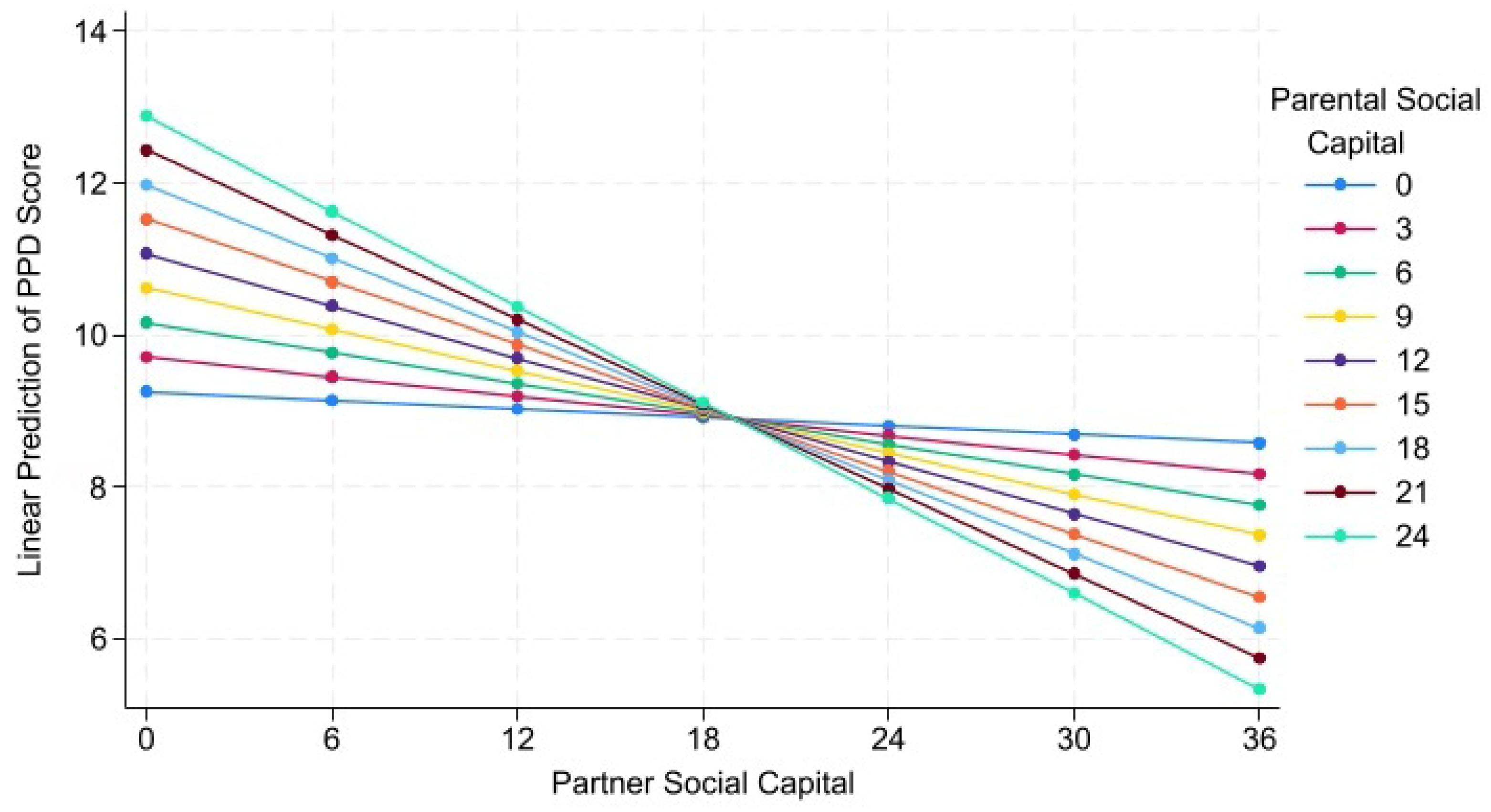
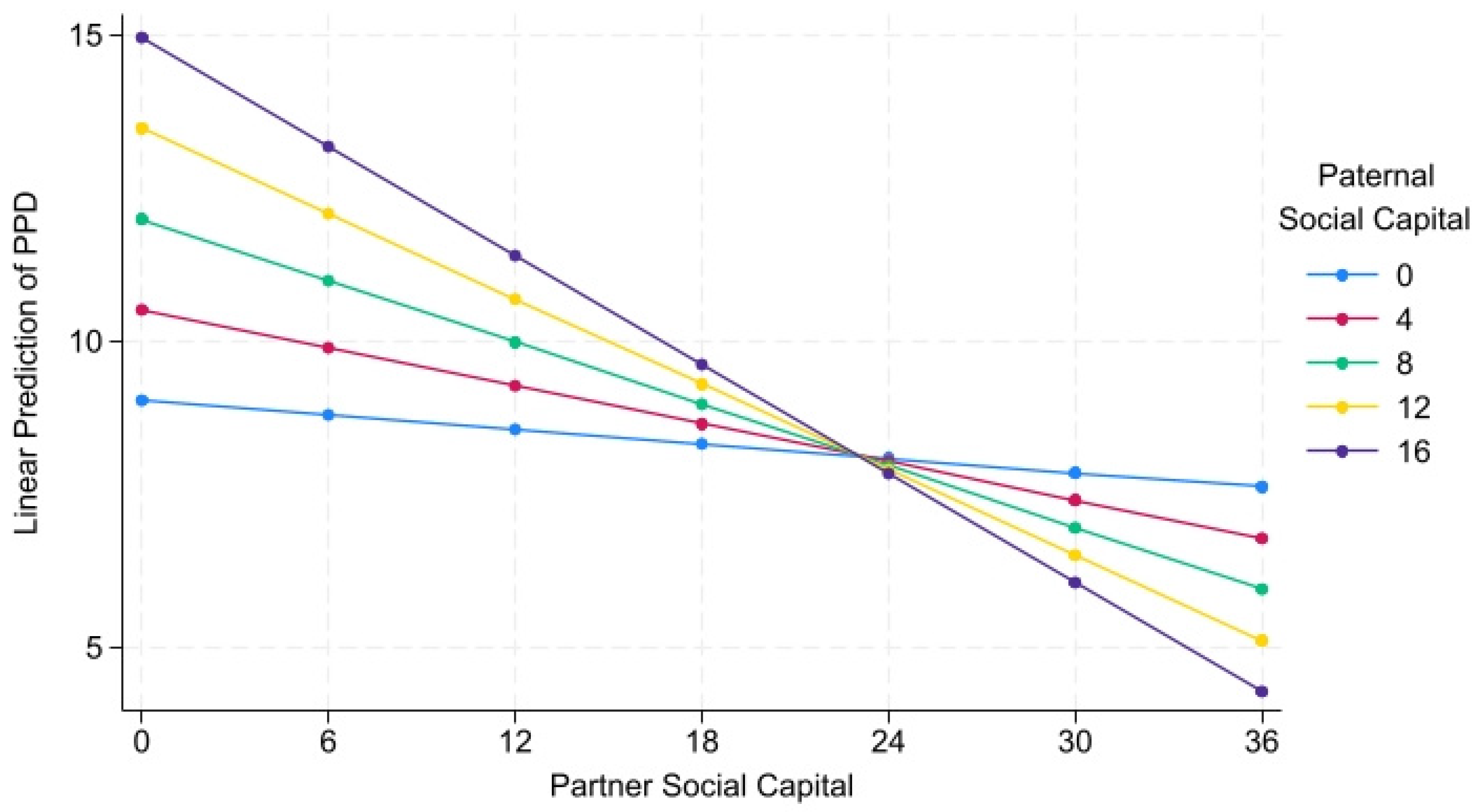
However, there is more evidence in favor of Hypothesis 3 when we apply the same approach to testing potential interaction effects for Wave IV data (Table 5). In Wave IV, there is a significant interaction between joint parental and partner social capital (Figure 1). This effect appears to be driven by the respondent’s social capital with their father, which also has a statistically significant interaction with partner social capital (Figure 2).
These findings suggest that social capital with one’s paternal figure also influences the social capital one has with their romantic partner in emerging adulthood. The specific mechanisms through which these forms of capital influence one another must be examined more thoroughly; we speculate that one potential explanation is that respondents, on average, said they had more social capital with their maternal figures than paternal figures. More variability amongst paternal social capital could allow for more variability in how that capital interacts with partner social capital. In other words, it is possible that this result reflects a statistical ceiling effect rather than a true interaction between fathers and romantic partners. However, the specific patterns of these multiplicative effects are suggestive of interesting theoretical possibilities. We typically see that having high social capital from parents or, especially, paternal figures, combined with high social capital between the respondent and their partner, leads to the best outcomes for PPD symptoms. Having low social capital from both father and partner leads to the worst or near-worst outcomes, a perhaps unsurprising outcome since we might expect new mothers with little social support to struggle. However, when partner social capital is high but parental/paternal social capital is low, we see that the PPD symptoms are only slightly decreased. By contrast, when new mothers have low social capital with partners, having high paternal social capital is associated with higher PPD symptoms, perhaps suggesting that high paternal social capital can be used to transmit norms of disapproval about unsupportive partners or shame about grandfathers providing support new mothers might expect from their partners, both of which are damaging to new mothers’ mental health. We do not have access to these data to the kinds of questions that would verify this speculation; additional data about how fathers perceive their daughters’ partners and, perhaps more important, how they express those opinions to their daughters, especially during times of considerable stress and transition, would help adjudicate among these possibilities.
In an effort to try to untangle these questions and to understand which investments in social capital might be most useful, we repeated these interactive tests with specific indicators of capital. While these indicators do not include information on fathers’ and romantic partners’ relationships with each other and how new mothers might mediate those relationships, such tests do allow for more nuanced examinations of how social capital from different sources might work in tandem. Interactions with specific indicators of parental or paternal capital were not significant; only interactions with the global paternal social capital were, so we report only those in the figures below. This may indicate that fathers (babies’ grandfathers) are most helpful in protecting new mothers from PPD symptoms when they make social investments in several different ways.
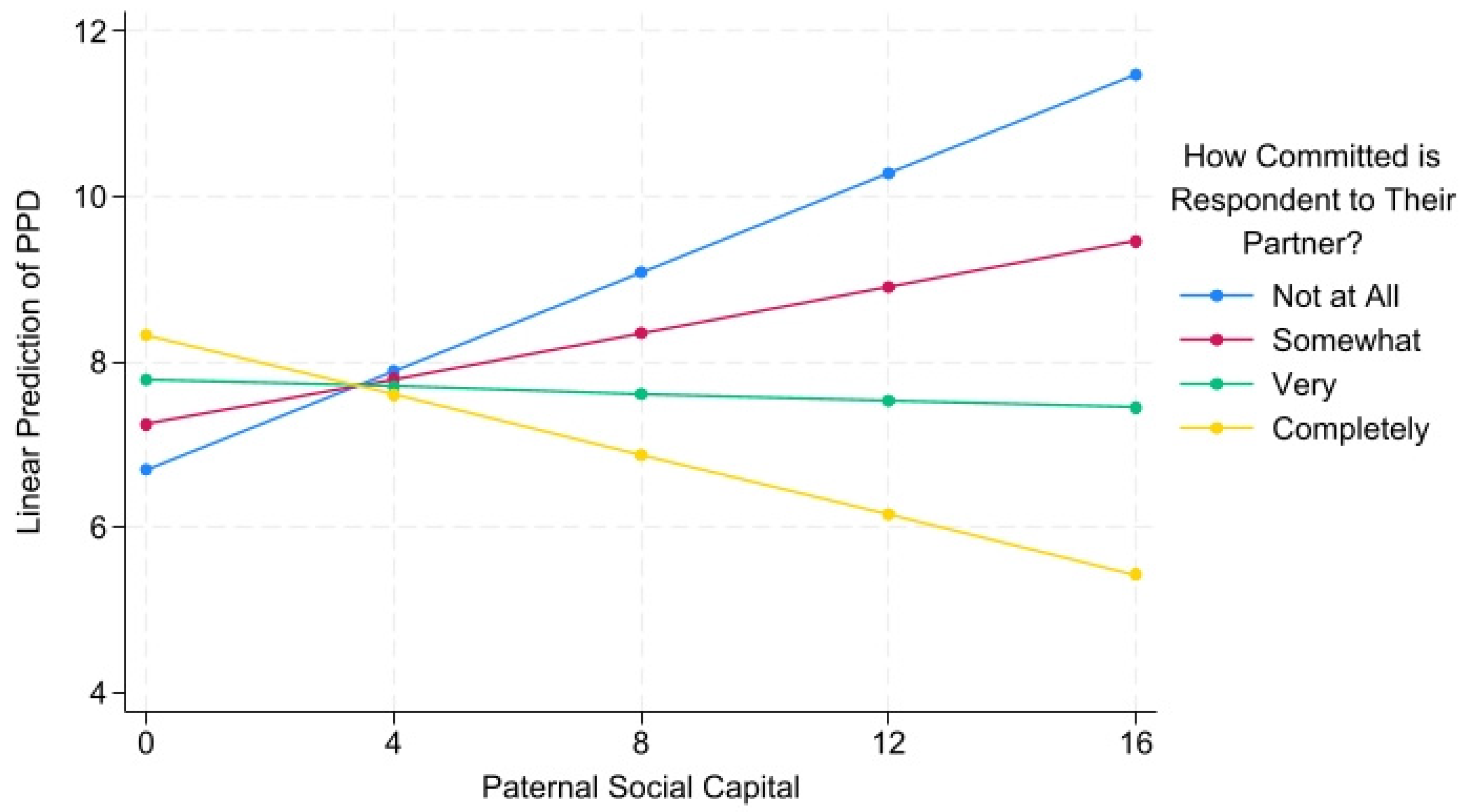
Two specific indicators of partner social capital had significant interactions with global paternal social capital. We first look at interactions with how committed the new mother is to her partner (Figure 3). Interestingly, plotting this interaction shows that when new mothers experience lower partner social capital in the form of mutual commitment, higher levels of global paternal social capital are associated with higher reports of PPD symptoms. Based on the ways family and, specifically, paternal social capital has operated in studies of other outcomes, we would have expected that paternal social capital would have been more protective when respondents lacked capital from their partners. We speculate that these counterintuitive findings reflect unmet expectations that respondents may have from their partner that they based on their positive relationships with their own fathers, through which norms about positive masculinity and fathering were transmitted. We note, however, that additional data about new mothers’ earlier relationships with their father figures and their expectations of their partners—and, for our speculation, how those two items do or do not match—would be necessary to verify such a conclusion.
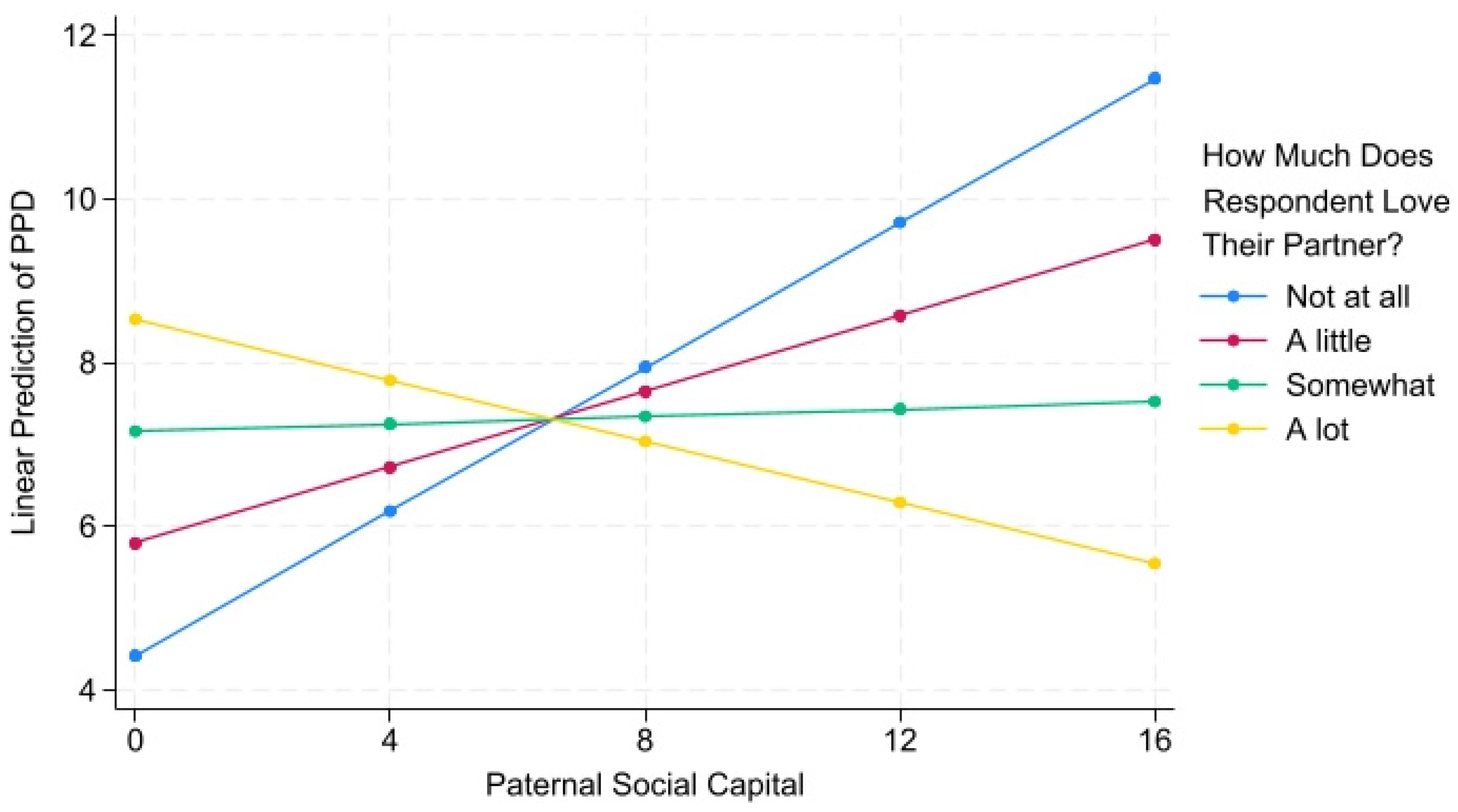
We find similar results looking at new mothers’ reports of how much they love their partners, a measure similar to the indicator used for parental social capital measures of how close the new mother felt to her parents. Similar to the interaction effect for commitment, new mothers who enjoyed higher levels of paternal social capital actually experienced more PPD symptoms when they reported lower levels of social capital in the form of feeling love with their partners (Figure 4).
Overall, then, we find mixed support for Hypothesis 1 (H1). Initial models show a significant negative association between parental social capital and depressive symptoms. However, when demographic controls are added, the association remains statistically significant only in Wave IV. While initial models for both waves suggest that paternal social capital has a stronger association with PPD symptoms than maternal capital, we cannot reject Hypothesis 1a, which argues that social capital from maternal and paternal sources would exert similar levels of protectiveness against PPD symptoms, because neither maternal nor paternal social capital is significant once controls are added in either wave of data. The significant interaction effects between paternal and partner social capital, however, again suggest that paternal social investments might be more important for addressing PPD symptoms than maternal social capital.
We find strong support for Hypothesis 2 (H2) that partner social capital will have a significant protective effect against PPD symptoms in both waves of data. Across waves and models, partner social capital has a significant negative association with PPD symptoms, even when controlling for parental social capital and other control variables.
In contrast, we find mixed support for Hypothesis 3 (H3). In Wave III, there are no significant interaction effects between parental and partner social capital. However, we do find such significant interactions between paternal and partner social capital in Wave IV, suggesting that they may jointly influence PPD symptoms in certain contexts. The findings from these interactions suggest that while the “rich get richer” in that new mothers who have high social capital from both partners and their own fathers have the best postpartum outcomes, the rest of the story is not that the “poor get poorer.” Rather, new mothers who are poor in partner social capital do worse when they have strong connections with their own fathers.

3. Discussion

Taken together, these findings underscore the importance of access to social capital during the postpartum period, and particularly from one’s romantic partner. Parental support had weak protective effects, but partner relationships were more consistently linked to fewer depressive symptoms. From these results, we urge new mothers and partners of new mothers to strengthen their relationships. The proverbial village it takes to raise a child might help at least in part by protecting new mothers’ mental health by supporting the crucial relationship between new parents during a time of great change in family life. Considering findings from interactive models, we also see some evidence of a cumulative advantage, at least to having strong social capital with both father and partner. While the overall effect is not large, it is consistent across various demographic groups and warrants further research into what mechanisms cause paternal social capital to have a unique interactive effect.
Our findings extend previous work tying social capital to positive postpartum outcomes [6,7,20] beyond small clinical samples, to other network members such as parents and partners, and to the U.S. setting where social capital is helpful even in the face of expensive and subpar pre- and postnatal care. Additionally, our approach of analyzing all feelings of depression during the first year postpartum expands our sample to women who may be uncomfortable acknowledging a diagnosis of PPD. It allows us to capture women who may have PPD but never receive an official diagnosis.
One novel contribution of this study is the inclusion of social capital created between romantic partners. Questions of family formation and growth are among the many outcomes for young adults that have been neglected in research that relegates the creation and use of social capital among adults to coworkers instead of more emotional and less instrumental relationships (see McDonald et al. for a thorough overview of the lack of social capital research on young and midlife adults [56]).
Applications of social capital theory to recent research showing benefits of partner support during pregnancy [55,57,58] help to explain the mechanisms that link partner support to positive maternal outcomes and are suggestive that such mechanisms should extend into the postpartum period. Additional research using data that can distinguish between feelings of being supported and the kinds of instrumental support that represent social capital will add to scholars’ understanding of how romantic partners can best be an active part of promoting women’s health after giving birth.
Another contribution is making a distinction between maternal and paternal sources of social capital. The literature remains unsettled as to whether social capital derived from mothers and fathers operates in the same way in young people’s lives [40,51,52,53]. Our examination of maternal and paternal social capital in relation to PPD symptoms provides additional insight into this question; for the most part, at least in terms of new mothers experiencing depressive symptoms during emerging adulthood, social capital from mothers and fathers behaved in similar ways. However, we also demonstrate the importance of examining maternal and paternal social capital separately, as differences in how parental and partner social capital interact emerged when we did so. Scholars who hope to examine how family social capital might provide protective effects during emerging adulthood should be attentive to the possibility that social capital derived from parents is not monolithic and should test for potential gendered effects of family social capital [51].
Finally, we extend the literature arguing that social capital could be an important resource for emerging adults by examining health outcomes, and specifically a health outcome that is common for young women during this life course stage, experiencing PPD symptoms. Our results revealed substantially smaller associations between family social capital and PPD symptoms than have previously been reported for important transitions during emerging adulthood, such as completing college [26]. This suggests that scholars must be more attentive to whether social capital is less influential for health outcomes; more research is needed across a broader set of outcomes to determine whether family or partner social capital is a key investment to promote good health. Our findings also raise the question of whether the use of or returns to family and partner social capital are gendered. Because the outcome we examine here is unique to women, we may be uncovering patterns about social capital that are distinct not to health, but to how women build, experience, and get returns to social capital. To the best of our knowledge, research concerning the effects of social capital during emerging adulthood has treated social capital as invariant across men and women. Our findings are insufficient to draw a conclusion on whether social capital among emerging adults is gendered, but they are sufficient to argue that scholars need to be more attentive to this possibility and should perform empirical tests of how social capital might operate in gendered ways.
If our findings that parental and partner social capital can have small but real effects on new mothers’ depressive symptoms are accurate, this provides an additional tool in helping women through the transition to motherhood. Care providers responsible for the health of new mothers could be helpful by inquiring about and encouraging the thoughtful cultivation of these mothers’ social networks during the postpartum period, and they should be especially attentive to the quality and content of their relationships with their romantic partners. We advocate for more discussion of symptomology by healthcare practitioners, especially among new and expecting mothers with a previous depression diagnosis. Providers could speak to those mothers about their relationships with their parents and, especially, with their partners. This can be especially true for women who are further into emerging adulthood, such as our respondents in Wave IV, who often have more independence and have separated slightly from previous support systems, where it makes sense that new mothers might be expecting and have more access to social capital with their romantic partners than with parents with whom they no longer co-reside.
Social capital remains, then, a fruitful possibility for intervention, even for conditions that have strong connections to physical or biological causes, such as PPD [8]. At the same time, scholars have previously thought that family social capital is stretchy, that is, the social capital one builds with their family in youth and adolescence follows them into emerging adulthood [29]. However, previous research demonstrating these stretchy links looked at educational attainment outcomes; our results concerning mental health show that partner social capital is much more strongly tied to postpartum depression symptoms than parental social capital is. Relationships outside the family may become more influential on one’s outcomes once they enter emerging adulthood and start to make their own way in the world, and this may be especially true for outcomes more intimate than educational outcomes. In addition to examining postpartum depression as we have here, we recommend that scholars test these ideas by expanding explorations of social capital beyond family in emerging adulthood to outcomes concerning intimacy and emotion, such as friendship maintenance and family formation, perhaps focusing on romantic partner relationships. In addition, the ways young people build social capital with their families may change as they age and move away from their original homes. We focus here largely on the emotional and social support components of social capital, since we assume ties between parents and children, but future research that expands inquiries into how emerging adults build and maintain social capital with their families of origin could uncover additional protective mechanisms.
Additionally, the pervasive influence of a history of depression highlights the importance of addressing both individual and societal mental health risk factors. While we found consistent associations between partner social capital and positive PPD symptom outcomes, the effects of having previously experienced depression were much stronger. This may simply indicate a form of selectivity, where women with a history of depression were more likely to experience it again [59]. However, we want to highlight again the fact that PPD affects approximately one in seven women within the first year after childbirth [11], and suicide remains one of the leading causes of maternal death in the year following delivery [13]. Though the coefficients we observe here are not large, if social capital can be protective for women most at risk for PPD symptoms, having an additional low-cost tool with which to help the large number of women who suffer from postpartum struggles may still have a considerable ripple effect on public health.
As respondent education and respondent income were both significant in both waves of data, we also urge those in the public health sphere to continue their efforts to target and distribute health information to those of lower income and educational status and to address social determinants of health for pregnant women. These populations are often more vulnerable than those with higher education and income, and social capital may be an especially useful or accessible intervention for women who may not have access to resources that are typically used to treat PPD or address depressive symptoms. Our findings suggest this may be especially true when considering this part of the life course, where women are increasingly relying on romantic partners for both material and emotional support.
One curious finding in our analyses was that social capital was more often a significant factor in Wave IV data than in Wave III data. We primarily attribute this to superior measures of social capital in Wave IV; however, it is important to consider whether parents and partners alike demonstrate more support, and therefore more social capital, to young women who have children at more typical ages. The women we studied here were as young as 18 when they gave birth in Wave III; we might have expected social capital to be especially important for younger mothers, but it is possible that the social stigma associated with early childbearing [60] or the unstable romantic relationships common among young mothers [61] might block their access to key forms of social capital that might protect them from PPD symptoms. We encourage future research to examine these nuances and determine the best ways to provide social support for the most vulnerable young mothers.

Limitations

One potential limitation of our data is that, because of social norms and stereotypes framing the transition to motherhood as joyous, some women may have been less likely to admit that they were feeling unhappy or ‘blue’ about their new journey into motherhood. Qualitative research where new mothers can discuss their feelings in their own words, as well as their own ways of defining and using social capital, will help capture the full breadth of these women’s postpartum experiences. Additionally, we were unable to examine whether respondents had a formal diagnosis of PPD; having information about a specific diagnosis might both ensure a lack of conflation between PPD and other affective disorders, as well as identify a population whose difficulties reach the level of needing clinical intervention. The Add Health study does not provide any such data; we are confident that our approach of controlling for previous depression diagnoses and using well validated measures of depression symptoms helps us pinpoint PPD symptomology, but it is always possible that these feelings could come from experiences such as Seasonal Affective Disorder or generalized depression, or that typical life changes associated with parenting a newborn, such as sleep disruption, might mimic depressive symptoms without reaching the threshold of requiring intervention for disordered mental health. Future research should examine both women who have been diagnosed with PPD and are receiving emergency treatment and women who have been diagnosed with low-level but persistent PPD. Further research should also examine other general mental health challenges faced by the mothers of infants and young children to help make these distinctions. While we suspect that strong access to social capital would be helpful to new mothers in all of these circumstances, being better able to distinguish among these causes and levels of postpartum struggles would help medical practitioners and family members expand the tools they have to ensure women’s healthy transitions to motherhood.
Additionally, there are potential limitations on what social resources are available to new mothers. Our study did not allow us to consider how far away a parental figure may live from a new mother, which could impact their ability to be present in her life at this time. Almost all of the young mothers in our sample were living independently of their parents, which may help to explain the relatively small effects of parental social capital on PPD symptoms compared to studies examining educational attainment in emerging adulthood; perhaps the kinds of social capital needed to address mental health during the major transition to parenthood require proximity to build. Similarly, emerging adults who are exploring independence and identity may start to rely more on social capital from nonfamilial sources as they age, as we found here, examining social capital with romantic partners. Future research could include additional measures of social capital derived from friendship networks, work networks, religious networks, and similar, both to identify additional sources of potential support for new mothers and to examine theoretical perspectives about how social capital might or might not shift from family sources to more efficacious peer sources in emerging adulthood. Further, this paper only focuses on the most recent pregnancy for each participant. The models we use here could be used to examine differences in PPD symptomology and relationships with social capital in subsequent pregnancies and births.
Another limitation is the lack of data about LGBTQ+ couples in this study. Many LGBTQ+ individuals who give birth report postpartum mental health difficulties and perceive barriers to seeking help for fear of being deemed “unfit” [62]. They may have more stigma and barriers to overcome than heterosexual couples and cis women, which may lead to increased feelings of depression during the postpartum period. However, the data that we used for our analysis did not ask about sexual orientation, and all of the couples included are heterosexual. Future research could examine whether social capital operates in the same way for sexual minority birth givers as for the new mothers we examine here.

4. Materials and Methods

4.1. Data

We use data from the restricted-use version of the National Longitudinal Study of Adolescent Health to Adult Health data set (Add Health). This survey was conducted by the Carolina Population Center of the University of North Carolina-Chapel Hill (Chapel Hill, NC, USA). Add Health is the largest and most comprehensive nationally representative longitudinal survey of adolescents in the United States and has continued to follow respondents into adulthood. There have been five waves so far, beginning in 1995 when respondents were in grades 7–12 (N = 90,118). From this sample, Add Health researchers gave an in-home supplemental survey to 20,745 adolescents and one of their parents. This in-home sample is the group followed across subsequent waves of data collection. We use demographic controls concerning race and family of origin variables from Wave I; dependent (PPD) variables, social capital variables, and remaining controls concerning mothers’ young adult lives come from Waves III and IV, which were collected from 2001 to 2002 (N = 15,197) and 2008 (N = 15,701), respectively. During Wave III, participants were 18–27 years old, and during Wave IV, they were 24–34 years old, so in both waves, respondents were of childbearing age. In Wave III, those on the younger end of the age range are very young to give birth, while those on the older end of the age range are at a very reasonable age to give birth, so we included the Wave in our sample. All items we use are reported by the main respondent, in our case, young mothers. Our sample consists only of respondents who reported giving birth, regardless of the outcome of the birth, in their responses to questions in Wave III or Wave IV; we note that the vast majority of these outcomes were live births and preliminary analyses excluding respondents who experienced stillbirths or other alternative birth outcomes, including missing data on birth outcomes, did not change the patterns we report below. Additionally, our analysis only focuses on the most recent birth for each respondent. The Add Health only asks about biological sex, so all respondents we report on here were assigned female at birth; we have no information on whether any have transitioned to non-binary or transgender male, though based on population statistics, we assume that such numbers would be low, especially during the time period in which these data were collected. We used Stata 18’s MICE protocol for missing data imputation to create 20 imputations, resulting in a full sample of 454 respondents for Wave III and 822 in Wave IV, all of whom gave birth in the 12 months prior to the survey wave, putting them in the appropriate clinical window to develop PPD.

4.2. Dependent Variable: PPD Symptoms

Add Health did not ask respondents directly if they had postpartum depression or had been diagnosed with PPD, so we used questions concerning new mothers’ depressive symptoms while controlling for previous depression diagnosis by a healthcare provider to try to isolate PPD symptoms. Add Health uses a modified version of the Center of Epidemiologic Studies-Depression (CES-D) scale. In Wave III, respondents were asked how often within the past seven days they had felt sad, been more bothered than usual by small things, how often they felt depressed, how often they felt disliked by others, could not shake off the blues, how often they were too tired to do things, how often they had trouble focusing, if they felt they were as good as other people, and how often they enjoyed life. These variables all had response options from 0 to 3, with 3 being the option that showed more depressive symptoms. Enjoying life was reverse-coded so that higher numbers indicate more depressive symptoms. Additionally, respondents were asked how many times they had cried a lot or laughed a lot (reverse-coded) within the past 12 months. This variable was also coded from 0 to 3, with 3 showing more depressive symptoms. Additionally, respondents were asked if they were satisfied with their life as a whole, and if they liked themself the way they are. These two questions were coded from 0 to 4, with 4 showing more depressive symptoms; as above, we reverse-coded these variables to achieve a variable where higher scores indicated higher depression. All of these variables were combined into a depressive symptoms scale, ranging from 0 to 36, with 36 being the highest depressive symptoms. This approach to measuring depression has been widely validated for adolescents and young adults in many different cultures [63]. The alpha for the Wave III PPD scale was 0.84 (see Table 1).
In Wave IV, respondents were asked how often they had felt as good as other people, how often in the past seven days they were more bothered than usual by small things, how often they felt disliked by other people, how often they enjoyed life, how often they felt happy, how often they were sad, how often they could not shake the blues, how often they were too tired to do things, and how often they had trouble focusing on what they were doing. These variables were all coded from 0 to 3, with higher scores indicating more depressive symptoms. Additionally, respondents were asked how often they feel isolated from others, also coded from 0 to 3, with higher scores indicating more depressive symptoms. The alpha for the Wave IV PPD scale was 0.78 (see Table 1). As above, this approach is typical of scales measuring depression in other studies using samples of similar ages [64].
It is possible that by using these variables, since there is no specific measure of PPD diagnosis, we are capturing “typical” depression that is not associated with pregnancy or the postpartum period. To address this issue, we also controlled for a previous depression diagnosis to strengthen the argument that the depression symptoms we study here are specific to postpartum issues. In addition, it is possible that the farther away from the birth the mother was when asked about these symptoms, the more likely they might reflect depression that is not specifically PPD. We tested for this by including controls for how much time was between the birth and the survey; the patterns of findings did not change, so we do not report the survey timing coefficients here.

4.3. Key Independent Variable: Social Capital

Following previous work using Add Health data to examine family social capital [37,40], we use measures from both Wave III and Wave IV tapping how close the respondent feels to their maternal figure, if they enjoy doing things with their maternal figure, and if their maternal figure is warm and loving towards them (measured from 0 to 12 Wave IV, we are additionally able to measure if they are satisfied in their relationship with their maternal figure (measured from 0 to 16 use the same questions in both waves to measure social capital for the respondent’s paternal figure. We also included a composite measure of total parental social capital, measured from 0 to 24 in Wave III and 0–32 in Wave IV.
We also account for romantic partner social capital, as a romantic partner can become a more intimate and significant relationship than parental relationships in emerging adulthood, especially if a couple is in a serious enough relationship to have a child. We chose these variables to align with the emotional closeness and social support components of social capital that have previously been used to look at family social capital in the Add Health data [37,40]. In Wave III, the mother was asked questions about the partner they had their baby with; we measure if the respondent had contact with her partner during the pregnancy (0 = no; 1 = yes), if the respondent was living with their partner when the baby was born (0 = no; 1 = yes), if the respondent’s partner accompanied them to pregnancy checkups (0 = no; 1 = yes), if the respondent was married to their partner when they got pregnant (0 = no; 1 = yes), and if the respondent wanted their partner to be the father of their baby (0 = no; 1 = yes). To measure partner social capital, we summed up these 5 variables to create a partner social capital scale that ranges from 0 to 5, with 5 being more social capital between the respondent and their partner.
In Wave IV, a section specifically focused on the relationship between the respondent and their current partner was administered. We include measures of social capital from that section of the interviews here. We measured if the new mother’s views on the degree to which respondent’s partner expresses love and affection to them (measured 0–4, where 1 is strongly disagree and 4 is strongly agree), how committed the respondent is to their relationship with their current partner (0 “not at all committed” 1 “somewhat committed” 2 “very committed” 3 “completely committed”), if the respondent enjoys doing ordinary things with their partner (measured 0–4, where 1 is strongly disagree and 4 is strongly agree), if the respondent trusts their partner to be faithful to them (measured 0–4, where 1 is strongly disagree and 4 is strongly agree), if the respondent is happy in their relationship with their current partner (0 “not too happy” 1 “fairly happy” 2 “very happy”), if the respondent feels like their partner listens to them when they need someone to talk to (measured 0–4, where 1 is strongly disagree and 4 is strongly agree), if the respondent loves their current partner (0 “not at all” 1 “a little” 2 “somewhat” 3 “a lot”), if the respondent is satisfied with the way they handle their family finances (measured 0–4, where 1 is strongly disagree and 4 is strongly agree), if the respondent is satisfied with the way they and their partner handle problems and disagreements (measured 0–4, where 1 is strongly disagree and 4 is strongly agree), if the respondent feels satisfied by their sex life (measured 0–4, where 1 is strongly disagree and 4 is strongly agree), and if the respondent was married to their partner when they got pregnant (0 “no” 1 “yes”). We combine these twelve items to make a comprehensive measure of partner social capital in Wave IV, ranging from 0 to 37, with higher scores indicating greater partner social capital.
We present models here that examine the social capital variables in four ways: social capital derived from both parents together (Wave III alpha = 0.81; Wave IV alpha = 0.78), social capital derived from mother (Wave III alpha = 0.88; Wave IV alpha = 0.74), social capital derived from father (Wave III alpha = 0.6; Wave IV alpha = 0.81), and social capital derived from partner (Wave III alpha 0.73; Wave IV alpha = 0.90) (see Table 1). We note that for both the PPD outcomes and the social capital independent variables, there are slight measurement differences across the waves, so we caution readers against making specific comparisons of coefficients across the waves. Comparison of general patterns is more appropriate given these measurement differences. This may be especially important concerning romantic partner social capital, where we have many more questions and superior measures of closeness, emotional trust, and support in Wave IV.

4.4. Independent Variables: Controls

We include several control variables to ensure any relationships between social capital and PPD symptomology persist when including other kinds of resources, including financial capital and human capital from both the respondent and family of origin, race, the respondent’s age at the time of the child’s birth, and details of pregnancy, prenatal care, and birth outcomes. All of these measures are derived from new mothers’ responses. We included measures of financial and human capital, including current household income (total household income, measured in dollars) and respondents’ educational attainment (measured in categories that range from 8th grade or less to completion of a post-baccalaureate degree). We also include a measure to tap the class of family of origin, measured by both parents’ highest level of educational attainment (using the same categories as the respondent’s educational attainment). We measure respondent race with a set of categories (1 = ‘White’, 2 = ‘Black’ 3 = ‘Native American’, 4 = ‘Asian/Pacific Islander’ 5 = ‘Other’ 6 = ‘Mixes; 2 Races’ 7 = ‘Other; 3+ Races’), and of age at the time of the interview in years. While the following variables are not available in Wave III, in Wave IV, we also control for issues around specific pregnancy outcomes, as they have been associated with the onset and symptomatology of PPD [58,65]. We controlled for whether the respondent had trouble getting pregnant or miscarrying in the past (0 “no” 1 “yes”) and controlled for how many times the respondent had been pregnant, regardless of the outcomes of those births (1–10). We also control for whether the respondent had wanted to get pregnant by their partner when they did (0 “no” 1 “yes”), as an unwanted pregnancy may increase feelings of depression.

4.5. Analytic Strategy

We apply ordinary least squares linear regression models to predict associations between experiencing PPD symptoms and social capital using a set of nested models. Alternative modeling strategies accounting for skewed distributions in the dependent variables (with a tail toward higher levels of depression) did not produce different patterns of results, so we report the OLS models here for ease of interpretation (results for other models available upon request). We designed the first model to test Hypothesis 1 that higher levels of parental social capital will be associated with decreased reporting of postpartum depression symptoms in both Wave 3 and Wave 4. Model 2 tests seseassociated with lower odds of self-reporting postpartum depression. Model 3 tests both Hypotheses 1 and 2 by combining parental social capital and partner social capital. Model 4 uses combined parental social capital, partner social capital and demographic controls to observe if the relationships between social capital and PPD symptomology persist when factoring in these variables. Model 5 splits combined parental social capital into maternal and paternal social capital to test Hypothesis 1a concerning parental gender. Model 6 tests maternal, paternal, and partner social capital together. Model 7 adds demographic controls to observe if relationships between maternal, paternal, and partner social capital and PPD symptomatology persist when factoring in those variables. Finally, we test Hypothesis 3 concerning the moderating effects of paternal or partner social capital by testing interactions between family social capital or partner social capital variables that were significant in previous models.

5. Conclusions

The possibility of an accessible mechanism to protect women from experiencing postpartum depression remains understudied. Postpartum depression is a prevalent condition for many women, and the effects can be severe. In order to build stronger family units and care for some of the most vulnerable members of society, more research should be done to find protective mechanisms against PPD. Our findings from a large, nationally representative study suggest that one powerful intervention clinicians and others can engage in to help postpartum women is to help them build, maintain, and improve relationships with romantic partners. We are hopeful that future research will reveal additional social capital resources that can ensure the health of new mothers and their babies.

Author Contributions

Conceptualization, E.E.P. and M.J.D.; methodology, E.E.P. and M.J.D.; software, E.E.P.; validation, E.E.P. and M.J.D.; formal analysis, E.E.P. and M.J.D.; investigation, E.E.P. and M.J.D.; resources, M.J.D.; data curation, E.E.P. and M.J.D.; writing—original draft preparation, E.E.P.; writing—review and editing, E.E.P. and M.J.D.; visualization, E.E.P. and M.J.D.; supervision, M.J.D.; project administration, M.J.D.; funding acquisition, M.J.D. All authors have read and agreed to the published version of the manuscript.

Funding

This research received no external funding.

Institutional Review Board Statement

The present study accessed the National Longitudinal Study of Adolescent to Adult Health restricted-use data set. The data are available via contract in fully deidentified form. The study was conducted in accordance with the Declaration of Helsinki and approved by the Institutional Review Board of the University of North Carolina at Chapel Hill (IRB21-2949, 1 June 1993). As part of the contract process, the authors received IRB approval for data storage and access procedures from Brigham Young University (IRB2025-029, 4 February 2025).

Informed Consent Statement

Informed consent was obtained by the University of North Carolina at Chapel Hill (https://addhealth.cpc.unc.edu/about/#additional-add-health-data, accessed on 21 October 2025). The authors had no contact with any respondent at any time.

Data Availability Statement

The authors are unable to share data files because the restricted-use data is only available via contract. Interested parties may initiate access to the restricted-use data process by contacting The National Longitudinal Study of Adolescent to Adult Health.

Acknowledgments

This research uses data from Add Health, funded by grant P01 HD31921 (Harris) from the Eunice Kennedy Shriver National Institute of Child Health and Human Development (NICHD), with cooperative funding from 23 other federal agencies and foundations. Add Health is currently directed by Robert A. Hummer and funded by the National Institute on Aging cooperative agreements U01 AG071448 (Hummer) and U01AG071450 (Aiello and Hummer) at the University of North Carolina at Chapel Hill. Add Health was designed by J. Richard Udry, Peter S. Bearman, and Kathleen Mullan Harris at the University of North Carolina at Chapel Hill.

Conflicts of Interest

The authors declare no conflicts of interest.

Abbreviations

The following abbreviations are used in this manuscript:
PPDPostpartum depression
Add HealthNational Longitudinal Study of Adolescent to Adult Health
CBTCognitive Behavioral Therapy
LGBTQ+Lesbian, Gay, Bisexual, Trans, Queer, Plus
CES-DCenter for Epidemiological Studies Depression Scale
DSM-5Diagnostic and Statistical Manual of Mental Disorders
SSRISelective Serotonin Reuptake Inhibitor

References

  1. Snel, E.; Engbersen, G.; De Boom, J.; Van Bochove, M. Social capital as protection against the mental health impact of the COVID-19 pandemic. Front. Sociol. 2022, 7, 728541. [Google Scholar] [CrossRef] [PubMed]
  2. Cruwys, T.; Dingle, G.A.; Haslam, C.; Haslam, S.A.; Jetten, J.; Morton, T.A. Social group memberships protect against future depression, alleviate depression symptoms and prevent depression relapse. Soc. Sci. Med. 2013, 98, 179–186. [Google Scholar] [CrossRef]
  3. Dufur, M.J.; Thorpe, J.D.; Barton, H.S.; Hoffmann, J.P.; Parcel, T.L. Can social capital protect adolescents from delinquent behavior, antisocial attitudes, and mental health problems? Arch. Psychol. 2019, 3, 6. [Google Scholar] [CrossRef]
  4. Kritsotakis, G.; Vassilaki, M.; Melaki, V.; Georgiou, V.; Philalithis, A.E.; Bitsios, P.; Kogevinas, M.; Chatzi, L.; Koutis, A. Social capital in pregnancy and postpartum depressive symptoms: A prospective mother–child cohort study (The Rhea Study). Int. J. Nurs. Stud. 2013, 50, 63–72. [Google Scholar] [CrossRef]
  5. Zhou, C.; Zheng, W.; Yuan, Q.; Zhang, B.; Chen, H.; Wang, W.; Huang, L.; Xu, L.; Yang, L. Associations between social capital and maternal depression: Results from a follow-up study in China. BMC Pregnancy Childbirth 2018, 18, 45. [Google Scholar] [CrossRef]
  6. Hatakeyama, T.; Matsumura, K.; Tsuchida, A.; Inadera, H.; Japan Environment and Children’s Study (JECS) Group. Inverse Association Between Mothers’ Cognitive Social Capital During Pregnancy and Postpartum Depression: The Japan Environment and Children’s Study. Neuropsychiatr. Dis. Treat. 2024, 20, 1279–1292. [Google Scholar] [CrossRef]
  7. Qin, Y.; Guo, P.; Li, J.; Liu, J.; Jiang, S.; Yang, F.; Wang, R.; Wang, J.; Liu, H.; Zhang, X.; et al. The relationship between social capital and postpartum depression symptoms of lactating women in minority areas-A cross-sectional study from Guangxi, China. Front. Psychol. 2022, 13, 905028. [Google Scholar]
  8. Edinoff, A.N.; Odisho, A.S.; Lewis, K.; Kaskas, A.; Hunt, G.; Cornett, E.M.; Kaye, A.D.; Kaye, A.; Morgan, J.; Barrilleaux, P.S.; et al. Brexanolone, a GABAA modulator, in the treatment of postpartum depression in adults: A comprehensive review. Front. Psychiatry 2021, 12, 699740. [Google Scholar] [CrossRef]
  9. American Psychiatric Association. Diagnostic and Statistical Manual of Mental Disorder, 5th ed.; American Psychiatric Publishing: Washington, DC, USA, 2013; p. 186. [Google Scholar]
  10. Stewart, D.E.; Vigod, S. Postpartum depression. N. Engl. J. Med. 2016, 375, 2177–2186. [Google Scholar] [PubMed]
  11. Carlson, K.; Mughal, S.; Azhar, Y.; Siddiqui, W. Postpartum Depression. In StatPearls [Internet]; StatPearls Publishing: Treasure Island, FL, USA, 2024. Available online: https://www.ncbi.nlm.nih.gov/books/NBK519070/ (accessed on 22 October 2025).
  12. McKelvey, M.M.; Espelin, J. Postpartum Depression: Beyond the ‘Baby Blues’. Nurs. Made Incred. Easy 2018, 16, 28–35. [Google Scholar] [CrossRef]
  13. Orsolini, L.; Valchera, A.; Vecchiotti, R.; Tomasetti, C.; Iasevoli, F.; Fornaro, M.; De Berardis, D.; Perna, G.; Pompili, M.; Bellantuono, C. Suicide during Perinatal Period: Epidemiology, Risk Factors, and Clinical Correlates. Front. Psychiatry 2016, 12, 138. [Google Scholar] [CrossRef] [PubMed]
  14. Slomian, J.; Honvo, G.; Emonts, P.; Reginster, J.Y.; Bruyère, O. Consequences of maternal postpartum depression: A systematic review of maternal and infant outcomes. Women’s Health 2019, 15, 1–55. [Google Scholar] [CrossRef] [PubMed]
  15. Boath, E.; Bradley, E.; Henshaw, C. Women’s Views of Antidepressants in the Treatment of Postnatal Depression. J. Psychosom. Obstet. Gynecol. 2004, 25, 221–233. [Google Scholar] [CrossRef]
  16. Massoudi, P.; Strömwall, A.L.; Åhlen, J.; Kärrman Fredriksson, M.; Dencker, A.; Andersson, E. Women’s experiences of psychological treatment and psychosocial interventions for postpartum depression: A qualitative systematic review and meta-synthesis. BMC Women’s Health 2023, 23, 604. [Google Scholar] [CrossRef]
  17. Gopalan, P.; Spada, M.L.; Shenai, N.; Brockman, I.; Keil, M.; Livingston, S.; Moses-Kolko, E.; Nichols, N.; O’toole, K.; Quinn, B.; et al. Postpartum Depression—Identifying Risk and Access to Intervention. Curr. Psychiatry Rep. 2022, 24, 889–896. [Google Scholar] [CrossRef]
  18. Sareen, J.; Jagdeo, A.; Cox, B.J.; Clara, I.; ten Have, M.; Belik, S.-L.; de Graaf, R.; Stein, M.B. Perceived barriers to mental health service utilization in the United States, Ontario, and the Netherlands. Psychiatr. Serv. 2007, 58, 357–364. [Google Scholar] [CrossRef]
  19. Eustis, E.H.; Ernst, S.; Sutton, K.; Battle, C.L. Innovations in the Treatment of Perinatal Depression: The Role of Yoga and Physical Activity Interventions During Pregnancy and Postpartum. Curr. Psychiatry Rep. 2019, 21, 133. [Google Scholar] [CrossRef]
  20. Murayama, H.; Fujiwara, Y.; Kawachi, I. Social capital and health: A review of prospective multilevel studies. J. Epidemiol. 2012, 22, 179–187. [Google Scholar] [CrossRef]
  21. Becker, G.S. Human capital revisited. In Human Capital: A Theoretical and Empirical Analysis with Special Reference to Education, 3rd ed.; The University of Chicago Press: Chicago, IL, USA, 1994; pp. 15–28. [Google Scholar]
  22. Coleman, J.S. Foundations of Social Theory; Harvard University Press: Cambridge, MA, USA, 1990. [Google Scholar]
  23. Coleman, J.S. Social in the creation of human capital. Am. J. Sociol. 1998, 94, S95–S120. [Google Scholar] [CrossRef]
  24. Bourdieu, P. The forms of capital. In Cultural Theory: An Anthology, 1st ed.; Wiley-Blackwell: Hoboken, NJ, USA, 1986; pp. 281–291. [Google Scholar]
  25. Lin, N. Social Capital: A Theory of Social Structure and Action; Cambridge University Press: Cambridge, UK, 2002; Volume 19. [Google Scholar]
  26. Mair, C.A. Social support: A diverse, multilevel, unequal resource. In Handbook on Inequality and Social Capital, 1st ed.; McDonald, S., Côté, R., Shen, J., Eds.; Elgar Online: Cheltenham, UK, 2024; pp. 240–256. [Google Scholar]
  27. Erikson, E.; Sachs, J. Formalist and relationalist approaches to social capital. In Handbook on Inequality and Social Capital, 1st ed.; McDonald, S., Côté, R., Shen, J., Eds.; Elgar Online: Cheltenham, UK, 2024; pp. 10–22. [Google Scholar]
  28. Offer, S. That’s what friends are for: Can social capital help us better understand the diversity of friendship ties and their complex roles in personal networks? In Handbook on Inequality and Social Capital, 1st ed.; McDonald, S., Côté, R., Shen, J., Eds.; Elgar Online: Cheltenham, UK, 2024; pp. 256–271. [Google Scholar]
  29. Dufur, M.J.; Parcel, T.L.; Braudt, D.B.; Hoffmann, J.P. Is social capital durable?: How family social bonds influence college enrollment and completion. PLoS ONE 2024, 19, e0298344. [Google Scholar] [CrossRef]
  30. Yan, Y.; Zhang, J.; Lu, N. Adverse childhood experiences and self-esteem among adolescents: The role of Social Capital and gender. J. Adolesc. 2024, 96, 1539–1554. [Google Scholar] [CrossRef] [PubMed]
  31. Katsantonis, I.; McLellan, R. The role of parent–child interactions in the association between mental health and prosocial behavior: Evidence from early childhood to late adolescence. Int. J. Behav. Dev. 2024, 48, 59–70. [Google Scholar] [CrossRef]
  32. Poff, J.M.; Jarvis, J.A.; Dufur, M.J.; Pribesh, S.L. Family and peer social capital and child behavioral outcomes in Japan. Children 2024, 11, 840. [Google Scholar] [CrossRef] [PubMed]
  33. Barton, H.; Thorpe, J.; Dufur, M. Social capital and prosocial behavior among German children. Soc. Sci. 2020, 9, 215. [Google Scholar] [CrossRef]
  34. Parcel, T.L.; Dufur, M. Family and school capital explaining regional variation in math and reading achievement. Res. Soc. Stratif. Mobil. 2009, 27, 157–176. [Google Scholar] [CrossRef]
  35. Dufur, M.J.; Parcel, T.L.; Troutman, K.P. Does capital at home matter more than capital at school? Social capital effects on academic achievement. Res. Soc. Stratif. Mobil. 2013, 31, 1–21. [Google Scholar] [CrossRef]
  36. Crosnoe, R. Social capital and the interplay of families and schools. J. Marriage Fam. 2004, 66, 267–280. [Google Scholar] [CrossRef]
  37. Hoffmann, J.P.; Dufur, M.J. Family social capital, family social bonds, and juvenile delinquency. Am. Behav. Sci. 2018, 62, 1525–1544. [Google Scholar] [CrossRef]
  38. Hoffmann, J.P.; Thorpe, J.D.; Dufur, M.J. Family social capital and delinquent behavior in the United Kingdom. Soc. Sci. 2020, 9, 178. [Google Scholar] [CrossRef]
  39. Dufur, M.J.; Pribesh, S.L.; Jarvis, J.A. Family structure and first-term college GPA: Do resources, selectivity, and resilience factors explain potential differences across family structures? J. Child Fam. Stud. 2023, 32, 211–229. [Google Scholar] [CrossRef]
  40. Leppard, T.R.; Dufur, M.J. Family Ties and Young Adult Career Goals: Does Family Social Capital Stretch Into Emerging Adulthood? Emerg. Adulthood 2025, 13, 1219–1227. [Google Scholar] [CrossRef]
  41. Lu, S.; Chui, C.; Lum, T. Promoting social capital for healthy aging: Towards an integrative framework. Gerontologist 2023, 63, 628–636. [Google Scholar] [CrossRef] [PubMed]
  42. Nutakor, J.A.; Zhou, L.; Larnyo, E.; Addai-Danso, S.; Tripura, D. Socioeconomic status and quality of life: An assessment of the mediating effect of social capital. Healthcare 2023, 11, 749. [Google Scholar] [CrossRef] [PubMed]
  43. Hirota, T.; Paksarian, D.; He, J.P.; Inoue, S.; Stapp, E.K.; Van Meter, A.; Merikangas, K.R. Associations of social capital with mental disorder prevalence, severity, and comorbidity among US adolescents. J. Clin. Child Adolesc. Psychol. 2022, 51, 970–981. [Google Scholar] [CrossRef]
  44. Nyqvist, F.; Forsman, A.K.; Giuntoli, G.; Cattan, M. Social capital as a resource for mental well-being in older people: A systematic review. Aging Ment. Health 2013, 17, 394–410. [Google Scholar] [CrossRef]
  45. Hall, C.E.; Wehling, H.; Stansfield, J.; South, J.; Brooks, S.K.; Greenberg, N.; Amlôt, R.; Weston, D. Examining the role of community resilience and social capital on mental health in public health emergency and disaster response: A scoping review. BMC Public Health 2023, 23, 2482. [Google Scholar] [CrossRef] [PubMed]
  46. Han, G.; Zhai, Y. Temporary food insecurity, social capital, and mental health during the COVID-19 lockdowns in Shanghai. J. Urban Aff. 2024, 48, 323–339. [Google Scholar] [CrossRef]
  47. De Silva, M.J.; McKenzie, K.; Harpham, T.; Huttly, S.R. Social Capital and Mental Illness: A Systematic Review. J. Epidemiol. Community Health 2005, 59, 619–627. [Google Scholar] [CrossRef]
  48. Glavin, K.; Smith, L.; Sørum, R.; Ellefsen, B. Redesigned Community Postpartum Care to Prevent and Treat Postpartum Depression in Women—A One-Year Follow-Up Study. J. Clin. Nurs. 2010, 19, 3051–3062. [Google Scholar] [CrossRef]
  49. Cho, H.; Lee, K.; Choi, E.; Na Cho, H.; Park, B.; Suh, M.; Rhee, Y.; Choi, K.S. Association Between Social Support and Postpartum Depression. Sci. Rep. 2022, 12, 3128. [Google Scholar] [CrossRef]
  50. Thurgood, S.; Avery, D.M.; Williamson, L. Postpartum depression (PPD). Am. J. Clin. Med. 2009, 6, 17–22. [Google Scholar]
  51. Nikiforidis, L.; Durante, K.M.; Redden, J.P.; Griskevicius, V. Do mothers spend more on daughters while fathers spend more on sons? J. Consum. Psychol. 2018, 28, 149–156. [Google Scholar] [CrossRef]
  52. Lamb, M.E.; Sagi, A. Fatherhood and Family Policy; Routledge: Oxfordshire, UK, 2014. [Google Scholar]
  53. Pace, G.T.; Shafer, J. Parenting and depression: Differences across parental roles. J. Fam. Issues 2015, 30, 1001–1021. [Google Scholar] [CrossRef]
  54. Baldoni, F. Perinatal grandparents: A new frontier for caregiving. PNEI Rev. Riv. Soc. Ital. Psiconeuroendocrinoimmunol. 2025, 1, 1–12. [Google Scholar] [CrossRef]
  55. Martin, R.C.; Brock, R. The Importance of High-Quality Partner Support for Reducing Stress During Pregnancy and Postpartum Bonding Impairments. Arch. Women’s Ment. Health 2023, 26, 201. [Google Scholar] [CrossRef] [PubMed]
  56. McDonald, S.; Côté, R.; Shen, J. (Eds.) Handbook on Inequality and Social Capital; Elgar Online: Cheltenham, UK, 2024. [Google Scholar]
  57. Kumar, S.A.; Brock, R.L.; DiLillo, D. Partner support and connection protect couples during pregnancy: A daily diary investigation. J. Marriage Fam. 2022, 84, 494–514. [Google Scholar] [CrossRef]
  58. Al-Mutawtah, M.; Campbell, E.; Kubis, H.P.; Erjavec, M. Women’s experiences of social support during pregnancy: A qualitative systemic review. BMC Pregnancy Childbirth 2023, 23, 782. [Google Scholar] [CrossRef]
  59. Silverman, M.E.; Reichenberg, A.; Savitz, D.A.; Cnattingius, S.; Lichtenstein, P.; Hultman, C.M.; Larsson, H.; Sandin, S. The risk factors for postpartum depression: A population-based study. Depress. Anxiety 2017, 34, 178–187. [Google Scholar] [CrossRef]
  60. Ellis-Sloan, K. Teenage mothers, stigma and their ‘presentations of self’. Sociol. Res. Online 2014, 19, 16–28. [Google Scholar] [CrossRef]
  61. Smith-Battle, L.; Phengnum, W. An integrative review of the research on teen mothers’ resilience. West. J. Nurs. Res. 2023, 45, 161–175. [Google Scholar] [CrossRef]
  62. Goldberg, A.E.; Frost, R.L. “Saying ‘I’m not okay’ is extremely risky”: Postpartum mental health, delayed help-seeking, and fears of the child welfare system among queer parents. Fam. Process 2025, 64, e13032. [Google Scholar] [CrossRef] [PubMed]
  63. Blodgett, J.M.; Lachance, C.C.; Stubbs, B.; Co, M.; Wu, Y.-T.; Prina, M.; Tsang, V.W.L.; Cosco, T.D. A systematic review of the latent structure of the Center for Epidemiologic Studies Depression Scale (CES-D) among adolescents. BMC Psychiatry 2021, 21, 197. [Google Scholar] [CrossRef] [PubMed]
  64. Hargrove, T.W.; Halpern, C.T.; Gaydosh, L.; Hussey, J.M.; Whitsel, E.A.; Dole, N.; Hummer, R.A.; Harris, K.M. Race/ethnicity, gender, and trajectories of depressive symptoms across early-and mid-life among the add health cohort. J. Racial Ethn. Health Disparities 2020, 7, 619–629. [Google Scholar] [CrossRef] [PubMed]
  65. Miller, E.S.; Saade, G.R.; Simhan, H.N.; Monk, C.; Haas, D.M.; Silver, R.M.; Mercer, B.M.; Parry, S.; Wing, D.A.; Reddy, U.M.; et al. Trajectories of antenatala depression and adverse pregnancy outcomes. Am. J. Obstet. Gynecol. 2022, 226, 108.e1–108.e9. [Google Scholar] [CrossRef]
Figure 1. Predictive Margins of Interaction Between Parental Social Capital and Partner Social Capital, Wave IV.
Women 06 00021 g001
Figure 2. Predictive Margins of Interaction Between Paternal Social Capital and Partner Social Capital, Wave IV.
Women 06 00021 g002
Figure 3. Predictive Margins of Interaction Between Paternal Social Capital and Respondents’ Commitment to Their Partner, Wave IV.
Women 06 00021 g003
Figure 4. Predictive Margins of Interaction Between Paternal Social Capital and Respondents’ Love Towards Their Partner.
Women 06 00021 g004
Table 1. Variable Description and Descriptive Statistic, Wave III and Wave IV.
VariableDescriptionMeanSE
Dependent Variables
Depression Score Wave IIIRow totals summing up respondents’ answers to thirteen questions about depression (0 = low PPD symptoms, 36 = high PPD symptoms)10.130.28
Depression Score Wave IVRow totals of eleven questions about depression (0 = low PPD symptoms, 33 = high PPD symptoms)6.640.161
Independent Variables
Parental Social Capital Wave IIIRow totals of six questions relating to both maternal and paternal figures’ emotional social capital, point totals range from 0 to 24.19.720.19
Parental Social Capital Wave IVRow totals of eight questions relating to both maternal and paternal figures’ emotional social capital, point totals range from 0 to 32.23.330.196
Maternal Social Capital Wave IIIRow totals of three questions relating to the maternal figure’s emotional social capital, point totals range from 0 to 12.10.230.101
Maternal Social Capital Wave IVRow totals of four questions relating to the maternal figure’s emotional social capital, point totals range from 0 to 16.12.740.113
Paternal Social Capital Wave IIIRow totals of five questions relating to the paternal figure’s emotional social capital, point totals range from 0 to 12.9.490.105
Paternal Social Capital Wave IVRow totals of four questions relating to the paternal figure’s emotional social capital, point totals range from 0 to 16.10.590.132
Partner Social Capital Wave IIIRow totals of five questions relating to the respondent’s relationship with their partner during the pregnancy, point totals range from 0 to 5.3.670.068
Partner Social Capital Wave IVRow totals of twelve questions relating to the respondent’s relationship with their current romantic partner, point totals range from 0 to 37.30.70.217
Control Variables
Respondent Age Wave IIICurrent age in years at interview, ranges from 18 to 2721.920.078
Respondent Age Wave IVCurrent age in years at interview, ranges from 24 to 3428.40.06
Respondent Race Wave IIISelf-reported race of respondent, 1 = ‘White’ 2 = ‘Black’ 3 = ‘Native American’ 4 = ‘Asian/Pacific Islander 5 = ‘Other’2.780.109
Respondent Rave Wave IVSelf-reported race of respondent, 1 = ‘White’ 2 = ‘Black’ 3 = ‘Native American’ 4 = ‘Asian/Pacific Islander 5 = ‘Other’2.880.084
Respondents Income Wave III0–50,000 in USD Dollars, continuous$9981$465
Respondents Income Wave IV0–10,000+ in USD Dollars, categorical: median value of mean category$17,500-
Mother Education Wave IIIScale from 0 to 9 where the respondent reported on Mother’s education from 0 = ‘Eight grade or less’ to 9 = ‘professional training beyond a four-year degree.’5.240.131
Mother Education Wave IVScale from 0 to 9, where the respondent reported on Mother’s education from 0 = ‘Eighth grade or less’ to 9 = ‘professional training beyond a four-year degree.’5.310.088
Father Education Wave IIIScale from 0 to 9 where the respondent reported on Father’s education from 0 = ‘Eight grade or less’ to 9 = ‘professional training beyond a four-year degree.’5.280.142
Fathers Education Wave IVScale from 0 to 9 where the respondent reported on Father’s education from 0 = ‘Eighth grade or less’ to 9 = ‘professional training beyond a four-year degree.’5.610.098
Respondents Education Wave IIIScale from 0 to 9, where respondents self-report on their highest year of school completed, from 0 = ‘sixth grade’ to 13 = ‘3 or more years of graduate school’12.420.088
Respondents Education Wave IVScale from 1 to 9 where respondent self-report on their highest year of school completed from 1 = ‘Eighth grade or less’ to 13 = ‘completed post-baccalaureate professional education.’5.880.074
Respondent Wanted to Get Pregnant Wave IVA measure of whether the respondent wanted to get pregnant by their partner when they did 0 = ‘No’ and 1 = ‘Yes.’0.7420.015
Respondent Had Trouble Getting Pregnant Wave IVA measure of whether the respondent has previously had trouble getting pregnant or with miscarriages, 0 = ‘No’ and 1 = ‘Yes.’0.1610.013
Times Respondent Had Been Pregnant Wave IVA measure of how many times the respondent had been pregnant in their life, regardless of the outcome of the birth, with a minimum of 1 and a maximum of 102.550.049
Table 2. Linear Regression of PPD Scores and Social Capital (Coefficients and Standard Errors), Wave III.
VariableModel 1Model 2Model 3Model 4Model 5Model 6Model 7
Social Capital
Parental Social Capital−0.183 ** (0.064) −0.154 ** (0.064)−0.087
(0.065)
Maternal Social Capital 0.012 (0.133)0.385 (0.132)0.099 (0.131)
Paternal Social Capital −0.411 * (0.159)−0.380 * (0.157)−0.305 (0.155)
Partner Social Capital −0.611 ** (0.189)−0.539 ** (0.19)−0.383
(0.197)
−0.537 ** (0.190)−0.394 * (0.197)
Controls
Respondents’ Age −0.191
(0.167)
−0.173
(0.167)
Respondents’ Race
Black 0.849
(0.651)
0.730 (0.655)
Native American 2.405
(2.65)
2.14
(2.66)
Asian/Pacific Islander −0.003
(1.386)
−0.07
(1.38)
‘Other’ −0.177
(2.39)
−0.588
(2.40)
Mixed (2+) 0.339
(0.746)
0.280
(0.746)
Other (3+) −1.02
(1.58)
−1.15
(1.58)
Respondents’ Income −0.00001
(0.00003)
−0.00001
(0.00003)
Mothers’ Education −0.095
(0.101)
−0.097
(0.100)
Fathers’ Education −0.024
(0.097)
−0.018
(0.097)
Respondents’ Education −0.446 **
(0.147)
−0.448 **
(0.147)
Previous depression diagnosis 2.614 ***
(0.687)
2.609 ***
(0.686)
Constants13.47 ***
(1.29)
12.37 ***
(0.738)
15.16 ***
(1.37)
23.01 ***
(3.71)
13.91 ***
(1.30)
15.31 ***
(1.38)
22.91 ***
(3.708)
* p < 0.05 ** p < 0.01 *** p < 0.001; Note: Reference group is white. Data source is the National Longitudinal Study of Adolescent to Adult Health (Add Health) 2001–2002 cohort. N = 446.
Table 3. Linear Regression of PPD Scores and Social Capital (Coefficients and Standard Errors), Wave IV.
VariableModel 1Model 2Model 3Model 4Model 5Model 6Model 7
Social Capital
Parental Social Capital−0.172 *** (0.0297) −0.123 *** (0.028)−0.081 **
(0.028)
Maternal Social Capital −0.133 *
(0.061)
−0.101 (0.057)−0.081 (0.053)
Paternal Social Capital −0.20 ***
(0.047)
−0.140 ** (.045)−0.081 (0.043)
Partner Social Capital −0.259 ***
(0.24)
−0.240 *** (0.024)−0.188 *** (0.024) −0.240 ***
(0.0245)
−0.188 *** (0.0240)
Controls
Respondents’ Age −0.129
(0.084)
−0.124 (0.084)
Respondents’ Race
Black 0.974 *
(0.392)
0.873 * (0.395)
Native American 0.676
(1.46)
0.675 (1.46)
Asian/Pacific Islander 1.84 **
(0.66)
1.84 ** (0.65)
‘Other’ −0.715
(1.31)
−0.715 (1.31)
Mixed (2+) 0.372
(0.404)
0.372 (0.405)
Other (3+) 2.44 *
(1.14)
2.44 * (1.14)
Respondents’ Income −0.218 **
(0.074)
−0.218 ** (0.074)
Mothers’ Education 0.007
(0.066)
0.007 (0.066)
Fathers’ Education 0.024
(0.058)
0.024 (0.058)
Respondents’ Education −0.112
(0.079)
−0.112 (0.079)
Previous depression diagnosis 2.98 ***
(0.390)
2.98 *** (0.391)
Previous trouble getting pregnant or miscarrying 0.150
(0.396)
0.149 (0.397)
The Times respondent has been pregnant 0.205
(0.112)
0.205 (0.113)
If the respondent wanted to get pregnant by their partner when they did −0.511
(0.344)
−0.511 (0.344)
Constants10.65 ***
(0.713)
14.63 ***
(0.764)
16.90 ***
(0.921)
18.06 ***
(2.582)
10.46 ***
(0.768)
16.78 ***
(0.964)
18.06 *** (2.586)
* p < 0.05 ** p < 0.01 *** p < 0.001; Note: Reference group is white. Data source is the National Longitudinal Study of Adolescent to Adult Health (Add Health) 2008 cohort. N = 822.
Table 4. Interaction Effects Between Family Social Capital and Partner Relationships, with Controls (Coefficients and Standard Errors), Wave III.
Interaction EffectsDepression Score
Parental social capital × partner social capital0.019
(0.045)
Maternal social capital × partner social capital−0.048
(0.076)
Paternal social capital × partner social capital0.139
(0.085)
Parental social capital × living with a partner during pregnancy0.022
(0.138)
Parental social capital × being married to a partner0.123
(0.133)
* p < 0.05 ** p < 0.01 *** p < 0.001; Note: Data source is the National Longitudinal Study of Adolescent to Adult Health (Add Health) 2001–2002 cohort. N = 446.
Table 5. Interaction Effects Between Family Social Capital and Partner Relationships, with Controls (Coefficients and Standard Errors), Wave IV.
Interaction EffectsDepression Score
Parental social capital × partner social capital−0.008 *
(0.004)
Maternal social capital × partner social capital−0.005
(0.007)
Paternal social capital × partner social capital−0.157 *
(0.006)
Paternal social capital × how committed the respondent is to the relationship with the partner−0.160 *
(0.068)
Parental social capital × how much the respondent loves the current partner−0.209 *
(0.075)
Parental social capital × being married to a partner when the respondent got pregnant−0.052
(0.220)
* p < 0.05 ** p < 0.01 *** p < 0.001; Note: Data source is the National Longitudinal Study of Adolescent to Adult Health (Add Health) 2008 cohort. N = 822.
Disclaimer/Publisher’s Note: The statements, opinions and data contained in all publications are solely those of the individual author(s) and contributor(s) and not of MDPI and/or the editor(s). MDPI and/or the editor(s) disclaim responsibility for any injury to people or property resulting from any ideas, methods, instructions or products referred to in the content.