Article

Biophysicochemical Design of a Dual-Function Hydrogel for Synergistic Shock-Absorption and Anti-Inflammatory Action for TMD Therapy


by
Diego Garcia Miranda
1,2,3,*,
Lucas de Paula Ramos
3,*,
Pyetra Claro de Camargo
2,
Nicole Fernanda dos Santos Lopes
2,
Thalita Sani-Taiariol
4,
Mauricio Ribeiro Baldan
4,
Cristina Pacheco-Soares
5,
Bruno Henrique Godoi
5,
Kerstin Gritsch
1,6,7,
Brigitte Grosgogeat
1,6,7 and
Alexandre Luiz Souto Borges
2
1
Multimaterials and Interfaces Laboratory (LMI), CNRS UMR 5615, University Claude Bernard Lyon 1, University of Lyon, 6 Rue Victor Grignard, 69622 Villeurbanne, France
2
Department of Biosciences and Oral Diagnosis, Institute of Science and Technology, São Paulo State University, Avenida Francisco José Longo 777, São José dos Campos 12245-000, SP, Brazil
3
Laboratory “Health Systemic Process” (P2S), UR4129, Faculty of Medicine Laennec, University Claude Bernard Lyon 1, University of Lyon, 7 Rue Guillaume Paradin, 69008 Lyon, France
4
National Space Research Institute, Avenida dos Astronautas 1758, São José dos Campos 12227-010, SP, Brazil
5
Laboratory of Cell Compartement Dynamics, Research and Development Institute, Paraíba Valley University, Avenida Shishima Hifumi 2911, São José dos Campos 12244-010, SP, Brazil
6
Dental School, University Claude Bernard Lyon 1, University of Lyon, 7 Rue Guillaume Paradin, 69372 Lyon, France
7
Department of Dentistry, Hospices Civils de Lyon, 8 Rue de l’Université, 69007 Lyon, France
*
Authors to whom correspondence should be addressed.
Polysaccharides 2026, 7(2), 40; https://doi.org/10.3390/polysaccharides7020040
Submission received: 29 November 2025 / Revised: 22 February 2026 / Accepted: 31 March 2026 / Published: 2 April 2026

Abstract

Temporomandibular disorder (TMD) is recognized as a major public health problem, causing pain and physiological and psychosocial limitations. In this context, the present in vitro study investigated the synthesis of a hyaluronic acid (HA) hydrogel with hydrocortisone (Hyd), designed to enhance joint lubrication by reducing mechanical friction and delivering the anti-inflammatory drug. The hydrogels were prepared with 3% HA (30 mg/mL) and Hyd—0.125% (1.25 mg/mL), 0.250% (2.5 mg/mL), 0.500% (5 mg/mL), or 1% (10 mg/mL). Physicochemical analyses included Fourier transform infrared spectroscopy (FTIR), thermogravimetry (TGA), rheological tests (frequency, amplitude, and temperature ramp scans), and field emission scanning electron microscopy (FESEM), performed before and after sterilization and cycling. In addition, cytocompatibility was evaluated by protocol OECD 129 and confocal microscopy, as well as genotoxicity (OECD487) in mouse macrophages (RAW 264.7 strain) per 24 h of exposure. FTIR demonstrated the spectral signatures of the compounds with no covalent interactions between the drugs, as well thermal stability on TGA. Rheology demonstrated that Hyd protected the HA structure after autoclaving, maintaining viscoelastic properties. SEM confirmed homogeneous porous morphology. Biological assays showed cell viability > 70%, but with a dose-dependent increase in genotoxicity (4–17 micronuclei). Confocal analysis revealed increasing cytotoxicity at high Hyd concentrations, indicating a balance between biocompatibility and adverse effects at concentrations ≤ 0.5%. Among the tested formulations, the 3% HA + 0.250% Hyd hydrogel provided the best balance of viscoelastic stability, cytocompatibility, and low genotoxicity, supporting its potential as a dual-function intra-articular candidate for TMD therapy.

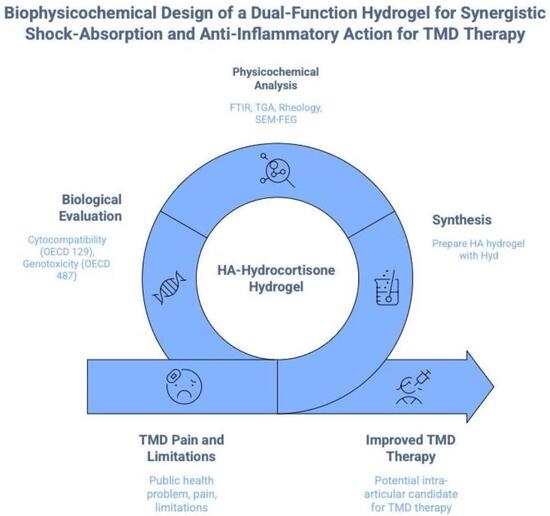
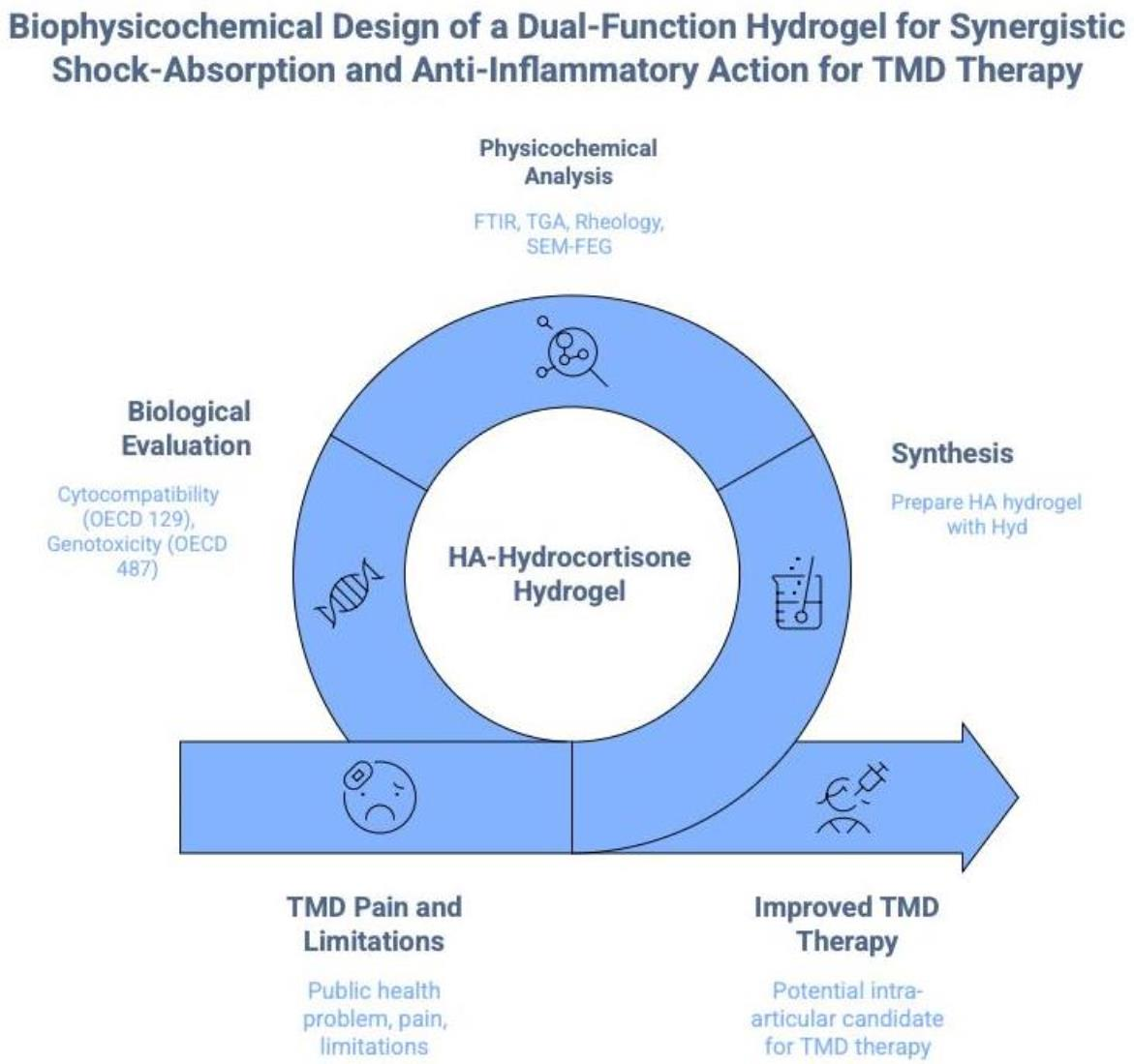
Graphical Abstract

1. Introduction

Temporomandibular dysfunction (TMD) is defined by the American Academy of Orofacial Pain as a collective term that covers various pathophysiological conditions involving the musculoskeletal and neuromuscular structures of the masticatory muscles and the temporomandibular joint (TMJ) [1]. Recognized as a major public health problem, its prevalence varies between 6% and 12% of the general population, with a higher incidence in women aged between 20 and 40. TMD stands out as the main cause of chronic orofacial pain of non-dental origin [2,3].
The Diagnostic Criteria for Temporomandibular Disorders divides TMD into three categories: the first is Muscle Pain (Muscular TMD), with disorders affecting the masticatory muscles; the second classification covers Joint Disorders (Articular TMD) involving displacement of the articular disk (a shock absorber structure) in relation to the jaw bones or degenerative and inflammatory conditions of the joint such as osteoarthritis and osteoarthrosis; finally, the third classification, called Other Joint Disorders, involves conditions that mimic TMD but have different causes, such as rheumatoid arthritis, neoplasms, or fractures [1].
TMD patients often experience masticatory muscle pain aggravated by mandibular function, movement-related temporal headaches, joint noises (clicking or crackling), limited mouth opening (<40 mm) and episodes of joint locking, as demonstrated by Valesan et al. [3] and Wu et al. [2]. The pathophysiological process of TMD is complex, because although it is defined as a local inflammatory disease, its development can be due to local and systemic factors. Local factors include microtrauma secondary to bruxism, parafunctional habits and improper displacement of the articular disk. Systemic factors include rheumatoid, psoriatic and reactive arthritis. Therefore, the host’s immune-inflammatory response stands out [4].
Osteoarthritis of the temporomandibular joint is one of the most common forms of temporomandibular dysfunction and can be described as a low-inflammatory arthritic condition when compared to systemic arthritis [4]. Different cytokines, chemokines, chemokine receptors, enzymes and bone resorption factors have been proposed as markers of TMD. Some authors cite high levels of interleukin (IL)-1β, IL-6, IL-17, interferon (IFN)-γ, tumor necrosis factor (TNF)-α and prostaglandin E2 (PGE2), while a smaller number of studies also show the presence of factors such as matrix metalloproteinase (MMP)-2, MMP-9, aggrecanase-1, superoxide dismutase and receptor-activating nuclear factor κB ligand (RANKL), detected in the synovial fluid of TMD patients [5,6,7].
The pathology has an established impact on social, economic and health structures. Studies point to reduced levels of health-related quality of life, socialization and social networks, together with increased depression among TMD patients. Pain and dysphagia affect both the physical functioning and emotional well-being of the patient, which manifests as a reduction in the ability to consume typical diets and decreased participation in social events [8].
The management of temporomandibular disorders (TMD) is tailored to the patient’s specific clinical presentation. Given the established central role of the immunoinflammatory process in the disease’s pathogenesis, current therapeutic protocols heavily rely on systemic pharmacotherapy, including analgesics, non-steroidal anti-inflammatory drugs (NSAIDs), corticosteroids, and muscle relaxants. For cases refractory to conservative medication, arthrocentesis is employed to lavage pro-inflammatory cytokines from the synovial space and release articular disk adhesions. This procedure is often combined with visco-supplementation using intra-articular hyaluronic acid, which aims to restore the viscoelastic properties of the synovial fluid, reducing mechanical friction and improving joint lubrication. In advanced stages, surgical interventions such as discopexy and arthroplasty remain the last resort [9,10,11,12].
Building upon the rationale of visco-supplementation, this study proposes a novel integrated therapeutic strategy. We hypothesize that a dual-action hydrogel, combining the mechanical benefits of hyaluronic acid for friction reduction with the sustained pharmacological anti-inflammatory activity of hydrocortisone, could synergistically address both the biomechanical and inflammatory components of TMD. Consequently, this work aims to develop and characterize a hyaluronic acid-based hydrogel incorporating hydrocortisone, elucidating its biophysicochemical properties to validate its potential as a new therapeutic for temporomandibular dysfunction.

2. Materials and Methods

2.1. Chemical Reagents

The following were acquired: hyaluronic acid (HA) (CAS nº: 9004-61-9, purity: 95.9%, molecular weight: 1,300,000 Dalton, Inlab Analitic®, code: HA2022042345X, São Paulo, Brazil), hydrocortisone (CAS nº: 125.29-1, purity: 98%), phosphate-buffered saline (PBS) (code: P2272, Sigma-Aldrich®, St. Louis, MO, USA), sodium hydroxide (NaOH) (CAS nº: 1320-73-2, code: S5881, purity: 98%, Sigma-Aldrich®, St. Louis, MO, USA), formic acid (CAS nº: 64-18-6, code: 27001, purity:98%, Sigma-Aldrich®, St. Louis, MO, USA), methanol (CAS nº: 67-56-1, purity: 99.8%, Synth®, Diadema, Brazil), Eagle’s medium modified by Dulbecco—DMEM (LGC Biotechnology®, Cotia, Brazil), Fetal Bovine Serum—FBS (Invitrogen®, New York, NY, USA), 7-Hidróxi-3H-fenoxazin-3-ona-10-óxido (Resazurin) (CAS nº: 62758-13-8, code: R1017, Sigma-Aldrich®, St. Louis, MO, USA), Ethyl Methane sulfonate (EMS) (CAS nº: 62-50-0, code: M08080, Sigma-Aldrich®, St. Louis, MO, USA), Cytochalasin B (CAS nº: 14930-96-2, code: C2743, purity: 98%, Sigma-Aldrich®, St. Louis, MO, USA), 4′,6-Diamidino-2-fenilindol, 2-(4-Amidinofenil)-6-indolecarbamidina with fluoroshield (DAPI) (CAS nº: 28718-90-3, code: F6057, Sigma-Aldrich®, St. Louis, MO, USA), ethanol (CAS nº: 64-17-5, purity:99.5%, Synth®, Diadema, Brazil), and a Live/Dead® Baclight Viability and Counting kit (Molecular Probes, Eugene, OR, USA).

2.2. Equipment

The following were used: class II biological safety cabinet (Veco®, biosseg-06, Sumaré, São Paulo, Brazil), analytical balance (Mettler Toledo®, Balance XPR106DUH/A, Columbus, OH, USA), type I ultrapure water purification system (Allcron®, direct-Pure®Genie, São Paulo, Brazil), autoclave (Cristofoli Biossegurança®, Vitale21, Campo Mourão, Parana, Brazil) dual asymmetric centrifuge mixer (Hauschild®, Speed MixerDAC150. 1 FVZ, Water-kamp, Hamm, Germany), Phmeter (Digimed®, DM-20, São Paulo, Brazil), Spectrometer Matrix Assisted Laser Desorption Ionization-Time of Flight—MALDI-TOF-MS Ettan (Amersham Biosciences®, Amersham, UK), high-performance liquid chromatography with a photodiode detector instrument (HPLC) (Merck-Hitachi®, D-7000, Tokyo, Japan), freezer for cryogenesis (Freezer −80) (NuAire Laboratory Equipement®, Glacier polar edition −86 ultra-low-temperature freezer, Plymouth, MN, USA), freeze-dryer (Terroni®, LS3000, São Carlos, São Paulo, Brazil), Fourier transform infrared spectroscopy (FTIR) (Perkin Elmer®, LR64912C, Waltham, MA, USA), Thermogravimetric Analyzer (TGA) (NETZSCH®, STA449F1 Jupiter, Selb, Bavaria, Germany), Dynamic shear Rheometer (Anton-paar®, SmartPave 92, Graz, Austria), Sputter Coater (Quorum Technologies®, Emitech—SC7620, Kent, UK); scanning electron microscope with Field Emission Gun (FEG®, TESCAN MIRA 3®, Brno, Czech Republic), CO2 Incubator (Sanyo®, MCO-19AIC(UV), Osaka, Japan), water bath precision (TermoFisher Scientific®, TSGP02, Waltham, MA, USA), refrigerated centrifuge (Labnet®, HEREMLE Z300®, Madrid, Spain), inverted microscope (Ziess®, Axiovert 40C, Jena, Thuringia, Germany) fluorescence microscope (Ziess®, Axio Observer A1, Jena, Thuringia, Germany), spectrophotometer (Lonza Biotek ®, ELX808LBS, Winooski, VT, USA), thermal cycler (Nova Ética®, 521-D, São Paulo, Brazil), and laser scanning confocal microscope (LSM 700, Zeiss, Oberkochen, Germany).

2.3. Hydrogels Preparation and Sterilization

A 3% (30 mg/mL) solution of HA was prepared in ultra-pure type I water for physicochemical analysis and biological analysis. Then 1% (10 mg/mL), 0.500% (5 mg/mL), 0.250% (2.5 mg/mL) or 0.125% (1.25 mg/mL) Hyd was added. The hydrogel was homogenized in a mixer for 1 min and the pH was adjusted to 7.2 with NaOH.
The gels were sterilized in an autoclave for 5 min at 118 °C [13].
Sterilized hydrogels were subjected to thermal fatigue cycles in a controlled simulator. Simultaneously, the specimens were thermocycled between 5 °C and 55 °C, maintained at each temperature for 30 s, totaling 1 min per cycle. A total of 1000 thermal cycles were performed in a total of 2 days and specimens were stored in the device [14].

2.4. Freeze-Drying

The hydrogel samples were frozen at −80 degrees for 24 h and then placed in a freeze-dryer for 3 days to sublimate the solvent.

2.5. Attenuated Total Reflectance-Fourier Transform Infrared Spectroscopy (FTIR)

The freeze-dried samples were analyzed by FT-IR, to identify functional group retention, obtaining wave number spectra between 500 and 4000 cm−1, with a nominal resolution of 4 cm−1 and 100 scans per sample.

2.6. Thermogravimetric Analysis (TGA)

The samples of the gels were analyzed by thermogravimetry, obtaining the thermal analysis curves by scanning the temperature range between 30 and 300 °C with a rate change of 10 °C/min in an atmosphere of argon (Ar), to evaluate the thermal degradation profile.

2.7. Rheology Assay in Cone Plate

2.7.1. Frequency Sweep

In the frequency ramp, after the sample had settled, we waited 2 min for the hydrogels to recover and relax. Shear deformation was carried out with a 1% constant and frequency decreasing from 10 to 0.1 hertz.

2.7.2. Amplitude Sweep

In the amplitude ramp, after the sample had settled, we waited 2 min for the polymers to recover and relax. A controlled shear deformation ramp was applied from 0.001 to 100% with a frequency of 10 radians/s, with a fixed frequency.

2.7.3. Temperature Ramp

The sample was preheated to 20 degrees Celsius for 2 min, after which the temperature ramp test was applied with a controlled deformation ramp and frequency; with a deformation of 1% and a frequency of 10 radians/second and a heating rate of 1 degree Celsius per minute.

2.8. Scanning Electron Microscopy with Field Emission Gun (SEM-FEG)

For SEM, the lyophilized hydrogels were transferred to aluminum stubs and covered with gold for 120 s at 40 mA. After the process, the disks were analyzed and photographed using the scanning electron microscope. Then, the metallized SEM samples were used for surface elemental characterization by a low-energy-dispersive X-ray cartography technique.

2.9. Biological Performance on in Vitro Cell Cultures

Cytocompatibility was carried out on mouse macrophages (RAW 264.7) at 11 passages which came from the Rio de Janeiro cell bank (BCRJ). Cell culture was carried out in DMEM supplemented with 10% FBS, incubated in an oven at 37 °C, with atmospheric humidity and 5% CO2.
The tests were carried out in 24-well microplates using 4 × 10⁴ cells, cultured in 500 µL of DMEM + 10% FBS medium, incubated at 37 °C with 5% CO2 for 24 h. After this period, the supernatant was discarded, and the cells were exposed to the treatments.

Treatment via Transwell

The treatments were carried out according to the following groups: 500 µL of 3% HA; 500 µL of 1% HYD, 500 µL of 3% HA + 1% HYD, 500 µL of 3% HA + 0.500% HYD, 500 µL of 3% HA + 0.250% HYD, 500 µL of 3% HA + 0.125% HYD, and 500 µL of DMEM + 10% FBS as a control. After 24 h of exposition, the treatments were discarded, and the wells washed three times with PBS.

2.10. Cell Viability by Resazurin Assay

Metabolic activity was checked using resazurin at 440 µM. For this, 50 µL of the resazurin suspension was added to each well of the microplate, followed by the addition of 450 µL of DMEM + 10% FBS. Incubation in the dark was carried out for 16 h, after which the plate was read in a spectrophotometer at a wavelength of 570 nm (absorbance). The optical densities (ODs) obtained were converted into a percentage of cell viability using the following formula:
% Metabolic Activity = (OD Treated Group × 100)/Average OD Control Group

2.11. Genotoxicity Assay by Micronuclei

Mouse macrophages at a concentration of 3 × 10⁵ cells/mL were cultured in 96-well microplates with 1 mL of DMEM supplemented with 10% FBS for 24 h at 37 °C in a 5% CO2 atmosphere. The cells were exposed to the experimental groups at same conditions. The negative control group received only the culture medium, while the positive control group received EMS at a concentration of 5 mM, with both treatments applied for 24 h.
After the treatments, the cells were washed with PBS three times and incubated with cytochalasin B at a concentration of 6 μg/mL for 24 h at 37 °C in a 5% CO2 atmosphere. After the incubation, the cells were fixed in 100% methanol for 20 min, followed by staining with DAPI. The dye was removed after 5 min of contact with the cells, followed by three washes with PBS. Micronuclei were analyzed under a fluorescence microscope at 40× magnification with a total of 2000 cells evaluated per well.

2.12. Confocal Analysis

After the treatments, the cells were stained using the Live/Dead® Baclight Viability and Counting kit, composed of SYTO-9 dye, colored green for the pigmentation of live cells (penetrates cells with an intact cell membrane) and propidium iodide dye, colored red for the pigmentation of dead cells (penetrates cells with an impaired cell membrane). The dyes, prepared in a ratio of 4 µL to 1 mL of sterile PBS, were dripped onto the coverslips and taken away for analysis after 20 min. A wavelength of 488 nm was used, with light emitted between 500 and 550 nm and light below 560 nm being collected by different filters. To form a 3D image, “stacks” were acquired made with z-sections at 1 µm intervals. Quantification of confocal microscopy images was performed using Imaris 10.0 software (Oxford Instruments®, Abingdon, UK). For each experimental condition, five random image fields were analyzed in three independent biological replicates.

2.13. Statistical Analysis

The data obtained was initially analyzed for normality using D’Agostino, Shapiro–Wilk, and Kolmogorov–Smirnov tests. Those that showed normality were then analyzed by ANOVA complemented by Tukey. Those that did not show normality were evaluated by Kruskal–Wallis, complemented by the Dunn’s test. All analysis utilized a p value of 0.0001.

3. Results

3.1. Attenuated Total Reflectance-Fourier Transform Infrared Spectroscopy (FTIR)

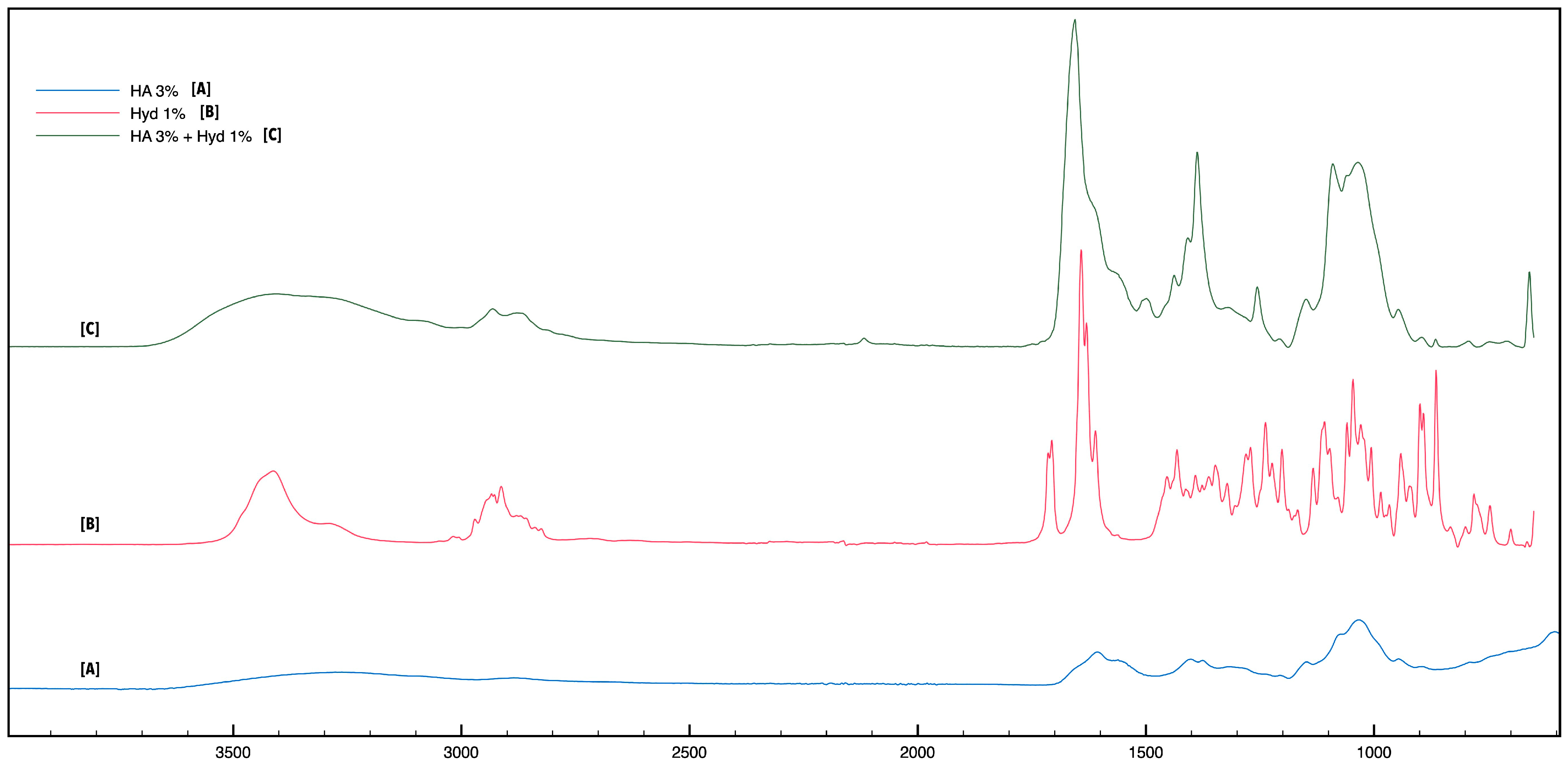
The FTIR spectrum of hyaluronic acid (Figure 1—blue line) displayed its characteristic functional groups. Key absorptions were identified as follows: a broad band at 3600–3000 cm−1 (O-H and N-H stretches); peaks at 2950–2850 cm−1 (aliphatic C-H stretches); a doublet at 1650–1600 cm−1, attributed to the amide I carbonyl stretch and asymmetric COO stretch; and a peak at 1560–1550 cm−1 for the amide II N-H deformation. The fingerprint region (1150–1000 cm−1) showed C-O and C-O-C stretches, confirming the polysaccharide structure of HA [15,16,17,18].
The FTIR spectrum of hydrocortisone (Figure 1, red line) showed the functional groups in their steroid-based structure. A sharp O-H stretching band was observed at 3500–3300 cm−1, characteristic of its hydroxyl groups and distinct from the broader equivalent in HA. Aliphatic C-H stretches from the steroid skeleton’s methyl and methylene groups appeared at 2950–2850 cm−1. The fingerprint region revealed a highly characteristic C=O stretch from ketone groups at 1750–1700 cm−1, while peaks in the 1650–1600 cm−1 range were attributed to C=C stretches of the unsaturated ring system and/or conjugated ketones. Additional confirmatory peaks included C-H bending vibrations (1470–1370 cm−1) and C-O stretches from alcohol and ether groups (1200–1000 cm−1) [19,20].
The green line shows the spectrum of the 3% HA gel associated with Hyd. The intensity of the hydrocortisone peaks is noticeably higher in the mixture compared to the pure HA spectrum, especially in the 1750–1600 cm−1 region (carbonyls and C=C) and in the 1200–1000 cm−1 region (C-O), where the Hyd peaks are strong. The broad O-H and N-H peaks in the 3600–3000 cm−1 region of HA are still prominent but may be slightly modulated by the presence of the O-H groups of hydrocortisone.
In the spectrum by % HA gel associated with Hyd, there is no drastic shift in peaks to indicate a strong covalent chemical interaction. However, small changes in the width or shoulders of the peaks in the O-H/N-H (3600–3000 cm−1) or C=O (1650–1600 cm−1 for HA and 1750–1700 cm−1 for Hyd) region may suggest hydrogen bond interactions between HA and hydrocortisone. For example, a slight broadening or shift to lower wavenumbers in the O-H/N-H peaks may indicate the strengthening of hydrogen bonds.

3.2. Thermogravimetric Analysis (TGA)

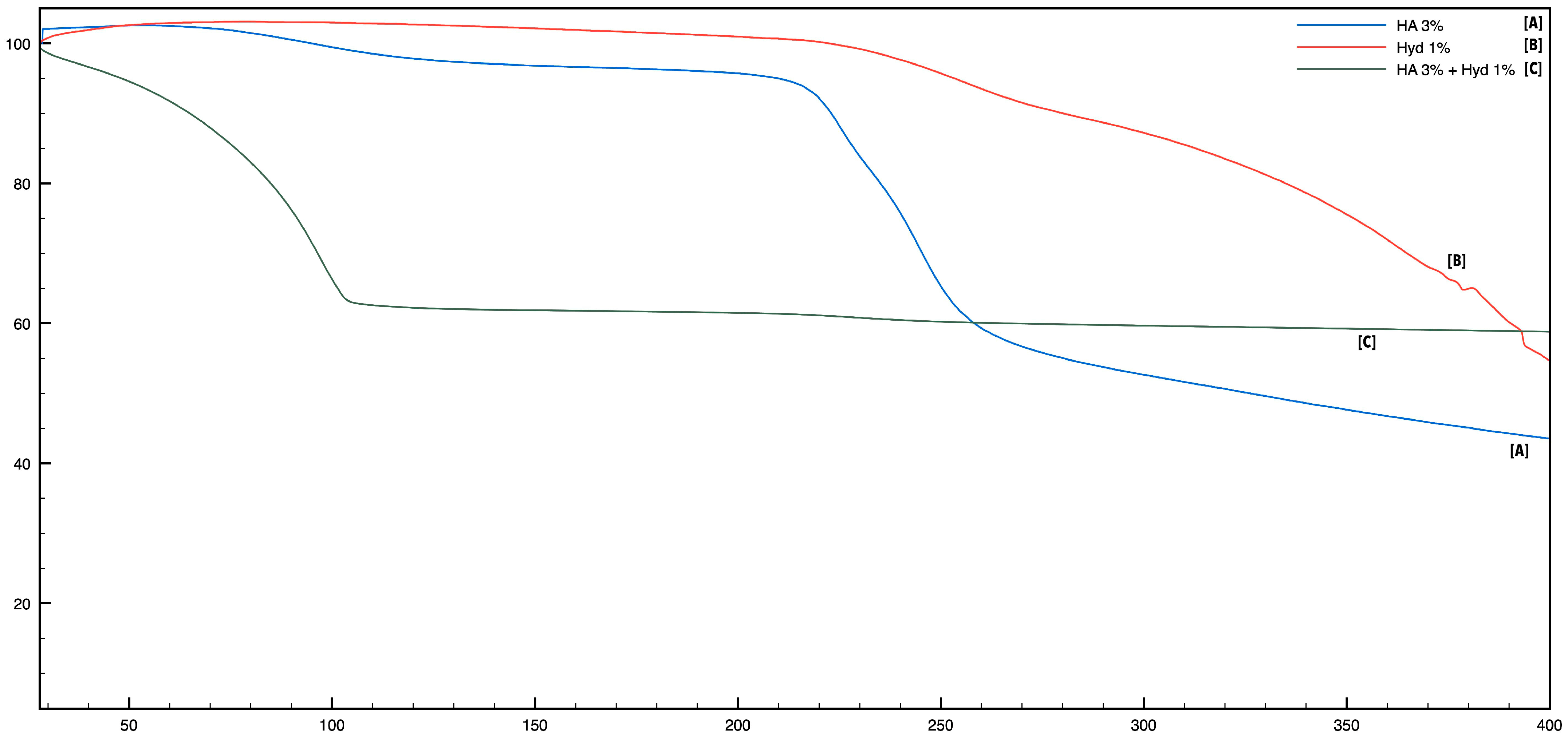
The thermal degradation of hyaluronic acid shows a noticeable initial loss (approx. 30–100 °C), which corresponds to the loss of adsorbed water (moisture) in the sample. Subsequently, a significant and marked loss of mass begins in the 200–300 °C range. This stage is attributed to the thermal degradation of the polysaccharide, involving depolymerization and/or decomposition of the saccharide units, with the release of volatiles. The maximum degradation peak appears to occur around 250–260 °C [21]. Degradation continues at higher temperatures (above 300 °C), but at a slower rate, corresponding to the decomposition of carbonaceous residues. The curve shows that, at 400 °C, approximately 40–45% of the original mass still remains [20].
Hydrocortisone shows excellent initial thermal stability, with minimal (practically zero) mass loss up to around 200 °C. This indicates that hydrocortisone is a relatively anhydrous and thermally stable compound at low and medium temperatures. The main degradation of hydrocortisone begins at around 200 °C and proceeds more gradually compared to HA. The degradation is continuous and the mass decreases steadily up to 400 °C. At 400 °C, approximately 60–65% of the original mass is still present. Hydrocortisone is more thermally stable than HA in the 200–300 °C range, as shown in Figure 2 [21].
The thermal behavior of the mixture of HA and hydrocortisone shows an initial loss of moisture (approx. 30–100 °C) which is more pronounced than that of pure HA. This may indicate a greater amount of water bound to the HA + Hyd gel structure. The mass loss is approximately 35–40% up to 100 °C. After the loss of moisture, the curve stabilizes for a short period (plateau) and then a more gradual degradation seems to occur before the main degradation of HA begins. The curve of the mixture follows a profile that is a combination of HA and hydrocortisone. Significant mass loss (similar to that of HA) begins at around 200–220 °C, indicating the degradation of the HA component in the mixture. However, the rate of degradation appears to be somewhat slower than that of pure HA in this range, and the residual mass at 400 °C (around 58–60%) is higher than that of pure HA (40–45%) but lower than that of pure hydrocortisone (60–65%).

3.3. Rheology Assay

3.3.1. Frequency Sweep

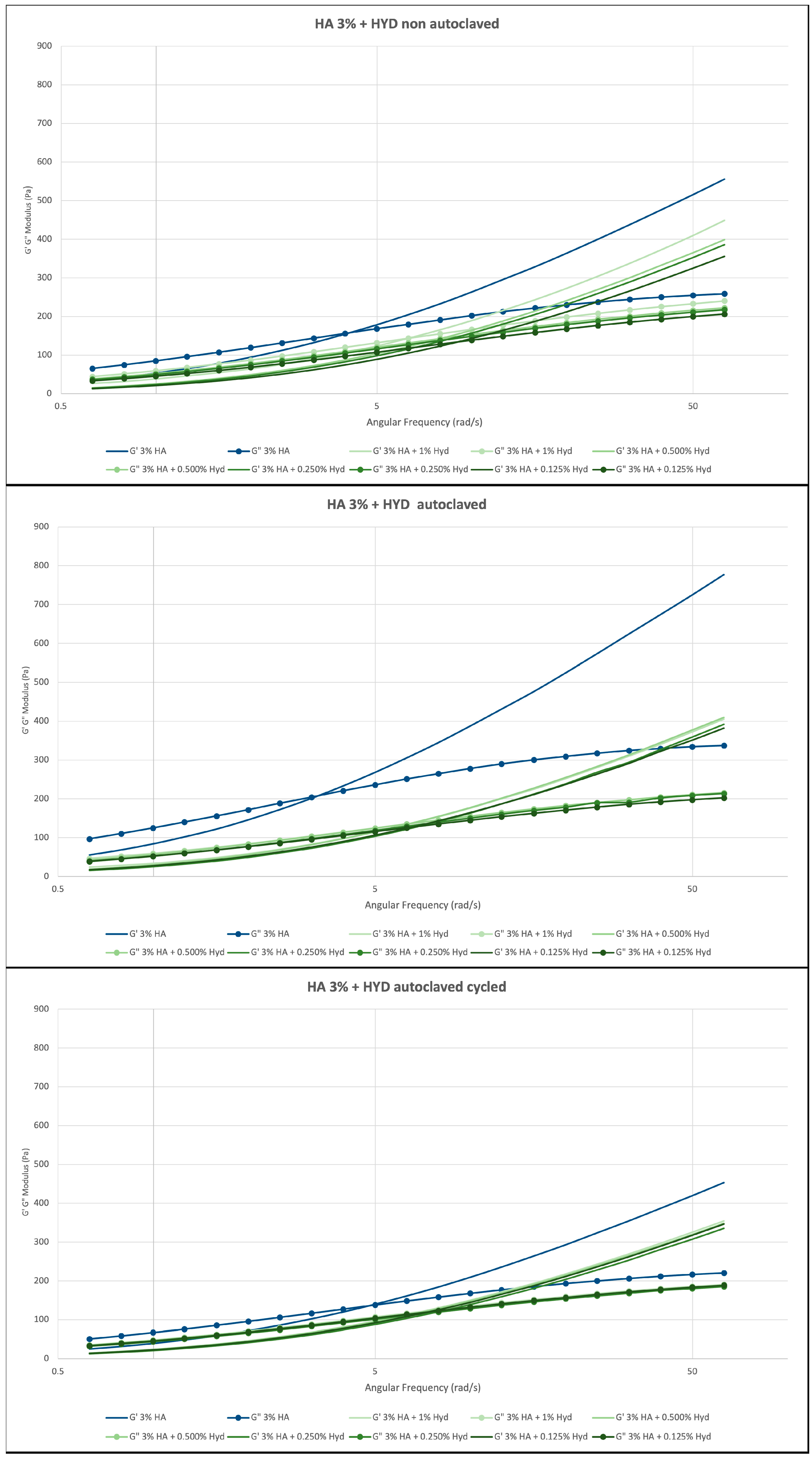
The angular frequency sweep graph shows that all hyaluronic acid gels (HA 3%), pure or with hydrocortisone (Hyd), exhibit predominantly solid viscoelastic behavior, with the storage modulus (G′) remaining significantly higher than the loss modulus (G″), indicating a stable gel structure (approximately 0.5 to 80 rad/s), as shown in Figure 3. It should be noted that G′ increases moderately with frequency, a behavior typical of polymer networks. The addition of hydrocortisone, at any concentration tested (0.125%, 0.250%, 0.500%), did not drastically alter the dependence of G′ on frequency, but caused a dose-dependent reduction in the absolute values of G′ compared to pure HA, suggesting a slight plasticizing effect or interference in the HA network. The autoclave process promoted clear thermal degradation, resulting in a marked decrease in G′ for all formulations, although the trend in behavior as a function of frequency remained unchanged.

3.3.2. Amplitude Sweep

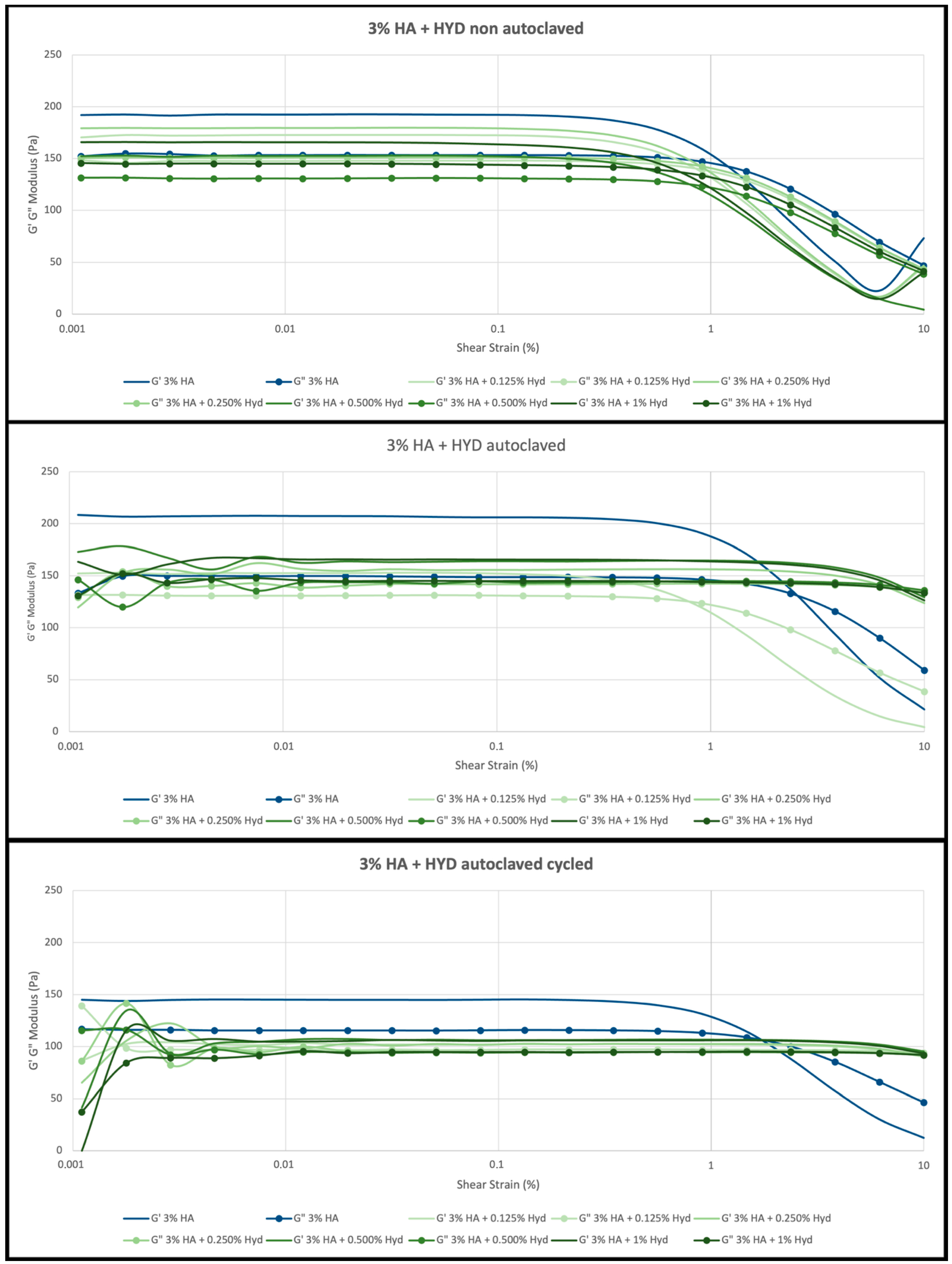
The results show that all gels exhibit predominantly solid viscoelastic behavior in the low deformation range (0.001% to 1%), with the storage modulus (G′) significantly higher than the loss modulus (G″) for all formulations, indicating a well-formed gel structure. It should be noted that the G′ values for pure hyaluronic acid (HA 3%) are consistently the highest across the entire range tested, while the addition of hydrocortisone (Hyd) promotes a dose-dependent reduction in the elastic stiffness of the gel, evidenced by the progressive decrease in G′ values as the drug concentration increases (from 0.125% to 1%). This effect, observed even at very low deformations, suggests that hydrocortisone acts as an interfering or plasticizing agent in the HA polymer network, reducing its initial elastic resistance without fundamentally altering the gel nature of the material within the linear viscoelastic region, as shown in Figure 4.

3.3.3. Temperature Ramp

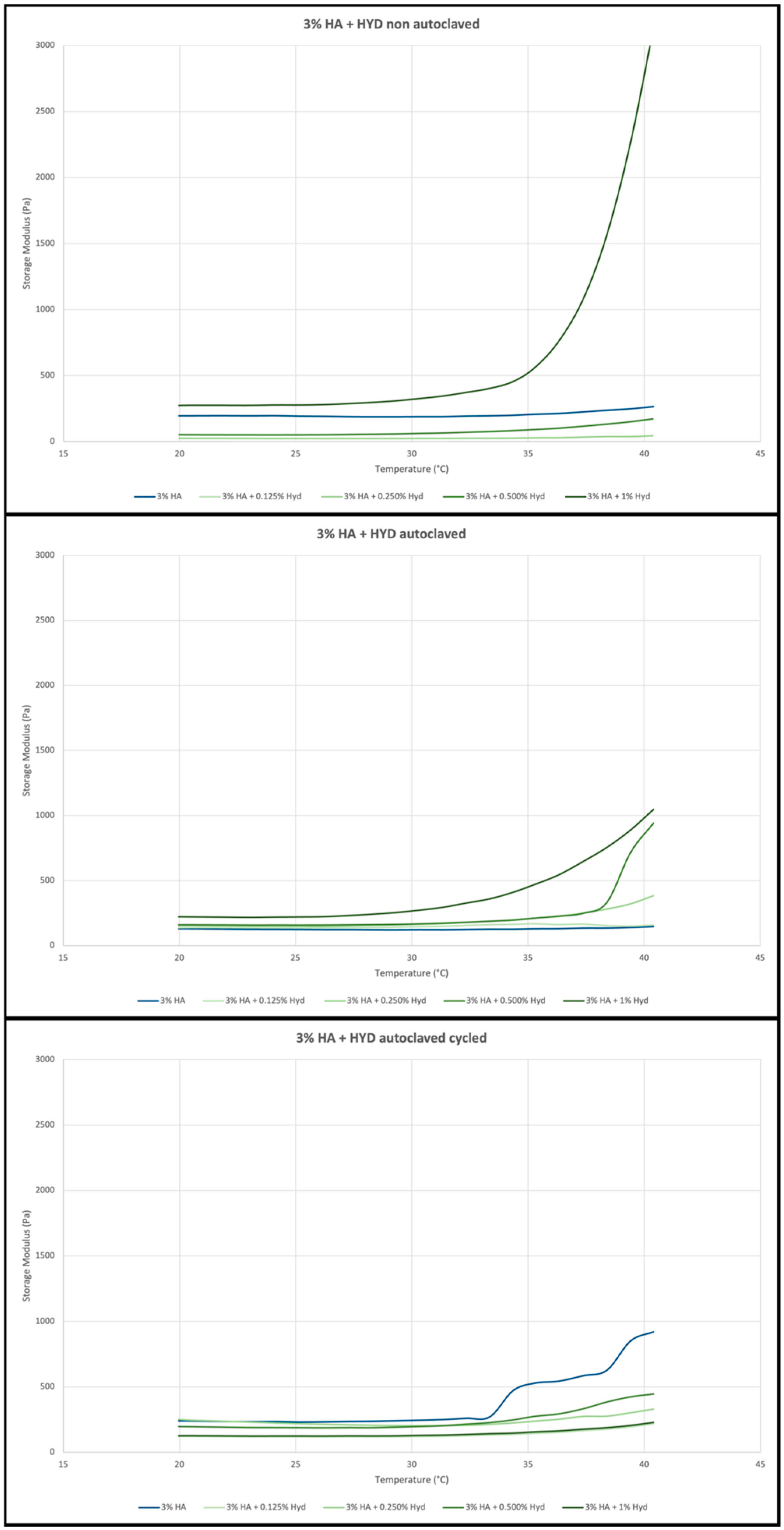
According to the temperature range (15 °C to 40 °C), as shown in Figure 5, all hyaluronic acid gels (HA 3%), pure or with hydrocortisone (0.125% to 1%), showed a linear and proportional increase in apparent density, both in non-autoclaved and autoclaved conditions. This behavior reflects the typical volumetric reduction in hydrophilic polymer networks under heating, resulting from thermal contraction or water expulsion. The pure HA formulation (non-autoclaved) served as a reference, with density ranging from 100 Pa to 500 Pa between 15 °C and 40 °C. The addition of hydrocortisone did not alter the overall thermodynamic trend but promoted a slight increase in absolute density values, especially at concentrations of 0.500% and 1%, suggesting greater compaction of the polymer network. The autoclaving process modified the thermal behavior of the gels: the autoclaved samples showed slightly higher density at low temperatures and a lower slope on the thermal ramp. This result indicates that prior thermal degradation altered the network structure, making it less susceptible to further contraction during heating.

3.4. Scanning Electron Microscopy with Field Emission Gun (SEM-FEG)

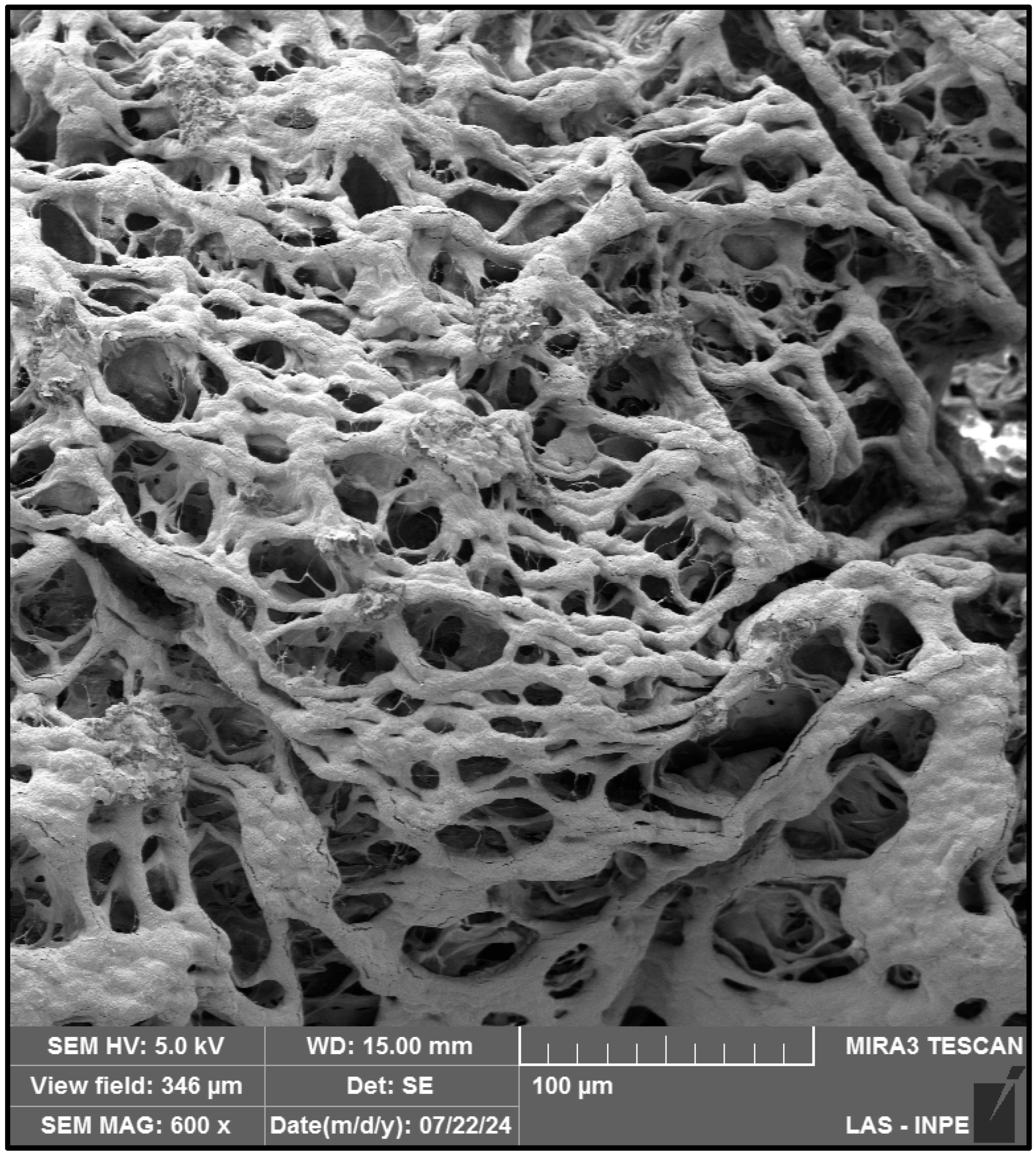
The photomicrograph reveals a spongy surface with interconnected pores, forming a dense fibrillar matrix due to the high molecular weight of hyaluronic acid, observed in Figure 6. The pore diameter was not assessed because the freeze-drying process used to prepare the sample directly influences the pore diameter.
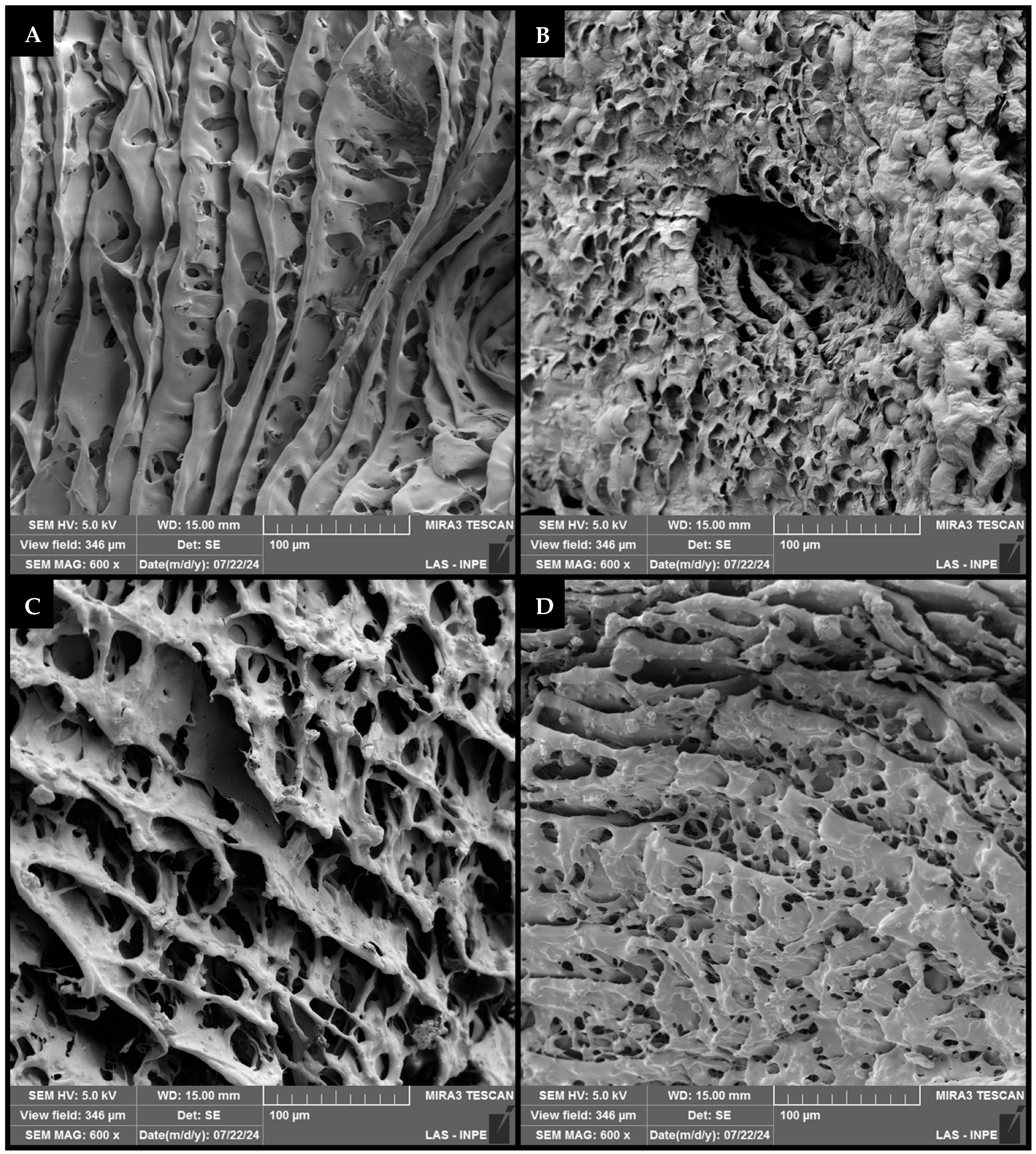
No structural difference was observed between the isolated hyaluronic acid hydrogels when compared to those associated with hydrocortisone (Figure 7). SEMs revealed a spongy structure with several sheets containing pores of various sizes and interconnected by a three-dimensional network, with spacing between the hydrogel layers, indicating the complete dispersion of hydrocortisone in the hydrogel.

3.5. Cell Viability by Resazurin Essay

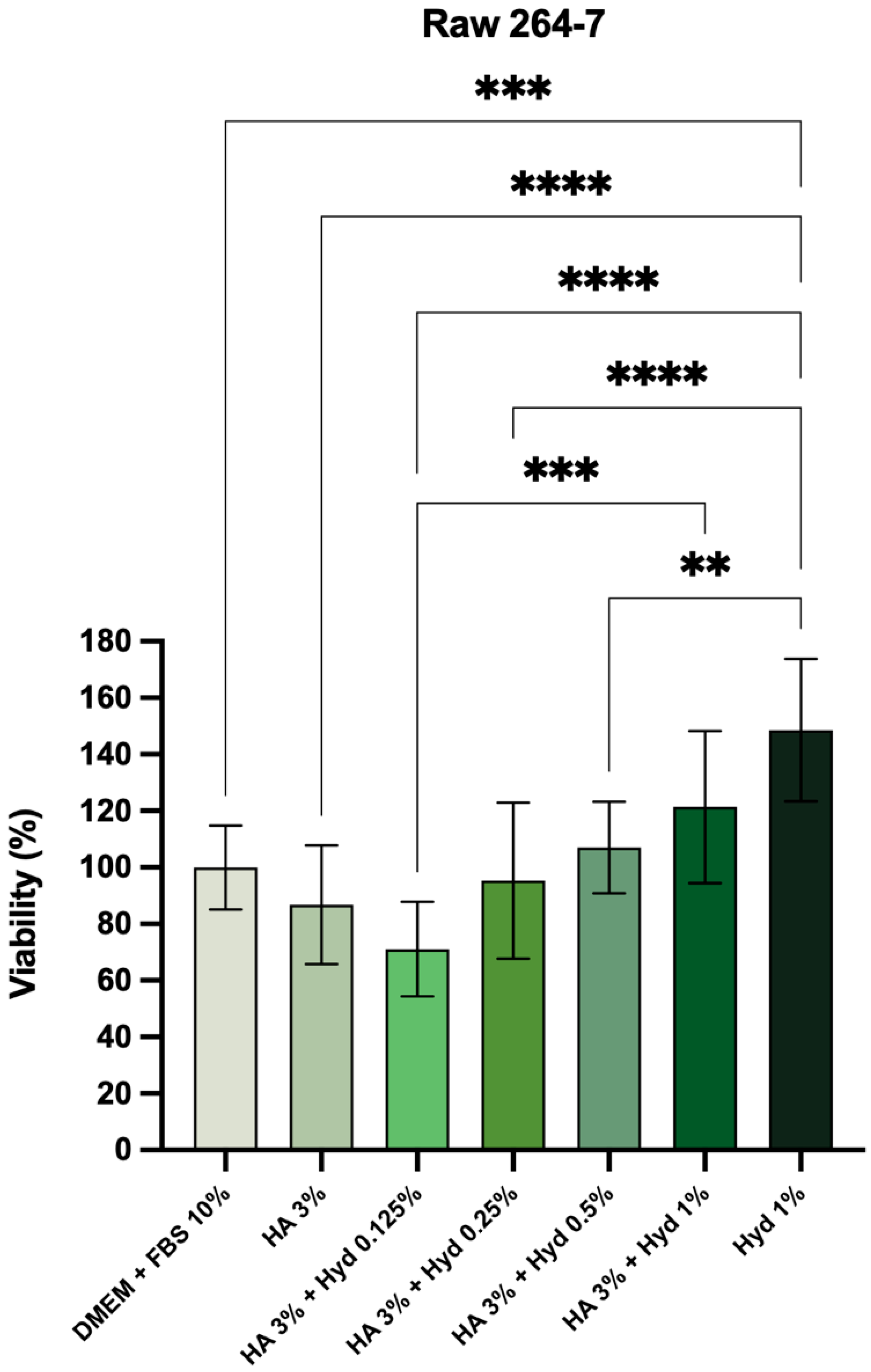
After contact for 24 h with the 3% hyaluronic acid hydrogel, mouse macrophages (RAW 264-7) obtained 86.7% cell viability. For the hydrogel groups associated with hydrocortisone, the viability percentages were 71.07%, 95.3%, 107.0% and 121.4% at concentrations of 0.125%, 0.250%, 0.500% and 1%. The group exposed only to 1% hydrocortisone had a viability percentage of 148.5%, as shown in Figure 8.

3.6. Genotoxicity Assay by Micronucleus

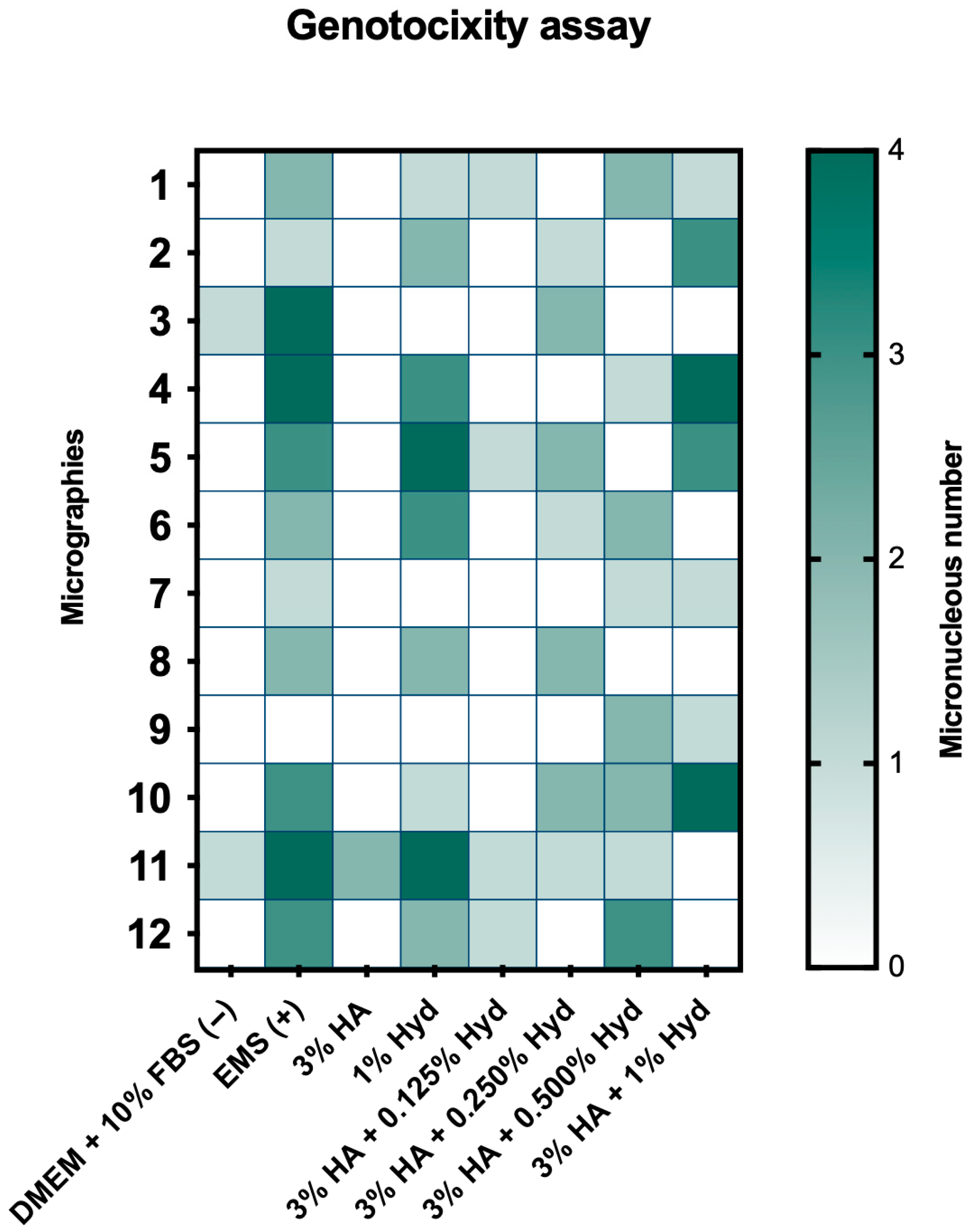
The evaluation of genotoxicity indicated that the negative control group (DMEM + 10% SFB) and the application of the pure hyaluronic acid hydrogel promoted the formation of 2 micronuclei in the global count of 2000 cells. The group of hyaluronic acid hydrogels associated with hydrocortisone promoted the formation of 4, 11, 14 and 17 micronuclei at concentrations of 0.125%, 0.250%, 0.500% and 1%. The application of hydrocortisone alone promoted the formation of 22 micronuclei, and the positive control (EMS) yielded a total of 29 micronuclei, as shown in Figure 9.

3.7. Confocal Analysis

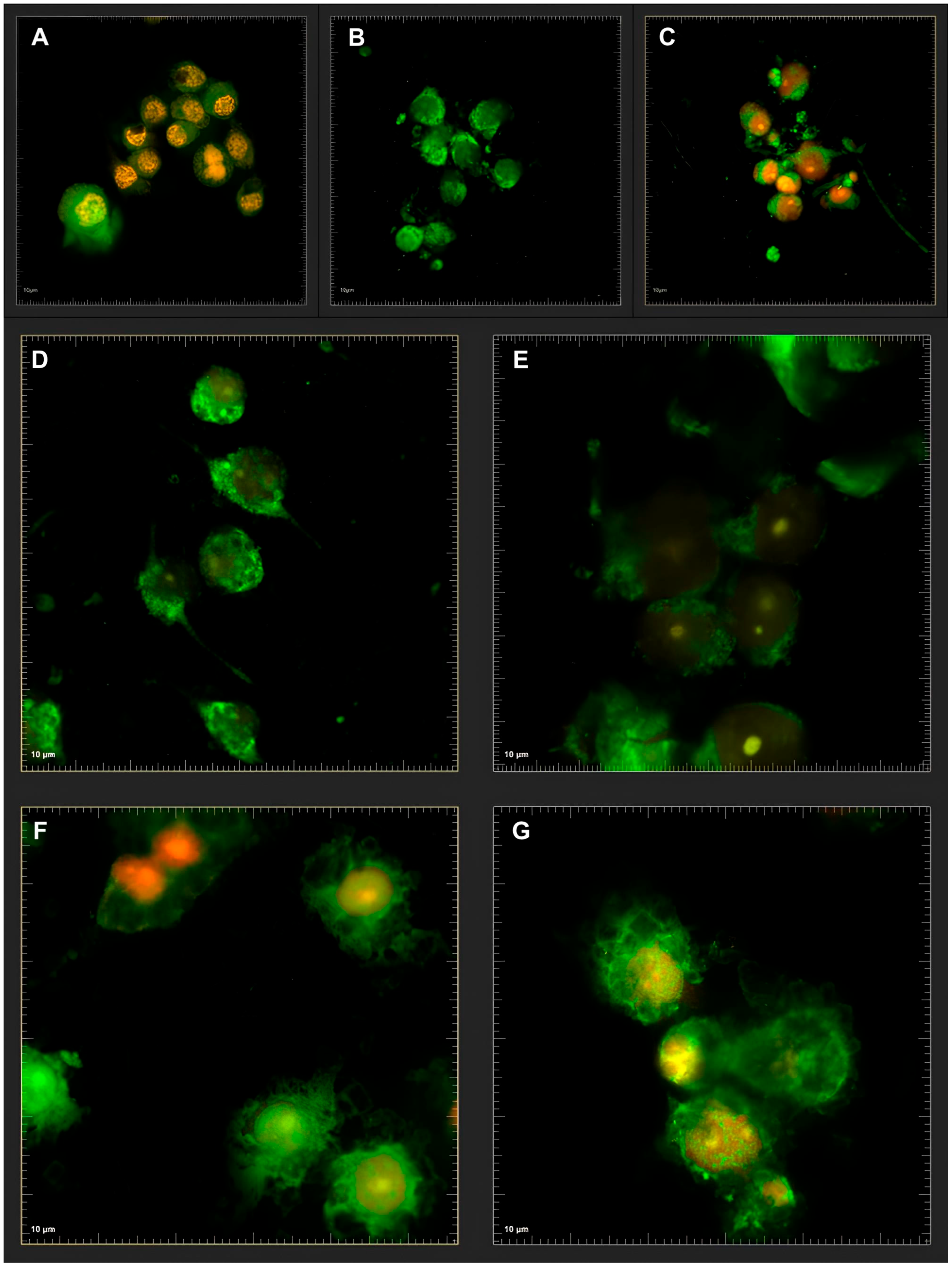
The control group (A) and 3% hyaluronic acid hydrogel (HA3%, B) demonstrated excellent biocompatibility, with most macrophages showing predominantly green staining, indicative of high viability. In contrast, 1% hydrocortisone (Hyd1%, C) induced notable cytotoxicity, evidenced by the significant presence of red/orange-stained cells. The evaluation of the combined HA and hydrocortisone formulations revealed that lower concentrations of hydrocortisone (0.125% in D and 0.250% in E) were well tolerated, maintaining cell viability. However, the progressive increase in hydrocortisone concentration in the hydrogels (0.500% in F, and 1% in G) correlated with a proportional increase in the proportion of cells with compromised membranes (red/orange staining), indicating a dose-dependent reduction in macrophage viability, as shown in Figure 10.

4. Discussion

FTIR analysis of the developed hydrogel confirmed the coexistence of hyaluronic acid [15] and hydrocortisone [16] without chemical degradation. The spectrum showed the characteristic peaks of both components, with no evidence of new covalent bond formation, as indicated by the absence of new absorption bands [15,16,17]. This molecular stability is critical, as it preserves the pharmacodynamic integrity of the drugs. Furthermore, these non-covalent interactions are anticipated to directly influence the release profile of hydrocortisone, potentially leading to a sustained release mechanism without compromising its therapeutic activity [15,16,17,18].
Thermogravimetric analysis showed different behaviors for hyaluronic acid (HA), hydrocortisone (Hyd) and their mixture. HA 3% showed an initial loss in 30–100 °C, attributed to desorption of water, followed by marked thermal degradation between 200 and 300 °C, corresponding to depolymerization and decomposition of the saccharide units, releasing volatiles. Above 300 °C, slower residual degradation was observed, with 40–45% mass remaining at 400 °C. In contrast, hydrocortisone showed high initial thermal stability, with minimal loss up to 200 °C, with gradual degradation, resulting in 60–65% residual mass at 400 °C. The hydrogel HA–hydrocortisone mixture exhibited more pronounced loss (35–40% up to 100 °C), suggesting greater water retention in the gel structure, followed by combined degradation of the components. Significant degradation began at 200–220 °C, with slower kinetics than pure HA, resulting in intermediate residual mass (58–60% at 400 °C), indicating an interaction between the components that moderates the decomposition of HA without affecting the stability of hydrocortisone alone [20,21,22].
Given the imperative for a sterile product, the rheological impact of autoclaving was a critical evaluation. The tests revealed that autoclaving degrades pure hyaluronic acid (HA) gels, significantly reducing their storage modulus (G′) and viscoelastic integrity. Notably, the incorporation of hydrocortisone (Hyd) counteracted this effect. Formulations with higher Hyd concentrations (0.5% and 1%) demonstrated a pronounced stabilizing effect, maintaining a higher G′, lower temperature sensitivity, and greater deformation resistance after thermal stress [13,14,23]. This protective action positions the HA gel with 1% Hyd as the ideal candidate from a rheological point of view, as it uniquely fulfills the dual requirements of sterility and preservation of mechanical performance essential for long-lasting function in the temporomandibular joint [24,25].
The biological compatibility assessment of the hydrogels, based on the OECD 129 guideline (Acute Cytotoxicity Test), indicates biocompatibility with 86.7% viability for the hyaluronic acid group, as expected for a natural polysaccharide. The hydrogels associated with hydrocortisone meet the OECD 129 [26] criteria for non-cytotoxicity (viability > 70%), exhibiting a concentration-dependent effect. At lower concentrations (0.125%), viability is slightly reduced but remains acceptable. At higher concentrations (0.250–1%), viability increases, potentially due to anti-inflammatory and pro-survival effects. The 1% hydrocortisone group (148.5% viability) suggests overstimulation of cellular metabolism, likely due to glucocorticoid receptor activation, which can suppress apoptosis and increase metabolic activity in macrophages.
The genotoxicity results (OECD 487) [27] demonstrated that pure hyaluronic acid (HA) did not induce significant micronucleus formation (2 MN/2000 cells), remaining equal to the negative control (2 MN), confirming its safety. However, the addition of hydrocortisone (Hyd) showed a dose-dependent effect. The formulations with 0.125%, 0.250%, 0.500% and 1% Hyd resulted in 4, 11, 14 and 17 micronuclei, respectively, while Hyd alone (1%) generated 22 micronuclei, surpassing the positive control (EMS: 29). Concentrations ≥ 0.250% Hyd indicated genotoxic potential (≥5.5× the control), being clinically unacceptable above 0.500%. It is recommended to limit the Hyd concentration to ≤0.125% to ensure safety, in association with new in vivo tests for validation.
The confocal analysis corroborated these results, showing that pure hyaluronic acid (HA) (3%) presented high cell viability (predominance of green cells in the Live/Dead® assay), confirming its biocompatibility. In contrast, hydrocortisone alone (1%) marked cytotoxicity (red/orange cells), indicating a reduction in viability. In the combined formulations (HA + hydrocortisone), a dose-dependent increase in cell death was observed, with concentrations ≤ 0.250% exhibiting a better safety profile. These data suggest that HA partially attenuates the toxicity of hydrocortisone, but high concentrations of the drug (>0.500%) compromise macrophage viability, reinforcing the need for dosage optimization for therapeutic applications.
Hyaluronic acid and hydrocortisone hydrogels with the concentrations evaluated in this study, applied to cartilage, are scarce in the literature. The study by Habib et al. [28] investigated the systemic effects of intra-articular betamethasone on the knee and assessed whether pre-injection of hyaluronic acid (HA) influenced these effects, concluding that HA did not alter the systemic response to corticosteroids. In contrast to the work of Castor and Prince [29] and Kongtawelert et al. [30], which demonstrated the negative effects of hydrocortisone on HA viscosity in vitro and cartilage degradation in vivo, respectively, the study by Habib et al. [28] did not explore the local impacts of betamethasone on HA homeostasis or the extracellular matrix. While previous studies highlight the deleterious action of corticosteroids on HA structure and dynamics, the article by Habib et al. [28] focused exclusively on systemic effects, without assessing possible degenerative changes or HA function in the joint. Thus, although all studies address the interaction between corticosteroids and HA, the approaches and outcomes evaluated differ significantly.
The study by Jahanbekam et al. [31] developed an ultrasound-responsive hyaluronic acid (HA) hydrogel for controlled release of hydrocortisone, aimed at treating osteoarthritis. The authors incorporated a second polymer (unspecified) to improve the mechanical properties and stability of the system but did not report the exact concentrations of hydrocortisone or HA used in the formulation. Despite this limitation, the hydrogel demonstrated biocompatibility, sustained drug release, and anti-inflammatory efficacy in vitro and in vivo, with ultrasound application optimizing tissue penetration. The results suggest that the strategy may reduce extracellular matrix degradation, although the lack of details on component concentrations hinders reproducibility and comparison with other formulations.
In the present paper, rheological tests have shown that hydrocortisone in concentrations ≥ 0.5% has a stabilizing effect on the HA polymer network, mitigating thermal degradation during autoclaving and cycling, with a storage modulus (G′) higher than pure HA after thermal stress. However, higher concentrations of hydrocortisone (0.5–1%) reduce the intrinsic elasticity of the non-autoclaved gel, making it less like the properties of native human cartilage (G′ ~0.1–2 MPa). Cell viability analysis revealed that hydrocortisone at 0.250% promoted 95.3% viability in macrophages, while concentrations ≥ 0.5% induced dose-dependent cellular stress with a high cell reproduction rate (107–121.4%) and a significant increase in micronuclei (11–17 vs. 2 in the control), indicating genotoxic risk. Thus, the formulation with AH 3% + hydrocortisone 0.250% combines rheological stability after autoclaving, biocompatibility, absence of relevant genotoxicity and adequate viscoelastic properties. Higher concentrations of hydrocortisone (≥0.5%), although improving thermal resistance, compromise cell safety and genomic integrity, making its clinical application unfeasible. Therefore, a dose of 0.250% hydrocortisone in 3% HA is most appropriate for therapeutic applications in temporomandibular joint disfunction, balancing anti-inflammatory efficacy and preservation of the extracellular matrix. Additional in vivo studies are needed to validate durability and long-term tissue response.
This pioneering study on the biophysical and chemical characterization of hyaluronic acid hydrogels associated with hydrocortisone provides valuable data on the thermal stability and preliminary biocompatibility of the potential drug. However, its main limitations include restricted cell models, an absence of anti-inflammatory evaluation, limitations in the evaluation of hydrogel degradation by physiological characteristics such as the action of hyaluronidase or cyclic mechanical stress, and the absence of tests in animal models or controlled release in vivo, which prevents the evaluation of anti-inflammatory efficacy or hydrogel persistence in the joint.

5. Conclusions

Based on rheological, cytocompatibility, and genotoxicity results, the optimized formulation of 3% hyaluronic acid (HA) and 0.250% hydrocortisone in hydrogel presents the best balance between mechanical properties, biocompatibility, and safety, offering a promising dual-action hydrogel for TMD, combining the mechanical benefits of hyaluronic acid in reducing friction and increasing lubrication with the sustained anti-inflammatory pharmacological activity of hydrocortisone. These in vitro findings encourage the continuation of in vivo and subsequent clinical studies for the development of a new therapy for temporomandibular dysfunction.

Author Contributions

Conceptualization, D.G.M., L.d.P.R. and B.G.; Data curation, D.G.M., L.d.P.R., P.C.d.C., N.F.d.S.L., M.R.B., C.P.-S., B.H.G., K.G., B.G. and A.L.S.B.; Formal analysis, D.G.M., L.d.P.R., T.S.-T., M.R.B., C.P.-S., B.H.G., K.G., B.G. and A.L.S.B.; Investigation, D.G.M., L.d.P.R., P.C.d.C., N.F.d.S.L., T.S.-T., M.R.B., C.P.-S., B.H.G., K.G., B.G. and A.L.S.B.; Methodology, D.G.M., L.d.P.R., K.G., B.G. and A.L.S.B.; Project administration, D.G.M., B.G. and A.L.S.B.; Resources, D.G.M.; Supervision, D.G.M., B.G. and A.L.S.B.; Validation, D.G.M., L.d.P.R., C.P.-S., K.G., B.G. and A.L.S.B.; Writing—original draft, D.G.M., L.d.P.R., P.C.d.C., N.F.d.S.L., T.S.-T., M.R.B., C.P.-S., B.H.G., K.G., B.G. and A.L.S.B.; Writing—review and editing, D.G.M., L.d.P.R., K.G., B.G. and A.L.S.B. All authors have read and agreed to the published version of the manuscript.

Funding

The authors would like to thank the São Paulo State Research Support Foundation (FAPESP) for its support of grant number 23/05849-6, awarded to Pyetra Claro de Camargo.

Institutional Review Board Statement

Not applicable.

Data Availability Statement

The original contributions presented in this study are included in the article. Further inquiries can be directed to the corresponding authors.

Conflicts of Interest

The authors declare no conflicts of interest.

References

  1. Schiffman, E.; Ohrbach, R.; Truelove, E.; Look, J.; Anderson, G.; Goulet, J.P.; List, T.; Svensson, P.; Gonzalez, Y.; Lobbezoo, F.; et al. Diagnostic Criteria for Temporomandibular Disorders (DC/TMD) for Clinical and Research Applications: Recommendations of the International RDC/TMD Consortium Network* and Orofacial Pain Special Interest Group†. J. Oral Facial Pain Headache 2014, 28, 6–27. [Google Scholar] [CrossRef] [PubMed] [PubMed Central]
  2. Wu, J.; Huang, Z.; Chen, Y.; Chen, Y.; Pan, Z.; Gu, Y. Temporomandibular Disorders among Medical Students in China: Prevalence, Biological and Psychological Risk Factors. BMC Oral Health 2021, 21, 549. [Google Scholar] [CrossRef]
  3. Valesan, L.F.; Da-Cas, C.D.; Réus, J.C.; Denardin, A.C.S.; Garanhani, R.R.; Bonotto, D.; Januzzi, E.; De Souza, B.D.M. Prevalence of Temporomandibular Joint Disorders: A Systematic Review and Meta-Analysis. Clin. Oral Investig. 2021, 25, 441–453. [Google Scholar] [CrossRef]
  4. Xu, X.; Sui, B.; Liu, X.; Sun, J. A Bioinspired and High-Strengthed Hydrogel for Regeneration of Perforated Temporomandibular Joint Disc: Construction and Pleiotropic Immunomodulatory Effects. Bioact. Mater. 2023, 25, 701–715. [Google Scholar] [CrossRef]
  5. Monasterio, G.; Castillo, F.; Rojas, L.; Cafferata, E.A.; Alvarez, C.; Carvajal, P.; Núñez, C.; Flores, G.; Díaz, W.; Vernal, R. Th1/Th17/Th22 immune response and their association with joint pain, imagenological bone loss, RANKL expression and osteoclast activity in temporomandibular joint osteoarthritis: A preliminary report. J. Oral Rehabil. 2018, 45, 589–597. [Google Scholar] [CrossRef] [PubMed]
  6. Bouloux, G.F. Temporomandibular joint pain and synovial fluid analysis: A review of the literature. J. Oral Maxillofac. Surg. 2009, 67, 2497–2504. [Google Scholar] [CrossRef] [PubMed]
  7. Hunter, D.J.; Bierma-Zeinstra, S. Osteoarthritis. Lancet 2019, 393, 1745–1759. [Google Scholar] [CrossRef] [PubMed]
  8. Yap, A.U.; Qiu, L.Y.; Natu, V.P.; Wong, M.C. Functional, physical and psychosocial impact of Temporomandibular Disorders in adolescents and young adults. Med. Oral Patol. Oral Cir. Bucal 2020, 25, e188–e194. [Google Scholar] [CrossRef] [PubMed] [PubMed Central]
  9. Nicholls, M.; Manjoo, A.; Shaw, P.; Niazi, F.; Rosen, J. A Comparison Between Rheological Properties of Intra-Articular Hyaluronic Acid Preparations and Reported Human Synovial Fluid. Adv. Ther. 2018, 35, 523–530. [Google Scholar] [CrossRef]
  10. Jantzen, C.; Ebskov, L.B.; Andersen, K.H.; Benyahia, M.; Rasmussen, P.B.; Johansen, J.K. The Effect of a Single Hyaluronic Acid Injection in Ankle Arthritis: A Prospective Cohort Study. J. Foot Ankle Surg. 2020, 59, 961–963. [Google Scholar] [CrossRef]
  11. Webner, D.; Huang, Y.; Hummer, C.D. Intraarticular Hyaluronic Acid Preparations for Knee Osteoarthritis: Are Some Better Than Others? Cartilage 2021, 13, 1619S–1636S. [Google Scholar] [CrossRef]
  12. Yoshioka, K.; Kisukeda, T.; Zuinen, R.; Yasuda, Y.; Miyamoto, K. Pharmacological Effects of N-[2-[[2-[2-[(2,6Dichlorophenyl)Amino]Phenyl]Acetyl]Oxy]Ethyl]Hyaluronamide (Diclofenac Etalhyaluronate, SI-613), a Novel Sodium Hyaluronate Derivative Chemically Linked with Diclofenac. BMC Musculoskelet. Disord. 2018, 19, 157. [Google Scholar] [CrossRef]
  13. Haridas, N.; Rosemary, M.J. Effect of Steam Sterilization and Biocompatibility Studies of Hyaluronic Acid Hydrogel for Viscosupplementation. Polym. Degrad. Stab. 2019, 163, 220–227. [Google Scholar] [CrossRef]
  14. Vildanova, R.; Lobov, A.; Spirikhin, L.; Kolesov, S. Hydrogels on the Base of Modified Chitosan and Hyaluronic Acid Mix as Polymer Matrices for Cytostatics Delivery. Gels 2022, 8, 104. [Google Scholar] [CrossRef] [PubMed] [PubMed Central]
  15. Alcântara, L.O.; De Sousa, J.R.; Andrade, F.K.; Teixeira, E.H.; Cerqueira, M.Â.; Da Silva, A.L.C.; Souza Filho, M.D.S.M.; De Souza, B.W.S. Extraction and Characterization of Hyaluronic Acid from the Eyeball of Nile Tilapia (Oreochromis Niloticus). Int. J. Biol. Macromol. 2023, 226, 172–183. [Google Scholar] [CrossRef] [PubMed]
  16. Elhiss, S.; Hamdi, A.; Chahed, L.; Boisson-Vidal, C.; Majdoub, H.; Bouchemal, N.; Laschet, J.; Kraiem, J.; Le Cerf, D.; Maaroufi, R.M.; et al. Hyaluronic Acid from Bluefin Tuna By-Product: Structural Analysis and Pharmacological Activities. Int. J. Biol. Macromol. 2024, 264, 130424. [Google Scholar] [CrossRef]
  17. Shao, W.; Yang, Y.; Shen, W.; Ren, L.; Wang, W.; Zhu, P. Hyaluronic Acid-Conjugated Methotrexate and 5-Fluorouracil for Targeted Drug Delivery. Int. J. Biol. Macromol. 2024, 273, 132671. [Google Scholar] [CrossRef] [PubMed]
  18. Kaya, M.G.A.; Simonca, A.G.; Rau, I.; Coman, A.E.; Marin, M.M.; Popa, L.; Trusca, R.; Dinu-Pirvu, C.-E.; Ghica, M.V. Topical Biocomposites Based on Collagen, Hyaluronic Acid and Metronidazole as Periodontitis Treatment. Pharmaceuticals 2024, 17, 1336. [Google Scholar] [CrossRef]
  19. Altamimi, M.A.; Elzayat, E.M.; Qamar, W.; Alshehri, S.M.; Sherif, A.Y.; Haq, N.; Shakeel, F. Evaluation of the bioavailability of hydrocortisone when prepared as solid dispersion. Saudi Pharm. J. 2019, 27, 629–636. [Google Scholar] [CrossRef] [PubMed] [PubMed Central]
  20. Caspersen, M.B.; Roubroeks, J.P.; Qun, L.; Shan, H.; Fogh, J.; Ruidong, Z.; Tømmeraas, K. Thermal degradation and stability of sodium hyaluronate in solid state. Carbohydr. Polym. 2014, 107, 25–30. [Google Scholar] [CrossRef] [PubMed]
  21. Zhou, S.X.; Lin, X.T.; Wang, J.; Wang, H.X.; Chen, G.T. Novel hydrocortisone magnetic molecularly imprinted polymers: Preparation, characterization, and application. Food Chem. 2023, 421, 136196. [Google Scholar] [CrossRef] [PubMed]
  22. Miranda, D.G.; Malmonge, S.M.; Campos, D.M.; Attik, N.G.; Grosgogeat, B.; Gritsch, K. A Chitosan-hyaluronic Acid Hydrogel Scaffold for Periodontal Tissue Engineering. J. Biomed. Mater. Res. 2016, 104, 1691–1702. [Google Scholar] [CrossRef]
  23. Guess, P.C.; Vagkopoulou, T.; Zhang, Y.; Wolkewitz, M.; Strub, J.R. Marginal and Internal Fit of Heat Pressed versus CAD/CAM Fabricated All-Ceramic Onlays after Exposure to Thermo-Mechanical Fatigue. J. Dent. 2014, 42, 199–209. [Google Scholar] [CrossRef]
  24. Fagien, S.; Bertucci, V.; von Grote, E.; Mashburn, J.H. Rheologic and Physicochemical Properties Used to Differentiate Injectable Hyaluronic Acid Filler Products. Plast. Reconstr. Surg. 2019, 143, 707e–720e. [Google Scholar] [CrossRef] [PubMed] [PubMed Central]
  25. de la Guardia, C.; Virno, A.; Musumeci, M.; Bernardin, A.; Silberberg, M.B. Rheologic and Physicochemical Characteristics of Hyaluronic Acid Fillers: Overview and Relationship to Product Performance. Facial Plast. Surg. 2022, 38, 116–123. [Google Scholar] [CrossRef] [PubMed] [PubMed Central]
  26. OECD Organisation for Economic Co-operation and Development. Guidance Document on Using Cytotoxicity Tests to Estimate Starting Doses for Acute Oral Systemic Toxicity Tests (No. 129). 2010. Available online: https://ntp.niehs.nih.gov/sites/default/files/iccvam/suppdocs/feddocs/oecd/oecd-gd129.pdf (accessed on 21 February 2026).
  27. OECD Organisation for Economic Co-operation and Development. Test No. 487: In Vitro Mammalian Cell Micronucleus Test (OECD Guidelines for the Testing of Chemicals). 2016. Available online: https://www.oecd.org/content/dam/oecd/en/publications/reports/2023/07/test-no-487-in-vitro-mammalian-cell-micronucleus-test_g1g6fb2a/9789264264861-en.pdf (accessed on 21 February 2026).
  28. Habib, G.; Khatib, M.; Sakas, F.; Artul, S.; Jabaly-Habib, H. Pre-injection of hyaluronic acid does not affect the systemic effects of intra-articular depot betamethasone injection at the knee joint. Clin. Rheumatol. 2017, 36, 217–221. [Google Scholar] [CrossRef] [PubMed]
  29. Castor, C.W.; Prince, R.K. Modulation of the Intrinsic Viscosity of Hyaluronic Acid Formed By Human “Fibroblasts” In Vitro: The Effects of Hydrocortisone and Colchicine. Biochim. Biophys. Acta 1964, 83, 165–177. [Google Scholar] [CrossRef] [PubMed]
  30. Kongtawelert, P.; Brooks, P.M.; Ghosh, P. Pentosan polysulfate (Cartrophen) prevents the hydrocortisone induced loss of hyaluronic acid and proteoglycans from cartilage of rabbit joints as well as normalizes the keratan sulfate levels in their serum. J. Rheumatol. 1989, 16, 1454–1459. [Google Scholar] [PubMed]
  31. Jahanbekam, S.; Mozafari, N.; Bagheri-Alamooti, A.; Mohammadi-Samani, S.; Daneshamouz, S.; Heidari, R.; Azarpira, N.; Ashrafi, H.; Azadi, A. Ultrasound-responsive hyaluronic acid hydrogel of hydrocortisone to treat osteoarthritis. Int. J. Biol. Macromol. 2023, 240, 124449. [Google Scholar] [CrossRef] [PubMed]
Figure 1. FTIR analysis by hyaluronic acid gels. Legend: FTIR spectra of HA [A] line, Hyd [B] line and hydrogel 3% HA associated with 1% Hyd [C] line.
Polysaccharides 07 00040 g001
Figure 2. TGA. Legend: TGA spectra of HA 3% [A] line, Hyd 1% [B] line and hydrogel HA 3% associated with Hyd 1% [C] line.
Polysaccharides 07 00040 g002
Figure 3. Angular frequency sweep. Legend: Graph of storage modulus (G′) as a function of angular frequency for HA 3% gels and their combinations with different hydrogel concentrations (Hyd).
Polysaccharides 07 00040 g003
Figure 4. Amplitude sweep. Legend: Oscillatory amplitude curve (amplitude sweep). Storage modulus (G′) and loss modulus (G″) as a function of applied deformation (%) for 3% HA gels and their formulations supplemented with different concentrations of hydrocortisone (Hyd: 0.125%, 0.250%, 0.500%, 1%).
Polysaccharides 07 00040 g004
Figure 5. Temperature sweep. Legend: Storage modulus values (G′, in Pa) measured for hyaluronic acid-based gels (HA3%) supplemented with different concentrations of hydrocortisone (Hyd: 0.125%, 0.250%, 0.500%, 1%), processed with and without autoclaving, in a temperature range of 15 to 40 °C.
Polysaccharides 07 00040 g005
Figure 6. Morphological analysis of the surface of hyaluronic acid. Legend: Scanning electron micrograph (SEM) of hyaluronic acid (HA) gel operating at an acceleration voltage of 5.0 kV and secondary electron detectors (SE). The sample was analyzed under vacuum, with a working distance (WD) of 15.00 mm and a magnification of 600×.
Polysaccharides 07 00040 g006
Figure 7. Morphological analysis of the surface of hyaluronic acid gels associated with hydrocortisone. Legend: Scanning electron micrograph (SEM) of hyaluronic acid (HA) gels operating at an acceleration voltage of 5.0 kV and secondary electron detectors (SE). The sample was analyzed under vacuum, with a working distance (WD) of 15.00 mm and a magnification of 600×; HA 3% + Hyd 0.125% hydrogel (A); HA 3% + Hyd 0.250% hydrogel (B); HA 3% + Hyd 0.500% hydrogel (C); HA 3% + Hyd 1% hydrogel (D).
Polysaccharides 07 00040 g007
Figure 8. Cytocompatibility by hydrogels on mouse macrophage lineage. Legend: p < 0.001 (**), p < 0.0002 (***), p < 0.0001 (****).
Polysaccharides 07 00040 g008
Figure 9. Micronucleus assay. Legend: Micrograph of cells stained with DAPI, showing the presence of micronuclei (indicated by color). The sidebar on the right quantifies the number of micronuclei per field of view (photomicrograph).
Polysaccharides 07 00040 g009
Figure 10. Confocal analysis by hydrogels on macrophage lineage (RAW 264.7). Legend: Control group—DMEM+SFB10% (A); HA3%—hyaluronic acid hydrogel (B); Hyd1%—hydrocortisone (C); HA3% + Hyd 0.125% hydrogel (D); HA3% + Hyd 0.250% hydrogel (E); HA3% + Hyd 0.500% hydrogel (F); HA3% + Hyd 1% hydrogel (G). Cells stained green (Calcein AM) are functionally viable; cells stained red (Propidium Iodide) have structural damage and are not viable.
Polysaccharides 07 00040 g010
Disclaimer/Publisher’s Note: The statements, opinions and data contained in all publications are solely those of the individual author(s) and contributor(s) and not of MDPI and/or the editor(s). MDPI and/or the editor(s) disclaim responsibility for any injury to people or property resulting from any ideas, methods, instructions or products referred to in the content.