1. Introduction
Thermoplastic polymers constitute the largest class of commercial plastics and are widely employed in packaging, construction, automotive parts and consumer goods due to their melt processability, relatively low cost and versatile property profiles [
1]. Among the major commodity thermoplastics, polyethylene (PE) [
2], polypropylene (PP) [
3], poly(vinyl chloride) (PVC) [
4], poly(ethylene terephthalate) (PET) [
5] and polystyrene (PS) [
6] dominate global production and waste streams [
7]. Polystyrene, in particular, is extensively used both in its solid form and as expanded polystyrene (EPS), a foamed material obtained by expanding PS beads with blowing agents. EPS combines low density, good thermal insulation, shock absorption and dimensional stability, which explains its widespread use in food packaging, protective transport foams and building insulation systems [
8,
9].
However, these same attributes that make EPS attractive in use create significant challenges at end-of-life. Its very low bulk density and high volume lead to inefficient transport and collection logistics, so EPS waste is often landfilled or incinerated rather than recycled [
10]. Weathering and mechanical abrasion can fragment EPS into persistent microplastics, contributing to marine and terrestrial pollution [
11,
12]. The inert, aromatic backbone of PS further limits biodegradation under environmental conditions. In this context, strategies that can both reduce the volume of EPS waste and generate higher-value-added products are of particular interest from a circular economy perspective.
Conventional mechanical recycling of EPS (regrinding and reprocessing) is technologically feasible but economically disfavoured, as the low density and contamination issues reduce the quality and market value of the recyclate [
13]. Chemical or “feedstock” recycling routes, including depolymerisation to styrene monomer and solvent-based dissolution–reprecipitation, have therefore attracted increasing attention [
14,
15,
16]. Solvent-based recycling, in particular, enables drastic volume reduction by dissolving EPS in organic solvents such as aromatic hydrocarbons, limonene or esters (e.g., ethyl acetate), followed by casting or reprocessing into dense films, foams or composites [
17,
18,
19]. This approach can preserve the high molecular weight of the polymer while providing a liquid processing route compatible with functional fillers and additives, opening opportunities to transform low-value EPS waste into engineered materials for coatings, membranes and packaging. In addition, solvent recovery and reuse can be a practical measure to improve the overall sustainability of solvent-based EPS recycling routes by reducing solvent consumption and associated waste.
Among the functional fillers that can be incorporated into such matrices, bio-based reinforcements derived from polysaccharides are particularly attractive, as they combine renewability with the ability to tailor stiffness, barrier properties and surface chemistry [
20,
21,
22]. Within this class, cellulose nanocrystals (CNCs) have emerged as a leading nanofiller: rod-like nanoparticles obtained from the crystalline domains of cellulose, with high axial modulus and a dense population of surface hydroxyl groups that enable versatile chemical modification [
23,
24,
25,
26,
27]. However, combining these hydrophilic nanocrystals with hydrophobic, aromatic matrices such as polystyrene or expanded polystyrene (EPS) remains challenging, especially when higher nanofiller loadings are targeted for functional performance [
23]. The strong tendency of CNCs to form hydrogen-bonded aggregates often leads to poor dispersion, increased light scattering and loss of transparency [
28]. To mitigate these effects, several compatibilisation strategies have been explored, including surface modification of CNCs, the use of coupling agents and the incorporation of plasticisers or secondary phases that mediate interactions between the polar nanofiller and the non-polar matrix [
29,
30,
31].
Within this context, renewable plasticisers and modifiers derived from vegetable oils have gained increasing attention as lower-toxicity, bio-based alternatives to conventional phthalates and petroleum-derived additives, while also enabling improved processability and tunable flexibility in polymer composites [
32,
33]. Sunflower oil and its derivatives, particularly epoxidised sunflower oil, have been reported as effective plasticisers and compatibilisers in several polymer systems, including PVC, starch-based blends and biodegradable polyesters [
34,
35,
36]. These oils, rich in triglycerides bearing ester and unsaturated groups, can promote better dispersion of hydrophilic fillers by modifying the local polarity and free volume of the polymer matrix [
32]. The use of edible or technical-grade sunflower oil as a processing aid for recycled polymers is especially appealing from a sustainability standpoint, as it can simultaneously valorise agroindustrial products and upgrade the performance of waste-derived materials [
37,
38]. In addition, pharmaceutical-grade sunflower oil-based AGE products intended for topical skin application are formulated with essential fatty acids and vitamin additives, including retinyl palmitate (a vitamin A derivative) and tocopheryl acetate (a vitamin E derivative), offering a dual benefit by combining low-toxicity bio-based modification with the presence of skin-relevant bioadditives in potential skin-contact uses.
Nevertheless, to the best of our knowledge, there are few reports that systematically evaluate ternary EPS/CNC/vegetable oil systems processed via solvent casting, particularly with respect to their optical, structural, thermal and surface properties relevant to coating and barrier applications [
32]. A deeper understanding of how CNC loading and sunflower oil addition jointly affect transparency, UV shielding, morphology, hydrophobicity and weathering resistance is needed to guide formulation design and to position these materials in potential application niches.
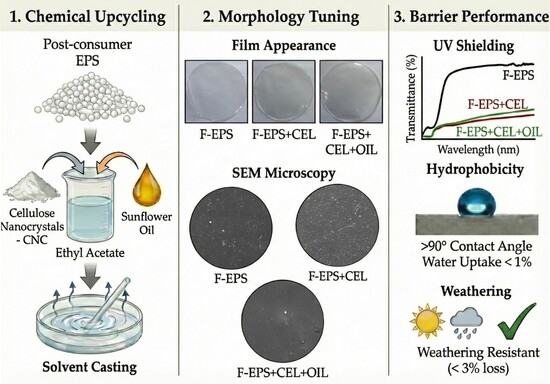
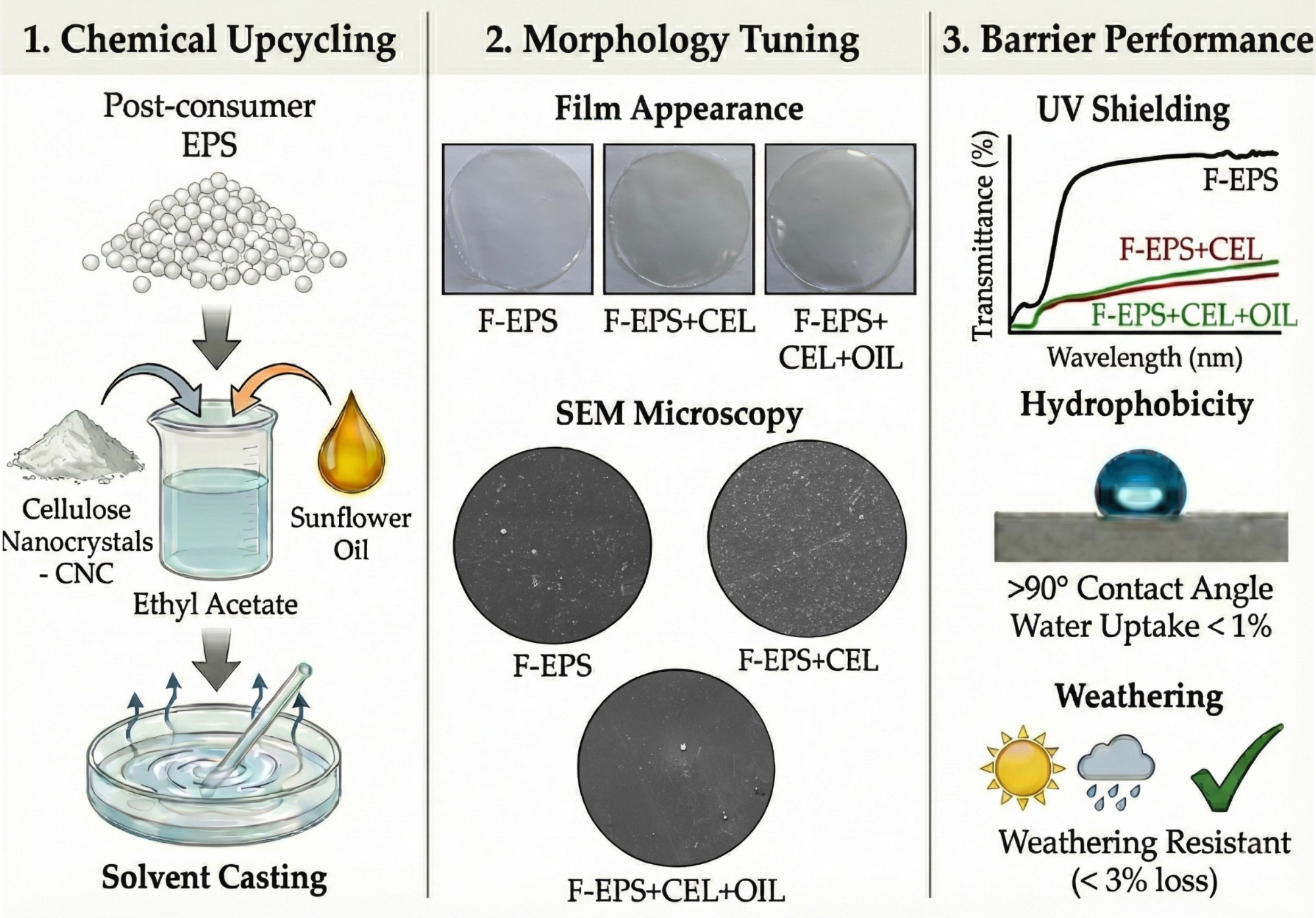
In this work, we upcycle post-consumer EPS by dissolution in ethyl acetate and solvent casting into composite films containing CNC and a commercial sunflower-oil-based additive. The approach is framed as functional upcycling into higher-value-added protective films, rather than improving end-of-life recyclability. Three formulations (F-EPS, F-EPS + CEL and F-EPS + CEL + OIL) were produced and evaluated in terms of optical screening, structure and chemistry, thermal behaviour, surface morphology, wettability and moisture response, accelerated ageing, and tensile performance, with a view to UV-screening, moisture-resistant barrier layers for non-food-contact paperboard packaging.
2. Materials and Methods
2.1. Materials
Post-consumer expanded polystyrene (EPS) packaging waste was manually cleaned, dried at room temperature and mechanically cut into small pieces before dissolution. Ethyl acetate (ACS grade, ≥99.5%, Synth, Diadema, Brazil) was used as the solvent for EPS and as the casting medium without further purification.
Cellulose nanocrystals (CNCs) were used as the bio-based reinforcing phase. The CNC powder was supplied by CelluForce Inc. (Montreal, QC, Canada) as a spray-dried product. According to the supplier, the material is a white to off-white powder with a bulk density of 0.4–0.6 g/cm3 and a moisture content of ≤6.0%. The powder particle size lies between 1 and 50 m, while dynamic light scattering (DLS) indicates an average particle size of approximately 150 nm. The CNC exhibits a pH in the range of 5.0–8.0 (1 wt% aqueous dispersion). Refined sunflower-oil-based cicatrizing oil was used as a non-reactive plasticising and dispersive processing additive (morphology modifier) and employed as received, without additional purification. This essential fatty acid (AGE) formulation contains a triglyceride-rich lipid blend (including caprylic/capric triglycerides), sunflower and soybean oils, lecithin, and antioxidant/vitamin additives, namely tocopherol acetate, retinyl palmitate, and BHT. The oil was selected as a low-toxicity, readily available bio-based additive intended to aid film formation, serve as a vitamin source in skin-contact use, and reduce defect density during solvent casting.
2.2. Film Preparation
Composite films were prepared by chemically recycling post-consumer EPS, collected in Pelotas, RS, Brazil, and then manually cleaned, rinsed, dried, and cut into small pieces prior to dissolution in ethyl acetate. The EPS waste was first cut into small pieces, washed, dried and then dissolved in ethyl acetate under magnetic stirring at room temperature until a clear, homogeneous resin was obtained, following the general procedure reported for EPS solvent recycling [
39]. The EPS resin concentration in ethyl acetate was
g mL
−1 (corresponding to ≈10 wt% in the casting solution). The solution was visually inspected to confirm the absence of undissolved particles before casting.
Film casting was carried out by solvent evaporation in glass Petri dishes (diameter = 100 mm) with loosely covered lids, in order to promote controlled solvent removal at ambient temperature, as commonly adopted for solution-cast polymer films [
40]. On the basis of this EPS resin, three formulations were prepared, as summarised in
Table 1.
For F-EPS + CEL, the required amount of spray-dried CNC powder was slowly added to the EPS resin and manually homogenised with a glass rod until a visually uniform dispersion was obtained, avoiding the formation of visible agglomerates. For F-EPS + CEL + OIL, sunflower oil was incorporated into the EPS/CNC mixture according to the composition in
Table 1, followed by manual mixing with a glass rod to promote contact between the CNC, oil and polymer matrix. In all cases, a fixed volume of each formulation was cast per dish to obtain comparable film thicknesses across samples.
After casting, the films were dried at room temperature under loosely covered Petri dishes to promote gradual solvent evaporation and then conditioned under laboratory conditions. Drying was continued until a constant mass was reached. After drying, the films had a typical thickness of ≈0.2 mm. Specimens were cut into
squares for most characterizations, except for tensile testing, for which the specimen dimensions are specified in
Section 2.3.9.
Residual solvent was quantified gravimetrically by monitoring mass loss until a constant mass was reached (typically within 24 h). FTIR was used as a qualitative screening tool to check for potential residual ethyl acetate signals, and no solvent-related bands were detected in the final films. The use of an oven during EPS film preparation was avoided because the high evaporation rate of ethyl acetate at elevated temperatures hindered the formation of films with adequate uniformity.
2.3. Sample Caracterization
2.3.1. Surface Morphology (SEM)
Surface morphology and the dispersion of CNC and sunflower oil were characterised by scanning electron microscopy (SEM). SEM observations were carried out on a VEGA3 microscope (TESCAN, Brno, Czech Republic) operating at an accelerating voltage of 10 kV and a nominal magnification of 500×.
2.3.2. Optical Characterization (UV-Vis Transmittance)
The optical behaviour of the films was evaluated by UV-Vis transmittance spectroscopy. Measurements were carried out on a UV-2600 spectrophotometer (Shimadzu, Kyoto, Japan) in the wavelength range of 200–800 nm, using air as a reference and a spectral step of 1 nm in double-beam mode. Circular specimens were fixed in the transmission holder so that the incident beam probed the central region of each film.
2.3.3. Fourier Transform Infrared Spectroscopy (FTIR)
Fourier transform infrared (FTIR) spectra were recorded to investigate molecular interactions and possible structural changes induced by CNC and sunflower oil. The analyses were performed on a Spectrum 400 spectrometer (PerkinElmer, Waltham, MA, USA) equipped with an attenuated total reflectance (ATR) accessory. For each sample, 30 scans were collected in the range 4000–900 cm−1 at a resolution of 4 cm−1. The film surface was placed in direct contact with the diamond ATR crystal, and spectra were corrected for baseline and normalised for comparison among formulations.
2.3.4. X-Ray Diffraction (XRD)
The crystalline/amorphous structure of the films was examined by X-ray diffraction (XRD). Patterns were recorded on an Ultima IV diffractometer (Rigaku Corporation, Tokyo, Japan) using Cu K radiation () operated at 30 kV and 30 mA. Data were collected in Bragg–Brentano geometry over the 2 range of 10–60° with a step size of 0.02° and a scan speed of 2°/min. Diffractograms were used to compare the amorphous halo of EPS and to detect any contribution from semicrystalline CNC domains.
2.3.5. Thermogravimetric Analysis (TGA/DTG)
Thermal stability and degradation behaviour were assessed by thermogravimetric analysis (TGA/DTG). Approximately 10 mg of each film was analysed on a DSC-60 thermal analyser (Shimadzu, Kyoto, Japan) operated in TGA/DTG mode. Samples were heated from 28 to 700 °C at a constant rate of 10 °C/min under a nitrogen atmosphere (50 mL/min).
2.3.6. Apparent Contact Angle
The apparent wettability of the films was investigated by static contact angle measurements using the sessile drop method. A Theta Lite TL100 optical tensiometer (Biolin Scientific, Gothenburg, Sweden) was employed, controlled by the OneAttension software (version 4.0). A 10 L droplet of distilled water was gently deposited at the centre of a film specimen using a motorised syringe. The time-resolved wetting behaviour was recorded for 60 s at 20 frames per second.
To assess the influence of surface topography, measurements were performed on both sides of each film: the smooth surface (S.S, Smooth Surface) and the rough surface (R.S, Rough Surface). The apparent contact angle was calculated by fitting the droplet profile to the Young-Laplace equation. For each formulation and surface side, measurements were repeated three times and the curves correspond to the mean values. For each side and formulation, at least five droplets were analysed and the average value at selected times was reported together with the standard deviation.
2.3.7. Water Absorption by Immersion
Water uptake was determined according to ASTM D570 [
41], with dimensional adaptations for thin films. Square specimens (1 cm × 1 cm) were cut from each film, dried in a ventilated oven at 40 °C for 24 h and then weighed on an analytical balance (precision 0.0001 g) to obtain the initial dry mass
. The samples were fully immersed in distilled water at room temperature and removed after 2 min, 2 h and 24 h. At each time, excess surface water was gently removed with absorbent paper and the wet mass
was measured. The percentage of water absorption (WA%) was calculated using the following:
For each formulation and immersion time, at least three specimens were tested and the average WA was reported.
2.3.8. Accelerated Weathering
Resistance to photo-oxidation and outdoor-like weathering was evaluated using an accelerated weathering chamber (model UUV, BASS Equipamentos, São Paulo, Brazil) following ASTM G154 [
42]. Film specimens were fixed on the sample rack and exposed to repeated UV/condensation cycles using fluorescent UVA lamps, chosen to reproduce the most photoactive portion of the solar spectrum responsible for polymer degradation. Each cycle consisted of 8 h of UV irradiation at 60 °C, followed by 1 h 40 min of dark condensation at 50 °C under saturated humidity, during which a water film condensed on the sample surface. This stage was complemented by an automatic spray of artificial rain, completing one full weathering cycle. Two complete cycles per day were applied for 30 consecutive days. Before and after weathering, samples were dried at room temperature and weighed to determine mass loss, calculated as
, and the relative mass loss,
, where
and
are the initial and final masses, respectively. Visual inspection was also carried out to identify possible macroscopic signs of degradation, such as cracks, surface erosion or discoloration.
2.3.9. Tensile Strength Test
Tensile strength tests were performed in accordance with ASTM D882 [
43] using a computer-controlled universal testing machine (model IP-90COM, IMPAC, São Paulo, Brazil). Rectangular strip specimens (width = 20 mm; thickness ≈ 0.2 mm; overall length ≥ 100 mm) were used. An initial grip separation of 50 mm and a crosshead speed of 2 mm/min were employed. The system provides a force resolution of 0.1 N and an accuracy of
. The width and thickness of the specimens were measured with a digital caliper (Mitutoyo, Kawasaki, Kanagawa, Japan) with a precision of
mm. Five specimens were tested for each composition. All specimens were tested only after reaching a constant mass under the adopted drying protocol, to minimize any influence of volatile residues on the mechanical response. All tests were carried out at
(
) and 60% (
) relative humidity.
2.4. Statistical Analysis
Tensile results are reported as mean ± standard deviation. For each response variable (elastic modulus, ultimate tensile strength, and elongation at break), statistical differences among formulations were assessed using two-sided Welch’s t-tests for pairwise comparisons, since unequal variances may occur between formulations. To control the family-wise error rate within each mechanical property (three pairwise comparisons), p-values were adjusted using the Holm method. Differences were considered statistically significant when the Holm-adjusted p-value was below 0.05.
3. Results and Discussion
3.1. Visual Appearance and Surface Morphology
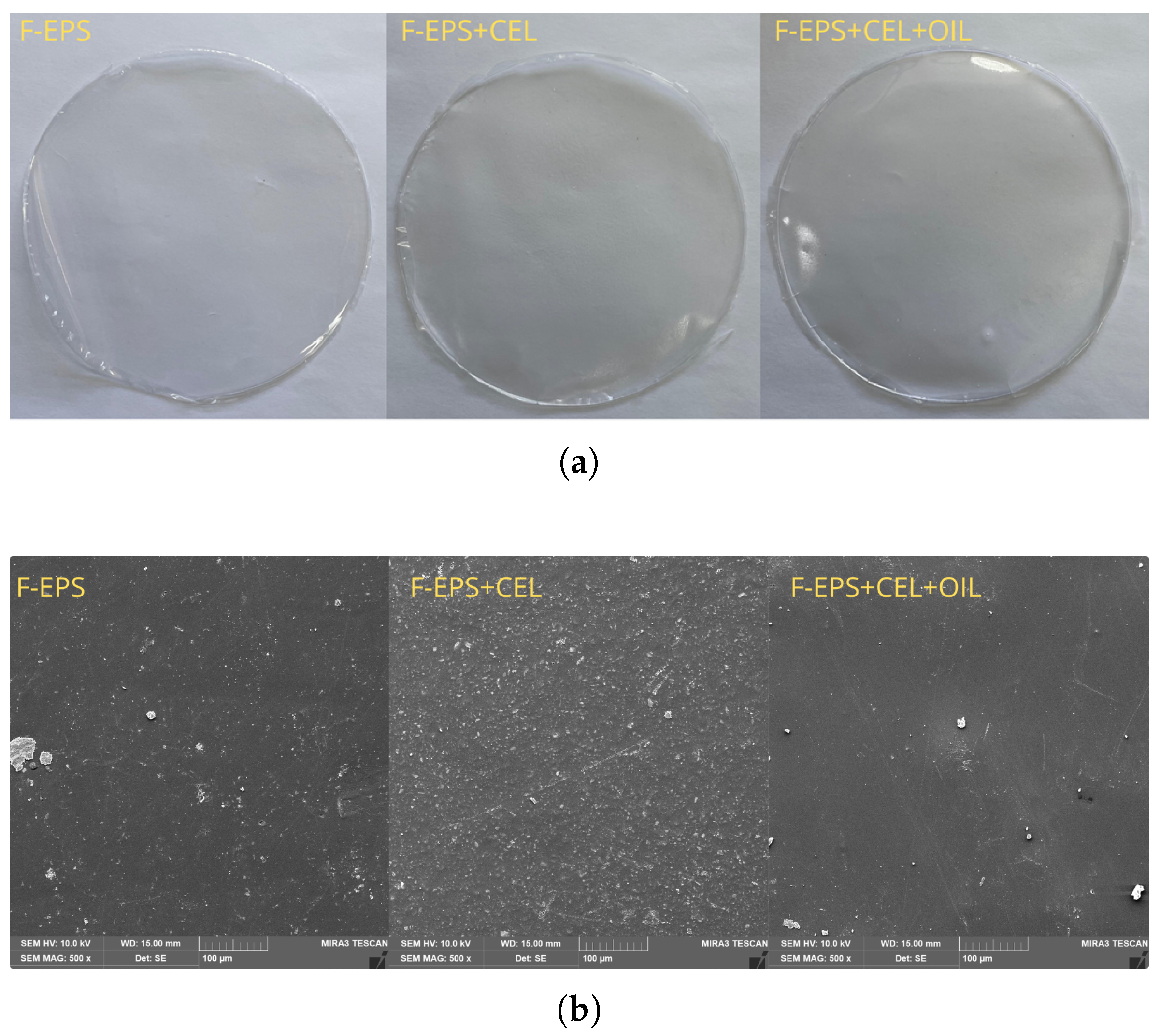
Figure 1a compares the macroscopic appearance of the solvent-cast films. Neat F-EPS is the most transparent and shows a smooth, homogeneous surface. Incorporating CNC (F-EPS + CEL) increases opacity and surface texture, consistent with light scattering from dispersed nanocrystals and micro-aggregates. The ternary film (F-EPS + CEL + OIL) shows intermediate transparency and a smoother surface than F-EPS + CEL, suggesting that the oil acts as a dispersive processing aid that improves spreading during drying and reduces visible heterogeneities.
SEM images at 500× (
Figure 1b) corroborate these trends. F-EPS is predominantly smooth with only isolated defects, as commonly reported for reprocessed post-consumer EPS [
44]. F-EPS + CEL exhibits a rougher surface with bright domains attributed to CNC agglomerates, expected at 20 wt% due to the polarity mismatch between CNC and EPS [
45]. In F-EPS + CEL + OIL, both the number and size of surface agglomerates decrease, indicating improved morphological uniformity.
Surface SEM, as reported in this study, is directly relevant to macroscopic appearance, optical screening, and wettability; however, cryogenically fractured cross-sectional SEM could provide a complementary route to better resolve CNC dispersion within the film bulk. The CNC-induced roughness and opacity, together with the partial restoration of surface continuity in the oil-containing formulation, motivate the property analyses presented in the following sections.
3.2. FTIR Spectral Analysis
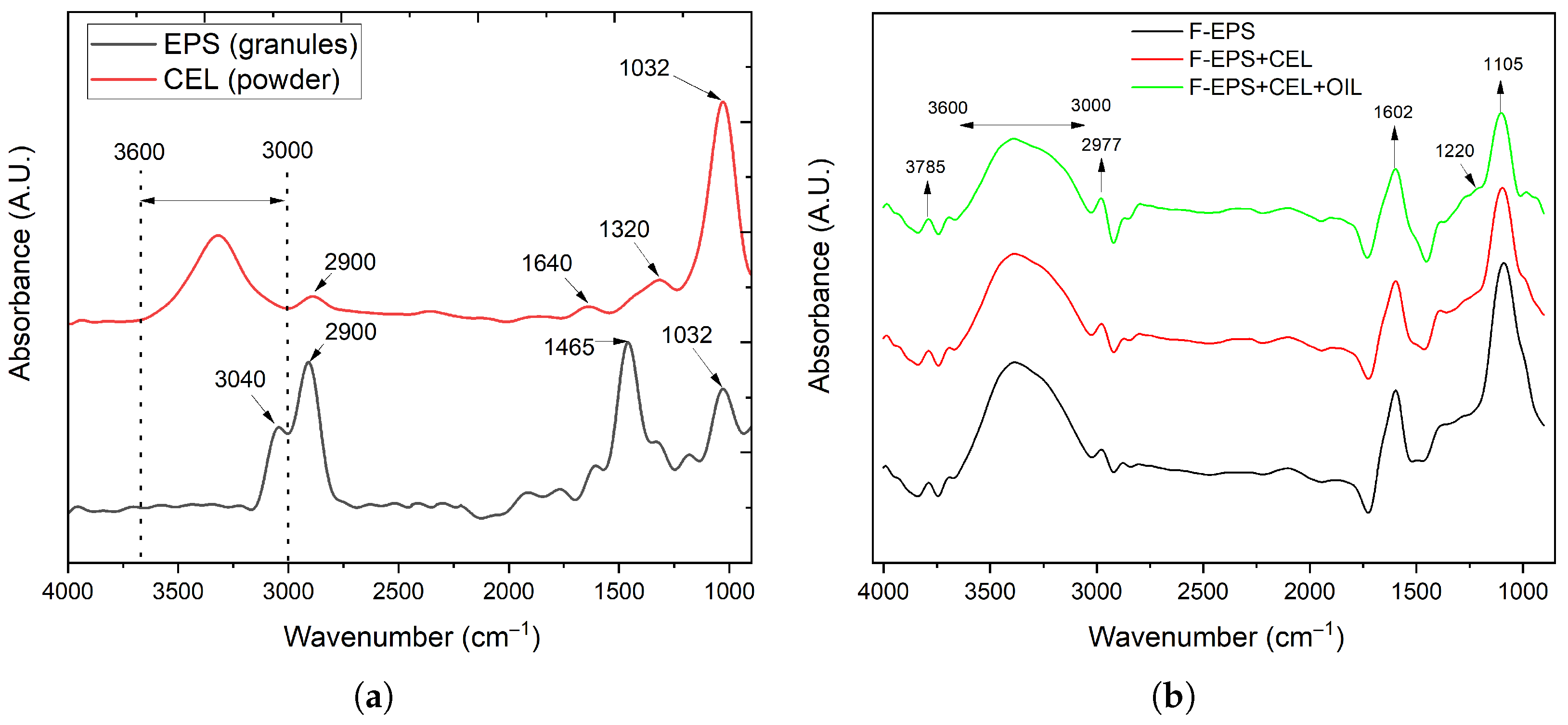
Figure 2 shows the FTIR spectra of all samples. The spectra are dominated by the characteristic bands of the EPS matrix, while the addition of cellulose and oil mainly affects band intensities and relative profiles rather than introducing distinct new absorptions [
46]. To support a clearer interpretation, the raw-material spectra in
Figure 2a are presented as a reference baseline for the film spectra in
Figure 2b, helping to distinguish bands intrinsic to the EPS granules from those associated with the CNC powder (CEL).
In the raw-material spectra (
Figure 2a), the CNC powder exhibits the expected broad O–H stretching envelope in the 3600–3000 cm
−1 region, together with a band near ∼1640 cm
−1, commonly associated with H–O–H bending of adsorbed water, confirming that hydroxyl groups and moisture-related contributions are intrinsic to the cellulose phase [
47].
Additional CNC features include a band around ∼1320 cm
−1 (cellulosic deformation modes) and a strong peak near ∼1032 cm
−1 assigned to C–O and C–O–C stretching vibrations of the polysaccharide backbone [
47].
In contrast, the EPS granules show the characteristic signatures of polystyrene, including aromatic and aliphatic C–H stretching contributions and a deformation band near ∼1465 cm
−1 associated with C–H bending in the polymer backbone [
46]. Importantly, the EPS granules do not display a pronounced broad O–H band in the 3600–3000 cm
−1 region. Therefore, any broad absorption in this range observed for the cast films is not an intrinsic feature of the EPS backbone and is more reasonably attributed to moisture-related contributions (surface-adsorbed water), with an additional contribution from CNC hydroxyl groups when cellulose is present.
In the film spectra (
Figure 2b), all formulations exhibit a broad envelope in the 3600–3000 cm
−1 region, assigned to the O–H stretching of residual moisture and hydroxyl groups [
47]. This band becomes more intense for F-EPS + CEL, and for F-EPS + CEL + OIL, it appears broader and slightly flatter, reflecting the higher content and more heterogeneous environments of hydroxyl groups introduced by cellulose and oil. Consistent with
Figure 2a, this intensity increase is mainly attributed to CNC-related hydroxyl groups and adsorbed moisture, since the EPS granules do not show a comparable broad O–H envelope. Narrow features at about 3785 cm
−1 are similar for all spectra and are therefore most likely attributed to residual water vapour in the optical path [
48,
49], rather than to specific functional groups of the films.
The band at 2977 cm
−1 is attributed to the C–H stretching of aliphatic CH
2/CH
3 groups from the EPS chains and sunflower oil (within the typical 3000–2800 cm
−1 C–H stretching region for polystyrene-based materials) [
46]. In line with the EPS granule spectrum (
Figure 2a), these C–H stretching features confirm retention of the polystyrene backbone after film formation. In the 1250–1150 cm
−1 region, a shoulder around 1220 cm
−1 becomes more evident for F-EPS + CEL + OIL, which can be ascribed to the C–O stretching of ester groups from triglycerides (sunflower oil) superimposed on the C–O/C–O–C vibrations of cellulose [
47,
50].
In the fingerprint region, the band at 1602 cm
−1 is associated with aromatic C=C stretching of the polystyrene backbone [
46]. The intense band at around 1105 cm
−1 becomes slightly weaker and noticeably broader in F-EPS + CEL and F-EPS + CEL + OIL. This redistribution of intensity is consistent with the superposition of C–O–C and C–O stretching vibrations from cellulose (and ester-related C–O contributions from oil) on the polystyrene-dominated fingerprint region [
47,
50]. This interpretation is supported by the strong CNC band near ∼1032 cm
−1 observed in
Figure 2a, which provides a direct baseline for the CNC-related contributions that overlap the EPS fingerprint region in the composite films.
3.3. XRD Analysis
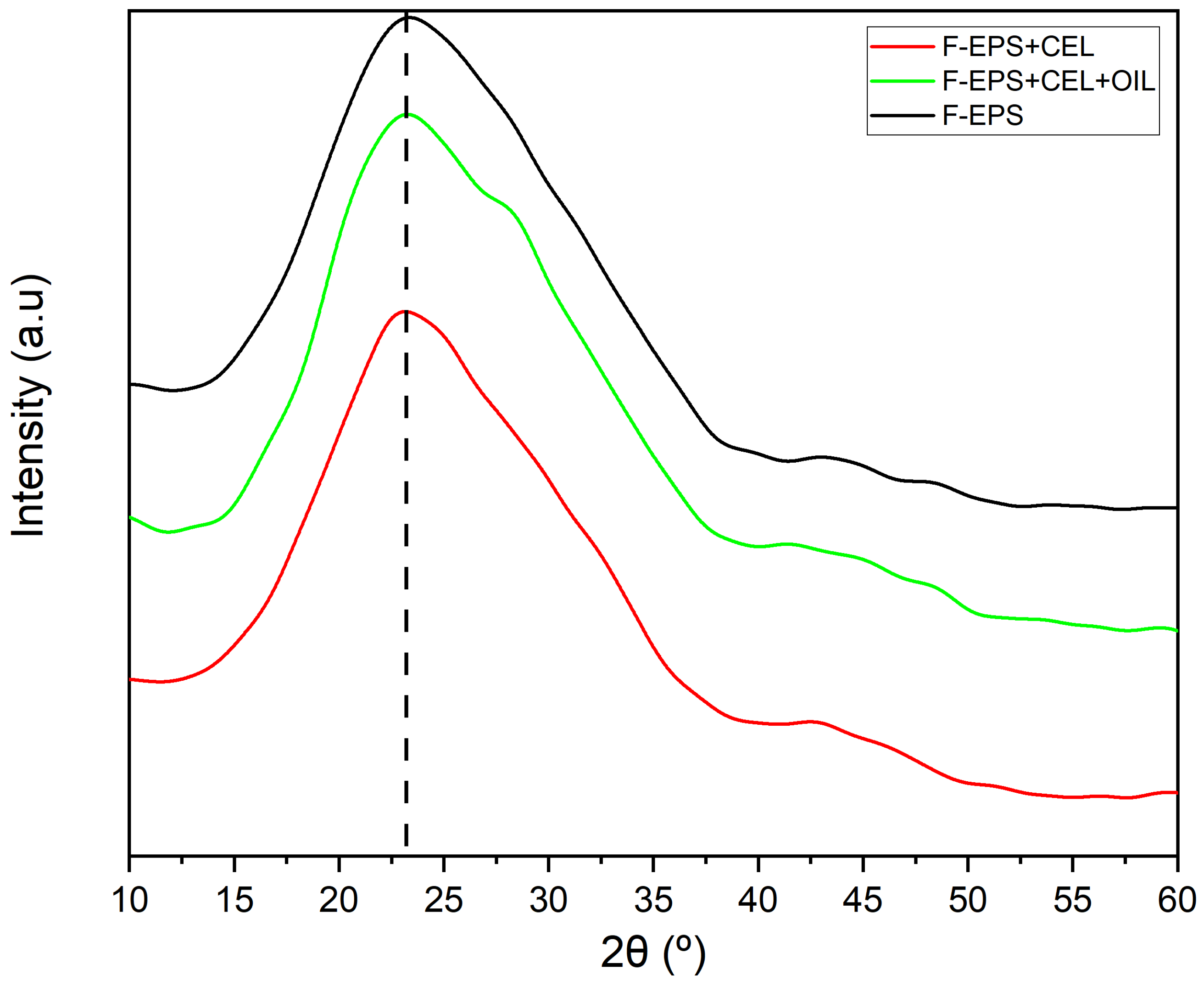
Figure 3 shows the XRD patterns of all films, which are dominated by a broad diffraction halo in the 2
range of approximately 20–30°, characteristic of the predominantly amorphous EPS matrix [
19]. Overall, the position and width of this amorphous halo remain largely similar among the formulations. However, a weak shoulder near
can be observed for F-EPS + CEL + OIL, indicating a subtle reshaping of the scattering profile. Given its low intensity and the absence of sharp new reflections, this feature is consistent with minor changes in short-range packing and phase heterogeneity associated with the presence of CNC and the oil-assisted film formation.
The most evident effect of adding cellulose (F-EPS + CEL) and cellulose + oil (F-EPS + CEL + OIL) is a moderate attenuation and slight reshaping of the amorphous halo, consistent with the lower EPS fraction and the different scattering power of the dispersed phases. The absence of well-resolved crystalline reflections in the 10–60° range, even for the formulation with 20 wt% CNC, indicates that the cellulose nanocrystals do not form large, segregated crystallites. In particular, the strongest cellulose-I reflection typically reported near
–23° can remain largely overlapped with the broad EPS halo [
51]. This behaviour is consistent with a nanostructured, predominantly amorphous coating, which is desirable for obtaining optically smooth films without strong crystalline scattering features.
3.4. Thermogravimetric Behavior (TGA/DTG)
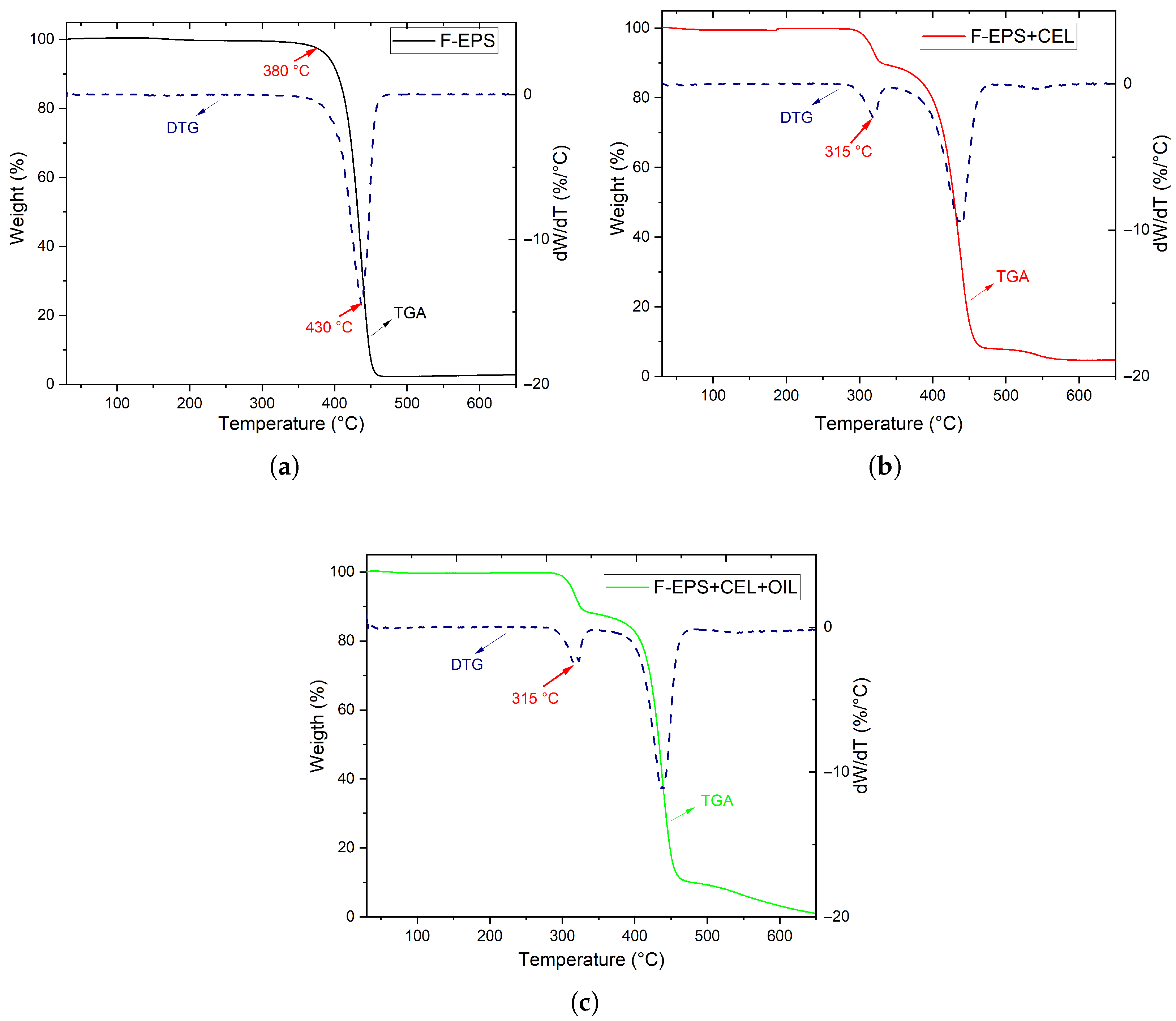
Figure 4 shows the TGA and DTG curves of the EPS-based films. Here, TGA is employed as a comparative screening tool to assess the relative thermal degradation profile among formulations. All samples display a single predominant mass-loss event at high temperature, typical of the thermal degradation of the EPS matrix, indicating that the incorporation of cellulose and sunflower oil does not drastically change the main degradation pathway.
For the neat F-EPS film (
Figure 4a), the onset temperature of the main mass-loss step is around
°C and the DTG curve exhibits a single sharp peak at
°C, with practically no residual mass at 500 °C (residue
wt%), as expected for EPS [
52].
In contrast, the F-EPS + CEL and F-EPS + CEL + OIL formulations (
Figure 4b,c) show an additional small shoulder at about 315 °C that is absent in the neat polymer. This contribution is associated with the onset of CNC degradation (dehydration and depolymerisation), which precedes and partially overlaps the EPS breakdown. After this first step, both composites still exhibit a main DTG maximum in the same range as F-EPS, with
and
of the EPS-related step remaining close to those of the neat matrix (within a few tens of degrees), confirming that the dominant degradation step is still governed by EPS.
The residual mass at high temperature also highlights the effect of CNC and sunflower oil. At 500 °C, neat F-EPS has already decomposed almost completely, leaving less than 2 wt% of residue, whereas both F-EPS + CEL and F-EPS + CEL + OIL still retain a clearly visible solid fraction, roughly an order of magnitude higher than that of neat EPS at the same temperature. In F-EPS + CEL (
Figure 4b), the TG curves show a second, slower mass-loss step between about 500 and 650 °C, accompanied by a broad DTG tail, which can be ascribed to the progressive oxidation/combustion of the cellulose-derived char and, in the case of F-EPS + CEL + OIL (
Figure 4c), of oil-derived carbonaceous residues.
After this high-temperature step, the final residue at 700 °C stabilises at only a few wt%, but still well above that of neat EPS, confirming that CNC promotes char formation and shifts part of the mass loss to higher temperatures. Thus, CNC and sunflower oil slightly modify the degradation profile by introducing a cellulose-related step and increasing the high-temperature char yield, while the main EPS degradation event remains at high temperature and continues to govern the overall thermal behaviour of the films.
These results show that the films retain thermal stability well above typical service temperatures for coating applications, while CNC and sunflower oil adjust the degradation profile mainly by adding a cellulose-related step around 315 °C and increasing the residual char, without compromising the high-temperature behaviour of the recycled EPS matrix.
3.5. Wettability and Water Uptake
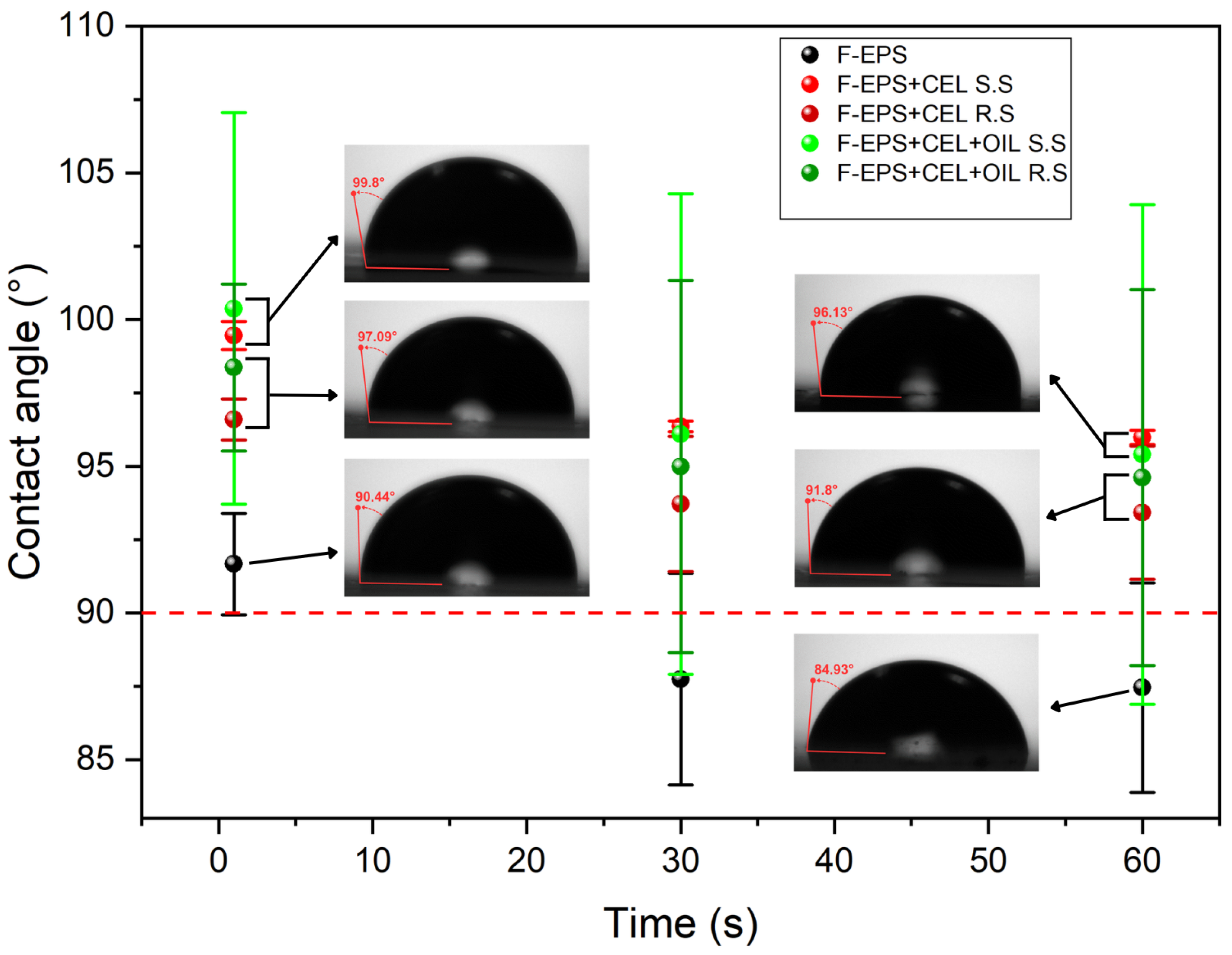
Figure 5 shows the time-resolved apparent contact angles for the composite films, measured over 60 s on both the smooth (S.S) and rough (R.S) sides.
At s, all formulations present contact angles above 95°, with the F-EPS + CEL + OIL smooth surface reaching values close to 100°, followed by F-EPS + CEL and F-EPS. Throughout the 60 s monitoring period, the contact angles decrease only slightly and stabilise in the 94–97° range, remaining well above the hydrophobic threshold of 90° (the dashed line). The rough surfaces (R.S) systematically show contact angles that are 1–2° lower than their smooth counterparts, indicating that surface texturing promotes a modest increase in spreading, but without driving the system into a hydrophilic regime.
Water uptake by immersion, evaluated according to ASTM D570, is summarised in
Table 2.
For all samples, the mass variation remained between 0 and 1% after 2 min, 2 h and 24 h of immersion, confirming the low water affinity of EPS-based films. This behaviour is consistent with literature reports for polystyrene and recycled PS, in which the apolar aromatic backbone leads to negligible water absorption even after prolonged immersion, with water retained mainly at the surface rather than diffusing into the bulk polymer [
23,
53].
The presence of CNC in F-EPS + CEL does not increase water uptake, suggesting that the nanocrystals remain largely encapsulated by the hydrophobic matrix and influence primarily the near-surface region. Thus, the small differences in contact angle induced by CNC are not translated into measurable mass gain in the gravimetric test.
The F-EPS + CEL + OIL sample also shows essentially zero water absorption, in line with the role of the oil phase as an additional hydrophobic modifier that further reduces surface energy and hinders the filling of surface cavities by water. Similar behaviour has been reported for PS-based films containing oily or low-polarity additives, in which the secondary organic phase acts as a barrier to capillary penetration and reinforces the moisture resistance of the coating [
54].
Finally, the fact that water uptake is negligible for all formulations, irrespective of surface roughness, indicates that roughness mainly affects the instantaneous wetting regime without promoting penetration into the film volume. Taken together, the contact angle and immersion results demonstrate that all EPS-based formulations maintain robust hydrophobic performance, supporting their use as moisture-resistant protective topcoats for non-food-contact paperboard packaging.
3.6. Optical Characterization (UV-Vis Transmittance)
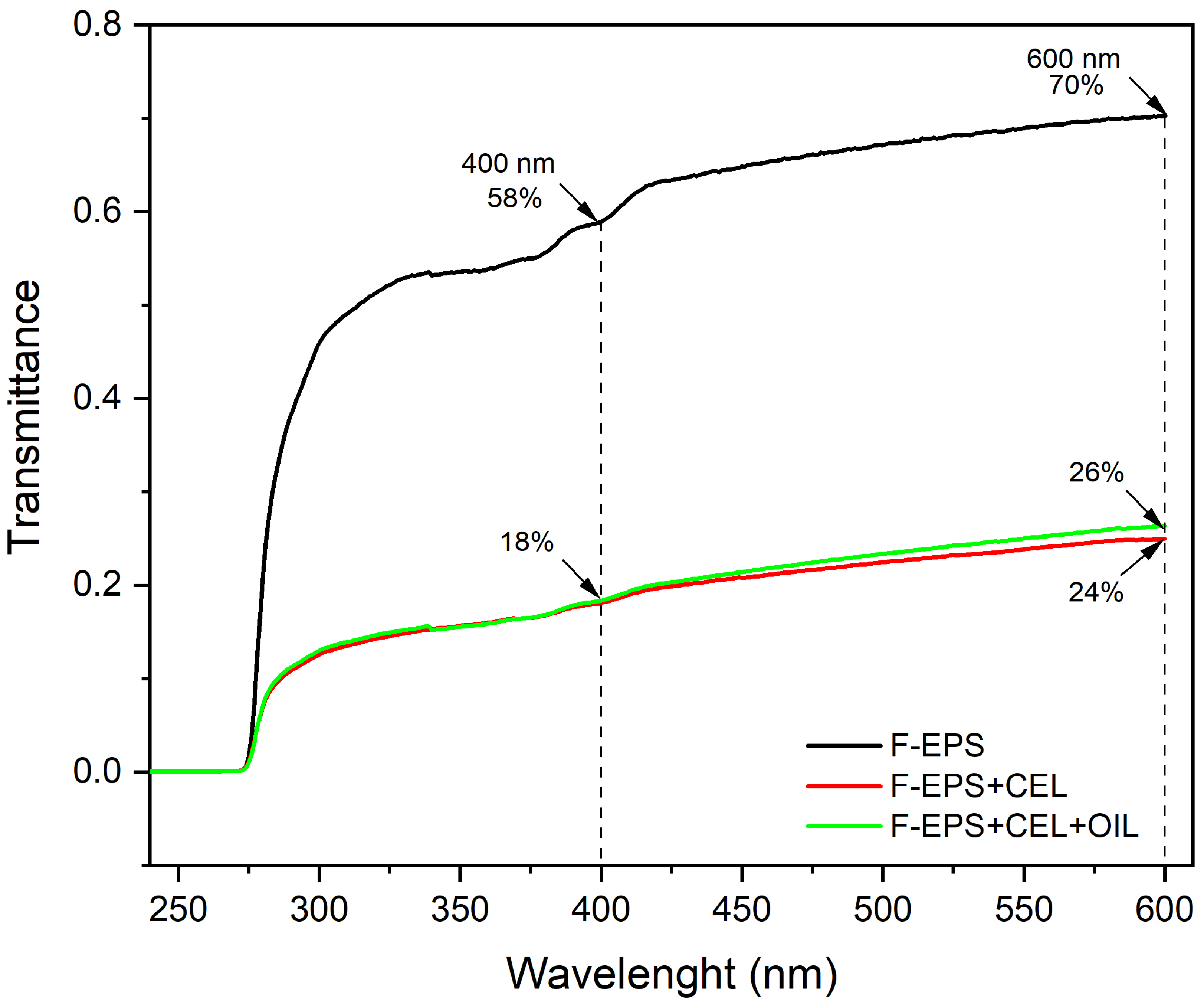
Figure 6 shows the normal-incidence UV-Vis transmittance spectra of the EPS-based films in the 250–600 nm range. All formulations are essentially opaque below 280 nm, with transmittance values close to zero, reflecting the strong absorption of the aromatic EPS backbone in the deep UV. Above this region, the curves separate markedly as a function of composition.
For the neat F-EPS film, the transmittance rises steeply between 280 and 350 nm and reaches about 58% at 400 nm, indicating that unmodified EPS allows a significant fraction of UVA/near-visible radiation to pass through. In the visible range, the transmittance continues to increase, attaining roughly 70% at 600 nm, which is consistent with the well-known transparency of polystyrene films.
Incorporating cellulose nanocrystals (F-EPS + CEL) drastically reduces transmittance across the whole spectrum. At 400 nm, the transmittance drops to ≈18%, corresponding to a reduction of about 70% relative to neat EPS, and remains below 25% at 600 nm. The F-EPS + CEL + OIL film exhibits a very similar behaviour, with ≈18% transmittance at 400 nm and about 26% at 600 nm. The small difference between the red and green curves suggests that sunflower oil slightly relaxes the optical barrier in the red/near-IR part of the spectrum, but both composites still transmit less than half the light that passes through the neat EPS film in the visible range.
These trends indicate that CNC addition is the primary factor responsible for the enhanced optical shielding, most likely by introducing refractive-index contrast and nanometric heterogeneities that increase light scattering and reduce direct transmission, while the oil phase mainly fine-tunes the spectral response without altering the overall barrier behaviour. Importantly, the strong attenuation in the UVA region (315–400 nm), combined with the moderated but non-zero visible transmittance (20–26% at 600 nm), yields films that act as efficient UV-screening layers while still allowing some ambient light to pass.
From an application standpoint, the strong UVA attenuation combined with non-wetting behaviour and negligible water uptake suggests that these upcycled films are suitable candidates for UV-screening, moisture-resistant barrier topcoats in non-food-contact paperboard packaging, where limiting atmospheric moisture exposure and light-driven ageing of printed or coated surfaces can be desirable.
3.7. Accelerated Weathering Analysis
The durability of the EPS-based films under outdoor-like conditions was assessed by accelerated weathering according to ASTM G154, employing cycles of UVA irradiation, condensation and artificial rain for 30 days. This protocol is used here to compare the relative response of the formulations under identical exposure conditions as mass loss, rather than to extrapolate long-term outdoor service lifetime or to claim that polystyrene becomes weathering-resistant in an absolute sense.
For each formulation (F-EPS, F-EPS + CEL and F-EPS + CEL + OIL), one specimen was kept as an unexposed control (sample 1), while the remaining specimens were subjected to the weathering cycles. The initial and final masses were recorded to quantify mass loss (
) and relative mass loss
, as defined in
Section 2.3.8.
Table 3 summarises the mass variation data.
For neat F-EPS, the mass loss after the test lies between 0.0007 and 0.0013 g, corresponding to –3%. The control specimen also shows a small apparent loss of about 2%, which can be attributed to handling and minor volatilisation in laboratory storage, and therefore provides a baseline for interpreting the aged samples. The composites F-EPS + CEL and F-EPS + CEL + OIL exhibit mass losses of the same order of magnitude, with ranging from 1 to 3%. The smallest variation is observed for the F-EPS + CEL control (about 1%), while the weathered specimens show changes comparable to those of neat EPS, indicating that the presence of cellulose nanocrystals and sunflower oil does not promote additional leaching or erosion under the applied weathering conditions.
The TGA curves (
Section 3.4) already indicated that all formulations undergo a main degradation stage only at high temperatures. Consistently, the accelerated weathering results show only modest mass losses, without evidence of catastrophic degradation or significant material removal from the films. The additional mass-loss contribution observed between 500 and 650 °C in the TGA of the composites, associated with cellulose-derived char, does not translate into measurable loss of solid material under accelerated weathering cycle.
Thus, the combination of small mass losses (within 1–3%) and the absence of systematic differences between F-EPS and the composites suggests that cellulose and sunflower oil are stably embedded in the EPS matrix and are not readily washed out or degraded under the accelerated weathering protocol.
Together with the hydrophobic behaviour evidenced by contact-angle measurements and the negligible water uptake, these results support the use of F-EPS + CEL and F-EPS + CEL + OIL as moisture-resistant barrier layers under UV and moisture-cycling exposure conditions, which is relevant for protective topcoats in non-food-contact paperboard packaging.
3.8. Uniaxial Tensile Strength Test
The results of uniaxial tensile tests, including elastic modulus (as a measure of stiffness), tensile strength (as an indicator of material strength), and elongation at break (as a parameter of ductility), are summarized in
Table 4.
Neat F-EPS exhibits the highest tensile strength and the highest elongation at break among the evaluated formulations, together with an elastic modulus of about 250 MPa. Considering that the EPS used in this work is post-consumer and was processed by dissolution and casting, a reduction in stiffness relative to virgin reference grades is expected and has been reported for recycled EPS systems, depending on contamination, degradation, and the presence of additives. This is consistent with reports on recycled EPS-based materials, where mechanical properties depend strongly on the recycling history and on the need for effective reinforcement strategies [
55].
Adding cellulose (F-EPS + CEL) increases the modulus but reduces tensile strength and elongation. This pattern suggests that the cellulose phase contributes to stiffness while the failure is governed by stress concentration effects associated with agglomerates and interfacial discontinuities, which can undermine load transfer when interfacial coupling is limited. This interpretation is consistent with common observations for PS and CNC systems in the absence of an effective coupling strategy [
56], and it agrees with the surface heterogeneity observed by SEM in
Section 3.1.
When oil is added (F-EPS + CEL + OIL), the ultimate tensile strength and elongation at break decrease further and remain statistically lower than both F-EPS and F-EPS + CEL, indicating that the oil does not mitigate the mechanisms controlling premature failure in this formulation. In contrast, the elastic modulus returns to a value statistically similar to that of neat F-EPS, which indicates that the oil addition offsets the stiffness increase induced by cellulose, without providing a statistically supported gain in ductility or strength.
Given the triglyceride-rich, non-functionalized character of sunflower oil, the additive is not expected to promote reactive compatibilization between EPS and CNC; rather, the observed improvements are more plausibly attributed to a physical modification mechanism, including defect filling and reduced interfacial voids, improved film continuity during drying, and increased chain mobility (plasticization). Overall, the oil-containing formulation provides a stiffness profile better aligned with protective coatings that require moderate flexibility, supporting its selection for this application.
4. Conclusions
This work demonstrates that post-consumer EPS can be upcycled into solvent-cast composite films with tunable optical, surface and mechanical properties through the incorporation of cellulose nanocrystals (CNCs) and sunflower oil. CNC was the main driver of optical shielding, reducing the transmittance at 400 nm from ≈58% for neat F-EPS to ≈18% for CNC-containing films, while visible transmittance at 600 nm decreased from ≈70% to ≈25–26%. All formulations remained hydrophobic, with initial contact angles above 95° and values stabilising at 94–97° over 60 s, and exhibited negligible water uptake (0–1% after 24 h, ASTM D570). After accelerated weathering for 30 days (ASTM G154), mass loss was limited to M = 1–3%.
Mechanical testing showed a statistically supported trade-off between stiffness and failure resistance. CNC increased the elastic modulus relative to neat F-EPS, while reducing tensile strength and elongation at break. When oil was added (F-EPS + CEL + OIL), the elastic modulus returned to a value statistically indistinguishable from that of neat F-EPS, indicating that the oil offsets the stiffness increase induced by CNC. This stiffness tuning effect can be advantageous for coating applications that require closer stiffness matching with the substrate, even though tensile strength and elongation at break remained statistically lower than those of the other formulations. FTIR and XRD confirmed preservation of the EPS chemical fingerprint and a predominantly amorphous structure, with the broad halo remaining centered in the 2≈ 20–30° range.
Finally, the reduced strength and larger scatter observed at high CNC loadings are consistent with dispersion constraints when using spray-dried CNC under minimal mixing. Alternative dispersion strategies, including high-shear mixing, ultrasonication of CNC in the casting solvent prior to incorporation, the use of dispersive surfactant agents, or CNC surface modification, were considered but intentionally not implemented here to keep the process minimal and to highlight the formulation constraints of high-loading CNC in recycled EPS under simple casting conditions. These routes are therefore clear directions for the future optimisation of bulk dispersion and mechanical reproducibility.





 ,
,