


Abstract
The rising demand for sustainable and functional ingredients necessitates the development of novel replacers for traditional food components, such as eggs, which are critical for structure and aeration in baked goods. This study investigated hydrocolloids derived from cassava (Manihot esculenta) as a partial egg substitute in sponge cakes, evaluating their effect on rheological, physicochemical, nutritional, and sensory properties. The resulting cake batter exhibited characteristic non-Newtonian, pseudoplastic, and viscoelastic fluid behavior. A microstructural analysis confirmed that the stabilized, higher-viscosity doughs successfully facilitated the formation of larger, more stable air bubbles, effectively mimicking the structural role of the egg. Physicochemical assessments demonstrated a high product equivalence; the fat content showed no significant difference (p < 0.05) compared to the control, while pH and carbohydrate levels decreased. Crucially, the optimized formula, CK-S50-H2.5 (50% egg and 2.5% hydrocolloids substitutions), exhibited a minimal color difference (ΔE) consistent with the control, preserving product appearance. Sensory evaluation confirmed that hydrocolloid substitution did not compromise consumer acceptance. Panelists preferred cakes utilizing lower egg substitution levels for their enhanced flavor and texture. These findings establish that cassava hydrocolloids serve as an effective and functional partial egg replacer, yielding a high-quality and well-accepted product and offering a valuable, sustainable solution for the food industry.
1. Introduction
Cakes are a traditional baked food widely consumed globally, typically produced using flour, eggs, solid fats, and sugar as primary ingredients. These products are extremely popular desserts due to their unique flavor and porous texture [1], attributed to a firm yet well-aerated porous structure achieved by generating and retaining enough air cells in the cake batter during baking [2]. Eggs are a critical component in this process, with egg white proteins used extensively to generate and stabilize foam, thereby creating a porous structure with finely distributed gas cells. This functionality is due to their foaming capacity, stability, emulsifying properties, and inherent elasticity [3]. Notably, eggs represent a significant portion of the production cost, accounting for about 50% of the ingredient cost in some cake formulation [4].
Despite their functional importance, the consumption of egg-rich sponge cakes is limited for individuals with special dietary restrictions. This limitation stems from several factors, including religious reasons, allergic reactions, health concerns, and personal lifestyle choices. For instance, due to the high levels of cholesterol in eggs, their excessive consumption has been linked to cardiovascular diseases [5]. Furthermore, a growing number of people are adopting vegan or vegetarian diets, while others must avoid eggs due to concerns about potential allergies to proteins such as ovalbumin and ovomucoid, which can cause reactions like hives and skin rashes [6]. Consequently, there is a market drive for developing higher quality, healthier, and more attractive foods [7].
Different authors have developed alternatives for egg replacement in food products: Yaver [8] obtained flaxseed mucilage, which has potential as a natural and sustainable hydrocolloid to replace eggs in the preparation of high-quality and healthy gluten-free noodles; Topaloglu-Gun and Yolci-Omeroglu [9] evaluated the functional, nutritional, and sensory effects of plant-based egg substitutes in vegan muffins, using chickpea aquafaba, chia gel, flaxseed gel, psyllium husk, ripe banana, and soapwort extract; and Sharma et al. [10] used arabinogalactan-rich nanomucilage derived from garden cress seeds as an egg replacement in cupcake production. Therefore, this necessity highlights the need to find and develop plant-based alternatives to egg protein for sponge cake production without compromising the essential structural properties.
Hydrocolloids, a diverse group of long-chain polymers, are mostly recognized as polysaccharides and, in some cases, proteins [11]. They are widely utilized in the food industry to produce thickening or viscosity-enhancing effects, which directly alter the rheology and textural properties of food products [12,13]. Numerous studies have been performed on the influence of hydrocolloids such as guar, arabic, carrageenan, Chubak, xanthan, carboxymethyl cellulose, hydroxypropylmethylcellulose, and native and modified starches on eggless cake [14].
Plant-based hydrocolloids and biopolymers can improve water retention, viscosity, and structure, but often do not functionally match egg white without additional additives. For instance, common alternatives like flaxseed mucilage often suffer from low extraction yields and can impart herbaceous off-flavors, while chickpea aquafaba frequently exhibits thermal instability during baking [14,15,16]. In contrast, cassava polysaccharides exhibit gelatinization, retrogradation, and water retention behaviors that can be modulated through treatments, suggesting a superior potential for the development of functional hydrocolloids. Recent studies demonstrate that combining treated (e.g., alkalized) cassava starch with other hydrocolloids improves rheological properties, pointing toward innovative strategies for designing new functional ingredients [17] that overcome the yield and sensory limitations of current market alternatives.
This study aims to innovate by investigating the replacement of traditional eggs with a hydrocolloid obtained from cassava (Manihot esculenta). The innovation serves a dual purpose: to provide an egg-free option for consumers and to promote the use of underutilized raw materials like cassava in the food industry, contributing to economic sustainability and rural development in producing regions. Also, cassava has been employed as a replacement in food products; for example, Meza-Castellon et al. [18] developed and characterized novel oleogels using starch and extracts from cassava (Manihot esculenta) to be used as a fat replacement in cookies, and Colina et al. [19] evaluated cassava flour as a wheat flour substitute in cookies. Therefore, the objective of this study is to apply hydrocolloids obtained from cassava (Manihot esculenta) as an egg substitute in a cake-type baked product, evaluating its effect on its bromatological, rheological, textural, physical, and sensory characteristics.
2. Materials and Methods
2.1. Materials and Reagents
The raw material, cassava (Manihot esculenta, sweet variety), was purchased from a local food store in the city of Cartagena, Bolívar, Colombia. Glacial acetic acid, used to lower the pH during solubilization, was purchased from Sigma-Aldrich (St. Louis, MO, USA). Baking ingredients, including wheat flour, baking powder, sugar, egg, sunflower oil, and milk, were purchased from a local supply center in Cartagena, Colombia.
2.2. Methods
2.2.1. Obtention of Hydrocolloids from Cassava (Manihot esculenta)
The extraction of hydrocolloids from cassava (Manihot esculenta) was performed using the methodology proposed by Lastra-Ripoll et al. [20]. The solid–liquid extraction was carried out using a 1:10 ratio of cassava to distilled water (w/v). The mixture was heated to 80 °C and subjected to magnetic stirring for 4 h. The pH was adjusted to 4.0 using acetic acid prior to extraction. Subsequently, the solution was filtered under a vacuum and mixed with ethanol in a 1:1 ratio (v/v). This mixture was refrigerated at 4 °C for 24 h. Following refrigeration, the solution was subjected to magnetic stirring for 2 h before being centrifuged at 4000 RPM for 15 min to precipitate the hydrocolloids. Finally, the precipitate was dried at 45 °C for 24 h.
2.2.2. Preparation of Cakes
Cake preparation was based on the methodology proposed by Ashwini et al. [21], with some modifications. Briefly, for the development of the control sample, the mixing began by beating the egg, sugar (15%), and vanilla (0.2%) for 3 min until a homogeneous mixture was obtained. Subsequently, the milk (25.5.%) and sunflower oil (9%) were added, and the mixture was beaten for an additional 2 min. Finally, the flour (30%) and baking powder (0.8%) were incorporated and mixed until a homogeneous batter was obtained. The batter was then poured into molds and baked at 160 °C for 30 min. For the treatment samples where the hydrocolloids served as an egg substitute, the same mixing procedure was utilized, with the key modification being that the hydrocolloid powder was added to the premix of flour and baking powder (dry ingredients) prior to its final incorporation into the wet mixture.
The experimental design (detailed in Table 1) was based on a factorial design, employed to study the effects of hydrocolloid concentration and egg substitution. A partial egg substitution was investigated (25% and 50% replacement of the egg mass) with different percentages of hydrocolloids (1.5%, 2.0%, 2.5%, and 3.0%), taking into account that hydrocolloids have several functionalities such as thickening, gelling, stabilizing, emulsifying, mouth-feel-improving, and viscosity- and texture-modifying properties [22]. Each unique treatment combination was assigned a code (e.g., CK-S25-H and CK-S50-H) corresponding to its specific egg substitution and hydrocolloid concentration, facilitating a systematic evaluation of the eight resulting cake formulations.
Table 1.
Formulation for the preparation of cakes with egg substitute.
2.2.3. Bromatological Characterization of Hydrocolloids
Bromatological tests for the hydrocolloids were performed in triplicate. Moisture content was determined using a Moisture Analyzer (Mettler Toledo HE53–54 gr. 0.01%, Greifensee, Suiza), and ash content was determined through incineration in a muffle furnace maintained at 500 ± 5 °C. For fat determination, samples were subjected to a Soxhlet extractor for one hour and thirty minutes, utilizing hexane as the solvent. The total protein content of the hydrocolloids was subsequently determined using the Kjeldahl method (AOAC Method 926.123), as specified by AOAC [23].
2.2.4. Rheological Characterization
The rheological properties of the dough were determined using the methodology proposed by López-Barraza et al. [24]. The evaluation was performed using a controlled-stress rheometer (Modular Advanced Rheometer System Haake Mars 60, Thermo-Scientific, Dreieich, Germany) equipped with a Peltier temperature control system and a parallel plate geometry with a 35 mm diameter and a 1 mm gap.
Steady-state viscous flow measurements were conducted at a temperature of 25 °C, observing the variation in viscosity across a range of shear rates between 0.003 and 1000 s−1. Oscillatory shear tests were subsequently performed to obtain viscoelastic responses. A stress sweep was conducted at a fixed frequency of 1 Hz, applying stress values from 0.01 to 1000 Pa to accurately determine the linear viscoelastic range. Finally, a frequency sweep was performed to obtain the mechanical spectrum, applying a constant stress value within the determined linear viscoelastic interval (1 Pa), with frequency intervals ranging from 10−2 and 102 rad/s. All oscillatory tests were conducted at a temperature of 30 °C.
2.2.5. Microstructural Characterization
For the microstructural analysis, the cake mass was used, following the methodology described by Quintana et al. [25]. To observe the internal distribution and size of each drop in the samples (50 µL), a Primo Star optical microscope (Carl Zeiss Primo Star Microscopy GmbH, Jena, Germany) coupled with a DCMC310 digital camera and a 100× magnification lens was utilized. The size and distribution of the drops were subsequently analyzed using the Scope Photo software (version 3.1.615) developed by Hangzhou Huaxin Digital Technology Co., Ltd., Hangzhou, Zhejiang, China.
2.2.6. Physicochemical and Bromatological Analysis of Cakes
Bromatological tests were performed on the cakes in triplicate. The pH tests of the cake batter were performed using a Mettler Toledo AGSG2 digital pycnometer (Mettler-Toledo, LLC, Columbus, OH, USA), which was previously calibrated according to AOAC 942.05/90 [23].
The moisture content was measured using an HE53 Moisture Analyzer-54 g, 0.01%, Mettler Toledo. Ash content was determined through incineration in a muffle furnace at 500 °C. For fat determination, hexane was used as the solvent; the samples were placed in a Soxhlet for one hour and thirty minutes, and the total protein content of the cake was determined using the Kjeldahl Method AOAC 33.7.12 Method 926.123 [23].
2.2.7. Color Analysis of Cakes
The color parameters were determined using a colorimeter with a light indicator and its observation angle properly calibrated for this system. Values of L* (lightness), a* (red chromaticity) and b* (blue–yellow chromaticity) were recorded. The chromaticity (C*) and change in color (∆E) were calculated using the following Equations (1) and (2).
2.2.8. Sensory Evaluation
For the sensory evaluation of the cake samples, consumer acceptability was assessed using a 5-point hedonic test. The evaluation was conducted by a panel of 60 untrained panelists (both men and women) recruited from the University of Cartagena, following the standardized protocols outlined in GTC 165 [26]. Panelists evaluated the samples for attributes including texture, color, and flavor using the following scale: 1 = “dislike very much”, 2 = “dislike”, 3 = “neither like nor dislike”, 4 = “like”, and 5 = “like very much”. The sessions took place in a standardized tasting room equipped with individual booths. Samples were presented on disposable white plates, labeled with randomly assigned three-digit codes to ensure blinding and minimize bias.
2.2.9. Statistical Analysis
Statistical analysis was executed using Statgraphics Centurion XVIII. Data are presented descriptively, showing the mean ± standard deviation (SD) for three independent replicates of each experiment. Significant variations across the sample means were assessed via Analysis of Variance (ANOVA), setting the level of significance at 0.05. Where differences were found, Tukey’s multiple range test was employed for post hoc mean comparisons.
3. Results and Discussion
3.1. Bromatological and Physicochemical Analysis of the Hydrocolloids
The extraction yield of the cassava hydrocolloids was 21.75 ± 1.06%, a value considered high when compared to the related literature. This high yield can primarily be attributed to the combined effects of the extraction parameters, namely pH, temperature, and time. Specifically, alkaline conditions are known to increase the yield by hydrolyzing insoluble components into soluble forms [27], while acidic pH has also been reported to significantly enhance the extraction yield [28].
The obtained yield compares favorably with the results from different studies. For instance, Lopez-Barraza et al. [24] reported extraction yields of only 13.83 ± 0.03% using hot acid extraction. Similarly, a process established by Marsiglia et al. [29] showed that hydrocolloid extraction yields from pulp at varying pH levels (3, 7, and 10) ranged from 2.62% to 7.81%. Even hydrocolloids extracted from pumpkin peel have shown lower yields, typically varying from 0.87% to 4.01% depending on the pH and extraction temperature [30].
The cassava hydrocolloids presented a moisture content of 13.2 ± 0.48%, and the ash content was minimal, with a value of 0.012 ± 0.00%; the fat content was 0.00%. Conversely, the protein content was 5.54 ± 0.23%, which is considered high compared to other studies, such as that on basil seed gum (Ocimum basilicum L.), which obtained a maximum protein value of only 2.8 [31]. Finally, carbohydrates were the primary macronutrient, representing the highest proportion in the hydrocolloids at 81.248 ± 0.71%. Crucially, from a functional perspective, this carbohydrate fraction is composed primarily of non-starch polysaccharides (NSPs), which are classified as soluble dietary fiber [32,33]. This high carbohydrate content is a direct consequence of the extraction method, which yields high amounts of starches and other polysaccharides, similar to compositions reported in the literature for sesame hydrocolloids [20]. From a technological standpoint, these hydrocolloids exhibit specific functional properties critical for egg replacement. The high content of hydrophilic polysaccharides confers a substantial Water Holding Capacity (WHC), allowing the material to bind water molecules and increase viscosity (thickening power). Furthermore, the complex polymeric structure suggests a capacity for Oil Holding Capacity (OHC) through physical entrapment. These functional attributes—thickening, moisture retention, and lipid stabilization—are the primary mechanisms that allow these hydrocolloids to effectively mimic the structural role of egg proteins in the batter system.
3.2. Cake Development
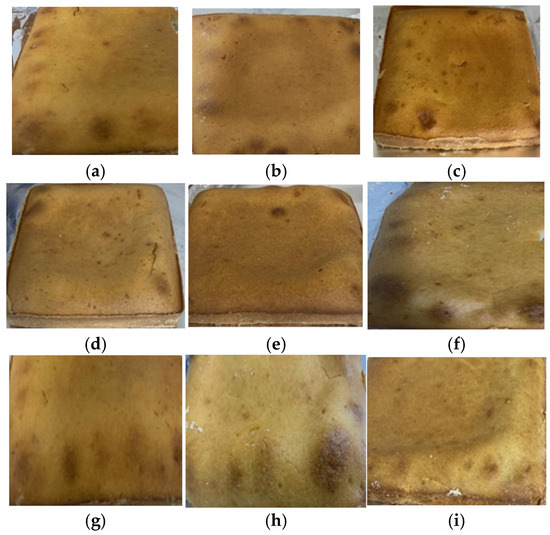
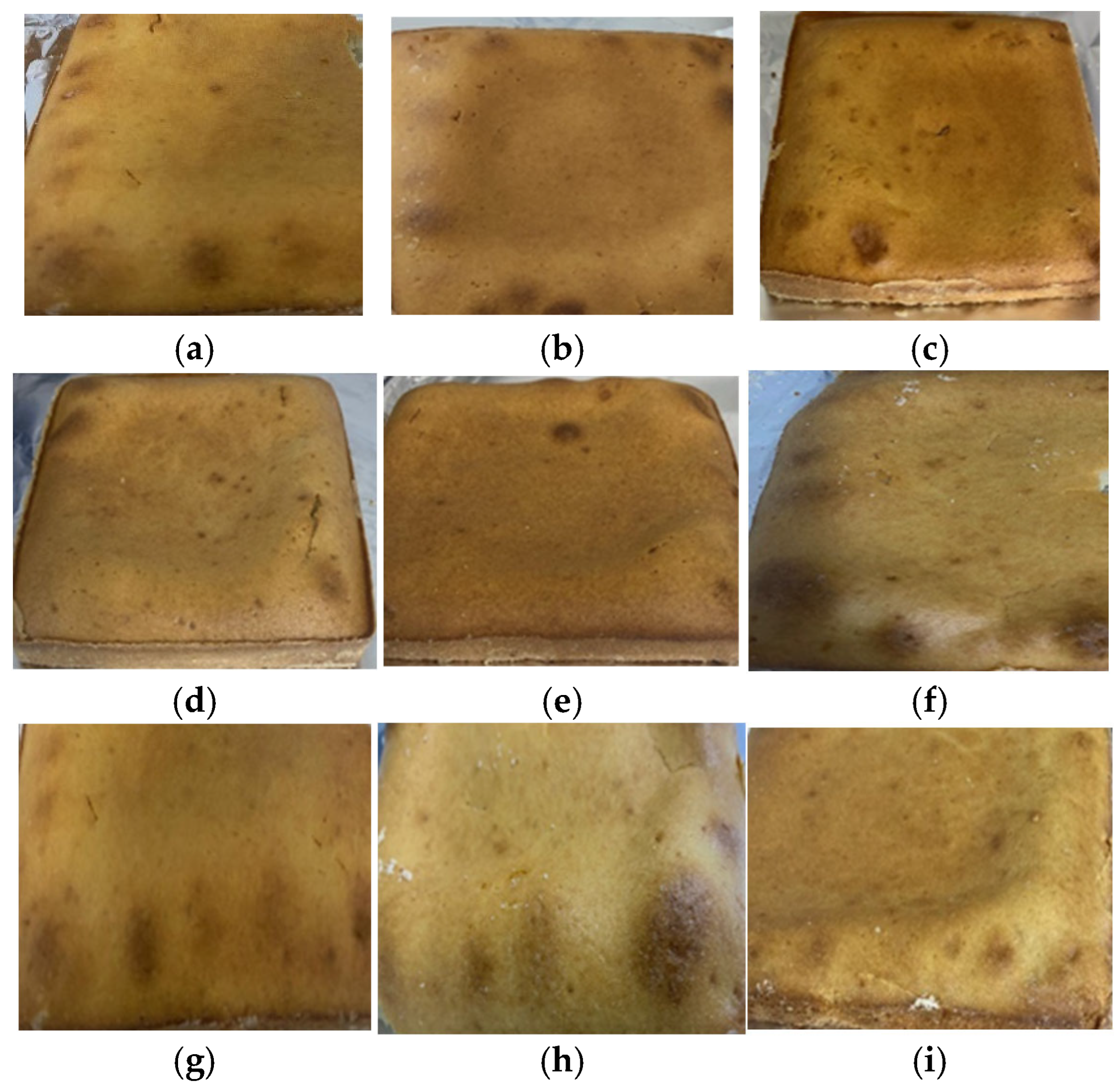
The substitution of egg with cassava hydrocolloids significantly altered the macroscopic appearance and physical structure of the cakes when compared to the control sample, as is clearly illustrated in Figure 1. At the 25% egg substitution level (samples CK-S25-H1.5 to CK-S25-H3.0; Figure 1b–e), the cakes consistently exhibited a darker surface color than the control (Figure 1a). Notably, despite this color change, the volume and sponginess of these 25% substituted cakes remained similar to the control, suggesting an effective structure stabilization by the hydrocolloids at this level. Conversely, cakes formulated with 50% egg substitution (samples CK-S50-H1.5 to CK-S50-H3.0; Figure 1f–i) displayed a significantly lighter color. This color lightening can be associated with a reduced Maillard reaction intensity [34], which is responsible for the melanoidin pigments in the crust of baked goods. Since the egg is a vital source of amino acids and proteins that are the key reactants of the Maillard reaction along with reducing sugars, reducing the egg portion directly decreases the availability of these compounds, thereby inhibiting the formation of color [35]. Furthermore, at the 50% substitution level, a slight but observable decrease in both volume and sponginess occurred. This structural reduction is a consequence of replacing the emulsifying and foaming proteins of the egg, which are crucial for gas cell formation and stabilization during baking [4]. Despite these noticeable changes in color and structure across the treatment groups, the overall flavor profile of the substituted cakes remained like that of the control.
Figure 1.
Physical characteristics of cakes. (a) Control; (b) CK-S25-H1.5; (c) CK-S25-H2.0; (d) CK-S25-H2.5; (e) CK-S25-H3.0; (f) CK-S50-H1.5; (g) CK-S50-H2.0; (h) CK-S50-H2.5; (i) CK-S50-H3.0.
3.3. Rheological Characterization of Batters
3.3.1. Viscous Flow Curves in a Steady State
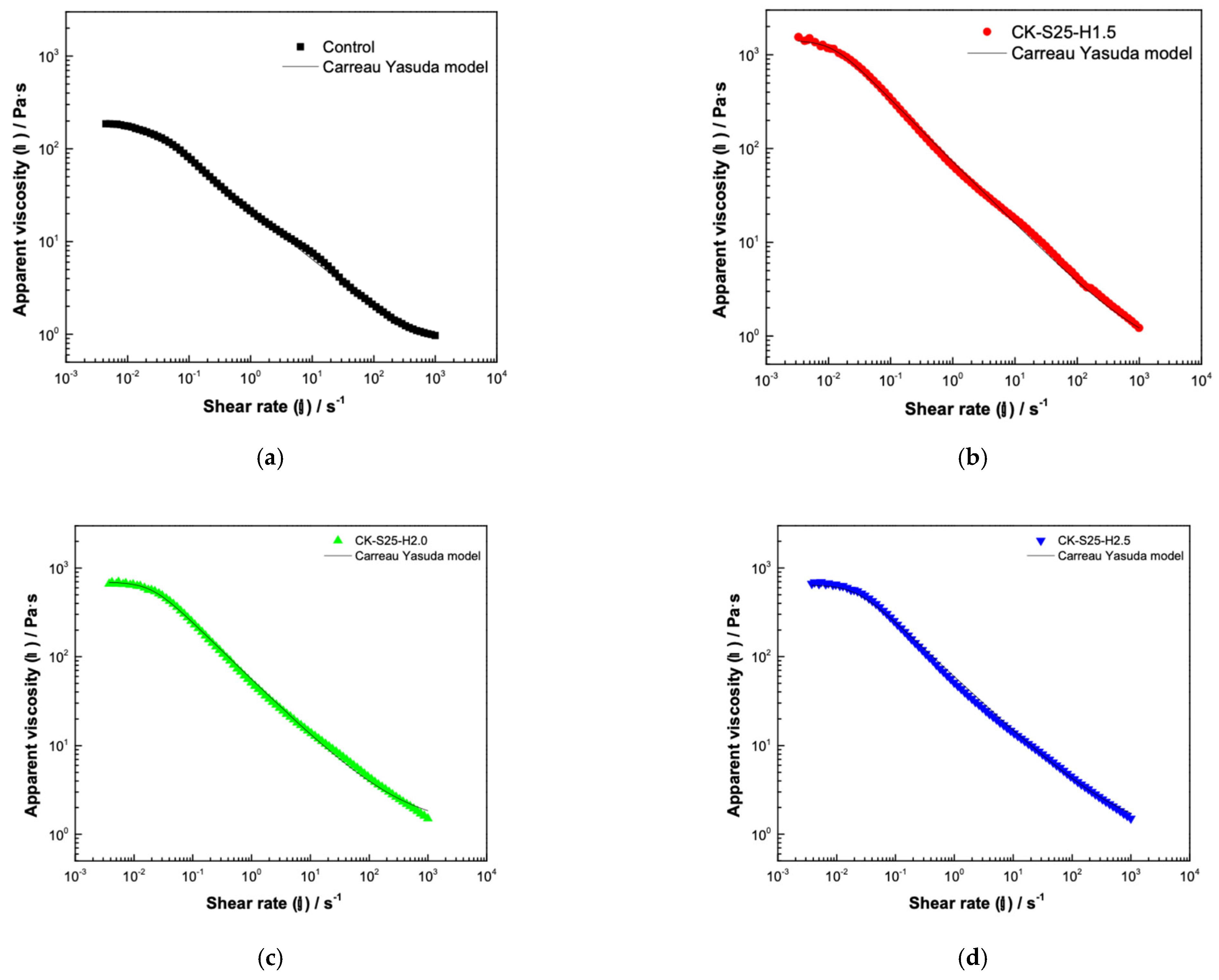
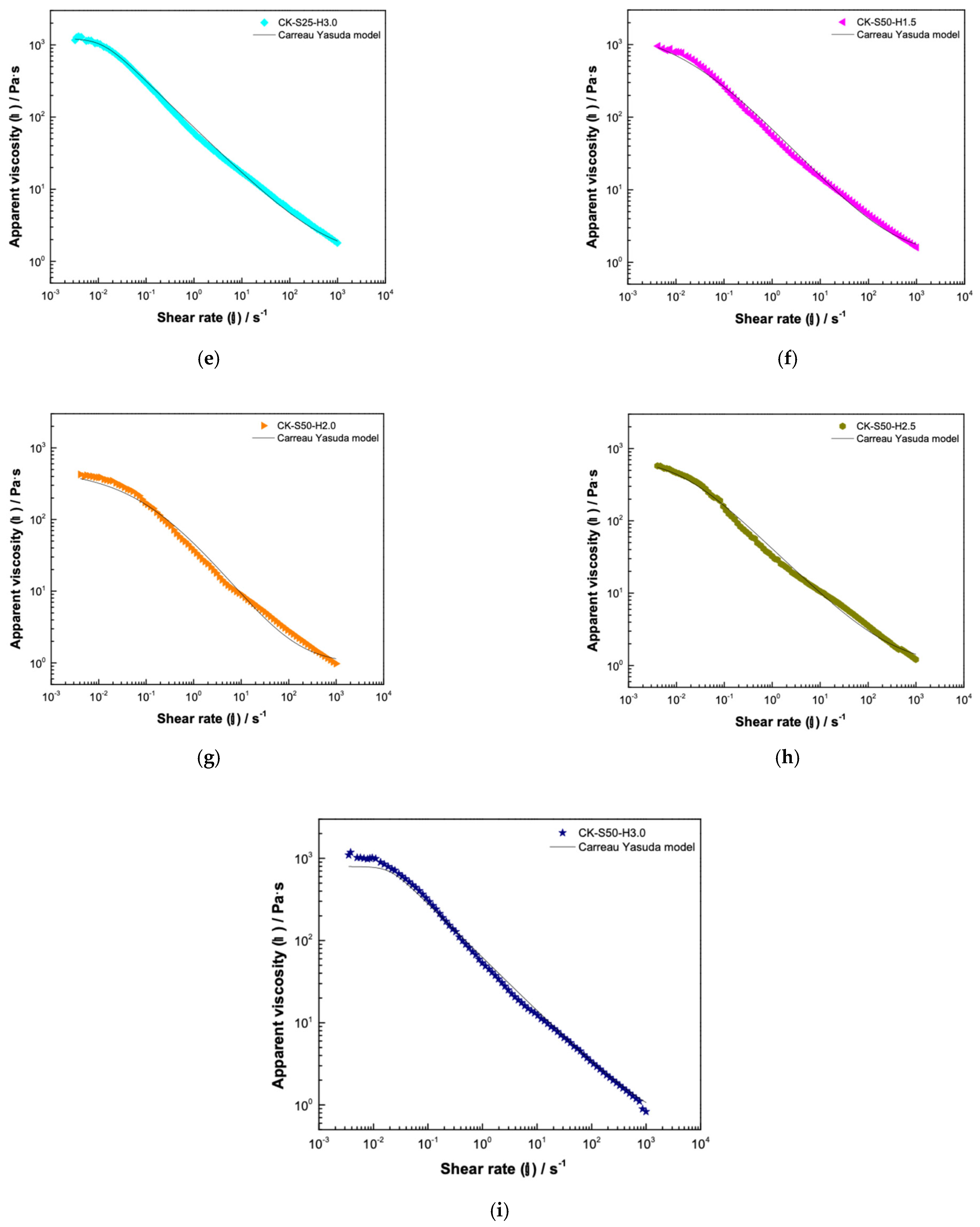
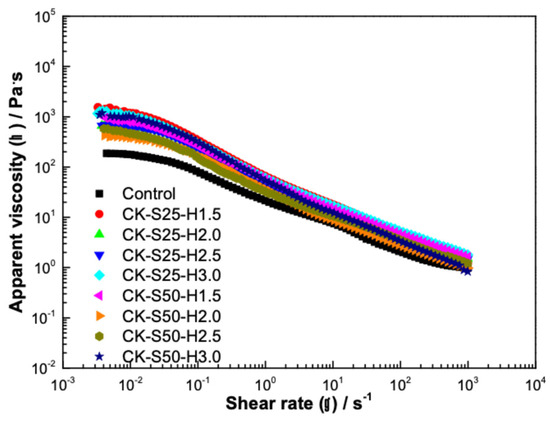
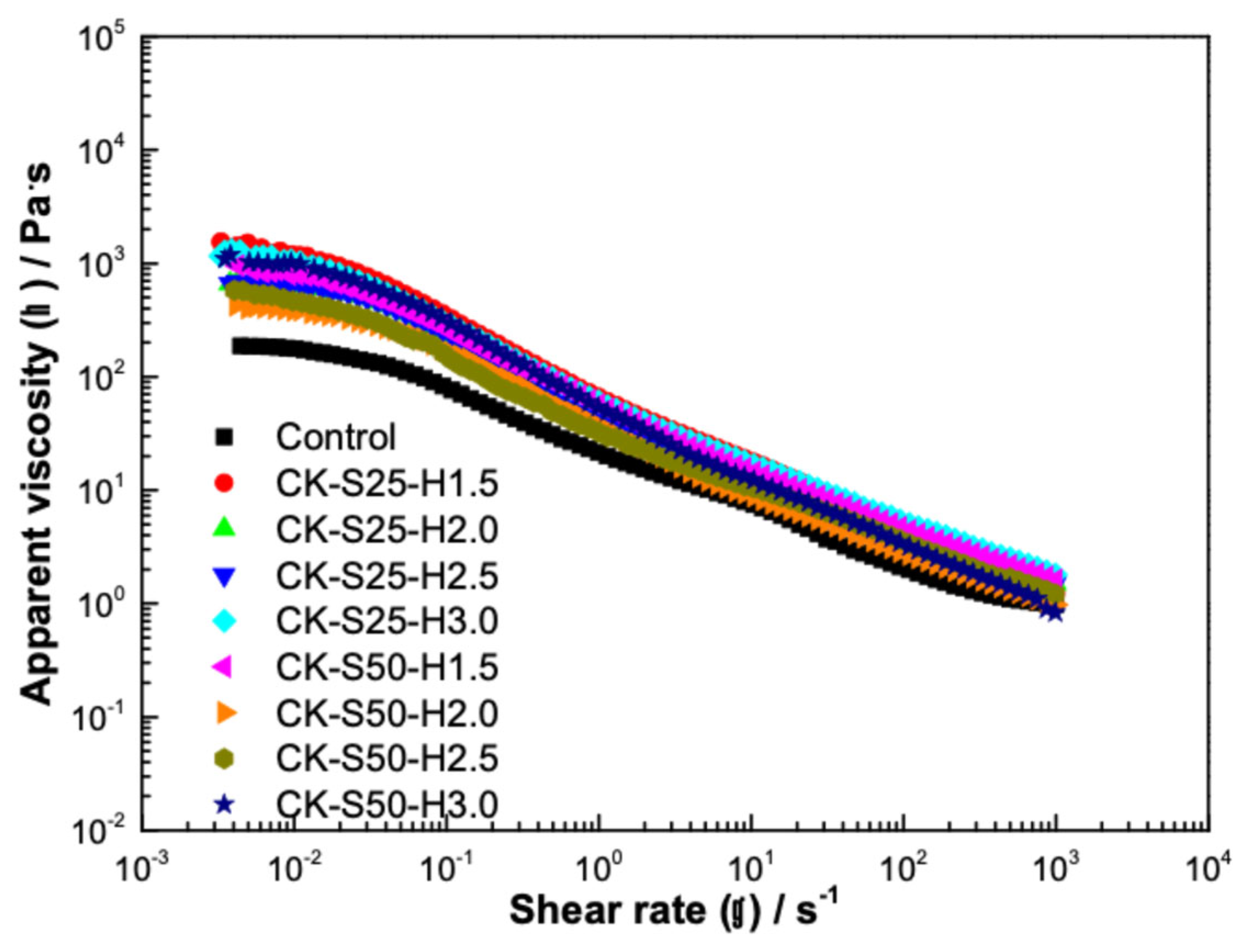
The evaluation of rheological characteristics in cake batter is crucial, as these properties significantly influence the quality of the final product, including texture and volume. To assess the behavior of the cake batter, steady-state viscous flow tests and oscillatory viscoelastic tests were performed. As shown in Figure 2 and Appendix A, the cake batters exhibited non-Newtonian, specifically pseudoplastic, fluid behavior, characterized by a decrease in viscosity as the shear rate increases [36]. This occurs due to the formation and breakdown of molecular interactions under increasing shear stress. As the shear continues to increase, the destruction of interactions ultimately outweighs the formation rate, resulting in the observed decrease in fluid viscosity [37]. Critically, all hydrocolloid-substituted samples displayed this same non-Newtonian behavior. The control sample consistently demonstrated a lower viscosity compared to all hydrocolloid-substituted samples, indicating that replacing egg with hydrocolloids significantly influences the rheological properties by increasing the batter’s viscosity. This increase is due to the hydrocolloids’ high water absorption capacity, which effectively decreases the availability of free water [38]. Furthermore, the high molecular weight of hydrocolloids is associated with a capacity to prevent structural collapse by significantly increasing batter viscosity [15].
Figure 2.
Viscous flow curves of the cake batter with different egg substitutions by hydrocolloids, adjusted to the Carreau–Yasuda model.
While egg proteins (such as albumin) contribute to the batter’s ability to trap and retain air [39], the hydrocolloids compensate for the protein reduction by increasing the overall viscosity and developing a dense structure around air bubbles. These results are consistent with the existing literature, such as the work reported by Ashwini et al. [21], which demonstrated that the addition of hydrocolloids to wheat flour, even alongside emulsifying agents, increased the viscosity of the dough in egg-free cake formulations. Similarly, other studies have indicated that the incorporation of hydrocolloids into batter leads to an increase in specific gravity and viscosity, showing higher values compared to control formulations. Consequently, the significant increase in viscosity conferred by the cassava hydrocolloids suggests an enhanced ability of the batter to retain gas bubbles during proofing and the early stages of baking, which is a key requirement for achieving an optimal final product volume.
Due to the rheological behavior presented by the cake batter, the viscosity values against the shear rate values were adjusted to the Carreau–Yasuda model in Equation (3) [40]. This model describes the behavior of time-dependent non-Newtonian fluids, with viscosities ranging from zero () to infinite () within the shear rate range, and which do not require a threshold stress to flow. The time relaxation parameter λ determines the transition point between shear-thickening and shear-thinning behaviors, where 1/λ is the critical shear rate at which the rate begins to decrease. The term (n − 1) represents the slope of the potential drop, and the value of n varies depending on the composition of the fluid. The parameter a (dimensionless), sometimes called the Yasuda constant [41], describes the transition zone between () and the potential drop (Equation (3)) [42].
The fit to the Carreau–Yasuda model can be observed in Figure 2, where the initial phase shows Newtonian behavior (viscosity tends to be constant), known as zero-shear viscosity (). Subsequently, a potential decrease in viscosity occurs due to the increase in the shear rate [43] and at high shear rates () [36].
The parameters of the Carreau–Yasuda model fit are presented in Table 2. It is observed that, for the initial viscosity (), the control sample has a value of 194.66 ± 1.7, and, when substituting the egg, the sample CK-S25-H1.5 shows a value of 1420.84 ± 28.03, indicating a significant increase as the egg is replaced by hydrocolloids. Thus, it shows that adding hydrocolloids increases the viscosity of the batter. Similar results were reported by Manisha et al. [44], who found that xanthan gum in white layer cakes keeps the batter more viscous and less elastic at high temperatures, allowing for greater cake expansion before its structure hardens. The infinite shear viscosity values () show significant differences compared to the control sample, with a value of 0.53 ± 0.35. The relaxation time λ for the control sample is 46.59 ± 1.94, which varied with the substitutions: the CK-S25-H1.5 sample had a value of 87.47 ± 5.99, and the CK-S50-H3.0 sample had a value of 40.58 ± 1.47. Hence, the results show a shear-thinning behavior, as the flow behavior index values are less than one, n < 1, for the different egg and hydrocolloid substitutions [36]. Similar results were found in studies by Miranda [37] using the power law model, where the power index values for the fluid n confirm that all samples behave as pseudoplastic fluids, since this value is less than 1 in all cases. This behavior was also found in the study by Demirkesen et al. [45], which replaced wheat flour with rice flour, with the addition of different types of gums with or without emulsifiers. The Carreau–Yasuda model adequately fits the steady-state flow behavior of the cake batter with a high correlation coefficient, R2 > 0.96.
Table 2.
Rheological parameters of the Carreau-Yasuda model.
3.3.2. Oscillatory Viscoelastic Testing
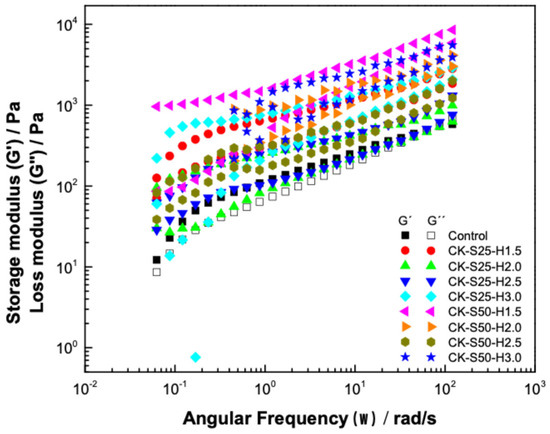
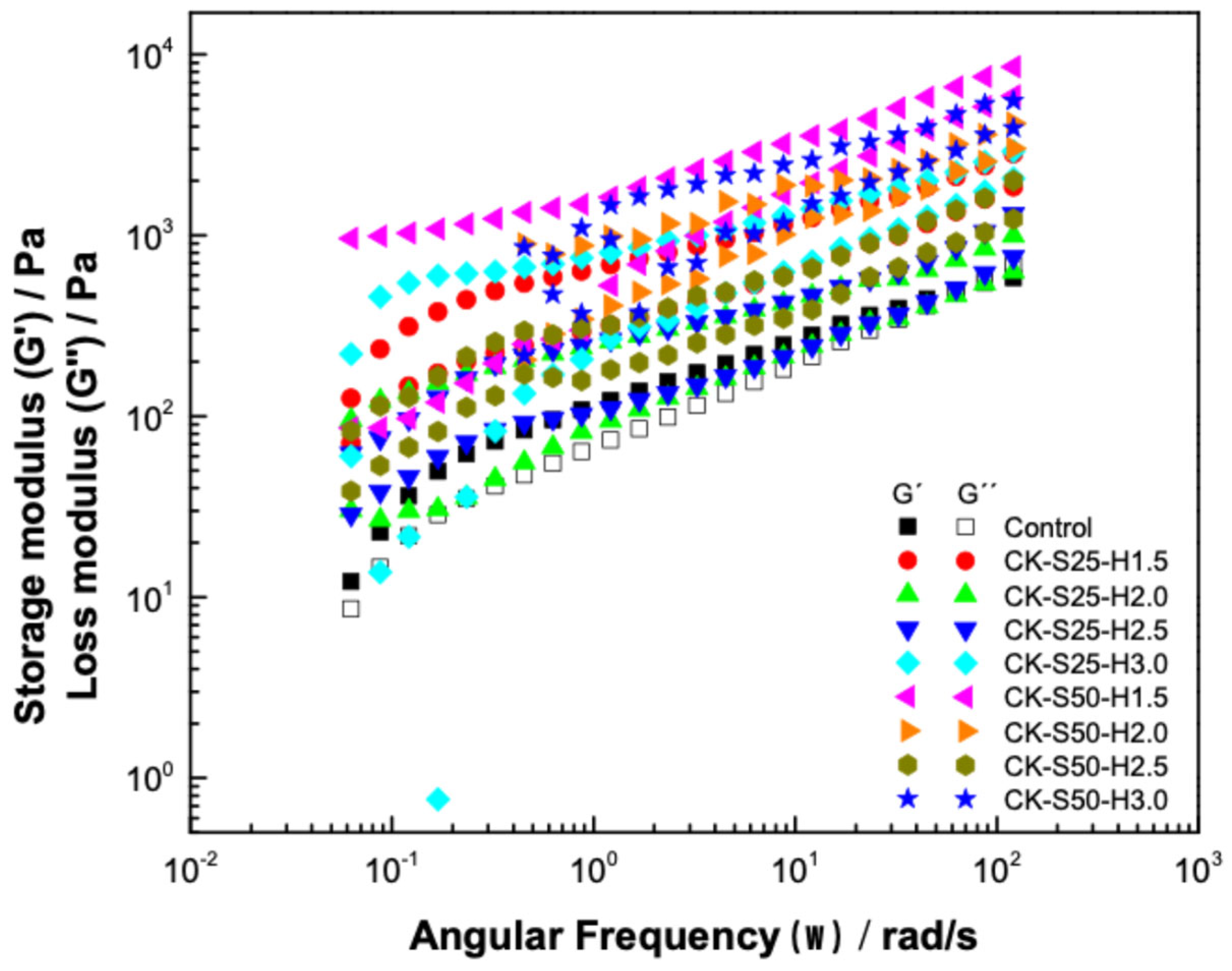
The frequency sweep results depicted in Figure 3 reveal that the control sample presents significantly lower values for both the storage modulus G′ and the loss modulus G″, indicating a lower capacity for energy storage and loss [46] compared to all hydrocolloid-substituted samples. Crucially, in all formulations tested, the storage modulus G′ is consistently higher than the loss modulus G″ across the entire frequency range, confirming that the cake batters behave predominantly as viscoelastic solids (or weak gels) rather than viscous liquids. This G′ > G″ relationship is highly desirable in cake batters as it signifies a stable, gel-like network capable of resisting deformation during mixing and early baking, which is predictive of a good final cake structure [47]. Regarding the substitution levels, significant distinct behaviors were observed: the viscoelastic moduli for the 50% egg substitution samples were markedly higher than those of the 25% substitution group. Specifically, the strongest elastic response was recorded in the CK-S50 series (CK-S50-H1.5, H2.5, and H3.0). This substantial increase in elasticity at higher substitution levels suggests that the cassava hydrocolloids effectively facilitate the formation of a denser, more compact network through complex entanglements of long-chain molecules [48]. This behavior is further reinforced by the presence of a plateau zone—where G′ values remain nearly constant relative to the frequency—which is characteristic of quasi-elastic behavior and reflects an intertwining of the material’s structural units [49]. Similar results were reported by Kumar et al. [50] who showed that both storage and loss moduli increased with the addition of hydrocolloids in pancake batter, with the highest dynamic properties observed in arabic gum formulations.
Figure 3.
Frequency test. Elastic modulus (G′) and viscous modulus (G″) of the cake batter with different egg substitutions by hydrocolloids.
3.3.3. Loss Tangent (Tan δ) and Complex Viscosity (|η*|)
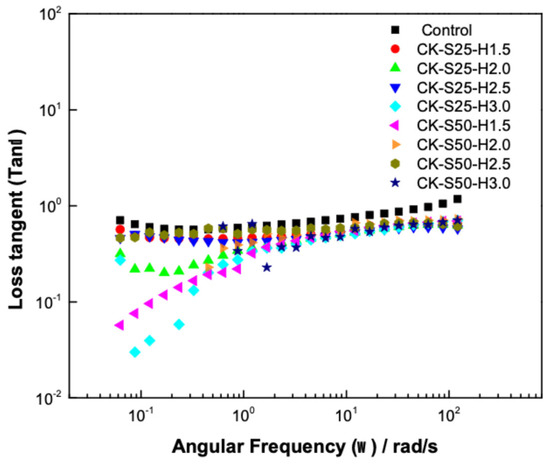
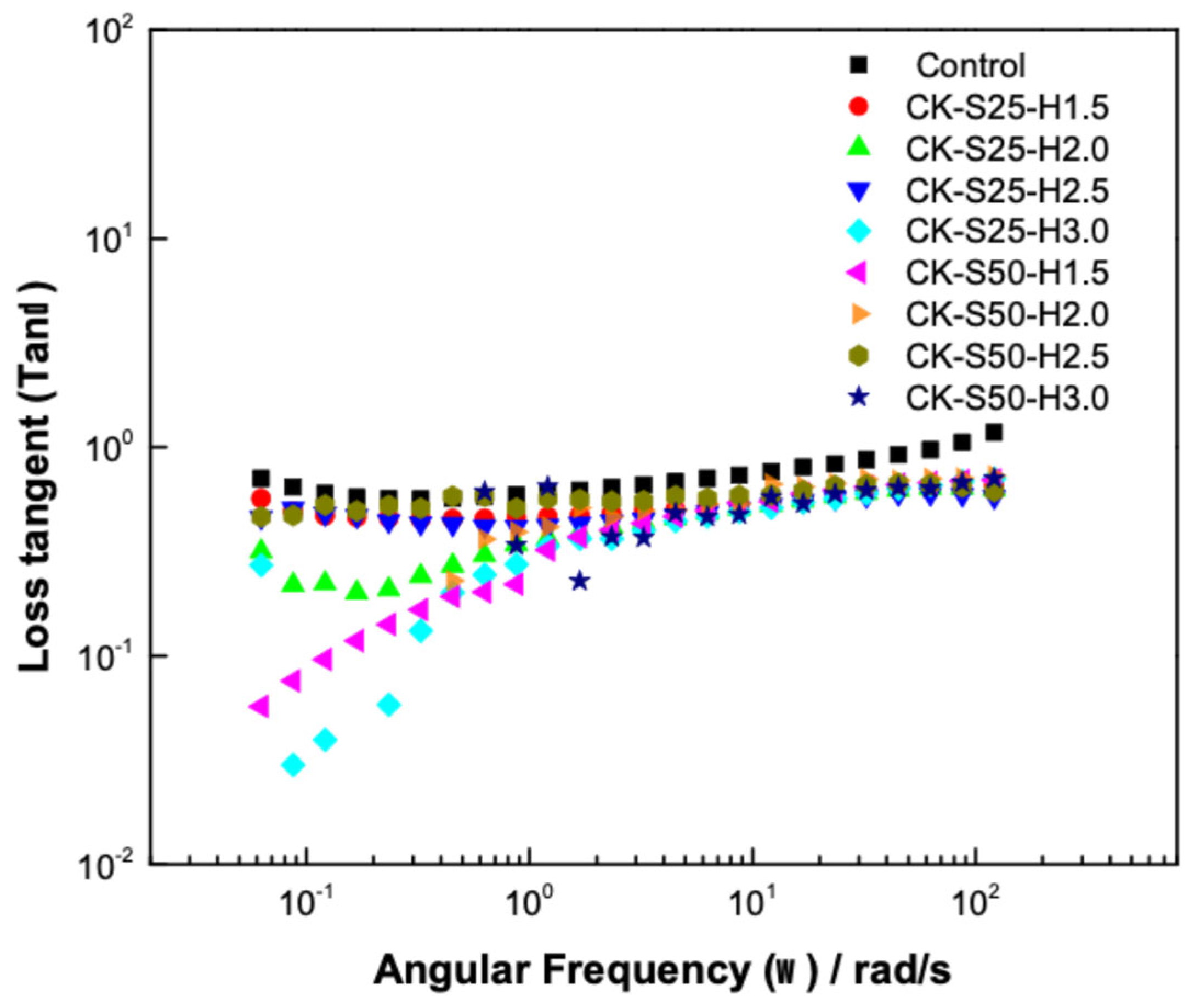
The loss tangent factor (Tan δ) is crucial for interpreting viscoelastic behavior, as it is a dimensionless measure that compares the energy dissipated (G″) to the energy stored (G′). The Tan δ of samples is presented in Figure 4. Elastic characteristics are defined by a low δ angle (ideally δ = 0° where G′ > G″), while purely viscous characteristics are defined by δ = 90° (where G″ > G′). The results show that all cake batter samples exhibit Tan δ < 1, which emphatically confirms the predominant elastic properties across the formulations.
Figure 4.
Loss tangent (Tan δ) of cake mass with different egg substitutions by hydrocolloids.
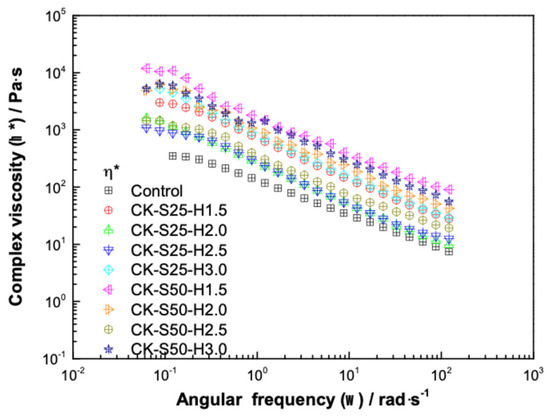
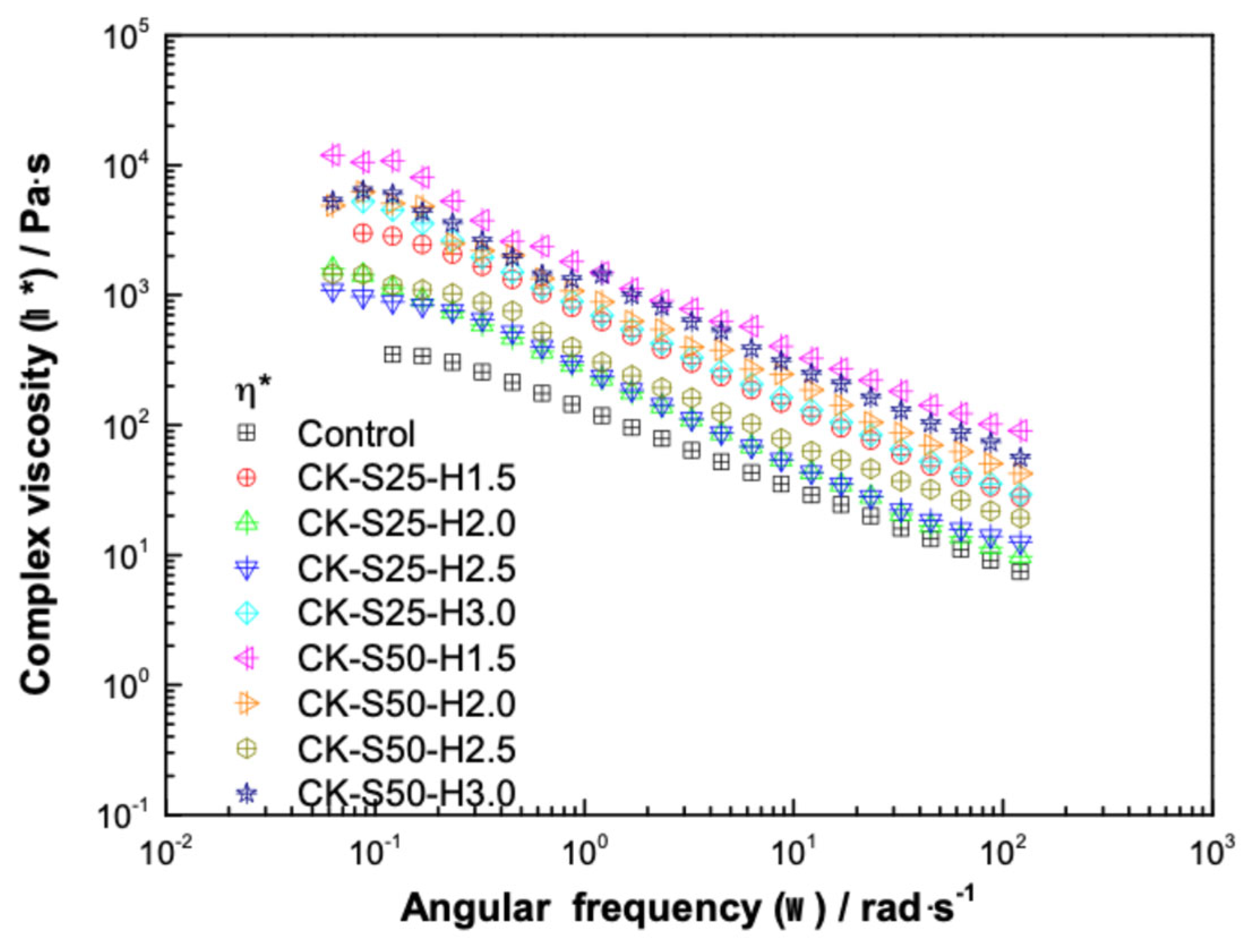
Furthermore, complex viscosity (|η*|) is a decreasing function of frequency for all cake batters, as observed in Figure 5. This shear-thinning behavior corresponds to a viscoelastic solid possessing a gel-like structure. Consistent with the G′ and G″ data, the complex viscosity increased significantly in the 25% and 50% substituted samples compared to the control, demonstrating the effectiveness of the hydrocolloids in structuring the batter.
Figure 5.
Complex viscosity (*) of the cake batter with different egg substitutions by hydrocolloids.
3.3.4. Applicability of Cox–Merz Rule
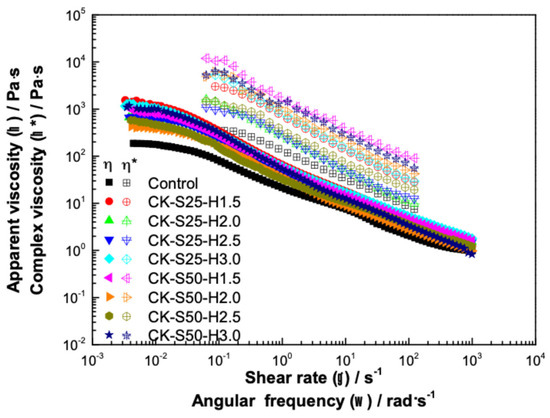
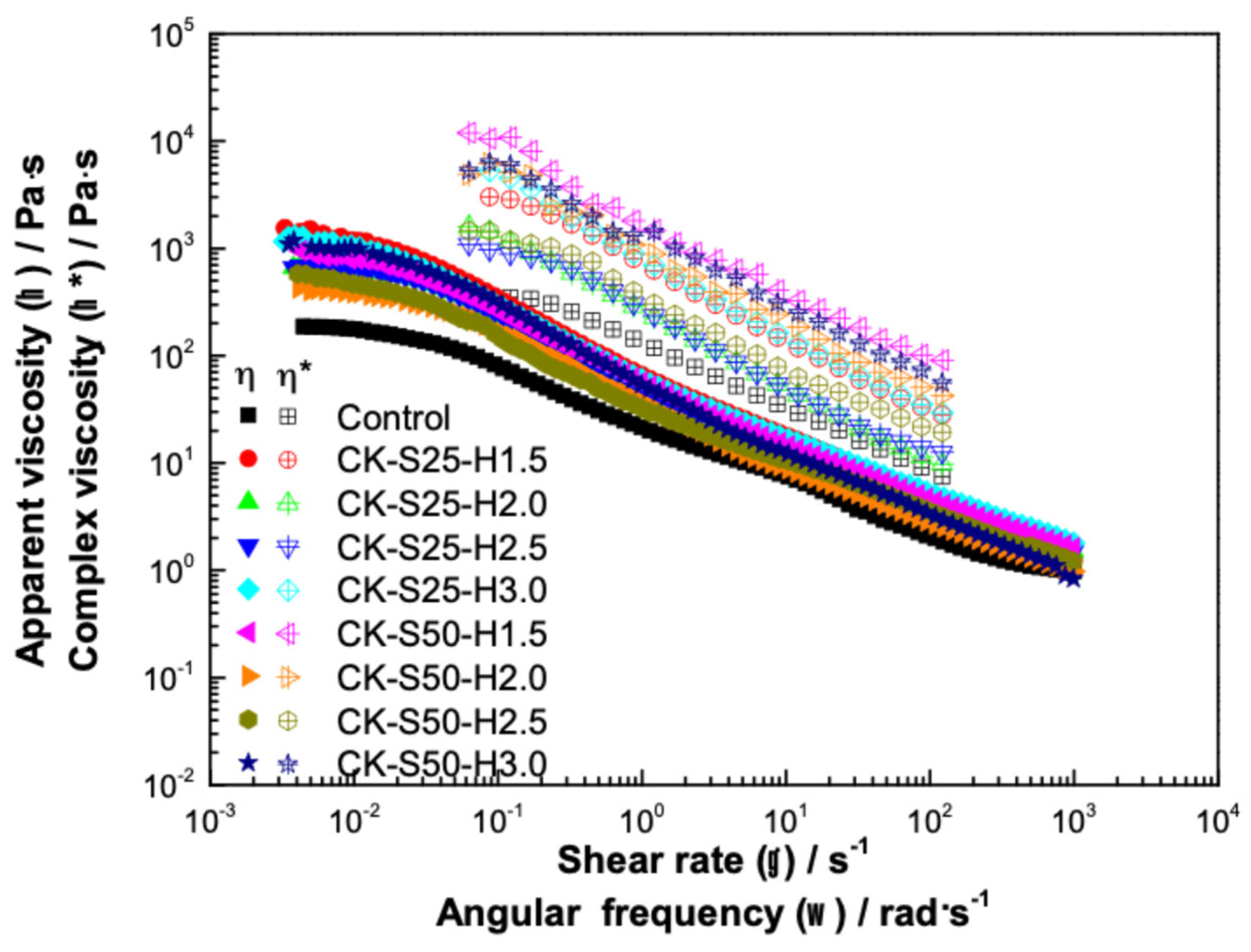
The structural stability of the cake batters under different deformation modes was evaluated by examining the applicability of the Cox–Merz rule. This empirical relationship posits that the apparent viscosity (η) measured at a specific shear rate () is equivalent to the complex viscosity (*) at the corresponding angular frequency () [51]. However, as illustrated in Figure 6, a significant deviation from the Cox–Merz rule was observed for all formulations. Specifically, the complex viscosity (*) values were consistently higher than the apparent viscosity (η) magnitudes across the entire experimental range (10−1 to 103). This divergence, where * () > η (), indicates that the cake batter functions as a structured dispersion or weak gel-like system rather than a simple solution [52]. The discrepancy arises because the complex viscosity is determined using small-amplitude oscillatory shear (SAOS) within the linear viscoelastic region, a method that preserves the intermolecular networks and aggregate structures essentially “at rest” [53,54]. In contrast, the continuous rotation applied during steady-shear measurements induces a breakdown of these weak structural aggregates and aligns the polymer chains in the direction of flow, resulting in a lower resistance to deformation [55]. Notably, while the substitution of eggs with hydrocolloids shifted the curves to higher viscosity levels, confirming their role in structure building, the parallel nature of the deviation in Figure 6 suggests that the fundamental shear-sensitive structural arrangement remains consistent across both control and hydrocolloid-enriched batters. From a processing perspective, this behavior is advantageous: it ensures that the batter flows easily during mixing and pumping (low ) while maintaining a robust structure to retain gas bubbles during the static stages of proofing (high *).
Figure 6.
Apparent viscosity () and complex viscosity (η*) of the cake batter with different egg substitutions by hydrocolloids.
3.4. Microstructural Properties
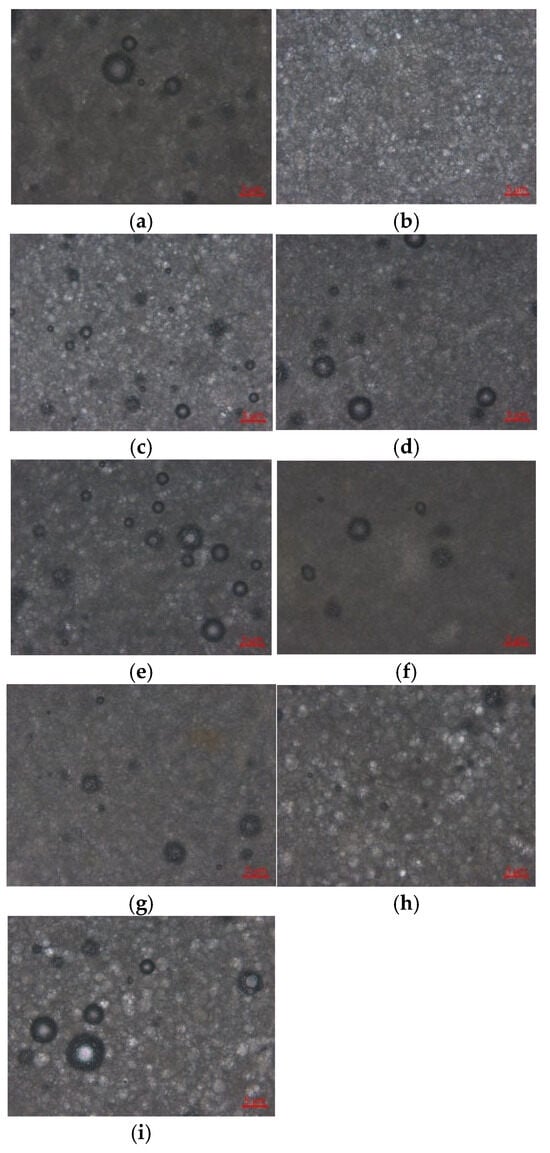
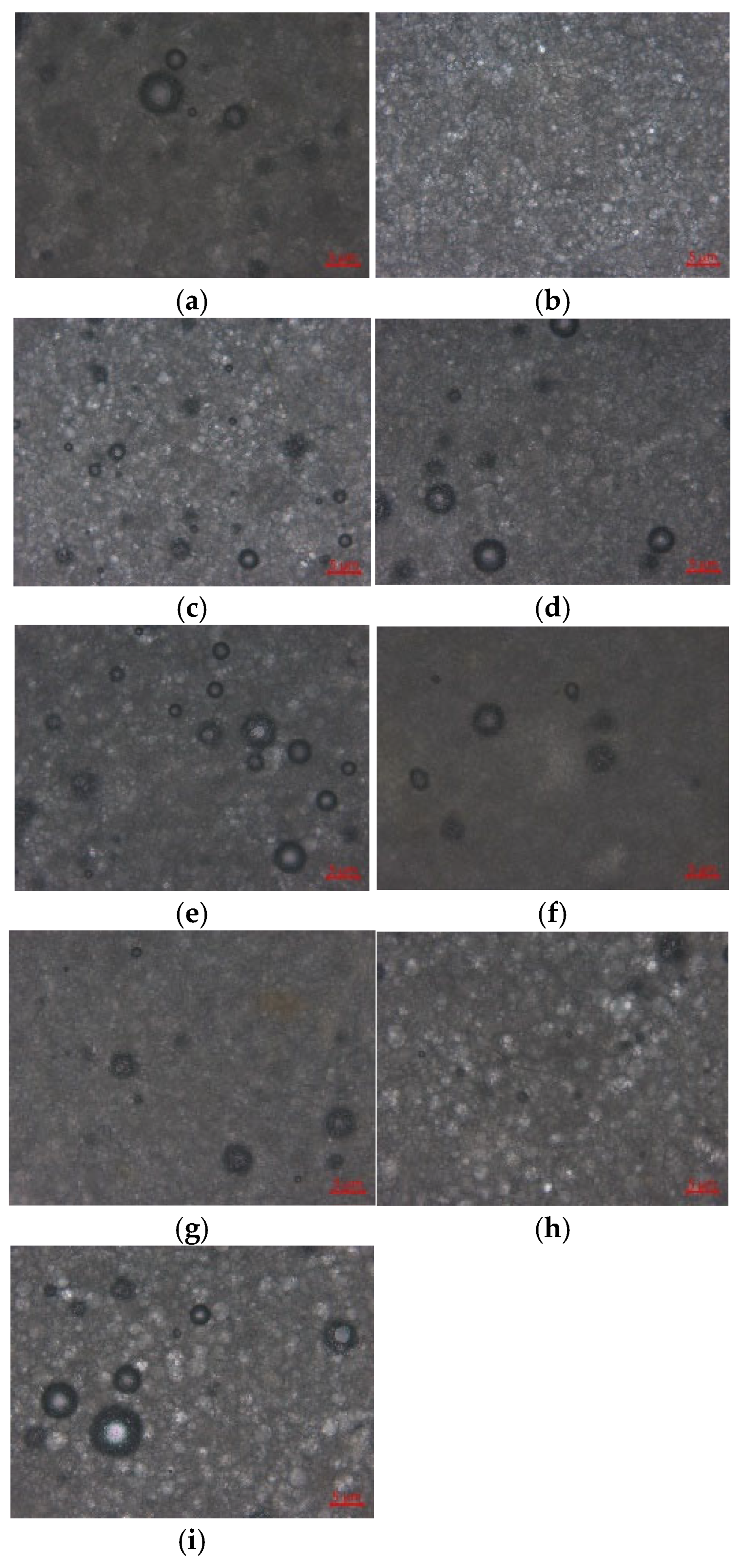
The microstructure of the cake batter samples, presented in Figure 7, reveals crucial insights into gas cell distribution that underpin the final cake structure. The control sample exhibited a microstructure with a lower number of air bubbles, though these were generally of a larger size (Figure 7, control image). Conversely, samples with a moderate hydrocolloid substitution (CK-S25-H2.0, CK-S25-H2.5, CK-S25-H3.0) initially displayed an increased quantity of smaller air bubbles (Figure 7c–e). This finding aligns with the good foaming ability of the residual egg proteins (Richert, 1979), which effectively stabilize the foam structure at the 25% substitution level. However, as the hydrocolloid percentage increased in the higher-concentration samples (CK-S50-H2.5, CK-S50-H3.0; Figure 7h,i), the air bubbles became larger and less uniform, suggesting a less efficient distribution and increased coalescence. This shift is primarily attributed to the thickening properties of the hydrocolloids and the resulting high viscosity—consistent with the high G′ and complex viscosity values observed. Excessive viscosity can obstruct the efficient incorporation and subsequent development of smaller, stable air bubbles during mixing, which ultimately limits the volume expansion potential during baking. The microstructure of the 50% substituted samples, showing fewer and larger bubbles, supports the observed slight reduction in volume and sponginess. Furthermore, the reliance on non-egg proteins may contribute to the instability, as coalescence phenomena—often linked to vegetable protein matrices—can cause bubbles to break down.
Figure 7.
Microstructural characterization of the dough with different egg substitutions by hydrocolloids. (a) Control, (b) CK-S25-H1.5, (c) CK-S25-H2.0, (d) CK-S25-H2.5, (e) CK-S25-H3.0, (f) CK-S50-H1.5, (g) CK-S50-H2.0, (h) CK-S50-H2.5, and (i) CK-S50-H3.0.
3.5. Bromatological and Physicochemical Analysis of Cakes
The results of the bromatological and physicochemical analyses for the final cake products are shown in Table 3. The pH value of the control sample was 7.05 ± 0.01. The inclusion of the hydrocolloids caused a decrease in the pH across the substituted samples. This effect can be attributed to the inherent differences in the pH values of the gums themselves and their physicochemical interaction with water [14]. Conversely, the moisture content of the cakes increased with the addition of different percentages of hydrocolloids. This consistent increase is a direct result of the technological functionality of the cassava gums, specifically their high Water Holding Capacity (WHC). The presence of multiple hydroxyl groups in both hydrocolloids and proteins facilitates the formation of hydrogen bonds with water molecules, leading to increased viscosity and water engagement, which culminates in an enhanced internal cellular structure and moisture retention [56]. These results align with previous studies that confirm that the addition of hydrocolloids increases the moisture content in baked products, an effect often most pronounced in high-content formulations [57].
Table 3.
Results of the bromatological and physicochemical analyses of the cakes.
The protein content of the control sample, 14.87 ± 0.27, presented significant differences compared to the substituted samples. While egg is renowned for its high protein richness and nutritional quality [58], the interpretation of protein changes in substituted samples is complex. The percentage of protein varies in the different samples; however, no trend is observed in the formulations made, suggesting a shift in the balance of protein contributed by the hydrocolloids versus the egg and other ingredients. Egg proteins, particularly egg white proteins, are primary functional components responsible for air trapping and stabilizing bubbles against coalescence, drainage, and yolk componention [59]. The increase in viscosity achieved by the hydrocolloids compensates for the reduced egg protein, as hydrocolloids also form gels and develop a dense structure around air bubbles, thereby increasing the Water Holding Capacity [60]. Therefore, the cassava hydrocolloids act as a dual-functional ingredient: biologically, by providing dietary fiber (non-starch polysaccharides), and technologically, by serving as a thickening and stabilizing agent that ensures moisture and fat retention in the final crumb structure.
Regarding the functional profile, although the total carbohydrate content decreased slightly or remained comparable to the control (Table 3), the qualitative nature of these carbohydrates shifted. In the control cake, carbohydrates are derived almost exclusively from flour starch and sucrose. In the substituted formulations (e.g., CK-S50 series), a portion of the structure is supported by the added hydrocolloids, which are rich in soluble dietary fiber (as detailed in Section 3.1). Therefore, while the “Carbohydrate” values in Table 3 appear statistically lower or similar, the incorporation of cassava hydrocolloids introduces bioactive non-starch polysaccharides. This modification aligns with consumer trends demanding healthier baked goods, as these functional fibers are associated with improved digestive health and glycemic control, differentiating these cakes from the standard control product.
3.6. Macroscopic and Instrumental Color Analysis
The appearance and color of the cakes changed significantly when the egg was substituted by the cassava hydrocolloids in comparison with the control sample, as illustrated in Figure 1. When 25% of the egg was substituted by hydrocolloids, the surface color was visually darker than the control. However, the volume and sponginess remained similar, suggesting an effective structural stabilization by the hydrocolloids at this lower concentration. Conversely, the cakes with 50% of the egg substituted had a lighter color, and a slight but observable decrease in volume and sponginess was noted. This structural reduction is a consequence of replacing the critical emulsifying and foaming proteins of the egg. Despite the observable changes in structure and color, the overall flavor profile of the substituted cakes remained similar to the control.
The macroscopic color changes were quantified using the CIELAB system, with the results displayed in Table 4. The luminosity (L*) value for the control sample was 46.78 ± 2.59. There were significant differences in L* values across the substituted samples compared to the control. The 25% substituted cakes exhibited lower L* values (i.e., darker), confirming the initial visual observation. Conversely, the 50% substituted cakes showed higher L* values (i.e., lighter), while remaining statistically non-significantly different from the control sample in some instances [61]. This higher luminosity confirms a lower intensity of the Maillard reaction due to the reduced proteins [60]. The parameter a* (positive values representing red) showed an increase with 25% egg substitution (e.g., CK-S25-H1.5 0.94 ± 0.27), potentially indicating slightly increased browning or caramelization compared to the control (0.55 ± 0.71) [62]. However, with 50% substitution, the a* values significantly decreased for most samples compared to the control sample, supporting the reduced browning at higher substitution levels [62]. Values for b* (yellowness) and C* (chroma/saturation) decreased significantly compared to the control cake. Egg yolk plays a fundamental role in providing yellow color; the subsequent removal of the egg and incorporation of the hydrocolloids led to the loss of yellow pigments and the formation of melanoidin pigments via the Maillard reaction. The lowest total color difference (ΔE) was observed in the CK-S50-H2.5 sample, indicating that this specific formulation had a similar light color to the control compared to the other samples, suggesting that the substitution did not produce undesirable color properties for the consumer.
Table 4.
Results of the color analysis.
3.7. Sensory Analysis
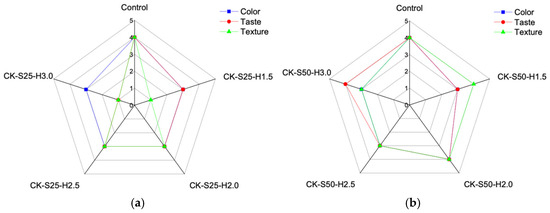
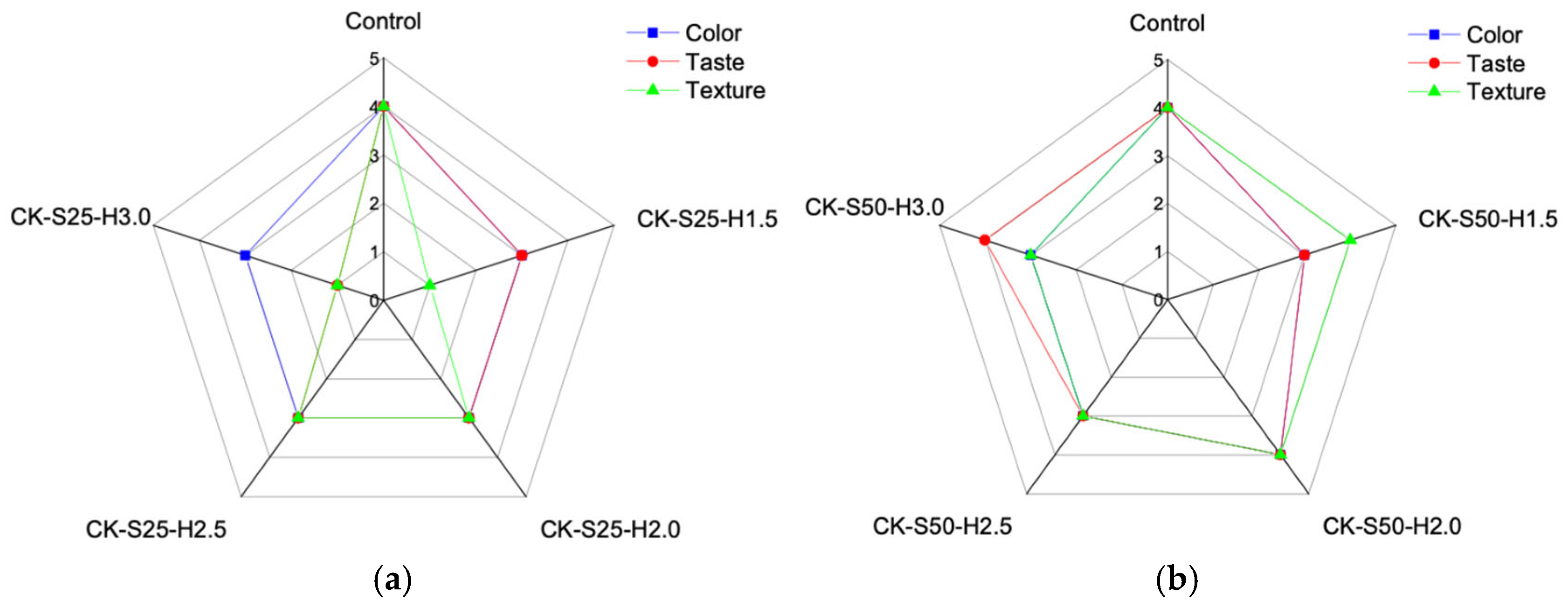
Sensory analysis is widely employed to measure food quality and ensure consumer acceptance of the final product, as the sensory characteristics of cakes are highly dependent on the ingredients used [63]. The hedonic results, based on a 5-point scale (where 3 indicates “like” and 4 indicates “like very much”), are presented in Figure 8.
Figure 8.
Sensorial analysis of cakes with (a) 25% and (b) 50% egg substitution with hydrocolloids.
For the 25% egg substitution group, samples generally achieved an average score of 3 (“like”) for color, flavor, and texture. Exceptions were observed for sample CK-S25-H3.0, which dropped to 2 (“neither like nor dislike”) for flavor, and the texture scores for CK-S25-H1.5 and CK-S25-H3.0, which also averaged 2. This suggests that, while a moderate substitution is acceptable, the highest hydrocolloid concentration at this 25% level may negatively impact the perceived flavor and texture. In contrast, the 50% egg substitution group demonstrated a higher overall acceptance. Samples CK-S50-H1.5, CK-S50-H2.0, and CK-S50-H3.0 achieved an average response value of 4 (“like very much”) for flavor, and this same high acceptance score (4) was observed for the texture of samples CK-S50-H1.5 and CK-S50-H2.0.
Color acceptance in this group generally averaged 3, confirming a consistent acceptance level. The lower color acceptance overall in substituted samples is likely due to the removal of egg yolks, which naturally impart a desirable yellow color through the presence of carotenoids (lutein and zeaxanthin) [64]. These results demonstrate a preference among panelists for cakes with a 50% egg substitution in terms of both flavor and texture, as these groups achieved significantly higher scores than the 25% substitution group. For the sensory profile of cakes, replacing up to 50% of the egg had a comparable effect to the control cake, surpassing the acceptance levels reported in other studies from Aslan et al. [65], validating the 50% substitution level as highly viable for consumer markets.
4. Conclusions
Rheological analysis characterizes the cake batter as a non-Newtonian, pseudoplastic fluid. The Carreau–Yasuda model provided the most accurate fit for the steady-state flow behavior, yielding correlation coefficients of R2 > 0.96. Viscoelastic assays further defined the material as a viscoelastic solid with a gel-like structure, evidenced by the storage modulus (G′) exceeding the loss modulus (G″) across the full frequency range, alongside a decrease in complex viscosity as the frequency increased. The optimal formulation was identified as the 50% egg substitution using the hydrocolloid, which achieved the highest consumer acceptability. The bromatological evaluation of these samples revealed a significant difference in protein content (14.87 ± 0.27) compared to the control—likely driven by the interaction between residual egg proteins and other batter constituents—concurrent with a reduction in both pH and carbohydrate levels. In terms of physical appearance, the hydrocolloid substitution did not negatively impact the visual quality. While luminosity (L*) generally decreased with hydrocolloid addition, the 50% substitution samples (CK-S50-H1.5 and CK-S50-H2.5) showed no significant difference from the control (46.78 ± 2.59). Notably, the CK-S50-H2.5 sample exhibited a minimal total color difference (ΔE), rendering it visually indistinguishable from the control. Ultimately, the 50% egg substitution was identified as the optimal formulation. The sensory data indicate that the hydrocolloid effectively replicates the essential functional properties of the egg, specifically regarding moisture retention and texture. Consequently, this substitution level achieves the highest consumer acceptability without compromising the cake’s structural or visual integrity.
Author Contributions
Conceptualization, A.R.-M., S.E.Q. and L.A.G.-Z.; methodology, A.R.-M., S.E.Q. and L.A.G.-Z.; software, A.R.-M. and S.E.Q.; validation, A.R.-M., S.E.Q. and L.A.G.-Z.; formal analysis, A.R.-M. and S.E.Q.; investigation, A.R.-M.; resources, A.R.-M., S.E.Q. and L.A.G.-Z.; data curation, A.R.-M. and S.E.Q.; writing—original draft preparation, A.R.-M. and S.E.Q.; writing—review and editing, A.R.-M., S.E.Q. and L.A.G.-Z.; visualization A.R.-M., S.E.Q. and L.A.G.-Z.; supervision, A.R.-M., S.E.Q. and L.A.G.-Z.; project administration, A.R.-M., S.E.Q. and L.A.G.-Z.; funding acquisition, A.R.-M., S.E.Q. and L.A.G.-Z. All authors have read and agreed to the published version of the manuscript.
Funding
This work was supported by Universidad de Cartagena, Resolution No. 00473-2022, Commitment act No. 065-2022.
Institutional Review Board Statement
Not applicable.
Informed Consent Statement
Not applicable.
Data Availability Statement
The raw data supporting the conclusions of this article will be made available by the authors on request.
Conflicts of Interest
The authors declare no conflicts of interest.
Appendix A
Figure A1.
Viscous flow curves of the cake batter with different egg substitutions by hydrocolloids, adjusted to the Carreau–Yasuda model. (a) Control, (b) CK-S25-H1.5, (c) CK-S25-H2.0, (d) CK-S25-H2.5, (e) CK-S25-H3.0, (f) CK-S50-H1.5, (g) CK-S50-H2.0, (h) CK-S50-H2.5, and (i) CK-S50-H3.0.
References
- Donovan, J.W. A Study of the Baking Process by Differential Scanning Calorimetry. J. Sci. Food Agric. 1977, 28, 571–578. [Google Scholar] [CrossRef] [Scilit]
- Wilderjans, E.; Luyts, A.; Brijs, K.; Delcour, J.A. Ingredient Functionality in Batter Type Cake Making. Trends Food Sci. Technol. 2013, 30, 6–15. [Google Scholar] [CrossRef] [Scilit]
- Sahi, S.S.; Alava, J.M. Functionality of Emulsifiers in Sponge Cake Production. J. Sci. Food Agric. 2003, 83, 1419–1429. [Google Scholar] [CrossRef] [Scilit]
- Arozarena, I.; Bertholo, H.; Empis, J.; Bunger, A.; Sousa, I. Study of the Total Replacement of Egg by White Lupine Protein, Emulsifiers and Xanthan Gum in Yellow Cakes. Eur. Food Res. Technol. 2001, 213, 312–316. [Google Scholar] [CrossRef] [Scilit]
- Huxley, R.; Lewington, S.; Clarke, R. Cholesterol, Coronary Heart Disease and Stroke: A Review of Published Evidence from Observational Studies and Randomized Controlled Trials. Semin. Vasc. Med. 2002, 2, 315–323. [Google Scholar] [CrossRef] [Scilit] [PubMed]
- Zhu, Y.; Vanga, S.K.; Wang, J.; Raghavan, V. Impact of Food Processing on the Structural and Allergenic Properties of Egg White. Trends Food Sci. Technol. 2018, 78, 188–196. [Google Scholar] [CrossRef] [Scilit]
- Christian PILARICA. Innovación en la industria alimentaria tendencias actuales. 2025. Available online: https://www.industriaalimentaria.org/blog/contenido/innovacion-en-la-industria-alimentaria-tendencias-actuales (accessed on 25 November 2025).
- Yaver, E. Ultrasonically Extracted Flaxseed Mucilage: An Effective Egg Substitute in Gluten-Free Noodles to Enhance Cooking Quality and Reduce Energy Value. J. Sci. Food Agric. 2026, 106, 216–224. [Google Scholar] [CrossRef] [Scilit] [PubMed]
- Topaloğlu Günan, K.; Yolci Ömeroğlu, P. Evaluation of Plant-Based Egg Substitutes in Vegan Muffins: Functional, Structural, and Nutritional Characterization. Foods 2025, 14, 3012. [Google Scholar] [CrossRef] [Scilit]
- Sharma, M.; Bains, A.; Goksen, G.; Ali, N.; Rehman, M.Z.; Chawla, P. Arabinogalactans-Rich Microwave-Assisted Nanomucilage Originated from Garden Cress Seeds as an Egg Replacement in the Production of Cupcakes: Market Orientation and in Vitro Digestibility. Int. J. Biol. Macromol. 2024, 282, 136929. [Google Scholar] [CrossRef] [Scilit]
- Thopson Vicente, E. Extracción y Caracterización Reológica y Funcional del Hidrocoloide de las Semillas del chan (Hyptis suaveolens). Doctoral Dissertation, Universidad de Costa Rica, San José, Costa Rica, 2020; p. 128. [Google Scholar]
- Liao, Y.-C.; Chang, C.-C.; Nagarajan, D.; Chen, C.-Y.; Chang, J.-S. Algae-Derived Hydrocolloids in Foods: Applications and Health-Related Issues. Bioengineered 2021, 12, 3787–3801. [Google Scholar] [CrossRef] [Scilit]
- Kraithong, S.; Lee, S.; Rawdkuen, S. Physicochemical and Functional Properties of Thai Organic Rice Flour. J. Cereal Sci. 2018, 79, 259–266. [Google Scholar] [CrossRef] [Scilit]
- Hedayati, S.; Jafari, S.M.; Babajafari, S.; Niakousari, M.; Mazloomi, S.M. Different Food Hydrocolloids and Biopolymers as Egg Replacers: A Review of Their Influences on the Batter and Cake Quality. Food Hydrocoll. 2022, 128, 107611. [Google Scholar] [CrossRef] [Scilit]
- Halm, J.; Sahin, A.W.; Nyhan, L.; Zannini, E.; Arendt, E.K. Commercial Egg Replacers in Pound Cake Systems: A Comprehensive Analysis of Market Trends and Application. Foods 2024, 13, 292. [Google Scholar] [CrossRef] [Scilit]
- Crawford, K.; Tyl, C.; Kerr, W. Evaluation of Processing Conditions and Hydrocolloid Addition on Functional Properties of Aquafaba. Foods 2023, 12, 775. [Google Scholar] [CrossRef] [Scilit] [PubMed]
- Lu, W.C.; Chan, Y.J.; Liang, Z.C.; Li, Z.E.; Li, P.H. Mechanistic Insights into the Role of Hydrocolloids in Modulating the Rheological Properties and Flow Behavior of Alkaline-Treated Cassava Starch. Carbohydr. Polym. 2025, 366, 123781. [Google Scholar] [CrossRef] [Scilit]
- Meza-Castellón, V.M.; Quintana, S.E.; García-Zapateiro, L.A. Oleogels Based on Starch and Natural Extracts from Cassava (Manihot Esculenta) as a Fat Replacement in Cookies. Appl. Sci. 2025, 15, 11545. [Google Scholar] [CrossRef] [Scilit]
- Colina, R.; Laguado, N.; Faneite, A. Evaluacion de Galletas Dulces Preparadas Con Harina de Yuca (Manihot esculenta Crantz) Deshidratada al Sol Como Sustituto Del Trigo. Rev. Fac. Agron. (LUZ) 2016, 33, 358–374. [Google Scholar]
- Lastra-Ripoll, S.E.; Quintana, S.E.; García-Zapateiro, L.A. Chemical, Technological, and Rheological Properties of Hydrocolloids from Sesame (Sesamum indicum) with Potential Food Applications. Arab. J. Chem. 2022, 15, 104146. [Google Scholar] [CrossRef] [Scilit]
- Ashwini, A.; Jyotsna, R.; Indrani, D. Effect of Hydrocolloids and Emulsifiers on the Rheological, Microstructural and Quality Characteristics of Eggless Cake. Food Hydrocoll. 2009, 23, 700–707. [Google Scholar] [CrossRef] [Scilit]
- Salehi, F. Improvement of Gluten-Free Bread and Cake Properties Using Natural Hydrocolloids: A Review. Food Sci. Nutr. 2019, 7, 3391–3402. [Google Scholar] [CrossRef] [Scilit]
- AOAC International–Official Methods of Analysis, 18th ed.; AOAC International: Gaithersburg, MD, USA, 2016.
- López-Barraza, D.; Ortega-Ramos, A.; Torregroza-Fuentes, E.; Quintana, S.E.; García-Zapateiro, L.A. Rheological and Functional Properties of Hydrocolloids from Pereskia bleo Leaves. Fluids 2021, 6, 349. [Google Scholar] [CrossRef] [Scilit]
- Quintana, S.E.; Torregroza-Fuentes, E.; García Zapateiro, L.A. Development of Dressing-Type Emulsion with Hydrocolloids from Butternut Squash Seed: Effect of Additives on Emulsion Stability. Gels 2022, 8, 209. [Google Scholar] [CrossRef] [Scilit]
- ICONTEC. Analisis Sensorial. In Guia General-GTC 165; ICONTEC: Bogotá, Colombi, 1999. [Google Scholar]
- Karazhiyan, H.; Razavi, S.M.A.; Phillips, G.O. Extraction Optimization of a Hydrocolloid Extract from Cress Seed (Lepidium sativum) Using Response Surface Methodology. Food Hydrocoll. 2011, 25, 915–920. [Google Scholar] [CrossRef] [Scilit]
- Furuta, H.; Takahashi, T.; Tobe, J.; Kiwata, R.; Maeda, H. Extraction of Water-Soluble Soybean Polysaccharides under Acidic Conditions. Biosci. Biotechnol. Biochem. 1998, 62, 2300–2305. [Google Scholar] [CrossRef] [Scilit]
- Marsiglia-Fuentes, R.; Quintana, S.E.; García Zapateiro, L.A. Novel Hydrocolloids Obtained from Mango (Mangifera indica) Var. Hilaza: Chemical, Physicochemical, Techno-Functional, and Structural Characteristics. Gels 2022, 8, 354. [Google Scholar] [CrossRef] [Scilit]
- Quintana-Martínez, S.E.; Torregroza-Fuentes, E.E.; García-Zapateiro, L.A. Food Hydrocolloids from Butternut Squash (Cucurbita moschata) Peel: Rheological Properties and Their Use in Carica Papaya Jam. ACS Omega 2021, 6, 12114–12123. [Google Scholar] [CrossRef] [Scilit]
- Razavi, S.M.A.; Mortazavi, S.A.; Matia-Merino, L.; Hosseini-Parvar, S.H.; Motamedzadegan, A.; Khanipour, E. Optimisation Study of Gum Extraction from Basil Seeds (Ocimum basilicum L.). Int. J. Food Sci. Technol. 2009, 44, 1755–1762. [Google Scholar] [CrossRef] [Scilit]
- Uthumporn, U.; Nadiah, I.; Izzuddin, I.; Cheng, L.; Aida, H.J.S.M. Physicochemical Characteristics of Non-Starch Polysaccharides Extracted from Cassava Tubers. Sains Malays. 2017, 46, 223–229. [Google Scholar] [CrossRef] [Scilit]
- Huang, L.; Zhang, X.; Xu, M.; An, S.; Li, C.; Huang, C.; Chai, K.; Wang, S.; Liu, Y. Dietary Fibres from Cassava Residue: Physicochemical and Enzymatic Improvement, Structure and Physical Properties. AIP Adv. 2018, 8, 105035. [Google Scholar] [CrossRef] [Scilit]
- Shakoor, A.; Zhang, C.; Xie, J.; Yang, X. Maillard Reaction Chemistry in Formation of Critical Intermediates and Flavour Compounds and Their Antioxidant Properties. Food Chem. 2022, 393, 133416. [Google Scholar] [CrossRef] [Scilit]
- Yazici, G.N.; Ozer, M.S. A Review of Egg Replacement in Cake Production: Effects on Batter and Cake Properties. Trends Food Sci. Technol. 2021, 111, 346–359. [Google Scholar] [CrossRef] [Scilit]
- Somaris, E.; Clemente Granados, Q.; García-Zapateiro, L.A. Propiedades Reológicas de La Pulpa de Papaya (Carica papaya). Inf. Tecnol. 2017, 28, 11–16. [Google Scholar] [CrossRef] [Scilit]
- Renzetti, S.; Vam der Sman, R. Food texture design in sugar reduced cakes: Predicting batters rheology and physical properties of cakes from physicochemical principles. Food Hydrocoll. 2022, 131, 107795. [Google Scholar] [CrossRef] [Scilit]
- Noorlaila, A.; Hasanah, H.N.; Asmeda, R.; Yusoff, A. Journal of the Saudi Society of Agricultural Sciences the Effects of Xanthan Gum and Hydroxypropylmethylcellulose on Physical Properties of Sponge Cakes. J. Saudi Soc. Agric. Sci. 2020, 19, 128–135. [Google Scholar] [CrossRef] [Scilit]
- Mine, Y. Recent Advances in the Understanding of Egg White Protein Functionality. Trends Food Sci. Technol. 1995, 6, 225–232. [Google Scholar] [CrossRef] [Scilit]
- Carreau, P.J. Rheological Equations from Molecular Network Theories. Trans. Soc. Rheol. 1972, 16, 99–127. [Google Scholar] [CrossRef] [Scilit]
- Yasuda, K. Investigation of the Analogies Between Viscometric and Linear Viscoelastic Properties of Polystyrene Fluids. Doctoral Dissertation, Massachusetts Institute of Technology, Cambridge, MA, USA, 1979. [Google Scholar]
- Fuentes, R.M.M.; Gómez, L.D.M.; Ripoll, S.E.L.; Zapateiro, L.A.G. Efecto de La Temperatura En Las Propiedades Reológicas de La Pulpa de Melón (Cucumis melo). Rev. Colomb. Investig. Agroind. 2018, 5, 98–107. [Google Scholar] [CrossRef] [Scilit]
- Ramirez, N. Fundamentos de Reología de Alimentos; JSR e-books: Cali, Colombia, 2006. [Google Scholar]
- Manisha, G.; Soumya, C.; Indrani, D. Studies on Interaction between Stevioside, Liquid Sorbitol, Hydrocolloids and Emulsifiers for Replacement of Sugar in Cakes. Food Hydrocoll. 2012, 29, 363–373. [Google Scholar] [CrossRef] [Scilit]
- Demirkesen, I.; Mert, B.; Sumnu, G.; Sahin, S. Rheological Properties of Gluten-Free Bread Formulations. J. Food Eng. 2010, 96, 295–303. [Google Scholar] [CrossRef] [Scilit]
- Macosko, C.W. Rheology: Principles, Measurements, and Applications; John Wiley & Sons, Inc.: Hoboken, NJ, USA, 1994; ISBN 978-0-471-18575-8. [Google Scholar]
- Anggraeni, A.A.; Triwitono, P.; Lestari, L.A.; Harmayani, E. Evaluation of Glucomannan as a Fat Replacer in the Dough and Cookies Made from Fermented Cassava Flour and Soy Protein Concentrate. Food Chem. 2024, 434, 137452. [Google Scholar] [CrossRef] [Scilit]
- Ramos, A.M.; Ibarz, A. Comportamiento Viscoelástico de Pulpa de Membrillo En Función de La Concentración de Sólidos Solubles. Cienc. Tecnol. Aliment. 2006, 26, 214–219. [Google Scholar] [CrossRef] [Scilit]
- López, M.L. Estudio Del Comportamiento Interfacial de Películas de Proteínas de Interés Alimentario: Adsorción y Caracterización Reológica. Doctoral Dissertation, Universidad de Sevilla, Seville, Spain, 2007. [Google Scholar]
- Dash, K.K.; Gohain, G.; Bhagyaraj, G.V.S. Hydrocolloid Effect on Joha Rice Pancake Dough Rheology and Sensory Evaluation by Fuzzy Logic. Meas. Food 2024, 13, 100136. [Google Scholar] [CrossRef] [Scilit]
- Cox, W.P.; Merz, E.H. Correlation of Dynamic and Steady Flow Viscosities. J. Polym. Sci. 1958, 28, 619–622. [Google Scholar] [CrossRef] [Scilit]
- Steffe, J.F. Rheological Methods in Food Process Engineering; Freeman Press: New York, NY, USA, 1996; ISBN 0963203614. [Google Scholar]
- Rao, A.M. Measurement of Flow and Viscoelastic Properties. In Rheology of Fluid, Semisolid, and Solid Foods; Food Engineering Series; Springer: Boston, MA, USA, 2014; pp. 63–159. ISBN 978-1-4614-9230-6. [Google Scholar]
- Rao, M.A. Rheology of Fluid and Semisolid Foods: Principles and Applications; Springer: Berlin/Heidelberg, Germany, 2007; ISBN 9780387709307. [Google Scholar]
- Chesterton, A.K.S.; Meza, B.E.; Moggridge, G.D.; Sadd, P.A.; Wilson, D.I. Rheological Characterisation of Cake Batters Generated by Planetary Mixing: Elastic versus Viscous Effects. J. Food Eng. 2011, 105, 332–342. [Google Scholar] [CrossRef] [Scilit]
- Azmoon, E.; Saberi, F.; Kouhsari, F.; Akbari, M.; Kieliszek, M.; Vakilinezam, A. The Effects of Hydrocolloids-Protein Mixture as a Fat Replacer on Physicochemical Characteristics of Sugar-Free Muffin Cake: Modeling and Optimization. Foods 2021, 10, 1549. [Google Scholar] [CrossRef] [Scilit]
- Guarda, A.; Rosell, C.M.; Benedito, C.; Galotto, M.J. Different Hydrocolloids as Bread Improvers and Antistaling Agents. Food Hydrocoll. 2004, 18, 241–247. [Google Scholar] [CrossRef] [Scilit]
- Yasmin Mesa Rodríguez, L.; Valderrama Navarrete, D.; Rodríguez, M.; Navarrete, V. Evaluación de la Incorporación de la Yema de Huevo en Polvo Como Sustituto Parcial de Grasa y Acción Antioxidante en Carne de Hamburguesa. Bachelor’s Thesis, La Salle University, Philadelphia, PA, USA, 2024. [Google Scholar]
- Paraskevopoulou, A.; Kiosseoglou, V. Cholesterol and Other Lipid Extraction from Egg Yolk Using Organic Solvents: Effects on Functional Properties of Yolk. J. Food Sci. 1994, 59, 766–768. [Google Scholar] [CrossRef] [Scilit]
- Hedayati, A.; Ghoreishi, S.M. Effects of Operating Conditions on Supercritical Extraction of Glycyrrhizic Acid from Glycyrrhiza glabra L. Using Methanol. In Proceedings of the 9th International Chemical Engineering Congress & Exhibition (IChEC 2015), Shiraz, Iran, 26–28 December 2015; pp. 26–28. [Google Scholar]
- Guardado Sánchez, F.S. Efecto de Diferentes Sustitutos de Huevo, la Aplicación de Aireación, la Adición de Lecitina y el Almacenamiento Sobre las Características Físicas y Sensoriales de un Queque Libre de Huevo. Master’s Thesis, Universidad de Costa Rica, San José, Costa Rica, 2020. [Google Scholar]
- Agrahar-Murugkar, D.; Zaidi, A.; Kotwaliwale, N.; Gupta, C. Effect of Egg-Replacer and Composite Flour on Physical Properties, Color, Texture and Rheology, Nutritional and Sensory Profile of Cakes. J. Food Qual. 2016, 39, 425–435. [Google Scholar] [CrossRef] [Scilit]
- Gallo, L.R.d.R.; Assunção Botelho, R.B.; Ginani, V.C.; de Lacerda de Oliveira, L.; Riquette, R.F.R.; Leandro, E.d.S. Chia (Salvia hispanica L.) Gel as Egg Replacer in Chocolate Cakes: Applicability and Microbial and Sensory Qualities After Storage. J. Culin. Sci. Technol. 2020, 18, 29–39. [Google Scholar] [CrossRef] [Scilit]
- Larsen, D. The Structure and Properties of Eggs. In En Encyclopedia of Food Chemistry; Elsevier: Amsterdam, The Netherlands, 2018. [Google Scholar]
- Aslan, M.; Ertas, N. Possibility of Using “chickpea Aquafaba” as Egg Replacer in Traditional Cake Formulation. Harran Tarım Gıda Bilim. Derg. 2020, 24, 1–8. [Google Scholar] [CrossRef] [Scilit]

Disclaimer/Publisher’s Note: The statements, opinions and data contained in all publications are solely those of the individual author(s) and contributor(s) and not of MDPI and/or the editor(s). MDPI and/or the editor(s) disclaim responsibility for any injury to people or property resulting from any ideas, methods, instructions or products referred to in the content. |
© 2026 by the authors. Licensee MDPI, Basel, Switzerland. This article is an open access article distributed under the terms and conditions of the Creative Commons Attribution (CC BY) license.