
Novel Targets for Precision Nutrition: Insulin Resistance and Phenotypic Age Mediate the Protective Effect of Gut Microbiota-Targeted Diet on Metabolic Syndrome
 , and
, and
Abstract
1. Introduction
2. Materials and Methods
2.1. Data Source
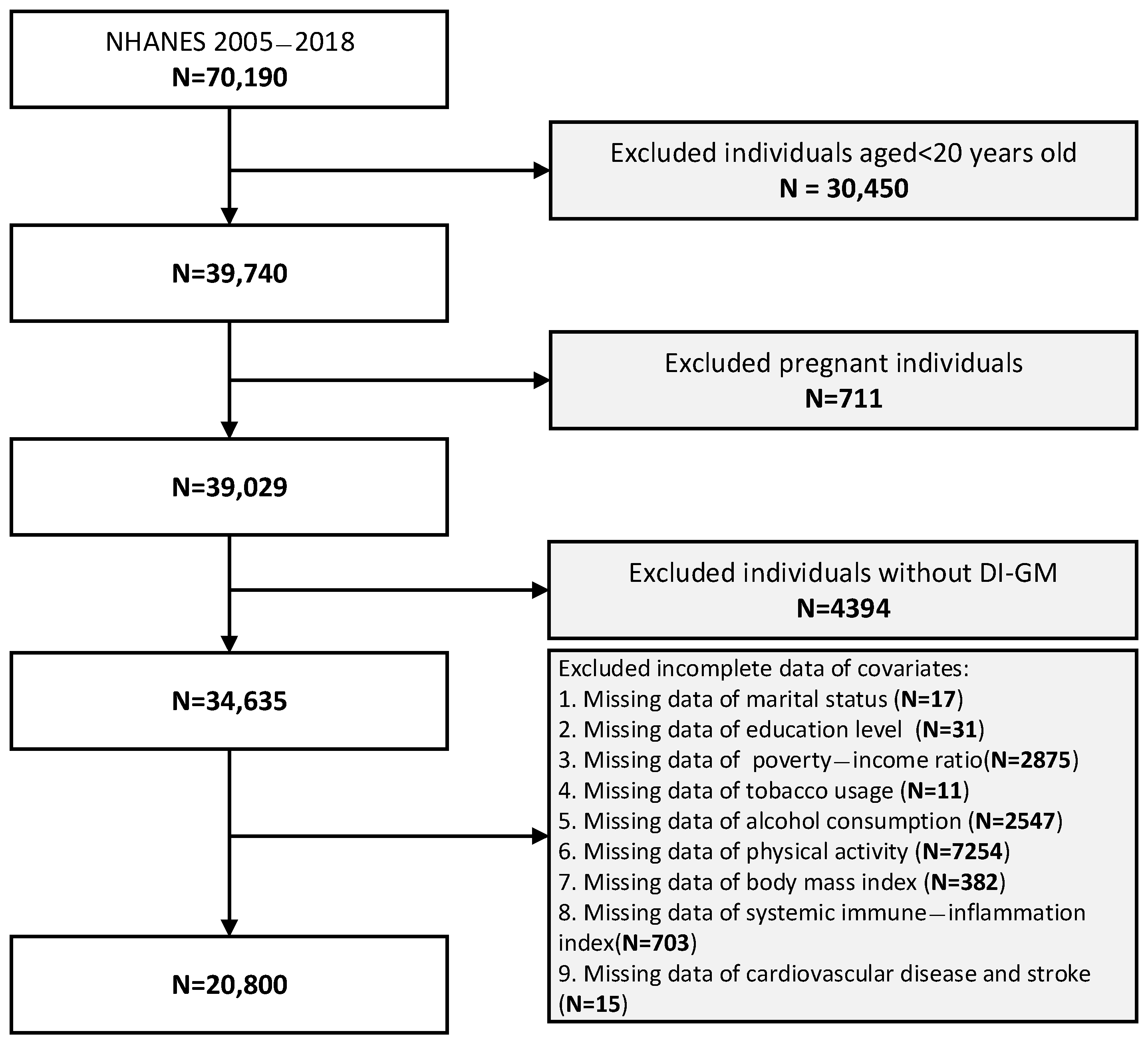
2.2. Study Design and Population
2.3. Definition of MetS
2.4. Definition of DI-GM
2.5. Definitions of Phenotypic Age, Body Mass Index, HOMA-IR, the SII, and the NLR
2.6. Covariates
2.7. External Validation of the DI-GM and MetS Association Using Global Data
2.8. Statistical Analysis
- (1)
- Sample Size and Power
- (2)
- Covariate Selection and Bias Mitigation
- (3)
- Descriptive Statistics and Group Comparisons
- (4)
- Association Modeling and Subgroup Analyses
- (5)
- Mediation Analysis and Sensitivity Analyses
- (6)
- Software and Statistical Inference
3. Results
3.1. Characterization of the Study Population
3.2. Association Between DI-GM and MetS
3.3. Global Validation of the Association Between DI-GM and MetS Using GBD and GDD Data
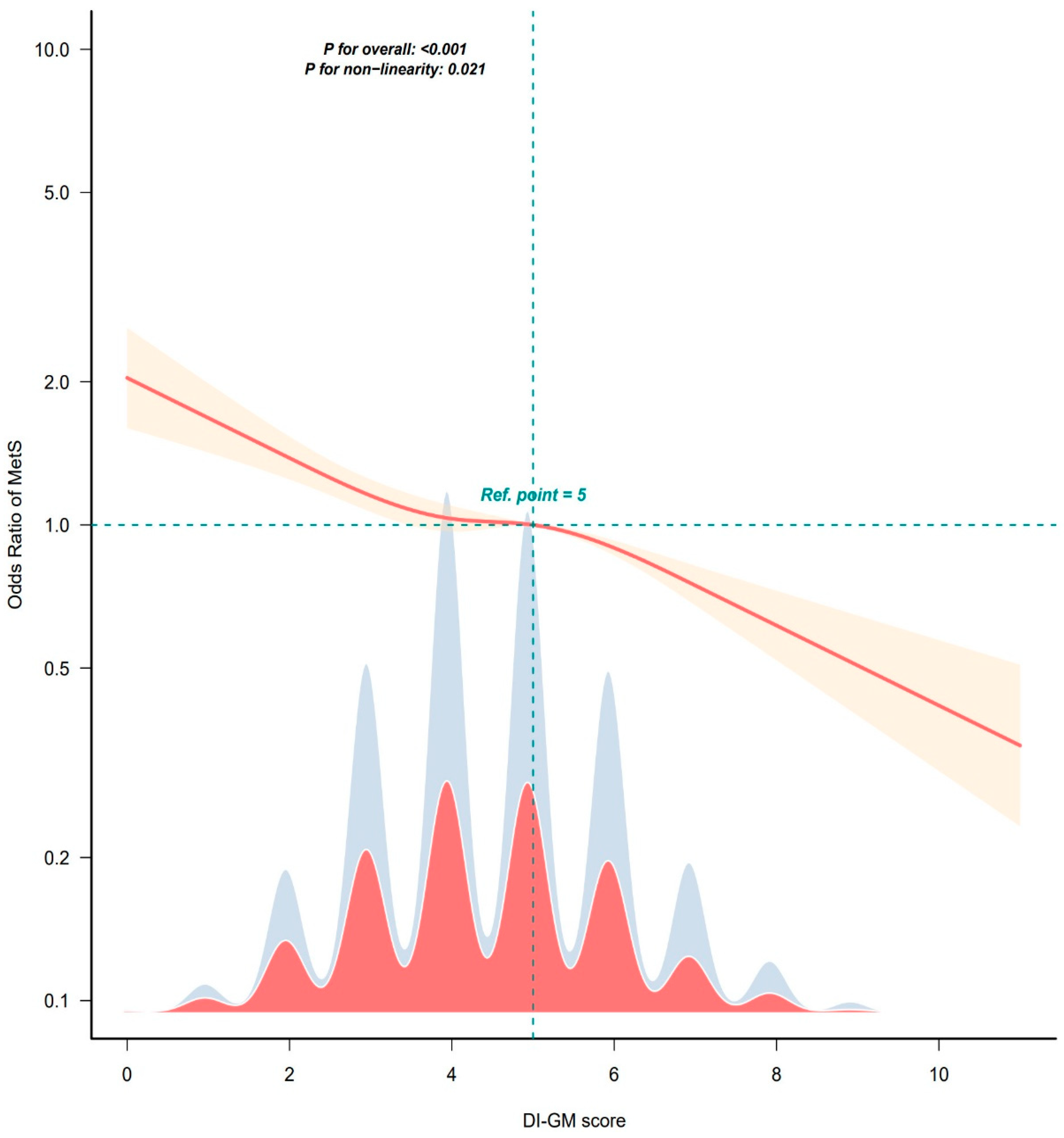
3.4. Curve Fitting and Inflection Point Analysis
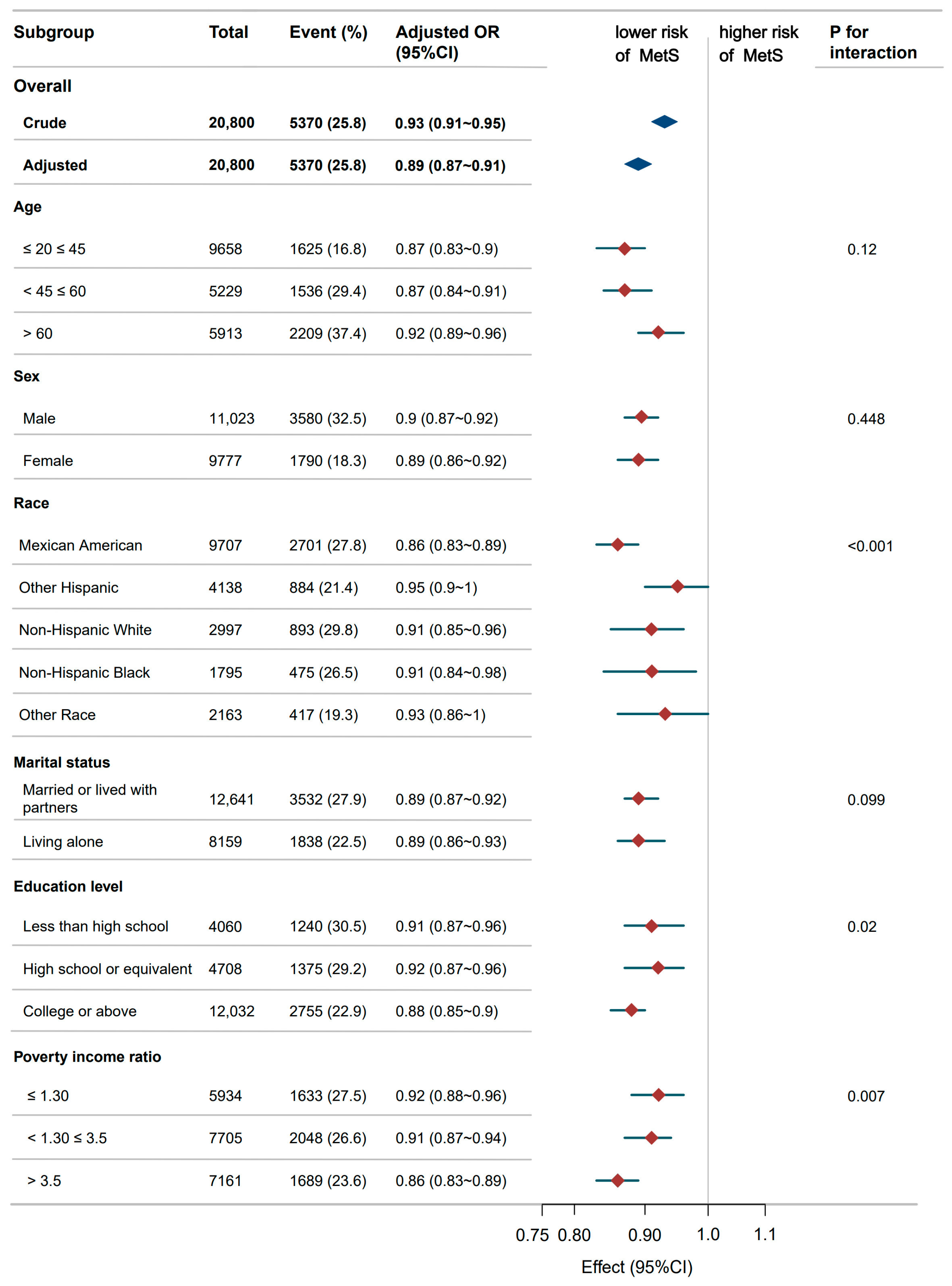
3.5. Subgroup Analysis
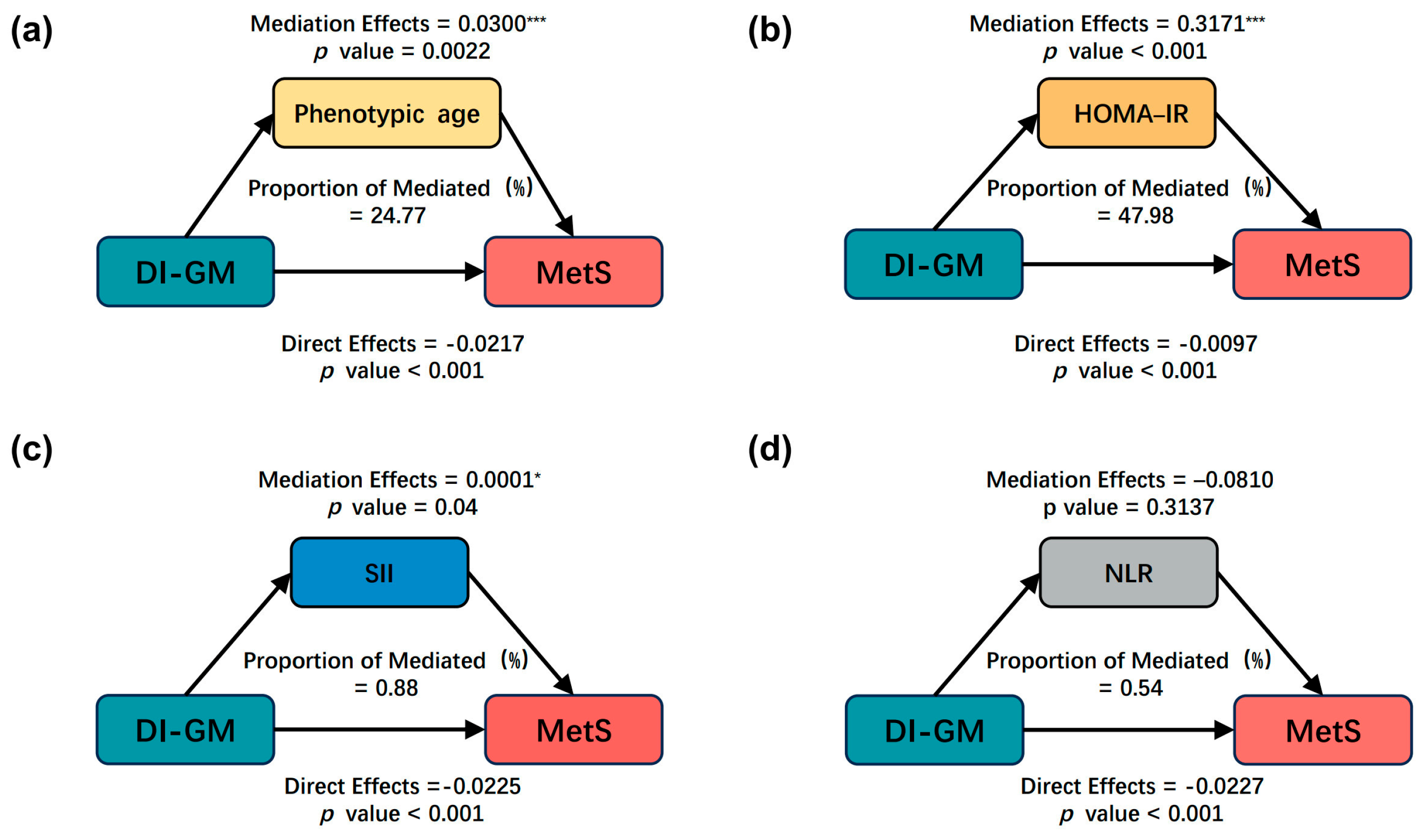
3.6. Mediation Effect Analysis
4. Discussion
5. Conclusions
Supplementary Materials
Author Contributions
Funding
Data Availability Statement
Acknowledgments
Conflicts of Interest
Abbreviations
| DI-GM | Dietary index for gut microbiota |
| MetS | Metabolic syndrome |
| SII | Systemic immune–inflammation index |
| NLR | Neutrophil-to-lymphocyte ratio |
| HOMA-IR | Homeostatic model assessment for insulin resistance |
| NHANES | National Health and Nutrition Examination Survey |
| BMI | Body mass index |
| RCS | Restricted cubic splines |
| PIR | Poverty-to-income ratio |
| MET | Metabolic equivalent |
| SCFA | Short-chain fatty acid |
| GDD | Global Dietary Database |
| GBD | Global Burden of Disease |
References
- Tian, Y.; Li, D.; Cui, H.; Zhang, X.; Fan, X.; Lu, F. Epidemiology of multimorbidity associated with atherosclerotic cardiovascular disease in the united states, 1999–2018. BMC Public Health 2024, 24, 267. [Google Scholar] [CrossRef] [Scilit]
- Hirode, G.; Wong, R.J. Trends in the prevalence of metabolic syndrome in the united states, 2011–2016. JAMA 2020, 323, 2526–2528. [Google Scholar] [CrossRef] [Scilit] [PubMed]
- Islam, M.S.; Wei, P.; Suzauddula, M.; Nime, I.; Feroz, F.; Acharjee, M.; Pan, F. The interplay of factors in metabolic syndrome: Understanding its roots and complexity. Mol. Med. 2024, 30, 279. [Google Scholar] [CrossRef] [Scilit]
- Saklayen, M.G. The global epidemic of the metabolic syndrome. Curr. Hypertens. Rep. 2018, 20, 12. [Google Scholar] [CrossRef] [Scilit]
- Huang, L.; Zhang, Z.; Zhang, F.; Zhang, W.; Meng, X.; Jian, T.; Ding, X.; Chen, J. Amelioration of metabolic syndrome in high-fat diet-fed mice by total sesquiterpene lactones of chicory via modulation of intestinal flora and bile acid excretion. Food Funct. 2025, 16, 1830–1846. [Google Scholar] [CrossRef] [Scilit]
- Gao, Y.; Liu, Y.; Li, Z.; Lu, L.; Guo, Y.; Su, D.; Zhang, H. Multi-strain probiotics attenuate carbohydrate-lipid metabolic dysregulation in type 2 diabetic rats via gut-liver axis modulation. mSystems 2025, 10, e0036925. [Google Scholar] [CrossRef] [Scilit]
- Li, X.; Suo, J.; Huang, X.; Dai, H.; Bian, H.; Zhu, M.; Lin, W.; Han, N. Whole grain qingke attenuates high-fat diet-induced obesity in mice with alterations in gut microbiota and metabolite profile. Front. Nutr. 2021, 8, 761727. [Google Scholar] [CrossRef] [Scilit]
- Scheithauer, T.P.M.; Rampanelli, E.; Nieuwdorp, M.; Vallance, B.A.; Verchere, C.B.; van Raalte, D.H.; Herrema, H. Gut microbiota as a trigger for metabolic inflammation in obesity and type 2 diabetes. Front. Immunol. 2020, 11, 571731. [Google Scholar] [CrossRef] [Scilit] [PubMed]
- Liu, D.; Zhang, S.; Li, S.; Zhang, Q.; Cai, Y.; Li, P.; Li, H.; Shen, B.; Liao, Q.; Hong, Y.; et al. Indoleacrylic acid produced by parabacteroides distasonis alleviates type 2 diabetes via activation of AhR to repair intestinal barrier. BMC Biol. 2023, 21, 90. [Google Scholar] [CrossRef] [Scilit]
- Tzeng, H.; Lee, W. Impact of transgenerational nutrition on nonalcoholic fatty liver disease development: Interplay between gut microbiota, epigenetics and immunity. Nutrients 2024, 16, 1388. [Google Scholar] [CrossRef] [Scilit] [PubMed]
- Sonnenburg, J.L.; Backhed, F. Diet-microbiota interactions as moderators of human metabolism. Nature 2016, 535, 56–64. [Google Scholar] [CrossRef] [Scilit]
- Yan, J.; Wang, L.; Gu, Y.; Hou, H.; Liu, T.; Ding, Y.; Cao, H. Dietary patterns and gut microbiota changes in inflammatory bowel disease: Current insights and future challenges. Nutrients 2022, 14, 4003. [Google Scholar] [CrossRef] [Scilit] [PubMed]
- Wu, Z.; Gong, C.; Wang, B. The relationship between dietary index for gut microbiota and diabetes. Sci. Rep. 2025, 15, 6234. [Google Scholar] [CrossRef] [Scilit]
- Qu, H.; Yang, Y.; Xie, Q.; Ye, L.; Shao, Y. Linear association of the dietary index for gut microbiota with insulin resistance and type 2 diabetes mellitus in u.s. adults: The mediating role of body mass index and inflammatory markers. Front. Nutr. 2025, 12, 1557280. [Google Scholar] [CrossRef] [Scilit]
- Kase, B.E.; Liese, A.D.; Zhang, J.; Murphy, E.A.; Zhao, L.; Steck, S.E. The development and evaluation of a literature-based dietary index for gut microbiota. Nutrients 2024, 16, 1045. [Google Scholar] [CrossRef] [Scilit]
- Zheng, Y.; Hou, J.; Guo, S.; Song, J. The association between the dietary index for gut microbiota and metabolic dysfunction-associated fatty liver disease: A cross-sectional study. Diabetol. Metab. Syndr. 2025, 17, 17. [Google Scholar] [CrossRef] [Scilit]
- Shu, Y.; Hong, W.; Liu, J.; Zhu, X. Exploring the association of dietary index for gut microbiota with parkinson’s disease and depression: Insights from NHANES. J. Affect. Disord. 2025, 386, 119461. [Google Scholar] [CrossRef] [Scilit] [PubMed]
- Yang, Q.; Wu, X.; Duan, J.; Chen, Y.; Yang, T. Inflammatory parameters mediates the relationship between dietary index for gut microbiota and frailty in middle-aged and older adults in the united states: Findings from a large-scale population-based study. Front. Nutr. 2025, 12, 1553467. [Google Scholar] [CrossRef] [Scilit] [PubMed]
- Zhang, J.; Guo, J.; Zhang, J.; Liu, H.; Zhou, L.; Cheng, C.; Cao, H. The mediating role of biological age in the association between dietary index for gut microbiota and sarcopenia. Front. Immunol. 2025, 16, 1552525. [Google Scholar] [CrossRef] [Scilit]
- Zhang, X.; Yang, Q.; Huang, J.; Lin, H.; Luo, N.; Tang, H. Association of the newly proposed dietary index for gut microbiota and depression: The mediation effect of phenotypic age and body mass index. Eur. Arch. Psychiatry Clin. Neurosci. 2025, 275, 1037–1048. [Google Scholar] [CrossRef] [Scilit]
- Li, X.; Liu, Y.; Shen, C.; Shao, C.; Jiang, H. Association of dietary index for gut microbiota with frailty in middle-aged and older americans: A cross-sectional study and mediation analysis. Front. Nutr. 2025, 12, 1615386. [Google Scholar] [CrossRef] [Scilit]
- Ozcan, S.; Erhan, B. Prevalence of metabolic syndrome among individuals with spinal cord injury: A cross-sectional analysis. Cureus 2025, 17, e86420. [Google Scholar] [CrossRef] [Scilit] [PubMed]
- Liu, Z.; Kuo, P.; Horvath, S.; Crimmins, E.; Ferrucci, L.; Levine, M. A new aging measure captures morbidity and mortality risk across diverse subpopulations from NHANES IV: A cohort study. PLoS Med. 2018, 15, e1002718. [Google Scholar] [CrossRef] [Scilit]
- Chen, L.; Zhao, Y.; Liu, F.; Chen, H.; Tan, T.; Yao, P.; Tang, Y. Biological aging mediates the associations between urinary metals and osteoarthritis among U.S. adults. BMC Med. 2022, 20, 207. [Google Scholar] [CrossRef] [Scilit]
- Liu, H.; Xu, X.; Yao, Z.; Kang, J.; Shen, Y.; Liu, W. Association between the dietary index for gut microbiota and metabolic syndrome in adults: The mediating role of body mass index. Front. Nutr. 2025, 12, 1598664. [Google Scholar] [CrossRef] [Scilit] [PubMed]
- Miao, M.; Qiao, S.; Pan, W.; Xia, Z.; Li, W.; Lin, C. Association between the dietary index for gut microbiota and atherosclerotic cardiovascular disease risk among US elderly adults: A cross sectional study. Nutr. J. 2025, 24, 77. [Google Scholar] [CrossRef] [Scilit]
- Zeng, Q.; Xiao, C.; Zeng, X.; Cao, G.; Liu, G.; Wu, J.; Lin, X.; Deng, W.; Luo, J. Association between dietary index for gut microbiota and hypertension: A large cross-sectional study from NHANES. BMJ Nutr. Prev. Health 2025, 8, e001163. [Google Scholar] [CrossRef] [Scilit]
- Jiang, J.; Liu, Y.; Yang, H.; Ma, Z.; Liu, W.; Zhao, M.; Peng, X.; Qin, X.; Xia, Y. Dietary fiber intake, genetic predisposition of gut microbiota, and the risk of metabolic dysfunction-associated steatotic liver disease. Food Res. Int. 2025, 211, 116497. [Google Scholar] [CrossRef] [Scilit]
- Liu, J.; Huang, S. Association between the dietary index for gut microbiota and alzheimer’s disease: A cross-sectional study from the national health and nutrition examination survey (2004 to 2018). Alzheimers Dement. 2025, 17, e70170. [Google Scholar] [CrossRef] [Scilit]
- Liu, J.; Huang, S. Association between dietary index for gut microbiota and sleep duration in US adults: A cross-sectional study. Curr. Res. Microb. Sci. 2025, 9, 100412. [Google Scholar] [CrossRef] [Scilit] [PubMed]
- Song, J.; Fu, J. Association between dietary index for gut microbiota and osteoarthritis in the US population: The mediating role of systemic immune-inflammation index. Front. Nutr. 2025, 12, 1543674. [Google Scholar] [CrossRef] [Scilit] [PubMed]
- White, I.R.; Royston, P.; Wood, A.M. Multiple imputation using chained equations: Issues and guidance for practice. Stat. Med. 2011, 30, 377–399. [Google Scholar] [CrossRef] [Scilit] [PubMed]
- Beesley, L.J.; Bondarenko, I.; Elliot, M.R.; Kurian, A.W.; Katz, S.J.; Taylor, J.M. Multiple imputation with missing data indicators. Stat. Methods Med. Res. 2021, 30, 2685–2700. [Google Scholar] [CrossRef] [Scilit]
- Geirnaert, A.; Calatayud, M.; Grootaert, C.; Laukens, D.; Devriese, S.; Smagghe, G.; De Vos, M.; Boon, N.; Van De Wiele, T. Butyrate-producing bacteria supplemented in vitro to crohn’s disease patient microbiota increased butyrate production and enhanced intestinal epithelial barrier integrity. Sci. Rep. 2017, 7, 11450. [Google Scholar] [CrossRef] [Scilit]
- Hussain, T.; Murtaza, G.; Kalhoro, D.H.; Kalhoro, M.S.; Metwally, E.; Chughtai, M.I.; Mazhar, M.U.; Khan, S.A. Relationship between gut microbiota and host-metabolism: Emphasis on hormones related to reproductive function. Anim. Nutr. 2021, 7, 1–10. [Google Scholar] [CrossRef] [Scilit]
- Jia, W.; Xie, G.; Jia, W. Bile acid-microbiota crosstalk in gastrointestinal inflammation and carcinogenesis. Nat. Rev. Gastroenterol. Hepatol. 2018, 15, 111–128. [Google Scholar] [CrossRef] [Scilit]
- Murase, T.; Haramizu, S.; Shimotoyodome, A.; Nagasawa, A.; Tokimitsu, I. Green tea extract improves endurance capacity and increases muscle lipid oxidation in mice. Am. J. Physiol. Regul. Integr. Comp. Physiol. 2005, 288, R708–R715. [Google Scholar] [CrossRef] [Scilit] [PubMed]
- Zaiou, M.; Joubert, O. Racial and ethnic disparities in NAFLD: Harnessing epigenetic and gut microbiota pathways for targeted therapeutic approaches. Biomolecules 2025, 15, 669. [Google Scholar] [CrossRef] [Scilit]
- Wang, D.D.; Nguyen, L.H.; Li, Y.; Yan, Y.; Ma, W.; Rinott, E.; Ivey, K.L.; Shai, I.; Willett, W.C.; Hu, F.B.; et al. The gut microbiome modulates the protective association between a mediterranean diet and cardiometabolic disease risk. Nat. Med. 2021, 27, 333–343. [Google Scholar] [CrossRef] [Scilit] [PubMed]
- Bragazzi, N.L.; Woldegerima, W.A.; Siri, A. Economic microbiology: Exploring microbes as agents in economic systems. Front. Microbiol. 2024, 15, 1305148. [Google Scholar] [CrossRef] [Scilit]
- Phillips, E.; Zobrist, S.; Milner, E.M.; Kung’u, J.K.; Heidkamp, R.A.; Benedict, R.K. Nutrition intervention coverage and inequities along the continuum of care: Results from the eighth demographic and health survey in six sub-saharan african countries. Matern. Child. Nutr. 2025, 22, e70085. [Google Scholar] [CrossRef] [Scilit]
- Mackessy, J.A.; Thompson, A.L.; Bentley, P.E.; Hoke, M.K.; Woods Barr, A.L.; Wasser, H.M. The impact of labor mismatch on achieving breastfeeding goals among non-hispanic black women in north carolina. Am. J. Biol. Anthropol. 2025, 188, e70115. [Google Scholar] [CrossRef] [Scilit] [PubMed]
- Wei, N.; Quan, Z.; Zhao, T.; Yu, X.; Xie, Q.; Zeng, J.; Ma, F.-K.; Wang, F.; Tang, Q.-S.; Wu, H.; et al. Chronic stress increases susceptibility to food addiction by increasing the levels of DR2 and MOR in the nucleus accumbens. Neuropsychiatr. Dis. Treat. 2019, 15, 1211–1229. [Google Scholar] [CrossRef] [Scilit]
- Niu, Y.; Xiao, L.; Feng, L. Association between dietary index for gut microbiota and metabolic syndrome risk: A cross-sectional analysis of NHANES 2007–2018. Sci. Rep. 2025, 15, 15153. [Google Scholar] [CrossRef] [Scilit] [PubMed]
- Kimura, I.; Ozawa, K.; Inoue, D.; Imamura, T.; Kimura, K.; Maeda, T.; Terasawa, K.; Kashihara, D.; Hirano, K.; Tani, T.; et al. The gut microbiota suppresses insulin-mediated fat accumulation via the short-chain fatty acid receptor GPR43. Nat. Commun. 2013, 4, 1829. [Google Scholar] [CrossRef] [Scilit]
- Canfora, E.E.; Jocken, J.W.; Blaak, E.E. Short-chain fatty acids in control of body weight and insulin sensitivity. Nat. Rev. Endocrinol. 2015, 11, 577–591. [Google Scholar] [CrossRef] [Scilit]
- Wahlstrom, A.; Sayin, S.I.; Marschall, H.; Backhed, F. Intestinal crosstalk between bile acids and microbiota and its impact on host metabolism. Cell Metab. 2016, 24, 41–50. [Google Scholar] [CrossRef] [Scilit]
- Chen, J.; Wang, M.; Zhang, P.; Li, H.; Qu, K.; Xu, R.; Guo, N.; Zhu, H. Cordycepin alleviated metabolic inflammation in western diet-fed mice by targeting intestinal barrier integrity and intestinal flora. Pharmacol. Res. 2022, 178, 106191. [Google Scholar] [CrossRef] [Scilit]
- Smith, P.M.; Howitt, M.R.; Panikov, N.; Michaud, M.; Gallini, C.A.; Bohlooly-Y, M.; Glickman, J.N.; Garrett, W.S. The microbial metabolites, short-chain fatty acids, regulate colonic treg cell homeostasis. Science 2013, 341, 569–573. [Google Scholar] [CrossRef] [Scilit]
- Liu, T.; Cao, Y.; Liang, N.; Ma, X.; Fang, J.; Zhang, X. Investigating the causal association between gut microbiota and type 2 diabetes: A meta-analysis and Mendelian randomization. Front. Public Health 2024, 12, 134. [Google Scholar] [CrossRef] [Scilit] [PubMed]



| Variables | DI-GM Score | |||||
|---|---|---|---|---|---|---|
| Total | Q1 (0–3) | Q2 (4) | Q3 (5) | Q4 (≥6) | p Value | |
| n = 20,800 | n = 1654 | n = 3407 | n = 5186 | n = 10,553 | ||
| Age (y), n (%) | <0.001 | |||||
| ≤20 ≤ 45 | 9658 (46.4) | 951 (57.5) | 1904 (55.9) | 2593 (50) | 4210 (39.9) | |
| <45 ≤ 60 | 5229 (25.1) | 367 (22.2) | 810 (23.8) | 1291 (24.9) | 2761 (26.2) | |
| >60 | 5913 (28.4) | 336 (20.3) | 693 (20.3) | 1302 (25.1) | 3582 (33.9) | |
| Gender, n (%) | <0.001 | |||||
| Male | 11,023 (53.0) | 933 (56.4) | 1925 (56.5) | 2886 (55.6) | 5279 (50) | |
| Female | 9777 (47.0) | 721 (43.6) | 1482 (43.5) | 2300 (44.4) | 5274 (50) | |
| Race, n (%) | <0.001 | |||||
| Mexican American | 9707 (46.7) | 663 (40.1) | 1413 (41.5) | 2326 (44.9) | 5305 (50.3) | |
| Other Hispanic | 4138 (19.9) | 547 (33.1) | 907 (26.6) | 1085 (20.9) | 1599 (15.2) | |
| Non-Hispanic White | 2997 (14.4) | 200 (12.1) | 495 (14.5) | 827 (15.9) | 1475 (14) | |
| Non-Hispanic Black | 1795 (8.6) | 105 (6.3) | 278 (8.2) | 468 (9) | 944 (8.9) | |
| Other race | 2163 (10.4) | 139 (8.4) | 314 (9.2) | 480 (9.3) | 1230 (11.7) | |
| Marital status, n (%) | <0.001 | |||||
| Married or lived with partners | 12,641 (60.8) | 947 (57.3) | 1927 (56.6) | 3086 (59.5) | 6681 (63.3) | |
| Living alone | 8159 (39.2) | 707 (42.7) | 1480 (43.4) | 2100 (40.5) | 3872 (36.7) | |
| Education level, n (%) | <0.001 | |||||
| Less than high school | 4060 (19.5) | 355 (21.5) | 755 (22.2) | 1120 (21.6) | 1830 (17.3) | |
| High school or equivalent | 4708 (22.6) | 466 (28.2) | 934 (27.4) | 1265 (24.4) | 2043 (19.4) | |
| College or above | 12,032 (57.8) | 833 (50.4) | 1718 (50.4) | 2801 (54) | 6680 (63.3) | |
| Poverty–income ratio, n (%) | <0.001 | |||||
| ≤1.30 | 5934 (28.5) | 564 (34.1) | 1170 (34.3) | 1692 (32.6) | 2508 (23.8) | |
| <1.30 ≤ 3.5 | 7705 (37.0) | 623 (37.7) | 1343 (39.4) | 1907 (36.8) | 3832 (36.3) | |
| >3.5 | 7161 (34.4) | 467 (28.2) | 894 (26.2) | 1587 (30.6) | 4213 (39.9) | |
| Smoke status, n (%) | <0.001 | |||||
| Never | 11,394 (54.8) | 904 (54.7) | 1824 (53.5) | 2771 (53.4) | 5895 (55.9) | |
| Current | 5038 (24.2) | 327 (19.8) | 704 (20.7) | 1160 (22.4) | 2847 (27) | |
| Former | 4368 (21.0) | 423 (25.6) | 879 (25.8) | 1255 (24.2) | 1811 (17.2) | |
| Alcohol use, n (%) | 0.901 | |||||
| Light | 2462 (11.8) | 191 (11.5) | 384 (11.3) | 623 (12) | 1264 (12) | |
| Moderate | 2948 (14.2) | 244 (14.8) | 489 (14.4) | 738 (14.2) | 1477 (14) | |
| Heavy | 15,390 (74.0) | 1219 (73.7) | 2534 (74.4) | 3825 (73.8) | 7812 (74) | |
| Physical activity, n (%) | 0.128 | |||||
| Insufficient | 1208 (5.8) | 116 (7) | 189 (5.5) | 326 (6.3) | 577 (5.5) | |
| Moderate | 1431 (6.9) | 117 (7.1) | 236 (6.9) | 343 (6.6) | 735 (7) | |
| Vigorous | 18,161 (87.3) | 1421 (85.9) | 2982 (87.5) | 4517 (87.1) | 9241 (87.6) | |
| Sleep quality, n (%) | <0.001 | |||||
| Poor | 1370 (6.6) | 112 (6.8) | 233 (6.8) | 389 (7.5) | 636 (6) | |
| Middle | 4467 (21.5) | 391 (23.6) | 780 (22.9) | 1084 (20.9) | 2212 (21) | |
| Good | 14,963 (71.9) | 1151 (69.6) | 2394 (70.3) | 3713 (71.6) | 7705 (73) | |
| Calorie consumption (kcal/d) mean ± SD | 2186.2 ± 1018.4 | 2313.0 ± 1015.1 | 2278.2 ± 1092.3 | 2230.0 ± 1102.8 | 2115.0 ± 942.9 | <0.001 |
| BMI (kg/m2) mean ± SD | 28.9 ± 6.7 | 30.3 ± 7.5 | 29.6 ± 7.1 | 29.1 ± 6.8 | 28.4 ± 6.3 | <0.001 |
| SII, mean ± SD | 526.5 ± 325.5 | 523.1 ± 314.0 | 530.8 ± 363.3 | 534.6 ± 326.0 | 521.6 ± 313.9 | 0.094 |
| NLR, n (%) | 0.01 | |||||
| Low | 17,770 (85.4) | 1458 (88.1) | 2916 (85.6) | 4421 (85.2) | 8975 (85) | |
| High | 3030 (14.6) | 196 (11.9) | 491 (14.4) | 765 (14.8) | 1578 (15) | |
| HOMA-IR, median (IQR) | 2.4 (1.4, 4.1) | 2.9 (1.7, 4.8) | 2.5 (1.6, 4.4) | 2.4 (1.4, 4.1) | 2.2 (1.4, 3.8) | <0.001 |
| MetS, n (%) | <0.001 | |||||
| No | 15,430 (74.2) | 1156 (69.9) | 2477 (72.7) | 3866 (74.5) | 7931 (75.2) | |
| Yes | 5370 (25.8) | 498 (30.1) | 930 (27.3) | 1320 (25.5) | 2622 (24.8) | |
| CVD, n (%) | 0.036 | |||||
| No | 18,296 (91.5) | 1466 (92.3) | 2987 (92.4) | 4526 (91.8) | 9317 (91) | |
| Yes | 1695 (8.5) | 122 (7.7) | 246 (7.6) | 405 (8.2) | 922 (9) | |
| Stroke, n (%) | 0.802 | |||||
| No | 19,444 (97.3) | 1539 (96.9) | 3147 (97.3) | 4801 (97.4) | 9957 (97.2) | |
| Yes | 547 (2.7) | 49 (3.1) | 86 (2.7) | 130 (2.6) | 282 (2.8) | |
| DI-GM | Crude | Model 1 | Model 2 | Model 3 | ||||||
|---|---|---|---|---|---|---|---|---|---|---|
| n. Total | n. Event_% | OR (95%CI) | p Value | OR (95%CI) | p Value | OR (95%CI) | p Value | OR (95%CI) | p Value | |
| Overall | 20,800 | 5370 (25.8) | 0.93 (0.91~0.95) | <0.001 | 0.88 (0.86~0.89) | <0.001 | 0.89 (0.87~0.91) | <0.001 | 0.90 (0.87~0.91) | <0.001 |
| Cut values | ||||||||||
| Q1: ≤3 | 1654 | 498 (30.1) | 1 (Ref) | 1 (Ref) | 1 (Ref) | 1 (Ref) | 0.007 | |||
| Q2: 4 | 3407 | 930 (27.3) | 0.87 (0.77~0.99) | 0.037 | 0.83 (0.72~0.95) | 0.006 | 0.83 (0.72~0.95) | 0.006 | 0.83 (0.72~0.95) | <0.001 |
| Q3: 5 | 5186 | 1320 (25.5) | 0.79 (0.7~0.9) | <0.001 | 0.68 (0.59~0.77) | <0.001 | 0.68 (0.6~0.78) | <0.001 | 0.69 (0.6~0.78) | <0.001 |
| Q4: ≥6 | 10,553 | 2622 (24.8) | 0.77 (0.68~0.86) | <0.001 | 0.59 (0.53~0.67) | <0.001 | 0.62 (0.55~0.7) | <0.001 | 0.63 (0.56~0.71) | <0.001 |
| Trend test | <0.001 | <0.001 | <0.001 | <0.001 | ||||||
| Risk Factors of MetS | Spearman Correlation Coefficient | p Value |
|---|---|---|
| Metabolic risks | −0.111 | 0.156 |
| High systolic blood pressure | −0.107 | 0.173 |
| High body mass index | −0.117 | 0.136 |
| High fasting plasma glucose | −0.122 | 0.121 |
| High LDL cholesterol | −0.105 | 0.181 |
| Prevalent MetS-Related Diseases | Spearman Correlation Coefficient | p Value |
|---|---|---|
| Non-alcoholic fatty liver disease | −0.156 * | 0.046 |
| Chronic kidney disease due to diabetes mellitus type 2 | −0.202 ** | 0.009 |
| Hypertensive heart disease | −0.126 | 0.107 |
| Other cardiovascular and circulatory diseases | −0.119 | 0.128 |
| Chronic kidney disease due to hypertension | −0.167 * | 0.033 |
| Diabetes mellitus type 2 | −0.144 | 0.066 |
| Pulmonary arterial hypertension | −0.072 | 0.361 |
| Stroke | −0.010 | 0.207 |
| Item | Breakpoint OR (95%CI) | p Value |
|---|---|---|
| E_BK1 | 4.972 (4.925, 5.019) | NA |
| Slope1 | 0.84 (0.80~0.89) | <0.001 |
| Slope2 | 0.86 (0.82~0.91) | <0.001 |
| Likelihood ratio test | 0.031 |
Disclaimer/Publisher’s Note: The statements, opinions and data contained in all publications are solely those of the individual author(s) and contributor(s) and not of MDPI and/or the editor(s). MDPI and/or the editor(s) disclaim responsibility for any injury to people or property resulting from any ideas, methods, instructions or products referred to in the content. |
© 2026 by the authors. Licensee MDPI, Basel, Switzerland. This article is an open access article distributed under the terms and conditions of the Creative Commons Attribution (CC BY) license.
Share and Cite
Li, X.; Guan, J.; Liu, Y.; Luo, S.; Gong, Y.; Jiang, H.; Shao, C. Novel Targets for Precision Nutrition: Insulin Resistance and Phenotypic Age Mediate the Protective Effect of Gut Microbiota-Targeted Diet on Metabolic Syndrome. Obesities 2026, 6, 33. https://doi.org/10.3390/obesities6030033
Li X, Guan J, Liu Y, Luo S, Gong Y, Jiang H, Shao C. Novel Targets for Precision Nutrition: Insulin Resistance and Phenotypic Age Mediate the Protective Effect of Gut Microbiota-Targeted Diet on Metabolic Syndrome. Obesities. 2026; 6(3):33. https://doi.org/10.3390/obesities6030033
Chicago/Turabian StyleLi, Xiaodan, Jialu Guan, Ying Liu, Shengcong Luo, Youwu Gong, Hongke Jiang, and Changzhuan Shao. 2026. "Novel Targets for Precision Nutrition: Insulin Resistance and Phenotypic Age Mediate the Protective Effect of Gut Microbiota-Targeted Diet on Metabolic Syndrome" Obesities 6, no. 3: 33. https://doi.org/10.3390/obesities6030033
APA StyleLi, X., Guan, J., Liu, Y., Luo, S., Gong, Y., Jiang, H., & Shao, C. (2026). Novel Targets for Precision Nutrition: Insulin Resistance and Phenotypic Age Mediate the Protective Effect of Gut Microbiota-Targeted Diet on Metabolic Syndrome. Obesities, 6(3), 33. https://doi.org/10.3390/obesities6030033