1. Introduction
With the aim of reducing global CO
2 emissions in all energy sectors, the use of different sustainable fuels and/or energy carriers is becoming increasingly widespread [
1,
2,
3]. In the global context, CO
2 emissions increased by about 66% between 1990 and 2021 [
4], with the mobility sector accounting for nearly 25% of global emissions in 2022 [
4,
5,
6] and 29.3% in Europe [
7]. International agreements such us the United Nations Framework Convention on Climate Change (UNFCC, 1992), the Kyoto Protocol (1997) and the Paris Agreement (2015) have established targets to limit the global temperature increase to well below 2 °C above pre-industrial levels [
8,
9]. In this context, sustainable fuels and energy carriers, particularly hydrogen, represent a crucial pathway for decarbonizing transportation [
10,
11,
12,
13].
Among zero-emission vehicle technologies, Battery Electric Vehicles (BEV) and Fuel Cell Electric Vehicles (FCEV) present distinct advantages for different applications [
14,
15,
16]. In FCEV, hydrogen is stored in tanks, mostly at high pressure, and then converted into electricity via fuel cells to power the electric motor, whereas in BEVs the electrical energy is supplied directly by the batteries. While both are emission-free during operation and batteries offer higher energy efficiency [
17], the weight penalty becomes critical in heavy-duty applications [
17,
18,
19,
20]. Currently, BEV trucks dominate the market with approximately 320,000 units globally compared to only 5000 FCEV trucks in 2022 [
21]. However, FCEVs offer significant advantages for long-haul heavy-duty transport: hydrogen’s superior gravimetric energy density enables longer range, greater payload capacity, and refueling times comparable to conventional vehicles (10 min for heavy-duty vs. over 1 h for BEV fast charging) [
17,
19,
20]. Despite these advantages, widespread FCEV adoption remains limited by infrastructure availability, production costs, and the need for more efficient fuel cell systems [
22].
For heavy-duty FCEVs, hydrogen storage represents a critical design challenge. High-pressure gas compression and cryogenic liquefaction are the most widespread methods in practical applications [
22,
23,
24,
25]. Several studies have been conducted on hydrogen storage with metal hydrides [
26,
27], liquefied hydrogen [
28,
29,
30,
31], and high-pressure hydrogen gas [
32,
33] in heavy-duty FCEVs, with the latter method being the most widespread. Among the five tank types available for gaseous hydrogen storage, Type III (aluminum liner with full composite wrap) and Type IV (plastic liner with composite wrap) are preferred for FCEVs due to their ability to reach 700 bar, lower weight, higher gravimetric capacity, and better resistance to hydrogen embrittlement under cyclic refueling compared to Type I and II (all-metal or partial composite, max 300 bar) [
34,
35,
36,
37,
38]. Type V tanks (single composite layer) have been tested up to 310 bar for aerospace applications but remain at low technological maturity for 700 bar FCEV applications [
38,
39,
40,
41,
42,
43].
Fast hydrogen refueling presents significant safety concerns due to rapid temperature increases caused by gas compression and negative Joule–Thomson effects [
44,
45,
46]. To avoid tank failure, deformation, or overheating during fast refueling, strict safety limits have been defined. The SAE J2601-5 protocol for heavy-duty vehicles establishes strict limits: maximum pressure of 1.25 times the nominal working pressure and maximum temperature of 85 °C [
36,
47,
48,
49,
50,
51]. Accurate thermal modeling requires dynamic calculation of heat transfer coefficients using semi-empirical correlations (Nusselt, Reynolds, Rayleigh numbers) that account for varying mass flow rate, injection diameter, gas temperature, and pressure-dependent properties [
52].
Building on these considerations, several studies have been carried out on thermodynamic modelling of hydrogen storage tanks for heavy duty vehicles, with or without including the infrastructure modelling. Fragiacomo et al. [
53] modelled in Matlab-Simulink the process of refueling a storage tank in a heavy-duty FCEV, considering pressure losses and control valves. In this study, a type IV tank of 230 L and nominal pressure of 35 MPa was considered. The results obtained varying the Average Pressure Ramp Rate (APRR, 2 ÷ 14 MPa/min, i.e., the average rate of pressure increase during refueling), cooling temperature (−40 ÷ 0 °C), ambient temperature (0 ÷ 40 °C), show a refueling time between values close to 10 ÷ 3.5 min, respecting the pressure and temperature limit of SAE J2601. Luo et al. [
54] studied a way to reduce the refueling time from 40 min to 20 min, starting from the limits set by SAE J2601-2 and introducing a three-stage cascade refueling. They validated their model in Matlab-Simulink considering a single tank of 90.2 L at 70 MPa to then consider multiple tanks with a nominal working pressure of 35 MPa. The proposed method improves mass flow rates by using sequential storage banks at decreasing pressures and managing hydrogen temperature dynamically during refueling. This allows faster filling without exceeding safety limits. Xiao et al. [
55] implemented a refueling process for both type III and IV tanks in Matlab-Simulink, considering a nominal working pressure of 35 MPa and 70 MPa and distinguishing also between the tank layers and temperatures for heat transfer (only hydrogen, hydrogen and tank wall and hydrogen, wall liner anmind wall shell). The results show a refueling time close to 3.5 min for each case, but considering very modest tank volumes (29 L, 171 L, 72 L, 150 L). Tun et al. [
56] modeled all the infrastructure components, considering a type IV tank with a nominal working pressure of 70 MPa. Differently to the previous studies, a higher capacity of 1400 L was considered for the onboard storage of 56 kg of hydrogen with two configurations (small or large vessels). The results are shown by varying one parameter per time (precooling temperature, pipe length, pipe diameter, APRR, initial vehicle tank pressure, ambient temperature, tank layout): in particular, the lowest refueling time changes between 4.7 (State of Charge, SOC, lower than 100%, due to reaching the temperature limit) to 9 min (SOC equal to 100%), depending on the simulation. The results discussed above are summarized in
Table 1.
To conclude, there is limited literature on the dynamic modelling of the refueling phase for heavy-duty FCEVs involving large quantities of hydrogen, comparable to those used at a real-life application scale. In addition, comparative analyses of different types of hydrogen storage tanks for such vehicles are still scarce, as also highlighted by recent reviews on hydrogen storage and utilization for heavy-duty transport applications [
57]. This gap is particularly relevant considering that several commercial heavy-duty FCEVs already operate with significant onboard hydrogen storage. As reviewed by Shin et al. [
32], these include multiple heavy-duty hydrogen trucks as commercially available. Reported examples includes the Hyundai XCIENT (2021) with 31 kg at 35 MPa [
58], the Hyundai XCIENT Tractor (2023) with 68.6 kg of hydrogen at 70 MPa [
59], the Forvia XL-Type IV, with 80 kg of hydrogen at 70 MPa [
60], and the Voith Carbon4tank, with 112 kg of hydrogen at 70 MPa [
61]. These values are based on manufacturer-reported specifications, as no peer-reviewed publications currently provide detailed technical descriptions of these commercial systems. Despite the large storage capacities, detailed data on refueling dynamics are scarce. Only Forvia and Voith report refueling times (under 15 min and around 10 min, respectively), with the latter aligning with estimates given in [
56]. Finally, the -funded project RHeaDHy [
62], which is expected to be completed in 2026 for the first phase, aims to refuel 100 kg of hydrogen in 10 min with a high flow refueling rate of 300 g/s. Despite these developments, no comprehensive dynamic model exists that simultaneously: (i) integrates complete infrastructure (dispenser) with onboard multi-tank systems; (ii) compares tank Types III, IV, and V at real-scale capacities (≥100 kg H
2 at 70 MPa); (iii) provides a customizable, scalable toolkit for design optimization; (iv) validates across multiple tank configurations (5–7 tanks or similar) with parametric analysis.
In this regard, this study addresses this critical gap through the following novel contributions:
Comprehensive System Integration: Development of a fully dynamic Matlab-Simulink model connecting the dispenser to multiple onboard tanks, simulating pressure, temperature, and mass-flow interactions across the complete hydrogen storage system, unlike previous models that omitted infrastructure [
53,
54,
55] or examined only single configurations [
56].
Real-Scale Capacity and Comparative Analysis: Investigation of storage systems up to 100 kg H
2 at 70 MPa—representative of actual heavy-duty applications [
58,
59,
60,
61]—with systematic comparison among tank Types III, IV, and V across different configurations (5–7 tanks), addressing the lack of comparative studies at this scale.
Customizable Design Toolkit: Creation of a scalable, modular framework that enables engineers to optimize layout design, evaluate trade-offs between tank types and configurations, and assess the influence of key parameters (APRR, dispenser and ambient temperatures, pipe length, component diameters) on refueling performance within SAE J2601-5 safety limits.
Quantitative Optimization Insights: Parametric analysis providing specific design guidance for achieving minimum refueling time or maximum safe mass flow rate, directly supporting industrial decision-making for hydrogen storage system development.
Therefore, this study fills a critical gap in the current literature by integrating both the vehicle-side and infrastructure-side dynamics into a single, flexible, and validated model, offering a novel methodological framework for the design and optimization of hydrogen storage systems for heavy-duty fuel cell electric vehicles. In this context, the aim of this study is to support engineers in the design and optimization of the layout of a Hydrogen Storage System (HSS) for a generic heavy-duty vehicle, by developing a customizable and dynamic model in Matlab-Simulink that includes both the vehicle storage system and the refueling infrastructure (dispenser). The main objectives are as follows:
To support engineers in the design and optimization of hydrogen storage system layouts, both on the vehicle side and in the refueling infrastructure (valves, receptacle and filling hose), by providing a customizable toolkit that reduces project development time, enables optimal sizing decisions (e.g., tank type and configuration) and ensures full, rapid and safe refueling. This is achieved through the development of a dynamic Matlab-Simulink model that simulates the complete hydrogen storage system, starting from the dispenser and including multiple onboard tanks and connecting components;
To investigate the thermodynamic behavior across all hydrogen tanks in order to find the lowest refueling time (or highest mass flow rate) for heavy duty vehicles storing up to 100 kg of hydrogen at 70 MPa, in compliance with SAE J2601-5 pressure and temperature limits;
To compare results obtained by varying characteristic parameters of different HSS components (APRR, dispenser and ambient temperature, pipes length and components diameter) in order to find the best layout solution between different types (from III to V) and total numbers (from 5 to 7) of tanks.
This integrated approach fills a critical methodological gap in the current literature, offering a novel framework for the design and optimization of hydrogen storage systems for heavy-duty fuel cell electric vehicles.
2. Materials and Methods
In the following, the different tank types (from type III to V), as well as the different layouts of the hydrogen storage system for a heavy-duty vehicle (with a total of 5, 6, or 7 tanks) considered in this study are described. Furthermore, since the refueling of gaseous hydrogen for heavy duty vehicles is regulated by SAE J2601-5 protocol, an overview is made on the most important limits to prevent tank failure. Finally, a description of the dynamic simulation, implemented in Matlab-Simulink R2022b, is given.
2.1. Different Tanks and Layouts
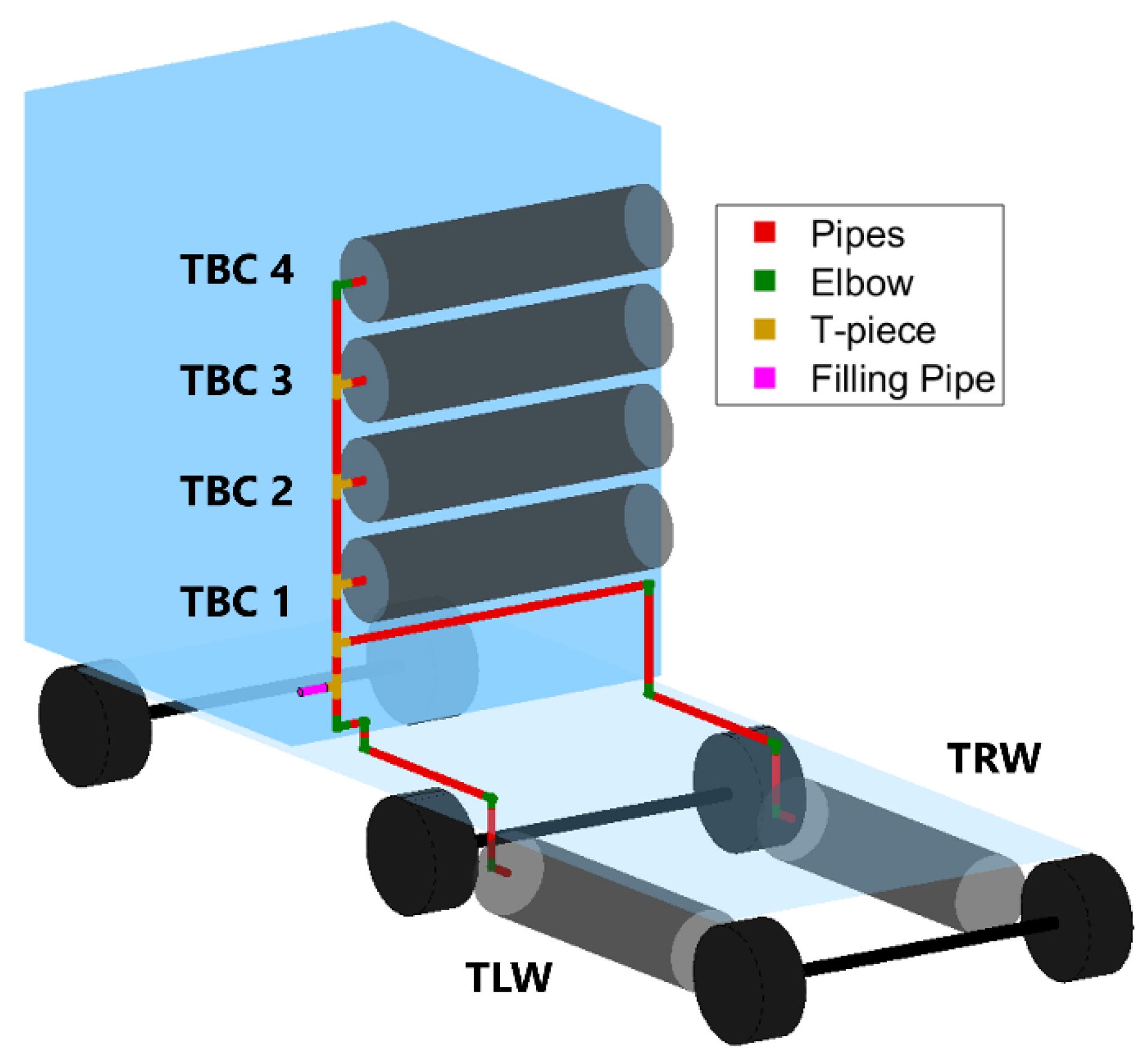
A first layout of a HSS for a generic heavy-duty vehicle has been considered. This configuration was developed starting from the technical specifications of a typical truck chassis, with the goal of maximizing the amount of hydrogen stored while adapting to the available space on board. In particular, the placement and number of tanks were defined to make the best use of the space behind the cabin and between the rear wheels, resulting in a total of 6 identical tanks: 4 positioned behind the cabin and 2 between the wheels.
Figure 1 shows the simplified 4 tanks layout with all the components (pipes, elbows, and T-pieces) in their indicative positions, while
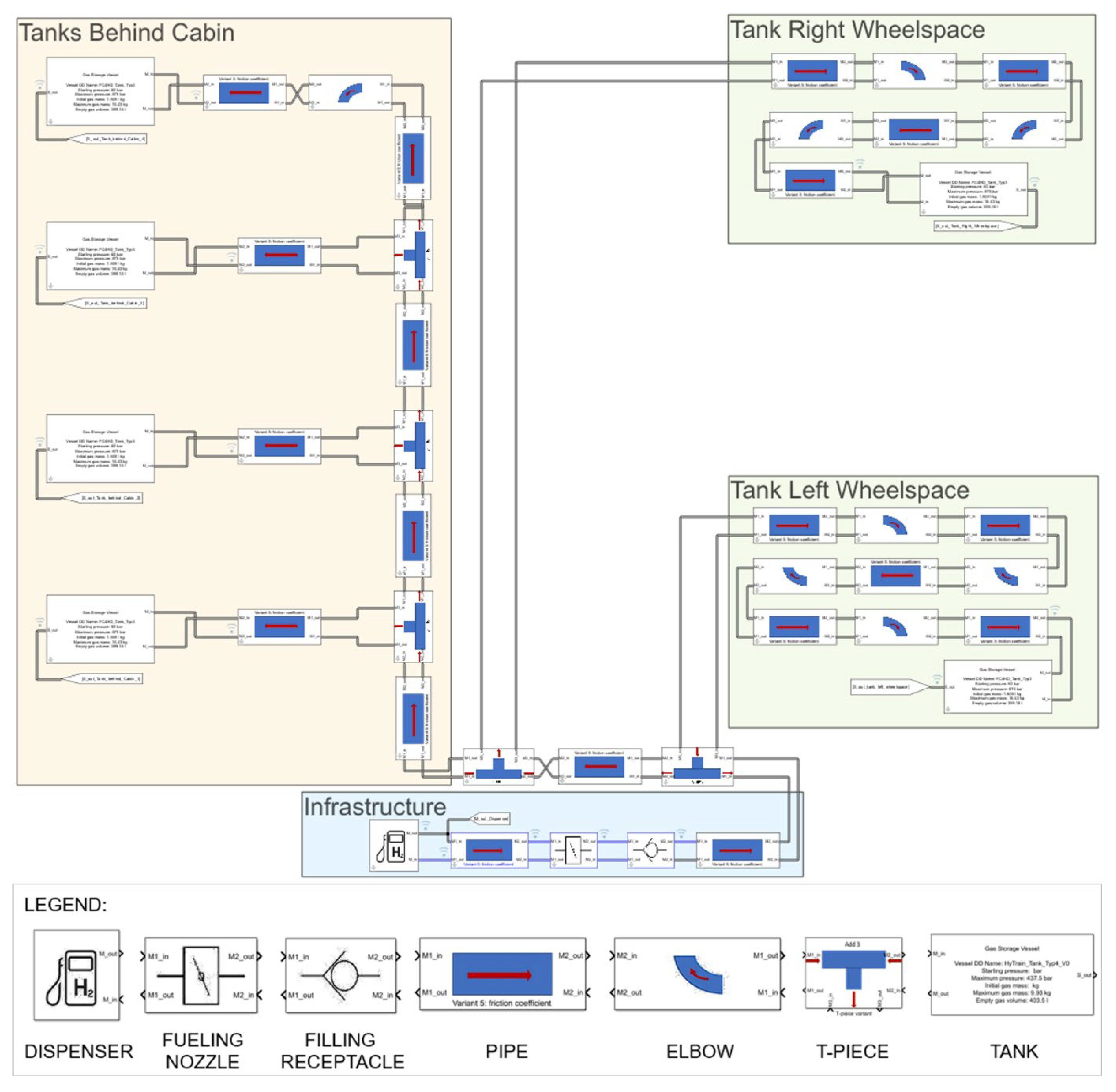
Figure 2 shows the already implemented scheme in the Matlab-Simulink model environment. For simplicity, in
Figure 1 only the filling pipe was represented, while other infrastructure components such as the filling receptacle, fueling nozzle, and dispenser were omitted.
In
Figure 2, the Dispenser section includes the dispenser, the filling hose, the fueling nozzle, the filling receptacle and a pipe connected to the first T-piece. The latter is connected to the Tank Left Wheels space, TLW, while the second T-piece is connected to the Tank Right Wheels space, TRW, and to the block that includes all the Tanks Behind Cabin, TBC. All tanks are positioned at the end of a line consisting of pipes, elbows, and T-pieces. These tanks are characterized by the same geometrical and material properties and are therefore able to store the same quantity of high-pressure hydrogen: 16.43 kg each, for a total of 98.58 kg at the Nominal Working Pressure (NWP) of 70 MPa. This value was chosen to closely match that reported in [
62], as it represents the storage capacity currently regarded as necessary to achieve parity with conventional diesel trucks in terms of driving range and refueling time, while also addressing the requirements identified by manufacturers and engineers in the heavy-duty transport sector.
With the aim of investigating a possible advantage regarding the refueling time, evaluating different packaging configurations and analyzing how splitting the hydrogen flow across a different number of tanks affects pressure and temperature variations, two other layouts were considered: one with a total of 5 tanks and one with a total of 7 tanks. In these layouts, the tanks between the wheels space are kept equal in number (2) and dimensions to the ones considered in the layout with 6 tanks (TLW and TRW), while the number of tanks behind the cabin changes to 3 and 5 tanks, respectively. Also, removing a tank means removing 2 pipes and 1 T-piece, while adding a tank means inserting the same number of components. For a better comparison between the layouts, the same total amount of hydrogen was stored in each configuration. Therefore, the geometry of the tanks behind the cabin had to be adapted accordingly.
Since the tank length was kept constant across all layouts due to space constraints, the tank diameter was either increased (in the 3 TBC layout) or decreased (in the 5 TBC layout), as reported in
Table 2. In this way, in all layouts the maximum quantity of hydrogen storable is close to 98.5 kg. Furthermore, as the diameter of the tanks changes, the wall thickness must be adjusted accordingly. The new values were estimated using the Barlow formula (Equation (1)) [
63] (where
is the wall thickness,
is the inner diameter of the tank considered and
is the allowable stress), by preserving the ratio between the diameter and wall thickness (
/
t) of the original reference tank. In this way, the calculated stress remains consistent across different diameters, avoiding the need to assume a specific material strength value.
In this study, Type III to V tanks are considered, whose characteristics relating to material properties and their geometry are reported in
Table 2 and
Table 3. Specifically, the values reported in
Table 3 are based on preliminary data from ongoing internal activities at HyCentA. The tanks were modelled using the approach presented in Klopčič et al. [
64]. The composite material properties were assumed identical for all tank types, whereas the liner material differs for Type III (aluminum) and Type IV (plastic) tanks. Type V tanks, which are characterized by a linerless, single composite structure, were modelled by retaining the same numerical subdivision into two solid regions required by the adopted formulation, but assigning identical thermo-physical properties to both regions, corresponding to the composite material. This assumption was introduced to ensure numerical consistency and allow a homogeneous comparison among different tank types within the same modelling framework. It is acknowledged that this represents a simplifying assumption, introduced due to the limited availability of publicly validated thermo-physical data for full-scale Type V tanks, whose technological maturity remains relatively low. In practice, the thermal response of Type V tanks may depend on factors such as composite layup, fiber orientation, resin system, and manufacturing process, which are not yet sufficiently documented in the open literature. Consequently, the results obtained for Type V tanks should be interpreted as indicative trends rather than fully validated predictions, while still providing a first-order assessment of the refueling performance and thermal behavior of linerless composite tanks.
The material property differences reported in
Table 3 have significant quantitative implications for the thermal response during refueling. The thermal diffusivity, α = λ/(ρ·cp), which governs the rate of heat penetration into the tank wall, can be calculated for each configuration. Type III tanks feature an aluminum liner with thermal diffusivity of approximately 9.2 × 10
−5 m
2/s, which is approximately two orders of magnitude higher than Type IV tanks with plastic liner (α ≈ 1.0 × 10
−7 m
2/s) and Type V tanks (α ≈ 2.5 × 10
−7 m
2/s). The composite shell, common to all tank types, exhibits a thermal diffusivity of approximately 2.5 × 10
−7 m
2/s. This substantial difference in thermal diffusivity implies that Type III tanks experience faster heat conduction through the aluminium liner, potentially leading to more rapid thermal equilibration with the composite shell and different transient temperature distributions during fast refueling compared to Type IV and V configurations. Additionally, the volumetric heat capacity (ρ·cp) of the liner materials differs significantly among tank types. Type III tanks exhibit a volumetric heat capacity of approximately 2.40 MJ/(m
3·K), Type IV tanks show the highest value at approximately 2.93 MJ/(m
3·K), while Type V tanks present the lowest at approximately 1.72 MJ/(m
3·K). The higher volumetric heat capacity of the Type IV liner suggests greater thermal inertia and potentially slower temperature rise compared to Type III under identical refueling conditions. Type V tanks, having the lowest volumetric heat capacity and lacking a distinct liner layer, may experience faster temperature variations throughout the composite structure. These quantitative differences in thermal diffusivity and volumetric heat capacity are expected to influence the maximum wall temperatures, thermal gradients, and overall thermal management requirements during fast refueling protocols, as discussed in the results section.
Concerning the tank geometry, as mentioned above, the tanks between the wheel space (TLW and TRW) always have identical dimension, while the tanks behind the cabin vary depending on the layout.
To calculate the Nusselt number,
[
64], also related to the heat transfer coefficient
between the hydrogen gas and inner tank wall as indicated in Equation (2), the Reynolds and Rayleigh numbers were considered, while
in
Table 3 indicates the heat transfer coefficient between the tank wall and external environment.
where
is the diameter, since the tanks are horizontal, and
is the thermal conductivity. In particular, Reynolds and Rayleigh exponents and coefficients are based on experimental data [
64]. Regarding the empty gas volume of the tank, this was calculated considering the tank as a cylinder with the inner length and diameter indicated in
Table 2.
Although the present study is purely computational, the modelling assumptions and parameters for the hydrogen storage tanks are derived from previously validated works. In particular, the dynamic behavior of Type III tanks during fast refueling was experimentally validated by Klopčič et al. [
64,
65], where numerical and experimental temperature and pressure profiles showed very good agreement under SAE J2601 refueling conditions. The validated Type III tank corresponds to a 320 L vessel designed for heavy-duty applications.
Conversely, the Type V tank model considered in this study has not yet been experimentally validated, as this technology is still under development and primarily investigated in research environments for very high-pressure applications (above 300 bar). Therefore, its inclusion in the present work aims to provide a comparative assessment of its theoretical potential rather than a fully validated design.
2.2. SAE J2601-5 Protocol Overview
As mentioned above, refueling of the high-pressure tank is a critical aspect that requires special attention, especially to avoid tank failure or overheating. In this context, the SAE J2601-5 standard [
51] defines different refueling protocols: one at an NWP of 35 MPa and two at an NWP of 70 MPa. Since this study focused on the refueling of heavy-duty vehicles at 70 MPa, an overview of the most important characteristics of the latter two protocol is given in
Table 4. The choice of a pressure of 70 MPa is due to the aim of refueling up to 100 kg of H
2: in fact, considering the available space in the considered heavy-duty vehicle, with a pressure of 35 MPa this amount of H
2 would not be guaranteed.
The protocols assume that the refueling process starts once the dispenser completes the nozzle connection and initial system checks. The entire station is responsible for ensuring the process remains within the defined operational limits. The variables that affect the refueling process include ambient and fuel delivery temperature, configuration and properties (dimensions, shape, material properties, initial temperature, pressure) of the Compressed HSS (CHSS) and flow dynamics and thermodynamic properties between the dispenser and the vehicle [
51].
As reported in the last rows of
Table 4, the coupling type for a maximum mass flow rate of 300 g/s (H70HF) is not yet fully defined in any standard. Since this study focuses on identifying the shortest possible refueling time, a set of constant APRR values is imposed as boundary conditions to evaluate how the resulting total dispenser mass flow rate approaches the reference value of 300 g/s, while respecting temperature and pressure limits. Although the SAE J2601-5 standard introduces a dynamic Mass Change Formula (MCF-HF-G) strategy for high-flow refueling, the present work does not implement the full dynamic MCF control logic. The standard is instead used solely as a reference framework to define the target high-flow operating condition. However, it is important to highlight that the availability of components (such as nozzles, valves, sensors, and flow meters) capable of reliably operating at 300 g/s is currently limited, and most are still in the prototype or early development stage. While such flow rates are envisioned for future applications in heavy-duty hydrogen refueling, the market maturity of supporting hardware remains low, and the full standardization of H70HF is still ongoing. Therefore, this scenario should be understood as a forward-looking benchmark, representative of potential system capabilities rather than existing commercial infrastructure.
2.3. Simulation Setting
The simulation model used in this study is based on the model implemented by Klopčič et al. [
64]. In particular, the components considered were implement in a model library, which consists of a dispenser boundary condition, pipes, elbows, T-pieces, expansions/reductions, check valves, regulator valves, generic pressure loss components and storage tanks. Each component, modelled as a block, is connected to adjacent components via signal buses, and communicates its mass flow rate, pressure, temperature, and flow resistance with adjacent upstream and downstream components. These components were used to model the different layouts described above, from the dispenser to all on-board storage tanks.
No experimental data were available for direct validation of the model. Therefore, the boundary conditions and simulation setup were based on those reported in the reference study by Klopčič et al. [
64]. The hydrogen gas was modelled as a real gas, with temperature- and pressure-dependent thermophysical properties. The vehicle tank was initialized at a fixed pressure, while the internal pressure evolved dynamically during the filling process, depending on the APRR, which was set as initial and constant input. The final target pressure was set to the nominal full-fill value of 70 MPa. Although inlet boundary conditions, such as supply pressure, APRR and supply temperature were prescribed, the simulation was conducted in transient mode, allowing the internal state of the tank to respond dynamically to gas compression and heat generation. These modelling choices ensure physical realism while maintaining consistency with the previous literature.
In order to compare the results in terms of refueling time, final pressure, mean tank temperature, maximum mass flow from the dispenser and pressure losses (this latter only for the tank characterized by the highest value), some input parameters were kept constant, while others were changed within a range, as reported in
Table 5.
The parameters kept constant are the NWP, the safety margin for the temperature limit, and the initial pressure inside all tanks, assumed at the beginning of the refueling with a SOC lower than 10% to study a nearly complete refueling process. The NWP was set to 70 MPa, as this value allows storing approximately 100 kg of hydrogen in the available onboard space in the heavy-duty vehicle considered. A safety margin of a 5 °C limit was adopted in compliance with SAE J2601-5 [
51].
According to SAE J2601-5 protocol (MCF-HF-G), the dispenser temperature was varied between −40 °C and 0 °C, since these are the limits present in the protocol. While the temperature of −40 °C is technically achievable using active pre-cooling technologies, it may not always be maintained under real-world conditions, especially at high station throughput or in warmer climates. Therefore, the assumption of −40 °C represents an idealized condition that enables performance benchmarking under optimal thermal management. The results obtained under this assumption should be interpreted as best-case estimates, with practical deviations expected in real-world applications.
The APRR values were selected based on multiple simulation runs aimed at minimizing the refueling time while still complying with the pressure and temperature constraints imposed by SAE J2601-5 [
51]. The lower limit of 8 MPa/min was set because lower values resulted in disproportionately longer refueling times without improving temperature or pressure performance. For this reason, such cases were not considered relevant to the objective of this study.
Regarding the pipe network, pipe length variations reflect differences among the three tank layouts considered (5, 6, and 7 tanks), with total lengths computed as the sum of all pipe sections per configuration. These values are reported in
Table 5 and ordered by increasing total length. The pipe diameters, on the other hand, are constant across configurations and vary only along the flow path: the largest diameter (8 mm) is assigned to the dispenser line to accommodate the higher mass flow, 6 mm to the TLW line, and the smallest diameter (3 mm) to the TRW and TBC lines at the periphery. The variation percentages shown in
Table 5 apply uniformly across all pipe segments (3, 6, and 8 mm). It is important to note that both length and diameter values should be considered as minimum design estimates, based on the physical constraints of vehicle packaging and with the aim of reducing pressure losses. Any simulated reduction below these values is to be interpreted as a theoretical sensitivity analysis to evaluate the effects on refueling performance. The variation in tank number affects not only the pipe layout but also the overall space, weight, and safety profile of the storage system. A 5-tank configuration typically involves larger-diameter tanks, which may be more difficult to integrate into constrained vehicle spaces. In contrast, 6- or 7-tank layouts allow for more modular placement but increase the complexity of piping and mounting. Additionally, larger tanks or a greater number of tanks increase total hydrogen mass and stored energy, with implications for safety and structural integration that merit future investigation.
Finally, to identify the acceptable range of input parameters that allow full refueling within the SAE J2601-5 limits for pressure and temperature, the model is set to stop only when a SOC of 100% is reached in all tanks. In this work, SOC is defined as the ratio between the hydrogen mass in each tank and the maximum tank capacity reported in
Table 2.
To systematically identify the optimal combination of input parameters that ensures full refueling within the SAE J2601-5 limits, an iterative procedure was implemented (see
Supplementary Figure S1). Successive refueling simulations have been performed on each tank type by varying one input at a time within the defined range (
Table 5), while keeping the others constant. After each simulation, the resulting final pressure and temperature in all tanks were checked against the SAE limits. Only simulations that resulted in 100% SOC across all tanks and remained within these limits are considered valid. The process continues until all feasible input combinations have been tested, enabling the identification of the best-case scenario, or the one yielding the minimum refueling time (or maximum mass flowrate) while respecting the pressure and the temperature limits. The choice to vary one parameter at a time was made to isolate its individual impact and represent the results as a function of the percentage change of each input. This approach allows a simple interpretation of how each parameter individually affects the system outputs, facilitating a direct comparison between scenarios. However, this method does not consider potential interactions between parameters, which could lead to trade-offs or combined effects not captured by the variation in a single parameter.
The thermodynamic and heat-transfer sub-models applied to Type III tanks have been previously validated against experimental data (see
Section 2.1), thereby supporting the reliability of the computational results presented in this study. Nonetheless, some limitations should be acknowledged. The present model does not account for potential coupled effects arising from simultaneous variation in multiple input parameters, nor does it include the detailed modelling of heat transfer between adjacent tanks or with the vehicle structure. Moreover, the study is based on idealized boundary conditions without direct experimental validation of the full multi-tank configuration. These aspects will be addressed in future work to further enhance the model’s accuracy and predictive capability.
2.4. Model Credibility and Validation Status
The present study is based on a numerical framework originally developed and experimentally validated by Klopčič et al. [
64,
65] for fast refueling of Type III hydrogen storage tanks under SAE J2601 conditions. In those studies, very good agreement between numerical predictions and experimental measurements of pressure and temperature evolution was demonstrated for a 320 L heavy-duty tank, supporting the reliability of the underlying thermodynamic and heat-transfer formulation.
For Type IV tanks, the same modelling framework is adopted, with modified liner properties to account for the polymer liner. While no direct experimental validation is available for the specific tank considered here, the governing physics and heat-transfer mechanisms remain consistent with the validated Type III formulation. Therefore, predictions for Type IV tanks are expected to be reliable in terms of relative trends and order of magnitude, with moderate uncertainty in absolute temperature levels.
The Type V tank model has not yet been experimentally validated, due to the limited technological maturity of linerless composite tanks and the lack of publicly available full-scale refueling datasets. The assumptions adopted for Type V tanks—particularly regarding thermal properties and internal heat transfer—were introduced to ensure numerical consistency and enable a homogeneous comparison among tank types. Consequently, results for Type V tanks should be interpreted as indicative trends rather than fully validated quantitative predictions.
Sensitivity analyses performed in this study indicate that refueling time and pressure evolution are primarily governed by boundary conditions (APRR, dispenser temperature, and pressure limits), while predicted peak temperatures are more sensitive to tank thermal properties. As a result, conclusions related to refueling performance and pressure compliance are considered robust across all tank types, whereas absolute temperature predictions for Type V tanks should be interpreted with caution.
3. Results and Discussion
This section presents the results obtained from simulating the vehicle refueling process, starting with a six-tank layout. Subsequently, the results obtained by varying the inputs (e.g., APRR, ambient and dispenser temperatures, length and diameter dimensions, tank type and layout) are described. For the sensitivity analysis, the reference case corresponds to the input values in
Table 6, identified through preliminary simulations using parameter variations as reported in
Table 5. In particular, the values characterized by a shorter refueling time, respecting the SAE J2601-5 pressure and temperature limits, were used as the starting point for all parameter variations.
The main inputs assumed and the results obtained for all tank types are summarized in
Table 6 (the trends of pressure, temperature, SOC, and hydrogen mass flow rate are reported in
Supplementary Figure S2). These reference points were used as the starting point for all the parameter variations described below, ensuring that all subsequent sensitivity analyses refer to a physically meaningful configuration compliant with SAE standards.
The only input parameter that varies with tank type is APRR, while the other parameters were held constant. Specifically, APRR decreases with tank type to ensure compliance with SAE pressure and temperature limits [
51]. This effect is related to the different thermal insulation properties of tank materials, which influence heat transfer during refueling. Consequently, some tank types experience higher temperature increases for the same filling rate. The dispenser temperature was set to the lowest value specified by the standard, while the ambient temperature was assumed to be 20 °C. Pipe length and component diameter were reduced and increased by 20%, respectively, compared to the minimum values reported in
Table 5. The results show refueling times of 10.38 min (Type III tanks), 10.52 min (Type IV tanks), and 10.64 min (Type V tanks). As expected from the initially assigned APRR values, refueling time increases slightly. The pressure (slightly above 87 MPa) and temperature (between 70.7 and 73.44 °C) values are compliant with the required SAE limits. The peak hydrogen mass flow rate from the dispenser decreases from 216.11 g/s to 206.21 g/s, consistent with the APRR reduction. However, to comply with the pressure and temperature constraints, this value remains below the 300 g/s limit specified by the SAE standard and [
62], which is considered ambitious and difficult to achieve with current refueling hardware (e.g., hoses, valves, nozzles).
Finally, the total pressure drops were calculated both at the end of the refueling and at the point where the pressure drops reach their maximum value, corresponding to the point where the inlet mass flow rate in each tank is at its peak. As expected, the pressure drops decrease when moving from Type III to Type V tanks, due to their different thermal and mechanical characteristics, with higher pressure drops occurring at peak flow. The final pressure inside each tank was determined by subtracting the pressure drop (calculated at the end of the refueling) from the pressure measured at the dispenser outlet. This accounts for line losses and reflects the actual pressure experienced by the tank.
To assess the influence of input parameter variations on system performance, a sensitivity analysis was conducted. Starting from the input values defined for each tank type (as shown in
Table 6), these parameters were subsequently varied as previously described in
Table 5. The resulting influence on the main output parameters (refueling time, maximum pressure, mean temperature, maximum dispenser mass flow rate, and pressure drops) is presented below, considering all tank types and the six tanks layout as the baseline configuration. It is important to clarify the values chosen for pipe lengths and diameters. As shown in
Table 6, the baseline values differ from the minimum values reported in
Table 5. This is because, after several simulations, shorter refueling times were observed for reduced pipe lengths and increased diameters, as will be discussed in detail later. Therefore, the baseline length was set to approximately 10 m, while the baseline diameters to 3.6, 7.2, and 9.6 mm for the respective lines. Based on these, pipe lengths were varied between 10 m and 13.75 m, while component diameters were varied from 3 mm to 4.5 mm, from 6 mm to 9 mm, and from 8 mm to 12 mm for the line farthest, in the middle, and closest to the dispenser, respectively.
3.1. Influence on the Refueling Time by Varying the Input Parameters
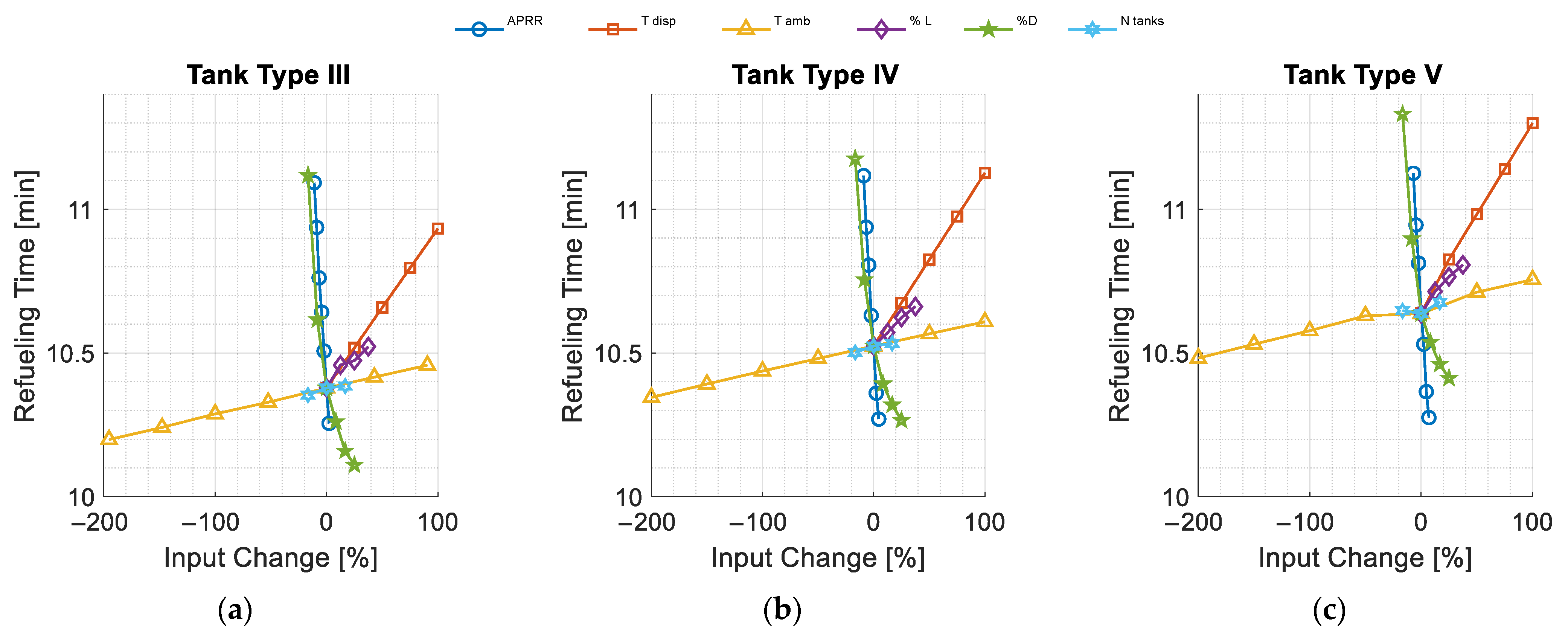
The trends of the refueling time results for each tank type are shown in
Figure 3. For clarity, the “Input Change [%]” shown in
Figure 3 represents the relative variation in each input parameter with respect to the baseline values listed in
Table 5. Positive and negative variations indicate an increase or decrease in the respective parameter compared to the reference case. For example, a positive change in APRR means a faster average pressure ramp rate, while a negative change in dispenser temperature means a colder hydrogen supply. These normalized variations were adopted to allow a consistent comparison among parameters with different physical units and magnitudes.
The results show better performance compared to the baseline was obtained for lower ambient temperatures than the initial value (20 °C), for higher APRR values (although these do not comply with the maximum pressure limits, as will be discussed later), and for larger component diameters. The improved performance at lower temperatures can be explained by the larger temperature difference between the incoming hydrogen and the tank wall, which enhances convective heat transfer and allows a higher mass flow rate. Higher APRR values directly increase the pressure differential driving the flow, reducing refueling time, but exceeding SAE limits may cause overpressure and material stress. Larger component diameters reduce flow resistance and pressure drop, improving the mass flow rate, in line with fluid dynamics predictions (e.g., Darci-Weisbach equation).
The lowest refueling times (excluding those achieved with increased APRR) are 10.11 min, 10.27 min, and 10.4 min, respectively. Variations in the other parameters, on the other hand, lead to an increase in refueling time. This is particularly evident with higher dispenser temperatures (which reduce the temperature gradient between the incoming hydrogen and the tank wall, which weakens the convective heat transfer and limits the allowable refueling rate imposed by thermal constraints), longer pipe lengths (which increase pressure losses along the flow path due to greater frictional resistance, which reduces the effective pressure at the nozzle and thus limits the mass flow rate during refueling), lower APRR values (which directly limit the allowable mass flow rate) and smaller component diameters (which introduce higher flow resistance due to reduced cross-sectional area, which increases fluid velocity and pressure drop, ultimately decreasing the refueling rate). The increased time with higher dispenser temperatures reflects the reduced heat transfer capacity, while longer pipes and smaller diameters increase frictional losses and pressure drops, limiting the effective mass flow rate.
The maximum refueling time recorded is 11.33 min for the Type V tank. Interestingly, the variation in the number of tanks does not have a significant impact on the overall refueling time. This suggests that the flow is primarily controlled by upstream parameters (pressure, temperature, and component dimensions), rather than by how the total volume is distributed among multiple tanks. Although the number of tanks does not significantly affect refueling time, a slight increase is observed when moving from Type III to Type V tanks. This trend can be attributed to the thermal properties of the liner materials. Type III tanks incorporate an aluminum liner with high thermal conductivity (220 W/mK), which promotes rapid heat dissipation during fueling. In contrast, Type IV tanks use a polymer liner with lower conductivity (0.3 W/mK), and Type V tanks are liner less, relying solely on the composite material. As a result, the reduced thermal dissipation in Types IV and V limits the allowable mass flow rate, leading to slightly longer refueling times. This highlights the importance of material thermal properties in determining refueling efficiency.
Overall, the trends in the results appear to be nearly linear and consistent across the different tank types. The near-linear trend suggests that within the varied range, the system behaves predictably, and that APRR is the dominant parameter influencing refueling time, while other parameters have relatively minor effects. Finally, the fact that the refueling time does not increase significantly when the type of tank varies is due to the fact that the parameters have been varied to a limited extent, especially in regard to the APRR. For APRR values, values higher than those reported were not considered in the results. These, in fact, were excluded, as they led to a final pressure higher than the limit imposed by the SAE protocol during the refueling simulations [
51]. Furthermore, this analysis provides insight into how parameter sensitivity affects refueling time, suggesting that optimization efforts should focus on APRR and thermal management rather than other parameters.
3.2. Influence on the Final Pressure by Varying the Input Parameters
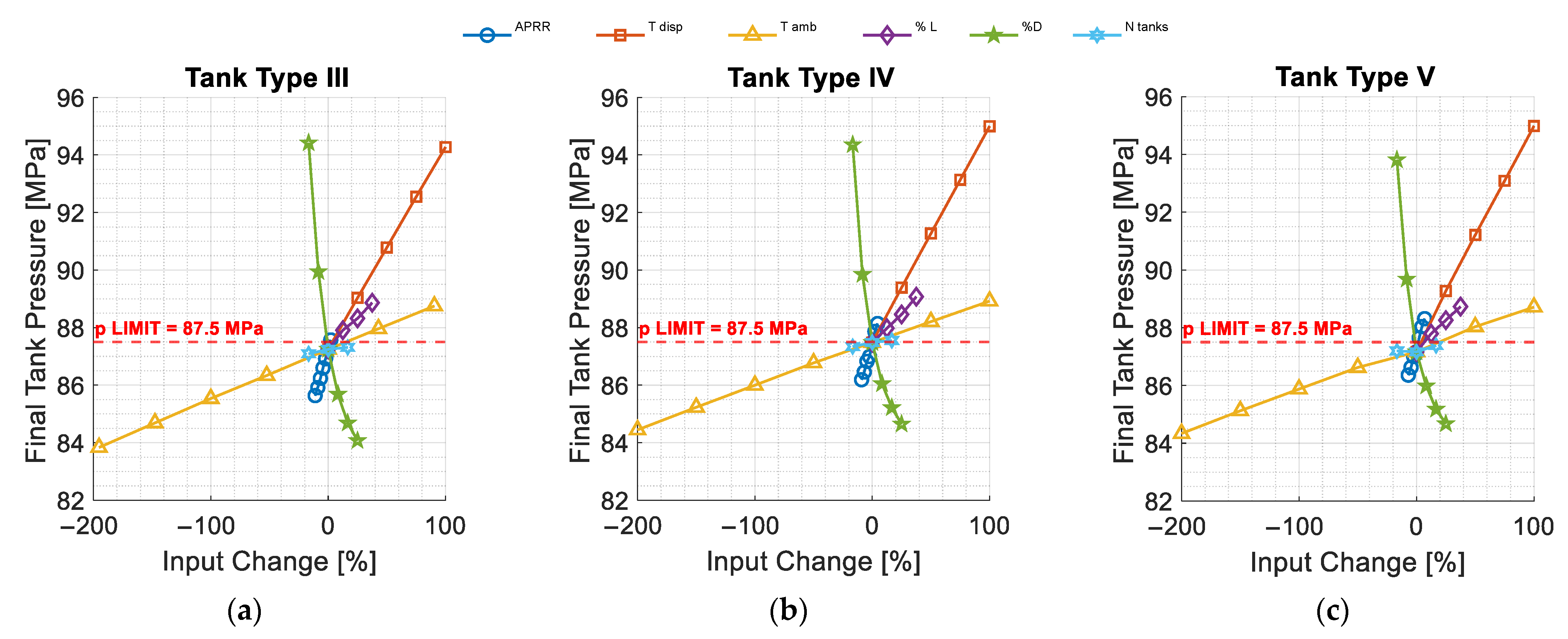
This section presents the influence of input variations on the final pressure results. The results (
Figure 4) are shown with reference to the tank that first reaches 100% SOC, namely the TLW, which is characterized by the shortest pipe length. As illustrated in the figure, all values above the red dashed line must be excluded, as they do not comply with the SAE pressure limit of 87.5 MPa. In particular, conditions with higher ambient and dispenser temperatures, smaller diameters, and longer pipe lengths must be excluded because they lead to pressure exceeding safe operational limits, which can induce material stress or compromise system safety.
Therefore, lower ambient temperatures, larger diameters, and lower APRR values are preferable, although the latter lead to an increase in refueling time. The preference for lower temperatures and larger diameters can be explained by fluid dynamics and thermal considerations: lower temperatures reduce gas expansion and pressure build-up, while larger diameters reduce frictional losses and allow more uniform pressure distribution. Lower APRR values slow down the pressure ramp, preventing exceeding the SAE limit, but affect the overall mass flow rate, creating a trade-off between safety and efficiency.
As in previous cases, the results obtained from the variation in individual input parameters show an almost linear behavior and are consistent across the different tank types. This near-linear behavior suggests that within the variation range, the system reacts predictably to changes in single parameters, and that final pressure is dominated by temperature, pipe dimensions, and APRR while other parameters have minimal impact. Additionally, the variation in the total number of tanks has only a marginal effect on the final pressure outcome. This indicates that the distribution of storage volume among multiple tanks does not significantly influence peak pressure, confirming that upstream parameters control the pressure profile more than the number of parallel tanks.
3.3. Influence on the Mean Temperature by Varying the Input Parameters
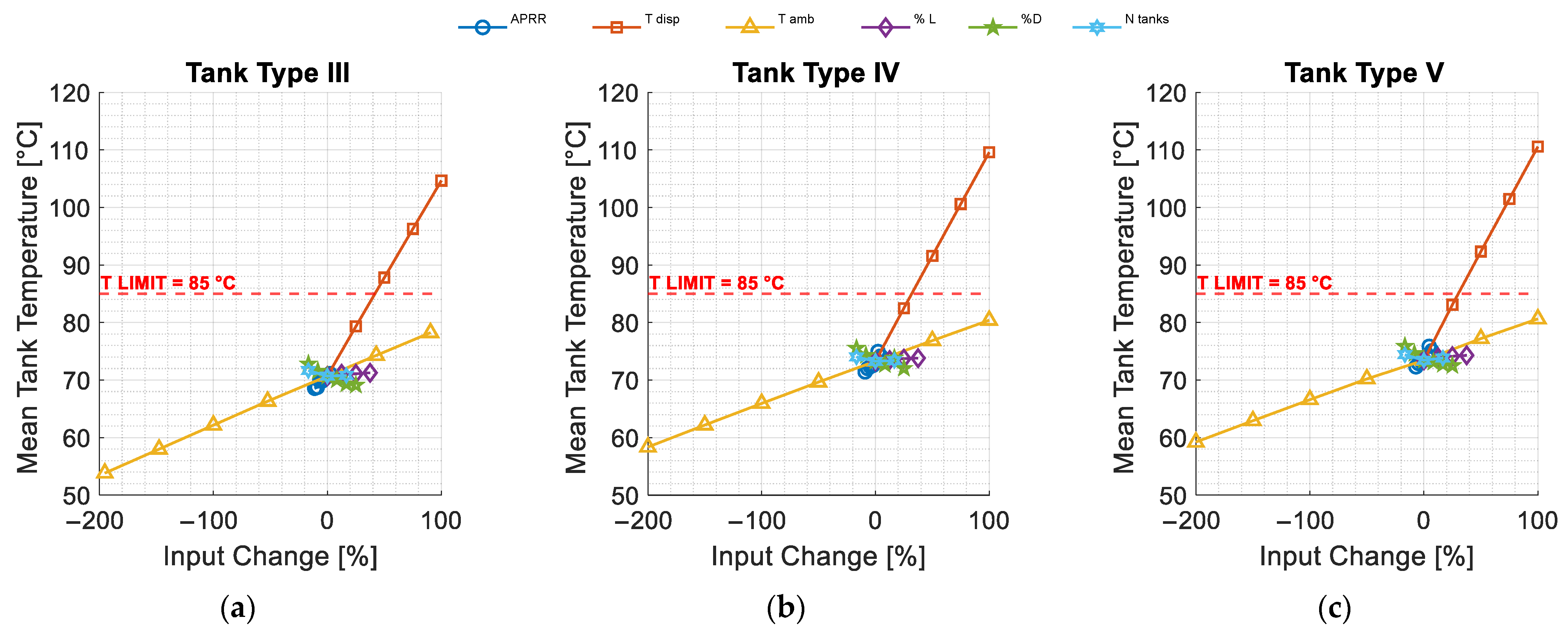
Figure 5 shows the results regarding the influence of input parameters on the average temperature inside the tanks during refueling. As expected, the parameters that most significantly affect this outcome are the dispenser and ambient temperatures. A decrease in ambient temperature leads to a reduction in the average tank temperature, as the initial thermal conditions enhance the heat absorption capacity of the system. Conversely, increasing the dispenser and ambient temperatures result in higher the average tank temperatures, with the dispenser temperature having a more pronounced effect due to its direct role in determining the enthalpy of the incoming gas. This strong influence of dispenser temperature can be explained by the fact that the incoming hydrogen carries a direct energy load that is immediately transferred to the tank wall, while ambient temperature affects the heat dissipation rate more indirectly.
This behavior is consistent with findings previously reported in the literature, which have demonstrated a linear correlation between ambient temperature and gas temperature rise during fast filling processes [
47]. Furthermore, higher tank temperatures can limit the allowable refueling rate due to thermal constraints, creating a trade-off between minimizing refueling time and avoiding overheating.
As indicated by the red dashed line, the SAE temperature limit of 85 °C is exceeded for dispenser temperature values ranging approximately from −20 °C (Type III tanks) to just above −30 °C (Type V tanks). The difference between tank types can be attributed to the thermal conductivity of the liner material, with higher conductivity materials (e.g., aluminum in type iii) promoting faster heat dissipation and lower peak temperatures, while polymer or composite liners (Type IV and V) lead to slower dissipation and higher average temperatures.
Also in this case, the variation in results shows an approximately linear trend and remains consistent across different tank types. This near-linear trend indicates that within the investigated range, the system responds predictably to changes in input parameters, and that dispenser and ambient temperatures are the dominant factors controlling mean tank temperature, while other parameters have negligible effects.
3.4. Influence on the Maximum Dispenser Mass Flow Rate by Varying the Input Parameters
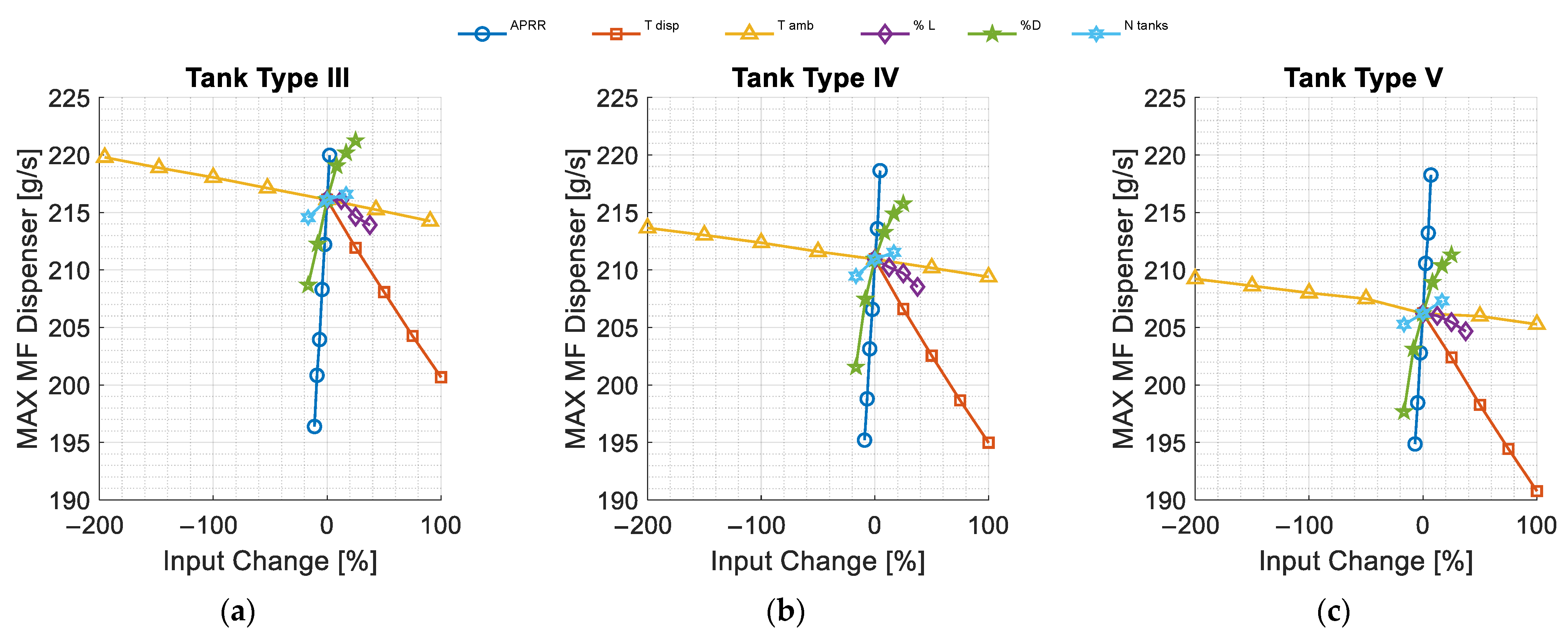
With regard to the influence on the maximum mass flow rate delivered by the dispenser, the results are shown in
Figure 6. The maximum flow rate increases for ambient temperatures lower than the base value, with increasing APRR (which, however, leads to pressures that exceed the SAE limit), and with larger component diameters, as well as when using the seven tanks layout. Conversely, higher dispenser temperatures and lower APRR values result in a noticeable decrease in the maximum dispenser mass flow rate. The increase in maximum mass flow rate at lower temperatures and larger diameters can be explained by enhanced pressure differentials and reduced frictional losses, which facilitate greater hydrogen flow. Increasing APRR directly accelerates flow but creates a trade-off with pressure safety limits, highlighting the need to balance performance and compliance.
In general, the results show a decreasing trend with the transition from Type III to Type V tanks. This behavior is primarily attributable to the lower thermal conductivity and reduced heat capacity of Type V tanks, which leads to a faster temperature rise during refueling, triggering earlier flow restrictions to avoid exceeding safety thresholds. This emphasizes that tank material properties are crucial for determining refueling performance and must be considered early in system design.
Almost all trends maintain an approximately linear and consistent behavior across the different tank types. Although the trend observed for the variation in diameter appears linear within the analyzed range, it is likely non-linear (of higher-order polynomial nature), as indicated by the curvature at the upper end of the range. This apparent linearity results from the limited number of data points and design constraints, which restrict the practical feasibility of larger pipe diameters. Additionally, this suggests that future optimization of diameter should account for potential non-linear effects on flow rate and pressure loss.
3.5. Influence on the Pressure Drops by Varying the Input Parameters
The last influence analyzed concerns the results of the total pressure losses. As previously mentioned, the total pressure drops were calculated both at the end of refueling and when the inlet mass flow rate to each tank reaches its peak (approximately between minutes 8 and 10, as shown in
Supplementary Figure S2).
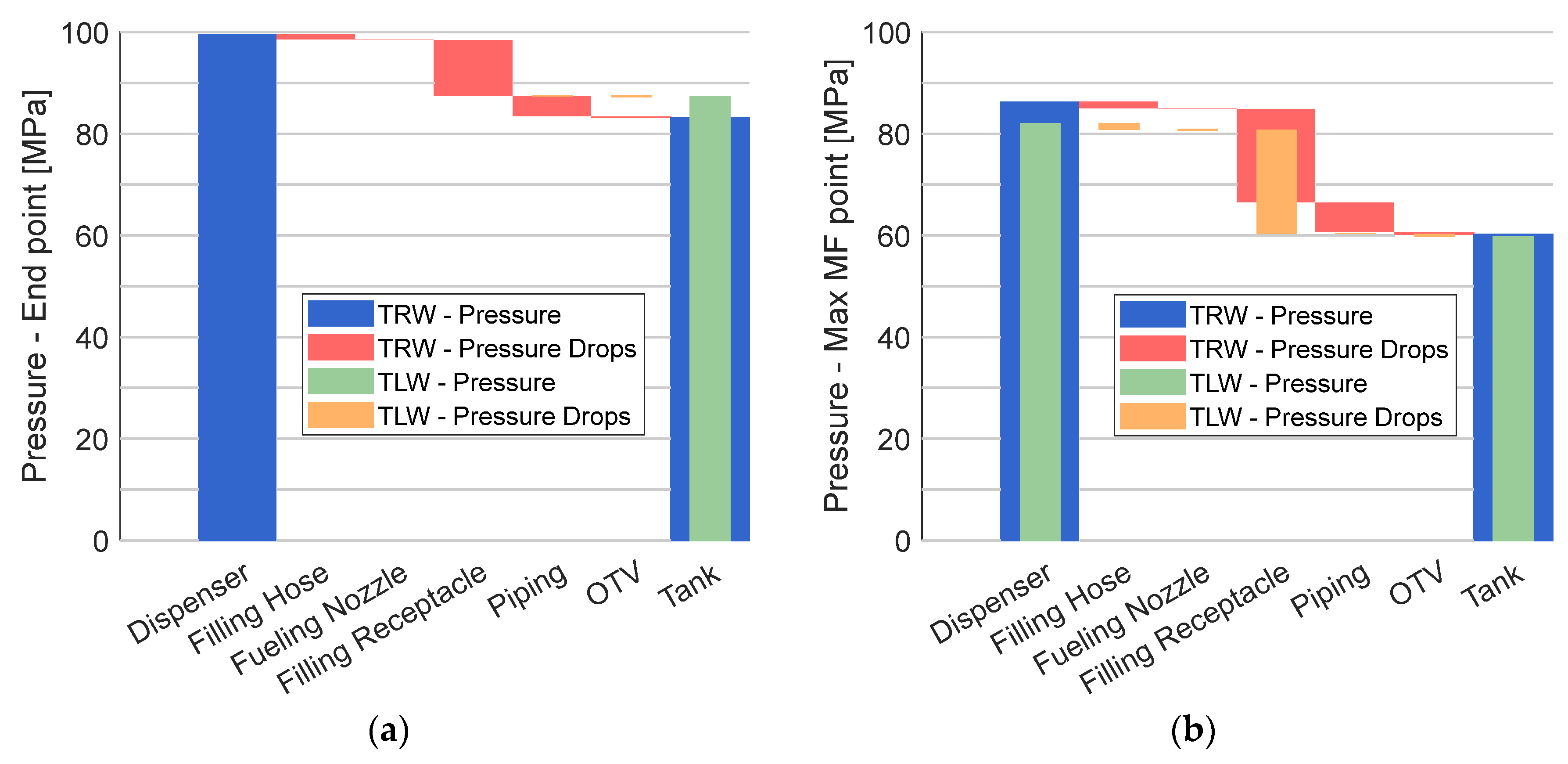
Figure 7 shows an example of the pressure drops calculation for tank TRW, Type III in the six tanks layout (the input data used in the model were reported in
Table 6).
The TRW tank was selected because it is characterized by the highest pressure drops, being positioned at the end of the longest line in the refueling piping layout. This approach was consistently applied to evaluate pressure drops for all tanks in the system. The figure also includes the results for the tank with the lowest pressure drops, TLW. Specifically, the left side of the figure shows the pressure drops at the end of refueling simulation (corresponding to the point when all tanks reach 100% SOC), while the right side presents the pressure drops corresponding to the point of maximum inlet flow rate to the tank. When the results obtained are different depending on the tank, these can be easily identified by following the reference colors (blue—red for the TRW and green—yellow for the TLW).
As for the results obtained at the end of the refueling, the pressure measured in the dispenser (first column, 99.5 MPa) and the pressure drops calculated in the filling hose (0.792 MPa), in the fueling nozzle (0.0984 MPa), in the filling receptacle (characterized by the highest losses, 11.08 MPa) are the same for all the tanks present in the layout. On the contrary, the pressure drops in the piping between the receptacle and the tank (3.98 MPa for the TRW and 0.0543 MPa for the TLW) and in the valve inside the tank (OTV, 0.31 MPa for the TRW and 0.227 MPa for the TLW) are different. These last values lead, as can also be seen graphically, to different results for the total pressure drops (16.27 MPa for the TRW and 12.26 MPa for the TLW). Consequently, the final pressures are 83.23 MPa (TRW) and 87.25 MPa (TLW). The pressure drops of the remaining tanks, relative to the case analyzed, are to be considered in total terms included between the results obtained for the TLW and the TRW, just as the final pressure varies between the maximum obtained for TLW and the minimum relative to TRW. The elevated dispenser pressure observed at the final point (
Figure 7a) results from the simulation being forced to reach 100% SOC for all tanks. In practical refueling, safety mechanisms such as valve limits and overpressure protections prevent such high pressures. In contrast, the dispenser pressure at the point of maximum inlet flow corresponds to an intermediate stage of the fill and is lower (87.48 MPa).
To evaluate the pressure drops at the peak flowrate for each tank, the moment when the total dispenser mass flow rate reaches its maximum (around minute 8 and 10) was considered. Since each tank reaches its individual peak at slightly different times, the pressure values differ accordingly. In particular, the dispenser pressure varies from 86.21 MPa (TRW) to 82 MPa (TLW), while the corresponding tank pressures are 60.26 MPa and 59.82 MPa, respectively. This results in total pressure drops of 25.95 MPa for TRW and 22.18 MPa for TLW. In detail, the filling hose, fueling nozzle and OTV show similar pressure drops (around 1.1 MPa, 0.148 MPa and 0.48 MPa, respectively), while pressure drops in the filling receptacle and in the piping vary more. In fact, the former goes from 18.32 MPa (TRW) to 20.38 MPa (TLW), while the latter vary from 5.88 MPa (TRW) to 0.089 MPa. The total pressure drops of the remaining tanks are included between the maximum TRW value and the minimum TLW. Overall, these differences highlight that tanks are not filled uniformly, and pressure drops vary depending on tank position and flow path. As shown in the figure, the impact of leakage varies across components. The most significant losses occur at the receptacle, followed by the contributions from the piping. In contrast, leakage from the filling hose, nozzle, and on-tank valve (OTV) is comparatively minor.
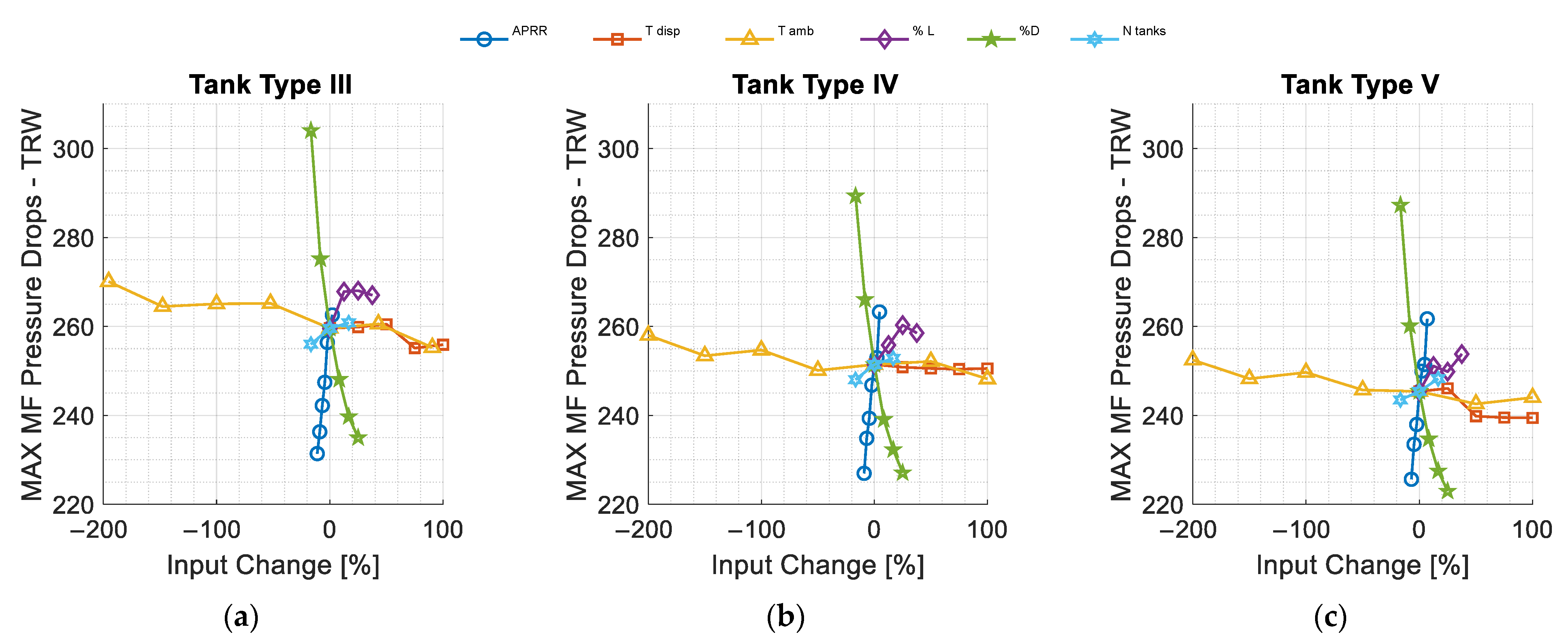
The influence of input variations on the total pressure drops results is presented in
Figure 8. Since the pressure drops at the end of refueling are useful for calculating the final pressures but do not reflect the maximum values reached during the refueling, the sensitivity analysis was conducted considering only the point at which the losses are at their peak, or when the mass flow rate reaches its maximum. As in previous analyses, the tank with the highest losses (TRW) was selected as the reference case. This approach allows a more accurate assessment of system limitations, as peak pressure drops directly influence maximum flow and safety margins, rather than average or end-of-refueling values.
As shown, pressure losses increase with decreasing ambient temperature and component diameter, as well as with increasing APRR, pipe length, and the number of tanks. For instance, lower ambient temperatures increase gas density, augmenting frictional losses, while smaller diameters and longer pipes raise pressure drop due to higher velocities and friction. Increasing APRR accelerates the flow, further amplifying the losses, and additional tanks in parallel or series can modify distribution and flow interactions, contributing to higher pressure drops.
For all other parameter variations, pressure losses tend to decrease. Overall, losses are highest for Type III tanks and progressively decrease for Type IV and Type V tanks. This trend can be explained by the thermal and mechanical properties of the tanks: Type III tanks with high thermal conductivity promote faster heat dissipation, allowing higher initial flow rates that result in larger frictional losses, while Type IV and V tanks limit the flow earlier due to slower heat transfer. In particular, the losses due to dispenser temperature variation show a more linear behavior for Type IV tanks compared to the others, while the losses associated with the variation in line length differ noticeably among the three tank types. As a result, the overall trends exhibit higher variability compared to the previous cases, indicating that pressure drops are strongly coupled to the temporal profile of the mass flow rate and interactions between parameters, rather than depending solely on individual variations. This behavior can be attributed to the fact that variations in input parameters affect the flow rate profiles, altering the timing of the peak values. Consequently, each data point in the graph corresponds to a different time step, in contrast to the earlier results, which were all extracted at the end of the simulation. This highlights that sensitivity analyses of pressure losses must consider temporal dynamics, as peak events may occur at different moments and have a significant impact on system performance and safety.
3.6. Results Summary and Discussion
Table 7 shows the general trends of the sensitivity analysis results, similar for each type of tank as seen previously. The central column lists the input parameters that were varied from the baseline configuration, while the left and right columns show the corresponding trends in the results as each input decreases or increases, respectively. These trends are represented by arrows having the same directions as the curves in the graphs (
Figure 3,
Figure 4,
Figure 5,
Figure 6,
Figure 7 and
Figure 8), with the numerical maximum or minimum value obtained indicated below. The colored cells refer to the different tank types: green for Type III, orange for Type IV, and yellow for Type V. For example, looking at the influence of APRR on refueling time, considering a lower APRR value than the base case values obtained for each tank, the APRR increase in the direction indicated by the arrow reported in
Table 7 for each tank type. The highest APRR value found is 11.13 s, for type V tank (yellow cell).
The input values and the related results obtained with the base case points are reported in
Table 6. For both in percentage length and dispenser temperature variations, only increases from the base point were considered. Therefore, no values are reported on the left side of the corresponding columns. Finally, since the table reports the highest and lowest results founds for varying all inputs, some values exceed the protocol limits (85 °C and NWP∙1.25 MPa): these values are reporter in red.
An increase in APRR compared to the baseline value for each tank type leads, as expected, to a reduction in refueling time and an increase in the mass flow rate delivered by the dispenser. However, this also results in higher pressure and temperature peaks, which must be carefully evaluated with respect to the SAE limits. Total pressure drops also increase.
Analyzing the influence of temperatures, an increase in even just one of them leads to an increase in the values of the refueling time, the final pressure and the temperature, and should therefore be avoided, especially to comply with regulatory limits.
When considering percentage increases in pipe lengths and component diameters, their effects on the results are opposite. Specifically, increasing the pipe length produces similar effects to a temperature rise (longer refueling times and higher final pressures and temperatures), while increasing diameters leads to higher mass flow rates, improving system performance by reducing pressure losses. However, larger diameters imply greater material and manufacturing costs and must also be compatible with the limited installation space available on board, which makes proper sizing a crucial design trade-off.
The removal of one tank from the layout, resulting in an increase in the volume of each single tank located behind the cabin, leads to a slight rise in internal tank temperature. This effect is not directly due to the change in the number of tanks, but rather to the associated changes in mass flow distribution and heat transfer conditions, such as reduced splitting of the flow and a larger surface area exposed to thermal exchange. Additionally, a lower overall system thermal inertia and longer refueling times for the larger tanks may also contribute to this effect. However, the increase remains within the SAE-compliant range. Moreover, the number of tanks is the parameter with the least influence on the overall results.
Summarizing the values that do not respect the pressure limit, as also visible from the results in red, values higher than the base value of dispenser temperature, ambient temperature, length and number of tanks, as well as smaller diameter values, must be excluded. To respect the temperature limit, however, it is sufficient not to consider values higher than the dispenser temperature (starting from the values indicated in
Figure 5). Finally, given the results of the refueling time and the maximum flow rate delivered, the Type III tank appears to be the one that best guarantees the desired results, even if the maximum flow rate obtained, 221.2 g/s, differs from the value of 300 g/s indicated in the regulation and by [
62]. The Type III tank also guarantee lower values for pressure and temperature.
This study focused on evaluating the influence of individual parameters on the refueling process. However, it is acknowledged that several parameters are likely to interact in non-linear ways, and multivariate effects were not explicitly modelled in the current work. Based on the observed trends, a combination of high APRR and low ambient/dispenser temperatures would likely increase refueling speed and flow rate but would also raise final tank pressure and temperature, potentially exceeding safety thresholds unless counterbalanced by design factors such as increased component diameter or improved thermal dissipation. For example, increasing the line diameter improves flow rate without negatively affecting temperature or pressure, and could therefore help mitigate the thermal effects of a higher APRR. Similarly, optimizing the number of vehicle tanks or the layout could further influence dynamic pressure buildup and losses. These interdependencies are complex and merit a dedicated sensitivity or design study, which is planned as future work.
4. Conclusions
In this study, a customizable and dynamic model of a HSS for a generic heavy-duty vehicle has been developed, considering all components from the refueling dispenser to the onboard storage tanks. The main objective is to support engineers in the design and optimization of hydrogen storage system layouts, both on the vehicle side and refueling infrastructure side. The model provides a flexible and customizable tool that reduces project development time, supports optimal sizing decisions (e.g., tank type and configuration), and ensures a complete, fast, and safe refueling process in compliance with SAE pressure and temperature limits.
A layout comprising six tanks (two in the wheelbase area and four behind the cabin) was used as a reference configuration. Multiple simulations were conducted by varying the most significant input parameters (APRR, dispenser and ambient temperatures, pipe length and diameter, tank type, and number) in order to identify configurations that minimize refueling time, while respecting pressure and temperature limits. Major pressure drops were also analyzed and identified at the point of maximum inlet mass flow rate in each individual tank.
Based on the best performing conditions found for each tank type, a sensitivity analysis was performed with respect to the input parameters variation. The results showed better performance for Type III tanks, which exhibited shorter refueling times (10.11 min) and higher mass flow rates (221 g/s). These values, however, do not differ much from those found for Type IV and V tanks, with refueling times no greater than around one minute for the proposed values. In addition, Type III tanks are the heaviest among those proposed: this compromise must therefore be considered when choosing a tank. The influence of input variations was generally similar across the different tank types. While the refueling performance trends are robust across all tank types, temperature-related results for Type V tanks should be interpreted as indicative, due to the lack of experimental validation for linerless composite tanks. Specifically, increasing APRR led to shorter refueling times; however, care must be taken to avoid exceeding SAE limits for pressure and temperature. Higher dispenser and ambient temperatures resulted in increased refueling times, pressures, and temperatures, and should therefore be avoided. Increasing pipe length produced effects similar to higher temperatures, while larger diameters led to improvements in refueling time, pressure, and temperature. Lastly, variations in the number of tanks compared to the original six tanks layout did not result in significant differences in system performance.
To assist engineering decisions, the following design guidelines are recommended:
Tune APRR to the highest value that still ensures full SAE compliance for pressure and temperature;
Minimize pipe length to reduce pressure drops;
Use larger pipe diameters, where packaging space and cost allow, to improve mass flow rate and reduce refueling time;
Avoid high dispenser temperatures, as they increase final tank pressure and temperature;
The number of tanks has a minimal influence on performance compared to the other parameters and can be adjusted based on packaging constraints.
In conclusion, achieving a complete, fast, and safe hydrogen refueling process within SAE limits requires an integrated design approach. While experimental validation of full-scale multi-tank refueling systems is currently limited in the open literature, the present study establishes a physics-based and scalable modelling framework that can serve as a benchmark for future experimental campaigns and for the progressive validation of high-capacity hydrogen refueling infrastructures. This includes managing thermal and fluid dynamic aspects of the system and carefully balancing trade-offs between performance (e.g., faster refueling) and practical constraints (e.g., weight, cost, space). Future work will aim to explore whether alternative refueling infrastructure solutions could help reduce the required dispenser pressure while still enabling complete refueling, thus improving safety and component durability. Additionally, varying multiple input parameters simultaneously, rather than individually, may reveal more efficient configurations, especially in terms of reducing refueling time. Although the tank models for Types III are based on previously validated experimental studies, future work will also focus on the experimental validation of the complete multi-tank configuration and integrated refueling infrastructure, to further confirm the predictive capability of the proposed dynamic model. Finally, a detailed economic analysis will be conducted to evaluate the cost-effectiveness of different design choices, with a particular focus on tank selection and pipe layout, to support practical implementation.




 ,
,