


Abstract
Hydrogen storage technologies are improving over time, such as in the case of hydrogen adsorption in systems, which has been investigated in various experimental ways, as well as with theoretical methods. The design of systems that meet the needs of their experimental application is one of the challenges of these days. There are different strategies to generate adsorption of more hydrogen molecules, and several research groups have chosen to use alkali metal atoms to cause better interactions between surfaces and hydrogen molecules. Carbon, silicon, boron, phosphorus, and other systems have been reported, with carbon nanostructures being the most widely used. This review describes theoretical studies based on the addition of lithium atoms to various materials to increase the adsorption properties of hydrogen molecules.
Keywords:
carbon-based material; storage capacity; defects; 2D materials; lithium; adsorption; DFT; hydrogen storage 1. Introduction
The challenge is the progressive replacement of fossil resources with other forms of environmentally acceptable energy. The large-scale implementation of the use of hydrogen as an energy vector would be an alternative of great interest, with the hope that its massive production would be carried out in a sustainable way [1,2,3].
The large-scale deployment of hydrogen energy should be regarded as a direct outcome of the large-scale development of green hydrogen production based on renewable energy sources [4]. The recent literature indicates that green hydrogen production via water electrolysis remains a fundamental pillar of future energy systems; however, significant technological and economic challenges persist in achieving the sustainable scaling of electrolysis technologies and integrated storage systems. The primary pathway for renewable hydrogen production is water electrolysis, in which electrical energy is used to split water into H2 and O2. Alkaline water electrolysis is a mature technology with extensive operational experience, and it is suitable for large-scale systems, although it exhibits limited dynamic responsiveness to variable renewable energy sources. Proton exchange membrane water electrolysis offers higher current densities, rapid dynamic control, and a compact footprint, making it particularly suitable for intermittent solar or wind energy applications [5,6]. Solid oxide electrolysis cells are high-temperature systems that can enhance electrical efficiency through the integration of thermal energy, which is especially relevant when waste heat is available. System modeling is essential for quantifying performance, optimizing system configurations, and predicting behavior under variable power inputs. Electrolyzer models range from first-principles electrochemical representations to hybrid models that incorporate power electronics, thermal effects, and the variability of renewable energy generation [7]. Computational studies contribute to the quantification of adsorption energies, diffusion barriers, and kinetic pathways, thereby providing insights into material design criteria that can be experimentally validated. This approach represents a necessary step toward accelerating innovation in advanced materials for hydrogen energy applications.
Considering the global difficulties and challenges posed by the implementation of an energy market based on hydrogen, probably the most important aspect of its technical complexity is the storage of hydrogen through techniques that are efficient, safe, and economically acceptable [1,8]. As an alternative to conventional high-pressure hydrogen storage methods and cryogenic temperatures, which involve high energy costs, special materials, and risks inherent in the high pressures required, the adsorption techniques in porous materials open a scientific and technologically attractive expectation [1]. Physical adsorption on traditional adsorbent materials requires temperatures that are too low and reach insufficient hydrogen storage values, given the limited porosities and low interaction energies of the H2 molecule with the adsorption centers of its structures [9]. Two major strategies for hydrogen storage in fuel cell applications are the dissociative adsorption and the associated adsorption of hydrogen. However, the associated adsorption systems have the disadvantage of large barriers in dissociating the H-H bond in storing the hydrogen and large barriers in reassociating the H atoms. In contrast, associated adsorption binds the H2 as a molecule, reducing the rate of problems with adsorbing or desorbing.
Carbon nanostructures, such as graphene [10], fullerene [11,12], and nanotubes [13], have been investigated for solid-state hydrogen storage because of their high specific surface area, fast kinetics, reversible hydrogen storage, etc. Numerous studies have focused on enhancing the chemical activity of graphene through strategies such as doping or decoration with alkali metals [14,15], alkaline-earth metals [16,17,18], and transition metals [19,20,21]. In particular, the adsorption energy of hydrogen molecules on graphene can be significantly enhanced by the incorporation of transition metal atoms [22]. However, the large cohesive energy of transition metal atoms can easily lead to the formation of clusters on graphene. Research shows that transition metals tend to form clusters on the surface of substrates, and consequently, the storage capacity of these materials drops dramatically. One solution to this problem is the introduction of impurities on the surface, such as atoms or vacancies, which prevent the aggregation of transition metal atoms, thus increasing the hydrogen storage capacity of graphene [23,24,25,26]. Preventing lithium atom aggregation in materials requires strategies that promote strong and selective interactions between Li and the host substrate. One effective approach is to increase the binding energy of Li to specific adsorption sites so that it exceeds the cohesive energy of bulk lithium, thereby favoring isolated Li atoms over clustering; for instance, heteroatom doping, such as boron substitution in carbon-based materials, has been shown to significantly enhance Li anchoring [27]. Additionally, surface chemistry modification using polar functional groups, including nitrogen doping or other lithiophilic moieties, can strongly bind Li+ ions, promote uniform nucleation, and suppress aggregation [28]. Structural design also plays a key role, as three-dimensional lithiophilic matrices or porous frameworks provide abundant energetically favorable anchoring sites that distribute Li more evenly. Collectively, strong substrate–Li interactions, tailored surface functionalities, and optimized material architectures are essential to maintaining dispersed lithium atoms, which is critical for reliable performance in applications such as hydrogen storage and lithium-based energy systems [29].
The experimental studies are costly, and computational investigations have emerged as a viable avenue to determine the performance of a potential host substrate for H2. The most important parameter to identify the potential of a material for H2 storage is its binding energy, which must be in the range of 0.2 and 0.6 eV/H2 for the storage processes to be reversible (adsorption and release at near-ambient conditions) [30]. Also, the maximum gravimetric density can be predicted by sequential adsorption of H2 molecules and relating it to the binding energy of the system. In this context, researchers have conducted experiments to design new molecules capable of covering the needs for storage of hydrogen: metal–organic frameworks [31], carbon nanotubes [32], boron nitride sheets [33], and fullerenes [34,35], for example. Two-dimensional materials, due to their high surface area/volume ratio, offer greater advantages for H2 storage. With the advent of new nanotechnologies, unprecedented advances are being made in fabricating new 2D materials [36,37]. In recent years, several 2D materials have been demonstrated to be potential substrates for H2 storage.
Hydrogen absorption and desorption processes are thermally intensive. Adsorption is generally an exothermic process, releasing heat, whereas desorption requires an external heat input to liberate the adsorbed hydrogen. If heat is not properly managed, these thermal effects can significantly reduce storage efficiency and adversely affect process kinetics. Effective thermal management is therefore essential to maintain optimal operating conditions and ensure reliable hydrogen uptake and release. To enhance the performance of hydrogen storage systems, such as metal hydrides or porous adsorbents, several thermal management strategies have been proposed and implemented. One widely adopted approach involves the incorporation of high-thermal-conductivity materials [38]. The addition of components such as expanded graphite or metallic foams within the adsorbent bed increases effective thermal conductivity, thereby improving heat dissipation and reducing absorption and desorption times. Another important strategy is the use of heat transfer fluids and phase-change materials (PCMs) [39]. These materials enable the capture, storage, and reutilization of the heat released during adsorption, which can subsequently be used to facilitate desorption. This approach reduces the demand for external energy input and improves the overall thermal efficiency of the system. The integration of lithium-based adsorption materials with advanced thermal management techniques offers several important advantages. First, lithium-functionalized adsorbents can significantly enhance hydrogen storage capacity on a gravimetric basis, while controlled thermal management ensures that temperature conditions remain optimal for efficient adsorption and desorption kinetics [40]. Second, this integrated approach enables reliable operation under demanding conditions. The combination of high-thermal-conductivity matrices with lithium-functionalized adsorbents supports the design of storage systems suitable for mobile or stationary applications that require rapid hydrogen charging and discharging without localized overheating. Finally, overall energy efficiency is improved through the recovery and reuse of the heat released during adsorption, for example, by employing thermal energy storage materials [39]. This reduces external energy requirements during desorption and contributes to the development of more sustainable and high-performance hydrogen storage technologies.
Furthermore, lithium decoration has emerged as an effective strategy for improving both hydrogen adsorption energy and storage capacity in carbon nanostructures. This advantage arises from lithium being the lightest metal, thereby contributing to an enhanced gravimetric density. Thus, several lithium systems have been designed for potential use as hydrogen storage: carbon nanostructures, graphene, carbon nanotubes, COF-MOF-Polymers-zeolite, Si, B, and P structures, etc. In this review, we have explored several systems with lithium as a material capable of hydrogen storage, especially focusing on theoretical predictions.
2. Carbon-Based Materials Systems
In recent years, several research groups have been interested in developing theoretical studies for potential hydrogen storage. Such studies involve carbon-based materials systems and lithium atoms. See Table 1. In 2006, Marquez and co-workers reported lithium atoms interacting with fullerenes (Li12C60), where Li atoms are on the pentagonal faces of the fullerene, and this system can store up to 120 hydrogen atoms in molecular form with a binding energy of 0.075 eV/H2 [41]. However, doping Li12C60 with boron improves the weight percentage of hydrogen stored, as in B is lighter than C. The average binding energy of H2 molecules lies between physisorption and chemisorption energies in the C48B12 heterofullerene (Figure 1b) [11]. Similarly, Zeng et al. studied Li-coated B-doped graphene, which can adsorb four H2 molecules [42]. Another research group studied the binding mechanism for Li atoms adsorbed on graphite, and they found a strong interaction between the lithium ion and the electronic density of the substrate (Figure 1c) [43]. Nevertheless, most research efforts have focused on the functionalization of graphene, owing to its outstanding properties, such as its low atomic weight (carbon) [44,45], ultrahigh surface area (2630 m2/g), stability and robustness [46], mechanical flexibility [47], and its very high conductivity [48]. In this context, lithium-decorated graphene has been proposed as a promising material for hydrogen storage applications [49,50,51,52]. In 2005, Alonso and co-workers demonstrated that lithium doping of a planar graphene layer increases hydrogen binding energies to 160–180 meV per molecule [53]. The presence of lithium atoms induces metallic character in graphene, allowing each Li center to adsorb up to four H2 molecules, which corresponds to a gravimetric hydrogen storage capacity of 12.8 wt % (Figure 1a). In contrast, ab initio investigations of Li-doped graphite and carbon nanotube systems have reported no substantial increase in molecular hydrogen adsorption as a result of alkali-metal doping [54]. It is noteworthy to highlight the study conducted by the research group of Junqing Meng, in which the optimal conditions for hydrogen adsorption were evaluated through isothermal adsorption experiments on both pristine graphene and lithium ion-doped graphene. The researchers found that lithium ion doping significantly enhances hydrogen adsorption capacity. Grand canonical Monte Carlo simulations were employed to calculate the isothermal hydrogen adsorption capacity and adsorption energy for both pure and Li-modified graphene. Experimental results show that lithium-doped graphene exhibits a marked increase in hydrogen adsorption capacity, from 0.93 mL/g to 1.40 mL/g at 101 kPa and 298 K. This study demonstrates that both immersion-based and randomly distributed lithium ion doping methods substantially improve hydrogen adsorption in graphene, offering effective strategies for optimizing hydrogen storage materials [55].
Figure 1.
(a) Li atom adsorbed to graphene. (b) Hydrogen absorption in 36H2–Li12C48B12. (c) Isosurfaces of the density difference distribution for the Li/graphite system. Reprinted from Refs. [10,11,43] with permission.
Consequently, a variety of theoretical strategies have been proposed to predict and tailor the properties of graphene, including structural modification and the introduction of defects such as vacancies and pores, as well as surface decoration and doping. For Li-doped coronene molecules, the minimum adsorption energy was found at interslab separations of approximately 6 Å; this configuration is stable and has been identified as the origin of the enhanced H2 physisorption behavior [56]. Porous graphene was also systematically investigated by Smith as early as 2010, who demonstrated that the introduction of porosity can widen the band gap and thereby improve hydrogen storage performance. In addition, Smith proposed several other potential applications for this material [14]. Building on these findings, Magaña et al. examined the interaction between lithium atoms and vacancies in a graphene layer, observing that lithium becomes trapped within the vacancy, which, in turn, facilitates the adsorption of hydrogen molecules around the lithium center. This system was reported to achieve a hydrogen storage capacity of up to 6.2 wt %, with an average adsorption energy of 0.19 eV per molecule at 300 K and atmospheric pressure. Furthermore, graphene containing double carbon vacancies decorated with two lithium atoms has been shown to exhibit an increased gravimetric hydrogen storage capacity of 7.26% and a binding energy of 0.26 eV per H2 molecule, indicating that hydrogen desorption would occur under ambient conditions [57]. Overall, the intentional introduction of defects into the graphene lattice provides additional space for the uniform dispersion of lithium atoms, enhancing system stability and increasing the number of available interaction sites for hydrogen molecules. For instance, lithium-dispersed graphene containing Stone–Wales defects can accommodate up to four H2 molecules, with adsorption energies ranging from 0.20 to 0.35 eV [58].
Another strategy is doping the graphene layer with boron atoms for better Li storage [59]. Zhang and co-workers placed pores in the graphene layer and decorated them with lithium atoms, revealing that with the increase in lithium doping concentration, the graphene layer changes from the p-type semiconductor to the n-type degenerate semiconductor with hydrogen storage capacity around 10.89 wt % and 10.79 wt % at T = 300 K [60]. Previous studies have demonstrated that graphene doped with lithium atoms at relatively low concentrations (5.56%) exhibits limited hydrogen storage capacities of approximately 3.23 wt % [61]. Notably, at higher lithium coverages (50%), lithium atoms adsorbed on graphene form a metallic lithium layer that establishes covalent interactions with the carbon substrate [62].
In 2012, Sansores and co-workers investigated the interaction between an icosahedral Li13 cluster and a hydrogen-doped graphene layer. Their results showed that the hydrogen atom is lifted away from the graphene surface and exhibits a binding energy significantly higher than that observed for hydrogen adsorption on pristine graphene [63]. Along similar lines, lithium-decorated oxidized porous graphene has been explored, enabled by strong interactions between lithium and oxygen atoms. In this case, a hydrogen storage capacity of 9.43 wt % was reported for systems containing two Li–O groups within a single carbon pore [64], as in Figure 2b.
As discussed throughout the literature, hydrogen storage in lithium-functionalized graphene systems is primarily governed by the adsorption of hydrogen molecules on lightweight materials with large specific surface areas. In this context, graphene acquires metallic character through charge transfer from adsorbed lithium atoms to its π* bands. Zhou demonstrated that, by carefully controlling lithium coverage, each positively charged lithium atom can adsorb up to four H2 molecules, leading to gravimetric hydrogen storage capacities as high as 16 wt % [65].
Furthermore, graphene doped with an intermediate lithium concentration of 25% offers a favorable balance, achieving gravimetric hydrogen storage capacities of approximately 12.12 wt %, which are considered suitable for practical hydrogen storage applications (Figure 2a) [66]. Beyond pristine graphene, significant advances have been reported for graphene-based hybrid materials. In particular, boron nitride–graphene hybrid domains, (BN)xC1−x complexes, exhibit hydrogen storage capacities of up to 8.7%, which are attributed to their enhanced dehydrogenation behavior [67]. Motivated by the ongoing search for novel carbon-based materials, the interaction of lithium with octagraphene has also been examined, revealing H2 adsorption binding energies within the optimal range of 0.2–0.6 eV per H2 molecule under ambient conditions [68].
Figure 2.
(a) Optimized structure of CHLi. (b) Top and side views of lithium-decorated oxidized porous graphene structure. (c) (H2)32/Li8/C64 system, where all 32 H2 molecules are located around the Li dopants. (d) Hydrogen molecules are adsorbed on the outer surface of the pillared Li-dispersed (8,0) boron carbide nanotubes. Reprinted from Refs. [27,64,66,69] with permission.
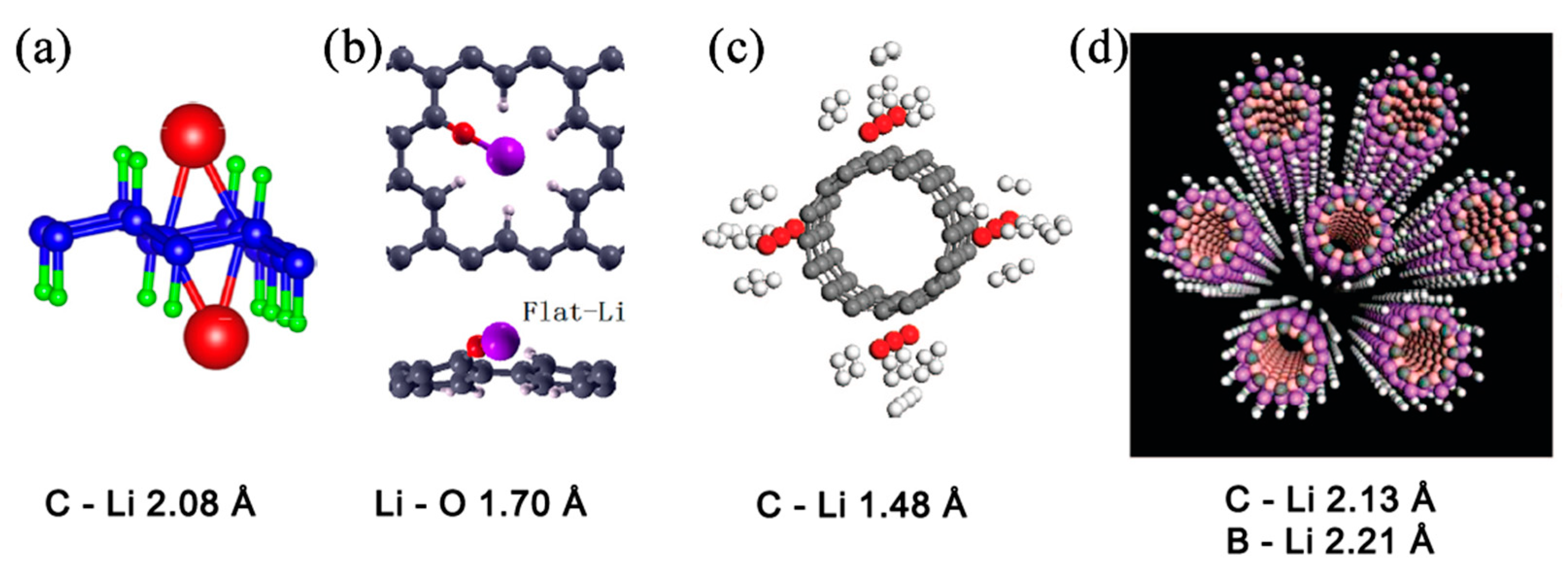
As we have seen, graphene presents many important and interesting findings; however, several studies have also been carried out with other compounds derived from carbon. Tachikawa et al. studied the Li-graphene nanoflakes system. They found the binding energy of H2 to Li-graphene nanoflakes decreased with increasing H2 molecules, reaching a limiting value at n = 10 [70]. The structures of the carbon nanotubes with a configuration of eight Li dispersed at the hollow sites above the hexagonal carbon rings were studied. This showed an H2 storage capacity of 13.45 wt % in the (H2)64/Li8/C64 model [69], as in Figure 2c. A previous report on the boron substitution in carbon nanotubes greatly enhances the binding energy of the Li atom to the nanotube, preventing the lithium from clustering [27], as in Figure 2d. In another study, Singh et al. employed the hydrogen storage ability of six such allotropes: C65, C64, C63, C62, C31, and C41. It is interesting to note that the C41 structure was able to adsorb many more hydrogen molecules than any other structure, with a maximum hydrogen gravimetric density of 7.12 wt % [71]. Using density functional theory (DFT), hydrogen adsorption on intrinsic and lithium-decorated C26 fullerene was investigated, emphasizing the critical role of Li atoms in enhancing H2 binding. The researchers demonstrated that Li atoms preferentially anchor at the H5–5 site of C26, accompanied by significant charge transfer from Li to the fullerene, which modifies the electronic structure and creates a favorable electrostatic environment for hydrogen adsorption. Lithium decoration markedly improves H2 uptake, allowing up to three H2 molecules to be stably adsorbed per Li atom, with adsorption governed by synergistic charge transfer and orbital hybridization among Li, C, and H2. These findings elucidate the microscopic mechanism of Li-enhanced hydrogen adsorption and highlight lithium-decorated fullerenes as promising candidates for advanced hydrogen storage applications [72].
Also, various dimeric materials with six-carbon rings and lithium (C6H6Li and LiC6H6Li) have been designed; these exhibit 8.6 wt % and 14.8 wt %, and they show no difference in the binding energy between the dimers [73].
On the other hand, lithium atoms adsorbed on acene molecules exhibit hydrogen-binding energies in the range of 0.21–0.42 eV per H2, with each lithium adatom capable of binding up to two H2 molecules [74]. Another representative example involves calix [4] arene functionalized with titanium and lithium on the delocalized π-electron systems of the benzene rings, where each lithium atom can trap up to three H2 molecules. In these systems, hydrogen adsorption on the metal centers is governed by Kubas–Niu–Rao–Jena interactions [75]. Graphyne has also been investigated as a hydrogen storage material [76,77], and studies in which two lithium atoms are deposited on the graphyne surface have reported the formation of MGF–Li8 structures stabilized by Dewar-type coordination. In this configuration, each lithium atom physisorbs up to three H2 molecules, resulting in a hydrogen storage capacity of approximately 6.4 wt % [78]. Similarly, lithium atoms placed at the termini of linear carbon chains, Li2Cₙ (n = 5–10), are capable of binding up to eight H2 molecules [79]. In addition, Desales et al. reported theoretical calculations on lithium-decorated zeolite-templated carbon nanostructures with convex surfaces, proposing these materials as promising candidates for hydrogen storage applications [80].
The effect of introducing lithium clusters on graphene surfaces to evaluate hydrogen adsorption capacity has also been investigated using density functional theory (DFT). These studies demonstrated that lithium clusters (n = 2–6) can be stably adsorbed on graphene, with adsorption energies ranging from 0.76 to 6.37 eV [81]. Furthermore, the [LiₙC54H18] (n = 5–6) complexes were shown to adsorb up to four H2 molecules, distributed among different lithium atoms, as illustrated in Figure 3.
Figure 3.
Side views of hydrogen molecules adsorbed on [LinC54H18] n = 3–6 complexes. Reprinted from Ref. [81] with permission.
On the other hand, recent studies have been reported with graphitic carbon nitride (g-C4N3 and g-C3N4) functionalized with lithium atoms (Li2C3N4 and Li2C4N3), finding gravimetric densities of hydrogen of 10 wt % [82]. Employing a similar concept, Searles and co-workers developed a stable allotrope of carbon nitride (g-C6N8), which can bind three, six, and eight lithium adatoms in different configurations. It is important to mention that each lithium atom adsorbs multiple H2 molecules with a storage capacity of 7.55 wt % [83], as shown in Figure 4. In 2020, we investigated the interaction of H2 molecules with lithium-functionalized graphitic carbon nitride using density functional theory (DFT). The hydrogen molecule was found to coordinate to the lithium atom at a distance of 2.20 Å; notably, the H2 molecule exhibited a relatively low adsorption energy of −0.07 eV [84]. More recently, the adsorption of hydrogen molecules on lithium clusters (Liₙ, n = 1–6) coordinated within a graphitic carbon nitride cavity (heptazine, g-C3N4) was reported. The results indicated that lithium atoms confined in the g-C3N4 cavity can coordinate up to 10 hydrogen molecules, with binding energies ranging from 0.10 to 0.19 eV [85]. In the continued search for efficient hydrogen adsorption systems, pentalene functionalized with alkali metals was investigated to elucidate the nature of the metal–H2 interaction. Our results showed that the highest adsorption energy was −0.11 eV for the Li2[C8H6]H12 system [86]. In addition, Li-decorated naphthylene structures were theoretically studied by Yang et al., who reported an average adsorption energy of −0.16 eV from DFT calculations and a gravimetric hydrogen storage capacity of 14.9 wt % based on grand canonical Monte Carlo (GCMC) simulations, indicating that Li-decorated naphthylene could serve as an exceptional hydrogen storage material [87]. Furthermore, other lithium-coordinating materials have also been explored for hydrogen adsorption. Sridhar Sahu and co-workers examined the hydrogen adsorption–desorption behavior and storage capacity of Li-functionalized [2] paracyclophane. This system, coordinated with three lithium atoms, was shown to physically adsorb up to 15 H2 molecules through a charge-polarization mechanism, with an average adsorption energy of 0.145 eV per 5 H2 molecules [88]. In a current study, the porous 3D material HZGM-42 decorated with lithium atoms was investigated. This material, reported by Majid EL Kassaoui, coordinated with hydrogen molecules and showed the appropriate range (−0.233 eV/H2), with a theoretical H2 storage capacity (6.08 wt %) and very low activation barriers (0.018–0.026 eV) for H2 migration [89].
Figure 4.
Geometric structures of (a) g-Li2C3N4 and (b) g-Li2C4N3 decorated with one hydrogen molecule in every supercell. Gray, white, blue, and purple spheres denote carbon, hydrogen, nitrogen, and lithium atoms. (c) Optimized structure of hydrogenated C24N32Li3 monolayer. Black, orange, red, and green balls represent C, N, Li, and H atoms, respectively. Reprinted from Refs. [82,83] with permission.
Table 1.
Information on structures with lithium (binding energy, H2 per molecule, storage capacity, and method).
3. Non-Carbon-Based Materials Systems
3.1. Silicon Systems
Several computational investigations of lithium systems and Si atoms also have also been studied, Ding et al. They reported SiLin clusters with n ranging from 4 to 16 for each SiLin (n: 5, 4–9) and found that the maximum Li-coordination number of Si is 9 [97,98]. Also, the molecular structures, electron affinities, and dissociation energies of neutral SinLi (n = 2–10) species and their anions have been studied [98]. Another investigation showed that Li atoms can trap a total of 14 and 17 H2 molecules in Si5Li6 and Si5Li7+ clusters, exhibiting a gravimetric density of 13.33 wt % and 15.25 wt %, respectively [99]. Later, Song and co-workers modified a cluster of Si20H20 with small molecules, [Si20H10(CONHLi)10, Si20H10(CONLi2)10, Si20H10(CN2H2Li)10, and Si20H10(CN2HLi2)10], with the objective to obtain a cluster with practical storage and usage at ambient temperature [100]. Ankita Jaiswal and co-workers recently verified the H2 adsorption over Si4Lin (n = 1–3) binary clusters. They found that each Li in Si4Li, Si4Li2, and Si4Li3 binary clusters can adsorb a maximum of 5H2, 4H2, and 3H2 molecules, respectively, leading to a total gravimetric density of 7.8%, 11.3%, and 12% [101].
3.2. Boron Systems
Recently, the use of boron atoms for different applications has resurged due to their interesting properties. The B6Li8 species with a high gravimetric density likely reaches a theoretical limit of 24% at cryogenic temperature [102]. The boron cluster is decorated with lithium atoms, where each lithium atom captures two H2 molecules with a storage capacity of about 9.24 wt % [103]. In a similar work, Yang et al. used lithium atoms to decorate a 1/8-boron monolayer, and they found that the electric field induced by the positively charged Li atoms attracts and polarizes the H2 molecules and makes the binding strong enough for potential applications to store H2 molecules [104]. The utilization of the Li4&B36 cluster can bind six H2 molecules, with the adsorption energies of 0.08–0.14 eV [93,105]. A work by Yang et al. studied LiBH4 clusters, where the hydrogen content of hydridic 3(LiBH4) is 19.60 wt %, which is even higher than that of the pure LiBH4 cluster by 1 wt % [106].
Borophene is another excellent compound to decorate with lithium atoms. Two systems have been studied, Li14&B40–42 H2(8) and 2Li-b12-borophene; the first can absorb 42 H2 molecules with a Eads of 0.32 eV/H2 [15] and the second can absorb 14 H2 molecules with the hydrogen storage capacity up to 10.85 wt % [60], as shown in Figure 5. By increasing the gravimetric and volumetric hydrogen uptake capacities, the BC2NBC–Li and BC2NCN–Li complexes [107] and three-dimensional pillared boron nitride and pillared graphene boron nitride [93] were designed. Also, Chandra Veer Singh et al. reported the metal decoration and point defects on two-dimensional (2D) borophene. The single H2 molecule over Li-decorated borophene was found to increase up to −0.36 eV per H2 [108]. N. N. Mostafa and co-workers employed density functional theory to evaluate the hydrogen storage performance of graphene co-doped with non-bonded boron and nitrogen atoms (BC4N). Their results show that co-doping induces surface rippling that enhances metal adsorption, with lithium and sodium atoms exhibiting binding energies higher than their cohesive energies, thereby suppressing metal clustering. Electronic structure analyses reveal charge transfer from Li and Na to the BC4N monolayer, indicating that BC4N acts as an effective electron acceptor. Hydrogen adsorption on Li/BC4N and Na/BC4N occurs in a non-dissociative manner and displays a cooperative effect with increasing H2 coverage, leading to favorable gravimetric storage capacities and desorption temperatures, which highlights these systems as promising candidates for efficient hydrogen storage [109]. Mohanmmad et al. reported the adsorption of hydrogen molecules on a 3Li/B4C3 monolayer. They observed adsorption energy from −0.23 to −0.24 eV, with the gravimetric capacity of 6.22 wt % within the requirements, and desorption at room temperature [110].
Figure 5.
(a) Optimized configurations of Li14&B40–42 H2 and its H2 adsorption. The B atom is orange, Li is purple, and H is white. (b) The optimized structures of the Li-β12-borophene/H2 14 H2 molecules adsorption. The pink, purple, and white balls in this Figure express B, Li, and H atoms, respectively. Reprinted from Refs. [15,60] with permission.
Using density functional theory, Li-decorated carbon-doped boron nitride nanochains were designed and evaluated for hydrogen storage. Carbon substitution significantly enhances lithium binding, effectively preventing Li aggregation. The optimized structures exhibit strong metal binding energies and enable each lithium atom to adsorb nearly four H2 molecules with an average binding energy of ~0.14 eV. At a carbon doping ratio of 16.58%, a high hydrogen storage capacity of 18.68 wt % is achieved, indicating that Li–BCN nanochains are highly promising candidates for hydrogen storage applications [111]. A recent study on lithium-decorated B3S monolayers reported hydrogen adsorption energies of 0.167 and 0.208 eV per H2 molecule, indicating that this material exhibits reversible hydrogen adsorption and high storage capacity, making it a promising candidate for hydrogen storage applications [112]. In a related investigation, Rahimi examined hydrogen storage in lithium-decorated B4C3 monolayers, reporting favorable adsorption energies in the range of −0.23 to −0.24 eV and a gravimetric hydrogen storage capacity of 6.22 wt % [110]. More recently, Ayoub Benaddi and co-workers designed lithium-decorated two-dimensional orthorhombic (o)-B2X2 (X = P or N) monolayers by combining boron with phosphorus or nitrogen. Lithium coordination significantly enhanced H2 adsorption on both systems (e.g., 32H2@B2P2 and 24H2@B2N2), resulting in high gravimetric hydrogen storage capacities of 8.18 and 9.7 wt %, respectively. These materials exhibited average hydrogen adsorption energies of 0.18 eV for 32H2@B2P2 and 0.20 eV for 24H2@B2N2 [113]. In addition, we recently reported the adsorption of hydrogen molecules on a borophene B36 fragment coordinated with Group 1 metal ions (Li–Cs), modeled using density functional theory and the domain-based local pair natural orbital approximation of CCSD(T). The results showed that the gravimetric hydrogen storage capacity of nH2[MB36]+ systems ranges from 1.5 to 4.1 wt %. The coordination of alkali metals with the B36 fragment yielded adsorption energies between −3.49 and −1.27 kcal/mol, with the strongest interactions observed for lithium-, sodium-, and potassium-decorated borophene complexes [114].
3.3. Phosphorus Systems
It is interesting to note the advantages of decorating phosphorene with lithium atoms. Monolayer black phosphorene decorated with Li is a hydrogen storage medium with great potential [115], as shown in Figure 6a. In addition, the modification of phosphorene with lithium atoms induces an increase in the adsorption energy of hydrogen by about 0.2 eV, and each Li atom can adsorb up to three H2 molecules [116], as shown in Figure 6b. However, the presence of specific defects is not very efficient for anchoring H2 molecules on the defective phosphorene, compared with the selective decoration with lithium atoms [117].
Figure 6.
(a) Optimized structures of Li-decorated MBP with three H2 molecules adsorbed. (b) Optimized structure with 12 H2 molecules adsorbed by bi-Li4bP16. Reprinted from Refs. [115,116] with permission.
4. Metal–Organic Frameworks (MOFs) and COF Systems
Framework materials, such as metal–organic frameworks (MOFs), have attracted considerable attention for a wide range of applications [118,119,120], as shown in Figure 7a. William A. Goddard and co-workers proposed that doping MOFs with electropositive metals represents a promising strategy for achieving practical hydrogen storage [121]. Density functional theory (DFT) studies have reported that the incorporation of lithium alkoxide (OLi) groups into the COF-105 structure enables each OLi site to interact with up to five hydrogen molecules [122], as shown in Figure 7b. Using the same framework, Smit and co-workers doped COF-105 and COF-108 with lithium atoms and observed gravimetric hydrogen storage capacities of 6.84 and 6.73 wt %, respectively, at T = 298 K and p = 100 bar [123]. In 2008, theoretical investigations were conducted on two organic linkers of IRMOF-8 and IRMOF-14, revealing that lithium atoms are not adsorbed on the aromatic rings, thereby leaving the aromatic binding sites free and active, which allows hydrogen molecules to be adsorbed at both lithium and aromatic sites [124]. In addition, Deng et al. modified the structures of IRMOF-12 and IRMOF-14 by lithium doping followed by coordination with fullerenes, forming Li-IRMOFs incorporating Li-coated fullerenes (Li–C60@Li-IRMOFs), which resulted in enhanced hydrogen uptake and improved storage efficiency [125]. In a related study, COF-108 was modified through C60 impregnation or grafting onto aromatic rings and subsequently doped with lithium atoms, with the aim of creating increased overlapping interaction potentials for hydrogen adsorption [126]. Furthermore, microporous polymers based on benzene-1,3,5-triethynyl (CMP-1) and benzene-1,3,5-tributadiyne (HCMP-1), decorated with lithium atoms, have also been investigated. These systems were found to adsorb up to three hydrogen molecules per metal site, achieving a gravimetric hydrogen storage capacity of 8.76 wt % [92]. Metal–organic frameworks are highly attractive physisorption-based hydrogen storage materials, and the incorporation of lithium atoms plays a key role in enhancing their performance by increasing the number of active adsorption sites and strengthening interactions with hydrogen molecules. Grand canonical Monte Carlo simulations of lithium-doped MIL-101 reveal that, when lithium atoms are introduced following experimentally relevant immersion processes, they tend to accumulate within the framework at higher loadings rather than distributing uniformly. This lithium aggregation reduces pore size and significantly intensifies charge-induced dipole interactions with hydrogen, thereby enhancing adsorption strength and leading to markedly improved hydrogen storage capacities [127].
Figure 7.
(a) Porous aromatic framework (PAF-4) containing Li(þ)-CHN4(-) moieties. The yellow ball denotes the free volume. (b) The optimized geometries of the interaction of four H2 with the lithium alkoxide group. Carbon, silicon, oxygen, boron, hydrogen, and lithium atoms are shown as gray, yellow, red, pink, white, and purple, respectively. Reprinted from Refs. [120,122] with permission.
5. Other Systems
Verma’s research group investigated a series of lithium hydride-based systems, including LiH, LiH–2H, LiH–6H, LiH–3H2, and LiH–4H2, within a NaCl-type crystal structure. Their results indicated that LiH with six additional hydrogen atoms is the most stable configuration, while pristine LiH exhibits an energy band gap of approximately 3.0 eV [128,129]. In addition, numerous related systems have been explored, see Table 2 such as Al–Li clusters [130], lithium-doped borazine derivatives (B3N3F3Li3), various bond-stretch isomers of Li3Al4− [131], Li-decorated MoS2 [132], pyramidal lithium clusters [133], M5Li7+ (M = C, Si, Ge), and M4Li4 (M = Si, Ge) [134]. Lithium-intercalated aluminum nitride nanocages, Liₙ(AlN)ₙ (n = 12, 24, 36), have also been shown to store hydrogen up to 7.7 wt %, exhibiting favorable reversibility for hydrogen adsorption–desorption under ambient conditions [135]. Lithium nitride (Li3N) displays reversible two-step reactions with gaseous hydrogen without the need for external catalysts, achieving an overall hydrogen storage capacity of 10.4 wt % [136]. Ab initio quantum chemical calculations demonstrate that lithium-decorated boron hydrides, including B2H2Li2 and B2H4Li2, are structurally stable and highly effective for hydrogen adsorption, featuring B–B triple and double bonds, respectively, and strongly bound cationic lithium sites. These lithium centers interact with H2 molecules via ion–quadrupole and ion-induced dipole interactions, enabling each site to adsorb up to three hydrogen molecules and achieve high gravimetric storage capacities of approximately 24 wt % and 23 wt %. Furthermore, a one-dimensional C6H4B2Li2 nanowire model exhibits a hydrogen storage capacity of 9.68 wt % with a moderate adsorption energy of −2.34 kcal·mol−1 per H2 molecule [137]. First-principles calculations further revealed that the heat of formation for the complete hydriding reaction of Li3N is −0.88 kJ mol−1 H2, supporting its potential for reversible hydrogen storage [138]. In 2014, Cui et al. demonstrated that orbital interactions play a dominant role in hydrogen adsorption in a C60(Li2F)12 cluster, which can stably store up to 68 H2 molecules with an average binding energy of 0.12 eV per H2 molecule [96]. More recently, Kanti et al. reported that a LiF molecule is capable of adsorbing up to 10 H2 molecules with an average adsorption energy of 0.11 eV [139]. Lithium halides, including lithium chloride (LiCl) and lithium bromide (LiBr), have also been investigated, showing the ability to adsorb up to 10 H2 molecules with high gravimetric hydrogen storage capacities of 32.00 wt % and 18.71 wt %, respectively [140]. Comparative studies on Li–Ga4As4 and Li–Ga4As4–F systems revealed that fluorinated Li–Ga4As4–F can store up to four hydrogen molecules with a maximum binding energy of 0.272 eV per H2 molecule [141]. Hydrogen adsorption on lithium-decorated BeN2 nanolayers has also been analyzed, demonstrating that the BeN2–Li2 system, accommodating four H2 molecules per lithium atom, is stable, with all hydrogen molecules remaining close to the surface. This system exhibits an average binding energy of 0.214 eV and a hydrogen storage capacity of 9.1 wt % [142].
More recently, the design of lithium-decorated penta-BN2 (P-BN2) has been reported. This material shows strong binding affinity toward lithium atoms, effectively preventing lithium clustering and ensuring high structural stability. The P-BN2 system is capable of adsorbing up to 28 hydrogen molecules, corresponding to a theoretical gravimetric hydrogen storage capacity of 13.27 wt %. Ab initio molecular dynamics (AIMD) simulations further indicate a usable hydrogen storage capacity of 8.95 wt % at 300 K [143]. Muhammad Isa Khan and collaborators used density functional theory (DFT) to study a novel two-dimensional Bi2Se3 monolayer and evaluate its potential for hydrogen storage when decorated with alkali metal atoms, with particular emphasis on lithium. The results show that Li atoms preferentially adsorb above Se sites, inducing charge transfer to the Bi2Se3 surface and creating favorable electrostatic conditions for hydrogen adsorption. Hydrogen molecules are physically adsorbed on Li–Bi2Se3 complexes, enabling each Li-decorated system to store up to 18 H2 molecules and achieve a gravimetric storage capacity of approximately 6.66 wt % [144].
Recently, the hydrogen storage performance of a novel two-dimensional germa-graphene (GeC5) monolayer decorated with lithium atoms was studied using density functional theory (DFT), highlighting the key role of Li in enhancing adsorption. While pristine GeC5 exhibits inadequate hydrogen adsorption, the introduction of Li atoms significantly strengthens H2 binding, with each Li atom capable of adsorbing up to three H2 molecules at favorable adsorption energies (~−0.25 eV). Owing to the absence of Li clustering, eight Li atoms can be stably distributed on both sides of the GeC5 surface, enabling the adsorption of up to 24 H2 molecules with an average adsorption energy of −0.22 eV. This Li-decorated configuration achieves a high gravimetric storage capacity of 7.62 wt %, surpassing the U.S. Department of Energy’s target and outperforming many reported 2D materials, while also ensuring reversible hydrogen adsorption [145].
Table 2.
Lithium systems information (binding energy, H2 per molecule, storage capacity, and method).
6. Challenges in Industrial Applications
Across the surveyed theoretical studies, alkali metal-decorated light substrates, particularly lithium-decorated low-dimensional materials, most consistently fall within the widely accepted optimal hydrogen adsorption window of approximately 0.2–0.6 eV per H2 and retain meaningful storage capacities under near-ambient conditions (∼298 K and tens to ~100 bar), rather than requiring cryogenic temperatures. Li-decorated two-dimensional materials, such as graphene, boron nitride, g-C3N4, MXenes, and group IV–V monolayers, typically exhibit adsorption energies in the 0.2–0.4 eV/H2 range due to Li-induced polarization and charge transfer, enabling non-negligible hydrogen uptake at room temperature and moderate pressures with gravimetric capacities approaching or exceeding DOE targets. Similarly, Li-decorated fullerenes and nanocages often lie near the upper end of this optimal window, allowing reversible hydrogen adsorption at or near ambient conditions, although their absolute capacities are generally lower than those of extended 2D systems. Alkali metal-decorated porous frameworks can also achieve suitable adsorption energies at 298 K when lithium is strongly anchored, but their practical performance is highly sensitive to Li dispersion and pore accessibility. In contrast, pristine or weakly functionalized carbon materials exhibit very low adsorption energies (<0.1 eV/H2) and require cryogenic operation to achieve appreciable storage. Overall, Li-decorated 2D materials and nanocages emerge as the most promising theoretical candidates for practical hydrogen storage, provided that lithium stability, resistance to clustering, and realistic pressure–temperature effects are properly addressed.
To enhance critical insights, it is important to acknowledge the limitations of density functional theory in describing weak adsorption phenomena, such as physisorption-dominated hydrogen storage. Standard DFT functionals may inadequately capture long-range van der Waals interactions, leading to uncertainties in predicted adsorption energies and storage capacities. Consequently, theoretical predictions often obtained under idealized conditions may overestimate hydrogen uptake when compared with experimental results. In practice, additional bottlenecks such as metal atom clustering, material synthesis challenges, stability under operating conditions, and thermal management further constrain real-world performance. Addressing these gaps requires the integration of advanced dispersion-corrected DFT methods, multiscale modeling, and systematic experimental validation to bridge the divide between theoretical promise and practical hydrogen storage applications.
Despite the promising hydrogen storage capacities predicted for Li-decorated materials, several barriers hinder their industrial deployment when evaluated against policy standards such as the U.S. Department of Energy’s targets. Scalability remains a key challenge, as lithium cost, supply chain constraints, and competition with battery technologies may limit large-scale adoption. In addition, cycle stability is a critical concern: repeated hydrogen adsorption–desorption can induce Li atom migration or clustering, leading to performance degradation over time. Practical operation also requires maintaining suitable adsorption energies across realistic temperature and pressure windows, as well as ensuring material durability and safe handling. These factors highlight a gap between theoretical performance and industrial feasibility, underscoring the need for cost-effective synthesis routes, improved cycling stability, and validation under DOE-relevant operating conditions.
7. Conclusions and Prospects
In this review, lithium systems for hydrogen storage of the last few decades have been analyzed. H2 storage has become very important in recent years because fossil fuel resources are decreasing. Hydrogen adsorption is a good method; different materials have been studied theoretically for years. Carbon-based materials are the most used; however, we can find organic and inorganic molecules. The use of lithium atoms in systems such as films or molecules increases the adsorption of hydrogen molecules. The chemical character and partial positive charge generated by the lithium atom cause a strong interaction with hydrogen molecules. The strategy of many researchers to use lithium atoms in films and/or molecules increased the gravimetric density.
In theoretical studies, lithium is widely used to enhance hydrogen adsorption in materials due to the following characteristics:
(a) Lithium can polarize hydrogen molecules through charge transfer and electrostatic interactions, increasing adsorption energies into the ideal range for reversible storage (typically 0.2–0.4 eV per H2), which is difficult to achieve in pristine materials.
(b) As one of the lightest metals, lithium contributes minimally to the total mass of the storage system, helping to achieve high gravimetric hydrogen storage capacities, a crucial metric in theoretical evaluations.
(c) A single Li atom can adsorb multiple hydrogen molecules (commonly up to 3–4 H2) via polarization mechanisms, significantly increasing storage density without requiring strong chemisorption.
(d) Lithium readily donates electrons to the host material, modifying its electronic structure and creating localized electrostatic fields that stabilize H2 adsorption, as consistently demonstrated in DFT calculations.
Overall, lithium provides an effective balance between adsorption strength, reversibility, and low mass, making it an ideal theoretical dopant for the exploration and design of next-generation hydrogen storage materials.
A major limitation in translating theoretical predictions into experiments is the chemical instability of lithium adsorption sites. Most theoretical studies assume isolated, positively charged Li atoms stably anchored to a substrate, whereas, in practice, lithium is highly reactive toward oxygen, moisture, CO2, and residual solvents. This reactivity leads to oxidation, hydroxylation, or migration of Li atoms, so even minimal exposure during synthesis or handling can passivate active sites and suppress hydrogen adsorption. Consequently, DFT calculations often neglect air and moisture effects, while experiments frequently report rapid degradation of Li activity. Addressing this gap requires incorporating realistic Li binding, oxidation energetics, and ab initio thermodynamics in simulations, alongside systematic in situ or operando experimental characterization. Another critical challenge is lithium aggregation and the resulting non-uniform distribution of adsorption sites. While theoretical models typically assume well-dispersed Li atoms, experiments show that Li readily diffuses and clusters, especially at high loadings or temperatures, reducing accessible adsorption sites and blocking active surfaces. Progress in this area demands computational evaluation of Li diffusion and clustering energetics, as well as advanced experimental techniques to map Li distributions and correlate hydrogen uptake with Li loading. Finally, predicted hydrogen binding energies are highly sensitive to computational methodology. Small variations in exchange–correlation functionals, dispersion corrections, or thermal effects can shift adsorption energies outside the optimal window for reversible storage, leading to discrepancies between theory and experiment. Improving reliability requires standardized computational protocols with zero-point and thermal corrections, cross-validation of methods, and direct experimental comparison using isosteric heat measurements and long-term cycling tests.
Author Contributions
M.I.-R., C.Y.F.-F. and S.R.-L.: investigation, visualization, and writing; M.S.: conceptualization and project administration. All authors have read and agreed to the published version of the manuscript.
Funding
This research received no external funding.
Data Availability Statement
Not Applicable.
Acknowledgments
Thanks to CONAHCYT of México, CIMAV-MTY, and FCQ-UANL.
Conflicts of Interest
The authors declare no conflicts of interest.
References
- Schlapbach, L.; Züttel, A. Hydrogen-storage materials for mobile applications. Nature 2001, 414, 353–358. [Google Scholar] [CrossRef] [Scilit]
- Schüth, F.; Bogdanović, B.; Felderhoff, M. Light metal hydrides and complex hydrides for hydrogen storage. Chem. Commun. 2004, 20, 2249–2258. [Google Scholar] [CrossRef] [Scilit]
- Nicoletti, G.; Arcuri, N.; Nicoletti, G.; Bruno, R. A technical and environmental comparison between hydrogen and some fossil fuels. Energy Convers. Manag. 2015, 89, 205–213. [Google Scholar] [CrossRef] [Scilit]
- Louli, R.; Giurgea, S.; Salhi, I.; Laghrouche, S.; Djerdir, A. A Critical Review of Green Hydrogen Production by Electrolysis: From Technology and Modeling to Performance and Cost. Energies 2026, 19, 59. [Google Scholar] [CrossRef] [Scilit]
- Mei, J.; Meng, X.; Tang, X.; Li, H.; Hasanien, H.; Alharbi, M.; Dong, Z.; Shen, J.; Sun, C.; Fan, F.; et al. An Accurate Parameter Estimation Method of the Voltage Model for Proton Exchange Membrane Fuel Cells. Energies 2024, 17, 2917. [Google Scholar] [CrossRef] [Scilit]
- Li, X.; Ye, T.; Meng, X.; He, D.; Li, L.; Song, K.; Jiang, J.; Sun, C. Advances in the Application of Sulfonated Poly(Ether Ether Ketone) (SPEEK) and Its Organic Composite Membranes for Proton Exchange Membrane Fuel Cells (PEMFCs). Polymers 2024, 16, 2840. [Google Scholar] [CrossRef] [Scilit] [PubMed]
- Li, Z.; Huang, Q.; Yang, L.; Huang, H.; Wei, K.; Li, D.; Zhao, C.; Liu, J.; Li, Z. Energy analysis of hydrogen production via fuel-assisted high-temperature solid oxide electrolysis cell via system modelling. Sustain. Energy Res. 2025, 12, 31. [Google Scholar] [CrossRef] [Scilit]
- Jena, P. Materials for hydrogen storage: Past, present, and future. J. Phys. Chem. Lett. 2011, 2, 206–211. [Google Scholar] [CrossRef] [Scilit]
- Ao, Z.M.; Peeters, F.M. High-capacity hydrogen storage in Al-adsorbed graphene. Phys. Rev. B 2010, 81, 205406. [Google Scholar] [CrossRef] [Scilit]
- Ataca, C.; Aktürk, E.; Ciraci, S.; Ustunel, H. High-capacity hydrogen storage by metallized graphene. Appl. Phys. Lett. 2008, 93, 043123. [Google Scholar] [CrossRef] [Scilit]
- Sun, Q.; Wang, Q.; Jena, P. Functionalized heterofullerenes for hydrogen storage. Appl. Phys. Lett. 2009, 94, 013111. [Google Scholar] [CrossRef] [Scilit]
- Chandrakumar, K.R.S.; Ghosh, S.K. Alkali-metal-induced enhancement of hydrogen adsorption in C60 fullerene: an ab initio study. Nano Lett. 2008, 8, 13–19. [Google Scholar] [CrossRef] [Scilit]
- Seenithurai, S.; Pandyan, R.K.; Kumar, S.V.; Saranya, C.; Mahendran, M. Al-decorated carbon nanotube as the molecular hydrogen storage medium. Int. J. Hydrogen Energy 2014, 39, 11990–11998. [Google Scholar] [CrossRef] [Scilit]
- Du, A.; Zhu, Z.; Smith, S.C. Multifunctional porous graphene for nanoelectronics and hydrogen storage: New properties revealed by first principle calculations. J. Am. Chem. Soc. 2010, 132, 2876–2877. [Google Scholar] [CrossRef] [Scilit] [PubMed]
- Wang, Y.; Meng, Z.; Liu, Y.; You, D.; Wu, K.; Lv, J.; Wang, X.; Deng, K.; Rao, D.; Lu, R. Lithium decoration of three dimensional boron-doped graphene frameworks for high-capacity hydrogen storage. Appl. Phys. Lett. 2015, 106, 063901. [Google Scholar] [CrossRef] [Scilit]
- Hussain, T.; Pathak, B.; Ramzan, M.; Maark, T.A.; Ahuja, R. Calcium doped graphane as a hydrogen storage material. Appl. Phys. Lett. 2012, 100, 183902. [Google Scholar] [CrossRef] [Scilit]
- Song, N.; Wang, Y.; Zheng, Y.; Zhang, J.; Xu, B.; Sun, Q.; Jia, Y. New template for Li and Ca decoration and hydrogen adsorption on graphene-like SiC: A first-principles study. Comput. Mater. Sci. 2015, 99, 150–155. [Google Scholar] [CrossRef] [Scilit]
- Gao, Y.; Zhao, N.; Li, J.; Liu, E.; He, C.; Shi, C. Hydrogen spillover storage on Ca-decorated graphene. Int. J. Hydrogen Energy 2012, 37, 11835–11841. [Google Scholar] [CrossRef] [Scilit]
- Lebon, A.; Carrete, J.; Gallego, L.J.; Vega, A. Ti-decorated zigzag graphene nanoribbons for hydrogen storage. A van der Waals-corrected density-functional study. Int. J. Hydrogen Energy 2015, 40, 4960–4968. [Google Scholar] [CrossRef] [Scilit]
- Chu, S.; Hu, L.; Hu, X.; Yang, M.; Deng, J. Titanium-embedded graphene as high-capacity hydrogen-storage media. Int. J. Hydrogen Energy 2011, 36, 12324–12328. [Google Scholar] [CrossRef] [Scilit]
- Liu, Y.; Ren, L.; He, Y.; Cheng, H.P. Titanium-decorated graphene for high-capacity hydrogen storage studied by density functional simulations. J. Phys. Condens. Matter 2010, 22, 445301. [Google Scholar] [CrossRef] [Scilit] [PubMed]
- Rojas, M.I.; Leiva, E.P.M. Density functional theory study of a graphene sheet modified with titanium in contact with different adsorbates. Phys. Rev. B 2007, 76, 155415. [Google Scholar] [CrossRef] [Scilit]
- Kim, G.; Jhi, S.-H.; Park, N.; Louie, S.G.; Cohen, M.L. Optimization of metal dispersion in doped graphitic materials for hydrogen storage. Phys. Rev. B 2008, 78, 085408. [Google Scholar] [CrossRef] [Scilit]
- Sun, Q.; Wang, Q.; Jena, P.; Kawazoe, Y. Clustering of Ti on a C60 surface and its effect on hydrogen storage. J. Am. Chem. Soc. 2005, 127, 14582–14583. [Google Scholar] [CrossRef] [Scilit]
- Krasnov, P.O.; Ding, F.; Singh, A.K.; Yakobson, B.I. Clustering of Sc on SWNT and reduction of hydrogen uptake: ab-Initio all-electron calculations. J. Phys. Chem. C 2007, 111, 17977–17980. [Google Scholar] [CrossRef] [Scilit]
- Li, S.; Jena, P. Comment on “combinatorial search for optimal hydrogen-storage nanomaterials based on polymers”. Phys. Rev. Lett. 2006, 97, 209601. [Google Scholar] [CrossRef] [Scilit]
- Wu, X.; Gao, Y.; Zeng, X.C. Hydrogen storage in pillared Li-dispersed boron carbide nanotubes. J. Phys. Chem. C 2008, 112, 8458–8463. [Google Scholar] [CrossRef] [Scilit]
- Zhang, S.; Yang, G.; Li, X.; Li, Y.; Wang, Z.; Chen, L. Controlled Lithium Deposition. Front. Energy Res. 2022, 10, 837071. [Google Scholar] [CrossRef] [Scilit]
- Mauger, A.; Julien, C.M. Remedies to Avoid Failure Mechanisms of Lithium-Metal Anode in Li-Ion Batteries. Inorganics 2022, 10, 5. [Google Scholar] [CrossRef] [Scilit]
- Ma, L.-P.; Wu, Z.-S.; Li, J.; Wu, E.-D.; Ren, W.-C.; Cheng, H.-M. Hydrogen adsorption behavior of graphene above critical temperature. Int. J. Hydrogen Energy 2009, 34, 2329–2332. [Google Scholar] [CrossRef] [Scilit]
- Goldsmith, J.; Wong-Foy, A.G.; Cafarella, M.J.; Siegel, D.J. Theoretical limits of hydrogen storage in metal–organic frameworks: Opportunities and trade-offs. Chem. Mater. 2013, 25, 3373–3382. [Google Scholar] [CrossRef] [Scilit]
- Liu, C.; Chen, Y.; Wu, C.-Z.; Xu, S.-T.; Cheng, H.-M. Hydrogen storage in carbon nanotubes revisited. Carbon 2010, 48, 452–455. [Google Scholar] [CrossRef] [Scilit]
- Venkataramanan, N.S.; Khazaei, M.; Sahara, R.; Mizuseki, H.; Kawazoe, Y. First-principles study of hydrogen storage over Ni and Rh doped BN sheets. Chem. Phys. 2009, 359, 173–178. [Google Scholar] [CrossRef] [Scilit]
- Liu, P.; Zhang, H.; Cheng, X.; Tang, Y. Transition metal atom Fe, Co, Ni decorated B38 fullerene: Potential material for hydrogen storage. Int. J. Hydrogen Energy 2017, 42, 15256–15261. [Google Scholar] [CrossRef] [Scilit]
- Hug, S.; Mesch, M.B.; Oh, H.; Popp, N.; Hirscher, M.; Senker, J.; Lotsch, B.V. A fluorene based covalent triazine framework with high CO2 and H2 capture and storage capacities. J. Mater. Chem. A 2014, 2, 5928–5936. [Google Scholar] [CrossRef] [Scilit]
- Eletskii, A.V.; Iskandarova, I.M.; Knizhnik, A.A.; Krasikov, D.N. Graphene: Fabrication methods and thermophysical properties. Physics-Uspekhi 2011, 54, 227–258. [Google Scholar] [CrossRef] [Scilit]
- Kaur, H.; Yadav, S.; Srivastava, A.K.; Singh, N.; Schneider, J.J.; Sinha, O.P.; Agrawal, V.V.; Srivastava, R. Large area fabrication of semiconducting phosphorene by langmuir-blodgett assembly. Sci. Rep. 2016, 6, 34095. [Google Scholar] [CrossRef] [Scilit]
- Kukkapalli, V.K.; Kim, S.; Thomas, S.A. Thermal Management Techniques in Metal Hydrides for Hydrogen Storage Applications: A Review. Energies 2023, 16, 3444. [Google Scholar] [CrossRef] [Scilit]
- Mehrpooya, M.; Zhalehrajabi, E. Thermal Management in Hydrogen Storage Tanks Using Metal Hydrides and Phase Change Materials. Ind. Eng. Chem. Res. 2024, 63, 21860–21874. [Google Scholar] [CrossRef] [Scilit]
- Mittal, H.; Kushwaha, O.S.; Nadagouda, M.; Hegde, G.; Allen, S.; Aminabhavi, T.M. Adsorption and storage of hydrogen- A computational model approach. Environ. Res. 2024, 260, 119606. [Google Scholar] [CrossRef] [Scilit] [PubMed]
- Sun, Q.; Jena, P.; Wang, Q.; Marquez, M. First-principles study of hydrogen storage on Li12C60. J. Am. Chem. Soc. 2006, 128, 9741–9745. [Google Scholar] [CrossRef] [Scilit] [PubMed]
- Liu, C.-S.; Zeng, Z. Boron-tuned bonding mechanism of Li-graphene complex for reversible hydrogen storage. Appl. Phys. Lett. 2010, 96, 123101. [Google Scholar] [CrossRef] [Scilit]
- Valencia, F.; Romero, A.H.; Ancilotto, F.; Silvestrelli, P.L. Lithium adsorption on graphite from density functional theory calculations. J. Phys. Chem. B 2006, 110, 14832–14841. [Google Scholar] [CrossRef] [Scilit]
- Novoselov, K.S.; Geim, A.K.; Morozov, S.V.; Jiang, D.; Zhang, Y.; Dubonos, S.V.; Grigorieva, I.V.; Firsov, A.A. Electric field effect in atomically thin carbon films. Science 2004, 306, 666–669. [Google Scholar] [CrossRef] [Scilit] [PubMed]
- Novoselov, K.S.; Jiang, D.; Schedin, F.; Booth, T.J.; Khotkevich, V.V.; Morozov, S.V.; Geim, A.K. Two-dimensional atomic crystals. Proc. Natl. Acad. Sci. USA 2005, 102, 10451–10453. [Google Scholar] [CrossRef] [Scilit]
- Balandin, A.A.; Ghosh, S.; Bao, W.; Calizo, I.; Teweldebrhan, D.; Miao, F.; Lau, C.N. Superior thermal conductivity of single-layer graphene. Nano. Lett. 2008, 8, 902–907. [Google Scholar] [CrossRef] [Scilit] [PubMed]
- Lee, C.; Wei, X.; Kysar, J.W.; Hone, J. Measurement of the elastic properties and intrinsic strength of monolayer graphene. Science 2008, 321, 385–388. [Google Scholar] [CrossRef] [Scilit]
- Morozov, S.V.; Novoselov, K.S.; Katsnelson, M.I.; Schedin, F.; Elias, D.C.; Jaszczak, J.A.; Geim, A.K. Giant intrinsic carrier mobilities in graphene and its bilayer. Phys. Rev. Lett. 2008, 100, 016602. [Google Scholar] [CrossRef] [Scilit]
- Dimitrakakis, G.K.; Tylianakis, E.; Froudakis, G.E. Pillared graphene: A new 3-D network nanostructure for enhanced hydrogen storage. Nano Lett. 2008, 8, 3166–3170. [Google Scholar] [CrossRef] [Scilit]
- Khazaei, M.; Bahramy, M.S.; Venkataramanan, N.S.; Mizuseki, H.; Kawazoe, Y. Chemical engineering of prehydrogenated C and BN-sheets by Li: Application in hydrogen storage. J. Appl. Phys. 2009, 106, 094303. [Google Scholar] [CrossRef] [Scilit]
- Deng, W.-Q.; Xu, X.; Goddard, W.A. New alkali doped pillared carbon materials designed to achieve practical reversible hydrogen storage for transportation. Phys. Rev. Lett. 2004, 92, 166103. [Google Scholar] [CrossRef] [Scilit]
- Rao, D.; Wang, Y.; Meng, Z.; Yao, S.; Chen, X.; Shen, X.; Lu, R. Theoretical study of H2 adsorption on metal-doped graphene sheets with nitrogen-substituted defects. Int. J. Hydrogen Energy 2015, 40, 14154–14162. [Google Scholar] [CrossRef] [Scilit]
- Cabria, I.; López, M.J.; Alonso, J.A. Enhancement of hydrogen physisorption on graphene and carbon nanotubes by Li doping. J. Chem. Phys. 2005, 123, 204721. [Google Scholar] [CrossRef] [Scilit]
- Sabir, A.K.; Lu, W.; Roland, C.; Bernholc, J. Ab initiosimulations of H2in Li-doped carbon nanotube systems. J. Phys. Condens. Matter 2007, 19, 086226. [Google Scholar] [CrossRef] [Scilit]
- Meng, J.; Lu, Y.; Zhang, S.; Yuan, X.; Wang, L. Lithium-doped graphene as a potential hydrogen storage material and experimental investigations. J. Energy Storage 2025, 132, 117821. [Google Scholar] [CrossRef] [Scilit]
- Pellenq, R.J.-M.; Marinelli, F.; Fuhr, J.D.; Fernandez-Alonso, F.; Refson, K. Strong physisorption site for H2 in K- and Li-doped porous carbons. J. Chem. Phys. 2008, 129, 224701. [Google Scholar] [CrossRef] [Scilit] [PubMed]
- Seenithurai, S.; Pandyan, R.K.; Kumar, S.V.; Saranya, C.; Mahendran, M. Li-decorated double vacancy graphene for hydrogen storage application: A first principles study. Int. J. Hydrogen Energy 2014, 39, 11016–11026. [Google Scholar] [CrossRef] [Scilit]
- Kim, D.; Lee, S.; Hwang, Y.; Yun, K.-H.; Chung, Y.-C. Hydrogen storage in Li dispersed graphene with Stone–Wales defects: A first-principles study. Int. J. Hydrogen Energy 2014, 39, 13189–13194. [Google Scholar] [CrossRef] [Scilit]
- Liu, Y.; Artyukhov, V.I.; Liu, M.; Harutyunyan, A.R.; Yakobson, B.I. Feasibility of lithium storage on graphene and its derivatives. J. Phys. Chem. Lett. 2013, 4, 1737–1742. [Google Scholar] [CrossRef] [Scilit]
- Liu, T.; Chen, Y.; Wang, H.; Zhang, M.; Yuan, L.; Zhang, C. Li-decorated β(12)-borophene as potential candidates for hydrogen storage: A first-principle study. Materials 2017, 10, 1399. [Google Scholar] [CrossRef] [Scilit] [PubMed]
- Hussain, T.; Pathak, B.; Adit Maark, T.; Moyses Araujo, C.; Scheicher, R.H.; Ahuja, R. Ab initio study of lithium-doped graphane for hydrogen storage. EPL 2011, 96, 27013. [Google Scholar] [CrossRef] [Scilit]
- Garay-Tapia, A.M.; Romero, A.H.; Barone, V. Lithium adsorption on graphene: From isolated adatoms to metallic sheets. J. Chem. Theory Comput. 2012, 8, 1064–1071. [Google Scholar] [CrossRef] [Scilit]
- Rangel, E.; Vázquez, G.; Magaña, F.; Sansores, E. Interaction between an icosahedron Li13 cluster and a graphene layer doped with a hydrogen atom. J. Mol. Model. 2012, 18, 5029–5033. [Google Scholar] [CrossRef] [Scilit] [PubMed]
- Huang, S.-H.; Miao, L.; Xiu, Y.-J.; Wen, M.; Li, C.; Zhang, L.; Jiang, J.-J. Lithium-decorated oxidized porous graphene for hydrogen storage by first principles study. J. Appl. Phys. 2012, 112, 124312. [Google Scholar] [CrossRef] [Scilit]
- Zhou, W.; Zhou, J.; Shen, J.; Ouyang, C.; Shi, S. First-principles study of high-capacity hydrogen storage on graphene with Li atoms. J. Phys. Chem. Solids 2012, 73, 245–251. [Google Scholar] [CrossRef] [Scilit]
- Hussain, T.; Sarkar, A.D.; Ahuja, R. Strain induced lithium functionalized graphane as a high capacity hydrogen storage material. Appl. Phys. Lett. 2012, 101, 103907. [Google Scholar] [CrossRef] [Scilit]
- Hu, Z.-Y.; Shao, X.; Wang, D.; Liu, L.-M.; Johnson, J.K. A first-principles study of lithium-decorated hybrid boron nitride and graphene domains for hydrogen storage. J. Chem. Phys. 2014, 141, 084711. [Google Scholar] [CrossRef] [Scilit] [PubMed]
- Rekha, B.; Seenithurai, S.; Pandyan, R.K.; Kumar, S.V.; Mahendran, M. High capacity hydrogen storage in Li decorated octagraphene—A first principles study. Nano Hybrids Compos. 2017, 17, 131–139. [Google Scholar] [CrossRef] [Scilit]
- Liu, W.; Zhao, Y.H.; Li, Y.; Jiang, Q.; Lavernia, E.J. Enhanced hydrogen storage on Li-dispersed carbon nanotubes. J. Phys. Chem. C 2009, 113, 2028–2033. [Google Scholar] [CrossRef] [Scilit]
- Tachikawa, H.; Iyama, T. Mechanism of hydrogen storage in the graphene nanoflake–lithium–H2 system. J. Phys. Chem. C 2019, 123, 8709–8716. [Google Scholar] [CrossRef] [Scilit]
- Yadav, S.; Tam, J.; Singh, C.V. A first principles study of hydrogen storage on lithium decorated two dimensional carbon allotropes. Int. J. Hydrogen Energy 2015, 40, 6128–6136. [Google Scholar] [CrossRef] [Scilit]
- Yu, J.; Liu, L.; Li, Q.; Xu, Z.; Shi, Y.; Lei, C. Lithium-Decorated C26 Fullerene in DFT Investigation: Tuning Electronic Structures for Enhanced Hydrogen Storage. Molecules 2025, 30, 3223. [Google Scholar] [CrossRef] [Scilit]
- Li, P.; Deng, S.H.; Zhang, L.; Liu, G.H.; Yu, J.Y. Hydrogen storage in lithium-decorated benzene complexes. Int. J. Hydrogen Energy 2012, 37, 17153–17157. [Google Scholar] [CrossRef] [Scilit]
- Seenithurai, S.; Chai, J.-D. Effect of Li adsorption on the electronic and hydrogen storage properties of acenes: A dispersion-corrected TAO-DFT study. Sci. Rep. 2016, 6, 33081. [Google Scholar] [CrossRef] [Scilit]
- Kumar, S.; Dhilip Kumar, T.J. Fundamental study of reversible hydrogen storage in titanium- and lithium-functionalized calix [4]arene. J. Phys. Chem. C 2017, 121, 8703–8710. [Google Scholar] [CrossRef] [Scilit]
- Guo, Y.; Jiang, K.; Xu, B.; Xia, Y.; Yin, J.; Liu, Z. Remarkable hydrogen storage capacity in Li-decorated graphyne: Theoretical predication. J. Phys. Chem. C 2012, 116, 13837–13841. [Google Scholar] [CrossRef] [Scilit]
- Zhang, H.; Zhao, M.; Bu, H.; He, X.; Zhang, M.; Zhao, L.; Luo, Y. Ultra-high hydrogen storage capacity of Li-decorated graphyne: A first-principles prediction. J. Appl. Phys. 2012, 112, 084305. [Google Scholar] [CrossRef] [Scilit]
- Kumar, S.; Dhilip Kumar, T.J. Electronic structure calculations of hydrogen storage in lithium-decorated metal–graphyne framework. ACS Appl. Mater. Interfaces 2017, 9, 28659–28666. [Google Scholar] [CrossRef] [Scilit] [PubMed]
- Seenithurai, S.; Chai, J.-D. Effect of Li termination on the electronic and hydrogen storage properties of linear carbon chains: A TAO-DFT study. Sci. Rep. 2017, 7, 4966. [Google Scholar] [CrossRef] [Scilit]
- Isidro-Ortega, F.J.; Pacheco-Sánchez, J.H.; Desales-Guzmán, L.A. Hydrogen storage on lithium decorated zeolite templated carbon, DFT study. Int. J. Hydrogen Energy 2017, 42, 30704–30717. [Google Scholar] [CrossRef] [Scilit]
- Ibarra-Rodríguez, M.; Sánchez, M. Lithium clusters on graphene surface and their ability to adsorb hydrogen molecules. Int. J. Hydrogen Energy 2021, 46, 21984–21993. [Google Scholar] [CrossRef] [Scilit]
- Wu, M.; Wang, Q.; Sun, Q.; Jena, P. Functionalized graphitic carbon nitride for efficient energy storage. J. Phys. Chem. C 2013, 117, 6055–6059. [Google Scholar] [CrossRef] [Scilit]
- Hussain, T.; Hankel, M.; Searles, D.J. Computational evaluation of lithium-functionalized carbon nitride (g-C6N8) monolayer as an efficient hydrogen storage material. J. Phys. Chem. C 2016, 120, 25180–25188. [Google Scholar] [CrossRef] [Scilit]
- Ibarra-Rodríguez, M.; Sánchez, M. Adsorption of H2, N2, CO, H2S, NH3, SO2 and CH4 on Li-functionalized graphitic carbon nitride investigated by density functional theory. Bull. Mater. Sci. 2020, 43, 144. [Google Scholar] [CrossRef] [Scilit]
- Guardado, A.; Marisol, I.-R.; Mayén-Mondragón, R.; Sánchez, M. Hydrogen adsorption on lithium clusters coordinated to a gC3N4 cavity. J. Mol. Graph. Model. 2023, 122, 108491. [Google Scholar] [CrossRef] [Scilit]
- Morales-Meza, S.; Sánchez-Castro, M.E.; Ibarra-Rodríguez, M.; Sánchez, M. Coordination of molecular hydrogen to alkali metal pentalenide complexes. Chem. Phys. Lett. 2022, 787, 139267. [Google Scholar] [CrossRef] [Scilit]
- Zhang, F.; Wu, Q.; Bi, X.; Chen, W.; Huang, X.; Bi, L.; Xu, Y.; Yan, G.; Zhao, H.; Hu, J.; et al. Lithium and potassium decorated naphthylene for high capacity hydrogen storage by DFT and GCMC study. Surf. Interfaces 2022, 34, 102395. [Google Scholar] [CrossRef] [Scilit]
- Sahoo, R.K.; Sahu, S. Reversible hydrogen storage in Li-functionalized [2,2,2]paracyclophane at cryogenic to room temperatures: A computational quest. Energy Storage 2023, 5, e474. [Google Scholar] [CrossRef] [Scilit]
- El Kassaoui, M.; Loulidi, M.; Benyoussef, A.; El Kenz, A.; Mounkachi, O. Lithium functionalization in a three-dimensional graphene monolith for enhanced adsorption–desorption hydrogen storage. J. Phys. Chem. C 2024, 128, 8911–8922. [Google Scholar] [CrossRef] [Scilit]
- Wang, Q.; Jena, P. Density functional theory study of the interaction of hydrogen with Li6C60. J. Phys. Chem. Lett. 2012, 3, 1084–1088. [Google Scholar] [CrossRef] [Scilit] [PubMed]
- Rangel, E.; Ramírez-Arellano, J.M.; Carrillo, I.; Magana, L.F. Hydrogen adsorption around lithium atoms anchored on graphene vacancies. Int. J. Hydrogen Energy 2011, 36, 13657–13662. [Google Scholar] [CrossRef] [Scilit]
- Srinivasu, K.; Ghosh, S.K. Hydrogen adsorption in lithium decorated conjugated microporous polymers: A DFT investigation. RSC Adv. 2014, 4, 4170–4176. [Google Scholar] [CrossRef] [Scilit]
- Shayeganfar, F.; Shahsavari, R. Oxygen- and lithium-doped hybrid boron-nitride/carbon networks for hydrogen storage. Langmuir 2016, 32, 13313–13321. [Google Scholar] [CrossRef] [Scilit] [PubMed]
- Wang, F.; Zhang, T.; Hou, X.; Zhang, W.; Tang, S.; Sun, H.; Zhang, J. Li-decorated porous graphene as a high-performance hydrogen storage material: A first-principles study. Int. J. Hydrogen Energy 2017, 42, 10099–10108. [Google Scholar] [CrossRef] [Scilit]
- Er, S.; de Wijs, G.A.; Brocks, G. Hydrogen storage by polylithiated molecules and nanostructures. J. Phys. Chem. C 2009, 113, 8997–9002. [Google Scholar] [CrossRef] [Scilit]
- Wang, K.; Liu, Z.; Wang, X.; Cui, X. Enhancement of hydrogen binding affinity with low ionization energy Li2F coating on C60 to improve hydrogen storage capacity. Int. J. Hydrogen Energy 2014, 39, 15639–15645. [Google Scholar] [CrossRef] [Scilit]
- He, N.; Xie, H.B.; Ding, Y.H. Structures and stability of lithium monosilicide clusters SiLi(n) (n = 4–16): What is the maximum number, magic number, and core number for lithium coordination to silicon? J. Comput. Chem. 2008, 29, 1850–1858. [Google Scholar] [CrossRef] [Scilit]
- Yang, J.-C.; Lin, L.; Zhang, Y.; Jalbout, A.F. Lithium–silicon SinLi (n = 2–10) clusters and their anions: Structures, thermochemistry, and electron affinities. Theor. Chem. Account. 2008, 121, 83–90. [Google Scholar] [CrossRef] [Scilit]
- Jena, N.K.; Srinivasu, K.; Ghosh, S.K. Computational investigation of hydrogen adsorption in silicon-lithium binary clusters. J. Chem. Sci. 2012, 124, 255–260. [Google Scholar] [CrossRef] [Scilit]
- Song, B.; Zhang, C.; He, P. Si20H20 cluster modified by small organic molecules and lithium atoms for high-capacity hydrogen storage. Int. J. Hydrogen Energy 2015, 40, 8093–8105. [Google Scholar] [CrossRef] [Scilit]
- Jaiswal, A.; Sahu, S. High capacity H2 adsorption over Si4Lin (n = 1–3) binary clusters: A DFT study. Mater. Today Proc. 2023, 80, 1261–1265. [Google Scholar] [CrossRef] [Scilit]
- Tai, T.B.; Nguyen, M.T. A three-dimensional aromatic B6Li8 complex as a high capacity hydrogen storage material. Chem. Commun. 2013, 49, 913–915. [Google Scholar] [CrossRef] [Scilit] [PubMed]
- Song, N.; Lv, J.; Wang, Y. B24 cluster as promising material for lithium storage and hydrogen storage applications. Comput. Mater. Sci. 2013, 77, 31–34. [Google Scholar] [CrossRef] [Scilit]
- Li, J.; Zhang, H.; Yang, G. Ultrahigh-capacity molecular hydrogen storage of a lithium-decorated boron monolayer. J. Phys. Chem. C 2015, 119, 19681–19688. [Google Scholar] [CrossRef] [Scilit]
- Du, J.; Sun, X.; Zhang, L.; Zhang, C.; Jiang, G. Hydrogen storage of Li4&B36 cluster. Sci. Rep. 2018, 8, 1940. [Google Scholar] [CrossRef] [Scilit]
- Cheng, Y.; Fang, L.; Shihai, Y. DFT investigation on characteristics and properties of lithium borohydride clusters. Res. Rev. J. Chem. 2017, 6, 4–9. [Google Scholar]
- Qiu, N.-X.; Zhang, C.-H.; Xue, Y. Tuning hydrogen storage in lithium-functionalized BC2N sheets by doping with boron and carbon. Chem. Phys. Chem. 2014, 15, 3015–3025. [Google Scholar] [CrossRef] [Scilit]
- Haldar, S.; Mukherjee, S.; Singh, C.V. Hydrogen storage in Li, Na and Ca decorated and defective borophene: A first principles study. RSC Adv. 2018, 8, 20748–20757. [Google Scholar] [CrossRef] [Scilit]
- Mostafa, N.N.; Soliman, K.A.; Abd El Haleem, S.M.; Halim, W.S.A. DFT investigation of efficient hydrogen storage utilizing Li and Na decorated co-doped graphene (B/N). Sci. Rep. 2025, 15, 30371. [Google Scholar] [CrossRef] [Scilit]
- Rahimi, R.; Solimannejad, M. Empowering hydrogen storage performance of B4C3 monolayer through decoration with lithium: A DFT study. Surf. Interfaces 2022, 29, 101723. [Google Scholar] [CrossRef] [Scilit]
- Ding, J.; Miao, Z.; Ge, Y.; Liu, Z.; Nie, M.; Zou, J.; Wang, Y.; Yang, Z.; Bi, L. A DFT study of H2 adsorption on Li-decorated C-doped BN nanochains. Diam. Relat. Mater. 2022, 128, 109248. [Google Scholar] [CrossRef] [Scilit]
- Yong, Y.; Hu, S.; Zhao, Z.; Gao, R.; Cui, H.; Lv, Z. Potential reversible and high-capacity hydrogen storage medium: Li-decorated B3S monolayers. Mater. Today Commun. 2021, 29, 102938. [Google Scholar] [CrossRef] [Scilit]
- Benaddi, A.; Elomrani, A.; Lamhani, M.; Oukahou, S.; Maymoun, M.; Fatihi, M.Y.; Hasnaoui, A. Lithium decorated 2D orthorhombic (o)-B2X2 monolayers for hydrogen storage: First principles calculations. Sustain. Energy Fuels 2024, 8, 1719–1729. [Google Scholar] [CrossRef] [Scilit]
- Ibarra-Rodríguez, M.; Horley, P.; Domínguez-García, R.; Sánchez, M. Hydrogen adsorption by borophene-metal (Li–Cs): A DFT study. Mater. Today Commun. 2024, 41, 110631. [Google Scholar] [CrossRef] [Scilit]
- Li, Q.-F.; Wan, X.G.; Duan, C.-G.; Kuo, J.-L. Theoretical prediction of hydrogen storage on Li-decorated monolayer black phosphorus. J. Phys. D Appl. Phys. 2014, 47, 465302. [Google Scholar] [CrossRef] [Scilit]
- Zhiyuan, Y.; Neng, W.; Shuangying, L.; Hong, Y. Enhanced hydrogen storage by using lithium decoration on phosphorene. J. Appl. Phys. 2016, 120, 024305. [Google Scholar] [CrossRef] [Scilit]
- Haldar, S.; Mukherjee, S.; Ahmed, F.; Singh, C.V. A first principles study of hydrogen storage in lithium decorated defective phosphorene. Int. J. Hydrogen Energy 2017, 42, 23018–23027. [Google Scholar] [CrossRef] [Scilit]
- Blomqvist, A.; Araújo, C.M.; Srepusharawoot, P.; Ahuja, R. Li-decorated metal-organic framework 5: A route to achieving a suitable hydrogen storage medium. Proc. Natl. Acad. Sci. USA 2007, 104, 20173–20176. [Google Scholar] [CrossRef] [Scilit] [PubMed]
- Choi, Y.J.; Lee, J.W.; Choi, J.H.; Kang, J.K. Ideal metal-decorated three dimensional covalent organic frameworks for reversible hydrogen storage. Appl. Phys. Lett. 2008, 92, 173102. [Google Scholar] [CrossRef] [Scilit]
- Sun, Y.; Ben, T.; Wang, L.; Qiu, S.; Sun, H. Computational design of porous organic frameworks for high-capacity hydrogen storage by incorporating lithium tetrazolide moieties. J. Phys. Chem. Lett. 2010, 1, 2753–2756. [Google Scholar] [CrossRef] [Scilit]
- Han, S.S.; Goddard, W.A. Lithium-doped metal-organic frameworks for reversible H2 storage at ambient temperature. J. Am. Chem. Soc. 2007, 129, 8422–8423. [Google Scholar] [CrossRef] [Scilit]
- Klontzas, E.; Tylianakis, E.; Froudakis, G.E. Hydrogen storage in lithium-functionalized 3-D covalent-organic framework materials. J. Phys. Chem. C 2009, 113, 21253–21257. [Google Scholar] [CrossRef] [Scilit]
- Cao, D.; Lan, J.; Wang, W.; Smit, B. Lithium-doped 3D covalent organic frameworks: High-capacity hydrogen storage materials. Angew. Chem. Int. Ed. 2009, 48, 4730–4733. [Google Scholar] [CrossRef] [Scilit]
- Klontzas, E.; Mavrandonakis, A.; Tylianakis, E.; Froudakis, G.E. Improving hydrogen storage capacity of MOF by functionalization of the organic linker with lithium atoms. Nano Lett. 2008, 8, 1572–1576. [Google Scholar] [CrossRef] [Scilit]
- Rao, D.; Lu, R.; Meng, Z.; Xu, G.; Kan, E.; Liu, Y.; Xiao, C.; Deng, K. Influences of lithium doping and fullerene impregnation on hydrogen storage in metal organic frameworks. Mol. Simul. 2013, 39, 968–974. [Google Scholar] [CrossRef] [Scilit]
- Ke, Z.; Cheng, Y.; Yang, S.; Li, F.; Ding, L. Modification of COF-108 via impregnation/functionalization and Li-doping for hydrogen storage at ambient temperature. Int. J. Hydrogen Energy 2017, 42, 11461–11468. [Google Scholar] [CrossRef] [Scilit]
- Shen, D.; Liu, Z.; Tu, Z.; Li, S. Understanding hydrogen adsorption performance of lithium-doped MIL-101(Cr) by molecular simulations: Effects of lithium distribution. Int. J. Hydrogen Energy 2023, 48, 18366–18374. [Google Scholar] [CrossRef] [Scilit]
- Banger, S.; Nayak, V.; Verma, U.P. Hydrogen storage in LiH: A first principle study. AIP Conf. Proc. 2014, 1591, 1092–1094. [Google Scholar] [CrossRef] [Scilit]
- Banger, S.; Nayak, V.; Verma, U.P. Hydrogen storage in lithium hydride: A theoretical approach. J. Phys. Chem. Solids 2018, 115, 6–17. [Google Scholar] [CrossRef] [Scilit]
- Chacko, S.; Kanhere, D.G.; Paranjape, V.V. Evolution of the structural and bonding properties of aluminum-lithium clusters. Phys. Rev. A 2004, 70, 023204. [Google Scholar] [CrossRef] [Scilit]
- Pan, S.; Banerjee, S.; Chattaraj, P.K. Role of lithium decoration on hydrogen storage potential. J. Mex. Chem. Soc. 2012, 56, 229–240. [Google Scholar] [CrossRef] [Scilit]
- Putungan, D.B.; Lin, S.-H.; Wei, C.-M.; Kuo, J.-L. Li adsorption, hydrogen storage and dissociation using monolayer MoS2: An ab initio random structure searching approach. Phys. Chem. Chem. Phys. 2015, 17, 11367–11374. [Google Scholar] [CrossRef] [Scilit]
- Raimondi, M.; Tornaghi, E.; Cooper, D.L.; Gerratt, J. Chemical bonding to lithium clusters: Interaction of Li5 with H atoms. J. Chem. Soc. Faraday Trans. 1992, 88, 2309–2314. [Google Scholar] [CrossRef] [Scilit]
- Pan, S.; Merino, G.; Chattaraj, P.K. The hydrogen trapping potential of some Li-doped star-like clusters and super-alkali systems. Phys. Chem. Chem. Phys. 2012, 14, 10345–10350. [Google Scholar] [CrossRef] [Scilit] [PubMed]
- Wang, G.; Yuan, H.; Kuang, A.; Hu, W.; Zhang, G.; Chen, H. High-capacity hydrogen storage in Li-decorated (AlN)n (n = 12, 24, 36) nanocages. Int. J. Hydrogen Energy 2014, 39, 3780–3789. [Google Scholar] [CrossRef] [Scilit]
- Chen, P.; Xiong, Z.; Luo, J.; Lin, J.; Tan, K.L. Interaction of hydrogen with metal nitrides and imides. Nature 2002, 420, 302–304. [Google Scholar] [CrossRef] [Scilit]
- Srinivasu, K.; Ghosh, S.K. Theoretical studies on hydrogen adsorption properties of lithium decorated diborene (B2H4Li2) and diboryne (B2H2Li2). Int. J. Hydrogen Energy 2011, 36, 15681–15688. [Google Scholar] [CrossRef] [Scilit]
- Miwa, K.; Ohba, N.; Towata, S.-I.; Nakamori, Y.; Orimo, S.-i. First-principles study on lithium amide for hydrogen storage. Phys. Rev. B 2005, 71, 195109. [Google Scholar] [CrossRef] [Scilit]
- Dash, M.K.; Chowdhury, S.D.; Chatterjee, R.; Maity, S.; Roymahapatra, G.; Huang, M.; Bandyopadhyay, M.N.; Guo, Z. Computational investigation on lithium fluoride for efficient hydrogen storage system. Eng. Sci. 2022, 18, 98–104. [Google Scholar]
- Roymahapatra, G.; Dash, M.K.; Ghosh, A.; Bag, A.; Mishra, S.; Maity, S. Hydrogen storage on lithium chloride/lithium bromide surface at cryogenic temperature. ES Energy Environ. 2022, 18, 90–100. [Google Scholar] [CrossRef] [Scilit]
- Kokabi, A.; Touski, S.B. Hydrogen storage performance enhancement and bandgap opening of M-Decorated (M = Li, Na and K) III4–V4 monolayer by fluorine functionalization. Int. J. Hydrogen Energy 2022, 47, 16978–16984. [Google Scholar] [CrossRef] [Scilit]
- R, B. Using density functional theory to analyse hydrogen adsorption onto a lithium decorated BeN2 nanolayer. ChemRxiv 2023, Preprint. [Google Scholar] [CrossRef] [Scilit]
- Yin, Q.; Bi, G.; Wang, R.; Zhao, Z.; Ma, K. High-capacity hydrogen storage in lithium decorated penta-BN2: A first-principles study. J. Power Sources 2024, 591, 233814. [Google Scholar] [CrossRef] [Scilit]
- Kiran, A.; Alarfaji, S.S.; Tahir, M.B.; Khan, M.I. First principles study of alkali metal-decorated bismuth selenide for hydrogen storage applications. Energy Adv. 2025, 4, 1251–1266. [Google Scholar] [CrossRef] [Scilit]
- Zyane, M.S.; Rghioui, H.; Achahbar, A.; Boujibar, O.; Van, F.T.; Zanouni, M.; Marjaoui, A. A novel lithium-decorated GeC5 monolayer for promising hydrogen storage: A DFT study. Int. J. Hydrogen Energy 2025, 114, 131–141. [Google Scholar] [CrossRef] [Scilit]
- Bai, H.; Bai, B.; Zhang, L.; Huang, W.; Mu, Y.-W.; Zhai, H.-J.; Li, S.-D. Lithium-decorated borospherene B40: A promising hydrogen storage medium. Sci. Rep. 2016, 6, 35518. [Google Scholar] [CrossRef] [Scilit] [PubMed]
- Zhou, J.; Wang, Q.; Sun, Q.; Jena, P. Enhanced hydrogen storage on Li functionalized BC3 nanotube. J. Phys. Chem. C 2011, 115, 6136–6140. [Google Scholar] [CrossRef] [Scilit]
- Deng, Q.-M.; Zhao, L.; Luo, Y.-H.; Zhang, M.; Zhao, L.-X.; Zhao, Y. Carbon-tuned bonding method significantly enhanced the hydrogen storage of BN–Li complexes. Nanoscale 2011, 3, 4824–4829. [Google Scholar] [CrossRef] [Scilit] [PubMed]
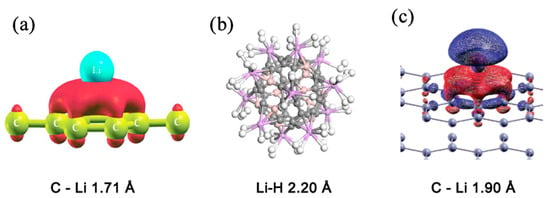
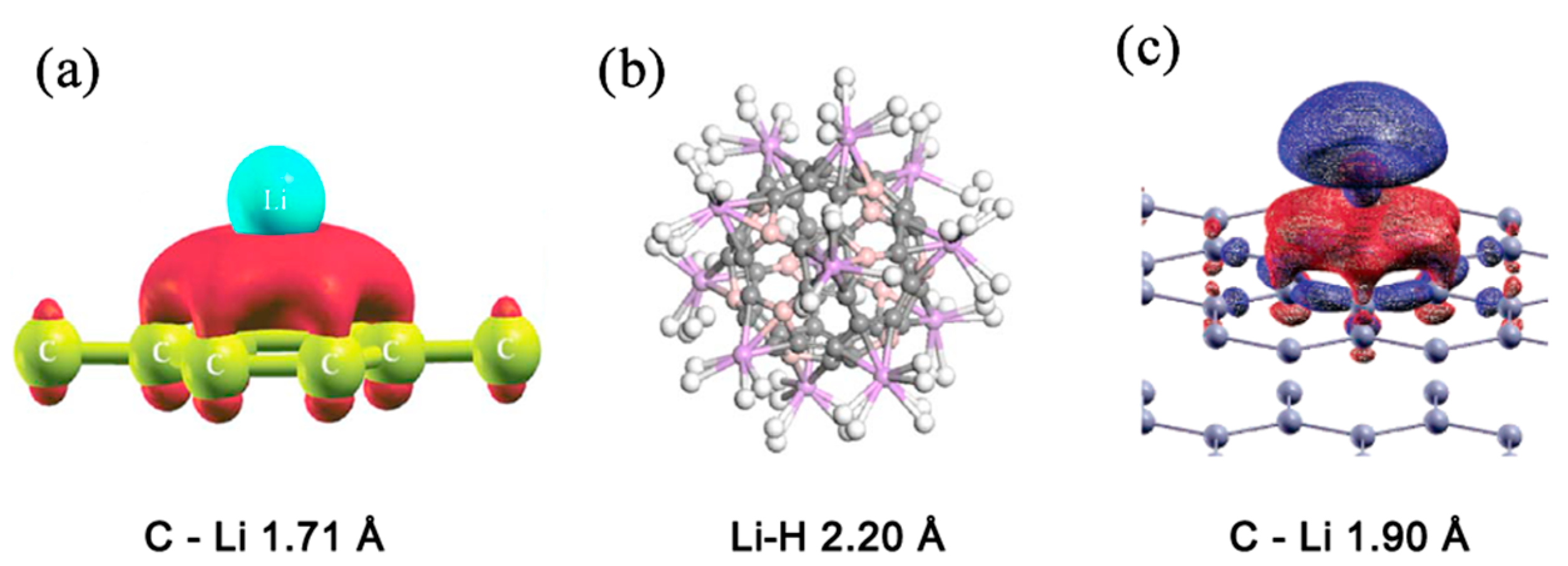
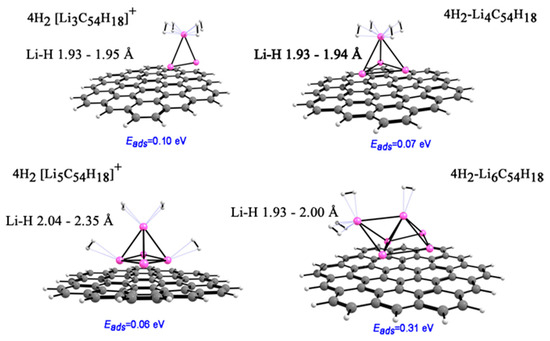
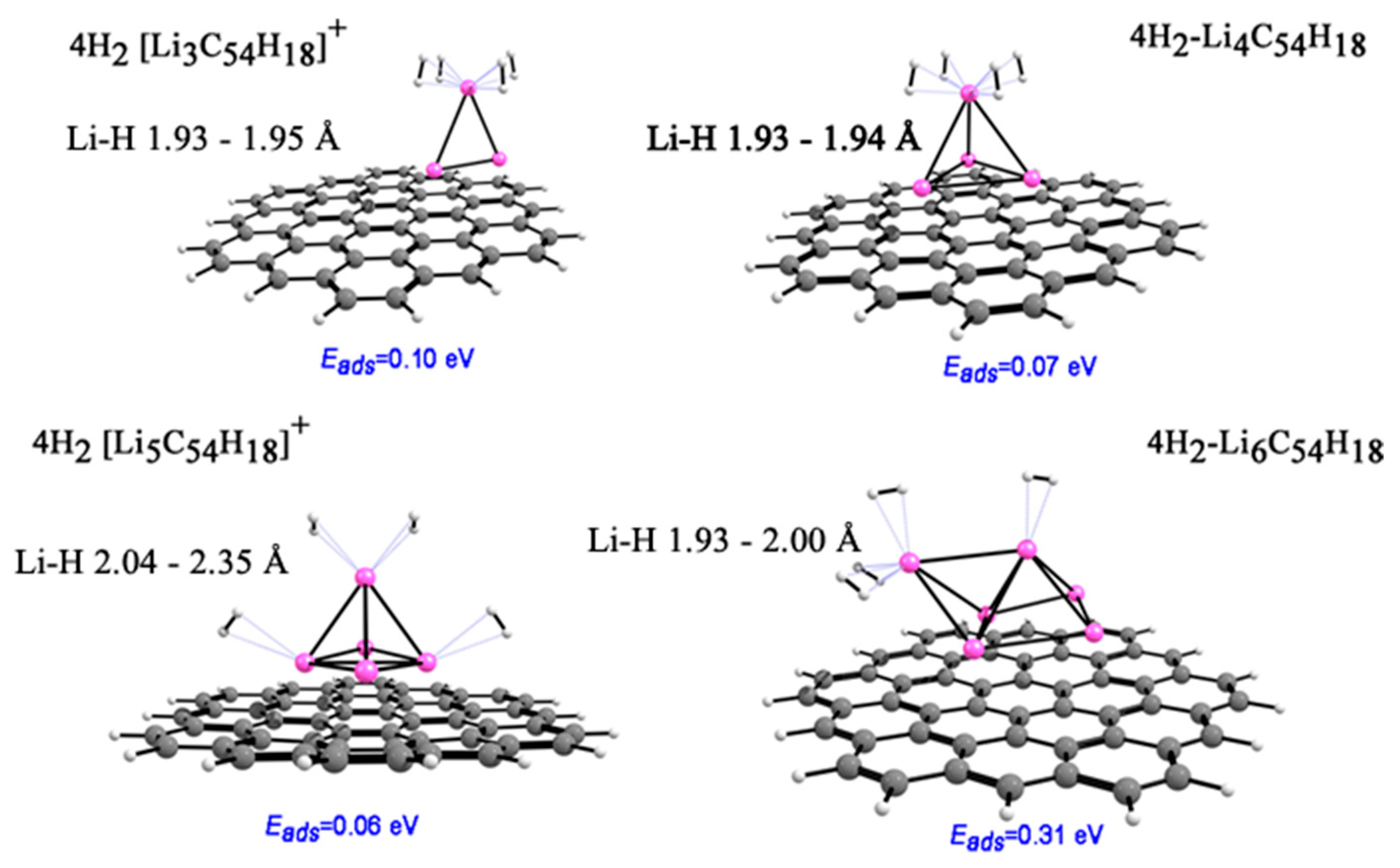
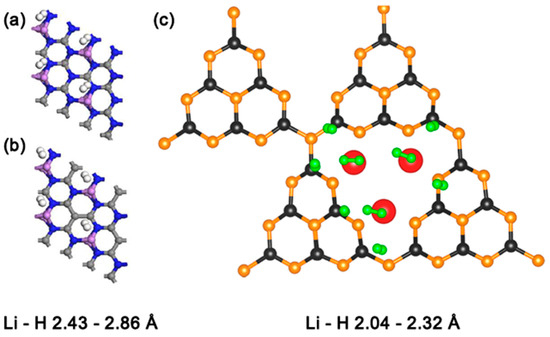
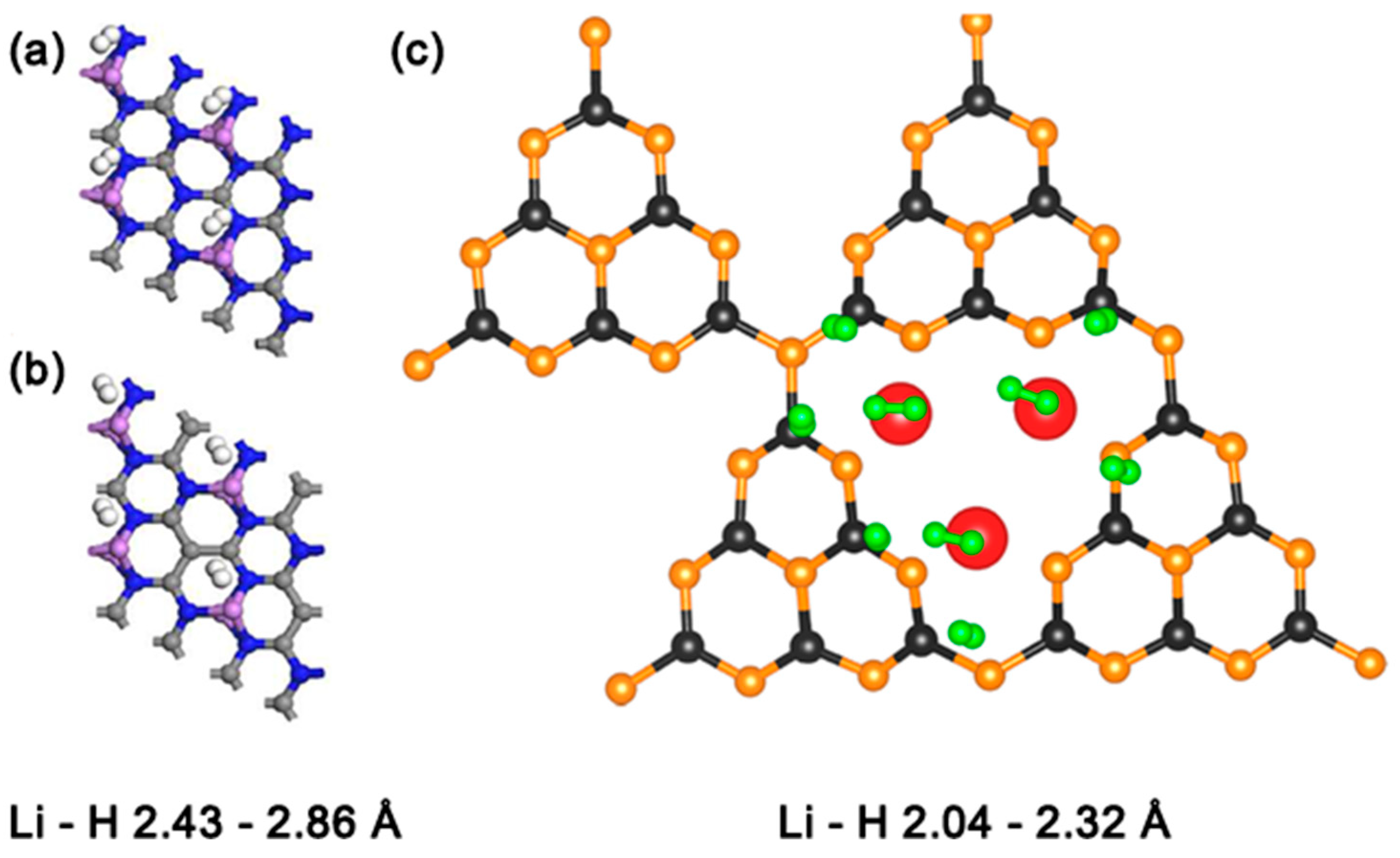
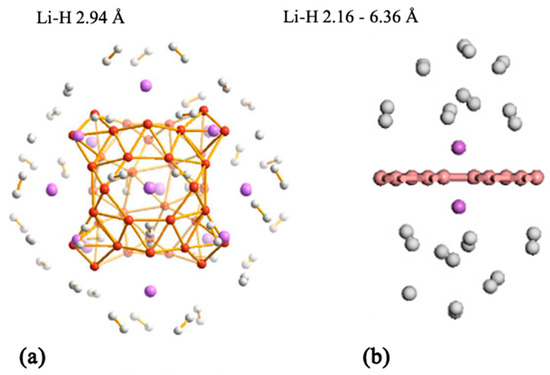
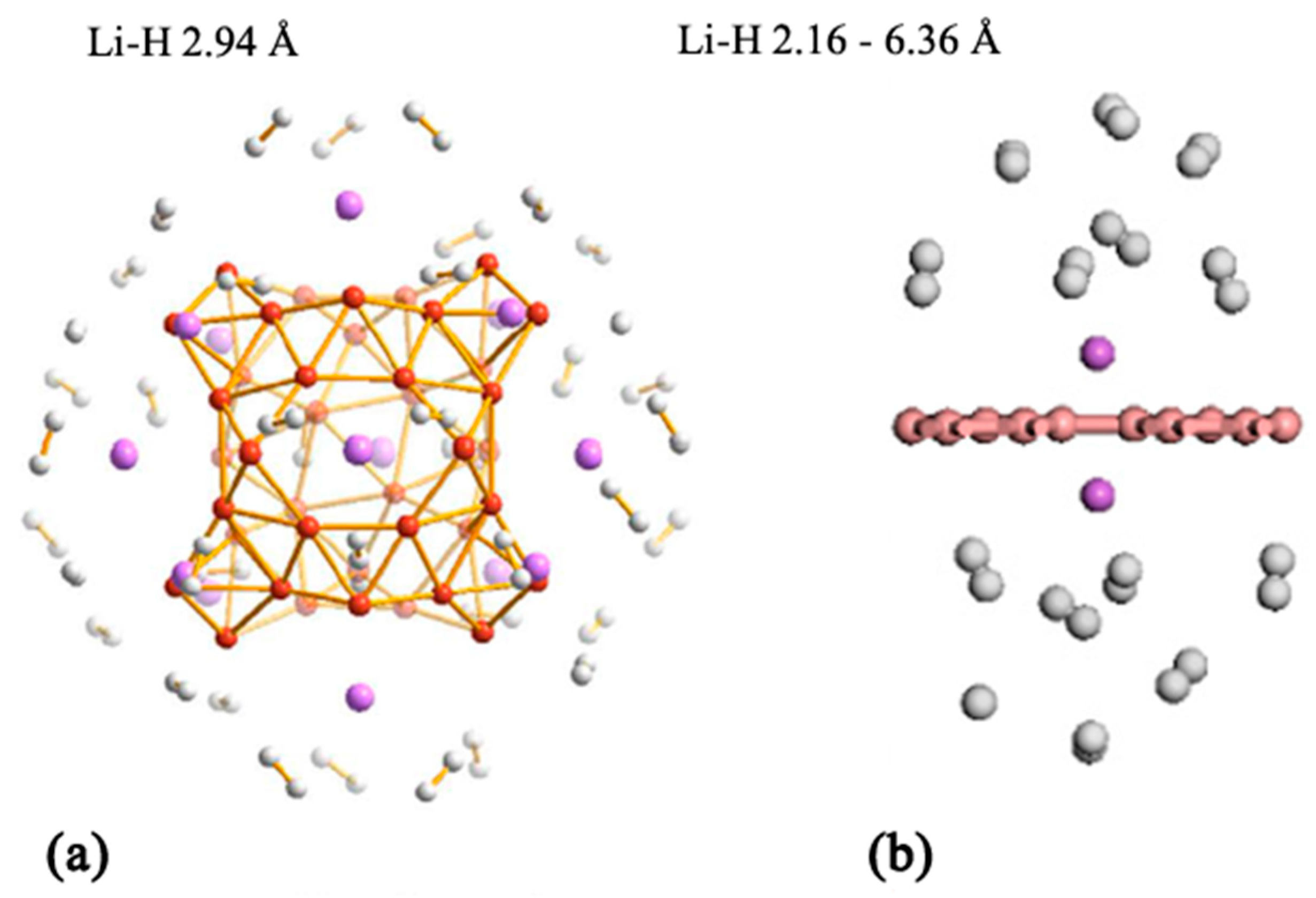
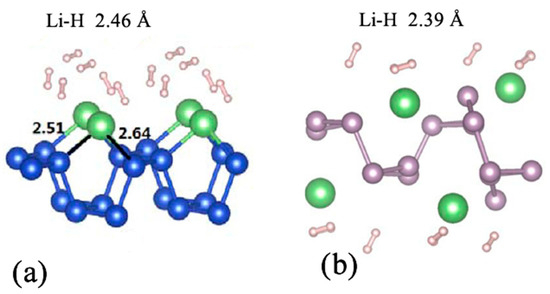
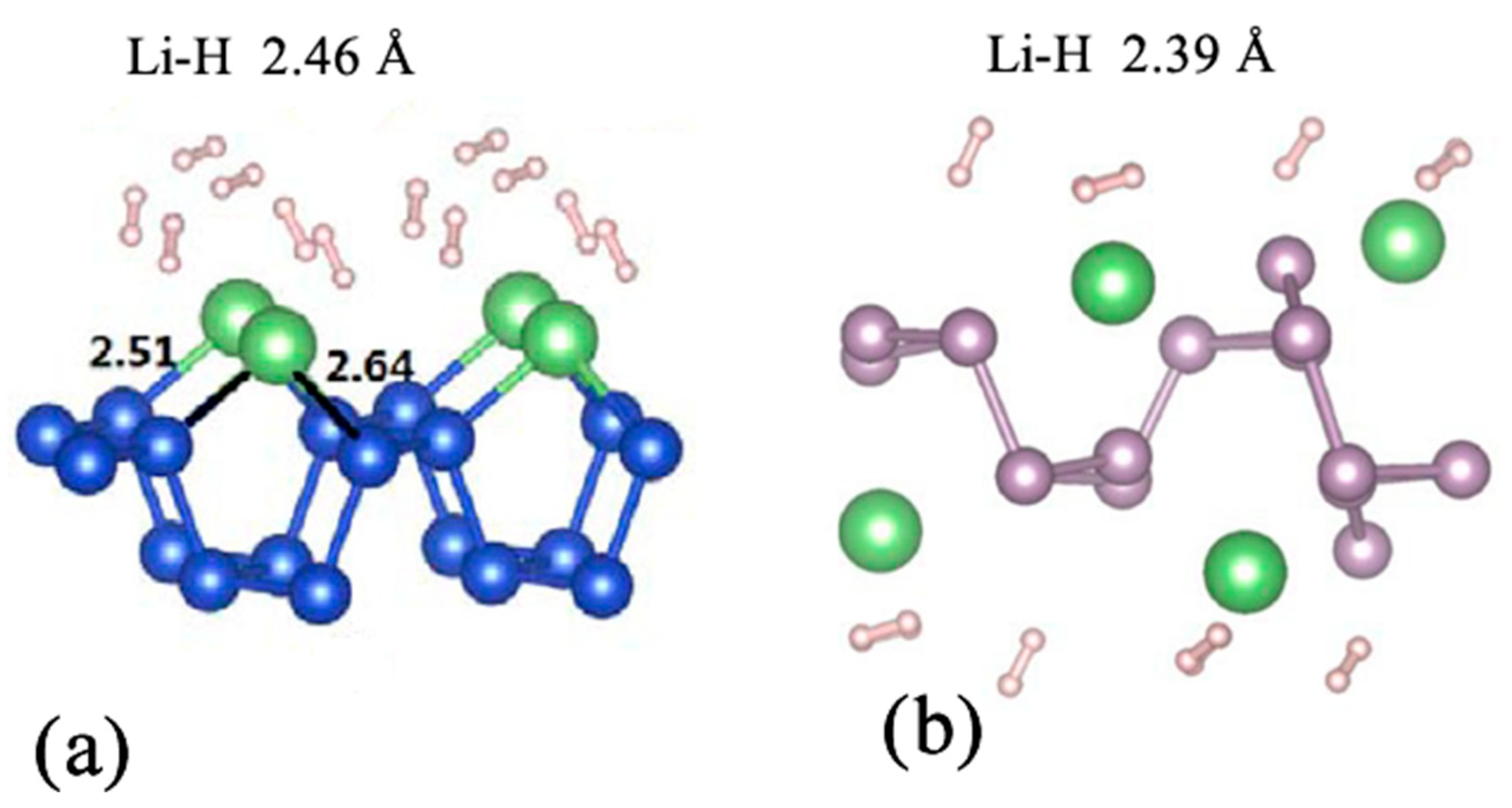
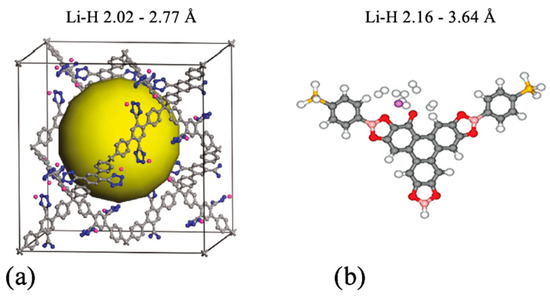
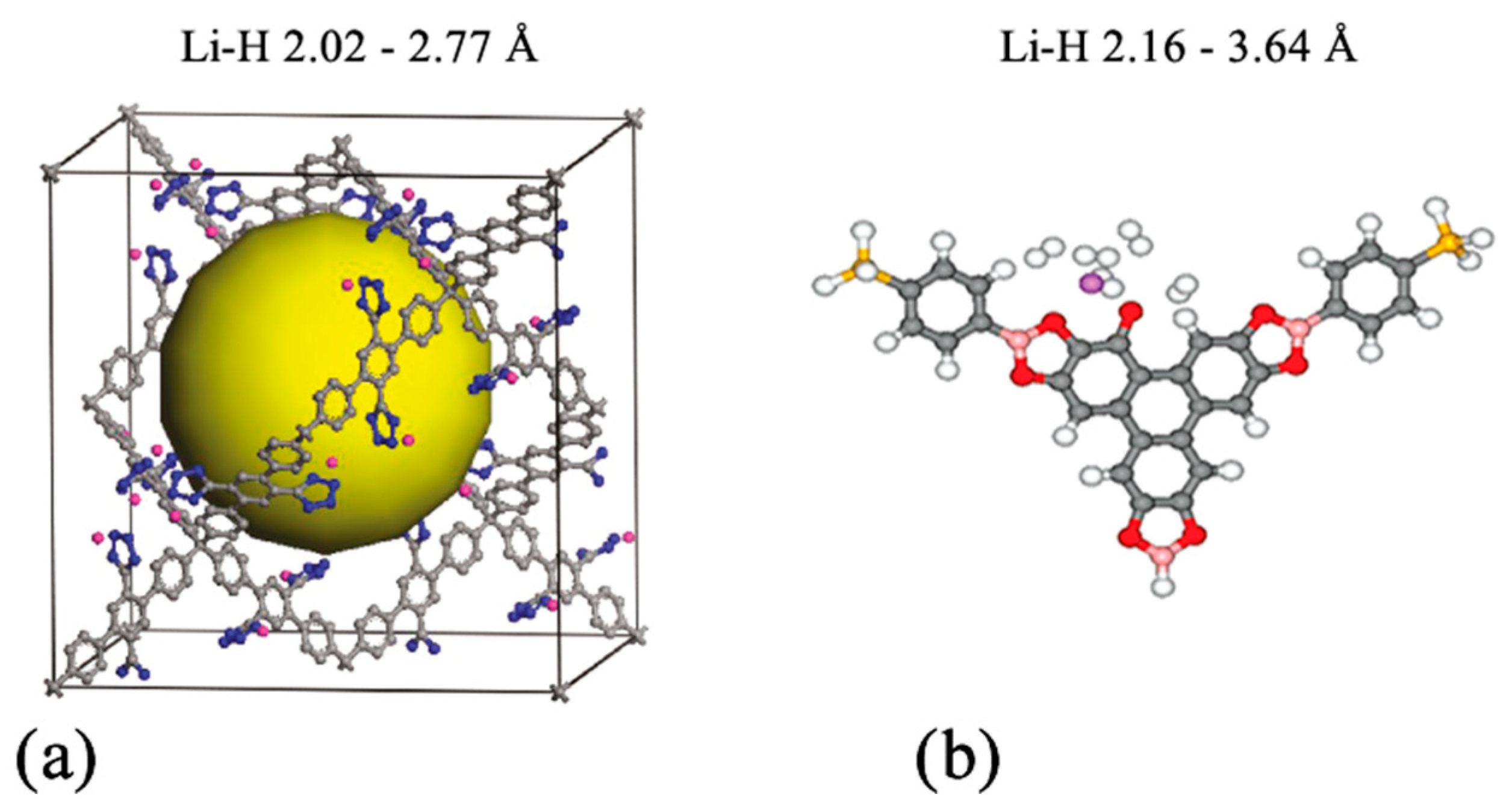
Disclaimer/Publisher’s Note: The statements, opinions and data contained in all publications are solely those of the individual author(s) and contributor(s) and not of MDPI and/or the editor(s). MDPI and/or the editor(s) disclaim responsibility for any injury to people or property resulting from any ideas, methods, instructions or products referred to in the content. |
© 2026 by the authors. Licensee MDPI, Basel, Switzerland. This article is an open access article distributed under the terms and conditions of the Creative Commons Attribution (CC BY) license.