Article

The Influence of the Hydrogen Isotope Effect on the Kinetics of Amoxicillin and Essential Elements Interaction


by
Daniil A. Sundukov
,
Olga V. Levitskaya
*,
Tatiana V. Pleteneva
and
Anton V. Syroeshkin
Department of Pharmaceutical and Toxicological Chemistry, Medical Institute, Peoples’ Friendship University of Russia (RUDN University), 6 Miklukho-Maklaya St., Moscow 117198, Russia
*
Author to whom correspondence should be addressed.
Hydrogen 2026, 7(1), 2; https://doi.org/10.3390/hydrogen7010002

Submission received: 10 November 2025 / Revised: 22 December 2025 / Accepted: 22 December 2025 / Published: 24 December 2025

Abstract

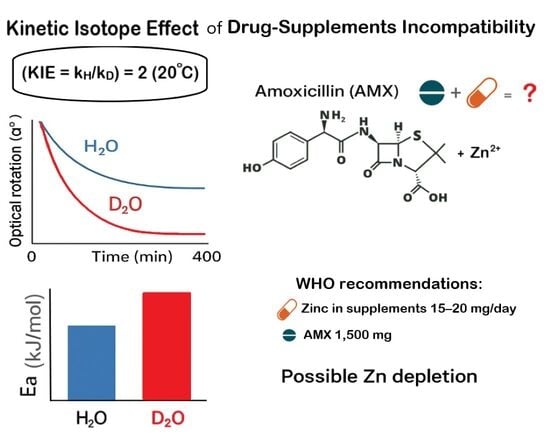
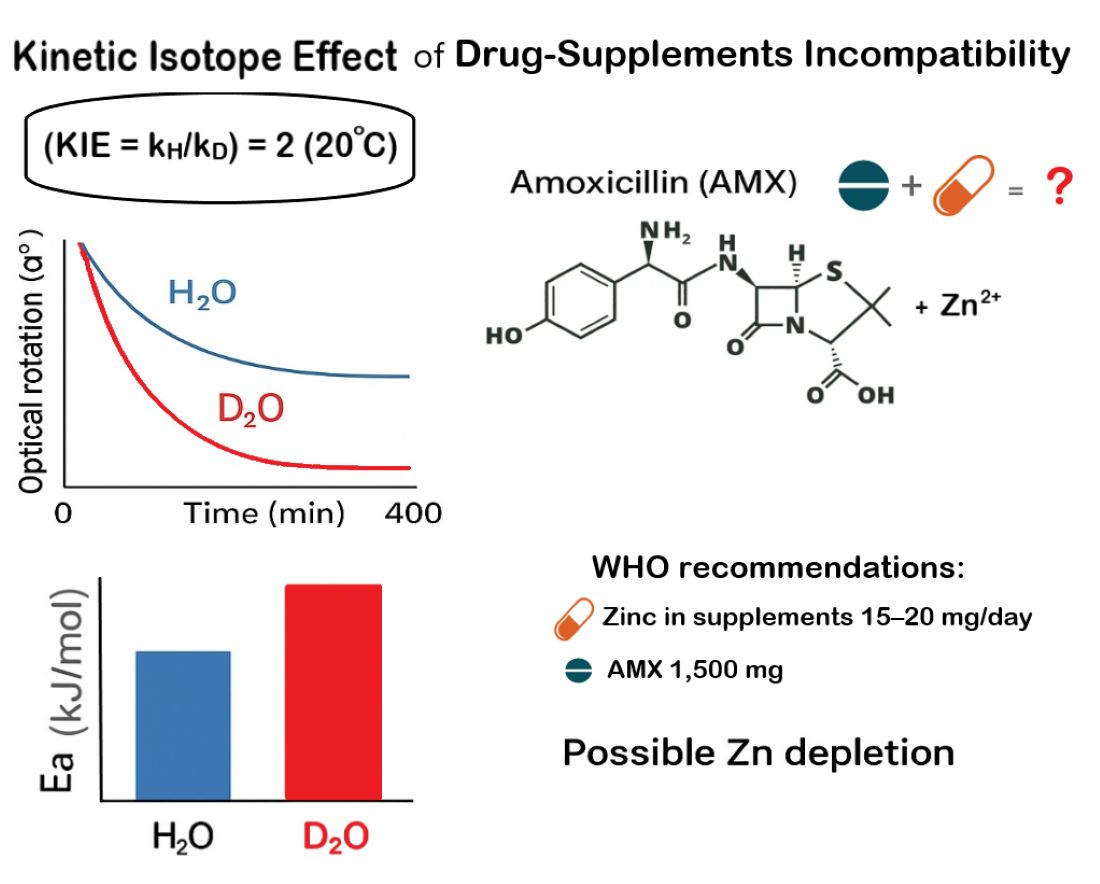
Chemical incompatibility between active pharmaceutical ingredients (APIs) and mineral supplements may affect their bioavailability and effectiveness. Water, as the main component of physiological fluids, plays a crucial role in these interactions. Natural waters vary in the deuterium. Estimation of the kinetic isotope effect (KIE) provides valuable information on reaction mechanisms in solvents with different D/H ratios and with the replacement of protium with deuterium in API molecules. Studies of the kinetics of interactions between zinc ions and amoxicillin in water with a natural isotopic composition (D/H = 145 ppm) and in heavy water (99.9% D2O) offer a model for predicting similar interactions in vivo. The presence of chiral centers in the amoxicillin molecule allowed the use of polarimetry to study the influence of the solvent isotopic composition, temperature, and pH on the rate of interaction. In heavy water, a twofold decrease in the rate of amoxicillin binding to hydrated zinc ions was observed compared to natural water at 20 °C. Arrhenius kinetics confirmed the observed KIE: Ea = 112.5 ± 1.3 kJ/mol for D2O and 96.0 ± 2.1 kJ/mol for H2O. For the first time, kinetic polarimetric studies demonstrated differences in the mechanisms of binding of d- and s-element cations to amoxicillin.

Graphical Abstract

1. Introduction

A significant proportion of adverse drug reactions are caused by drug–drug interactions [1,2]. The widespread global use of antibiotics highlights the critical importance of studying their drug interactions [3]. Amoxicillin ((2S,5R,6R)-6-{(E)-[(2R)-2-Amino-1-hydroxy-2-(4-hydroxyphenyl)ethylidene]amino}-3,3-dimethyl-7-oxo-4-thia-1-azabicyclo [3.2.0]heptane-2-carboxylic acid) is particularly significant in this context, as it is one of the most commonly prescribed beta-lactam antibiotics. According to World Health Organization (WHO) recommendations, amoxicillin is included in more than 70% of treatment regimens for infectious diseases [4].
Considerable attention has been given in the scientific literature to the synergy or antagonism of pharmacological effects in interactions between active pharmaceutical ingredients (APIs) [5], as well as to the incompatibility of pharmaceutical substances with excipients [6,7]. The equally important interactions between APIs and multivitamin supplements are rarely addressed. Meanwhile, the long-term use of mineral supplements often continues during the treatment of bacterial infections.
On the other hand, oral administration of drugs containing ligand groups can reduce the absorption of essential microelements. For example, zinc, unlike iron, has no storage sites in the body, and its average daily oral dose is 15 mg [8]. The effective daily dose of amoxicillin is 1500 mg. Their combined use at a molar ratio nAMX:nZn2+ = 15:1 leads to complete zinc binding.
Therefore, studies focusing on the interactions of amoxicillin with salts of essential elements, particularly those containing Zn2+ ions, warrant special attention. In the human body, zinc acts as a cofactor for more than 300 enzymes. Since the body lacks a reservoir of zinc, its deficiency is compensated by oral intake through food or mineral supplements [9].
To assess the chemical and physical incompatibility of substances in vitro, methods such as Fourier Transform Infrared Spectroscopy, thermogravimetric analysis, differential scanning calorimetry, isothermal stress testing, X-ray diffraction, and other approaches are commonly used [10,11,12,13,14].
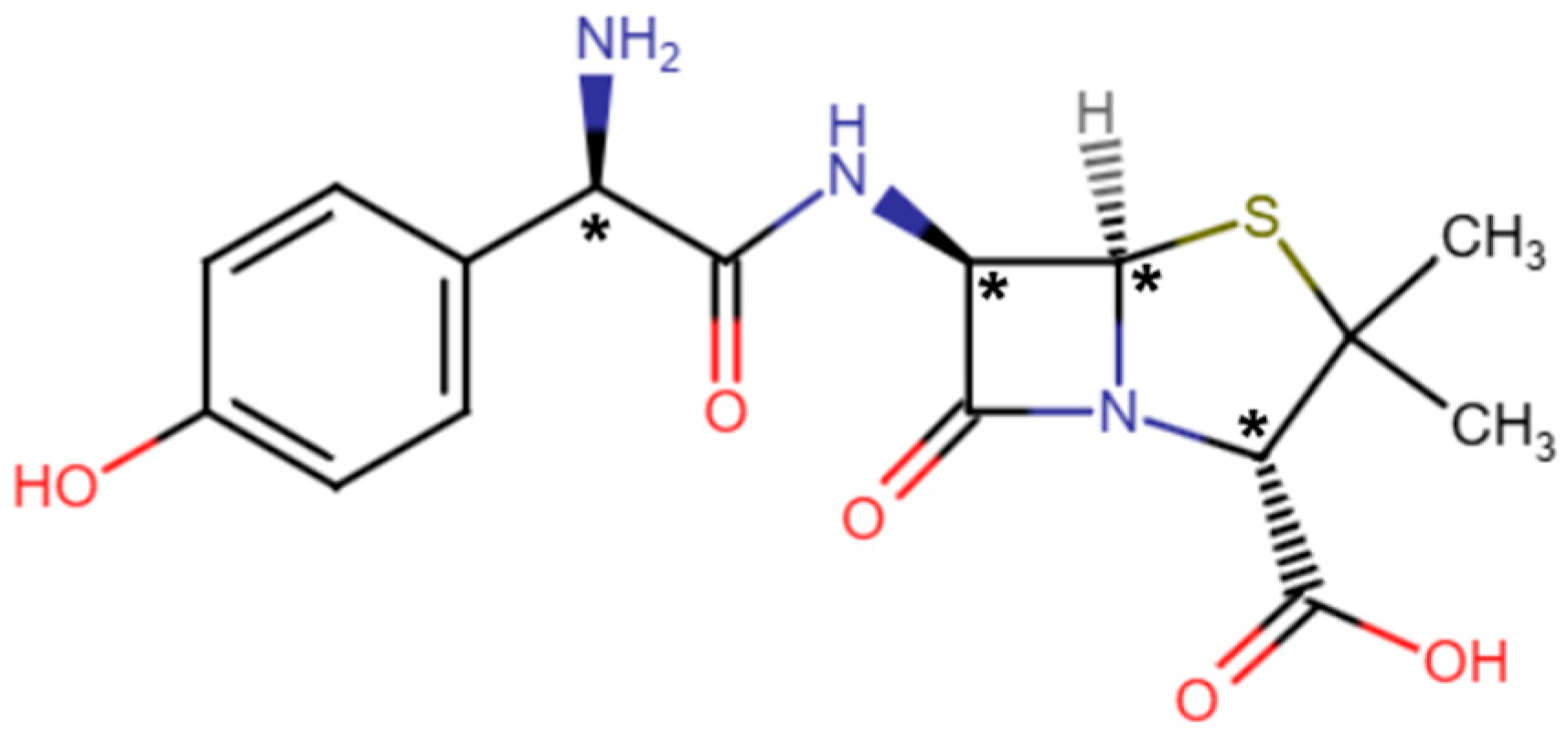
The presence of chiral centers in the amoxicillin molecule has enabled the use of polarimetric control to study its interactions with cations of essential elements found in biological supplements (Figure 1). Previously, comparative polarimetric studies of the mechanisms of interaction between s- and d-elements with amoxicillin and other beta-lactam antibiotics had not been conducted.
Changes in the steric configuration of a molecule upon binding with metal ions may disrupt stereoselective interactions with biological receptors and alter the pharmacokinetic and pharmacodynamic parameters that determine pharmaceutical efficacy and safety [15].
To predict and assess the potential clinical severity of drug incompatibilities, it is essential to study the kinetic characteristics of these processes. Evaluating the kinetic isotope effect (KIE) provides valuable insights into the rate-determining steps of these interactions. Water, as a major component of physiological fluids, plays a crucial role in in vitro model studies. Water’s unique physicochemical and biological properties depend on the deuterium/protium (D/H) ratio [16,17,18]. Thus, the pharmacological properties of drugs, along with the pharmacokinetic parameters of processes involving dissolved substances, depend on the isotopic composition of the water [19]. Notably, the isotopes protium ( H 1 1 ) and deuterium ( D 1 2 ) exhibit the largest atomic mass difference observed among isotopes of other elements. The difference in bond length between the O–H bond in H2O and the O–D bond in D2O is approximately ~3% [20]. The formation of water clusters through hydrogen bonding directly influences their chemical, electronic, and dielectric properties [21]. Because the isotopic heterogeneity of water decreases from H2O to D2O, the structure and properties of the resulting clusters depend on the D/H ratio. The formation of deuterium-stabilized water clusters modifies the optical activity of API solutions, stabilizes intermediates and transition states, and alters the rate of reactions [22]. The influence of the isotopic composition of water on the kinetic characteristics of processes is expressed by the kinetic isotope effect (KIE) = kH/kD, where kH and kD represent the rate constants of reactions in natural and heavy water, respectively. Thus, KIE reflects the extent to which the reaction rate decreases when a protium atom (H) is replaced by its heavier isotope, deuterium (D) [23].
The aim of this study is to investigate the kinetics of the interaction between amoxicillin trihydrate and ions of essential elements in solutions of water isotopologues.

2. Materials and Methods

2.1. Materials

2.1.1. Chemical Substances

This study used the following substances: amoxicillin trihydrate (Ph.Eur. Reference Standard, EDQM, Strasbourg, France, 99.9%); ZnCl2, CaCl2, MgCl2 (Sigma-Aldrich, Saint Louis, MO, USA, 99.9%). For preparation of buffer solutions, ammonium acetate (Sigma-Aldrich, 99.99%), sodium acetate trihydrate (Sigma-Aldrich, Saint Louis, MO, USA, 99.0%), Tris (Sigma-Aldrich, 99.9%), NaOH (Sigma-Aldrich, Saint Louis, MO, USA, 97.0%), citric acid (Sigma-Aldrich, Saint Louis, MO, USA, 99.5%), and glacial acetic acid (Sigma-Aldrich, Saint Louis, MO, USA, 99.0%) were used.

2.1.2. Water Samples

Deionized, high-resistance water (18.2 MΩ·cm at 25 °C; Milli-Q, Merck Millipore, Darmstadt, Germany) with natural isotopic composition (D/H = 145 ppm) − H2O, as well as heavy water D2O with 99.9% deuterium content (Cambridge Isotope Laboratories, Andover, MA, USA), were used for solution preparation.

2.1.3. Sample Preparation

The accurately weighed AMX was dissolved in buffer solutions with the specified D/H ratio. Immediately, the required amount of salt (Sigma-Aldrich®, puriss.), previously dried at 110 °C, was added. Prepared solutions (n = 5) were filtered through membrane filters with a pore size of 0.22 μm. The pH of solutions was measured using a potentiometer, PH400F (MT Measurement, Shanghai, China).

2.2. Methods

2.2.1. Polarimetry

Optical activity of solutions was measured using an automatic polarimeter POL-1/2 (Atago, Tokyo, Japan) in the 100 mm cell with measurement accuracy of ±0.002° and the resolution of 0.0001°. A Peltier electronic module was employed to control the temperature in the range of 20–32 °C with 2 °C increments.

2.2.2. Fluorimetry

Fluorescence spectra were obtained using a Cary Eclipse spectrofluorimeter (Agilent Technologies, Inc., Santa Clara, CA, USA) with two ultrafast scanning monochromators. Measurements were performed with 1 cm thick quartz cells at 25 °C. The width of the excitation and emission slit was adjusted to 5 nm. An excitation wavelength of 350 nm was selected by considering the results of the analysis of the test compounds by the method of absorption spectroscopy.

2.2.3. UV-Vis Spectroscopy

Spectrometric data were collected using a UV spectrophotometer Cary 300 (Agilent Technologies, Inc., Santa Clara, CA, USA). Measurements were performed with 1 cm thick quartz cells at 25 °C.

2.2.4. Statistical Data Processing

Experimental data processing and plotting was performed using the OriginPro 2021 software package (OriginLab, Northampton, MA, USA). Results are presented as the mean ± standard deviation (SD).

3. Results and Discussion

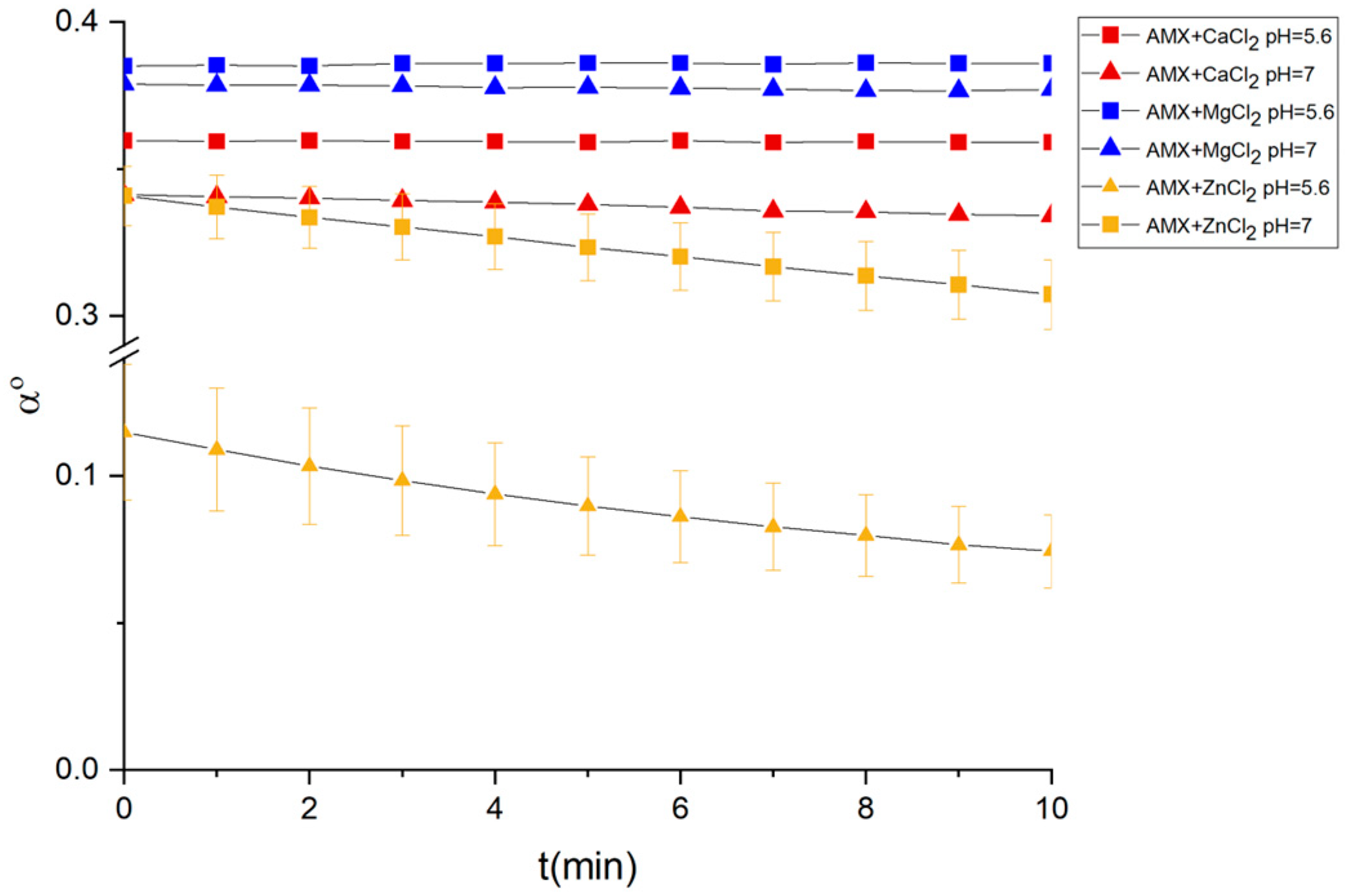
The presence of four chiral centers in the amoxicillin (AMX) molecule provided the basis for using polarimetry to study the kinetics of the antibiotic’s interactions with essential metal ions. The effects of zinc, calcium, and magnesium chlorides on aqueous amoxicillin solutions were investigated in both acidic and neutral media. Calcium (Ca2+) and magnesium (Mg2+) ions did not affect the optical activity of the antibiotic (Figure 2). In contrast, kinetic plots of optical rotation versus time (α°–t) showed that upon the addition of zinc chloride, the angle of plane-polarized light rotation gradually decreased, indicating different interaction mechanisms of s- and d-block elements [24,25,26,27].
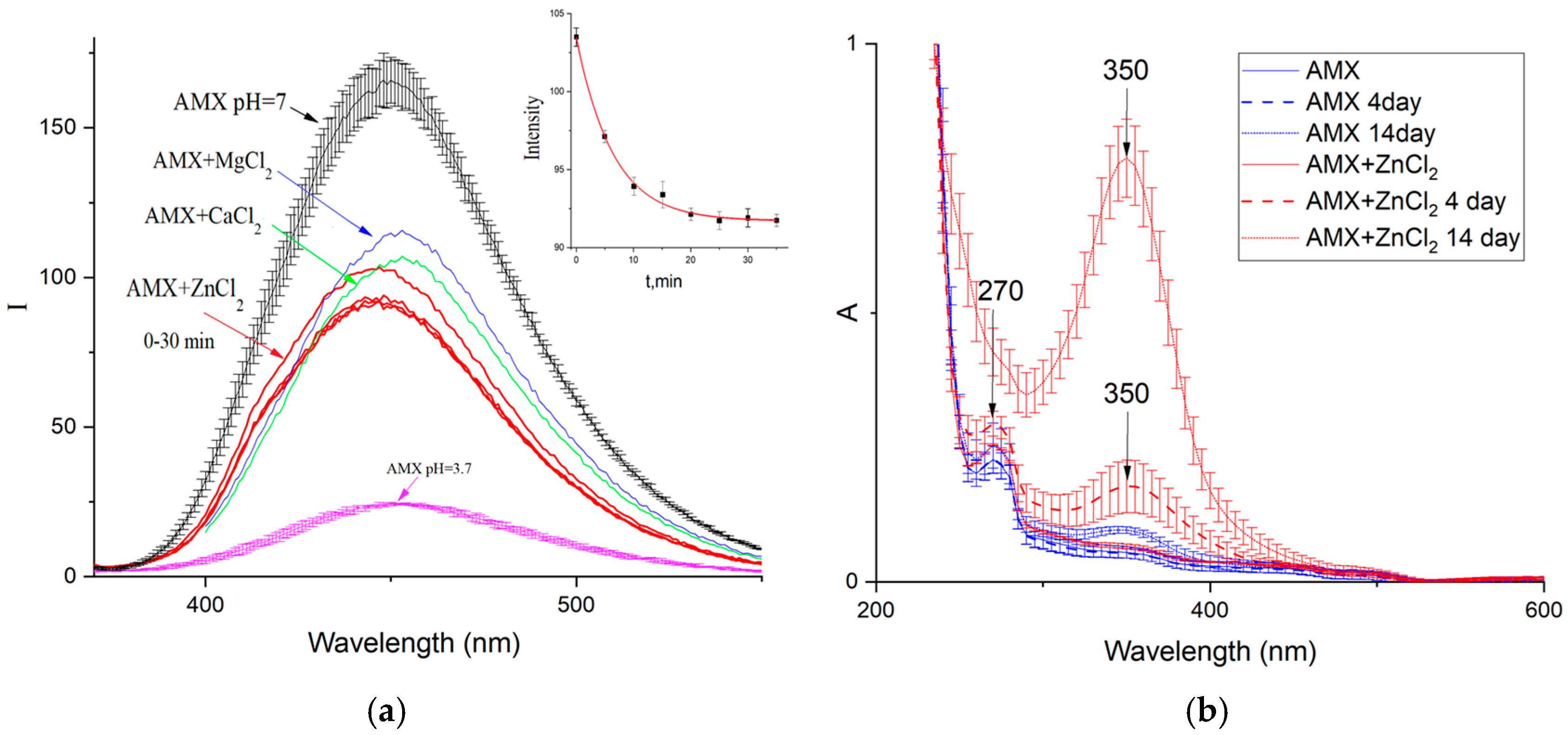
Fluorescence studies of these solutions demonstrate that a decrease in acidity within the pH range of 3.7 to 7.0 results in an increase in emission intensity (Figure 3a).
Based on the acid–base equilibrium constants of amoxicillin [28], the fluorescence of the aqueous amoxicillin solution at pH 3.7 is primarily attributed to the predominance of the zwitterionic form (II) in the solution. In contrast, at pH 7.0, the content of the fully deprotonated form of the antibiotic increases (Figure 4). The involvement of form III in complex formation—through the conjugation of the lone pair of electrons on the amino nitrogen with the benzene ring’s double bond system and the electron pair on the carbonyl oxygen—enhances the antibiotic’s fluorescence intensity.
Salts of s-block elements, when added to an aqueous solution of amoxicillin, decrease the emission intensity of solutions by forming stable fluorescent products. In the case of introducing d-block element ions (Zn2+), a sharp quenching of fluorescence occurs within the first 10 min, followed by a gradual decay until a constant intensity level is reached. It should be noted that the formation of the “AMX:Zinc” complex in methanol differs from that in aqueous solution and occurs so rapidly that measuring the reaction rate is not possible [29]. This suggests the possible involvement of H2O molecules in the formation of complexes within aqueous solutions [30].
Comparison of polarimetry and fluorimetry results suggests that the initial stage of the investigated process involves the formation of salts via the carboxyl group of amoxicillin:
M 2+   +   2   RCOO     M ( RCOO ) 2
For s-block element cations, this stage is the only one observed and is characterized by a rapid attainment of stable fluorescence values, with no effect on the optical activity of the antibiotic solution. The second stage, which occurs exclusively with Zn2+, involves the formation of donor–acceptor bonds with the amino group and the carbonyl oxygen [31]. The presence of this second stage results in changes to both fluorescence intensity and optical activity. It should be emphasized that the first-order reaction rate constants (k1) determined by two different methods are close in value: k1(fluorimetry) = 1.6 × 10⁻⁴ s−1; k1 (polarimetry) = 1.8 × 10⁻⁴ s−1.
To explain the differences in the complexation of s- and d-block elements, one can apply the theory of hard and soft acids and bases (HSAB), along with the law of mass action for equilibria. This approach involves considering the formation constants of coordination compounds of magnesium, calcium, and zinc with amoxicillin or its analogs containing amino and carboxyl groups.
According to the HSAB theory, magnesium (Mg2+) and calcium (Ca2+) ions are classified as hard acids because they have small ionic radii, high positive charges, and high charge densities. Consequently, they form strong chemical bonds with hard bases, such as the carboxylate anion (RCOO), during interionic interactions.
According to the same theory, the d-element cation Zn2+ is a borderline acid with relatively softer properties, especially when compared to typical hard acids such as Mg2+, Ca2+, Fe3+, and Al3+. Therefore, the chemical bond between the Zn2+ ion and a hard base—specifically, the carboxyl oxygen of amoxicillin—may be weaker than the bonds formed by s-element cations from the second and third periods of the periodic table, such as Mg2+ and Ca2+. However, the zinc cation also exhibits a preference for borderline or soft bases—electron-pair donors such as nitrogen (N) or sulfur (S) atoms. The electron-deficient Zn2+ ion, with its unfilled orbitals, can participate not only in ionic interactions with the carboxyl group but also in the formation of coordination bonds via a donor–acceptor mechanism. In these cases, the base is primarily the nitrogen atom of the amino group and, to a lesser extent, the nitrogen atom of the imino group, sulfur atoms, and the nitrogen atom of the thiazolidine ring.
Reference data on the formation constants of coordination complexes containing both carboxyl and amino groups are available in the literature. Notably, IUPAC Technical Reports [24,25] provide valuable information. Of particular interest are the formation constants involving amino acids, which, like amoxicillin, function as bidentate ligands [24]. Similar data are also available for complexones used in medicine—polydentate ligands that contain several of the functional groups under consideration [25].
To analyze numerous publications, including IUPAC technical reports, it is necessary to introduce standardized notations. Let us assume that L represents an amino acid or amoxicillin with fully deprotonated carboxyl (–COO) and amino (–NH2) groups. M denotes a metal cation (Mg2+, Ca2+, Zn2+). The equilibrium for metal complex formation and its corresponding formation constants are then expressed as follows:
M   +   L   =   ML   and   K   =   [ ML ] / [ M ] [ L ]
In the case of amoxicillin, this equilibrium is established at a pH above 7.8 (see Figure 4), and for glycine at pH values greater than its pKa of 9.6. At such high pH levels, Mg2+ and Ca2+ ions form cations of poorly soluble basic salts, such as MOH+ and hydroxides M(OH)2. The reported formation constants should be attributed solely to ionic interactions at the carboxyl group (Table 1).
When the pH shifts to a more acidic range, the L ligands are protonated at the amino group to form –NH3+, which does not interfere with the interaction of d-element cations, resulting in the complex M + HL = MHL. The corresponding equilibrium constants for zinc K (M + HL) are 6–9 orders of magnitude higher than the binding constants of s-element cations at carboxyl groups, as demonstrated for glycine (see Table 1). Moreover, the d-element ion, possessing unfilled internal d-orbitals, can additionally coordinate a second deprotonated L ligand to form the coordination compound ML2. In more acidic solutions, at approximately pH 5.5, Zn(II) forms ternary complexes with amoxicillin, with stability constants (log β) ranging from 4.62 to 5.32, indicating that the metal bridges the antibiotic and the amino acid [32]. For s-elements, such interactions are not possible, as evidenced by the absence of equilibrium constant values (see Table 1).
The ability of amoxicillin to bind Mg2+ and Ca2+ ions under various experimental conditions (pH, ionic strength, temperature) was quantitatively assessed using the pL0.5 parameter [26,27]. These values reflect the low stability constants of the resulting carboxylate complexes. For Mg2+, at an ionic strength of I = 0.15 mol·kg−1, pH = 7.4, and T = 298.15 K, pL0.5 = 2.52. A similar value was obtained for Ca2+. At an ionic strength range of I = 0.15–1 mol·kg−1 and a temperature range of T = 288.15–310.15 K, pL0.5 (Ca2+) = 2.88. The low pL0.5 values and formation constants of calcium and magnesium compounds with amino acids further emphasize the difference in the interactions of s- and d-block elements.
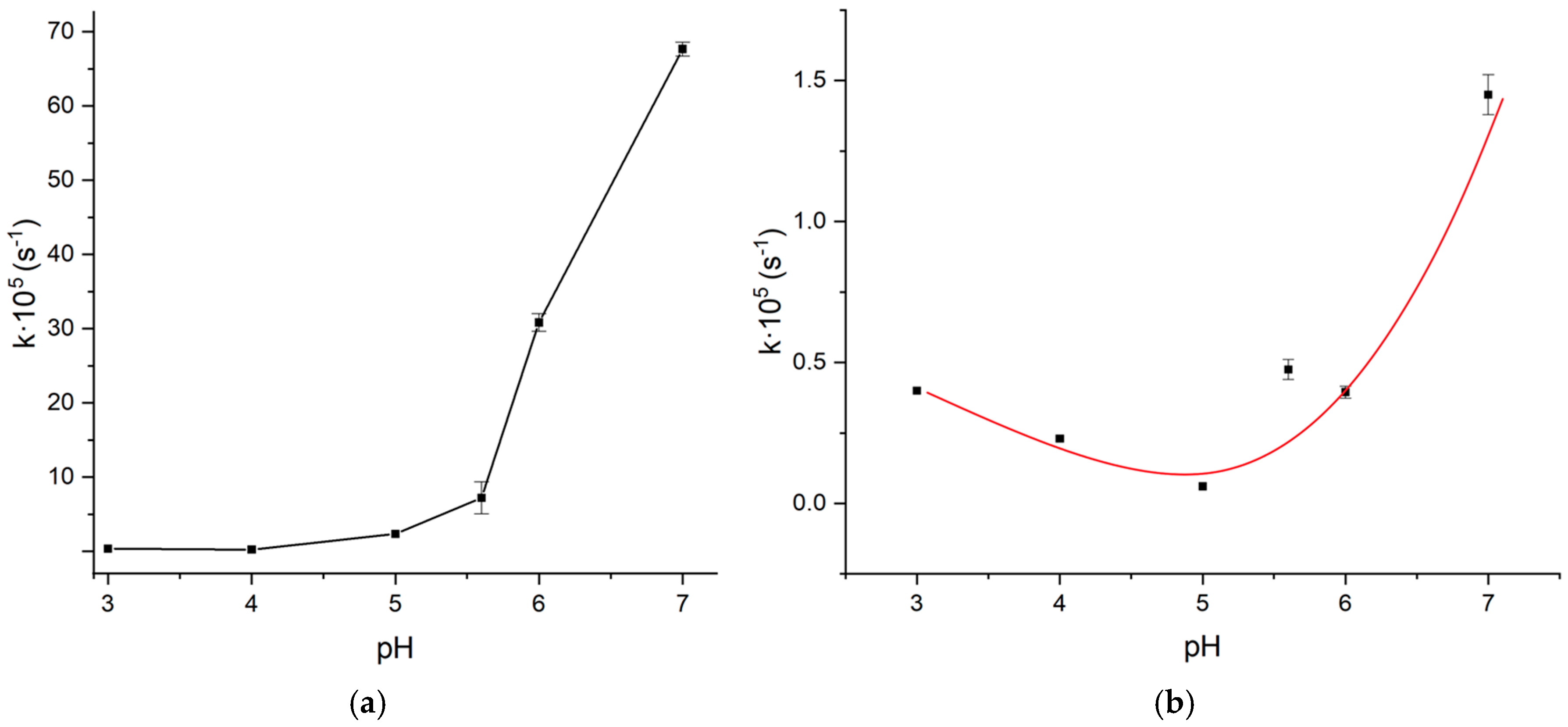
The influence of solution acidity on optical rotation was investigated within the physiological pH range of 3 to 7 (Figure 5). As the antibiotic molecule deprotonated with increasing pH (see Figure 4), an increase was observed in the “rate constant–pH” curve, characteristic of both amoxicillin alone and its mixture with zinc salt. The slight change in the specific rotation of the amoxicillin solution over time is accounted for in the pharmacopoeia, which specifies the rotation angle range as 290–315 [33].
Due to the protonation of both functional groups at pH 1–3 and the inability to form a coordination compound, the optical activity of the solution was very low, making it impossible to monitor the behavior of the components in solutions with pH values corresponding to gastric contents. A significant increase in the rate of interaction was observed in the pH range of 5–7, which was associated with changes in both the degree of protonation of the amoxicillin molecule and the hydration state of the zinc ion [34]. Since amoxicillin absorption occurs in the duodenum and small intestine, where the pH is approximately 5.6 [35], this pH value was selected for further in vitro studies.
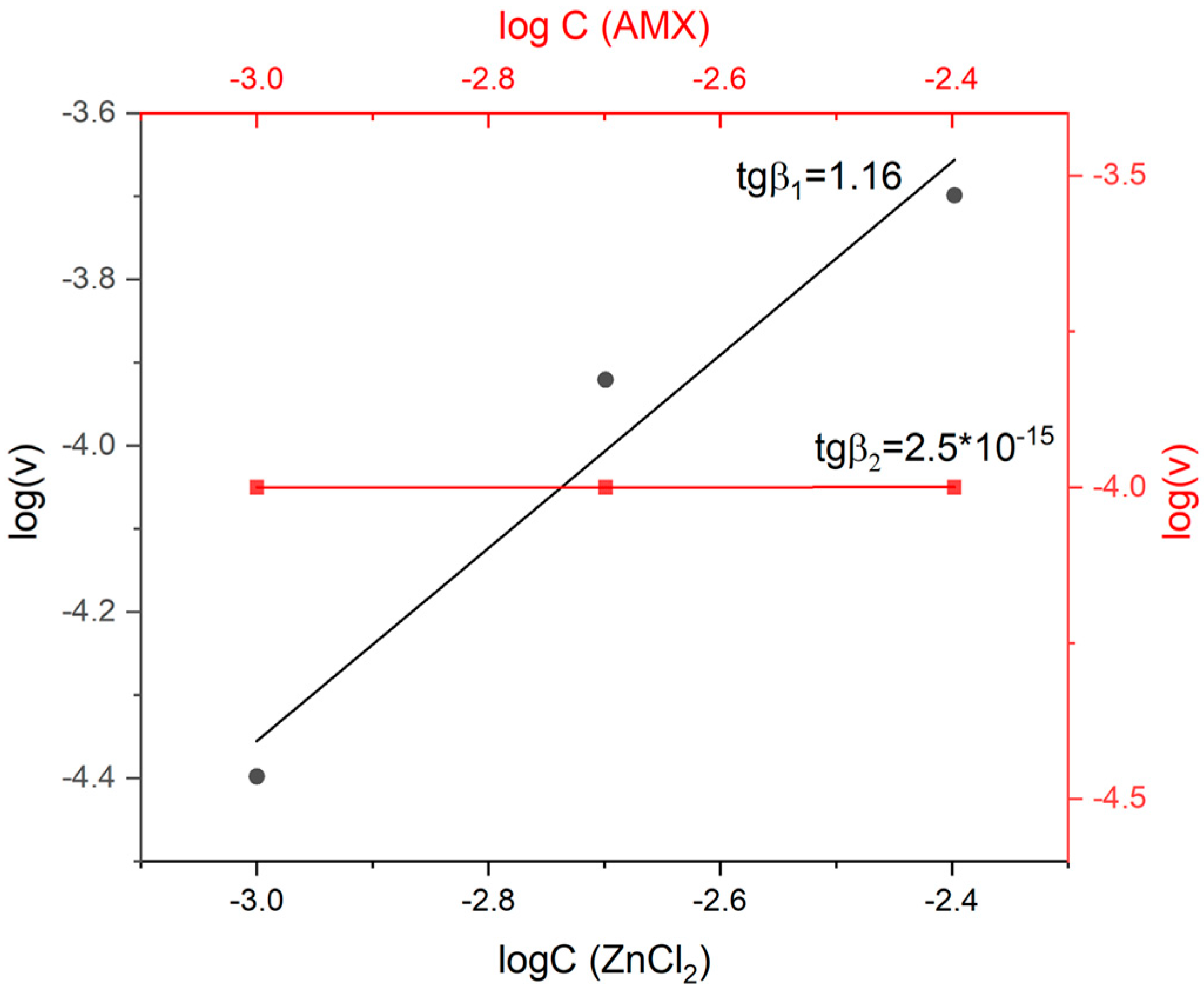
The reaction orders with respect to each reagent—amoxicillin and ZnCl2—were determined using Van’t Hoff’s Differential Method [36]. Increasing the concentration of ZnCl2 from 1 mmol/L to 4 mmol/L, while maintaining a constant amoxicillin concentration of 1 mmol/L, resulted in an increased reaction rate. In logarithmic coordinates, the slope of the line relative to the abscissa was 1.16, indicating a first-order reaction with respect to the zinc salt. Similar experimental and graphical analyses confirmed that the reaction is zero-order with respect to amoxicillin (Figure 6).
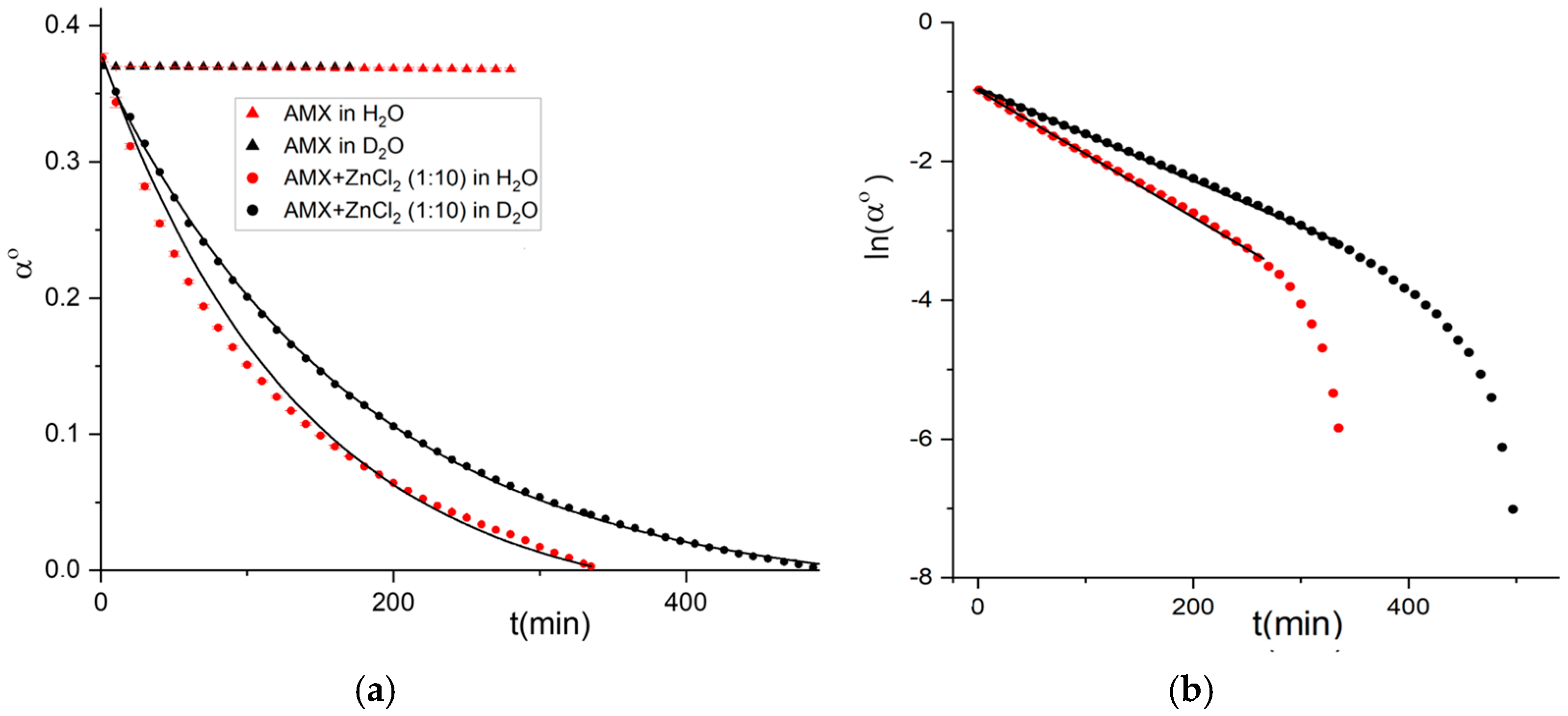
For further kinetic studies, a reagent molar ratio of 1:10 was selected to ensure a high reaction rate. Long-term polarimetric monitoring of combined AMX and ZnCl2 solutions (1:10) in H2O and D2O revealed an exponential decrease in optical activity, regardless of the solvent’s isotopic composition (Figure 7). Plotting the kinetic curves on semilogarithmic coordinates allowed the identification of two stages in the chiral transformations. In the first stage, a coordination compound is formed. According to first-order kinetics, this corresponds to a straight line when plotting ln αº versus time (t). In the second stage, racemization of the formed complex occurs, causing the optical activity to decrease to zero.
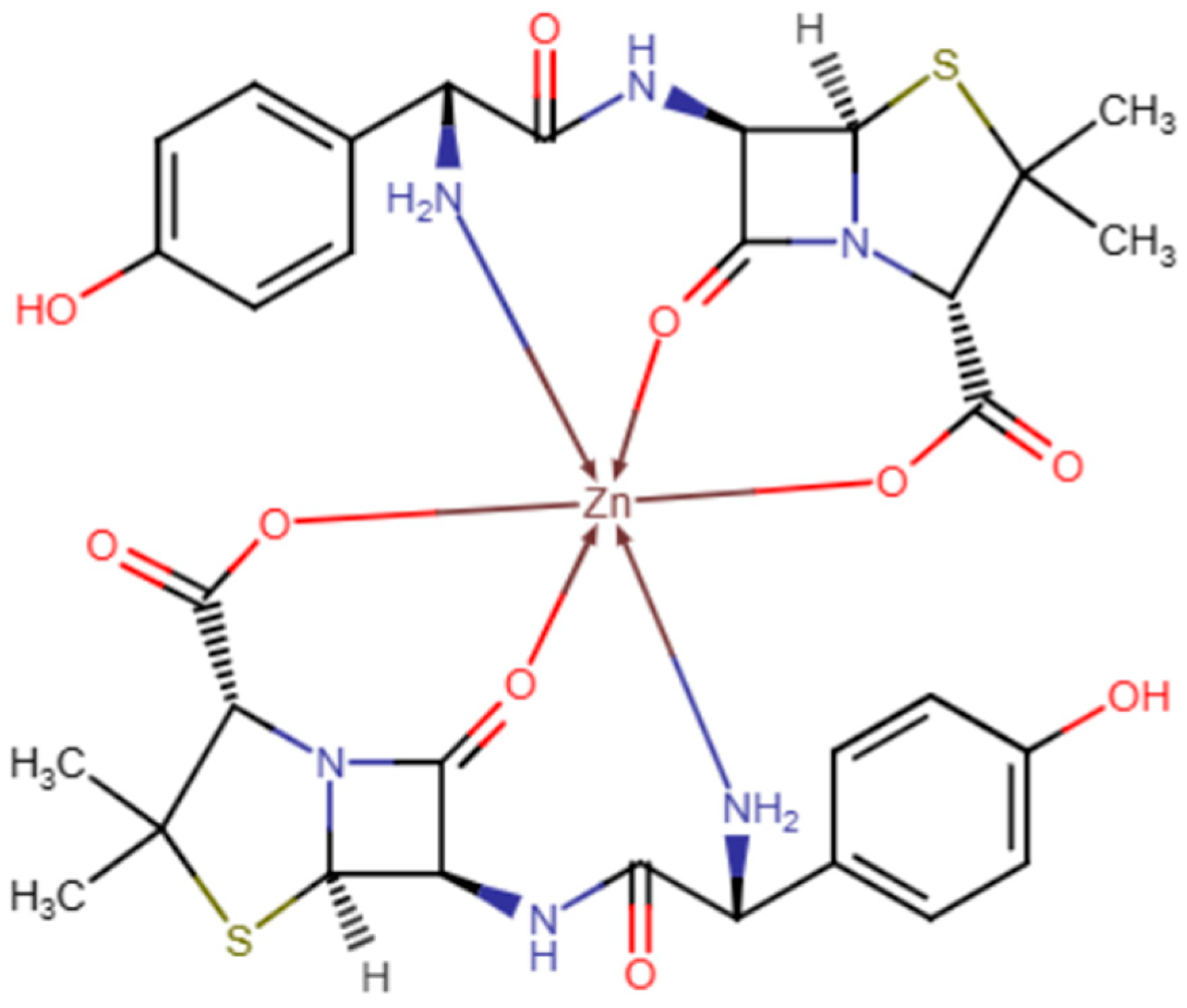
The complete loss of optical activity may be connected with the formation of a coordination compound of the composition 2AMX:Zn2+ [31,37]. In this case, the antiparallel arrangement of chiral centers in the complex can lead to chirality cancellation, similar to meso compounds that possess an internal plane of symmetry (Figure 8).
The observed complete loss of optical activity in combined solutions over time may reduce the ability for stereoselective binding to the active site of the target protein, consequently diminishing its efficacy [32].
It is well established that the isotopic composition of water influences the rates of processes involving pharmaceutical substances dissolved in it [38]. Furthermore, the vitality parameters of biological objects significantly depend on the D/H ratio, which supports considering deuterium an essential element [16]. Data on deuterated drugs indicate that the D/H ratio in water affects the rates of absorption, distribution, biotransformation, and excretion of medications [39,40].
Replacing water with a natural isotopic composition (D/H = 145 ppm) by heavy water (99.9% D2O) leads to a decrease in the rate of coordination compound formation. The time required to reach zero optical activity of the solutions (α°) increases from 340 to 500 min. The formation of hydrated intermediates, stabilized by replacing the H2O with D2O, results in a 1.5-fold slowdown in reaching zero optical activity during complex formation. Regardless of the solvent’s isotopic composition, the shape of the curves in both arithmetic “α°–t” and semilogarithmic coordinates remains unchanged (see Figure 7).
Differences in reaction rates in waters with different D/H ratios were quantitatively assessed by evaluating the magnitude of kinetic isotope effects (KIE = kH/kD) over the temperature range of 20–38 °C (Table 2). As the temperature increases, the differences in reaction rates diminish, with the KIE decreasing from 2.0 to 1.3 within the studied range.
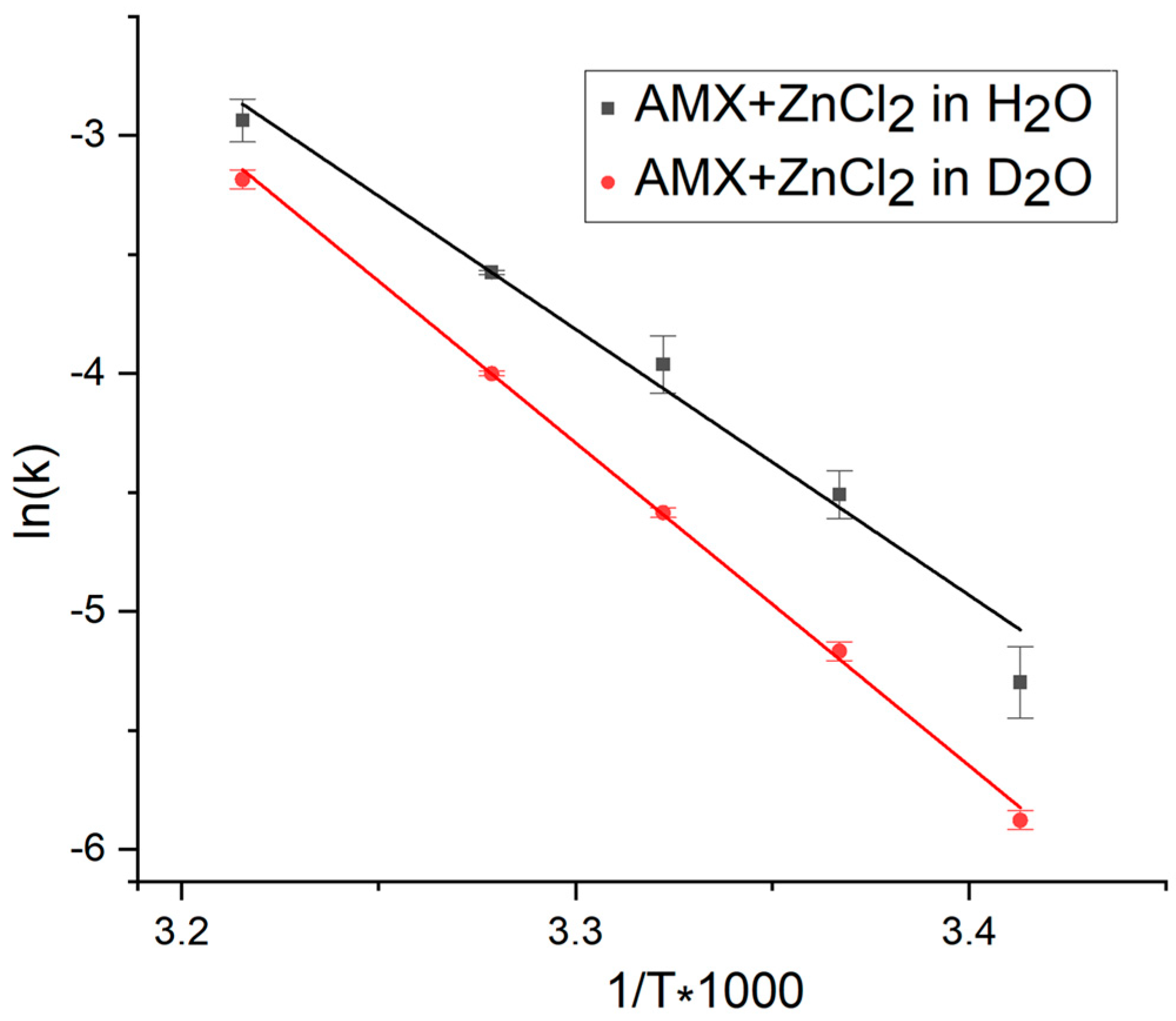
The activation energy values for the reaction of AMX with zinc ions, determined from Arrhenius plots, also reveal differences in the energy barriers for H2O and D2O—96.0 ± 2.1 kJ/mol and 112.5 ± 1.3 kJ/mol, respectively (Figure 9).
Thus, the chemical incompatibility of amoxicillin trihydrate with the essential element ion Zn2+ has been experimentally confirmed. Using polarimetric method and electronic spectrometry, differences in the interaction mechanisms of amoxicillin with cations of essential s- and d-block elements were demonstrated. It was established that the formation of intermolecular complexes with the zinc ion as the central atom is pH-dependent and occurs in weakly acidic to neutral media through two stages: first, ionic interaction with the deprotonated carboxyl group; second, donor–acceptor bonding involving the amino group and carbonyl oxygen. The formation of coordination compounds between Zn2+ ions and the amoxicillin molecule can result in a reduction in its efficacy.

4. Conclusions

In this study, optical methods—polarimetry, fluorimetry, and UV-visible spectrophotometry—were employed to investigate the chemical incompatibility of amoxicillin with components of mineral supplements, specifically zinc, magnesium, and calcium salts. Polarimetry was used for the first time to determine the rate constants for the formation of AMX-Zn(II) complexes, considering factors such as pH, temperature, and the isotopic composition of the solvent. Changes in optical rotation over time (α°–t) revealed distinct mechanisms of interaction between AMX with elements of the s- and d-blocks of the periodic table. All studied cations exhibited ionic interactions with the deprotonated carboxyl group. However, unlike calcium and magnesium ions, the zinc ion forms donor–acceptor bonds with the amino group and carbonyl oxygen, resulting in changes in both optical activity and fluorescence intensity. The first-order rate constants determined by the two methods were nearly identical: k1 (polarimetry) = 1.8 × 10⁻⁴ s−1; k1 (fluorimetry) = 1.6 × 10⁻⁴ s−1.
A significant kinetic isotope effect of kH/kD = 2.0 (20 °C) was observed for natural water (H2O, D/H = 145 ppm) and heavy D2O (99.9%), indicating the involvement of water molecules in the complexation reaction. These findings were confirmed by Arrhenius kinetics over the temperature range of 20–38 °C. The kinetic isotope effect was reflected in the activation energy barriers for the complexation process in H2O and D2O, which were 96.0 ± 2.1 kJ/mol and 112.5 ± 1.3 kJ/mol, respectively.
Because more than 50% of all FDA-approved active pharmaceutical ingredients (APIs) are chiral molecules [41], the results of this study open new possibilities for highly sensitive polarimetric monitoring of the kinetics of interactions between optically active pharmaceutical ingredients and ions of both essential and toxic elements.

Author Contributions

Conceptualization, A.V.S. and O.V.L.; data curation, T.V.P. and O.V.L.; formal analysis, D.A.S. and O.V.L.; project administration, A.V.S. and T.V.P.; investigation and visualization, D.A.S.; writing—original draft, D.A.S. and O.V.L.; writing—review and editing, T.V.P. and A.V.S. All authors have read and agreed to the published version of the manuscript.

Funding

This publication has been supported by project No. 033328-0-000 (RUDN University).

Data Availability Statement

The original contributions presented in the study are included in the article; further inquiries can be directed to the corresponding author.

Conflicts of Interest

The authors declare no conflicts of interest.

Abbreviations

The following abbreviations are used in this manuscript:
APIActive Pharmaceutical Ingredient
AMXAmoxicillin
KIEKinetic Isotope Effect
WHOWorld Health Organization

References

  1. Jiang, H.; Lin, Y.; Ren, W.; Fang, Z.; Liu, Y.; Tan, X.; Lv, X.; Zhang, N. Adverse drug reactions and correlations with drug–drug interactions: A retrospective study of reports from 2011 to 2020. Front. Pharmacol. 2022, 13, 923939. [Google Scholar] [CrossRef]
  2. Gebretsadik, Z.; Gebrehans, M.; Getnet, D.; Gebrie, D.; Alema, T.; Belay, Y.B. Assessment of drug-drug interaction in Ayder Comprehensive Specialized Hospital, Mekelle, Northern Ethiopia: A retrospective study. Biomed. Res. Int. 2017, 2017, 9792363. [Google Scholar] [CrossRef]
  3. Radu, A.F.; Bungau, S.G.; Corb Aron, R.A.; Tarce, A.G.; Bodog, R.; Bodog, T.M.; Radu, A. Deciphering the intricate interplay in the framework of antibiotic-drug interactions: A narrative review. Antibiotics 2024, 13, 938. [Google Scholar] [CrossRef]
  4. World Health Organization. The WHO AWaRe (Access, Watch, Reserve) Antibiotic Book; WHO: Geneva, Switzerland, 2022; Available online: https://iris.who.int/handle/10665/365237 (accessed on 29 May 2025).
  5. Marques, L.; Vale, N. A Review on New Frontiers in Drug-Drug Interaction Predictions and Safety Evaluations with In Vitro Cellular Models. Pharmaceutics 2025, 17, 747. [Google Scholar] [CrossRef] [PubMed]
  6. Martin, F.; Miclaus, M.; Gherman, A.M.R.; Dan, M.; Grosu, I.; Filip, X.; Kacso, I. Pharmaceutical Co-crystal of Ketoconazole-adipic Acid: Excipient Compatibility and In Silico Antifungal Potential Studies. Pharm. Res. 2025, 42, 1603–1616. [Google Scholar] [CrossRef]
  7. Drug Interaction Checker | DrugBank Online. Available online: https://go.drugbank.com/drug-interaction-checker (accessed on 29 June 2025).
  8. Marukhlenko, A.V.; Syroeshkin, A.V.; Levitskaya, O.V.; Galkina, D.A.; Sundukov, D.A.; Pleteneva, T.V. Zinc balance and the chelating properties of phytic acid. J. Drug Delivery Ther. 2025, 15, 104–114. [Google Scholar] [CrossRef]
  9. Prasad, A.S. Discovery of human zinc deficiency: Its impact on human health and disease. Adv. Nutr. 2013, 4, 176–190. [Google Scholar] [CrossRef]
  10. Brusač, E.; Jeličić, M.-L.; Cvetnić, M.; Amidžić Klarić, D.; Nigović, B.; Mornar, A. A comprehensive approach to compatibility testing using chromatographic, thermal and spectroscopic techniques: Evaluation of potential for a monolayer fixed-dose combination of 6-mercaptopurine and folic acid. Pharmaceuticals 2021, 14, 274. [Google Scholar] [CrossRef]
  11. Mura, P.; Bettinetti, G.P.; Faucci, M.T.; Manderioli, A.; Parrini, P.L. Differential scanning calorimetry in compatibility testing of picotamide with pharmaceutical excipients. Thermochim. Acta 1998, 321, 59–65. [Google Scholar] [CrossRef]
  12. Liltorp, K.; Larsen, T.G.; Willumsen, B.; Holm, R. Solid state compatibility studies with tablet excipients using non thermal methods. J. Pharm. Biomed. Anal. 2011, 55, 424–428. [Google Scholar] [CrossRef] [PubMed]
  13. Ledeti, I.; Bolintineanu, S.; Vlase, G.; Circioban, D.; Ledeti, A.; Vlase, T.; Suta, L.-M.; Caunii, A.; Murariu, M. Compatibility study between antiparkinsonian drug Levodopa and excipients by FTIR spectroscopy, X-ray diffraction and thermal analysis. J. Therm. Anal. Calorim. 2017, 130, 433–441. [Google Scholar] [CrossRef]
  14. Gavarić, N.; Todorović, N.; Popović, S.; Božić, I.; Vojnović, A.; Milošević, N.; Lalić-Popović, M. Spectroscopic Analysis for the Characterization of 3D-Printed Zinc Supplements for Tailored Veterinary Treatment. Chemosensors 2025, 13, 417. [Google Scholar] [CrossRef]
  15. Triggle, D.J. Stereoselectivity of drug action. Drug Discov. Today 1997, 2, 138–147. [Google Scholar] [CrossRef]
  16. Somlyai, G.; Kovács, B.Z.; Somlyai, I.; Papp, A.; Nagy, L.I.; Puskás, L.G. Deuterium depletion inhibits lung cancer cell growth and migration in vitro and results in severalfold increase of median survival time of non-small cell lung cancer patients receiving conventional therapy. J. Cancer Res. Ther. 2021, 9, 12–19. [Google Scholar] [CrossRef]
  17. Csonka, G.I.; Papp, A.; Somlyai, I.; Somlyai, G. Gene expression patterns in lung adenocarcinoma cells in response to changes in deuterium concentration. Int. J. Mol. Sci. 2025, 26, 10969. [Google Scholar] [CrossRef]
  18. Syroeshkin, A.V.; Uspenskaya, E.V.; Levitskaya, O.V.; Kuzmina, E.S.; Kazimova, I.V.; Quynh, H.T.N.; Pleteneva, T.V. New Approaches to Determining the D/H Ratio in Aqueous Media Based on Diffuse Laser Light Scattering for Promising Application in Deuterium-Depleted Water Analysis in Antitumor Therapy. Sci. Pharm. 2024, 92, 63. [Google Scholar] [CrossRef]
  19. Syroeshkin, A.V.; Pleteneva, T.V.; Uspenskaya, E.V.; Levitskaya, O.V.; Tarabrina, I.V.; Novikova, S.N. Deuterium as a tool for changing the properties of pharmaceutical substances: Review. Int. J. App Pharm. 2021, 13, 65–73. [Google Scholar] [CrossRef]
  20. Soper, A.K.; Benmore, C.J. Quantum Differences between Heavy and Light Water. Phys. Rev. Lett. 2008, 101, 065502. [Google Scholar] [CrossRef]
  21. Ignatov, I.; Marinov, Y.G.; Vassileva, P.; Gluhchev, G.; Pesotskaya, L.A.; Jordanov, I.P.; Iliev, M.T. Nonlinear Hydrogen Bond Network in Small Water Clusters: Combining NMR, DFT, FT-IR, and EIS Research. Symmetry 2025, 17, 1062. [Google Scholar] [CrossRef]
  22. Levitskaya, O.V.; Pleteneva, T.V.; Galkina, D.A.; Khodorovich, N.A.; Uspenskaya, E.V.; Syroeshkin, A.V. Chiral switching control of pharmaceutical substances. Int. J. Appl. Pharm. 2024, 16, 206–210. [Google Scholar] [CrossRef]
  23. Nakanishi, I.; Shoji, Y.; Ohkubo, K.; Ozawa, T.; Matsumoto, K.I.; Fukuzumi, S. A large kinetic isotope effect in the reaction of ascorbic acid with 2-phenyl-4,4,5,5-tetramethylimidazoline-1-oxyl 3-oxide (PTIO˙) in aqueous buffer solutions. Chem. Commun. 2020, 56, 11505–11507. [Google Scholar] [CrossRef]
  24. Kiss, T.; Gergely, A. Critical survey of stability constants of complexes of glycine. Pure Appl. Chem. 1991, 63, 597–638. [Google Scholar] [CrossRef]
  25. Giorgio, A.; Arnaud-Neu, F.; Delgado, R.; Felcman, J.; Popov, K. Critical evaluation of stability constants of metal complexes of complexones for biomedical and environmental applications (IUPAC Technical Report). Pure Appl. Chem. 2005, 77, 1445–1495. [Google Scholar] [CrossRef]
  26. Cigala, R.M.; Crea, F.; De Stefano, C.; Sammartano, S.; Vianelli, G. Thermodynamic parameters for the interaction of amoxicillin and ampicillin with magnesium in NaCl aqueous solution, at different ionic strengths and temperatures. J. Chem. Eng. 2017, 62, 3. [Google Scholar] [CrossRef]
  27. Giuffrè, O.; Angowska, S.; Foti, C.; Sammartano, S. Thermodynamic study on the interaction of ampicillin and amoxicillin with Ca2+ in aqueous solution at different ionic strengths and temperatures. J. Chem. Eng. Data 2019, 64, 800–809. [Google Scholar] [CrossRef]
  28. Aranda, F.L.; Rivas, B.L. Removal of amoxicillin through different methods, emphasizing removal by biopolymers and its derivatives. An overview. J. Chil. Chem. Soc. 2022, 67, 5643–5655. [Google Scholar] [CrossRef]
  29. Navarro, P.G.; Bekkouri, A.E.; Reinoso, E.R. Spectrofluorimetric study of the degradation of α-amino β-lactam antibiotics catalysed by metal ions in methanol. Analyst 1998, 123, 2263–2266. [Google Scholar] [CrossRef]
  30. Zayed, M.A.; Abdallah, S.M. Synthesis and structure investigation of the antibiotic amoxicillin complexes of d-block elements. Spectrochim. Acta A Mol. Biomol. Spectrosc. 2005, 61, 2231–2238. [Google Scholar] [CrossRef]
  31. Alekseev, V.G. Metal complexes of penicillins and cephalosporins. Pharm. Chem. J. 2012, 45, 679–697. [Google Scholar] [CrossRef]
  32. Hrioua, A.; Loudiki, A.; Farahi, A.; Laghrib, F.; Bakasse, M.; Lahrich, S.; Saqrane, S.; EL Mhammedi, M.A. Complexation of amoxicillin by transition metals: Physico-chemical and antibacterial activity evaluation. Bioelectrochemistry 2021, 142, 107936. [Google Scholar] [CrossRef]
  33. Council of Europe. European Pharmacopoeia, 11.8 ed.; 01/2013:0260 AMOXICILLIN TRIHYDRATE; Council of Europe: Strasbourg, France, 2025; Available online: https://pheur.edqm.eu/app/11-8/content/default/0260E.htm (accessed on 20 December 2025).
  34. Liu, J.; Qu, R.; Yan, L.; Wang, L.; Wang, Z. Evaluation of single and joint toxicity of perfluorooctane sulfonate and zinc to Limnodrilus hoffmeisteri: Acute toxicity, bioaccumulation and oxidative stress. J. Hazard. Mater. 2016, 301, 342–349. [Google Scholar] [CrossRef]
  35. Barr, W.H.; Zola, E.M.; Candler, E.L.; Hwang, S.M.; Tendolkar, A.V.; Shamburek, R.; Parker, B.; Hilty, M.D. Differential absorption of amoxicillin from the human small and large intestine. Clin. Pharmacol. Ther. 1994, 56, 279–285. [Google Scholar] [CrossRef] [PubMed]
  36. Kheidorov, V.P.; Ershov, Y.A.; Chalyi, G.Y.; Titorovich, O.V. Oxidation of 1,3,7-Trimethylxanthine by Hypochlorite Ion. Russ. J. Phys. Chem. 2011, 85, 1358–1362. [Google Scholar] [CrossRef]
  37. Zhang, Y.-W.; Liu, R.-J.; Xu, X.-M. One-pot, two-step enzymatic synthesis of amoxicillin by complexing with Zn2+. Appl. Microbiol. Biotechnol. 2010, 88, 49–55. [Google Scholar] [CrossRef] [PubMed]
  38. Uspenskaya, E.V.; Pleteneva, T.V.; Kazimova, I.V.; Syroeshkin, A.V. Evaluation of poorly soluble drugs’ dissolution rate by laser scattering in different water isotopologues. Molecules 2021, 26, 601. [Google Scholar] [CrossRef]
  39. Pirali, T.; Serafini, M.; Cargnin, S.; Genazzani, A.A. Applications of Deuterium in Medicinal Chemistry. J. Med. Chem. 2019, 62, 5276–5297. [Google Scholar] [CrossRef]
  40. Jansen-van Vuuren, R.D.; Jedlovčnik, L.; Košmrlj, J.; Massey, T.E.; Derdau, V. Deuterated Drugs and Biomarkers in the COVID-19 Pandemic. ACS Omega 2022, 7, 41840–41858. [Google Scholar] [CrossRef]
  41. Senkuttuvan, N.; Komarasamy, B.; Krishnamoorthy, R.; Sarkar, S.; Dhanasekaran, S.; Anaikutti, P. The significance of chirality in contemporary drug discovery-a mini review. RSC Adv. 2024, 14, 33429–33448. [Google Scholar] [CrossRef]
Figure 1. Chemical structure of the amoxicillin molecule. Four chiral carbon atoms are indicated with asterisks.
Hydrogen 07 00002 g001
Figure 2. Kinetic curves of “α°–t” for aqueous buffer solutions (H2O) of 4.0 mmol/L amoxicillin (AMX) with salts of ZnCl2, CaCl2, and MgCl2 (0.04 mol/L) α ° ¯ ± SD (n = 5).
Hydrogen 07 00002 g002
Figure 3. Changes in the fluorescence of a 4.0 mmol/L amoxicillin (AMX) buffer solution (H2O; pH = 7.0) upon the addition of zinc, magnesium, and calcium salts (0.04 mol/L). Inset: minute kinetics of the formation of the “amoxicillin-zinc” complex. λex = 350 nm (a); UV spectra of the complex formation in the aqueous amoxicillin solution (1.13 × 10⁻⁴ mol/L) in the presence of zinc ions (1.13 × 10⁻³ mol/L) at pH 7.0; (b). λmax = 350 nm was used for excitation. x ¯ ± SD (n = 5).
Hydrogen 07 00002 g003
Figure 4. Ionized forms of amoxicillin at different pH values: I—protonated amino group form II—zwitterionic form; III—fully deprotonated form.
Hydrogen 07 00002 g004
Figure 5. Dependence of the reaction rate of amoxicillin (4 mmol/L) with ZnCl2 (40 mmol/L) in buffer solutions (H2O) on pH, based on optical activity data (a); amoxicillin solutions without zinc ions (b). x ¯ ± SD (n = 5).
Hydrogen 07 00002 g005
Figure 6. Dependence in the optical activity of solutions (H2O) on the concentration of amoxicillin (AMX) (ranging from 1 to 4 mmol/L at a constant ZnCl2 concentration of 1 mmol/L) (squares) and on the concentration of ZnCl2 (ranging from 1 to 4 mmol/L at a constant antibiotic concentration of 1 mmol/L) (circles) in acetate buffer at pH 5.6, presented in logarithmic coordinates (βi—slopes of the lines relative to the abscissa), x ¯ ± SD (n = 5).
Hydrogen 07 00002 g006
Figure 7. Decrease in the optical activity of amoxicillin (AMX) with ZnCl2 solutions (molar ratio 1:10) in acetate buffer at pH 5.6 and T = 24 °C, using water with D/H ratios of 145 ppm (H2O) and 99.9% D2O (a); kinetic curves in semilogarithmic coordinates (b); x ¯ ± SD (n = 5).
Hydrogen 07 00002 g007
Figure 8. Predicted intermolecular coordination structure of 2AMX:Zn2+ with an antiparallel arrangement of chiral centers.
Hydrogen 07 00002 g008
Figure 9. Dependence of the rate constant of the interaction between amoxicillin (AMX) and Zn2+ (molar ratio 1:10) on temperature (Arrhenius coordinates) in waters with different isotopic compositions: D/H = 145 ppm (H2O) and 99.9% D2O in the temperature range 20–32 °C, acetate buffer (pH = 5.6). x ¯ ± SD (n = 5).
Hydrogen 07 00002 g009
Table 1. Formation constants of the complexes ML, MHL, and ML2 (L denotes fully deprotonated glycine), according to [24].
Metal M + L = ML
lg K = [ML]/[M][L]
M + HL = MHL
lg K = [MHL]/[M][HL]
M + 2L = ML2
lg K = [ML2]/[M][L]2
Mg2+1.3–3.52.7-
Ca2+1.42.4-
Zn2+4.8–5.58.7–11.69.1–9.9
Table 2. Kinetic isotope effect (KIE) for the reaction of amoxicillin with Zn2+ in water with isotopic composition D/H = 145 ppm (kH) and heavy water D2O (kD); acetate buffer (pH = 5.6).
T °CkH,×·104, s−1kD,×·104, s−1KIE = kH/kD
200.9 ± 0.0070.47 ± 0.0072.0
241.8 ± 0.0180.95 ± 0.0061.9
282.8 ± 0.0131.67 ± 0.0231.7
324.5 ± 0.0343.07 ± 0.0211.5
388.8 ± 0.1186.90 ± 0.1081.3
Disclaimer/Publisher’s Note: The statements, opinions and data contained in all publications are solely those of the individual author(s) and contributor(s) and not of MDPI and/or the editor(s). MDPI and/or the editor(s) disclaim responsibility for any injury to people or property resulting from any ideas, methods, instructions or products referred to in the content.