1. Introduction
The increasing global demand for compact and high-efficiency energy systems has intensified research into meso-scale combustion technologies for portable power generation, thermoelectric systems, and micro-energy conversion devices. Compared to conventional electrochemical batteries, combustion-based power systems offer significantly higher energy density, making meso-scale combustors attractive candidates for next-generation portable energy applications [
1,
2,
34]. However, the miniaturisation of combustion chambers introduces major thermo-fluid challenges, particularly excessive wall heat losses, shortened reactant residence time, and flame instability caused by the large surface-to-volume ratio [
5,
6,
7].
Among the various flame stabilisation approaches, vortex-stabilised combustion has emerged as one of the most effective techniques for enhancing combustion stability in confined combustors. Swirling flows generate strong recirculation structures that improve reactant mixing, prolong residence time, and promote continuous ignition through the recirculation of hot combustion products [
8,
9,
10,
11]. The resulting central recirculation zone (CRZ) plays a critical role in aerodynamic flame anchoring and thermal confinement, particularly in meso-scale combustion systems where maintaining stable combustion remains challenging [
12,
13,
14].
Hydrogen has gained considerable attention as a promising fuel for meso-scale combustion applications due to its high gravimetric energy density and carbon-free combustion characteristics [
15,
16]. Nevertheless, hydrogen combustion introduces additional challenges associated with high burning velocity, broad flammability limits, and susceptibility to flashback and thermo-diffusive instability [
17,
18,
19]. These characteristics require precise combustor design and effective flow control strategies to ensure stable operation and efficient heat management [
20,
21].
Previous investigations on vortex combustors have primarily focused on flame stabilisation, temperature distribution, combustion efficiency, and emission characteristics. Several studies reported that geometric modifications and swirl enhancement significantly improve thermal behaviour and combustion stability through intensified recirculation and heat recirculation mechanisms [
22,
23,
24,
25]. Khaleghi et al. [
9] demonstrated that asymmetric vortex combustors significantly improve thermal performance and flame stability under lean operating conditions, while [
26,
27] reported enhanced wall temperature and thermoelectric performance through vortex-induced recirculation behaviour. Similarly, ref. [
28] observed that inlet flow conditions strongly influence wall temperature uniformity and flame structure development in meso-scale combustors. However, detailed understanding of the coupled interaction between combustor geometry, vortex-induced thermal confinement, and wall heat transfer behaviour in hydrogen-fuelled frustum meso-scale combustors remains limited. In particular, the influence of outlet diameter on thermal localisation and aerodynamic confinement under stoichiometric hydrogen–air conditions has not been comprehensively elucidated [
29].
In addition, the present study numerically investigates the thermo-fluid behaviour of hydrogen-fuelled vortex flames in frustum meso-scale combustors with different outlet diameters. CFD simulations were performed under stoichiometric conditions to analyse the influence of combustor geometry on thermal confinement, wall temperature distribution, and flame stabilisation characteristics. The investigation emphasises the interaction between vortex-induced recirculation behaviour and heat-transfer mechanisms within confined combustion environments. To the authors’ knowledge, detailed investigation of outlet-diameter-induced thermal confinement behaviour in hydrogen-fuelled frustum vortex meso-combustors remains scarcely reported in the open literature. The findings are expected to provide valuable design guidelines for improving the thermal efficiency, flame stability, and energy recovery capability of hydrogen-fuelled meso-scale combustors for future thermoelectric and portable power-generation applications.
Despite extensive progress in micro- and meso-scale combustion, the coupled influence of outlet diameter on vortex-induced thermal confinement, residence time and wall heat transfer in hydrogen-fuelled frustum meso-combustors remains insufficiently understood. Most previous investigations focused on inlet swirl, flame-holder design, porous media, or heat-recirculating channels, while the outlet geometry has received comparatively limited attention as a passive aerodynamic control parameter. This gap is important because outlet restriction can simultaneously enhance hot-product recirculation and thermal confinement but may also increase back pressure and pumping power demand. The present study therefore provides a geometry-based assessment of hydrogen vortex combustion in frustum meso-scale combustors, with potential application in thermoelectric generators, thermophotovoltaic systems, portable power devices, small-scale hydrogen energy systems, and compact waste-heat recovery units.
2. Numerical Method
2.1. Governing Equations
The three-dimensional, steady-state Favre-averaged governing equations for mass, momentum, species mass fraction, and energy in Cartesian coordinates are applied in this study [
15]. These are given as follows:
where
ρ is the density,
u(
i/
j) are the velocity vector components,
P is the pressure,
λ is the thermal conductivity,
Prt is the turbulent Prandtl number,
Dn is the mass diffusivity of species (
n), which was assumed to be constant for each species,
Yn is the mass fraction of species (
n),
ωn is the chemical reaction rate,
is the total enthalpy,
μ is the dynamic viscosity and
μt is the turbulent viscosity. The ~ denotes the Favre averaging.
Sct is the turbulence Schmidt number (
Sct =
μt/
ρDt, where
Dt is a turbulence diffusivity). In the numerical procedure of the present study, various models of turbulence viscosity are examined.
2.2. Computational Approach
The flow domain has been discretised using a three-dimensional (3D) finite volume solver and a second-order upwind scheme. To make sure the solution is grid-independent, several triangular grids have been created. The mass conservation between the velocity terms and pressure in the discretised momentum equation has been obtained using the SIMPLE algorithm. The Eddy-Dissipation (ED) algorithm has been chosen for turbulence–chemistry interactions, and chemical reactions have been regarded as volumetric. The Arrhenius rate and chemical kinetics are disregarded in the ED reaction model, which solely makes use of the reaction flow parameters. The temperature and operating pressure were set at 300 K and 1.01 bars, respectively. The CFD code ANSYS Fluent 14.0 was used to solve the governing equations using a steady-state pressure-based solver. A hydrogen–air mixture was used as the working fluid in every simulation. With the exception of the energy equation and the chemical reactions equation, which converge at quantities less than 1 × 10
−6, the solution is said to be converged when the residuals of each governing equation at successive iterations become less than 1 × 10
−4. The flow-field variables reached stable local values under such circumstances, regardless of the number of iterations. Additionally, the temperature parameter monitors converged independently. Reacting flow cases were subjected to this convergence criterion. The specifics of the simulated asymmetric vortex flame’s boundary conditions are shown in
Table 1.
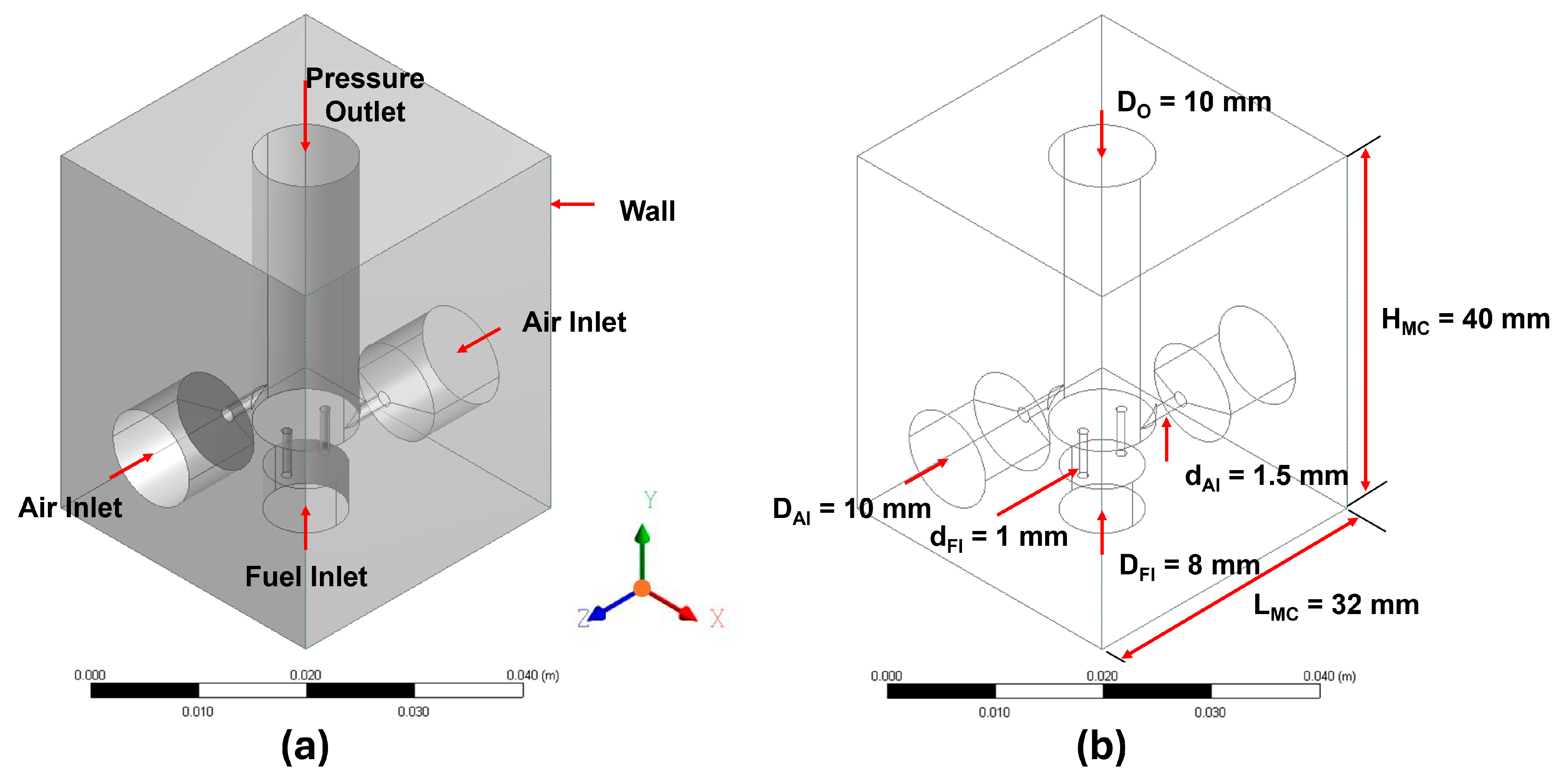
Figure 1 depicts the design of the asymmetric vortex combustor, while
Figure 2 presents the meso-scale combustor meshing arrangement and the meso-scale combustor channel design is then illustrated in
Figure 3, and the associated dimensions are listed in
Table 2.
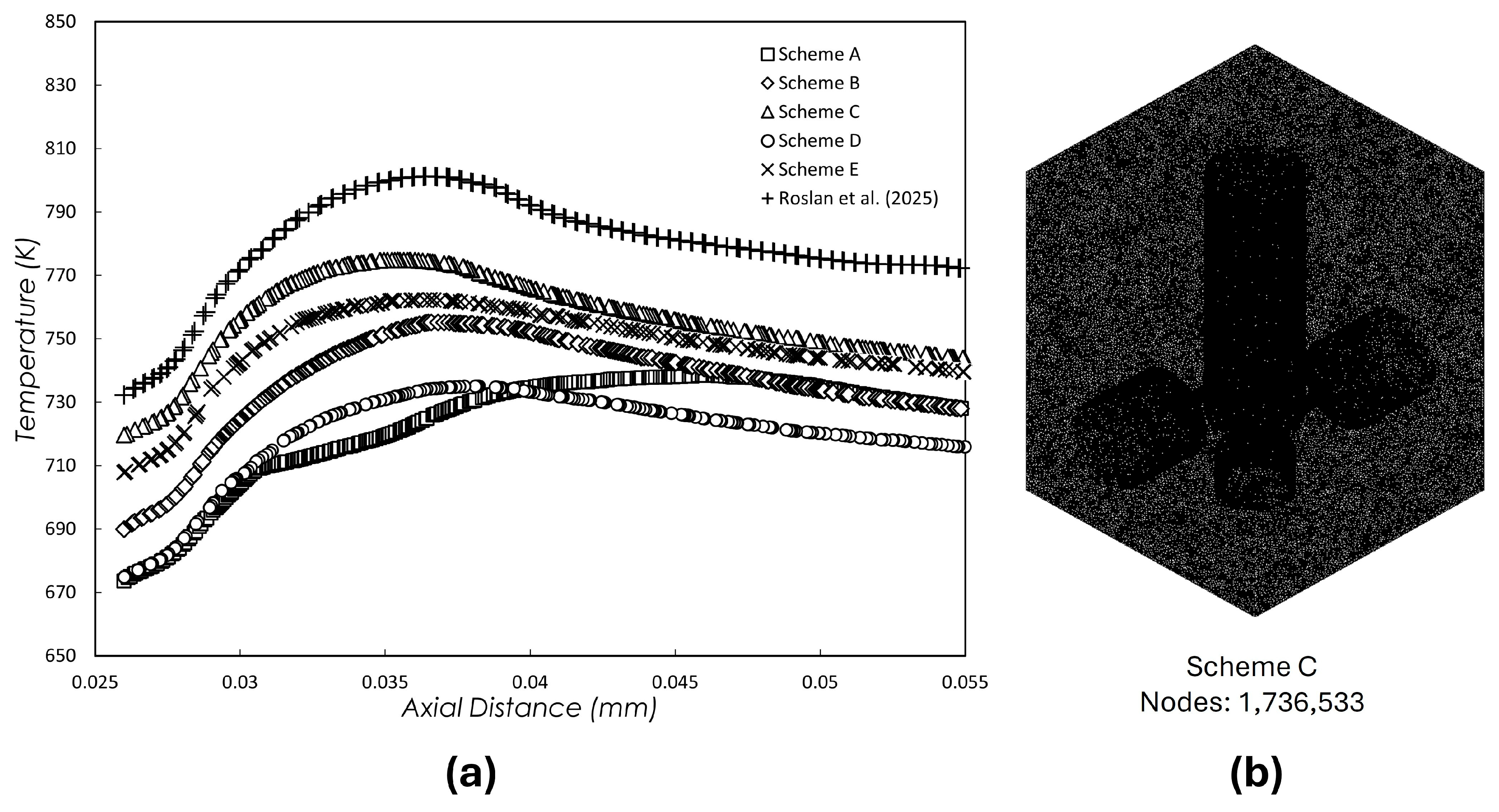
A grid independence test was performed to evaluate the effects of grid sizes on the results, as shown in
Figure 2 and
Table 3. Five sets of meshes were generated using triangular elements with SA = 7,057,570 nodes, SB = 3,349,684 nodes, SC = 1,736,533 nodes, SD = 1,143,358 nodes, and SE = 785,204 nodes. Laminar flow with counter-flow configuration was considered for this test, where the temperatures of the inlet air as well as the inlet fuel were set to 300 K. Among the tested schemes, SC, which consists of 1,736,533 nodes, was found to offer the best compromise between accuracy and computational cost. Scheme C shows the closest agreement with the previous numerical benchmark data reported by [
9], as shown in
Figure 2. Since the present study employs a different frustum outlet-diameter configuration, an identical mesh to that used in [
9] is not applicable. Instead, mesh independence was established for the present geometry, and the comparison was used to verify that the selected numerical approach can reproduce the benchmark axial temperature trend within an acceptable deviation. The differences in key flow parameters between SC and finer meshes (SA and SB) were negligible, with variations in core temperature and velocity magnitudes remaining below 1.5%.
In addition, a mesh independence assessment was performed by comparing the predicted axial wall temperature profiles with the reference data reported by [
9]. Among the investigated mesh schemes, Scheme C demonstrated the best agreement with the reference solution, yielding the lowest maximum deviation of 28.45 K and a mean absolute percentage error (MAPE) of 3.01%. These results indicate that Scheme C provides sufficient numerical accuracy while maintaining a reasonable computational cost and was therefore selected for subsequent simulations. The predicted peak-temperature location and downstream thermal decay were also consistent with the reported vortex-induced flame stabilisation behaviour. This level of agreement validates the numerical fidelity of SC and confirms its suitability for use in all subsequent simulations. All computational domains included both fluid and solid regions of the meso-scale combustor. All computational tasks were executed on a workstation powered by an Intel Core i9 CPU and 16 GB of memory.
Figure 2.
Meso-scale combustor; (
a) meshing with their respective schemes and (
b) meshing scheme C [
9].
Figure 2.
Meso-scale combustor; (
a) meshing with their respective schemes and (
b) meshing scheme C [
9].
Figure 3.
Description of meso-scale combustor channel (Model A, Do,A = 10 mm); (a) boundary conditions, (b) isometric view.
Figure 3.
Description of meso-scale combustor channel (Model A, Do,A = 10 mm); (a) boundary conditions, (b) isometric view.
3. Results and Discussion
3.1. Geometric Confinement Effect Based on Outlet Aspect Ratio and Exit Area Ratio
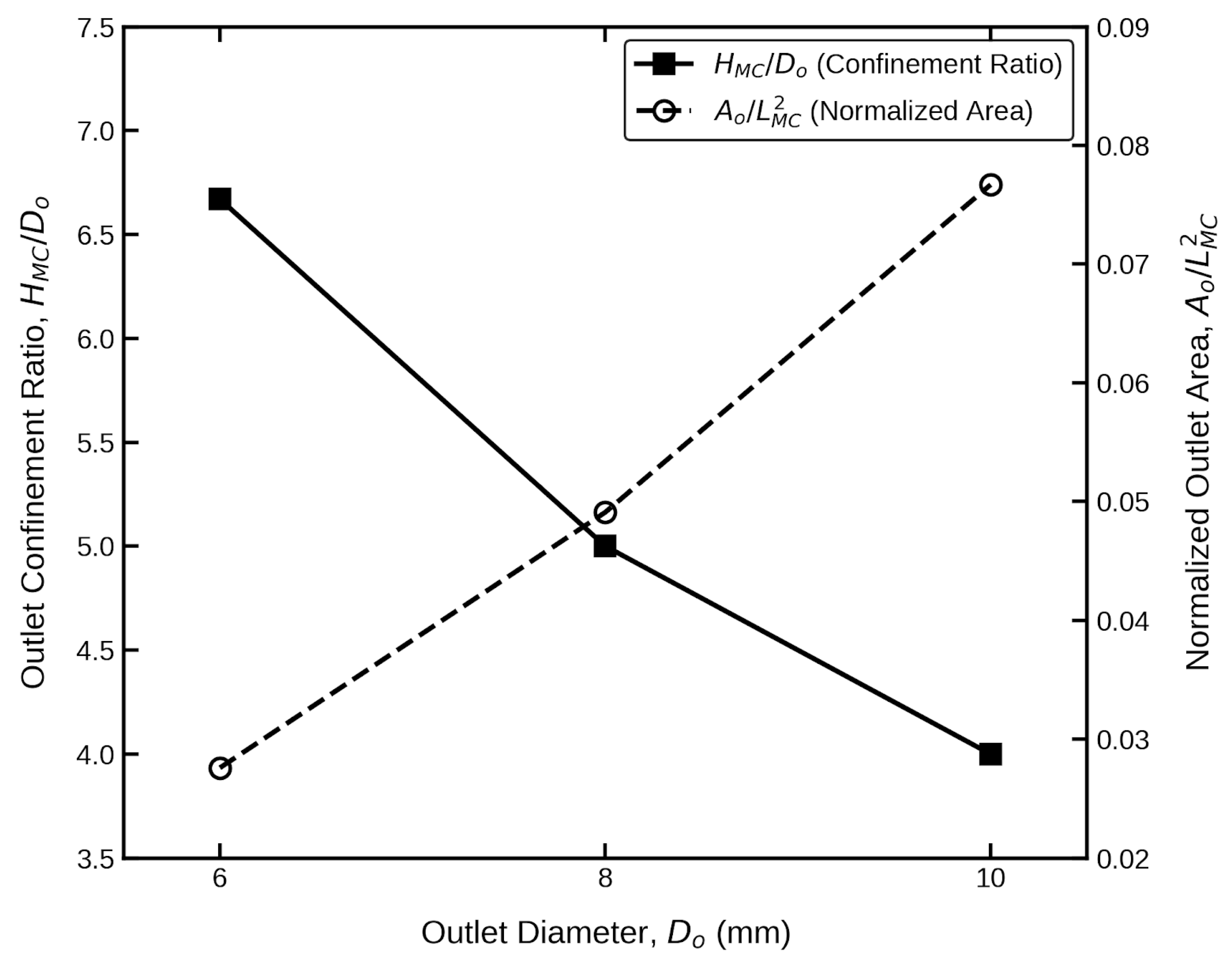
Beyond the qualitative interpretation of temperature contours and wall-temperature profiles, a dimensionless geometric analysis is necessary to clarify the role of outlet restriction in controlling thermal confinement. Since the outlet diameter directly modifies the effective exit area and confinement level, the use of normalised geometric parameters provides a more consistent basis for comparing the three combustor configurations. This approach enables the observed flame localisation, recirculation behaviour, and downstream thermal dissipation to be linked more explicitly to the geometric characteristics of the frustum meso-scale combustor. To further interpret the influence of outlet geometry, dimensionless outlet confinement parameters were introduced as summarised in
Figure 4. The chamber aspect ratio, (H
MC/L
MC), remains constant at 1.25 for all configurations, while the outlet confinement ratio changes significantly with (Do). As the outlet diameter decreases from 10 mm to 6 mm, (Do/H
MC) decreases from 0.250 to 0.150, whereas (H
MC/Do) increases from 4.00 to 6.67. This indicates that the 6 mm outlet provides the strongest geometric confinement among the investigated configurations. Similarly, the normalised outlet area, (Ao/L
MC2), decreases from 0.0767 for the 10 mm outlet to 0.0276 for the 6 mm outlet, suggesting a substantial increase in outlet restrictions.
The stronger confinement associated with the smaller outlet promotes vortex persistence and enhances the recirculation of hot combustion products toward the reaction zone. This mechanism increases residence time, improves flame anchoring, and delays downstream thermal dissipation. Therefore, the improved thermal localisation observed in the 6 mm outlet configuration can be explained not only by outlet-diameter reduction but also by the increase in outlet confinement ratio. Since the exit angle was not independently varied in the present design, the present discussion focuses on outlet confinement parameters rather than claiming an isolated exit-angle effect. Future work may examine the independent influence of the exit half-angle
, which can be defined as Equation (5), where
Dup is the upstream frustum diameter and
Le is the frustum exit transition length.
3.2. Effect of Outlet Diameter on Thermal Confinement and Flame Localisation
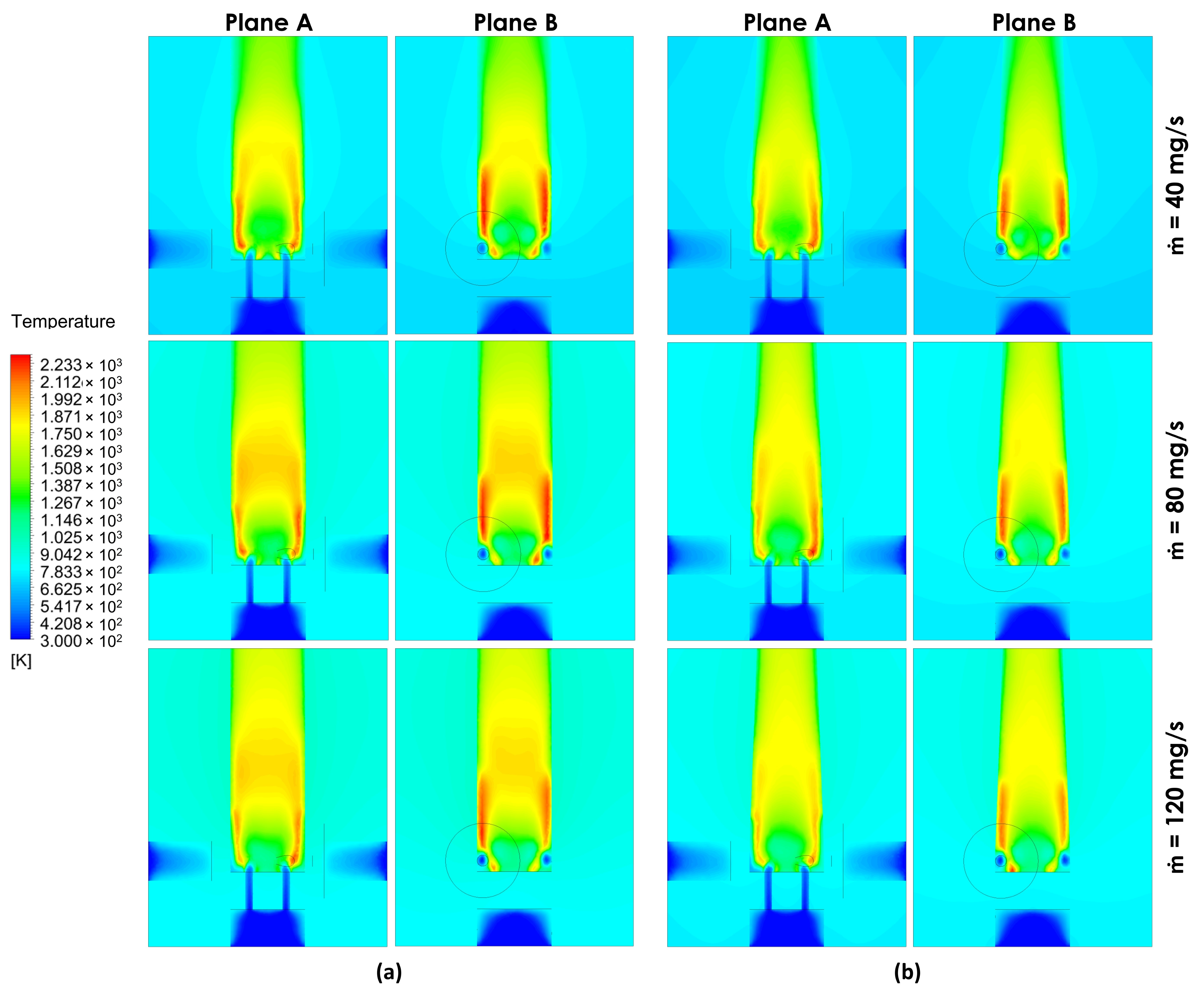
The thermal confinement characteristics of hydrogen-fuelled meso-scale combustors are strongly influenced by outlet diameter, which governs the formation of the thermal core region, flame anchoring behaviour, and heat localisation within the combustion chamber. Under stoichiometric operating conditions (φ = 1.0),
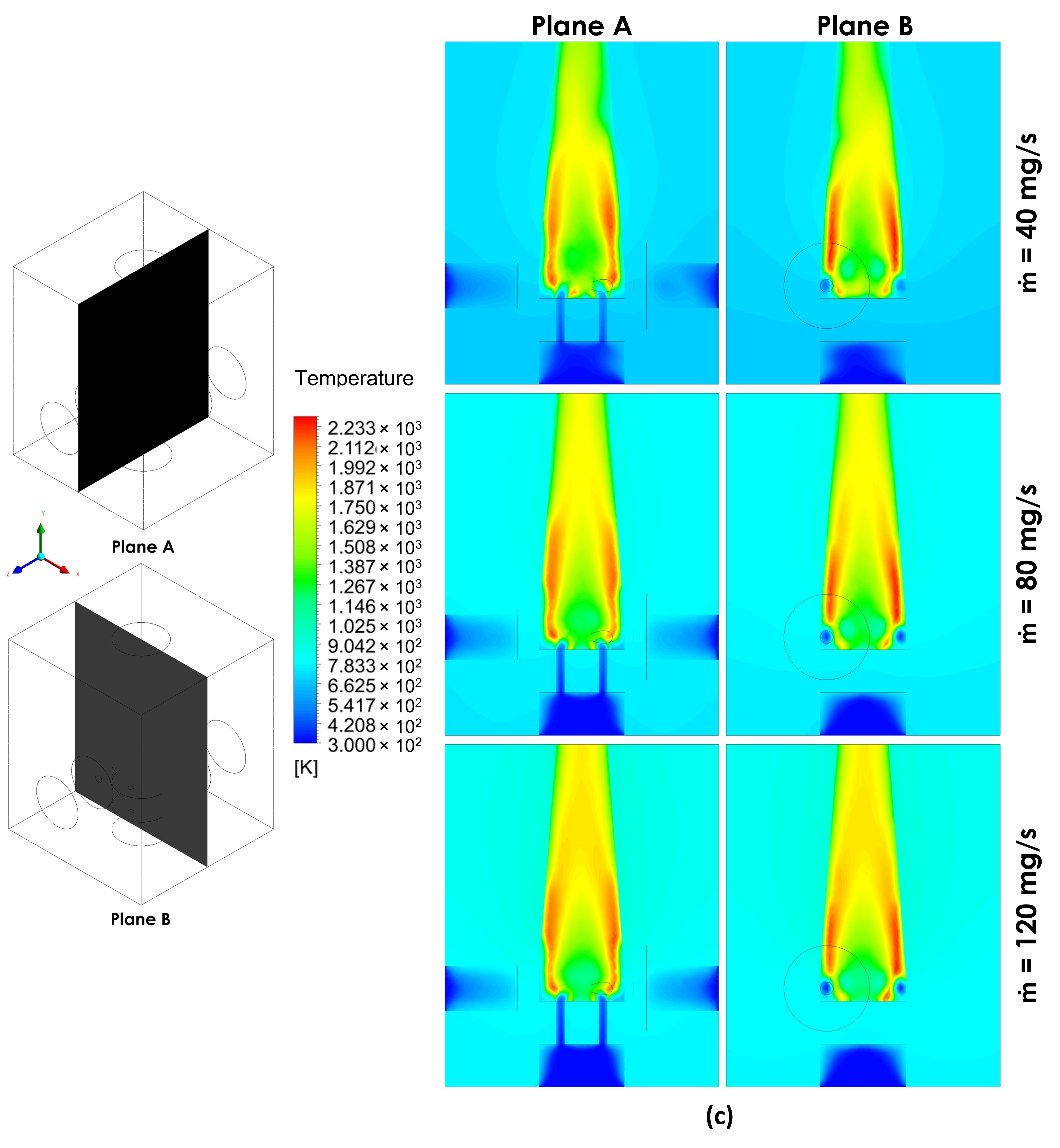
Figure 5 illustrates the temperature contours obtained for different outlet diameters and mass flow rates. Distinct variations in the size, shape, and concentration of the high-temperature region were observed, indicating the significant role of outlet geometry in regulating thermal confinement performance.
Among the investigated configurations, the 6 mm outlet diameter produced the most concentrated and axially elongated thermal core region. The localised high-temperature zone remained strongly confined near the combustor centreline, indicating effective heat retention within the primary reaction region. The compact thermal structure suggests improved flame anchoring characteristics, as the flame remained attached within the confined high-temperature zone. Similar behaviour has been reported in vortex-stabilised combustors, where enhanced confinement promotes stable flame attachment and localised heat release [
9,
26,
30,
31].
The 8 mm outlet configuration exhibited intermediate thermal confinement characteristics between the 6 mm and 10 mm outlets. Although a well-defined thermal core was still observed, the high-temperature region became slightly broader and less concentrated compared to the 6 mm configuration. This behaviour indicates a moderate level of thermal localisation, where sufficient heat retention is maintained while allowing a wider distribution of thermal energy within the combustor chamber. Consequently, flame anchoring remained stable, although less pronounced than that observed in the smaller outlet configuration.
In contrast, the 10 mm outlet diameter generated the broadest and most diffused thermal structure. The high-temperature region expanded radially throughout the combustor chamber, resulting in weaker thermal localisation and reduced confinement effectiveness. The dispersed heat-release region indicates less compact flame anchoring behaviour, where thermal energy is distributed over a larger volume rather than being concentrated within the combustor core. Similar observations were reported by [
16,
28], who found that weaker confinement structures reduced combustion localisation and thermal concentration.
The differences in thermal behaviour can be attributed primarily to the degree of outlet restriction imposed by the combustor geometry. Reducing the outlet diameter increases flow confinement within the chamber, promoting localised heat accumulation and enhancing thermal retention near the flame region. The stronger confinement generated by the 6 mm outlet supports the formation of a stable and concentrated thermal core, whereas the larger outlet diameters progressively weaken heat localisation and broaden the thermal field. The reduction of outlet diameter from 10 mm to 6 mm significantly enhanced thermal confinement within the combustor. The average wall temperature increased from approximately 838 K to 909 K, while the peak inner wall temperature increased from 752–983 K to 801–1085 K (refer to
Figure 5). The 6 mm outlet improved thermal localisation enhancement by approximately 10.4% and increased residence time by 66.8% relative to the 10 mm outlet. The smaller outlet restricted thermal energy escape, promoted stronger heat accumulation near the flame anchoring region, and enhanced upstream heat recirculation through the combustor wall. These effects strengthened flame stability and increased wall temperature levels, demonstrating that outlet restriction plays a critical role in improving thermal confinement and sustaining combustion in meso-scale hydrogen combustors.
Furthermore, increasing mass flow rate intensified the thermal core region for all outlet configurations due to enhanced hydrogen–air mixing and increased heat-release rates. Nevertheless, the influence of outlet geometry remained dominant, with the 6 mm outlet consistently maintaining the most concentrated thermal core and strongest flame anchoring characteristics, followed by the 8 mm and 10 mm configurations.
Overall, the results demonstrate that outlet restriction plays a crucial role in controlling thermal core formation, flame anchoring location, and heat localisation within vortex-stabilised meso-scale combustors. The 6 mm outlet diameter exhibited superior thermal confinement performance by maintaining a compact high-temperature region and stronger flame anchoring behaviour, while the 10 mm outlet promoted broader thermal dispersion and weaker localisation. The 8 mm outlet provided intermediate characteristics between these two extremes.
3.3. Axial Wall Temperature Distribution and Heat Transfer Characteristics
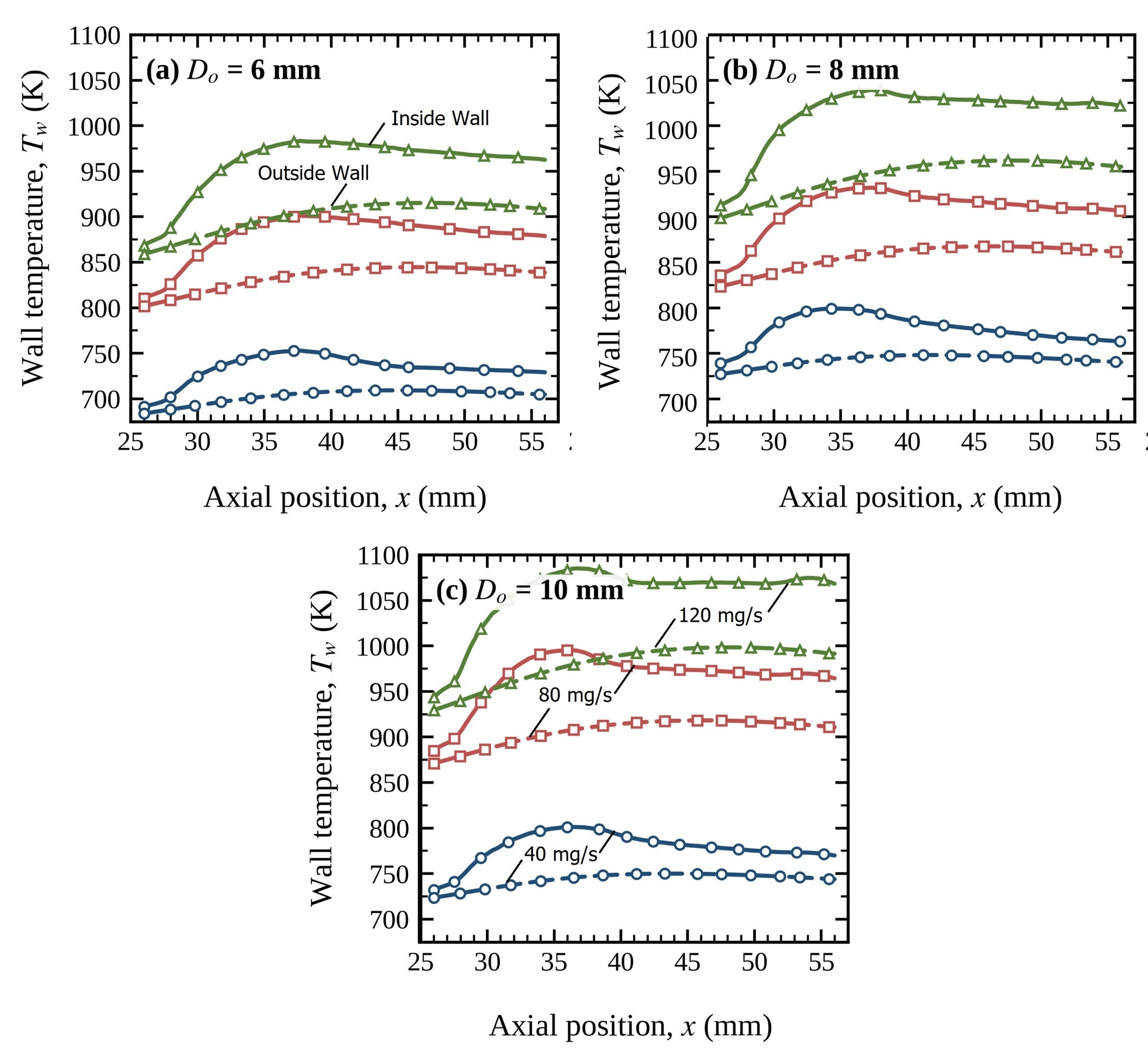
Figure 6 presents the axial wall temperature distributions for the inner and outer combustor walls under various outlet-diameter configurations and mass flow rates. The wall temperature profiles provide important insight into the interaction between internal vortex flow structures, flame confinement behaviour, and heat transfer mechanisms within the combustor.
The inner wall consistently recorded substantially higher temperatures compared to the outer wall for all operating conditions. This behaviour indicates strong thermal localisation within the combustor core, where the confined vortex flame promotes intense heat release near the internal wall region. The temperature difference between the inner and outer walls also suggests the presence of delayed conductive heat transfer through the combustor material, accompanied by significant convective heat transport within the reacting flow field. Similar thermal localisation phenomena were observed in vortex combustors and thermoelectric-integrated combustion systems reported by [
26,
27].
Among the investigated configurations, the 6 mm outlet diameter produced the highest inner-wall temperatures and the slowest downstream thermal decay. The 8 mm outlet configuration demonstrated moderate wall temperature distribution characteristics, with thermal confinement behaviour positioned between the highly confined 6 mm configuration and the broader thermal spreading observed in the 10 mm outlet. The prolonged retention of elevated temperatures along the combustor wall indicates enhanced thermal confinement and stronger recirculating heat transport within the combustor chamber. This behaviour is associated with intensified vortex confinement and improved flame anchoring characteristics generated by the smaller outlet restriction. Previous studies similarly reported that enhanced recirculation intensity improves wall heating and increases thermal uniformity within confined combustion chambers [
9,
22,
28].
The 10 mm outlet configuration, on the other hand, exhibited lower peak wall temperatures and more rapid downstream thermal dissipation. The broader thermal spreading observed in this configuration reflects weaker recirculation behaviour and reduced confinement effectiveness, which allow heat to disperse more rapidly throughout the combustor domain. Consequently, the combustion process becomes less thermally concentrated, reducing the effectiveness of internal heat retention. Similar trends were reported in meso-scale combustors with weaker swirl intensity and reduced aerodynamic confinement [
23,
30].
The axial temperature profiles further demonstrate that increasing mass flow rate elevates both inner and outer wall temperatures due to intensified convective heat transfer and enhanced combustion intensity. The higher flow momentum increases mixing between hydrogen and oxidiser, resulting in greater heat release rates and improved flame stabilisation. Comparable observations were reported by [
28], where increasing inlet velocity enhanced wall-temperature uniformity and strengthened thermal interaction within the combustor channel.
The thermal behaviour observed in the present study highlights the important role of vortex-induced flow confinement in regulating wall heat transfer within meso-scale combustors. Strong recirculation structures not only improve flame stabilisation but also enhance thermal retention and heat transfer concentration near the combustor wall. These characteristics are highly advantageous for thermoelectric and thermophotovoltaic applications, where elevated and spatially concentrated wall temperatures are essential for improving energy conversion efficiency [
26].
3.4. Axial Temperature Evolution and Downstream Heat Dissipation Characteristics
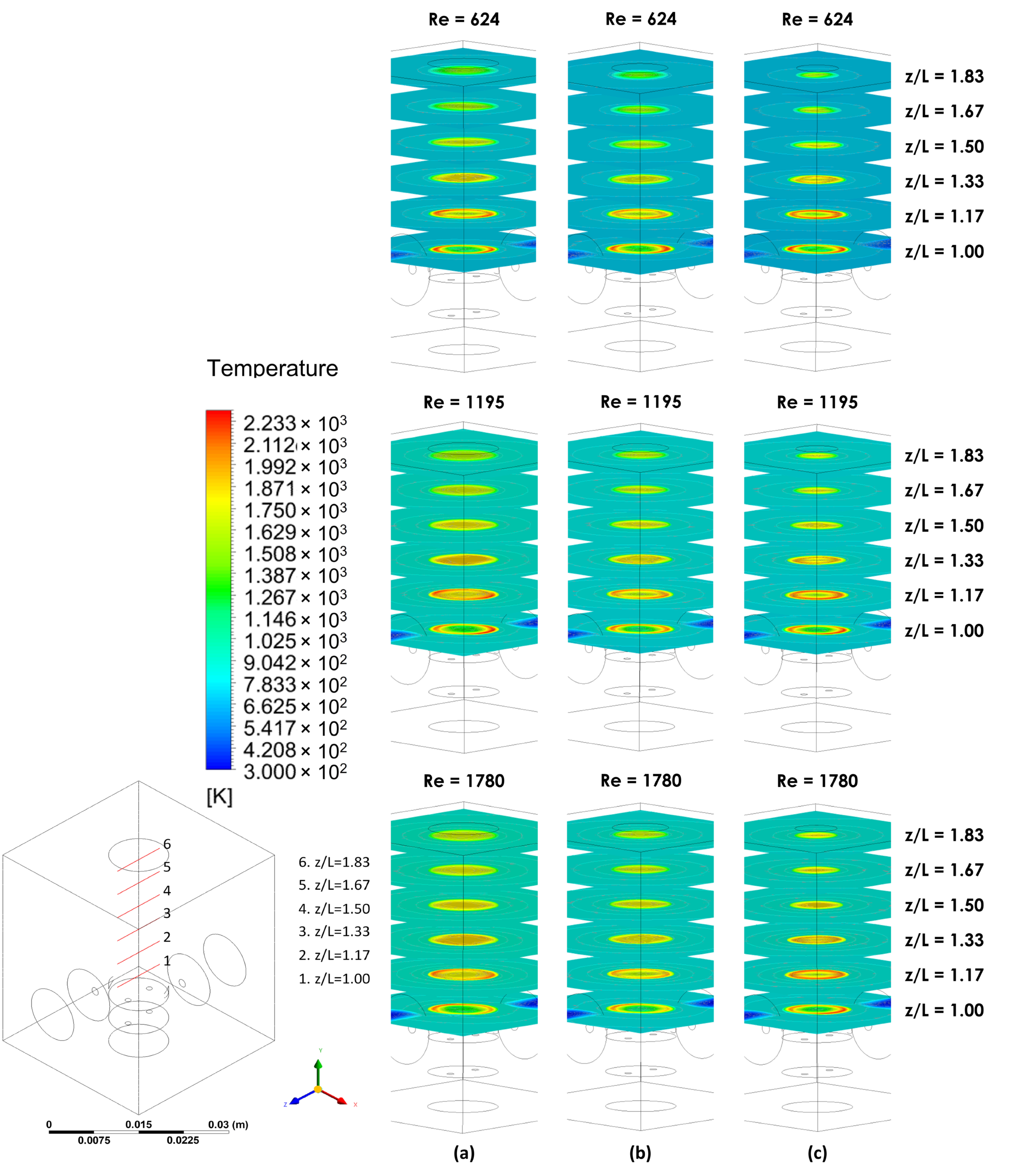
Figure 7 illustrates the temperature distributions along the combustor height for the investigated outlet-diameter configurations under stoichiometric operating conditions (φ = 1.0). The axial temperature profiles provide important insights into the thermal transport behaviour within the combustor, particularly regarding temperature persistence, downstream thermal attenuation, and heat dissipation characteristics. In all configurations, elevated temperatures were observed near the primary combustion region, followed by a gradual decrease along the combustor axis as thermal energy was transported downstream and dissipated through convective and conductive mechanisms.
The temperature variation along the combustor height indicates that thermal energy is continuously redistributed by axial flow motion and turbulent transport processes. As combustion products travel downstream, heat is progressively transferred to the surrounding fluid and combustor walls, resulting in a reduction in gas temperature. The rate of temperature decay reflects the effectiveness of thermal retention within the combustor and provides an indication of the persistence of high-temperature gases along the flow path.
Among the investigated geometries, the 10 mm outlet configuration exhibited the most rapid downstream thermal attenuation, as shown in
Figure 7a. The temperature decreased more steeply along the combustor height, indicating accelerated heat dissipation and shorter thermal persistence. The broader flow passage promotes greater thermal dispersion and facilitates the transport of thermal energy away from the combustion region, thereby reducing the ability of the combustor to sustain elevated temperatures over extended axial distances. Similar downstream cooling behaviour has been reported in confined combustors with enhanced thermal spreading and weaker heat-retention characteristics [
9,
15,
28].
The 8 mm outlet configuration demonstrated intermediate thermal behaviour, as illustrated in
Figure 7b. The temperature gradients along the combustor height were less pronounced than those observed in the 10 mm outlet, indicating a moderate rate of heat dissipation. The resulting temperature profile suggests a balanced thermal transport process, where thermal energy is retained over a longer axial distance while maintaining controlled downstream cooling characteristics.
In contrast, the 6 mm outlet configuration exhibited the slowest rate of downstream temperature decay among the investigated geometries, as shown in
Figure 7c. Higher temperatures were maintained throughout a larger portion of the combustor height, demonstrating enhanced thermal persistence and reduced heat dissipation rates. The slower attenuation behaviour indicates that thermal energy remains concentrated within the flow field for a longer residence period, allowing elevated temperatures to be sustained further downstream compared with the larger outlet configurations. The peak temperature recorded for the 6 mm outlet was approximately 8–15% higher than that of the 10 mm outlet, further highlighting its superior thermal retention capability.
The influence of Reynolds number was also evident in the axial temperature distributions. Increasing Reynolds number strengthened axial momentum transport and enhanced hydrogen–air mixing, resulting in higher temperature levels and a broader thermal field throughout the combustor. The increased flow momentum promoted greater thermal spreading downstream, extending the high-temperature region along the combustor axis. However, the extent of thermal spreading remained dependent on outlet geometry, with smaller outlet diameters maintaining higher thermal persistence despite the increased convective transport associated with higher Reynolds numbers.
Overall, the results demonstrate that outlet diameter and Reynolds number jointly influence axial temperature evolution and downstream heat dissipation behaviour within hydrogen-fuelled meso-scale combustors. Smaller outlet diameters promote longer thermal persistence and slower temperature attenuation, whereas larger outlet diameters accelerate downstream cooling and heat dissipation. These findings highlight the importance of thermal transport management in achieving sustained high-temperature operation and improved thermal performance in compact combustion systems.
4. Conclusions
This study numerically investigated the influence of outlet diameter on thermal confinement behaviour, flame stabilisation, and wall heat-transfer characteristics in hydrogen-fuelled frustum meso-scale combustors operating under stoichiometric conditions. Three outlet configurations (6 mm, 8 mm, and 10 mm) were analysed using a three-dimensional CFD framework based on the RNG k–ε turbulence model coupled with the Eddy Dissipation combustion model. The results demonstrated that outlet geometry plays a decisive role in governing vortex-induced recirculation, thermal localisation, and downstream heat transport within confined hydrogen combustion systems. Among the investigated configurations, the 6 mm outlet exhibited the strongest thermal confinement performance, producing a more concentrated high-temperature core, enhanced flame anchoring behaviour, higher wall temperatures, and slower downstream thermal attenuation compared with the larger outlet diameters. The increased outlet confinement ratio promoted stronger recirculation of hot combustion products, resulting in improved heat retention and prolonged thermal persistence within the combustor chamber. In contrast, the 10 mm outlet generated broader thermal dispersion, weaker confinement, and more rapid downstream heat dissipation. The 8 mm outlet provided intermediate thermo-fluid characteristics between these two extremes. The findings establish a clear relationship between outlet restriction, vortex-flow confinement, and thermal transport behaviour in hydrogen-fuelled meso-scale combustors. These insights provide useful design guidelines for improving thermal management, flame stability, and energy recovery performance in compact combustion-based power generation systems, including thermoelectric and thermophotovoltaic applications.
Nevertheless, several limitations should be acknowledged. The present investigation is restricted to numerical simulations under stoichiometric operating conditions and a limited range of outlet diameters and mass flow rates. In addition, the Eddy Dissipation combustion model employed in this study does not account for detailed chemical kinetics, finite-rate chemistry effects, thermo-diffusive instability, or pollutant formation mechanisms that are particularly relevant to hydrogen combustion. Furthermore, pressure-drop characteristics, pumping-power requirements, combustion efficiency, and emission performance were not evaluated and therefore remain beyond the scope of the present work. Future research should focus on comprehensive experimental validation of the predicted thermal and flow-field characteristics using advanced diagnostic techniques. The application of detailed or reduced hydrogen-chemistry mechanisms, coupled with more advanced turbulent combustion interaction models, would provide deeper insight into flame dynamics, ignition behaviour, and pollutant formation processes. Additional investigations should also quantify pressure-drop penalties, recirculation strength, residence-time distributions, combustion efficiency, heat-loss rates, and NOx emissions to establish a more complete assessment of combustor performance. Finally, broader operating conditions involving different equivalence ratios, Reynolds numbers, inlet configurations, outlet geometries, and transient operating scenarios should be explored to further optimise the design and practical applicability of hydrogen-fuelled frustum meso-scale combustors.
Author Contributions
Conceptualization, M.L.A.L. and C.Y.K.; methodology, M.L.A.L.; software, M.A.R.A.; formal analysis, M.A.-H.M.N.; investigation, M.F.K.; resources, H.J.J.; data curation, M.A.-H.M.N.; writing—original draft preparation, M.A.-H.M.N. and M.A.R.A.; writing—review and editing, C.Y.K.; visualization, H.J.J.; supervision, M.A.-H.M.N.; project administration, C.Y.K.; funding acquisition, M.A.-H.M.N. All authors have read and agreed to the published version of the manuscript.
Funding
This research received no external funding.
Institutional Review Board Statement
Not applicable.
Informed Consent Statement
Not applicable.
Data Availability Statement
The data presented in this study are available on request from the corresponding author.
Acknowledgments
The authors would like to express their appreciation for all the support received from the Faculty of Mechanical Engineering and Technology, Universiti Malaysia Perlis (UniMAP).
Conflicts of Interest
The authors declare no conflicts of interest. The authors declare that they have no known competing financial interests or personal relationships that could have appeared to influence the work reported in this paper.
References
- Adiwidodo, S.; Wardana, I.N.G.; Yuliati, L.; Sasongko, M.N. Performance of cylindrical and planar meso-scale combustor with double narrow slit flame holder for micropower generator. East.-Eur. J. Enterp. Technol. 2020, 2, 35–43. [Google Scholar]
- Kang, Z.; Shi, Z.; Ye, J.; Tian, X.; Huang, Z.; Wang, H.; Wei, D.; Peng, Q.; Tu, Y. A Review of Micro Power System and Micro Combustion: Present Situation, Techniques and Prospects. Energies 2023, 16, 3201. [Google Scholar] [CrossRef]
- Abd Latif, M.L.; Mohd Nawi, M.A.-H.; Alias, M.A.R.; Khor, C.Y.; Fathurrahman Kamarudin, M.; Roslan, A.H.; Jaafar, H.J. Numerical Elucidation on the Dynamic Behaviour of Non-Premixed Flame in Meso-Scale Combustors. Modelling 2025, 6, 94. [Google Scholar]
- Sheykhbaglou, S.; Ghahremani, A.; Tabejamaat, S.; Sánchez-Sanz, M. Comparative study of combustion and thermal performance of a meso-scale combustor under co- and counter-rotating fuel and oxidizer swirling flows for micro power generators. Heliyon 2024, 10, e24250. [Google Scholar] [CrossRef] [PubMed]
- Sanata, A.; Ilminnafik, N.; Asyhar, M.M.; Nanlohy, H.Y.; Kristianta, F.X.; Sholahuddin, I. Characterization of Combustion in Cylindrical Meso-Scale Combustor with Wire Mesh Flame Holder as Initiation of Energy Source for Future Vehicles. Automot. Exp. 2024, 7, 97–110. [Google Scholar] [CrossRef]
- Velidi, G.; Yoo, C.S. A Review on Flame Stabilization Technologies for UAV Engine Micro-Meso Scale Combustors: Progress and Challenges. Energies 2023, 16, 3968. [Google Scholar] [CrossRef]
- Hosseini, S.E.; Owens, E.; Krohn, J.; Leylek, J. Experimental investigation into the effects of thermal recuperation on the combustion characteristics of a non-premixed meso-scale vortex combustor. Energies 2018, 11, 3390. [Google Scholar] [CrossRef]
- Choi, M.; Choi, K.W.; Kang, D.W.; Muhammad, H.A.; Lee, Y.D. Experimental investigation of combustion characteristics of a CH4/O2 premixed flame: Effect of swirl intensity on flame structure, flame stability, and emissions. Case Stud. Therm. Eng. 2024, 55, 104069. [Google Scholar] [CrossRef]
- Roslan, A.H.; Nawi, M.A.-H.M.; Khor, C.Y.; Md Sarip, M.S.; Abd Latif, M.L.; Alias, M.A.R.; Jaafar, H.J.; Kamarudin, M.F.; Abdull Sukor, A.S.; Jamlos, M.A. Optimizing Asymmetric Meso-Scale Vortex Combustors for Swirl-Induced Flame Stabilization: A Computational Analysis. Eng 2025, 6, 293. [Google Scholar] [CrossRef]
- Ahmed, M.M.A.; Xu, L.; Bai, X.; Hassan, Z.O.; Abdullah, M.; Sim, J.; Cenker, E.; Roberts, W.L.; Elbaz, A.M. Flame stabilization and pollutant emissions of turbulent ammonia and blended ammonia flames: A review of the recent experimental and numerical advances. Fuel Commun. 2024, 20, 100127. [Google Scholar] [CrossRef]
- Saputro, H.; Fitriana, L.; Purwanto, A.; Muslim, R.; Munir, F.A.; Wang, W.-C. Double chamber meso scale vortex combustor for micro scale electric generator based on thermo electric generator. Energy Rep. 2023, 9, 5015–5030. [Google Scholar] [CrossRef]
- Gee, A.J.; Smith, N.; Chinnici, A.; Medwell, P.R. Characterisation of turbulent non-premixed hydrogen-blended flames in a scaled industrial low-swirl burner. Int. J. Hydrogen Energy 2024, 49, 747–757. [Google Scholar] [CrossRef]
- Kazemi, M.; Brennan, S.; Molkov, V. Numerical simulations of the critical diameter and flame stability for hydrogen flames. Int. J. Hydrogen Energy 2024, 59, 591–603. [Google Scholar] [CrossRef]
- Shen, X.; Shen, J.; Liu, H.; Wen, J.X.; Ma, Y.; Zou, X.; Liu, Z. Numerical investigation on dynamic behavior of premixed hydrogen/air flame propagation in a closed tube. Fuel 2023, 354, 129295. [Google Scholar] [CrossRef]
- Rong, H.; Zhao, D.; Cai, T.; Becker, S. Enhancing thermal and exergy performances in a CO2-Free micro-combustor with reverse flow double-channel outlet structure. Appl. Therm. Eng. 2023, 233, 121180. [Google Scholar] [CrossRef]
- Rong, H.; Zhao, D. Thermodynamic and entropy generation analyses of Telsa-valve structured meso-scale combustors fueled with hydrogen for thermophotovoltaic applications. Energy 2024, 307, 132788. [Google Scholar] [CrossRef]
- Pignatelli, F.; Sanned, D.; Derafshzan, S.; Szasz, R.Z.; Bai, X.S.; Richter, M.; Ehn, A.; Lörstad, D.; Petersson, P.; Subash, A.A. Impact of pilot flame and hydrogen enrichment on turbulent methane/hydrogen/air swirling premixed flames in a model gas turbine combustor. Exp. Therm. Fluid Sci. 2024, 152, 111124. [Google Scholar] [CrossRef]
- Li, T.; Doğrudil, M.; Dreizler, A. Macroscopic flame and flow structures in hydrogen and methane multi-regime combustion. Proc. Combust. Inst. 2024, 40, 105759. [Google Scholar] [CrossRef]
- Saif, A.G.H.; Ahmed, M.I.; Talal, Q.; Mokheimer, E.M.A. Effects of hydrogen enrichment on flame stability, thermoacoustic oscillations, and combustion characteristics in premixed propane swirl flames: An experimental study. Fuel 2026, 404, 136373. [Google Scholar] [CrossRef]
- Coquin, V.; Vandel, A.; Godard, G.; Taddeo, L.; Ossman, H.; Cabot, G.; Renou, B. Experimental study on the influence of hydrogen injection strategy on mixing efficiency, flame stabilisation, and NOx formation. Int. J. Hydrogen Energy 2025, 138, 91–102. [Google Scholar] [CrossRef]
- Howarth, T.L.; Picciani, M.A.; Richardson, E.S.; Day, M.S.; Aspden, A.J. Direct numerical simulation of a high-pressure hydrogen micromix combustor: Flame structure and stabilisation mechanism. Combust. Flame 2024, 265, 113504. [Google Scholar] [CrossRef]
- Rong, H.; Zhao, D.; Becker, S.; Liu, X. Entropy production and thermodynamics exergy investigation on an ammonia-methane fueled micro-combustor with porous medium for thermophotovoltaic applications. Int. J. Hydrogen Energy 2024, 49, 384–400. [Google Scholar] [CrossRef]
- Wu, Y.; Yan, Y.; Zhang, C.; Xue, Z.; Li, Y.; Hu, Y.; Zhao, X. Enhancing outer wall temperature uniformity in a micro-combustor for micro thermophotovoltaic system via four-corner tangential inlets injection. Fuel 2025, 401, 135849. [Google Scholar] [CrossRef]
- Zhao, H.; Zhao, D.; Wang, B.; Shi, B. Electrical power, energy efficiency, and acoustic performance investigations of a hydrogen-fueled micro-thermal photovoltaic system with a tesla valve-shaped micro-combustor. Appl. Therm. Eng. 2024, 256, 124127. [Google Scholar] [CrossRef]
- Zhou, T.; Zhao, K.; Li, F.; Wang, K.; Meng, N.; Wang, D. Effects of swirl numbers on the unsteady characteristics of pilot flame in a triple-swirler staged combustor. Case Stud. Therm. Eng. 2023, 44, 102846. [Google Scholar] [CrossRef]
- Saputro, H.; Fitriana, L.; Purwanto, A.; Munir, F.A.; Wang, W.-C. A Development of Meso-Scale Vortex Combustion for a Micro Power Generator Based on a Thermoelectric Generator. Fluids 2022, 7, 386. [Google Scholar] [CrossRef]
- Li, G.; Zheng, Y.; Guo, W.; Zhu, D.; Tang, Y. Mesoscale combustor-powered thermoelectric generator: Experimental op-timization and evaluation metrics. Appl. Energy 2020, 272, 115234. [Google Scholar]
- Rong, H.; Zhao, D. Performance analyses on Telsa-valve structured meso-combustors in presence of ammonia-hydrogen/air combustion for thermophotovoltaic applications. Renew. Energy 2025, 243, 122546. [Google Scholar] [CrossRef]
- Al-ajmi, R.; Qazak, A.H.; Sadeq, A.M.; Al-Shaghdari, M.; Ahmed, S.F.; Sleiti, A.K. Numerical investigation of the potential of using hydrogen as an alternative fuel in an industrial burner. Fuel 2025, 385, 134194. [Google Scholar]
- Sanata, A.; Nyoman Gede Wardana, I.; Yuliati, L.; Sasongko, M.N. Effect of backward facing step on combustion stability in a constant contact area cylindrical meso-scale combustor. East.-Eur. J. Enterp. Technol. 2019, 1, 51–59. [Google Scholar]
- Majid, N.A.; Idris, A.C.; Faizal, H.M.; Rahman, M.R.A.; Hosseini, S.E. Characteristics of liquid fuel combustion in a novel miniature vortex combustor. J. Therm. Anal. Calorim. 2020, 140, 1569–1578. [Google Scholar] [CrossRef]
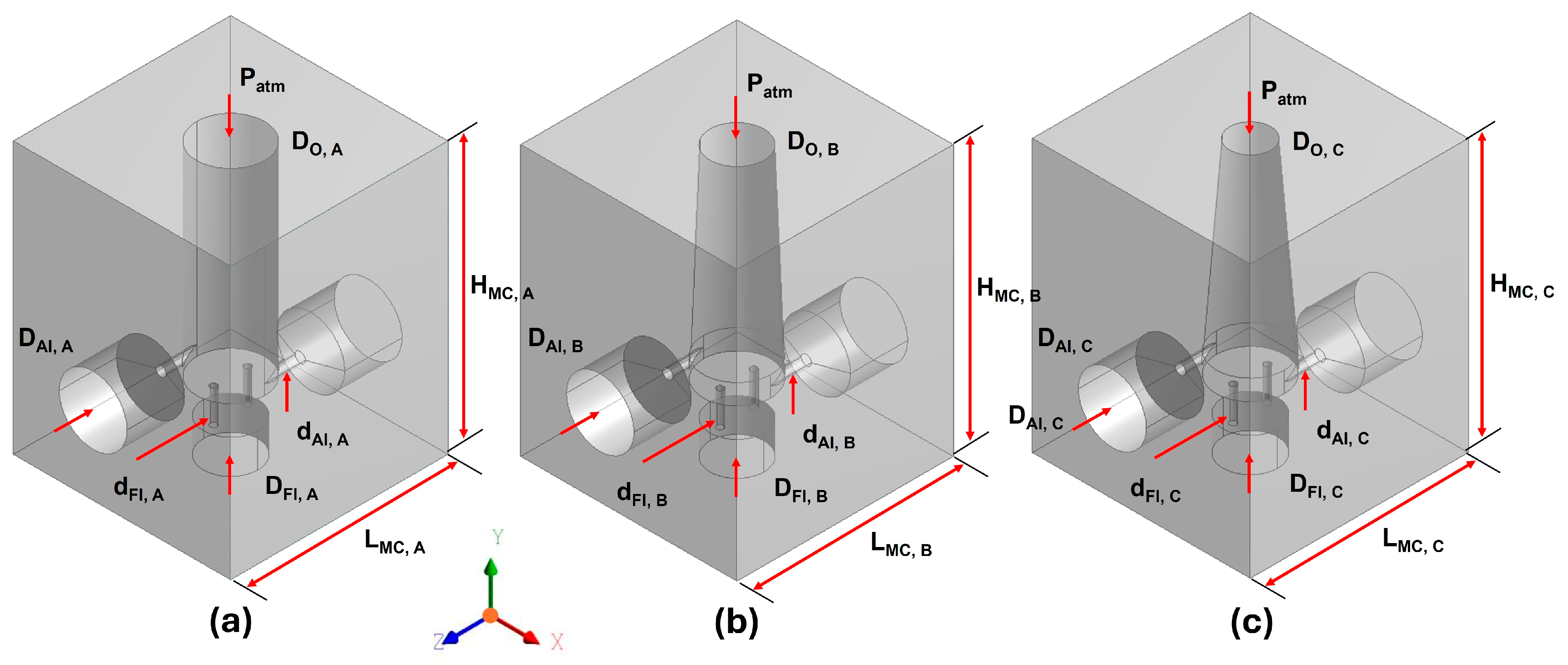
Figure 1.
Configuration of meso-scale combustor channel; (a) Model A, Do,A = 10 mm, (b) Model B, Do,B = 8 mm, and (c) Model C, Do,C = 6 mm.
Figure 1.
Configuration of meso-scale combustor channel; (a) Model A, Do,A = 10 mm, (b) Model B, Do,B = 8 mm, and (c) Model C, Do,C = 6 mm.
Figure 4.
Influence of outlet diameter (Do) on the outlet confinement ratio (HMC/Do) and normalised outlet area (Ao/LMC2).
Figure 4.
Influence of outlet diameter (Do) on the outlet confinement ratio (HMC/Do) and normalised outlet area (Ao/LMC2).
Figure 5.
Formation of high-temperature core regions and thermal confinement in meso-scale combustor channel through different planes and mass flow rates; (a) Model A, Do,A = 10 mm, (b) Model B, Do,B = 8 mm, and (c) Model C, Do,C = 6 mm under stoichiometric conditions (φ = 1.0).
Figure 5.
Formation of high-temperature core regions and thermal confinement in meso-scale combustor channel through different planes and mass flow rates; (a) Model A, Do,A = 10 mm, (b) Model B, Do,B = 8 mm, and (c) Model C, Do,C = 6 mm under stoichiometric conditions (φ = 1.0).
Figure 6.
Axial wall temperature profiles for inside and outside of the meso-scale combustor channel; (a) Model A, Do,A = 10 mm, (b) Model B, Do,B = 8 mm, and (c) Model C, Do,C = 6 mm under stoichiometric conditions (φ = 1.0).
Figure 6.
Axial wall temperature profiles for inside and outside of the meso-scale combustor channel; (a) Model A, Do,A = 10 mm, (b) Model B, Do,B = 8 mm, and (c) Model C, Do,C = 6 mm under stoichiometric conditions (φ = 1.0).
Figure 7.
Temperature contour distributions along the combustor height under stoichiometric conditions (φ = 1.0) at different Reynolds numbers; (a) Model A, Do,A = 10 mm, (b) Model B, Do,B = 8 mm, and (c) Model C, Do,C = 6 mm.
Figure 7.
Temperature contour distributions along the combustor height under stoichiometric conditions (φ = 1.0) at different Reynolds numbers; (a) Model A, Do,A = 10 mm, (b) Model B, Do,B = 8 mm, and (c) Model C, Do,C = 6 mm.
Table 1.
Boundary condition settings (adapted from [
9]).
Table 1.
Boundary condition settings (adapted from [
9]).
| Model | Settings |
|---|
| Viscos model | K-epsilon (2 Equations) RNG, with swirl-dominated flow option |
| Radiation model | Discrete ordinate (DO) |
| Reaction model | Species transport model coupled with the Eddy Dissipation Model (EDM) for turbulence–chemistry interaction |
| Boundary conditions | Air inlet | Mass flow rate: 40, 80, 120 mg/s |
| Temperature: 300 K |
| Concentration: O2 = 23%, N2 = 77% |
| Fuel inlet | Mass flow rate: φ = 1.0 |
Table 2.
Geometric dimensions of meso-scale vortex combustors (mm).
Table 2.
Geometric dimensions of meso-scale vortex combustors (mm).
| Samples | Model A | Model B | Model C |
|---|
| Length of meso chamber, LMC | 32 |
| Height of meso chamber, HMC | 40 |
| Diameter outlet, DO | 10 | 8 | 6 |
| Diameter air inlet, DAI | 10 |
| Diameter fuel inlet, DFI | 8 |
| Diameter air inlet, dAI | 1.5 |
| Diameter fuel inlet, dFI | 1 |
| Height fuel inlet 1, HFI, 1 | 5 |
| Height fuel inlet 2, HFI, 2 | 5 |
| Center air inlet, CAI | 13.83 |
| Center meso-chamber, CMC | 19.42 |
| Height-chamber, HC | 30 |
Table 3.
Grid-independence assessment of the meso-scale combustor.
Table 3.
Grid-independence assessment of the meso-scale combustor.
| Mesh Set | Element Type | Number of Nodes | Number of Elements |
|---|
| SA | Triangular elements | 7,057,570 | 1,328,602 |
| SB | 3,349,684 | 627,318 |
| SC | 1,736,533 | 329,799 |
| SD | 1,143,358 | 217,713 |
| SE | 785,204 | 151,006 |
| Disclaimer/Publisher’s Note: The statements, opinions and data contained in all publications are solely those of the individual author(s) and contributor(s) and not of MDPI and/or the editor(s). MDPI and/or the editor(s) disclaim responsibility for any injury to people or property resulting from any ideas, methods, instructions or products referred to in the content. |



 ,
,