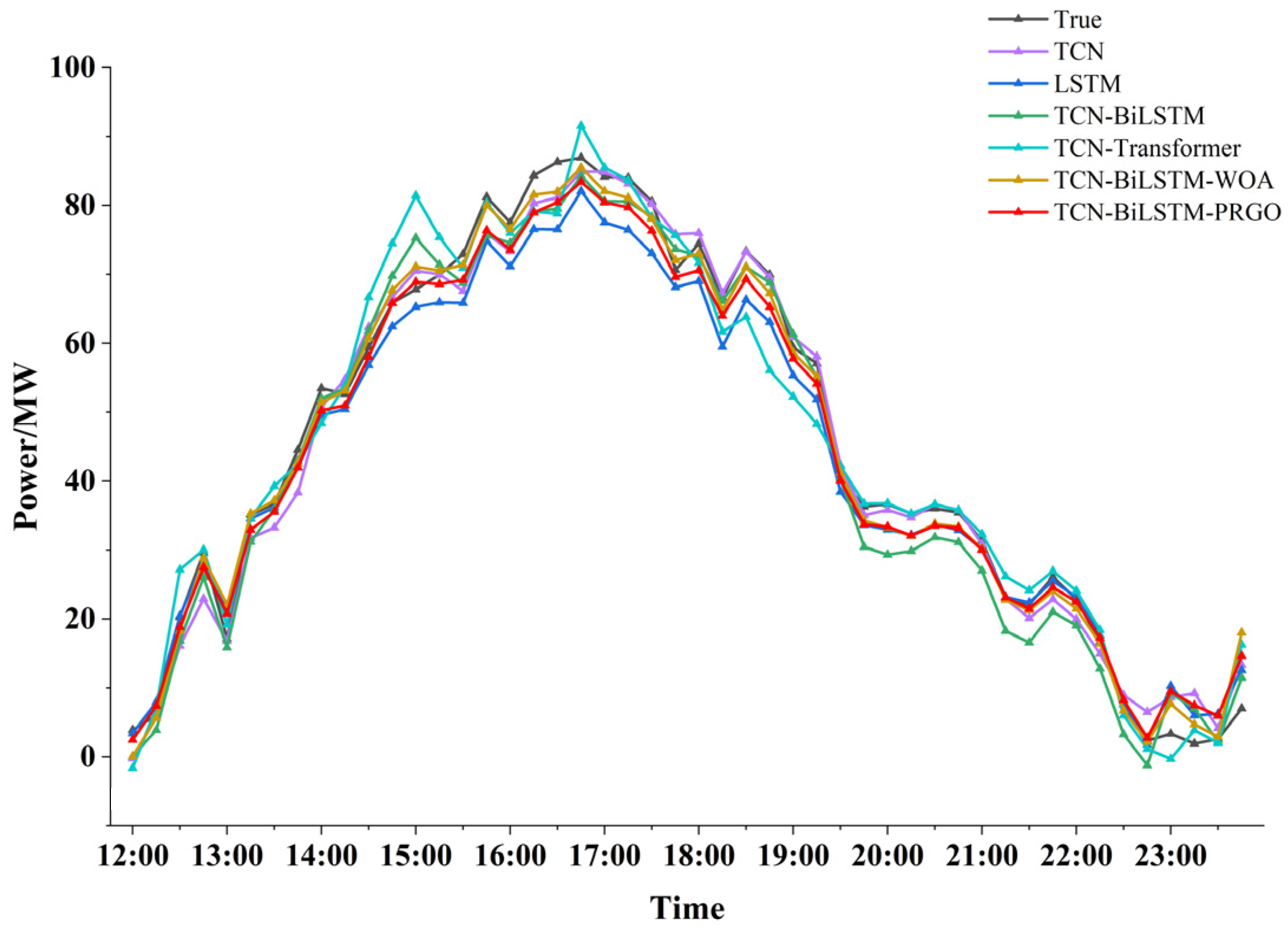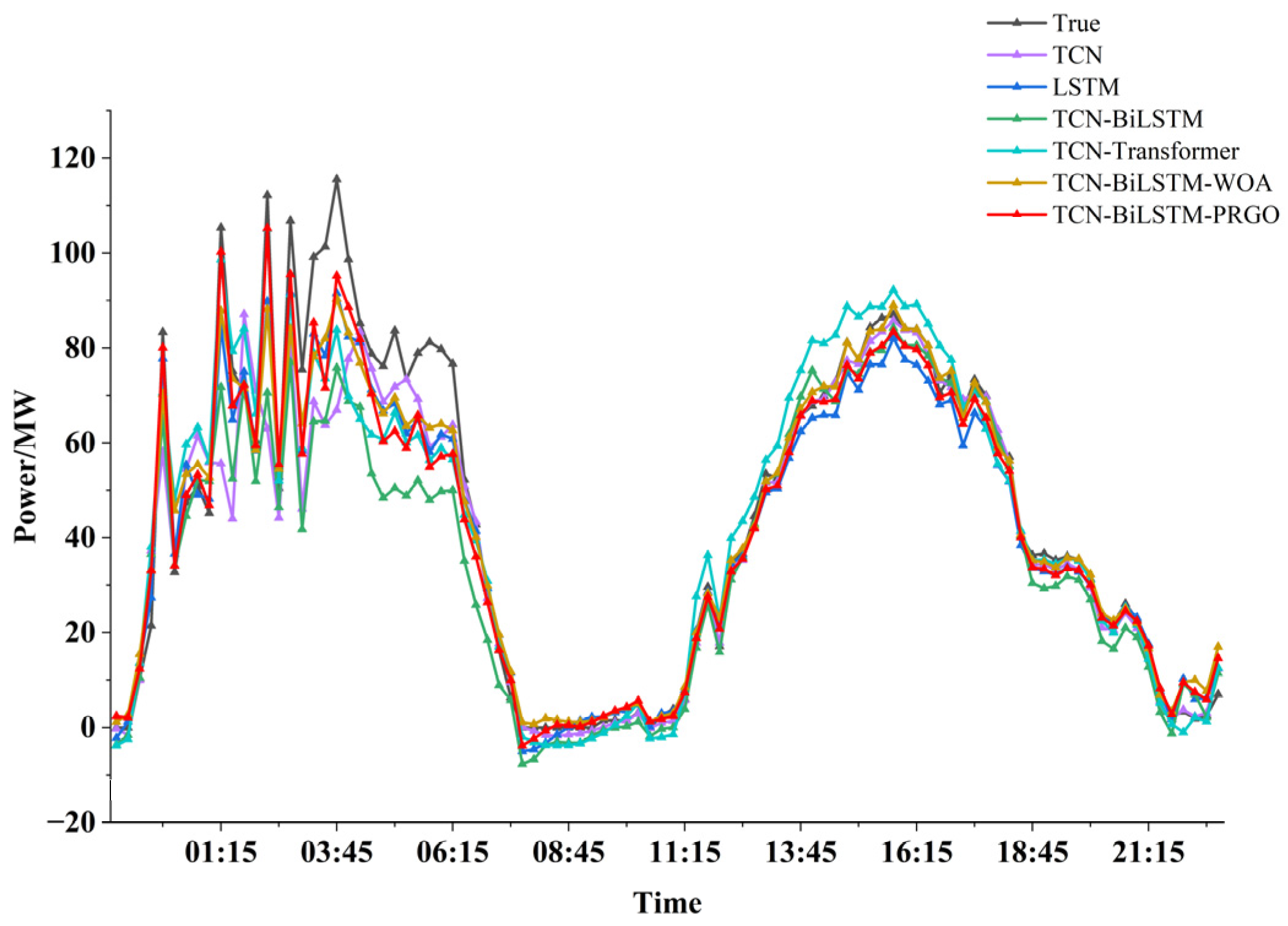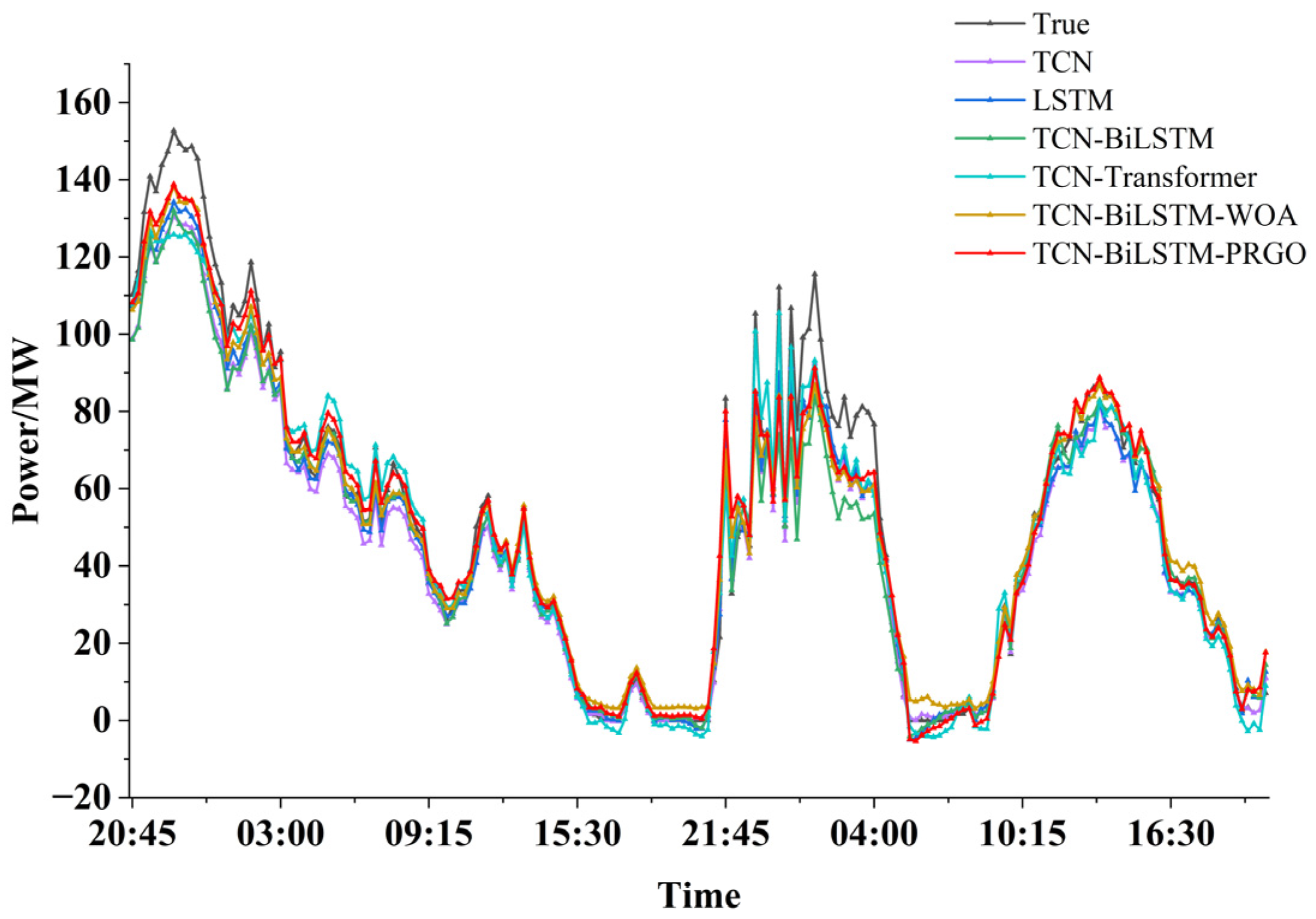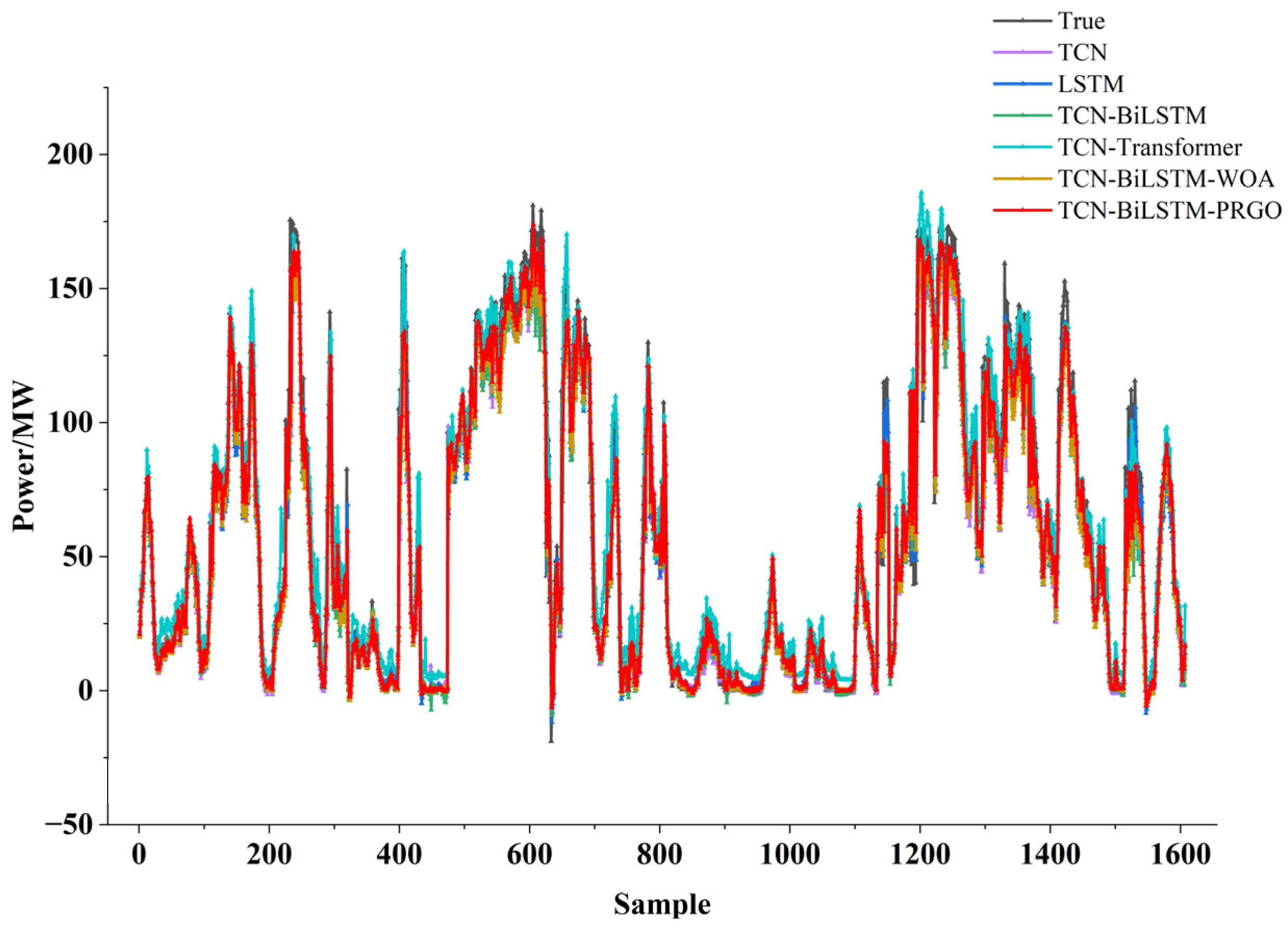


A DBSCAN-Based Data Cleaning and TCN-BiLSTM-PRGO Hybrid Model for Wind Power Forecasting

Abstract
1. Introduction
2. An Improved DBSCAN-Based Method for Wind Power Data Anomaly Detection and Correction
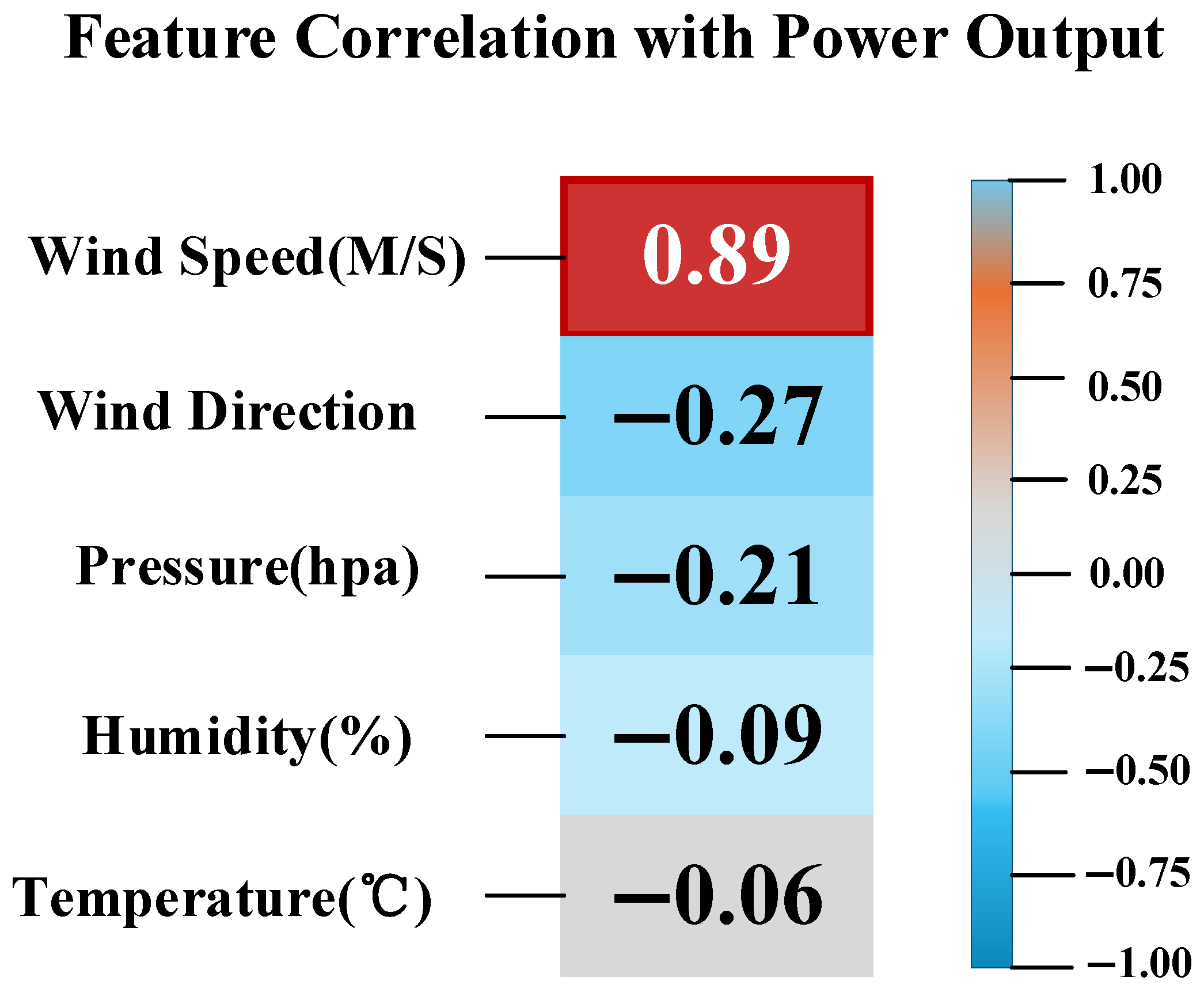
2.1. Correlation Analysis
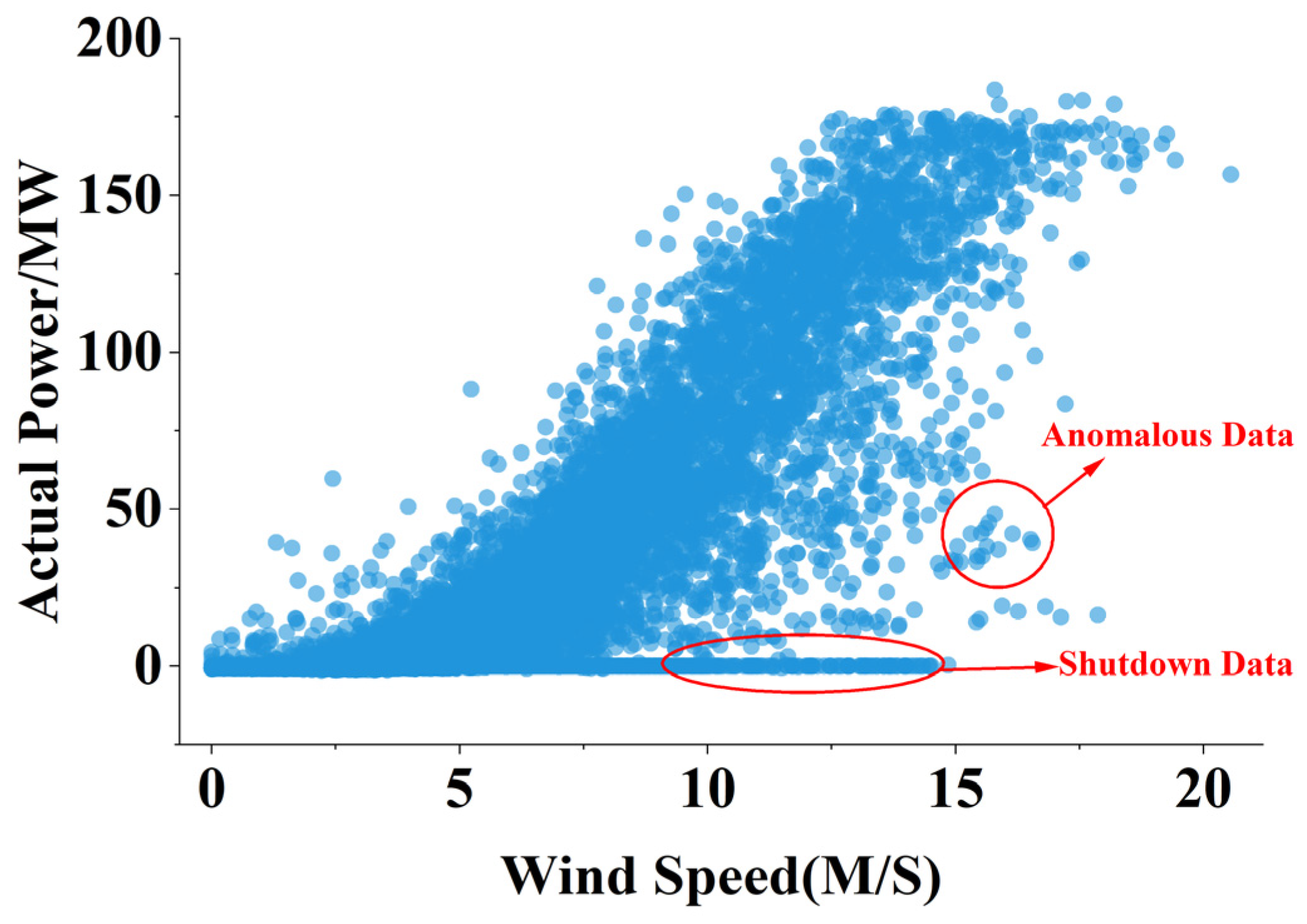
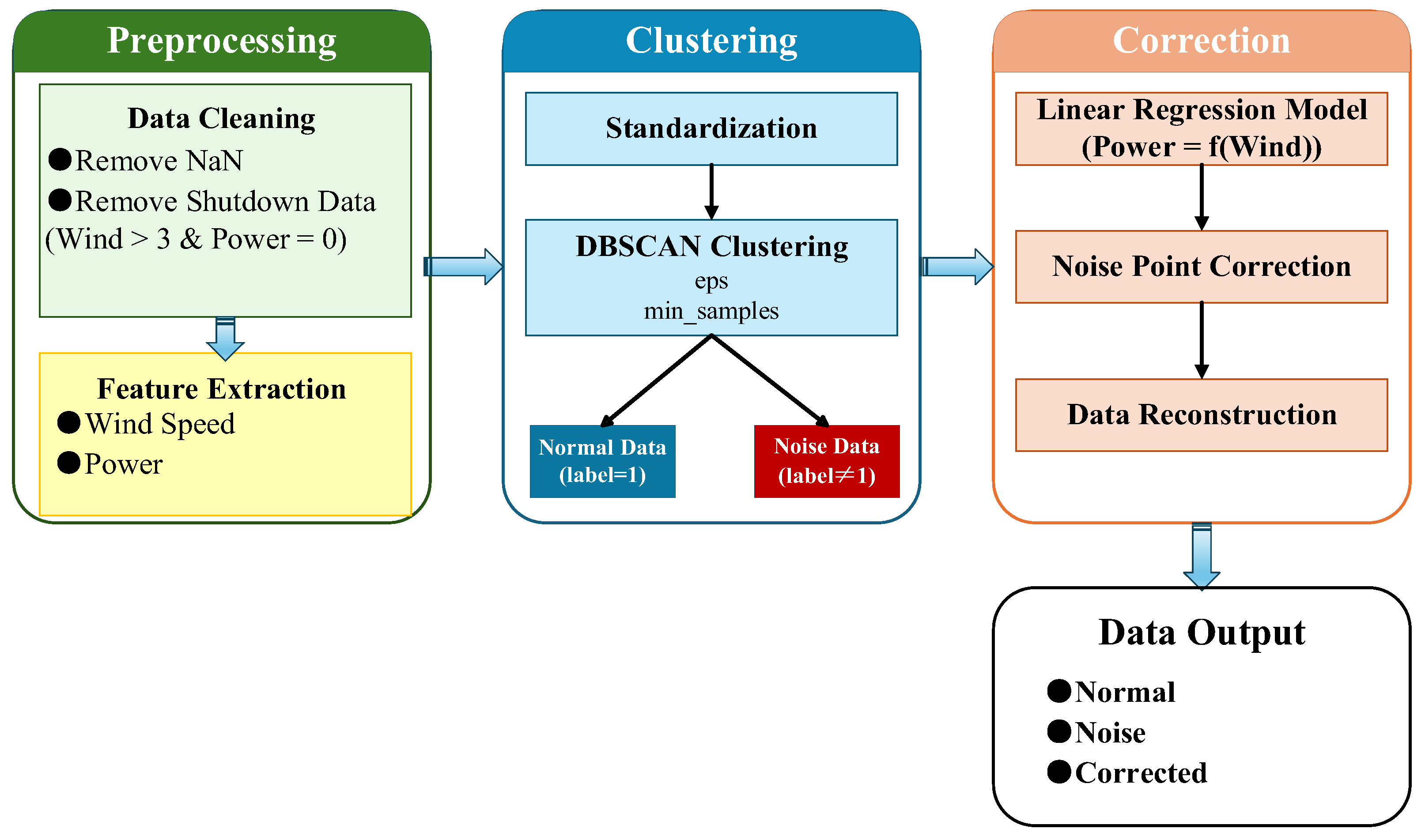
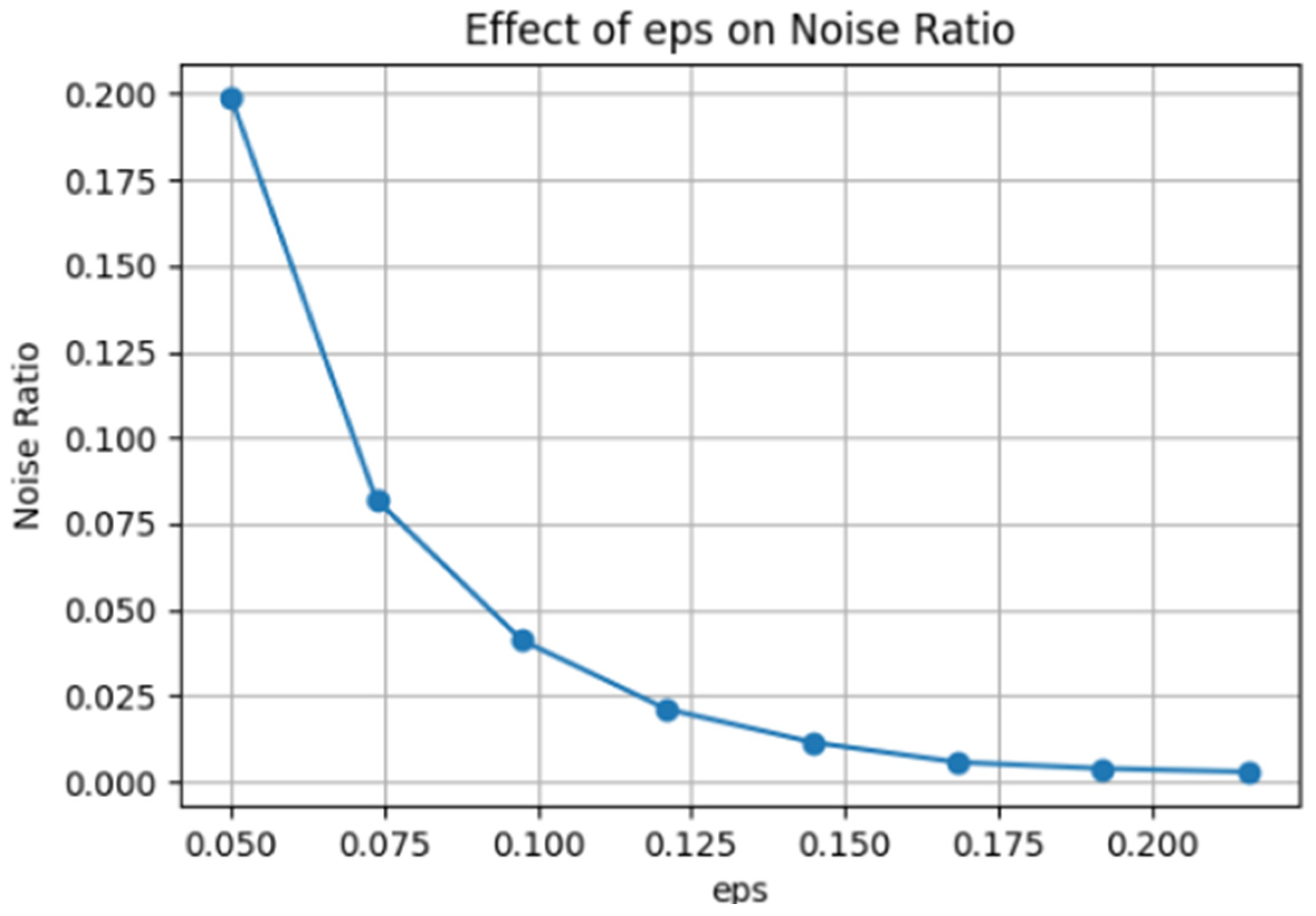
2.2. DBSCAN Noise Detection
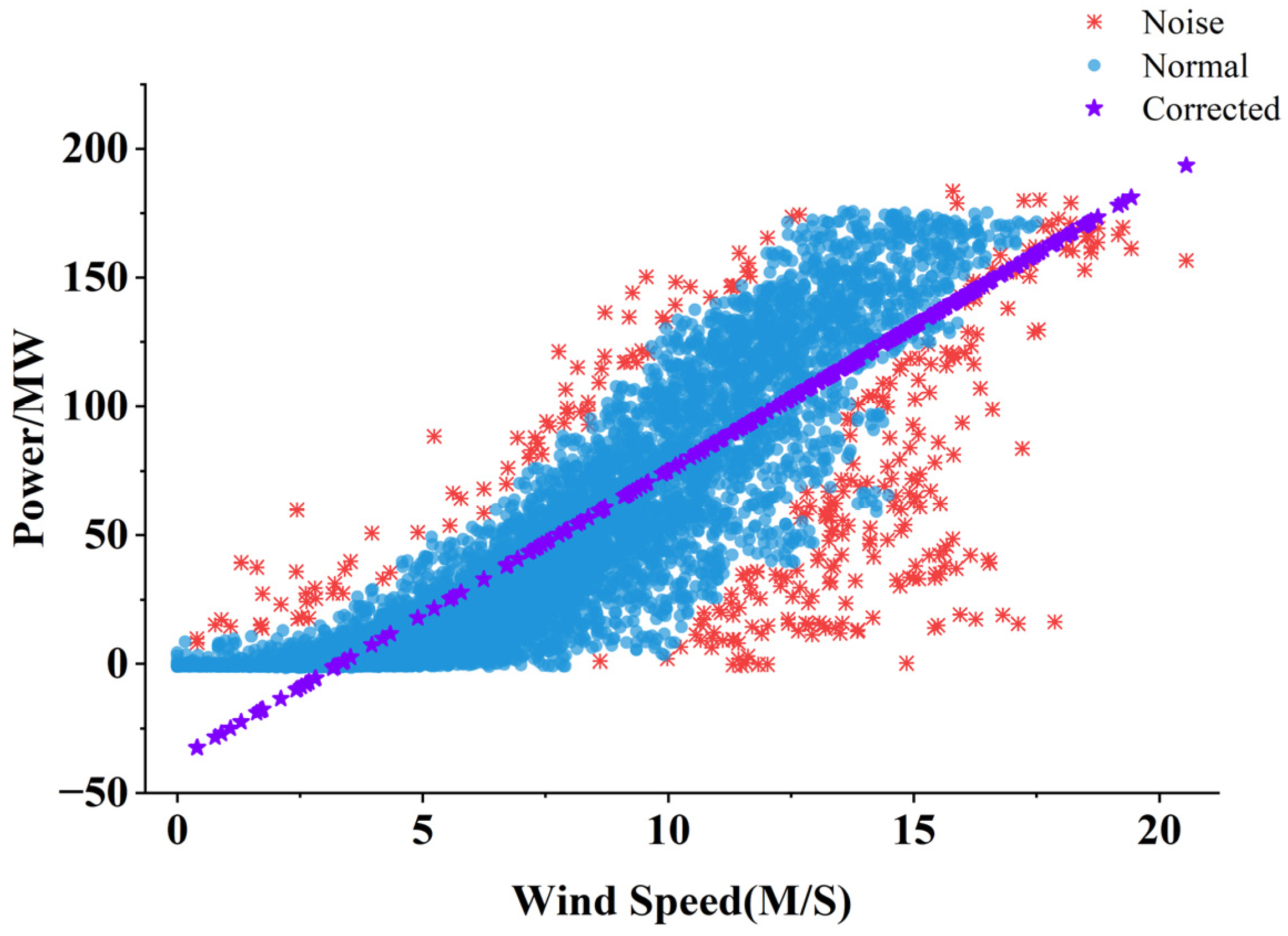
2.3. Least-Squares Correction
3. Wind Power Forecasting Model Based on TCN-BiLSTM-PRGO
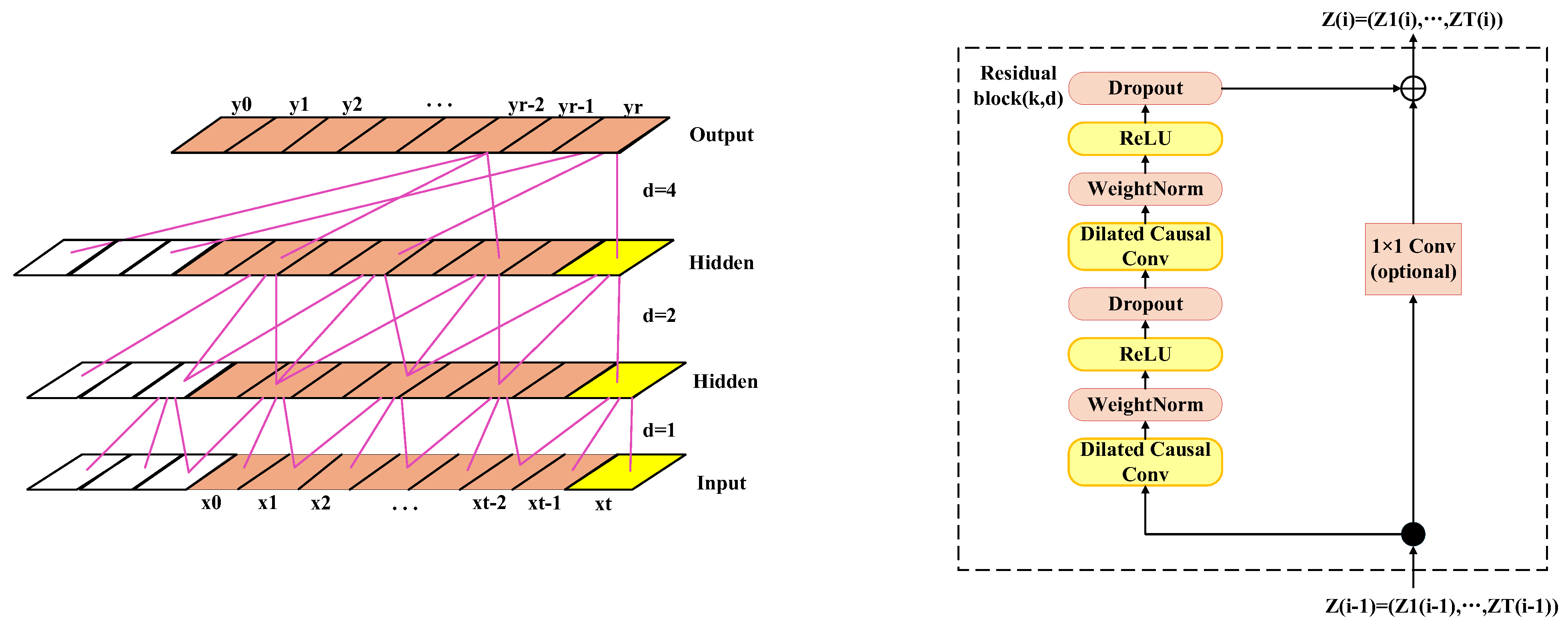
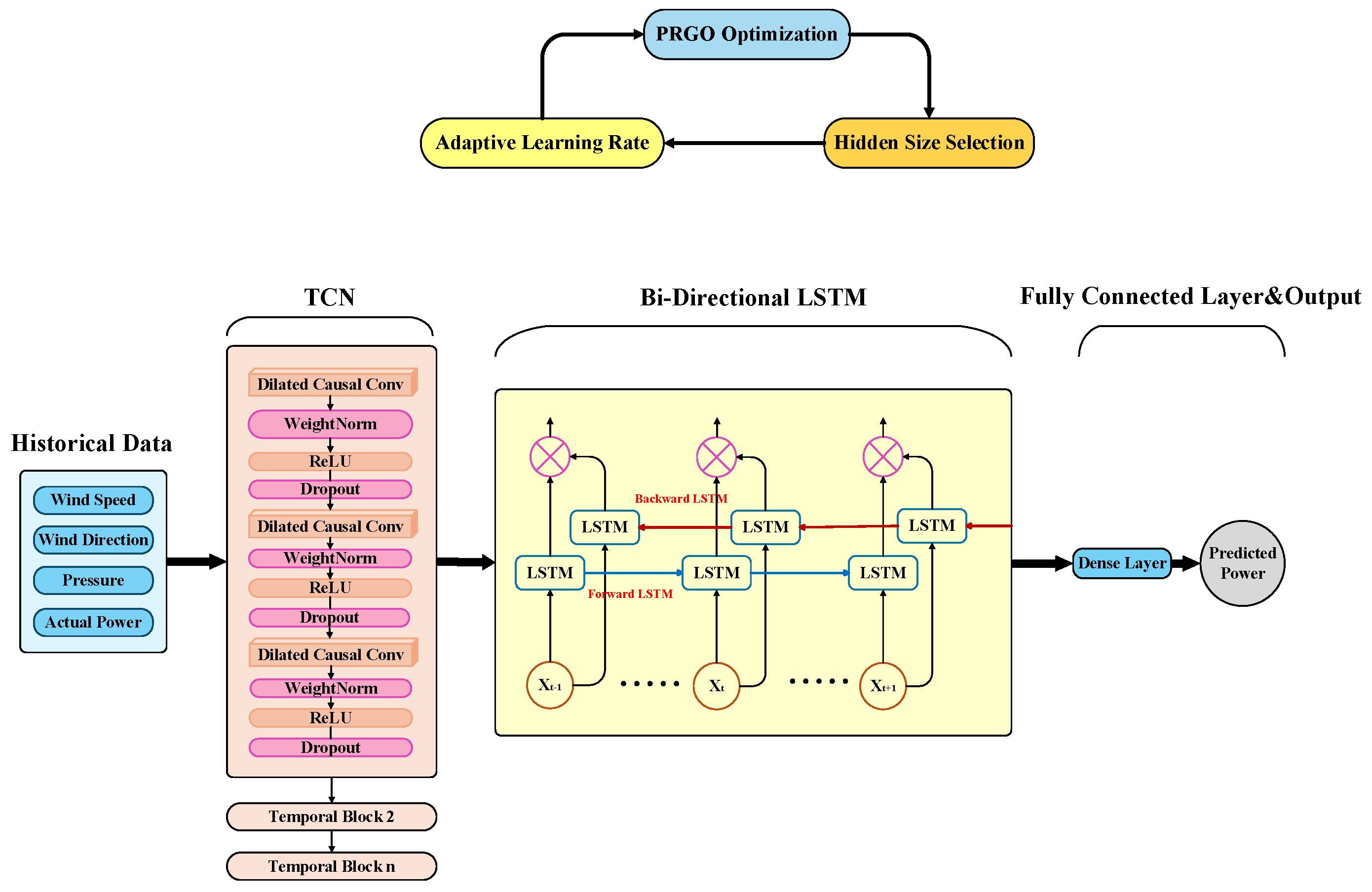
3.1. TCN Model
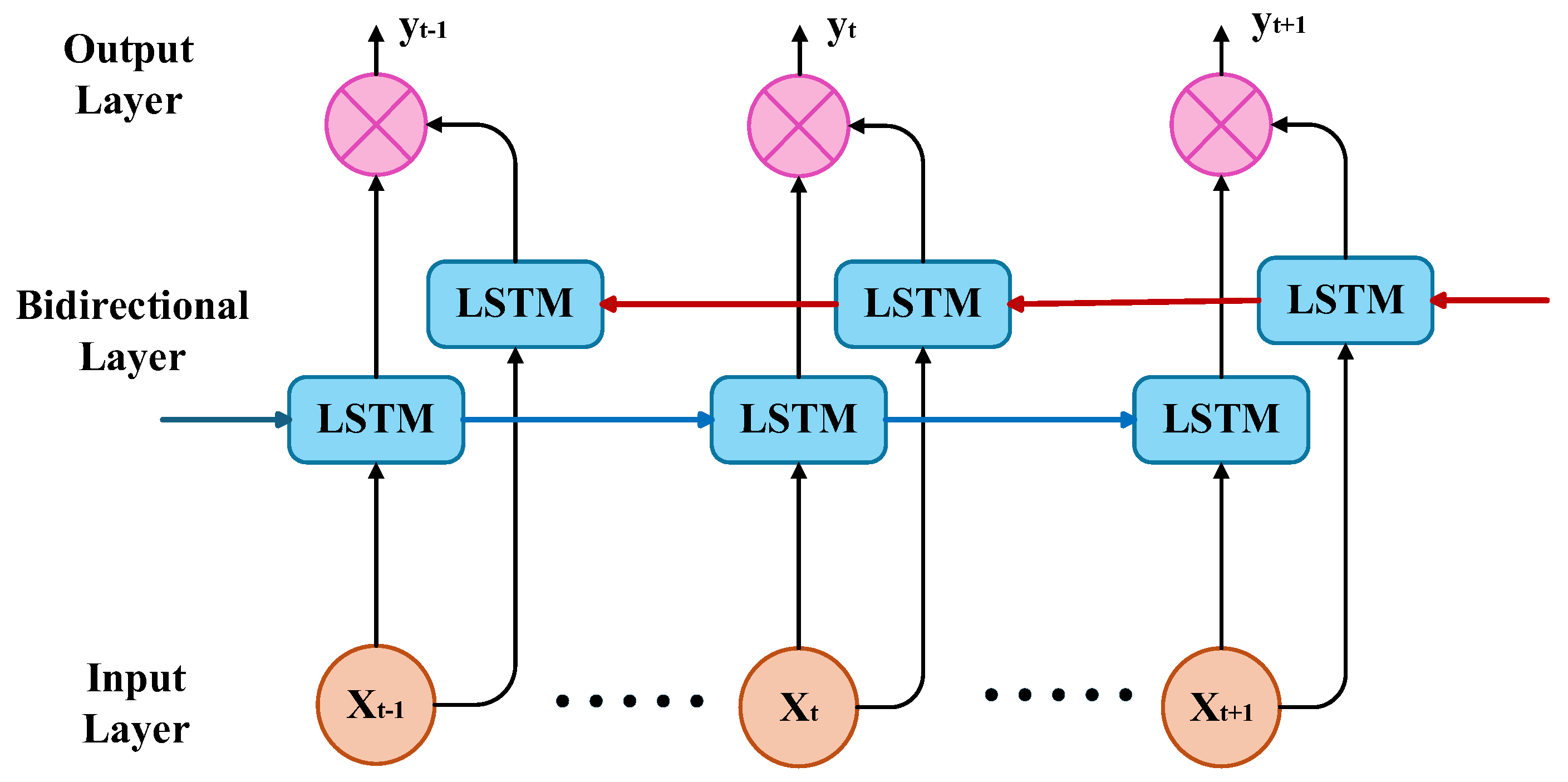
3.2. BiLSTM Model
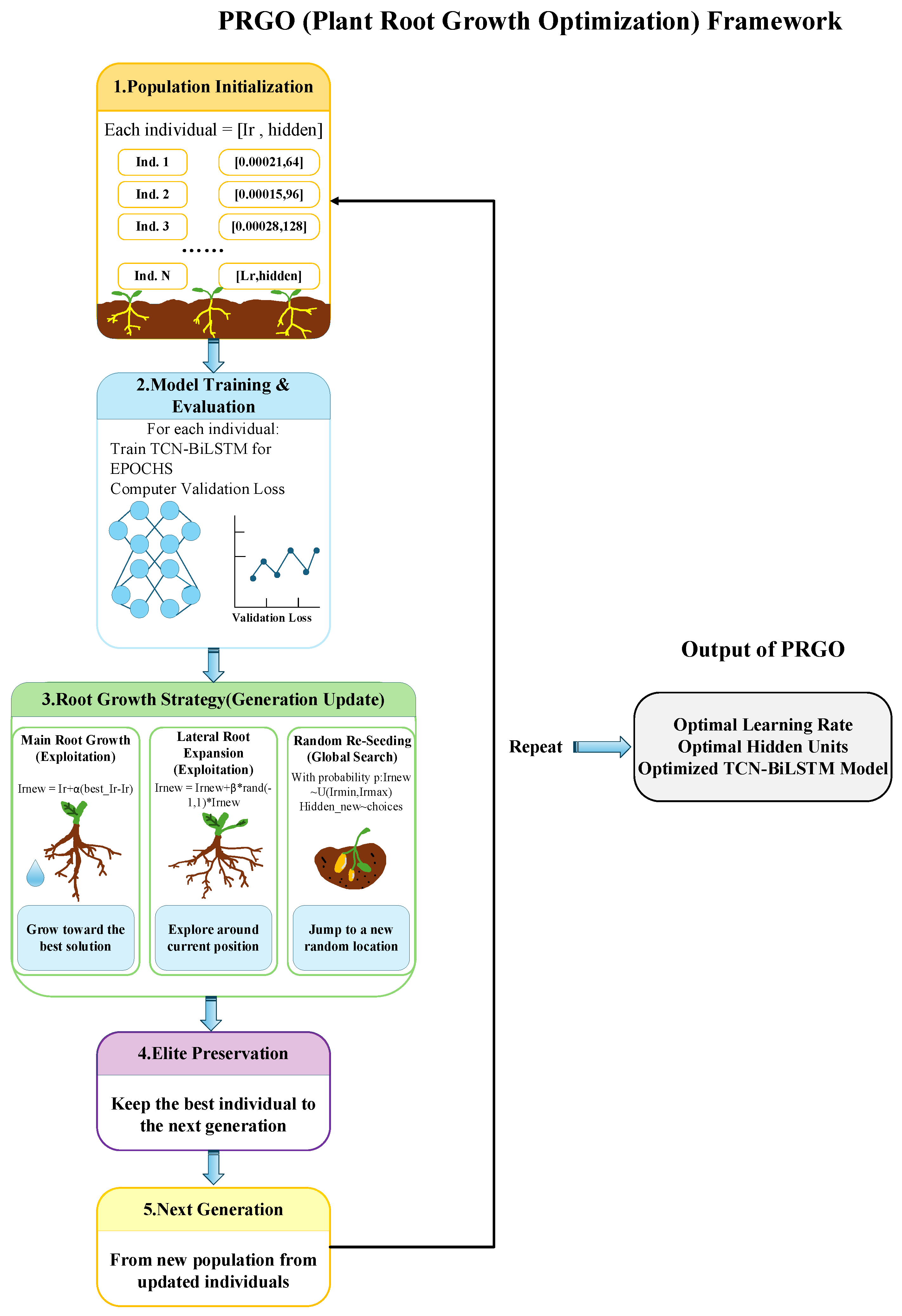
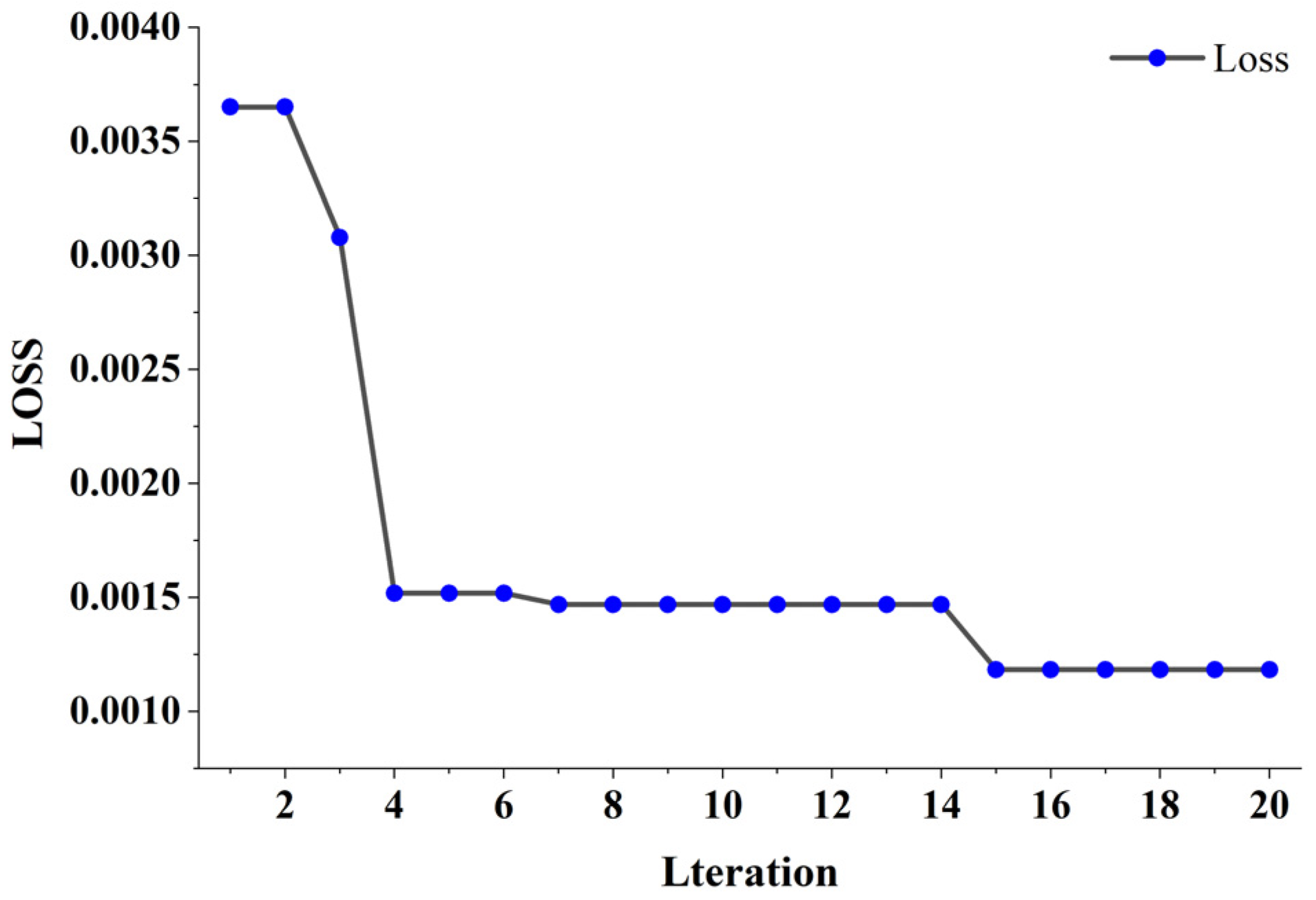
3.3. PRGO-Based Hyperparameter Optimization
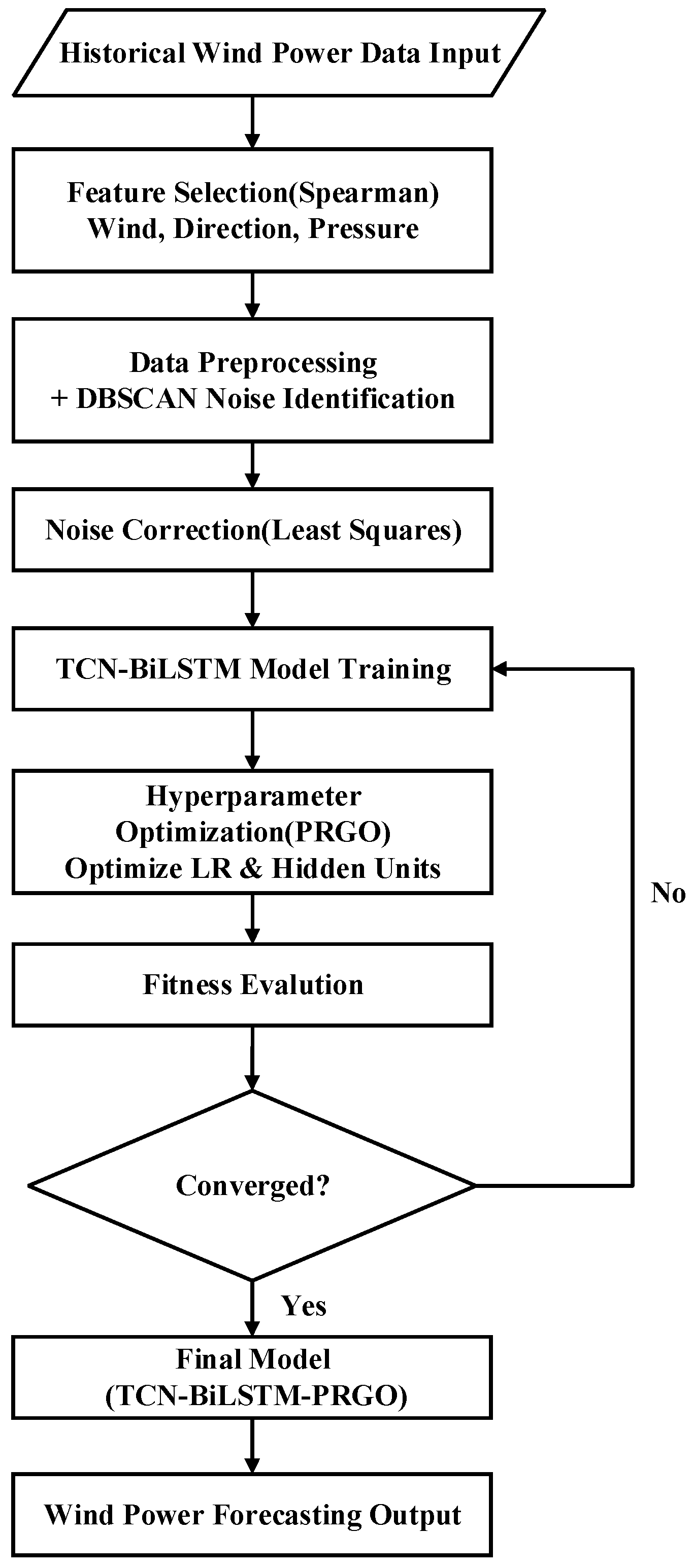
3.4. Construction of the TCN-BiLSTM-PRGO Model
| Algorithm 1 TCN-BiLSTM-PRGO Procedure |
| Input: Wind power dataset D Population size N Maximum iterations T Search ranges: learning rate ∈ [lr_min, lr_max] hidden units ∈ H Epochs for PRGO evaluation E1 Epochs for final training E2 Output: Optimized TCN-BiLSTM forecasting model 1. Normalize dataset D using Min-Max normalization 2. Construct time-series samples using sliding window 3. Split dataset into training set and testing set 4. Initialize PRGO population: Xi = [lri, hiddeni], i = 1, 2, …, N 5. FOR t = 1 TO T DO 6. FOR each individual Xi DO 7. Build TCN-BiLSTM model using: learning rate = lri hidden units = hiddeni 8. Train model for E1 epochs on training set 9. Compute fitness value: Fitness (Xi) = MSE loss 10. Update global best solution Xbest 11. END FOR 12. FOR each individual Xi DO 13. Update learning rate: lr_new = lr + α (lr_best − lr) + β · rand (−1,1) · lr 14. Random exploration: IF rand < p THEN randomly reset lr and hidden units END IF 15. Clip lr_new into valid range 16. Randomly update hidden units 17. Generate new individual Xi_new 18. END FOR 19. END FOR 20. Obtain optimal parameters: lr_best, hidden_best 21. Build final TCN-BiLSTM model using optimal parameters 22. Train final model on training set for E2 epochs 23. Predict wind power on testing set 24. Compute evaluation metrics: R2, NMAE, NRMSE 25. Return forecasting results |
3.5. Performance Evaluation Metrics
4. Experimental Results
4.1. Data Description and Parameter Settings
4.2. Feature Sensitivity Analysis
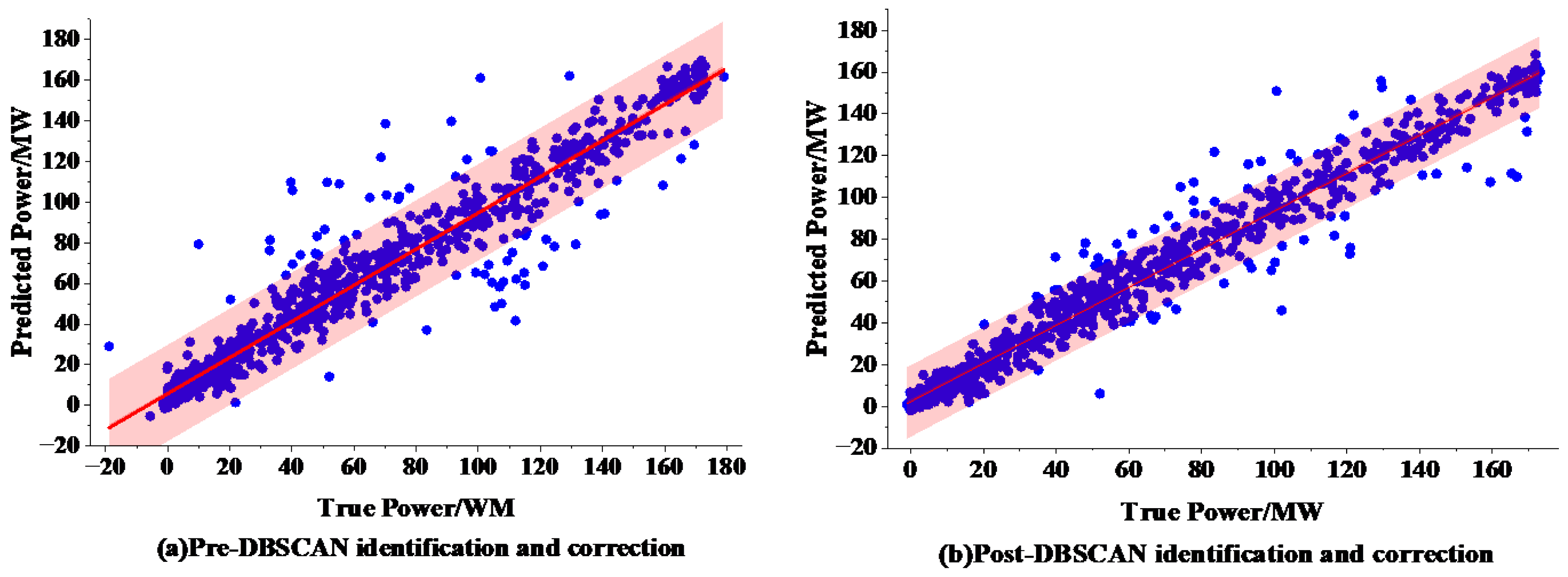
4.3. Experimental Results and Comparison
4.4. Statistical Significance Analysis
4.5. Temporal Generalization Evaluation
5. Discussion
6. Conclusions
Author Contributions
Funding
Institutional Review Board Statement
Informed Consent Statement
Data Availability Statement
Conflicts of Interest
References
- Yang, Y.; Lou, H.; Wu, J.; Zhang, S.; Gao, S. A survey on wind power forecasting with machine learning approaches. Neural Comput. Appl. 2024, 36, 12753–12773. [Google Scholar] [CrossRef]
- Rajaperumal, T.A.; Christopher Columbus, C. Enhanced wind power forecasting using machine learning, deep learning models and ensemble integration. Sci. Rep. 2025, 15, 20572. [Google Scholar] [CrossRef] [PubMed]
- Haq, I.U.; Kumar, A.; Rathore, P.S. Machine learning approaches for wind power forecasting: A comprehensive review. Discov. Appl. Sci. 2025, 7, 1139. [Google Scholar] [CrossRef]
- Zhang, Y.; Liu, L.; Xiong, X.; Li, G.; Wang, G.; Lin, L. Long-term Wind Power Forecasting with Hierarchical Spatial-Temporal Transformer. arXiv 2023. [Google Scholar] [CrossRef]
- Sarkar, M.R.; Anavatti, S.G.; Dam, T.; Pratama, M.; Al Kindhi, B. Enhancing Wind Power Forecast Precision via Multi-head Attention Transformer: An Investigation on Single-step and Multi-step Forecasting. arXiv 2023. [Google Scholar] [CrossRef]
- Arun Kumar, M.; Rithick Joshua, K.; Sahana, R.; Caroline Dorathy Esther, J.; Kavitha Devi, M.K. Predicting wind power using LSTM, Transformer, and other techniques. Clean Technol. Recycl. 2024, 4, 125–145. [Google Scholar] [CrossRef]
- Tsai, W.-C.; Hong, C.-M.; Tu, C.-S.; Lin, W.-M.; Chen, C.-H. A Review of Modern Wind Power Generation Forecasting Technologies. Sustainability 2023, 15, 10757. [Google Scholar] [CrossRef]
- Lin, W.-H.; Wang, P.; Chao, K.-M.; Lin, H.-C.; Yang, Z.-Y.; Lai, Y.-H. Wind Power Forecasting with Deep Learning Networks: Time-Series Forecasting. Appl. Sci. 2021, 11, 10335. [Google Scholar] [CrossRef]
- Chandola, V.; Banerjee, A.; Kumar, V. Anomaly detection: A survey. ACM Comput. Surv. 2009, 41, 15. [Google Scholar] [CrossRef]
- Lygnerud, K.; Ottosson, J.; Kensby, J.; Johansson, L. Business models combining heat pumps and district heating in buildings generate cost and emission savings. Energy 2021, 234, 121202. [Google Scholar] [CrossRef]
- Beaudry, G.; Pasquier, P.; Marcotte, D.; Zarrella, A. Flow rate control in standing column wells: A flexible solution for reducing the energy use and peak power demand of the built environment. Appl. Energy 2022, 313, 118774. [Google Scholar] [CrossRef]
- Wen, W.; Liu, Y.; Sun, R.; Liu, Y. Research on Anomaly Detection of Wind Farm SCADA Wind Speed Data. Energies 2022, 15, 5869. [Google Scholar] [CrossRef]
- Folayan, A.J.; Dosunmu, A.; Oriji, B. Aerobic and anaerobic biodegradation of synthetic drilling fluids in marine deep-water offshore environments: Process variables and empirical investigations. Energy Rep. 2023, 9, 2153–2168. [Google Scholar] [CrossRef]
- Pelekis, N.; Tampakis, P.; Vodas, M.; Doulkeridis, C.; Theodoridis, Y. On temporal-constrained sub-trajectory cluster analysis. Data Min. Knowl. Discov. 2017, 31, 1294–1330. [Google Scholar] [CrossRef]
- Cho, K.; Merrienboer, B.V.; Gülçehre, Ç.; Bahdanau, D.; Bougares, F.; Schwenk, H.; Bengio, Y. Learning Phrase Representations using RNN Encoder-Decoder for Statistical Machine Translation. arXiv 2014. [Google Scholar] [CrossRef]
- Sun, Y.; Zhou, Q.; Sun, L.; Sun, L.; Kang, J.; Li, H. CNN-LSTM-AM: A power prediction model for offshore wind turbines. Ocean Eng. 2024, 301, 117598. [Google Scholar] [CrossRef]
- Bai, S.; Kolter, J.Z.; Koltun, V. An Empirical Evaluation of Generic Convolutional and Recurrent Networks for Sequence Modeling. arXiv 2018. [Google Scholar] [CrossRef]
- Zim, A.H.; Iqbal, A.; Malik, A.; Dong, Z.; Wu, H. TCNFormer: Temporal Convolutional Network Former for Short-Term Wind Speed Forecasting. arXiv 2024, arXiv:2408.15737. [Google Scholar] [CrossRef]
- Vaswani, A.; Shazeer, N.; Parmar, N.; Uszkoreit, J.; Jones, L.; Gomez, A.N.; Kaiser, L.; Polosukhin, I. Attention is All you Need. arXiv 2017. [Google Scholar] [CrossRef]
- Zhou, H.; Zhang, S.; Peng, J.; Zhang, S.; Li, J.; Xiong, H.; Zhang, W. Informer: Beyond Efficient Transformer for Long Sequence Time-Series Forecasting. Proc. AAAI Conf. Artif. Intell. 2021, 35, 11106–11115. [Google Scholar] [CrossRef]
- Kennedy, J.; Eberhart, R. Particle swarm optimization. In Proceedings of the ICNN’95-International Conference on Neural Networks, Perth, WA, Australia, 27 November–1 December 1995; Volume 4, pp. 1942–1948. [Google Scholar] [CrossRef]
- Shami, T.M.; El-Saleh, A.A.; Alswaitti, M.; Al-Tashi, Q.; Summakieh, M.A.; Mirjalili, S. Particle Swarm Optimization: A Comprehensive Survey. IEEE Access 2022, 10, 10031–10061. [Google Scholar] [CrossRef]
- Mirjalili, S.; Mirjalili, S.M.; Lewis, A. Grey Wolf Optimizer. Adv. Eng. Softw. 2014, 69, 46–61. [Google Scholar] [CrossRef]
- Al-Dabbagh, R.D.; Neri, F.; Idris, N.; Baba, M.S. Algorithmic design issues in adaptive differential evolution schemes: Review and taxonomy. Swarm Evol. Comput. 2018, 43, 284–311. [Google Scholar] [CrossRef]
- Yen, J.; Liao, J.; Lee, B.; Randolph, D. A Hybrid Approach to Modeling Metabolic Systems Using a Genetic Algorithm and Simplex Method. IEEE Trans. Syst. Man Cybern. Part B (Cybernetics) 1998, 28, 173–191. Available online: https://www.academia.edu/45358435/ (accessed on 28 May 2026). [CrossRef]
- Cong, B.; Ma, S.; Li, S. Research and Application of WOA-CNN-BiLSTM Based Model for Wind Power Prediction. In Proceedings of the 2024 IEEE 6th International Conference on Civil Aviation Safety and Information Technology (ICCASIT), Hangzhou, China, 23–25 October 2024; pp. 831–840. [Google Scholar] [CrossRef]
- Jalali, S.M.J.; Ahmadian, S.; Khodayar, M.; Khosravi, A.; Ghasemi, V.; Shafie-Khah, M.; Nahavandi, S.; Catalão, J.P.S. Towards novel deep neuroevolution models: Chaotic levy grasshopper optimization for short-term wind speed forecasting. Eng. Comput. 2022, 38, 1787–1811. [Google Scholar] [CrossRef]
- Wang, Y.; Zhao, K.; Hao, Y.; Yao, Y. Short-term wind power prediction using a novel model based on butterfly optimization algorithm-variational mode decomposition-long short-term memory. Appl. Energy 2024, 366, 123313. [Google Scholar] [CrossRef]
- Huang, J.; Qin, J.; Song, S. A Novel Wind Power Outlier Detection Method with Support Vector Machine Optimized by Improved Harris Hawk. Energies 2023, 16, 7998. [Google Scholar] [CrossRef]
- Zhang, W.; Yan, H.; Xiang, L.; Shao, L. Wind power generation prediction using LSTM model optimized by sparrow search algorithm and firefly algorithm. Energy Inform. 2025, 8, 35. [Google Scholar] [CrossRef]
- Al Garni, H.Z.; Sundaram, A.; Zayed, M.E.; Mas’ud, A.A.; Rehman, S.; Baseer, M.A.; Al-Anazi, M.A.; Al-Shammari, S.J. Intelligent approaches for global horizontal irradiance forecasting in Saudi Arabia: Benchmarking deep learning coupled with RMSprop optimization for solar power systems. Results Eng. 2026, 30, 110877. [Google Scholar] [CrossRef]






| Feature Set | R2 | NMAE (%) | NRMSE (%) |
|---|---|---|---|
| All (speed + direction + pressure) | 0.940 | 4.250 | 7.275 |
| Without pressure | 0.943 | 4.006 | 7.066 |
| Without wind speed | 0.929 | 4.773 | 7.875 |
| Without wind direction | 0.938 | 4.252 | 7.333 |
| Parameter | Symbol | Value/Range |
|---|---|---|
| Population | N | 5 |
| Max iterations | T | 20 |
| Learning rate | Lr | [5 × 10⁻⁵, 3 × 10⁻⁴] |
| Hidden units | H | {64, 96, 128, 160} |
| Growth factor | α | 0.5 |
| Perturbation factor | β | 0.3 |
| Random search prob | P | 0.2 |
| Model | R2 | NMAE (%) | NRMSE (%) | Train Time (s) |
|---|---|---|---|---|
| TCN | 0.932 ± 0.005 | 6.539 ± 0.003 | 8.155 ± 0.003 | 56.134 ± 4.204 |
| LSTM | 0.934 ± 0.006 | 6.424 ± 0.004 | 8.027 ± 0.004 | 21.011 ± 1.861 |
| TCN-BiLSTM | 0.931 ± 0.004 | 6.664 ± 0.002 | 8.232 ± 0.002 | 66.347 ± 6.780 |
| TCN-Transformer | 0.819 ± 0.076 | 10.582 ± 0.027 | 13.054 ± 0.030 | 123.078 ± 5.132 |
| TCN-BiLSTM-WOA | 0.934 ± 0.010 | 6.382 ± 0.005 | 8.031 ± 0.006 | 738.407 ± 124.720 |
| TCN-BiLSTM-PRGO | 0.942 ± 0.006 | 6.014 ± 0.003 | 7.539 ± 0.004 | 863.388 ± 131.679 |
| Model | R2 | NMAE (%) | NRMSE (%) | Train Time (s) |
|---|---|---|---|---|
| TCN | 0.747 ± 0.063 | 9.262 ± 0.011 | 14.665 ± 0.017 | 46.986 ± 3.495 |
| LSTM | 0.731 ± 0.045 | 9.176 ± 0.007 | 15.153 ± 0.013 | 22.405 ± 0.498 |
| TCN-BiLSTM | 0.761 ± 0.020 | 9.041 ± 0.002 | 14.323 ± 0.006 | 75.259 ± 3.962 |
| TCN-Transformer | 0.759 ± 0.044 | 10.132 ± 0.016 | 14.355 ± 0.014 | 135.783 ± 2.361 |
| TCN-BiLSTM-WOA | 0.760 ± 0.031 | 8.736 ± 0.007 | 14.332 ± 0.010 | 880.152 ± 97.330 |
| TCN-BiLSTM-PRGO | 0.791 ± 0.031 | 8.248 ± 0.004 | 13.387 ± 0.009 | 824.006 ± 98.130 |
| Model | R2 | NMAE (%) | NRMSE (%) | Train Time (s) |
|---|---|---|---|---|
| TCN | 0.818 ± 0.032 | 7.126 ± 0.008 | 11.777 ± 0.013 | 50.983 ± 8.549 |
| LSTM | 0.786 ± 0.036 | 7.487 ± 0.006 | 12.792 ± 0.011 | 23.041 ± 0.906 |
| TCN-BiLSTM | 0.801 ± 0.032 | 7.561 ± 0.005 | 12.330 ± 0.010 | 70.193 ± 1.328 |
| TCN-Transformer | 0.794 ± 0.038 | 8.772 ± 0.015 | 12.548 ± 0.125 | 115.692 ± 1.274 |
| TCN-BiLSTM-WOA | 0.806 ± 0.035 | 7.184 ± 0.008 | 12.187 ± 0.011 | 753.275 ± 116.009 |
| TCN-BiLSTM-PRGO | 0.833 ± 0.096 | 6.805 ± 0.002 | 11.312 ± 0.007 | 838.083 ± 149.760 |
| Compared 0 | t-Test p-Value | Wilcoxon p-Value | Significant (p < 0.05) |
|---|---|---|---|
| TCN | 4.73 × 10⁻¹¹ | 6.27 × 10⁻¹² | Yes |
| LSTM | 2.87 × 10⁻¹² | 4.50 × 10⁻⁹ | Yes |
| TCN-BiLSTM | 3.24 × 10⁻¹⁶ | 2.35 × 10⁻¹⁴ | Yes |
| TCN-Transformer | 0.025 | 0.025 | Yes |
| TCN-BiLSTM-WOA | 0.042 | 0.046 | Yes |
| Model | R2 | NMAE (%) | NRMSE (%) |
|---|---|---|---|
| TCN | 0.926 | 4.863 | 8.047 |
| LSTM | 0.935 | 4.463 | 7.502 |
| TCN-BiLSTM | 0.926 | 4.852 | 8.035 |
| TCN-Transformer | 0.919 | 5.948 | 8.395 |
| TCN-BiLSTM-WOA | 0.926 | 4.849 | 8.024 |
| TCN-BiLSTM-PRGO | 0.940 | 4.224 | 7.232 |
Disclaimer/Publisher’s Note: The statements, opinions and data contained in all publications are solely those of the individual author(s) and contributor(s) and not of MDPI and/or the editor(s). MDPI and/or the editor(s) disclaim responsibility for any injury to people or property resulting from any ideas, methods, instructions or products referred to in the content. |
© 2026 by the authors. Licensee MDPI, Basel, Switzerland. This article is an open access article distributed under the terms and conditions of the Creative Commons Attribution (CC BY) license.
Share and Cite
Lv, M.; Liu, Z.; Zhang, C.; Yu, J.; Luo, C.; Zhu, Y. A DBSCAN-Based Data Cleaning and TCN-BiLSTM-PRGO Hybrid Model for Wind Power Forecasting. Eng 2026, 7, 272. https://doi.org/10.3390/eng7060272
Lv M, Liu Z, Zhang C, Yu J, Luo C, Zhu Y. A DBSCAN-Based Data Cleaning and TCN-BiLSTM-PRGO Hybrid Model for Wind Power Forecasting. Eng. 2026; 7(6):272. https://doi.org/10.3390/eng7060272
Chicago/Turabian StyleLv, Muyao, Zejia Liu, Chao Zhang, Jiawei Yu, Chao Luo, and Yihua Zhu. 2026. "A DBSCAN-Based Data Cleaning and TCN-BiLSTM-PRGO Hybrid Model for Wind Power Forecasting" Eng 7, no. 6: 272. https://doi.org/10.3390/eng7060272
APA StyleLv, M., Liu, Z., Zhang, C., Yu, J., Luo, C., & Zhu, Y. (2026). A DBSCAN-Based Data Cleaning and TCN-BiLSTM-PRGO Hybrid Model for Wind Power Forecasting. Eng, 7(6), 272. https://doi.org/10.3390/eng7060272