1. Introduction
Road infrastructure constitutes a fundamental spatial component of territorial systems, playing a critical role in mobility, economic activity, and urban and regional development [
1,
2,
3]. As a key element of territorial connectivity, road networks support access to services, economic integration, and spatial cohesion across urban and peri-urban environments. The condition of road pavements directly influences traffic safety, serviceability, and maintenance planning, making the availability of reliable, timely, and spatially consistent condition data essential for effective land and infrastructure management [
4,
5,
6,
7].
Traditionally, pavement condition assessment has relied on field-based visual inspections and ground surveys. Although these methods provide direct and detailed observations, they are often time-consuming, costly, subjective, and disruptive to traffic flow, particularly in urban and peri-urban environments [
8,
9]. From a land engineering and geomatics perspective, these limitations hinder the generation of continuous, spatially coherent datasets required for infrastructure inventories, maintenance prioritization, and territorial decision-making [
10,
11].
In recent years, unmanned aerial vehicles (UAVs) have emerged as a valuable tool for spatial data acquisition in land engineering, surveying, and infrastructure monitoring [
12,
13,
14,
15,
16]. UAV platforms enable rapid collection of high-resolution imagery, facilitating the generation of orthophotos and other geospatial products suitable for mapping, analysis, and condition assessment of linear infrastructure such as roads [
17,
18,
19,
20]. Compared to conventional survey methods, UAV-based approaches offer increased operational flexibility, reduced costs, and the ability to capture detailed spatial information with minimal interference to traffic and surrounding activities [
21,
22].
A growing body of research has explored UAV applications for pavement distress detection, three-dimensional surface modeling, and condition assessment of road infrastructure using aerial imagery and visual analysis techniques [
23,
24]. While these approaches demonstrate high potential, they commonly assume automated flight planning, predefined overlap ratios, and dense datasets, as well as access to advanced computational resources. Such assumptions limit their applicability in many real-world contexts—particularly at the municipal and institutional levels—where UAV surveys are frequently conducted manually, without automated flight planning software or complex processing workflows [
25,
26].
Related Work
Recent studies have demonstrated the growing applicability of UAV-based photogrammetry for pavement distress detection, road surface mapping, and infrastructure monitoring. UAV-derived orthomosaics have been used for crack identification, pothole detection, texture analysis, and three-dimensional pavement reconstruction due to their ability to rapidly acquire high-resolution spatial data with reduced operational costs.
Compared with conventional field-based inspections, UAV-assisted approaches provide improved spatial continuity, reduced traffic disruption, and enhanced data archiving capabilities. Several studies have also reported reduced field exposure time, improved spatial coverage, and improved repeatability of pavement condition documentation through UAV-based surveys. However, most previous studies assume automated flight planning, predefined overlap ratios, and highly controlled acquisition geometries, conditions that are not always feasible in municipal or resource-constrained operational environments.
Digital photogrammetry techniques applied to UAV imagery rely strongly on image overlap, tie-point extraction, bundle adjustment stability, and reconstruction redundancy. Consequently, flight parameters such as altitude, flight speed, and image capture interval directly affect orthomosaic continuity, geometric consistency, and interpretability.
Although previous research has evaluated UAV image quality under automated survey conditions, limited studies have experimentally investigated the combined influence of operational parameters under manual UAV flight scenarios, where image overlap and trajectory stability depend strongly on operator control. This limitation reveals an important practical and methodological gap for institutions and municipalities that frequently conduct UAV surveys without automated mission-planning systems.
Despite extensive UAV applications in pavement monitoring and orthophoto generation, most previous studies rely on automated flight planning, predefined overlap settings, and controlled acquisition geometries [
27,
28,
29]. Under manual UAV operation, however, image overlap, trajectory stability, and photogrammetric consistency depend strongly on operator-controlled parameters such as flight altitude, speed, and image capture interval. These parameters directly influence ground sampling distance (GSD), reconstruction redundancy, orthomosaic continuity, and visual interpretability [
30,
31,
32]. Nevertheless, limited experimental research has systematically evaluated their combined influence under practical manually operated survey conditions, particularly in resource-constrained municipal and institutional environments [
33,
34]. Consequently, practical operational guidelines for prioritizing UAV flight parameters under manual survey conditions remain limited.
Therefore, this study aims to experimentally evaluate the combined influence of UAV flight altitude, speed, and image capture interval on orthophoto quality under manual survey conditions. The main contributions of this work are: (i) a structured factorial assessment of UAV operational parameters under real-world manual conditions; (ii) a multi-criteria evaluation framework combining photogrammetric metrics and interpretability indicators; and (iii) practical operational guidelines for UAV-based pavement assessment in resource-constrained environments.
The remainder of this manuscript is organized as follows.
Section 2 describes the study area, UAV platform, experimental design, photogrammetric workflow, and interpretability assessment criteria.
Section 3 presents the experimental results related to photogrammetric stability, spatial resolution, orthomosaic continuity, and operational interpretability.
Section 4 discusses the implications of the findings for manual UAV pavement assessment under practical operational conditions, including limitations and management implications. Finally,
Section 5 summarizes the principal conclusions and future research directions.
2. Materials and Methods
2.1. Study Area
The study area is located in the city of Misantla, Veracruz, Mexico, along a peripheral roadway adjacent to the facilities of the Instituto Tecnológico Superior de Misantla (ITSM). The selected road segment corresponds to an urban–peri-urban transition zone commonly used for local circulation, institutional access, and service traffic. This type of roadway is representative of municipal road infrastructure typically managed under limited maintenance budgets and periodic inspection schemes.
The pavement consists of an asphalt surface exhibiting localized deterioration associated with material aging, traffic loading, and environmental exposure. Surface defects such as potholes and texture irregularities are present but not severe, providing suitable conditions for evaluating orthophoto interpretability rather than extreme damage detection. The location was selected due to its accessibility, operational safety for UAV flights, and relevance for institutional and municipal infrastructure monitoring. In addition, the proximity to the ITSM campus facilitated controlled data acquisition while reflecting real-world conditions commonly encountered in local road networks.
The analyzed road segment corresponds to a typical two-lane urban–peri-urban circulation road used primarily for local traffic and institutional access to the ITSM campus. Surface variability was characterized by localized potholes and texture irregularities typical of aging asphalt pavements, without extreme structural deterioration. These conditions provided a representative environment for evaluating orthophoto interpretability under realistic municipal road monitoring scenarios.
The analyzed road segment has an approximate length of 194.8 m and consists of two lanes with a width of 4.0 m per lane.
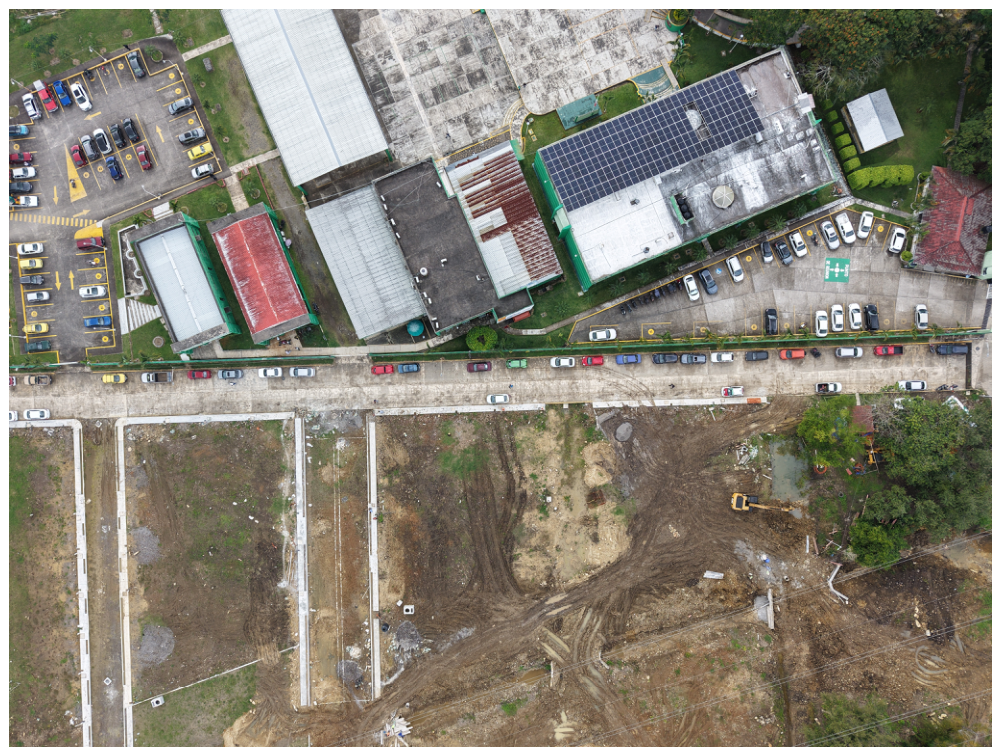
Figure 1 presents a UAV aerial image acquired at an approximate flight altitude of 120 m above ground level (AGL), illustrating the selected road segment and its surrounding urban–peri-urban context. This image is provided exclusively for contextual visualization and was not included in the comparative experimental treatments. This image was acquired at a higher altitude solely for contextual visualization and does not represent the experimental flight configurations analyzed in this study.
2.2. UAV Platform and Data Acquisition
UAV surveys were conducted using a DJI Air 3S multirotor UAV (DJI, Shenzhen, China) equipped with an integrated RGB imaging system mounted on a stabilized three-axis gimbal. The platform incorporates an onboard GNSS module enabling consistent positioning during manual flight operations.
The UAV imaging system specifications were explicitly recorded to support GSD interpretation. The DJI Air 3S camera system includes a 1-inch CMOS sensor (13.2 × 8.8 mm) with an equivalent focal length of approximately 24 mm, a native image resolution of 8064 × 6048 pixels, and an effective pixel size of approximately 2.4 μm. These parameters directly influence ground sampling distance according to standard photogrammetric acquisition geometry.
All flights were performed manually, without automated flight planning software, in order to replicate common operational practices adopted by municipal authorities, academic institutions, and small engineering teams working under resource-constrained conditions. Flight operations were conducted considering the operational safety recommendations and RPAS guidelines established by the Mexican civil aviation authority (AFAC) [
35].
The camera operated in nadir orientation (approximately 90° relative to ground surface) throughout all surveys to ensure geometric consistency and suitability for orthophoto generation. Image acquisition was conducted under stable meteorological conditions, including clear skies, low wind intensity, and uniform daylight illumination, in order to minimize motion blur, variable shadowing, and exposure inconsistencies.
To maintain comparability among treatments, the following operational conditions were controlled:
Consistent flight trajectory along the roadway axis;
Stable lateral alignment relative to pavement centerline;
Uniform camera configuration during all flights;
Similar daytime lighting conditions.
Three operational flight parameters were evaluated:
Flight altitude: 30 m and 40 m AGL;
Flight speed: low speed (C) and normal speed (N);
Image capture interval: 2 s and 3 s.
Flight speed levels (“low” and “normal”) correspond to operator-controlled speed categories maintained during manual flight. Based on ground-speed telemetry recorded in the UAV flight logs, the low-speed category corresponded to approximately 2.5 ± 0.3 m/s, while the normal-speed category corresponded to 4.2 ± 0.4 m/s. These values represent typical operational speeds during manual UAV surveys conducted under stable flight conditions.
These parameters were selected based on practical manual flight feasibility and commonly used surveying ranges, ensuring operational realism while maintaining experimental control.
2.3. Experimental Design
A structured factorial experimental framework was adopted to evaluate the combinations of UAV flight parameters on orthophoto quality. While the design corresponds to a 23 factorial arrangement, the statistical analysis was adapted to the characteristics of each variable, applying factorial ANOVA to GSD and non-parametric methods to the remaining photogrammetric indicators. The experimental framework corresponds to a 23 factorial design, considering three factors—flight altitude, flight speed, and image capture interval—each evaluated at two levels. This approach allows systematic assessment of main effects and interaction effects under controlled operational conditions.
Eight flight configurations (T1–T8) were defined based on all possible combinations of the selected parameters (
Table 1). Each configuration was executed twice to evaluate repeatability and reduce the influence of random operational variability. Replicate flights were conducted following the same flight path and under similar environmental conditions to ensure consistency across datasets.
This experimental design reflects practical constraints associated with manual UAV operation, where flight precision and image overlap depend strongly on operator control. By adopting a structured factorial approach within these constraints, the study ensures methodological rigor while maintaining applicability to real-world municipal and institutional surveying scenarios.
Table 1.
UAV flight configurations evaluated in the 23 factorial experimental design.
Table 1.
UAV flight configurations evaluated in the 23 factorial experimental design.
| Treatment | Flight Altitude (m) | Flight Speed (m/s) | Image Capture Interval (s) | Replicates | Camera Angle |
|---|
| T1 | 30 | Low (2.5 ± 0.3) | 2 | 2 | 90° (nadir) |
| T2 | 30 | Low (2.5 ± 0.3) | 3 | 2 | 90° (nadir) |
| T3 | 30 | Normal (4.2 ± 0.4) | 2 | 2 | 90° (nadir) |
| T4 | 30 | Normal (4.2 ± 0.4) | 3 | 2 | 90° (nadir) |
| T5 | 40 | Low (2.5 ± 0.3) | 2 | 2 | 90° (nadir) |
| T6 | 40 | Low (2.5 ± 0.3) | 3 | 2 | 90° (nadir) |
| T7 | 40 | Normal (4.2 ± 0.4) | 2 | 2 | 90° (nadir) |
| T8 | 40 | Normal (4.2 ± 0.4) | 3 | 2 | 90° (nadir) |
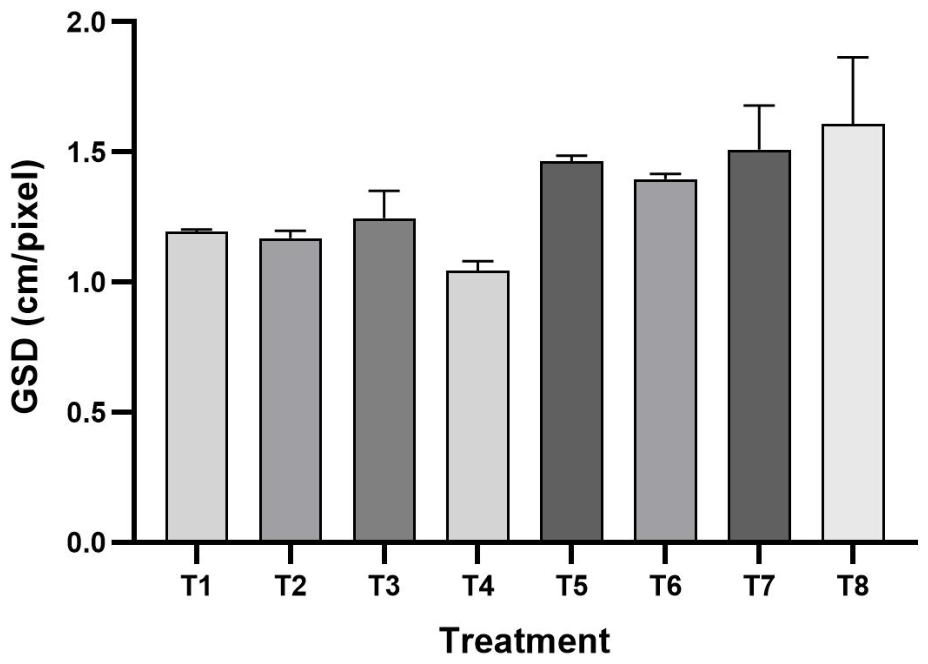
Figure 2.
Average ground sampling distance (GSD) for each UAV flight configuration (T1–T8). Error bars represent standard deviation of two replicates per treatment.
Figure 2.
Average ground sampling distance (GSD) for each UAV flight configuration (T1–T8). Error bars represent standard deviation of two replicates per treatment.
Because flights were manually operated, forward and side image overlap were not predefined as fixed experimental variables. Instead, overlap conditions emerged dynamically from the interaction between flight altitude, operator-controlled speed, trajectory stability, and image capture interval. Consequently, photogrammetric redundancy was evaluated indirectly through tie-point density, image multiplicity, and RMS reprojection error during orthomosaic reconstruction.
All replicates covered the same road segment and followed approximately the same flight trajectory to minimize geometric variability unrelated to the evaluated experimental factors.
The influence of the experimental factors on ground sampling distance was evaluated using factorial analysis of variance (ANOVA). Prior to the analysis, dataset normality was assessed using the Shapiro–Wilk test. For photogrammetric metrics that did not satisfy normality assumptions, non-parametric statistical testing (Kruskal–Wallis test followed by Dunn’s post hoc comparisons) was applied to evaluate differences among treatments.
2.4. Photogrammetric Processing
All acquired images were processed using Agisoft Metashape Professional (Agisoft LLC, St. Petersburg, Russia) to generate orthomosaics corresponding to each flight configuration.
Because no ground control points (GCPs) were used, georeferencing relied exclusively on the onboard GNSS positioning of the UAV. Under this configuration, the reported RMS reprojection error should be interpreted primarily as an indicator of internal photogrammetric consistency rather than absolute positional accuracy.
The photogrammetric workflow consisted of:
Image alignment;
Sparse point cloud generation;
Dense point cloud reconstruction;
Digital surface model creation;
Orthomosaic generation.
Processing parameters were kept consistent across all treatments in order to ensure methodological comparability and to isolate the effect of flight-configuration changes from processing-related variability.
Specifically, image alignment was performed using high accuracy settings, with consistent key point and tie point limits, while dense cloud generation was conducted under uniform quality and depth filtering parameters. These settings were maintained constant across all treatments to ensure comparability and to isolate the effect of flight configuration variables.
Ground sampling distance (GSD) values were extracted directly from orthomosaic metadata and used as an indicator of spatial resolution.
Orthomosaic continuity and geometric consistency were evaluated through visual inspection of seam alignment, coverage homogeneity, and boundary coherence.
No ground control points (GCPs) were employed, as the study focused on relative orthophoto quality and interpretability rather than absolute geospatial accuracy.
Processing was performed independently for each flight replicate using the same workflow to ensure comparability across treatments. Quality metrics (tie points, RMS reprojection error, multiplicity, and dense cloud size) were extracted from the software processing reports generated under identical settings. No manual intervention (e.g., selective image removal, masking, or local optimization) was applied beyond the standard workflow.
2.5. Visual Identification of Pavement Distresses
Potholes were selected as representative pavement distresses due to their operational relevance in maintenance prioritization and infrastructure condition assessment.
Visual identification was conducted through systematic inspection of orthomosaics generated for each treatment and replicate. Distress detection was based on recognition of:
For each orthomosaic, observable potholes were recorded descriptively and compared across treatments.
A qualitative clarity index was applied to assess interpretability, defined as:
Low clarity: poorly defined boundaries and ambiguous surface features;
Moderate clarity: identifiable features with partially defined boundaries;
High clarity: clearly defined boundaries, shape, and texture contrast.
The clarity index serves as an operational usability indicator rather than a substitute for automated detection algorithms. This approach reflects practical workflows commonly adopted in municipal-level infrastructure management.
The clarity index should be interpreted as an operational interpretability indicator designed to support comparative visual assessment across orthomosaics rather than as a formally validated quantitative image-quality metric.
To improve internal consistency, the clarity index evaluation was applied using the same criteria across all orthomosaics and replicates. Although the index remains qualitative, this approach supports comparative interpretation under consistent observational conditions.
3. Results
3.1. Photogrammetric Processing Stability
All eight UAV flight configurations successfully generated orthomosaics suitable for spatial assessment. However, processing stability varied according to flight parameters (
Table 2).
Treatments with lower flight speeds and shorter image capture intervals (e.g., T1 and T3) exhibited higher tie-point density, higher multiplicity, and relatively low RMS errors. These configurations exhibited higher tie-point density, higher multiplicity, and lower RMS errors compared to high-speed treatments. In contrast, higher-speed flights with longer capture intervals (e.g., T7 and T8) showed reduced tie-point density, lower multiplicity, and slightly higher RMS errors, particularly near survey boundaries. These patterns corresponded with minor seamline discontinuities and edge distortions observed in high-speed treatments, indicating reduced processing stability under lower redundancy conditions.
Overall, the quantitative metrics in
Table 2 demonstrate that flight geometry and acquisition parameters directly influence photogrammetric processing performance, with T1 achieving the highest stability across all evaluated indicators. This highlights the importance of optimizing flight speed and image capture interval to ensure reliable orthomosaic generation for infrastructure assessment.
To determine whether the observed differences among photogrammetric metrics were statistically significant, a hypothesis testing approach was conducted. Normality assessment using the Shapiro–Wilk test [
36] (W = 0.6888,
p < 0.0001) indicated that the dataset did not follow a normal distribution. Therefore, the non-parametric Kruskal–Wallis test was [
37] applied to compare the distributions of tie-point density, RMS error, multiplicity, and dense cloud values.
The Kruskal–Wallis test revealed statistically significant differences among the evaluated photogrammetric metrics across UAV flight treatments (p < 0.0001). Post hoc comparisons using Dunn’s test further indicated that variations in tie-point density, RMS reprojection error, multiplicity, and dense cloud size were associated with differences in flight configuration, confirming that UAV operational parameters influence photogrammetric processing stability.
Overall, T1 and T3 consistently showed the highest photogrammetric stability across all evaluated indicators, while T7 and T8 exhibited reduced performance. The results of the pairwise statistical comparisons obtained from Dunn’s post hoc test are presented in
Table 3.
3.2. Ground Sampling Distance and Spatial Resolution
To statistically evaluate the influence of UAV operational parameters on spatial resolution, a full factorial 23 experimental design was analyzed using analysis of variance (ANOVA). The factors considered were flight altitude (30 and 40 m), flight speed (low and normal), and image capture interval (2 and 3 s), with two replicates per treatment.
Prior to ANOVA, data normality was verified using the Shapiro–Wilk test (W = 0.9533,
p = 0.5444) and the Kolmogorov–Smirnov test [
38] (
p > 0.10), confirming that the dataset satisfied the assumptions required for parametric statistical analysis.
The factorial ANOVA results (
Table 4) revealed that flight altitude had a statistically significant effect on ground sampling distance (GSD) (F = 32.56,
p = 0.0005). In contrast, flight speed (
p = 0.4486) and image capture interval (
p = 0.4254) did not show statistically significant main effects. None of the evaluated interaction terms—including altitude × speed (
p = 0.1871), altitude × capture interval (
p = 0.3041), speed × capture interval (
p = 0.9833), and the three-way interaction (
p = 0.1757)—were statistically significant at the 95% confidence level.
These results confirm that ground sampling distance in UAV photogrammetry is primarily governed by flight altitude, while operational parameters such as speed and triggering interval have limited influence on pixel size itself. This statistical evidence supports the photogrammetric principle that GSD is fundamentally controlled by acquisition geometry.
Ground sampling distance values showed a systematic dependency on flight altitude. Flights conducted at 30 m consistently produced lower GSD values, indicating higher spatial resolution, whereas 40 m flights resulted in larger pixel sizes. Variations in flight speed and image capture interval did not directly affect GSD, as expected from photogrammetric principles. This behavior confirms that ground sampling distance is primarily governed by acquisition geometry rather than by dynamic flight parameters.
Figure 2 illustrates the variation in GSD across the eight UAV flight configurations (T1–T8). Treatments conducted at 30 m (T1–T4) produced GSD values ranging from 1.05 to 1.25 cm/pixel, while flights at 40 m (T5–T8) yielded values between 1.40 and 1.61 cm/pixel. Increasing flight altitude from 30 m to 40 m resulted in an approximate 25–35% increase in pixel size, demonstrating the proportional relationship between altitude and ground resolution.
Within each altitude group, differences associated with flight speed and image capture interval were comparatively small. Although slightly higher dispersion was observed in treatments T3, T7, and T8, variability between replicates remained limited overall, indicating stable flight execution and consistent photogrammetric processing. The low intra-treatment variability supports the reproducibility of orthomosaic generation under manual UAV operation.
These findings are consistent with established photogrammetric theory, where GSD is directly proportional to flight altitude and primarily determined by acquisition geometry—specifically sensor height, focal length, and pixel size—rather than by operational parameters such as speed or triggering interval. The results confirm that altitude selection is the principal factor controlling ground sampling distance in UAV-based infrastructure assessment.
3.3. Orthomosaic Continuity and Geometric Consistency
Orthomosaic continuity was strongly influenced by flight speed and image capture interval, as evidenced by both photogrammetric metrics (
Table 2) and visual inspection of the generated orthomosaics (
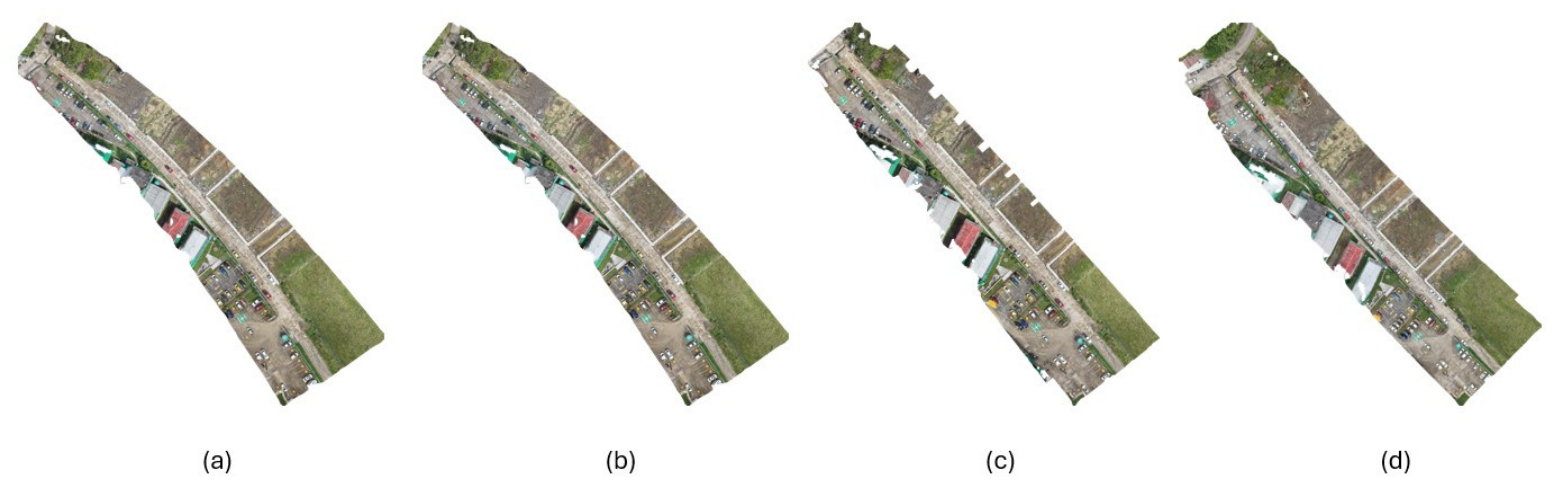
Figure 3). To strengthen the visual comparison among flight configurations, representative orthomosaic excerpts were carefully selected to illustrate seamline continuity, pavement texture definition, and local geometric coherence across treatments. These observations are consistent with the quantitative photogrammetric indicators reported in
Table 2. Treatments characterized by lower flight speeds and shorter image capture intervals, particularly T1 (
Figure 3a), produced the most continuous and geometrically consistent orthomosaics. These configurations exhibited uniform surface texture, well-aligned seamlines, and continuous spatial coverage along the roadway.
The orthomosaic corresponding to T1 shows minimal seam artifacts and consistent geometric alignment across adjacent images, indicating robust image overlap and stable bundle adjustment. Similarly, T2 (
Figure 3b), although generated with a longer capture interval, maintains acceptable continuity, with only minor seam visibility in localized areas, suggesting that reduced overlap primarily affects edge transitions rather than overall mosaic integrity under low-speed conditions.
Figure 3 is intended to provide representative orthomosaic excerpts illustrating typical seamline patterns and geometric continuity associated with the evaluated flight configurations. Rather than serving as the primary analytical dataset, the figure supports the interpretation of the quantitative photogrammetric indicators reported in
Table 2, which constitute the main basis for comparing reconstruction stability among treatments. In contrast, orthomosaics generated at higher altitude (T5 and T6,
Figure 3c,d) exhibit slightly reduced spatial continuity, particularly along image boundaries and peripheral zones. These treatments show subtle geometric inconsistencies and increased seam visibility, which can be attributed to larger ground sampling distance and reduced image redundancy. While overall coverage remains complete, fine-scale surface texture and geometric coherence are less pronounced compared to lower-altitude configurations.
Although a direct seamline continuity metric was not computed, orthomosaic continuity was interpreted jointly from visual seam inspection and quantitative photogrammetric indicators, including tie-point density, multiplicity, and RMS reprojection error.
The visual patterns observed in
Figure 3 support the quantitative trends reported in
Table 2, confirming that photogrammetric stability metrics—such as tie-point density, multiplicity, and RMS error—are directly linked to orthomosaic usability. High-density point clouds and robust bundle adjustment achieved under low-speed, high-overlap conditions enhance geometric consistency and reduce spatial uncertainty.
From an operational standpoint, these findings indicate that orthomosaic continuity is governed not only by ground sampling distance but also by acquisition dynamics controlling image overlap and geometric coherence. For GIS-based applications, infrastructure inventory generation, and spatial condition assessment, even minor seam artifacts or local distortions may hinder accurate feature delineation. Therefore, UAV flight configurations that prioritize lower speed and sufficient image overlap are essential to ensure geometrically reliable orthophotos under manual surveying conditions.
3.4. Spatial Interpretability for Surface Condition Assessment
Although the study area exhibited limited severe pavement deterioration, noticeable differences in spatial interpretability were observed among flight configurations. Lower-altitude flights characterized by higher tie-point density, lower RMS error, and greater multiplicity—particularly T1 and T3 (
Table 2)—facilitated clearer recognition of surface texture variations, joint patterns, and localized pavement irregularities. These acquisition conditions enhanced boundary definition and micro-textural contrast, improving the reliability of fine-scale surface assessment.
Conversely, configurations associated with larger ground sampling distance (GSD) and reduced tie-point density, particularly T7 and T8, demonstrated lower photogrammetric redundancy and higher RMS errors (
Table 2). Although complete orthomosaics were successfully generated, reduced geometric stability may limit the detection of subtle, small-scale surface anomalies due to decreased spatial coherence and edge definition.
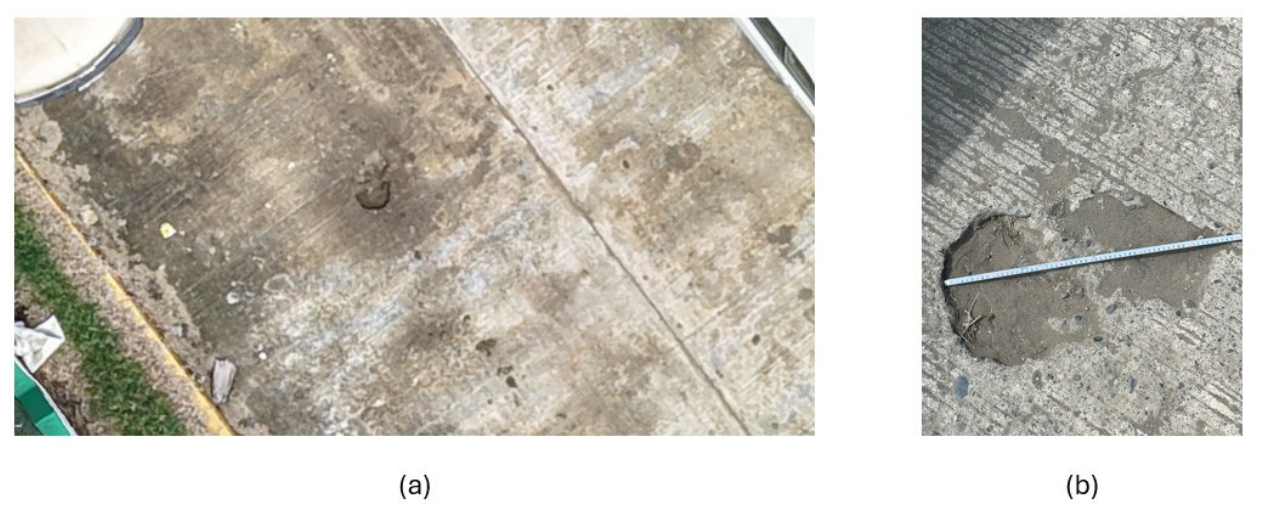
Figure 4 illustrates a representative example of pavement damage used for interpretability assessment. Panel (a) presents a UAV-derived orthomosaic detail showing localized surface irregularities and texture variations, while panel (b) shows the in situ measurement of the same damage using a tape measure, providing ground reference dimensions. This combined visualization supports the relationship between UAV-based spatial interpretability and field-scale pavement conditions.
Overall, these observations confirm that spatial interpretability is not determined solely by ground sampling distance, but also by photogrammetric stability indicators such as tie-point density, multiplicity, and RMS error. Representative imagery is provided to illustrate interpretability conditions, whereas comparative assessment among treatments is based on quantitative photogrammetric metrics reported in
Table 2.
3.5. Clarity Index and Operational Implications
Clarity scores were consistently higher for orthomosaics generated at lower flight altitude and shorter image capture intervals, particularly T1 and T3, corresponding to higher tie-point density, greater multiplicity, and lower RMS errors (
Table 2). These results indicate that flight configurations optimizing both ground sampling distance and image overlap significantly enhance orthophoto interpretability under manual UAV operation.
Although orthomosaics from higher-altitude or reduced-overlap configurations remained usable, slight reductions in geometric coherence and boundary sharpness may affect the detection of fine-scale pavement irregularities. The clarity index therefore reflects not only pixel resolution but also photogrammetric robustness and image redundancy.
From an operational perspective, these findings are particularly relevant for municipal-level surveying scenarios, where automated flight planning and extensive redundancy may not be feasible. Selecting appropriate flight parameters becomes critical to ensure that UAV-derived orthophotos provide reliable and actionable information for road condition mapping. In practical terms, lower-altitude flights combined with sufficient image overlap represent an effective balance between mission duration, data volume, and spatial interpretability, supporting informed infrastructure management decisions.
4. Discussion
The findings confirm that UAV flight configuration substantially influences orthomosaic quality and operational usability for road infrastructure assessment under manual survey conditions. These findings highlight that, under manual UAV operation, photogrammetric redundancy plays a more critical role than nominal ground sampling distance in determining orthophoto usability. This result is consistent with established photogrammetric principles and previous UAV survey studies indicating that image network geometry, overlap, and redundancy are central determinants of bundle adjustment stability and orthomosaic reliability. However, these findings should be interpreted as context-specific insights derived from controlled experimental conditions, rather than universally generalizable guidelines.
Altitude primarily controlled spatial resolution through ground sampling distance, with lower altitudes producing finer pixel sizes and clearer pavement texture representation. However, the results show that resolution alone is insufficient to ensure reliable surface condition interpretation. Across treatments, orthomosaics with higher tie-point density and multiplicity and lower RMS reprojection error exhibited improved geometric coherence and fewer seam artifacts, which translated into clearer boundary definition for subtle pavement irregularities. These results demonstrate that acquisition geometry must be considered jointly with redundancy-driven reconstruction robustness when prioritizing flight settings for interpretability-oriented applications.
From an operational perspective, the most interpretable orthomosaics in the present study were associated with GSD values in the approximate range of 1.05–1.25 cm/pixel and with lower RMS reprojection errors than the reduced-overlap treatments. These values should not be interpreted as universal thresholds, but rather as indicative reference ranges for manual UAV pavement surveys conducted under similar urban–peri-urban conditions.
Operationally, flight speed and capture interval influenced overlap and photogrammetric redundancy, which in turn affected orthomosaic continuity and edge stability. Low-speed and shorter capture-interval configurations tended to maintain more stable image networks, supporting robust bundle adjustment and producing more consistent mosaics along the roadway.
Under manual UAV operation, overlap conditions cannot be interpreted as strictly fixed acquisition parameters because they dynamically depend on operator-controlled speed, trajectory stability, and image triggering interval. Consequently, overlap variability constituted an inherent characteristic of the experimental conditions evaluated in this study. Treatments exhibiting greater photogrammetric redundancy showed increased tie-point density, improved multiplicity, and more stable orthomosaic continuity, whereas reduced-redundancy configurations presented greater seamline instability and lower interpretability of fine-scale pavement features.
Conversely, reduced-overlap configurations (higher speed and/or longer capture interval) remained capable of producing complete orthomosaics but showed reduced geometric coherence and diminished interpretability for fine-scale surface features. Lower-altitude configurations generally produced larger image datasets due to increased spatial detail and greater photogrammetric redundancy, which consequently increased the computational workload during orthomosaic reconstruction. Although these configurations improved pavement-feature interpretability, they also required greater processing effort and longer reconstruction workflows under manual UAV operating conditions. This operational trade-off highlights the importance of balancing spatial resolution, photogrammetric redundancy, and practical processing efficiency when designing UAV-based pavement assessment protocols.
These outcomes are particularly relevant for resource-constrained surveys where manual operation limits trajectory precision and image-network stability, and where the objective is actionable interpretability rather than maximal coverage alone. The results indicate that orthomosaic usability under manual flight conditions depends critically on maintaining adequate image redundancy. In practical terms, more stable photogrammetric reconstruction was achieved by combining shorter triggering intervals (2 s) with controlled flight speed, which increased tie-point density and multiplicity while reducing seam artifacts. For manual survey protocols, reconstruction robustness can therefore be improved operationally by reducing speed and trigger interval rather than by attempting to maximize coverage alone.
In addition to RGB-based photogrammetry, LiDAR-derived point clouds could provide complementary geometric validation, particularly in scenarios characterized by low surface texture, variable illumination, or motion-induced blur. LiDAR sensors are specifically designed for accurate spatial positioning and surface geometry reconstruction, which may allow cross-validation of orthomosaic geometry and independent verification of bundle adjustment stability. Future integration of LiDAR and UAV photogrammetry may provide independent validation of photogrammetric reconstruction and enhance geometric consistency assessment.
Although the present study focuses on single-UAV manual operation, coordinated multi-UAV systems represent a relevant future direction for infrastructure monitoring. Cooperative aerial surveying may improve coverage efficiency, spatial redundancy, and mission scalability over larger road networks. However, such systems also introduce additional challenges related to synchronization, communication delays, trajectory coordination, and distributed estimation, which were beyond the scope of the present manual single-UAV framework.
Recent advances in coordinated UAV systems, including consensus-based control strategies and distributed estimation approaches, have demonstrated the potential to improve scalability and robustness in multi-agent aerial monitoring applications. These developments highlight the relevance of extending manual UAV frameworks toward cooperative systems in future infrastructure monitoring scenarios.
4.1. Management Implications
The findings of this study have direct implications for infrastructure management and decision-making processes within municipal and institutional contexts. In environments where resources are limited and automated UAV systems are not available, the selection of appropriate flight parameters becomes a critical factor influencing data quality and operational efficiency.
From a management perspective, optimizing flight altitude, speed, and image capture interval enables the generation of reliable orthophotos without requiring advanced technological infrastructure or high operational costs. This supports cost-effective road condition monitoring and facilitates more efficient allocation of maintenance resources.
Furthermore, the results provide actionable guidance for local authorities and engineering teams by identifying flight configurations that balance data quality, operational feasibility, and mission duration. This contributes to improving infrastructure inspection workflows and supports evidence-based decision-making in road maintenance planning.
In the context of the low-altitude economy, the study highlights the importance of adapting UAV operational strategies to real-world constraints, promoting accessible and scalable solutions for infrastructure monitoring. The proposed approach enables wider adoption of UAV-based methodologies in public administration and small-scale engineering applications.
4.2. Limitations
This study focuses on relative orthomosaic usability under manual operation and does not aim to quantify absolute geolocation accuracy because no ground control points (GCPs) were used. The limited number of replicates reflects operational constraints associated with manual UAV surveys and should be considered when interpreting statistical robustness. Results are therefore intended to support operational parameter prioritization for interpretability-focused road condition mapping rather than precision surveying applications. External validity is limited by the single-site evaluation and the restricted diversity of pavement geometry, traffic conditions, and environmental context. The results should therefore be interpreted as operational guidance for comparable road segments rather than as universally generalizable rules for all infrastructure monitoring scenarios.
Additionally, standardized optical calibration targets and controlled visual reference patterns were not incorporated into the experimental design. The integration of objective image-quality calibration frameworks may improve future quantitative evaluation of orthomosaic interpretability and minimum distinguishable surface features under different UAV acquisition conditions.
Future work could incorporate controlled speed quantification, additional altitudes, and alternative distress types to expand transferability across roadway conditions and survey contexts.
5. Conclusions
The findings of this study demonstrate how UAV flight parameters interact under manual operating conditions to influence photogrammetric stability and orthophoto usability for pavement assessment applications. Rather than establishing universal photogrammetric principles, the study provides experimentally validated operational guidance for manually conducted UAV surveys performed without automated mission-planning systems or predefined overlap control. By explicitly focusing on manually operated UAV flights, this research addresses a practical gap in the literature, where automated acquisition workflows and highly redundant datasets are frequently assumed despite their limited applicability in many municipal and institutional contexts. The results indicate that orthophoto usability under real-world operational constraints depends not only on nominal spatial resolution, but also on reconstruction stability and overlap consistency throughout the survey trajectory.
Although lower flight altitude improved nominal ground sampling distance (GSD) and surface-detail representation, the results showed that higher spatial resolution alone did not guarantee reliable pavement interpretation. Orthomosaics generated under configurations with insufficient photogrammetric redundancy exhibited localized geometric inconsistencies, reduced edge definition, and diminished clarity of subtle pavement features even when acceptable GSD values were achieved. These findings highlight that reconstruction robustness must be considered together with nominal spatial resolution when configuring UAV surveys for infrastructure assessment applications.
The study further demonstrated that, under manual UAV operation, flight speed and image capture interval jointly affected overlap variability, tie-point continuity, and network redundancy, directly influencing reconstruction robustness and orthomosaic coherence. Configurations characterized by lower flight speed and shorter capture intervals produced more stable photogrammetric reconstructions with improved orthomosaic continuity and fewer seam artifacts. In contrast, reduced-overlap configurations were capable of generating complete orthomosaics but exhibited lower geometric consistency, limiting the interpretability of subtle pavement irregularities relevant to condition assessment tasks.
The integration of UAV-derived orthomosaic interpretation with in situ damage measurements further supports the applied relevance of the proposed framework. The correspondence between aerial visualization and field-scale observations confirms that manually acquired UAV imagery can provide reliable and actionable spatial information for preliminary pavement condition assessment, even in the absence of automated detection algorithms or highly redundant survey missions.
From a land engineering and territorial management perspective, these results demonstrate that UAV flight configuration should be considered a critical component of spatial data quality assurance rather than a secondary operational choice. When appropriately configured, manual UAV surveys can provide orthophotos that are both technically consistent and operationally reliable, supporting infrastructure monitoring and decision-making processes in resource-constrained municipal and institutional environments.
From an operational standpoint, manual UAV surveys for pavement assessment should prioritize lower flight altitude (approximately 30 m AGL), when operationally safe and feasible, together with shorter image capture intervals (2 s) and controlled low-to-moderate ground speed in order to preserve forward overlap consistency and photogrammetric redundancy. Under the evaluated conditions, these configurations were associated with improved tie-point density, greater multiplicity, lower RMS reprojection error, and more stable orthomosaic continuity. These empirically validated parameter ranges may also support the development of semi-automated mission templates or pre-flight planning strategies in contexts where fully automated missions are not feasible.
Although the study was conducted on a single representative road segment under controlled operational conditions, the results provide practical and operationally validated insights regarding the influence of UAV flight configuration on orthophoto usability in manually conducted surveys. Additional validation across multiple road typologies, environmental conditions, and operational scenarios is still required before extending these findings to broader infrastructure monitoring applications.
Therefore, the presented results should be interpreted as operationally validated guidance for manual UAV pavement surveys conducted under practical field constraints, rather than as definitive or universally transferable photogrammetric optimization rules.




 ,
,