1. Introduction
The increasing level of automation in manufacturing enterprises, characterized by the widespread deployment of collaborative and industrial robots, places high demands on production system reliability. Robotic workcells, in which automated devices perform tightly coordinated operations with short cycle times, represent some of the most heavily utilized elements of modern production lines [
1]. Any unplanned shutdown of a robot, manipulator, pneumatic module, or control unit immediately interrupts material flow and reduces productivity. Consequently, effective maintenance planning has become a key factor influencing industrial competitiveness [
2].
In industrial practice, time-based preventive maintenance remains the most commonly applied approach, relying on manufacturer-recommended service intervals. However, this method is inherently limited, as it does not account for actual operating conditions, workload, or dynamic production changes. Maintenance actions may therefore be performed either prematurely or too late to prevent progressive degradation [
3]. Increasing pressure on equipment availability has intensified the demand for more advanced methodologies that align maintenance interventions with the actual technical condition of the system.
Predictive maintenance based on monitoring trends in vibration, temperature, energy consumption, or robot motion dynamics represents a promising solution for early fault detection [
4]. In robotic systems, such approaches enable the identification of degradation in bearings, drives, transmission mechanisms, or pneumatic actuators before functional failure occurs [
5].
The robotic workcell investigated in this study was designed in cooperation with a Slovak manufacturing company and consists of a collaborative robot (Universal Robots UR5e, Universal Robots, Odense, Denmark) and an industrial robot (KUKA KR6 R700, KUKA Roboter GmbH, Augsburg, Germany) cooperating in a packaging assembly process. The system is complemented by pneumatic components, vacuum grippers, sensing elements, and auxiliary devices, ensuring automated cycle execution.
Despite progress in predictive and condition-based maintenance research, existing frameworks often address individual strategies in isolation and rarely incorporate dynamic criticality-based decision-making across subsystems. Furthermore, as noted in recent studies on multi-robot systems [
6,
7], integration of maintenance analytics with computerized maintenance management systems (CMMS) remains limited, restricting data-driven continuous improvement. These limitations are particularly relevant in tightly coupled multi-robot workcells, where subsystem interactions may lead to cascading faults.
This study addresses these gaps by proposing an integrated maintenance framework that combines multi-strategy allocation with CMMS-supported lifecycle feedback, bridging isolated diagnostics and centralized maintenance execution.
The objective is to develop an integrated maintenance framework that combines manufacturer-recommended preventive actions with predictive insights derived from representative operational signals. The resulting maintenance policy aims to improve reliability, increase availability, and reduce unplanned downtime without requiring extensive additional sensors or complex external analytical tools.
2. Literature Review
The development of maintenance strategies in modern manufacturing systems is closely linked to technological progress, which increasingly defines requirements for reliability, availability, and effective life-cycle management of industrial equipment. Traditional approaches, primarily corrective and preventive maintenance, have been widely adopted for decades; however, under Industry 4.0 conditions, these strategies are increasingly insufficient. Corrective maintenance is associated with downtime and high costs, while time-based preventive maintenance fails to reflect actual operating conditions, system load, and dynamic production cycles [
8]. Consequently, research has progressively shifted toward condition-based approaches, where diagnostics, monitoring, and trend analysis play a central role.
The Industry 4.0 paradigm has accelerated the adoption of predictive maintenance, integrating cyber-physical systems, sensor technologies, the Internet of Things (IoT), and advanced analytical methods. Intelligent manufacturing systems can continuously monitor equipment condition, identify incipient failures, and execute maintenance at optimal times [
9]. Predictive maintenance, therefore, reduces unplanned downtime while limiting unnecessary preventive interventions.
A major focus within predictive maintenance research is Remaining Useful Life (RUL) estimation, which quantifies the time to potential failure. Early RUL approaches relied on physical degradation models, statistical techniques, and classical machine learning methods such as ARIMA, hidden Markov models, and support vector regression [
10,
11]. More recent studies report improved performance using deep learning techniques, particularly Long Short-Term Memory (LSTM) neural networks, which effectively capture long-term temporal dependencies in time-series data. LSTM-based models have demonstrated strong capability in modelling degradation processes in complex mechatronic systems, including robotic workcells [
12].
As manufacturing systems increase in complexity, coordinated maintenance of multiple machines becomes essential. Robotic workcells represent multi-component systems in which failure of a single element may shut down the entire workstation. Synchronization of maintenance activities is therefore necessary to minimize downtime and optimize resource utilization [
13]. In response, predictive maintenance frameworks integrating RUL prognostics with optimization algorithms have been proposed to support intelligent scheduling in multi-machine environments [
12].
Robotic systems constitute a particularly suitable domain for predictive maintenance. Robotic arms, servo drives, gearboxes, and pneumatic components exhibit degradation manifested through vibration changes, temperature deviations, or increased energy consumption. Vibration signals are widely recognized as key indicators of bearing and gearbox degradation [
14], while temperature trends assist in detecting lubrication, friction, or overload issues. Modern robotic platforms such as the UR5e and KUKA KR series provide internal diagnostic data, enhancing predictive maintenance feasibility without extensive external sensing.
Recent research has also emphasized fault-tolerant and collaborative strategies in multi-robot systems. Fault-tolerant control mechanisms compensate for actuator faults and disturbances [
15,
16], while collaborative fault management frameworks address subsystem-level disruptions in multi-robot environments [
17]. Communication-efficient cooperative control schemes and safety-certified coordination further highlight the importance of subsystem interaction in preventing cascading faults [
18].
Industrial robotic systems are particularly sensitive to communication and control failures. Reliability architectures highlight the interdependence between actuators, controllers, and communication networks [
19], while safety assurance mechanisms stress the role of control integrity and synchronization in preventing chain-reaction failures [
20]. The integration of Industrial Internet of Things (IIoT) technologies with predictive modules represents an emerging trend, enabling real-time diagnostic data exchange and embedded monitoring within control architectures [
21].
Despite this progress, several challenges remain, including heterogeneous data integration, lack of standardized formats, limited validation under real industrial conditions, algorithm interpretability issues, and the absence of systematic methodologies for structured maintenance strategy allocation in specific production instances. Many existing approaches focus on control-level fault tolerance or predictive modelling rather than coordinated maintenance allocation across interconnected subsystems, where component coupling may lead to cascading effects.
Nevertheless, the literature consistently supports combining preventive, condition-based, and predictive maintenance approaches for robotic workcells to improve reliability, availability, and operational efficiency. Based on the identified gaps, the aim of this paper is to propose a framework for integrated maintenance of a multi-robot packaging workcell that enables coordinated application of multiple strategies and provides structured guidance for selecting maintenance policies according to component criticality.
3. Robotic Workcell Description
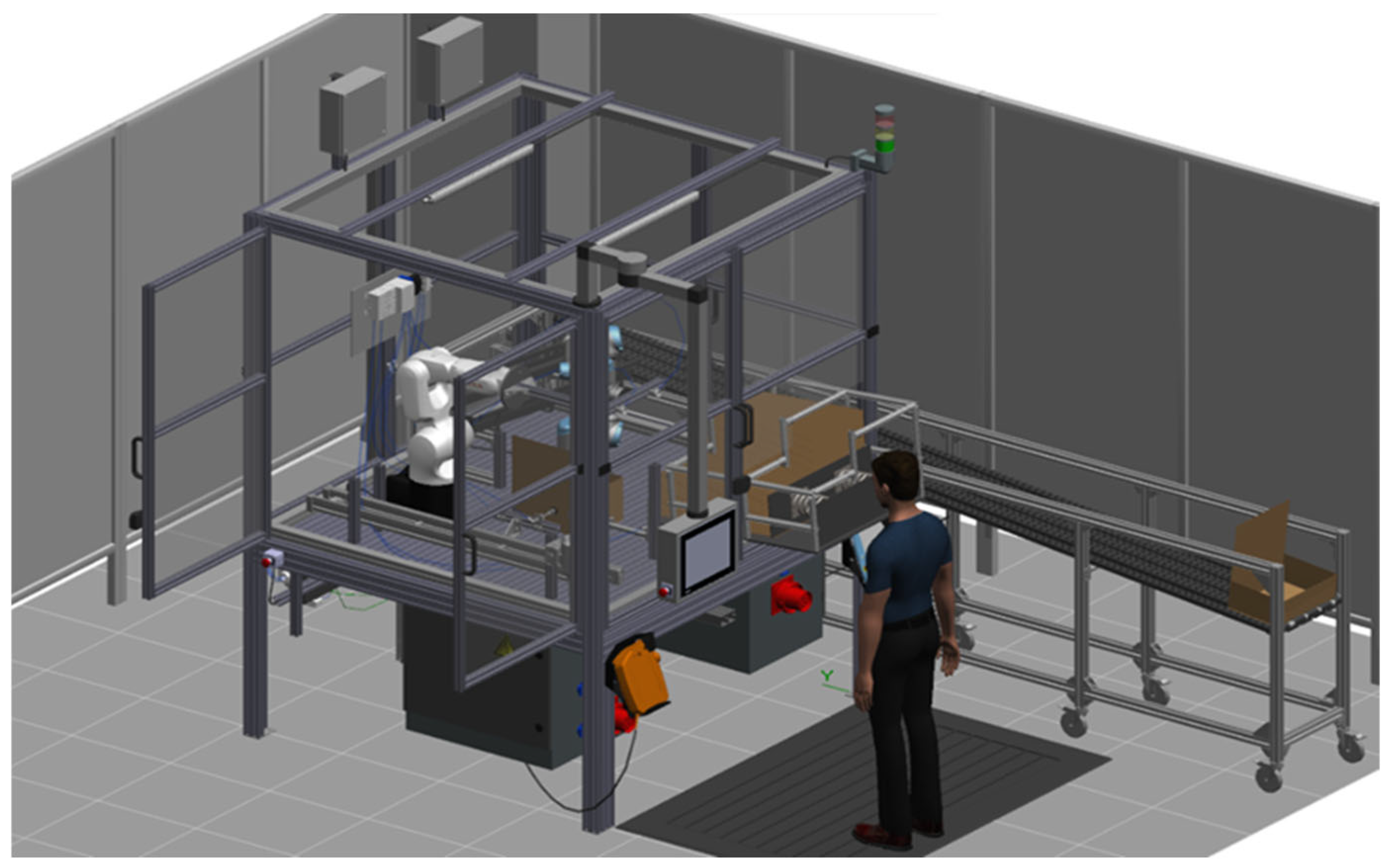
The robotic workcell analyzed in this study was previously fully designed by some of the authors of this paper and represents a compact, integrated system for the handling and assembly of cardboard packaging. The workcell integrates two distinct robotic mechanisms that operate in a coordinated manner, as illustrated in
Figure 1. A collaborative robot, Universal Robots UR5e, is responsible for handling flat, unassembled cartons using a vacuum gripper, while an industrial robot, KUKA KR6 R700, performs the mechanical unfolding and subsequent assembly of the packaging elements. This functional division of tasks establishes a coherent operational cycle comprising material feeding, orientation, manipulation, and assembly. The entire process is designed as a sequence of repetitive and fully automated operations suitable for serial production.
In order to provide operational context for the maintenance strategy design, representative production parameters of the robotic workcell are summarized below. The automated packaging cell operates with a constant cycle time below 13 s per folding operation, corresponding to a daily production capacity exceeding approximately 1650 folded boxes under standard shift duration. The robotic cycle is fully automated, with human personnel (typically 6–7 workers per shift) responsible only for logistics coordination, material supply, and order organization rather than direct manipulation tasks.
The robotic configuration ensures high repeatability and positioning accuracy due to the deterministic motion control of the UR5e and KUKA KR6 R700 manipulators. Physical workload for operators is therefore minimized, as manual folding activities are eliminated. Operational interruptions are primarily limited to planned maintenance activities, with unplanned downtime events typically associated with pneumatic leakage, communication disturbances, or component wear in mechanical joints.
These operating characteristics directly influence the proposed maintenance strategy. The relatively short cycle time and repetitive loading profile increase cumulative mechanical stress on robotic joints and pneumatic components, thereby justifying the integration of predictive monitoring and criticality-based maintenance allocation within the proposed framework. The modular architecture of the robotic workcell further enables scalable extension, which requires maintenance policies capable of systematic adaptation to increased subsystem complexity.
The structural design of the workcell provides a stable platform for the motion trajectories of both robots while ensuring physical separation of the working area in accordance with safety requirements. The cell architecture is based on rigid aluminum modular profiles combined with protective panels and integrated safety elements required for reliable robotic operation. All components are arranged to allow straightforward access during maintenance interventions while maintaining the required stiffness and structural integrity. The functional layout of the workcell is derived from an analysis of robot reachability, manipulation requirements, and collision zone minimization, thereby supporting efficient operation and facilitating maintenance activities.
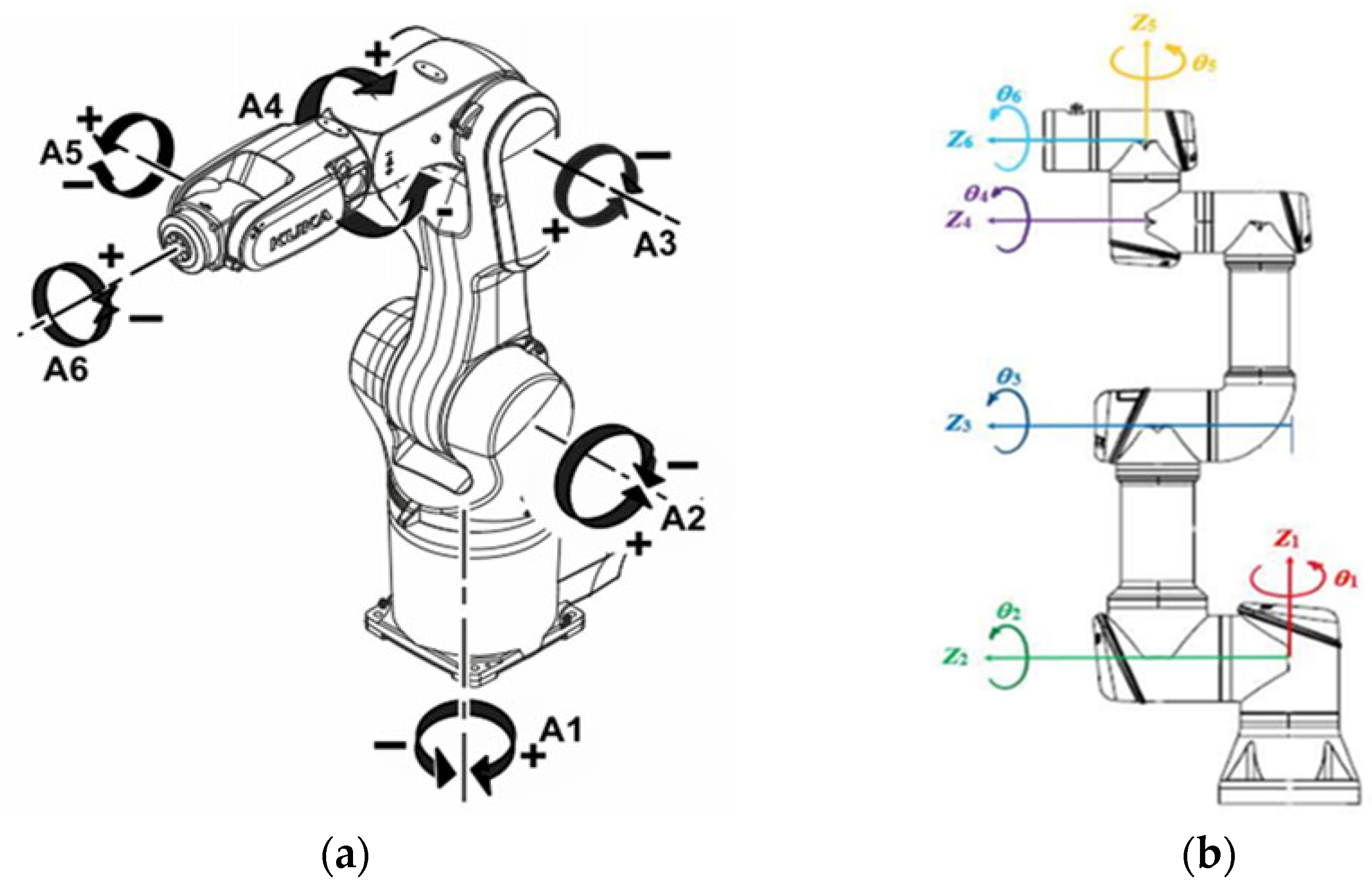
The collaborative robot UR5e serves as the primary manipulation unit, and its six-axis kinematic structure (
Figure 2b) enables flexible positioning of cardboard blanks. The diagnostic functions of the UR5e provide information on joint torque, servo motor temperature, and cycle counts, which are essential for assessing the technical condition of the robot. These data constitute fundamental diagnostic signals that can be exploited in the design of a maintenance strategy. The industrial robot KUKA KR6 R700 (
Figure 2a) performs operations requiring higher precision and mechanical rigidity. Its KRC4 compact controller monitors thermal characteristics and joint loads, which serve as indicators of mechanical wear and are relevant for defining maintenance threshold values. Both robotic units operate in a synchronized mode, with each motion cycle contributing to the cumulative loading and progressive degradation of the mechanical joints.
The functionality of the robotic workcell is further supported by pneumatic components that ensure the positioning and stabilization of cardboard elements during manipulation and assembly. The pneumatic circuit includes valves, hoses, and actuators subjected to pressure-related and mechanical loading. These components are susceptible to air leakage, seal wear, and filter contamination, which represent important input factors for the design of both preventive and predictive maintenance actions.
Control of the workcell is provided by a Siemens PLC, SIMATIC S7-1200 (Siemens AG, Nuremberg, Germany) controller system that coordinates the motion of both robots and auxiliary actuators. Communication between robotic systems is implemented via an industrial communication protocol enabling precise synchronization of individual cycle steps. An HMI interface provides the operator with real-time information on workcell status, active sequences, diagnostic messages, and operational data such as cycle counts and operating time. These data are relevant not only for operational control but also for the determination of maintenance intervals and the evaluation of equipment utilization.
Overall, the structural and functional configuration of the robotic workcell constitutes a complex system composed of mechanical, pneumatic, electrical, and control elements, whose reliable operation depends on a suitably designed maintenance strategy. This section, therefore, establishes the foundation for the subsequent identification of critical components and the development of preventive and predictive maintenance mechanisms presented in the following sections.
4. Proposed Framework for Integrated Maintenance of a Multi-Robot Packaging Workcell
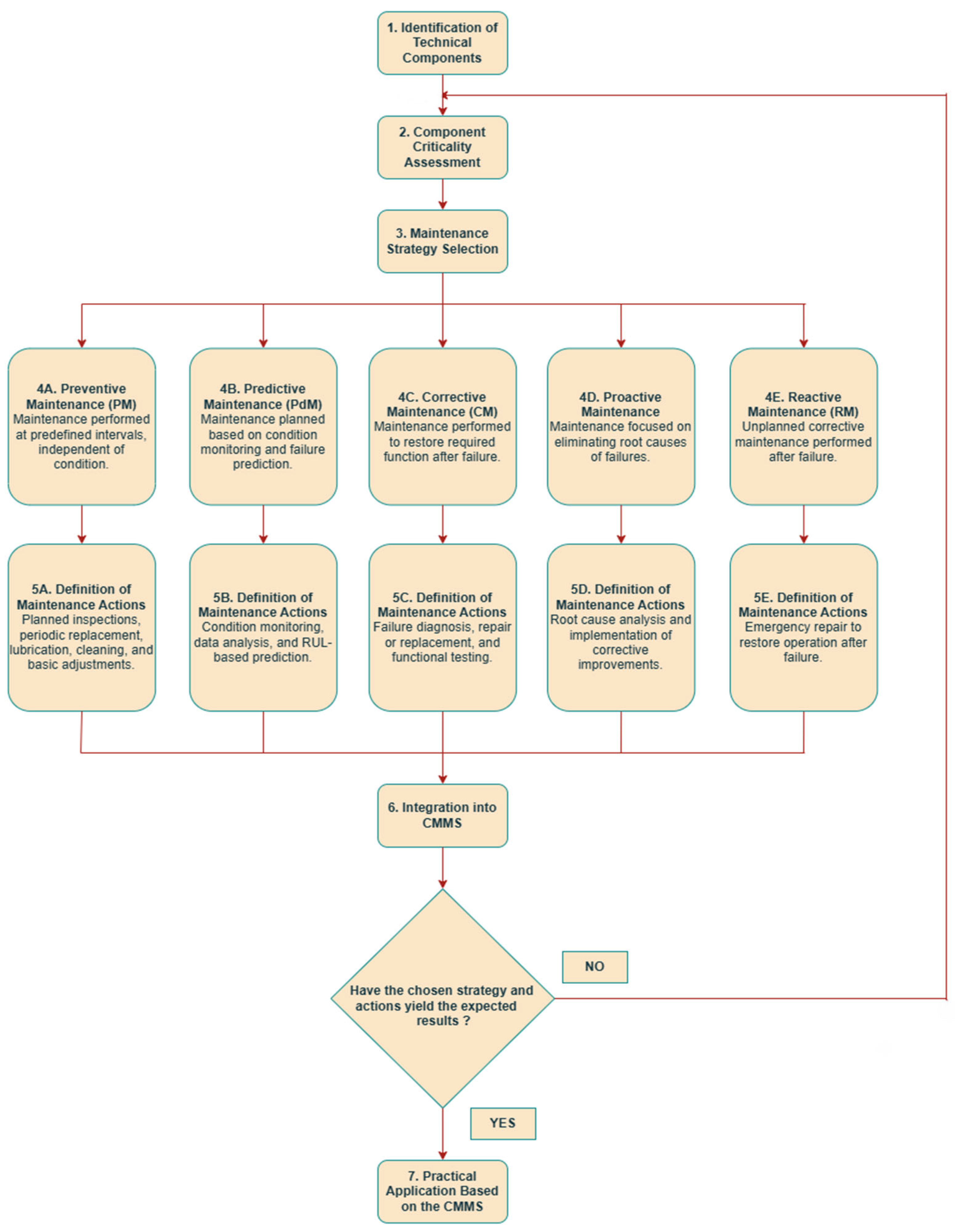
The framework for the design of the robotic workcell maintenance concept (
Figure 3) is conceived as a multi-level, systematic framework that integrates component identification, criticality assessment, maintenance strategy selection, and the subsequent implementation of preventive, predictive, reactive, proactive, and corrective maintenance mechanisms. This approach is consistent with contemporary concurrent engineering principles, in which maintenance is not regarded as an isolated activity but as a strategic tool for equipment life-cycle management [
6,
12]. At the same time, the proposed framework provides a conceptual basis for future experimental validation and allows further extension toward intelligent maintenance systems incorporating advanced diagnostic capabilities and artificial intelligence techniques. In line with the scope of this study, the framework is positioned primarily as a system-level engineering methodology for integrated maintenance planning and CMMS-supported execution in a multi-robot workcell. It does not aim to introduce a new predictive algorithm or optimization model but rather to structure the allocation and integration of multiple maintenance strategies under real industrial conditions. The framework is illustrated through partial (pilot-level) implementation in the analyzed robotic workcell and is designed to be extensible toward more advanced prognostic and data-driven approaches as longer-term operational datasets become available.
Identification of Components: The first step of the proposed methodology is the systematic identification of components that participate in the execution of the robotic workcell operational cycle or provide its technological, pneumatic, safety, and control functions. Component identification is based on a functional analysis of the workcell and takes into account the interactions and dependencies among individual subsystems. This approach is consistent with system-oriented maintenance principles, which emphasize the necessity of understanding component roles and their mutual interactions prior to the selection of an appropriate maintenance strategy [
13]. The output of this phase is a comprehensive component list structured according to the technical and functional relevance of individual elements.
Component Criticality Assessment: Subsequently, a component criticality assessment is performed (
Table 1), representing a key methodological step in the design of the maintenance strategy. Component criticality is based on the likelihood of occurrence of a given failure mode, the operational consequences of the failure for system performance, safety, or production continuity, and the likelihood that the failure can be detected before causing operational disruption. This assessment framework follows established risk-based maintenance methodologies, particularly Reliability-Centered Maintenance (RCM) and Failure Mode, Effects, and Criticality Analysis (FMECA), which recommend combining failure likelihood with the severity of its consequences for the overall system [
14,
15].
The practical determination of component criticality is based on a combination of pilot-level operational observations (six months), historical maintenance experience provided by the industrial partner, and structured engineering evaluation aligned with FMECA principles. The assessment was developed in close cooperation with the company’s maintenance department and reflects empirical knowledge regarding recurrent failure modes, downtime consequences, repair effort, and spare-part availability observed during extended workcell operation. This experiential input was systematically incorporated into the decision-making process to ensure industrial relevance and practical applicability of the proposed maintenance concept.
At the same time, the resulting criticality classification is consistent with commonly accepted maintenance practices and findings reported in the literature for robotic and mechatronic systems, particularly within RCM- and FMECA-based approaches. Based on the outcomes of this criticality assessment, an appropriate maintenance strategy is assigned to each component. The strategy selection considers component criticality, operational loading, availability of diagnostic data, typical degradation mechanisms, and economic factors related to repair or replacement. The overarching objective of this approach is to optimize maintenance costs while maintaining a high level of system reliability and operational availability.
Maintenance Strategy Selection: Following the criticality assessment, an appropriate maintenance strategy is selected for each component. The proposed methodology distinguishes five fundamental maintenance approaches, reflecting differences in component criticality, degradation behavior, and the availability of diagnostic information:
Preventive maintenance;
Predictive maintenance;
Corrective maintenance;
Proactive maintenance;
Reactive maintenance.
The selection of a maintenance strategy is not treated as a rigid assignment but as a flexible decision process that allows different approaches to be applied to different component groups. Highly critical components with available diagnostic data are preferentially assigned to the predictive maintenance branch, whereas less critical or easily replaceable components may be managed using reactive or corrective maintenance approaches.
Definition of Maintenance Actions: After the maintenance strategy has been selected, specific maintenance actions are defined for each component or component group. Preventive maintenance intervals are determined through a combination of manufacturer recommendations for robotic, electrical, and pneumatic systems and the operational cycle characteristics of the workcell. The literature recommends a hybrid approach that integrates both time-based and cycle-based intervals, depending on the nature of component loading and degradation behavior [
3,
10]. Mechanical components are typically evaluated based on the number of executed cycles, pneumatic elements based on pressure variations, and electronic components according to time-dependent degradation. Preventive maintenance actions include visual inspections, bearing lubrication, seal inspection, safety function testing, and cable integrity checks.
The predictive part of the methodology is based on contemporary condition-based maintenance (CBM) approaches, in which component condition is assessed through trend analysis of measured variables [
4,
12]. The selection of diagnostic parameters is derived from known degradation mechanisms of robotic systems, such as increasing joint torque, rising temperature, changes in current consumption, or deterioration in positioning accuracy. Trend-based monitoring of these parameters enables the early detection of degradation in bearings, gearboxes, and drive systems prior to functional failure [
9,
11]. For pneumatic components, pressure fluctuations, actuator motion speed, and valve response characteristics are identified as sensitive indicators of emerging faults [
16]. External vibration and temperature sensors, proposed as a supplementary data source within the APVV SK-HU-24-0005 project, are incorporated into the methodology in accordance with current trends in extended diagnostics, where external measurements enhance the sensitivity of degradation monitoring and facilitate access to condition data [
17]. The literature indicates that combining internal diagnostic data with external sensing can improve the accuracy of predictive models and Remaining Useful Life (RUL) estimation.
It should be emphasized that the predictive layer presented in this study does not implement a dedicated prognostic algorithm, Remaining Useful Life (RUL) estimation, or statistical threshold validation. Its role is architectural rather than algorithmic, focusing on the structured integration of condition-monitoring information into maintenance allocation logic and CMMS-supported decision processes.
Consequently, as mentioned already before, the scientific contribution lies primarily in system-level integration and criticality-based maintenance coordination rather than in predictive model development.
In the subsequent step, threshold values for diagnostic variables are established and decision rules for triggering predictive maintenance actions are defined. These limits are designed as a combination of manufacturer recommendations, empirical trends observed during stable system operation, and the principles of threshold-based maintenance [
18]. The defined thresholds conceptually support Remaining Useful Life (RUL) estimation principles; however, formal RUL modeling and statistical validation are considered future extensions beyond the scope of the present pilot-level framework [
19].
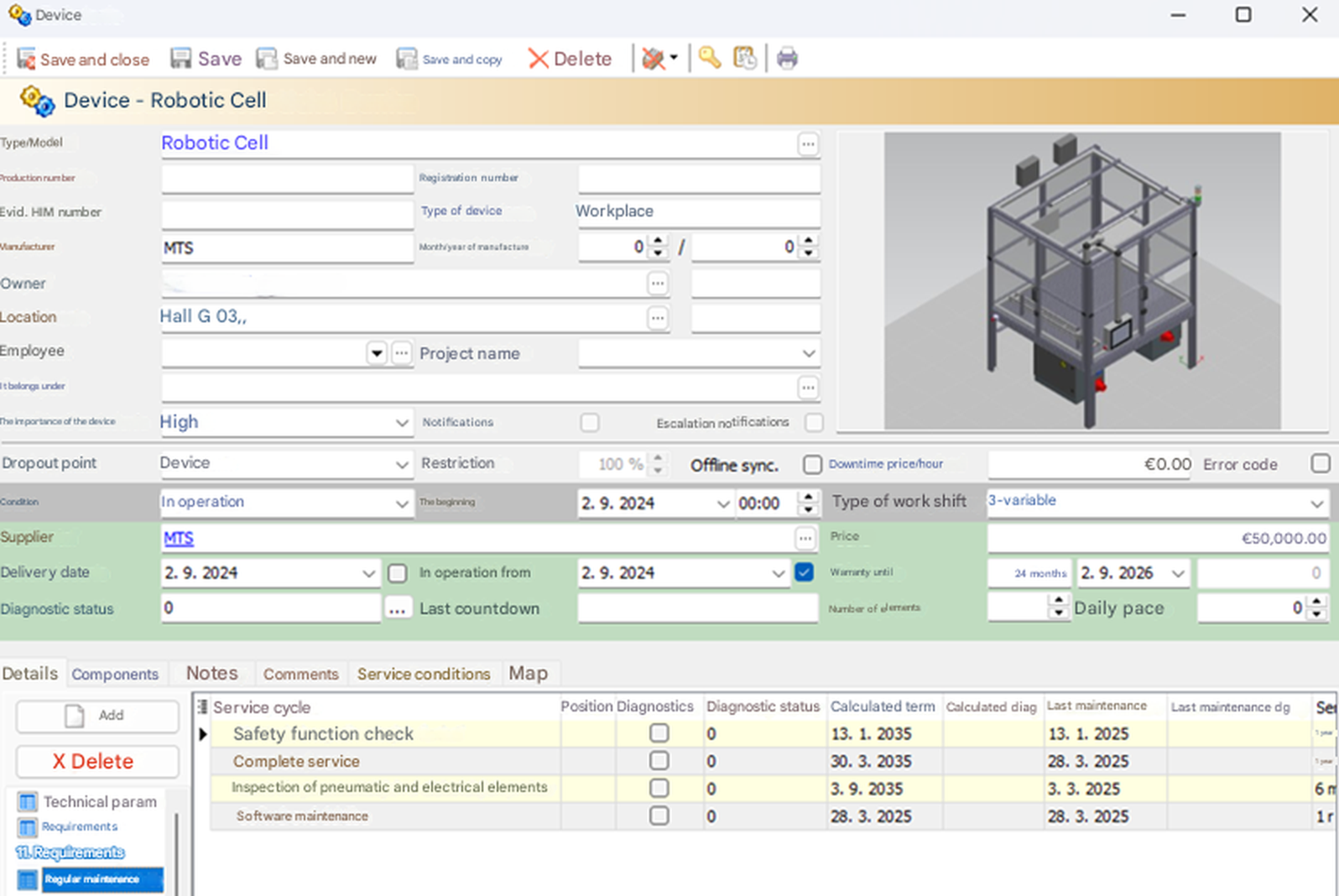
Integration into CMMS: The subsequent step of the methodology involves the integration of maintenance activities into the CMMS (
Figure 4). The system serves as a central platform for the registration of maintenance objects, planning and scheduling of maintenance interventions, management of diagnostic data, and the automated generation of maintenance recommendations when predefined thresholds are exceeded. This approach is consistent with established guidelines for the implementation of intelligent maintenance systems in industrial environments, which identify CMMS as a core infrastructure for integrating maintenance processes and data flows across the enterprise [
20].
By incorporating both preventive schedules and predictive condition-based information within a unified CMMS environment, the proposed methodology establishes a coherent framework that bridges traditional preventive maintenance practices with modern predictive monitoring techniques. Moreover, the framework is designed to be extensible, allowing future integration of advanced analytical algorithms or experimental validation under real operating conditions. Within the pilot implementation, the CMMS environment enables structured documentation of maintenance interventions, feedback on failure recurrence, and iterative refinement of maintenance allocation, thereby supporting a closed-loop improvement mechanism at the framework level.
Practical Application Based on the CMMS: The final step of the methodology is the implementation of maintenance plans in real operation according to schedules generated by the CMMS. Operational data collected during workcell operation enable continuous evaluation of the effectiveness of individual maintenance strategies, optimization of maintenance intervals, adjustment of diagnostic thresholds, and validation of predictive models. In this way, the proposed methodology exhibits a cyclic character and supports continuous improvement of the reliability and availability of the robotic workcell.
5. Identification of Critical Components
The identification of critical components represents a key stage in the design of the maintenance strategy, as it enables preventive and predictive actions to be focused on those elements of the robotic workcell whose failure would have the greatest impact on cycle continuity, operational safety, or maintenance economics. Based on this, and although the previous section has already introduced aspects of the Component Criticality Assessment, this section provides a more detailed description of how the criticality analysis was conducted. The identification process is based on recommendations from Reliability-Centered Maintenance (RCM) and FMECA analyses, which emphasize the need to assess component criticality through a combination of failure probability and failure consequences [
14,
15]. These methodologies are widely applied in the analysis of complex mechatronic systems, including robotic workcells.
To improve transparency and methodological reproducibility, a semi-quantitative criticality scoring approach based on the classical FMECA concept was introduced in this study. Selected failure modes and operational risks were evaluated using a simplified ordinal scoring model based on three parameters: Probability (
P), Severity (
S), and Detectability (
D). The Criticality Index (
CI) is calculated as
where
Probability (P) represents the likelihood of occurrence of a given failure mode;
Severity (S) reflects the operational consequences of the failure for system performance, safety, or production continuity;
Detectability (D) expresses the likelihood that the failure can be detected before causing operational disruption.
The parameters P and S were evaluated using an ordinal scale ranging from 1 (low) to 5 (high). The same scale was also used for D; however, in accordance with standard FMEA/FMECA practice, the Detectability scale is interpreted inversely. In this sense, a lower numerical value indicates that the failure can be detected easily through monitoring or diagnostics, whereas higher values represent failures that are difficult to detect before causing operational interruption. In other words, for the case of D, a value of 1 corresponds to high detectability (easy detection), while a value of 5 corresponds to low detectability.
For interpretative purposes, the following
CI ranges were adopted:
For the purposes of this pilot implementation, Probability, Severity and Detectability were weighed equally in order to maintain transparency and practical interpretability of the prioritization process. The model is intended as a structured allocation tool at this stage; differentiated weighting coefficients may be incorporated in future implementations supported by extended reliability datasets.
As mentioned before, the assessment was developed in close cooperation with the company’s maintenance department and reflects empirical knowledge regarding recurrent failure modes, downtime consequences, repair effort, and spare-part availability observed during extended workcell operation. The Semi-quantitative criticality assessment of selected workcell components appears in
Table 1.
No formal sensitivity analysis was performed within the scope of this pilot implementation, as the primary objective was to demonstrate structured maintenance allocation logic rather than to conduct a parametric robustness evaluation. The model is therefore positioned as a practical engineering prioritization tool suitable for industrial testing and subsequent deployment at this stage.
Within the robotic workcell, components are grouped into functional assemblies representing the main subsystems, namely robotic mechanisms, pneumatic elements, safety devices, the PLC-based control system, power supply and communication components, and selected structural nodes. For each subsystem, elements with a significant influence on the execution of the operational cycle are identified, with particular attention paid to components whose degradation may lead to process interruption or a reduction in manipulation quality. This system-level perspective is consistent with the literature, which highlights the importance of assessing criticality in the context of the overall system rather than in isolation [
13].
The UR5e collaborative robot is identified as a critical component due to its role in ensuring material flow within the workcell. Failure of its servo drives or malfunction of the vacuum gripper results in an immediate interruption of the process. According to Ren et al. and Sang et al., servo motors and joint mechanisms are among the most common sources of degradation in collaborative and industrial robots, with wear typically manifested through increased joint torque, thermal deviations, or loss of positioning accuracy [
9,
11]. These parameters are well monitored by the internal diagnostic capabilities of the UR5e, which supports its inclusion in the predictive maintenance branch.
Similarly, the industrial robot KUKA KR6 R700 (KUKA Roboter GmbH, Augsburg, Germany) is classified as a highly critical component, as it performs a key assembly operation within the workcell. As reported in the literature, degradation of drives, bearings, and gearbox units in multi-axis robotic manipulators has a direct impact on motion accuracy and, consequently, on the quality of executed operations [
4]. Diagnostic variables such as motor current loading and temperature profiles provide reliable indicators of mechanical wear and are well suited for the implementation of predictive maintenance approaches.
Pneumatic actuators and valves are identified as components with medium to high criticality, depending on their position within the operational cycle. Pneumatic systems are susceptible to degradation caused by air leakage, contamination, or reduced air quality, and failures in this domain may affect the speed, accuracy, and stability of manipulation tasks [
16]. Uncontrolled leakage or reduced valve responsiveness can lead to unsuccessful assembly operations, thereby increasing the maintenance relevance of these components.
Safety-related elements, including safety modules, limit switches, and presence sensors, are classified as highly critical due to their essential role in ensuring safe operation. According to ISO 10218 [
22] and established guidelines for robotic safety systems, the functionality of these components must be regularly verified, as failures may result in unexpected stoppages or potential hazards to operators [
21]. Consequently, these elements are primarily managed through preventive maintenance with an emphasis on periodic functional testing.
The PLC-based control system and communication modules represent components whose failure has an immediate system-wide impact. The degradation of industrial communication networks and PLC systems has been widely discussed in the literature, which highlights their sensitivity to electrical interference, connector wear, and cable degradation [
23]. For this reason, these components are classified as highly critical within the proposed maintenance model.
Structural elements, such as the workcell frame, fastening components, and load-bearing modules, are assessed as lower-criticality components; however, their gradual degradation may lead to indirect failures, particularly through increased vibration levels or reduced geometric accuracy. As noted in the literature, the mechanical integrity of the workcell structure influences the stability of robotic systems, and, therefore, these elements require regular inspection within the preventive maintenance regime [
22].
Based on the semi-quantitative risk assessment (
Table 1) and system-level functional analysis, a structured component criticality classification was subsequently developed to support maintenance strategy allocation. This classification, presented in
Table 2, links component groups with their criticality level, main failure implications, primary maintenance strategy, and supplementary maintenance regime. The criticality of the components within the robotic workcell was assessed primarily based on their influence on production continuity, operational safety, maintenance complexity, and overall system reliability.
The classification reflects pilot operational observations, industrial maintenance experience, and engineering design considerations rather than statistically validated long-term reliability datasets. Its primary role is to provide a structured basis for integrated maintenance planning within the proposed framework.
Within this allocation, predictive maintenance is treated primarily as a decision-support layer enabling early degradation detection for highly critical components rather than as a standalone predictive modelling contribution. The framework focuses on integrating diagnostic information into maintenance planning and CMMS-supported execution rather than on developing predictive algorithms themselves. The outcome of the critical component identification process is a structured classification of components according to their impact on robotic workcell operation, enabling the assignment of appropriate maintenance strategies to individual elements. This analysis provides the foundation for the subsequent development of an integrated maintenance model, in which preventive and predictive measures are systematically linked and adapted to the technical significance of the identified components.
6. Integrated Maintenance Model
The integrated maintenance model of the robotic workcell is designed as a combination of complementary maintenance strategies, namely preventive maintenance, predictive maintenance, and a controlled run-to-failure approach for low-criticality components. The objective of their integration is to support improved technical availability of the equipment while contributing to more structured maintenance cost management. Such integrated views on maintenance strategy selection and coordination are consistent with recent research emphasizing the importance of linking production and maintenance planning within a unified decision-making framework [
24,
25,
26].
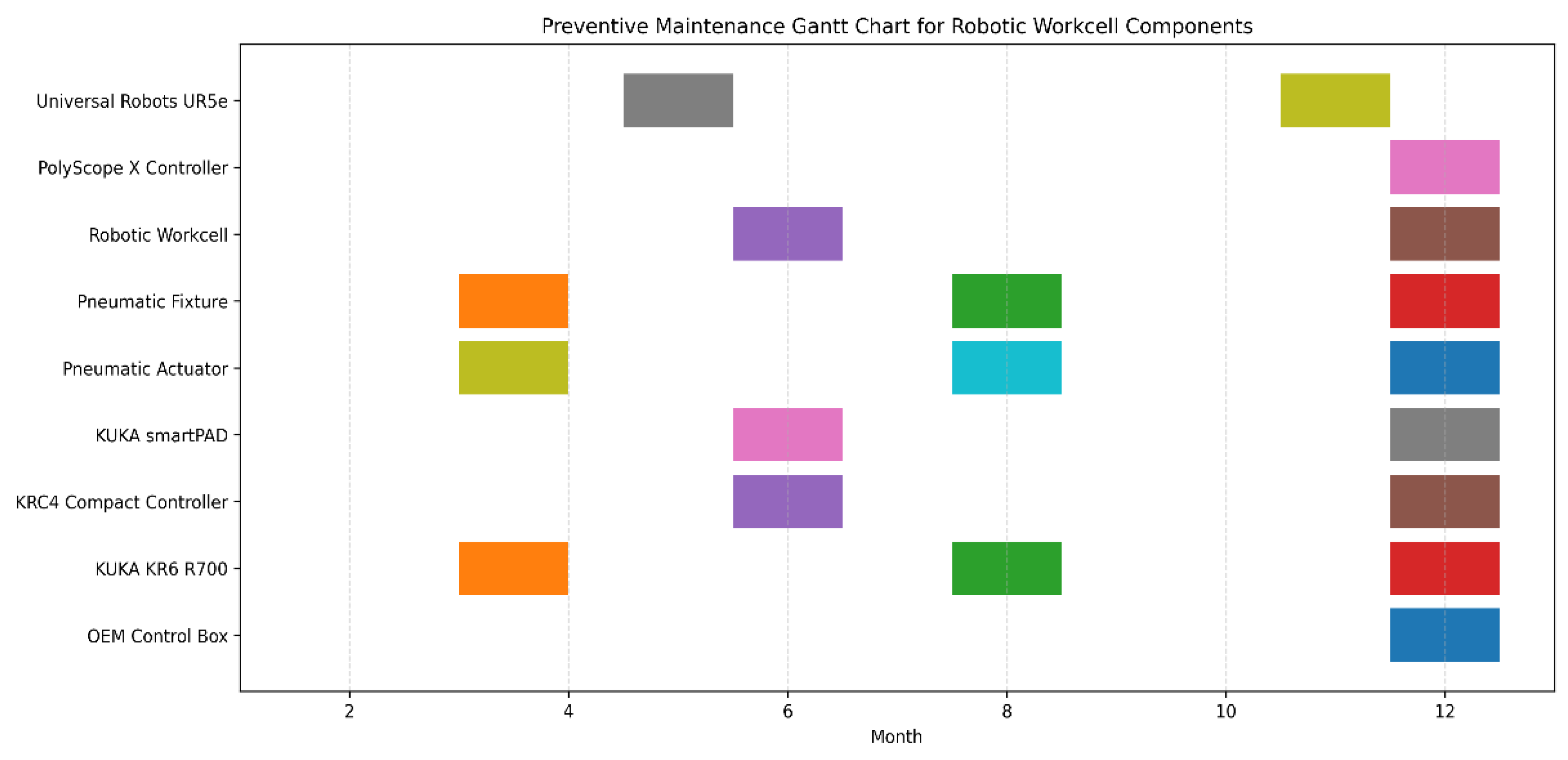
The preventive layer represents the stabilizing element of the integrated maintenance concept. Within this layer, maintenance activities are organized according to time-based or cycle-based intervals that reflect the loading characteristics of individual workcell components. To illustrate the temporal distribution of these activities, a preventive maintenance Gantt chart is included in the text (
Figure 5). This visualization supports coordination of maintenance activities with the production schedule and may contribute to reducing cumulative impacts on equipment availability. Similar coordination of maintenance and production activities has been shown to reduce downtime and improve overall system performance in integrated production–maintenance models [
25].
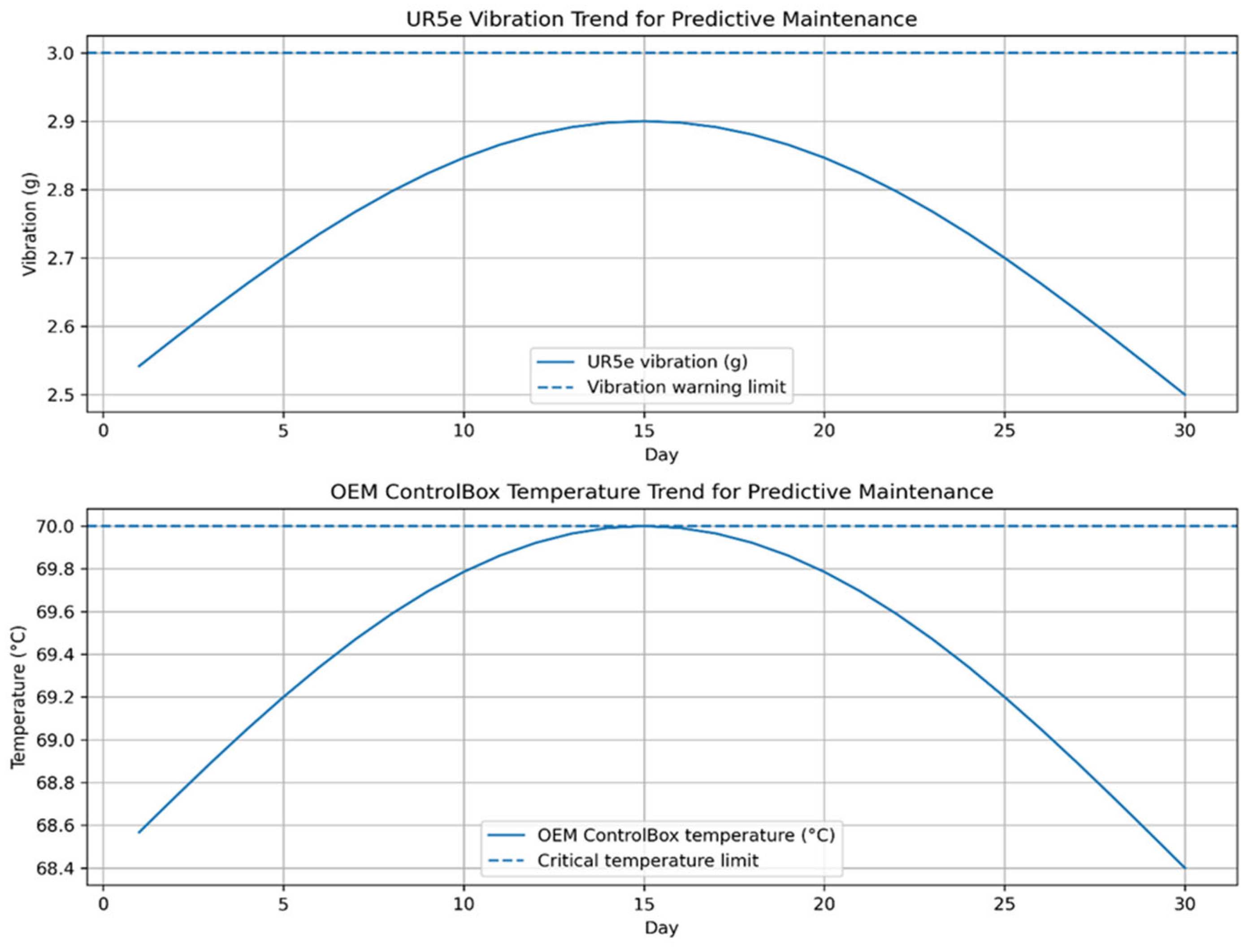
The predictive layer complements the preventive foundation by providing a structured mechanism for incorporating diagnostic information into maintenance decisions. Monitored variables include vibration levels, temperature, motor current loading, and cyclic motion profiles of the robotic systems. The proposed predictive maintenance concept (
Figure 6) schematically illustrates the data flow from component monitoring through threshold evaluation to the activation of maintenance recommendations. This approach supports condition-based intervention planning and aligns with contemporary maintenance frameworks that integrate operational data into maintenance decision processes [
24,
25]. The block diagram represents a logical framework that can be further extended with advanced Remaining Useful Life (RUL) estimation algorithms [
27,
28]. It should be emphasized that
Figure 6 represents a conceptual illustration of diagnostic signal behavior and integration logic. The depicted trends are not derived from a specific experimentally recorded time-series dataset but are intended to demonstrate how diagnostic information interfaces with maintenance decision-making within the proposed framework.
While preventive and predictive maintenance form the primary operational layers of the integrated model, corrective, reactive, and proactive maintenance strategies are intentionally incorporated as supporting and complementary mechanisms rather than excluded.
Corrective maintenance is applied when failures are detected at an early stage but still require planned repair or component replacement. In this context, corrective actions are typically initiated based on diagnostic alerts generated by the predictive layer or during scheduled preventive inspections, allowing failures to be addressed before escalating into critical breakdowns.
Reactive maintenance is deliberately limited to low-criticality components for which the cost of preventive or predictive intervention would exceed the cost of corrective repair. Typical examples include pneumatic fittings, hoses, minor connectors, or non-essential protective covers, whose failure does not threaten process continuity or safety and whose replacement is economically and technically uncomplicated. This controlled run-to-failure regime is therefore an intentional part of the optimization strategy rather than a deficiency of the model.
Proactive maintenance is implicitly embedded in the model through the systematic analysis of recurring failures, trend deviations, and root causes identified within the CMMS environment. Feedback from corrective and predictive interventions enables long-term improvement measures, such as design modifications, parameter optimization, or changes in maintenance intervals. In this sense, proactive maintenance acts as a continuous improvement layer that enhances the robustness of the preventive and predictive strategies over time.
A central element of the integrated maintenance architecture is the Computerized Maintenance Management System (CMMS), which mediates information exchange between diagnostic data, maintenance planning, execution, and performance evaluation [
29]. To illustrate the outcomes of the proposed maintenance policy, the model incorporates visualizations of key performance indicators (KPIs).
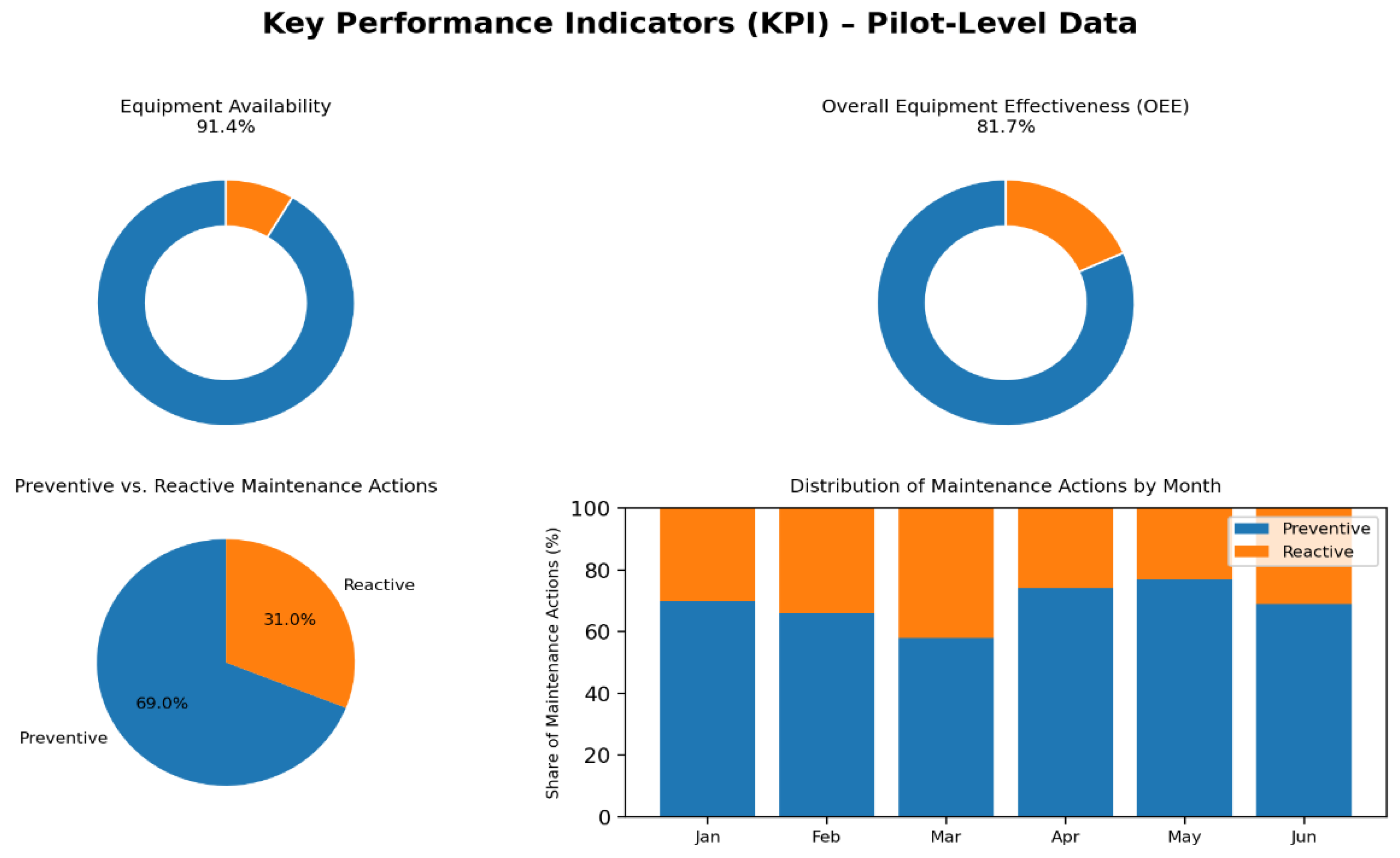
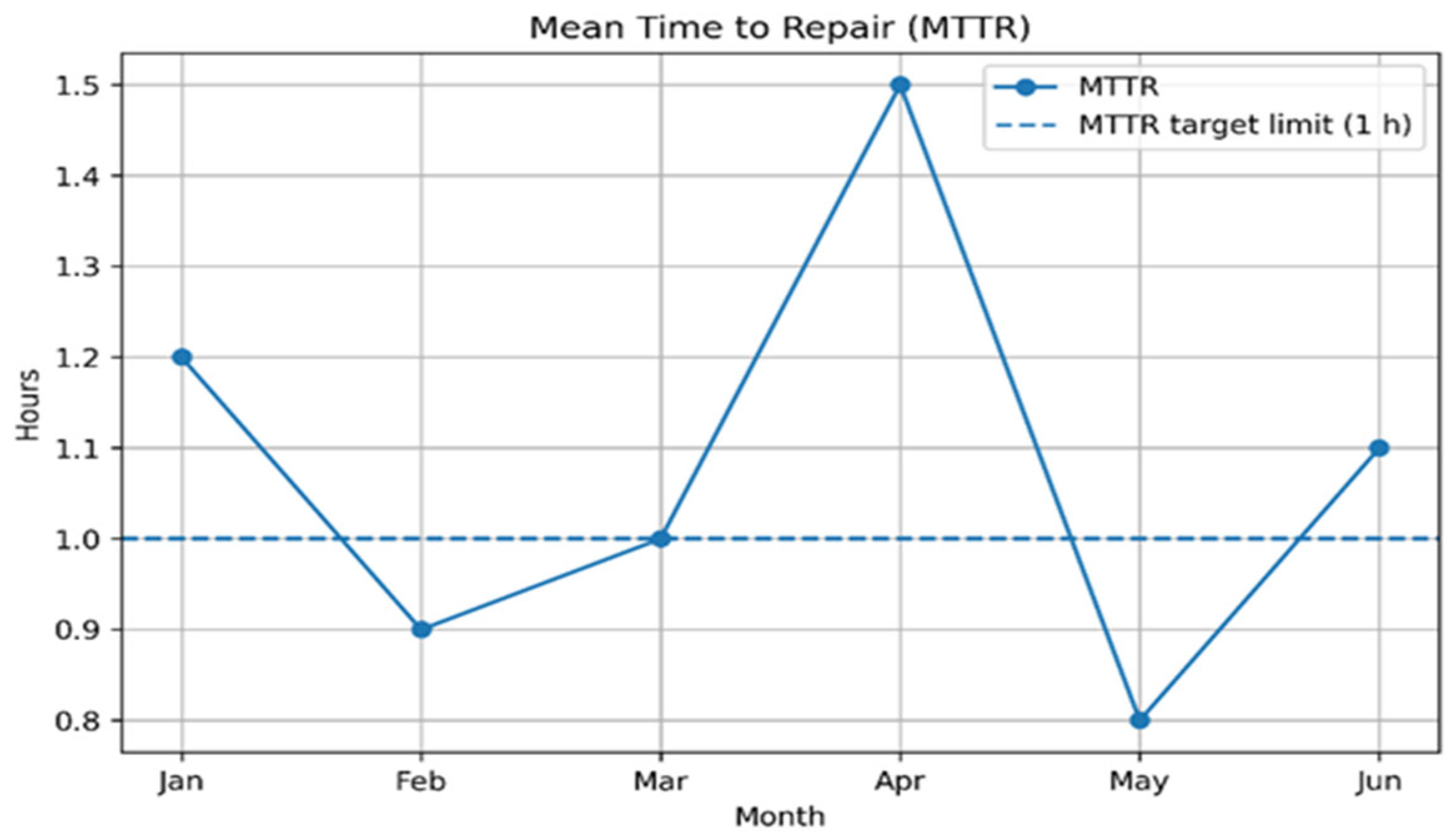
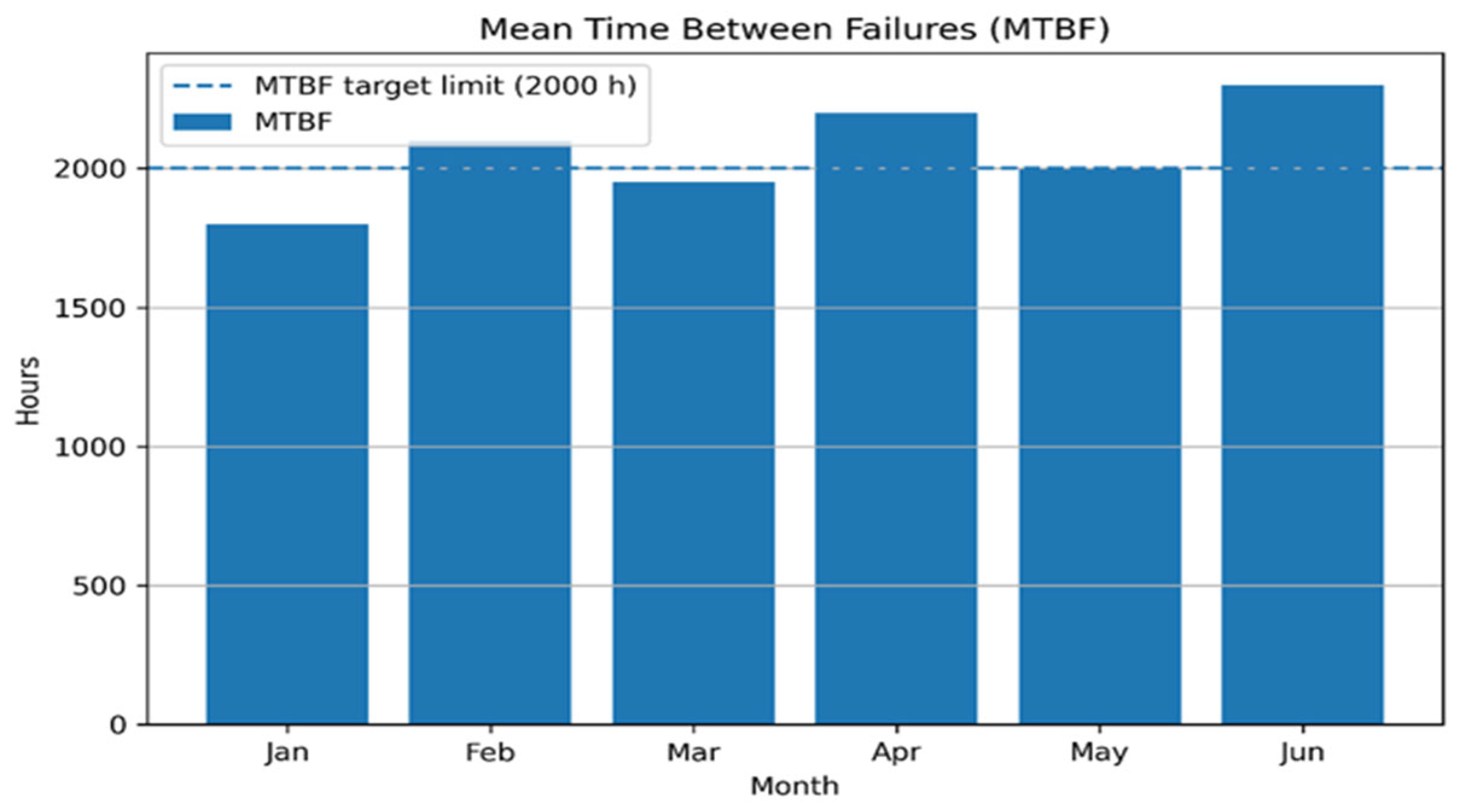
Figure 7,
Figure 8 and
Figure 9 present graphical representations of workcell availability, Mean Time to Repair (MTTR), Mean Time Between Failures (MTBF), the ratio of preventive to reactive interventions, and a radar-based analysis of target metric fulfillment. These visualizations are derived from pilot operational observations obtained during approximately six months of partial framework implementation, combined with structured maintenance allocation analysis. They provide preliminary quantitative insight into performance tendencies and support methodological evaluation of the integrated maintenance concept rather than constituting statistically validated long-term experimental results.
To further improve transparency and address the need for baseline comparison, maintenance performance comparison before and after framework-oriented allocation is presented in
Table 3. The “before” values represent operational conditions observed prior to structured framework implementation and are derived from historical operational records, maintenance experience and existing KPI records held and provided by the maintenance department of the industrial partner. The precision of the existing records gave the authors a complete and precise picture of the workcell prior to the pilot implementation. The “after” values reflect pilot-level observations obtained during approximately six months of partial implementation of the integrated maintenance framework, combined with structured maintenance allocation analysis. In this regard, the comparison should be viewed as an operational pilot illustrating a performance tendency, linked to structured maintenance planning, statistically validated experimental study. All basic calculations behind the values in
Table 3 can be found in
Supplementaty Materials.
The comparison indicates moderate but consistent improvements across key reliability and maintenance performance indicators. Availability and OEE improvements are primarily associated with stabilization of minor stoppages and better synchronization of maintenance activities. The observed MTBF increase and MTTR reduction reflect structured maintenance planning, spare-part readiness, and improved coordination via CMMS workflows.
The reduction in reactive maintenance share and the increase in the preventive-to-corrective ratio confirm a strategic shift toward proactive maintenance management. The maintenance cost index suggests moderate cost stabilization rather than aggressive cost reduction, which aligns with the objective of improving operational reliability without excessive maintenance intensification.
Overall, the integrated model establishes a coherent maintenance framework in which individual layers complement one another: preventive maintenance ensures system stability, predictive maintenance supports condition-informed intervention decisions, and the controlled run-to-failure strategy optimizes maintenance effort for low-criticality elements.
The KPI visualizations (
Figure 7,
Figure 8 and
Figure 9) together with the indicative comparison presented in
Table 3 provide a structured pilot-level industrial reference for evaluating the operational impact of framework-based maintenance allocation within the analyzed robotic workcell.
7. Discussion
The proposed integrated maintenance model represents a structured engineering framework that combines multiple maintenance strategies with the objective of improving the reliability and availability of the robotic workcell. The model has been partially validated through pilot-level industrial implementation and operational observation; however, it is primarily intended as a methodological framework rather than a fully experimentally validated predictive maintenance system. This discussion therefore focuses on the interpretation of the obtained operational indicators, the main contributions and limitations of the model, and its positioning with respect to existing approaches reported in the literature. The results visualized through the preventive maintenance Gantt chart, the predictive maintenance block diagram, and the KPI-based indicators suggest that combining multiple maintenance strategies may support a more structured distribution of maintenance effort and create conditions that may support the reduction in reactive interventions. In particular, the utilization of diagnostic data from robotic systems provides a basis for early detection of deviations from nominal operation, which is consistent with trends reported in the field of condition-based maintenance [
8,
9]. The predictive layer of the model, therefore, represents an important step toward adaptive lifecycle management of robotic components and may serve as a foundation for future Remaining Useful Life (RUL) estimation algorithms. The discussion further highlights that preventive maintenance remains a critical stabilizing element even in modern robotic workcell environments. Although predictive techniques provide valuable insights into the technical condition of components, many elements of the workcell, particularly safety-related devices, pneumatic components, and control units, require regular inspection regardless of diagnostic indicators available. This observation is supported by the literature emphasizing the importance of hybrid maintenance models for complex systems [
14,
30,
31]. The KPI visualizations suggest a tendency toward improved equipment availability under the pilot-level framework allocation and the predictability of maintenance interventions. To clearly position the proposed methodology within the current state of the art and practice,
Table 4 provides a comparative overview of how different framework categories address key aspects of integrated maintenance within multi-robot systems.
This comparative analysis confirms that while traditional RCM is systematic, it remains largely qualitative and lacks explicit CMMS connectivity [
32]. Similarly, existing RUL-focused research often treats predictive maintenance as an isolated algorithm [
28,
33]. The primary technical progress of the proposed framework lies in its unique system-level integration of five maintenance strategies, coupled with an explicit, data-driven CMMS architecture that facilitates proactive lifecycle feedback based on quantitative risk scoring. The proposed model constitutes a conceptual framework for integrated maintenance that establishes a structured basis for the systematic implementation of preventive and predictive approaches in robotic workcells. As the model is based on analytical and methodological processing of available diagnostic data, certain parameters, such as diagnostic threshold values, reaction times, and maintenance interval settings, are defined in accordance with manufacturer recommendations and existing literature. Further refinement of these parameters can be expected through long-term operational deployment, which would enable calibration based on real degradation trends. At its current stage, the predictive approach relies primarily on deterministic approaches suitable for conceptual design; however, future applications would benefit from the incorporation of stochastic or learning-based models, as suggested by several authors [
10,
15]. Another limitation of the model is its dependence on the accuracy and reliability of diagnostic data and sensing infrastructure. Even minor measurement deviations may affect the correctness of predictive maintenance decisions. Consequently, emphasis must be placed on sensor calibration and on a robust data acquisition architecture. Another key challenge is the data integration within CMMS platforms. While the presented KPI visualizations illustrate the potential for performance evaluation, real-world implementation would require reliable interfaces between control systems and maintenance management platforms, as highlighted in [
16,
29]. The pilot implementation confirmed the practical feasibility of such integration; however, broader industrial deployment would require standardized data interfaces, long-term data consistency, and robust validation of diagnostic workflows [
34]. Despite these limitations, the proposed integrated maintenance model offers significant practical relevance. It represents a scalable approach that can be adapted to different robotic workcell configurations while providing a clear methodological structure for integrating preventive, predictive, corrective, reactive, and proactive maintenance strategies within a unified lifecycle management framework. The partial industrial implementation illustrates the feasibility of the proposed approach under real operating conditions, although extended experimental validation remains necessary. The scientific contribution of the study lies primarily in the structured system-level integration of maintenance strategies within a CMMS-supported maintenance framework, the linkage of criticality-based maintenance allocation with CMMS-supported lifecycle management, and the practical illustration of how predictive diagnostic information can be operationalized within industrial robotic maintenance environments. Overall, the study contributes to bridging the gap between predictive maintenance research focused on algorithm development and industrial maintenance practice, where organizational integration, lifecycle coordination, and structured maintenance strategy allocation often represent the primary implementation challenges.
8. Conclusions
This paper presented the design and partial pilot-level implementation of an integrated maintenance framework for a multi-robot workcell. The proposed framework combines multiple maintenance strategies, including preventive, predictive, corrective, proactive, and controlled run-to-failure approaches, within a unified system-level architecture supported by criticality-based component evaluation and CMMS-integrated lifecycle management.
The main contribution of the paper lies in the structured integration of maintenance strategy allocation with semi-quantitative component criticality assessment and CMMS-supported maintenance planning. Unlike traditional maintenance approaches that typically address preventive or predictive strategies in isolation, the proposed framework provides a coordinated methodology for selecting and combining maintenance policies according to the operational importance and degradation characteristics of individual subsystems in multi-robot environments.
The pilot implementation carried out over an approximately six-month operational period illustrated the practical feasibility of the framework and provided operational evidence of improvements in maintenance organization and selected performance indicators. The observed tendencies include stabilization of equipment availability, reduction in reactive maintenance share, and improved coordination of preventive interventions through CMMS-supported scheduling. These observations illustrate the potential of integrated maintenance planning to support more structured lifecycle management of multi-robot production systems.
At the same time, the study highlights several limitations typical of pilot-level implementations. The presented performance indicators are based on operational observations rather than statistically validated long-term datasets, and the predictive layer is implemented as an architectural decision-support mechanism rather than a fully developed prognostic algorithm. Consequently, these results serve as empirical validation of the framework’s architectural feasibility, demonstrating the successful multi-strategy integration required for complex robotic environments.
The success of this partial pilot implementation serves as a scalable foundation for the next phase of development and research. Future work will leverage this integrated architecture to incorporate advanced machine learning analytics for higher prognostic accuracy and to expand the framework into long-term industrial environments. Furthermore, the current integration of CMMS and control systems serves as a blueprint for developing standardized interfaces across broader robotic production platforms.
Overall, the proposed framework provides a structured methodological foundation for integrated maintenance planning in multi-robot production environments and contributes to bridging the gap between predictive maintenance research and practical industrial maintenance management.




 ,
,