


Abstract
Securing mine sites is a challenging task due to the complexity of the infrastructure, the variety of physical and digital components, the distribution of assets and machineries, and the large number of stakeholders involved. Given the risks that are present in Tailings Storage Facilities (TSFs), mine operators are seeking technologies to accurately monitor the state of their dams. The latest developments implement evolutive monitoring and responsive risk management systems by adapting accurate Internet of Things technologies, automated mathematical model calculation to continually monitor the structural/geotechnical aspects of TSF, and a portfolio of innovative applications to support decision-making. Within this study, a comprehensive methodology is developed for assessing the environmental sustainability of a smart monitoring solution combining the life cycle assessment (LCA) method with the environmental risk assessment, which quantifies risk reduction potential. The use case scenario is identified based on real industrial data, also aligned with the common characteristics of tailing dams in Europe. Environmental sustainability of the smart monitoring solution is assessed through a cradle-to-grave LCA based on the ReCiPe 2016 (v1.1 Midpoint (H)) method. Monitoring impact alone is reduced primarily by the 40% reduction in monitoring visits, while the results show the environmental improvement of the TSF life cycle by 24% for CO2-eq., as a step in-line with the EU’s long-term strategy for total decarbonisation in 2050, and Sustainable Development Goal 9 for Industry by the United Nations. Additionally, the 27% freshwater ecotoxicity reduction, 20% human toxicity (cancer) decrease, and the rest of the studied categories indicate an overall footprint improvement for the monitoring solution application on TSFs. The findings demonstrate clearly theoretical, practical and policy implications, not only for the benefit of such solutions for environmental protection, but also for the necessity of integrating risk in sustainability analysis approaches.
1. Introduction
The generation of mine tailings worldwide extends to extremely high production, reaching levels of generation per year equivalent to 14 billion metric tonnes [1]. Tailings dams are used to the store water and waste that come as by-products from the mining process. Dam management practices on the other hand, are often outdated, missing knowledge on tailings behaviour and the poor performance of monitoring processes. On account of this, a number of TSF failures, which caused social, environmental, and economic effects to ecosystems and local communities, have been reported in recent decades [2], including failures in Los Frailes Aznalcóllar, Spain, 1998; Ajka Alumina Plant, Kolontár, Hungary, 2010; Mount Polley, Canada, 2014; Samarco Fundão, Brazil, 2015; Brumadinho Feijão, Brazil, 2019; Jagersfontein, South Africa, 2022; and Williamson, Tanzania, 2022 [2,3,4,5]. Failures are attributed mainly to (i) overtopping and overflow, (ii) slope instability, (iii) earthquakes, (iv) foundation failure, and (v) seepage and internal erosion [6]. Despite that the TSF failure rate has not decreased over time, according to the World Bank, serious failures (release of at least 100,000 m3 of tailings or loss of life) and very serious failures (release of 1,000,000 m3 of tailings or more than 20 deaths or at least 20 km of travelled tailings) showed a growing tendency from 1958 until the end of the surveyed period, 2017 [6].
The need for innovative action is reinforced by the EU Directive 2006/21/EC [7], which establishes measures underscoring the importance of safety management systems for waste generated by extractive industries. The directive explicitly acknowledges that ‘it is necessary to establish monitoring procedures during the operation and after the closure of waste facilities’ [8]. At the same time, these requirements are consistent with the following Sustainable Development Goals (SDGs): SDG 11, which aims to make cities and human settlements inclusive, safe, resilient, and sustainable, emphasizes disaster risk reduction [9], while SDG 12, focused on responsible production and consumption, promotes safer management of waste across its life cycle and the adoption of sustainable practices by companies [10].
Many environmental problems associated with TSF operation and failure refer to the potential contamination of soil, water and air. Tailings dams feature content of organic and inorganic nature. Metallic production TSFs’ inorganic content is sulphides, metallic elements [11] and compounds of metallic nature, rock-forming constituents, and reagents participating in flotation of inorganics. Rock-forming constituents and inorganic flotation reagents are also part of non-metallic production TSFs, which also feature inorganic content, non-metals (e.g., phosphorus) [3] and metallic compounds. Concerning their organic content, it is mainly sourced from reagents participating in organic flotation (e.g., hydrocarbon oils and thiocarboxylic acids). Added to the compound contents in tailings dams, long-term content may be microorganisms present in TSFs.
In recent years, mine operators have adopted innovative information and communication technologies but still use archaic or manual processes, thus making the protection of critical assets a costly and complex problem. In this regard, the European research project SEC4TD acts as a solution to the current state-of-the-art issues by synergising Industry 4.0 technologies, such as the Internet of Things, cloud computing, and data analytics, to deliver an alertness mechanism for TSF safety monitoring. The smart monitoring solution addresses current management deficiencies linked to non-automated, inadequate monitoring techniques, inadequate data processing and integration techniques, and lack of timely warning communication systems for the communities surrounding TSFs [12]. Once installed, such equipment can provide reliable, low-cost monitoring for years on end, giving operators an unrivalled opportunity to spot potential failures before they happen. The technology could ultimately serve as the platform for a whole ecosystem of smart, sensor-based mining services and applications, from asset tracking to plant condition monitoring.
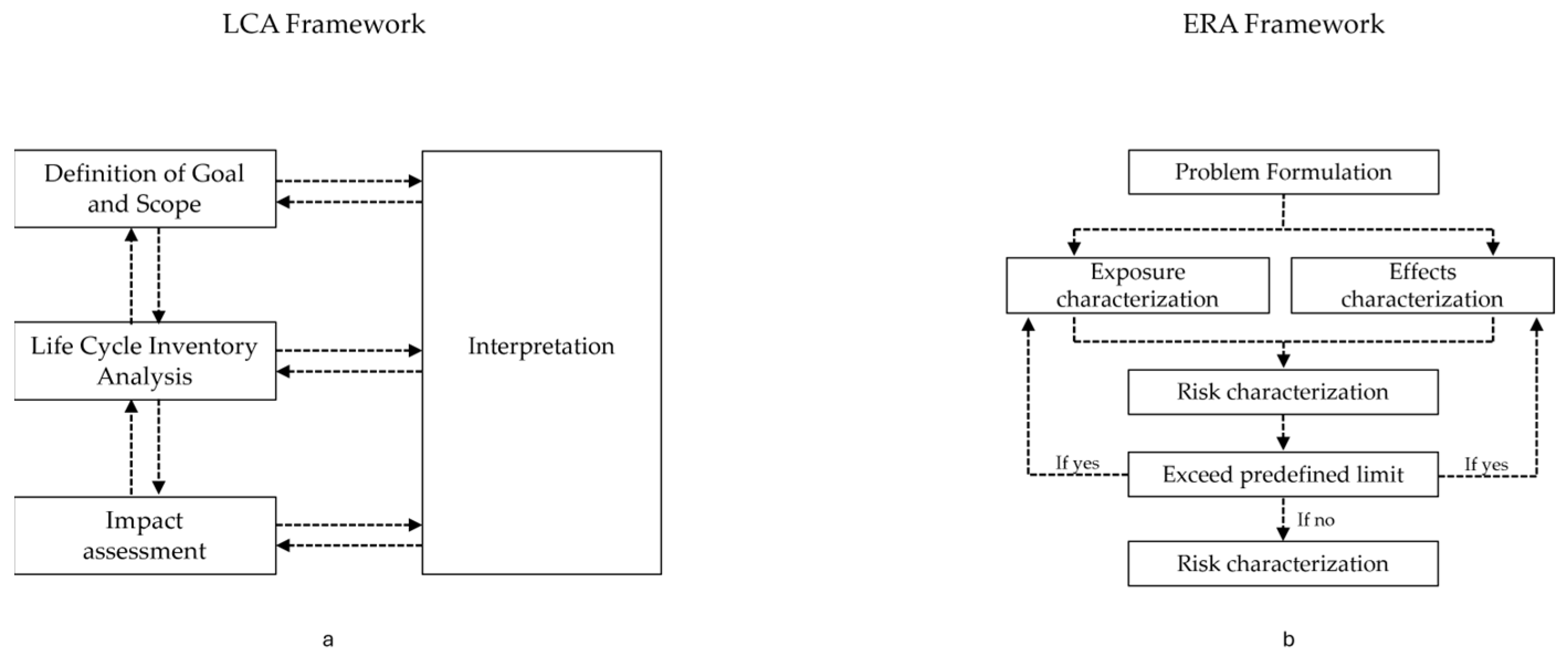
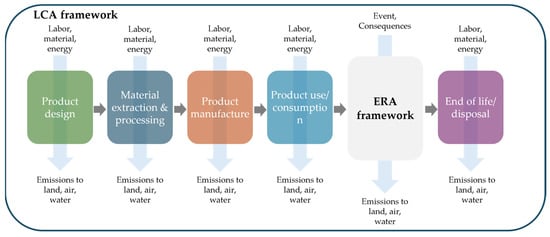
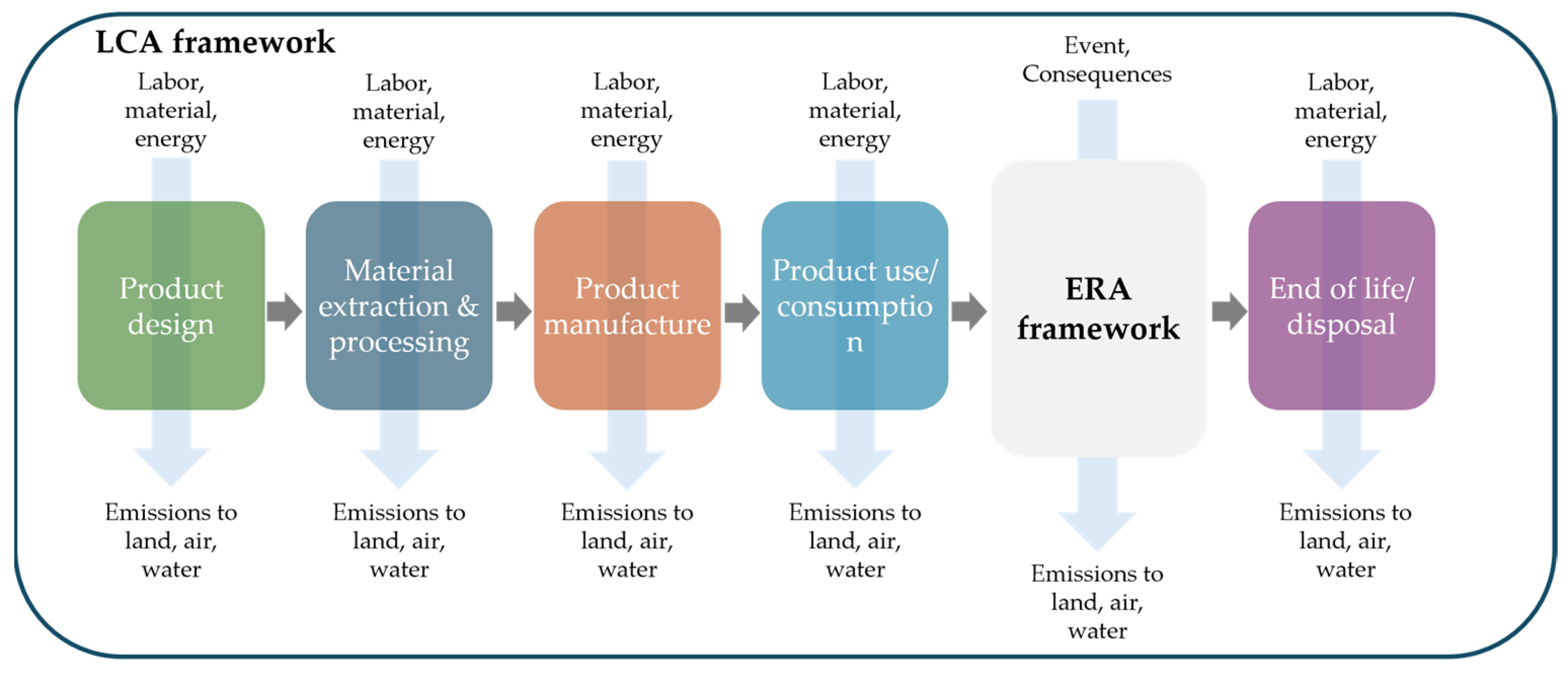
Within this study, a comprehensive methodology is developed for assessing the environmental sustainability of a smart monitoring solution combining the life cycle assessment (LCA) method with the environmental risk assessment (ERA), as shown in Figure 1. These approaches provide the methodological framework for the estimation of the sustainability of the product, highlighting the opportunity to reduce pollution and resource consumption. The properties of the environmental aspects to be exposed and the likelihood of exposure, as well as resource consumption, emissions and waste, should be considered. LCA is a methodological framework for evaluating indicators of environmental impacts associated with the entire life cycle of a product, highlighting the identification of opportunities to prevent pollution, reduce resource consumption and environmental associations at individual stages. It has been standardized by the International Standards Organization (ISO), ISO 14040 [13] and ISO 14044 [14], and involves the quantification of all resources used and emissions associated with a product’s life cycle, with reference to a functional unit (FU). The quantified resources and emissions are collected to form the life cycle inventory (LCI). The LCI is further analyzed in the life cycle impact assessment (LCIA) stage, where characterization models are used to convert the elementary flows from the LCI stage into emissions and impact categories (e.g., global warming or acidification potential), which enable comparison of the diverse environmental effects. ERA is a systematic process that integrates information on the behaviour and eventual ‘fate’ of chemicals in the environment. Properties including volatility, solubility, toxicity, flammability and reactivity, as well as their effects on ecological systems, are employed to assess adverse environmental impacts, in other words, to evaluate environmental risk. A risk assessment analyzes the potential risk and the possible level of exposure. An environmental risk assessment considers risks to humans and ecological systems, while an ecological risk assessment focuses on non-human populations, communities and ecosystems.
Figure 1.
Methodology framework for (a) LCA and (b) ERA.
A key topic addressed in review publications is the integration of LCA and ERA [15,16,17,18,19,20]. Various approach mechanisms have been reviewed recently [19], such as parallel integration, subset integrations and complementary integrations. Out of all relevant publications, nearly half of them approached ERA integration to LCA via the development of characterization factors with spatial differentiation [21,22,23], as well as impact pathways [24,25,26,27,28,29], and modifications or suggestions of changes in existent life cycle impact categories [30,31,32].
Each relevant publication is linked to limitations in its approaches, with three of the most repetitive ones being the lack of data availability [31], the low quality of available data [31], and the simultaneous augmented data needs [33]. Other limitations referred to include double counting in the process of integration [21,23] and inadvertent inconsistencies in parameter selection [21,23]; while modelling, additional limitations include key components of both methods omitted [21,23], ambiguity in the integration [21,23], and deficient guidance [16,19]. LCA and ERA also differ in their structure as models, as well as in their scope, setting an additional obstacle in their integration [19,20,28]. For an assessment with decreased bias, there is a need to decide proper pathways of exposure [21,23,25,34].
The importance and necessity of environmental impact assessments are highlighted along with risk assessment in the seventh Technical Note on Tailings Storage Facilities by the World Bank. In the last two decades, the LCA literature concerning tailings management options has increased, with more than 25 publications [35]. Most LCA studies considering final disposal of tailings are linked to tailings dams [36,37]. However, few studies link a complete life cycle assessment directly with the TSF life cycle.
Regarding risk and tailings dams, the importance of information on the environmental risk of TSFs is also explicitly highlighted in the United Nations’ Safety Guidelines and Good Practices for Tailings Management Facilities [38], according to which TSFs should be classified based on a risk assessment as a necessary step before construction.
The contribution of this study lies in establishing a comprehensive framework that integrates LCA and ERA to evaluate the environmental performance of TSFs under a smart monitoring strategy. Unlike conventional approaches, the study quantifies risk reduction as a measurable factor, linking accident probability with both environmental impacts and costs across the TSF life cycle. By treating reduced probability of failure and associated impacts as tangible metrics, the study bridges the gap between qualitative risk management practices and quantitative sustainability while demonstrating that smart monitoring not only lowers operational and maintenance burdens but also achieves substantial reductions in greenhouse gas emissions.
The importance of integrating LCA and ERA in tailings dams is clearly seen not only in the statistics of TSF failures, but also in their documented catastrophic environmental, societal and financial impact [1,39,40]. Through the integration of risk in their life cycle approach, effects of even higher environmental magnitude of the structure’s life cycle impact (as in the study) can be considered in line with the total TSF impact. The reconsidered sustainability approach acts as a means of a more realistic evaluation, as the aftermath of such failures can be scaled as weighted part of their total environmental performance.
2. Materials and Methods
The incorporation of LCA and ERA is expected to provide a more holistic assessment of environmental and economic impacts. The methodological framework involves the integration of ERA elements such as severity, exposure, probability within the wider boundary of an LCA. The framework and cause–effect chains of each methodology are employed to design a harmonized representation of the phases and cause–effect chains required to assess the impacts on ecosystems of a TSF throughout is life cycle from cradle to grave [41].
2.1. Methodological Framework for LCA and ERA Integration
The proposed method is divided in four phases, also aligned with the LCA framework, including the definition of system scope, the analysis and identification of the system and its components, the analysis of impacts, and the interpretation and synthesis of the results. In line with ISO 14040:2006 [13], 14044:2006/A1:2018 [14], and the International Life Cycle Data Handbook [42], the first phase consists of defining the goals and scope of the assessment. The goal’s definition clarifies what, why, how, and for whom the study is relevant, ensuring clear and useful results. The scope outlines the study’s detail and limits, ensuring the goal can be achieved within these boundaries.
The second phase focuses on analyzing and describing the system and its components (this depends on the boundaries previously established). Direct and indirect data are collected from various sources (industry databases, the literature, and direct measurements), quantified (usually by mass or energy), and organized into a detailed inventory of inputs and outputs. This phase also involves the integration of ERA results. As shown in Figure 2, the ERA results are generated and incorporated as inputs to the LCA system. The main parameters of the ERA refer to the severity, exposure, probability and risk level of a TSF failure to occur, aligned with the respective impacts on human health and ecological receptors such as animals, plants or an entire ecosystem.
Figure 2.
Subset integration by incorporating elements of ERA within LCA framework.
The ecological impacts are assigned to the related human activities and processes simulated within the analysis boundaries, while the quantified risk level is utilized as a weighting factor for each life cycle phase of the TSF lifespan. For this purpose, a distinct phase is identified, additional to the general phases of design and construction, operation, closure and post-closure. This phase will comprise the environmental and economic impacts associated with a TSF failure in the context of tailings release and the required remediation actions.
The third phase evaluates the potential environmental and economic impacts of the inputs and outputs quantified in the inventory analysis. For this purpose, the cause–effect chain needs to be described and modelled using qualitative and/or quantitative methods. The simulations are executed using the commercial software Sphera LCA for Experts Version 10.9.3.0 [43]. Using impact assessment methods, it translates data into impacts across categories like climate change, toxicity, ecosystem quality, and resource depletion, helping to identify and assess their significance.
The aim of the fourth phase is to interpret and synthesize the results in a way that they can be easily communicated and understood by decision makers and stakeholders. The interpretation phase identifies key contributors and evaluates overall sustainability. It combines quantitative results with qualitative insights to inform decision-making and improvements.
2.2. System Description
The integrated end-to-end (E2E) TSF solution assessed is composed of three innovative hardware and software products for mining operators and service providers that will enable multi-scale, multi-platform data collection and visualization, event prediction, effective information management and data traceability, with the high-level purpose of enhancing safety and sustainability concepts for tailings dam monitoring. The technology is developed in the framework of the SEC4TD research project co-funded by EIT Raw Materials through a partnership of industrial partners and research organizations. Due to limited availability of data concerning the life cycle of the TSFs and to ensure a comprehensive and validated analysis, the selection of the use case characteristics was based on two main pillars: (1) the features of the two real TSF cases participating in this study and (2) the main characteristics (height and max. capacity) of TSFs in Europe.
Performance indicators for the smart monitoring solutions were realized through real data provided from industrial partners for TSFs located in Poland and in Bosnia and Herzegovina. Specifically, the Gilów reservoir, located near Lubin in the Lower Silesian Voivodeship of southwest Poland, is an artificial reservoir specifically designed to store post-flotation from the nearby copper mine in Lubin. The Gilów reservoir covers an area of approximately 800 ha and has a capacity of up to 60 million m3. Furthermore, the Gradina Lake TSF is in Bosnia and belongs to Arcelor Mittal Prijedor and was used for iron ore tailings deposition. The facility is a cross-valley embankment with a downstream raise. The total area of Gradina Lake is approximately 80 ha and its capacity is up to 8 million m3. After a thorough study, this TSF use case is an embankment dam constructed using both downstream and upstream construction with maximum height of 18 m.
2.3. Environmental Risk Assessment Methodology
Among several methods for risk assessment, the Severity, Exposure and Probability (SEP) Risk Assessment Model is employed. In this model, risk level is obtained as a function of the severity, the exposure and the probability of an incident to occur. The higher the number, the greater the severity, probability or exposure [44].
Risk = Severity ∗ Probability ∗ Exposure
The severity or intensity of an incident’s impact quantifies the extent of the surrounding area of a TSF and the respective damage. The analysis of the severity quantification is mainly focused on predicting the Discharge Volume and Runout Statistical Model for the released volume of tailings and maximum distance in the event of a TSF failure, based on physical parameters of the TSF’s construction [45]. For this purpose, a statistical model is employed, which calculates the volume of released tailings and the maximum distance travelled by the tailings by utilizing empirical regression equations and historical TSF failure data [45].
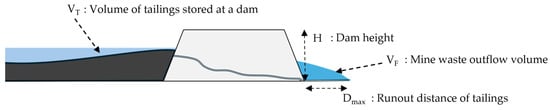
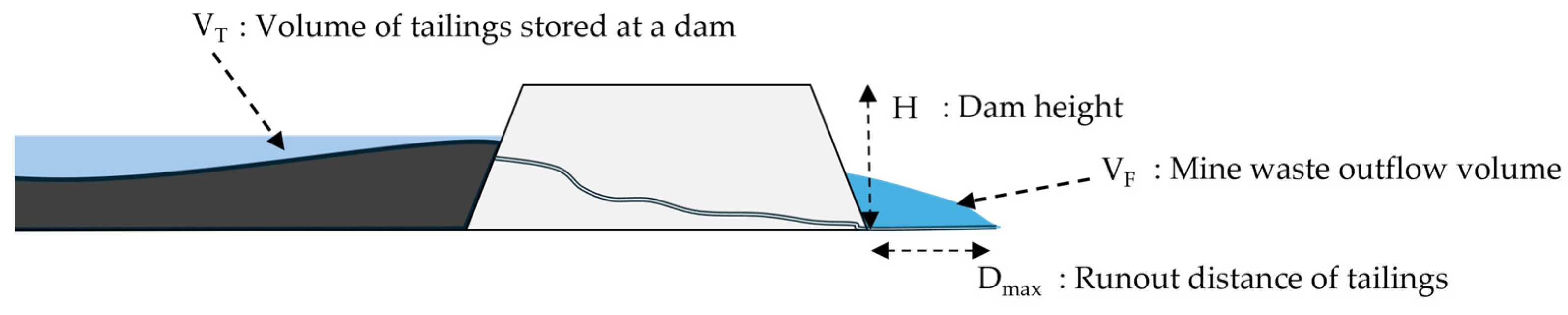
For the determination of the released volume of tailings (VF) [million m3], data-driven formulas based on past failures, dam height, and the impounded volume of tailings are utilized (Figure 3). The regression equation correlates the VF with the total impounded volume of the TSF’s capacity (VT) [million m3], with a residual standard error of 0.315 and a coefficient of determination (R2) equal to 0.815, as follows [46]:
Figure 3.
Definition of intensity.
Prediction of the maximum distance travelled by the tailings (Dmax) [km] is estimated by using the VF and the TSF’s height in metres at the time of failure H [m], with a residual standard error of 0.658. An updated heigh predictor Hf is estimated by considering a fractional volume released as opposed to the total volume of the TSF [46].
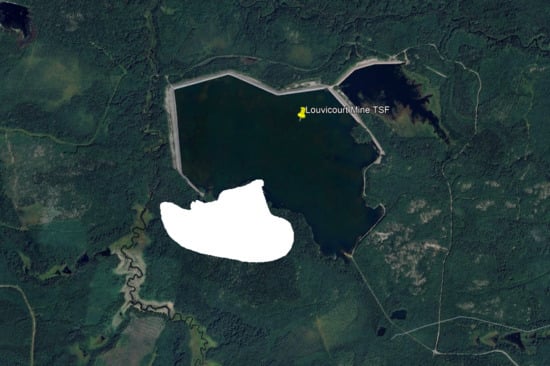
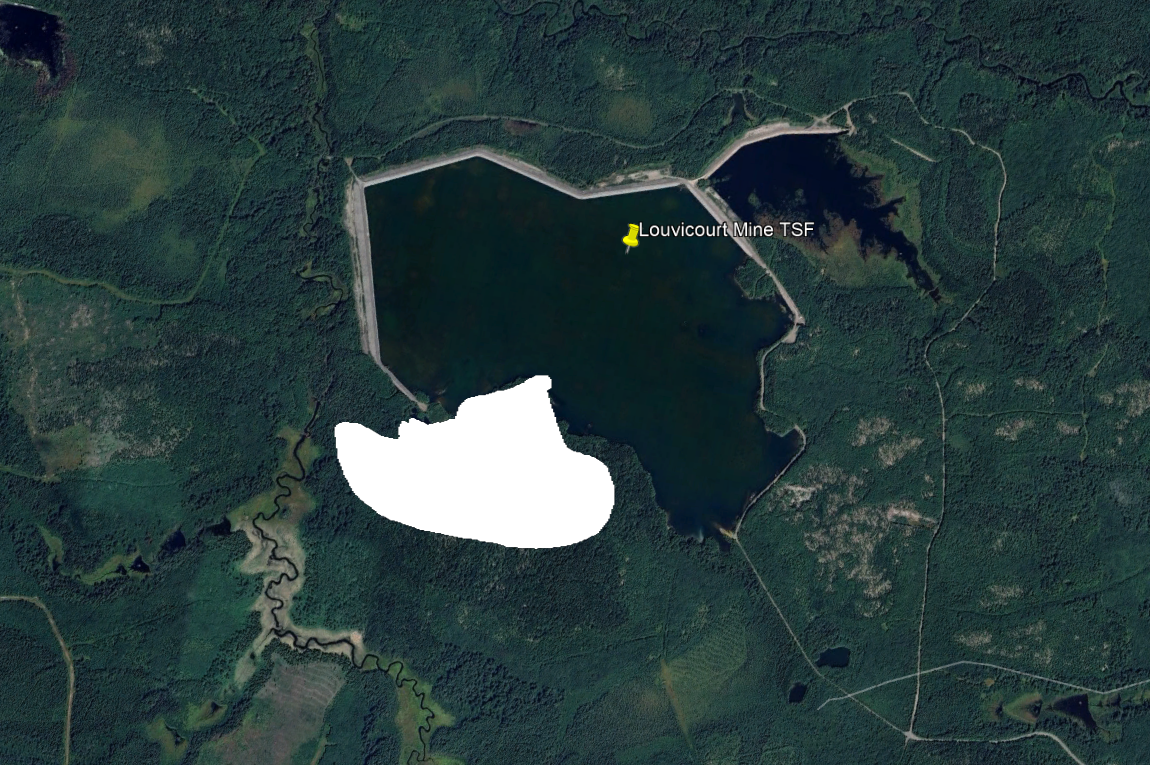
It is noted that site conditions vary significantly (rheology, water content, failure type, etc.), and therefore there is considerable uncertainty that needs to be considered. Nevertheless, predictions of the Discharge Volume and Runout Distance enable the quantification of the expected environmental impact and are provided in Figure 4 and Table 1, based on the Columbia Water Centre study [47,48] and a 1915–2015 statistical analysis of TSF accidents [45].
Figure 4.
Leaked tailings are (white) for the TSF use case run-out distance, attributed to [49].
Table 1.
Prediction of the Discharge Volume and Runout Distance.
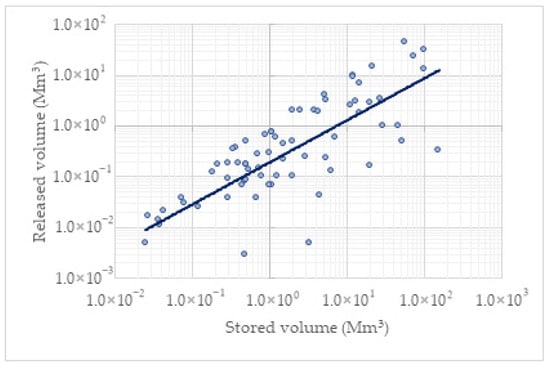
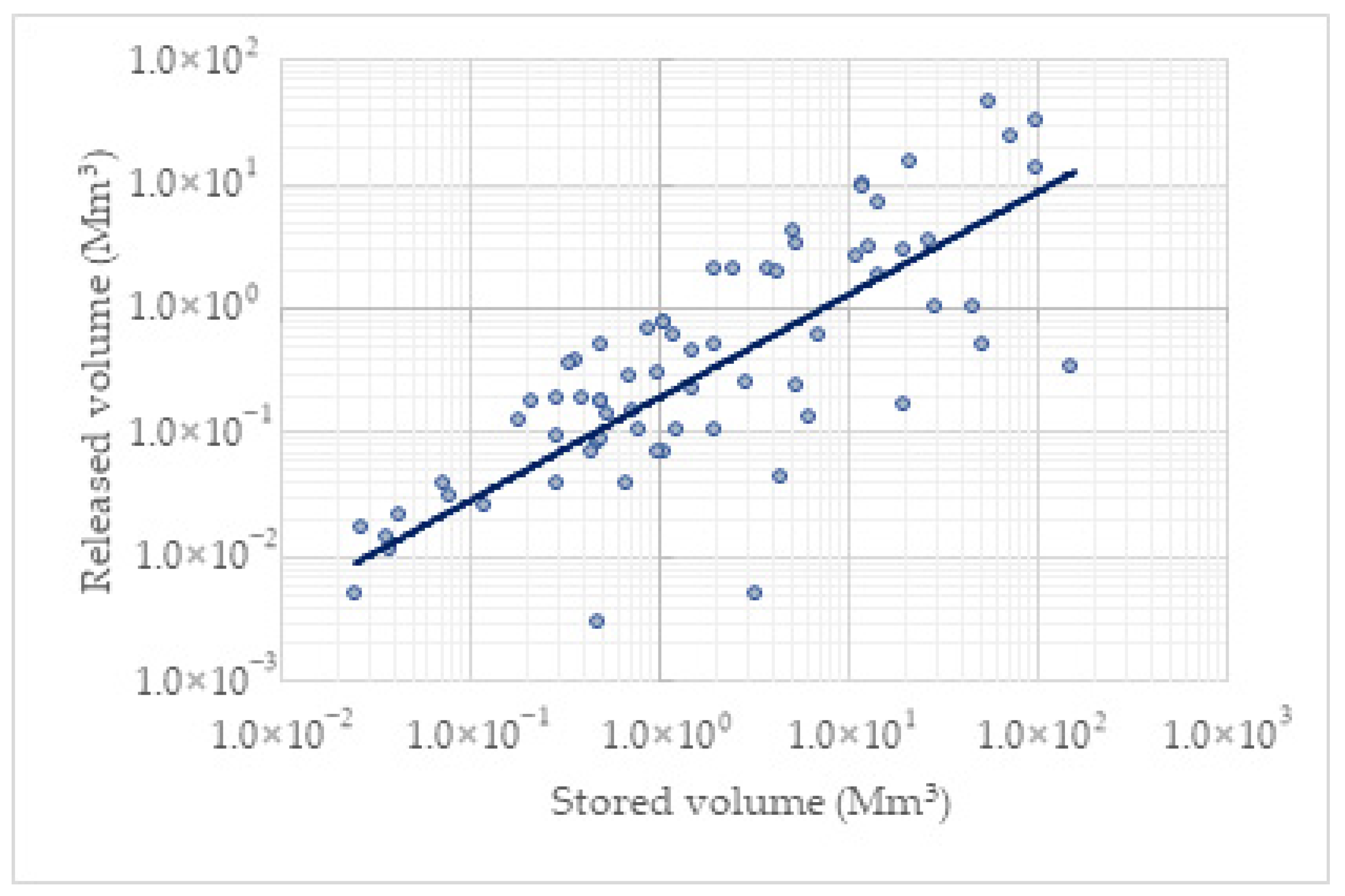
To verify our estimations, a statistical analysis was performed on 71 cases reported in [2] from 1928 to 2019. Based on Figure 5, the expected released volume in million m3 for a stored volume of 1 million m3 is 0.27 million m3, which is consistent with Table 1.
Figure 5.
Correlation between released and stored volumes of TSFs.
Exposure or consequences (E) refer to the degree to which an organization and/or a stakeholder is impacted by a TSF failure. Regarding TSFs, the types of failure-bearing entities recognized include the population, the economy, the environment, and society. Exposure can be described by the potential loss these entities might suffer. In particular, the following:
- •
- Population Exposure (E1) is neglected based on the assumption that the TSF use case is surrounded by a vegetation area and therefore no number of injuries or deaths is reported (see Figure 4).
- •
- Economic Exposure (E2) is neglected as it is out of scope.
- •
- Environment Exposure (E3) is low as the maximum distance travelled by the released tailings Dmax is equal to 4.4 km for every 1 million m3 solid tailings capacity (VT) and therefore less than 10 km2 is affected by the released tailings.
- •
- Society Exposure (E4) is directly linked to E1 and therefore it is neglected (see Figure 4).
Probability or likelihood (P) refers to the chance of an incident’s occurrence expressed as a number between 0 and 1, where 0 is impossibility and 1 is absolute certainty. To identify the probability, the following factors must be considered [50]:
- •
- Human factor (P1) refers to observed and reported irregular behaviours of the employees and insufficient qualification of the staff.
- •
- Technology factor (P2) includes manufacturing defects in the TSF’s construction such as poor control of tailings depositing, insufficient free height and dry beach width, high position of phreatic line, high pond water level, inappropriate slope ratio, and incapable seepage discharge.
- •
- Environment factor (P3) is related to natural events and arising issues from the environmental conditions such as earthquake, geological condition, and heavy rainfall.
- •
- Management factor (P4) involves the results of poor daily inspection and management, unsatisfactory safety acceptance and assessment, and insufficient investment.
For the representative and concrete estimation of the probability of a failure, a statistical analysis was performed based on [45] for 1915–2025 TSF statistics, in which 366 TSF failures were identified out of 1932 worldwide recorded TSF cases. The probability of failure based on the analysis and Figure 5 is 18.9% [2,45].
When smart monitoring is implemented, the probability of an accident occurring is accordingly reduced. A survey of 25 mining companies undertaken over the period of January 2018 to May 2018 was used as the basis for the calculation of the improved probability [51]. The sample represented five regions across the world, including North and Latin America, South America, North America, Australia/Oceania, and Africa. In view of this, mining companies that applied smart monitoring setups were able to reduce TSF failures or incidents by 28%. This is attributed to enhanced monitoring of the structural/geotechnical aspects of TSFs and the improvement of the safety, efficacy and environmental impact of the current mining processes. This leads to a reduction in the risk probability to 13.6%. The quantified risk level is utilized as a weighting factor for each life cycle phase of the TSF’s lifespan. The probability of an incident occurring is then applied as a weighting factor to the LCA’s impact of the incident and the related rehabilitation actions, as shown in Table 2. For instance, the explicit mathematical formulation for the GWP of Scenario 1 is the following, expressing a statistical incorporation of the incident during the life cycle of the TSF:
where WF is the weighting factor associated with the risk probability reduction. The same methodology is applied for each life cycle impact category.
GWPTotal = ∑( GWPConstruction, GWPOperation, GWPClosure, GWPPost-Closure ) + WF ∗ GWPTSF failure and remediation actions
Table 2.
ERA weighting factors—WFs.
2.4. Life Cycle Assessment Methodology
2.4.1. Goal, Scope and Functional Unit
The goal is to evaluate the environmental impact of employing smart monitoring solutions during the operation and closure phases of a TSF’s life cycle. The functional unit (FU) of the system is 1 million m3 of solid tailings. Tailings are mixed with water and deposited as slurry through pipes into the TSF. The reference flow of the analysis is solid copper tailings, which are stored at the TSF use case with a total quantity of 13,328,066 tonnes.
2.4.2. Scenario Descriptions and System Boundaries
A cradle-to-grave analysis is performed. The system boundaries of this study consider the phases of design and construction, operation, closure, post-closure and TSF failure and remediation actions. This scope encompasses various aspects related to equipment, energy consumption, tailings’ composition, and transportation of employees.
The study emphasizes on the specific equipment employed in the TSF monitoring process and in the smart monitoring infrastructure that will be utilized. The transportation of employees involved in the TSF monitoring activities will be a part of the assessment. This includes the commuting patterns of employees, transportation modes used (e.g., cars and buses), and the associated energy consumption and emissions. The study considers the distances travelled, fuel consumption, and the environmental impact of employee transportation to and from the dam site.
Two scenarios are developed and simulated. In Scenario 1, the baseline will be evaluated. The TSF use case construction, operation, closure and post-closure phases are considered. The system’s boundaries include all materials and energy used during construction, operation, closure and post-closure phases, as well as the disposal of both the dam and the installed equipment, the transportation of employees and the tailings stored. Additionally, the integration of the safety and risk levels of the TSF is addressed by considering TSF’s failure and land remediation when required. In Scenario 2, we evaluate the incorporation of smart monitoring products (hardware and software), including Internet of Things (IoT) and advanced analytics techniques. Preliminary observations show the reduced need for audits and thus transportation of employees to the physical sites. The analysis also examines the effect of smart monitoring on the overall safety and risk levels of the TSF use case.
2.4.3. Life Cycle Impact Categories
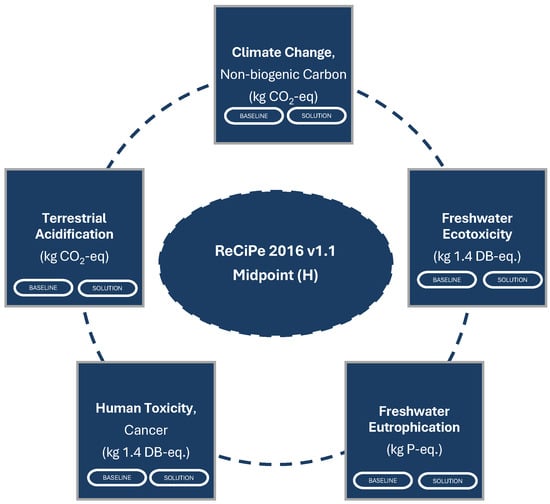
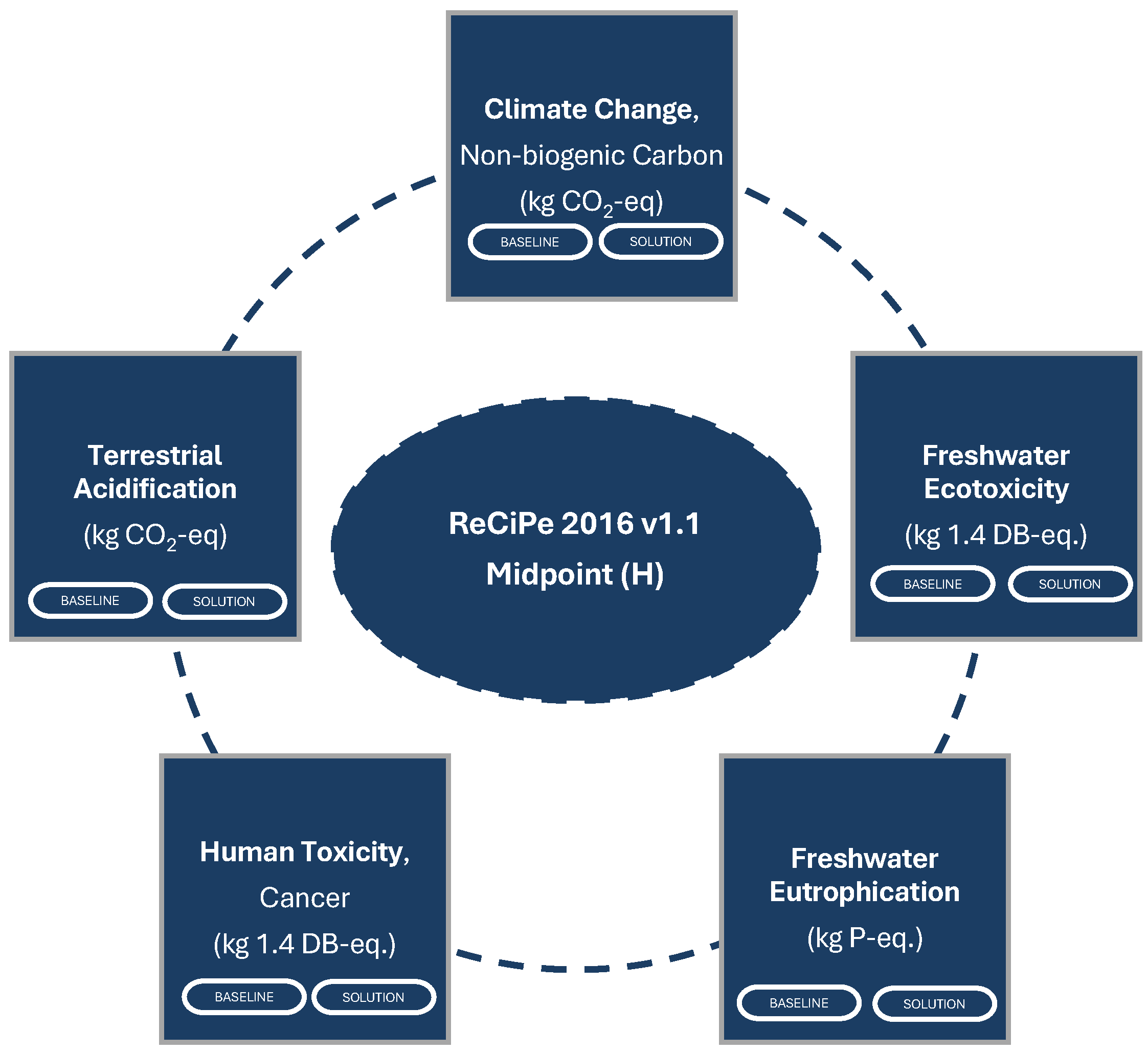
The midpoint impact categories, from the ReCiPe 2016 v1.1 method, were analyzed based on the scope of the analysis and are in line with the ERA framework. Five impact categories, as shown in Figure 6, were selected: (i) climate change, excl. biogenic carbon, (ii) freshwater ecotoxicity, (iii) freshwater eutrophication, (iv) human toxicity (cancer), and (v) terrestrial acidification. Climate change was the major interest of the study, based on the industrial and technological shift in the planet on decarbonisation strategies. Freshwater ecotoxicity and freshwater eutrophication were part of the assessment, since tailings interfere with water quality and affect the living species related to it. The two impact categories have been addressed in relevant studies [52,53,54]. Cancerous human toxicity is among the concerns of the study, since leaked tailings can be linked to threats such as heavy metals, which are responsible for human health concerns [55]. Finally, terrestrial acidification was studied in the assessment, due to the interference of tailings with the terrestrial environment. Tailings leakages can acidify the pH of the polluted land, which, combined with dissolved ions, can lead to acid rock drainage [1].
Figure 6.
Studied environmental impact categories.
From the perspective of the impact timeline, a 100-year timeline of emissions is necessary, not only because of the 77-year life cycle of the TSF but also because of the impact of lifespan on certain emissions. E.g., in climate change emissions, CH4 and N2O are more potent than CO2 in a 20-year period but lose potency over a 100-year period. On the other hand, CO2 can remain effective in emissions even in a 1000-year period; thus, a Hierarchist (H) impact perspective was prioritized over an Individualist (I) or Egalitarian (E) perspective, to counterbalance the Global Warming Potential of all carbon dioxide-equivalent gases.
2.4.4. Assumptions and Limitations
The following set of assumptions has been made to meet all the LCA analysis requirements: (1) the mean density of tailings is 1.6 tonne/m3; (2) monitoring processes occur in the operation and closure phases; and (3) the LCA impact integrates a probable accident during the life cycle of a TSF use case. Where primary data is not available, estimates or assumptions have been applied, according to a 2019 survey [51] for the performance of contemporary monitoring mechanisms for a TSF. In cases where the estimates or assumptions have a significant influence on the overall environmental profile of the different packaging systems, their influence has been investigated further in a sensitivity analysis.
The factual data, interpretations, suggestions and opinions expressed pertain to the specific TSF use case, site conditions, design objective, development and analysis scope. The analysis shows limitations in terms of geographical representation of the real cases, as the TSF use case comprises both real case specifications and literature inputs, and the geographical sources of the materials and energy inputs represent European averages. In addition, the ERA is based on the literature and statistics rather than measurements and information gathered from the sites.
The collection of data was carried out using established and credible sources, ensuring consistency and traceability. Nevertheless, inherent limitations related to measurement methods, reporting practices, and the availability of up-to-date information may introduce uncertainty into the analyses.
2.5. Analysis of Life Cycle Inventory
The life cycle inventory comprises the product’s system and its constituent unit process analysis. Data considering the material and energy inputs to conduct the analysis, as well as output products and emissions for the TSF use case, are presented.
The design and construction are essential parts of the TSF’s safety and security. The detailed design and construction of the TSF is guided by performance and design criteria defined by the Global Industry Standard on Tailings Management (GISTM) [56], local regulations and dam associations. The construction phase includes the manufacture of facilities, infrastructure and other provisions that must be in place before waste disposal can begin. Typical practices included in the initial activities are site clearance, construction of initial embankments and drainage systems, tailings delivery and distribution pipelines, access roads and associated water management infrastructure. The above factors are also important for the selection of the appropriate type of embankment. In this study, the TSF is constructed based on a downstream and upstream embankment with a maximum height of 18 m. Its inventory is filled with data related to construction processes, as shown in Table 3, and the inputs and outputs, as shown in Table 4.
Table 3.
Construction phase processes [57,58,59].
Table 4.
Aggregated construction inventory inputs and outputs [57,58,59].
The TSF’s use case operation phase is divided into two main sections. The first includes all operational processes not directly related to the monitoring systems, those being the preparation of the tailings for storage and their transportation and depositing to the TSF, while the second is dedicated to all monitoring operations performed, including physical inspections from personnel, groundwater level readings and samples, dust control, etc. [58]. The aggregated inventory of operational parameters is presented in Table 5.
Table 5.
Aggregated operational inventory inputs and outputs for Scenarios 1 and 2.
Different types of monitoring equipment are suggested in different cases [60]. The monitoring equipment installed in the TSF use case is a compilation of the monitoring infrastructure of the TSFs in Bosnia and Herzegovina and in Poland for Scenarios 1 and 2, as presented in Table 6 and Table 7.
Table 6.
Hardware equipment in Bosnia and Herzegovina—quantities.
Table 7.
Hardware equipment in Poland—quantities.
The smart monitoring infrastructure is an IoT-based GNSS platform for infrastructure monitoring that consists of GNSS nodes that monitor displacements of large infrastructures with a low level of maintenance [61], an automated Factor of Safety calculation tool for the spatial and temporal analysis of surface displacements for TSF stability assessment [62], and a risk management and emergency applications platform [63], which includes an alarming system that continuously monitors the data and analysis outputs in real time. Advanced algorithms are employed to detect unwanted events or abnormal patterns that may indicate potential risks or critical situations. At the foundation of the smart monitoring architecture lies the data acquisition layer, responsible for gathering data from various sensors deployed within the TSF. These sensors capture critical parameters, including ground movements, water levels, pore pressure, and environmental conditions. The collected data are then transmitted to the system for further analysis and processing. For simulating the smart monitoring infrastructure, the hardware GNSS is composed of the following components: a multi-band and multi-constellation GNSS; patch antenna; low-power GNSS receiver; battery with a minimum lifetime of two years; radio transceivers based on LoRa; and a TCP server for NMEA data transmission.
After a TSF is filled to capacity, the facility undergoes a closure and rehabilitation (post-closure) process, which may involve raising the TSF to increase storage or capping the facility to prevent water infiltration and facilitate vegetation, or a combination of these. During the closure phase, the TSF’s commercial activities, and therefore the operations and the disposal of tailings at the facility, are temporarily terminated. However, as the infrastructure has not been decommissioned and no closure plan has been implemented, surveillance and monitoring continue.
The post-closure phase involves the safe decommissioning of the infrastructure and rehabilitation of the TSF to ensure that the TSF is safe, stable, non-polluting, corrosion-resistant, and self-sustaining. The closing process starts with the final termination of the depositing of tailings. The closure plan is implemented, which includes the stages of the permanent termination of activities, the removal of infrastructure such as pipelines, the implementation of changes in water management and the management or rehabilitation of waste and waste storage/collection infrastructure. Upon the completion of the immediate management processes, the TSF transitions to the long-term monitoring process. Data for the closure and reclamation activities are collected from the literature. In more detail, among the necessary activities are the decommission, demolition or disposal of activities, the installation of long-term water management facilities including stream restoration, and the final contouring and grading, as well as the replacement of soil or growth media, seeding, planting, and mulching across the site and the implementation of post-closure reclamation monitoring.
The last phase to be considered is aligned with the ERA and refers to the TSF’s possible failure event in the context of tailings release and remediation actions. As a worst-case scenario, it is assumed that mine waste is released, causing widespread environmental contamination to the surrounding area of 29.7 ha. To rehabilitate the impacted land, after reviewing several land remediation techniques, the most suitable remediation is the offsite landfilling of released tailing, combined with inert matter and low-hazard waste treatment [64]. It is also assumed that the polluted land would be removed, with a clean-up efficiency rate of 95.6%. The remaining 4.4% of the tailings’ leftover mass is attributed to physical constraints (e.g., water and pollutants entered deeper soil layers) for a realistic approach to the remediation limits [65].
3. Results
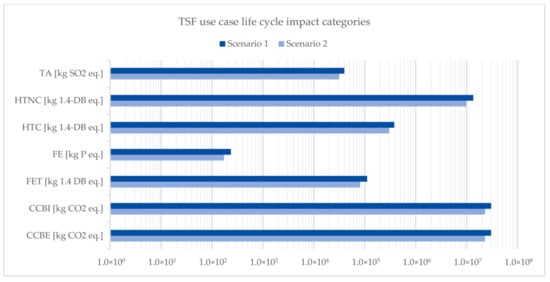
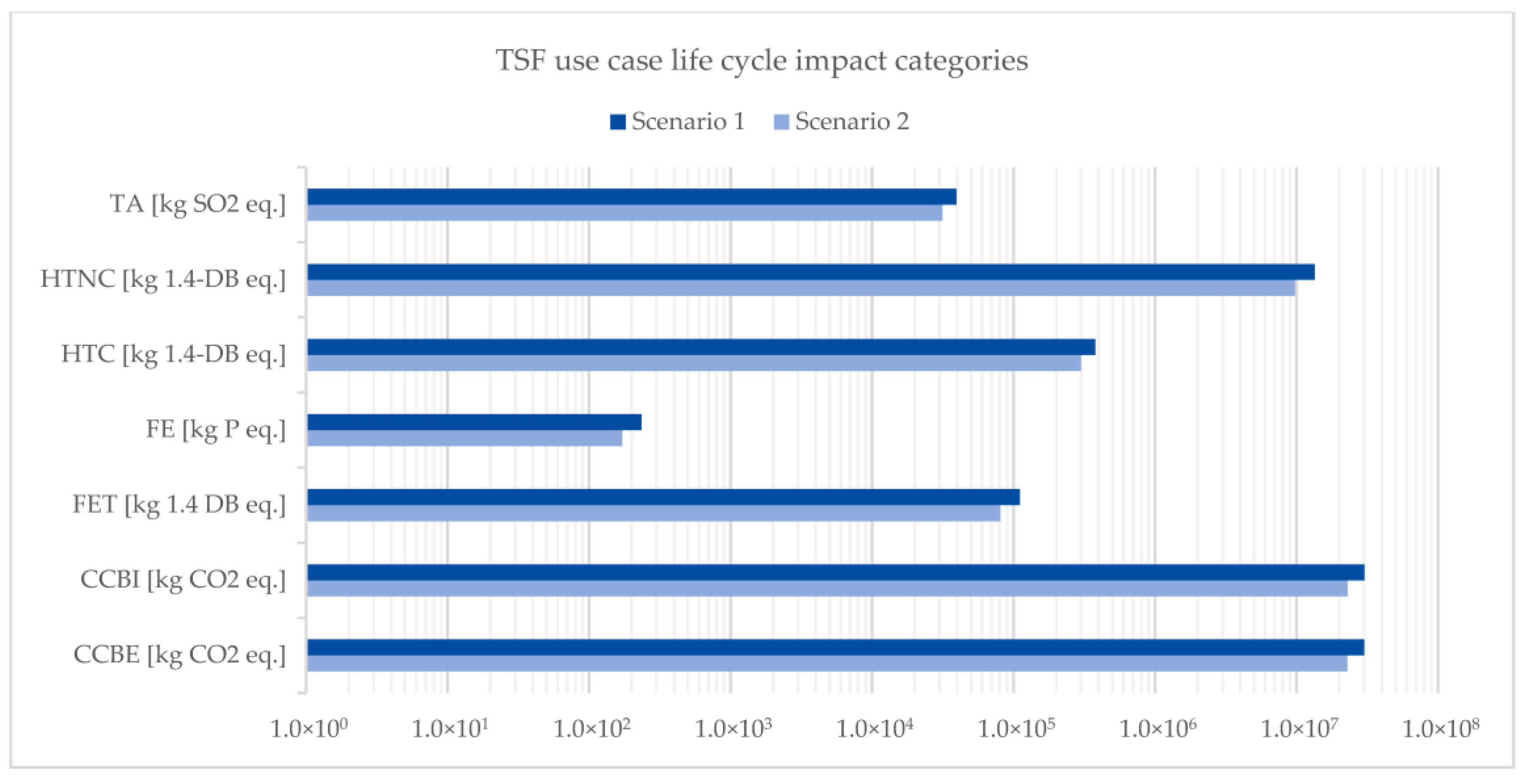
The aim of the evaluation framework is to assess the environmental benefits of establishing the proposed smart monitoring system to a TSF use case. The methodology proposed comprises ERA and LCA frameworks for the estimation of the sustainability of the product, highlighting the opportunity to reduce pollution and resource consumption. The cradle-to-grave approach based on the ReCiPe 2016 (v1.1 Midpoint (H)) method is presented, including the midpoint impact categories (abbreviated in results diagrams) of climate change, excl. biogenic carbon (CCBE), climate change, incl. biogenic carbon (CCBI), freshwater ecotoxicity (FET), freshwater eutrophication (FE), human toxicity (cancer) (HTC), human toxicity (non-cancer) (HTNC) and terrestrial acidification (TA). The analysis covers the whole life cycle of a TSF, as well as the specific analysis of the monitoring systems before and after the digital transformation of the TSF.
The whole life cycle impact assessment of the TSF use case for Scenarios 1 and 2 is summarized in Figure 7.
Figure 7.
TSF use case whole life cycle impact assessment.
In order to provide a holistic overview of the impact contribution allocated to each impact category, including life cycle phase level and elementary flow level, Sphera FE sensitivity analysis, a built-in tool, was applied for the scenarios evaluated. An analysis is performed in Section 3 in order to highlight which factors have the most significant impact on the overall environmental impact. The output of the method is the range of impacts calculated for the variation in one or more parameters within the specified range [66]. It is applied in two levels, including life cycle phase level and elementary flow level. The purpose of life cycle phase level sensitivity analysis is to determine the contribution of each stage of the TSF’s life cycle to the total environmental impact. To further investigate the environmental impact of the smart monitoring systems deployed in the TSF, an elementary flow sensitivity analysis is provided for the whole life cycle (Figure 8).
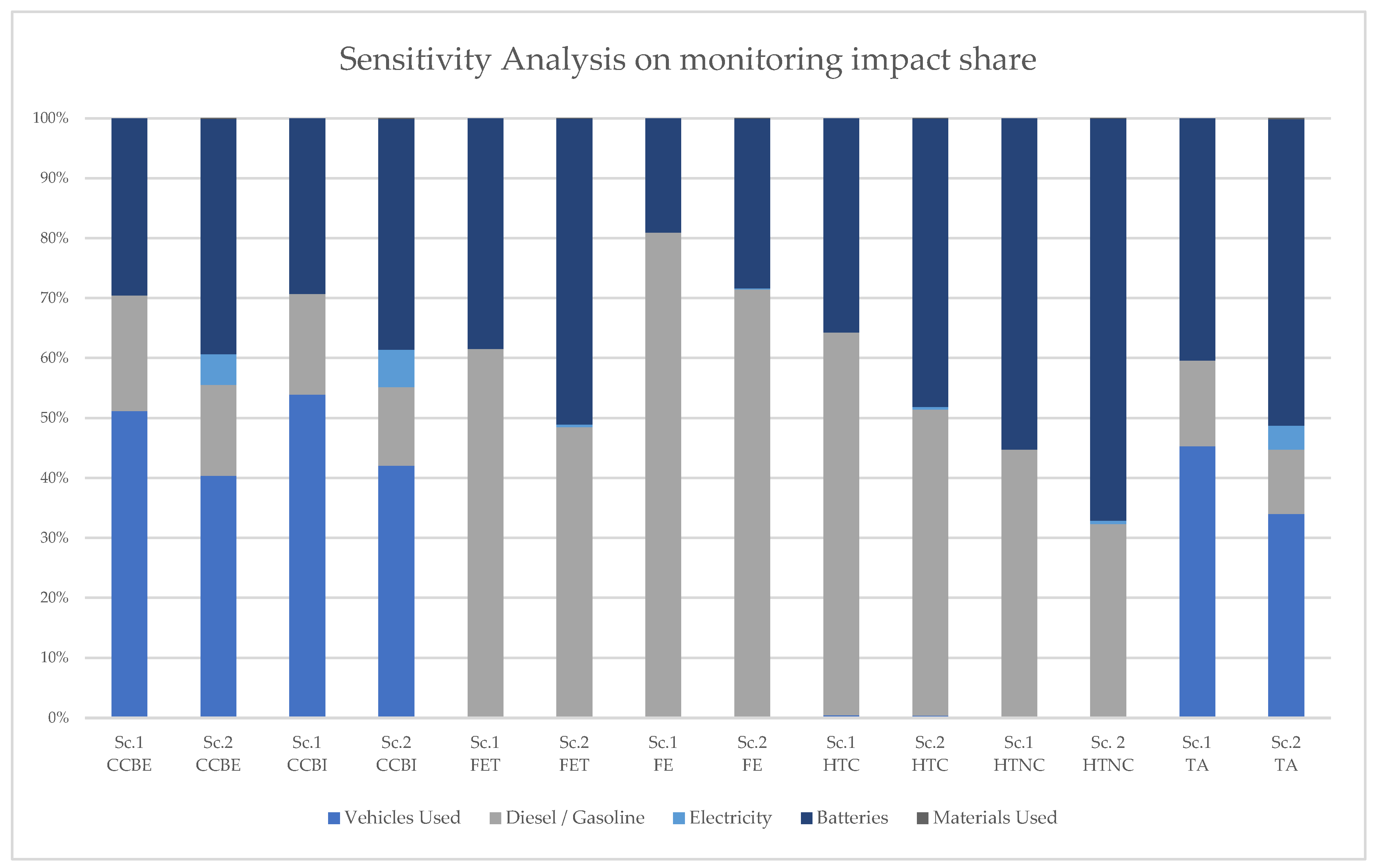
A sensitivity analysis for the whole monitoring impact is also shown in Figure 8, indicating that the main impact contributor differs in each studied category and each scenario. It is shown that a minor contribution in monitoring is from electricity use and materials, while the primary impact contributors are fuels used (diesel/gasoline) and batteries and vehicle usage for monitoring transport.
The impact share analyzed for the studied categories shows that from Scenario 1 to Scenario 2, there is an impact increase concerning batteries usage, and an increase electricity share. The results shown are taken into consideration for further discussion in each impact category analysis.
Figure 8.
Sensitivity analysis of total monitoring impact in all studied impact categories.
3.1. Climate Change
The deployment of the proposed smart monitoring infrastructure improves the overall environmental performance with respect to the whole life cycle. Specifically, the climate change (excl. biogenic carbon) indicator is decreased by 24%. To showcase the contribution of each phase to the total climate change impact, a sensitivity analysis is performed to identify and analyze the root of this outcome (Figure 9).
The sensitivity analysis confirms that the dominant contribution to climate change impacts arises from the risk of failure and the subsequent remediation actions, which overshadow the combined effects of the construction, operation, and closure, and post-closure phases. In Scenario 1 (baseline), the failure and remediation phase represents the overwhelming share of emissions, while in Scenario 2 (with the smart monitoring solution), the reduction in accident probability significantly lowers this contribution, leading to an overall decrease in climate change impact.
Figure 9.
Sensitivity analysis of climate change (excl. biogenic carbon) impact indicator.
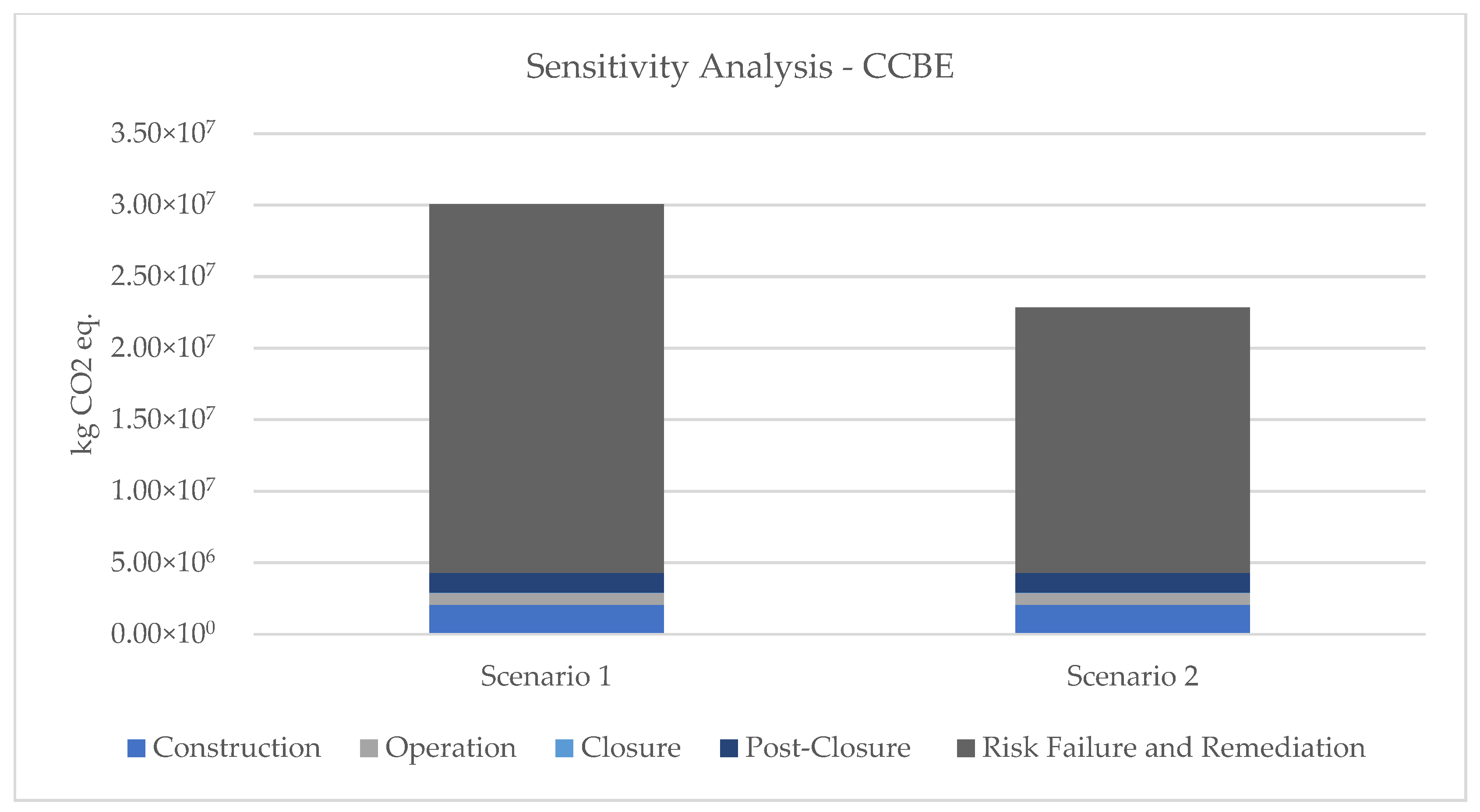
The reduction observed in the failure and remediation phase is attributed to the decreased probability of catastrophic TSF accidents when smart monitoring is applied. In Scenario 1, failures account for the dominant share of climate change impacts due to the resource- and energy-intensive remediation activities required after an accident, including excavation, transport, treatment, and land rehabilitation. In Scenario 2, the implementation of smart monitoring significantly lowers the likelihood of such events by enhancing early warning and risk detection, thereby reducing both the environmental and financial burdens associated with remediation. Combined with the reduced operational and closure impacts from more efficient monitoring, the solution demonstrates its dual contribution: preventing large-scale failures while minimizing the routine monitoring footprint.
Furthermore, emphasis is given to the monitoring system’s contribution to climate change, as the upgrade of the TSF’s use case in Scenario 2 is based on smart monitoring (Figure 10).
The sensitivity analysis shows that, compared to Scenario 1, the integration of advanced monitoring leads to a notable reduction in emissions linked to both operation and closure phases by 24%. This reduction is primarily attributed to fewer on-site visits, lower fuel consumption, lower use of vehicles and the replacement of conventional monitoring practices with automated, sensor-based systems, as seen in Figure 8. Consequently, the monitoring strategy itself becomes a decisive factor in lowering the overall climate change footprint of the TSF’s life cycle.
The analysis of climate change impact including biogenic carbon shows almost identical results for the total life cycle of the TSF (shown in Figure 11), as well as for the monitoring impact and impact share (shown in Figure 8 and Figure 12).
Figure 10.
Sensitivity analysis of climate change (excl. biogenic carbon) on monitoring.
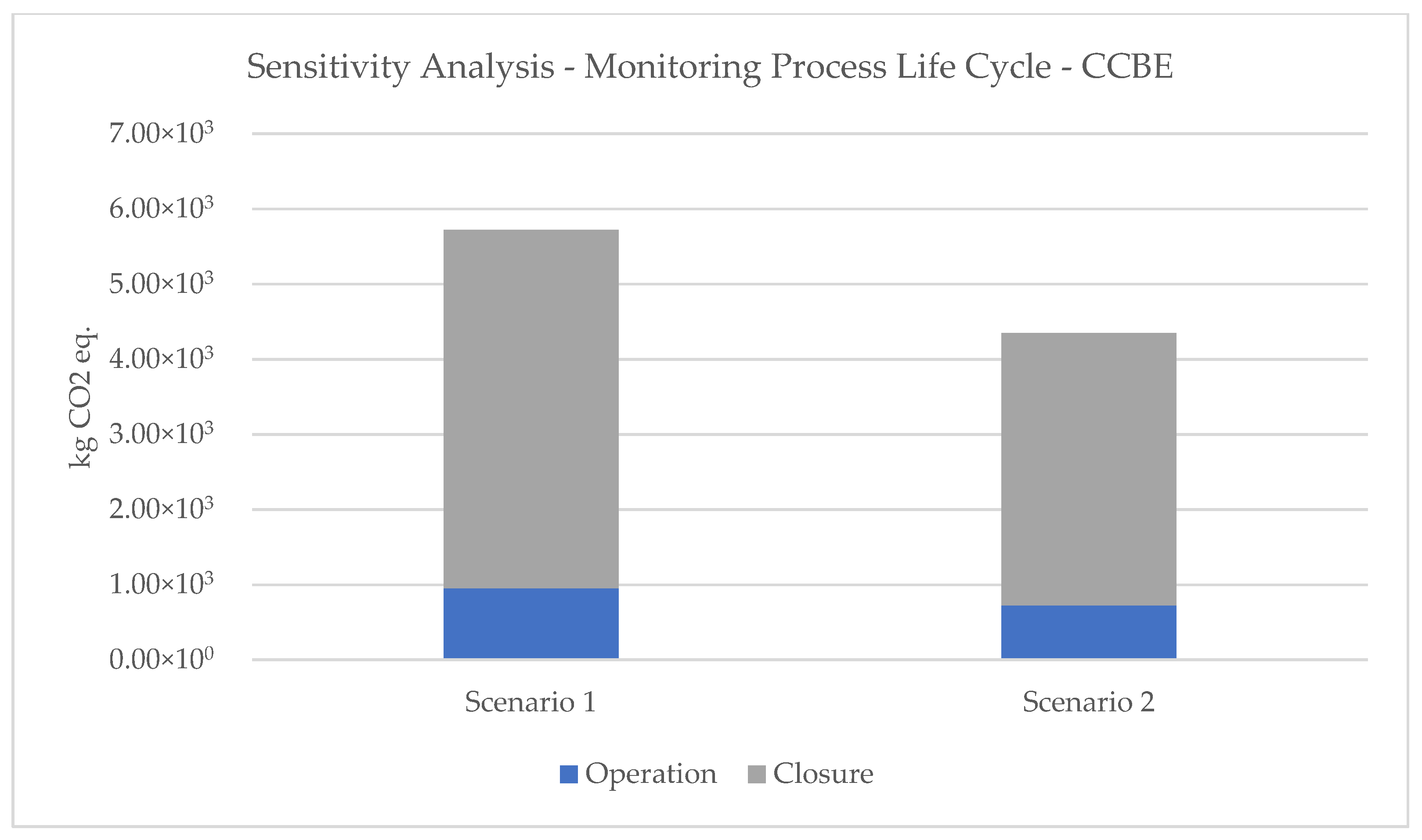
Figure 11.
Sensitivity analysis of climate change (incl. biogenic carbon) impact indicator.
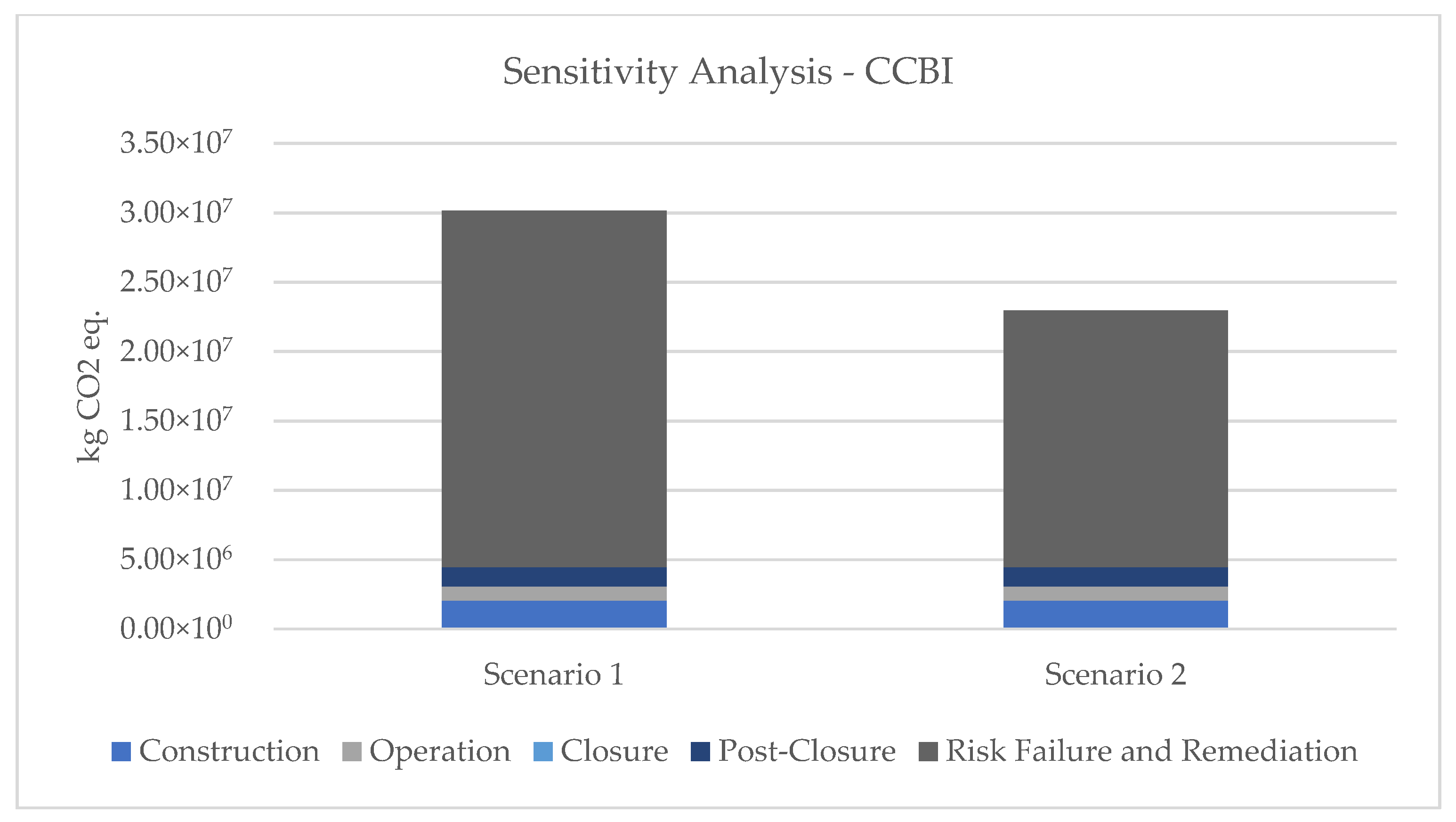
Figure 12.
Sensitivity analysis of climate change (incl. biogenic carbon) on monitoring.
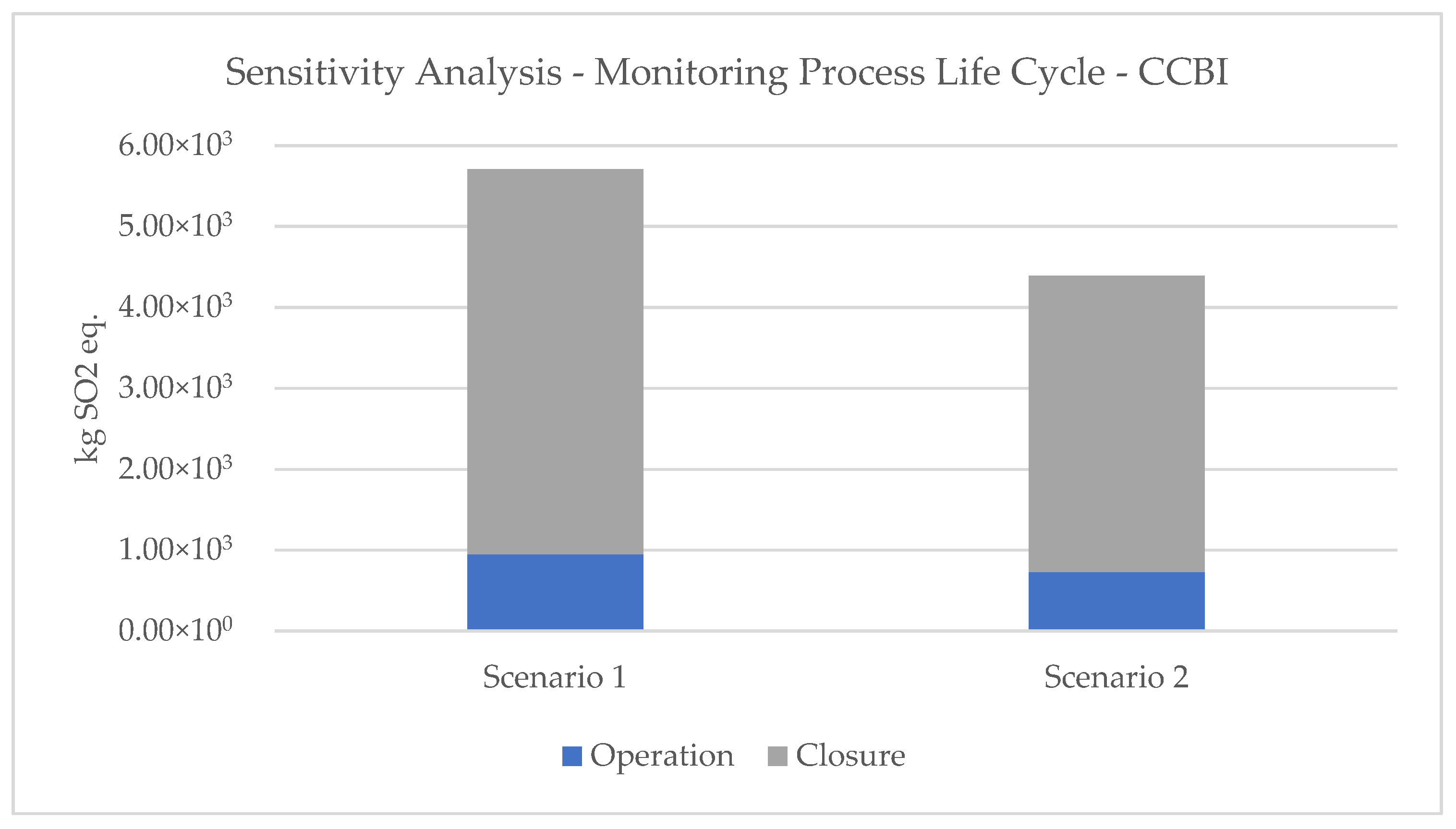
The CCBI results are consistent with the fact that most of the carbon emission sources are not from biomass, but rather from diesel and electricity and materials.
3.2. Freshwater Ecotoxicity
As seen in Figure 13, freshwater ecotoxicity impact is also heavily impacted by risk integration. In both scenarios, out of all impact categories, risk of failure and remediation account for their highest share: 98% of impact in Scenario 1 is attributed to risk, while 97% is its impact share in Scenario 2. The high share is linked with the tailings’ composition, consisting mainly of water emission flows. The 27% total freshwater ecotoxicity impact reduction (the highest reduction noticed in the studied impact categories), is attributed to the high impact share of the risk. The impact reduction is thus closer (than in all other categories) to the 28.00% impact reduction in the risk.
Figure 13.
Sensitivity analysis of freshwater ecotoxicity impact indicator.
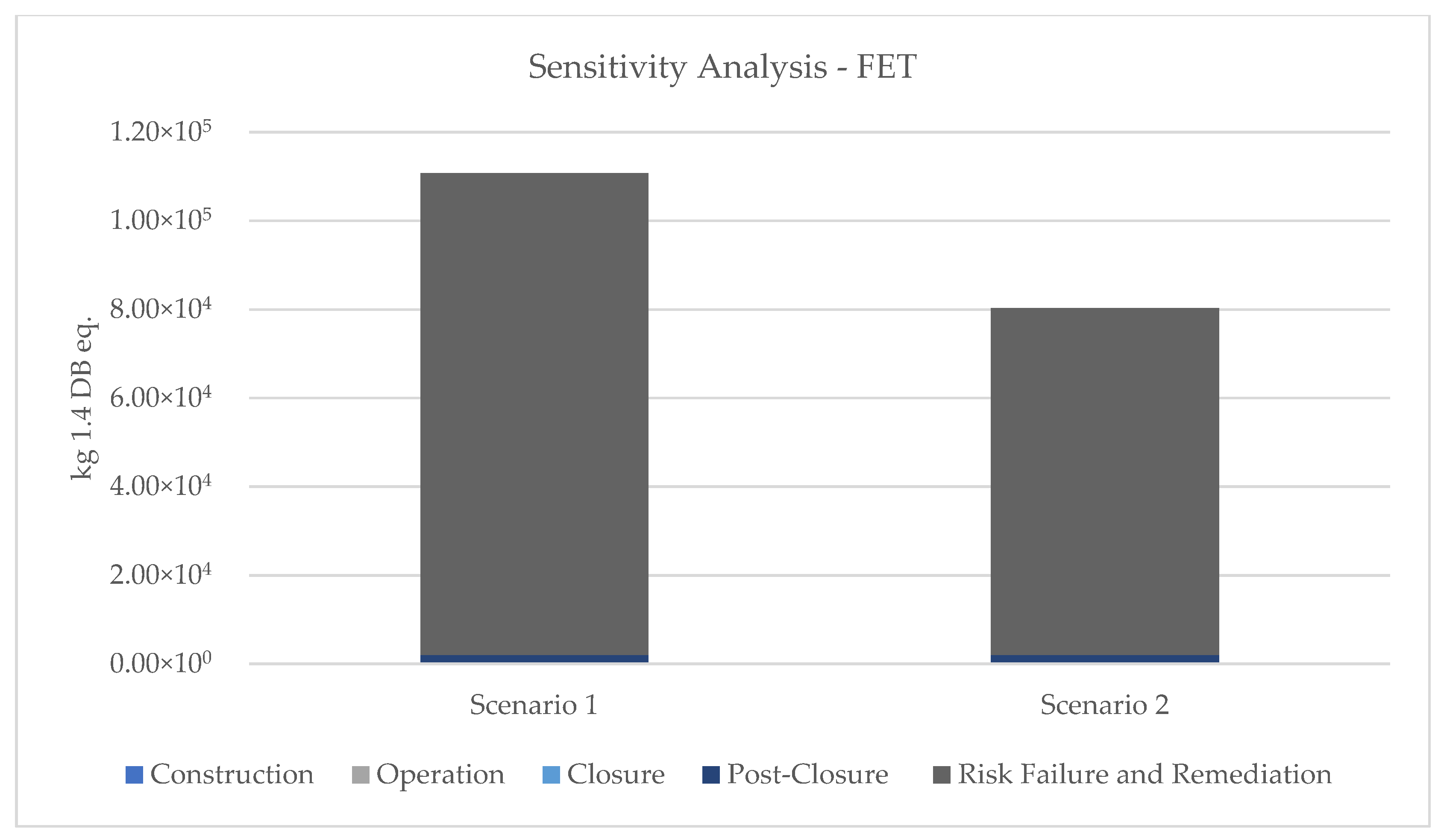
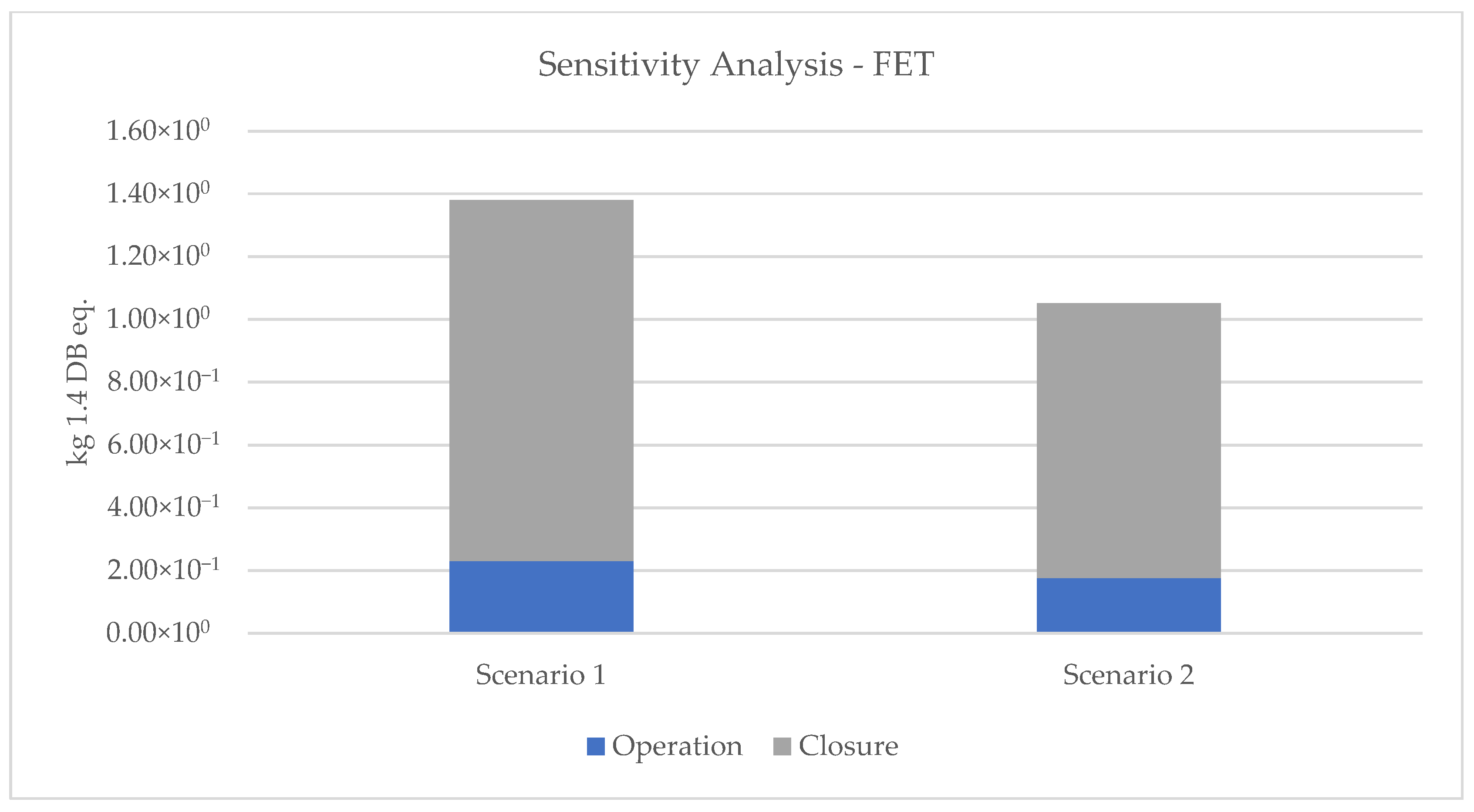
Figure 14 shows the monitoring impact, which is reduced by 24% in Scenario 2. Figure 8 provides proof that the higher use of batteries for the automated monitoring mechanism of Scenario 2 is counterbalanced by the 40% reduction in monitoring visits, compared to Scenario 1. The impact decrease is mainly attributed to the reduced use of fuels for monitoring visits.
Figure 14.
Sensitivity analysis of freshwater ecotoxicity on monitoring.
3.3. Freshwater Eutrophication
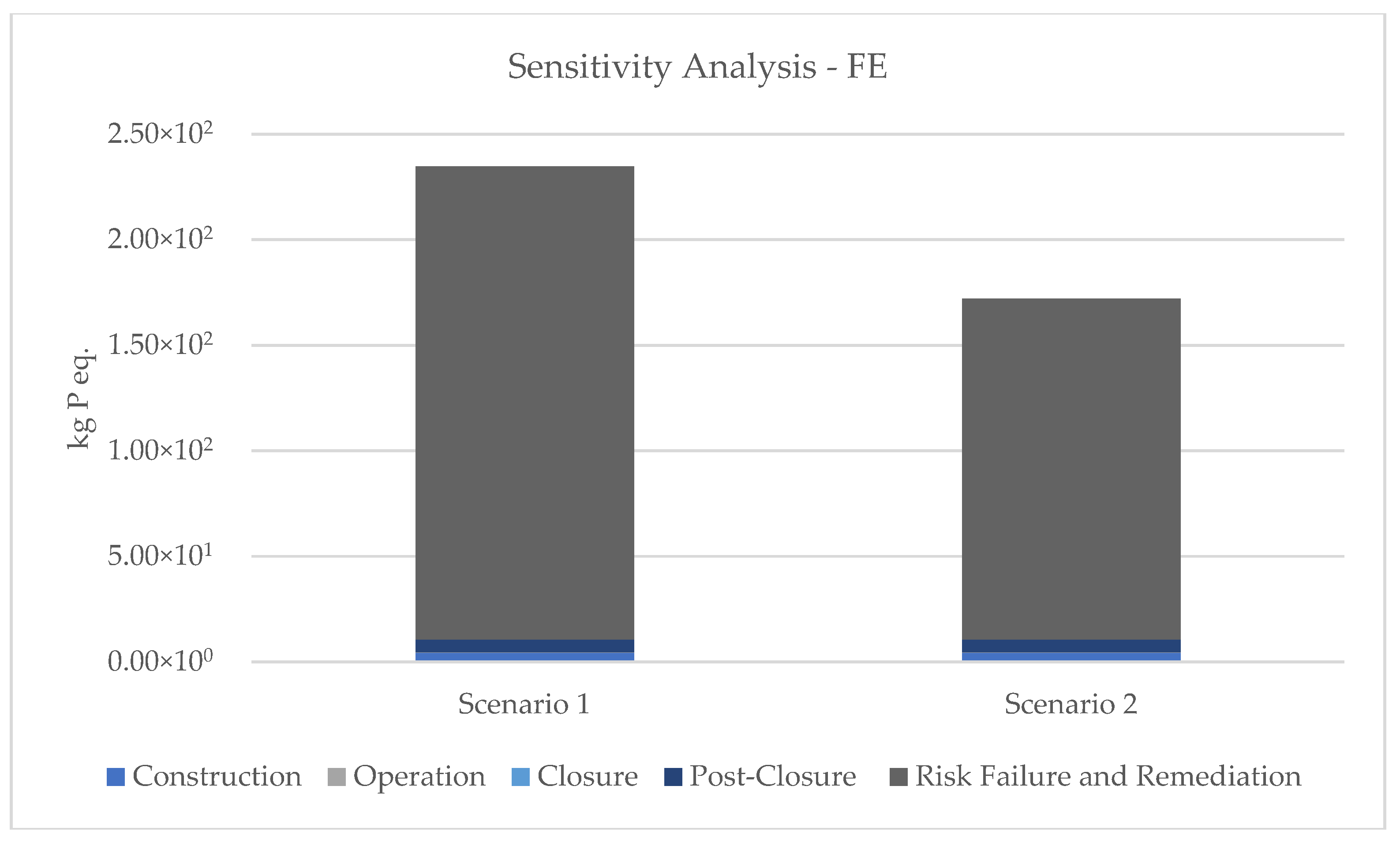
Risk accounts for the second highest impact share of the TSF’s life cycle, contributing to 95.49% of the freshwater eutrophication impact in Scenario 1 and 93.85% in Scenario 2, as shown in Figure 15. The 27% impact reduction is mainly attributed to the impact share of risk, reduced by 28.00% between Scenario 1 and Scenario 2. It is again a result of the high-water emission flows of the tailings’ composition; thus, released tailings contribute to the impact category emissions. Construction and post-closure are two phases with no impact difference between Scenario 1 and Scenario 2, since monitoring does not interfere with the phases. The increased participation of the two phases in the impact share, compared to the freshwater ecotoxicity category, decreases the total TSF’s impact difference between the two scenarios.
Figure 15.
Sensitivity analysis on freshwater eutrophication impact indicator.
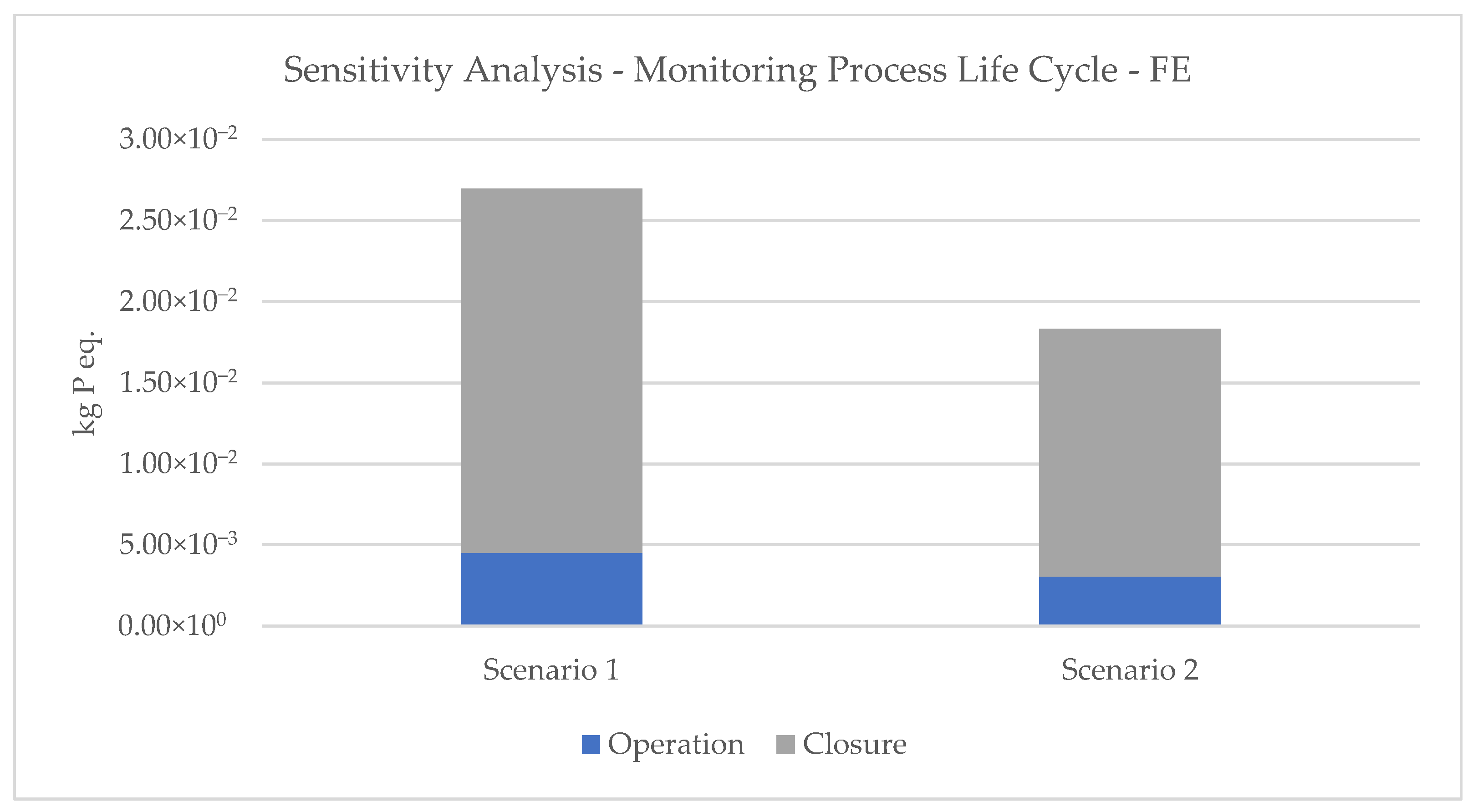
When monitoring impact reduction in freshwater eutrophication, the highest out of all impact categories (32%) is seen in Figure 16. The high decrease profile is again primarily linked to the 40% reduction in fuels used, also highlighted in Figure 8.
Figure 16.
Sensitivity analysis of freshwater eutrophication on monitoring.
3.4. Human Toxicity, Cancer
As seen in Figure 17, the overall 20% impact decrease, the lowest impact decrease in all the studied categories, is attributed to the higher contribution of construction in total TSF human toxicity, cancer impact. Construction is linked to 19% of the impact share in Scenario 1 and 24% in Scenario 2. Construction (due to heavy materials use) and risk of failure and remediation (due to leaked tailings content and remediation activity impact), account for more than 90% of each scenario’s impact share, while closure and post-closure do not contribute more than 0.13% combined in any of the two scenarios.
Figure 17.
Sensitivity analysis on human toxicity, cancer impact indicator.
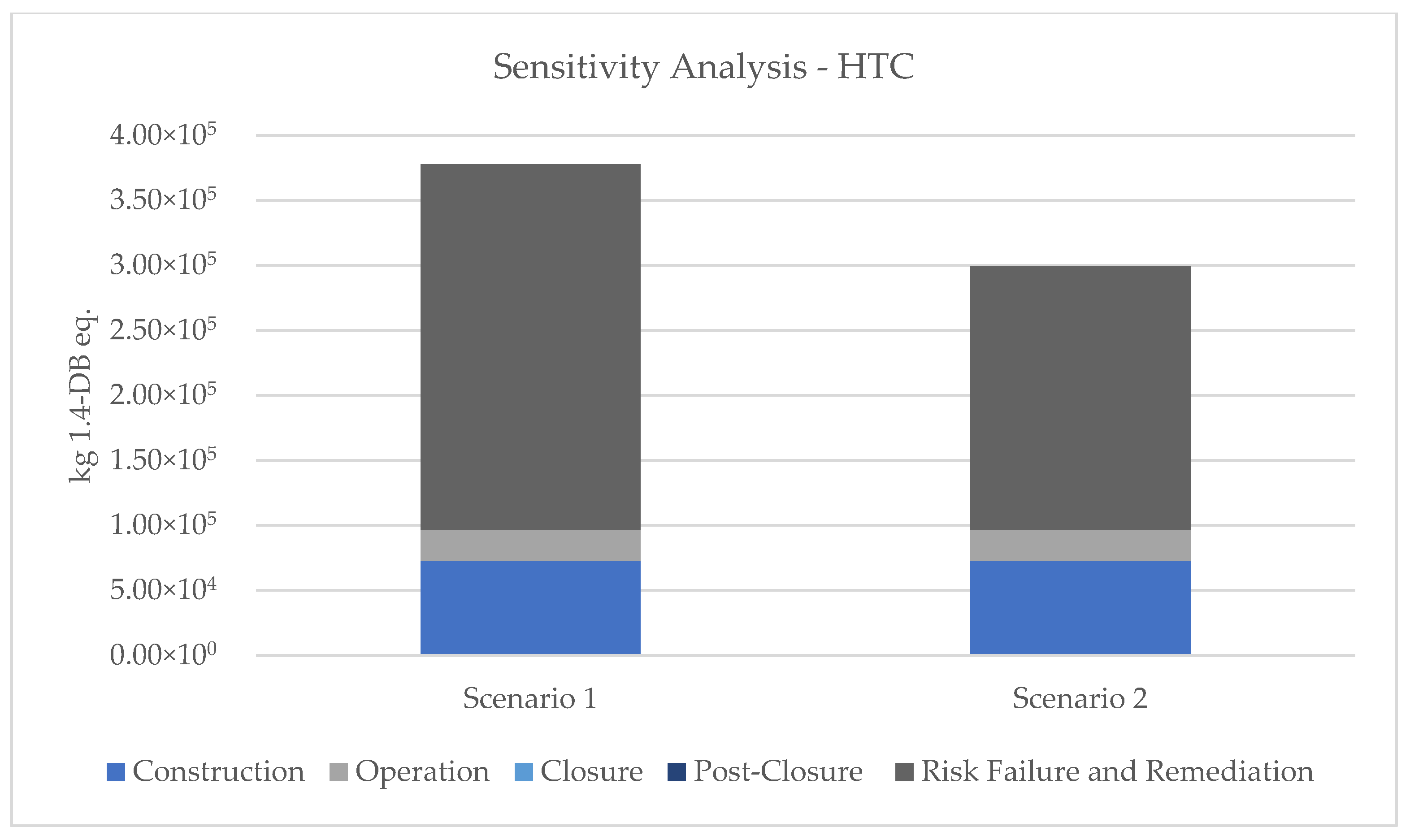
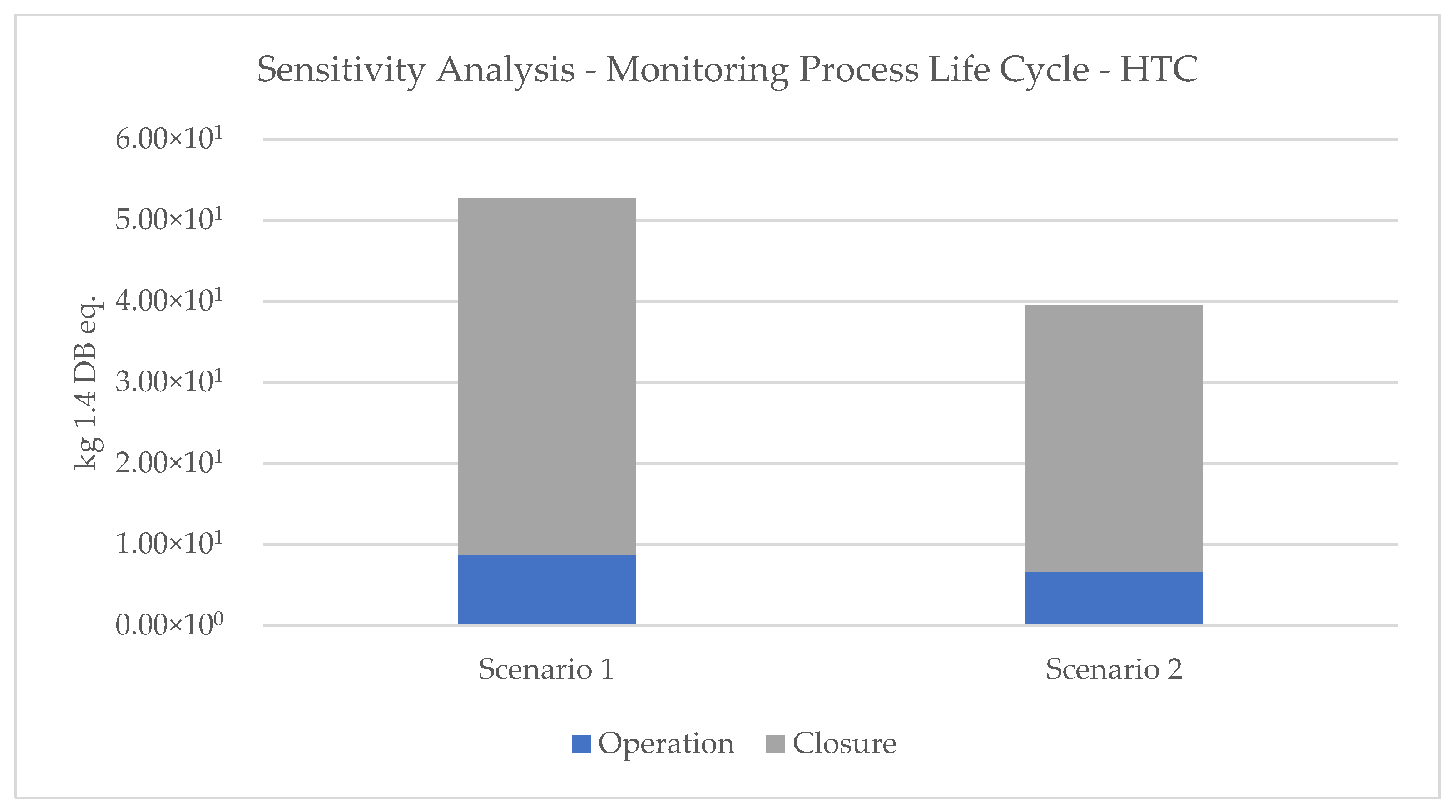
Figure 18 shows a sensitivity analysis for monitoring human toxicity, cancer, which decreased by 25% during the whole TSF’s life cycle. The sensitivity analysis in Figure 8 proves that the impact reduction is mainly attributed to the reduced use of vehicles for monitoring visits, thus the decrease in carcinogenic vehicle exhaust.
Figure 18.
Sensitivity analysis of human toxicity, cancer on monitoring.
3.5. Human Toxicity, Non-Cancer
The human toxicity, non-cancer category is linked almost entirely to the failure and remediation impact, due to the leakage of copper tailings to the environment, leading to heavy metal pollution and treatment. As seen in Figure 19, the impact of all of the life cycle phases contributes less than 1% to the total impact, compared to an accident’s impact.
Figure 19.
Sensitivity analysis on human toxicity, non-cancer impact indicator.
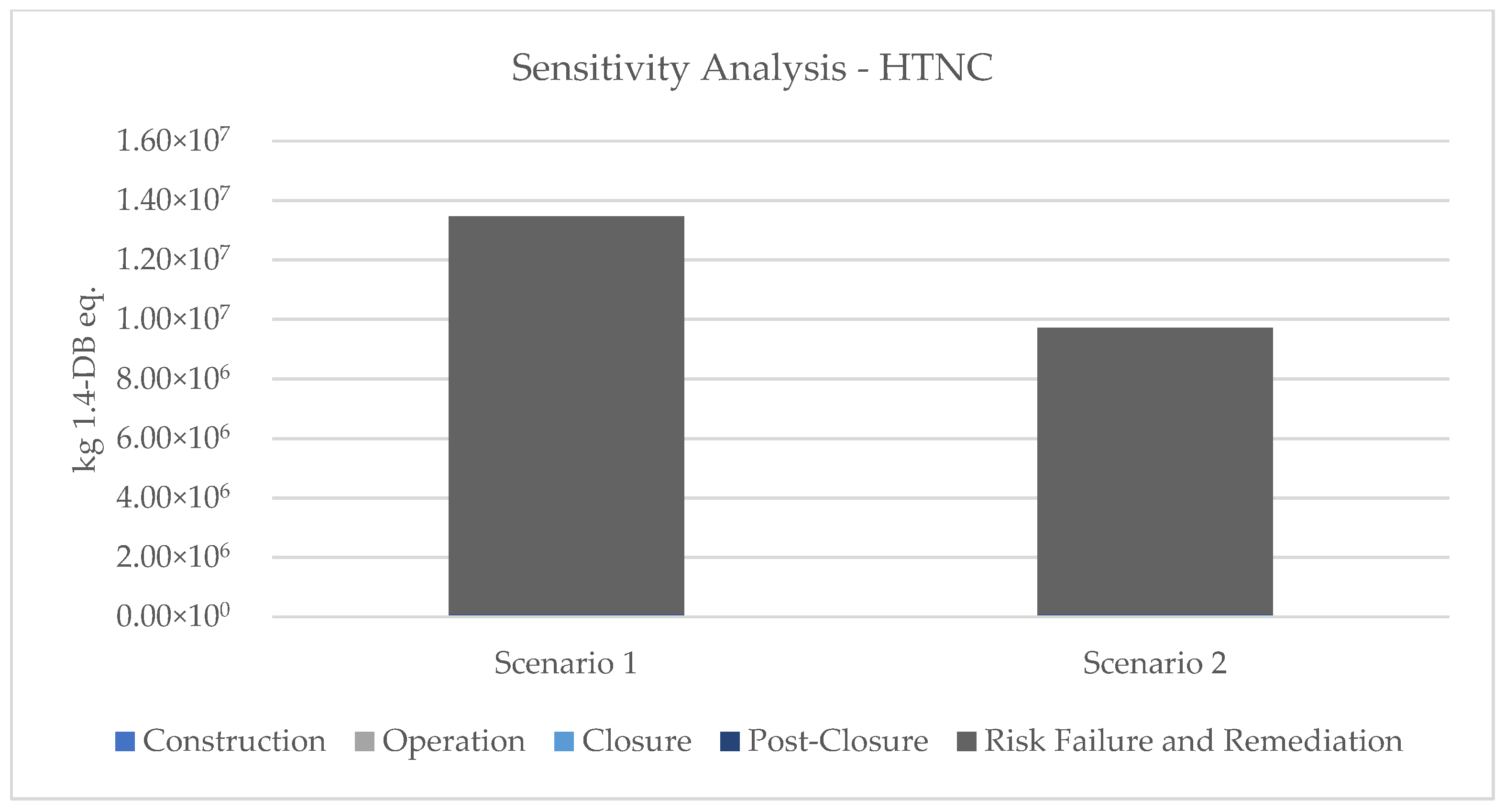
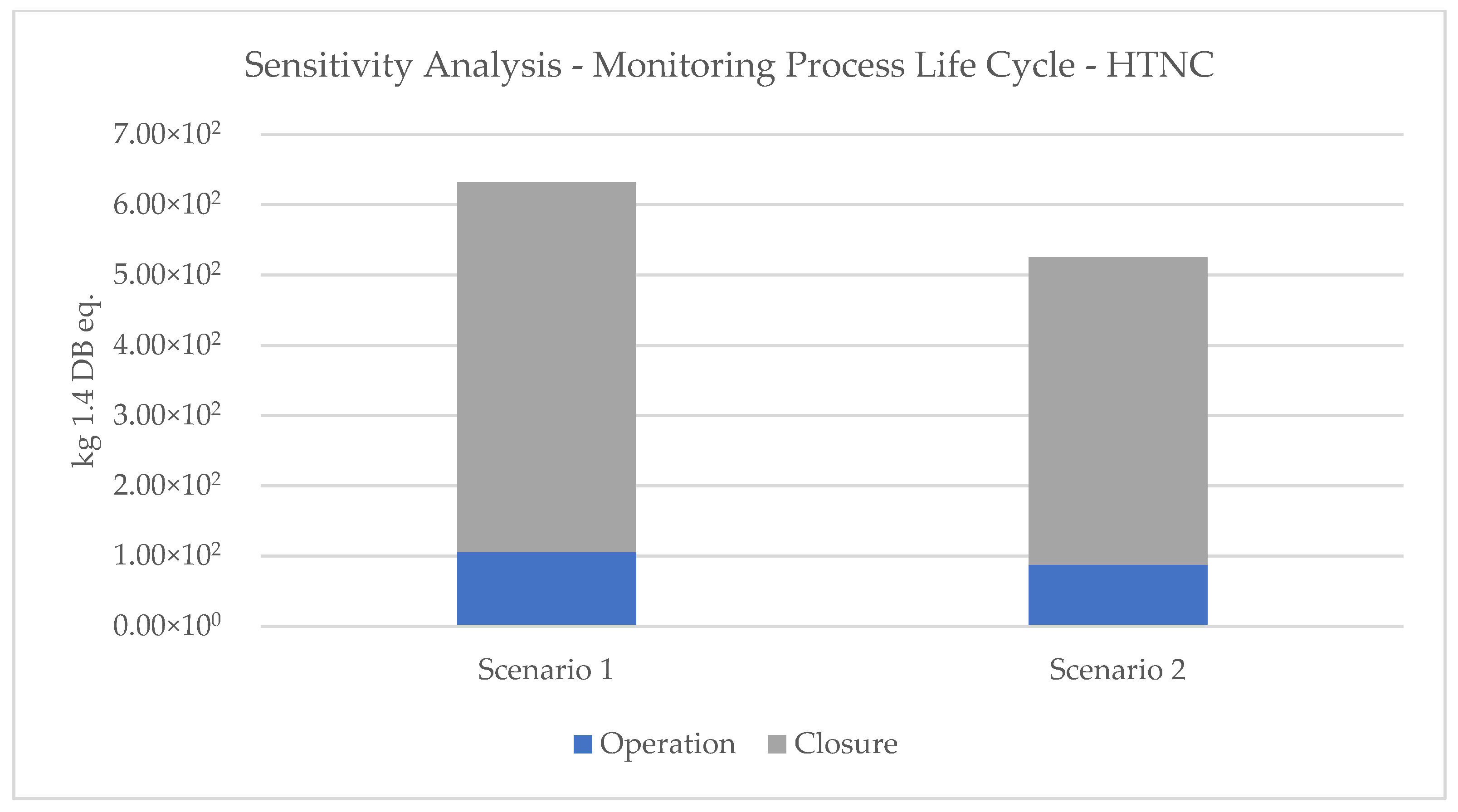
Monitoring is linked primarily with vehicle usage and batteries, as seen in Figure 8. According to Figure 8, the increased batteries impact is more than counterbalanced by the decreased vehicles and fuels consumption. Figure 20 links the smart monitoring application with 17% impact reduction in the total monitoring life cycle impact. The reduction is apparently the lowest impact reduction marked in the study of monitoring impact.
Figure 20.
Sensitivity analysis of human toxicity, non-cancer on monitoring.
3.6. Terrestrial Acidification
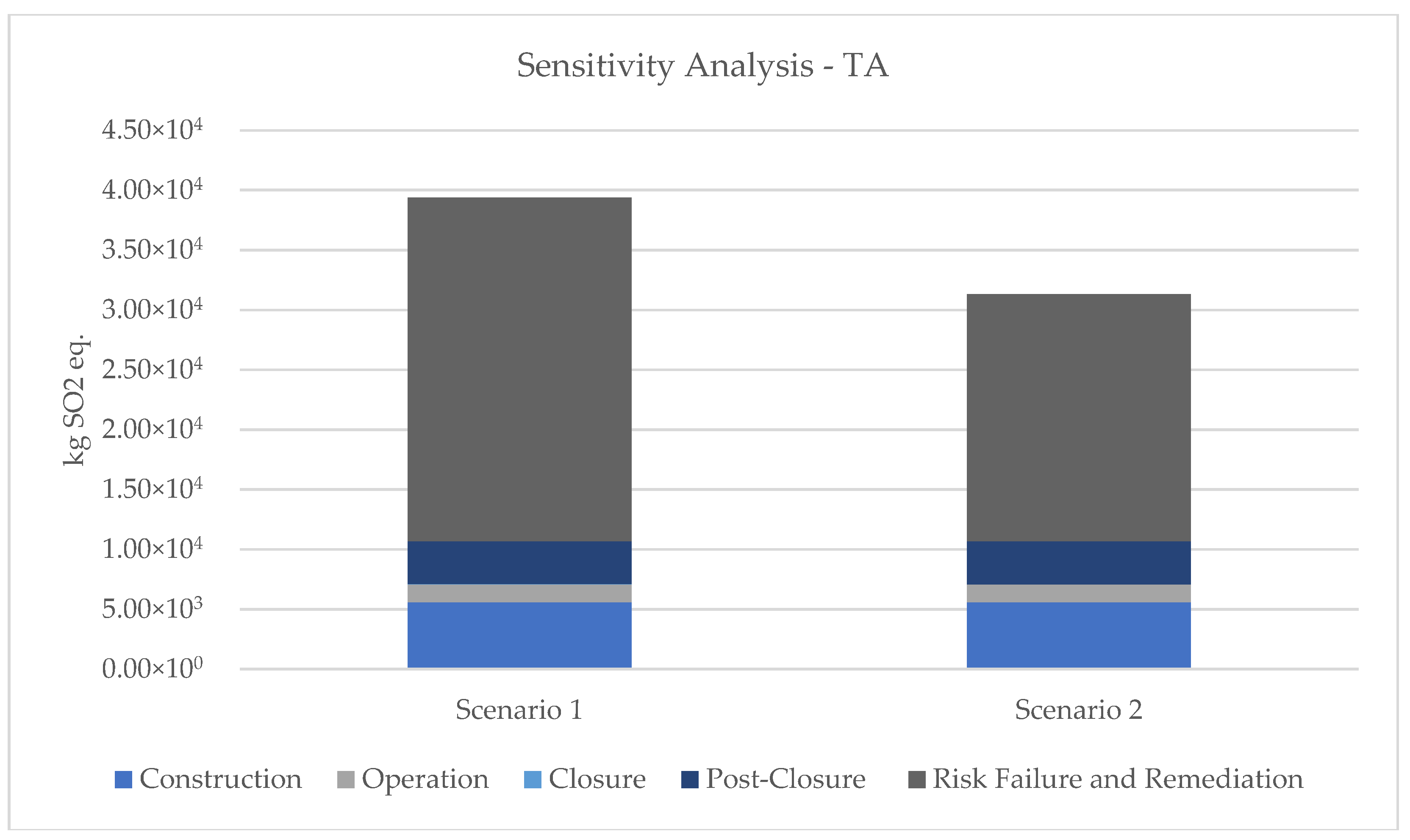
The 20% total TSF impact reduction in terrestrial acidification (Figure 21) is the lowest decrease in all impact categories. It is attributed to the lower contribution of the risk of failure and its subsequent remediation, from 72% in Scenario 1, to 66% of the total impact in Scenario 2. All the rest of the TSF’s phases have a lower impact reduction, thus counterbalance the impact decrease contribution from risk reduction. Their steadier combined impact profile is attributed to the fact that monitoring interferes only with operation and closure. Both phases account for less than 5% of the total TSF impact in each scenario with respect to terrestrial acidification.
Figure 21.
Sensitivity analysis of terrestrial acidification impact indicator.
Terrestrial acidification impact, as seen in Figure 22, is also linked to a 20% impact decrease concerning monitoring. The decrease is attributed mainly in the lower use of fuels, but also of vehicles for monitoring, contributing as aggregated processes to the impact of the built model (Figure 8).
Figure 22.
Sensitivity analysis of terrestrial acidification on monitoring.
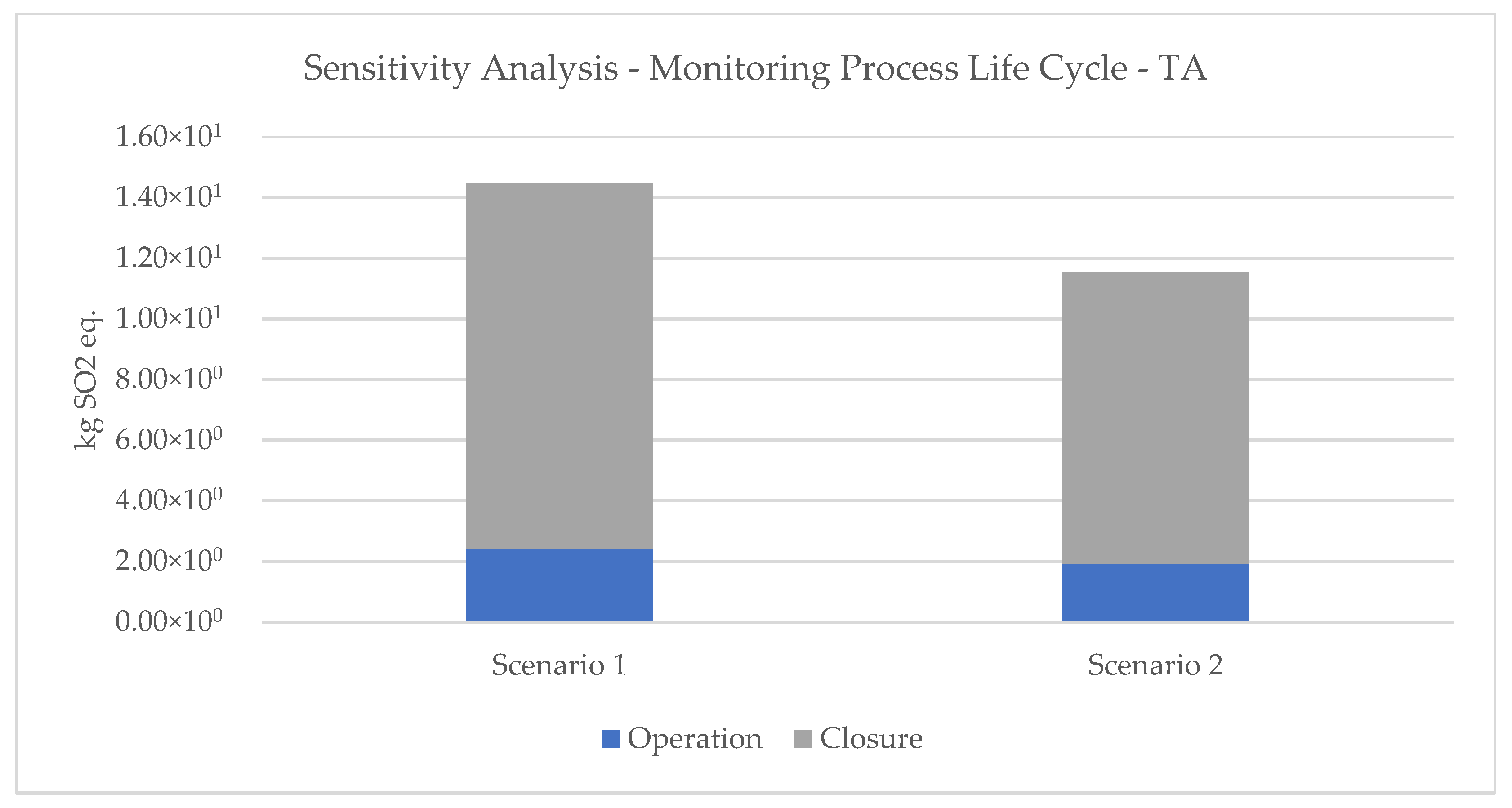
Table 8 summarizes the impact decrease in each impact category studied, concerning the monitoring of the whole TSF’s life cycle.
Table 8.
Monitoring impact reduction in studied impact indicators.
4. Discussion
This study proposed and applied a harmonized LCA–ERA framework to evaluate the environmental performance of TSFs under a smart monitoring strategy. By embedding quantified risk (severity–exposure–probability) as a weighting factor in a cradle-to-grave LCA, the accident likelihood and consequences are converted into measurable contributions across environmental impact categories. This addresses a well-noted gap in prior work, where risk has typically been handled qualitatively or outside LCA system boundaries. By treating failure and remediation as an explicit life cycle phase weighted by quantified probability, we found that accident-related burdens dominate the footprint in both scenarios. Incorporating smart monitoring reduced the probability of failure from 18.9% to 13.6% and translated into total impact reductions of 24% for climate change (excl. biogenic carbon), 24% of carbon footprint (including biogenic sources of carbon), 28% for freshwater ecotoxicity, 26.74% for freshwater eutrophication, 21% for human toxicity (cancer), 28% for non-cancerous human toxicity and 20% for terrestrial acidification. Monitoring-specific burdens also fell by roughly 16–32% depending on the category, mainly due to fewer site visits and lower fuel use.
The industry standards aim to deliver a ‘safe, stable, and economically viable TSF presenting negligible public health and safety risks and acceptably low social and environmental impacts during operation, closure and post-closure’. These results indicate that the largest environmental lever for TSFs is the prevention of low-frequency, high-consequence events. The modelling shows that remediation activities and the fate of released tailings overwhelm routine operational impacts, so even a modest reduction in failure probability yields sizeable life cycle benefits. For this purpose, the smart monitoring solution addresses current management deficiencies, including a risk management and emergency applications platform, to enable fast and efficient responses to failure events. The proposed solution’s contribution is twofold: first, by suppressing the high-impact failure phase via earlier detection and better situational awareness, and second, by streamlining routine monitoring logistics. Although smart systems introduce additional electronic, battery, and electricity demands, these increments are more than offset by avoided travel and reduced on-site activity.
From a policy perspective, the results consolidate the direction set by emerging regulatory and governance frameworks on tailings management. In fact, the demonstrated connection between reduced probability of failure and quantifiable environmental benefits directly informs the Global Industry Standard on Tailings Management (GISTM), which aims for increased monitoring, transparency, and performance-based risk reduction. At the European level, the outcomes support Directive 2006/21/EC, which explicitly acknowledges that monitoring procedures should be established during the operational phase and after waste facilities have been closed. The findings also complement the objectives of the EU Mine Waste Safety Framework, the forthcoming Critical Raw Materials Act (CRMA), and the European Green Deal, all of which emphasize environmental risk reduction, resource efficiency, and digital transformation in industrial operations.
The integrated LCA–ERA approach enables the interpretation and operationalization of such requirements, offering evidence that digital monitoring has the potential to materially improve safety and environmental performance across a TSF’s life cycle. These insights further connect to the broader policy agenda of the Sustainable Development Goals: SDG 11 on resilient and sustainable settlements, with its emphasis on disaster risk reduction, and SDG 12 on responsible consumption and production, which promotes safer waste management and sustainable operational practices. Overall, the proposed framework offers guidance for future regulatory evolution, corporate reporting, and governance mechanisms, supporting harmonized, data-driven standards for safe and sustainable management of tailings.
The knowledge advancement lies in the necessity of incorporating the statistically proven occurrence of TSF accidents in the impact of such structures, since they pose a threat to the environment in case of a failure. The research performed acts as a steppingstone in the development of a systematic approach in the sustainability assessment of TSFs.
The findings of the research clearly demonstrate how the safety of TSFs is closely linked to the safety of the environment. It also proves that safety mechanisms reduce the footprint of such accidents through increased alertness, leading to a statistical decrease in accidents.
Regarding the identification of the study’s limitations, it is essential to mention that the TSF use case blends characteristics from two European sites with literature-based averages, so geographic representativeness is constrained. In addition, population and societal exposure were assumed negligible, which narrows external validity for facilities located near communities or sensitive environmental receptors. Beyond the site-related considerations, methodological limitations arise from the integration of ERA and LCA. The proposed subset integration enables the inclusion of risk factors within an LCA framework. However, the incorporation of probabilistic risk metrics into deterministic weighting factors requires estimations and assumptions that may not fully capture the dynamic, non-linear correlation of failure events. It is also binding that the static representation of risk across life cycle phases does not account for temporal variations or cascading effects that could occur in real TSF systems. Despite careful design to avoid double counting, uncertainties remain regarding the completeness of impact coverage and the comparability of integrated results across different contexts.
Future work should include the consideration of a framework for integrating site data streams and update failure probability dynamically as pore pressure, displacement, water level, and meteorological indicators evolve. Furthermore, extending the scope of the study to consider hardware and battery end-of-life pathways with explicit repair, reuse, and certified recycling scenarios, and the operational energy of data centres and communications can be accounted for with more precise results. Overall, this study contributes an integrative framework that bridges the gap between ERA and LCA by quantifying risk reduction as an environmental performance metric, serving as basis for evaluating the sustainability benefits of digitalised monitoring in TSFs.
5. Conclusions
TSFs pose both chronic and acute risks that span geotechnical stability, water quality, dust emissions, and the integrity of downstream ecosystems. These risks have repeatedly demonstrated the need for the mining industry to strengthen operational safety and environmental management. Despite this, conventional monitoring and assessment practices tend to address safety and environmental performance separately, without establishing a quantifiable link between risk reduction and environmental sustainability.
This study addressed this gap by developing an integrated methodological framework that combines ERA with LCA to evaluate the environmental performance of smart monitoring systems for TSFs. Application of this framework to a TSF use case demonstrated that accident-related impacts overwhelmingly dominate the life cycle footprint, with remediation following a failure representing the largest single contributor to total environmental impact. The implementation of smart monitoring systems has the potential to reduce the probability of failure from 18.9% to 13.6%, resulting in measurable life cycle improvements of 24% reduction in climate change potential, 27% in freshwater ecotoxicity, 27% in freshwater eutrophication, 21% in human toxicity (cancer), and 20% in terrestrial acidification. Additionally, operational impacts associated with monitoring decreased by approximately 20–32%, primarily due to reduced site visits by 40% and lower fuel consumption. These results confirm that digital transformation of TSFs can effectively enhance both safety and sustainability in tailings management. Subsequently, smart monitoring contributes not only as a tool for risk management but also as a means to achieve measurable environmental performance improvements. The results thus indicate the necessity of continuous advancement of monitoring technologies, as well as mitigation mechanisms to further decrease the risk of TSF failures. The proposed ERA–LCA framework establishes a comprehensive basis for assessing the environmental benefits of digital technologies in mining operations, supporting data-driven decision-making and compliance with the GISTM and European environmental directives.
Overall, this work contributes a novel integrative framework that bridges the gap between engineering risk management and environmental sustainability assessment. As more detailed, site-specific data become available, the methodology can be further refined and standardized to serve as a decision support tool for the sustainable design, operation, and closure of TSFs. A more holistic future approach could also include cost analysis, as well as the social impact of such monitoring mechanisms’ integration in existing infrastructures.
Author Contributions
Conceptualisation, A.P. and C.P.; methodology, C.P.; software, A.G.; validation, A.P. and C.P.; investigation, C.P.; data curation, A.G.; writing—original draft preparation, C.P.; writing—review and editing, A.P.; visualization, A.G. All authors have read and agreed to the published version of the manuscript.
Funding
This work has received funding from EIT RawMaterials GmbH under Framework Partnership Agreement No 21123 (project Sec4TD).
Institutional Review Board Statement
Not applicable.
Informed Consent Statement
Not applicable.
Data Availability Statement
Data available within the article.
Conflicts of Interest
The authors declare no conflicts of interest.
References
- Cacciuttolo, C.; Cano, D. Environmental Impact Assessment of Mine Tailings Spill Considering Metallurgical Processes of Gold and Copper Mining: Case Studies in the Andean Countries of Chile and Peru. Water 2022, 14, 3057. [Google Scholar] [CrossRef] [Scilit]
- Piciullo, L.; Storrøsten, E.B.; Liu, Z.; Nadim, F.; Lacasse, S. A new look at the statistics of tailings dam failures. Eng. Geol. 2022, 303, 106657. [Google Scholar] [CrossRef] [Scilit]
- Dong, L.; Deng, S.; Wang, F. Some developments and new insights for environmental sustainability and disaster control of tailings dam. J. Clean. Prod. 2020, 269, 122270. [Google Scholar] [CrossRef] [Scilit]
- Rana, N.M.; Ghahramani, N.; Evans, S.G.; Small, A.; Skermer, N.; McDougall, S.; Take, W.A. Global magnitude-frequency statistics of the failures and impacts of large water-retention dams and mine tailings impoundments. Earth Sci. Rev. 2022, 232, 104144. [Google Scholar] [CrossRef] [Scilit]
- Cacciuttolo, C.; Cano, D. Spatial and Temporal Study of Supernatant Process Water Pond in Tailings Storage Facilities: Use of Remote Sensing Techniques for Preventing Mine Tailings Dam Failures. Sustainability 2023, 15, 4984. [Google Scholar] [CrossRef] [Scilit]
- World Bank Group. Technical Note on Tailings Storage Facilities. 2021. Available online: https://www.worldbank.org (accessed on 23 July 2025).
- Directive—2006/21—EN—EUR-Lex. Available online: https://eur-lex.europa.eu/eli/dir/2006/21/oj/eng (accessed on 11 April 2025).
- EUR-Lex—02006L0021-20090807—EN—EUR-Lex. Available online: https://eur-lex.europa.eu/legal-content/EN/TXT/?uri=CELEX:02006L0021-20090807 (accessed on 10 April 2025).
- Goal 11 | Department of Economic and Social Affairs. Available online: https://sdgs.un.org/goals/goal11 (accessed on 25 August 2025).
- Sustainable Consumption and Production. Available online: https://www.un.org/sustainabledevelopment/sustainable-consumption-production/ (accessed on 24 July 2025).
- Kaniki, A.T.; Tumba, K. Management of mineral processing tailings and metallurgical slags of the Congolese copperbelt: Environmental stakes and perspectives. J. Clean. Prod. 2019, 210, 1406–1413. [Google Scholar] [CrossRef] [Scilit]
- Cacciuttolo, C.; Guzmán, V.; Catriñir, P.; Atencio, E. Sensor Technologies for Safety Monitoring in Mine Tailings Storage Facilities: Solutions in the Industry 4.0 Era. Minerals 2024, 14, 446. [Google Scholar] [CrossRef] [Scilit]
- ISO 14040:2006(EN); Environmental Management—Life Cycle Assessment—Principles and Frame-Work. ISO: London, UK, 2006.
- ISO 14044:2006; Environmental Management—Life Cycle Assessment—Requirements and Guidelines. ISO: London, UK, 2006.
- Guinée, J.B.; Heijungs, R.; Vijver, M.G.; Peijnenburg, W.J.G.M. Setting the stage for debating the roles of risk assessment and life-cycle assessment of engineered nanomaterials. Nat. Nanotechnol. 2017, 12, 727–733. [Google Scholar] [CrossRef] [Scilit] [PubMed]
- Harder, R.; Holmquist, H.; Molander, S.; Svanström, M.; Peters, G.M. Review of Environmental Assessment Case Studies Blending Elements of Risk Assessment and Life Cycle Assessment. Environ. Sci. Technol. 2015, 49, 13083–13093. [Google Scholar] [CrossRef] [Scilit]
- Herva, M.; Roca, E. Review of combined approaches and multi-criteria analysis for corporate environmental evaluation. J. Clean. Prod. 2013, 39, 355–371. [Google Scholar] [CrossRef] [Scilit]
- Kobayashi, Y.; Peters, G.M.; Khan, S.J. Towards More Holistic Environmental Impact Assessment: Hybridisation of Life Cycle Assessment and Quantitative Risk Assessment. Procedia CIRP 2015, 29, 378–383. [Google Scholar] [CrossRef] [Scilit]
- Muazu, R.I.; Rothman, R.; Maltby, L. Integrating life cycle assessment and environmental risk assessment: A critical review. J. Clean. Prod. 2021, 293, 126120. [Google Scholar] [CrossRef] [Scilit]
- Tsang, M.P.; Kikuchi-Uehara, E.; Sonnemann, G.W.; Aymonier, C.; Hirao, M. Evaluating nanotechnology opportunities and risks through integration of life-cycle and risk assessment. Nat. Nanotechnol. 2017, 12, 734–739. [Google Scholar] [CrossRef] [Scilit]
- Csiszar, S.A.; Meyer, D.E.; Dionisio, K.L.; Egeghy, P.; Isaacs, K.K.; Price, P.S.; Scanlon, K.A.; Tan, Y.-M.; Thomas, K.; Vallero, D.; et al. Conceptual Framework To Extend Life Cycle Assessment Using Near-Field Human Exposure Modeling and High-Throughput Tools for Chemicals. Environ. Sci. Technol. 2016, 50, 11922–11934. [Google Scholar] [CrossRef] [Scilit] [PubMed]
- Lin, X.; Yu, S.; Ma, H. Integrative Application of Life Cycle Assessment and Risk Assessment to Environmental Impacts of Anthropogenic Pollutants at a Watershed Scale. Bull. Environ. Contam. Toxicol. 2018, 100, 41–48. [Google Scholar] [CrossRef] [Scilit]
- Tian, S.; Bilec, M. Integrating site-specific dispersion modeling into life cycle assessment, with a focus on inhalation risks in chemical production. J. Air Waste Manag. Assoc. 2018, 68, 1224–1238. [Google Scholar] [CrossRef] [Scilit]
- Breedveld, L. Combining LCA and RA for the integrated risk management of emerging technologies. J. Risk Res. 2013, 16, 459–468. [Google Scholar] [CrossRef] [Scilit]
- Crenna, E.; Jolliet, O.; Collina, E.; Sala, S.; Fantke, P. Characterizing honey bee exposure and effects from pesticides for chemical prioritization and life cycle assessment. Environ. Int. 2020, 138, 105642. [Google Scholar] [CrossRef] [Scilit]
- Fransman, W.; Buist, H.; Kuijpers, E.; Walser, T.; Meyer, D.; Beuken, E.Z.D.; Westerhout, J.; Entink, R.H.K.; Brouwer, D.H. Comparative Human Health Impact Assessment of Engineered Nanomaterials in the Framework of Life Cycle Assessment. Risk Anal. 2017, 37, 1358–1374. [Google Scholar] [CrossRef] [Scilit]
- Gust, K.A.; Collier, Z.A.; Mayo, M.L.; Stanley, J.K.; Gong, P.; Chappell, M.A. Limitations of toxicity characterization in life cycle assessment: Can adverse outcome pathways provide a new foundation? Integr. Environ. Assess. Manag. 2016, 12, 580–590. [Google Scholar] [CrossRef] [Scilit] [PubMed]
- Harder, R.; Peters, G.M.; Molander, S.; Ashbolt, N.J.; Svanström, M. Including pathogen risk in life cycle assessment: The effect of modelling choices in the context of sewage sludge management. Int. J. Life Cycle Assess. 2016, 21, 60–69. [Google Scholar] [CrossRef] [Scilit]
- Sala, S.; Goralczyk, M. Chemical footprint: A methodological framework for bridging life cycle assessment and planetary boundaries for chemical pollution. Integr. Environ. Assess. Manag. 2013, 9, 623–632. [Google Scholar] [CrossRef] [Scilit]
- Milazzo, M.F.; Spina, F. The use of the risk assessment in the life cycle assessment frameworkHuman health impacts of a soy-biodiesel production. Manag. Environ. Qual. Int. J. 2015, 26, 389–406. [Google Scholar] [CrossRef] [Scilit]
- Müller, N.; de Zwart, D.; Hauschild, M.; Kijko, G.; Fantke, P. Exploring REACH as a potential data source for characterizing ecotoxicity in life cycle assessment. Environ. Toxicol. Chem. 2017, 36, 492–500. [Google Scholar] [CrossRef] [Scilit]
- Pizzol, M.; Christensen, P.; Schmidt, J.; Thomsen, M. Eco-toxicological impact of “metals” on the aquatic and terrestrial ecosystem: A comparison between eight different methodologies for Life Cycle Impact Assessment (LCIA). J. Clean. Prod. 2011, 19, 687–698. [Google Scholar] [CrossRef] [Scilit]
- Walser, T.; Bourqui, R.M.; Studer, C. Combination of life cycle assessment, risk assessment and human biomonitoring to improve regulatory decisions and policy making for chemicals. Environ. Impact Assess. Rev. 2017, 65, 156–163. [Google Scholar] [CrossRef] [Scilit]
- Kobayashi, Y.; Peters, G.M.; Ashbolt, N.J.; Heimersson, S.; Svanström, M.; Khan, S.J. Global and local health burden trade-off through the hybridisation of quantitative microbial risk assessment and life cycle assessment to aid water management. Water Res. 2015, 79, 26–38. [Google Scholar] [CrossRef] [Scilit]
- Beylot, A.; Bodénan, F.; Guezennec, A.-G.; Muller, S. LCA as a support to more sustainable tailings management: Critical review, lessons learnt and potential way forward. Resour. Conserv. Recycl. 2022, 183, 106347. [Google Scholar] [CrossRef] [Scilit]
- Sarkkinen, M.; Kujala, K.; Gehör, S. Decision support framework for solid waste management based on sustainability criteria: A case study of tailings pond cover systems. J. Clean. Prod. 2019, 236, 117583. [Google Scholar] [CrossRef] [Scilit]
- Adiansyah, J.S.; Haque, N.; Rosano, M.; Biswas, W. Application of a life cycle assessment to compare environmental performance in coal mine tailings management. J. Environ. Manag. 2017, 199, 181–191. [Google Scholar] [CrossRef] [Scilit]
- United Nations Economic Commission for Europe. Safety Guidelines and Good Practices for Tailings Management Facilities. 2014. Available online: https://unece.org/sites/default/files/2025-09/ECE_CP.TEIA_26_eng.pdf (accessed on 13 February 2026).
- Adamo, N.; Al-Ansari, N.; Sissakian, V.; Laue, J.; Knutsson, S. Dam Safety: The Question of Tailings Dams. J. Earth Sci. Geotech. Eng. 2021, 11, 1–26. [Google Scholar] [CrossRef] [Scilit]
- Su, C.; Rana, N.M.; Zhang, S.; Wang, B. Environmental pollution and human health risk due to tailings storage facilities in China. Sci. Total. Environ. 2024, 928, 172437. [Google Scholar] [CrossRef] [Scilit] [PubMed]
- Peña, L.V.D.L.; Taelman, S.E.; Préat, N.; Boone, L.; Van der Biest, K.; Custódio, M.; Lucas, S.H.; Everaert, G.; Dewulf, J. Towards a comprehensive sustainability methodology to assess anthropogenic impacts on ecosystems: Review of the integration of Life Cycle Assessment, Environmental Risk Assessment and Ecosystem Services Assessment. Sci. Total. Environ. 2022, 808, 152125. [Google Scholar] [CrossRef] [Scilit] [PubMed]
- European Commission. International Reference Life Cycle Data System (ILCD) Handbook—General guide for Life Cycle Assessment—Provisions and Action Steps; Publications Office of the European Union: Luxembourg, 2010; p. 150. [Google Scholar]
- LCA For Experts | Sphera. Available online: https://sphera.com/solutions/product-stewardship/life-cycle-assessment-software-and-data/lca-for-experts/ (accessed on 1 October 2025).
- Severity, Exposure & Probability (SEP) Risk Assessment Model. Available online: https://wilderness.net/toolboxes/documents/safety/Severity,%20Exposure%20&%20Probability%20(SEP)%20Risk%20Assessment%20Model.pdf (accessed on 22 February 2026).
- Islam, K.; Murakami, S. Global-scale impact analysis of mine tailings dam failures: 1915–2020. Glob. Environ. Chang. 2021, 70, 102361. [Google Scholar] [CrossRef] [Scilit]
- Larrauri, P.C.; Lall, U. Tailings Dams Failures: Updated Statistical Model for Discharge Volume and Runout. Environments 2018, 5, 28. [Google Scholar] [CrossRef] [Scilit]
- Columbia Water Center—Tailings Dams Empirical Equations. Available online: https://columbiawater.shinyapps.io/ShinyappRicoRedo/ (accessed on 3 February 2025).
- Larrauri, P.C.; Lall, U. Assessing Risks of Mine Tailing Dam Failures an Interim Report for a Research Project Sponsored by Norges Bank Investment Management; Columbia Water Center: New York, NY, USA, 2017. [Google Scholar]
- Google Earth. Available online: https://earth.google.com/web/search/48%c2%b0+8%272.21%22N,+77%c2%b035%2755.18%22W/@48.13179728,-77.60056126,312.83649451a,3306.3561211d,35y,0h,0t,0r/data=CiwiJgokCcEXSdbHljVAEcAXSdbHljXAGaHwjh_xtklAIaWsVheJJErAQgIIAToDCgEwQgIIAEoNCP___________wEQAA (accessed on 3 October 2025).
- Chen, C.; Zhao, Y.; Ma, B. Three-Dimensional Risk Matrix for Risk Assessment of Tailings Storage Facility Failure: Theory and a Case Study. Geotech. Geol. Eng. 2024, 42, 1811–1833. [Google Scholar] [CrossRef] [Scilit]
- Clarkson, L.; Williams, D. Critical review of tailings dam monitoring best practice. Int. J. Min. Reclam. Environ. 2020, 34, 119–148. [Google Scholar] [CrossRef] [Scilit]
- Song, X.; Pettersen, J.B.; Pedersen, K.B.; Røberg, S. Comparative life cycle assessment of tailings management and energy scenarios for a copper ore mine: A case study in Northern Norway. J. Clean. Prod. 2017, 164, 892–904. [Google Scholar] [CrossRef] [Scilit]
- Adrianto, L.R.; Pfister, S.; Hellweg, S. Regionalized Life Cycle Inventories of Global Sulfidic Copper Tailings. Environ. Sci. Technol. 2022, 56, 4553–4564. [Google Scholar] [CrossRef] [Scilit] [PubMed]
- Memon, M.B.; Tao, M.; Ahmed, T.; Yang, Z.; Ibrahim, M.; Ullah, S. Towards greener metal production: A life cycle assessment model for copper-gold-silver mining and mineral processing operations. Process. Saf. Environ. Prot. 2025, 197, 107069. [Google Scholar] [CrossRef] [Scilit]
- Beylot, A.; Villeneuve, J. Accounting for the environmental impacts of sulfidic tailings storage in the Life Cycle Assessment of copper production: A case study. J. Clean. Prod. 2017, 153, 139–145. [Google Scholar] [CrossRef] [Scilit]
- Global Industry Standard on Tailings Management. 2020. Available online: https://globaltailingsreview.org/wp-content/uploads/2020/08/global-industry-standard-on-tailings-management.pdf (accessed on 9 September 2025).
- Reid, C.; Aubertin, M.; Deschênes, L.; Bussière, B.; Bécaert, V. Application of life cycle assessment (LCA) to sulphidic tailing management. In Proceedings of the Mining and the Environment IV Conference, Sudbury, ON, Canada, 19–26 October 2007. [Google Scholar]
- CMW Geosciences Pty Ltd. Tailings Storage Facility (TSF) Design Report—Hemi Gold Project, WA. 2022. Available online: https://www.epa.wa.gov.au/sites/default/files/PER_documentation2/App_04_TSF%20Design%20Report_Hemi%20Gold%20Project_CMW_2022.pdf (accessed on 26 September 2025).
- Reid, C. Analyse du Cycle de vie de la Gestion des Résidus Miniers. 2006. Available online: https://publications.polymtl.ca/7827/1/2006_Reid.pdf (accessed on 22 February 2026).
- Committee L Tailings Dams and Waste Lagoons Tailings Dam Safety. 2020. Available online: https://klohn.com/wp-content/uploads/B194-ICOLD-Tailings-Dam-Safety.pdf (accessed on 22 February 2026).
- Beber, R.; Morelli, L.; Remondino, F.; Hernandez, F. An IoT-based GNSS platform for infrastructure monitoring. Int. Arch. Photo-Grammetry Remote Sens. Spat. Inf. Sci. 2024, XLVIII-2-W8-2024, 17–23. [Google Scholar] [CrossRef] [Scilit]
- Koperska, W.; Stefaniak, P.; Stachowiak, M.; Anufriiev, S.; Kakogiannos, I.; Hernández-Ramírez, F. Spatial and Temporal Analysis of Surface Displacements for Tailings Storage Facility Stability Assessment. Appl. Sci. 2024, 14, 10715. [Google Scholar] [CrossRef] [Scilit]
- Roumpos, C.; Vasilatos, C.; Xenidis, A.; Bursa, B.; Stefaniak, P.; Kakogiannos, I. Applying Model-Based Systems Engineering to Tailings Storage Facility Structures. Mater. Proc. 2023, 15, 12. [Google Scholar] [CrossRef] [Scilit]
- Blanc, A.; Métivier-Pignon, H.; Gourdon, R.; Rousseaux, P. Life cycle assessment as a tool for controlling the development of technical activities: Application to the remediation of a site contaminated by sulfur. Adv. Environ. Res. 2004, 8, 613–627. [Google Scholar] [CrossRef] [Scilit]
- Michael-Igolima, U.; Abbey, S.J.; Ifelebuegu, A.O. A systematic review on the effectiveness of remediation methods for oil contaminated soils. Environ. Adv. 2022, 9, 100319. [Google Scholar] [CrossRef] [Scilit]
- Balcioglu, G.; Fitzgerald, A.M.; Rodes, F.A.; Allen, S.R. Data quality and uncertainty assessment of life cycle inventory data for composites. Compos. Part B Eng. 2025, 292, 112021. [Google Scholar] [CrossRef] [Scilit]

Disclaimer/Publisher’s Note: The statements, opinions and data contained in all publications are solely those of the individual author(s) and contributor(s) and not of MDPI and/or the editor(s). MDPI and/or the editor(s) disclaim responsibility for any injury to people or property resulting from any ideas, methods, instructions or products referred to in the content. |
© 2026 by the authors. Licensee MDPI, Basel, Switzerland. This article is an open access article distributed under the terms and conditions of the Creative Commons Attribution (CC BY) license.