
Experimental and Numerical Investigation of the Mechanical Characteristics of Kevlar Composite Deployable Lenticular Tubes

Abstract
1. Introduction
2. Preparation and Experiments
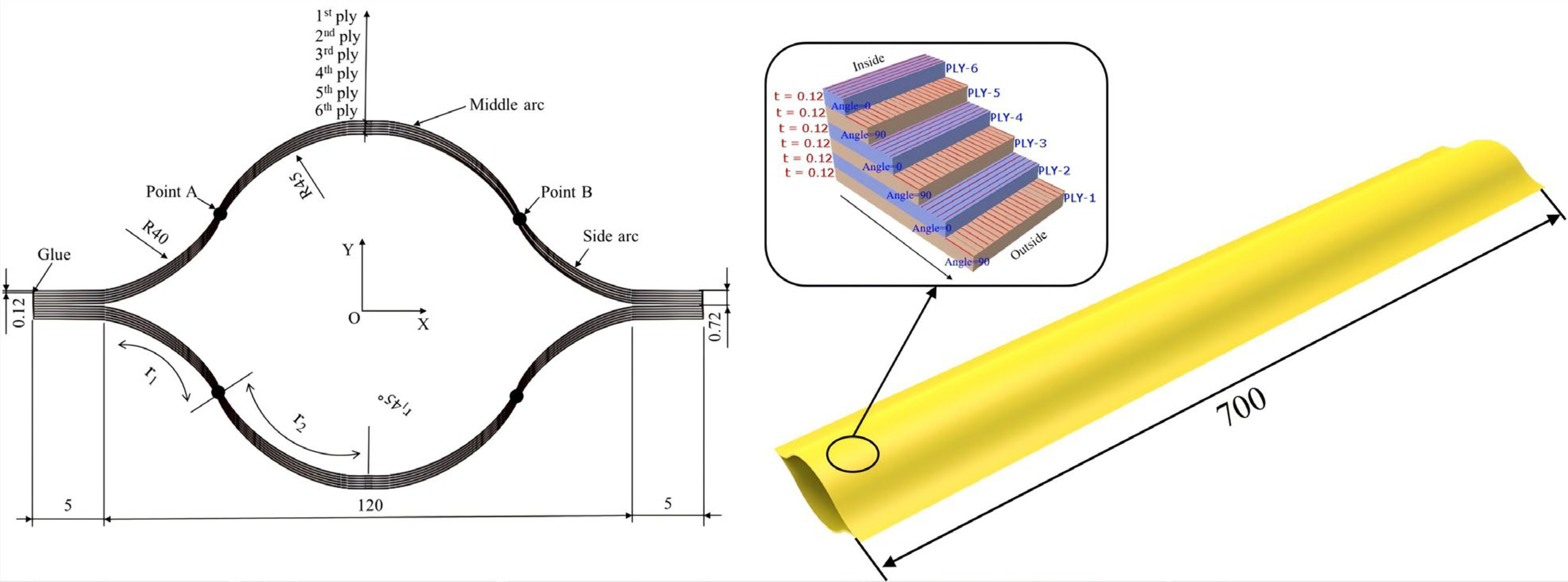
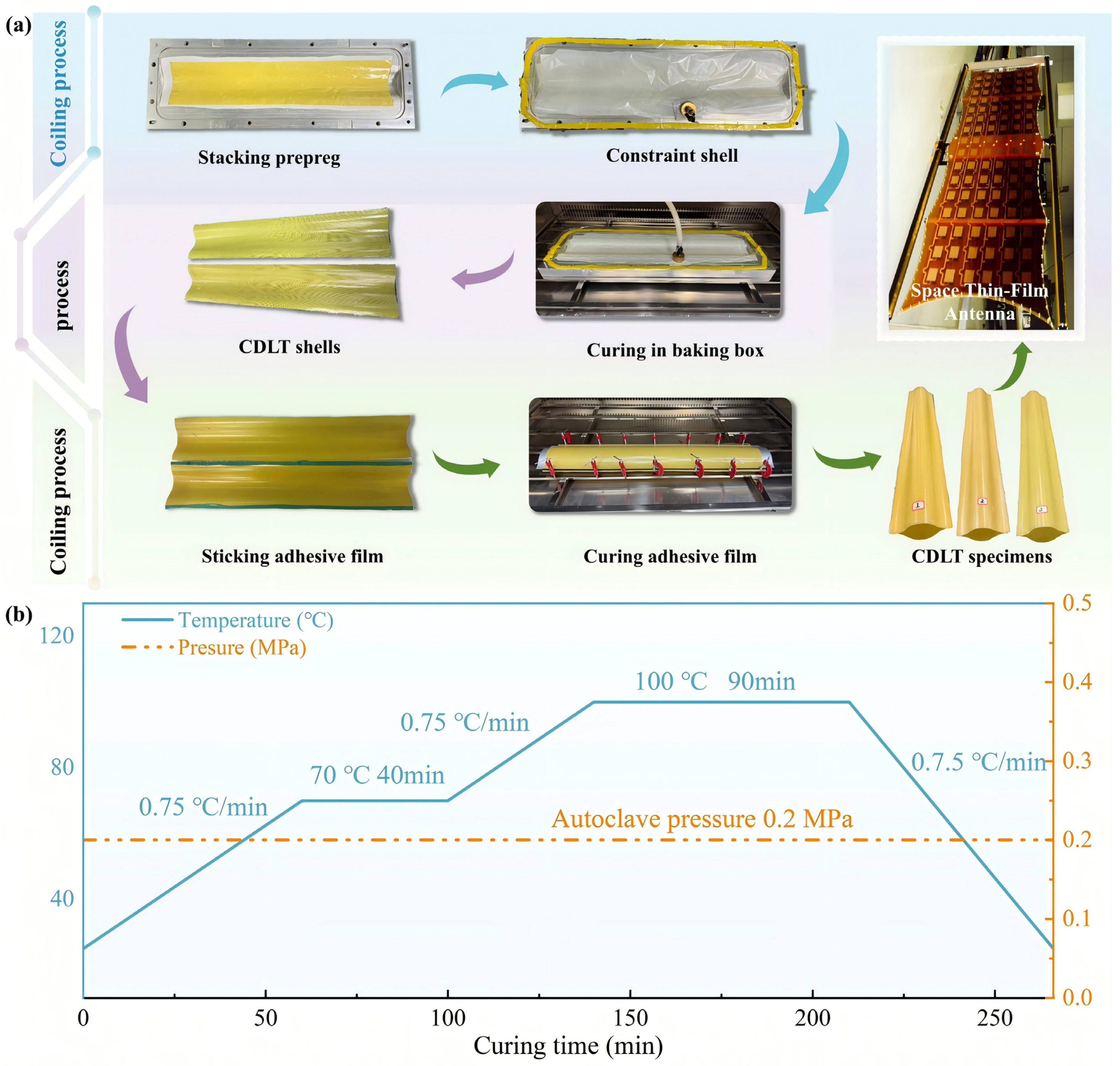
2.1. Material and Specimen
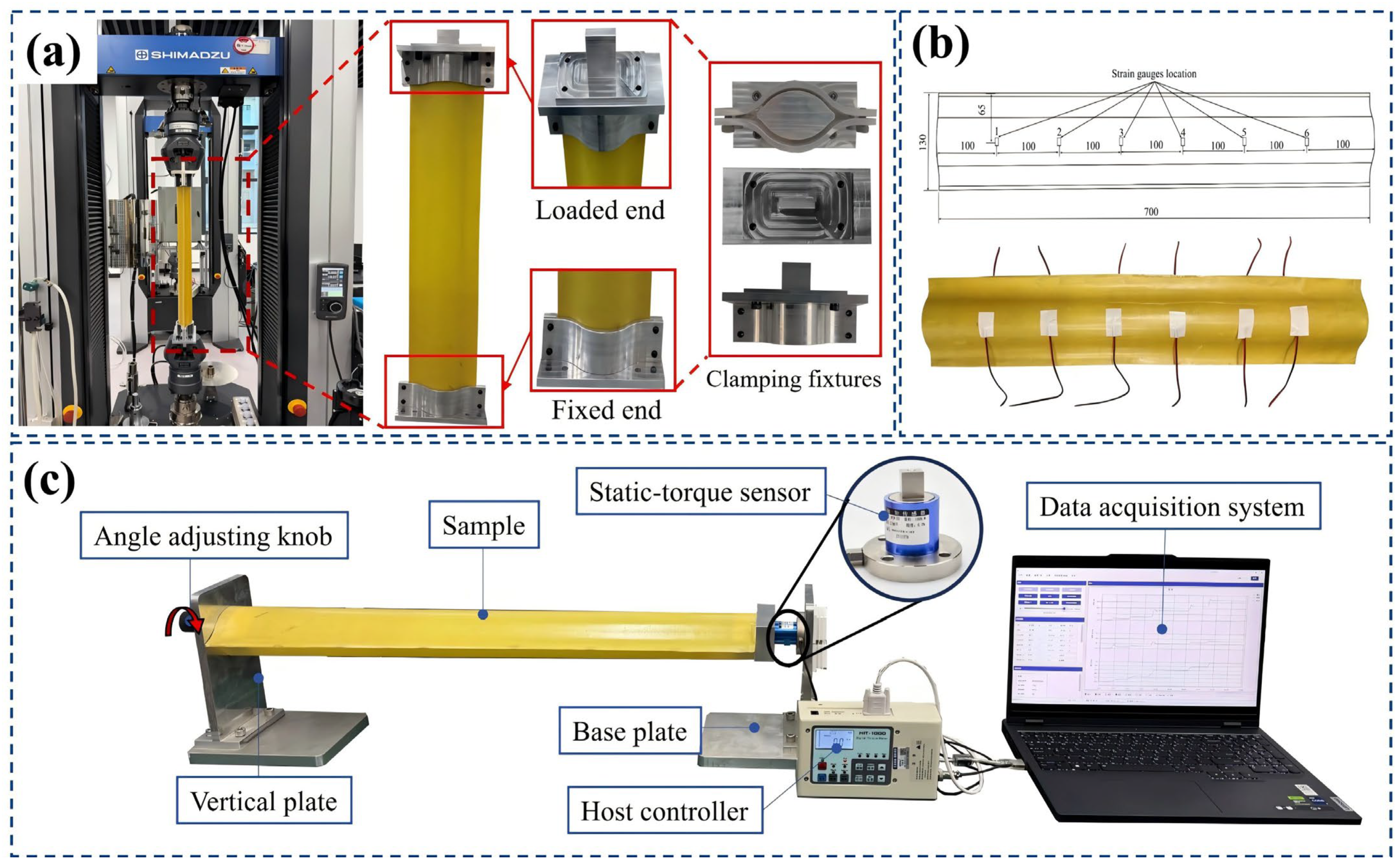
2.2. Buckling Test
3. Finite Element Simulation
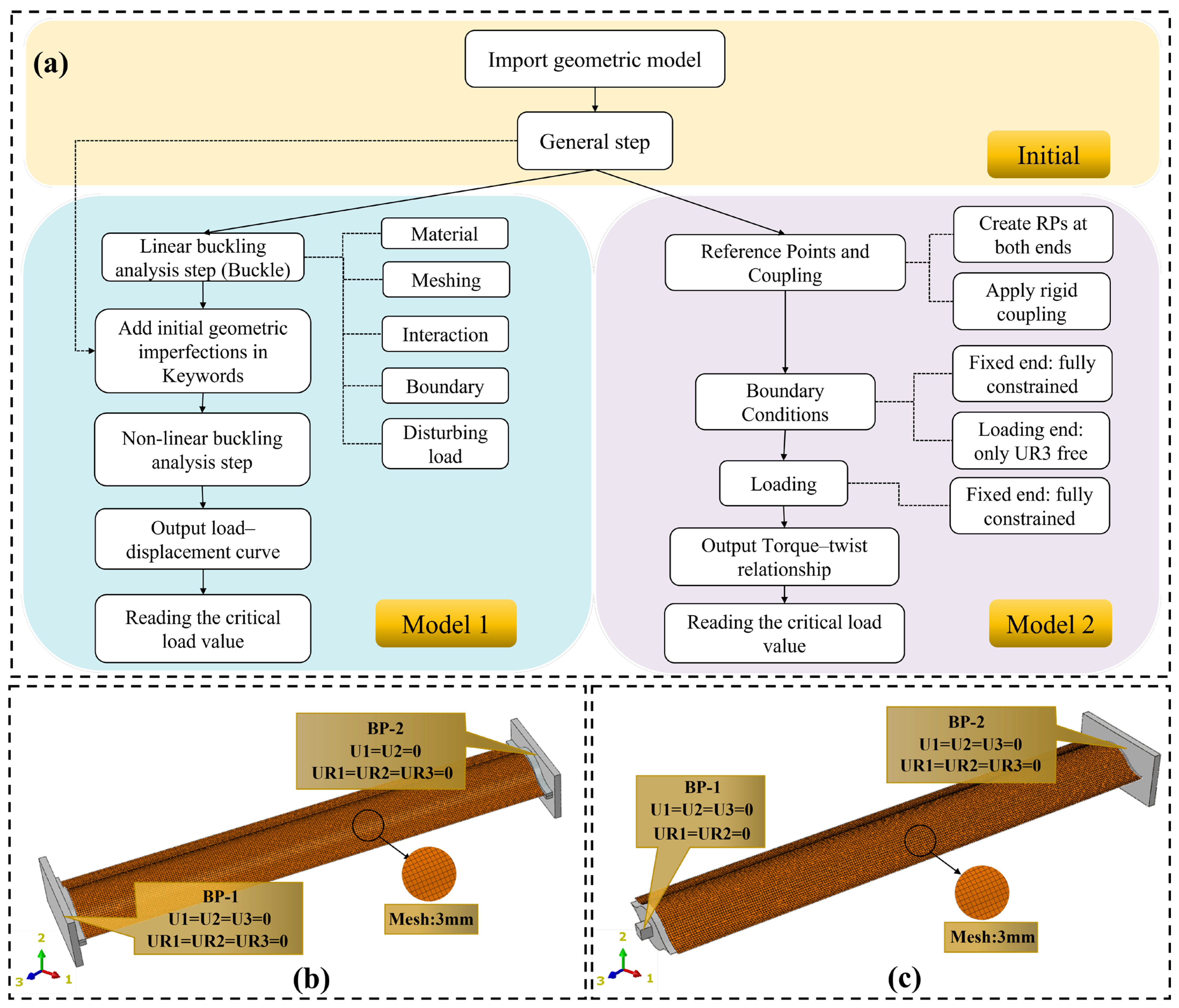
3.1. FE Models
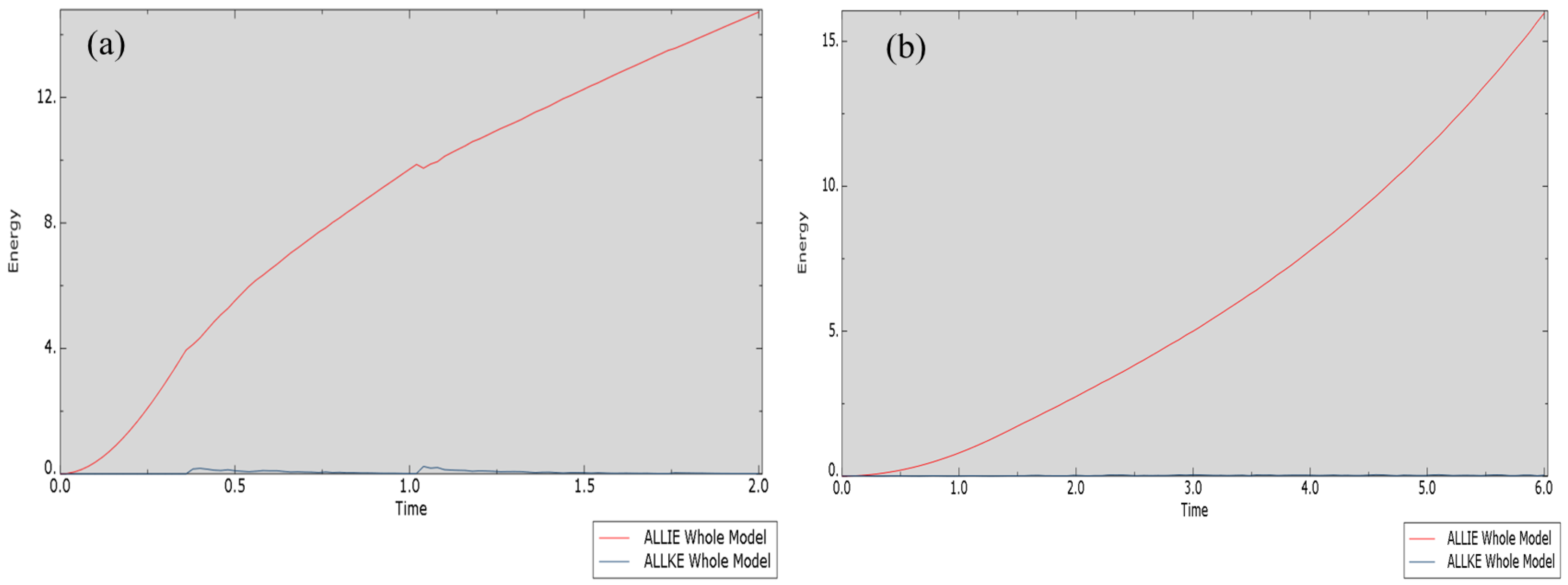
3.2. Numerical Study on Axial Buckling and Failure Behavior
3.3. Torsion Behavior Analysis
4. Result and Discussion
4.1. Study of Parameters of Axial Compression and Torsion
4.2. Coiling Mechanical Property Analysis
5. Conclusions
- (1)
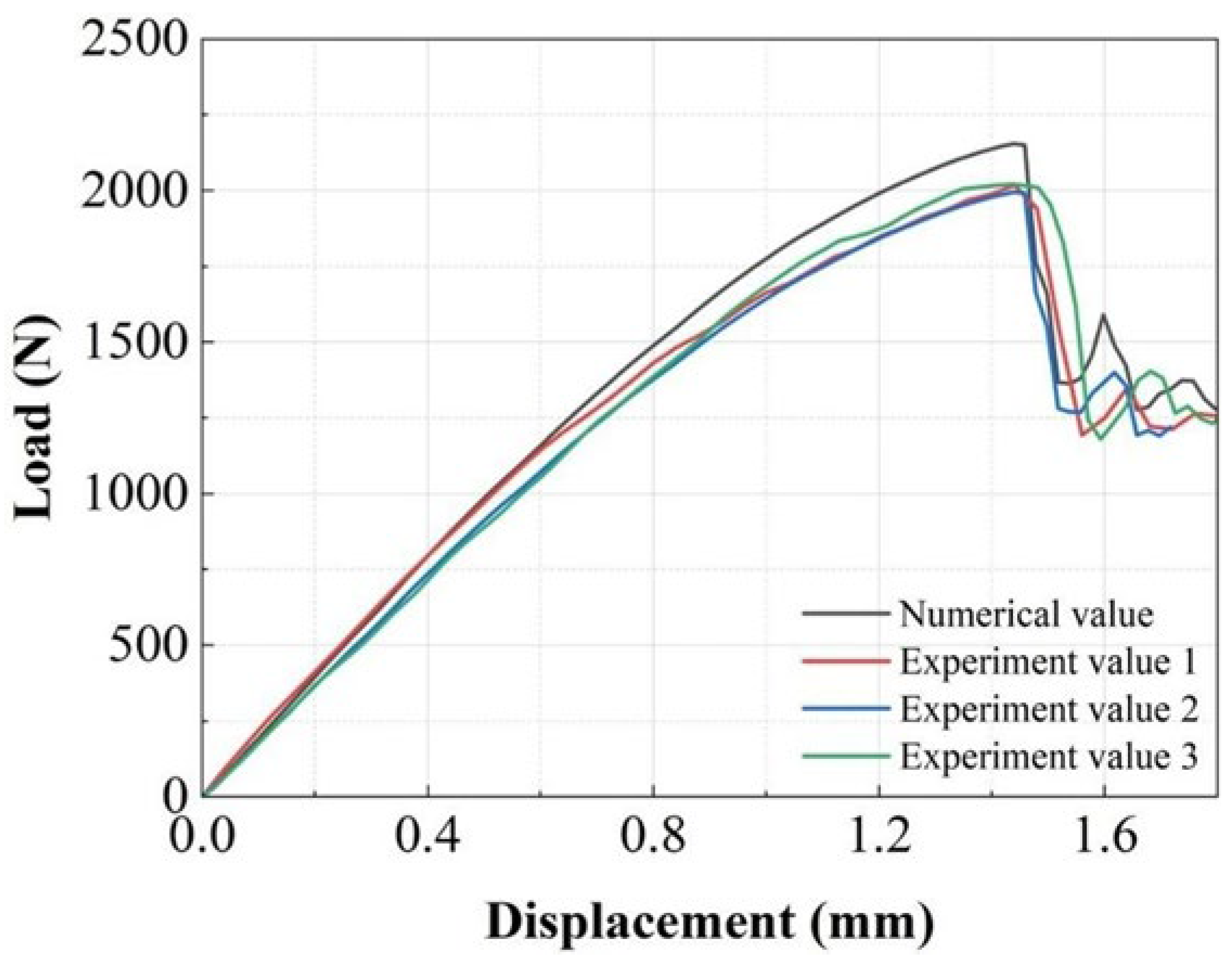
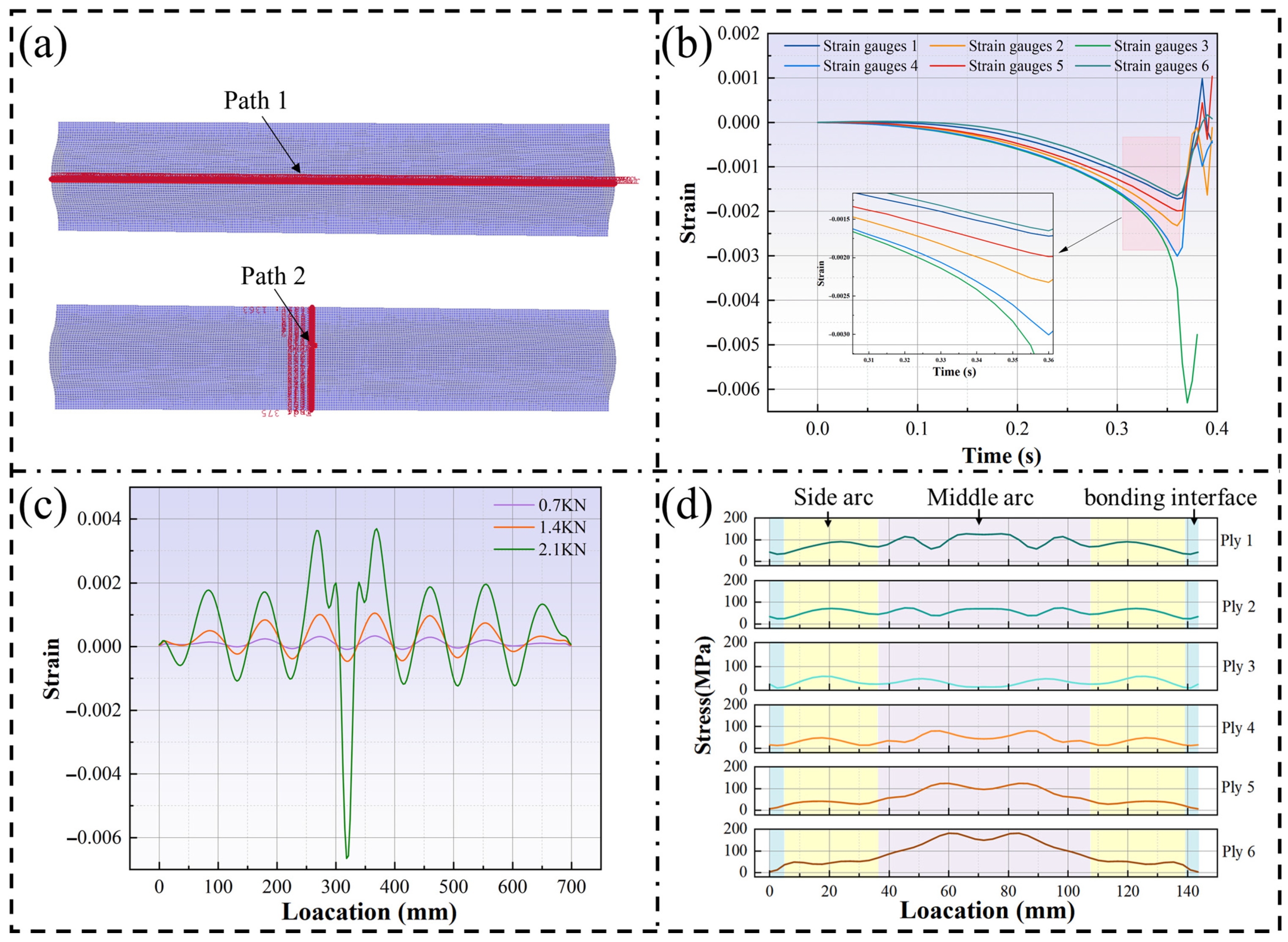
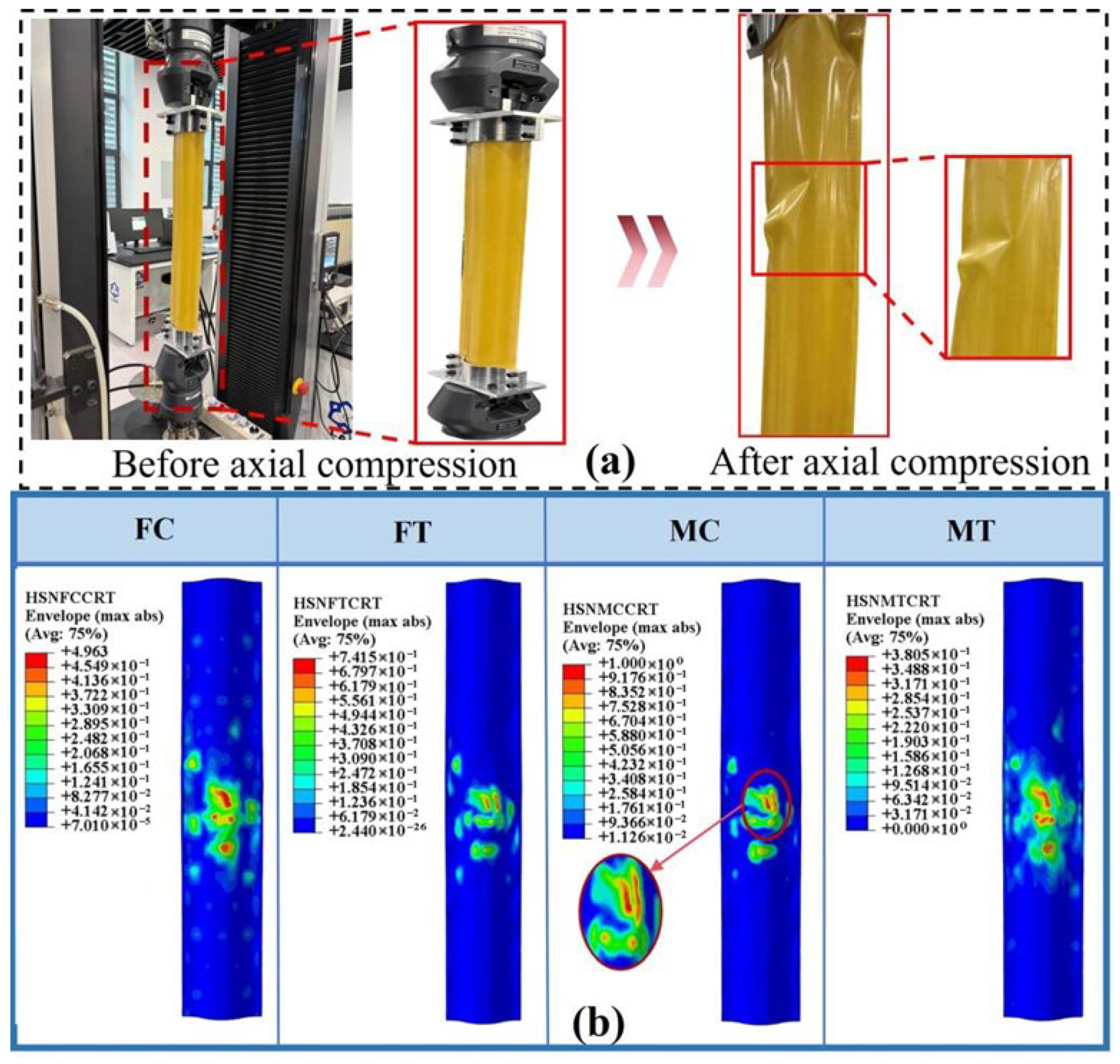
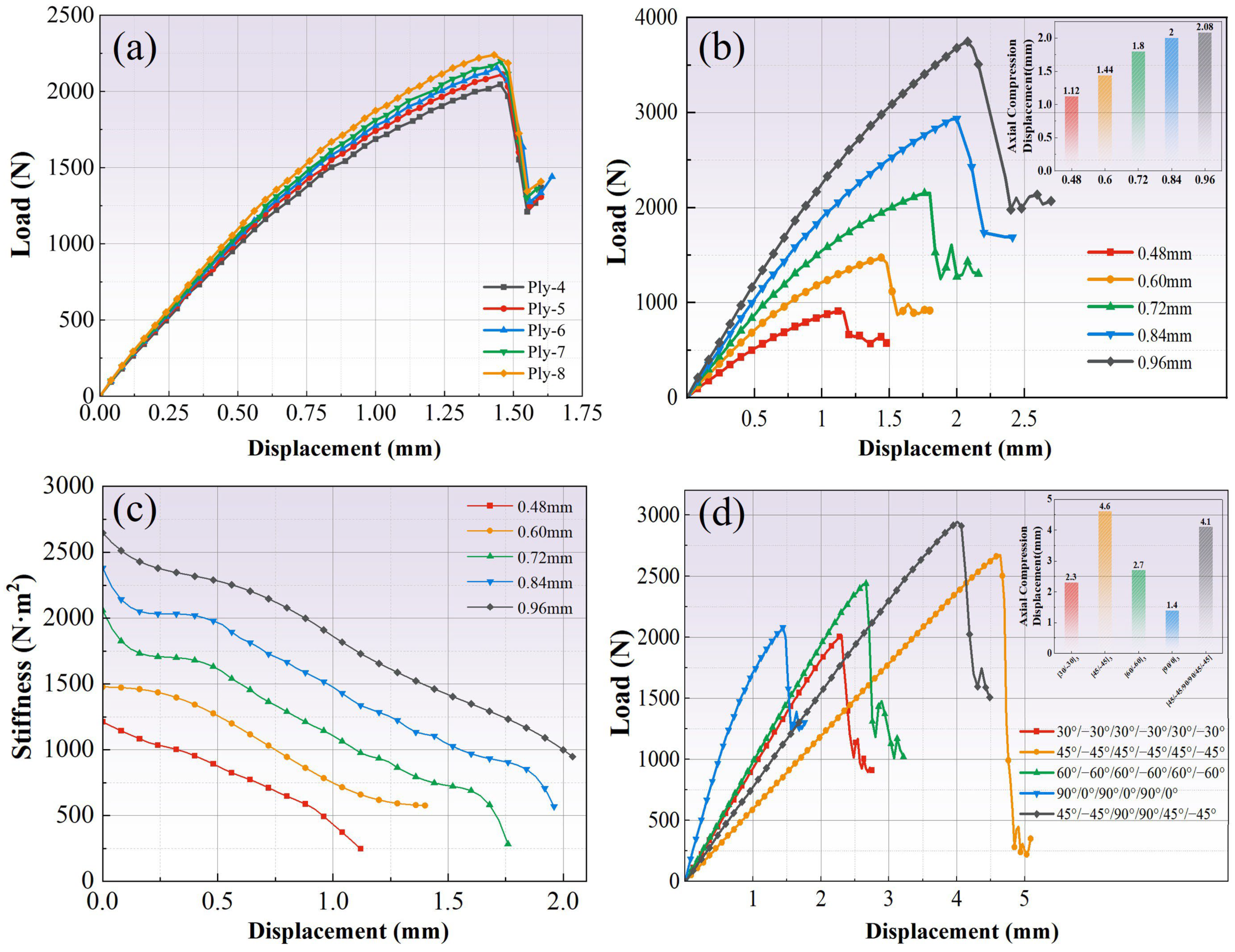
- Experiments and numerical simulations for axial compression revealed similar behavior, and both confirmed that the CDLT follows an initial linear elastic behavior until a critical load, where it buckles, causing a sharp reduction in compressive load and stiffness. Stress analysis indicated that during compressive buckling, stresses are mainly concentrated in the central arc section, while stresses in the flange region remained at a low level throughout the entire loading process. Validation of the damage evolution further confirmed that matrix compression failure is the prevailing post-buckling failure mechanism.
- (2)
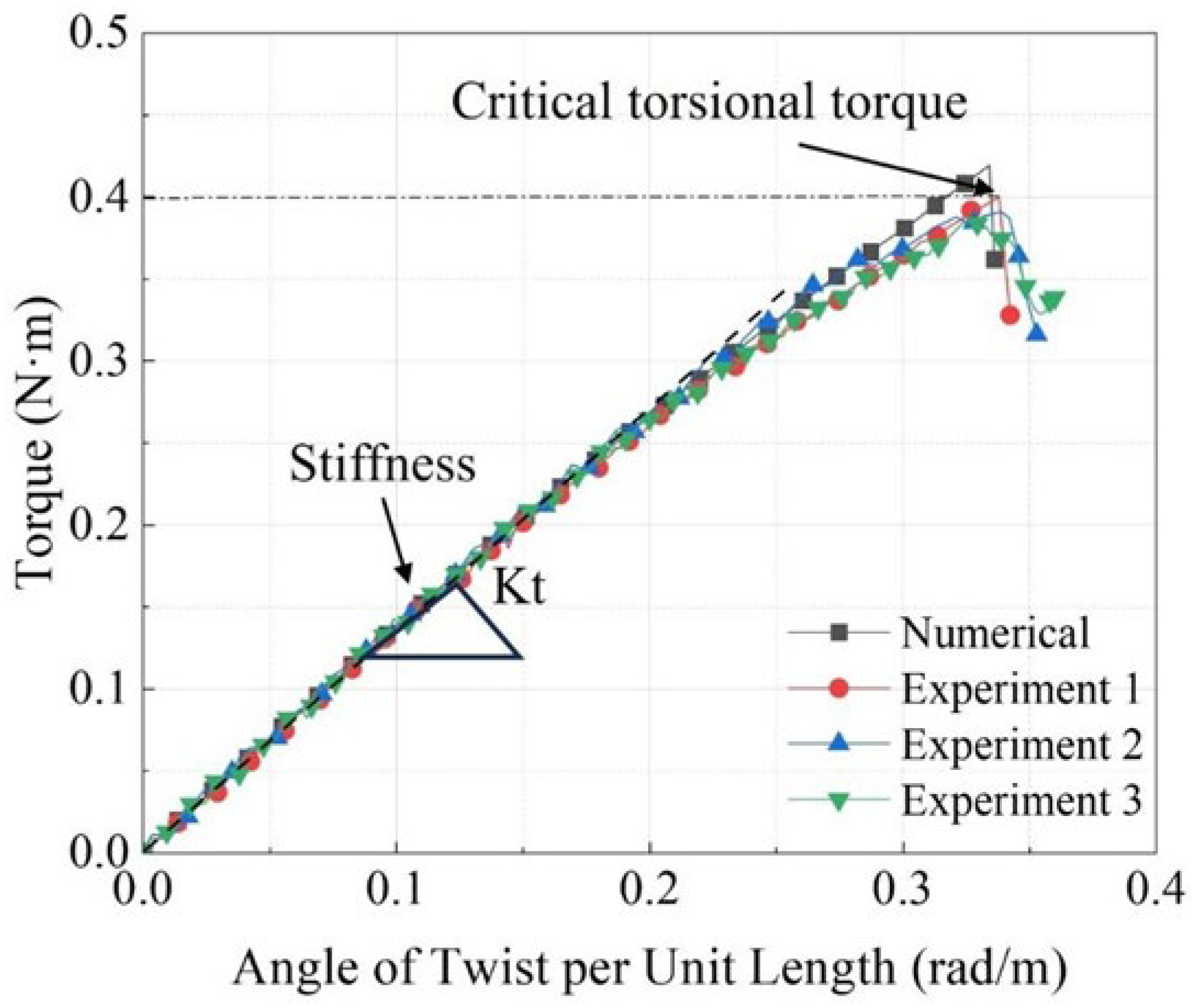
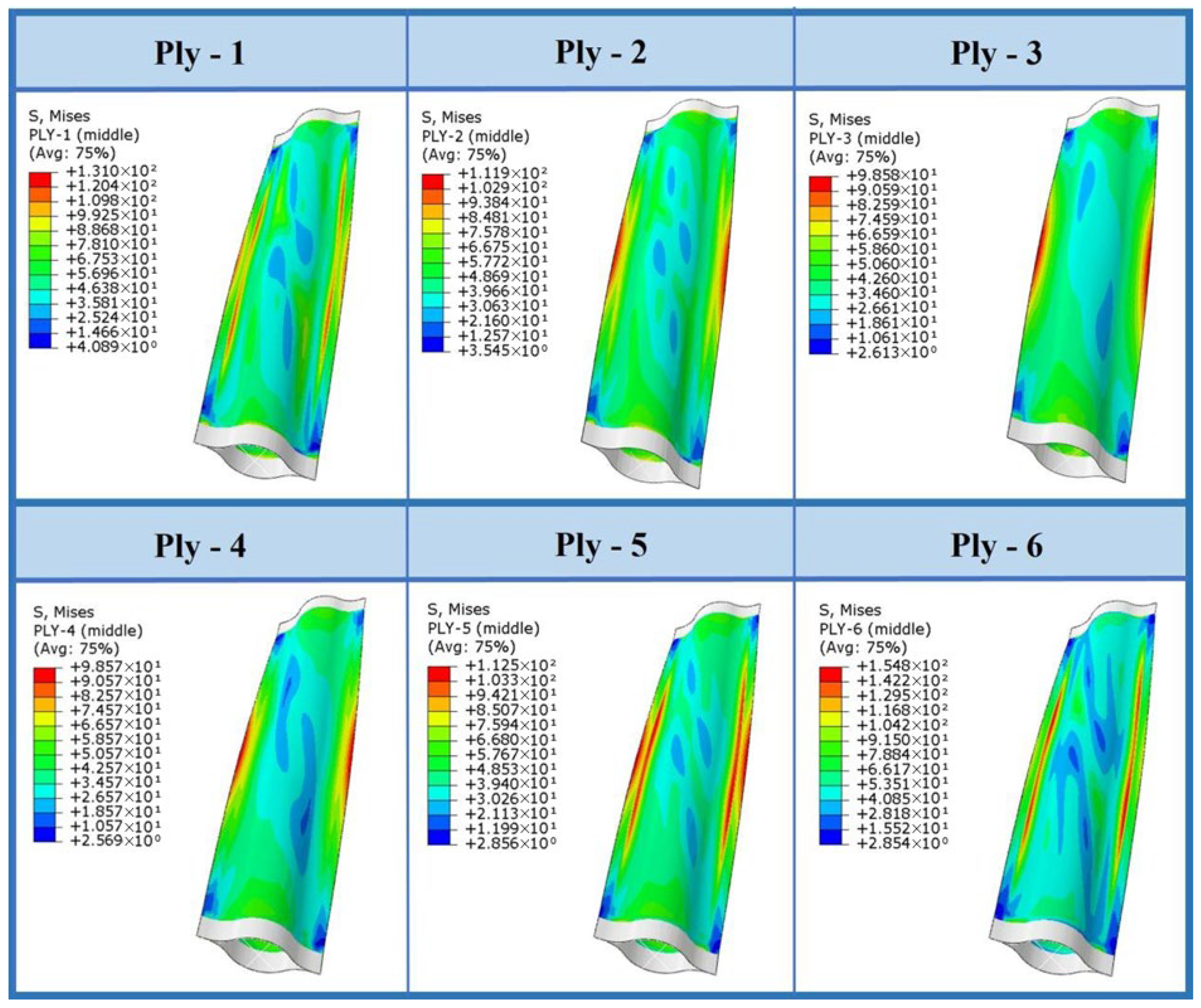
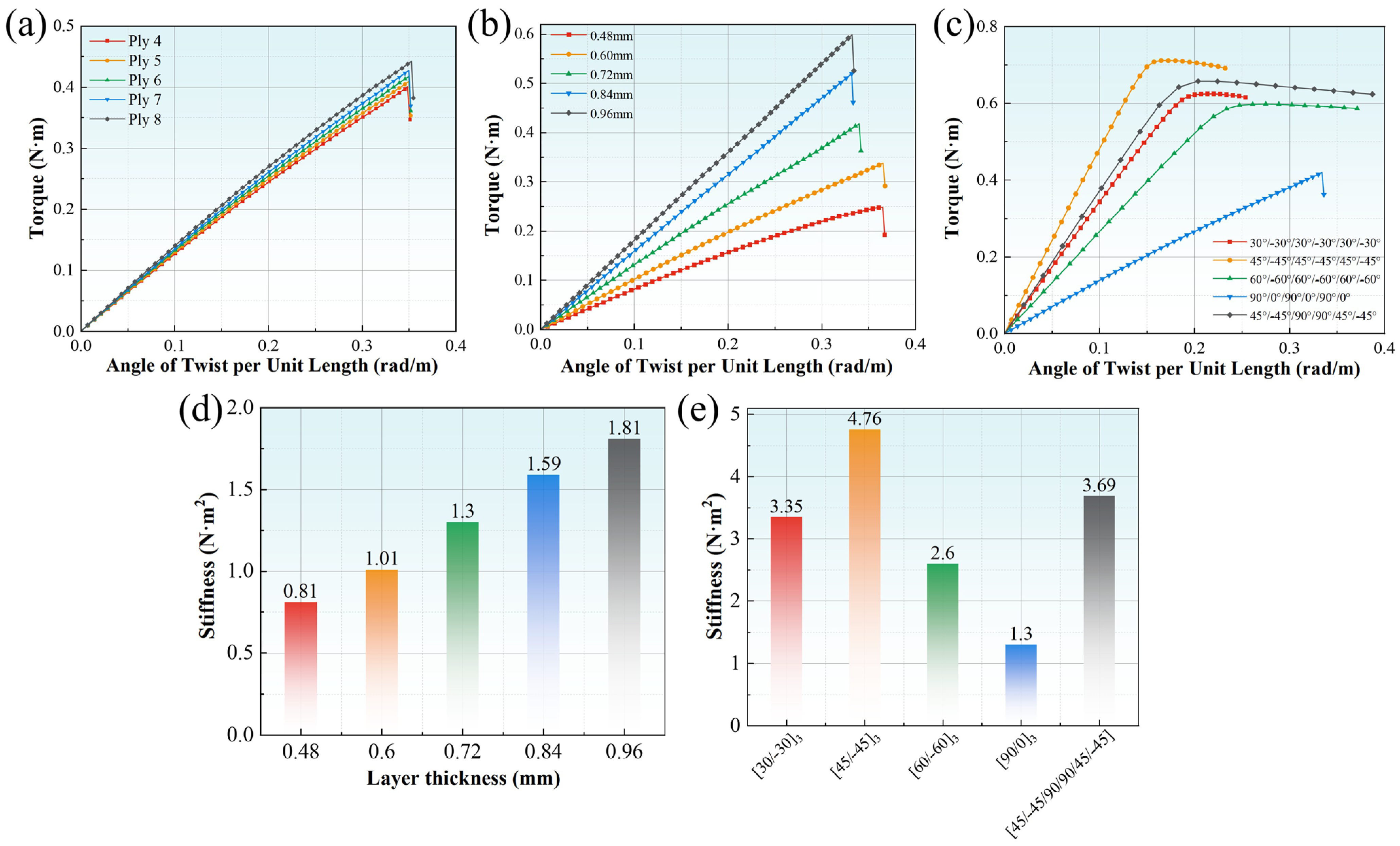
- Custom platform and FEA-based torsion tests revealed that the torque–twist response was initially linear, but dropped sharply at the peak torque due to local buckling and global instability. The stress analysis also showed that the highest stresses were observed for the outermost layers, and there were more uniform lower stress levels on intermediate layers.
- (3)
- The parametric analysis reveals that the total thickness and layer orientation play a dominant role in the load-bearing capacity of CDLTs, and adding layers while maintaining constant thickness had a limited effect on further improvement. The layup [45°/−45°/90°/90°/45°/−45°] was found to significantly increase load-bearing capacity. While increasing the laminate thickness enhances the CDLT’s load-bearing capacity, an overly thick design reduces its stowability.
- (4)
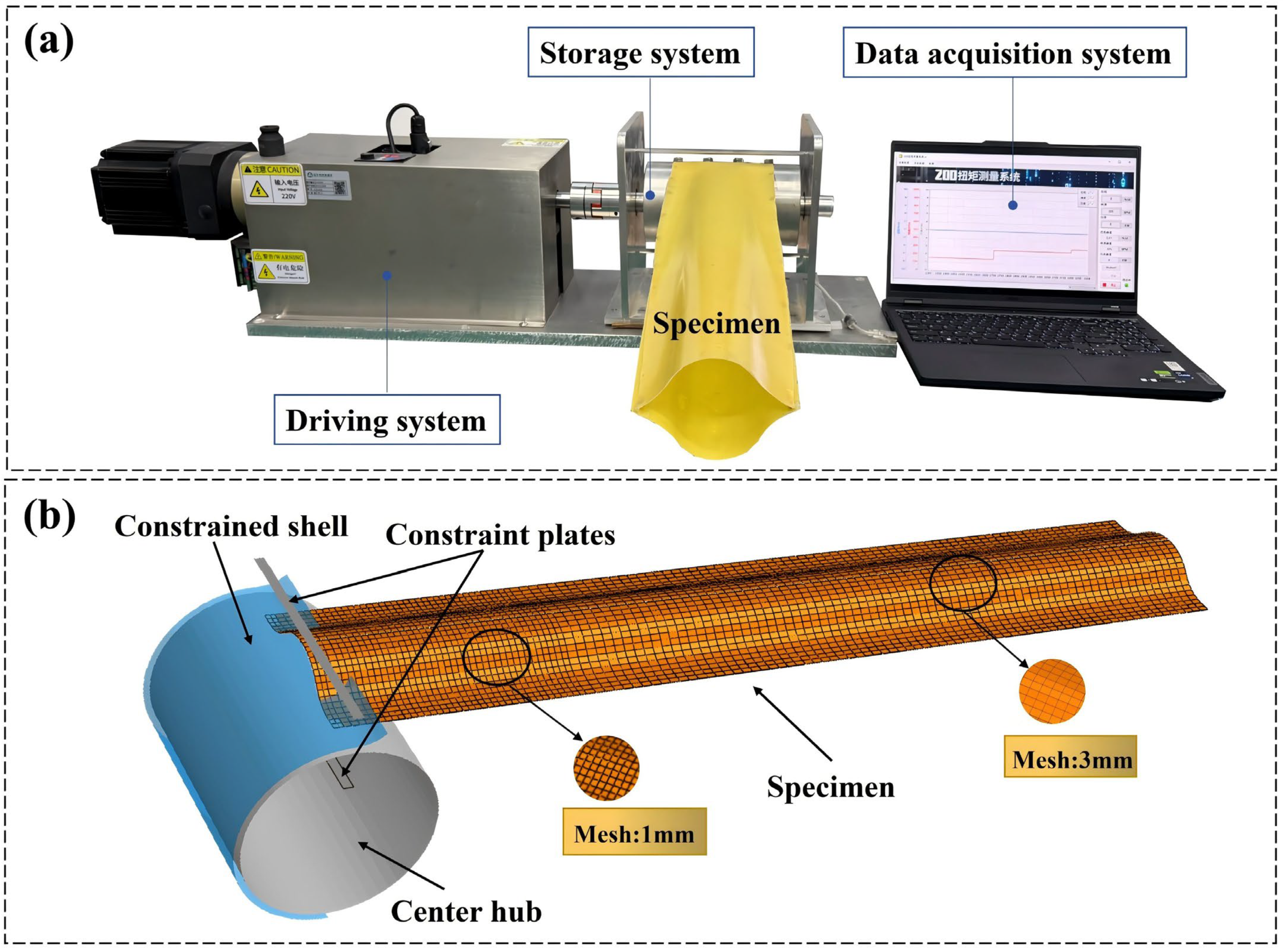
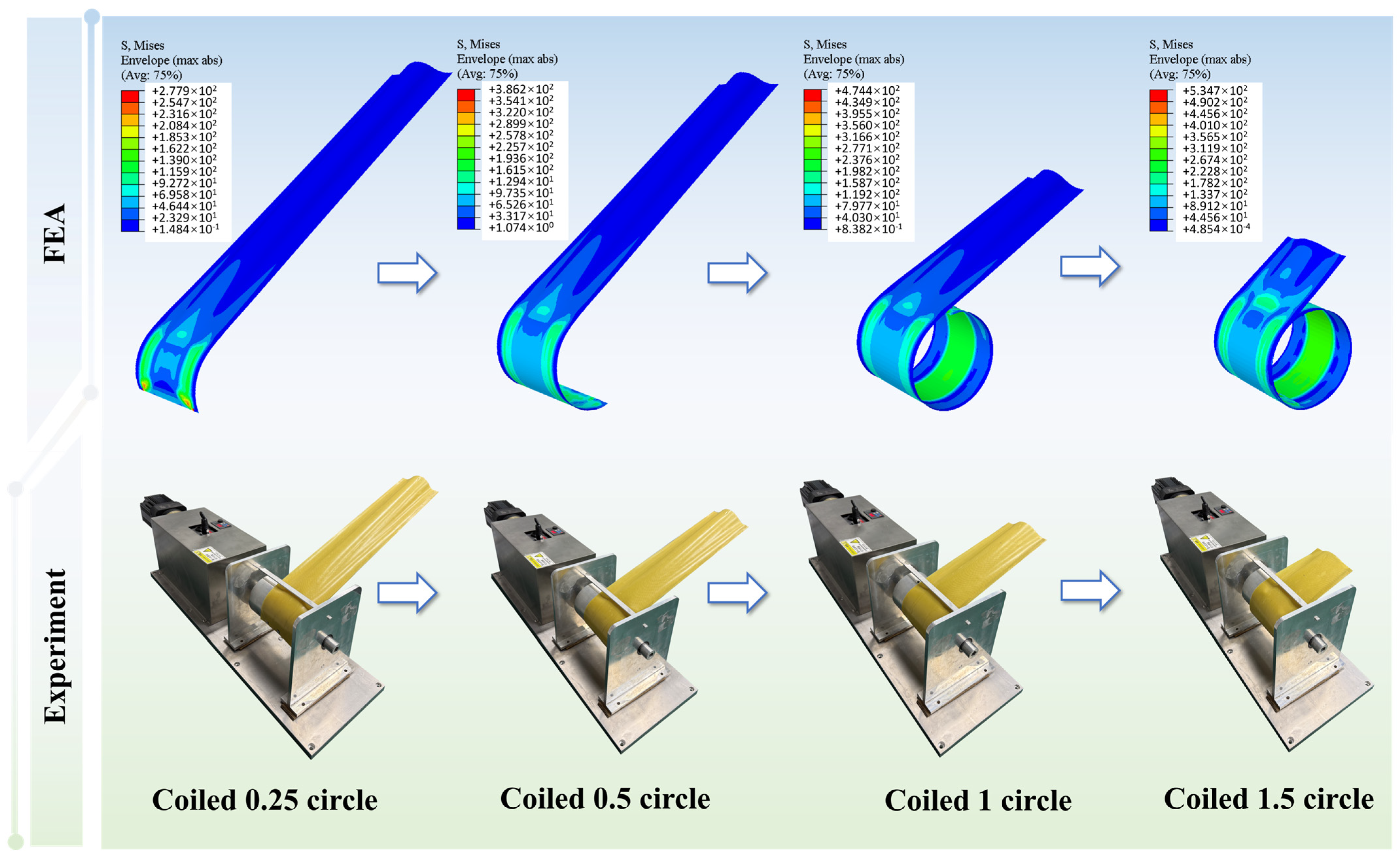
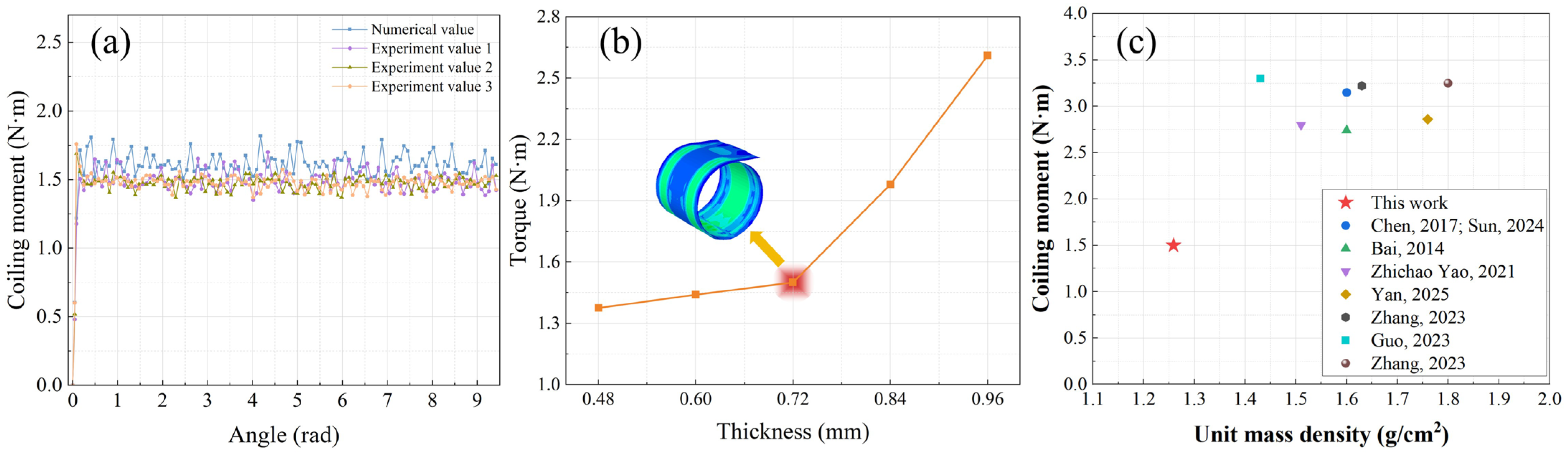
- The effects of laminate thickness on coiling torque were investigated using a custom platform for coiling test and FE calculations. Experiments were in good agreement with simulations, and the coiling torque was found to increase with thickness. Notably, torque rose slowly for thicknesses below 0.72 mm but increased sharply beyond this point due to stiffness-dominated resistance. Consequently, a thickness of 0.72 mm was found to be ideal, as it was strong enough load-bearing-wise and minimized coiling torque.
Supplementary Materials
Author Contributions
Funding
Data Availability Statement
Conflicts of Interest
References
- Galhofo, D.; Silvestre, N.; de Deus, A.M.; Reis, L.; Duarte, A.P.C.; Carvalho, R. Structural behaviour of pre-tensioned solar sails. Thin-Walled Struct. 2022, 181, 110007. [Google Scholar] [CrossRef]
- Gibney, E. CubeSats set for deep space—If they can hitch a ride. Nature 2016, 535, 19–20. [Google Scholar] [CrossRef] [PubMed]
- Liddle, J.D.; Holt, A.P.; Jason, S.J.; O’Donnell, K.A.; Stevens, E.J. Space science with CubeSats and nanosatellites. Nat. Astron. 2020, 4, 1026–1030. [Google Scholar] [CrossRef]
- Leclerc, C.; Pellegrino, S. Nonlinear elastic buckling of ultra-thin coilable booms. Int. J. Solids Struct. 2020, 203, 46–56. [Google Scholar] [CrossRef]
- Bessa, M.A.; Pellegrino, S. Design of ultra-thin shell structures in the stochastic post-buckling range using Bayesian machine learning and optimization. Int. J. Solids Struct. 2018, 139–140, 174–188. [Google Scholar] [CrossRef]
- Kajihara, S.; Yamashita, S.; Sunaga, Y.; Yokozeki, T.; Watanabe, A.; Iwahori, Y. Deformation behavior of CFRP bistable open-section cylindrical boom for lunar deployable structure. Thin-Walled Struct. 2025, 216, 113651. [Google Scholar] [CrossRef]
- Chen, W.; Fang, G.; Hu, Y. An experimental and numerical study of flattening and wrapping process of deployable composite thin-walled lenticular tubes. Thin-Walled Struct. 2017, 111, 38–47. [Google Scholar] [CrossRef]
- Schultz, M.R.; Hulse, M.J.; Keller, P.N.; Turse, D. Neutrally stable behavior in fiber-reinforced composite tape springs. Compos. Part A Appl. Sci. Manuf. 2008, 39, 1012–1017. [Google Scholar] [CrossRef]
- Yang, L.; Tan, H.; Cao, Z. Modeling and analysis of the ploy region of bistable composite cylindrical shells. Compos. Struct. 2018, 192, 347–354. [Google Scholar] [CrossRef]
- Wang, F.; Zhang, J.; Wang, S. Investigation on flow and heat transfer characteristics in rectangular channel with drop-shaped pin fins. Propuls. Power Res. 2012, 1, 64–70. [Google Scholar] [CrossRef]
- Nguyen, L.; Medina, K.; McConnel, Z.; Lake, M.S. Solar Cruiser TRAC boom development. In AIAA SCITECH 2023 Forum; American Institute of Aeronautics and Astronautics: Reston, VA, USA, 2023. [Google Scholar]
- Yang, H.; Guo, H.; Liu, R.; Wang, S.; Liu, Y. Coiling and deploying dynamic optimization of a C-cross section thin-walled composite deployable boom. Struct. Multidiscip. Optim. 2020, 61, 1731–1738. [Google Scholar] [CrossRef]
- Chang, Z.; Zhao, P.; Zhang, Z.; Zou, G.; Zhao, P.; Wu, C. Damage analysis of deployable thin-walled composite shell structure during coiling up. Thin-Walled Struct. 2024, 195, 111395. [Google Scholar] [CrossRef]
- Sun, J.; Han, Q.; Cheng, X.; Shi, H.; Ding, R.; Shi, M.; Liu, C. A data-driven computational optimization framework for designing thin-walled lenticular deployable composite boom with optimal load-bearing and folding capabilities. Thin-Walled Struct. 2024, 203, 112244. [Google Scholar] [CrossRef]
- Leipold, M.; Eiden, M.; Garner, C.; Herbeck, L.; Kassing, D.; Niederstadt, T.; Krüger, T.; Pagel, G.; Rezazad, M.; Rozemeijer, H.; et al. Solar sail technology development and demonstration. Acta Astronaut. 2003, 52, 317–326. [Google Scholar] [CrossRef]
- Puig, L.; Barton, A.; Rando, N. A review on large deployable structures for astrophysics missions. Acta Astronaut. 2010, 67, 12–26. [Google Scholar] [CrossRef]
- Gan, W.W.; Pellegrino, S. Numerical Approach to the Kinematic Analysis of Deployable Structures Forming a Closed Loop. Proc. Inst. Mech. Eng. Part C J. Mech. Eng. Sci. 2006, 220, 1045–1056. [Google Scholar] [CrossRef]
- Nassehpour, S.; Kwan, A.S.K. New concepts in large deployable parabolic solid reflectors. In Proceedings of the 6th AECEF Symposium on Civil Engineering Education in Changing Europe, Vilnius, Lithuania, 28–30 May 2008; pp. 162–171. [Google Scholar]
- Seffen, K.A.; You, Z. Pellegrino, Folding and deployment of curved tape springs. Int. J. Mech. Sci. 2000, 42, 2055–2073. [Google Scholar] [CrossRef]
- Wang, B.; Zhu, J.; Zhong, S.; Liang, W.; Guan, C. Space deployable mechanics: A review of structures and smart driving. Mater. Des. 2024, 237, 112557. [Google Scholar] [CrossRef]
- Lappas, V.; Adeli, N.; Visagie, L.; Fernandez, J.; Theodorou, T.; Steyn, W.; Perren, M. CubeSail: A low cost CubeSat based solar sail demonstration mission. Adv. Space Res. 2011, 48, 1890–1901. [Google Scholar] [CrossRef]
- Geppert, U.; Biering, B.; Lura, F.; Block, J.; Straubel, M.; Reinhard, R. The 3-step DLR–ESA Gossamer road to solar sailing. Adv. Space Res. 2011, 48, 1695–1701. [Google Scholar] [CrossRef]
- Zhang, Z.; Li, Y.; Yu, X.; Li, X.; Wu, H.; Wu, H.; Jiang, S.; Chai, G. Bistable morphing composite structures: A review. Thin-Walled Struct. 2019, 142, 74–97. [Google Scholar] [CrossRef]
- Sun, J.; Wang, X.; Cheng, X.; Shi, H.; Ding, R.; Han, Q.; Liu, C. Prediction of nonlinear mechanical behaviour of the corrugated flexible composite skin for morphing wing via PCA-enhanced deep learning method. Aerosp. Sci. Technol. 2026, 168, 111018. [Google Scholar] [CrossRef]
- Block, J.; Straubel, M.; Wiedemann, M. Ultralight deployable booms for solar sails and other large gossamer structures in space. Acta Astronaut. 2011, 68, 984–992. [Google Scholar] [CrossRef]
- Tanaka, H. Design optimization studies for large-scale contoured beam deployable satellite antennas. Acta Astronaut. 2006, 58, 443–451. [Google Scholar] [CrossRef]
- Soykasap, O.; Watt, A.M.; Pellegrino, S. New Deployable Reflector Concept. In Proceedings of the 45th AIAA/ASME/ASCE/AHS/ASC Structures, Structural Dynamics & Materials Conference, Palm Springs, CA, USA, 19–22 April 2004. [Google Scholar]
- Palmeri, F.; Laurenzi, S. Neural Network-Based Surrogate Modeling for Buckling Performance Optimization of Lightweight-Composite Collapsible Tubular Masts. Biomimetics 2024, 9, 494. [Google Scholar] [CrossRef]
- Sun, J.; Cheng, X.; Wang, X.; Shi, H.; Ding, R.; Han, Q.; Liu, C. Rapidly predicting curing process-induced deformation of the thin-walled Omega-shaped composite parts using a deep learning method. Thin-Walled Struct. 2025, 217, 113906. [Google Scholar] [CrossRef]
- Hu, Y.; Chen, W.; Li, R.; Fang, G. Mechanical characteristics of deployable composite thin-walled lenticular tubes. Compos. Struct. 2016, 153, 601–613. [Google Scholar] [CrossRef]
- Ma, X.; An, N.; Cong, Q.; Bai, J.-B.; Wu, M.; Xu, Y.; Zhou, J.; Zhang, D.; Zhang, T.; Guo, R.; et al. Design, modeling, and manufacturing of high strain composites for space deployable structures. Commun. Eng. 2024, 3, 78. [Google Scholar] [CrossRef]
- Seay, C.W.; Mulcahy, K.A.; Hall, M.S.; Clements, J.A.; Pretko, J.; Christiansen, E.L.; Davis, B.A.; Cowardin, H. Cowardin, The Next Generation of Kevlar Fiber for Improved Micrometeoroid and Orbital Debris Protection; NASA: Washington, DC, USA, 2023. [Google Scholar]
- Quinn, H.; Roussel-Dupre, D.; Caffrey, M.; Graham, P.; Wirthlin, M.; Morgan, K.; Salazar, A.; Nelson, T.; Howes, W.; Johnson, E.; et al. The Cibola Flight Experiment. ACM Trans. Reconfig. Technol. Syst. 2015, 8, 3. [Google Scholar] [CrossRef]
- Schenk, M.; Viquerat, A.D.; Seffen, K.A.; Guest, S.D. Review of Inflatable Booms for Deployable Space Structures: Packing and Rigidization. J. Spacecr. Rocket. 2014, 51, 762–778. [Google Scholar] [CrossRef]
- Guo, G.; Alam, S.; Peel, L.D. An investigation of deformation and failure mechanisms of fiber-reinforced composites in layered composite armor. Compos. Struct. 2022, 281, 115125. [Google Scholar] [CrossRef]
- Yan, Z.; Wu, M.; Xiang, P. An energy method to predict the peak moment of CFRP lenticular booms under pure bending. Aerosp. Sci. Technol. 2025, 158, 109921. [Google Scholar] [CrossRef]
- Yao, Z.; Li, D.; Zhu, S.; Zhou, L. Analysis of Buckling Characteristics and Parameter Influence of Composite Thin-walled Lenticular Boom Structures. E3S Web Conf. 2021, 233, 04009. [Google Scholar] [CrossRef]
- Guo, R.; Jin, X.; Jia, Q.; Ma, X.; An, N.; Zhou, J. Folding, stowage, and deployment of composite thin-walled lenticular tubes. Acta Astronaut. 2023, 213, 567–577. [Google Scholar] [CrossRef]
- Zhang, Z.; Guo, X.; Pan, B.; Sun, M.; Zhang, G.; Chai, H.; Wu, H.; Jiang, S. Experimental study and numerical simulation of load-bearing/coiling characteristics of thin-walled lenticular composite booms. Compos. Struct. 2023, 324, 117515. [Google Scholar] [CrossRef]
- Bai, J.; Xiong, J. Temperature effect on buckling properties of ultra-thin-walled lenticular collapsible composite tube subjected to axial compression. Chin. J. Aeronaut. 2014, 27, 1312–1317. [Google Scholar] [CrossRef]





| Parameter | Notation | Values |
|---|---|---|
| Density | ρ (kg/m3) | 1259 |
| Young’s modulus in direction 1 | E1 (GPa) | 20.5 |
| Young’s modulus in direction 2 | E2 (GPa) | 20.5 |
| Young’s modulus in direction 3 | E3 (GPa) | 6.0 |
| Poisson’s ratio in direction 12 | 0.21 | |
| Poisson’s ratio in direction 13 | 0.33 | |
| Poisson’s ratio in direction 23 | 0.33 | |
| Shear modulus in direction 12 | G12 (GPa) | 0.77 |
| Shear modulus in direction 13 | G13 (GPa) | 2.71 |
| Shear modulus in direction 23 | G23 (GPa) | 2.71 |
| Tensile strength in direction 1 | X1t (GPa) | 0.595 |
| Compressive strength in direction 1 | X1c (GPa) | 0.595 |
| Tensile strength in direction 2 | X2t (GPa) | 0.595 |
| Compressive strength in direction 2 | X2c (GPa) | 0.595 |
| Shear strength in direction 12 | S12 (GPa) | 0.077 |
| Shear strength in direction 13 | S13 (GPa) | 0.54 |
| Shear strength in direction 23 | S23 (GPa) | 0.54 |
| Failure equivalent strain | Fs | 0.2 |
| Number | Linear (N) | Nonlinear (N) |
|---|---|---|
| 4 | 2783.2 | 2046.5 |
| 5 | 3251.2 | 2111.2 |
| 6 | 3059.8 | 2154.8 |
| 7 | 3170.1 | 2183.4 |
| 8 | 3493.9 | 2239.7 |
| Thickness (mm) | Linear (N) | Nonlinear (N) |
|---|---|---|
| 0.48 | 1367.3 | 911.5 |
| 0.60 | 2154.2 | 1475.5 |
| 0.72 | 3059.8 | 2154.8 |
| 0.84 | 4698.8 | 2936.8 |
| 0.96 | 5731.3 | 3746.0 |
| Angles | Linear (N) | Nonlinear (N) |
|---|---|---|
| 30°/−30°/30°/−30°/30°/−30° | 3043.1 | 2015.3 |
| 45°/−45°/45°/−45°/45°/−45° | 4277.7 | 2673.6 |
| 60°/−60°/60°/−60°/60°/−60° | 3212.4 | 2379.6 |
| 90°/0°/90°/0°/90°/0° | 3059.8 | 2154.8 |
| 45°/−45°/90°/90°/45°/−45° | 4539.9 | 2910.2 |
| Numbers | Torque (N·m) | Stiffness (N·m2) |
|---|---|---|
| 4 | 0.399 | 1.250 |
| 5 | 0.408 | 1.274 |
| 6 | 0.418 | 1.301 |
| 7 | 0.427 | 1.331 |
| 8 | 0.442 | 1.378 |
| Thickness (mm) | Torque (N·m) | Stiffness (N·m2) |
|---|---|---|
| 0.48 | 0.248 | 0.806 |
| 0.60 | 0.343 | 1.008 |
| 0.72 | 0.418 | 1.301 |
| 0.84 | 0.520 | 1.589 |
| 0.96 | 0.599 | 1.813 |
| Angles | Torque (N·m) | Stiffness (N·m2) |
|---|---|---|
| 30°/−30°/30°/−30°/30°/−30° | 0.623 | 3.349 |
| 45°/−45°/45°/−45°/45°/−45° | 0.712 | 4.760 |
| 60°/−60°/60°/−60°/60°/−60° | 0.596 | 2.596 |
| 90°/0°/90°/0°/90°/0° | 0.418 | 1.301 |
| 45°/−45°/90°/90°/45°/−45° | 0.658 | 3.692 |
| Number | Fiber Type | E1 (GPa) | E2 (GPa) | (GPa) | G12 (GPa) | Density (g/cm3) | Refs. |
|---|---|---|---|---|---|---|---|
| 1 | Kevlar/9788 | 20.5 | 6.0 | 0.21 | 0.77 | 1.26 | [35] |
| 2 | T300/Epoxy | 93.69 | 4.51 | 0.30 | 2.38 | 1.76 | [36] |
| 3 | T300/Epoxy | 82.30 | 6.77 | 3.50 | 0.33 | 1.51 | [37] |
| 4 | T300/Epoxy | 137.99 | 8.71 | 0.32 | 3.50 | 1.43 | [38] |
| 5 | T300/Epoxy | 130 | 10 | 0.3 | 4.4 | 1.8 | [39] |
| 6 | T700/Epoxy | 129 | 3.1 | 0.32 | 6.1 | 1.63 | [39] |
| 7 | T300/5228 | 126 | 7.2 | 0.3 | 3.6 | 1.6 | [7,14] |
| 8 | T300/5228A | 80.08 | 6.67 | 0.34 | 2.93 | 1.6 | [40] |
Disclaimer/Publisher’s Note: The statements, opinions and data contained in all publications are solely those of the individual author(s) and contributor(s) and not of MDPI and/or the editor(s). MDPI and/or the editor(s) disclaim responsibility for any injury to people or property resulting from any ideas, methods, instructions or products referred to in the content. |
© 2026 by the authors. Licensee MDPI, Basel, Switzerland. This article is an open access article distributed under the terms and conditions of the Creative Commons Attribution (CC BY) license.
Share and Cite
Wang, X.; Wang, X.; Yan, J.; Zheng, Q.; Sun, J. Experimental and Numerical Investigation of the Mechanical Characteristics of Kevlar Composite Deployable Lenticular Tubes. Eng 2026, 7, 96. https://doi.org/10.3390/eng7020096
Wang X, Wang X, Yan J, Zheng Q, Sun J. Experimental and Numerical Investigation of the Mechanical Characteristics of Kevlar Composite Deployable Lenticular Tubes. Eng. 2026; 7(2):96. https://doi.org/10.3390/eng7020096
Chicago/Turabian StyleWang, Xinrui, Xingjian Wang, Jing Yan, Qifeng Zheng, and Junwei Sun. 2026. "Experimental and Numerical Investigation of the Mechanical Characteristics of Kevlar Composite Deployable Lenticular Tubes" Eng 7, no. 2: 96. https://doi.org/10.3390/eng7020096
APA StyleWang, X., Wang, X., Yan, J., Zheng, Q., & Sun, J. (2026). Experimental and Numerical Investigation of the Mechanical Characteristics of Kevlar Composite Deployable Lenticular Tubes. Eng, 7(2), 96. https://doi.org/10.3390/eng7020096