


Abstract
This study presents a low-cost wireless sensor network (WSN) integrated with an Internet of Things (IoT) platform for continuous monitoring of agro-environmental parameters relevant to rice harvest decision support. Solar-powered sensor nodes equipped with temperature-humidity (DHT22) and light intensity (BH1750) sensors were deployed in a Pathum Thani 1 rice field in Si Prachan, Suphan Buri province, Thailand. Environmental data were recorded hourly from June to September 2025 and transmitted wirelessly to a cloud-based dashboard for real-time visualization. Growing Degree Days (GDD) were calculated from measured air temperature using a literature-based base temperature, and cumulative GDD (CGDD) was used to track rice growth progression across vegetative, reproductive, and grain-filling stages. The system demonstrated stable long-term operation and continuous data acquisition under field conditions. Observed CGDD trends were consistent with reported growth-stage thresholds for the studied rice variety, while measured light intensities ranged from 36,900 to 37,810 lx, relative humidity remained consistently high throughout the season, and air temperatures varied between daily minima of 23.5–25.2 °C and maxima near 35.4 °C, which are suitable for rice photosynthesis and development. The seasonal CGDD increased linearly to 580.3, 1189.9, 1593.7, and 2385.7 °C by the end of June, July, August, and September, respectively, exhibiting a strong linear relationship with days after 1 June 2025 (R2 = 0.9999), which confirms stable thermal accumulation throughout the growing season.
1. Introduction
Rice cultivation is highly sensitive to agro-environmental conditions, particularly air temperature and solar radiation, which strongly influence crop development rates and growth duration [1,2,3]. Accurate and continuous monitoring of these parameters is therefore essential for understanding rice growth progression and supporting farm-level management, especially under increasing climatic variability driven by global warming [4,5,6]. Conventional approaches to field observation, which often rely on periodic measurements or farmer experience, are limited in their ability to capture spatial and temporal variability across cultivation areas and growing seasons [7].
In recent years, wireless sensor networks (WSNs) integrated with Internet of Things (IoT) technologies have emerged as effective tools for distributed agro-environmental monitoring in agricultural systems [8,9,10,11]. WSNs enable continuous, in situ acquisition of environmental data through interconnected sensor nodes, allowing for real-time observation and remote access to field conditions [12,13]. Such systems have been applied in rice cultivation to monitor parameters including air temperature, relative humidity, soil moisture, and light intensity [14,15], primarily with the objectives of improving irrigation management [16,17], environmental awareness, and system automation [18,19,20,21,22].
Among temperature-based agroclimatic indicators, GDD is widely used to characterize crop development by quantifying accumulated thermal time [18,23,24,25,26,27]. GDD provides a practical and interpretable index for linking measured air temperature to plant growth stages across different seasons and locations. For rice, CGDD has been reported as a useful indicator for distinguishing vegetative, reproductive, and grain-filling stages when calculated using an appropriate base temperature [12,13,24]. However, several existing WSN-based rice monitoring studies report temperature data without clearly distinguishing between daily GDD and CGDD, or without explicitly linking sensor-derived data to established growth-stage thresholds in the literature [6,13].
Previous studies have extensively demonstrated the feasibility of WSN deployment in rice fields for environmental monitoring, often emphasizing communication protocols, network coverage, or data transmission performance [8,9,11,14]. In contrast, the present work focuses on the integration of continuous agro-environmental monitoring with a corrected GDD analytical framework, implemented using a low-cost, solar-powered WSN suitable for long-term field operation. Rather than introducing complex predictive or machine-learning models [16,17,23,28], this study prioritizes methodological transparency, energy-efficient system design, and robustness under real field conditions, while explicitly relating sensor-derived temperature data to CGDD trends associated with rice growth stages reported in prior agronomic studies [12,13,29].
The objective of this study is therefore to design, implement, and evaluate a WSN based agro-environmental monitoring system for rice fields, with a particular emphasis on temperature measurement and CGDD analysis. The proposed system integrates solar-powered sensor nodes with an IoT-enabled data management platform to support continuous data acquisition and real-time visualization. Field experiments were conducted in a Pathum Thani 1 rice field in Suphan Buri Province, Thailand, to assess system reliability and to examine CGDD patterns in relation to reported rice growth stages [13,29,30]. The paper is organized as follows: Section 2 describes the system architecture, sensor node design, and GDD calculation methodology; Section 3 presents the experimental results and monitoring performance; Section 4 discusses the findings in comparison with existing literature and outlines study limitations; and Section 5 concludes the paper with key outcomes and directions for future work.
2. Materials and Methods
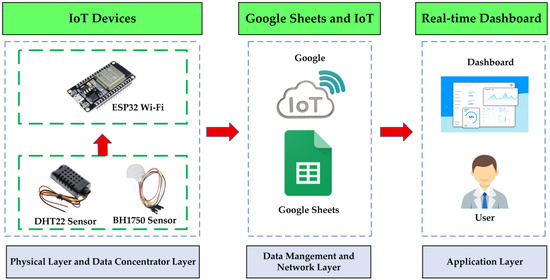
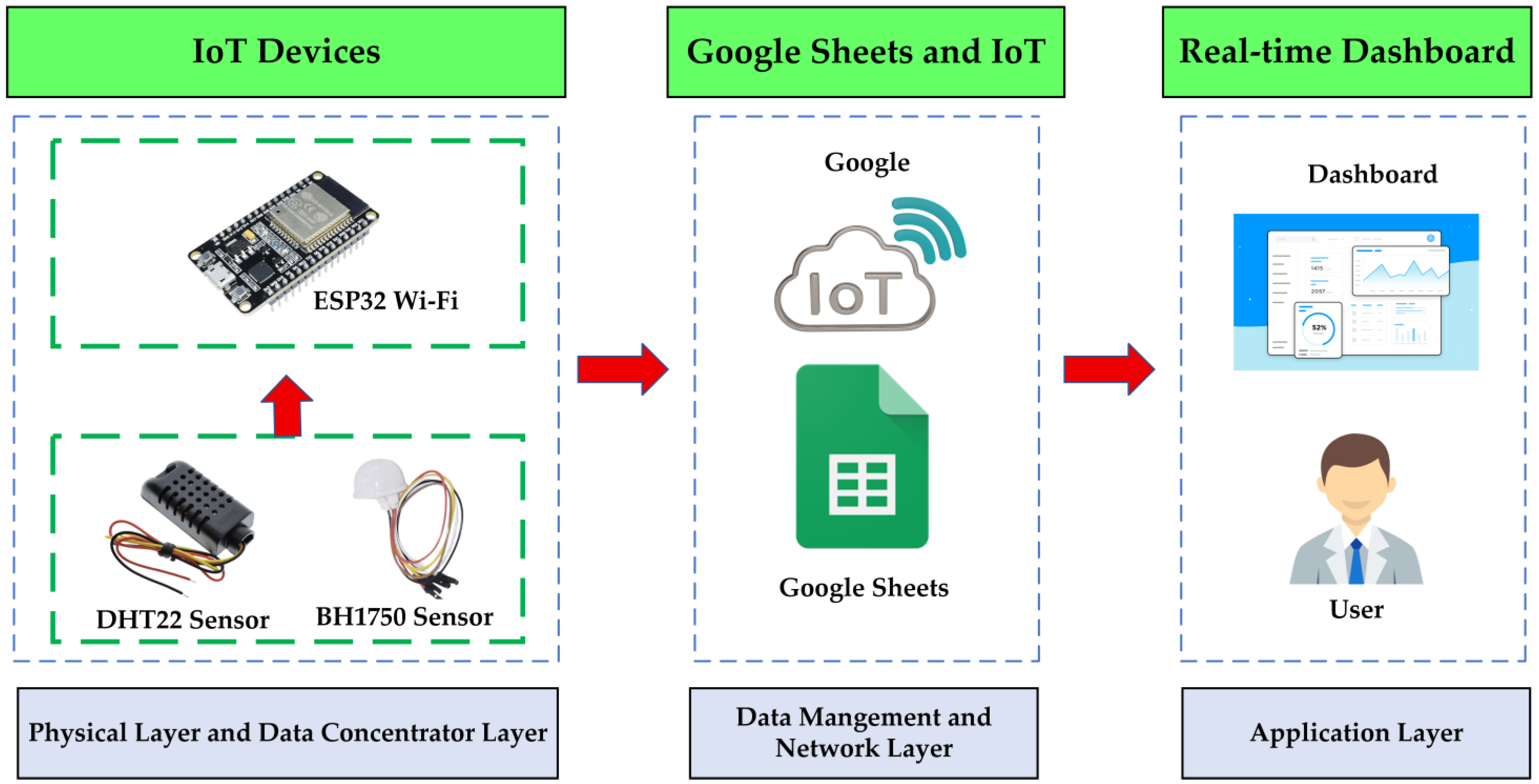
This study focuses on the design and implementation of a WSN architecture for continuous agro-environmental monitoring and temperature-based growth analysis in rice fields. The proposed system is structured into three main components: (i) the physical layer and data concentrator layer, (ii) the data management and network layer, and (iii) the application layer, as illustrated in Figure 1.
Figure 1.
Three-layer architecture of the proposed IoT monitoring system comprising the physical/data concentrator layer, data management and network layer, and application layer.
2.1. Architecture of the Proposed Scheme Design and IoT
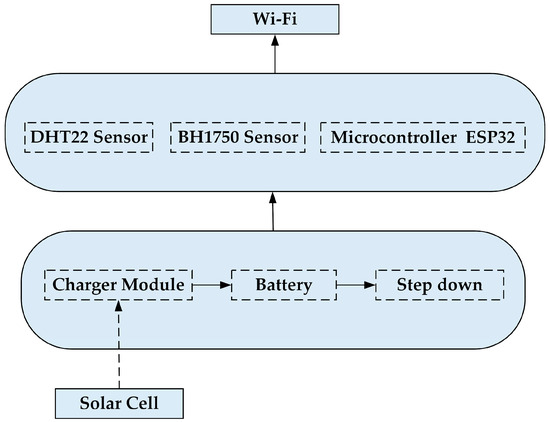
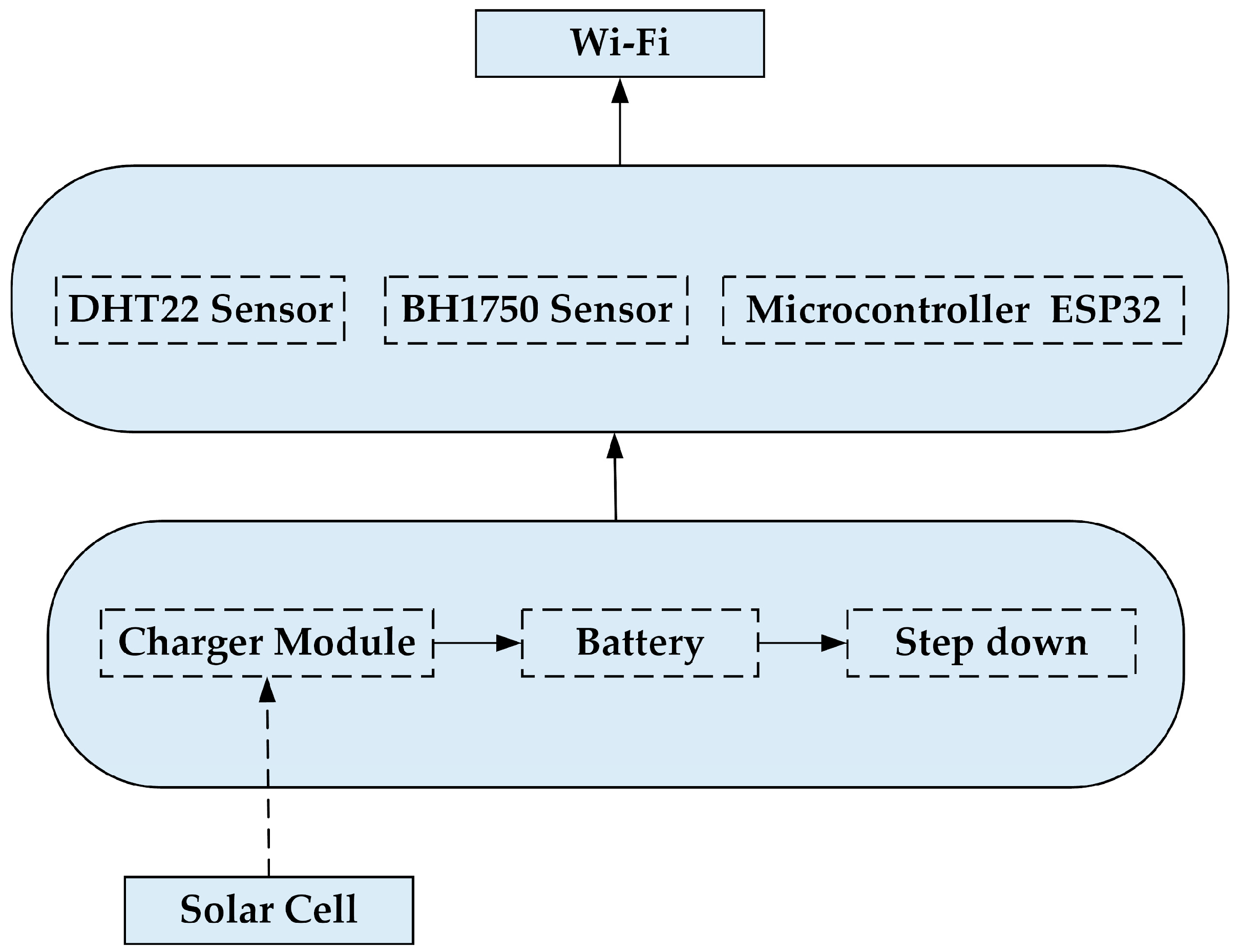
The system architecture illustrated in Figure 1 presents the structural design of the proposed WSN for agro-environmental monitoring and temperature-based growth analysis in rice fields. The architecture is organized into three main components. Part 1, the physical layer and data concentrator layer, consists of sensor nodes equipped with an ESP32 microcontroller, a DHT22 sensor for air temperature and relative humidity measurement, and a BH1750 sensor for light-intensity measurement. Part 2, the data management and network layer, is responsible for cloud-based data storage and management using Google Sheets. Part 3, the application layer, provides a real-time dashboard for data visualization and user access as shown in Figure 2. The technical specifications of the system components are summarized in Table 1.
Figure 2.
Block diagram of the solar-powered IoT node with sensing, control, and power management modules.
Table 1.
Specifications of system components.
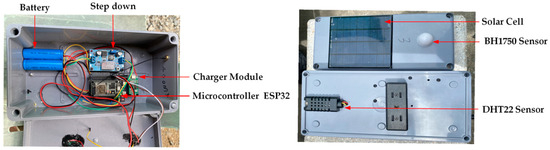
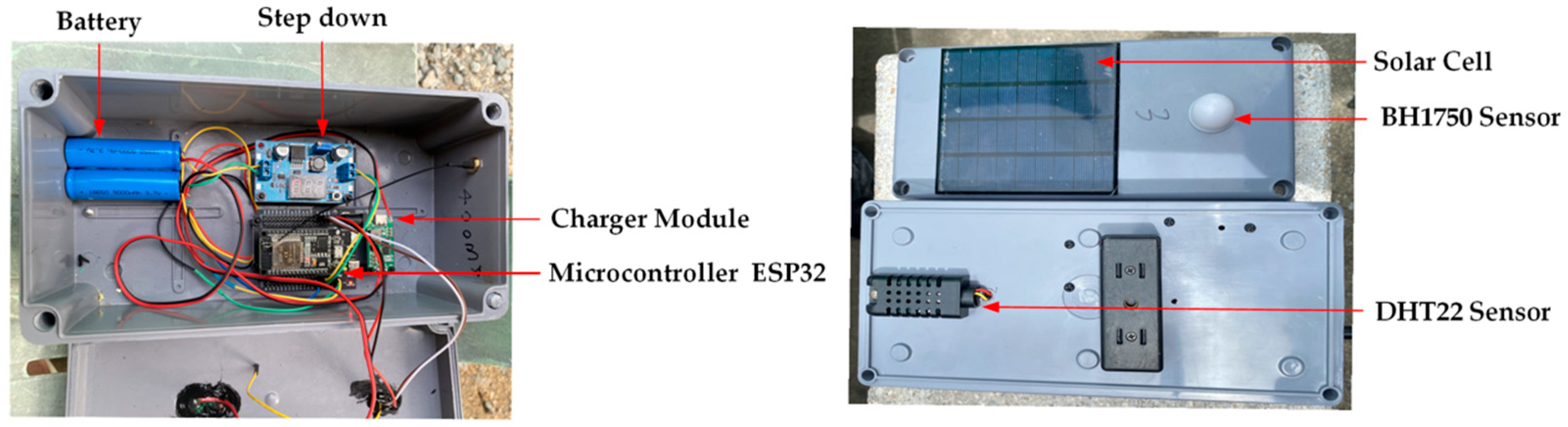
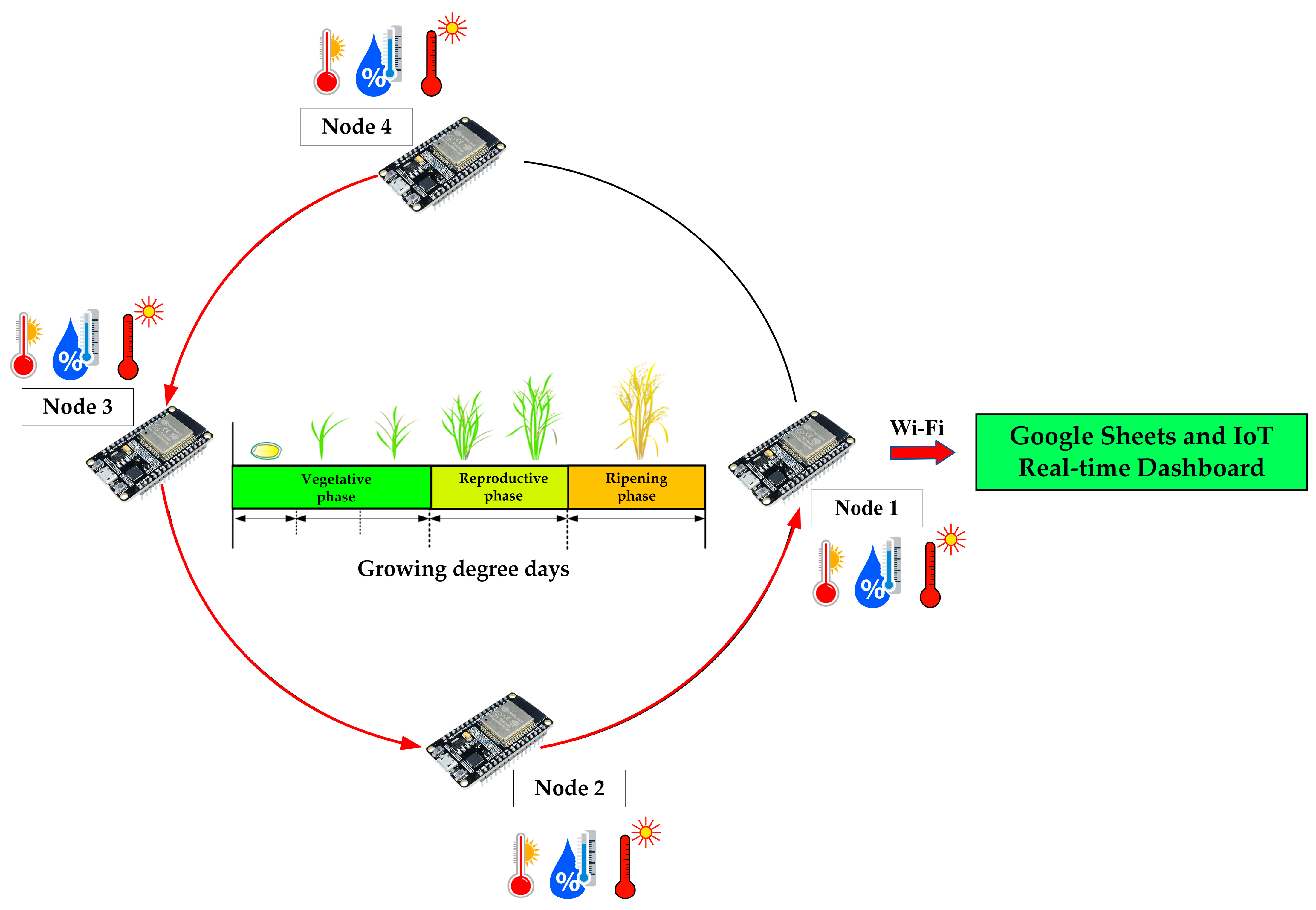
Within the physical layer, four sensor nodes are deployed at intervals of 100 m across the rice field. Environmental data required for GDD analysis is acquired through continuous temperature measurements using the DHT22 sensor, together with light-intensity measurements from the BH1750 sensor as shown in Figure 3. The sensor nodes communicate using a ring-topology configuration, in which data are sequentially transmitted from node to node via a Wi-Fi-based wireless link [21,22]. The aggregated sensor data are then transmitted through the IoT framework to the cloud-based data management layer, where they are stored and subsequently visualized through the real-time dashboard [31]. Ethical approval was not required for this study, as the research involved non-invasive environmental monitoring without the participation of human or animal subjects.
Figure 3.
Photographs of the implemented IoT sensor node: (left) internal hardware assembly and (right) external sensor and solar panel installation.
Prior to field deployment, all temperature–humidity (DHT22) and light intensity (BH1750) sensors were calibrated under controlled laboratory conditions to verify measurement accuracy and consistency. Temperature calibration was conducted by comparing DHT22 sensor readings with a calibrated UNI-T UT321 digital thermometer (Uni-Trend Technology, Dongguan, China) over the operating temperature range relevant to field conditions. Light intensity calibration was performed by comparing BH1750 measurements against a LUX-274 digital light meter (Gain Express, Hong Kong, China). The calibration results demonstrated linear sensor responses and acceptable agreement with the reference instruments across the measurement ranges used in this study. Detailed calibration data, calibration curves, and associated uncertainty analyses are provided in the Supplementary Materials.
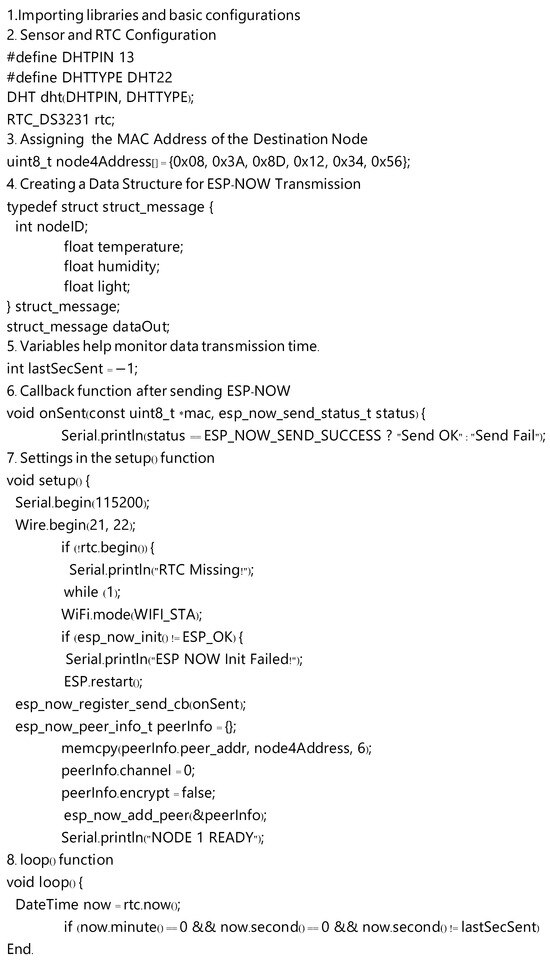
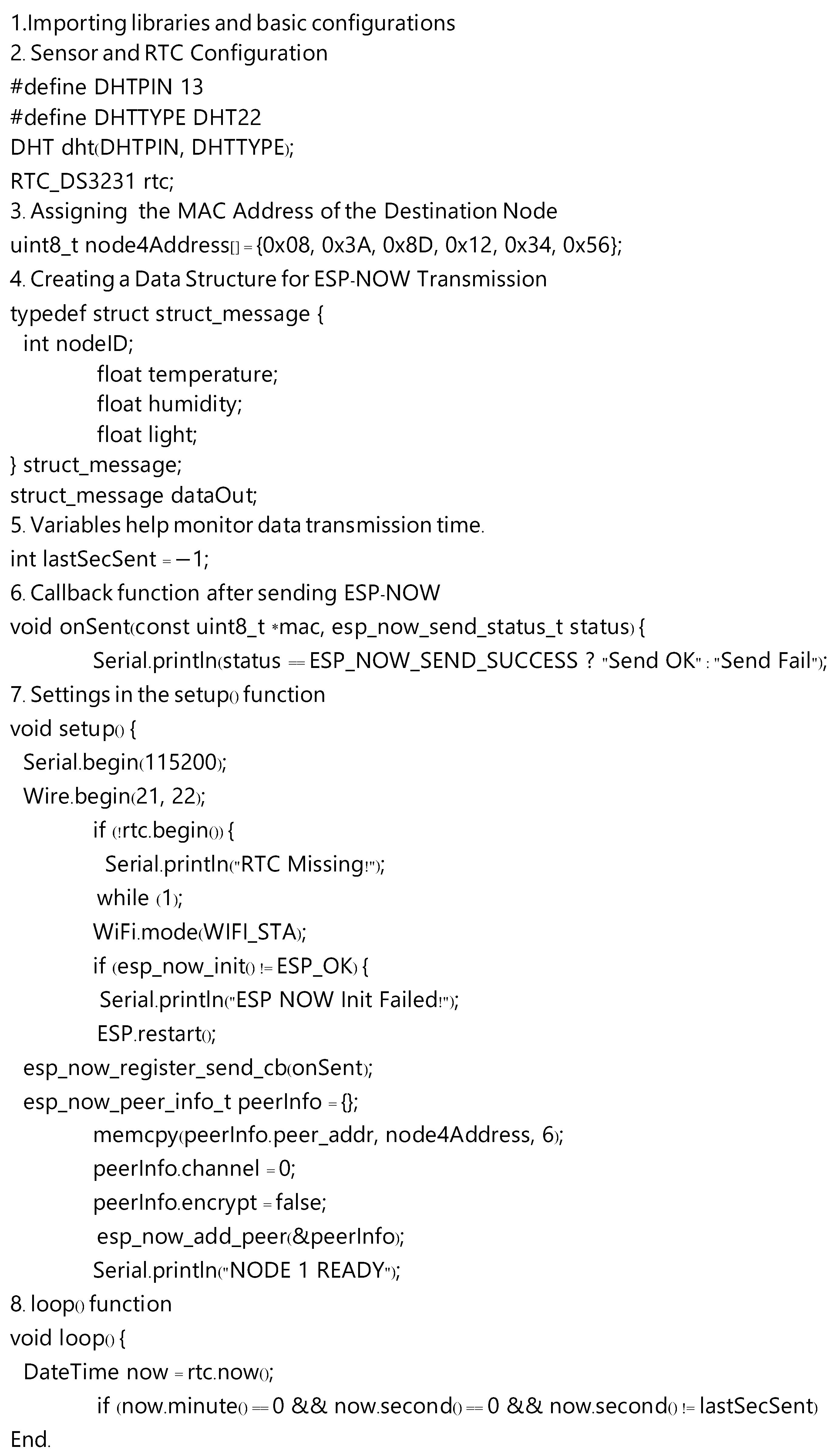
The algorithm of the wireless sensor network that uses the architecture of the proposed scheme design and IoT (Figure 4) to determine the operation of the device is presented below.
Figure 4.
Algorithm of wireless sensor network.
2.2. Growing Degree Days and Temperature-Based Growth Analysis
2.2.1. Growing Degree Days (GDD)
Temperature is a primary environmental factor governing rice growth and developmental rate. To quantify the cumulative thermal exposure experienced by the crop during the growing period, growing degree days (GDD) were employed as a temperature-based agroclimatic index. GDD represents the accumulation of effective heat units above a specified base temperature and is widely used to relate measured air temperature to crop growth progression.
In this study, the daily GDD was calculated using the standard formulation:
where and are the daily maximum and minimum air temperatures (°C), respectively, and is the base temperature below which rice growth is assumed to be negligible. Based on established agronomic literature, a base temperature of 10.0 °C was adopted for rice cultivation in this study [24].
Negative daily GDD values, which may occur under low-temperature conditions, were set to zero to avoid non-physical thermal accumulation [13]. The Cumulative GDD (CGDD) at day was then obtained by summing daily GDD values over time:
This CGDD metric was used to track rice growth progression continuously throughout the cultivation period, rather than treating GDD as a monthly or static quantity.
2.2.2. Application of GDD to Rice Developmental Stage Analysis
CGDD has been widely reported as an effective indicator for characterizing rice developmental stages, including the vegetative, reproductive, and grain-filling phases. In this study, CGDD derived from WSN measured air temperature was used to analyze growth-stage progression, rather than to directly determine or optimize harvest timing [13,24].
The interpretation of rice growth stages was performed by comparing the observed CGDD trends with reported GDD ranges for rice developmental stages available in the literature under comparable climatic conditions. This approach provides an indicative framework for assessing crop development based on continuous temperature monitoring, while avoiding assumptions related to yield prediction or direct harvest optimization.
It should be noted that rice growth is influenced not only by temperature but also by additional agro-environmental factors such as solar radiation, relative humidity, water availability, and cultivar-specific responses. Accordingly, CGDD is treated in this work as a supporting analytical indicator, complementing measured light-intensity and humidity data obtained from the sensor network, rather than as a standalone decision variable.
2.3. Data Management and Communication System
The wireless sensor network operates according to the three-layer architecture described in Section 2.1, comprising the physical layer and data concentrator layer, the data management and network layer, and the application layer. The physical sensing layer consists of four sensor nodes (NSs) deployed across the rice field at 100 m intervals. Each sensor node measures ambient temperature, relative humidity, and light intensity.
Data communication among the sensor nodes follows a ring topology, in which each node sequentially forwards its measured data to the next node. Environmental parameters—including temperature, relative humidity, light intensity, and the derived growing degree days (GDD)—are transmitted periodically by each sensor node.
Within the data management and network layer, Node 1 functions as the gateway node, receiving aggregated data relayed from the remaining sensor nodes. The gateway node serves as the interface between the local wireless sensor network and the cloud-based data management infrastructure. Using an IoT communication protocol, the gateway transmits the aggregated dataset to a cloud server.
At the server level, the collected data are stored and managed using Google Sheets and are subsequently presented to users through a real-time dashboard corresponding to the application layer defined in Section 2.1. This integrated data management and communication framework enables continuous environmental monitoring, centralized data storage, and real-time visualization. The geographical location of the rice field study area in Suphan Buri Province, Thailand, is illustrated in Figure 5.
Figure 5.
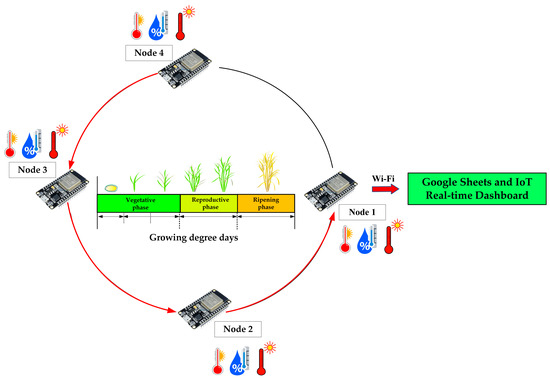
Data communication architecture of the proposed IoT system using a ring topology for multi-node sensing and real-time transmission to Google Sheets and dashboard platforms via Wi-Fi.
3. Results
3.1. Performance of Sensor Nodes
This study evaluated the performance of WSN designed for continuous agro-environmental monitoring in rice fields, with a particular emphasis on temperature-based GDD analysis. Each sensor node was powered by a solar energy system and equipped with a DHT22 sensor for air temperature and relative humidity measurement, a BH1750 sensor for light-intensity measurement, and an ESP32 Wi-Fi microcontroller for data acquisition and communication.
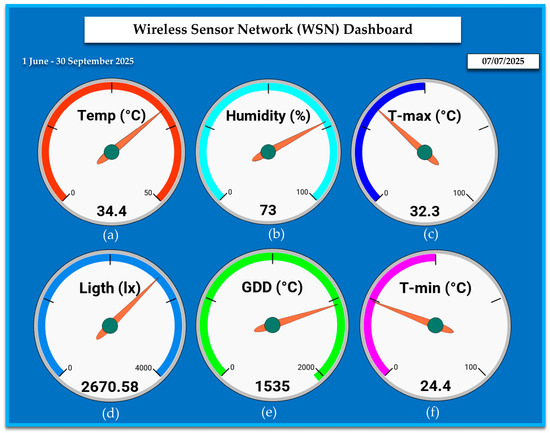
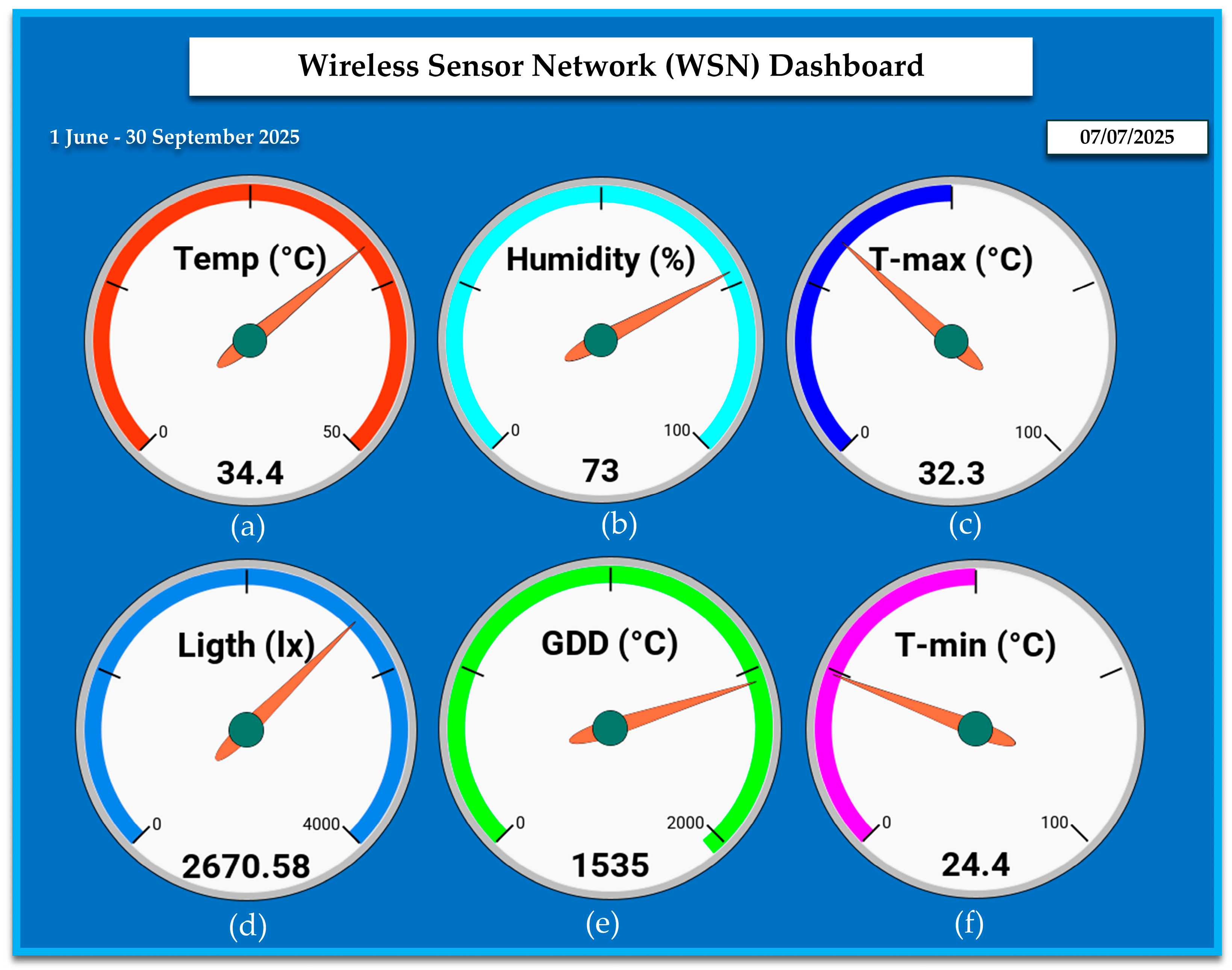
Each sensor node measured ambient temperature, relative humidity, and light intensity at one-hour intervals. The collected data were transmitted through a ring-topology communication scheme to the gateway node for centralized data management. The environmental parameters and derived GDD values were stored in a cloud-based server using Google Sheets and visualized through a real-time dashboard, as shown in Figure 6. Stable data acquisition and transmission throughout the monitoring period confirm the reliable operation of the sensor nodes and communication architecture under field conditions.
Figure 6.
Real-time monitoring dashboard of the WSN illustrating measured environmental parameters and thermal indices: (a) air temperature (°C), (b) relative humidity (%), (c) maximum temperature (°C), (d) light intensity (lx), (e) cumulative growing degree days (GDD, °C), and (f) minimum temperature (°C).
3.2. Field Deployment and System Implementation
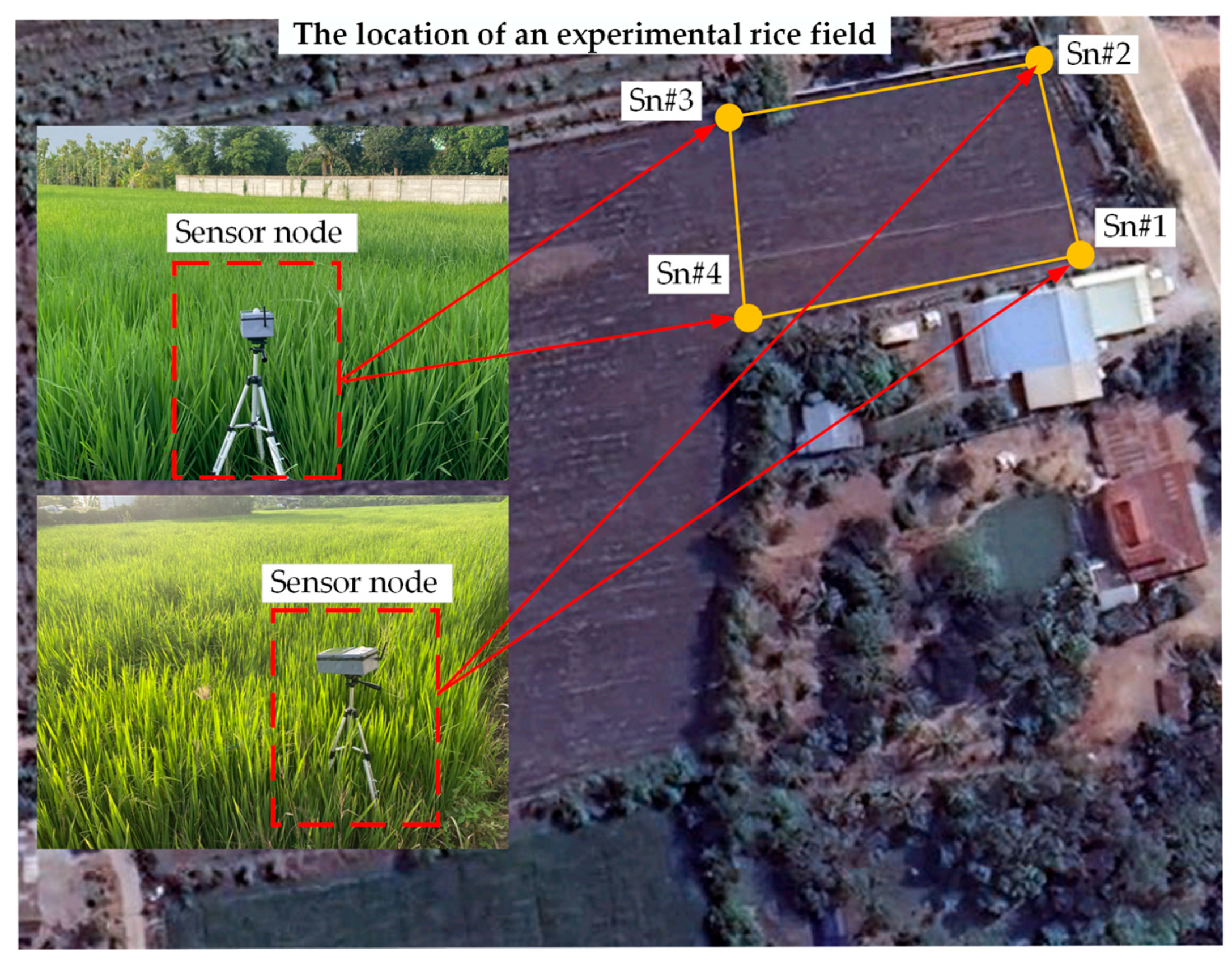
The wireless sensor network was deployed in a farmer-managed rice field located in Suphan Buri Province, Thailand. The monitored crop was Pathum Thani 1 fragrant rice, a variety known for its resistance to insects and plant diseases. Four sensor nodes were installed across the field at intervals of 100 m to capture spatially distributed agro-environmental conditions.
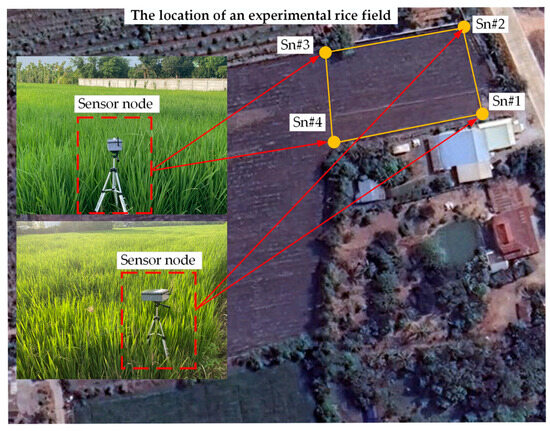
All sensor nodes communicated via a 2.4 GHz Wi-Fi connection, enabling real-time data transmission to the gateway node and cloud-based data management system. The recorded environmental data and GDD trends were accessible through a web-based real-time dashboard, as illustrated in Figure 7. The successful long-term deployment demonstrates the practical applicability of the proposed WSN architecture for continuous agro-environmental monitoring under real agricultural operating conditions.
Figure 7.
The location of experimental rice field and sensor deployment points in Si Prachan District, Suphan Buri Province, Thailand (14.6769° N, 100.2141° E). The arrows indicate the four installed sensor nodes within the 100 × 100 m2 study area, monitored on 18 August 2025.
3.3. Agro-Environmental Measurement Results
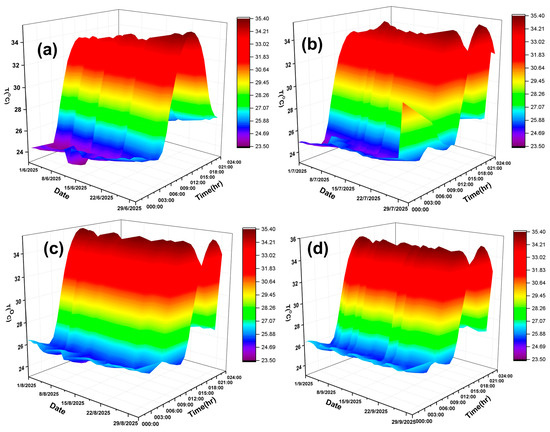
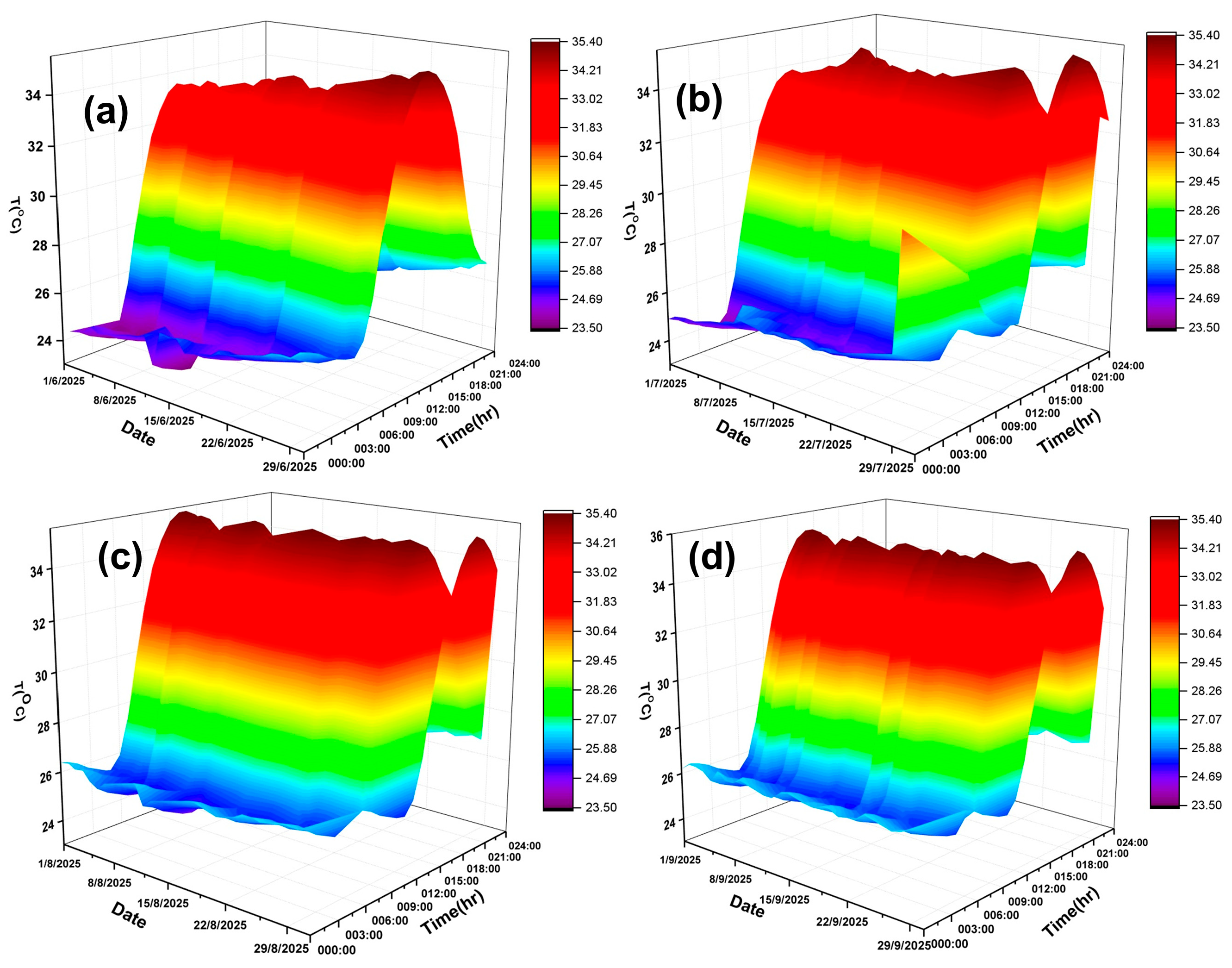
The hourly air temperature as functions of date and time of day for the period from June to September 2025 is shown in Figure 8. Across all four months, a pronounced diurnal cycle is evident, with minimum temperatures occurring during the early morning hours (approximately 04:00–06:00 h) and maximum temperatures recorded in the early to mid-afternoon (approximately 13:00–16:00 h). June exhibits consistently higher daytime temperatures relative to other months, with peak values frequently exceeding 34 °C, reflecting typical hot-season conditions in the study area [30].
Figure 8.
Three-dimensional surface plots illustrate hourly air temperature variations as a function of date and time of day during the experimental period for (a) June, (b) July, (c) August, and (d) September 2025.
During July and August, daytime temperature maxima remain high but display slightly reduced amplitudes and increased short-term variability. This behavior can be attributed to enhanced cloud cover and rainfall associated with the monsoon season. September shows a similar diurnal temperature pattern but with a modest overall reduction in temperature compared with June, indicating a gradual seasonal transition toward cooler conditions [32].
The smooth temporal continuity of the temperature surfaces across consecutive days indicates stable thermal conditions throughout the experimental period, supporting the use of cumulative growing degree days (CGDD) as a robust agro-meteorological indicator for characterizing crop development. The observed month-to-month differences in daytime temperature intensity are expected to contribute directly to variations in monthly CGDD accumulation.
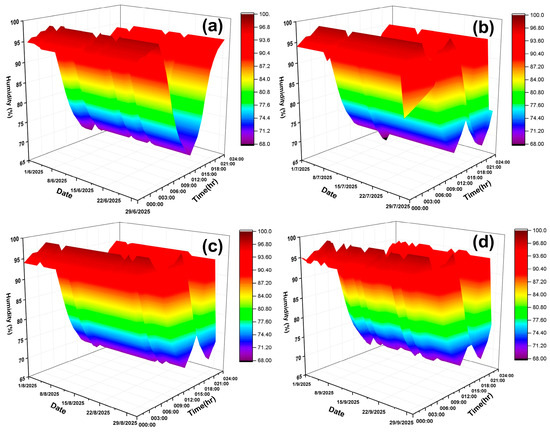
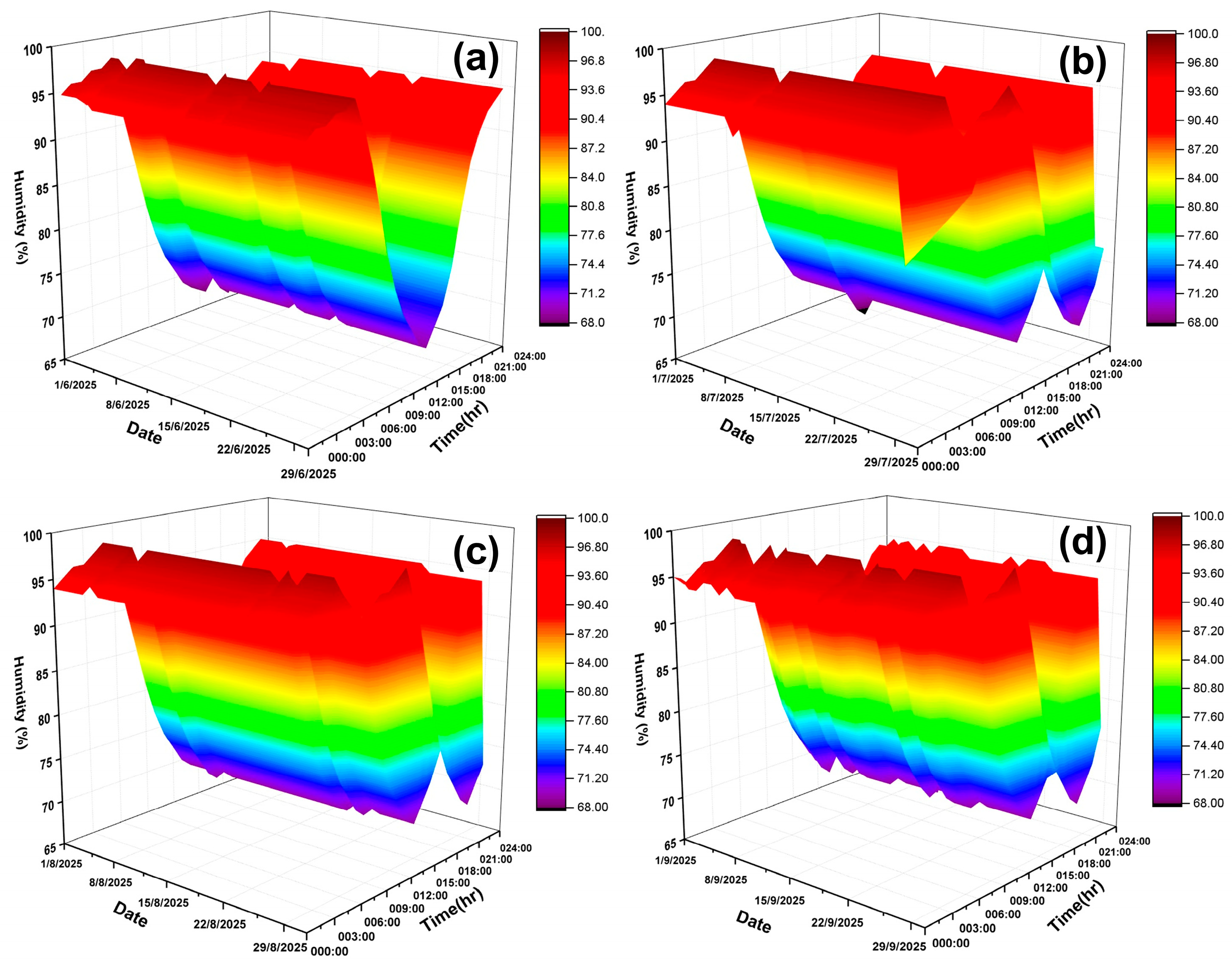
Figure 9 shows a clear diurnal pattern in relative humidity, with maximum values occurring at night and in the early morning when air temperatures are low, followed by a pronounced decline toward midday as surface heating strengthens atmospheric mixing. This daytime minimum reflects the thermodynamic control of temperature on moisture-holding capacity in the tropical atmosphere.
Figure 9.
Three-dimensional surface plots illustrating hourly relative humidity distributions as a function of date and time of day during the experimental period for (a) June, (b) July, (c) August, and (d) September 2025.
At the monthly scale, the humidity fields highlight the influence of Thailand’s monsoon climate. July and August, which correspond to the peak rainy season, display consistently high background humidity together with enhanced short-term variability linked to convective activity and rainfall. In contrast, June remains comparatively drier and more stable, while September retains elevated humidity levels but with a smoother daily structure, indicating a transition toward late-monsoon conditions.
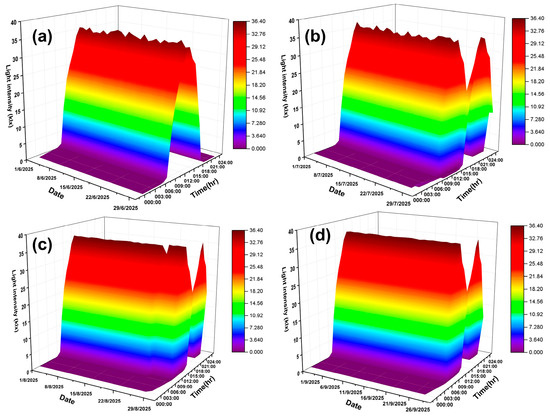
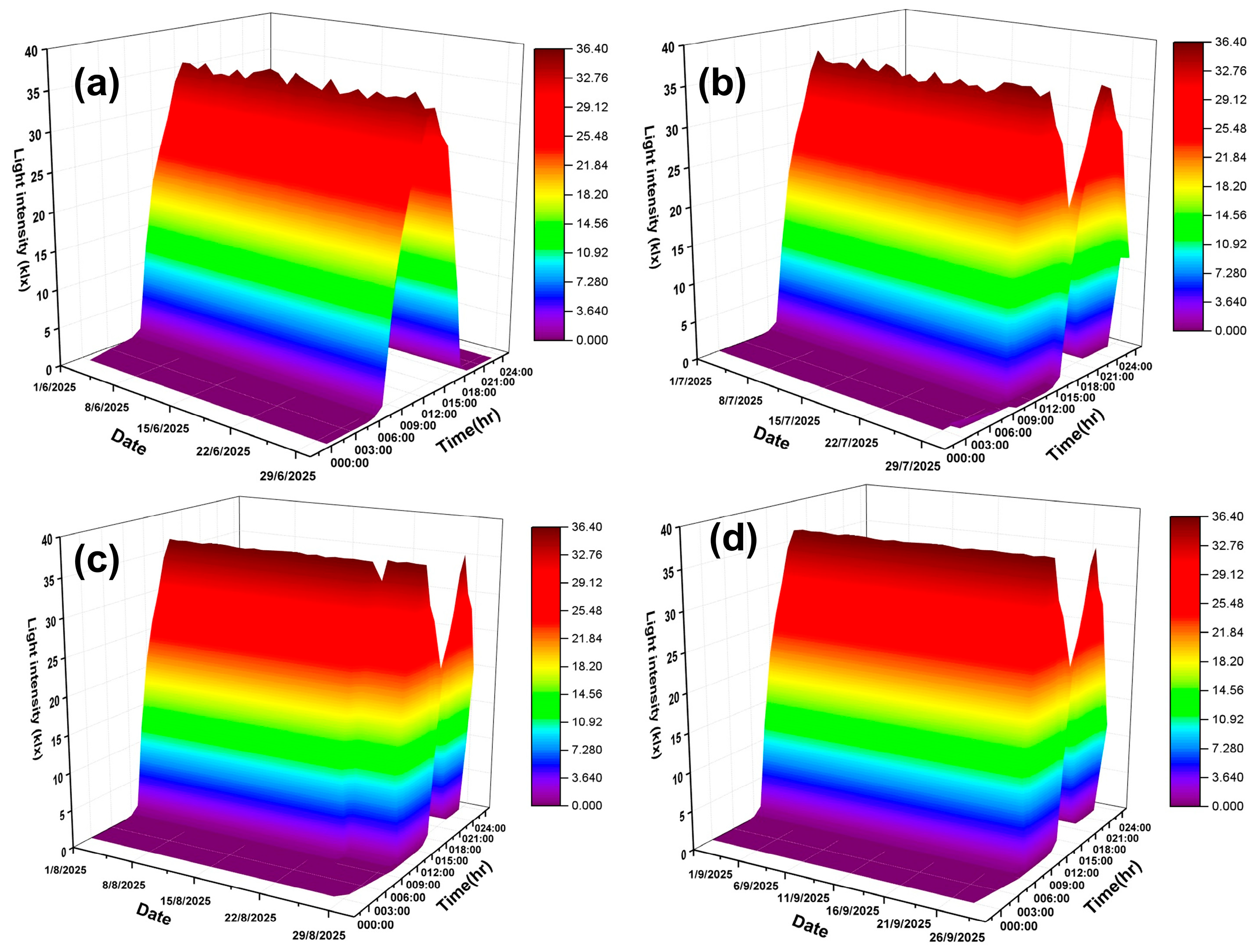
The temporal evolution of light intensity shown in Figure 10 provides additional insight into the surface energy balance during the experimental period. In all four months, irradiance rises rapidly after sunrise, reaches broad maxima from midday to early afternoon, and then declines toward sunset. Relative to June, daytime light levels in July and August are more variable and are occasionally reduced, which is consistent with the increased cloud cover typical of the rainy season. September follows a similar diurnal pattern but with slightly lower midday intensities, reflecting a gradual seasonal transition.
Figure 10.
Three-dimensional surface plots illustrate hourly light intensity distributions as a function of date and time of day during the experimental period for (a) June, (b) July, (c) August, and (d) September 2025.
Taken together, the concurrent variations in temperature (Figure 8), relative humidity (Figure 9), and light intensity (Figure 10) depict a coherent set of microclimatic conditions throughout the study. Periods of strong solar input combined with reduced humidity coincide with the highest air temperatures and thus favor the accumulation of thermal units used in the CGDD analysis. In contrast, cloudy and humid conditions moderate daytime heating and help account for the lower daily thermal gains observed during the peak monsoon months. These interacting atmospheric factors underscore the importance of high-resolution environmental measurements when interpreting seasonal differences in crop thermal time and growth under tropical field conditions.
Light-intensity measurements obtained from the BH1750 sensors are summarized in Figure 10. Clear diurnal light patterns were observed, with peak intensities occurring between 08:00 and 15:00. Monthly maximum light-intensity values were approximately 36,900 lx in June, 37,240 lx in July, 37,810 lx in August, and 37,210 lx in September. These values fall within ranges reported to support effective photosynthesis in rice, confirming that the deployed sensor nodes successfully captured key radiative conditions relevant to crop growth.
3.4. Growing Degree Day (GDD) Analysis
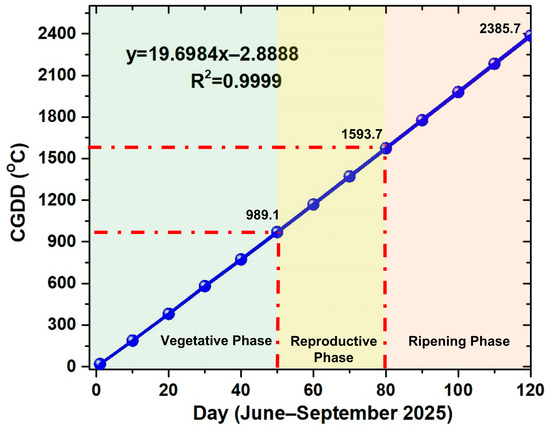
Using the continuously measured air-temperature data, daily and cumulative growing degree days (GDD) were calculated following the methodology described in Section 2.2. Figure 11 illustrates the progression of cumulative growing degree days (CGDD) from 1 June to 30 September 2025, showing a stable and monotonic increase throughout the rice-growing season.
Figure 11.
Growing degree days (GDD) accumulated during the experimental period from 1 June to 30 September 2025. Temporal evolution of CGDD as a function of days after 1 June 2025 with a linear regression fit (R2 = 0.9999).
The mean monthly cumulative GDD values derived from the continuous measurements were 580.2 ± 3.0 °C in June, 609.6 ± 4.3 °C in July, 627.1 ± 5.3 °C in August, and 609.0 ± 6.0 °C in September. When interpreted in relation to rice developmental stages, the CGDD trends indicate that the vegetative stage occurred during the early cultivation period (approximately June to early July), followed by the reproductive stage during mid-season (July to August), and the grain-filling stage toward the later period (August to September).
It is emphasized that, in this study, GDD is treated as a temperature-based analytical indicator derived from continuous sensor measurements, rather than as a direct predictor of yield or harvest timing. The stable CGDD accumulation observed in Figure 11 confirms the suitability of the proposed wireless sensor network for long-term thermal monitoring and growth-stage analysis. When considered together with the measured humidity and light-intensity data, the results demonstrate that the system provides a coherent agro-environmental dataset suitable for supporting agronomic assessment and future precision-agriculture infrastructure development.
Table 2 presents the mean daily growing degree days (GDD) and the corresponding mean monthly cumulative GDD calculated from air-temperature measurements recorded between June and September 2025. The mean daily GDD represents the average thermal accumulation per day within each month, whereas the mean monthly cumulative GDD is obtained by aggregating the daily GDD values over the duration of the month.
Table 2.
Mean Daily and Monthly Cumulative Growing Degree Days (°C).
The mean daily GDD values remained within a narrow range throughout the monitoring period, varying from 19.3 ± 0.6 °C in June to 20.3 ± 0.1 °C in September. The corresponding mean monthly cumulative GDD values increased from 580.2 ± 3.0 °C in June to 627.1 ± 5.3 °C in August, before slightly decreasing to 609.0 ± 6.0 °C in September, reflecting both average daily thermal conditions and month length.
Figure 11 shows the seasonal evolution of cumulative growing degree days (CGDD) derived from continuous air-temperature measurements collected between June and September 2025. The CGDD increased progressively from 580.3 °C at the end of June to 1189.9 °C at the end of July, 1593.7 °C at the end of August, and reached a final seasonal value of 2385.7 °C at the end of September, representing cumulative thermal accumulation from the start of the monitoring period (1 June 2025). The relatively rapid CGDD increase observed during June reflects hot-season climatic conditions in Thailand, during which, elevated air temperatures contribute to higher daily thermal accumulation. As the rainy season began in July, air temperatures decreased slightly, resulting in reduced incremental CGDD accumulation compared with June, while the additional CGDD accumulated during August and September showed only minor month-to-month variation.
Over the entire experimental period, the seasonal CGDD exhibited a strong linear relationship with the number of days after 1 June 2025, as described by the linear regression with a coefficient of determination of R2 = 0.9999. This exceptionally high linearity indicates a nearly constant rate of thermal accumulation throughout the growing season, reflecting stable temperature conditions and consistent sensor performance. From an engineering perspective, the strong linear relationship confirms the robustness of the temperature measurement, calibration, and GDD computation framework, and supports the use of CGDD as a reliable agro-meteorological index for tracking rice phenological development under tropical field conditions.
4. Discussion
This study validates the field implementation of a low-cost WSN for continuous agro-environmental monitoring in rice cultivation under real outdoor conditions. The system was deployed in a farmer-managed rice field in Suphan Buri Province growing the Pathum Thani 1 rice variety, with sensor nodes installed at 100 m intervals. Stable operation throughout the monitoring period from June to September 2025 confirms the robustness of the hardware configuration, solar-powered energy management, and wireless communication architecture under typical tropical field conditions.
As shown in Figure 8, air temperature measured by the DHT22 sensors exhibited consistent diurnal and seasonal variation, with monthly daytime maximum temperatures of approximately 35.4 °C and minimum temperatures ranging from 23.5 °C to 25.2 °C. These values fall within expected environmental ranges for rice cultivation in Thailand and are suitable for use in the GDD analysis. Based on these continuous temperature measurements, cumulative GDD values were derived and are presented in Figure 11. The observed GDD accumulation was stable throughout the monitoring period, with mean daily GDD values ranging from approximately 19.3 ± 0.6 °C in June to 20.3 ± 0.1 °C in September, consistent with the values reported in Table 2. When interpreted by growth stage, the vegetative, reproductive, and grain-filling phases exhibited GDD ranges consistent with previously reported rice growth-stage requirements under comparable climatic conditions [13,32]. This agreement indicates that the temperature sensing subsystem and GDD computation framework produced physically meaningful and internally consistent thermal indicators rather than fragmented or noisy data.
The relative humidity trends presented in Figure 9 show persistently high humidity levels, with monthly averages exceeding 85%. These variations closely tracked temperature changes, reflecting typical atmospheric behavior in flooded paddy fields. From an engineering perspective, the coherent temperature–humidity relationship supports the reliability of the DHT22 sensors and confirms stable long-term sensor operation, consistent with their specifications listed in Table 1.
Light-intensity measurements obtained using the BH1750 sensor, summarized in Figure 10, revealed monthly peak values between 36,900 lx and 37,810 lx. These levels are within ranges reported to be suitable for rice photosynthesis and biomass production [33,34]. The ability of the sensor nodes to capture clear diurnal light patterns further demonstrates correct sensor integration and effective low-power operation, in agreement with the electrical characteristics reported in Table 1.
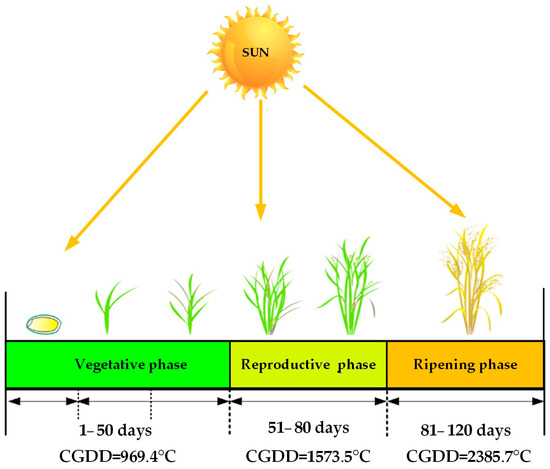
Figure 12 provides a schematic representation of rice developmental stages as a function of solar radiation exposure and CGDD, serving as a conceptual framework for interpreting the observed thermal and radiative conditions.
Figure 12.
Schematic illustration of rice developmental stages as a function of solar radiation exposure and cumulative growing degree days (CGDD).
Collectively, the results presented in Figure 8, Figure 9, Figure 10 and Figure 11 confirm that the proposed WSN generated continuous, internally consistent agro-environmental datasets suitable for GDD-based growth-stage assessment. Importantly, the contribution of this work lies in the engineering validation of a low-complexity, low-power WSN architecture integrated with IoT-based data management and real-time visualization, rather than in yield prediction or harvest optimization. The system supports harvest-related assessment through quantitative cumulative GDD tracking, thereby reducing reliance on subjective visual observation as shown in Table 3.
Table 3.
Comparison of cumulative growing degree days (CGDD) required for rice cultivars reported in different regions and studies.
Within the constraints of a single site, single growing season, and single rice variety, the proposed system demonstrates reliable sensing stability, data integrity, and communication performance under field conditions. While long-term reliability across varying environments and operational configurations was not addressed, the results establish a scalable engineering foundation that can be extended to multi-season deployments, additional agro-environmental indicators, and systematic validation against farmer practices.
5. Conclusions
This work demonstrates the successful design, field deployment, and stable operation of a low-cost, solar-powered WSN for continuous agro-environmental monitoring in rice fields. The proposed system reliably acquired air temperature, relative humidity, and light-intensity data throughout an entire growing season under real outdoor conditions, confirming its suitability for long-term, energy-efficient field operation. By implementing a corrected daily and cumulative GDD framework based on continuous temperature measurements, the system generated consistent and agronomically interpretable thermal accumulation trajectories across the rice cultivation period. These cumulative GDD trends aligned with reported rice growth-stage patterns under comparable climatic conditions, demonstrating that the proposed WSN produces physically meaningful indicators of crop development rather than raw environmental data alone. From an engineering perspective, the results confirm that a low-complexity WSN architecture, integrated with IoT-based data management and real-time visualization, can serve as a robust sensing infrastructure for field-scale agro-environmental data collection. Although the system is not intended for yield prediction or harvest optimization, it provides a validated platform for supporting GDD-based growth analysis and informed agronomic assessment. Within the constraints of a single site, single growing season, and single rice variety, this study establishes a practical and scalable engineering foundation for future precision-agriculture applications, with clear pathways for extension to multi-season deployments, additional agronomic indicators, and systematic validation against farmer practices.
Supplementary Materials
The following supporting information can be downloaded at: https://www.mdpi.com/article/10.3390/eng7020082/s1, Figure S1: Calibration curve of the DHT22 temperature sensor obtained by comparison with a UNI-T UT321 digital thermometer. Each data point represents the means of repeated measurements under stable laboratory conditions; Figure S2: Calibration curve of the BH1750 light intensity sensor obtained by comparison with a LUX-274 digital light meter under uniform illumination conditions; Table S1: Temperature calibration data for the DHT22 sensor compared with a UNI-T UT321 reference thermometer; Table S2: Light intensity calibration data for the BH1750 sensor obtained by comparison with a LUX-274 reference light meter.
Author Contributions
W.N.: Methodology, Formal analysis, Data curation, Visualization, Writing—original draft, Writing—review & editing, Funding acquisition, Project administration, Supervision. E.S.: Methodology, Writing—Drawing, review & editing. P.B.: Methodology, Writing—Drawing, review & editing. W.T.: Writing—original draft, Formal analysis, Data curation, Visualization. E.M.: Writing—review & editing, Visualization, Formal analysis. K.T.: Formal analysis, Conceptualization, Methodology, Writing—review & editing, Funding acquisition. O.T.: Conceptualization, Methodology, Visualization, Formal analysis, Writing—review & editing. All authors have read and agreed to the published version of the manuscript.
Funding
Implementation of a Wireless Sensor Network for Agro-Environmental Monitoring and Growing Degree Day-Based Rice Growth Assessment has been encouraged and supported by the Science, Research and Innovation Promotion Fund, Rajamangala University of Technology Suvarnabhumi for the fiscal year 2025.
Data Availability Statement
The original contributions presented in this study are included in the article/Supplementary Material. Further inquiries can be directed to the corresponding author.
Acknowledgments
The research team thanks the Department of Electronics and Telecommunications Engineering, Faculty of Industrial Education, the Rajamangala University of Technology Suvarnabhumi, for providing the site where the research experiments were conducted.
Conflicts of Interest
The authors declare no conflicts of interest.
Abbreviations
The following abbreviations are used in this manuscript:
| WSN | Wireless sensor network |
| GDD | Growing Degree Days |
| CGDD | Cumulative Growing Degree Days |
| NS | Node sensor |
| IoT | Internet of Things |
| °C | Degrees Celsius |
| MCU | Microcontroller Unit |
| UDP | User datagram protocol |
References
- Jiang, M.; Chen, Z.; Li, Y.; Huang, X.; Huang, L.; Huo, Z. Rice canopy temperature is affected by nitrogen fertilizer. J. Integr. Agric. 2024, 23, 824–835. [Google Scholar] [CrossRef] [Scilit]
- Liu, X.; Ciais, P.; Makowski, D.; Liang, J. Warming leads to lower rice quality in East Asia. Geophys. Res. Lett. 2024, 51, e2024GL110557. [Google Scholar] [CrossRef] [Scilit]
- Raza, S.; Mahmood, S.A.; Batool, H.; Shad, T.J.; Alvi, S.; Waseems, F.; Butt, M.A.; Hassan, S.S.; Mirza, A.I. Temperature Based Spatiotemporal Growth Monitoring of Rice Plant from Germination-Ripening Stage Using Remote Sensing and GIS Techniques. Adv. Remote Sens. 2018, 7, 1. [Google Scholar] [CrossRef]
- Rezaei, S.; Mejia, A.H.; Wu, Y.; Reed, J.; Brouwer, J. Global warming impacts of the transition from fossil fuel conversion and infrastructure to hydrogen. Appl. Energy 2025, 397, 126363. [Google Scholar] [CrossRef] [Scilit]
- Ding, S.; Cui, T.; Du, A.M.; Goodell, J.W.; Du, N. Disentangling and hedging global warming risk: A machine learning approach. Environ. Impact Assess. Rev. 2025, 115, 107987. [Google Scholar] [CrossRef] [Scilit]
- Wang, J.; Niu, H.; Zhang, S.; Chen, X.; Xia, X.; Zhang, Y.; Lu, X.; He, B.; Wu, T.; Song, C.; et al. Higher warming rate in global arid regions driven by decreased ecosystem latent heat under rising vapor pressure deficit from 1981 to 2022. Agric. For. Meteorol. 2025, 371, 110622. [Google Scholar] [CrossRef] [Scilit]
- Eliwa, E.H.I.; El-Hafeez, T.A. Deep learning for sustainable agriculture: Automating rice and paddy ripeness classification for enhanced food security. Egypt. Inform. J. 2025, 32, 100785. [Google Scholar] [CrossRef] [Scilit]
- Jawad, H.M.; Nordin, R.; Gharghan, S.K.; Jawad, A.M.; Ismail, M. Energy-efficient wireless sensor networks for precision agriculture: A review. Sensors 2017, 17, 1781. [Google Scholar] [CrossRef] [Scilit]
- Zhang, Y.; Nie, Z.; Zhang, H. Distributed Data Acquisition Optimization Algorithm for Wireless Sensor Networks. Meas. Sens. 2025, 39, 101883. [Google Scholar] [CrossRef] [Scilit]
- Wolfert, S.; Ge, L.; Verdouw, C.; Bogaardt, M.-J. Big data in smart farming–a review. Agric. Syst. 2017, 153, 69–80. [Google Scholar] [CrossRef] [Scilit]
- Valente, J.; Sanz, D.; Barrientos, A.; Del Cerro, J.; Ribeiro, Á.; Rossi, C. An air-ground wireless sensor network for crop monitoring. Sensors 2011, 11, 6088–6108. [Google Scholar] [CrossRef] [Scilit]
- Comparetti, A.; Fagiolini, A.; Fountas, S.; Cascio, V. Field robots for precision agriculture. AIMS Agric. Food 2025, 10, 885–916. [Google Scholar] [CrossRef] [Scilit]
- Liu, L.-W.; Lu, C.-T.; Wang, Y.-M.; Lin, K.-H.; Ma, X.; Lin, W.-S. Rice (Oryza sativa L.) Growth Modeling Based on Growth Degree Day (GDD) and Artificial Intelligence Algorithms. Agriculture 2022, 12, 59. [Google Scholar] [CrossRef] [Scilit]
- Banđur, Đ.; Jakšić, B.; Banđur, M.; Jović, S. An analysis of energy efficiency in Wireless Sensor Networks (WSNs) applied in smart agriculture. Comput. Electron. Agric. 2019, 156, 500–507. [Google Scholar] [CrossRef] [Scilit]
- Sridharani, J.; Chowdary, S.; Nikhil, K. Smart farming: The IoT based future agriculture. In 2022 4th International Conference on Smart Systems and Inventive Technology (ICSSIT), Tirunelveli, India, 20–22 January 2022; IEEE: New York, NY, USA, 2022; pp. 150–155. [Google Scholar]
- Morchid, A.; Jebabra, R.; Khalid, H.M.; El Alami, R.; Qjidaa, H.; Jamil, M.O. IoT-based smart irrigation management system to enhance agricultural water security using embedded systems, telemetry data, and cloud computing. Results Eng. 2024, 23, 102829. [Google Scholar] [CrossRef] [Scilit]
- Rahaman, M.M.; Azharuddin, M. Wireless sensor networks in agriculture through machine learning: A survey. Comput. Electron. Agric. 2022, 197, 106928. [Google Scholar] [CrossRef] [Scilit]
- Musa, P.; Sugeru, H.; Wibowo, E.P. Wireless sensor networks for precision agriculture: A review of NPK sensor implementations. Sensors 2023, 24, 51. [Google Scholar] [CrossRef] [Scilit]
- Pramanik, M.; Khanna, M.; Singh, M.; Singh, D.; Sudhishri, S.; Bhatia, A.; Ranjan, R. Automation of soil moisture sensor-based basin irrigation system. Smart Agric. Technol. 2022, 2, 100032. [Google Scholar] [CrossRef] [Scilit]
- Lloret, J.; Sendra, S.; Garcia, L.; Jimenez, J.M. A wireless sensor network deployment for soil moisture monitoring in precision agriculture. Sensors 2021, 21, 7243. [Google Scholar] [CrossRef] [Scilit]
- Ebstu, E.T.; Hatiye, S.D.; Goshime, D.W.; Dingemanse, J.D.; Dugassa, D.D.; Fitensa, T.; Enssa, G.; Chare, C.D.; Areru, D.A.; Demeke, Y.G. Development and Testing of a Low-Cost Soil Moisture Sensor for Real-Time Irrigation Scheduling. Irrig. Drain. 2025; early view. [CrossRef] [Scilit]
- Yoon, G.; Kwon, D.H.; Kwon, S.C.; Park, Y.O.; Lee, Y.J. Ring topology-based redundancy Ethernet for industrial network. In 2006 SICE-ICASE International Joint Conference, Busan, Republic of Korea, 18–21 October 2006; IEEE: New York, NY, USA, 2006; pp. 1404–1407. [Google Scholar]
- Mukherjee, A.; Buyya, R. Federated learning architectures: A performance evaluation with crop yield prediction application. Softw. Pract. Exp. 2025, 55, 1165–1184. [Google Scholar] [CrossRef] [Scilit]
- Paredes, P.; López-Urrea, R.; Martínez-Romero, Á.; Petry, M.; Cameira, M.D.R.; Montoya, F.; Salman, M.; Pereira, L.S. Estimating the lengths of crop growth stages to define the crop coefficient curves using growing degree days (GDD): Application of the revised FAO56 guidelines. Agric. Water Manag. 2025, 319, 109758. [Google Scholar] [CrossRef] [Scilit]
- Lofton, J.; Tubana, B.S.; Kanke, Y.; Teboh, J.; Viator, H.; Dalen, M. Estimating sugarcane yield potential using an in-season determination of normalized difference vegetative index. Sensors 2012, 12, 7529–7547. [Google Scholar] [CrossRef] [Scilit] [PubMed]
- Makouate, H.F.; Zude-Sasse, M. Advances in Growing Degree Days Models for Flowering to Harvest: Optimizing Crop Management with Methods of Precision Horticulture—A Review. Horticulturae 2025, 11, 1415. [Google Scholar] [CrossRef] [Scilit]
- Charalampopoulos, I.; Polychroni, I.; Droulia, F.; Nastos, P.T. The Spatiotemporal Evolution of the Growing Degree Days Agroclimatic Index for Viticulture over the Northern Mediterranean Basin. Atmosphere 2024, 15, 485. [Google Scholar] [CrossRef] [Scilit]
- Pinto, A.A.; Zerbato, C.; de Souza Rolim, G. A machine learning models approach and remote sensing to forecast yield in corn with based cumulative growth degree days. Theor. Appl. Climatol. 2024, 155, 285–7294. [Google Scholar] [CrossRef] [Scilit]
- Kaewchumnonga, K.; Morlora, S.; Leeratiwonga, C.; Duangpanc, S. Effect of light stress on growth and allelopathic activity of rice in southern Thailand. ScienceAsia 2024, 50, 1. [Google Scholar] [CrossRef] [Scilit]
- Xu, Y.; Chu, C.; Yao, S. The impact of high-temperature stress on rice: Challenges and solutions. Crop J. 2021, 9, 963–976. [Google Scholar] [CrossRef] [Scilit]
- Nramat, W.; Traiphat, W.; Sukruan, P.; Utaprom, P.; Tongsawai, S.; Namgaew, S.; Sodajaroen, S. Developing a prototype centre using agricultural smart sensors to promote agrarian production with technology. EUREKA Phys. Eng. 2023, 54–66. [Google Scholar] [CrossRef] [Scilit]
- Haque, M.; Sen, A.; Akter, S.; Khan, N.; Rahman, M.; Tuhin, K. Insight into the physiological and molecular response of low light stress tolerance in rice. Bangladesh J. Nucl. Agric. 2024, 38, 49–63. [Google Scholar] [CrossRef] [Scilit]
- Mosleh, M.K.; Hassan, Q.K.; Chowdhury, E.H. Application of remote sensors in mapping rice area and forecasting its production: A review. Sensors 2015, 15, 769–791. [Google Scholar] [CrossRef] [Scilit] [PubMed]
- Wu, W.; Chen, L.; Liang, R.; Huang, S.; Li, X.; Huang, B.; Luo, H.; Zhang, M.; Wang, X.; Zhu, H. The role of light in regulating plant growth, development and sugar metabolism: A review. Front. Plant Sci. 2025, 15, 1507628. [Google Scholar] [CrossRef] [Scilit] [PubMed]
- Kaythaway, S.; Surbkar, S.; Kanjanaphachoat, P.; Kanjanaphachoat, C. Accurate prediction of rice harvest dates for Pathumthani 1 and RD-Maejo 2 rice cultivars using growing degree-day (GDD) obtained from IoT digital weather station. J. Eng. Innov. 2024, 17, 4. [Google Scholar]
- Sanwong, P.; Sanitchon, J.; Dongsansuk, A.; Jothityangkoon, D. High Temperature Alters Phenology, Seed Development and Yield in Three Rice Varieties. Plants 2023, 12, 666. [Google Scholar] [CrossRef] [Scilit]
- Vanitha, S.; Sagar, L.; Devender Reddy, M. Growth, phenophases, growing degree days requirement and yield of rice cultivars under semi-arid tropics. Agric. Sci. Dig. 2025, 45, D-6072. [Google Scholar] [CrossRef] [Scilit]

Disclaimer/Publisher’s Note: The statements, opinions and data contained in all publications are solely those of the individual author(s) and contributor(s) and not of MDPI and/or the editor(s). MDPI and/or the editor(s) disclaim responsibility for any injury to people or property resulting from any ideas, methods, instructions or products referred to in the content. |
© 2026 by the authors. Licensee MDPI, Basel, Switzerland. This article is an open access article distributed under the terms and conditions of the Creative Commons Attribution (CC BY) license.