Article

Animal Skin Attenuation in the Millimeter Wave Spectrum

1
Faculty of Engineering, Department of Electrical & Electronic Engineering, Ariel University, Ariel 40700, Israel
2
Center for Astrophysics, Geophysics, and Space Sciences (AGASS), Ariel University, Ariel 40700, Israel
3
FEL User Center, Ariel University, Ariel 40700, Israel
*
Author to whom correspondence should be addressed.
Eng 2026, 7(2), 67; https://doi.org/10.3390/eng7020067 (registering DOI)
Submission received: 3 November 2025 / Revised: 7 January 2026 / Accepted: 11 January 2026 / Published: 1 February 2026
(This article belongs to the Special Issue Interdisciplinary Insights in Engineering Research)

Abstract

We quantify the transmission and absorption of 75–110 GHz radiation through ex vivo porcine skin. Millimeter waves are currently used in a range of technologies, including communication systems, fog-penetrating radar, and the detection of hidden weapons or drugs. They have also been proposed for use in non-lethal weaponry and, more recently, in targeted cancer therapies. Since pigs are often used as biological models for humans, determining how deeply millimeter waves penetrate a pig’s skin and influence the underlying tissues is essential for understanding their potential effects on humans. This experimental study aims to quantify that penetration and associated energy loss. The results show significant absorption in the skin and fat layer. Attenuation of over three orders of magnitude can be expected in penetration through a layer with a thickness of about 12 mm (−30 dB). The reflectance from the skin is similar at all frequencies. The values range from −10 to −20 dB, which probably depends on the texture of the skin. Therefore, most skin transfer loss is caused by absorption.

1. Introduction

Cancer remains one of the deadliest diseases known to humanity, with lung cancer being the leading cause of cancer-related deaths. It is often diagnosed at an advanced and untreatable stage [1,2]. While standard chemotherapy can be effective against certain cancers, its success is limited for many cancer types, offering only modest improvements in survival [3]. Lung cancer mortality is mainly due to metastasis, a complex multi-step process, and the non-survival rate without treatment is extremely poor—about 98% [3]. Despite extensive research, effective methods for early detection and treatment of lung cancer are still lacking.
The interaction between electromagnetic (EM) waves and biological cells has been studied for several decades [4,5]. The non-thermal effects of EM radiation have been examined in various biological systems, including bacteria, mammalian cell cultures, and living organisms [6,7,8]. Although much research has been devoted to this topic, and several reviews have attempted to clarify the mechanisms behind non-thermal interactions, a consistent theoretical and experimental framework has yet to be achieved [9,10,11,12,13].
In vitro studies have shown that millimeter waves in the 75–110 GHz frequency range (wavelengths of 2.73–4 mm) can selectively destroy H1299 lung cancer cells while leaving healthy cells (MCF-10A breast epithelial cells) unharmed, even at very low power levels. This selectivity has been confirmed to be non-thermal in nature [14,15,16,17,18]. The next logical step is to determine whether this selective effect also occurs in living organisms.
Animals such as pigs and mice are commonly used as biological models for humans. Many medical treatments and drugs, including cancer therapies, are first tested on pigs and mice to evaluate their safety and effectiveness. In such experiments, human tumors are implanted under the mouse’s or pig’s skin and monitored over time. A thermal treatment of mice using millimeter waves was described in [4], where a gyrotron was employed to heat malignant tumors with sub-terahertz radiation. The results showed a gradual reduction in tumor volume, leading to its complete disappearance.
More advanced studies have combined hyperthermia with photodynamic therapy (PDT), using specialized photosensitizers, yielding even better outcomes. While hyperthermia alone sometimes allows tumor regrowth, the combined therapy prevents it entirely. Another variation involves preheating the tumor below hyperthermic levels (below 43 °C) with millimeter waves before applying PDT, which significantly enhances treatment efficiency.
Regardless of whether the underlying therapeutic mechanism is thermal or non-thermal, understanding how deeply millimeter-wave energy penetrates tissue is crucial, as this determines the actual energy delivered to the tumor. Therefore, measuring the power loss as millimeter waves pass through mouse skin is essential.
Mouse and pig models will also be used in our future experiments, repeating and extending the studies in [14,15]. However, these models are only meaningful if the extent of wave penetration through the skin is well-understood. The goal of the present work is thus to provide accurate experimental measurements of millimeter-wave transmission loss through a pig’s skin. Although our primary motivation is related to lung cancer treatment, the results are broadly relevant to modeling other human cancers or tissues grown in immunodeficient mice, as well as to studies involving non-lethal directed-energy applications [19]. The following list of research questions will be addressed in the current paper:
  • What is the dependence of S21 (transmission) and S11 (reflection) on “skin + fat” thickness?
  • What is the variation in the dependence of S21 and S11 on “skin + fat” thickness, given that real samples are not uniformly thick with respect to neither the components of skin nor of fat?
  • What is the dependence of S21 and S11 on polarization, given the direction of hair with respect to the said polarization?
  • What is the dependence of S21 and S11 on frequencies in the 75–110 GHz spectral range?
The analysis plan is derived from those research questions, taking into account that more than one parameter can affect clinical results.
The paper is organized as follows: first, the experimental setup is described, followed by the results and their interpretation, and finally, the conclusions and implications for future studies are presented.

2. Materials and Methods

2.1. The Experimental Plan

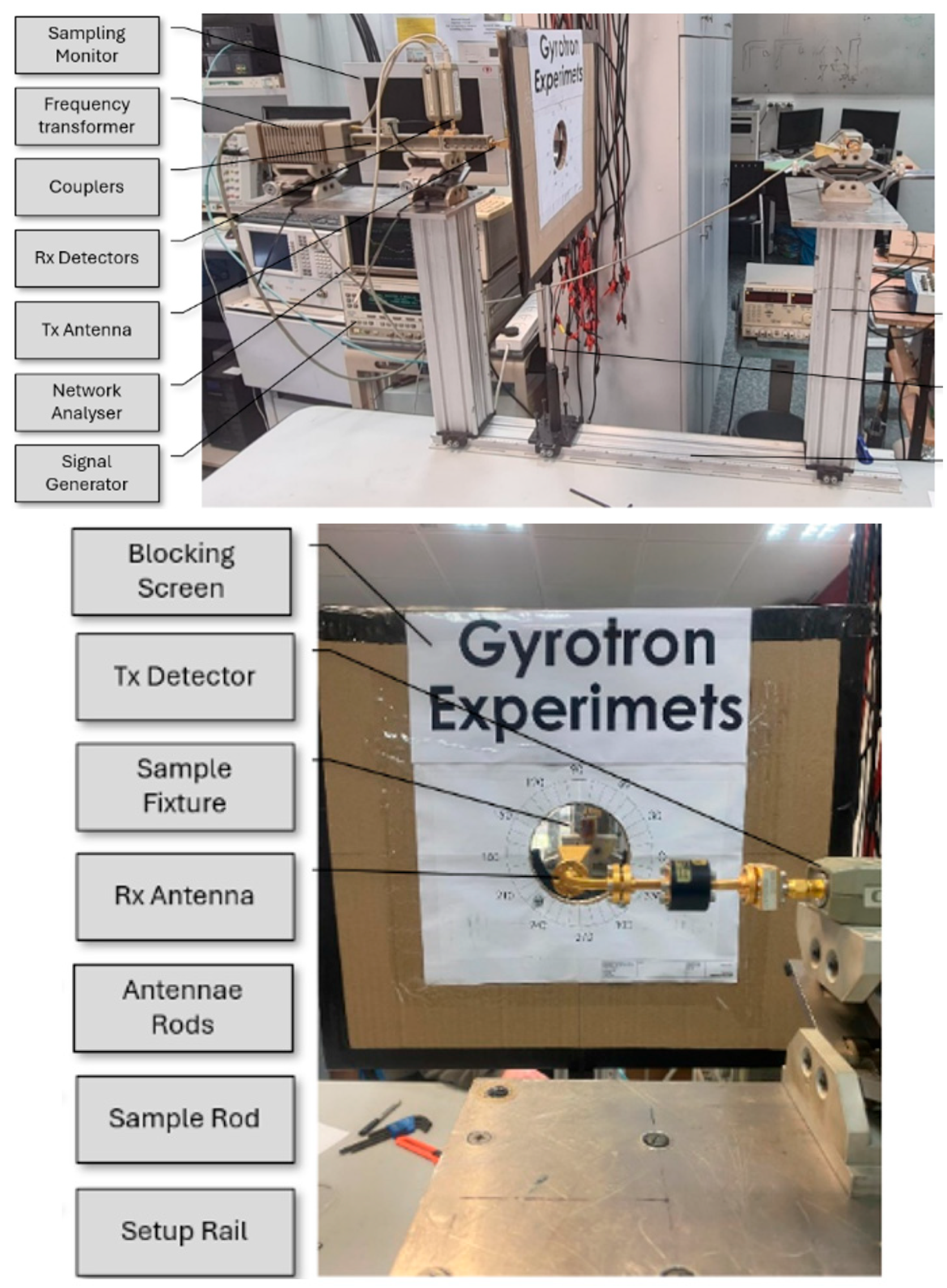
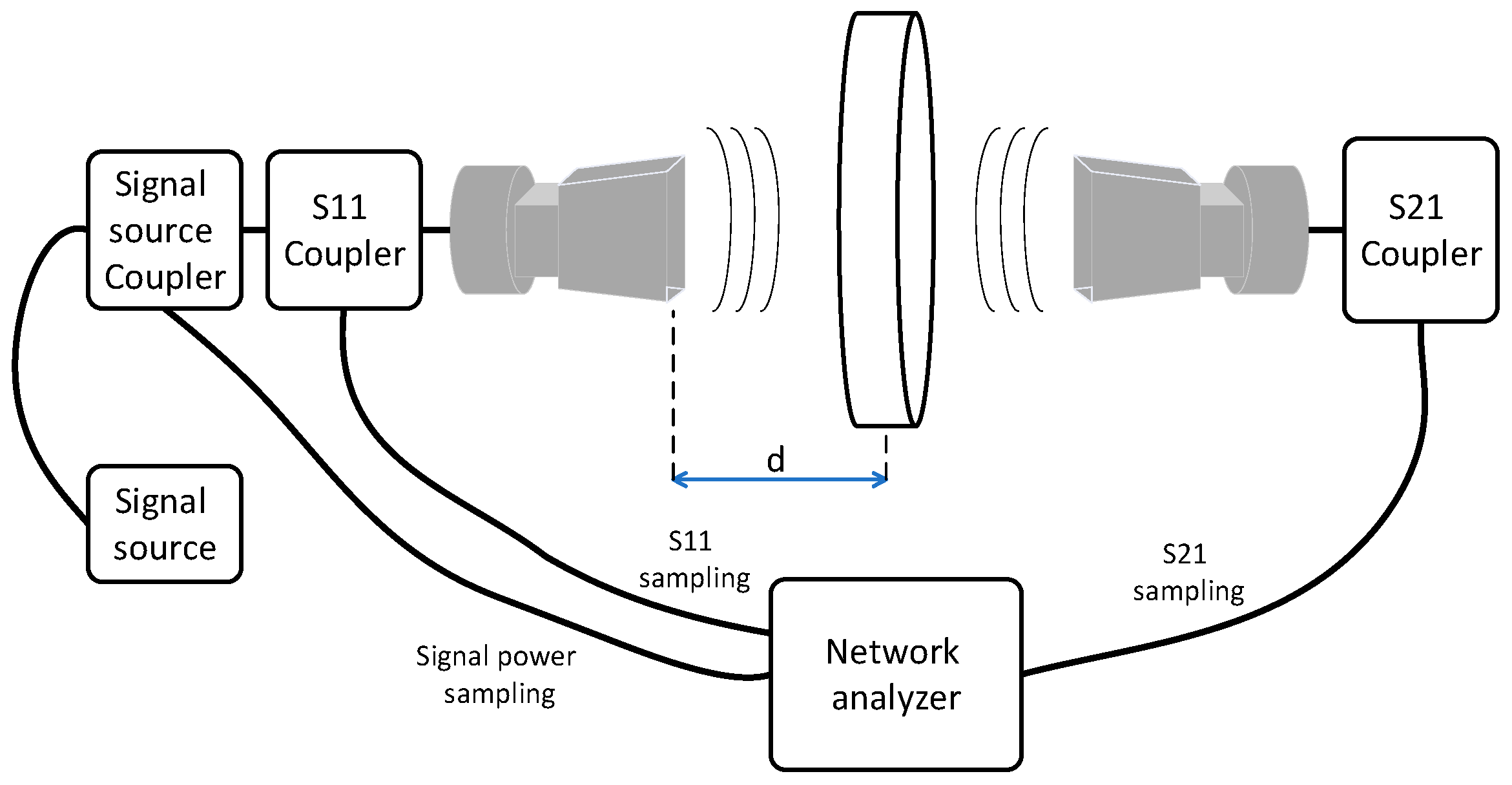
The purpose of the experiment is to investigate the degree of attenuation of electromagnetic radiation at microwave frequencies in animal skin. Figure 1 and Figure 2 below describe the experimental setup.
The measurements were performed using a network analyzer at frequencies of 75–110 GHz.
The range between the receiving and transmitting antennas and the position of the sample are controllable and were placed on a dedicated rail for measurements at different distances. In addition, in the constructed setup, the sample can be moved in a plane perpendicular to the rail for measurements at different points on the skin.
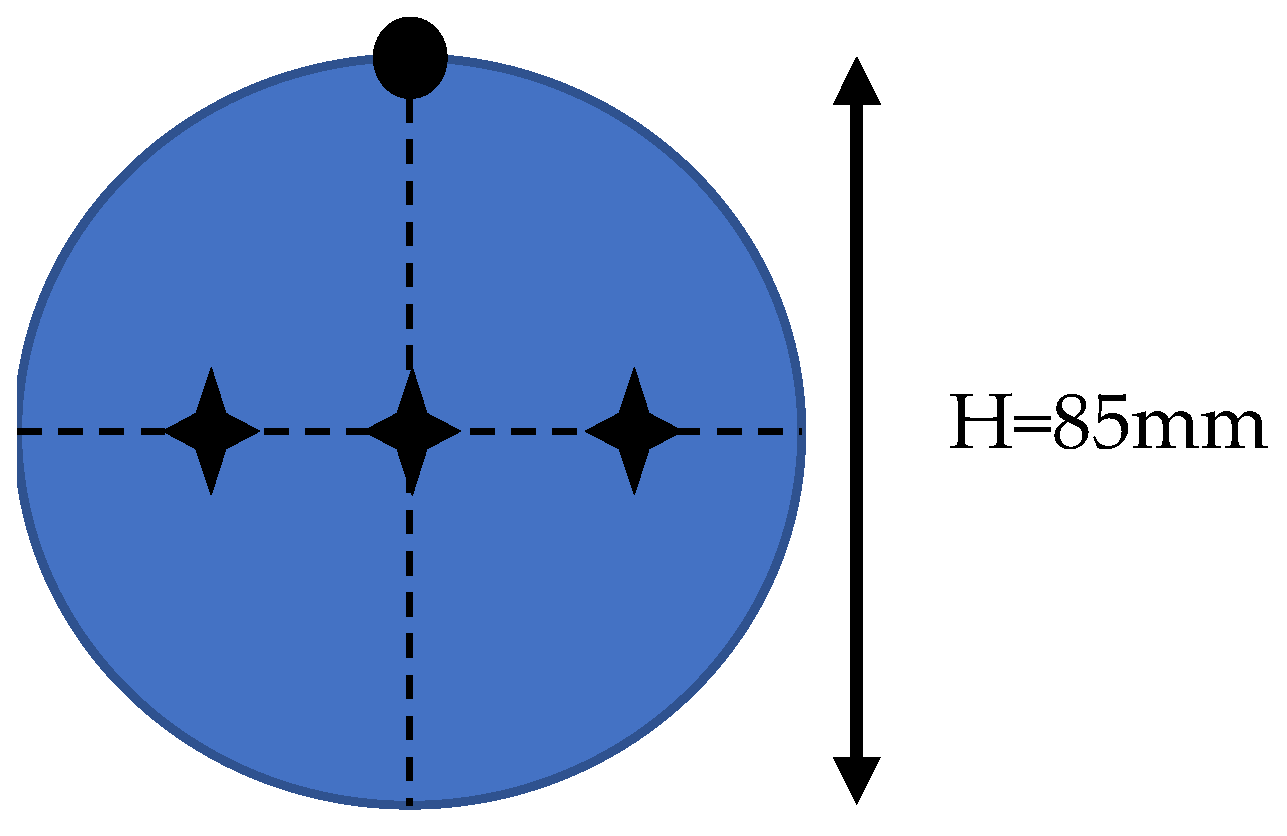
The sample is mounted inside a circular Petri dish with a diameter of 85 mm. The sample can be rotated 360 degrees inside the fixture in a plane perpendicular to the rail.

2.2. Preliminary Preparations

The samples were prepared prior to the measurements. They were cut from a large skin sample. The round samples were cut with scissors and kept refrigerated at 0 degrees in bags until the day of the measurements, for about a week.
The samples were placed in separate Petri dishes, so that the sample would cover the entire surface of the dish. Each dish was marked with a marker for rotation position 0—which is defined by the biologists in our group, according to the structure of the skin, as with the direction of hair growth.
On a Petri dish, three measurement points in the radiative near-field region were marked so that they would be aligned with the “0 degrees” angle axis (see Figure 3).

2.3. Array for Near-Field Measurements

The sample (Petri dish) was placed in the radiation near-field domain. This domain is defined to be in the range between the reactive near-field region and the far-field region. According to Fraunhofer distance (see [20] Equation 4.1 and [21]):
0.62 D 3 λ < R a d i a t i v e   N e a r   F i e l d   R e g i o n < 2 D 2 λ
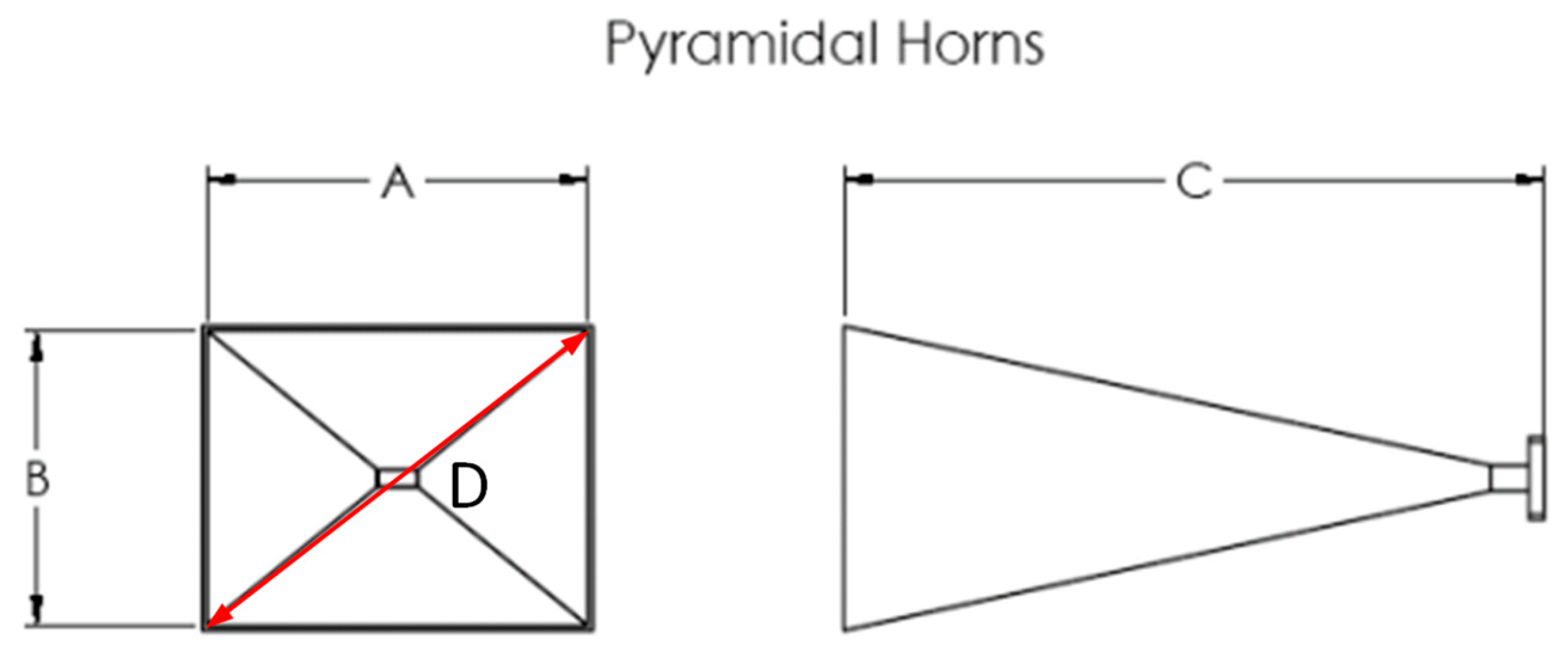
where D is the largest dimension of the antenna (for a rectangular antenna, this is the diagonal):
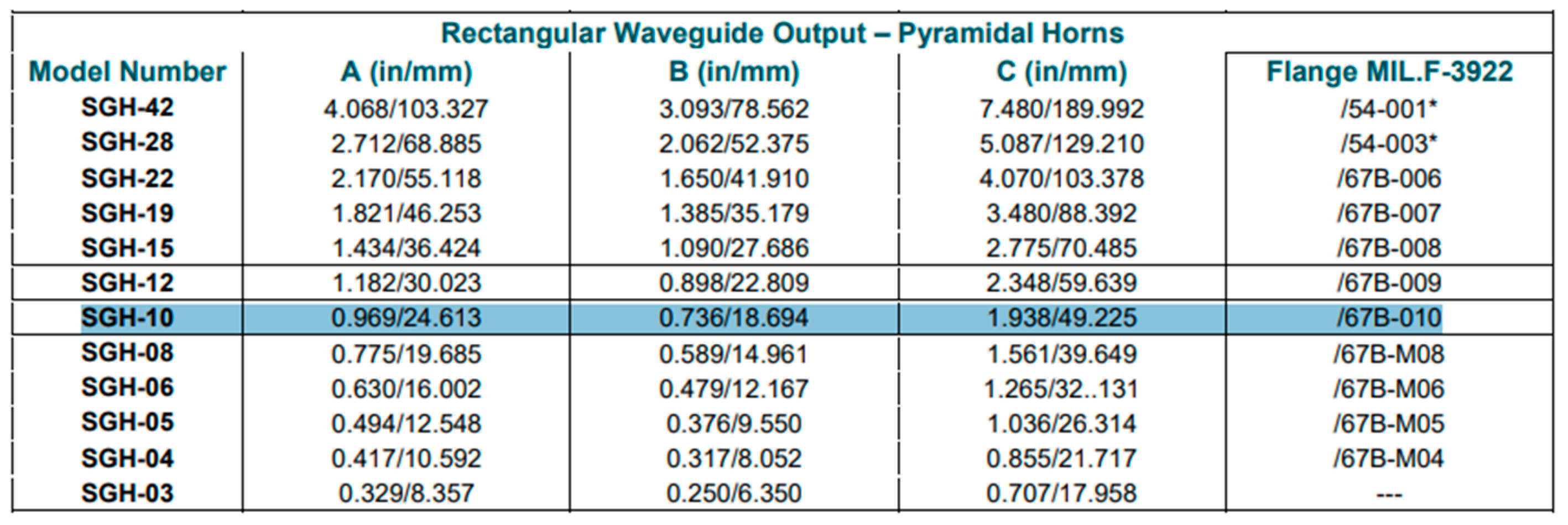
According to the dimensions of the antenna used in the experiment (millltech SGH-10 Pyramidal horn antenna) described in Figure 4 and Figure 5 and the Pythagoras theorem, the required size can be calculated:
D = A 2 + B 2
D = 24.613 2 + 18.694 2
D = 30.907   mm
λ is the wavelength. Therefore, the data presented in Table 1 is accordingly represented.
Therefore, it was decided that the samples were to be placed at a distance of approximately 200 mm from the antenna.

2.4. Design of the Array for Far-Field Measurements

For far-field measurements, it is necessary to ensure that the calculated beam cross-section covers the Petri dish area. For a horn antenna with two different dimensions, one can calculate the approximate angular beam width based on the relevant diameter ([22] Equation 7.42):
B W = 80 λ D
For example, for f = 75 GHz:
B W = 80 4 30.907 = 10.35 °
Therefore, the size of the spot reaching the sample in the far-field will be calculated based on the distance at the far field boundary:
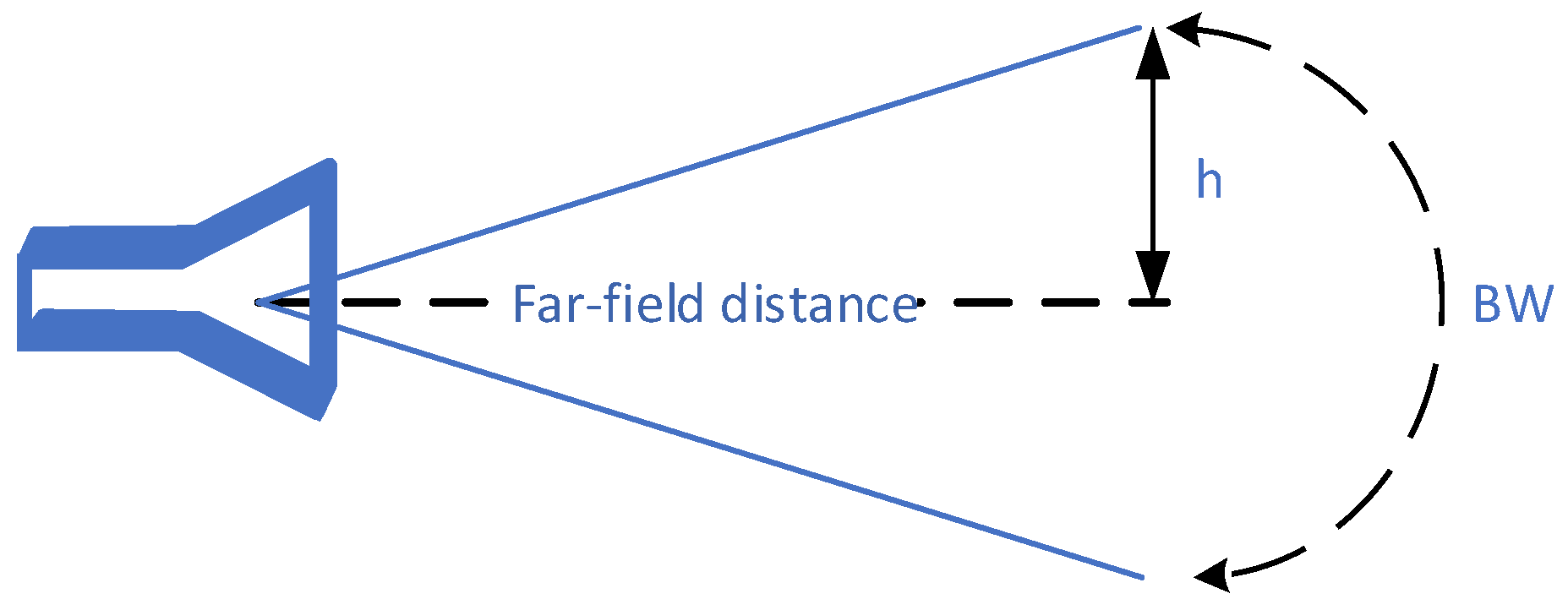
The size of the spot will be calculated accordingly (see Figure 6):
2   h = 2 f a r   f i e l d   d i s t a n c e tan B W 2
Thus:
2   h = 2 477.6 tan 10.35 2 = 86.5   mm
According to Table 2, it can be said that the size of the spot always covers the sample, assuming concentric centering of the sample.
Therefore, the samples can be placed 700 mm away from the antenna.
Due to the constraints of the experimental setup, that is, the limited lengths of the available cables which were needed to connect the components of the experimental setup to the network analyzer, measurements were performed in the near-field. Notice, however, that in the far-field, a significant amount of radiation would have interacted with surrounding materials which are not related to the animal tissue, and the reflections thereof could have arrived at the detector and complicated the analysis regarding the true interaction of radiation with the animal tissue; hence, near field region analysis is much more preferable and clearer regarding the sort of data that we are looking for.

2.5. Main Points of the Experiment

The experiment was carried out in two stages—preparation of the samples and measurement of basic parameters, electromagnetic measurements of S parameters, concentration, and analysis of results.
As part of the preparations for the experiment, 4 days were spent building the measurement system and placing the samples (the track and the device), 2 days of coordinating the antenna array and the network analysis, and another 3 days of preparing the samples, placing them in the Petri dish, and making measurements.
Below is the experimental plan on the day of the measurements:
Near-field calibration for S21.
Calibration and measurement of S11.
Placing the fixture with the sample at the relevant location for the measurement in the near-field antennas. The center of the Petri dish corresponds to the center of the beam.
Perform the measurement for each Petri dish. It is required to perform measurements for three distinct locations on the sample (which require horizontal displacement) and rotation in 90° at the central position (around the axis).
S11 measurements should be performed in the near field when measuring at each point on the Petri dish, including the 90-degree rotation. The measurements were recorded accordingly. The experiment was carried out during one day of measurements, and the results were subsequently sampled and analyzed for the purpose of compiling this report over a period of 4 weeks.

2.6. Sensitivity Calculations

The following analytical calculation explains the sensitivity of the measurement to potential misalignment errors, field non-uniformity on the axis and non-uniformities at the periphery of the sample.
The beam intensity profile is modeled using a Gaussian approximation with a beam waist w0 determined by the horn aperture. The apertures of the transmitting (Tx) and receiving (Rx) antennas have the dimensions 24.6 mm × 18.6 mm, and a gain of 24 dBi. The transmission line is based on WR10 waveguides. The far field extension is calculated in Table 1.
  • Given the experimental geometry (Tx at 350 mm from the sample and Rx at 700 mm from the Tx antenna), the sample is illuminated by a beam in the Radiative Near-Field [21] (Fresnel) for the entire spectral band. The Rx antenna is placed at the Far-Field Boundary.
  • The horns are modeled as fundamental Gaussian beam emitters following Gaussian Beam Mode Analysis (GBMA) [23,24]. The w0 (on the antenna mouth) is ~12 mm, approximated as ~   0.38 D (D is the longest antenna dimension). The Raileigh distance is calculated as z R 140 mm:
    z R = π w 0 2 λ   ,   w z = w 0 1 + z z R 2
  • Beam on the sample: At the sample plane ( z s   =   350 mm), the calculated mode field radius ( w ) is approximately 32 mm slightly more than the size of the antenna aperture. The horn illuminates a spot of ~64 mm diameter (at 1/e2) on the sample. The half-power spot (−3 dB) is ~59% of the spot size, which is 37 mm [23]. The rest of the 85 mm diameter Petri dish does not contribute to the measurement.
  • The receiving antenna was positioned in the far-field at z R x = 700   mm to ensure phase planarity. At the receiver plane, the transmitted beam radius expands to w R x   163   mm. It acts as a spatial filter, coupling only the central ± 12   mm core of the beam that passed through the sample center. This rejects edge scattering and peripheral thickness variations, ensuring S21 is due to bulk central tissue properties. Consequently, the “field non-uniformity” effectively acts as a constant weighting function of a Fundamental Gaussian pattern rather than a source of random error.
  • Prior to the S-parameters measurements, the setup was calibrated according to the actual distances and the alignment of the antennas to ensure the relative measurement of power attenuation and reflection S-parameters as described in Section 2.7. Conservatively, assuming ±1 mm sample positioning tolerance, lateral misalignment loss [23,25]:
L dB = 10 l o g 10 K offset 4.34 Δ r w 0 2
L d B 4.34 1 12 2 = 0.03   d B
This is negligible compared to tissue-induced variations (>1 dB).
In conclusion: The “field non-uniformity” effectively acts as a constant Gaussian weighing function rather than a source of random error. The observed S21 spread is dominated by sample heterogeneity, rather than setup miscalibration.

2.7. Preparation of the Samples

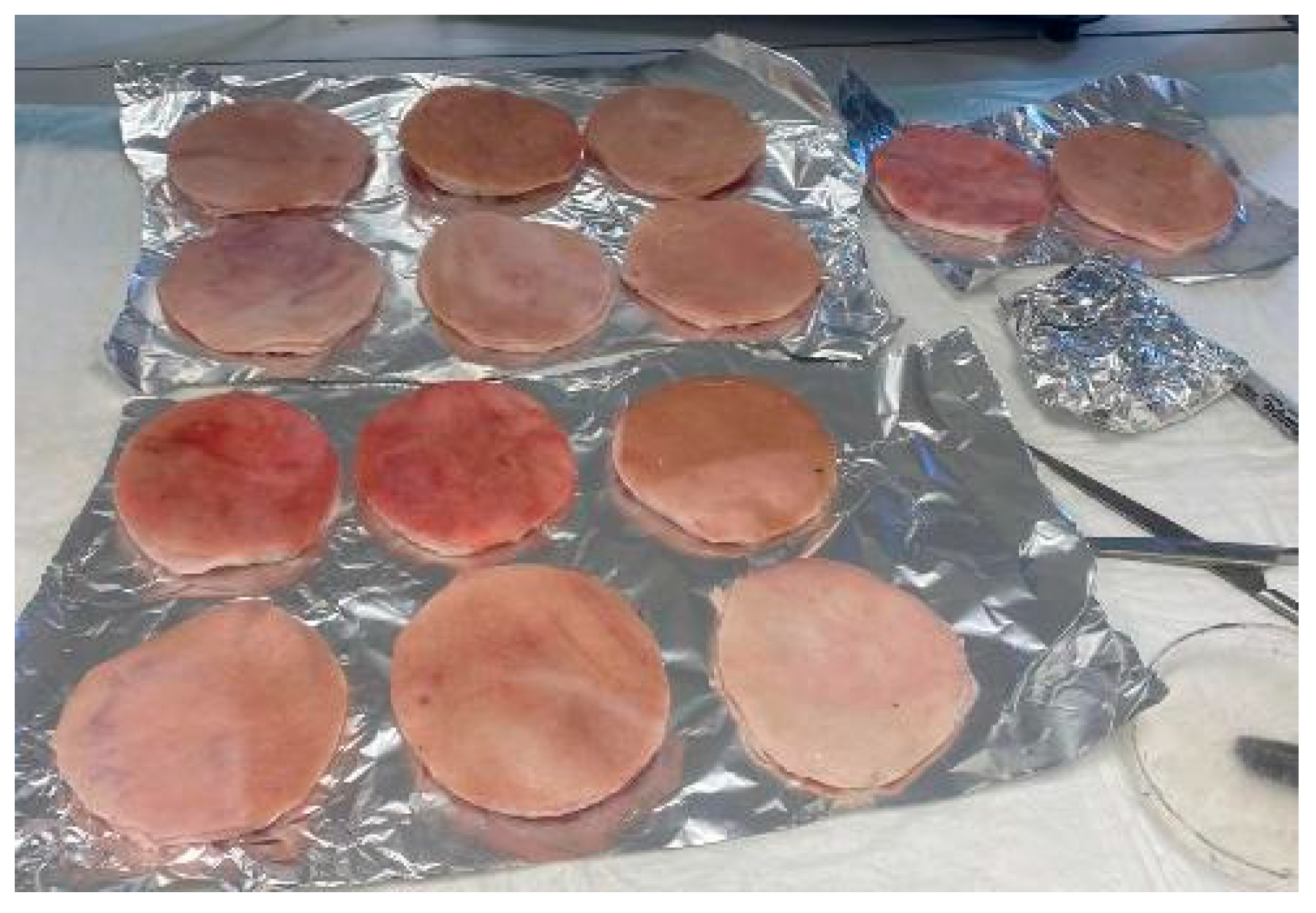
Seven samples of pig’s skin were prepared in a round shape to fit into a Petri dish with a diameter of 85 mm. The samples were cut from a single section of skin. The separation of the skin was performed in a rough manner, and therefore, the thickness of the skin and fat is unique to each sample. The same applies to the texture and color of the skin as depicted in Figure 7. Fourteen samples were prepared, which is twice as many as needed for the experiment (as seen in Figure 7). Of these, the seven best were selected for the measurements (based on quality of the Petri dish, level of sample retention, etc.). The samples were kept refrigerated at 0 degrees until mounted in standard Petri dishes.
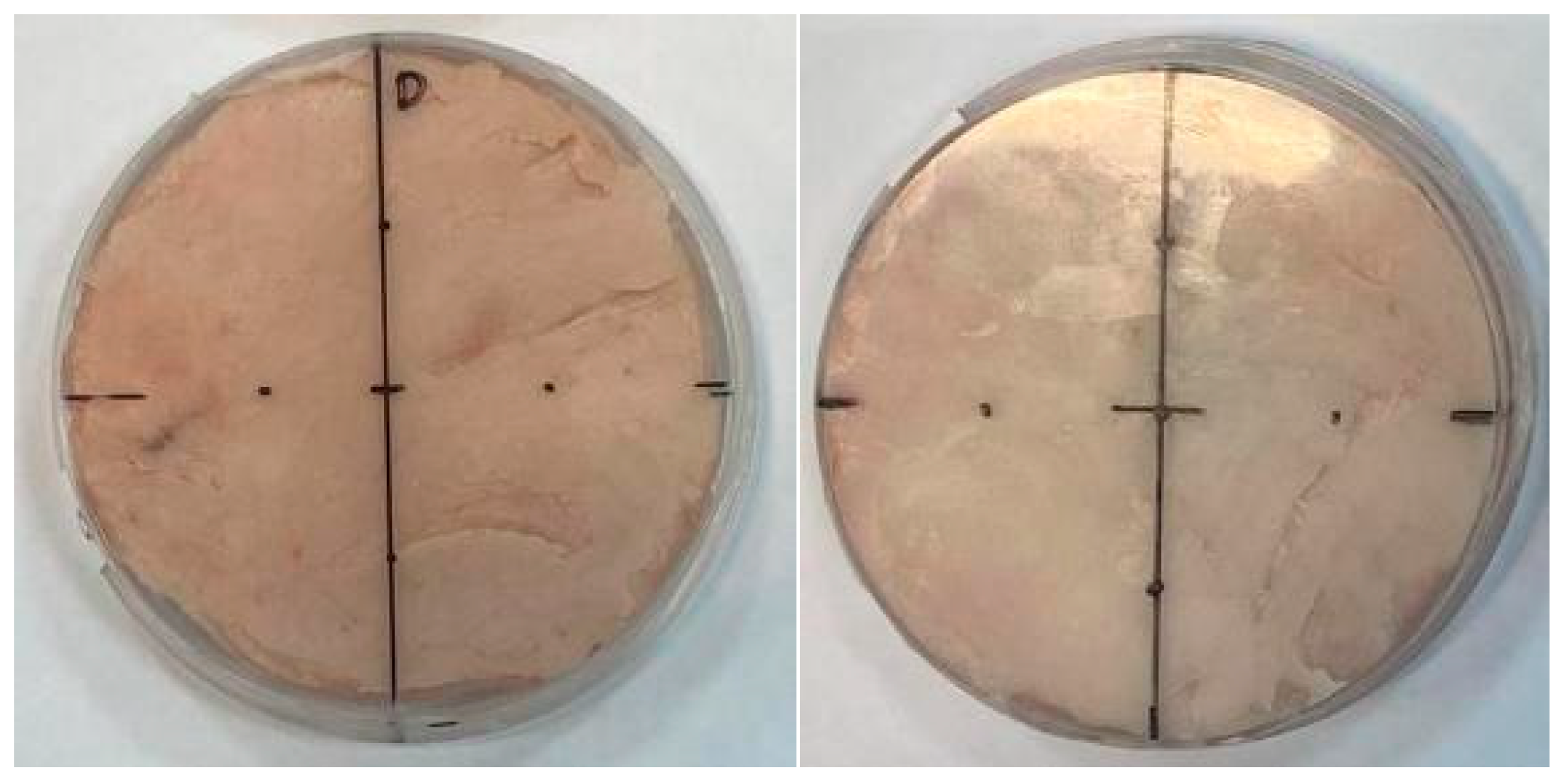
On each plate with the skin specimen placed inside, a reference point of 0 degrees was defined, so that the direction of the hair in the skin (visually checked by a biologist) would correspond with the 0–180 degrees direction. In addition, a 90-degree point and three points on the horizontal axis that correspond to the center and two lateral displacements of 2/3 of the diameter were defined. These measurement points were used as a reference during the experiment—see Figure 8.
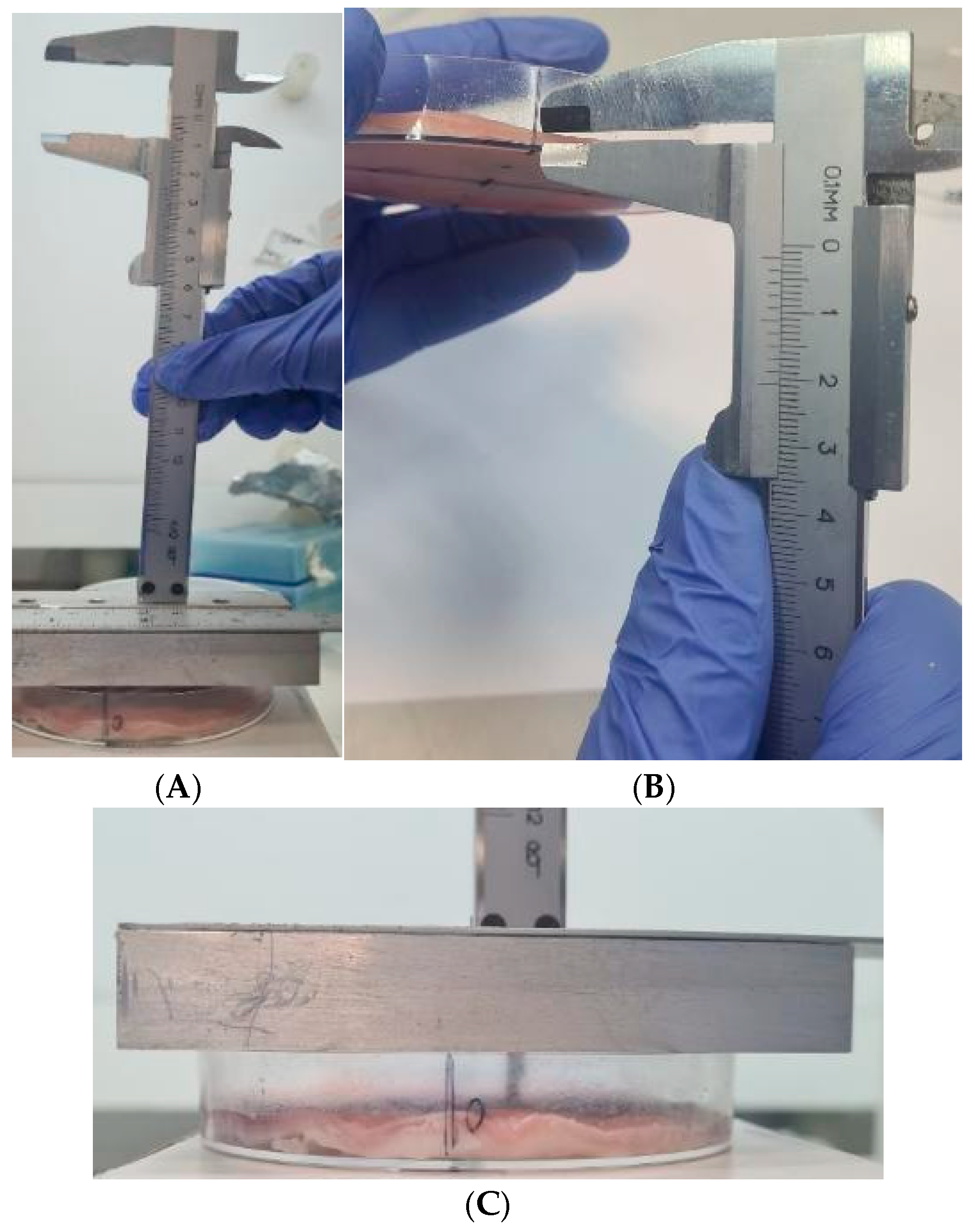
After placing the specimen on the plate, skin thickness and fat thickness were estimated at reference points for all samples. Skin thickness was similar, in the range of 1.5–3.0 mm. Fat thickness varied between samples, ranging from 3 to 9.5 mm. Skin color and texture differed between the different samples. It should also be noted that due to the measurement method as described in Figure 9, skin thickness was estimated only at the perimeter of the sample, so that a representative skin thickness was determined for each specimen. In practice, it is reasonable to assume that skin thickness can also vary slightly within the sample.
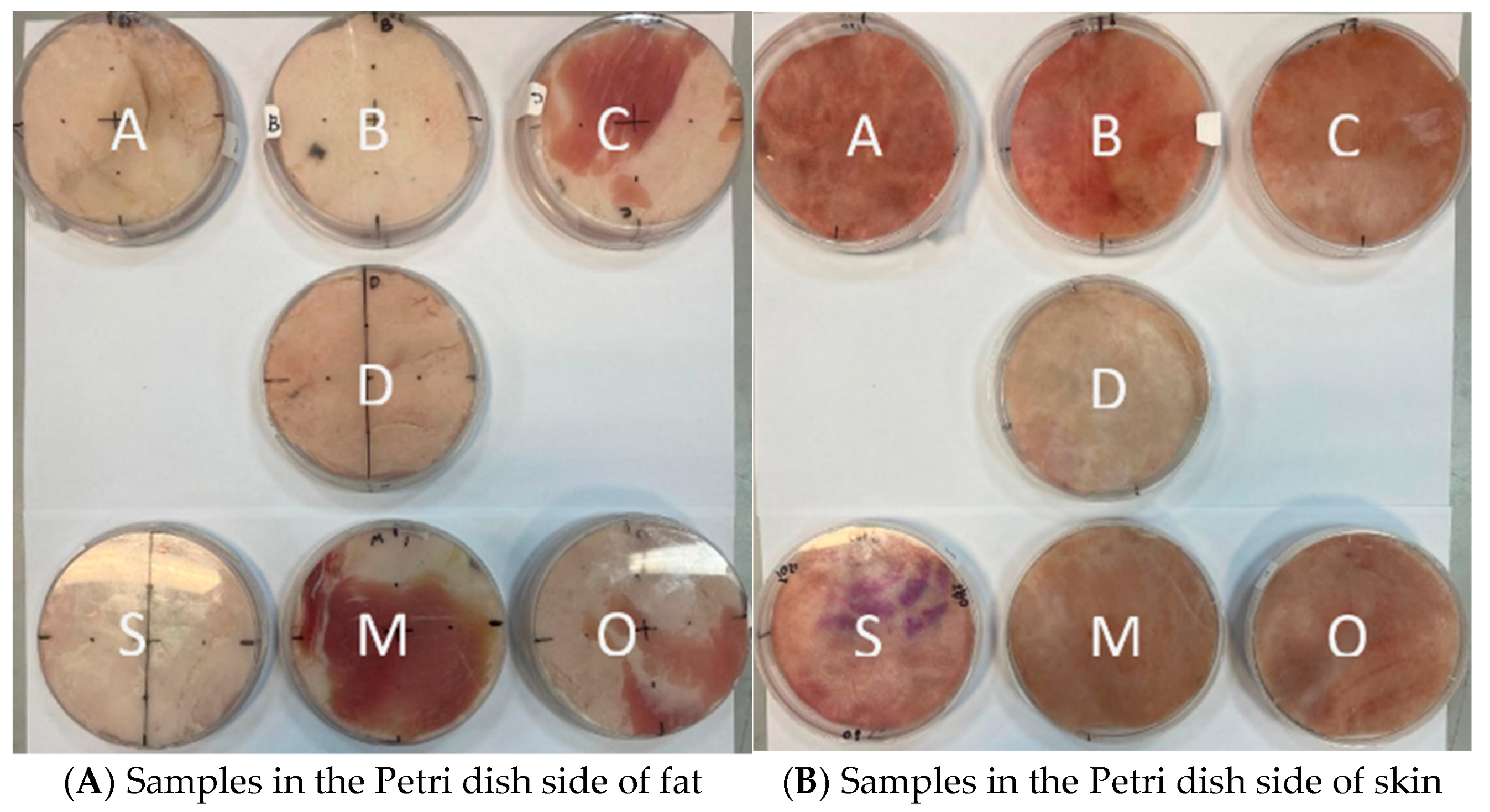
For the measurements, the seven samples were prepared in Petri dishes—labeled A, B, C, D, S, M, O, see Figure 10 below.
For the sake of measuring S-parameters, a dedicated measurement setup was established based on a network analyzer, associated equipment, and a pair of antennas. The setup is calibrated and coordinated to measure skin samples in a Petri dish. A dedicated mechanical device that fixes the measurement geometry was also built—including a rail on which columns with antenna fixtures were installed (in order to reduce reflections from nearby surfaces), as well as a column with the sample device, including a screen to limit the projection area to the sample. The measurement distances and adjustment to the axes were coordinated according to the experimental plan as described at the beginning of the document (precisely controlled by the rail). In Figure 11, you can see the measurement setup, the signal generator, antenna calibration, and associated equipment.
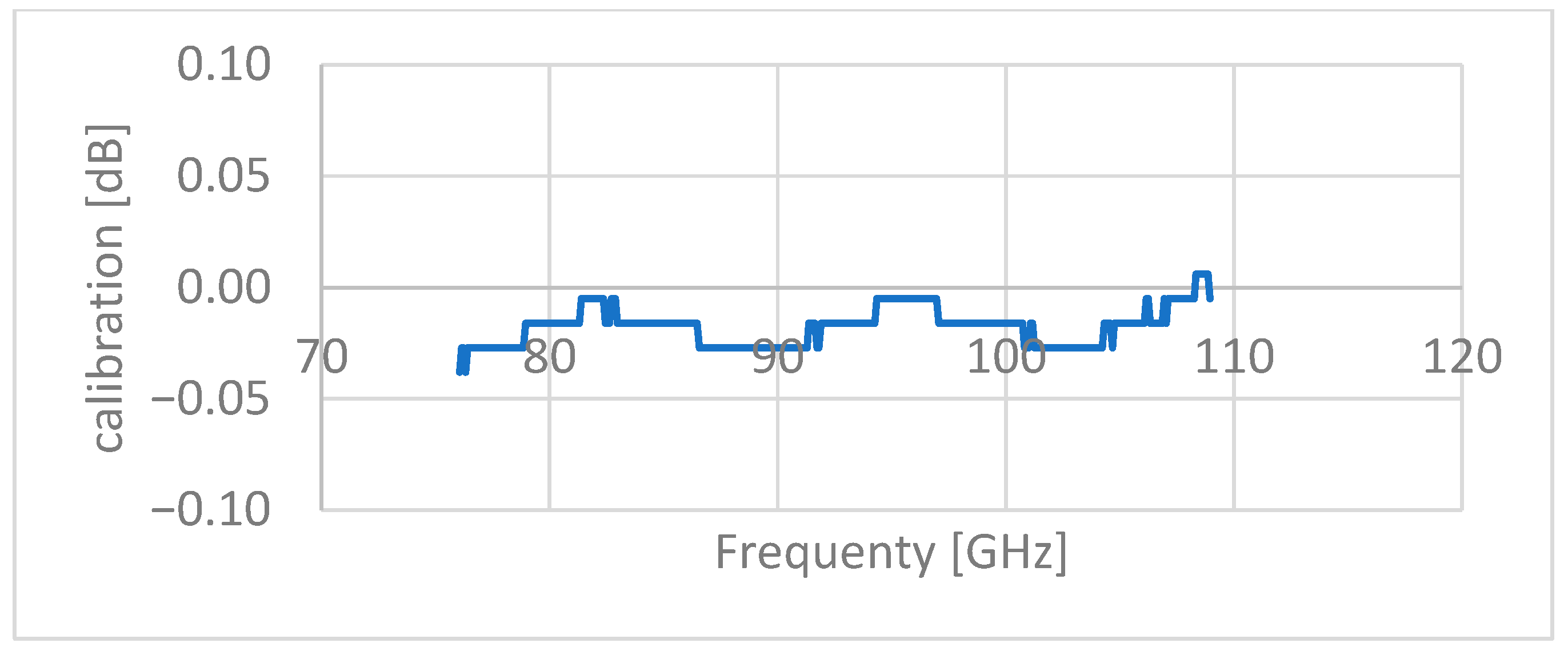
We have measured data for 401 discrete frequencies. The array was calibrated to a baseline to eliminate the influence of the measurement array, including the presence of an empty Petri dish (see Figure 12 and Figure 13).

2.8. Performing Measurements

During the measurement session, approximately thirty sets of measurements were performed for each sample. S21 measurements were performed at several reference points by measuring transmission between two identical antennas, placed at various distances within a radiation field relative to the sample in the setup:
  • 0-degree central position.
  • 90-degree central position (by rotating the Petri dish around the zero point).
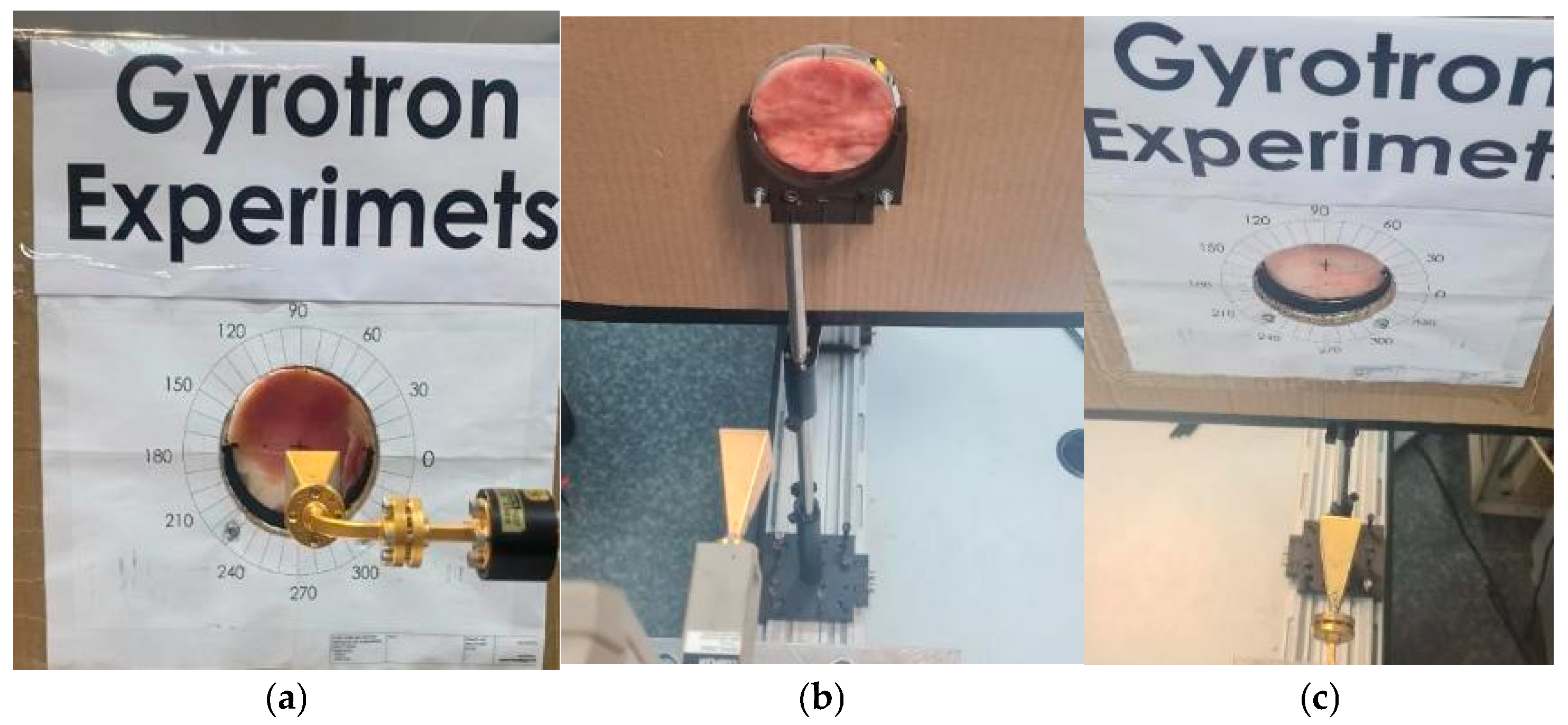
  • Two laterally displaced positions by two-thirds of the diameter as depicted in Figure 14.
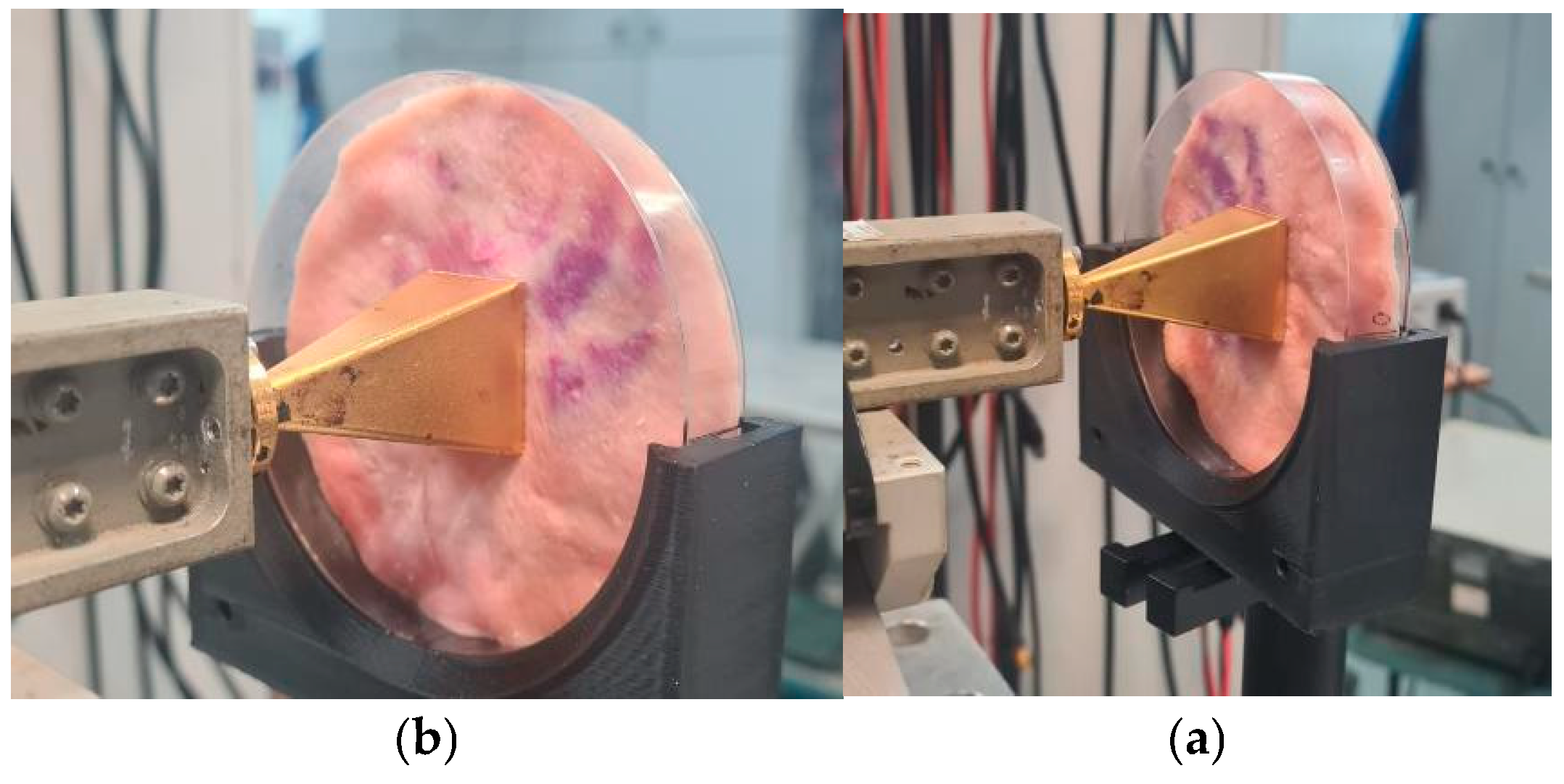
S11 measurements were performed at several reference points by attaching an antenna to the sample to obtain maximum return. The antenna is calibrated against an aluminum plate to define (reset) the baseline:
  • 0-degree central position.
  • 90-degree central position (by rotating the Petri dish around the zero point).
The reflection measurements (S11) were only performed at a reference point in the center (see Figure 15).

3. Results

3.1. Summary of Results and Initial Data Analysis

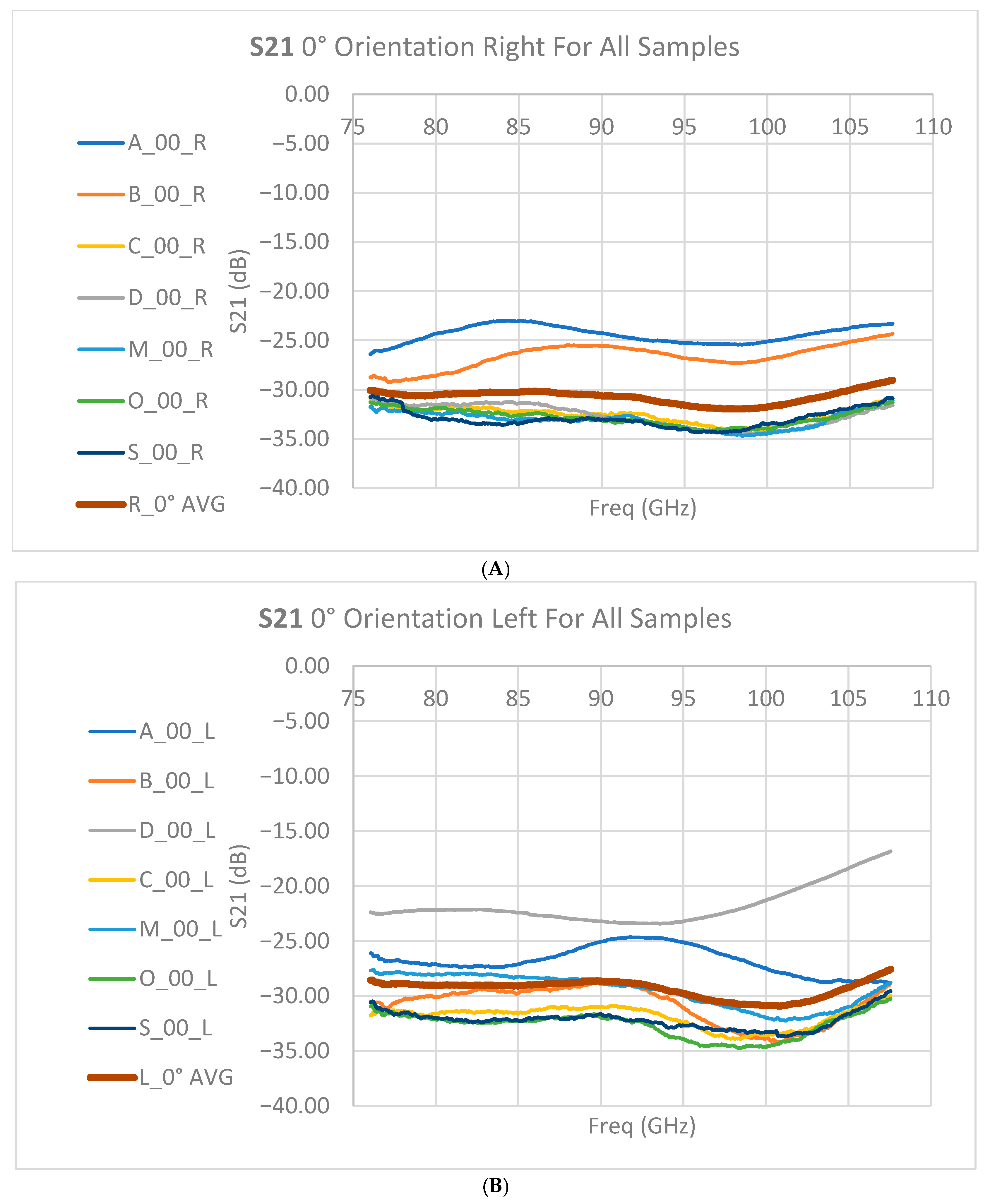
The measurement results were compiled in an Excel file that includes sheets with raw measurements of attenuation and reflection parameters (S11, S21) for each measurement. Attenuation segmentation (S21) is according to the sample thickness (for all samples are derived from a single animal skin). The results were analyzed for several representative frequencies in the studied spectrum (80, 85, 90, 95, 100, 105 GHz). Absorption in animal skin was calculated for all samples across the studied spectrum. A comparative analysis of absorption in concentric measurement (the central point) was performed for all samples in 0 vs. 90 degrees orientation.

3.2. Raw S21 Measurements

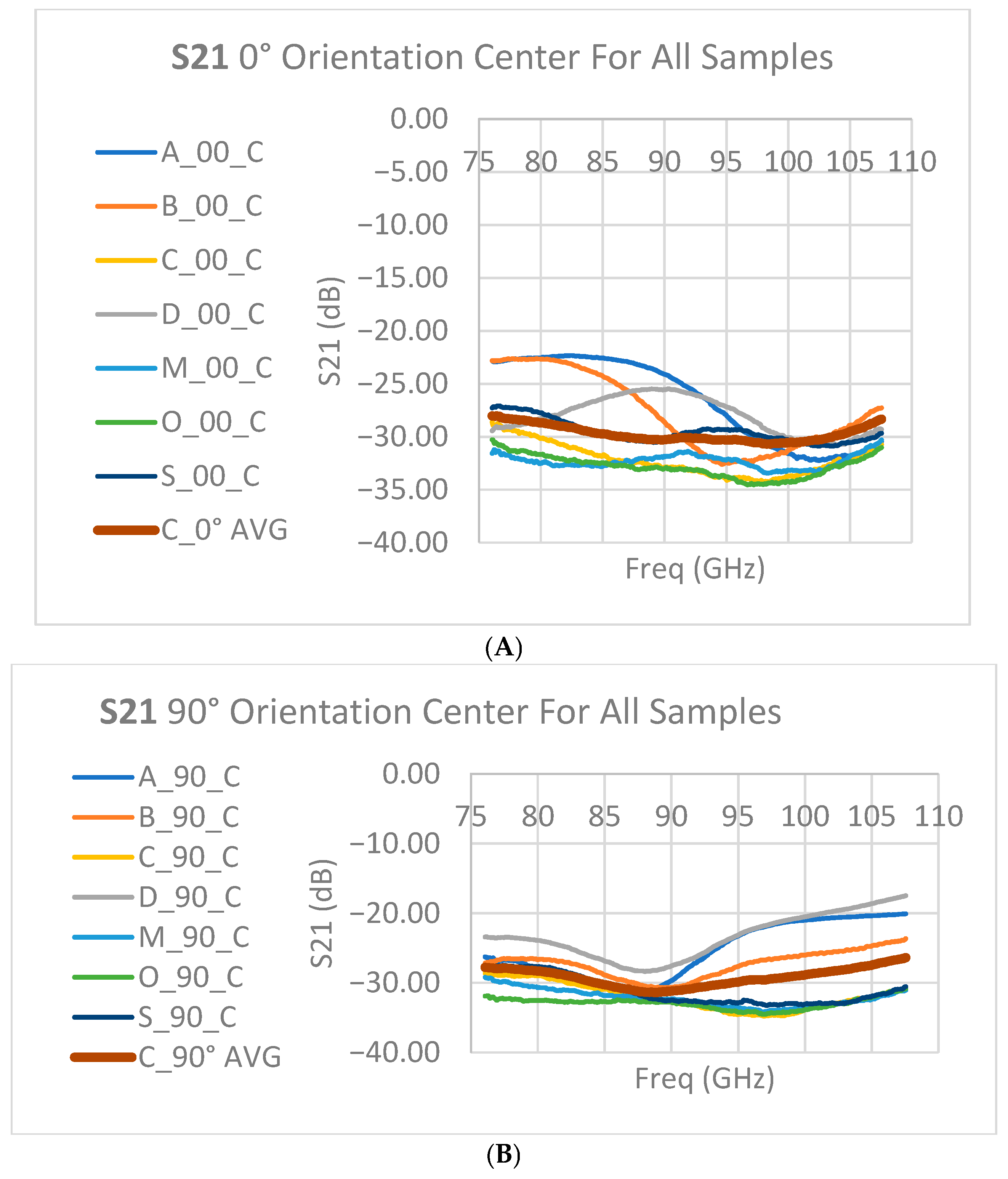
Figure 16 show the S21 parameter measured in the center of the samples for two orientations. Figure 17 show the shifted S21 measurements.

3.3. Raw S11 Measurements

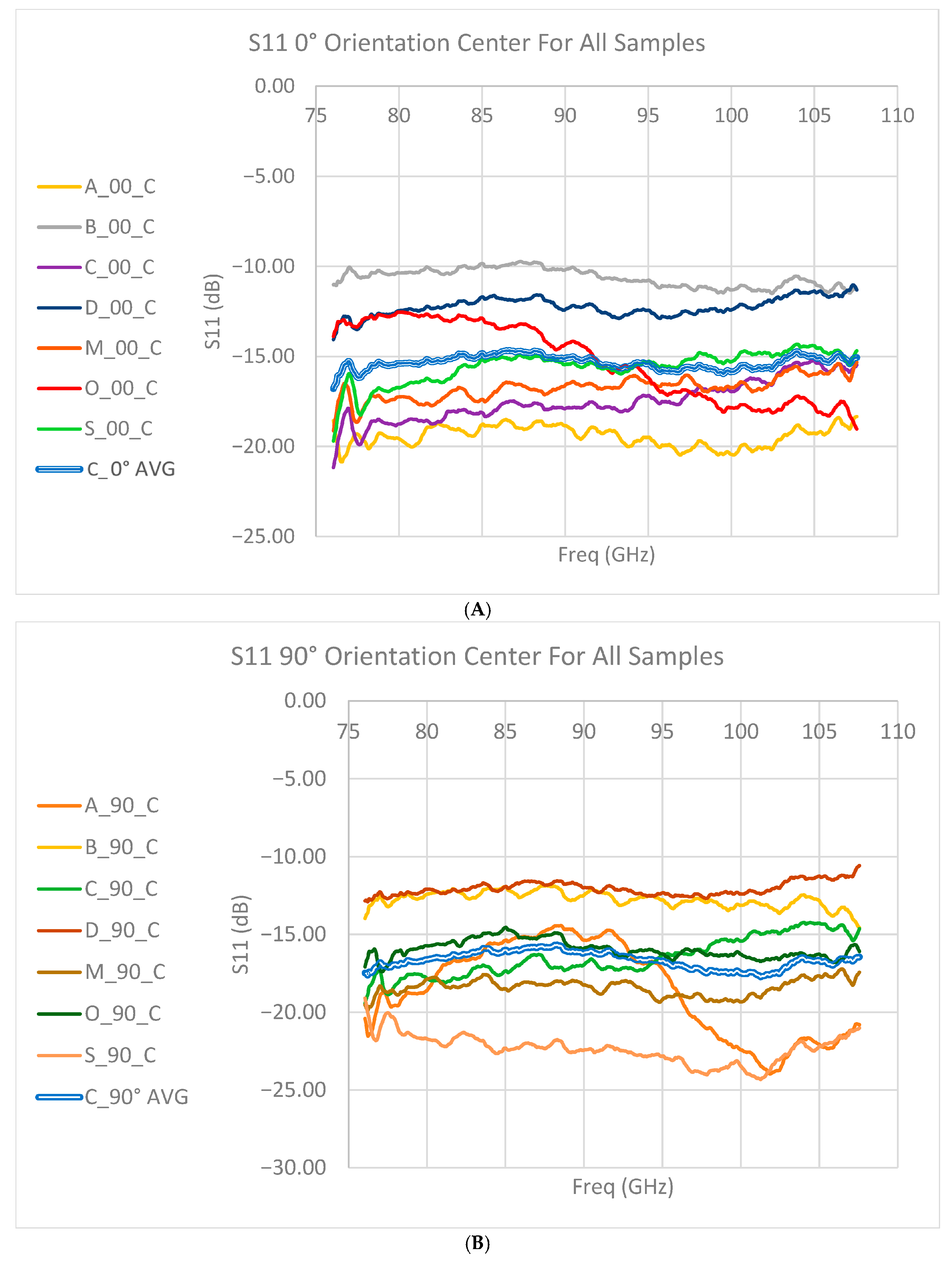
Figure 18 show the S11 parameter measured in the center of the samples for both orientations.

3.4. Attenuation Segmentation by Sample Thickness at the Measurement Frequency

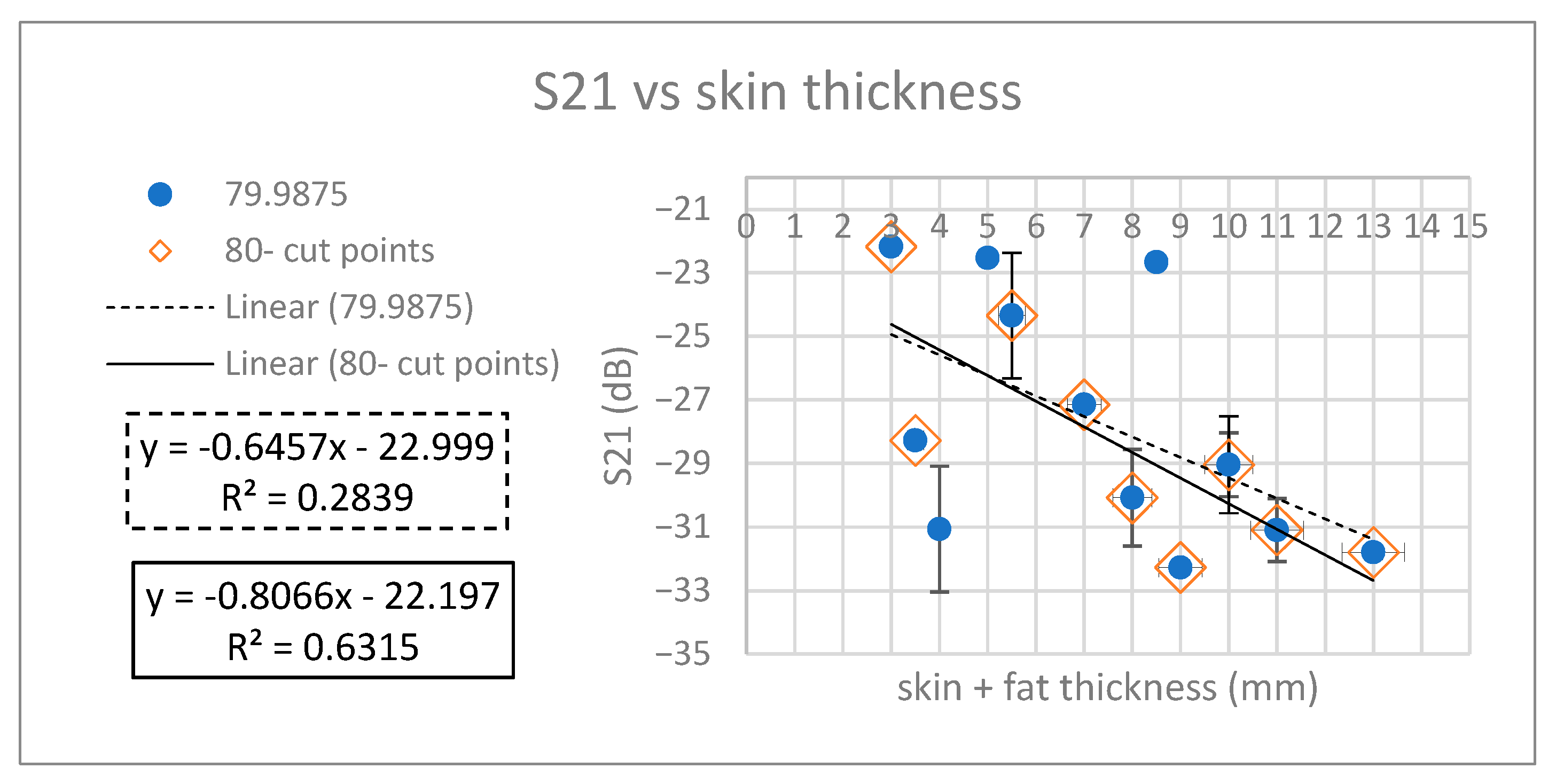
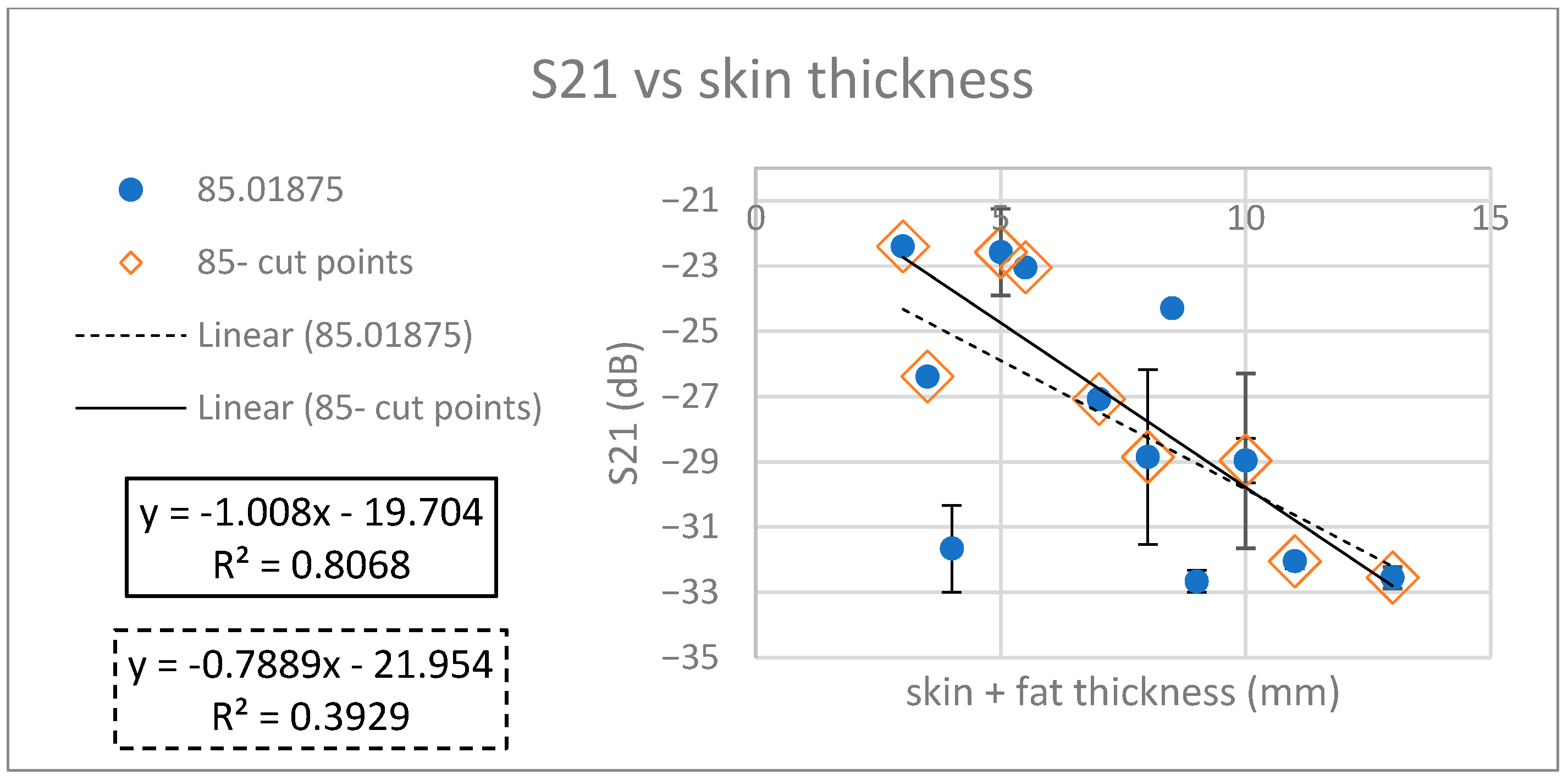
In order to characterize the dependence between the sample thickness, the irradiation frequency and the absorption, the measurements were averaged for several working frequencies. For each frequency, an average is performed in the spectral range of ±0.5 GHz. As part of the analysis, the average of the transmission coefficient S21 in this range and the standard deviation (measure of dispersion) of the results were calculated (see Table 3).
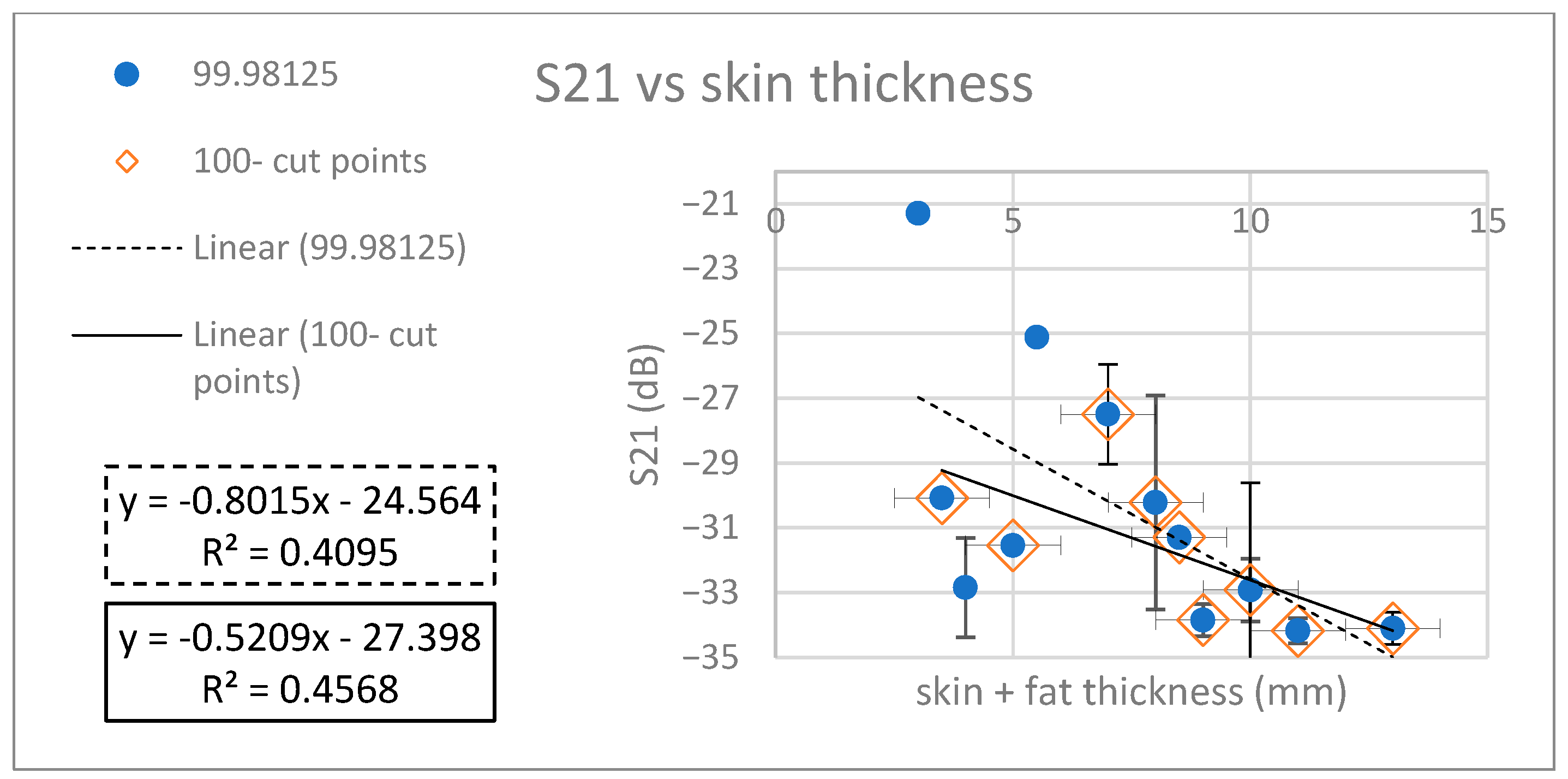
The results are summarized in the following graphs. For each frequency, the appropriate linear approximation was examined. We have fitted all points and also 75% of the points which are closest to the fit line using the formula:
d i s t a n c e a x + b y + c = 0 , x 0 , y 0 = a x 0 + b y 0 + c a 2 + b 2
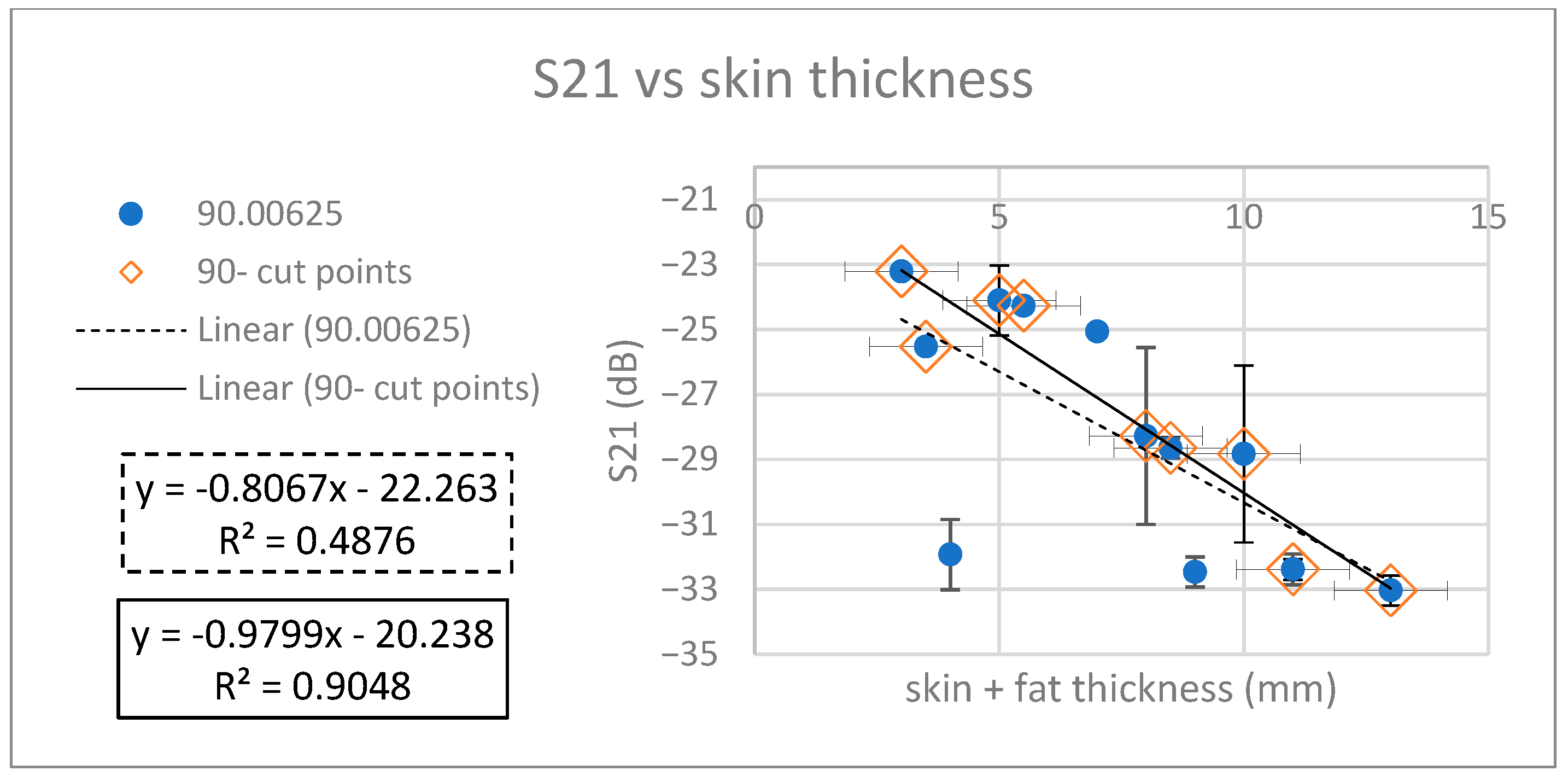
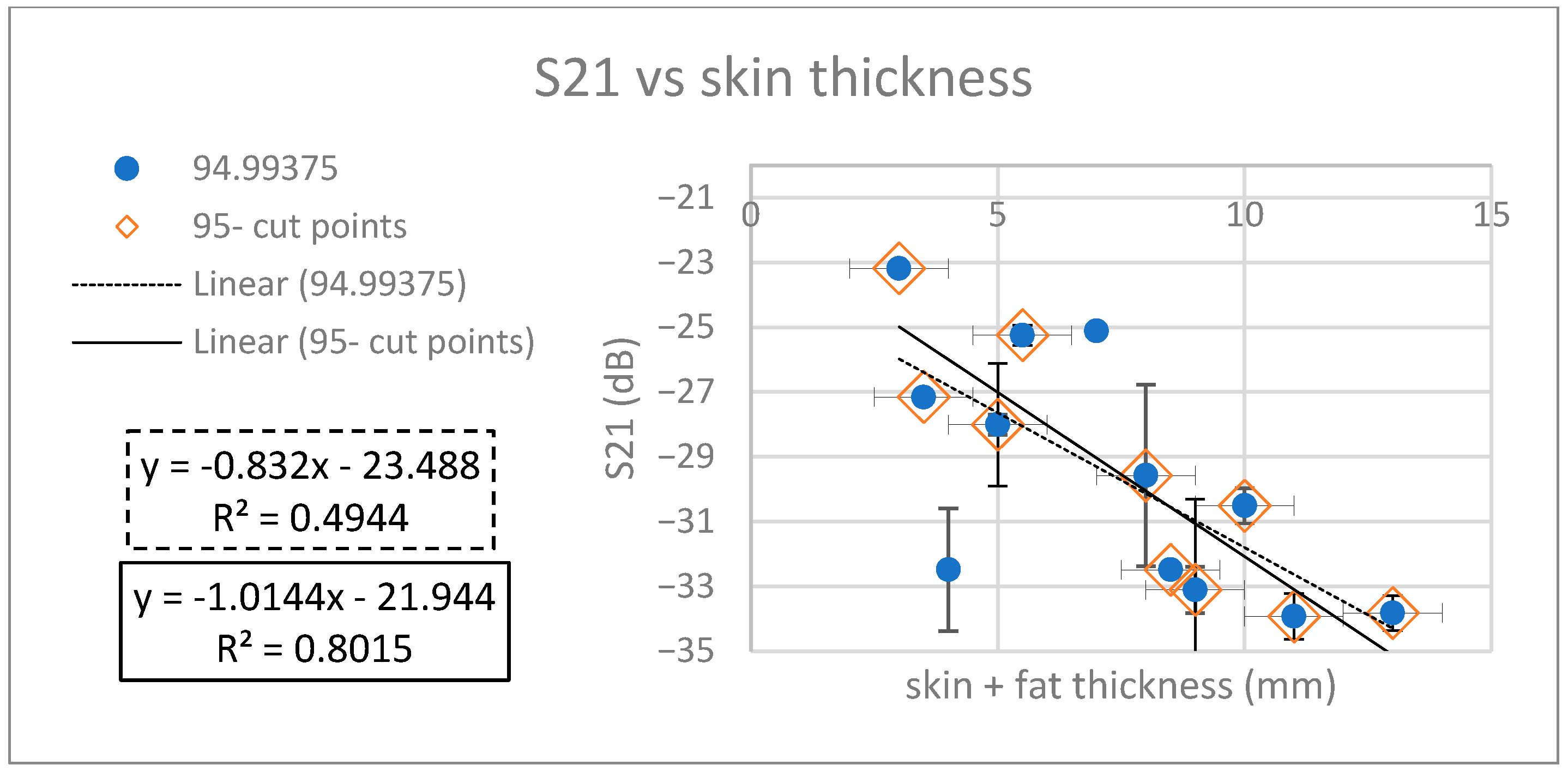
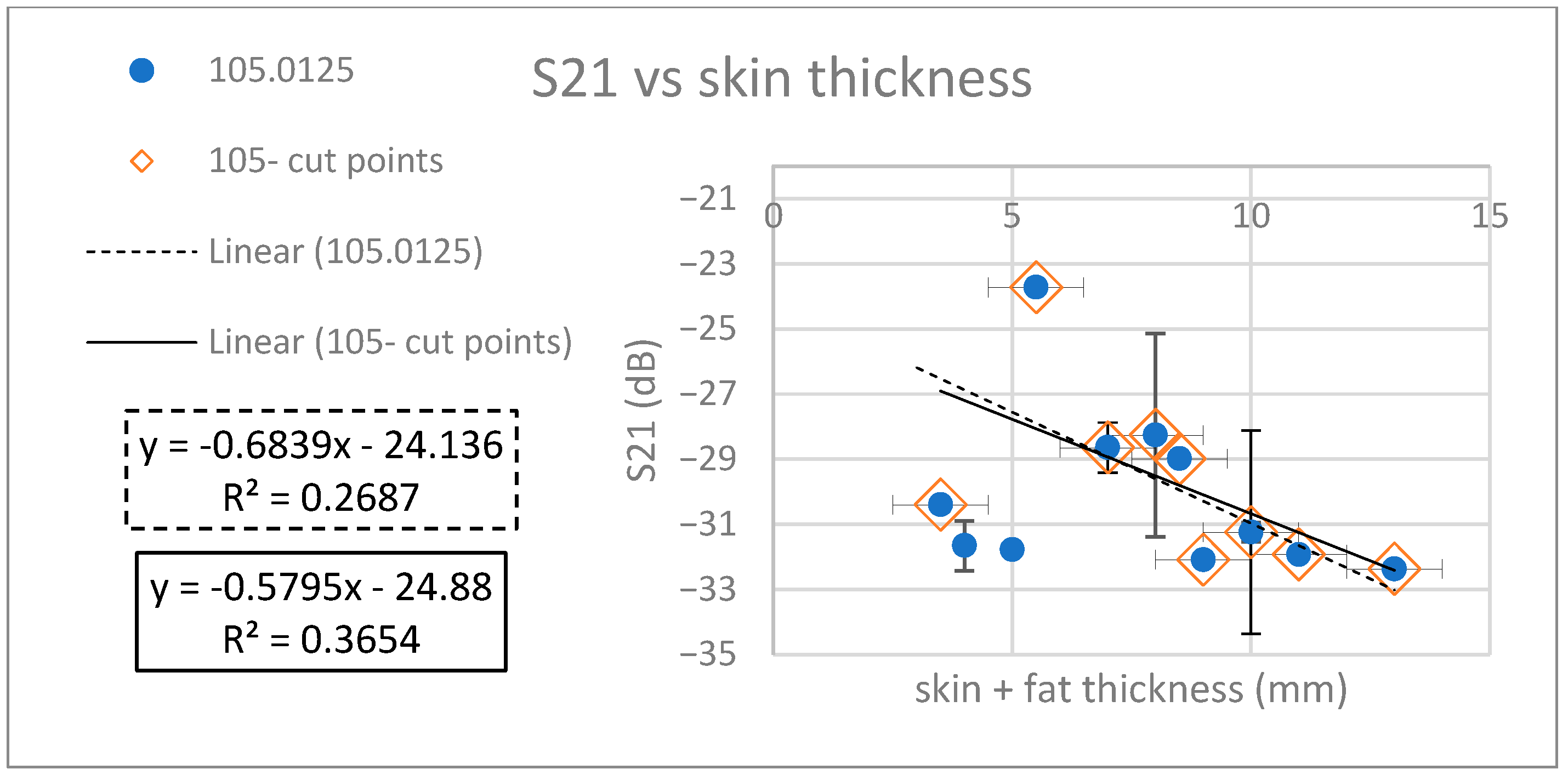
In which case a new fit was derived for those points only. The graphs in Figure 19, Figure 20, Figure 21, Figure 22, Figure 23 and Figure 24 depict the trends, with a series of circles with a dashed linear approximation depicting an analysis of the entire population, and a series of diamonds with a continuous linear approximation depicting an analysis of the partial population.
Table 4 summarizes the parameters of the two different fits for each frequency plot.
From Table 4, we see that the filtered data set provides a 23.61% update to the slope and a 7.46% update to the free term of the linear fit.

3.5. Absorption as Function of Sample Thickness

The total irradiated power is either absorbed (A), reflected (R) or transmitted (T); thus, in terms of power coefficients, it follows that
R + T + A = 1
Thus:
A   = 1 R T
Now, R = S 11 and T = S 12 are thus in terms of percentage:
A b s o r p t i o n % = 100 ( 1 S 21 l i n e a r S 11 l i n e a r )
which is the formula used to calculate the absorption. The reader should notice that if we expressed our results in terms of electric field coefficients, they would appear as squares. For example, if r is the reflection coefficient of the field, then it follows that
R = r 2 .
We emphasize that S21 value measurements were averaged across the three measurement points in each sample separately for the 0-degree orientation. For the 90-degree orientation, the center point was considered.
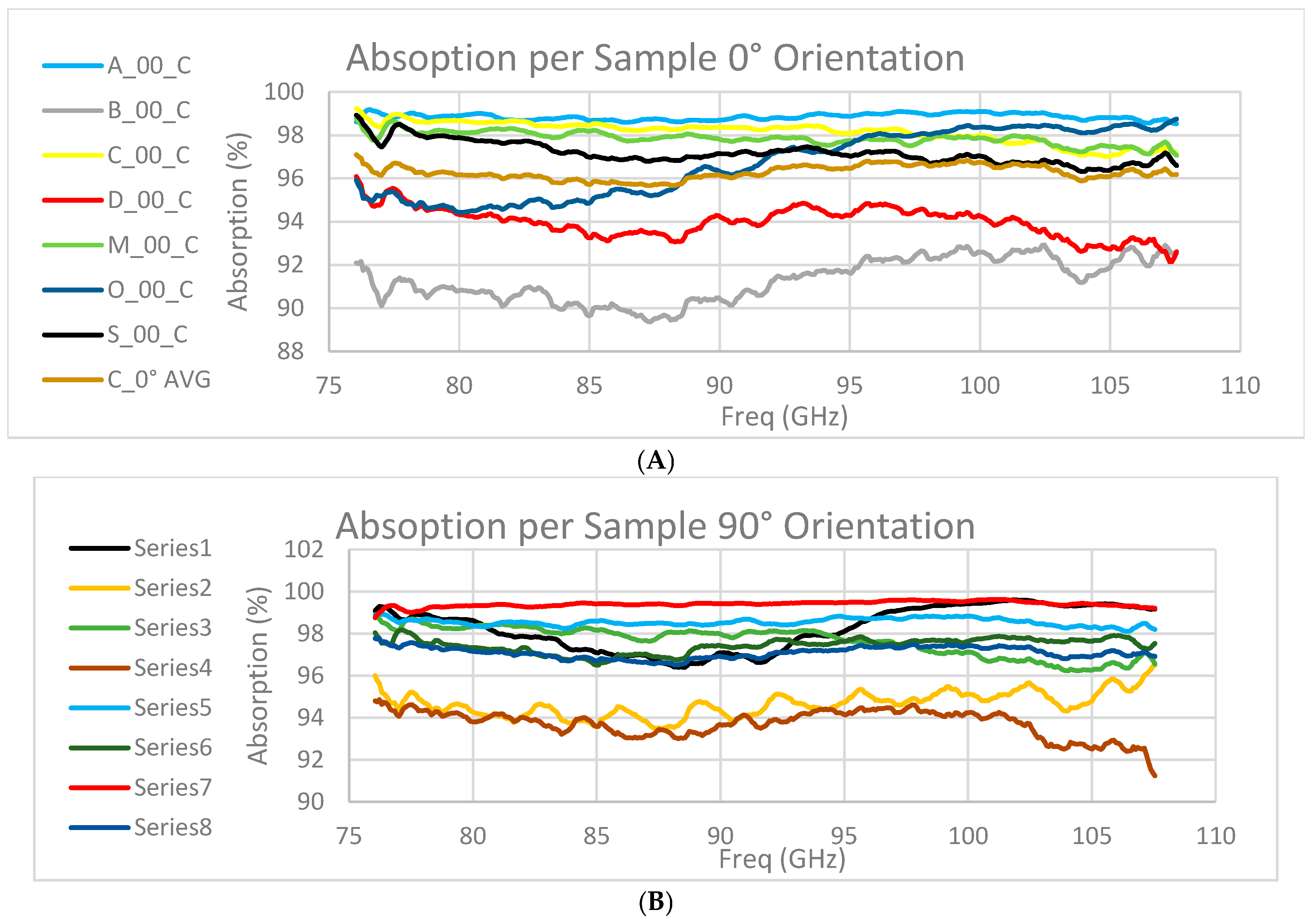
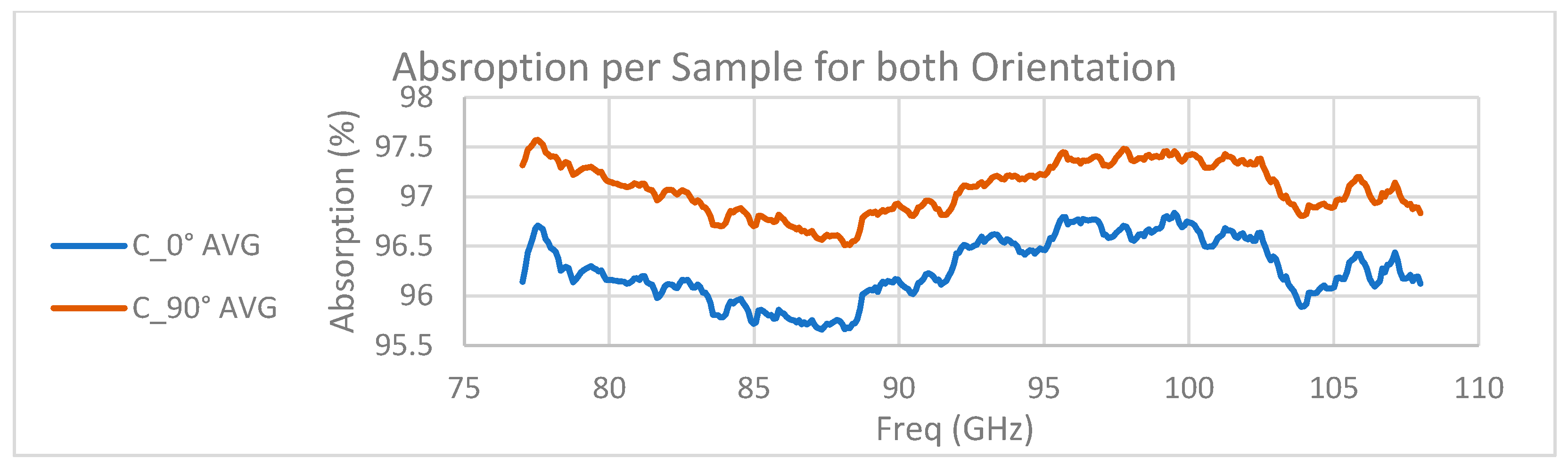
The following graphs depicts the absorption behavior over sampled frequencies. Figure 25 show the two different orientations (0 and 90°) of the samples. At Figure 26 averaged (over samples) absorption are compared at two orientations.

4. Discussion

In the far-field, a significant amount of radiation would have interacted with the surrounding material, which are not related to the animal tissue; reflections thereof could have arrived at the detector and complicated the analysis regarding the true interaction of radiation with the animal tissue. Hence, near-field analysis is much more preferable and clearer regarding the sort of data that we are looking for; thus, we have conducted only near-field analysis in this paper.
The S21 parameter representing attenuation in the passage through the medium indicates a high attenuation of −30 dB on average without significant dependence on reference points on the sample; however, small changes (in logarithmic scale) duly occur and they are correlated with the varying thickness of the sample across its area. The spectral behavior of the attenuation indicates monotonicity with a slightly higher attenuation at high frequencies at the 0-degree orientation (parallel to the direction of hair growth).
For a 90-degree orientation (horizontal polarization), higher variation can be seen between models, but on average, the attenuation at high frequencies is lower than that in the 80–90 GHz range.
The S11 parameter representing surface reflections indicates similar behavior in both polarizations. The values are between −10 and −20 dB, without significant frequency dependence for most samples, except for sample A at the 0-degree orientation, and sample O at the 90-degree orientation.
From the absorption calculations, it can be concluded that for the samples tested, absorption is significant in the skin and fat layer. The values for all samples range from 91% to 98% depending on the sample thickness. It should be noted that no significant dependence on frequency was observed.
To analyze the effect of orientation/polarization on absorption, a comparison of average absorption (between samples) at an orientation of 0 degrees versus an orientation of 90 degrees was performed. It can be seen that a consistent gap between 0.8% to 1.2% is maintained at all frequencies in favor of absorption at an orientation perpendicular to the hair direction (orientation 90).
In order to assess the dependence of radiation transfer as a function of the sample thickness, an S21 parametric analysis was performed at the reference points while mapping over the skin and fat thickness at the measurement point. The graphs in the figure show the distribution of the average values of radiation transfer (parameter S21) around different frequencies in the examined spectrum. The linear approximations calculated for the different samples show similar behavior at different frequencies when the radiation losses increase (from −20 dB to −35 dB) with the thickness of the sample at a rate of 15 dB per 1 cm, comparable to what is obtained in our previous mice skin studies [26], and what is known about a water-dominant volume [27]. The reader should consider the major shortcomings of ex vivo tissue analysis, in which the tissue is not connected to the bodies’ blood supply; nevertheless, we believe that the current analysis is a reasonable order-of-magnitude estimation of millimeter waves absorption and reflection even in in vivo scenarios, hence its importance for clinical applications.
In the context of the current research, we assess parameters for non-invasive cancer treatment by W-band irradiation. According to this method, both skin layers (dermis + fat) had to be considered since they could not be physically separated during the treatment, as such, we described the two layers as one continuous matter. A simple model for the power attenuated in the skin is
P = P 0 e α d d d e α F d F
in which P is the received power, P 0 is the transmitted power, α d is the dermis absorption coefficient, and α F is the fat absorption coefficient. Also, d d is the dermis thickness and d F is the fat thickness. In a natural logarithmic scale:
L o g ( P P 0 ) = α d d d α F d F
Still, we can deduce the relative importance of the ratio between the two layers. As seen in Figure 19, Figure 20, Figure 21, Figure 22, Figure 23 and Figure 24 (S21 measurements for representative frequencies), the dispersion of the measured points around the linear approximation becomes higher as the sample is thinner. The fat layer is more uniform than the dermis layer by formation and has a higher variance in thickness (1.5–9.75 mm). It is compared to the dermis layer thickness (1–3.25 mm) which is more heterogenic by spatial formation, e.g., color, texture, presence of hair follicles. Therefore, while assessing the distribution trend of the skin attenuation, one could expect some exceptions due to dermis spatial irregularities since this layer is irradiated first. The general attenuation should be affected by the fat layer, which is much thicker (~2.3 fold on average). According to this model, assessing the linear distribution by linear regression was applied to all data samples, followed by updated linear fit applied on the data after eliminating 25% of points, mostly irregularities from the initial fit.

5. Conclusions

Recommendations for Further Action

It is important to note the significant absorption rate in the skin and fat layer. It is not possible to calculate (based on the measurements performed) the contribution of each layer separately, but attenuation of over three orders of magnitude can be expected in penetration through the layer with a thickness of about 12 mm (−30 dB).
The reflectance from the skin is similar at all frequencies. The values range from −10 to −20 dB and probably depend on the texture of the skin. Therefore, most skin transfer loss is caused by absorption.
We plan to continue this study in order to analyze how long it takes to irradiate the cells to produce the expected clinical effect using the residual radiation (after attenuation and reflection) from a high-power gyrotron. Gyrotrons are high-power radiation devices [19]; a 95 GHz gyrotron with a ferroelectric cathode was developed in Ariel University by the group of Prof. Einat (one of the authors of the current paper) [28]. Later, how a 95 GHz mid-power gyrotron can be used for medical applications measurements was described [29]; furthermore, it was demonstrated that a 95 GHz gyrotron can operate with a room temperature direct current solenoid [30]. As the corona plague was globally spread, it was shown that corona and polio viruses are sensitive to short pulses of W-band gyrotron radiation [31]. Notice, however, that gyrotrons affect different materials that are not necessarily of biological origin; for example, it was recently shown that hard rocks efficiently absorb W-Band as well [32]. That being said, the reader should notice that there are alternatives for high-power W-Band radiation sources which are not gyrotrons. One example is the free electron laser (FEL) device, also operating in Ariel University. The first lasing was described in [33], and the characteristics of the radiation were described in [34].
At the same time, the temperature increase in the skin, including the epidermis, as a result of radiation absorption during irradiation should be examined. We speculate that using short pulses can mitigate the problem to a significant extent. Othe useful approaches include energy management strategies [35], which are directly related to thermal management requirements.
We also noticed that [36] studied the heat transfer characteristics of multi-U-shaped microchannel structures in liquid cooling plates for power batteries. Their work provides direct reference value for understanding the relationships between energy attenuation, heat dissipation, and material thickness in multi-layer media. This approach may inform the influence of skin and fat layer thickness on millimeter-wave absorption.
Based on the analysis, it will become clear what clinical results can be achieved in external irradiation cancer treatment. Alternatively, implications for developing a transmission line that penetrates the skin or an endoscope type of approach containing a flexible waveguides can be examined.

Author Contributions

Conceptualization, M.E., S.L.-A. and A.Y.; methodology, M.E. and S.L.-A.; formal analysis, Y.S. and A.S.; investigation, Y.S., A.S. and H.T.; resources, M.E. and A.Y.; data curation, Y.S. and A.S.; writing—original draft preparation, Y.S. and A.S.; writing—review and editing, A.Y.; visualization, Y.S. and A.S.; supervision, M.E., S.L.-A. and A.Y.; funding acquisition, M.E. and A.Y. All authors have read and agreed to the published version of the manuscript.

Funding

This research was partially funded by the Israeli Ministry of Health grant # 20230409 “Cancer treatment using millimeter waves”.

Institutional Review Board Statement

Not applicable.

Informed Consent Statement

Not applicable.

Data Availability Statement

The original contributions presented in this study are included in the article. Further inquiries can be directed to the corresponding author.

Acknowledgments

The authors thank Boris Litvak from the Faculty of Engineering for his assistance in preparing and operating a system for measuring network parameters.

Conflicts of Interest

The authors declare no conflicts of interest.

References

  1. Jemal, A.; Siegel, R.; Ward, E.; Hao, Y.; Xu, J.; Thun, M.J. Cancer statistics, 2009. CA Cancer J. Clin. 2009, 59, 225–249. [Google Scholar] [PubMed]
  2. Jemal, A.; Siegel, R.; Xu, J.; Ward, E. Cancer statistics, 2010. CA Cancer J. Clin. 2010, 60, 277–300. [Google Scholar] [CrossRef] [PubMed]
  3. Wao, H.; Mhaskar, R.; Kumar, A.; Miladinovic, B.; Djulbegovic, B. Survival of patients with non-small cell lung cancer without treatment: A systematic review and meta-analysis. Syst. Rev. 2013, 2, 10. [Google Scholar] [CrossRef] [PubMed]
  4. Miyoshi, N.; Idehara, T.; Khutoryan, E.; Fukunaga, Y.; Bibin, A.B.; Ito, S.; Sabchevski, S.P. Combined Hyperthermia and Photodynamic Therapy Using a Sub-THz Gyrotron as a Radiation Source. J. Infrared Millim. Terahertz Waves 2016, 37, 805–814. [Google Scholar] [CrossRef]
  5. Adey, W.R. Tissue Interactions with Nonionizing Electromagnetic Fields. Physiol. Rev. 1981, 61, 435–514. [Google Scholar] [CrossRef]
  6. Apollonio, F.; Liberti, M.; Paffi, A.; Merla, C.; Marracino, P.; Denzi, A.; Marino, C.; D’Inzeo, G. Feasibility for Microwaves Energy to Affect Biological Systems Via Nonthermal Mechanisms: A Systematic Approach. IEEE Trans. Microw. Theory Tech. 2013, 61, 2031–2045. [Google Scholar] [CrossRef]
  7. Pakhomov, A.G.; Akyel, Y.; Pakhomova, O.N.; Stuck, B.E.; Murphy, M.R. Current state and implications of research on biological effects of millimeter waves: A review of the literature. Bioelectromagnetics 1998, 19, 393–413. [Google Scholar] [CrossRef]
  8. Paffi, A.; Apollonio, F.; Lovisolo, G.A.; Marino, C.; Pinto, R.; Repacholi, M.; Liberti, M. Considerations for Developing an RF Exposure System: A Review for in vitro Biological Experiments. IEEE Trans. Microw. Theory Tech. 2010, 58, 2702–2714. [Google Scholar] [CrossRef]
  9. Fröhlich, H. Long-range coherence and energy storage in biological systems. Int. J. Quantum Chem. 1968, 2, 641–649. [Google Scholar] [CrossRef]
  10. Rojavin, M.A.; Ziskin, M.C. Medical application of millimetre waves. Int. J. Med. 1998, 91, 57–66. [Google Scholar]
  11. Jing, R.; Jiang, Z.; Tang, X. Advances in Millimeter-Wave Treatment and Its Biological Effects Development. Int. J. Mol. Sci. 2024, 25, 8638. [Google Scholar] [CrossRef] [PubMed]
  12. Logani, M.K.; Szabo, I.; Makar, V.; Bhanushali, A.; Alekseev, S.; Ziskin, M.C. Effect of millimeter wave irradiation on tumor metastasis. Bioelectromagnetics 2006, 27, 258–264. [Google Scholar] [CrossRef] [PubMed]
  13. Zhao, R.; Liu, Y.; Liu, S.; Luo, T.; Zhong, G.Y.; Liu, A.; Zeng, Q.; Xin, S.X. Apoptosis-Promoting Effects on A375 Human Melanoma Cells Induced by Exposure to 35.2-GHz Millimeter Wave. Technol. Cancer Res. Treat. 2020, 19, 1533033820934131. [Google Scholar] [CrossRef] [PubMed] [PubMed Central]
  14. Komoshvili, K.; Levitan, J.; Aronov, S.; Kapilevich, B.; Yahalom, A. Millimeter Waves Non-Thermal Effect on Human Lung Cancer Cells. In Proceedings of the 3rd International IEEE Conference on Microwaves, Communications, Antennas and Electronic Systems (COMCAS 2011), Tel Aviv, Israel, 7–9 November 2011; p. 1D2-2. [Google Scholar]
  15. Komoshvili, K.; Becker, T.; Levitan, J.; Yahalom, A.; Barbora, A.; Liberman-Aronov, S. Morphological Changes in H1299 Human Lung Cancer Cells Following W-Band Millimeter-Wave Irradiation. Appl. Sci. 2020, 10, 3187. [Google Scholar] [CrossRef]
  16. Furman, O.; Komoshvili, K.; Levitan, J.; Yahalom, A.; Marks, H.; Borodin, D.; Liberman-Aronov, S. The Lack of Toxic Effect of High-Power Short-Pulse 101 GHz Millimeter Waves on Healthy Mice. Bioelectromagnetics 2020, 41, 188–199. [Google Scholar] [CrossRef]
  17. Komoshvili, K.; Israel, K.; Levitan, J.; Yahalom, A.; Barbora, A.; Liberman-Aronov, S. W-Band Millimeter Waves Targeted Mortality of H1299 Human Lung Cancer Cells without Affecting Non-Tumorigenic MCF-10A Human Epithelial Cells In Vitro. Appl. Sci. 2020, 10, 4813. [Google Scholar] [CrossRef]
  18. Barbora, A.; Rajput, S.; Komoshvili, K.; Levitan, J.; Yahalom, A.; Liberman-Aronov, S. Non-Ionizing Millimeter Waves Non-Thermal Radiation of Saccharomyces cerevisiae—Insights and Interactions. Appl. Sci. 2021, 11, 6635. [Google Scholar] [CrossRef]
  19. Hruszowiec, M.; Czarczyński, W.; Pliński, E.F.; Więckowski, T. Gyrotron Technology. J. Telecommun. Inf. Technol. 2014, 1, 68–76. [Google Scholar] [CrossRef]
  20. Saunders, S.R.; Aragón-Zavala, A.A. Antennas and Propagation for Wireless Communication Systems, 3rd ed.; Wiley: New York, NY, USA, 2024; 752p, ISBN 978-1-119-33219-0. [Google Scholar]
  21. Capozzoli, A.; Curcio, C.; D’agostino, F.; Liseno, A. A Review of the Antenna Field Regions. Electronics 2024, 13, 2194. [Google Scholar] [CrossRef]
  22. Fusco, V.F. Foundations of Antenna Theory and Techniques; Pearson India: Pallavaram Chennai, India, 2007. [Google Scholar]
  23. Goldsmith, P.F. Chap. 2: Gaussian Beam Propagation. In Quasioptical Systems: Gaussian Beam Quasioptical Propagation and Applications; IEEE Press: New York, NY, USA, 1998. [Google Scholar]
  24. Murphy, J.A.; McCabe, M.; Withington, S. Murphy, Gaussian beam mode analysis of the coupling of power between horn antennas. Int. J. Infrared Millim. Waves 1997, 18, 501–518. [Google Scholar] [CrossRef]
  25. Goldsmith, P.F. Chap. 4: Gaussian Beam Coupling, eq. 4.25, 4.30, 4.32. In Quasioptical Systems: Gaussian Beam Quasioptical Propagation and Applications; IEEE Press: New York, NY, USA, 1998. [Google Scholar]
  26. Aronov, S.; Einat, M.; Furman, O.; Pilossof, M.; Komoshvili, K.; Ben-Moshe, R.; Yahalom, A.; Levitan, J. Millimeter-wave insertion loss of mice skin. J. Electromagn. Waves Appl. 2017, 32, 758–767. [Google Scholar] [CrossRef]
  27. Jiang, J.H.; Wu, D.L. Ice and Water Permittivities for Millimeter and Sub-millimeter Remote Sensing Applications. Atmos. Sci. Lett. 2004, 5, 146–151. [Google Scholar] [CrossRef]
  28. Einat, M.; Pilossof, M.; Ben-Moshe, R.; Hirshbein, H.; Borodin, D. 95 GHz gyrotron with ferroelectric cathode. Phys. Rev. Lett. 2012, 109, 185101. [Google Scholar] [CrossRef] [PubMed]
  29. Pilossof, M.; Einat, M. A 95 GHz mid-power gyrotron for medical applications measurements. Rev. Sci. Instrum. 2015, 86, 016113. [Google Scholar] [CrossRef]
  30. Pilossof, M.; Einat, M. 95-GHz Gyrotron With Room Temperature Dc Solenoid. IEEE Trans. Electron Devices 2018, 65, 3474–3478. [Google Scholar] [CrossRef]
  31. Kaczmarczyk, L.S.; Marsay, K.S.; Shevchenko, S.; Pilossof, M.; Levi, N.; Einat, M.; Oren, M.; Gerlitz, G. Corona and polio viruses are sensitive to short pulses of W-band gyrotron radiation. Environ. Chem. Lett. 2021, 19, 3967–3972. [Google Scholar] [CrossRef]
  32. Shteinman, A.; Anker, Y.; Einat, M. Hard Rock Absorption Measurements in the W-Band. J. Infrared Millim. Terahertz Waves 2024, 45, 808–830. [Google Scholar] [CrossRef]
  33. Gover, A.; Faingersh, A.; Eliran, A.; Volshonok, M.; Kleinman, H.; Wolowelsky, S.; Yakover, Y.; Kapilevich, B.; Lasser, Y.; Seidov, Z.; et al. Radiation measurements in the new tandem accelerator FEL. Nucl. Instrum. Methods A 2004, 528, 23–27. [Google Scholar] [CrossRef]
  34. Socol, Y.; Gover, A.; Eliran, A.; Volshonok, M.; Pinhasi, Y.; Kapilevich, B.; Yahalom, A.; Lurie, Y.; Kanter, M.; Einat, M.; et al. Coherence limits and chirp control in long pulse free electron laser oscillator. Phys. Rev. Spéc. Top.—Accel. Beams 2005, 8, 080701. [Google Scholar] [CrossRef]
  35. Zhang, Y.; Xu, S.; Song, Y.; Qi, W.; Guo, Q.; Li, X.; Kong, L.; Chen, J. Real-Time Global Optimal Energy Management Strategy for Connected PHEVs Based on Traffic Flow Information. IEEE Trans. Intell. Transp. Syst. 2024, 25, 20032–20042. [Google Scholar] [CrossRef]
  36. Qi, W.; Lan, P.; Yang, J.; Chen, Y.; Zhang, Y.; Wang, G.; Peng, F.; Hong, J. Multi-U-Style micro-channel in liquid cooling plate for thermal management of power batteries. Appl. Therm. Eng. 2024, 256, 123984. [Google Scholar] [CrossRef]
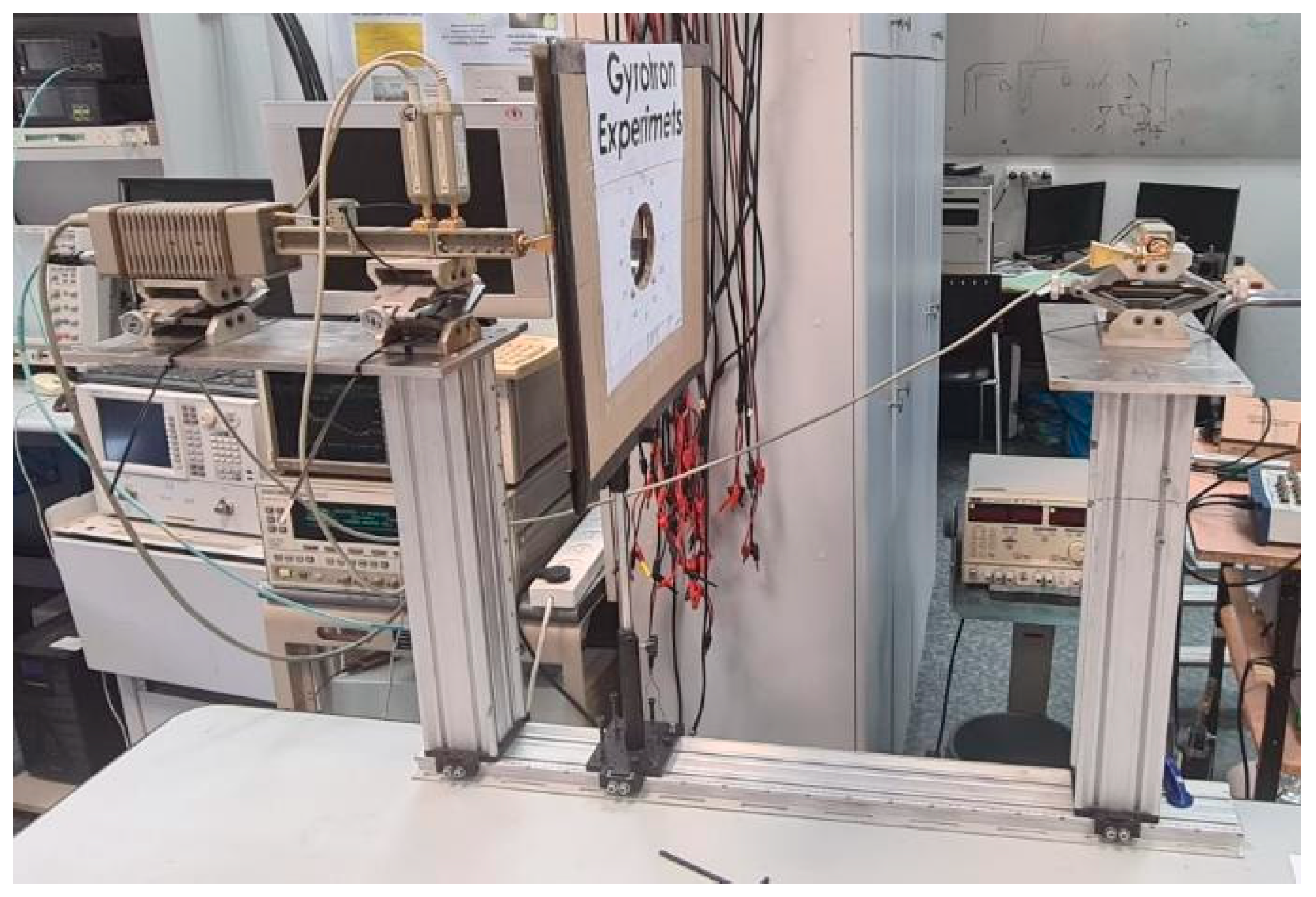
Figure 1. The experimental setup.
Eng 07 00067 g001
Figure 2. Connection diagram of the experimental setup.
Eng 07 00067 g002
Figure 3. Skin alignment.
Eng 07 00067 g003
Figure 4. Antenna structure diagram and the distances which must be considered.
Eng 07 00067 g004
Figure 5. Antenna dimensions breakdown—the highlighted line highlights the antenna used in the experiment (as per antenna’s OEM datasheet).
Eng 07 00067 g005
Figure 6. Calculation of spot size on the sample at the far-field boundary.
Eng 07 00067 g006
Figure 7. The skin samples after cutting before embedding them in Petri dishes.
Eng 07 00067 g007
Figure 8. Reference points on a Petri dish in two different samples.
Eng 07 00067 g008
Figure 9. Measurements of skin thickness and fat thickness. (A) Measuring the thickness of the sample in a Petri dish. (B) Estimating the skin thickness of the sample. (C) Auxiliary device for measuring the height of the skin surface using a caliper.
Eng 07 00067 g009
Figure 10. Samples ready for measurement.
Eng 07 00067 g010
Figure 11. Structure of the measurement setup built for the experiment.
Eng 07 00067 g011
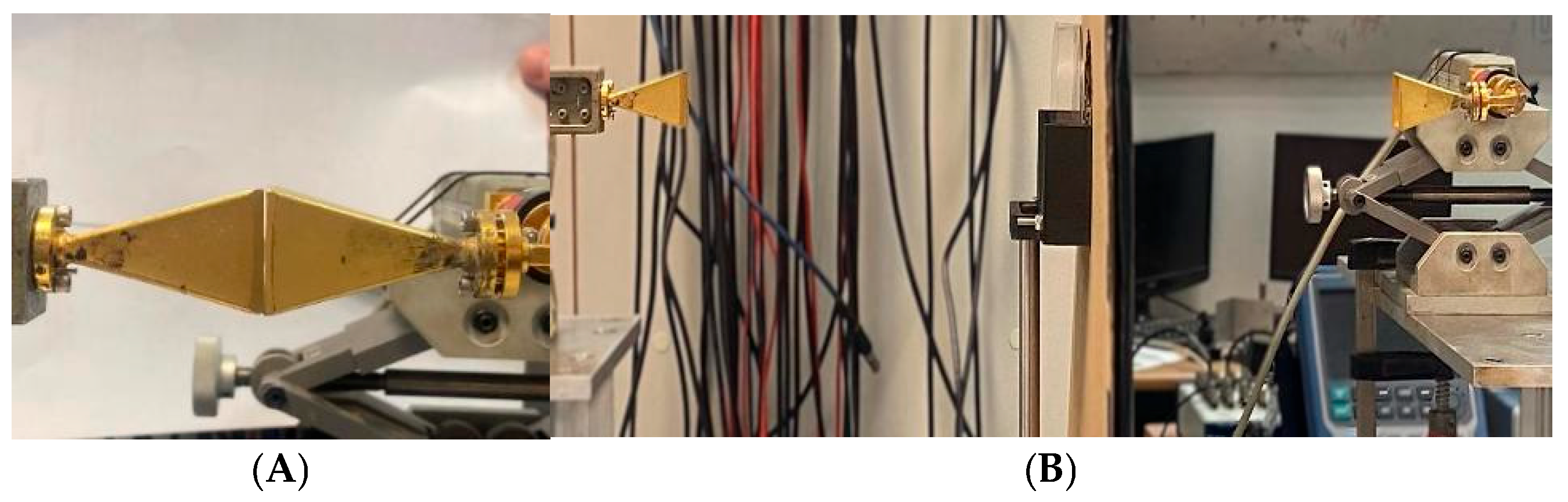
Figure 12. Resetting the measurement array. Image (A) shows the adjustment in the position of the receiving and transmitting antennas when the antenna posts and platforms were attached to the rail. Image (B) shows the complete array, including an empty Petri dish. Inside the fixture on the sample column, the isolation screen (which blocks transmission around the sample) was installed around the sample and was used to calibrate the measurements.
Eng 07 00067 g012
Figure 13. Array calibration measurement for S21.
Eng 07 00067 g013
Figure 14. Example of lateral displacement of the sample relative to the antenna axis. The right image (a) shows the array when the antenna axis passes through the center of the sample, and the left images (b,c) show the situation in which the sample has been moved to the right, relative to the antenna axis (the central image from the transmitting antenna side and the left image from the receiving antenna side).
Eng 07 00067 g014
Figure 15. Example of rotation in S11 measurement. In the right image, (a) the sample can be seen in a 90-degree orientation while in the left image. (b) The same sample can be seen in a 0-degree orientation.
Eng 07 00067 g015
Figure 16. Raw measurement S21: Measurements at the center of the sample. (A) Zero-degree orientation, (B) 90-degree orientation. The burgundy line shows the average over the measurements along the frequency axis.
Eng 07 00067 g016
Figure 17. Raw measurement S21: 0-degree orientation. (A) Measurements shifted to the right. (B) Measurements shifted to the left. The burgundy line shows the average over the measurements along the frequency axis.
Eng 07 00067 g017
Figure 18. Raw measurement S11: Measurements at the center of the sample. (A) Zero-degree orientation, (B) 90-degree orientation. The light blue line shows the average over the measurements along the frequency axis.
Eng 07 00067 g018
Figure 19. S21 measurement around 80 GHz frequency vs. sample thickness.
Eng 07 00067 g019
Figure 20. S21 measurement around 85 GHz frequency vs. sample thickness.
Eng 07 00067 g020
Figure 21. S21 measurement around 90 GHz frequency vs. sample thickness.
Eng 07 00067 g021
Figure 22. S21 measurement around 95 GHz frequency vs. sample thickness.
Eng 07 00067 g022
Figure 23. S21 measurement around 100 GHz frequency vs. sample thickness.
Eng 07 00067 g023
Figure 24. S21 measurement around 105 GHz frequency vs. sample thickness.
Eng 07 00067 g024
Figure 25. Calculation of absorption in all samples tested. (A) Zero-degree orientation, (B) 90-degree orientation.
Eng 07 00067 g025
Figure 26. Comparison between the two orientations. The lines are an average of the absorption values between all samples according to the measurement frequency.
Eng 07 00067 g026
Table 1. Summary of distances for measurements for each frequency.
Frequency (GHz)Wavelength (mm)Far-Field Limit (mm)Reactive Near-Field Limit (mm)
754477.653.27
953.15860559.95
1102.72770064.51
Table 2. Beam cross-section at different frequencies versus sample size—85 mm.
Frequency (GHz)BW (Degrees)Far-Field Limit (mm)Spot Size (mm)
7510.35477.686.54
958.1760586.46
1107.0670086.35
Table 3. Analysis of the dispersion of S21 values for representative frequency bands segmented by sample thickness at the measurement point.
Sort by Skin Width Average Average AverageAverageAverageAverage
S_00_L M_00_R
S_00_C C_00_L M_00_CM_00_LO_00_LO_00_C
D_00_LD_00_CS_00_RA_00_CA_00_RA_00_LB_00_RB_00_CC_00_RB_00_LC_00_CO_00_R
Skin Width [mm]122.12522.52.52.522.52.752.53.25
Fat Width [mm]21.51.875334.55.56.56.57.258.59.75
Skin + Fat Width [mm]33.5455.5788.59101113
Name ReferenceDDSAAAB+CBM+CM+BO+CO
avg79.9875−22.175−28.276−31.065−22.529−24.342−27.153−30.081−22.659−32.276−29.042−31.096−31.797
Sta.Dev 0.0090.0971.9790.0310.1220.0501.5220.0170.2101.0010.9950.107
avg85.01875−22.395−26.385−31.659−22.571−23.041−27.075−28.847−24.292−32.659−28.960−32.046−32.546
Sta.Dev 0.0450.1261.3280.0420.0270.1172.6790.1650.3330.6770.2180.050
avg90.00625−23.211−25.526−31.934−24.102−24.268−25.055−28.277−28.647−32.468−28.834−32.385−33.034
Sta.Dev 0.0410.0281.0800.1510.0640.1192.7240.3180.4640.0190.4780.035
avg94.99375−23.188−27.158−32.488−28.011−25.248−25.117−29.578−32.487−33.111−30.514−33.929−33.823
Sta.Dev 0.0750.1301.8950.3100.0350.0932.8030.0630.7130.5410.0130.047
avg99.98125−21.293−30.078−32.844−31.538−25.109−27.491−30.214−31.294−33.844−32.917−34.172−34.102
Sta.Dev 0.1550.1301.5370.1430.0730.1653.3050.1870.4970.9750.3900.149
avg105.0125−18.364−30.402−31.656−31.785−23.726−28.647−28.263−28.989−32.090−31.246−31.934−32.375
Sta.Dev 0.1790.1780.7670.0540.0930.0393.1270.1640.1470.2970.1170.033
Table 4. Summary of the fitting parameters of the two different fits for each frequency for the full set and the 75% reduced set.
Freq [GHz]Slope [dB/GHz]Relative Update [%]Constant Term [dB]Relative Update [%]
12 Points Data Set9 Points Data Set 12 Points Data Set9 Points Data Set
80−0.65−0.8124.92−23.00−22.203.48
85−1.01−0.7921.74−19.70−21.9511.42
90−0.81−0.9821.47−22.26−20.348.63
95−0.82−1.0123.26−23.49−21.946.60
100−0.80−0.5235.01−24.56−27.4011.56
105−0.68−0.5815.27−24.14−24.883.07
average 23.61 7.46
STD 4.24 3.08
Disclaimer/Publisher’s Note: The statements, opinions and data contained in all publications are solely those of the individual author(s) and contributor(s) and not of MDPI and/or the editor(s). MDPI and/or the editor(s) disclaim responsibility for any injury to people or property resulting from any ideas, methods, instructions or products referred to in the content.