

Effect of Varying Child Restraint System Seatback Angle on Spinal Loading of 1.5 YO and 3 YO PIPER Human Body Models in Frontal Impacts


Abstract
1. Introduction
2. Materials and Methods
2.1. Occupant Models
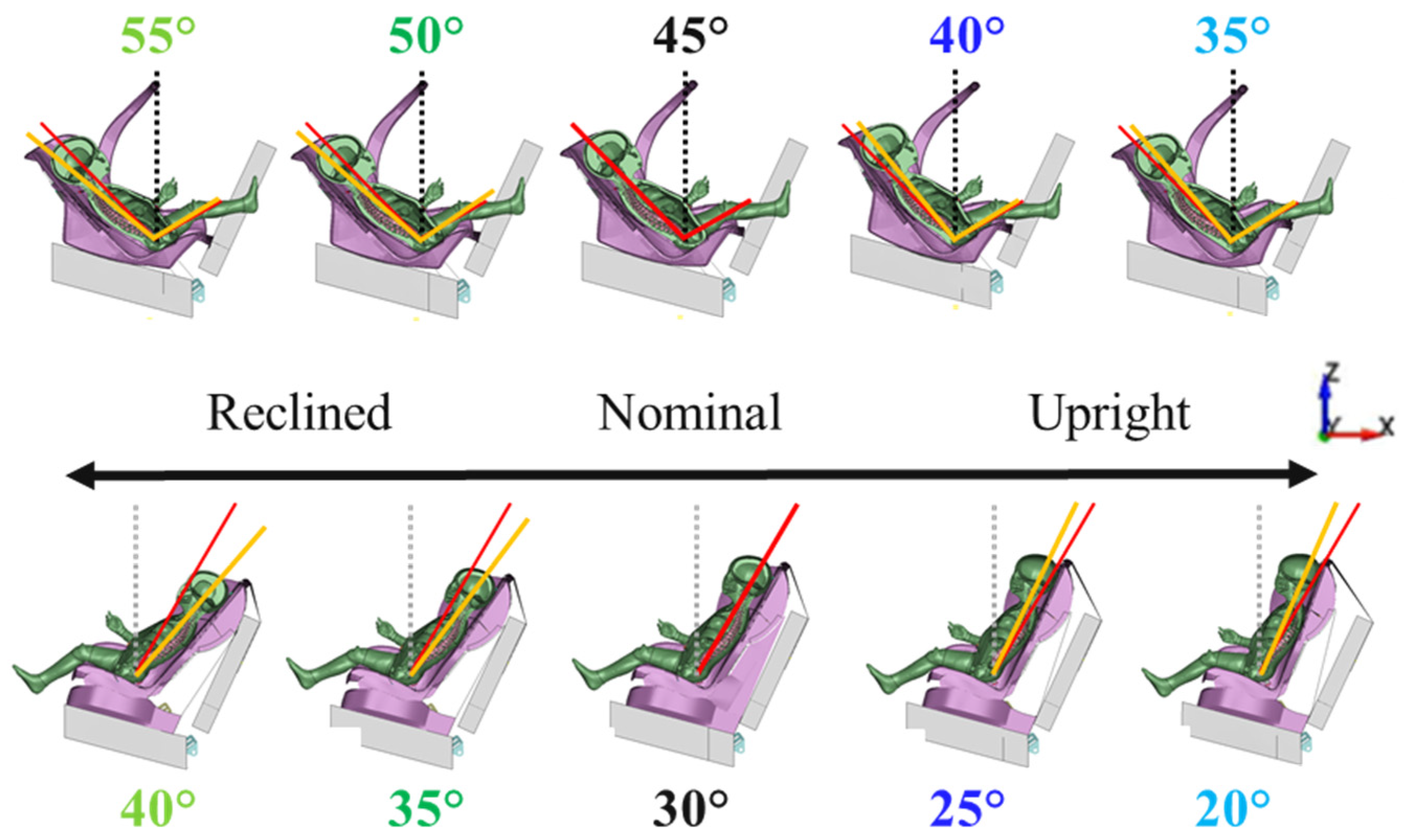
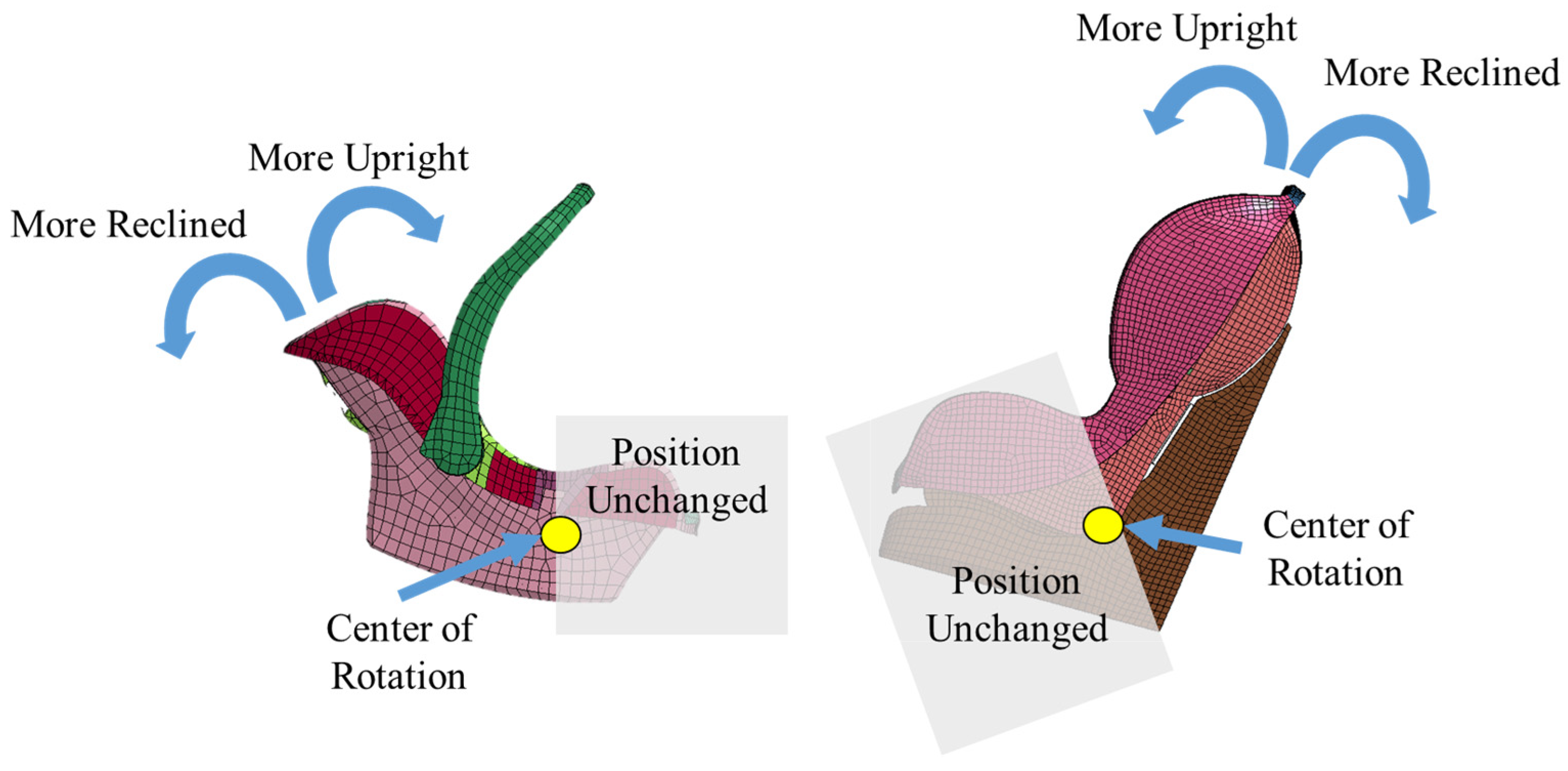
2.2. CRS and Test Fixture Models—Initial Conditions
3. Results
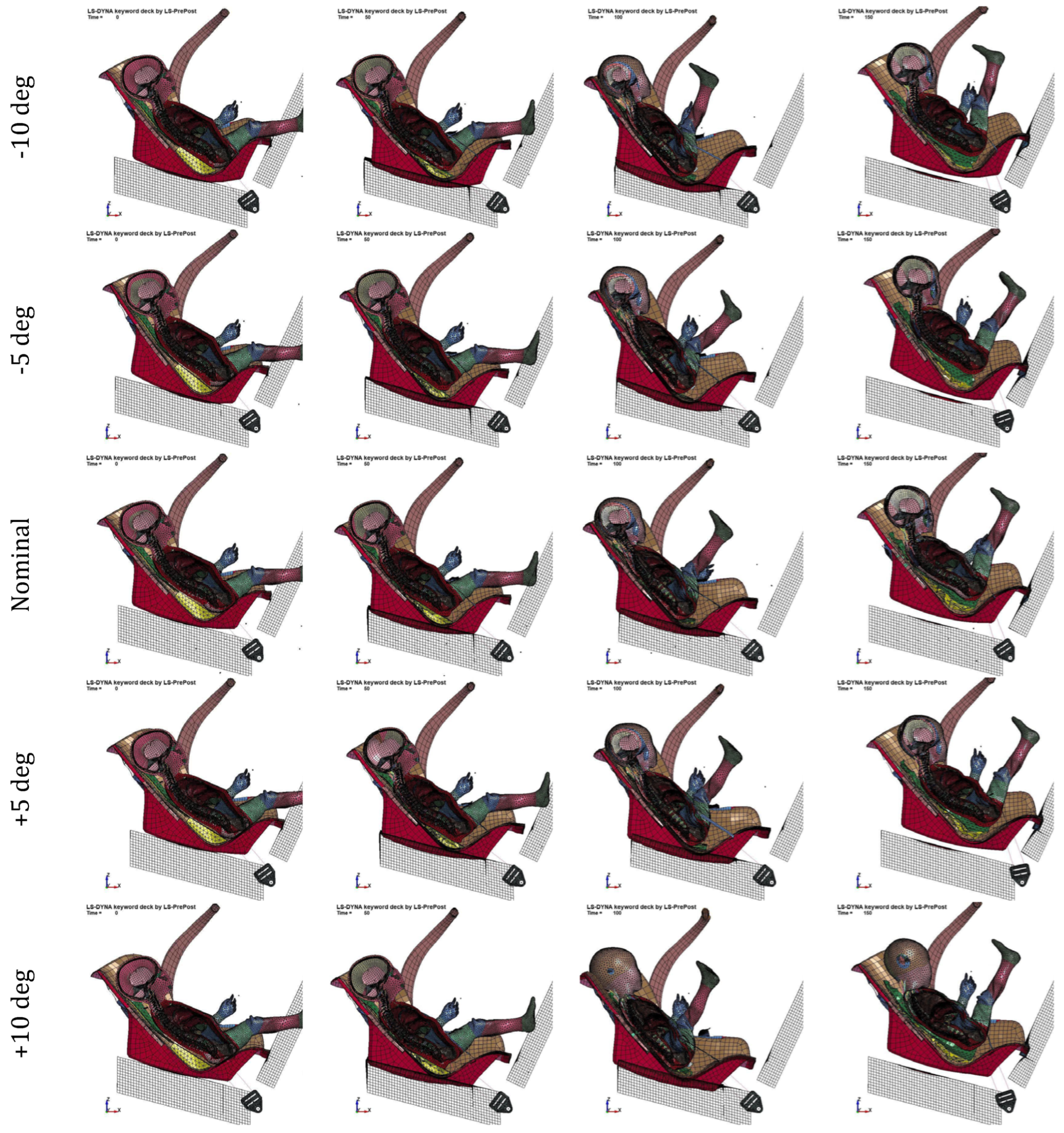
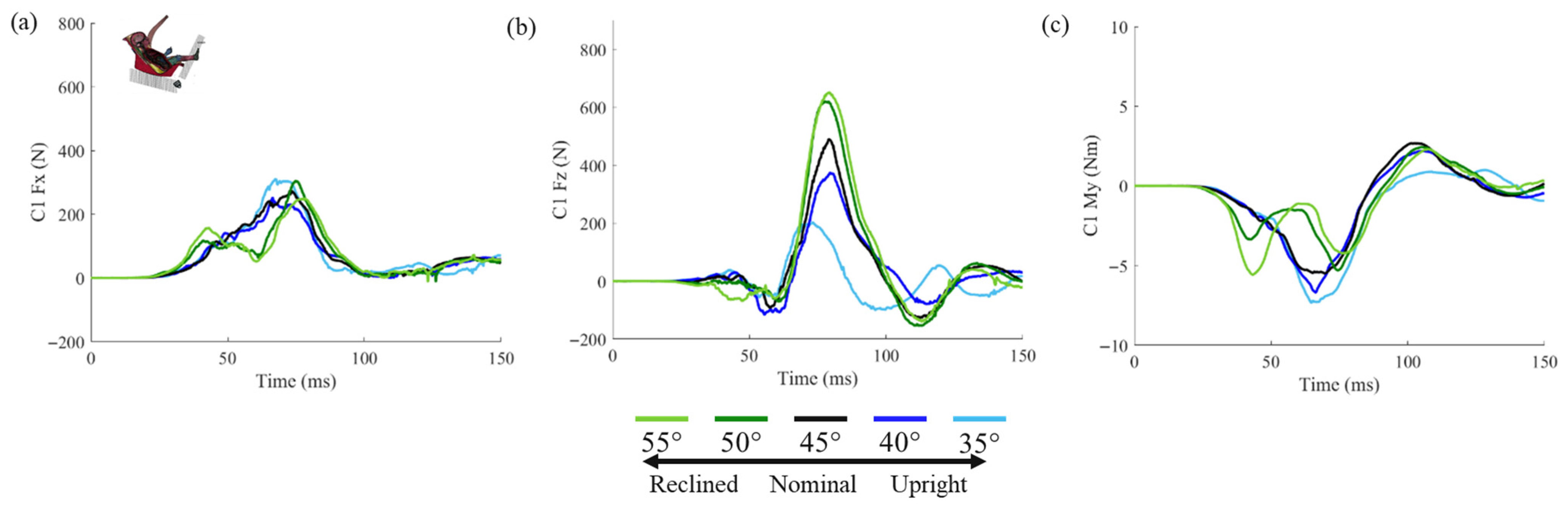
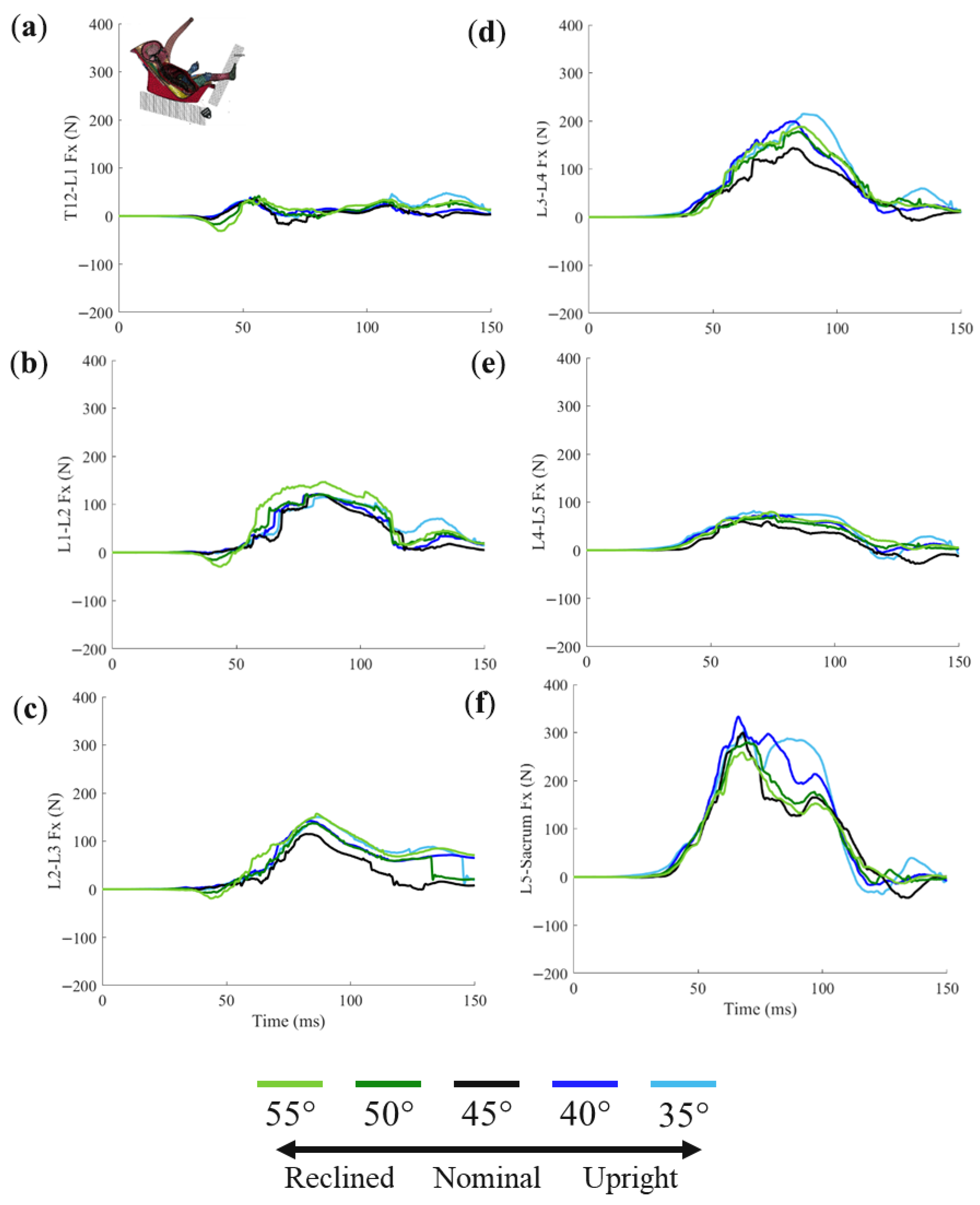
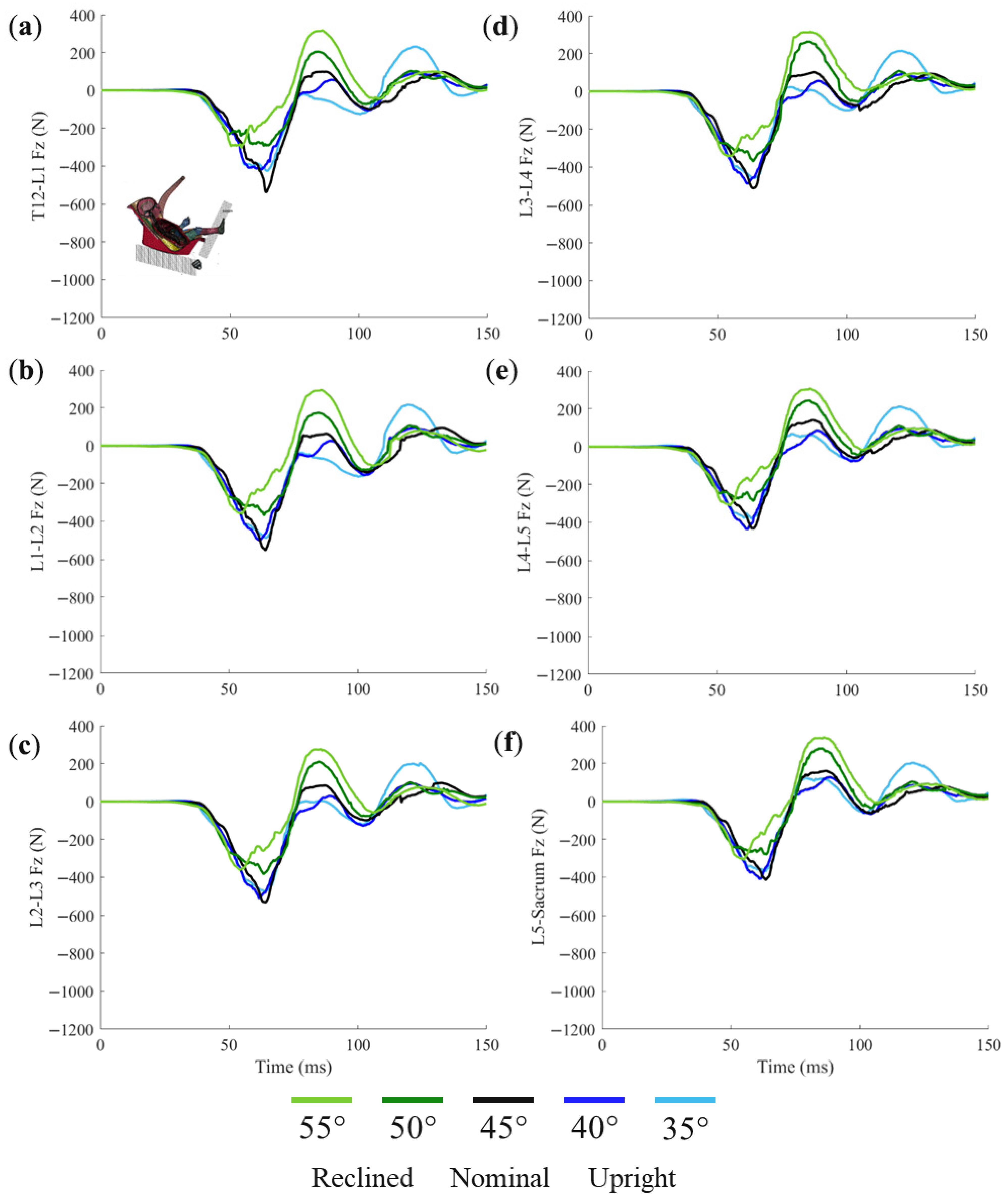
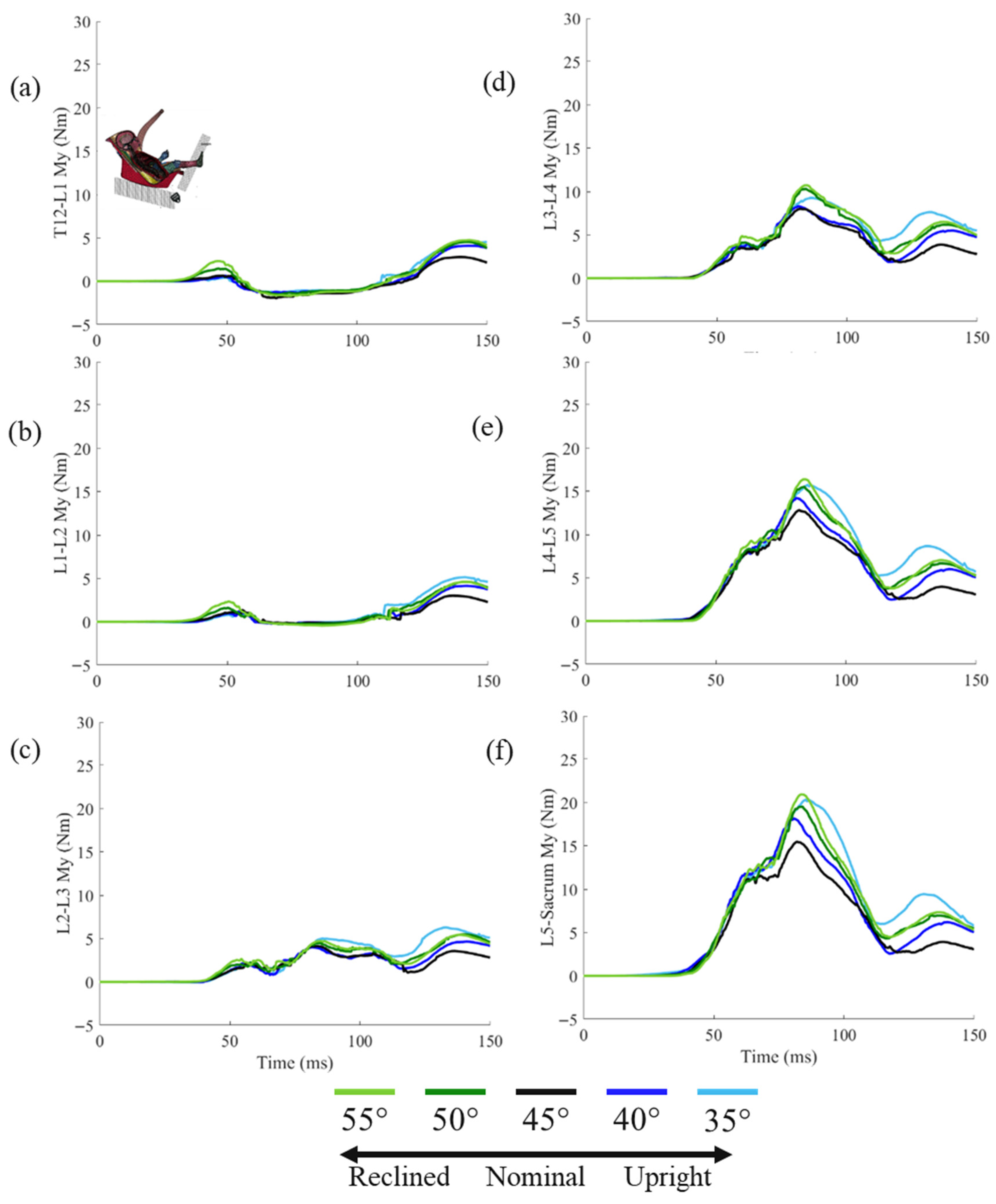
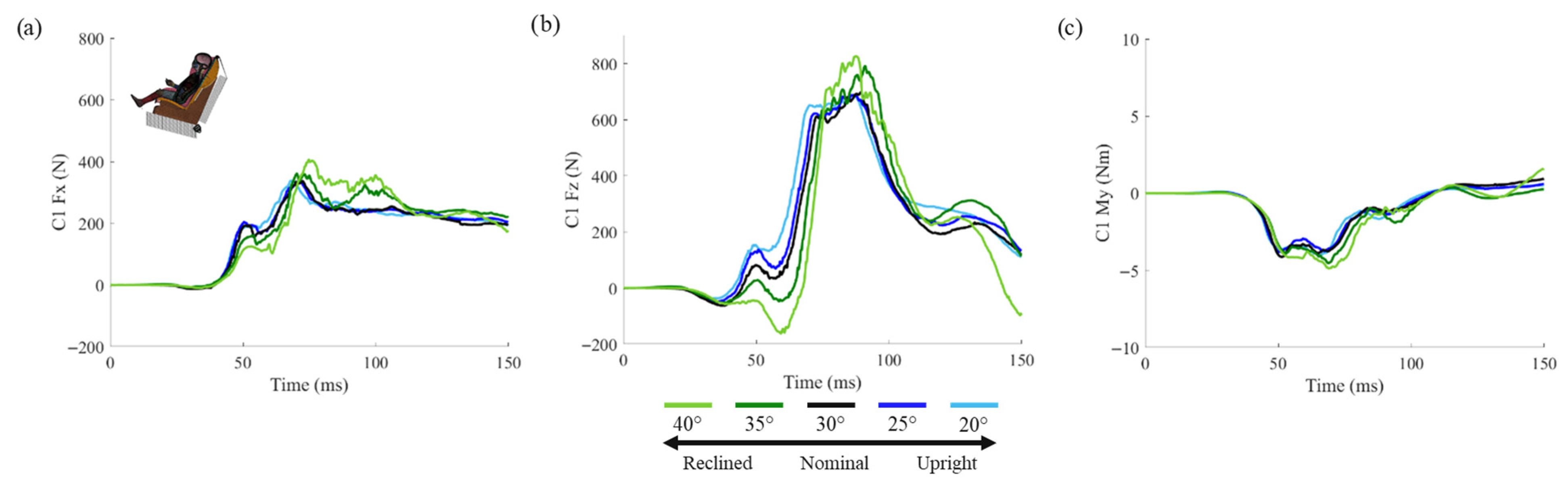
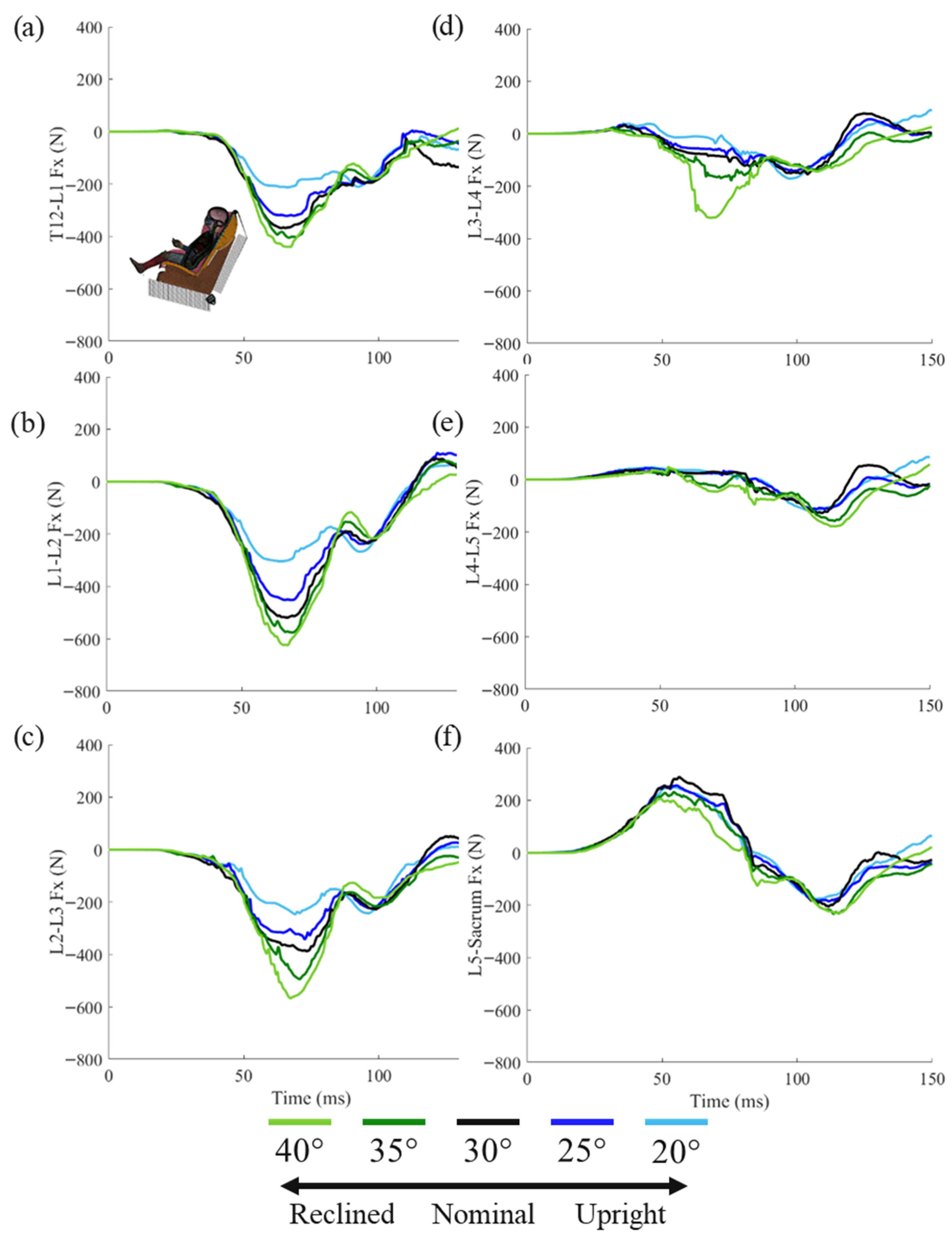
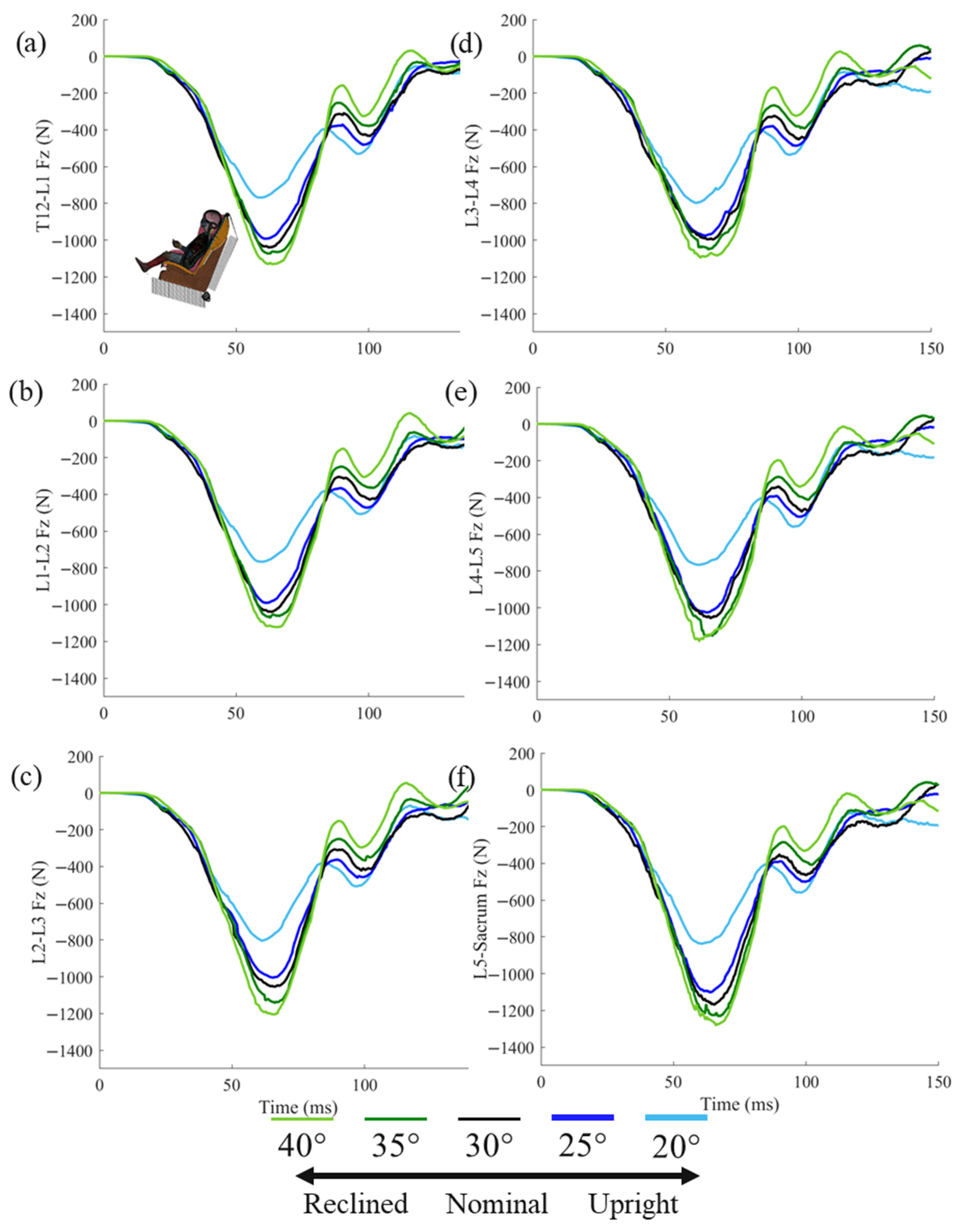
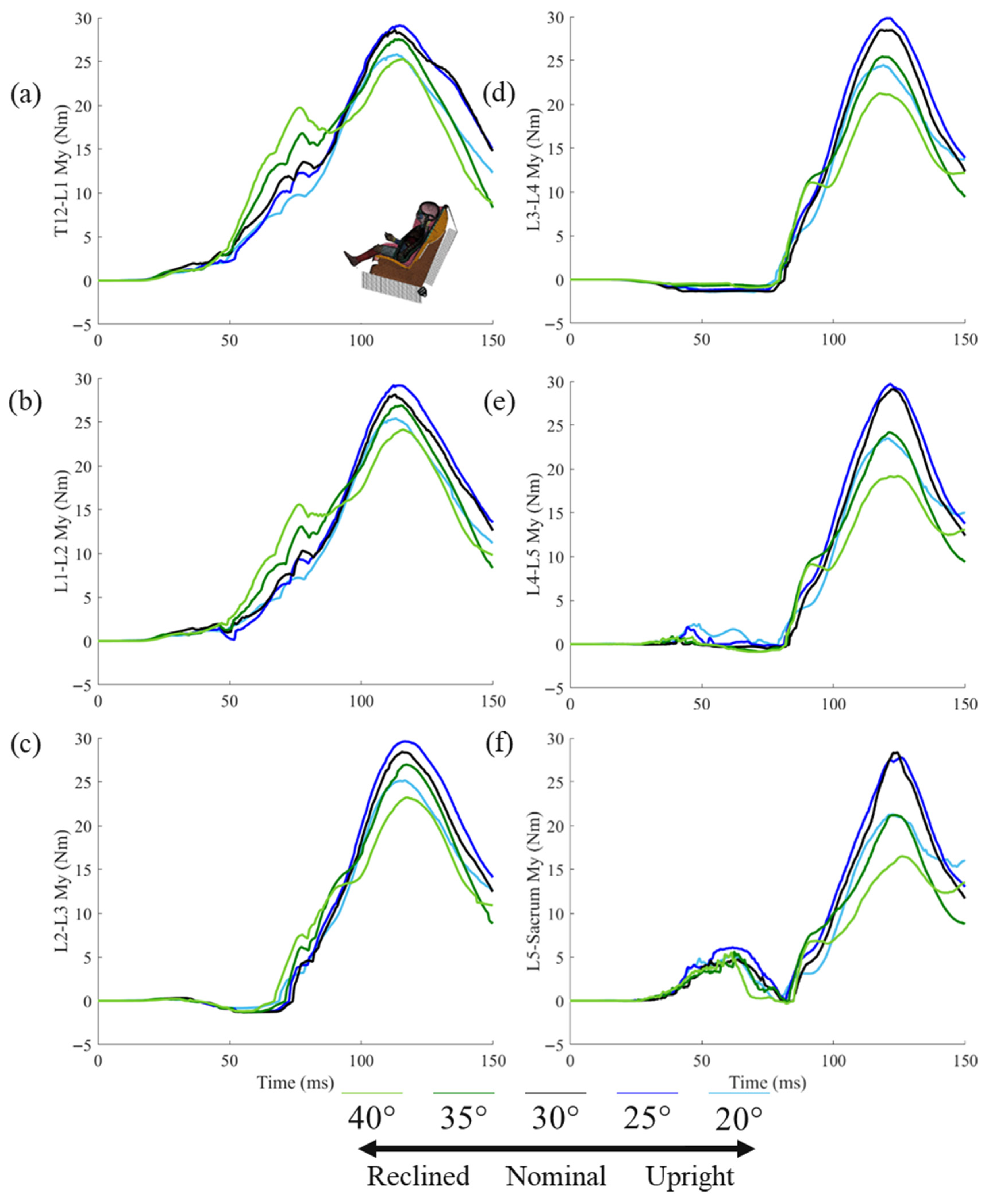
3.1. Rear-Facing CRS with the 1.5 YO
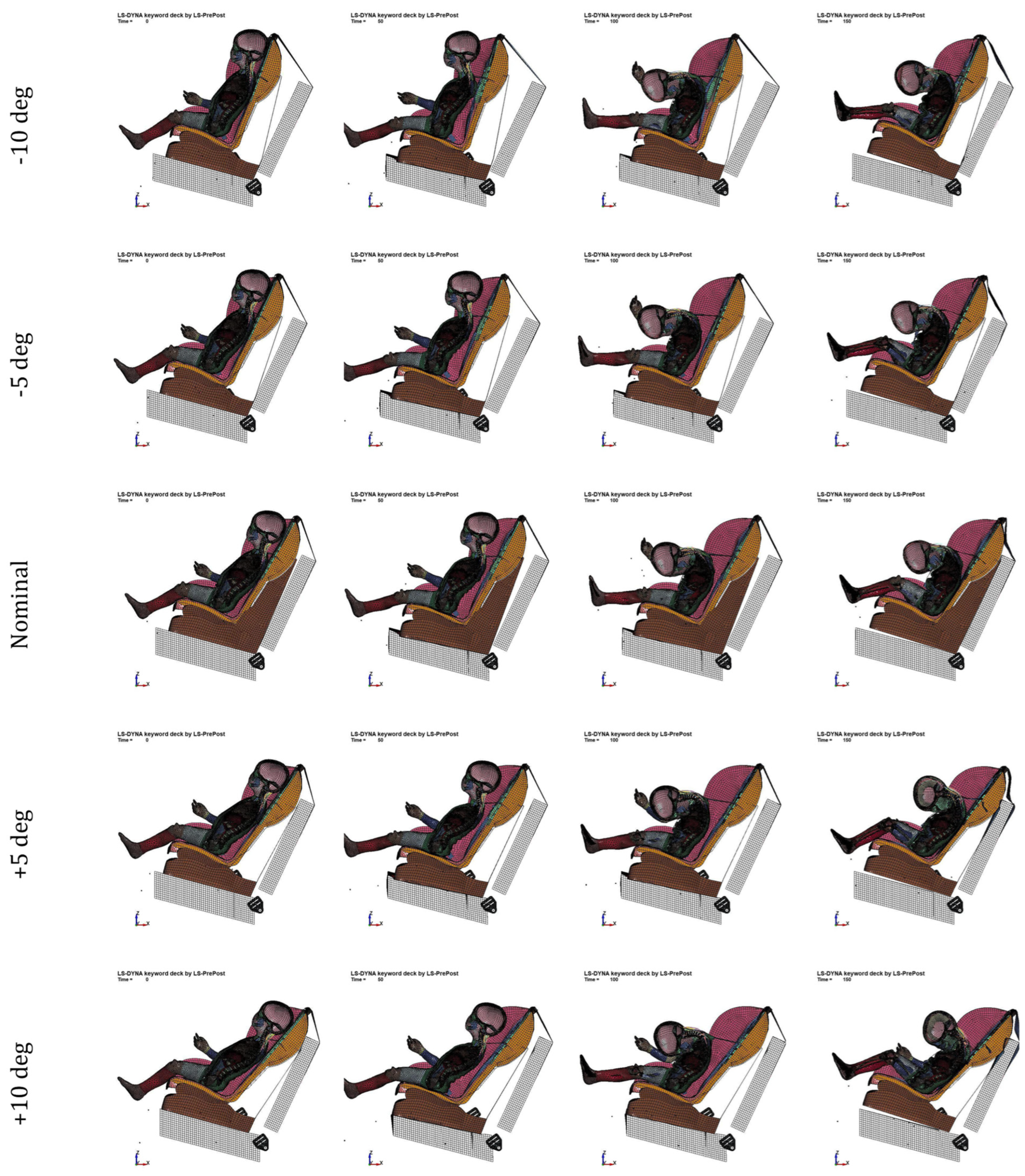
3.2. Forward-Facing CRS with the 3 YO
4. Discussion
4.1. Rear-Facing CRS with the 1.5 YO
4.2. Forward-Facing CRS with the 3 YO
4.3. Limitations
4.4. Summary
Author Contributions
Funding
Institutional Review Board Statement
Informed Consent Statement
Data Availability Statement
Conflicts of Interest
Abbreviations
| CRS | Child Restraint System |
| MVC | Motor Vehicle Crashes |
| WHO | World Health Organization |
| RF | Rear Facing |
| FF | Forward Facing |
| HBM | Human Body Model |
| EU | European Union |
| CT | Computed Tomography |
| YO | Years Old |
| NHTSA | National Highway Traffic Safety Administration |
| CDC | Centers for Disease and Control |
| AAP | American Academy of Pediatrics |
| UN-ECE | United Nations Economic Commission for Europe |
| PMHS | Post-Mortem Human Subject |
| ATD | Anthropomorphic Test Device |
References
- Global Status Report on Road Safety 2023, 1st ed.; World Health Organization: Geneva, Switzerland, 2023.
- Villavicencio, F.; Perin, J.; Eilerts-Spinelli, H.; Yeung, D.; Prieto-Merino, D.; Hug, L.; Sharrow, D.; You, D.; Strong, K.L.; Black, R.E.; et al. Global, regional, and national causes of death in children and adolescents younger than 20 years: An open data portal with estimates for 2000–21. Lancet Glob. Health 2024, 12, e16–e17. [Google Scholar] [CrossRef]
- Zaloshnja, E.; Miller, T.R.; Hendrie, D. Effectiveness of Child Safety Seats vs Safety Belts for Children Aged 2 to 3 Years. Arch. Pediatr. Adolesc. Med. 2007, 161, 65. [Google Scholar] [CrossRef]
- Brown, J.K.; Jing, Y.; Wang, S.; Ehrlich, P.F. Patterns of severe injury in pediatric car crash victims: Crash Injury Research Engineering Network database. J. Pediatr. Surg. 2006, 41, 362–367. [Google Scholar] [CrossRef]
- Hanna, R. Children Injured in Motor Vehicle Crashes; National Highway Traffic Safety Administration: Washington, DC, USA, 2010. [Google Scholar]
- Zonfrillo, M.R.; Locey, C.M.; Scarfone, S.R.; Arbogast, K.B. Motor Vehicle Crash–Related Injury Causation Scenarios for Spinal Injuries in Restrained Children and Adolescents. Traffic Inj. Prev. 2014, 15, S49–S55. [Google Scholar] [CrossRef]
- Stanford Children’s Health. Infant Sleep; Stanford Children’s Health: Palo Alto, CA, USA, 2025. [Google Scholar]
- Moon, R.Y. Task Force on Sudden Infant Death Syndrome. SIDS and other sleep-related infant deaths: Updated 2016 recommendations for a safe infant sleeping environment. Pediatrics 2016, 138, e20162938. [Google Scholar] [CrossRef]
- Davis, N.L.; Shah, N. Use of car beds for infant travel: A review of the literature. J. Perinatol. 2018, 38, 1287–1294. [Google Scholar] [CrossRef] [PubMed]
- Nahum, A.M.; Melvin, J.W.; Yoganandan, N. (Eds.) Accidental Injury: Biomechanics and Prevention, 3rd ed.; Springer: New York, NY, USA, 2015. [Google Scholar]
- Gepner, B.; Draper, D.; Mroz, K.; Richardson, R.; Ostling, M.; Pipkorn, B.; Forman, J.; Kerrigan, J. Comparison of Human Body Models in Frontal Crashes with Reclined. In Proceedings of the International Research Conference on the Biomechanics of Impact, IRCOBI, Florence, Italy, 11–13 September 2019. [Google Scholar]
- Rawska, K.; Gepner, B.; Moreau, D.; Kerrigan, J. Submarining sensitivity across varied seat configurations in autonomous driving system environment. Traffic Inj. Prev. 2020, 21, S1–S6. [Google Scholar] [CrossRef] [PubMed]
- Richardson, R.; Jayathirtha, M.; Chastain, K.; Donlon, J.-P.; Forman, J.; Gepner, B.; Östling, M.; Mroz, K.; Shaw, G.; Pipkorn, B.; et al. Thoracolumbar spine kinematics and injuries in frontal impacts with reclined occupants. Traffic Inj. Prev. 2020, 21, S66–S71. [Google Scholar] [CrossRef] [PubMed]
- Shin, J.; Donlon, J.P.; Richardson, R.; Espelien, C.; Sochor, S.; Gallaher, M.; Luong, V.; Gepner, B.; Forman, J.; Östling, M.; et al. Comparison of thoracolumbar spine kinematics and injuries in reclined frontal impact sled tests between mid-size adult female and male PMHS. Accid. Anal. Prev. 2023, 193, 107334. [Google Scholar] [CrossRef]
- Sherwood, C.P.; Shaw, C.G.; Van Rooij, L.; Kent, R.W.; Crandall, J.R.; Orzechowski, K.M.; Eichelberger, M.R.; Kallieris, D. Prediction of Cervical Spine Injury Risk for the 6-Year-Old Child in Frontal Crashes. Traffic Inj. Prev. 2003, 4, 206–213. [Google Scholar] [CrossRef]
- Ash, J.; Sherwood, S.; Abdelilah, Y.; Crandall, J.; Parent, D.; Kallieris, D. Comparison of anthropomorphic test dummies with a pediatric cadaver restrained by a three-point belt in frontal sled tests. In Proceedings of the 21st International Technical Conference on the Enhanced Safety of Vehicles (ESV) Conference, Stuttgart, Germany, 15–18 June 2009. [Google Scholar]
- Lopez-Valdes, F.J.; Forman, J.; Kent, R.; Bostrom, O.; Segui-Gomez, M. A comparison between a child-size PMHS and the Hybrid III 6 YO in a sled frontal impact. Ann. Adv. Automot. Med. 2009, 53, 237–246. [Google Scholar]
- Lopez-Valdes, F.J.; Lau, S.; Riley, P.; Lamp, J.; Kent, R. The biomechanics of the pediatric and adult human thoracic spine. Ann. Adv. Automot. Med. 2011, 55, 193–206. [Google Scholar]
- Lopez-Valdes, F.J.; Seacrist, T.; Arbogast, K.B.; Balasubramanian, S.; Maltese, M.R.; Tanji, H.; Higuchi, K.; Kent, R. A Methodology to Estimate the Kinematics of Pediatric Occupants in Frontal Impacts. Traffic Inj. Prev. 2012, 13, 393–401. [Google Scholar] [CrossRef]
- Seacrist, T.; Balasubramanian, S.; Garcia-Espana, J.F.; Maltese, M.R.; Arbogast, K.B.; Lopez-Valdes, F.J.; Kent, R.W.; Tanji, H.; Higuchi, K. Kinematic Comparison of Pediatric Human Volunteers and the Hybrid III 6-Year-Old Anthropomorphic Test Device. Ann. Adv. Automot. Med. 2010, 54, 97–108. [Google Scholar] [PubMed]
- Seacrist, T.; Arbogast, K.B.; Maltese, M.R.; Garcia-Espana, J.F.; Lopez-Valdes, F.J.; Kent, R.W.; Tanji, H.; Higuchi, K.; Balasubramanian, S. Kinetics of the cervical spine in pediatric and adult volunteers during low speed frontal impacts. J. Biomech. 2012, 45, 99–106. [Google Scholar] [CrossRef] [PubMed]
- Beillas, P.; Giordano, C.; Alvarez, V.; Li, X.; Ying, X.; Chevalier, M.-C.; Kirscht, S.; Kleiven, S. Development and performance of the PIPER scalable child human body models. In Proceedings of the 14th International Conference on the Protection of Children in Cars, Munich, Germany, 8–9 December 2016; p. 19. [Google Scholar]
- Beillas, P.; Wang, X.; Lafon, Y.; Frechede, B.; Janak, T.; Dupeux, T.; Mear, M.; Pacquaut, G.; Chevalier, M.-C.; Le Ruyet, A. PIPER EU Project Final Publishable Summary; IFSTTAR-Institut Français des Sciences et Technologies des Transports, de l’Aménagement et des Réseaux: Marne-la-Vallée, France, 2017. [Google Scholar]
- Jolivet, E.; Lafon, Y.; Petit, P.; Beillas, P. Comparison of Kriging and Moving Least Square Methods to Change the Geometry of Human Body Models. Stapp Car Crash J. 2015, 59, 337–357. [Google Scholar] [CrossRef] [PubMed]
- Giordano, C.; Li, X.; Kleiven, S. Performances of the PIPER scalable child human body model in accident reconstruction. PLoS ONE 2017, 12, e0187916. [Google Scholar] [CrossRef]
- Miller, M.; Perez-Rapela, D.; Gepner, B.; Edwards, M.; Jermakian, J.; Forman, J. A methodology for large-scale parametric evaluation of child booster seats. In Proceedings of the IRCOBI Conference, Online, 1–2 June 2021; pp. 593–615. [Google Scholar]
- Zhang, X.; Gao, J.; Tu, W. Parameter Study for Child Booster Seats in Frontal Collisions. Appl. Sci. 2023, 13, 2206. [Google Scholar] [CrossRef]
- Ouyang, J.; Zhu, Q.; Zhao, W.; Xu, Y.; Chen, W.; Zhong, S. Biomechanical assessment of the pediatric cervical spine under bending and tensile loading. Spine 2005, 30, 716. [Google Scholar] [CrossRef]
- CLEPA Proposal for the 04 Series of Amendments to UN Regulation No. 129 (Enhanced Child Restraint Systems); CLEPA: Geneva, Switzerland, 2020.
- Luck, J.F.; Nightingale, R.W.; Loyd, A.M.; Prange, M.T.; Dibb, A.T.; Song, Y.; Fronheiser, L.; Myers, B.S. Tensile mechanical properties of the perinatal and pediatric PMHS osteoligamentous cervical spine. Stapp Car Crash J. 2008, 52, 107–134. [Google Scholar]
- Valdano, M.; Asensio-Gil, J.M.; Jiménez-Octavio, J.R.; Cabello-Reyes, M.; Vasserot-Tolmos, R.; López-Valdés, F.J. Parametric Analysis of the Effect of CRS Seatback Angle in Dummy Measurements in Frontal Impacts. In Proceedings of the IRCOBI Conference, Porto, Portugal, 14–16 September 2022. [Google Scholar]
- Visvikis, C.; Thurn, C.; Kettner, M.; Müller, T. The effect of chin-to-chest contact on upper neck axial force in UN Regulation No. 129 frontal impact tests of child restraint systems. Traffic Inj. Prev. 2020, 21, S173–S176. [Google Scholar] [CrossRef] [PubMed]
- Arbogast, K.B.; Cornejo, R.A.; Kallan, M.J.; Winston, F.K.; Durbin, D.R. Injuries to children in forward facing child restraints. Annu. Proc. Assoc. Adv. Automot. Med. 2002, 46, 213–230. [Google Scholar]
- Bohman, K.; Arbogast, K.B.; Boström, O. Head Injury Causation Scenarios for Belted, Rear-Seated Children in Frontal Impacts. Traffic Inj. Prev. 2011, 12, 62–70. [Google Scholar] [CrossRef] [PubMed]
- Tushak, S.K.; Gepner, B.D.; Forman, J.L.; Hallman, J.J.; Pipkorn, B.; Kerrigan, J.R. Human Lumbar Spine Injury Risk in Dynamic Combined Compression and Flexion Loading. Ann. Biomed. Eng. 2023, 51, 1216–1225. [Google Scholar] [CrossRef] [PubMed]



| RF CRS | FF CRS | |
|---|---|---|
| CRS and test bench | 0.45 | 0.45 |
| 5-point harness and HBM | 0.20 | 0.30 |
| Seat belt and RF CRS | 0.30 | -- |
| Seat belt and anchorages in RF CRS | 1D slipring | -- |
| Top tether and FF CRS, bench | -- | 0.20 |
| Top tether and anchorages in FF CRS | -- | 1D slipring |
| HBM and test bench | 0.45 | 0.45 |
Disclaimer/Publisher’s Note: The statements, opinions and data contained in all publications are solely those of the individual author(s) and contributor(s) and not of MDPI and/or the editor(s). MDPI and/or the editor(s) disclaim responsibility for any injury to people or property resulting from any ideas, methods, instructions or products referred to in the content. |
© 2026 by the authors. Licensee MDPI, Basel, Switzerland. This article is an open access article distributed under the terms and conditions of the Creative Commons Attribution (CC BY) license.
Share and Cite
Tushak, S.K.; Valdano, M.; Kerrigan, J.R.; Lopez-Valdes, F.J. Effect of Varying Child Restraint System Seatback Angle on Spinal Loading of 1.5 YO and 3 YO PIPER Human Body Models in Frontal Impacts. Eng 2026, 7, 61. https://doi.org/10.3390/eng7020061
Tushak SK, Valdano M, Kerrigan JR, Lopez-Valdes FJ. Effect of Varying Child Restraint System Seatback Angle on Spinal Loading of 1.5 YO and 3 YO PIPER Human Body Models in Frontal Impacts. Eng. 2026; 7(2):61. https://doi.org/10.3390/eng7020061
Chicago/Turabian StyleTushak, Sophia K., Manuel Valdano, Jason R. Kerrigan, and Francisco J. Lopez-Valdes. 2026. "Effect of Varying Child Restraint System Seatback Angle on Spinal Loading of 1.5 YO and 3 YO PIPER Human Body Models in Frontal Impacts" Eng 7, no. 2: 61. https://doi.org/10.3390/eng7020061
APA StyleTushak, S. K., Valdano, M., Kerrigan, J. R., & Lopez-Valdes, F. J. (2026). Effect of Varying Child Restraint System Seatback Angle on Spinal Loading of 1.5 YO and 3 YO PIPER Human Body Models in Frontal Impacts. Eng, 7(2), 61. https://doi.org/10.3390/eng7020061