
Abstract
A commercially available attapulgite sample (Red Attapulgite) was acid-pretreated to enhance its catalytic activity. It turned out to efficiently facilitate the dehydration of a range of substituted alcohols. The dehydration of the primary alcohol was conducted at 150–180 °C, which represents energy-saving conditions when taking into account the typical dehydration conditions of primary alcohols with temperatures of >300 °C. The alkene yields obtained in this study were found to be comparable to those when utilizing commercially available montmorillonite as catalysts, thereby underscoring the potential of the acid-pretreated attapulgite as a catalyst for a variety of reactions. In a parallel study, dehydration catalyzed by a range of Brønsted acids was investigated. However, only two of these acids were found to be suitable for the dehydration of primary alcohols. Nevertheless, these acids lacked both dehydration activity and recyclability. Therefore, a recyclability study was conducted in the presence of the acid-pretreated attapulgite sample. It is remarkable that no loss of activity was found over five cycles. We hypothesize that after acid-pretreatment, a synergistic effect of the Brønsted and Lewis acid sites is the cause for the high catalytic activity of the sample.
1. Introduction
The chemical industry is currently undergoing a transition from the use of fossil-based materials to the utilization of renewable alternatives [1]. In terms of the basis of carbon-based feedstocks in the future, renewable resources, such as cellulose or CO2 from the atmosphere, represent a promising feedstock option [2]. In today’s chemical industry, alkenes such as ethylene and propylene, as well as homologous molecules such as butylene and hexene, represent the major classes of molecules in demand [3]. A typical route for obtaining hexenes is by refining crude oil, which, however, will become increasingly limited in the near future due to the depletion of oil reservoirs as well as sustainability reasons. An alternative approach for production of hexenes is the Fischer–Tropsch synthesis [4,5]. However, Fischer–Tropsch synthesis suffers from various disadvantages or currently existing challenges, which include the need for very high temperatures [6] as well as low catalyst stability [7], activity [8], and selectivity [8].
An alternative approach towards hexenes with high potential also in terms of sustainability combines artificial photosynthesis under consumption of CO2 in combination with water splitting, followed by microbial fermentation and subsequent dehydration [9]. In detail, in a first step CO2 is converted to syngas in an artificial photosynthesis step, as demonstrated already on a pilot scale by Siemens and Evonik, together with the subsequent microbial fermentation of syngas under the formation of 1-hexanol [10]. The catalytic dehydration of 1-hexanol then leads to hexenes, which can either be used as an intermediate for the synthesis of chemicals or for the production of fuel by further oligomerization. The dehydration of primary alcohols is typically accompanied by harsh reaction conditions, such as temperatures > 300 °C and stoichiometric usage of catalysts [11]. Recently Vorholt et al. [12] presented a study for the dehydration of primary alcohols using phosphoric acid, leading to dehydration at reduced temperature of 200 °C. Yet, mostly ether formation with almost neglectable formation of alkenes was observable. In our recent study of homogenous Brønsted and Lewis acids as catalysts for this type of dehydration of primary alcohols [9], we have been able to further decrease the temperature to 140–160 °C, while having high alkene yields exceeding 80% with purities of >90% when utilizing Lewis acids as a catalyst under such mild energy-saving temperatures [9]. Within a further study [13], we identified Brønsted acids with comparable yields to these Lewis acids. Ether formation was first observed below a pKa of −2, while at a pKa of −14 (TfOH) alkenes were obtained and the resulting yields matched those of Lewis acids.
In a further study, Mansell et al. investigated the dehydration of linear and branched alcohols under similar energy-efficient conditions [14]. They identified Hf(OTf)4, Fe(OTf)3, and HOTf as the most active catalysts for converting 1-hexanol. For the branched alcohol 2-methyl-1-butanol, lower selectivities in batch reactions led to the implementation of a continuous flow setup, which led to alkene productions with up to 98% purity at a rate of 2.1 g/h [14].
While homogenous catalysts have been intensively investigated for the dehydration of primary alcohols, the use of heterogenous catalysts under energy-saving conditions with temperatures being below 200 °C remains a challenge. Heterogeneous catalysts may exhibit reduced activity due to mass transfer limitations and higher pKa values. However, the ability to recycle heterogeneous catalysts represents a significant advantage over homogenous catalysts. While higher pKa values might be present in heterogeneous catalysts, the presence of acidic as well as basic moieties observed in clay catalysts may enhance the catalytic performance because this might result in a synergistic interaction of these two catalytic sites, resulting in a bifunctional catalyst with a dual activation of 1-hexanol (or, in general, any other substrate) in the elimination step. With this hypothesis as a basis, our recent research has focused on catalysts that possess both Brønsted and Lewis acid sites, since we expected that the acidic site activates the hydroxy group while the basic site facilitates cleavage of the C-H bond in β-position, thus enabling the elimination step in an efficient manner.
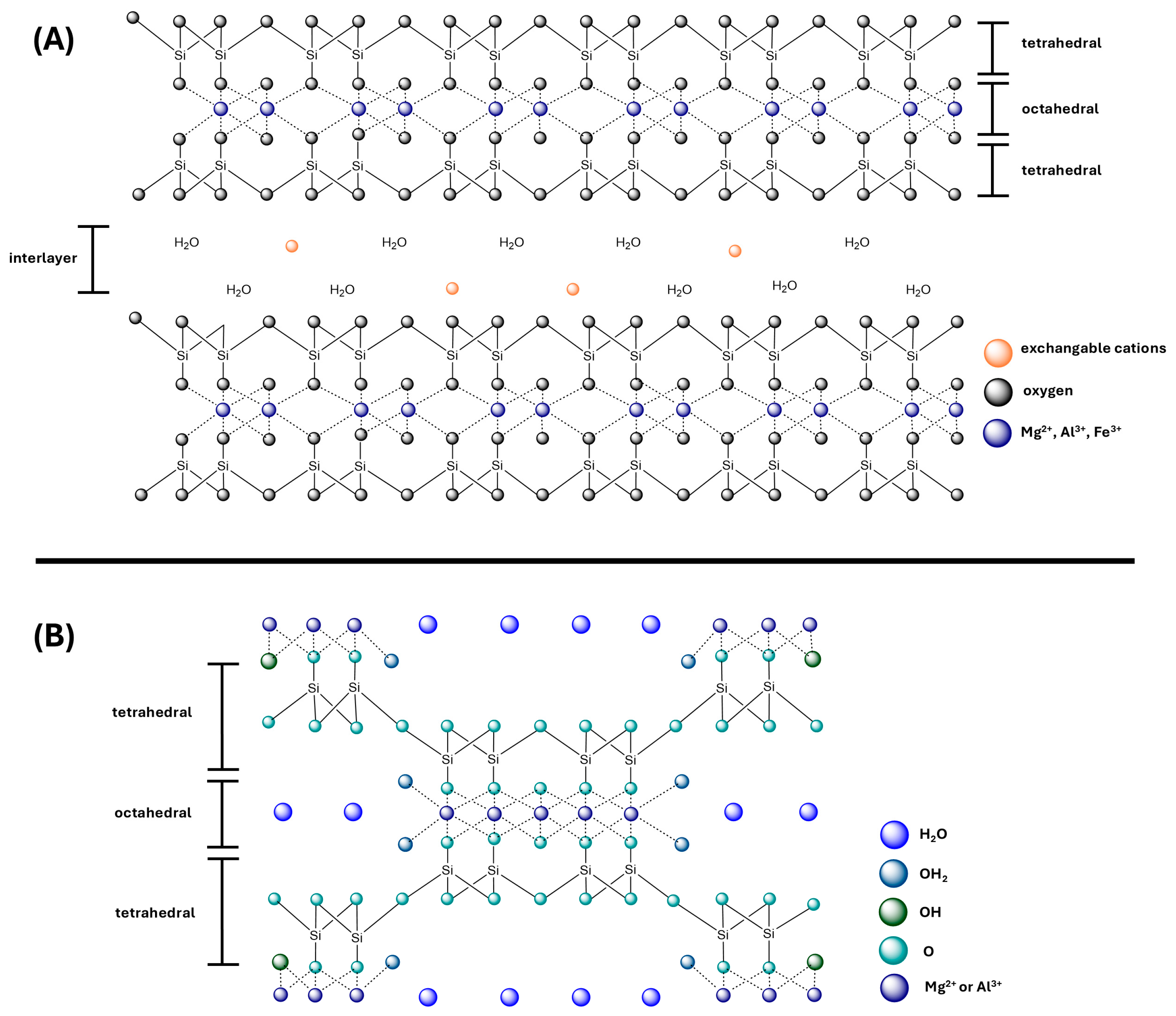
Thus, we have been interested in clays [15,16], montmorillonites [17,18], and attapulgites [19,20] as possible catalysts for the targeted dehydration of 1-hexanol, as these can exhibit both Brønsted as well as Lewis acid sites. Both montmorillonites and attapulgites belong to the phyllosilicates group and differentiate themselves in composition and structure, as well as their physical properties. While montmorillonites form fine, plate-like structures, attapulgites have a fibrous morphology. Montmorillonites have a 2:1 TOT structure consisting of an octahedral alumina sheet between two tetrahedral silica layers. The ideal half-cell chemical formula for montmorillonites is M0.33, H2OAl1.67(Fe2+, Mg2+)0.33 Si4O10(OH)2, where M is a metal cation in the interlayer space between TOT sheets. The tetrahedral cations are Si4+ and the octahedral ones are mostly Al3+, Fe2+, and Mg2+. In the octahedral sheets, Al3+ is mainly replaced by Fe2+ and Mg2+, creating an excess of negative charge in the structure (Figure 1A) [21]. On the other hand, the ideal half-cell chemical formula for attapulgites is (Mg2Al2)Si8O20(OH)2(OH2)4∙4H2O. Attapulgites consist of eight Si-O tetrahedrons arranged in a 2:1 layer that extends along the C-axis. Similarly to montmorillonites, the tetrahedral cations are Si4+ and the octahedral cations are Mg2+ and Al3+ ions. The octahedral structure is formed by -O- and -OH. Two layers of Si-O sandwich either a layer of Mg2+ or Al3+, creating pores parallel to the C-axis (Figure 1B) [16].
Figure 1.
Schematical structure of montmorillonites [15] (A) and attapulgites [16] (B).
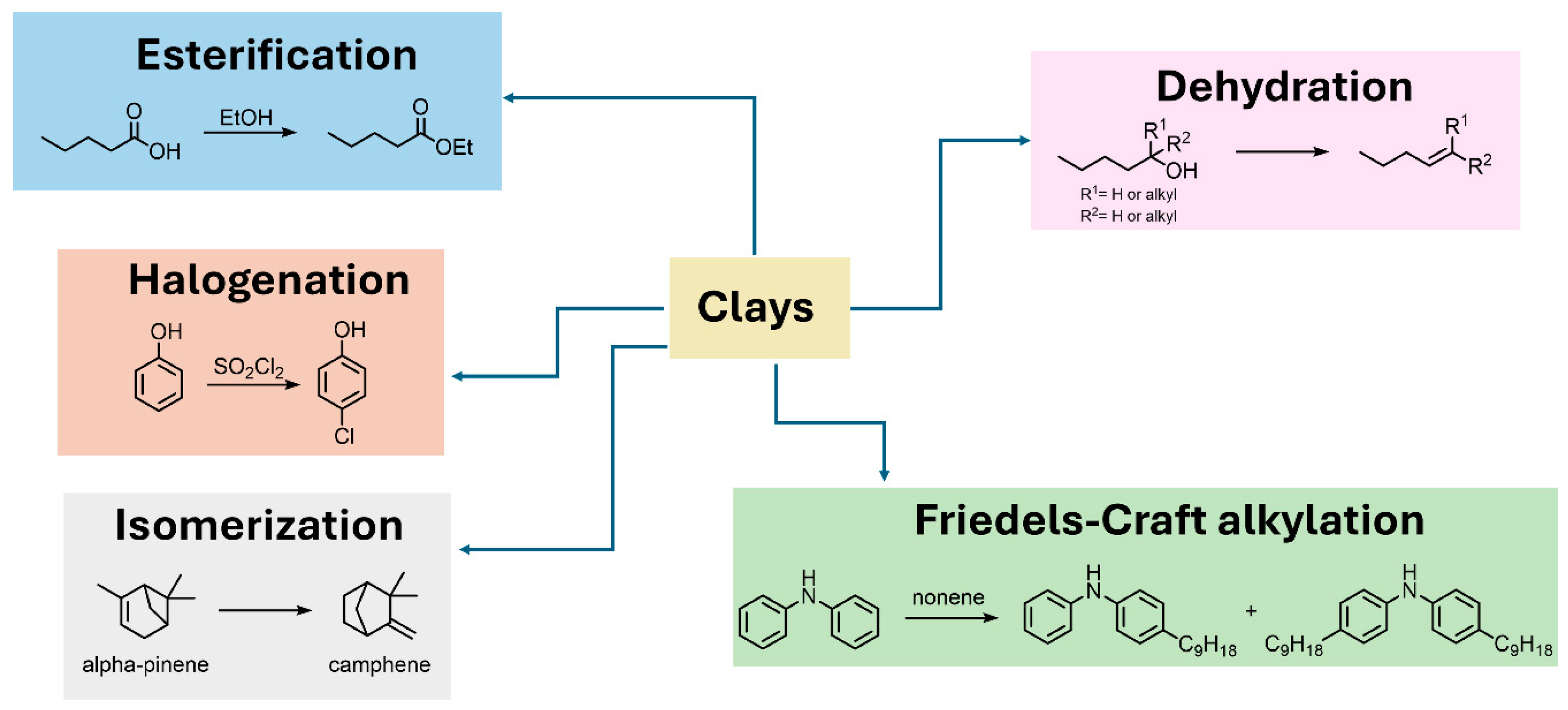
In both cases, an activation of the clay catalysts by simple acid-pretreatment with common Brønsted acids such as HCl [22], H2SO4 [20], or H3PO4 [23] is known to increase Brønsted acid sites and therefore increase catalyst activity and performance. Known reactions for clay catalysts such as montmorillonites and attapulgites include the cracking process of heavy oil [24], Friedel-Craft acetylation [25,26] and alkylation [27], acetylation [28], alkyl rearrangement [29], halogenation [30], isomerization and dimerization of alkenes [31], esterification [32], and dehydration of alcohols into ethers [33] or alkenes [34] (Figure 2).
Figure 2.
Possible reactions with clays: dehydration, esterification, halogenation, isomerization, and Friedel-Crafts alkylation.
The bifunctionality, containing both Brønsted as well as Lewis acid sites, of clay catalysts, such as montmorillonite and attapulgites, pose an advantage in catalysis. While the Lewis acid sites are attributed to low coordinated metal ions, such as Fe3+, Al3+, or Mg2+ [23,35], or to interlayer cations, the Brønsted acid sites are associated with acidic silanols with a low acidity [23,35], phosphorylated or sulfonated silanols (after acid-pretreatment) [23], or from the dissociation of interlayered water molecules coordinating cations [35]. Furthermore, we recently reported a detailed structural characterization of a commercial clay catalyst, comprising a study on its Brønsted and Lewis acid sites [36]. It should be added that while the catalytic activity primarily arises from Lewis acid and Brønsted acid sites (which also explains the beneficial effect on catalytic activity resulting from the acidic treatment of the clay), the coexistence of weak basic sites may assist the reaction by stabilizing intermediates or facilitating proton-transfer processes in the elimination step. Such a potential synergistic interaction between acidic and basic sites could enhance the efficiency of the elimination step, even though the dominant catalytic function originates from the acidic centers.
Within our ongoing research studies in exploring the potential of natural as well as commercial clays as such bifunctional catalysts for the economic and sustainable dehydration of alcohols [36], we became interested in extending the investigation to include clay catalysts that have not yet been investigated for any chemical reactions. As such a clay, we used an untreated clay sample named “Red Attapulgite” that was provided by the Spanish company MYTA, which belongs to the SAMCA group.
2. Materials and Methods
Substrates: 1-hexanol (Alfa Aesar, 99%), 2-hexanol (TCI, >98%), 2-methyl-2-hexanol (TCI, >96%).
Clay: Red Attapulgite (<60 mesh, 0.25 mm) has been provided by MYTA (Samca Group, Zaragoza, Spain).
2.1. Activation of the Clay Samples
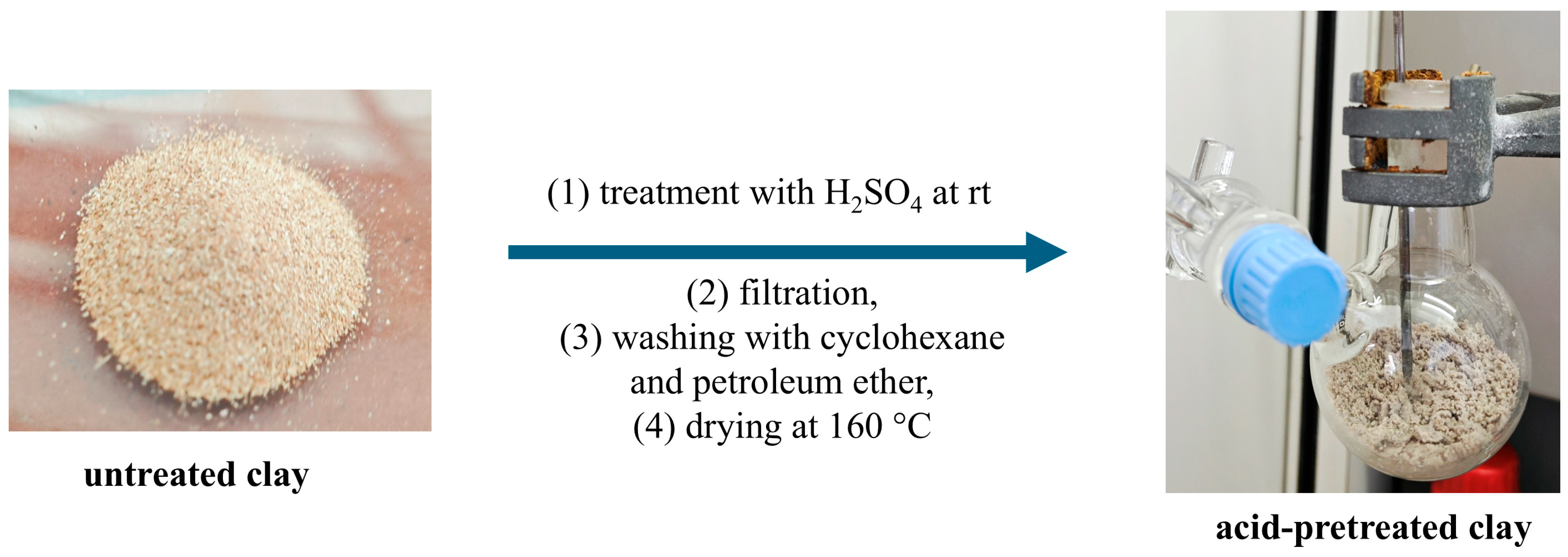
The clay samples have been activated by acid-pretreatment. A total of 5 g of clays have been placed in a 25 mL reaction flask, and an amount of 20 mL of concentrated sulfuric acid was added. The clay has been left to react for 1 d. Afterwards, sulfuric acid was removed by filtration. Cyclohexane (3 × 20 mL) and petroleum ether (3 × 20 mL) have been used to wash the clay sample from any remaining acid. Afterwards, the clay sample was dried at 160 °C for 10 h. In the end, a grayish acid-activated clay sample was obtained, which was ready to be used as a catalyst.
2.2. Catalyst Characterization
Powder X-ray diffraction (XRD) analysis was conducted to determine the phase composition of the attapulgite samples before and after the acid-pretreatment procedure. The diffraction patterns were recorded using a diffractometer equipped with a Cu-Kα radiation source (λ = 1.541874 Å). Data were collected over a 2θ range from 4° to 90° with a step size of 0.013°. Phase identification and quantitative analysis of the crystalline components were performed using the Match! (V4) software package, with phase percentages calculated via the Reference Intensity Ratio method.
2.3. General Reaction Procedure of Dehydration Experiments
Reactions have been performed under atmospheric pressure and neat conditions, without any use of solvent. Typically, reactions have been performed under reactive distillation to shift the equilibrium to the product site. In general, reactions have been performed in a 25 mL reaction flask. While all reactions have been performed under reactive distillation, reaction time and temperature differed. An amount of 40 mmol of the corresponding alcohol has been reacted with 2–10 mol% or 40 w% catalyst. For tertiary alcohols, reactions have been performed at 110 °C for 1 h while for secondary alcohols the reactions have been performed for 3 h at 150 °C. For primary alcohols, the reaction mixture was first heated to 150 °C for 1.5 h to ensure boiling point increase by either formation of the intermediate or mixing of the catalyst. Afterwards, the temperature was heated to 180 °C for 4.5 h. After the end of the reaction, the organic phase was separated from the formed aqueous phase. The organic phase was analyzed by 1H-NMR. Alkene yields were calculated by multiplying the alkene purities of the sample with the crude yield. Further details are given in the Supplementary Materials.
3. Results and Discussion
Recently, we reported the dehydration of primary alcohols under energy-saving conditions and (compared to the state of the art) lower temperatures using both Lewis [9] and Brønsted acids [13], achieving yields exceeding 70% and a technical readiness level (TRL) of 4 for the developed process technology. Although catalyst reusability was demonstrated for up to 20 cycles without any loss of activity [13], recycling remained challenging due to the homogeneous nature of the catalysts.
Addressing this issue, we explored [36] several heterogeneous catalysts, including alumina, ion-exchange resins, zeolites, and montmorillonites. While alumina and zeolites showed little to no conversion to alkenes under energy-saving conditions, ion-exchange resins achieved moderate conversions. It is noteworthy, however, that the utilization of commercially available acid-pretreated montmorillonite samples delivered yields comparable to those of homogeneous acids and maintained full catalytic activity over 10 cycles [36].
These promising results motivated us to now expand the range of materials suitable for such an energy-efficient dehydration of primary alcohols by utilizing further related natural material sources. Given that both montmorillonites and attapulgites belong to the phyllosilicate group, we became particularly interested in evaluating attapulgites for this and related transformations.
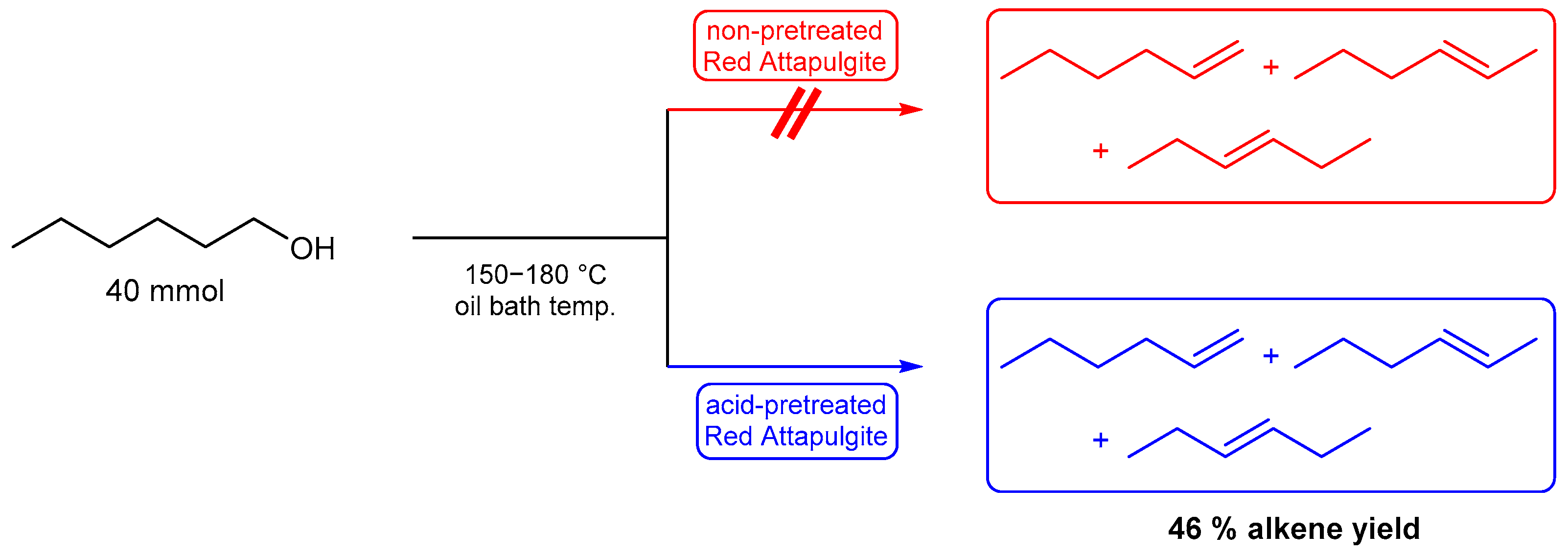
Our initial experiments have been based on the direct utilization of this commercial attapulgite sample (Red Attapulgite) provided by MYTA for chemocatalytic dehydration, exemplified for the challenging primary alcohol 1-hexanol as a model substrate (according to the reaction scheme outlined in Scheme 1). However, when the reaction was performed with such Red Attapulgite samples that had not undergone any prior treatment, no product formation was observed, neither towards the alkenes nor to the ether that is typically formed first and serves as an intermediate for a later alkene formation (Scheme 2).
Scheme 1.
Production of hexenes from CO2 via electroreduction, microbial fermentation of syngas, and dehydration as a key step [9].
Scheme 2.
Dehydration of the primary alcohol using non-pretreated Red Attapulgite (40 wt%) and acid-pretreated Red Attapulgite (40 wt%).
Due to these non-satisfactory results and taking into account the (above-mentioned) literature-known beneficial effect of an activation of clay catalysts by treatment with Brønsted acids, such as HCl [22], H2SO4 [20], or H3PO4 [23], we envisioned that for such Red Attapulgite samples from MYTA this acid treatment might also be an option to convert these non-active natural attapulgite samples into active heterogeneous chemocatalysts. Therefore, an acid-pretreatment was performed on the sample that is illustrated in Figure 3 with the expectation that it would increase the activity.
Figure 3.
Acid-pretreatment of Red Attapulgite.
In subsequent synthetic dehydration experiments with such an acid-treated attapulgite sample, we were pleased to find that this acid-treatment resulted in obtaining a catalytically active clay, enabling now the desired alkene formation with a promising yield of 46% already in this initial, preliminary experiment (Scheme 2).
One might inquire as to whether residual sulfuric acid, which was employed during the acid treatment, may be the source of the observed dehydration, rather than the clay catalyst. Nevertheless, this option can be excluded, as previous studies [9] have demonstrated that dehydration using sulfuric acid alone results in the formation of only ether. For example, while no reaction was observable for Brønsted acids with a relatively high pKa, the formation of ether was observed for Brønsted acids with a low pKa, at −2.8 (pTsOH) and −3 (H2SO4). Recently, we successfully achieved dehydration to alkenes using triflic acid (TfOH), which, however, has a significantly lower pKa of −14 [13].
As we have previously demonstrated that the dehydration of an untreated clay sample did not result in the formation of either ether or alkene, it can be concluded that the dehydration towards alkenes is only possible when the clay sample is acid-pretreated. It is hypothesized that the acid treatment results in an increase in Brønsted acid sites, which in turn results in the activation of the clay sample. Nonetheless, it can be stated with certainty that the dehydration process cannot be enabled by Brønsted acid sites alone. It is hypothesized that a synergy of Brønsted and Lewis acid sites enables dehydration. The most plausible explanation is that the synergetic work of Brønsted and Lewis acids enables such an improved catalytic property.
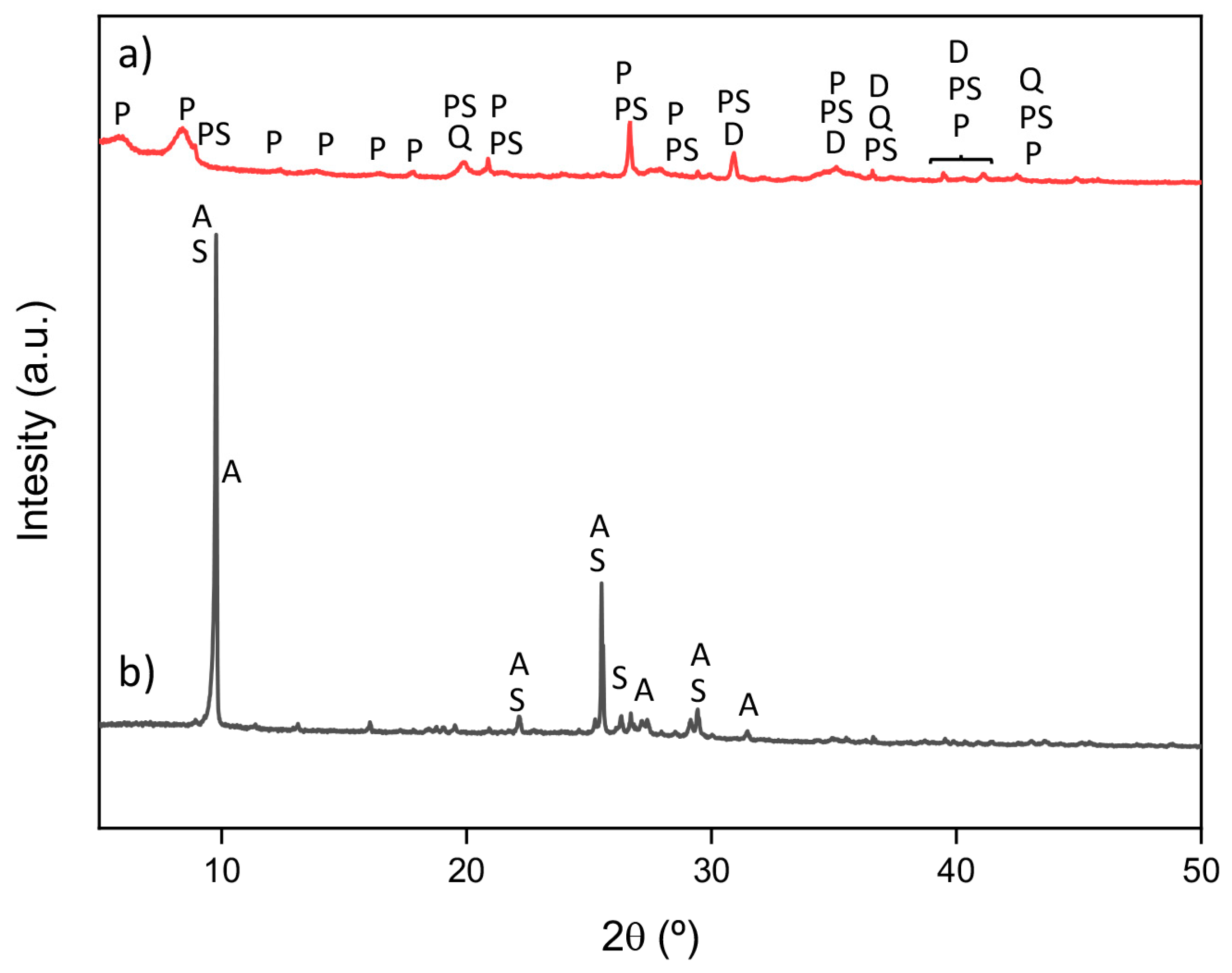
The attapulgite material was characterized by powder XRD both before and after the sulfuric acid treatment to identify structural and chemical changes. The analysis of the untreated Red Attapulgite reveals that it is a complex mineral composite rather than a pure clay. As shown in Figure 4, the primary crystalline phases identified were quartz (SiO2, 36.4 wt%) and dolomite (CaMg(CO3)2, 29.5 wt%). This initial composition, rich in chemically stable quartz and carbonate, is consistent with the observed lack of catalytic activity for the dehydration of 1-hexanol when using the untreated material. The acid-pretreatment results in the transformation of the material’s composition and structure, which is evident from the diffraction pattern observed (Figure 4). In this case, the characteristic peaks corresponding to dolomite, palygorskite, and the sodium-manganese-titanium phyllosilicate are no longer present, indicating that these mineral structures were decomposed by the acid treatment. This observation supports the hypothesis that acid-soluble cations, particularly Mg2+ and Ca2+ from the dolomite and the clay structures, were leached from the material. In their place, two new dominant phases were formed. The major phase was identified as an aluminum sulfate complex [H5O2][Al(H2O)2(SO4)2] [37], constituting 79.0 wt% of the crystalline material. The second phase was determined to be a high-silica framework (SiO2, 21.0 wt%), which is what remains after the leaching of other cations from the original silicate structures.
Figure 4.
Powder X-ray diffraction patterns of the attapulgite catalyst (a) before acid-pretreatment, showing the main phases of quartz (Q), dolomite (D), palygorskite (P), and a complex phyllosilicate (PS); and (b) after acid-pretreatment, demonstrating the transformation into a mixture of aluminum sulfate complex (A) and a silica framework (S).
This acid-induced structural and chemical alteration is directly responsible for the generation of catalytic activity. The disappearance of the initial mineral phases and the formation of a sulfated, aluminum-rich structure create the necessary acidic sites for the dehydration reaction. The strong Brønsted acidity required for alcohol dehydration, which was absent in the original material, is attributed to the sulfate groups incorporated into the structure and the acidic hydroxyl groups on the surface of the silica framework.
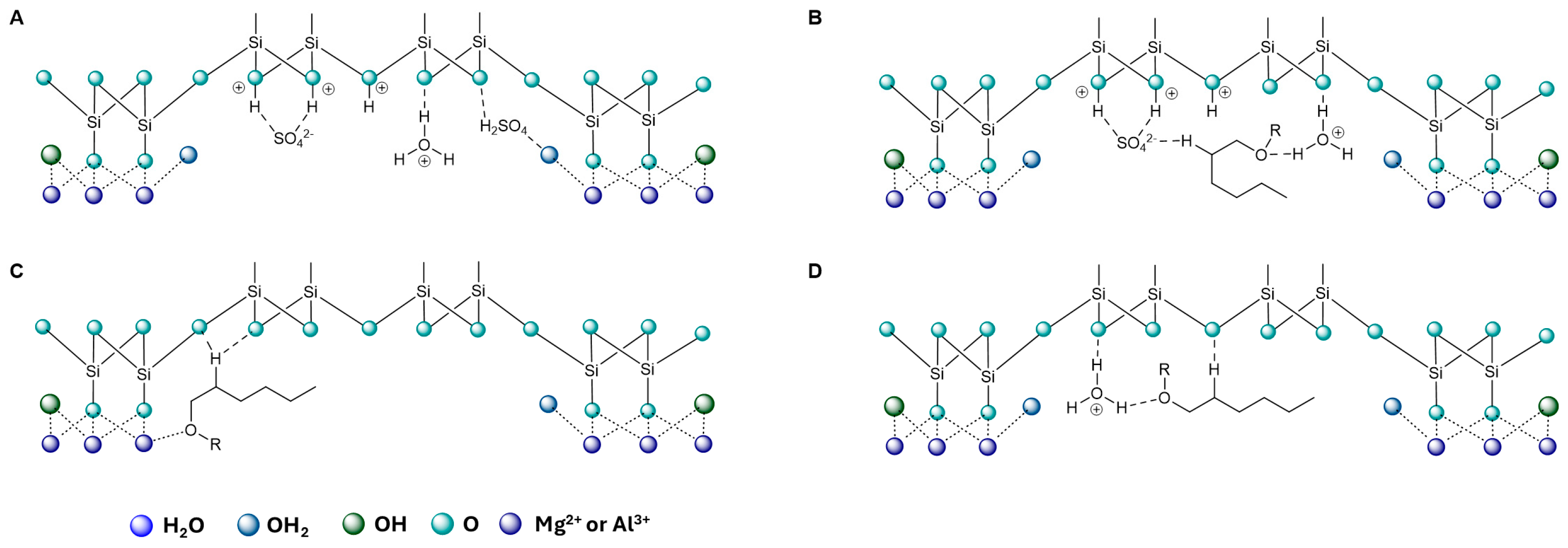
This finding aligns with the proposed mechanism (Figure 5), wherein residual sulfate species and protonated water molecules generate the Brønsted acid sites that facilitate the dehydration of alcohols. Therefore, the acid-pretreatment is not merely a purification step but a chemical synthesis that converts an inert mineral mixture into an active heterogeneous catalyst.
Figure 5.
Acid-activation of attapulgites by sulfuric acid leading to increased Brønsted acid sites (A), enabling dehydration of primary alcohols under “relatively” mild conditions. Proposed mechanistic pathways include the following: (B) dehydration mediated by protonated water and residual sulfate species; (C) dehydration assisted by interlayer cations and bridging oxygen atoms; and (D) dehydration via protonated and non-protonated bridging oxygens.
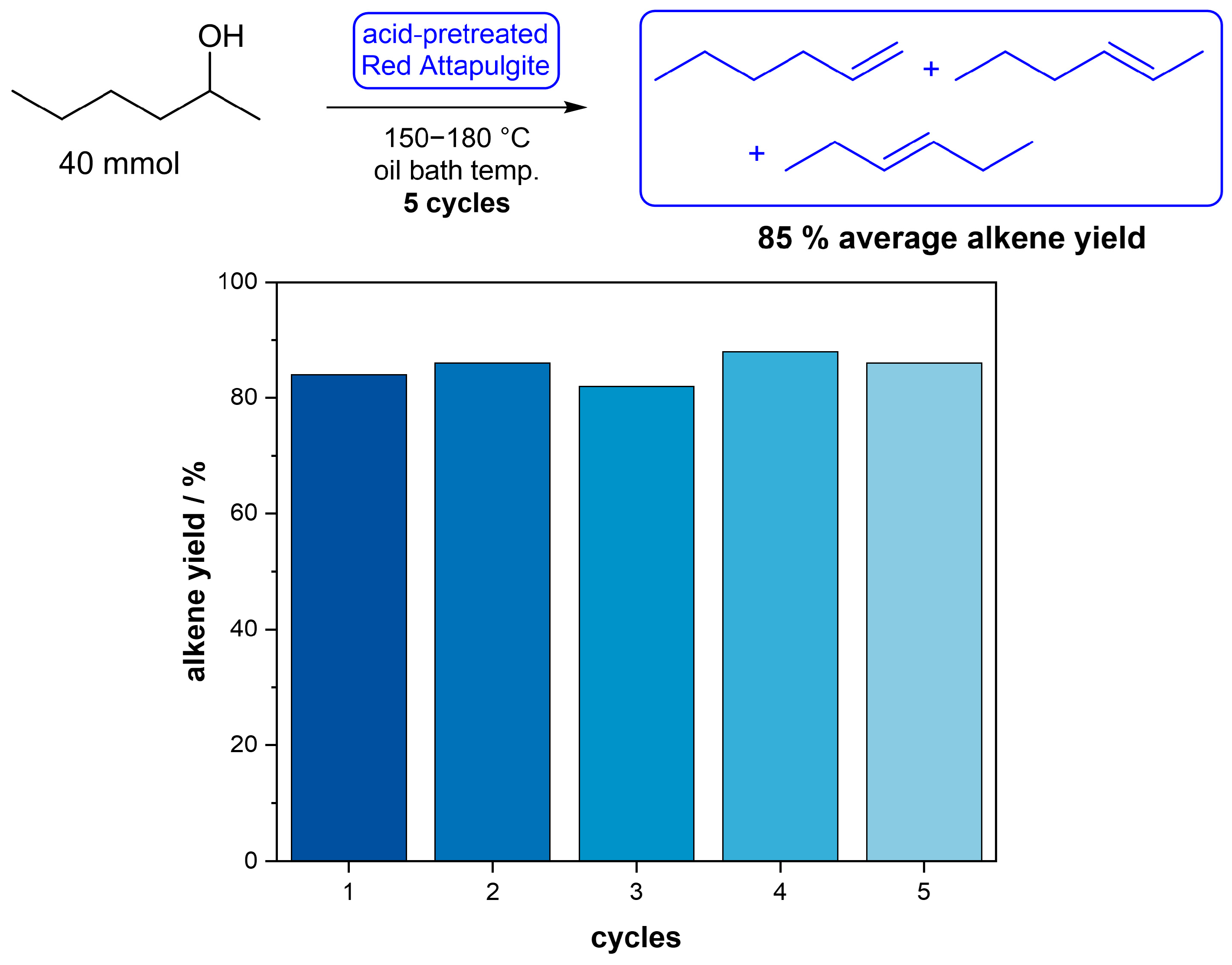
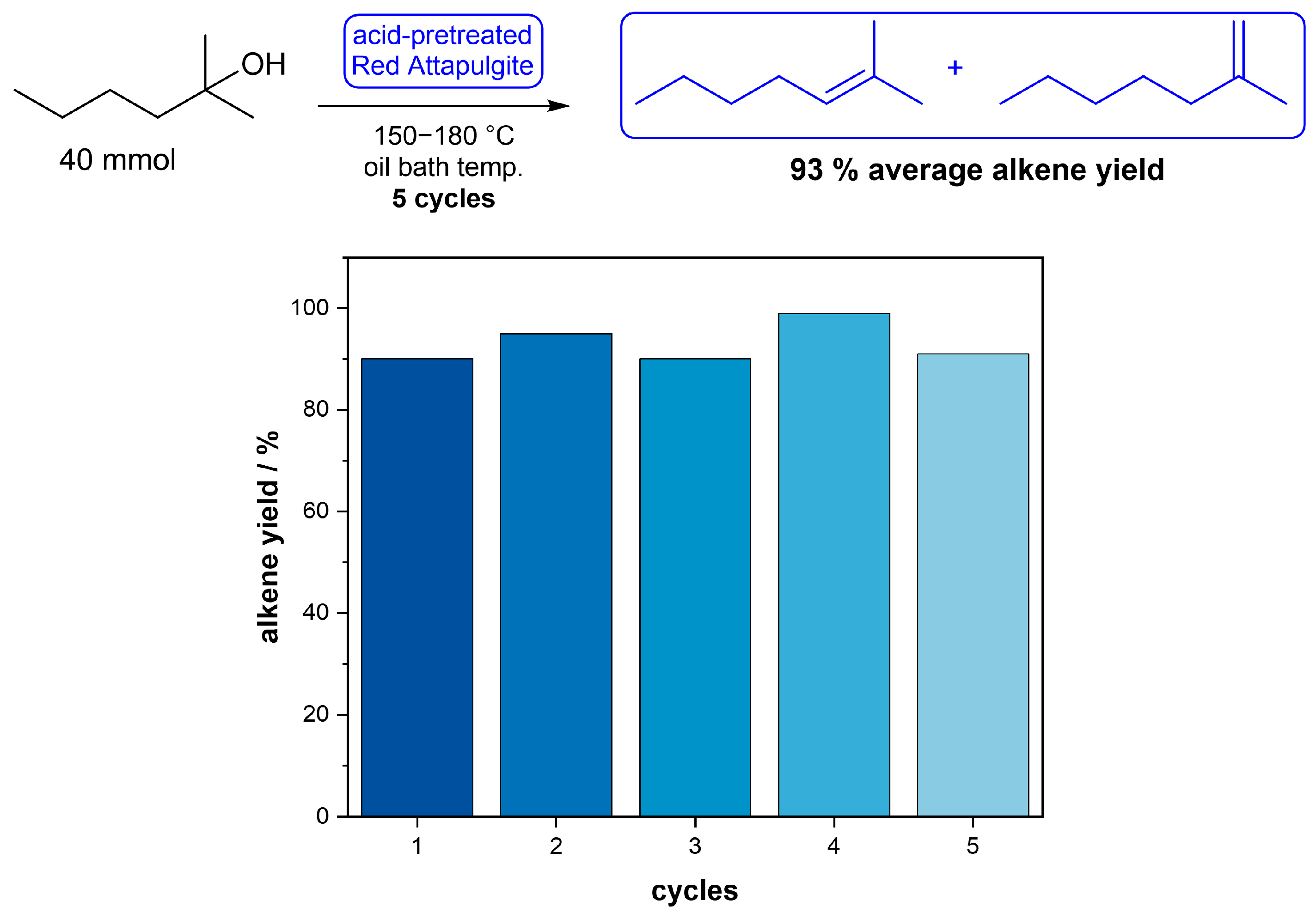
Since the dehydration of primary alcohols with this acid-pretreated Red Attapulgite sample has been promising, we were also interested in testing the dehydration for secondary and tertiary alcohols, as well as testing the reusability of these catalysts. Thus, reactions have been performed for five cycles. After the end of each cycle, fresh substrate was added to start the next cycle. We were very pleased to find that not only were high yields of 84 and 90% obtained for the secondary and tertiary alcohols, respectively, but also the reusability of these materials. Yield remained quite stable with 82–86 (Figure 6) and 90–99% (Figure 7) for the secondary and tertiary alcohols, respectively.
Figure 6.
Dehydration of the secondary alcohol 2-hexanol using acid-pretreated Red Attapulgite (40 wt%).
Figure 7.
Dehydration of the tertiary alcohol 2-methyl-2-hexanol using acid-pretreated Red Attapulgite (40 wt%).
4. Conclusions
A non-commercial available acid-pretreated clay (Red Attapulgite) turned out to efficiently facilitate the dehydration reaction of a range of substituted alcohols under energy-saving conditions at much lower temperatures than various “traditional catalysts” for this purpose. Pre-treatment of this Red Attapulgite sample turned out to be essential. When using an acid-untreated clay sample, no product formation was observed in the challenging dehydration of 1-hexanol as a model reaction in an initial preliminary experiment. Yet, acid-pretreatment with sulfuric acid led to an active heterogeneous catalyst and a satisfactory, non-optimized yield of 46% of hexenes. It can be concluded that the acid-treatment resulted in the activation of the material, as seen from XRD analysis which confirmed a complete structural and chemical transformation from an inert mineral composite to a sulfated, catalytically active aluminosilicate framework. To increase the substrate scope, secondary and tertiary alcohols were also successfully dehydrated with 84 and 90% for one cycle. A reusability study with secondary and tertiary alcohols has been performed, achieving 82–86 and 90–99%, respectively. While these results are impressive, one should add that the preparation of the material was performed without any calcination step. Thus, for future work, calcinated material should also be tested for its performance.
Supplementary Materials
The following supporting information can be downloaded at https://www.mdpi.com/article/10.3390/suschem7010010/s1, Figure S1: 1H-NMR spectrum of the dehydration of 1-hexanol by acid-pretreated Red Attapulgite, Figure S2: 1H-NMR spectrum of the dehydration of 2-hexanol by acid-pretreated Red Attapulgite, Figure S3: 1H-NMR spectrum of the dehydration of 2-methyl-2-hexanol (40 mmol) by acid-pretreated Red-Attapulgite, Figure S4: 1H-NMR spectrum di-n-hexyl ether, Figure S5: 1H-NMR spectrum of 1-hexene in CDCl3, Figure S6: 1H-NMR spectrum of trans 2-hexene in CDCl3, Figure S7: 1H-NMR spectrum of cis 2-hexene, Figure S8: 1H-NMR spectrum of 3-hexene; Table S1: Dehydration of 1-hexanol (40 mmol) by heterogenous catalysts, Table S2: Dehydration of 2-hexanol (40 mmol) using attapulgites, Table S3: Dehydration of 2-methyl-2-hexanol (40 mmol) using attapulgites.
Author Contributions
The project was supervised by H.G. The general idea of this study was provided by J.G. and V.G. Reactions and analysis were performed by A.A. The manuscript was written by A.A. and H.G. All authors have read and agreed to the published version of the manuscript.
Funding
The authors also acknowledge financial support from the European Union’s Horizon 2020 research and innovation programme under Grant Agreement No. 101022633. This work is supported by Japan Science and Technology Agency (JST) under Grant Agreement No. JPMJSC2102. We acknowledge the financial support of the German Research Foundation (DFG) and CSIC for the article processing charge.
Data Availability Statement
The original contributions presented in this study are included in the article/Supplementary Materials. Further inquiries can be directed to the corresponding author.
Acknowledgments
The authors would like to express their gratitude to MYTA (Samca group, Spain) for providing the Red Attapulgite clay samples and for their valuable input during discussions. Furthermore, the authors thank Eduardo Bernad from Aragon Hydrogen Foundation (Spain) for technical support.
Conflicts of Interest
The authors declare no conflicts of interest.
References
- Marzi, T.; Knappertsbusch, V.; Grevé, A.; Deerberg, G.; Doetsch, C.; Weidner, E. Resources of a New Carbon Economy. Chem. Ing. Tech. 2018, 90, 1374–1383. [Google Scholar] [CrossRef]
- Van de Vyver, S.; Geboers, J.; Jacobs, P.A.; Sels, B.F. Recent Advances in the Catalytic Conversion of Cellulose. ChemCatChem 2011, 3, 82–94. [Google Scholar] [CrossRef]
- Weissermel, K.; Arpe, H.-J. Industrial Organic Chemistry, 3rd ed.; Wiley-VCH: Weinheim, Germany, 2008. [Google Scholar]
- Kamm, B. Production of platform chemicals and synthesis gas from biomass. Angew. Chem. Int. Ed. 2007, 46, 5056–5058. [Google Scholar] [CrossRef]
- Kuipers, E.W.; Vinkenburg, I.H.; Oosterbeek, H. Chain Length Dependence of α-Olefin Readsorption in Fischer-Tropsch Synthesis. J. Catal. 1995, 152, 137–146. [Google Scholar] [CrossRef]
- Zhang, Q.; Kang, J.; Wang, Y. Development of Novel Catalysts for Fischer-Tropsch Synthesis: Tuning the Product Selectivity. ChemCatChem 2010, 2, 1030–1058. [Google Scholar] [CrossRef]
- de Smit, E.; Weckhuysen, B.M. The renaissance of iron-based Fischer-Tropsch synthesis: On the multifaceted catalyst deactivation behaviour. Chem. Soc. Rev. 2008, 37, 2758–2781. [Google Scholar] [CrossRef]
- Chen, Y.; Wei, J.; Duyar, M.S.; Ordomsky, V.V.; Khodakov, A.Y.; Liu, J. Carbon-based catalysts for Fischer-Tropsch synthesis. Chem. Soc. Rev. 2021, 50, 2337–2366. [Google Scholar] [CrossRef] [PubMed]
- Allahverdiyev, A.; Yang, J.; Gröger, H. Catalyst screening for dehydration of primary alcohols from renewable feedstocks under formation of alkenes at energy-saving mild reaction conditions. Green Chem. 2024, 26, 7869–7878. [Google Scholar] [CrossRef]
- Haas, T.; Krause, R.; Weber, R.; Demler, M.; Schmid, G. Technical photosynthesis involving CO2 electrolysis and fermentation. Nat. Catal. 2018, 1, 32–39. [Google Scholar] [CrossRef]
- Brandenberg, W.; Galat, A. Olefins from Alcohols. J. Am. Chem. Soc. 1950, 72, 3275–3276. [Google Scholar] [CrossRef]
- Vossen, J.T.; Vorholt, A.J.; Leitner, W. Catalyst Recycling in the Reactive Distillation of Primary Alcohols to Olefins Using a Phosphoric Acid Catalyst. ACS Sustain. Chem. Eng. 2022, 10, 5922–5931. [Google Scholar] [CrossRef]
- Allahverdiyev, A.; Gröger, H. Reusability studies with Lewis and Brønsted acid catalysts for dehydration of the primary alcohol 1-hexanol under energy-saving conditions. RSC Sustain. 2025, 3, 1923–1931. [Google Scholar] [CrossRef]
- Ward, D.J.; Saccomando, D.J.; Vilela, F.; Walker, G.; Mansell, S.M. Flow chemistry enhances catalytic alcohol-to-alkene dehydration. Catal. Sci. Technol. 2024, 14, 6641–6650. [Google Scholar] [CrossRef]
- Zango, Z.U.; Garba, A.; Garba, Z.N.; Zango, M.U.; Usman, F.; Lim, J.-W. Montmorillonite for Adsorption and Catalytic Elimination of Pollutants from Wastewater: A State-of-the-Arts Review. Sustainability 2022, 14, 16441. [Google Scholar] [CrossRef]
- Zhang, T.; Huang, X.; Qiao, J.; Liu, Y.; Zhang, J.; Wang, Y. Recent developments in synthesis of attapulgite composite materials for refractory organic wastewater treatment: A review. RSC Adv. 2024, 14, 16300–16317. [Google Scholar] [CrossRef]
- Reddy, C.R.; Bhat, Y.S.; Nagendrappa, G.; Jai Prakash, B.S. Brønsted and Lewis acidity of modified montmorillonite clay catalysts determined by FT-IR spectroscopy. Catal. Today 2009, 141, 157–160. [Google Scholar] [CrossRef]
- Motokura, K.; Nakagiri, N.; Mizugaki, T.; Ebitani, K.; Kaneda, K. Nucleophilic substitution reactions of alcohols with use of montmorillonite catalysts as solid Brønsted acids. J. Org. Chem. 2007, 72, 6006–6015. [Google Scholar] [CrossRef]
- Boudriche, L.; Calvet, R.; Hamdi, B.; Balard, H. Effect of acid treatment on surface properties evolution of attapulgite clay: An application of inverse gas chromatography. Colloids Surf. A Physicochem. Eng. Asp. 2011, 392, 45–54. [Google Scholar] [CrossRef]
- Tian, H.; Shao, Y.; Liang, C.; Xu, Q.; Zhang, L.; Zhang, S.; Liu, S.; Hu, X. Sulfated attapulgite for catalyzing the conversion of furfuryl alcohol to ethyl levulinate: Impacts of sulfonation on structural transformation and evolution of acidic sites on the catalyst. Renew. Energy 2020, 162, 1576–1586. [Google Scholar] [CrossRef]
- Cuevas, J.; Cabrera, M.Á.; Fernández, C.; Mota-Heredia, C.; Fernández, R.; Torres, E.; Turrero, M.J.; Ruiz, A.I. Bentonite Powder XRD Quantitative Analysis Using Rietveld Refinement: Revisiting and Updating Bulk Semiquantitative Mineralogical Compositions. Minerals 2022, 12, 772. [Google Scholar] [CrossRef]
- Bendou, S.; Amrani, M. Effect of Hydrochloric Acid on the Structural of Sodic-Bentonite Clay. J. Miner. Mater. Charact. Eng. 2014, 2, 404–413. [Google Scholar] [CrossRef]
- Yang, F.; Weng, J.; Ding, J.; Zhao, Z.; Qin, L.; Xia, F. Effective conversion of saccharides into hydroxymethylfurfural catalyzed by a natural clay, attapulgite. Renew. Energy 2020, 151, 829–836. [Google Scholar] [CrossRef]
- Zhang, X.; Wang, J.; Wang, L.; Li, Z.; Hu, W.; Dai, Y.; Kou, Y.; Lei, S.; Li, Q.; Zhang, W.; et al. Catalytic capacity evolution of montmorillonite in in-situ combustion of heavy oil. Fuel 2023, 333, 126621. [Google Scholar] [CrossRef]
- Sklenár, M.; Danielik, V.; Hudec, P. Discontinuous alkylation of diphenylamine with nonene for maximum catalyst utilization. Chem. Pap. 2017, 71, 1453–1461. [Google Scholar] [CrossRef]
- Kostrab, G.; Lovič, M.; Turan, A.; Hudec, P.; Kaszonyi, A.; Bajus, M.; Uhlár, J.; Lehocký, P.; Mravec, D. tert-Butylation of diphenylamine over zeolite catalysts comparison of different alkylation agents and catalysts. Catal. Commun. 2012, 18, 176–181. [Google Scholar] [CrossRef]
- Venkatesha, N.J.; Bhat, Y.S.; Jai Prakash, B.S. Re-usability of zeolites and modified clays for alkylation of cyclohexanol a contrast study. RSC Adv. 2015, 5, 69348–69355. [Google Scholar] [CrossRef]
- Shimizu, K.; Higuchi, T.; Takasugi, E.; Hatamachi, T.; Kodama, T.; Satsuma, A. Characterization of Lewis acidity of cation-exchanged montmorillonite K-10 clay as effective heterogeneous catalyst for acetylation of alcohol. J. Mol. Catal. A Chem. 2008, 284, 89–96. [Google Scholar] [CrossRef]
- Brown, D.R.; Rhodes, C.N. Bronsted and Lewis acid catalysis with ion- exchanged clays. Catal. Lett. 1997, 45, 35–40. [Google Scholar] [CrossRef]
- Gnaim, J.M.; Sheldon, R.A. Shape-selective para-chlorination of phenol using sulfuryl chloride with the aid of microporous catalysts. Tetrahedron Lett. 2004, 45, 9397–9399. [Google Scholar] [CrossRef]
- Yadav, M.K.; Chudasama, C.D.; Jasra, R.V. Isomerisation of α-pinene using modified montmorillonite clays. J. Mol. Catal. A Chem. 2004, 216, 51–59. [Google Scholar] [CrossRef]
- Bolognini, M.; Cavani, F.; Cimini, M.; Pozzo, L.D.; Maselli, L.; Venerito, D.; Pizzoli, F.; Veronesi, G. An environmentally friendly synthesis of 2,4-dihydroxybenzophenone by the single-step O-mono-benzoylation of 1,3-dihydroxybenzene (resorcinol) and Fries rearrangement of intermediate resorcinol monobenzoate: The activity of acid-treated montmorillonite clay catalysts. Comptes Rendus Chim. 2004, 7, 143–150. [Google Scholar] [CrossRef]
- Raimondo, M.; De Stefanis, A.; Perez, G.; Tomlinson, A.A. PLS vs. zeolites as sorbents and catalysts. 5. Evidence for Brønsted/Lewis acid crossover and high acidity in conversions of C1–3 alcohols in some alumina-pillared smectite clays. Appl. Catal. A Gen. 1998, 171, 85–97. [Google Scholar] [CrossRef]
- Madduluri, V.R.; Katari, N.K.; Peddinti, N.; Velpula, V.K.; Burri, D.R.; Kamaraju, S.R.R.; Jonnalagadda, S.B. Facile redbrick clay as splendid catalyst for selective dehydration of alcohols. Res. Chem. Intermed. 2018, 44, 7619–7639. [Google Scholar] [CrossRef]
- Adams, J.M. Synthetic organic chemistry using pillared, cation-exchanged and acid-treated montmorillonite catalysts—A review. Appl. Clay Sci. 1987, 2, 309–342. [Google Scholar] [CrossRef]
- Cavallo, M.; Allahverdiyev, A.; Dosa, M.; Kelly, O.; Crocellà, V.; Bonino, F.; Gröger, H. Energy-Saving Dehydration of Primary Alcohol Under the Formation of Alkenes via a Bifunctional Clay Catalyst. ChemCatChem 2025, 17, e00325. [Google Scholar] [CrossRef]
- Svensson, F.G. Synthesis and crystal structures of [Al(H2O)6](SO4)NO3·2H2O and [Al(H2O)6](SO4)Cl·H2O. Acta Crystallogr. E Crystallogr. Commun. 2021, 77, 58–61. [Google Scholar] [CrossRef] [PubMed]
Disclaimer/Publisher’s Note: The statements, opinions and data contained in all publications are solely those of the individual author(s) and contributor(s) and not of MDPI and/or the editor(s). MDPI and/or the editor(s) disclaim responsibility for any injury to people or property resulting from any ideas, methods, instructions or products referred to in the content. |
© 2026 by the authors. Licensee MDPI, Basel, Switzerland. This article is an open access article distributed under the terms and conditions of the Creative Commons Attribution (CC BY) license.