Article

Study on Enhanced Coalbed Methane Desorption Characteristics of Hydraulic Fracturing Combined with Hot Water Injection


School of Mechanics and Engineering, Liaoning Technical University, Fuxin 123000, China
*
Author to whom correspondence should be addressed.
Fuels 2026, 7(2), 25; https://doi.org/10.3390/fuels7020025
Submission received: 15 January 2026 / Revised: 21 February 2026 / Accepted: 17 March 2026 / Published: 20 April 2026

Abstract

To investigate the synergistic effect of hydraulic fracturing and hot water injection on enhancing methane extraction from low-permeability coalbeds and elucidate the underlying thermal-hydraulic coupling mechanism, methane desorption experiments were conducted in coal samples with varying fracture networks using a self-developed multi-field coupling experimental system. Tests were performed under different injection pressures and temperatures to analyze coal temperature evolution and methane desorption-seepage characteristics. The results demonstrate that hydraulic fracturing significantly improves pore structure and connectivity, thereby optimizing methane desorption behavior. The methane migration in the samples is influenced by water injection, exhibiting an initial promotion followed by inhibition. The combined fracturing-thermal injection approach effectively reduces the dynamic viscosity of water, mitigates the water lock effect, and enhances the desorption capacity. The hydraulic fracturing and the hot water injection complement each other, achieving synergistic production enhancement. The optimal injection pressure and water temperature can be selected according to specific reservoir conditions to balance the production increase and cost efficiency. This laboratory-scale study provides theoretical support for optimizing hydraulic measures and thermal injection techniques in coalbed methane extraction, revealing complementary synergies between these two methods and offering new insights into multi-field coupling enhancement mechanisms with practical application guidelines.

1. Introduction

Coalbed methane is a vital, highly efficient, and low-emission energy feedstock with immense application potential as a low-emission alternative for energy production [1,2]. The production and migration of coalbed methane occur in three stages: desorption, diffusion, and flow [3,4,5,6]. The desorption process is the most fundamental and critical step in coalbed methane extraction, ultimately determining the final yield [7]. Therefore, enhancing the gas desorption from coal is key to improving the coalbed methane recovery rates, holding significant importance for promoting resource utilization and ensuring safe coal mining operations.
The desorption of coalbed methane is influenced by multiple factors, most commonly including coal porosity, moisture content, reservoir temperature, and gas pressure [8,9,10,11,12]. When local stress is below 15 MPa, the gas desorption volume shows a positive correlation with the microfracture permeability of coal [13]. Compared to other rocks, coal bodies exhibit relatively developed pore-fracture networks, though these are predominantly composed of small pores and microfractures. These fractures often lack directionality and connectivity, and some are prone to mineral filling [14]. Increases in coal body porosity, connectivity, and specific surface area facilitate gas desorption [15,16]. Hydraulic fracturing effectively enhances coal-rock porosity and connectivity, thereby promoting methane desorption while improving flow conductivity. The methane is transported through desorption–diffusion processes, increasing the CH4 output volume and efficiency [17]. However, while promoting methane desorption, hydraulic fracturing also inhibits gas desorption. During fracturing, high-pressure water displaces free methane from pores and fractures, converting the adsorbed methane into free methane. Post-fracturing, the migration pathways become occupied and blocked by water, suppressing the methane desorption [18].
The desorption of gas from coal is an endothermic process. Temperature is a key factor governing the gas adsorption and desorption in coal [9,10,19]. This pattern is more pronounced during the initial stage of desorption [20]. Furthermore, higher temperatures result in greater desorption quantities and faster desorption rates [21]. This occurs because elevated temperatures break the physical bonds between the methane molecules and the coal surface, altering the coal’s adsorption properties [22]. Based on this, researchers have extensively studied methods such as microwave heating, superheated steam, hot water injection, and electric heating as heat sources to enhance coal body temperature for promoting gas desorption and extraction [7,23,24]. For instance, Zhang et al. [25] demonstrated that methods like electric heating and steam injection cause localized overheating near the injection wells, whereas hot water injection achieves a more uniform temperature distribution and a broader heating coverage while avoiding excessive temperature increases. Regarding hot water injection for heating, injection rate and temperature effectively elevate reservoir temperatures [26]. At a constant injection temperature, a higher injection rate expands the affected zone. Compared to low injection rates, increasing both the water temperature and the injection rate at higher rates effectively boosts the final cumulative desorption volume [27]. Teng et al. investigated coalbed methane recovery rates during thermal injection, finding that thermal stimulation increased the 30-year cumulative gas production by 70% [28]. Hu et al. [29] conducted laboratory and underground coal mine tests on heat injection-enhanced gas extraction. These laboratory experiments demonstrated that heat injection intensified the methane desorption and mitigated the water’s suppression of gas. The field tests also showed significant gas extraction effects. However, for low-permeability coal seams, further research is needed both domestically and internationally on heat injection enhancement for gas extraction.
The previous studies have primarily focused on the influence of factors such as temperature on gas migration, with relatively few investigations into the enhanced desorption characteristics of coal samples subjected to thermal injection during water injection. Furthermore, although numerous scholars have conducted numerical simulations on enhanced gas recovery through thermal injection, the migration patterns of water and gas during the thermal injection process warrant further investigation. Therefore, this study employs hot water as the heat source and utilizes hydraulic fracturing to obtain samples with varying porosities. The experiments were conducted to investigate enhanced methane desorption under thermal injection at different conditions. The effects of high-temperature, high-pressure water on desorption characteristics and the influence of coal sample porosity on desorption were explored. The findings provide guidance for developing high-pressure hydraulic measures and determining thermal injection process parameters in coalbed methane extraction.

2. Samples and Experiments

2.1. Sample Preparation

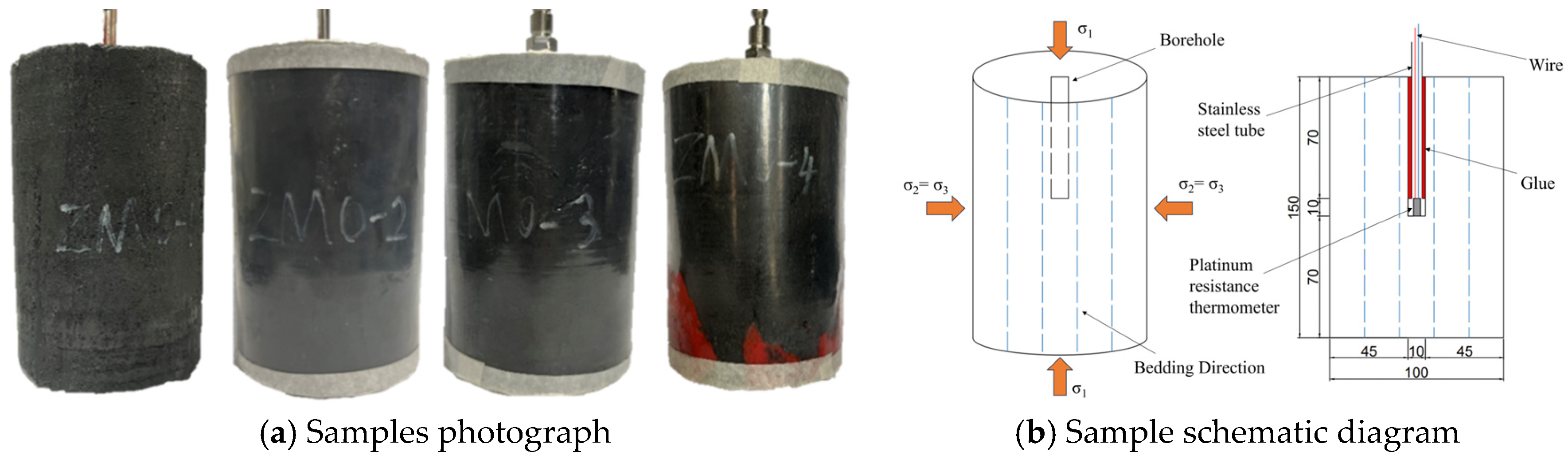
The coal samples used in this study were collected from the No. 3 coal seam of the Zhangcun Coal Mine in Xibaitu Township, Luzhou District, Changzhi City, Shanxi Province, China. The coal in this region is classified as medium-high rank coal. To ensure consistency in the properties of the selected samples, all fresh coal-rock samples were collected from the same area of the 2702 working face. The required cylindrical coal samples were ø100 mm × 150 mm in size, with sample numbers ZM0-1, ZM0-2, ZM0-3, and ZM0-4, and masses of 1520.8 g, 1579.1 g, 1573.5 g, and 1508 g, respectively. The coal blocks were drilled along the joint to simulate actual field conditions, as the samples were intended to mimic horizontal boreholes in the field. Since the coal rock samples collected at the working face are generally thin and brittle, drilling samples may not fully meet the experimental requirements. Therefore, further processing is conducted to supplement any gaps in the samples for future use. After preparing the columnar coal samples, drilling holes are made with a diameter of 10 mm and a depth of 8 mm. A stainless steel tube with an inner diameter of 4 mm and an outer diameter of 6 mm is pre-embedded into the drill hole, and a platinum resistor with dimensions of φ4 mm × 10 mm is installed at the bottom of the drill hole to seal it. At this point, all experimental samples are prepared, and their appearance is shown in Figure 1.

2.2. Experimental Systems

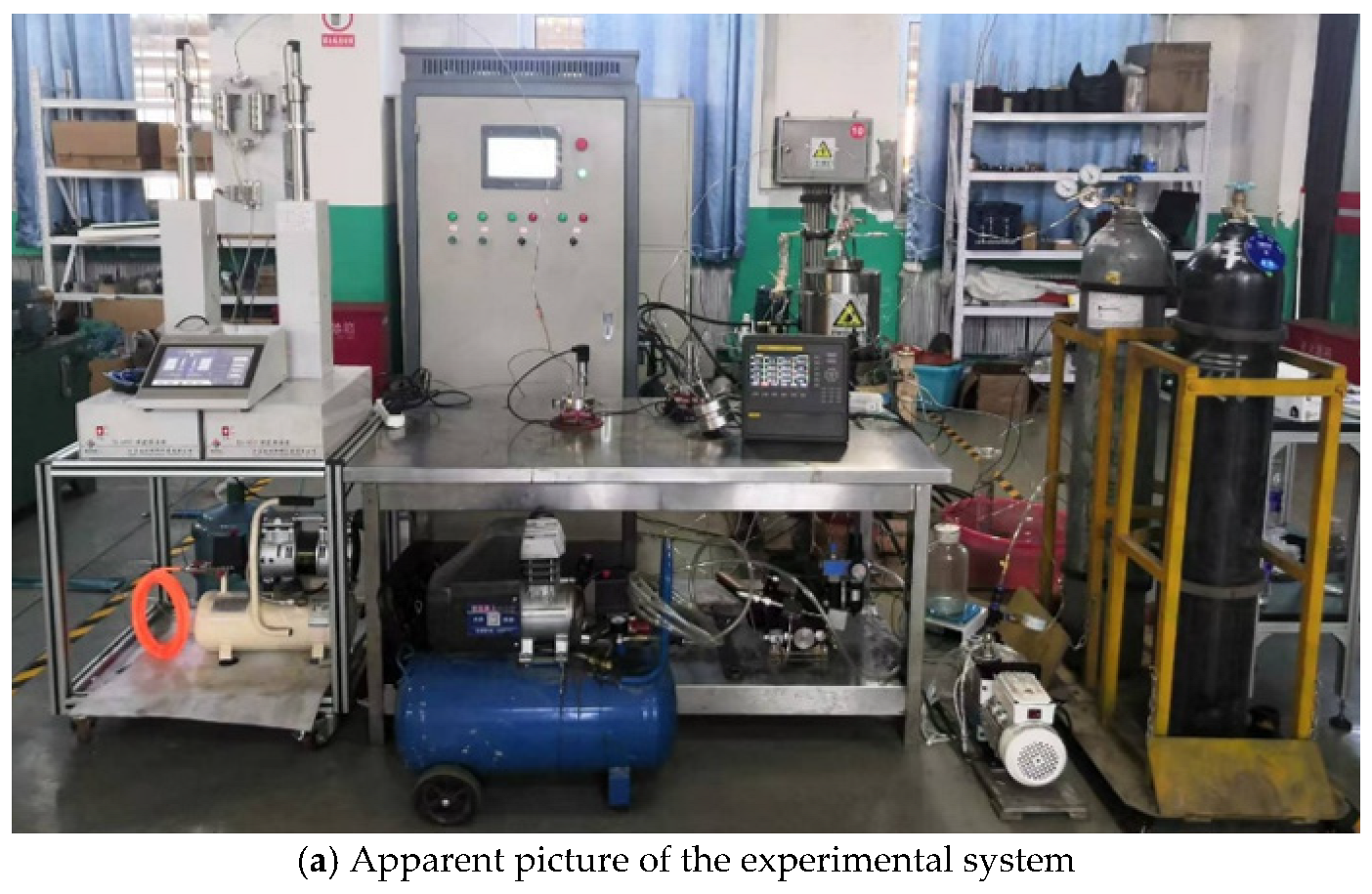
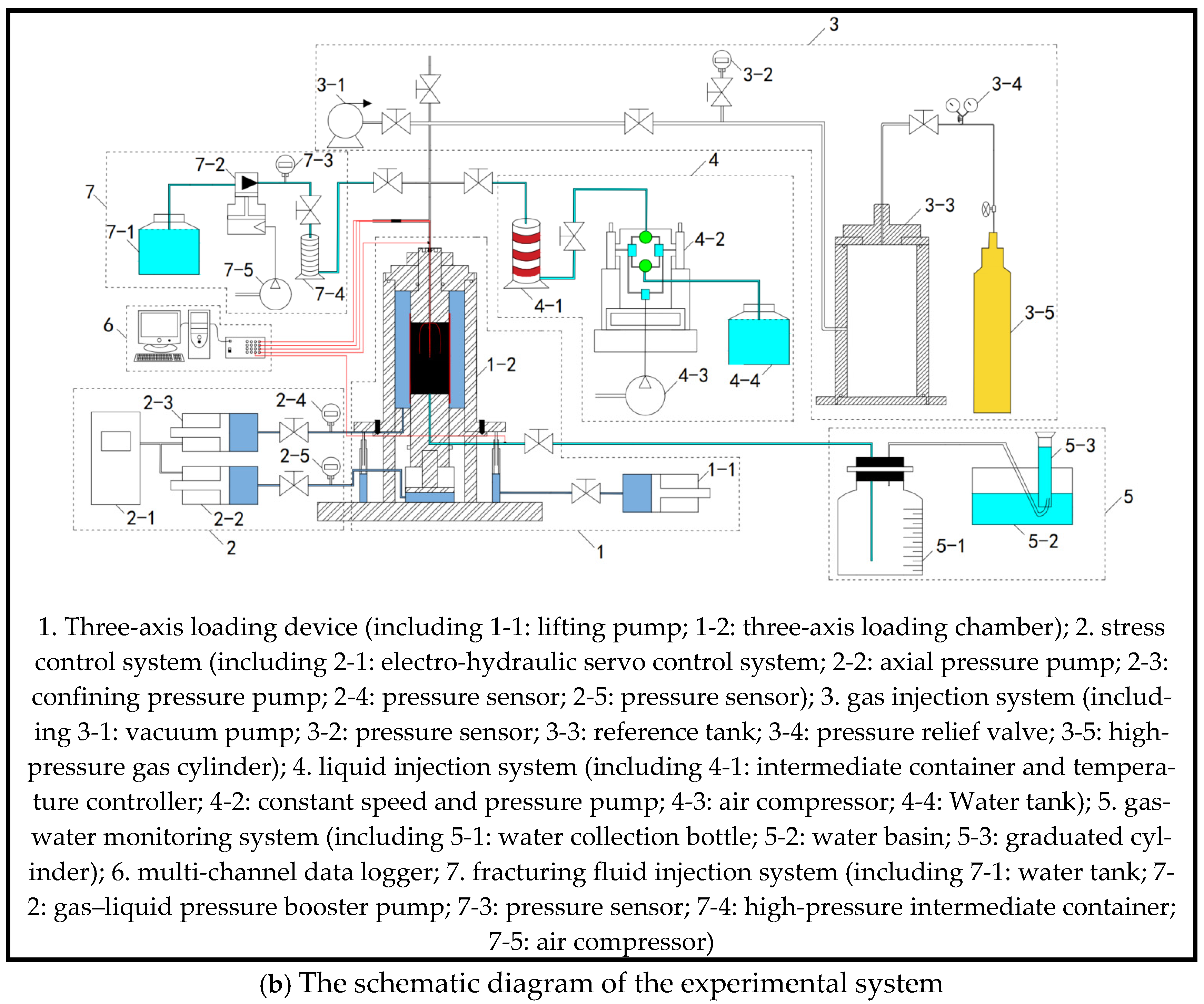
The equipment used in the experiment included a multi-field coupled coal-rock hydraulic fracturing–desorption seepage integrated experimental system. The connection of instruments and equipment used in the experiment is shown in
Figure 2. The whole device is divided into the following seven parts:
(1)
Three-axis loading device: This includes a three-axis loading chamber and a lifting pump, with a maximum test specimen size of ø100 × 150 mm and a maximum pressure capacity of 70 MPa.
(2)
Stress control system: This includes an electro-hydraulic servo control system, a confining pressure pump, an axial pressure pump, and pressure sensors. The maximum axial load is 500 kN, the maximum confining stress is 60 MPa, and the accuracy is ±0.5% of the full-scale range.
(3)
Gas injection system: This includes a high-pressure gas cylinder, a pressure relief valve, a reference tank, pressure sensors, a vacuum pump, etc. The high-pressure gas cylinder (containing test gas) is connected in series with a pressure relief valve. Gas flows through the valve-controlled high-pressure tubing into a reference tank of a known volume. The reference tank is connected via high-pressure tubing to the upstream end of the coal sample. The entire gas delivery tubing is equipped with a high-precision pressure sensor at the reference tank outlet, i.e., the sample inlet, for real-time monitoring of the pressure changes. Prior to each test, a vacuum pump is used to evacuate the air from the system and the sample’s pores. All the aforementioned components are connected via high-pressure tubing to a six-way valve, forming the system. Additionally, a separate high-pressure tubing connects directly to the outdoors through the six-way valve.
(4)
Liquid injection system: This includes an air compressor, a constant speed and pressure pump, a water tank, an intermediate container, a temperature controller, etc. The maximum operating pressure of the constant speed and pressure pump is 70 MPa, and the temperature control range of the temperature controller is 20~120 °C.
(5)
Gas-water monitoring system: This includes a water collection bottle, a graduated cylinder, a water basin, etc., using the drainage gas collection method to measure gas volume.
(6)
Data acquisition system: This includes a multi-channel data logger, temperature sensors, pressure sensors, etc. The temperature of the coal sample is measured using a PT100 platinum resistance thermometer, which is connected to the multi-channel data recorder along with the pressure sensor for data acquisition.
(7)
Fracturing fluid injection system: This includes an air compressor, a gas–liquid pressure booster pump, a water tank, a high-pressure intermediate container, and a pressure sensor.

2.3. Experimental Procedures

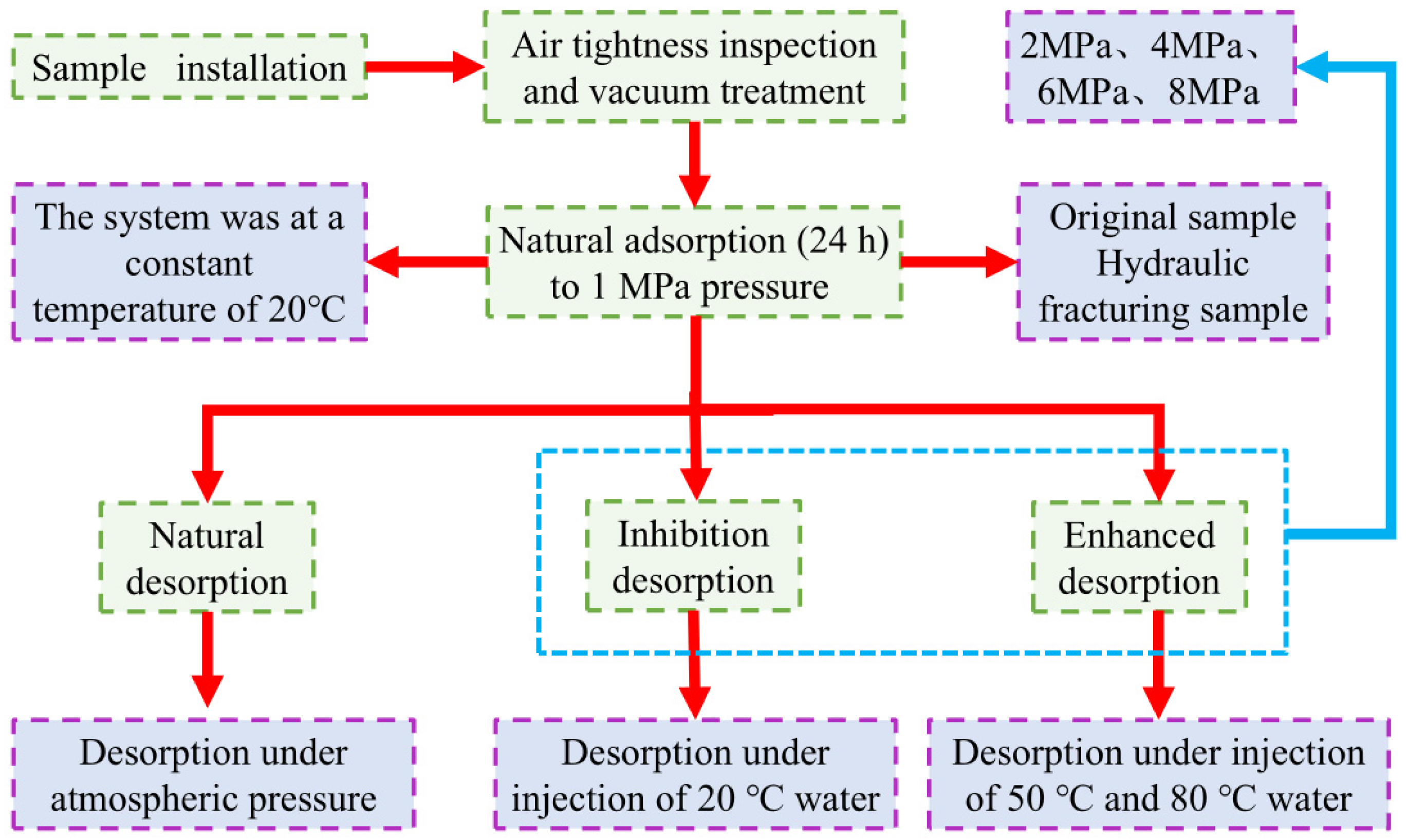
After checking the airtightness of the device and evacuating it, gas is introduced into the device containing the sample until adsorption equilibrium is reached. The experimental process is divided into the following five stages. The simplified experimental procedure is shown in Figure 3.
The first stage of the experiment involves natural adsorption and desorption testing of the original sample (ZM0-1). After connecting the gas storage equipment, the corresponding valves are opened to allow the sample coal to adsorb for 24 h under a given gas pressure of 1 MPa. The pressure changes during the process are recorded by a digital pressure gauge (equilibrium is determined when the rate of the pressure change is less than 0.002 MPa/h). After the adsorption equilibrium is reached, the gas collection system is connected and performs desorption under atmospheric pressure. The desorption process lasts for 8 h. In this experiment, the desorption quantity is measured in real-time using the water displacement method.
The second stage of the experiment is the natural adsorption and water-injection desorption experiment for the original sample (ZM0-1). The adsorption process is the same as in the first stage. The difference is that after reaching the adsorption equilibrium, the heating system is activated and the corresponding valves are opened to perform desorption under specified water temperatures (20 °C, 50 °C, and 80 °C) and water pressures (2 MPa, 4 MPa, 6 MPa, and 8 MPa). The desorption process lasts for 8 h. In this experiment, the desorption volume is measured in real time using the drainage method.
The third phase of the experiment involves the hydraulic fracturing of coal bodies. After connecting the hydraulic fracturing equipment, the gas–liquid pressure booster pump is started, and the corresponding valves are opened to subject the samples to hydraulic fracturing under the specified axial and confining pressure conditions. The experimental conditions are detailed in Table 1. The changes in water pressure during the process are recorded by a pressure sensor (hydraulic fracturing completion is determined based on the pump pressure curve), yielding the samples (ZM0-2, ZM0-3, and ZM0-4). Following the completion of the hydraulic fracturing experiment, X-ray CT imaging is performed on the specimens. The data processing of the CT scan results was conducted using Avizo3D Pro 2024.2 software.
The fourth stage of the experiment involves natural adsorption–desorption experiments on the hydraulically fractured samples (ZM0-2, ZM0-3, and ZM0-4). After connecting the gas storage equipment, the corresponding valves are opened to allow the sample coal to adsorb for 24 h under a given gas pressure of 1 MPa. The pressure changes during the process are recorded by a digital pressure gauge (equilibrium is determined when the rate of pressure change is less than 0.002 MPa/h). After the adsorption equilibrium is reached, the gas collection system is connected and performs desorption under atmospheric pressure. The desorption process lasts for 8 h. In this experiment, the desorption quantity is measured in real-time using the water displacement method.
The fifth stage of the experiment involves natural adsorption and water-injection desorption experiments on the hydraulically fractured samples (ZM0-2, ZM0-3, and ZM0-4). The adsorption process is the same as in the first stage. The difference is that after reaching adsorption equilibrium, the heating system is activated and the corresponding valves are opened to perform desorption under the specified water temperatures (20 °C, 50 °C, and 80 °C) and water pressures (2 MPa, 4 MPa, 6 MPa, and 8 MPa). The desorption process lasts for 8 h. In this experiment, the desorption volume was measured in real time using the drainage method.

3. Experimental Results

3.1. Desorption Characteristics of Methane Under the Influence of Fracture Networks

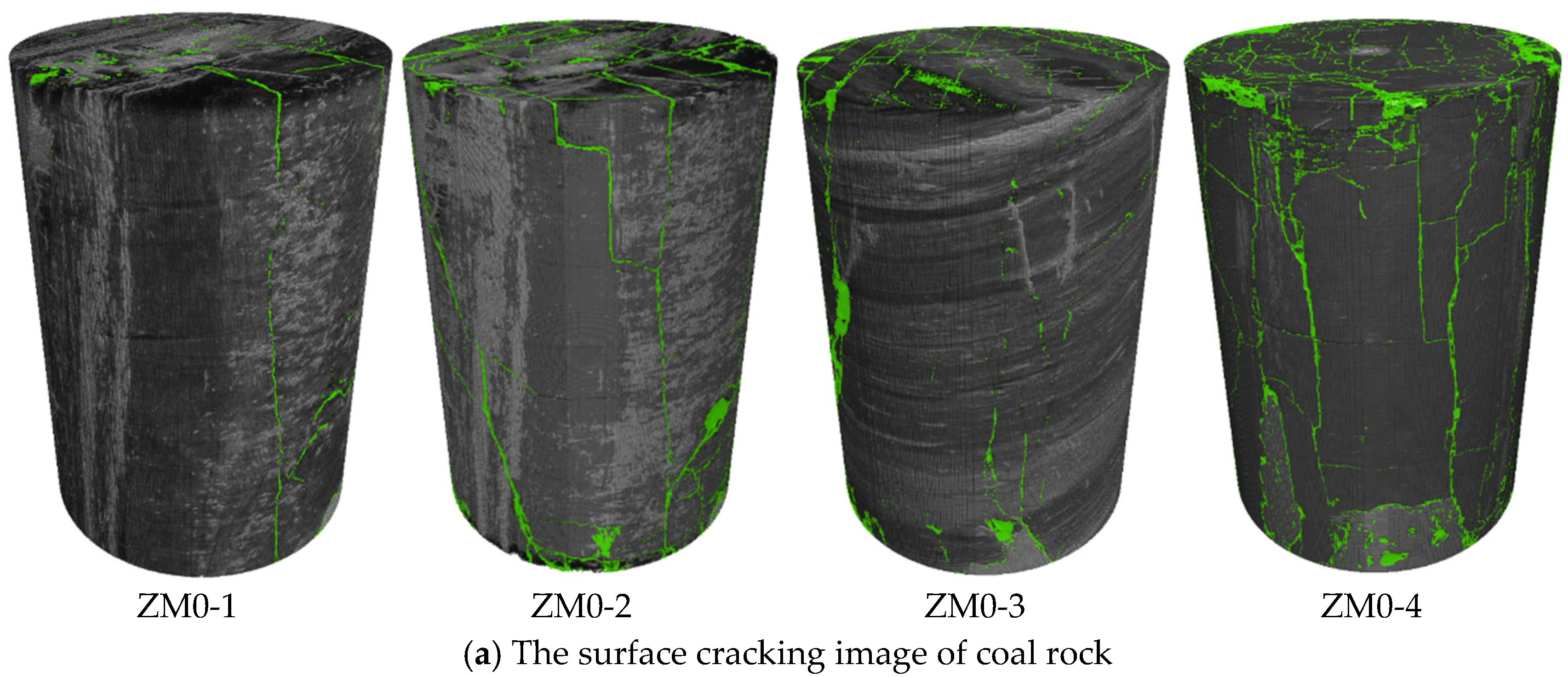
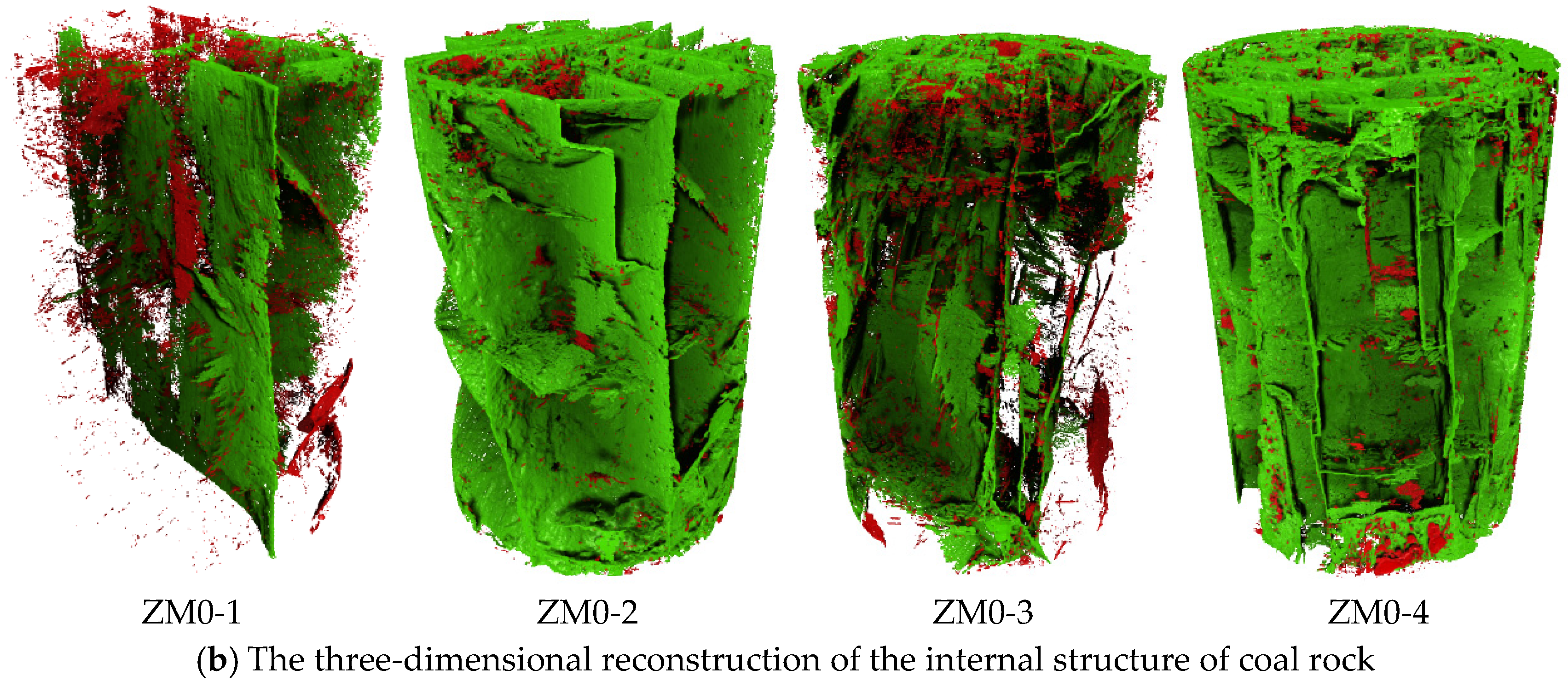
Under hydraulic fracturing, raw coal samples form fractures of varying degrees of development. X-ray CT imaging was performed on the samples before and after hydraulic fracturing. The distribution of surface cracks and internal cracks on the sample surface is shown in Figure 4. As shown in Figure 4b, the cracks connected to the main crack are indicated in green, while the remaining isolated cracks are shown in red. Avizo 3D Pro 2024.2 software was used to calculate the porosity and connectivity under various hydraulic fracturing experimental conditions, with the results shown in Table 1. In the table, σ1 represents the axial pressure, σ2 = σ3 represents the confining pressure, Δσ represents the difference between axial pressure and confining pressure, and Kh represents the stress difference coefficient, which is obtained from Equation (1). It can be seen that the degree of fracture development in the samples after hydraulic fracturing varies significantly. The smaller the stress difference coefficient, the larger the porosity and connectivity of the samples, and the more developed the fracture network formed by hydraulic fracturing.
K h = σ / σ 3 = σ 1 σ 3 / σ 3
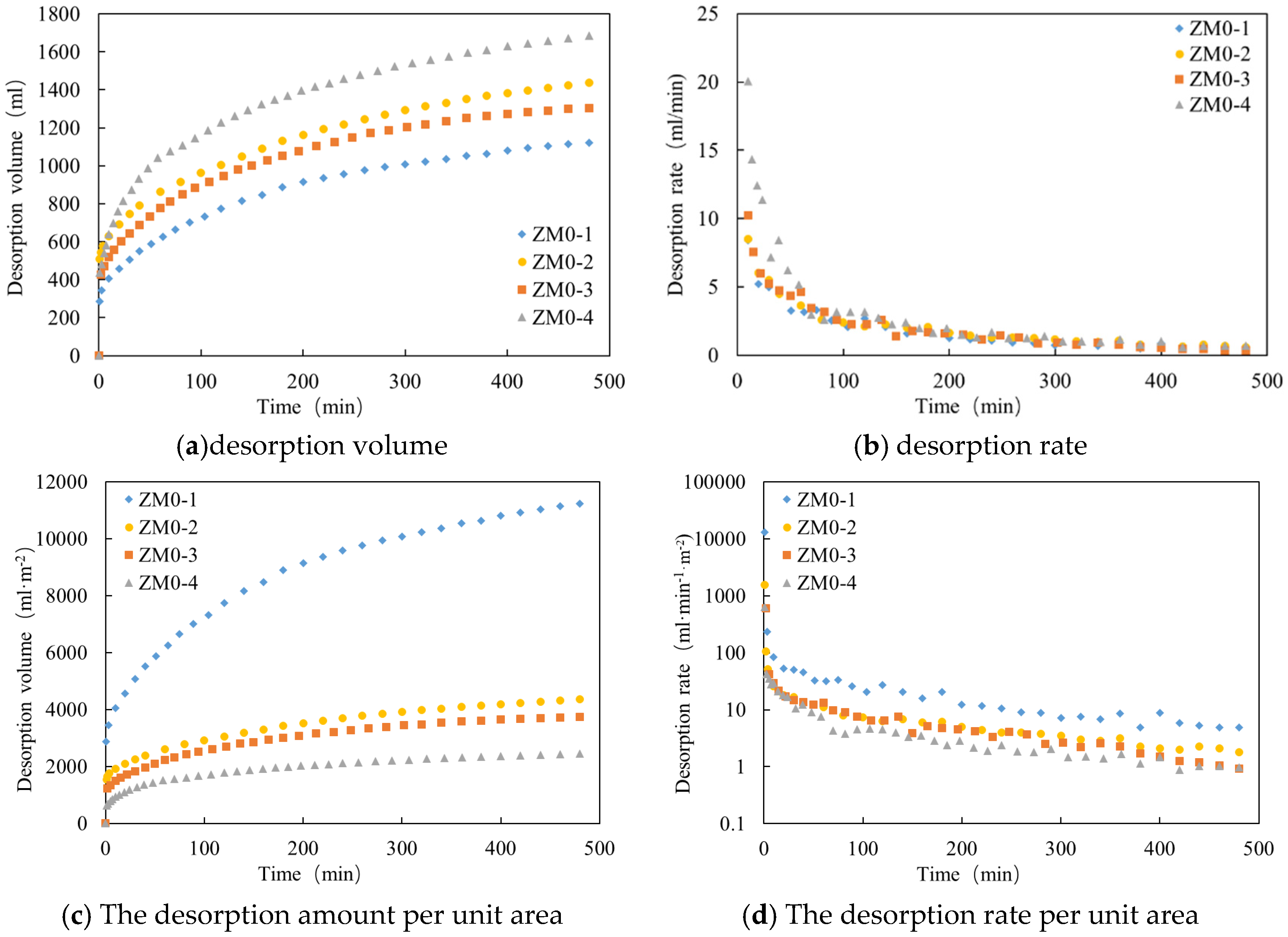
Taking natural adsorption–desorption experiments as an example, the desorption data of the aforementioned samples were fitted using Origin 2025b (OriginLab Corporation, Northampton, MA, USA) software. The fitting results are shown in Table 2. As shown in Figure 5a, under the same adsorption pressure of 1 MPa, the relationship curve between the desorption quantity and time is shown. It can be observed that the desorption quantity first increases rapidly with time, then slows down gradually, and finally stabilizes. Additionally, the correlation coefficients of the curve-fitting results are all above 0.95, indicating that the desorption amount changes exponentially with time. The overall trend of the process is similar to that of the Langmuir model.
As is well known, the porosity and connectivity of coal affect the desorption of gases within it [30,31]. Figure 5 shows the curves of the gas desorption volume and the desorption rate over time under natural desorption conditions. As seen in Figure 5a,b, both the initial desorption rate and the final desorption volume increase with increasing porosity. For the raw coal sample ZM0-1, the initial desorption rate (10 min after desorption initiation) was 8.39 mL/min, with a final desorption volume of 1123 mL. Under natural desorption conditions, the initial desorption rates (10 min after desorption initiation) for ZM0-2, ZM0-3, and ZM0-4 were 17.05 mL/min, 14.79 mL/min, and 24.13 mL/min, respectively, representing 2.03 times, 1.76 times, and 2.88 times the initial desorption rate of the raw coal sample. The final desorption volumes increased by 313 mL, 182 mL, and 562 mL, respectively (increases of 27.87%, 16.21%, and 50.04%). This indicates that during the initial desorption stage, when gas content in the coal sample is high, the pore-fracture structure exerts a significant regulatory effect on the gas desorption process. This influence gradually diminishes as the desorption progresses. The degree of fracture development exhibits a positive correlation with gas desorption capacity, meaning that a more developed fracture network enhances the gas desorption capability. This is primarily because fracture development increases the effective specific surface area per unit mass of coal, reduces the transport resistance for gas diffusion along the path, and accelerates the rate of decrease in gas concentration at the coal surface. The synergistic effect of these three factors ultimately leads to a significant improvement in desorption capacity, manifested macroscopically as a marked increase in the initial desorption rate.
Figure 5c,d show the curves of the gas desorption amount per unit pore/fracture area and the desorption rate over time under natural desorption conditions. As shown in Figure 5c,d, the gas desorption amount per unit pore/fracture area and the desorption rate of the raw coal sample are significantly higher than those of the hydraulically fractured sample. This is because the raw coal sample primarily consists of small pores and microfractures with poor directionality and connectivity. It is rich in micropores with stronger adsorption potentials, whose unit pore surface can accommodate a higher density of adsorbed methane, resulting in a higher surface adsorption efficiency. Following hydraulic fracturing, fractures primarily expand laterally and extend longitudinally along primary fractures, interconnecting to form larger main fractures. While these provide superior diffusion pathways, their pore surfaces exhibit relatively less effective adsorption energy. Thus, high porosity determines the total gas storage capacity and migration capability, while the micropores developed in low-porosity coal contribute to higher desorption potential per unit of surface area.

3.2. Desorption Characteristics of Methane Under Heat Injection

This study used hot water at 50 °C and 80 °C as heat sources, with natural desorption and room temperature water injection (20 °C) as control groups, to analyze the effects of different water-injection temperatures on methane desorption behaviors. The experimental design employed a stepwise pressure increase scheme, with injection pressures of 2 MPa, 4 MPa, 6 MPa, and 8 MPa, pressure increase intervals of 2 h, and an injection duration of 8 h.
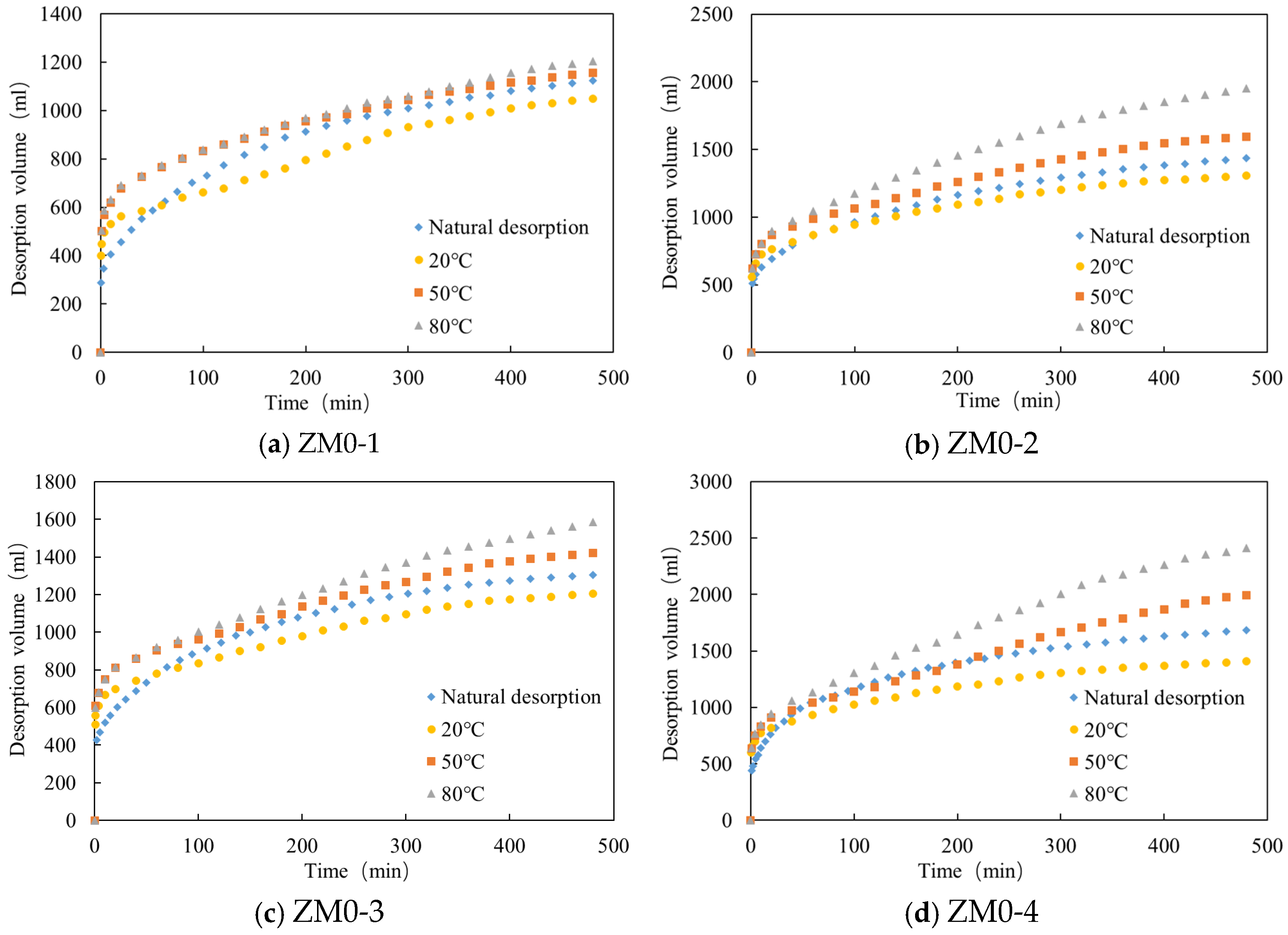
As is well known, water injection and temperature can affect the desorption of methane from coal [7,32]. As shown in Figure 6a, during the initial stage of water injection (within the first hour), since the water has not fully saturated the sample, its displacement effect temporarily promotes methane desorption, resulting in an increase in desorption compared to natural desorption; however, as water injection continues, the water content of the sample increases, leading to a decrease in methane desorption and migration capacity. The final desorption volume under room-temperature water injection was 75 mL lower than that under natural desorption (a decrease of 6.68%). When the hot water temperature was 50 °C and 80 °C, the final desorption volumes increased by 33 mL and 80 mL, respectively (increases of 2.94% and 7.12%), but the curves for the first 240 min were essentially identical for both cases. It is worth noting that when the injection pressure increases to 6 MPa (240 min later), the difference in desorption quantities gradually increases, indicating that the hot water injection has a critical activation pressure. When the hot water-injection pressure exceeds the critical activation pressure, the higher the water-injection temperature, the more pronounced the effect of enhanced desorption. However, for the original sample, although the hot water injection promotes methane desorption, the effect is not significant. Therefore, new methods need to be explored to enhance the desorption-promoting effect of the hot water injection.
As mentioned above, the higher the porosity and connectivity of the coal sample, the greater the desorption quantity of methane in the coal and the faster the desorption rate. Although hydraulic fracturing and other hydraulic measures can increase the porosity and connectivity of the coal sample, the increase in water content also inhibits desorption. Additionally, for raw coal samples, the effect of injecting hot water to promote methane desorption is poor. Therefore, this study employs hydraulic fracturing to enhance the porosity and connectivity of coal samples, thereby improving the penetration capacity of the hot water within the coal samples and enhancing the heating effect. Natural adsorption/desorption, water-injection desorption, and hot water-injection desorption experiments are conducted on both raw coal samples and coal samples containing different degrees of hydraulic fracturing fractures. The desorption characteristics of the coal samples with varying degrees of fracture development under different desorption conditions are investigated.
As shown in Table 3, compared with the natural desorption of the raw coal sample (ZM0-1), the final desorption volume of the hydraulic fracturing samples increased at different water-injection temperatures (20 °C, 50 °C, and 80 °C). For the ZM0-2 sample, the final methane desorption volumes increased by 182 mL, 472 mL, and 830 mL, respectively (increases of 16.21%, 42.03%, and 73.91%). For the ZM0-3 sample, the final methane desorption volumes increased by 81 mL, 297 mL, and 461 mL (increases of 7.21%, 26.45%, and 41.05%). For the ZM0-4 sample, the final methane desorption volumes increased by 287 mL, 873 mL, and 1287 mL, respectively (increases of 25.56%, 77.74%, and 114.60%). It can be concluded that the higher the porosity and water temperature, the more pronounced the hot water injection-enhanced desorption effect. Furthermore, for any hydraulic fracturing sample under hot water injection conditions, the percentage increase in the final desorption volume is greater than the sum of the percentage increases achieved by the two individual technologies under the same conditions. Hydraulic fracturing and hot water injection-enhanced desorption complement each other, achieving a synergistic production enhancement effect.
Figure 6 shows the desorption quantity versus the time curves for each sample under different desorption conditions. As mentioned in Section 3.1, under natural desorption conditions, the desorption quantity–time curves exhibit an exponential relationship. As shown in Figure 6, the desorption volume–time curve within every 2 h shows a linear relationship, with the first time segment ranging from 20 min to 120 min after the start of desorption, with the slope gradually decreasing, indicating that the desorption rate decreases over time.
For the original sample ZM0-1, the effects of hot water injection and water injection on desorption are essentially the same. Both inhibit desorption at the water-injection pressures of 2 MPa and 4 MPa (20–240 min) and promote desorption at the water-injection pressures of 6 MPa and 8 MPa (240–480 min). Additionally, the higher the water-injection pressures, the closer the desorption rate becomes. For the hydraulic fracturing samples ZM0-2 and ZM0-4, the water injection completely inhibits desorption; at a water pressure of 2 MPa (20–120 min), the hot water injection also inhibits desorption, but at water pressures exceeding 2 MPa (120–480 min), the hot water injection promotes desorption. For the hydraulic fracturing sample ZM0-3, the effect of the water injection on desorption was consistent with ZM0-1, while the effect of the hot water injection on desorption was consistent with ZM0-2 and ZM0-4. The water injection promoted desorption when the injection pressure exceeded 4 MPa, and the hot water injection also promoted desorption when the injection pressure exceeded 2 MPa. This indicates that increasing the porosity and connectivity of the coal samples through hydraulic fracturing can effectively enhance the effect of the hot water injection in promoting methane desorption. However, the increase in pore fractures also enhances the inhibitory effect of the water injection on methane desorption. It is important to note that, for the same sample, the increase in desorption caused by the hot water injection is always greater than the decrease in desorption caused by the water injection, and this trend becomes more pronounced as the pore fractures in the sample become more developed.

4. Discussion

4.1. Analysis of the Effect of Water Injection on Methane Desorption Characteristics

Coal seams contain a certain amount of water, and drilling and various hydraulic measures can also introduce confined water into the coal seam. Therefore, the effect of water on methane desorption from coal has been a hot topic of research. Most scholars believe that water has an inhibitory effect on methane desorption from coal seams [33]. The inhibitory effect of confined water on desorption can be divided into water blocking, wetting, capillary action, and the Jamin effect [7].
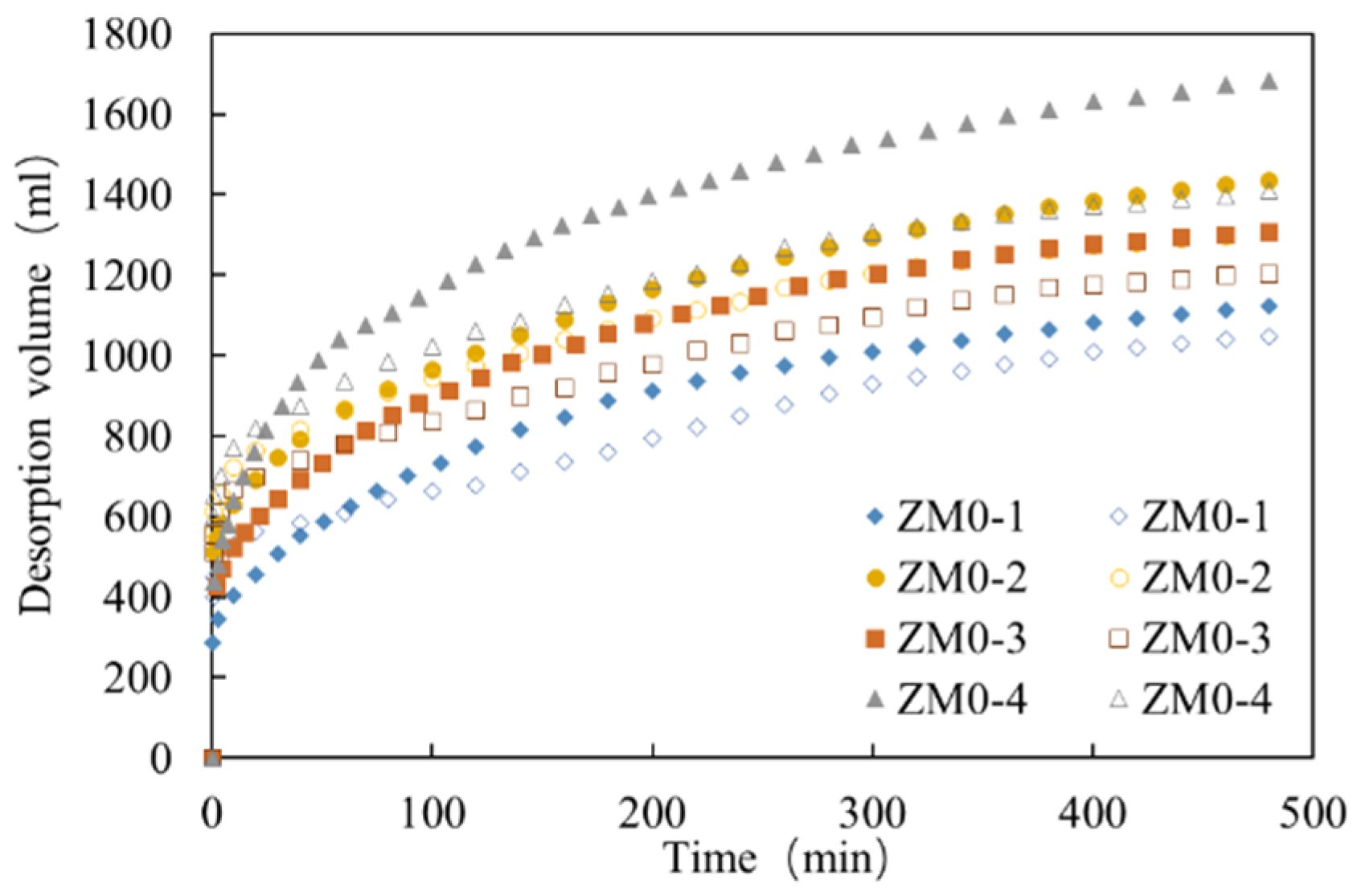
Figure 7 shows the desorption amount and the time curves for each sample under natural desorption conditions and under water-injection desorption conditions. As shown in Figure 7, the curves for each sample under water-injection desorption conditions and natural desorption conditions are similar in shape to the Langmuir isothermal adsorption curves, which is consistent with the research results of Chen et al. [33]. As shown in Figure 7, for the ZM0-1, ZM0-2, and ZM0-3 samples, the desorption amount under the water injection conditions at 20 °C was greater than that under the natural desorption conditions within the first 60 min of desorption, and the opposite was true after 60 min; the desorption rate under the water injection conditions was greater than that under the natural desorption conditions within the first 10 min of desorption, and the opposite was true after 10 min. For the ZM0-4 sample, the critical points are 40 min and 5 min, respectively. This is consistent with the findings of Li et al. [34]. It follows that the methane migration patterns are governed by dynamic competitive adsorption processes. During the initial phase, water molecules, owing to their higher polarity, preferentially occupy adsorption sites through competitive adsorption, displacing methane and thereby promoting methane desorption [17,34,35]. As the injection progresses, accumulated water may clog pore throats, gradually diminishing the displacement effects until the subsequent inhibition phase. The larger the porosity and permeability of the sample, the weaker the initial promotion of methane desorption and the stronger the subsequent inhibition of methane desorption.
Some scholars also believe that injecting water into coal bodies can lead to spontaneous water absorption, and the displacement effect of water during the absorption process promotes methane desorption [35,36]. When water and methane coexist in coal, competitive adsorption occurs, and the adsorption energy between the coal surface and the water molecules is greater than that between the coal and the methane molecules. When water and methane coexist, methane is more easily desorbed [18,37]. Injecting water into coal bodies displaces the methane from its adsorbed state to a free state, thereby promoting methane desorption. Coalbed water injection is a coupled process that both promotes and inhibits methane desorption. In this experiment, the desorption inhibition effect dominates. Due to the high porosity, large pore size, and numerous fractures in the coal samples, pressurized water preferentially flows through fractures and large pores, blocking methane permeation pathways and reducing the desorption volume. Meanwhile, the methane displaced from microporous adsorption sites is minimal, exerting a negligible influence on the overall desorption volume.

4.2. Analysis of Methane Desorption Characteristics Enhanced by Hydraulic Fracturing Combined with Hot Water Injection

Injecting hot water into coal bodies is an effective thermal stimulation method. During thermal stimulation to enhance coalbed methane production, the fully coupled thermal–hydraulic–mechanical conditions induced by thermal stimulation trigger a series of thermal–coal–gas interactions to facilitate heat or gas transfer [38]. Its core principle lies in utilizing hot water as a heat-carrying medium. Through the synergistic action of multiple heat transfer mechanisms, this approach rapidly and efficiently conveys heat into the coal body’s interior. The theoretical mechanism driving the coal body heating is a complex process involving thermodynamics, heat transfer theory, and porous media theory. Coal is a typical porous medium where internal heat transfer primarily occurs through three mechanisms: thermal conduction, thermal convection, and thermal radiation. Injecting hot water into coal represents a composite heat transfer process dominated by thermal convection and supplemented by thermal conduction. The heat exchange rate via thermal convection increases with a higher hot water temperature, a greater injection flow rate, and a larger effective heat exchange surface area.
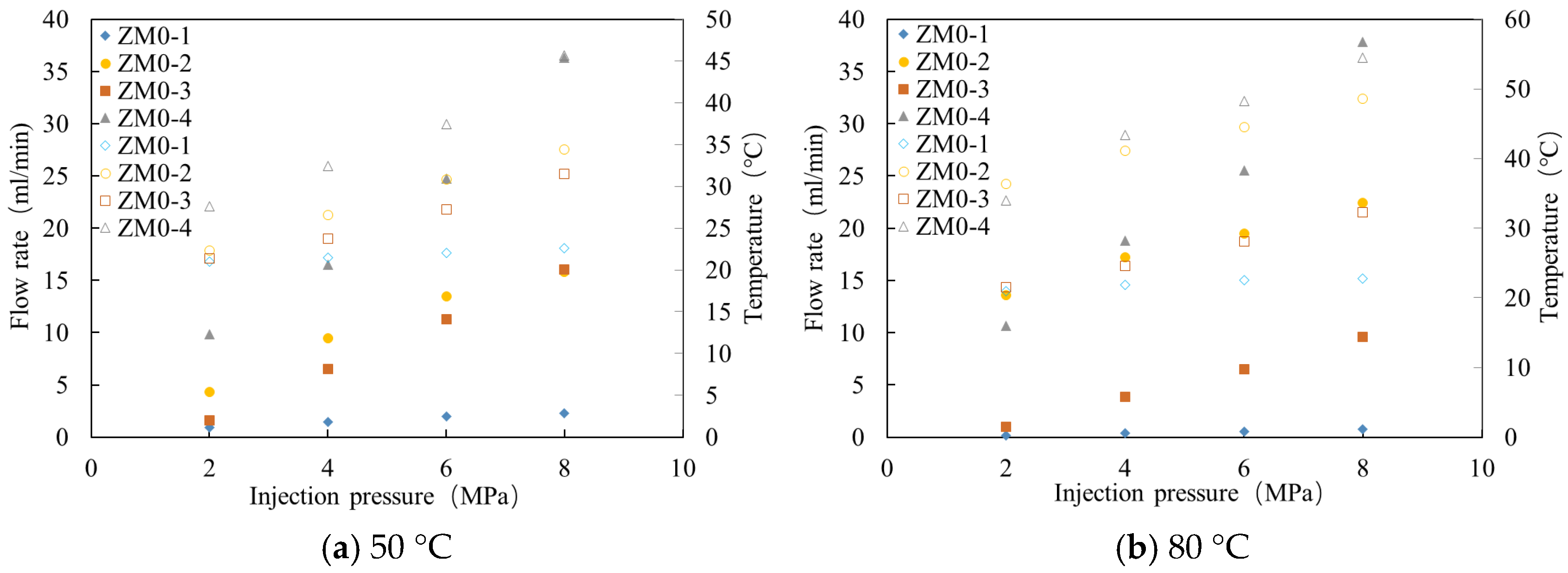
As shown in Section 3.1, the porosity of raw coal samples significantly increases after hydraulic fracturing. Under conditions where the coal sample’s porosity is well-developed, higher injection temperatures result in greater flow rates and higher temperatures within the coal sample. As shown in Figure 8, when hot water is injected at a temperature of 50 °C, the sample temperature can be increased by up to 25.54 °C. When hot water is injected at a temperature of 80 °C, the sample temperature can be increased by up to 34.31 °C. Hydraulic fracturing has a significant effect on the increase in sample temperature after hot water injection. Additionally, the temperature of hot water in the sample after injection can increase from 20 °C to a maximum of 54.47 °C. The dynamic viscosity coefficient of water in the coal sample’s pores decreases from 1.002 × 10⁻³ Pa·s to 0.547 × 10⁻³ Pa·s, representing a reduction of 45.4%. This significant viscosity reduction effectively decreased the flow resistance of the hot water within the microfractures, weakened the intensity of the water lock effect, and consequently facilitated the desorption of methane molecules from the pore surfaces and their migration into the fracture network. This study demonstrates that the temperature-induced regulation of water viscosity is a key physical mechanism for enhancing coalbed methane desorption through thermal injection, consistent with the findings reported by Hu et al. [29].
Compared with the existing studies that primarily focus on single factors (hydraulic fracturing alone or thermal stimulation alone) or are limited to numerical simulations, this research provides crucial empirical data on the synergistic effects of hydraulic fracturing and thermal injection through systematic multiphase coupling experiments. The results indicate that under optimal injection parameter combinations, the synergistic interaction between the two methods can increase the methane desorption volume by 114.60%, a gain far exceeding that achievable with either method alone. The regulation of water’s dynamic viscosity by hot water injection and its mitigation of the water lock effect are crucial factors contributing to this gain, aspects previously unidentified in single-factor analyses or modeling studies that did not integrate multiphase processes.
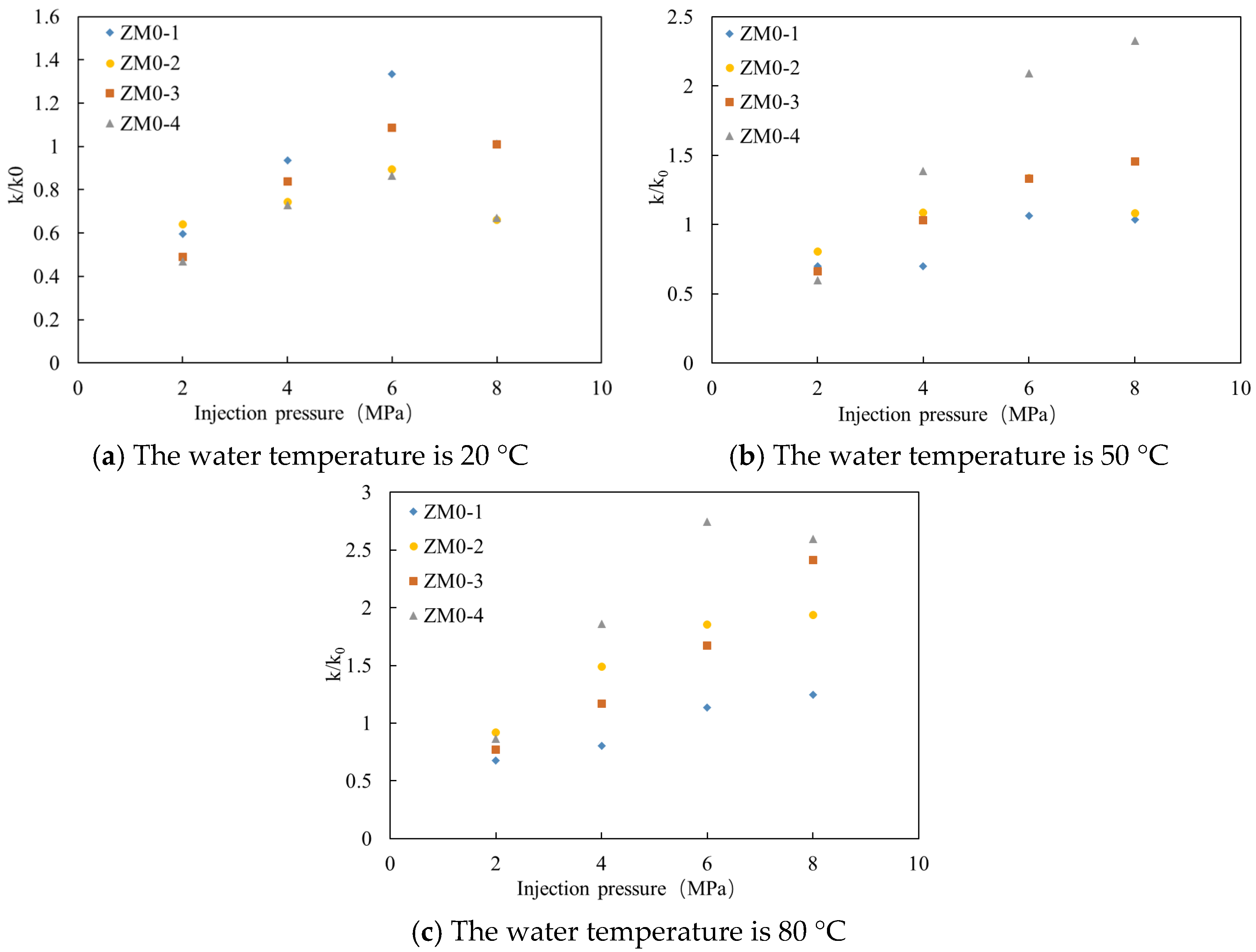
As shown in Section 3.2, under water-injection and hot water-injection desorption conditions, when the water-injection pressure is constant, the desorption volume–time curves of all samples exhibit a linear relationship, with the slope gradually decreasing, indicating a reduction in the desorption rate. To investigate the effect of hot water injection on methane desorption behaviors, a normalized analysis method was employed by comparing the ratio of the desorption rate (k) under water injection and hot water injection conditions to the natural desorption rate (k0) for the same sample (k/k0). The curve showing the variation in the desorption rate ratio with water-injection pressures is shown in Figure 9. As shown in Figure 9a, during water injection, k/k0 first increases and then decreases. Additionally, the lower the sample porosity, the larger the k/k0 value. For the original sample (ZM0-1), when the water-injection pressure is 6 MPa, k/k0 > 1, this indicates that at an injection pressure of 6 MPa, water injection promotes desorption, and the lower the sample porosity, the slower the desorption rate, with the water displacement effect becoming more pronounced.
As shown in Figure 9b,c, for raw coal samples, when the water-injection temperature is 50 °C, the maximum value of k/k0 is 1.04, which is 4% higher than natural desorption; when the water-injection temperature is 80 °C, the maximum value of k/k0 is 1.24, which is 24% higher than natural desorption. For the ZM0-4 sample, when the injection temperature is 50 °C, the maximum value of k/k0 is 2.32, which is an increase of 1.32 times compared to natural desorption; when the injection temperature is 80 °C, the maximum value of k/k0 is 2.74, which is an increase of 1.74 times compared to natural desorption. Under the same injection heating conditions, the desorption rate of the raw coal sample increases only slightly, while the desorption rate of the sample after hydraulic fracturing can increase by up to 1.74 times, clearly demonstrating the significant impact of hydraulic fracturing on injection heating-enhanced desorption.
As shown in Figure 9b,c, when the injection pressure is 2 MPa, k/k0 < 1, indicating that when the injection pressure is low, the hot water injection inhibits desorption, which is consistent with the findings of Zhao et al. [39]; when the injection pressure is ≥4 MPa, k/k0 > 1, indicating that at injection pressures ≥ 4 MPa, hot water injection promotes desorption. When the injection pressure is ≤6 MPa, k/k0 it shows linear growth. When the injection pressure is 8 MPa, the values of k/k0 are relatively small. As shown in Figure 9a, the suppression effect on desorption is at its weakest when the injection pressure is 6 MPa. Therefore, during the hot water injection, the inhibitory effect of water on desorption diminishes, and the effect of the temperature increase in promoting desorption becomes more pronounced.
As shown in Section 4.1, for samples with sufficiently developed pore cracks, when the water-injection pressure is high enough, it can significantly increase the temperature of the coal body. However, as the flow rate of hot water increases, the water injection’s ability to inhibit desorption also increases, thereby weakening the effect of the heat injection in promoting desorption. While considering the effect of temperature on desorption behaviors, it is also necessary to consider the inhibitory effect of the water injection on desorption. Therefore, a higher water-injection pressure does not necessarily mean a more pronounced promotion of desorption by the hot water injection. In practical applications, the optimal water-injection temperature and pressure can be selected based on specific conditions to enhance the desorption effectiveness while saving costs.

5. Conclusions

This paper primarily explores the natural desorption behaviors of different hydraulic fracturing samples, the methane desorption behaviors under the influence of different pressures and temperatures of water injection, and analyzes the water injection inhibition of desorption characteristics, the enhanced effect of hydraulic fracturing on increasing coal temperature through hot water injection, and the experimental work and characteristic analysis of the hot water injection enhancement of desorption in various hydraulic fracturing coal samples. Based on the completed research, the following conclusions can be drawn:
(1)
Hydraulic fracturing treatment can significantly improve the pore structure and connectivity of raw coal samples, thereby optimizing their methane desorption characteristics. After hydraulic fracturing, raw coal samples increase the effective specific surface area per unit mass of coal, reduce the transport resistance of the methane diffusion along the path, and accelerate the rate of decrease in the methane concentration on the coal surface. Ultimately, this leads to a significant improvement in desorption capacity, which is manifested macroscopically by a marked increase in the initial desorption rate.
(2)
Water injection can affect the methane migration patterns in the sample. During the initial stage of water injection, water gradually displaces the methane in the sample, facilitating the desorption and diffusion of the adsorbed methane. As time progresses, water gradually blocks the methane permeation channels. However, water entering the microporous structure of methane adsorption displaces only a small amount of methane, and its effect on the overall desorption amount is negligible. The higher the porosity and permeability of the sample, the poorer the effect of promoting methane desorption in the early stages and the stronger the effect of inhibiting methane desorption in the later stages.
(3)
Injecting hot water into the coal matrix primarily involves a composite heat transfer process dominated by thermal convection and supplemented by thermal conduction. Hydraulic fracturing significantly enhances the heat injection efficiency in the coal samples, markedly increasing sample temperature. Post-injection, the sample temperature rose from 20 °C to a maximum of 54.47 °C. The dynamic viscosity coefficient of the water decreased from 1.002 × 10⁻³ Pa·s to 0.547 × 10⁻³ Pa·s, representing a 45.4% reduction. This weakening diminished the intensity of the water-lock effect while enhancing the desorption and migration capacity of methane molecules.
(4)
Hydraulic fracturing has a more significant impact on the hot water-assisted desorption, and the combination of the two achieves a synergistic effect in increasing production. However, when the hot water flow rate is sufficiently high, the water injection inhibits desorption capacity, weakening the hot water-enhanced desorption effect. Further investigations are needed for other coal types. The optimal water-injection temperature and pressure can be selected based on specific conditions to ensure the hot water-enhanced desorption effect while minimizing costs.
(5)
This study, while providing valuable insights into the synergistic effects of hydraulic fracturing and thermal injection, has several limitations that should be addressed in future research. These include the lack of real-time humidity measurements to precisely quantify the water lock effect; the use of coal samples from a single seam, limiting generalizability; the absence of injected water chemical monitoring to exclude impurity interference; and the need for replicate experiments under varying conditions to assess result reproducibility. Addressing these aspects in future work would further strengthen the understanding of the underlying mechanisms.

Author Contributions

X.Z.: Methodology, validation, visualization, writing—original draft. B.L.: Conceptualization, methodology, validation, project administration, writing—review and editing. W.S.: Investigation, writing—review and editing, supervision, resources. Z.L.: Investigation, visualization. Z.W.: Data curation, investigation. Y.L.: Data curation, visualization. All authors have read and agreed to the published version of the manuscript.

Funding

This work is supported by the National Natural Science Foundation of China (Grant No. 52474038), the Basic Research Project of the Liaoning Provincial Department of Education (LJ222410147037), and the Project Supported by Discipline Innovation Team of Liaoning Technical University (LNTU20TD-11). The financial support is greatly appreciated.

Data Availability Statement

The datasets presented in this article are not readily available because the data are part of an ongoing study and will be used in subsequent research. Requests to access the datasets should be directed to the corresponding author.

Conflicts of Interest

The authors declare that they have no known competing financial interests or personal relationships that could have appeared to influence the work reported in this paper.

References

  1. Chen, S.; Yang, T.; Ranjith, P.G.; Wei, C. Mechanism of the Two-Phase Flow Model for Water and Gas Based on Adsorption and Desorption in Fractured Coal and Rock. Rock Mech. Rock Eng. 2017, 50, 571–586. [Google Scholar] [CrossRef] [Scilit]
  2. Ranathunga, A.; Perera, M.; Ranjith, P.; Wei, C. An experimental investigation of applicability of CO2 enhanced coal bed methane recovery to low rank coal. Fuel 2017, 189, 391–399. [Google Scholar] [CrossRef] [Scilit]
  3. Clarkson, C.; Pan, Z.; Palmer, I.; Harpalani, S. Predicting Sorption-Induced Strain and Permeability Increase With Depletion for Coalbed-Methane Reservoirs. SPE J. 2009, 15, 152–159. [Google Scholar] [CrossRef] [Scilit]
  4. Moore, T.A. Coalbed methane: A review. Int. J. Coal Geol. 2012, 101, 36–81. [Google Scholar] [CrossRef] [Scilit]
  5. Palmer, I. Permeability changes in coal: Analytical modeling. Int. J. Coal Geol. 2009, 77, 119–126. [Google Scholar] [CrossRef] [Scilit]
  6. Pan, Z.; Connell, L. Modelling permeability for coal reservoirs: A review of analytical models and testing data. Int. J. Coal Geol. 2012, 92, 1–44. [Google Scholar] [CrossRef] [Scilit]
  7. Li, X.; Zhao, D.; Zhang, C.; Qin, Y.; Chang, H.; Feng, Z. Gas desorption characteristics and related mechanism analysis under the action of superheated steam and pressurized water based on an experimental study. J. Nat. Gas Sci. Eng. 2021, 96, 104268. [Google Scholar] [CrossRef] [Scilit]
  8. Liu, J.; Wang, C.; He, X.; Li, S. Infrared measurement of temperature field in coal gas desorption. Int. J. Min. Sci. Technol. 2014, 24, 57–61. [Google Scholar] [CrossRef] [Scilit]
  9. Liu, S.; Wei, C.; Zhu, W.; Zhang, M. Temperature- and pressure-dependent gas diffusion in coal particles: Numerical model and experiments. Fuel 2020, 266, 117054. [Google Scholar] [CrossRef] [Scilit]
  10. Guo, H.; Cheng, Y.; Ren, T.; Wang, L.; Yuan, L.; Jiang, H.; Liu, H. Pulverization characteristics of coal from a strong outburst-prone coal seam and their impact on gas desorption and diffusion properties. J. Nat. Gas Sci. Eng. 2016, 33, 867–878. [Google Scholar] [CrossRef] [Scilit]
  11. Guo, H.; Yuan, L.; Cheng, Y.; Wang, K.; Xu, C.; Zhou, A.; Zang, J.; Liu, J. Effect of moisture on the desorption and unsteady-state diffusion properties of gas in low-rank coal. J. Nat. Gas Sci. Eng. 2018, 57, 45–51. [Google Scholar] [CrossRef] [Scilit]
  12. Ceglarska-Stefańska, G.; Brzoska, K. The effect of coal metamorphism on methane desorption. Fuel 1998, 77, 645–648. [Google Scholar] [CrossRef] [Scilit]
  13. Zeng, F.; Peng, F.; Guo, J.; Wang, D.; Zhang, S.; Zhang, P.; Zhang, B. Gas transport study in the confined microfractures of coal reservoirs. J. Nat. Gas Sci. Eng. 2019, 68, 102920. [Google Scholar] [CrossRef] [Scilit]
  14. Wu, J.; Zhang, G. Research on Development Characteristics of Micro-Fractures in a Soft Coal Seam Based on the Water-Injection Effect. Chem. Technol. Fuels Oils 2020, 56, 312–324. [Google Scholar] [CrossRef] [Scilit]
  15. Lu, Y.; Yang, F.; Ge, Z.; Wang, S.; Wang, Q. The influence of viscoelastic surfactant fracturing fluids on gas desorption in soft seams. J. Nat. Gas Sci. Eng. 2015, 27, 1649–1656. [Google Scholar] [CrossRef] [Scilit]
  16. Ma, S.; Zhang, Q.; Cao, J.; Xue, S. Study on the Influence of Gas Desorption Characteristics of Different Coal Bodies under Hydraulic Permeability Enhancement. Appl. Sci. 2023, 13, 11648. [Google Scholar] [CrossRef] [Scilit]
  17. Ni, X.; Zhang, J.; Han, L.; Liu, X. Methane Desorption–Diffusion Behaviors in Micropores of Coal under Different Water Displacement Pressures. Langmuir 2024, 40, 23081–23093. [Google Scholar] [CrossRef] [Scilit]
  18. Lu, W.; Huang, B.; Zhao, X. A review of recent research and development of the effect of hydraulic fracturing on gas adsorption and desorption in coal seams. Adsorpt. Sci. Technol. 2019, 37, 509–529. [Google Scholar] [CrossRef] [Scilit]
  19. Wang, K.; Ren, H.; Wang, Z.; Wei, J. Temperature-pressure coupling effect on gas desorption characteristics in coal during low-variable temperature process. J. Pet. Sci. Eng. 2022, 211, 110104. [Google Scholar] [CrossRef] [Scilit]
  20. Li, X.; Wang, C.; Chen, Y.; Li, H. Influence of temperature on gas desorption characterization in the whole process from coals and its application analysis on outburst risk prediction. Fuel 2022, 321, 124021. [Google Scholar] [CrossRef] [Scilit]
  21. Yang, T.; Chen, P.; Li, B.; Nie, B.; Zhu, C.; Ye, Q. Potential safety evaluation method based on temperature variation during gas adsorption and desorption on coal surface. Saf. Sci. 2019, 113, 336–344. [Google Scholar] [CrossRef] [Scilit]
  22. Salmachi, A.; Haghighi, M. Feasibility Study of Thermally Enhanced Gas Recovery of Coal Seam Gas Reservoirs Using Geothermal Resources. Energy Fuels 2012, 26, 5048–5059. [Google Scholar] [CrossRef] [Scilit]
  23. Wang, Z.; Wang, X.; Ma, X.; Li, X.; Zhu, Z. Laboratory measurements of methane desorption behavior on coal under different modes of real-time microwave loading. Adsorption 2020, 26, 61–73. [Google Scholar] [CrossRef] [Scilit]
  24. Wang, Z.; Ma, X.; Wei, J.; Li, N. Microwave irradiation’s effect on promoting coalbed methane desorption and analysis of desorption kinetics. Fuel 2018, 222, 56–63. [Google Scholar] [CrossRef] [Scilit]
  25. Zhang, Z.; Xu, T.; Li, S.; Guo, P.; Li, X.; Lu, C.; Sun, Y.; Wang, P.; Qin, X. Comparative analysis of three heating methods for natural gas hydrate production: Electric heating, steam injection, and hot water injection. Appl. Therm. Eng. 2025, 269, 126131. [Google Scholar] [CrossRef] [Scilit]
  26. Nian, Y.; Han, B.; Cheng, W. Experimental study on combination hot water-CO2-chemical flooding with effects on oil recovery and heat transfer. Appl. Therm. Eng. 2020, 166, 114683. [Google Scholar] [CrossRef] [Scilit]
  27. Lin, D.; Lu, J.; Liu, J.; Liang, D.; Li, D.; Jin, G.; Xia, Z.; Li, X. Numerical study on natural gas hydrate production by hot water injection combined with depressurization. Energy 2023, 282, 128862. [Google Scholar] [CrossRef] [Scilit]
  28. Teng, T.; Wang, J.; Gao, F.; Ju, Y. Complex thermal coal-gas interactions in heat injection enhanced CBM recovery. J. Nat. Gas Sci. Eng. 2016, 34, 1174–1190. [Google Scholar] [CrossRef] [Scilit]
  29. Hu, L.; Feng, Z.; Zhou, D.; Wang, X. Mechanisms and field application of in-situ heat injection-enhanced gas drainage. Energy 2023, 284, 128729. [Google Scholar] [CrossRef] [Scilit]
  30. Li, C.; Xue, H.; Hu, P.; Guan, C.; Liu, W. Effect of stress on the diffusion kinetics of methane during gas desorption in coal matrix under different equilibrium pressures. J. Geophys. Eng. 2018, 15, 841–851. [Google Scholar] [CrossRef] [Scilit]
  31. Ji, P.; Lin, H.; Kong, X.; Li, S.; Long, H.; Bai, Y.; Zhan, M.; Zhao, T. Study on the law of CH4/N2 adsorption-desorption-diffusion-seepage and the coal deformation characteristics under triaxial stress. Chin. J. Rock Mech. Eng. 2023, 42, 2496–2514. [Google Scholar]
  32. Zhai, Y.; Song, D.; Li, Y. Experimental study of the effect of temperature and pressure on the desorption rate of coal bed methane. Coal Sci. Technol. 2024, 52, 80–85. [Google Scholar]
  33. Chen, X.; Chen, Y.; He, T.; Li, X. Water injection impact on gas diffusion characteristic of coal. Min. Saf. Eng. 2013, 30, 443–448. (In Chinese) [Google Scholar]
  34. Li, X.; Chen, X.; Wang, L.; Shi, H.; Yu, T. Experimental Study on Coal Seam Gas Desorption Characteristics Caused by Moisture under Stepwise Depressurization. Energies 2023, 16, 3566. [Google Scholar] [CrossRef] [Scilit]
  35. Wang, L.; Jiang, B. Experimental study of the effect of static water on imbibition gas recovery in coalbed methane reservoirs. J. Nat. Gas Sci. Eng. 2016, 35, 1284–1292. [Google Scholar] [CrossRef] [Scilit]
  36. Wu, J.; Yu, J.; Wang, Z.; Fu, X.; Su, W. Experimental investigation on spontaneous imbibition of water in coal: Implications for methane desorption and diffusion. Fuel 2018, 231, 427–437. [Google Scholar] [CrossRef] [Scilit]
  37. Zhou, Y.; Sun, W.; Chu, W.; Liu, X.; Jing, F.; Xue, Y. Theoretical insight into the enhanced CH4 desorption via H2O adsorption on different rank coal surfaces. J. Energy Chem. 2016, 25, 677–682. [Google Scholar]
  38. Teng, T.; Zhao, Y.; Gao, F.; Wang, F.; Wang, W. A fully coupled thermo-hydro-mechanical model for heat and gas transfer in thermal stimulation enhanced coal seam gas recovery. Int. J. Heat Mass Transf. 2018, 125, 866–875. [Google Scholar]
  39. Zhao, D.; Zhao, Y.; Feng, Z. Laboratory Experiment on Coalbed-Methane Desorption Influenced by Water Injection and Temperature. J. Can. Pet. Technol. 2011, 50, 24–33. [Google Scholar] [CrossRef] [Scilit]
Figure 1. Sample images.
Fuels 07 00025 g001
Figure 2. The experimental system.
Fuels 07 00025 g002aFuels 07 00025 g002b
Figure 3. The simplified diagram of experimental procedures.
Fuels 07 00025 g003
Figure 4. The CT scan image of the sample.
Fuels 07 00025 g004aFuels 07 00025 g004b
Figure 5. The curves showing the changes in methane desorption amount and the desorption rate over time under natural desorption conditions.
Fuels 07 00025 g005
Figure 6. The curves showing changes in methane desorption volume over time.
Fuels 07 00025 g006
Figure 7. Methane desorption volume over time (solid symbols: natural desorption volume; hollow symbols: water-injection desorption volume).
Fuels 07 00025 g007
Figure 8. The curves showing the hot water flow rate and the sample temperature as a function of injection pressure (solid symbols: flow rate, hollow symbols: temperature).
Fuels 07 00025 g008
Figure 9. The ratio of the methane desorption rate under the water injection conditions to the natural desorption rate.
Fuels 07 00025 g009
Table 1. The porosity and connectivity under different hydraulic fracturing experimental schemes.
Sample Numberσ1σ3ΔσKhPorosityEffective PorosityConnectivityTotal Pore Area/m2
ZM0-1////0.93%0.66%71.55%0.10
ZM0-210 MPa8 MPa2 MPa0.255.38%5.29%98.29%0.33
ZM0-310 MPa6 MPa4 MPa0.673.57%3.42%95.77%0.35
ZM0-410 MPa10 MPa0 MPa08.65%8.53%98.55%0.69
Table 2. The fitting results for each sample under natural desorption.
Sample NumberExponential Fitting ResultsR2
ZM0-1Q = 1123(1 − exp(−(t/70.86)0.515))0.9529
ZM0-2Q = 1436(1 − exp(−(t/43.47)0.371))0.9551
ZM0-3Q = 1305(1 − exp(−(t/56.60)0.478))0.9605
ZM0-4Q = 1685(1 − exp(−(t/54.43)0.459))0.9769
Table 3. The final methane desorption quantities of each sample under different conditions.
ZM0-1ZM0-2ZM0-3ZM0-4
Desorption conditionsDesorption
Volume (mL)
Desorption
Volume (mL)
Desorption volume (mL)Desorption volume (mL)
Natural desorption1123143613051685
Injection of 20 °C water1048130512041410
Injection of 50 °C water1156159514201996
Injection of 80 °C water1203195315842410
Disclaimer/Publisher’s Note: The statements, opinions and data contained in all publications are solely those of the individual author(s) and contributor(s) and not of MDPI and/or the editor(s). MDPI and/or the editor(s) disclaim responsibility for any injury to people or property resulting from any ideas, methods, instructions or products referred to in the content.