Article

Development of Novel Symptom Score to Assist in Screening for Exocrine Pancreatic Insufficiency


by
Dana M. Lewis
1,2,* and
Amanda Landers
2
1
OpenAPS, Seattle, WA 98101, USA
2
Department of Medicine, University of Otago, Christchurch 8011, New Zealand
*
Author to whom correspondence should be addressed.
Epidemiologia 2025, 6(3), 48; https://doi.org/10.3390/epidemiologia6030048

Submission received: 24 June 2025 / Revised: 18 July 2025 / Accepted: 8 August 2025 / Published: 12 August 2025

Abstract

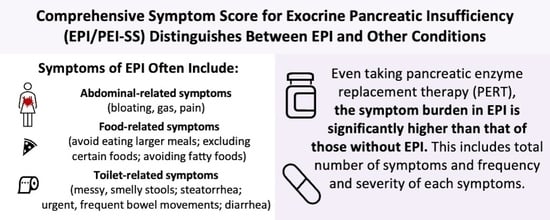
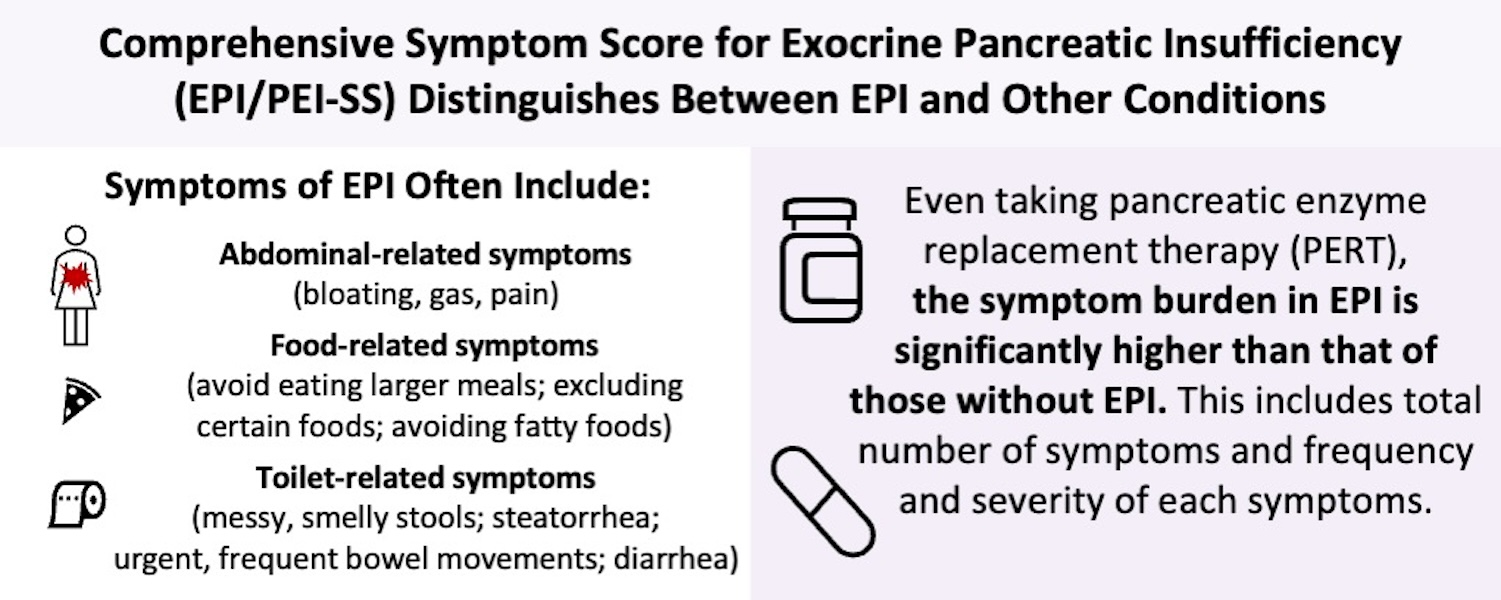
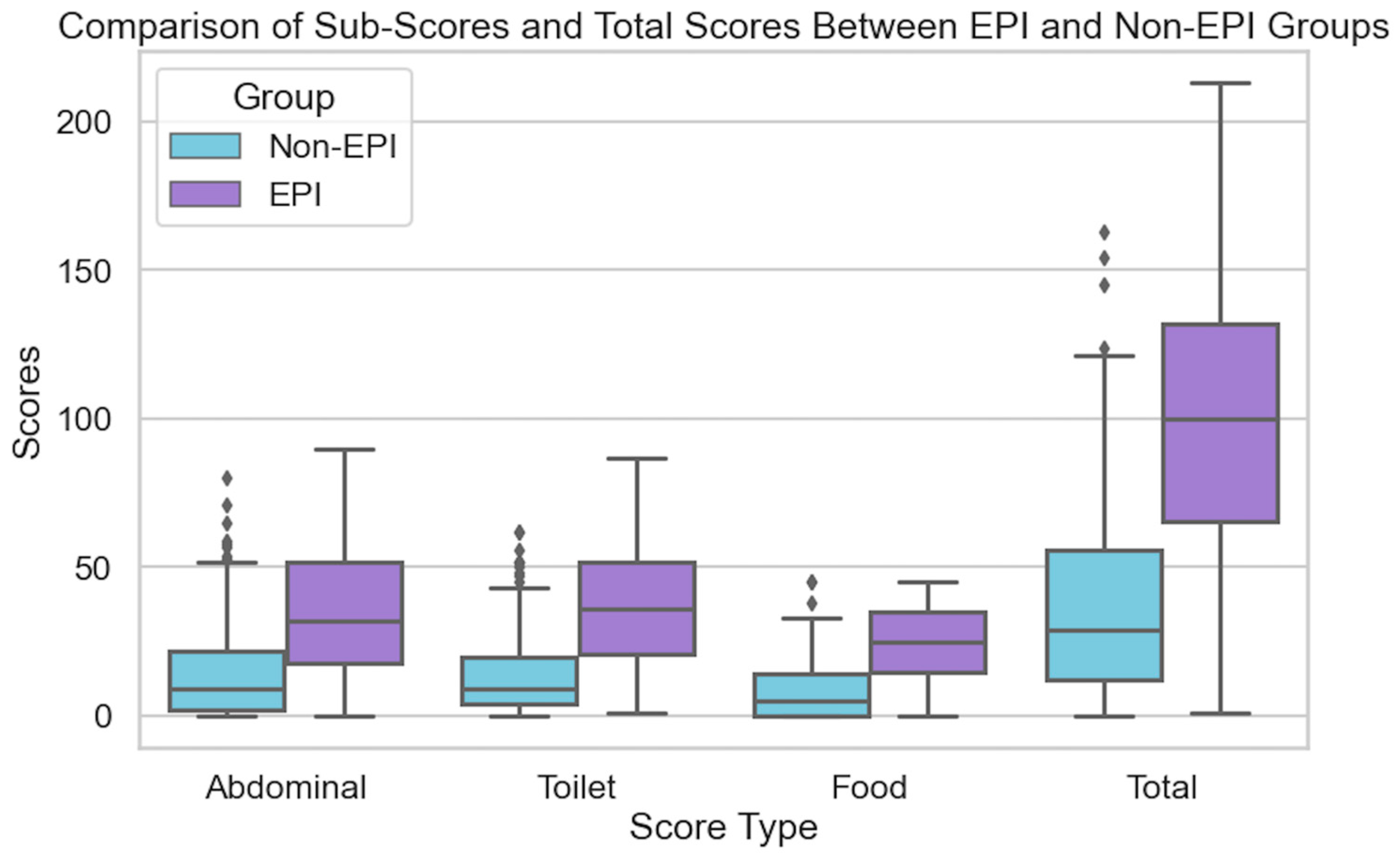
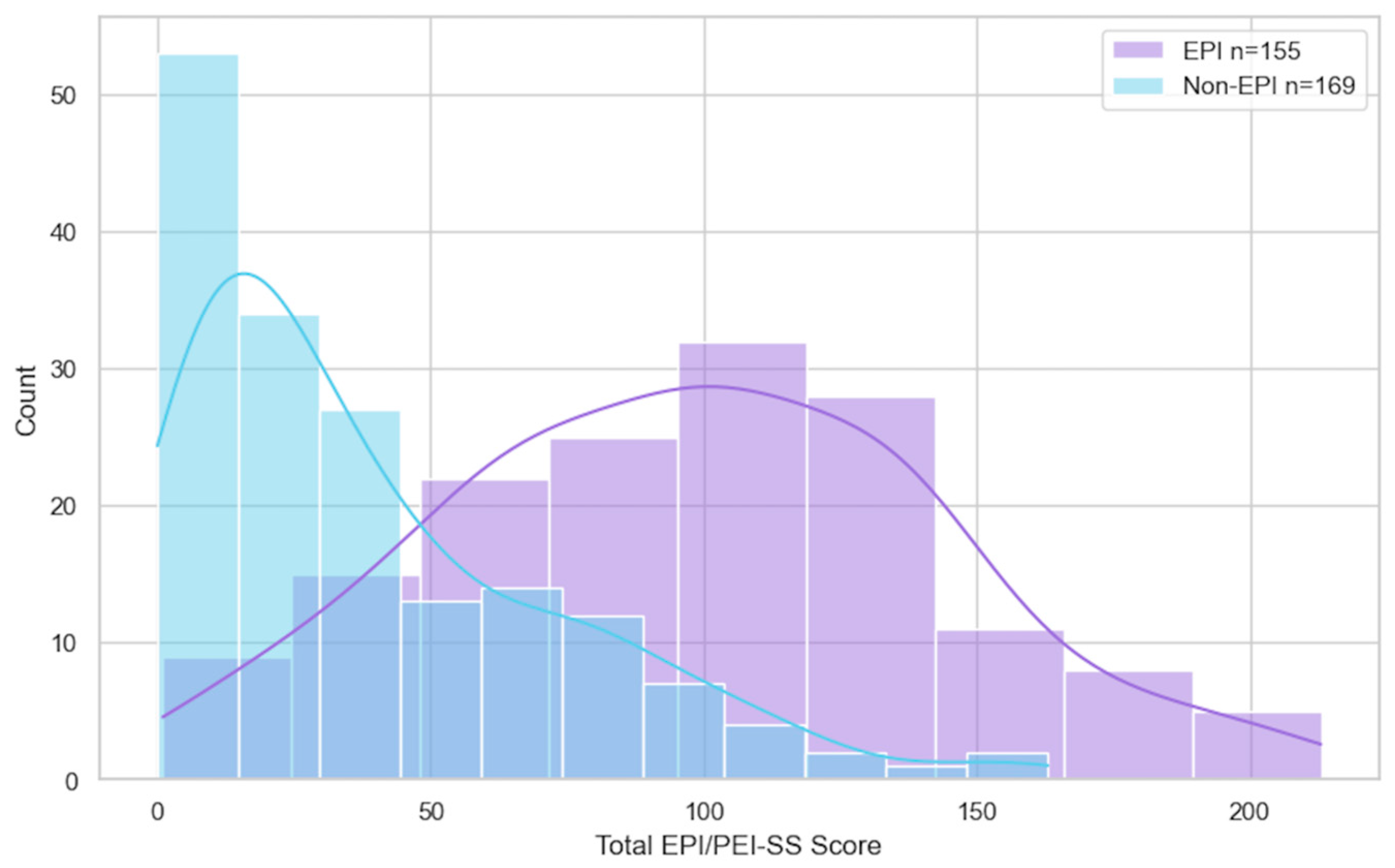
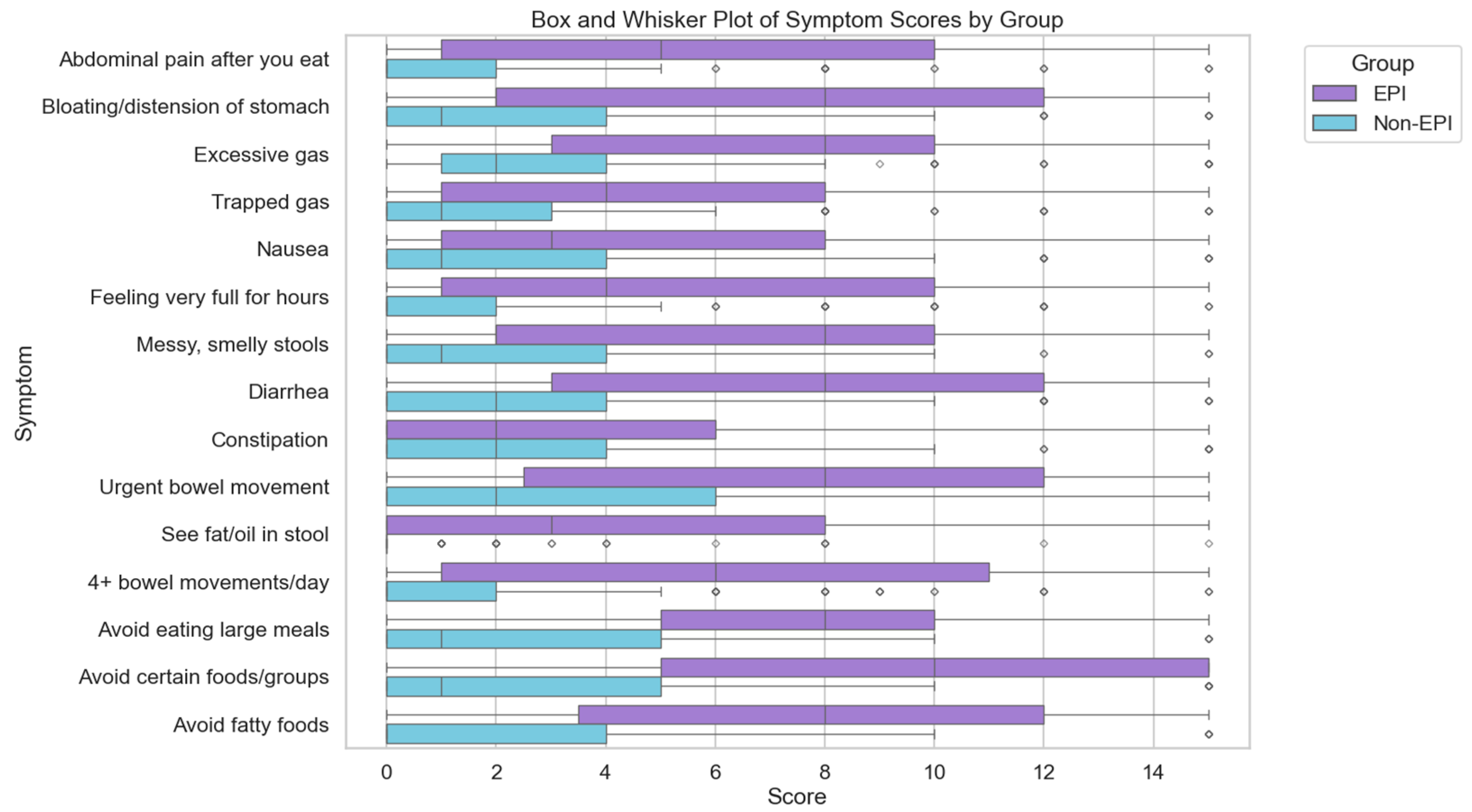
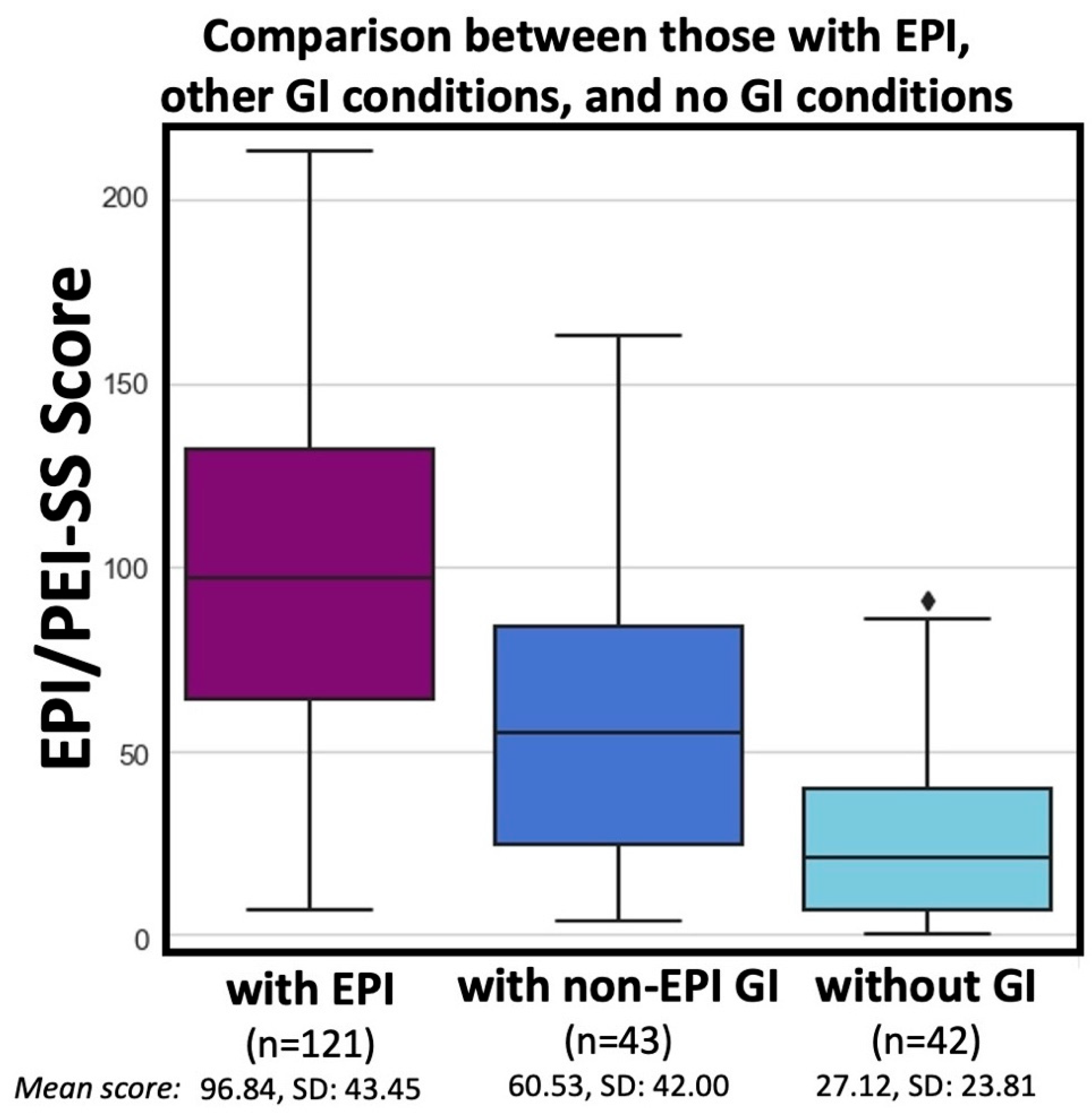
Background: Exocrine pancreatic insufficiency (EPI or PEI) often goes undiagnosed or misdiagnosed due to nonspecific symptomatology. Clinicians may focus primarily on symptoms like diarrhea and steatorrhea, potentially overlooking more prevalent symptoms. Methods: Our research describes the development and evaluation of the Exocrine Pancreatic Insufficiency Symptom Score (EPI/PEI-SS), a novel patient-generated symptom score designed to capture a wide range of EPI-related symptoms and quantify symptoms based on frequency and severity (score ranges 0–225). This preliminary real-world study assessed the efficacy of the EPI/PEI-SS in differentiating between individuals with and without EPI. To examine disparities between participants with and without EPI, average symptom frequency, severity, and overall score relationships were assessed, as well as sub-analyses based on other health co-conditions. Results: In total, 324 participants (155 with EPI and 169 without) completed the EPI/PEI-SS online. Individuals with EPI reported significantly higher EPI/PEI-SS scores (98.11, range 1–213) indicating a greater symptom burden compared with those without EPI (38.86, range 0–163). Conclusions: The EPI/PEI-SS appears to effectively differentiate between EPI and non-EPI participants, including non-EPI participants with other GI conditions. The EPI/PEI-SS demonstrates the potential to identify EPI and distinguish symptoms of EPI from other GI conditions, as evaluated with frequency and severity. Future research could replicate the study alongside fecal elastase testing, to determine whether it can be used additionally or alternatively for EPI diagnosis.
Keywords: EPI; PEI; pancreatic enzyme replacement therapy; PERT; pancreas; symptoms; quality of life; QOL; outcomes; diagnosis; screening EPI; PEI; pancreatic enzyme replacement therapy; PERT; pancreas; symptoms; quality of life; QOL; outcomes; diagnosis; screening
Graphical Abstract