
Article

Evaluating Public Transportation Criteria and Congestion Using Multi-Criteria Assessment and Simulation Modeling

by
Kasin Ransikarbum
1,
Naraphorn Paoprasert
2 and
Pornthep Anussornnitisarn
2,*
1
Department of Industrial Engineering, Ubonratchathani University, Ubonratchathani 34190, Thailand
2
Department of Industrial Engineering, Kasetsart University, Bangkok 10900, Thailand
*
Author to whom correspondence should be addressed.
Modelling 2026, 7(2), 73; https://doi.org/10.3390/modelling7020073
Submission received: 11 March 2026 / Revised: 8 April 2026 / Accepted: 9 April 2026 / Published: 13 April 2026
(This article belongs to the Special Issue Advanced Modelling Techniques in Transportation Engineering)

Abstract

Congestion in urban transportation is a significant challenge, often exacerbated by increasing private vehicle use and limitations in public transport. This study introduces a two-stage approach combining multi-criteria assessment and traffic simulation to examine current conditions and propose improvements. Initially, data on five primary and twenty-one secondary factors affecting public transport choice are assessed using the Best–Worst Method (BWM). The findings reveal that convenience is prioritized by working professionals, while travel cost is most important to students. A baseline simulation model is established using a case study at Kaset Intersection in Bangkok. Incorporating weighted preferences into the simulation aims to enhance public transport and encourage private car users to switch modes through potential traffic management policies. Additionally, a micro-simulation assesses the impacts of decreased traffic density, revealing that a reduction in traffic density can shorten overall travel time by about 2.04 s, based on regression analysis. The results suggest policies to improve public transport, reduce traffic density, and enhance urban transport system performance.

1. Introduction

Urban Transportation Planning (UTP) in large metropolitan regions faces increasing pressure as population growth, economic expansion, and rising mobility demand intensify congestion. In many rapidly developing cities, reliance on private vehicles continues to grow due to perceived shortcomings in public transport services, including limited convenience, inadequate coverage, and inconsistent reliability [1,2]. These structural weaknesses contribute to prolonged travel times, inefficient road usage, escalating environmental impacts, and energy challenges [3]. Consequently, a comprehensive understanding of the behavioral factors driving mode choice, alongside analytical tools for evaluating traffic operations, is essential for formulating effective urban mobility policies. Furthermore, understanding the extent of congestion through empirical data is crucial for framing the urgency of transportation challenges in large metropolitan areas, including Bangkok.
Bangkok, the capital city of Thailand, exemplifies these challenges, consistently ranking among the most congested cities worldwide. In 2023, the city was placed 46th out of 387 global cities for traffic congestion severity [4]. The number of private passenger vehicles with a capacity of up to seven persons also increased by 3.530 percent, reflecting continued dependence on personal cars. Similarly, the Bangkok metropolitan region has recorded persistently high Traffic Index values for several consecutive years, signaling enduring inefficiencies in the urban transport system. Such trends highlight the urgent need to investigate both the behavioral motivations underlying private car usage and the operational characteristics of critical intersections within the road network. These persistent patterns further emphasize the need for an integrated analytical approach that examines both user behavior and traffic system performance [5,6].
To address this need, this study proposes a structured two-stage framework that explicitly links user preferences, policy design, and traffic system performance. In the first stage, the Best–Worst Method (BWM) is applied to identify and prioritize key criteria influencing Travel Mode Choice (TMC) in UTP, based on responses from distinct user groups. The resulting high-weight criteria are then systematically translated into targeted policy measures. In the second stage, these policy-relevant insights are further examined through traffic simulation modeling using a case study at the Kaset Intersection in Bangkok. In addition, survey-based behavioral responses are incorporated to assess the likelihood of modal shift under improved public transport conditions. Finally, simulation scenarios evaluate how reductions in traffic density, representing potential modal shifts, affect system performance indicators, including travel time and speed. Unlike conventional studies that apply either multi-criteria assessment or simulation methods independently (e.g., Refs. [7,8]), this framework establishes an explicit linkage between criteria prioritization, policy formulation, behavioral response, and system-level simulation outcomes, enabling a more comprehensive evaluation of urban transport interventions. The key innovation of this study lies in transforming multi-criteria evaluation results into policy-driven and behaviorally validated simulation scenarios, thereby directly linking user preferences with traffic system performance.
The research contributions are provided as follows.
  • A structured preference–policy–performance framework is proposed, integrating multi-criteria assessment, behavioral validation, and traffic simulation to capture the full pathway from user priorities to system outcomes.
  • High-priority transport criteria are operationalized into policy measures, bridging the gap between abstract MCDA results and actionable urban transport strategies.
  • Behavioral responsiveness to policy improvements is empirically validated, showing how respondents are willing or potentially willing to shift to public transport under targeted service enhancements.
  • Simulation-based scenario analysis quantifies the system-level impacts of modal shift, demonstrating how reductions in traffic density translate into measurable improvements in travel time and traffic performance.
  • A real-world case study for Bangkok provides practical policy insights for congestion mitigation in highly urbanized and traffic-intensive environments.
The rest of the paper is organized as follows: Section 2 reviews the relevant literature. Section 3 outlines the proposed methodology with the integrated two-stage framework and case study. Section 4 presents the results and discussion, while Section 5 highlights practical and managerial implications. Finally, Section 6 concludes the study and suggests directions for future research.

2. Literature Review

2.1. Travel Mode Choice (TMC) and Stakeholder Preferences

Travel Mode Choice (TMC) refers to the decision-making process by which travelers select from different transportation modes for a given trip. This choice involves a comparison of alternative criteria and significantly affects congestion in Urban Transportation Planning (UTP) worldwide. Recent studies [9,10] emphasize that traffic congestion is largely driven by the increasing demand for private vehicle use, which is influenced by various criteria, including travel time, convenience, travel cost, safety, and environmental concerns. In addition, several studies [11,12,13] have highlighted that inadequate public transportation infrastructure and services, long waiting times, and limited accessibility often encourage commuters to rely on private cars. For example, Ranjan and Sinha [13] conducted a literature review focusing on how individuals choose their travel modes in urban transportation. The authors identified key influences on mode choice, including trip-level factors, system performance, and broader environmental or contextual conditions. According to their findings, remaining research gaps include the need for integrated frameworks that capture the interplay between demographic factors, infrastructure, and critical influences such as traffic congestion and social dynamics, which remain insufficiently explored.
In addition, socio-demographic factors among diverse stakeholders in UTP, such as income, occupation, and age, have been shown to significantly influence preferences for Travel Mode Choice (TMC) [14]. Understanding these behavioral patterns is therefore critical for planning policies and designing interventions that encourage shifts from private vehicles to public transport. Previous research has employed both qualitative and quantitative approaches to investigate mode choice behavior, including survey-based analyses, discrete choice models, and Multi-Criteria Decision Analysis (MCDA) methods. For instance, Witchayaphong et al. [15] apply a probabilistic choice model using a binary logit specification to compare the utilities of private vehicle and mass transit options, identifying key influencing factors such as travel cost, time, and socio-demographic attributes. Similarly, Hajduk [16] develops an MCDA-based model using the Technique for Order Preference by Similarity to Ideal Solution (TOPSIS) to support urban transport mode selection. These studies demonstrate the importance of incorporating user characteristics into transport analysis and highlight the growing use of quantitative methods in evaluating travel behavior.
However, despite the recognition of socio-demographic influences, existing studies often incorporate these variables as individual explanatory factors rather than systematically examining differences in preference structures across distinct stakeholder groups [17,18]. In many cases, respondents’ attributes such as income or occupation are included as control variables within statistical models, without explicitly comparing how different groups prioritize competing TMC criteria. Moreover, current approaches tend to focus either on behavioral analysis or on quantitative evaluation methods, with limited integration between group-specific preference assessment and policy-oriented modeling [19,20]. As a result, there remains a lack of structured frameworks that explicitly capture and compare preference heterogeneity across stakeholder groups and translate these differences into actionable insights for UTP. This gap motivates the need for a comparative and integrative approach that systematically evaluates preference differences across key stakeholder groups.
Despite extensive research, many studies focus on a limited set of criteria or rely solely on qualitative insights, which restricts their applicability for policy formulation. Furthermore, comprehensive comparisons across multiple stakeholder groups are often lacking, leaving gaps in understanding how different populations value various criteria. This limitation underscores the need for a more systematic, hybrid approach that quantitatively captures the full spectrum of factors influencing travel mode choice. These gaps indicate that a more comprehensive evaluation is necessary to provide actionable insights for urban transport planning and congestion mitigation. In addition, an analytical framework incorporating simulation-based modeling can offer a more comprehensive evaluation of traffic management strategies in UTP.

2.2. Simulation and Integrated Approaches to Traffic Management

Traffic simulation has become an essential tool for analyzing congestion patterns, testing interventions, and evaluating road network performance under varying demand scenarios across diverse applications. Various computer simulation platforms enable detailed modeling of vehicle interactions, signal timing, and traffic flows, along with input parameter and sensitivity analyses. Recent studies have demonstrated the usefulness of analytical models in evaluating traffic management policies aimed at reducing travel time and supporting evidence-based decision-making [21,22,23]. For example, Jilani et al. [23] conduct a systematic review of urban road traffic congestion, examining a range of methods used to predict, detect, and analyze congestion levels, including approaches based on machine learning and deep learning algorithms. Similarly, Taher et al. [24] present a comprehensive review of computational intelligence models for traffic congestion estimation and control, offering a primary taxonomy that classifies current methodologies—ranging from machine learning techniques for congestion estimation to technology-driven strategies and hybrid traffic management solutions for congestion control. The review also highlights the role of simulation modeling as a hybrid component for verifying and validating proposed algorithms.
Recent studies have called for hybrid analytical approaches to explore and integrate behavioral analysis and decision-making into traffic modeling across diverse regional case studies. For example, Raza et al. [25] evaluate the sustainability of the urban transportation system at the Taxila intersection in Pakistan by applying multiple MCDA techniques—including fuzzy Analytic Hierarchy Process (AHP), TOPSIS, and Multi-Criteria Optimization and Compromise Ranking (VIKOR)—alongside traffic simulation tools to identify optimal strategies for enhancing system sustainability and reducing traffic congestion. Similarly, Schweizer et al. [26] develop a large-scale agent-based microsimulation scenario for the city of Bologna, Italy, incorporating multiple transport modes to enable city-wide assessment of emerging and complex mobility technologies and services, such as intelligent traffic signals and shared autonomous vehicles. Prapaporn et al. [27] apply an MCDA approach focusing on engineering, economic, and environmental criteria to evaluate sustainable urban transport at intersections in Mukdahan, Thailand, while using a PTV VISSIM traffic microsimulation model to analyze the efficiency of traffic management strategies. These integrated methods enable more realistic and policy-relevant predictions compared to traditional single-method studies.
While promising, existing approaches often focus on a limited set of behavioral criteria or qualitative assessments without fully integrating stakeholder preferences into quantitative modeling frameworks [28,29]. In many cases, these approaches do not explicitly capture the heterogeneity of user groups. Moreover, the applicability of such studies is often constrained by context-specific assumptions, which may reduce their generalizability to diverse urban regions with varying traffic conditions and socio-economic characteristics. Consequently, there is a need for studies that combine comprehensive stakeholder-based multi-criteria assessment with traffic simulation, particularly in high-density urban contexts. To address this gap, this study proposes a two-stage integrated approach that combines multi-criteria assessment and traffic simulation to analyze current conditions and evaluate improvement strategies, using a case study at the Kaset Intersection in Bangkok, Thailand. By explicitly linking stakeholder preferences with system-level performance through simulation, the proposed framework enables a more policy-relevant evaluation of traffic interventions. It is expected that addressing these gaps will allow for a more accurate assessment of public transport improvements and congestion mitigation strategies at a regional level. A summary of recent studies on integrated TMC in UTP is provided in Table 1.

3. Research Methodology and Framework

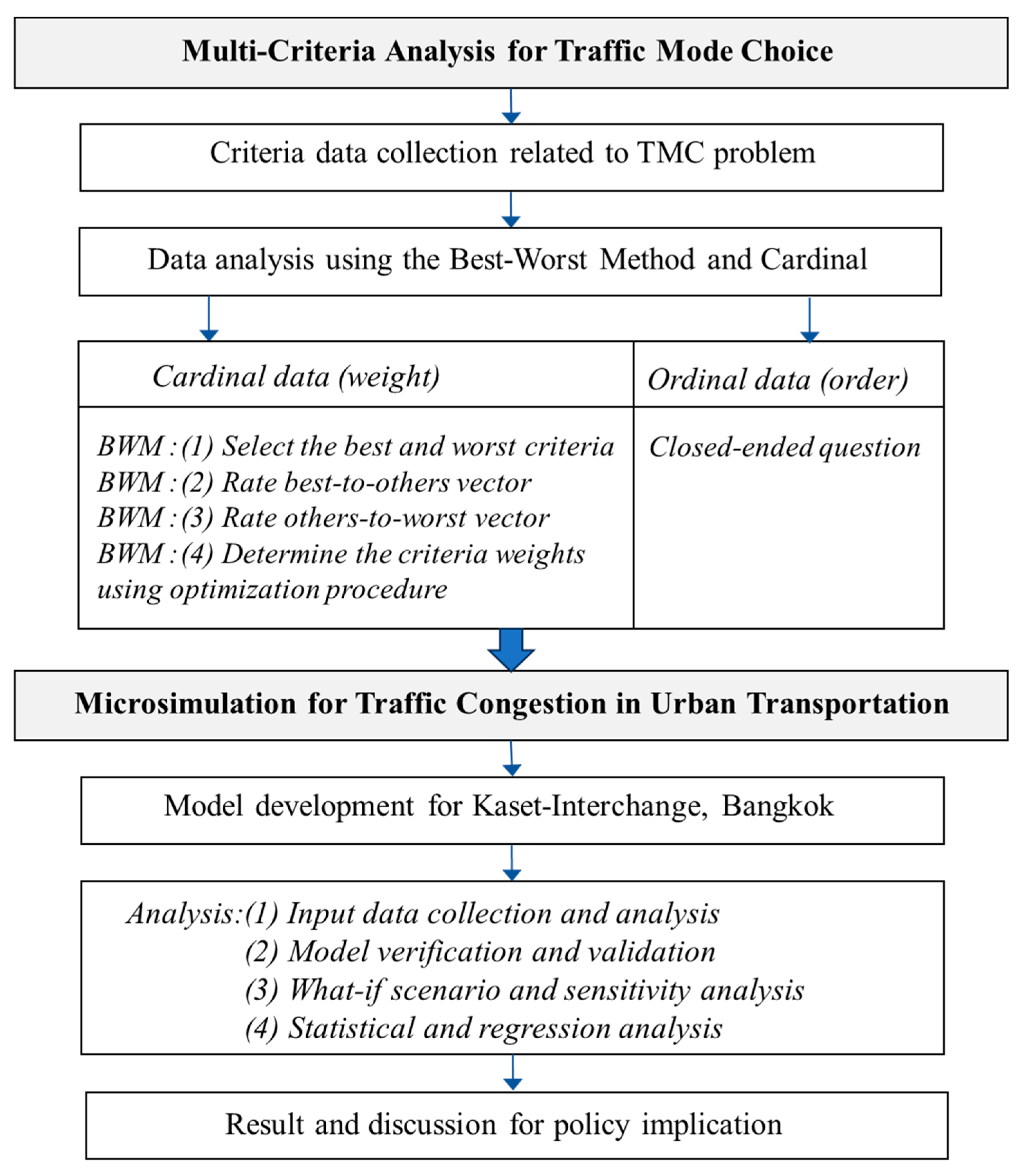
A two-phase research framework is proposed to enhance decision-making in TMC, as illustrated in Figure 1. Recent studies emphasize the need for integrated approaches that combine decision-aiding tools with complex modeling techniques to address the multifaceted nature of transportation planning [36]. In the first phase, both cardinal and ordinal data are collected from key decision-makers and stakeholders relevant to TMC. These data are then systematically analyzed using the BWM to prioritize criteria influencing travel mode selection. Specifically, the collected criteria are weighted based on stakeholder input, allowing the study to capture the relative importance of each factor in a structured and transparent manner. In the second phase, a more data-driven and system-level approach is applied, modeling traffic congestion in urban transportation planning using an agent-based microsimulation framework. This phase incorporates the weighted criteria from the first phase to explore realistic traffic and public transport scenarios, including potential policy interventions. Together, these two phases form a comprehensive framework that integrates stakeholder preferences with simulation-based analysis, enabling a holistic evaluation of both behavioral and operational aspects of TMC. The following sections describe the main methods employed in this study in detail.

3.1. The Best–Worst Method (BWM) Approach

The BWM is a systematic MCDA technique designed to derive optimal weights for evaluation criteria based on expert judgments. Unlike traditional approaches, the BWM offers enhanced efficiency by significantly reducing the number of required pairwise comparisons while also ensuring greater consistency in the decision-makers’ input [37,38], making it particularly suitable for complex decision problems in recent applications [39]. Following the identification of the best and worst criteria, two vectors of pairwise comparisons are constructed to quantify preferences: the Best-to-Others vector, which captures the degree of preference of the best criterion over each of the remaining criteria, and the Others-to-Worst vector, which reflects how strongly each of the remaining criteria is preferred over the worst one. These preferences are typically expressed using a consistent numerical scale, as presented in Table 2. The 1–9 scale for pairwise comparisons employed in this study follows established practice and reflects the conceptual foundations of the BWM, which is grounded in the AHP method developed by [40]. This 1–9 scale is widely used to capture varying levels of preference intensity, providing a balance between expressiveness and cognitive simplicity, while enabling the transformation of subjective expert opinions into quantifiable data for analysis. Equations (1) and (2) present the Best-to-Others and Others-to-Worst vectors, respectively:
A B = ( a B 1 , a B 2 , , a B n ) ; where a B B = 1
A W = ( a 1 W , a 2 W , , a n W ) ; where a W W = 1
Next, the process for determining the optimal weights in the BWM is outlined in Equations (3)–(7), which involve solving a linear programming model aimed at minimizing inconsistency in judgments. This makes the BWM especially effective, as it streamlines the evaluation process while accurately reflecting the preferences of various stakeholders across multiple qualitative factors. In other words, the BWM reliably converts subjective evaluations into objective weightings, providing robustness and lower sensitivity to judgment errors. In this study, the BWM is applied to systematically capture and prioritize the preferences of key stakeholders with experience in TMC.
M i n i m i z e ξ
Subject to   w B w j a B j ξ ; j
w j w W a j W ξ ; j
j w j = 1
w j 0 ; j
Next, to ensure the reliability of the pairwise comparisons, this study employs the input-based Consistency Ratio (CR) within the BWM framework proposed by [41]. Specifically, the CR evaluates the coherence of decision-makers’ judgments directly from the provided preference inputs. Importantly, the acceptable consistency threshold in the BWM is not fixed but depends on both the maximum numerical scale used for pairwise comparisons by each decision maker and the number of criteria. As summarized in Table 3, different combinations of scale and criteria size produce distinct threshold values that serve as benchmarks for assessing consistency. In this study, the CR for each decision matrix is systematically compared against the corresponding threshold, and matrices are reviewed and discussed with the decision-makers to ensure that the final pairwise comparisons fall within an acceptable consistency range. This process ensures that the pairwise comparisons exhibit a satisfactory level of consistency and that the resulting weights accurately represent the decision-makers’ preferences. This study employs the classical BWM to maintain transparency and computational efficiency. Readers interested in addressing uncertainty in judgment may consult advanced variants, such as the fuzzy BWM [42] or the Bayesian BWM [43], which explicitly incorporate uncertainty in decision-making.

3.1.1. TMC Criteria Data Evaluation

The selection of criteria and sub-criteria used in this study is derived from a review of the existing literature on travel behavior, transportation mode choice, and mobility assessment frameworks, as presented in Table 4. Travelers evaluate transportation options across multiple dimensions, leading to the identification of five main criteria assessed in this research: travel cost (C1), safety (C2), comfort (C3), travel time (C4), and environmental friendliness (C5). Each main criterion encompasses a set of related sub-criteria that capture more specific and measurable aspects influencing user preferences. For instance, C1 includes sub-criteria such as distance-based expenses, transfer frequency, and cost stability, while C2 covers driving speed, accident rates, driver image, vehicle condition, and availability of safety equipment. C3 considers route coverage, waiting time, accessibility for vulnerable users, crowding, and cleanliness. C4 integrates actual trip duration, reliability, and the effects of weather and accidents, whereas C5 comprises pollution reduction, energy efficiency, green technology adoption, and environmental responsibility. Together, these criteria provide a systematic basis for assessing TMC.

3.1.2. Stakeholder Evaluation and Open-Ended Assessment

In this study, given that the case study is situated at a major intersection adjacent to a selected university campus in Bangkok, the focus is on two primary decision-maker groups that dominate travel flows in this area: students and working professionals. Responses are collected from fifteen students and fifteen working professionals to ensure balanced representation of both populations within the study area. Data collection is performed anonymously to capture the mode-choice preferences and behavioral considerations of these two groups, ensuring that the resulting analysis reflects the realities of the user populations within the study context. The study is expected to provide insights directly relevant to mobility planning around university-centered urban environments and areas with mixed academic–employment travel demand. Additionally, participants are asked a follow-up question regarding their willingness to use public transportation if improvements are made to the evaluated criteria, with response options including ‘definitely will use,’ ‘might use,’ and ‘will not use.’ This analysis is intended to link the criteria to actual behavioral intentions and is later used to conduct a scenario analysis using the simulation model in the context of urban transportation decision-making.

3.2. Simulation Model

3.2.1. Simulation Model Setup

This study adopts an agent-based microsimulation modeling approach in which each vehicle is represented as an autonomous agent operating within a spatially explicit road intersection network. Following the structure of the Road Traffic Library in AnyLogic 2025 [63], the network is constructed using detailed geometric elements, including multilane roads, intersections, turning lanes, traffic signals, and designated stopping points, allowing the agents to navigate a realistic transportation environment. Vehicle agents’ movement is governed by embedded behavioral rules for car-following, gap acceptance, lane-changing, and conflict resolution at intersections, enabling them to respond dynamically to both infrastructural constraints and the actions of surrounding agents. The developed model also integrates process blocks to manage the life cycle of agents and regulate traffic flows. This agent-based microsimulation framework allows the model to capture fine-grained, non-linear interactions among individual vehicles while simultaneously generating realistic system-level traffic dynamics.

3.2.2. Case Study of Traffic Intersection in Urban Transportation

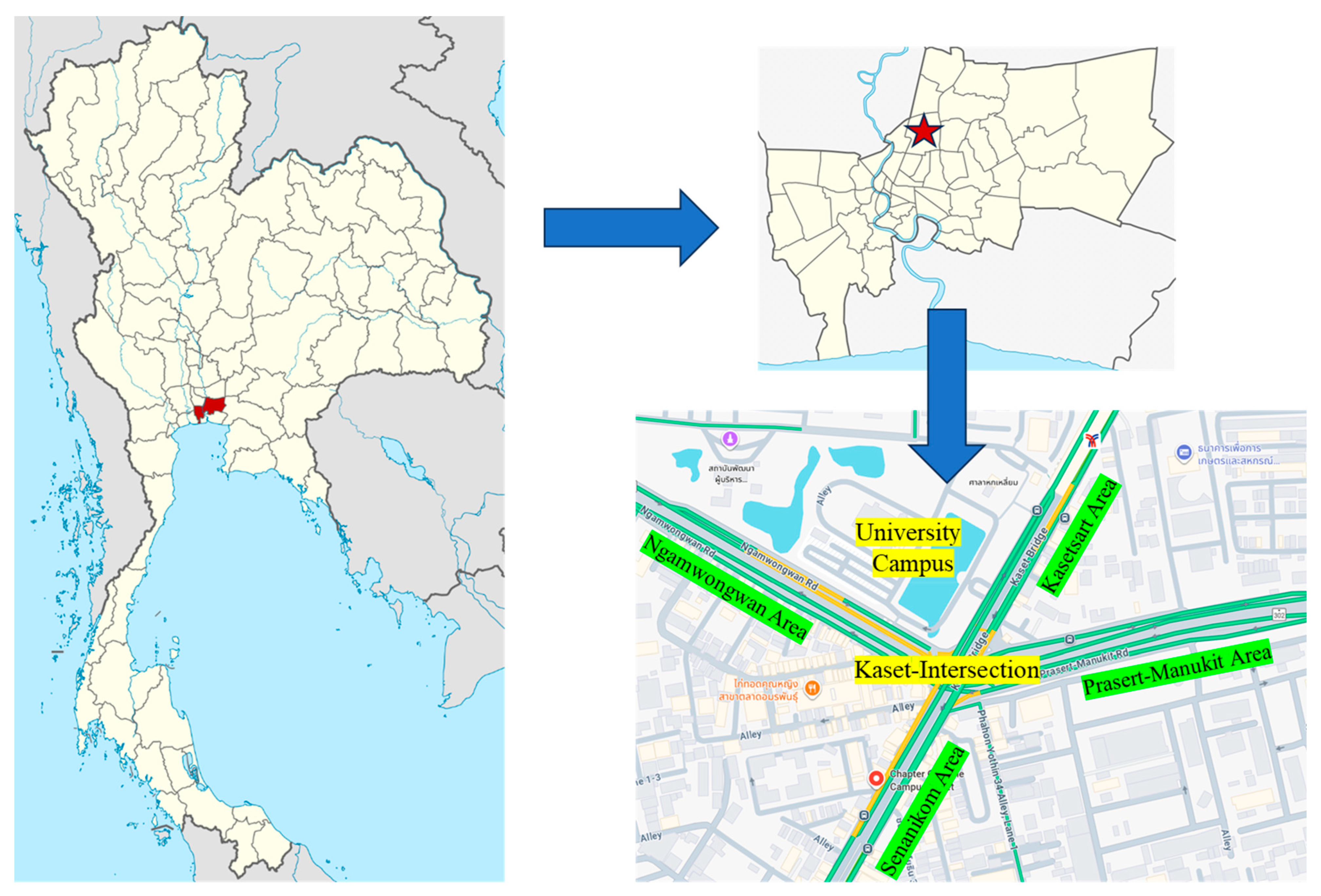
The case study assessing traffic congestion in urban transportation planning (UTP) is located at the Kaset Intersection in Bangkok, Thailand, which presents complex congestion in a dense urban environment (Figure 2). Traffic congestion in Bangkok is considered critically important due to the city’s growing mobility challenges, arising from social, economic, and environmental burdens. With average travel speeds in the metropolitan area falling to roughly 27.5 km/h and congestion levels exceeding 50%, delays now represent a significant obstacle to urban efficiency [4]. This issue is particularly pronounced in areas where large educational institutions interface with major streets.
The examined intersection is located adjacent to a selected Kasetsart University campus, which experiences heavy daily movement from students and professional workers, creating significant travel demand throughout the day. The intersection also functions as a multimodal transport hub, connecting a wide range of traffic modes, including private cars, public buses, motorcycles, and electric elevated or subway trains. Thus, insights generated from the earlier criteria-based evaluation of TMC serve as key inputs for developing the scenario configurations used in the simulation model analysis at the Kaset Intersection case study. Analyzing this specific case is also expected to provide broader insights into urban dynamics and offer a testbed for evaluating campus-oriented mobility planning and sustainable transport interventions.
Given its strategic location, the intersection is considered one of the most complex in Bangkok due to its heterogeneous lane configurations, multiple grade-separated facilities, multimodal traffic flows, and heavy congestion during peak periods. The intersection is an at-grade signalized junction, where each approach exhibits a heterogeneous lane configuration ranging from three to five lanes, complemented by grade-separated facilities. Specifically, the Prasert-Manukit approach comprises five lanes: the leftmost lane turns toward Senanikom, the two center lanes continue at-grade toward Ngamwongwan, and the two rightmost lanes provide access to an underpass. The Ngamwongwan approach also has five lanes, with two descending into the underpass and three operating at-grade, including a leftmost lane turning toward Kasetsart. The Kasetsart and Senanikom approaches each have three lanes, with the rightmost lanes connecting to grade-separated overpasses. Operated under a multi-phase fixed-time signal, the intersection accommodates high volumes of vehicles, motorcycles, and buses, particularly during peak hours, causing recurrent congestion and delays [64]. Its intricate lane geometry and heavy traffic make it a representative urban case for evaluating advanced traffic management strategies.

4. Results and Discussion

4.1. Results for TMC Criteria Evaluation and Open-Ended Question

The results of evaluating respondents’ general data are presented in Table 5. Specifically, the demographic and travel-behavioral characteristics of the respondent sample are detailed, comprising individuals aged 18–25 (69.7%), nearly half of whom are currently enrolled as university students, with the remainder being working professionals. Modal preferences reveal a diversified mix of transport modes, with the top three being personal cars, electric rail systems, and motorcycles, each accounting for roughly one-quarter of total selections. This modal distribution suggests that commuters in the Kasetsart University area engage in strategically varied travel choices influenced by diverse mobility-related criteria and preferences.
Next, Table 6 summarizes the results of the BWM-based criteria weighting across stakeholder groups and reveals marked differences in prioritization between university students and working professionals. Although travel cost (C1) emerges as the highest-weighted criterion overall, its prominence is particularly pronounced among university students (0.3293), reflecting their greater sensitivity to financial burdens compared with working professionals. In contrast, working professionals assign the greatest weight to comfort (C3) (0.3508), likely reflecting higher expectations for service quality, crowding levels, and route coverage.
The sub-criteria analysis also highlights clear differences in how each stakeholder group evaluates transport criteria. Under travel cost (C1), students prioritize cost per distance (C1-1), whereas professionals value fewer transfers (C1-2), reflecting sensitivity to financial burdens versus continuous travel. For safety (C2), both groups rank driving speed (C2-1) highest, but students focus more on accident rates (C2-2), while professionals place greater weight on vehicle condition (C2-4). In comfort (C3), route coverage (C3-1) is universally important, yet professionals assign relatively higher importance to waiting time and crowding (C3-2, C3-4). Under travel time (C4), students emphasize total travel time (C4-1), whereas professionals prioritize reliability (C4-2), indicating a stronger need for schedule predictability. For environmental friendliness (C5), professionals place the highest weight on pollution reduction (C5-1), while students show greater interest in support for green technology (C5-3). These distinctions reflect differing economic constraints, travel habits, and activity patterns between the two groups.
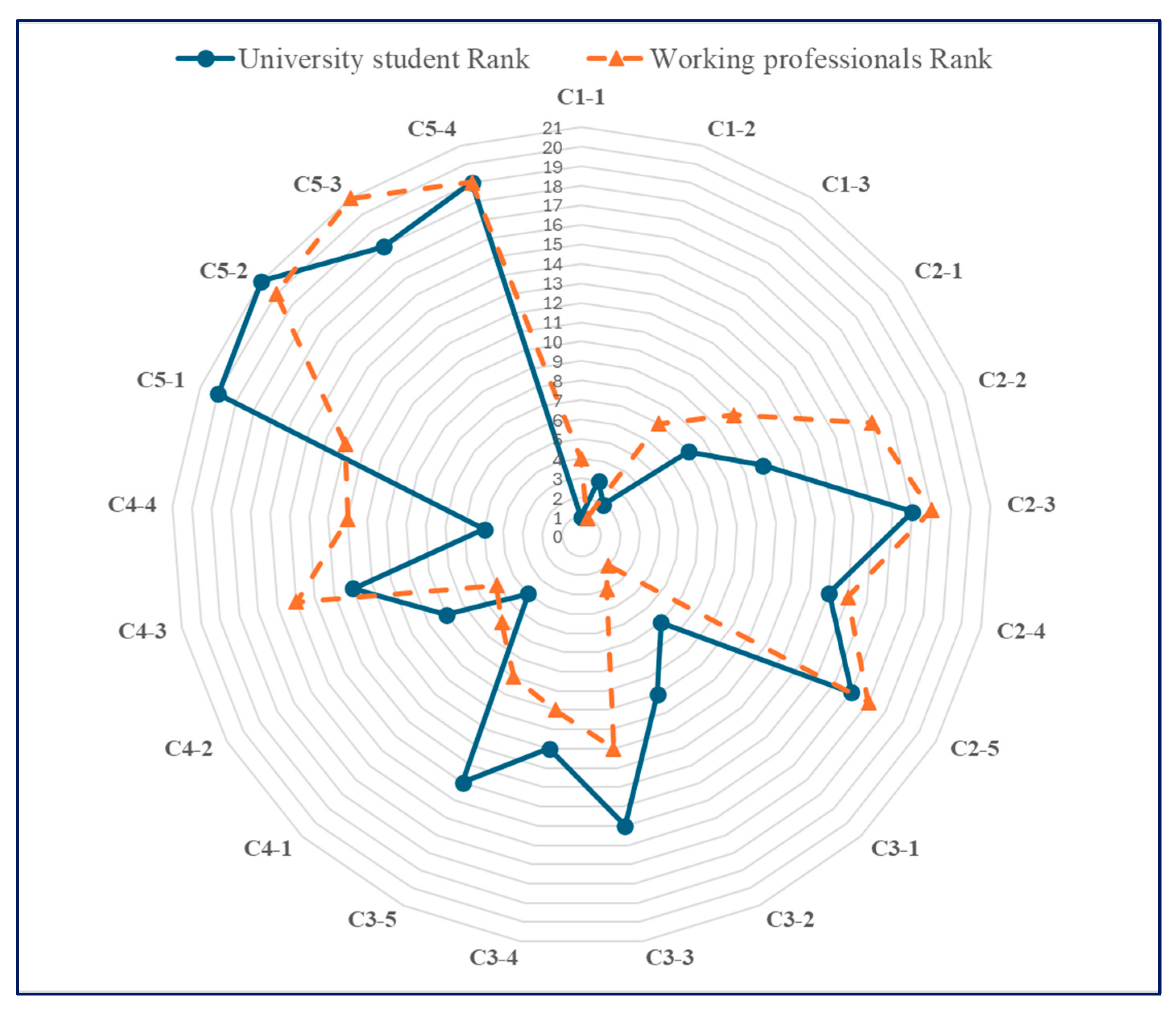
The aggregated weighting for all sub-criteria is presented in Table 7. Focusing on sub-criteria with weights greater than 0.06 reveals seven dominant drivers of transportation mode choice: transfers required (0.1140), distance-based cost (0.1109), route coverage (0.0855), total travel time (0.0778), cost predictability (0.0728), waiting time (0.0701), and travel time reliability (0.0643). The concentration of these higher weights around fare structure, accessibility, and temporal efficiency indicates that travelers are primarily sensitive to generalized cost and service reliability rather than secondary attributes. Moreover, the ranking comparison shown in Figure 3 highlights differences between university students and working professionals. University students place the highest importance on travel cost and predictability (C1-1, C1-3, C1-2), reflecting their stronger sensitivity to budget constraints, whereas working professionals prioritize the number of transfers (C1-2), route coverage (C3-1), and waiting time (C3-2), indicating a greater need for convenience and efficiency.
The seven dominant criteria of transportation mode choice are primarily associated with cost, travel time, reliability, and network accessibility. Accordingly, policy levers suggested in the literature are designed to directly address these high-priority determinants to encourage shifts toward public and multimodal transportation, as presented in Table 8. Policies such as integrated ticketing systems, fare restructuring, and transfer-free route design can reduce both economic and operational barriers that often discourage public transport use. At the network level, interventions such as route expansion, service integration, and dedicated bus lanes can potentially improve accessibility and reduce total travel time. Moreover, operational improvements, including increased service frequency, signal priority, and real-time traffic management, can further reduce waiting time and enhance travel time reliability.
To further assess the potential behavioral response to service improvements, the survey included an open-ended question asking whether respondents would consider switching to public transportation if key enhancements aligned with the prioritized criteria identified in Table 8 were implemented. The results indicate strong potential for modal change. Specifically, 54.55% of respondents reported that they would definitely shift to public transportation in response to improvements such as reduced transfers, lower travel costs, better route coverage, shorter waiting times, and improved travel time reliability. An additional 42.42% indicated that they might consider switching, while only 3.03% expressed no interest in using public transport. These findings suggest that a substantial share of current travelers are receptive to changing their travel behavior when service quality aligns with their preferences. Given this significant latent demand for public transport, the observed switching intentions were incorporated as input parameters in the simulation model to represent potential reductions in private vehicle use. This integration allows the simulation to capture how policy-induced behavioral changes could propagate through the transport network and influence overall system performance.

4.2. Results for Simulation Modeling of Traffic Congestion

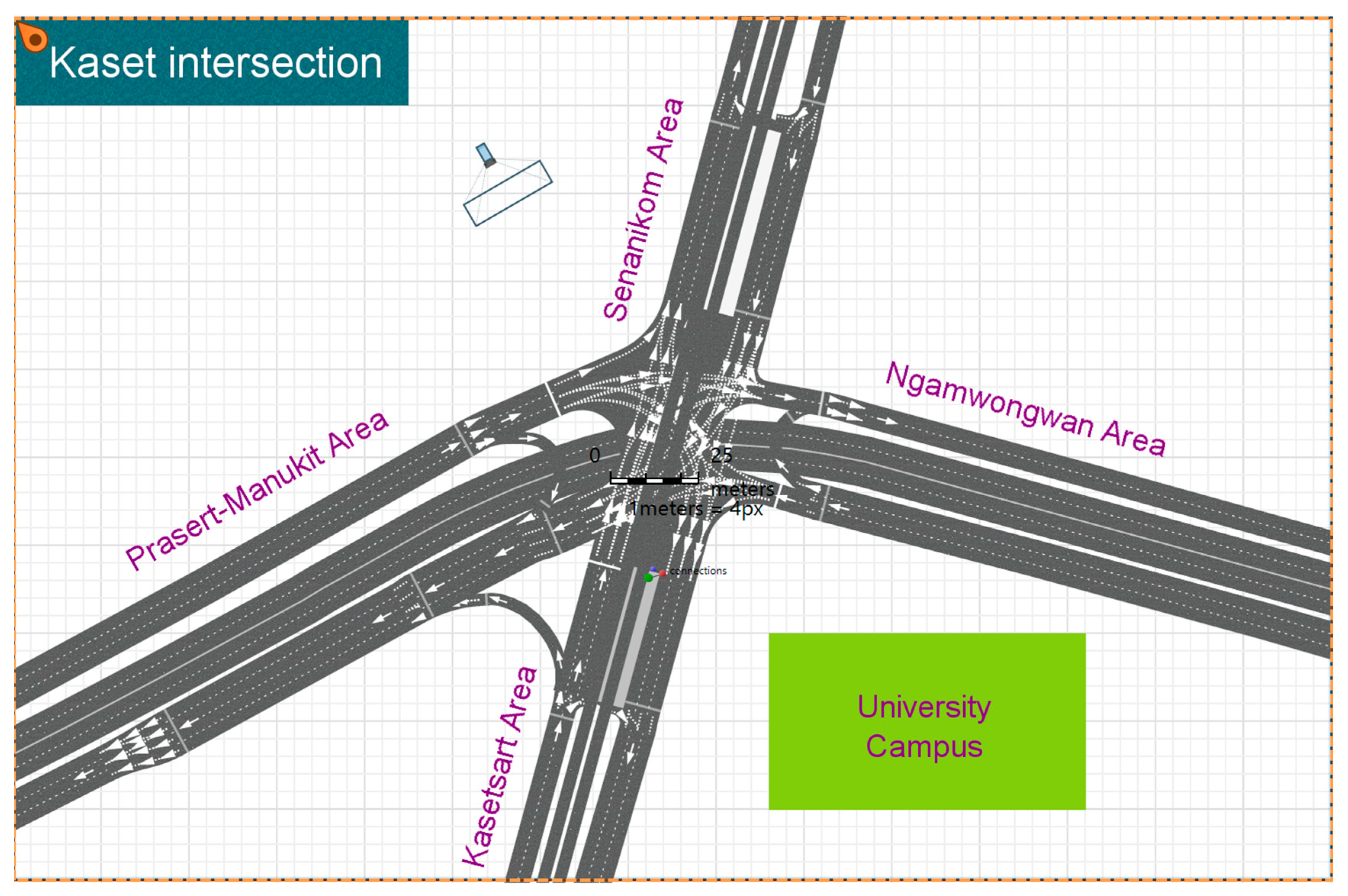
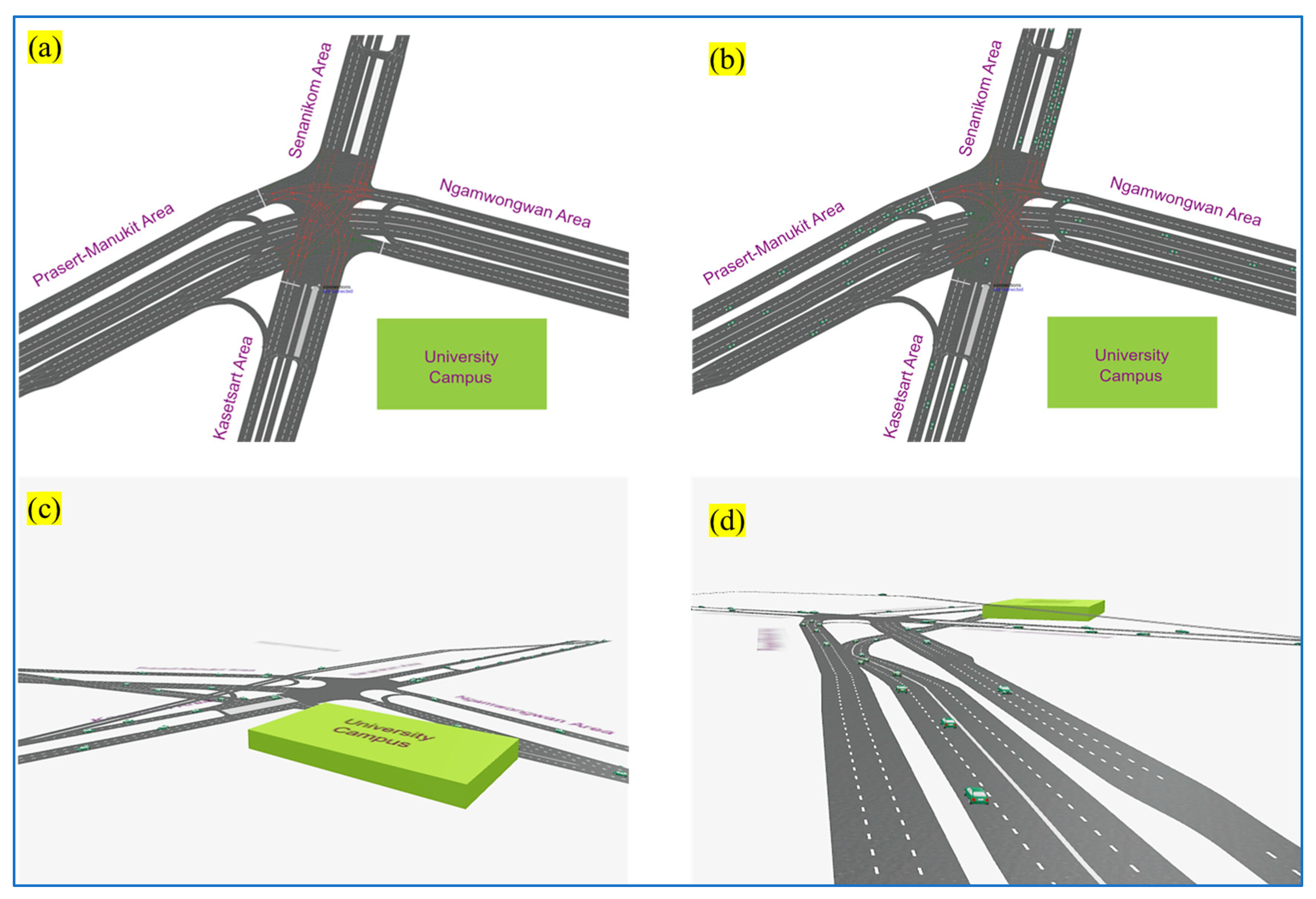
A simulation model of the Kaset Intersection case study was developed to ensure that it accurately represents the traffic conditions, as presented in Figure 4. As discussed earlier, the intersection is a complex junction consisting of four major approach roads. These include the roadway connecting the Kasetsart area to Senanikom, which is equipped with dedicated lanes for an overpass, and the roadway connecting Prasert-Manukit Road to Ngamwongwan Road, which also includes dedicated lanes for an underpass to facilitate traffic flow. The model incorporates the physical infrastructure of the intersection, including lane configurations, signal phases, and turning movements. To verify the model, visualization and animation of traffic flows are employed, which provide a qualitative check of the system behavior and serve as an important step in face validation—a process that ensures the model behavior appears reasonable [79,80]. Figure 5 illustrates this verification process: Figure 5a presents the initial situation when running the model, Figure 5b shows traffic flow regulated by the signals, Figure 5c presents the overpass connecting the Kasetsart area to Senanikom, and Figure 5d shows the underpass connecting Prasert-Manukit Road to Ngamwongwan.
Input parameters were collected from field observations over one month, including vehicle interarrival times, traffic volume and density, and detailed traffic signal timing. These inputs were used to replicate realistic traffic demand and control conditions within the simulation environment. Table 9 presents the input data, including probability data for vehicle movements from the four main approaches and probability distributions for interarrival times. Specifically, the probabilities represent the likelihood of vehicles selecting each maneuver, including going straight through the intersection, turning left, turning right, making a U-turn, or using the underpass/overpass. The results show that a large proportion of vehicles choose the underpass or overpass, particularly for traffic coming from Ngamwongwan and Prasert-Manukit. Right-turn movements also account for a notable share of traffic, especially from the Kasetsart University and Senanikom approaches. Different statistical distributions were then examined to best represent the observed arrival patterns based on interarrival times for each route. Traffic entering from the Kasetsart University frontage road follows a Gamma distribution, arrivals from the Senanikom and Prasert-Manukit approaches are best represented by Weibull distributions, and arrivals from Ngamwongwan follow an Exponential distribution. These fitted distributions capture the arrival behaviors on each approach and are used as input parameters for the simulation model.
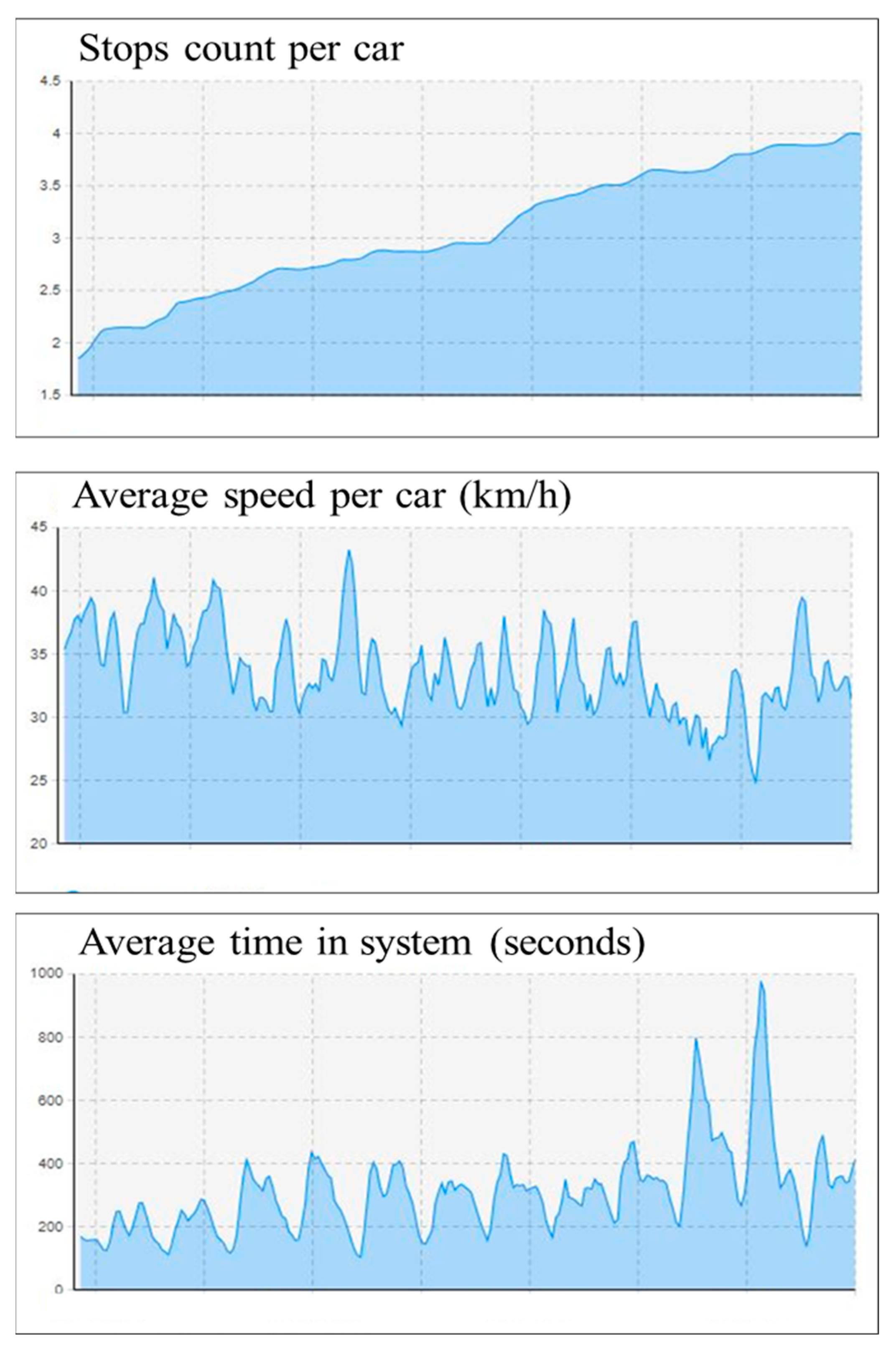
To confirm the validity of the model, output data were generated and analyzed, including the number of vehicles present in the system, to obtain average performance measures, the average number of stops per vehicle, the average vehicle speed, and overall travel time through the intersection. The results from the base scenario are illustrated in Figure 6 and summarized in Table 10, showing that the average vehicle speed within the system is 33.495 km/h, with speeds ranging from a minimum of 0.533 km/h to a maximum of 60 km/h, reflecting traffic conditions from congestion to free-flow movement. The average time spent in the system is 317.62 s, while the wide range and high standard deviation indicate substantial variability in travel time due to traffic interactions and signal control at the intersection. Additionally, vehicles experience an average of 3.144 stops, suggesting moderate delay levels, with relatively consistent stopping behavior as indicated by the low standard deviation.
Field observations further confirm that travel times fluctuate depending on the time of day, with higher variability during morning and evening peak hours and lower variability during off-peak periods. To quantitatively validate the simulation model, the outputs for time in the system were compared with field-observed data using a two-sample t-test assuming unequal variances. The simulation model generated a mean travel time of 317.63 s, while field observations showed a mean of 334 s. The t-test produced a t-statistic of −0.38 and a p-value of 0.706. Since the p-value is substantially higher than the alpha significance level of 0.05, the null hypothesis that the means of the model and field data are equal cannot be rejected. This indicates that there is no statistically significant difference between the simulation results and the observed field data, demonstrating that the simulation model accurately replicates real-world traffic conditions at the Kaset Intersection in terms of travel time.
Building on this validation, the strong agreement between simulated and observed travel times, as demonstrated by the t-test, provides confidence that the selected input parameters realistically represent traffic conditions at the intersection. This supports the reliability of the model for further applications, including sensitivity analysis and the evaluation of alternative traffic management scenarios. However, it should be noted that these distributions are based on aggregated data and may vary under different temporal traffic conditions. In practice, traffic demand and arrival patterns can change throughout the day, particularly between peak and off-peak periods, which may influence the underlying statistical characteristics of the inputs. Consequently, the current model was developed under the assumption of aggregated traffic conditions, whereby the fitted input distributions represent average traffic behavior over the observation period. This assumption enables a robust representation of overall system performance, although it abstracts from temporal variations in traffic flow, especially between peak and off-peak periods.

4.3. Sensitivity Analysis and Travel Mode Change Assessment

Next, a sensitivity analysis was conducted to examine the impact of changing overall traffic density in the system. In particular, traffic density was adjusted by varying the interarrival time of vehicles entering the system, which directly reflects changes in demand across the entire road network. The analysis was performed by simultaneously increasing and decreasing traffic density within a range of −40% to +40%, in increments of 10%, to capture system-wide responses to variations in traffic demand. The results, shown in Table 11, indicate clear trends in system performance as traffic density changes. As traffic density increases (+10% to +40%), the vehicle outflow-to-inflow ratio decreases, average speed declines, travel time in the system increases, and the number of stops per vehicle rises, reflecting growing congestion and reduced operational efficiency. Conversely, when traffic density decreases (−10% to −40%), the system demonstrates improved performance, with higher throughput ratios, increased average speeds, shorter travel times, and fewer stops. These findings confirm the model’s sensitivity to demand fluctuations and demonstrate its ability to realistically represent traffic behavior under varying levels of congestion, supporting its suitability for traffic congestion planning.
An earlier analysis indicates that improvements in key criteria relevant to transportation mode choice have the potential to shift travel behavior toward public transportation. Specifically, the survey results suggest that approximately 55% of respondents would definitely use public transportation if these evaluated criteria were improved. This behavioral shift implies a substantial reduction in private vehicle usage, which can be reasonably translated into a corresponding decrease in overall traffic density within the road network. To examine the traffic performance implications of this potential shift, a simulation scenario was conducted assuming an approximate 55% reduction in traffic density. The results in Table 12 demonstrate that the average vehicle speed increases to 37.879 km/h, while the average time spent in the system decreases significantly to 210.536 s, indicating smoother traffic flow and reduced congestion. Additionally, the average number of stops per vehicle drops to 1.720, reflecting fewer interruptions and improved operational efficiency at the intersection. These findings clearly illustrate that enhancing public transportation service criteria can lead to meaningful reductions in traffic density, which in turn yield substantial improvements in overall traffic conditions and system performance.
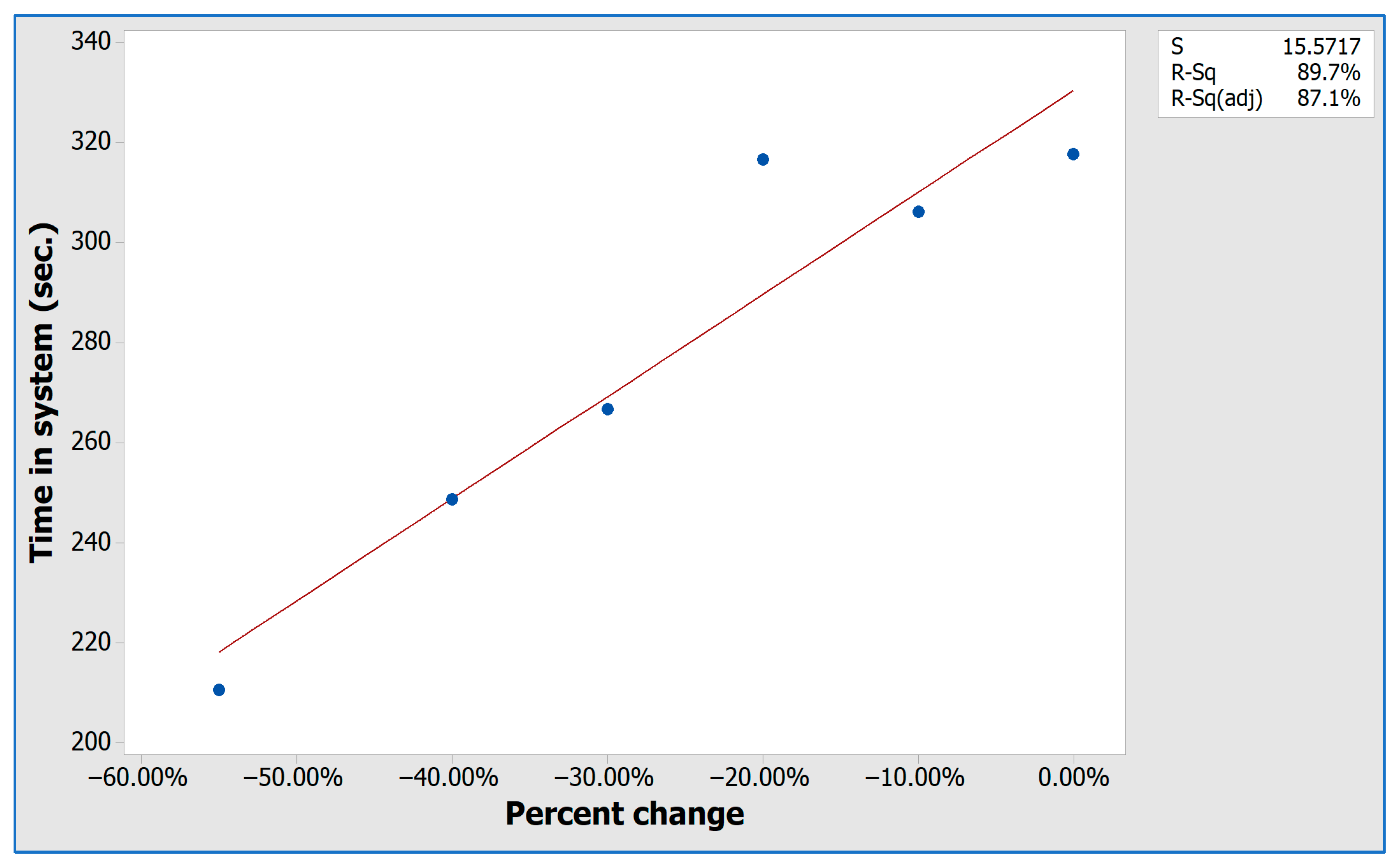
Finally, a regression analysis was conducted, indicating a strong linear relationship between the percentage change in traffic density and the time that vehicles spend in the system, as shown in Equation (8). The statistical results, with a coefficient of determination of R2 = 89.7% (Figure 7), suggest that variations in time in the system can be largely explained by changes in traffic density alone. Specifically, the fitted regression model indicates that reductions in traffic density are directly associated with decreases in travel time within the system. The analysis further suggests that a one percent reduction in overall traffic density could shorten travel time by approximately 2.04 s.
Time in System (sec.) = 330.4 + 204 (Percent Change in Traffic Density)

5. Discussion and Managerial Insights

The results from the BWM clearly demonstrate that public transportation choice is shaped by diverse preferences across user groups, suggesting that different policies may be needed to address these variations. University students prioritize travel cost as the most influential criterion, reflecting budget constraints and sensitivity to fare structures, while working professionals place the highest importance on comfort, followed by travel cost and travel time. At the sub-criteria level, factors such as the number of transfers, route coverage, waiting time, and travel time reliability consistently rank highly across groups. These findings indicate that policymakers should recognize distinct stakeholder priorities when designing or upgrading public transport services, as aligning policies with these preferences can enhance both effectiveness and public acceptance.
From a managerial and policy perspective, the BWM and open-ended survey results provide actionable guidance on how targeted improvements in public transport can encourage a shift from private vehicle use to public modes. Importantly, the results highlight distinct preferences between user groups, suggesting that policy design should be differentiated. As indicated in the earlier analysis, university students place the highest importance on travel cost, while working professionals prioritize comfort, followed by travel cost and travel time. In line with these preferences, cost-related policies such as distance-based fares and fare capping are particularly effective in influencing students’ mode choice by improving affordability. In contrast, policies targeting comfort, such as increasing service frequency to reduce crowding and enhancing service quality, are more likely to attract working professionals. At the same time, commonly prioritized criteria across both groups—including travel time, waiting time, and number of transfers—can be addressed through measures such as dedicated bus lanes, signal priority, and optimized scheduling. As summarized in Table 13, the main prioritized criteria and policies can be further translated into specific implementation measures and assigned to responsible stakeholders to support practical execution. By aligning policy interventions with group-specific preferences, the proposed framework is more likely to induce a modal shift from private vehicles to public transport, thereby reducing traffic demand, alleviating congestion, and improving overall transportation system performance.
In this research, the integration of the BWM and traffic simulation highlights the strategic value of using a two-phase analytical framework for urban transport planning. While the BWM identifies the criteria that users value most and prioritizes areas for improvement, the simulation model quantifies how these potential behavioral shifts translate into traffic-level performance gains. The simulation results demonstrate that reductions in traffic density can lead to higher average speeds and shorter travel times, reinforcing the congestion-mitigation benefits of successful mode shifts when appropriate policies are implemented. This combined approach enables policymakers to link user-centered service improvements with measurable operational outcomes, supporting evidence-based decisions that enhance public transport attractiveness while improving intersection-level and system-wide performance in urban transportation planning.

6. Conclusions

This study presents a two-phase, user-centered framework to address urban traffic congestion by integrating the BWM with microscopic traffic simulation, with the Kaset Intersection case study demonstrating the practical applicability of the proposed approach. The BWM results reveal clear differences in public transport preferences between university students and working professionals, underscoring the importance of differentiated policy design that aligns service improvements with user expectations. The BWM-based weighted criteria can be used to prioritize public transport policies aimed at shifting travelers from private cars to public modes. Targeted interventions addressing key service attributes—such as reducing transfer burdens, travel time, waiting time, and cost uncertainty—can substantially enhance transportation system performance and strengthen the attractiveness of public transport, encouraging a modal shift away from private vehicles. The microsimulation model further evaluates how such shifts can reduce traffic density, increase average vehicle speeds, and decrease overall travel time at the intersection level. Overall, the findings confirm that aligning public transport improvements with user preferences is critical for achieving effective congestion mitigation and enhancing urban transport system performance.
Despite its contributions, this study has several research limitations that suggest avenues for future investigation. For instance, the perspectives of key stakeholders involved in policy implementation could be examined more deeply to better understand their perceptions of the prioritized criteria. Additionally, public traffic management strategies and transport policy alternatives could be explored in greater depth and evaluated by a broader and more diverse set of stakeholders to enhance the generalizability and applicability of the findings. Furthermore, future research could focus on operationalizing the proposed policy measures by explicitly embedding them into the simulation framework to evaluate their dynamic impacts on user behavior and system performance. Specifically, multiple policy scenarios—such as varying service frequency adjustments or the spatial extent of dedicated bus lanes—should be tested to assess their relative effectiveness under different demand and infrastructure conditions. Additionally, the current simulation is limited to a single intersection; extending the analysis to corridor-level or network-level simulations would provide more comprehensive insights into system-wide interactions and congestion dynamics. Finally, incorporating additional user-specific segments and conditions into the simulation model, along with a broader set of performance indicators, would further strengthen the robustness of the analysis and support more comprehensive urban transport planning strategies.

Author Contributions

Conceptualization, K.R., N.P. and P.A.; formal analysis, K.R.; investigation, N.P.; resources, P.A.; data curation, N.P.; writing—original draft preparation, K.R.; writing—review and editing, P.A. All authors have read and agreed to the published version of the manuscript.

Funding

This research received no external funding.

Data Availability Statement

Dataset available on request from the authors.

Conflicts of Interest

The authors declare no conflict of interest.

References

  1. Karjalainen, L.E.; Juhola, S. Urban transportation sustainability assessments: A systematic review of literature. Transp. Rev. 2021, 41, 659–684. [Google Scholar] [CrossRef]
  2. Sogbe, E.; Susilawati, S.; Pin, T.C. Scaling up public transport usage: A systematic literature review of service quality, satisfaction and attitude towards bus transport systems in developing countries. Public Transp. 2025, 17, 1–44. [Google Scholar] [CrossRef]
  3. Esfandi, S.; Tayebi, S.; Byrne, J.; Taminiau, J.; Giyahchi, G.; Alavi, S.A. Smart cities and urban energy planning: An advanced review of promises and challenges. Smart Cities 2024, 7, 414–444. [Google Scholar] [CrossRef]
  4. TomTom. TomTom Traffic Index 2023: Measuring Congestion Worldwide; TomTom International B.V.: Amsterdam, Netherlands, 2023; Available online: https://www.tomtom.com/traffic-index (accessed on 23 January 2025).
  5. Chanthakhot, W.; Ransikarbum, K. Integrated IEW-TOPSIS and fire dynamics simulation for agent-based evacuation modeling in industrial safety. Safety 2021, 7, 47. [Google Scholar] [CrossRef]
  6. Wattanasaeng, N.; Ransikarbum, K. Sustainable planning and design for eco-industrial parks using integrated multi-objective optimization and fuzzy analytic hierarchy process. J. Ind. Prod. Eng. 2024, 41, 256–275. [Google Scholar] [CrossRef]
  7. Rivero Gutiérrez, L.; De Vicente Oliva, M.A.; Romero-Ania, A. Managing sustainable urban public transport systems: An AHP multicriteria decision model. Sustainability 2021, 13, 4614. [Google Scholar] [CrossRef]
  8. Cheng, J.; Wu, L.; Gao, Y.; Tian, X. A multi-agent model of traffic simulation around urban scenic spots: From the perspective of tourist behaviors. Heliyon 2023, 9, e20929. [Google Scholar] [CrossRef] [PubMed]
  9. Li, W.; Feng, W.; Yuan, H.Z. Multimode traffic travel behavior characteristics analysis and congestion governance research. J. Adv. Transp. 2020, 2020, 6678158. [Google Scholar] [CrossRef]
  10. Nguyen-Phuoc, D.Q.; Young, W.; Currie, G.; De Gruyter, C. Traffic congestion relief associated with public transport: State-of-the-art. Public Transp. 2020, 12, 455–481. [Google Scholar] [CrossRef]
  11. Abdulrazzaq, L.R.; Abdulkareem, M.N.; Yazid, M.R.M.; Borhan, M.N.; Mahdi, M.S. Traffic congestion: Shift from private car to public transportation. Civ. Eng. J. 2020, 6, 1547–1554. [Google Scholar] [CrossRef]
  12. Göransson, J.; Andersson, H. Factors that make public transport systems attractive: A review of travel preferences and travel mode choices. Eur. Transp. Res. Rev. 2023, 15, 32. [Google Scholar] [CrossRef]
  13. Ranjan, R.; Sinha, S. A systematic review of mode choice behavior in urban transportation with emphasis on individual preferences and influencing factor. Discov. Cities 2025, 2, 98. [Google Scholar] [CrossRef]
  14. Hasan, A.; Hasan, U.; AlJassmi, H.; Whyte, A. Transit behaviour and sociodemographic interrelation: Enhancing urban public-transport solutions. Eng 2023, 4, 1144–1155. [Google Scholar] [CrossRef]
  15. Witchayaphong, P.; Pravinvongvuth, S.; Kanitpong, K.; Sano, K.; Horpibulsuk, S. Influential factors affecting travelers’ mode choice behavior on mass transit in Bangkok, Thailand. Sustainability 2020, 12, 9522. [Google Scholar] [CrossRef]
  16. Hajduk, S. Multi-criteria analysis in the decision-making approach for the linear ordering of urban transport based on TOPSIS technique. Energies 2022, 15, 274. [Google Scholar] [CrossRef]
  17. Nguyen-Phuoc, D.Q.; Su, D.N.; Nguyen, T.; Vo, N.S.; Tran, A.T.P.; Johnson, L.W. The roles of physical and social environments on the behavioural intention of passengers to reuse and recommend bus systems. Travel Behav. Soc. 2022, 27, 162–172. [Google Scholar] [CrossRef]
  18. Khatoon, T.; Kivimaa, P.; Brisbois, M.C.; Saadi, S.A. A global south perspective on the interplay between innovation policy mix and technological innovation systems dynamics: The case of Dhaka City’s road passenger transport system. J. Transp. Geogr. 2024, 118, 103932. [Google Scholar] [CrossRef]
  19. Cui, B.; Boisjoly, G.; Miranda-Moreno, L.; El-Geneidy, A. Accessibility matters: Exploring the determinants of public transport mode share across income groups in Canadian cities. Transp. Res. Part D Transp. Environ. 2020, 80, 102276. [Google Scholar] [CrossRef]
  20. An, Z.; Heinen, E.; Watling, D. The level and determinants of multimodal travel behavior: Does trip purpose make a difference? Int. J. Sustain. Transp. 2023, 17, 103–117. [Google Scholar] [CrossRef]
  21. Alkaissi, Z.A. Traffic simulation of continuous flow intersection with displaced left-turn: A case study. J. Eng. Appl. Sci. 2022, 69, 39. [Google Scholar] [CrossRef]
  22. Chanthakhot, W.; Ransikarbum, K. Integrated computer simulation and data envelopment analysis for fire emergency and evacuation planning in an industrial setting. J. Ind. Prod. Eng. 2025, 42, 859–875. [Google Scholar] [CrossRef]
  23. Jilani, U.; Asif, M.; Zia, M.Y.I.; Rashid, M.; Shams, S.; Otero, P. A systematic review on urban road traffic congestion. Wirel. Pers. Commu. 2025, 140, 81–109. [Google Scholar] [CrossRef]
  24. Taher, Y.H.; Mandeep, J.S.; Marhoon, H.A.; Al-Jamimi, H.A.; Luqman, H.; Azzedin, F.; Abdullah, M.; Al-Ahmadi, H.M.; Yaseen, Z.M. Traffic congestion estimation and control: A comprehensive review of the applied computational intelligence models. Arch. Comput. Methods Eng. 2025, 33, 339–400. [Google Scholar] [CrossRef]
  25. Raza, A.; Ali, M.U.; Ullah, U.; Fayaz, M.; Alvi, M.J.; Kallu, K.D.; Zafar, A.; Nengroo, S.H. Evaluation of a sustainable urban transportation system in terms of traffic congestion—A case study in Taxila, Pakistan. Sustainability 2022, 14, 12325. [Google Scholar] [CrossRef]
  26. Schweizer, J.; Poliziani, C.; Rupi, F.; Morgano, D.; Magi, M. Building a large-scale micro-simulation transport scenario using big data. ISPRS Int. J. Geo-Inf. 2021, 10, 165. [Google Scholar] [CrossRef]
  27. Prapaporn, W.; Chaipanha, W.; Kaewwichian, P. A multi-criteria decision-making approach of transport intersection toward sustainable urban transport index. Ain Shams Eng. J. 2025, 16, 103453. [Google Scholar] [CrossRef]
  28. Moslem, S. Evaluating commuters’ travel mode choice using the Z-number extension of Parsimonious Best Worst Method. Appl. Soft Comput. 2025, 173, 112918. [Google Scholar] [CrossRef]
  29. Oubahman, L.; Duleba, S.; Esztergár-Kiss, D. Analyzing university students’ mode choice preferences by using a hybrid AHP group-PROMETHEE model: Evidence from Budapest city. Eur. Transp. Res. Rev. 2024, 16, 8. [Google Scholar] [CrossRef]
  30. Alemdar, K.D.; Tortum, A.; Kaya, Ö.; Atalay, A. Interdisciplinary evaluation of intersection performances—A microsimulation-based MCDA. Sustainability 2021, 13, 1859. [Google Scholar] [CrossRef]
  31. Görçün, Ö.F. Evaluation of the selection of proper metro and tram vehicle for urban transportation by using a novel integrated MCDM approach. Sci. Prog. 2021, 104, 0036850420950120. [Google Scholar] [CrossRef]
  32. Zhang, H.; Zhang, L.; Liu, Y.; Zhang, L. Understanding travel mode choice behavior: Influencing factors analysis and prediction with machine learning method. Sustainability 2023, 15, 11414. [Google Scholar] [CrossRef]
  33. Benmohamed, I.; Rekik, M. Hybrid transport mode selection using machine learning and MCDM. In 2024 IEEE 15th International Colloquium on Logistics and Supply Chain Management (LOGISTIQUA); IEEE: Sousse, Tunisia, 2024; pp. 1–9. [Google Scholar]
  34. Oubahman, L.; Duleba, S. Fuzzy PROMETHEE model for public transport mode choice analysis. Evol. Syst. 2024, 15, 285–302. [Google Scholar] [CrossRef]
  35. Li, X.; Wang, G.; Zhu, Y.; Liu, W. A system dynamics-based simulation study on urban traffic congestion mitigation and emission reduction policies. Sustainability 2025, 17, 9296. [Google Scholar] [CrossRef]
  36. Janmontree, J.; Shinde, A.; Zadek, H.; Trojahn, S.; Ransikarbum, K. A strategic hydrogen supplier assessment using a hybrid MCDA framework with a game theory-driven criteria analysis. Energies 2025, 18, 3508. [Google Scholar] [CrossRef]
  37. Anussornnitisarn, P.; Nivasanon, C.; Kim, N.; Ransikarbum, K. Sustainable technology selection in additive manufacturing: An integrated fuzzy decision analysis framework. Int. J. Adv. Manuf. Technol. 2025, 138, 1177–1196. [Google Scholar] [CrossRef]
  38. Wu, Q.; Liu, X.; Zhou, L.; Qin, J.; Rezaei, J. An analytical framework for the best–worst method. Omega 2024, 123, 102974. [Google Scholar] [CrossRef]
  39. Ransikarbum, K.; Pakawanich, P. The best-worst method-based evaluation of criteria for engineering internship. In 2025 10th International STEM Education Conference (iSTEM-Ed); IEEE: Chonburi, Thailand, 2025. [Google Scholar]
  40. Saaty, T.L. Decision making with the analytic hierarchy process. Int. J. Serv. Sci. 2008, 1, 83–98. [Google Scholar] [CrossRef]
  41. Liang, F.; Brunelli, M.; Rezaei, J. Consistency issues in the best worst method: Measurements and thresholds. Omega 2020, 96, 102175. [Google Scholar] [CrossRef]
  42. Guo, S.; Zhao, H. Fuzzy best-worst multi-criteria decision-making method and its applications. Knowl.-Based Syst. 2017, 121, 23–31. [Google Scholar] [CrossRef]
  43. Mohammadi, M.; Rezaei, J. Bayesian best-worst method: A probabilistic group decision making model. Omega 2020, 96, 102075. [Google Scholar] [CrossRef]
  44. Chen, H.; Cai, M.; Xiong, C. Research on human travel correlation for urban transport planning based on multisource data. Sensors 2020, 21, 195. [Google Scholar] [CrossRef]
  45. Van Soest, D.; Tight, M.R.; Rogers, C.D. Exploring the distances people walk to access public transport. Transp. Rev. 2020, 40, 160–182. [Google Scholar] [CrossRef]
  46. Ceder, A. Urban mobility and public transport: Future perspectives and review. Int. J. Urban Sci. 2021, 25, 455–479. [Google Scholar] [CrossRef]
  47. Jiang, H.; Xing, M. Enhancing urban economic efficiency through smart city development: A focus on sustainable transportation. Comput. Electr. Eng. 2024, 116, 109058. [Google Scholar] [CrossRef]
  48. Jurak, J.; Ćosić, M.; Tišljar, A.; Nemet, I. Promoting safer and more sustainable urban mobility: Exploring reduced speed limits for improved road safety in urban environments. Transp. Res. Proc. 2025, 83, 465–471. [Google Scholar] [CrossRef]
  49. Mokarami, H.; Alizadeh, S.S.; Pordanjani, T.R.; Varmazyar, S. The relationship between organizational safety culture and unsafe behaviors, and accidents among public transport bus drivers using structural equation modeling. Transp. Res. Part F Traffic Psychol. Behav. 2019, 65, 46–55. [Google Scholar] [CrossRef]
  50. Friman, M.; Lättman, K.; Olsson, L.E. Public transport quality, safety, and perceived accessibility. Sustainability 2020, 12, 3563. [Google Scholar] [CrossRef]
  51. Han, W.; Zhao, J. Driver behaviour and traffic accident involvement among professional urban bus drivers in China. Transp. Res. Part F Traffic Psychol. Behav. 2020, 74, 184–197. [Google Scholar] [CrossRef]
  52. Sadaf, M.; Iqbal, Z.; Javed, A.R.; Saba, I.; Krichen, M.; Majeed, S.; Raza, A. Connected and automated vehicles: Infrastructure, applications, security, critical challenges, and future aspects. Technologies 2023, 11, 117. [Google Scholar] [CrossRef]
  53. Wołek, M.; Wolański, M.; Bartłomiejczyk, M.; Wyszomirski, O.; Grzelec, K.; Hebel, K. Ensuring sustainable development of urban public transport: A case study of the trolleybus system in Gdynia and Sopot (Poland). J. Clean. Prod. 2021, 279, 123807. [Google Scholar] [CrossRef]
  54. Esfeh, M.A.; Wirasinghe, S.C.; Saidi, S.; Kattan, L. Waiting time and headway modelling for urban transit systems—A critical review and proposed approach. Transp. Rev. 2020, 41, 141–163. [Google Scholar] [CrossRef]
  55. Sajib, S.H. Identifying barriers to the public transport accessibility for disabled people in Dhaka: A qualitative analysis. Transp. Transp. Sci. 2022, 1, 1–12. [Google Scholar] [CrossRef]
  56. Makuyana, T.; Dube, K. Perceptions of disabled people on public transport as an enabler of inclusive domestic tourism in South Africa. Afr. J. Hosp. Tour. Leis. 2023, 12, 1876–1892. [Google Scholar] [CrossRef]
  57. Gkiotsalitis, K.; Cats, O. Public transport planning adaption under the COVID-19 pandemic crisis: Literature review of research needs and directions. Transp. Rev. 2021, 41, 374–392. [Google Scholar] [CrossRef]
  58. Li, H.; Wang, Q.; Xiong, W. New model of travel-time prediction considering weather conditions: Case study of urban expressway. J. Transp. Eng. A Syst. 2021, 147, 04020161. [Google Scholar] [CrossRef]
  59. William, C. Enhancing urban transport environmental performance with technology and innovation. J. Energy Environ. Policy Options 2021, 4, 28–33. [Google Scholar]
  60. Lin, D.Y.; Waller, S.T.; Lin, M.Y. A review of urban planning approaches to reduce air pollution exposures. Curr. Environ. Health Rep. 2024, 11, 557–566. [Google Scholar] [CrossRef]
  61. Anthony Jnr, B. Sustainable mobility governance in smart cities for urban policy development—A scoping review and conceptual model. Smart Sustain. Built Environ. 2025, 14, 649–671. [Google Scholar] [CrossRef]
  62. Sun, L.; Zhang, T.; Liu, S.; Wang, K.; Rogers, T.; Yao, L.; Zhao, P. Reducing energy consumption and pollution in the urban transportation sector: A review of policies and regulations in Beijing. J. Clean. Prod. 2021, 285, 125339. [Google Scholar] [CrossRef]
  63. AnyLogic. Chicago, IL: Road Traffic Library; AnyLogic. Available online: https://www.anylogic.com/features/libraries/road-traffic-library/ (accessed on 23 January 2025).
  64. Office of Transport and Traffic Policy and Planning (OTP). Study of Suitable Technology Model Development for Traffic Management in Bangkok Metropolitan Area: Executive Summary Report (Project OTP/2564/Project03); OTP: Bangkok, Thailand, 2021; Available online: https://www.otp.go.th/uploads/tiny_uploads/ProjectOTP/2564/project03/3-ExecutiveSumEng.pdf (accessed on 23 January 2025).
  65. Gu, T.; Zhang, K.; Xu, W.; Zhuang, C.; Jiang, Z.; Kim, I.; Chung, H. Free interchange for better transit? Assessing the multi-dimensional impacts on metro to bus interchange behavior: Insights from an explainable machine learning method. Travel Behav. Soc. 2025, 38, 100923. [Google Scholar] [CrossRef]
  66. Chen, H.; Zhou, R.; Chen, H. Enhancing travel reservation benefits through incentive and penalty mechanisms in urban congested roads. Appl. Sci. 2025, 15, 1393. [Google Scholar] [CrossRef]
  67. Jara-Diaz, S.; Monzon, A.; Cascajo, R.; Garcia-Martinez, A. An international time equivalency of the pure transfer penalty in urban transit trips: Closing the gap. Transp. Pol. 2022, 125, 48–55. [Google Scholar] [CrossRef]
  68. Silver, K.; Lopes, A.; Vale, D.; da Costa, N.M. Understanding the influence of fare reduction on public transport adoption: A study of Lisbon, Portugal. Case Stud. Transp. Policy 2025, 19, 101383. [Google Scholar] [CrossRef]
  69. Kumar, R.; Kori, N.; Chaurasiya, V.K. Real-time data sharing, path planning and route optimization in urban traffic management. Multim. Tools Appl. 2023, 82, 36343–36361. [Google Scholar] [CrossRef]
  70. Minh, Q.T.; Le Hoang, H.N.; Nhat, M.N. Effective traffic routing for urban transportation capacity and safety enhancement. IATSS Res. 2022, 46, 574–585. [Google Scholar] [CrossRef]
  71. Cui, C.; Zhang, Y. Integration of shared micromobility into public transit: A systematic literature review with grey literature. Sustainability 2024, 16, 3557. [Google Scholar] [CrossRef]
  72. Fale, M.; Wang, Y.; Rupnik, B.; Kramberger, T.; Vizinger, T. Systematic review of transportation choice modeling. Appl. Sci. 2025, 15, 9235. [Google Scholar] [CrossRef]
  73. Lentzakis, A.F.; Seshadri, R.; Ben-Akiva, M. Predictive distance-based road pricing—Designing tolling zones through unsupervised learning. Transp. Res. A Policy Pract. 2023, 170, 103611. [Google Scholar] [CrossRef]
  74. Munir, T.; Dia, H.; Shafiei, S.; Ghaderi, H. Comparative evaluation of road pricing schemes: A simulation approach (Australian perspective). Sustainability 2023, 15, 16366. [Google Scholar] [CrossRef]
  75. Zhang, Y.; Zhao, Z. Optimal dynamic pricing for public transportation considering consumer social learning. PLoS ONE 2024, 19, e0296263. [Google Scholar] [CrossRef]
  76. Müller-Hannemann, M.; Rückert, R.; Schiewe, A.; Schöbel, A. Estimating the robustness of public transport schedules using machine learning. Transp. Res. Part C Emerg. Technol. 2022, 137, 103566. [Google Scholar] [CrossRef]
  77. Wei, R.; Liu, X.; Mu, Y.; Wang, L.; Golub, A.; Farber, S. Evaluating public transit services for operational efficiency and access equity. J. Transp. Geogr. 2017, 65, 70–79. [Google Scholar] [CrossRef]
  78. Chung, W.; Abdel-Aty, M.; Park, H.C.; Cai, Q.; Rahman, M.; Gong, Y.; Ponnaluri, R. Development of decision support system for integrated active traffic management systems considering travel time reliability. Transp. Res. Rec. 2020, 2674, 167–180. [Google Scholar] [CrossRef]
  79. Collins, A.; Koehler, M.; Lynch, C. Methods that support the validation of agent-based models: An overview and discussion. J. Artif. Soc. Soc. Simul. 2024, 27, 1–32. [Google Scholar] [CrossRef]
  80. Ransikarbum, K.; Kim, N.; Ha, S.; Wysk, R.A.; Rothrock, L. A highway-driving system design viewpoint using an agent-based modeling of an affordance-based finite state automata. IEEE Access 2017, 6, 2193–2205. [Google Scholar] [CrossRef]
Figure 1. The proposed two-phase methodology.
Modelling 07 00073 g001
Figure 2. The case study for simulation modeling at the Kaset Intersection, Bangkok, Thailand.
Modelling 07 00073 g002
Figure 3. Ranking comparison based on aggregated weight for all sub-criteria.
Modelling 07 00073 g003
Figure 4. The model developed for the Kaset Intersection case study.
Modelling 07 00073 g004
Figure 5. Model verification: (a) initialization, (b) traffic congestion at the intersection, (c) vehicles ascending the overpass, and (d) vehicles entering the underpass.
Modelling 07 00073 g005
Figure 6. Graphical outputs from the base model scenario.
Modelling 07 00073 g006
Figure 7. Regression analysis of time in the system.
Modelling 07 00073 g007
Table 1. Recent studies assessing TMC in UTP.
StudiesFocused ProblemMethodologyRegional Case Study
TMCTraffic CongestionIntegrated Approach
Witchayaphong et al. [15] x -Binary logit model Bangkok, Thailand
Alemdar et al. [30] xxMicrosimulation; TOPSIS İstanbul, Turkey
Hajduk [16]x General MCDASilesian Metropolis, Poland
Schweizer et al. [26]xx Microsimulation Bologna, Italy
Görçün [31]x xIntegrated MCDA toolsRail application, Turkey
Alkaissi [21] Simulation traffic model Baghdad City, Iraq
Raza et al. [25] xxMCDA tools (AHP, TOPSIS, VIKOR); traffic simulationTaxila intersection, Pakistan
Cheng et al. [8] x Agent-based traffic simulation Yanwu Road section, China
Zhang et al. [32]x Statistical AnalysisJinan, China
Benmohamed and Rekik [33]x xK-means and AHPSousse Region, Tunisia
Oubahman and Duleba [34]x xPROMETHEE and Graphical Analysis for Interactive Aid (GAIA) Budapest, Hungary
Li et al. [35] xxSystem Dynamic Simulation and TOPSISShanghai, China
Prapaporn et al. [27] xxIntegrated MCDA tools; MicrosimulationMukdahan, Thailand
This studyxxxBest–Worst Method (BWM); Agent-based MicrosimulationKaset Intersection, Bangkok, Thailand
Table 2. Pairwise comparison scale for the BWM.
ScaleDescriptionInterpretation of Preference
1Equal importanceBoth criteria are equally preferred
2Weak importanceSlightly more important than the other
3Moderate importanceClearly more important than the other
4Moderate-to-strong importanceBetween moderate and strong preference
5Strong importanceStrongly more important than the other
6Strong-to-very strong importanceBetween strong and very strong preference
7Very strong importanceVery strongly more important than the other
8Very strong-to-extreme importanceBetween very strong and extreme preference
9Extreme importanceAbsolutely more important than the other criterion
Table 3. Input-based consistency thresholds in the BWM.
Scale3 Criteria4 Criteria5 Criteria6 Criteria7 Criteria
1-----
2-----
30.16670.16670.16670.16670.1667
40.11210.15290.18980.22060.2527
50.13540.19940.23060.25460.2716
60.13300.19900.26430.30440.3144
70.12940.24570.28190.30290.3144
80.13090.25210.29580.31540.3408
90.13590.26810.30620.33370.3517
Table 4. Criteria data and definition for TMC assessment.
Main CriteriaSub-CriteriaDefinitionRelated Studies
C1: Travel costC1-1: Cost based on travel distanceThe monetary expense incurred relative to the total distance traveled. Chen et al. [44], Van Soest et al. [45]
C1-2: Number of transfers requiredThe number of times a traveler must switch modes of transportation.Ceder [46]
C1-3: Predictability of costsThe degree to which travel expenses remain predictable over time.Jiang and Xing [47]
C2: SafetyC2-1: Driving speedThe average speed at which vehicles operate, which may increase accident risk.Jurak et al. [48]
C2-2: Accident rateThe frequency of traffic accidents associated with a mode.Mokarami et al. [49], Friman et al. [50]
C2-3: Driver
professionalism
The skill, behavior, and reliability of drivers, impacting user confidence. Han and Zhao [51]
C2-4: Vehicle
condition
The physical state and maintenance level of the vehicle.Friman et al. [50]
C2-5: Availability of safety equipmentThe presence of safety features such as seatbelts, handrails, or emergency systems.Sadaf et al. [52]
C3: Comfort C3-1: Route coverageThe extent to which routes serve key destinations.Wołek et al. [53], Göransson and Andersson [12]
C3-2: Waiting timeThe duration passengers must wait before boarding a vehicle.Esfeh et al. [54], Göransson and Andersson [12]
C3-3: Disabled-user accessibilityThe degree to which the service accommodates users with mobility limitations.Sajib [55], Makuyana and Dube [56]
C3-4: Vehicle
crowding
The level of passenger congestion inside vehicles, impacting travel satisfaction. Gkiotsalitis and Cats [57]
C3-5: Vehicle
cleanliness
The hygiene and tidiness of the vehicle interior, contribute to a more pleasant travel experience.Gkiotsalitis and Cats [57]
C4: Travel time C4-1: Total travel timeThe total time required to complete a trip.Van Soest et al. [45], Göransson and Andersson [12]
C4-2: Travel time
reliability
The consistency of travel durations across trips.Li et al. [58], Göransson and Andersson [12]
C4-3: Weather-related impactsDelays or disruptions caused by adverse weather conditions.Li et al. [58]
C4-4: Accident-related impactsPotential delays resulting from traffic incidents.Friman et al. [50]
C5: Environmental FriendlinessC5-1: Reduction in air pollutionThe extent to which the mode reduces emissions.William [59], Lin et al. [60], Anthony Jnr [61]
C5-2: Reduction in
energy consumption
The efficiency with which vehicles use energy.Anthony Jnr [61], Sun et al. [62]
C5-3: Support for green technologyThe adoption of environmentally friendly innovations.William [59]
C5-4:
Eco-responsibility
The encouragement of environmentally conscious behaviors.Lin et al. [60]
Table 5. Results from the general survey data of respondents.
General DataClassification Percentage
AgeUnder 183.0%
18–2569.7%
26–3518.2%
36–606.1%
More than 603%
Work Experience/StudyingCurrently studying in a university50.0%
0–2 years of work experience16.7%
3–5 years of work experience13.3%
6–10 years of work experience13.3%
More than 10 years of experience6.7%
Usual Mode of Transportation (Multiple selection is allowed)Personal car27.0%
Public bus6.8%
Public van5.4%
Motorcycle25.7%
Electric elevated/subway train27.0%
Taxi services 6.8%
Others1.4%
Table 6. Criteria results from BWM analysis categorized by stakeholder group.
CriteriaOverallUniversity Student GroupWorking Professionals
WeightRankWeightRankWeightRank
C1: Travel cost0.29781st0.32931st 0.26642nd
C2: Safety0.1482 0.1734 0.1230
C3: Comfort 0.27212nd0.19353rd 0.35081st
C4: Travel time 0.22193rd 0.24462nd 0.19923rd
C5: Environmental friendliness0.0599 0.0592 0.0606
Sub-criteria
C1: Travel cost
   C1-10.37252nd 0.40451st 0.34052nd
   C1-20.38291st 0.29443rd 0.47151st
   C1-30.24453rd 0.30112nd 0.18803rd
C2: Safety
   C2-10.31681st 0.30221st 0.33131st
   C2-20.21842nd 0.26702nd 0.16973rd
   C2-30.1094 0.1089 0.1099
   C2-40.21273rd 0.19623rd 0.22922nd
   C2-50.1428 0.1258 0.1598
C3: Comfort
   C3-10.31431st 0.28301st 0.34561st
   C3-20.25752nd 0.24732nd 0.26772nd
   C3-30.1165 0.1219 0.1110
   C3-40.16673rd 0.19643rd 0.1369
   C3-50.1450 0.1513 0.13873rd
C4: Travel time
   C4-10.35071st 0.38371st 0.31782nd
   C4-20.28992nd 0.20523rd 0.37461st
   C4-30.1281 0.1427 0.1135
   C4-40.23133rd 0.26852nd 0.19413rd
C5: Environmental friendliness
   C5-10.38171st 0.27483rd 0.48871st
   C5-20.1599 0.1490 0.17073rd
   C5-30.21523rd 0.29161st 0.1389
   C5-40.24322nd 0.28472nd 0.20172nd
Table 7. Aggregated global criteria weight derived from BWM analysis.
CriteriaC1-1C1-2C1-3C2-1C2-2C2-3C2-4
Weight0.1109 (2nd)0.1140 (1st)0.0728 (5th)0.04690.03240.01620.0315
CriteriaC2-5C3-1C3-2C3-3C3-4C3-5C4-1
Weight0.02120.0855 (3rd)0.0701 (6th)0.03170.04540.03950.0778 (4th)
CriteriaC4-2C4-3C4-4C5-1C5-2C5-3C5-4
Weight0.0643 (7th)0.02840.05130.02290.00960.01290.0146
Table 8. Potential policies for top global criteria.
Global RankCriteriaGlobal WeightPotential PoliciesExpected Behavioral Effect
1C1-2: Transfers required0.1140Integrated ticketing systems and transfer-free route design Reduces transfer burden and improves connectivity [65]
2C1-1: Travel distance cost0.1109 Fare restructuring, distance-based fare planning Improves cost competitiveness relative to private vehicles [66,67,68]
3C3-1: Route coverage0.0855 Network expansion and route integrationImproves accessibility to key destination [69,70,71]
4C4-1: Total travel time0.0778 Dedicated bus lanes and transit priority corridorsReduces overall travel duration [72]
5C1-3: Cost predictability0.0728 Stable fare policies and integrated payment systemsReduces financial uncertainty and improves user confidence [73,74,75]
6C3-2: Waiting time0.0701 Increased service frequency and optimized schedulingReduces perceived inconvenience and delay [76,77]
7C4-2: Travel time reliability0.0643Signal systems and real-time traffic managementImproves consistency of travel duration and service reliability [78]
Table 9. Input parameters for vehicle movement and interarrival time patterns.
Directions (Source-Destination)R1:
Kasetsart
R2:
Sena Nikhom
R3:
Ngamwongwan
R4:
Prasert Manukit
Probability Data for Vehicle Movement from Main Areas
Go straight through the intersection0.090.100.070.06
Turn left0.040.050.030.03
Turn right0.270.310.200.20
Make U-turn0.160.180.120.12
Underpass/Overpass0.440.360.580.60
Probability distributions for interarrival times
R1: Kasetsart Gamma (1.19, 0.0233, 0)
R2: Sena Nikom Weibull (1.03, 0.0264, 0)
R3: Ngamwongwan Exponential (54.0541, 0)
R4: Prasert-ManukitWeibull (0.838, 0.0152, 0)
Table 10. Output results from the base model scenario.
Output ResultsNumber of Stops (Times)Speed per Car (km/h)Time in System (s)
Average3.14433.495317.620
Minimum1.8240.53341.678
Maximum4.00760.0003668.491
Standard deviation0.59721.513457.911
Table 11. Sensitivity analysis for varying traffic demand.
Percent Change (%)Outflow/Inflow RatioNumber of Stops (Times)Speed per Car (km/h)Time in System (s)
40%0.7223.90031.464355.769
30%0.7373.44431.761321.803
20%0.7603.43233.255344.404
10%0.7883.12433.497327.536
0%0.7873.14433.495317.620
−10%0.8192.72933.799306.082
−20%0.8222.94233.887316.543
−30%0.8542.25834.956266.639
−40%0.8961.85936.189248.686
Table 12. Output results as a result of reducing 55% of traffic density.
Output ResultsNumber of Stops (Times)Speed per Car (km/h)Time in System (s)
Average1.72037.879210.536
Minimum1.1801.54941.669
Maximum2.31260.0001610.991
Standard deviation0.38021.777267.718
Table 13. Potential targeted policies with the implementation process.
Target UsersPolicy Suggestion & ImplementationResponsible Functions
University
students
Travel distance cost: implement fare restructuring, distance-based pricingPublic transport operators, regulatory authorities
Working
professionals
Route coverage: expand network, integrate routes, increase service frequencyTransport planners, transit operators
Both groupsTotal travel time: implement dedicated bus lanes, adaptive signalsTraffic authorities, municipal agencies
Transfers required: develop integrated ticketing, synchronize timetablesTransit operators, government agencies
Cost predictability: implement stable fare policies, integrated payment systemsRegulatory authorities, transit operators
Waiting time: increase service frequency, optimize schedulingTransit operators, transport planners
Travel time reliability: real-time traffic management, incident responseTraffic authorities, municipal agencies
Disclaimer/Publisher’s Note: The statements, opinions and data contained in all publications are solely those of the individual author(s) and contributor(s) and not of MDPI and/or the editor(s). MDPI and/or the editor(s) disclaim responsibility for any injury to people or property resulting from any ideas, methods, instructions or products referred to in the content.