You are currently on the new version of our website. Access the old version .

Modelling

Modelling is an international, peer-reviewed, open access journal on theory and applications of modelling and simulation in engineering science, published bimonthly online by MDPI.

Quartile Ranking JCR - Q2 (Engineering, Multidisciplinary)

All Articles (418)

The accurate evaluation of the Joint Roughness Coefficient (JRC) is crucial for rock mechanics engineering. Existing JRC prediction models based on a single fractal parameter often face limitations in physical consistency and predictive accuracy. This study proposes a novel two-parameter JRC prediction method based on fractal topology theory. The core innovation of this method lies in extracting two distinct types of information from a roughness profile: the scale-invariant characteristics of its frequency distribution, quantified by the Hurst exponent (H), and the amplitude-dependent scale effects, quantified by the coefficient (C). By integrating these two complementary aspects of roughness, a comprehensive predictive model is established: JRC = 100.014H1.5491C1.2681. The application of this model to Atomic Force Microscopy (AFM)-scanned coal rock surfaces indicates that JRC is primarily controlled macroscopically by amplitude-related information (reflected by C), while the scale-invariant frequency characteristics (reflected by H) significantly influence local prediction accuracy. By elucidating the distinct roles of scale-invariance and amplitude attributes in controlling JRC, this research provides a new theoretical framework and a practical analytical tool for the quantitative evaluation of JRC in engineering applications.

15 January 2026

Effects of parameters in Weierstrass-Mandelbrot function on the morphology of simulated rough curves: (a) influence of the fractal height factor G; (b) influence of the random phase sequence 
  
    ϕ
    i
  
; (c) influence of the fractal dimension D.

This study addresses the thermal management challenges of marine gas turbine enclosures by proposing an innovative optimization of the air intake design, enhancing thermal management capabilities without mechanical restructuring. Through Computational Fluid Dynamics (CFD), the research systematically optimizes key parameters including cooling air inlet pressure, positioning, and enclosure inlet diameter. The results demonstrate that elevating the cooling air inlet pressure to 300 Pa enhanced the entrainment ratio (η) by 9.55% and increased the pressure loss coefficient (PLC) by 2.06% compared to the baseline case (Pin = 0 Pa). An enclosure inlet diameter of 1100 mm optimizes entrainment efficiency (η = 0.331) and minimizes internal temperatures. The multi-objective optimization identifies the globally optimal configuration (D = 800 mm, Pin = 300 Pa, L = 1.6 m), which improves the entrainment ratio by 31.7% (η = 0.399) and reduces the average temperature at key monitoring points (T1T5) by up to 14 K compared to the baseline, albeit with a marginal increase in PLC. This optimal configuration ensures that all local temperatures remain within the operational limit of 355 K. This research provides a theoretical foundation for enhancing marine power system performance and offers evidence-based guidance for engineering applications.

15 January 2026

Physical model and temperature monitoring point distribution of marine gas turbine enclosure: (a) Geometric dimensions; (b) Research parameters temperature monitoring points distribution.

Modulation Analysis of Monovector and Multivector Predictive Control of Five-Phase Drives

  • Manuel G. Satué,
  • Juana M. Martínez-Heredia and
  • José L. Mora

The Finite State Model Predictive Control (FSMPC) of variable speed drives is the subject of many works in the recent literature. Many variants of FSMPC exist, each aiming at an aspect such as the complexity of the cost function, switching frequency, current quality, etc. In the case of multiphase drives, two popular variants are the monovector and multivector techniques. Despite past efforts to compare different techniques, the field must still reach a consensus regarding the relative merits of each one. This paper presents a new method to compare two families of FSMPC. The method is based on a reduced set of figures of merit using the current modulation index as the variable. The comparison is made for the equal usage of the power converter in terms of commutations. The results point to better values for the figures of merit for the monovector that, in addition, portrays more flexibility and better DC link usage.

13 January 2026

Diagram of the experimental setup.

Metakaolin (MK) obtained from calcined kaolinitic clay is a highly reactive pozzolanic ingredient for use as an emerging supplementary cementitious material (SCM) in modern sustainable binder productions. It provides elevated alumina to promote formations of Alumina Ferrite Monosulfate (AFm) and Calcium-Aluminium-Silicate-Hydrate (C-A-S-H) phases, enhancing the chloride binding capacity. However, due to inherent material uncertainty and lack of approach in quantifying hydration kinetics and chloride binding capacity across varied mixes, robustly assessing the chloride resistance of metakaolin-blended concrete remains challenging. In light of this, a machine learning-aided framework that encompasses physics-based material characterisation and ageing modelling is developed to bridge the knowledge gap. Through applying to laboratory experiments, the impacts of uncertainty on the phase assemblage of hydrated system and chloride penetration are quantified. Moreover, the novel Extended Support Vector Regression (XSVR) method is incorporated and verified against a crude Monte Carlo Simulation (MCS) to demonstrate the capability of achieving effective and efficient uncertainty-aware chloride resistance analyses. With the surrogate model established using XSVR, quality control of metakaolin towards durable design optimisation against chloride-laden environments is discussed. It is found that the fineness and purity of adopted metakaolin play important roles.

12 January 2026

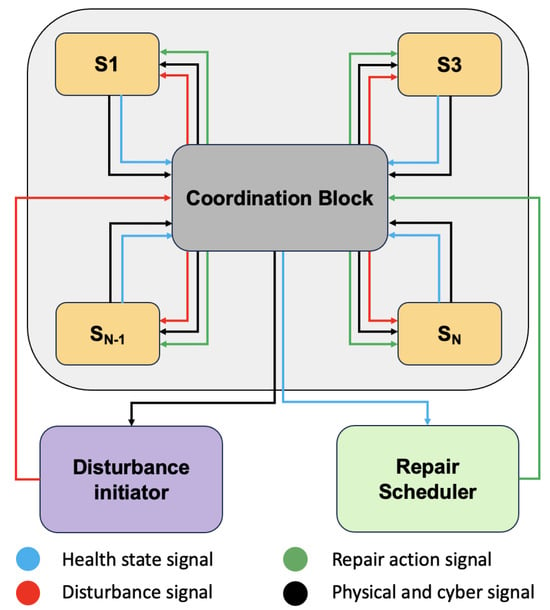
Computational framework for uncertainty-aware physics-based assessment of material chloride resistance assisted with machine learning (colour code is to highlight separate processes).

News & Conferences

Issues

Open for Submission

Editor's Choice

Reprints of Collections

New Technological Solutions, Research Methods, Simulation and Analytical Models That Support the Development of Modern Transport Systems
Reprint

New Technological Solutions, Research Methods, Simulation and Analytical Models That Support the Development of Modern Transport Systems

Editors: Tomasz Nowakowski, Artur Kierzkowski, Agnieszka A. Tubis, Franciszek Restel, Tomasz Kisiel, Anna Jodejko-Pietruczuk, Mateusz Zaja̧c

Get Alerted

Add your email address to receive forthcoming issues of this journal.

XFacebookLinkedIn
Modelling - ISSN 2673-3951