1. Introduction
Wash oil employed in coke-chemical operations exhibits pronounced corrosive activity due to the presence of unsaturated hydrocarbons, polycyclic aromatic compounds, sulfur-containing species, and dissolved oxygen, which markedly intensify both electrochemical and high-temperature corrosion of process equipment [
1,
2,
3,
4]. In addition, coke-quenching water, characterized by elevated mineralization, dissolved gases, and suspended solids, exhibits increased corrosive aggressivity, necessitating the use of corrosion-resistant materials and effective surface protection strategies for all contacting components [
5,
6,
7,
8].
Rare earth elements (REEs) have attracted increasing attention as effective microalloying components for improving the structural, physicochemical, and corrosion properties of steels. Although their consumption in stainless steel production remains relatively low compared with conventional alloying elements, numerous studies have shown that even small additions of REEs exert a strong influence on steel quality, inclusion evolution, passive film stability, and the electrochemical performance of welded and cast components [
9,
10,
11,
12]. As conventional alloying strategies approach their practical limits, REEs provide additional mechanisms of microstructural control that cannot be achieved using classical alloying systems [
9,
10,
13].
REEs exhibit high chemical reactivity due to their low standard electrode potentials and strong affinity for oxygen, sulfur, carbon, nitrogen, and hydrogen. This reactivity promotes the formation of stable oxides, oxysulfides, sulfides, carbides, nitrides, and hydrides, significantly affecting phase transformations in both liquid and solid states [
9,
10]. Their pronounced deoxidizing and desulfurizing capabilities enable effective purification of molten steel and modification of non-metallic inclusions (NMIs) [
14]. REEs are commonly introduced as metallic elements, master alloys, oxides, or fluorides, leading to the formation of fine, electrochemically inert inclusions that reduce localized corrosion susceptibility [
11].
Significant progress has been made in understanding REE-induced inclusion modification. Conventional deoxidation using Al, Ti, Si, and Mn often leaves residual inclusions that promote localized corrosion [
10]. In contrast, REE additions—particularly Ce, Y, and La—modify inclusion size, morphology, and electrochemical activity, thereby suppressing micro-galvanic coupling and enhancing pitting resistance [
11,
12,
13]. Bai et al. [
9] reported that REE additions transform MnS inclusions into stable oxysulfides with lower anodic activity, while Zhang et al. [
10] demonstrated the formation of composite REE–O–S inclusions that reduce electrochemical heterogeneity on stainless steel surfaces.
Yttrium is among the most effective REEs for stainless steel modification. Shi et al. [
11] showed that Y promotes the formation of thermodynamically stable, globular inclusions and suppresses pit initiation in AISI 304 steel. Luo and Liu [
12] observed similar beneficial effects in structural steels, where Y-based inclusions refine the grain structure and reduce oxide heterogeneity. Ma and Zhao [
13] demonstrated that REE ions incorporate into passive films, modify defect structures, and decrease oxygen vacancy concentrations, thereby improving resistance to chloride-induced breakdown.
Electrochemical impedance spectroscopy (EIS) and Mott–Schottky (M–S) analysis are widely applied to characterize REE-modified passive films. Ascencio and McCafferty [
14] showed that REE-containing passive layers exhibit increased charge-transfer resistance and improved stability. Chen and Xue [
15] emphasized the strengthening role of REE-derived oxides acting as oxygen-ion conductors. Studies on aluminum matrix composites further confirmed the influence of rare earth oxide particles on microstructure refinement and electrochemical stability [
16]. Global research trends underline the growing importance of REEs in advanced corrosion-resistant materials and sustainable alloy design [
17].
Recent investigations on stainless and reinforcing steels highlight the role of REE-modified inclusions in controlling passive film behavior and electrochemical response. Pradhan et al. [
18] identified inclusion type and distribution as key parameters governing electrochemical behavior. Zeng et al. [
19] reported enhanced passivation in Nb-microalloyed steels exposed to carbonation environments due to REE-induced inclusion modification. Wang et al. [
20] demonstrated improved pitting resistance of 13Cr4Ni martensitic steel through stabilization of Cr(III)-rich passive films, while Liu et al. [
21] confirmed enhanced passivity in duplex stainless steel. Similar effects were reported for Ce-modified 316L stainless steel [
22] and Nb-microalloyed steels [
23].
The semiconducting properties of passive films provide further insight into REE-induced modifications. The interpretation of Mott–Schottky behavior established by De Gryse et al. [
24] remains essential for evaluating defect structures. REE additions can alter the dominant semiconducting character of passive films by modifying point defect distributions [
25]. Lv and Li [
26] showed that REEs reduce electronic conductivity in passive films on reinforcing steels, thereby improving long-term corrosion resistance. Methodological principles for EIS data interpretation were outlined by Lazanas and Prodromidis [
27], while classical works by Di Quarto and co-authors [
28,
29,
30] and the theoretical framework developed by Di Paola [
31] remain fundamental for analyzing semiconductor–electrolyte interfaces.
Research on hydrogen behavior in welded and REE-modified steels further demonstrates the role of REEs in controlling electrochemical degradation. Studies have shown that REE-modified inclusions act as hydrogen traps, influence diffusion kinetics, and suppress hydrogen-induced damage in welded joints [
32,
33,
34,
35,
36,
37,
38,
39,
40], thereby enhancing structural reliability.
Yttrium acts as an effective irreversible hydrogen trap in high-strength steels, notably reducing diffusible hydrogen concentrations in weld metals and thereby mitigating hydrogen-induced cracking by lowering the susceptibility to embrittlement. In nickel-based superalloys like Inconel 718, microalloyed yttrium improves resistance to hydrogen embrittlement [
41].
Overall, the incorporation of REEs—particularly via welding electrode coatings—represents an efficient and technologically accessible approach to improving the corrosion performance of stainless steel welds. Despite substantial progress, important knowledge gaps remain regarding REE distribution within passive films, defect structures, and charge-transfer kinetics. Advanced techniques such as EIS, Mott–Schottky analysis, XPS (Photoelectron Spectroscopy), and in situ TEM (Transmission Electron Microscopy) continue to advance understanding of REE-stabilized passivity; however, a comprehensive description of the underlying mechanisms has yet to be achieved.
It is hypothesized that microalloying austenitic Cr–Ni steel (10Kh20N9G6) with trace amounts of yttrium leads to the formation of a monomolecular passive film with degenerate n-type semiconducting behavior in acidic media. The incorporation of yttrium into the near-surface region is expected to systematically modify the electronic structure of the passive layer by increasing donor density, shifting the flat-band potential toward more negative values, and lowering the Fermi energy, thereby increasing the effective electron work function.
2. Materials and Methods
The deposited metal was produced using experimental electrodes fabricated on the basis of an austenitic Cr–Ni steel welding wire (10Kh20N9G6) and calcium fluoride–type coatings modified with additions of rare-earth metals and their compounds.
The investigated material was an austenitic corrosion- and heat-resistant chromium–nickel steel (10Kh20N9G6). The chemical composition of the steel used is given in
Table 1.
The content of rare earth elements was determined using characteristic X–ray radiation (X—ray emission method) by irradiating the metal with a beam of heavy charged particles and recording the emitted signals. The analysis was performed using the “Elean” experimental setup based on the PG-4 (Proton Generator, model 4) accelerator at the Kharkiv Institute of Physics and Technology (Kharkiv, Ukraine).
The REE concentration was determined by comparing the X–ray intensity of standard and test samples. Standard samples were prepared by pressing fine powders with calculated amounts of REEs to simulate the weld metal composition. The detection range was 0.001–0.1%.
Mechanical properties of the weld metal and joints were evaluated according to DSTU ISO 18275:2008 [
42]. Both electrodes were designed for work in an inert atmosphere and were designed to allow continuous solution exchange. A saturated silver/silver chloride electrode (E = 0.222 V at 20 °C) was used as the reference.
All chemicals were of analytical grade. Sulfuric acid (H2SO4, analytical grade, Sigma-Aldrich, St. Louis, MO, USA)) was purchased from Sigma-Aldrich, and yttrium oxide (Y2O3, 99.99%, CAS No. 1314-36-9) was obtained from Alfa Aesar (Haverhill, MA, USA). Salts were recrystallized twice. Solutions were prepared with bidistilled water and deaerated with high-purity helium for 30 min. Pre-electrolysis was carried out by applying rectangular cathodic pulses using a P5827M potentiostat (Elins, Moscow, Russia). Electrode surface smoothness and uniformity were crucial for reliable impedance measurements, as surface inhomogeneities affected relaxation frequencies and impedance spectra.
Electrochemical polishing was employed to prepare the working electrode. The electrode was a cylindrical specimen obtained from the upper weld metal layers, mounted in a fluoroplastic sleeve. Prior to polishing, the surface was rinsed with bidistilled water. Electrochemical polishing was performed in a mixed solution of 50 mL acetic anhydride (analytical grade, Sigma-Aldrich, St. Louis, MO, USA) and 50 mL concentrated HNO3 (analytical grade, Sigma-Aldrich, St. Louis, MO, USA) for 15 s at a current density of 100–200 A·dm−2. After polishing, the electrode was thoroughly rinsed and placed in an electrochemical cell at a potential of −0.5 V versus the normal hydrogen electrode (NHE). All potentials reported herein are referenced to NHE. Before measurements, the electrolyte solutions were deaerated by helium purging for 1 h. The working surface was oriented parallel to the electrolyte interface. For maximum surface cleanliness, additional chemical polishing was applied.
A platinum disk with a surface area approximately 200 times larger than that of the working electrode (s = 18.14 cm2) served as the counter electrode. Prior to each measurement, the counter electrode was polished, rinsed with an alkaline solution and bidistilled water, etched for 15 s in concentrated acid, and rinsed again.
The P-5021 capacitance bridge (Kyiv, Ukraine) was used to measure capacitance–potential dependences of the electrochemical interface based on the AC bridge balancing principle. Temperature was maintained using a U10 thermostat (Ilmenau, Germany). The electrode was polarized for 1 h at -0.5 V before measurements. Cell design, reagents, and preparation conditions met the requirements for impedance spectroscopy.
Electrochemical impedance spectroscopy measurements were carried out in the potentiostatic mode using a sinusoidal AC potential perturbation with an amplitude of 10 mV (rms). Accordingly, the alternating current was not imposed but arose from the electrochemical response of the system and depended on the interfacial impedance. Under these conditions, the amplitude of the measured AC current was typically on the order of a few microamperes.
The amount of hydrogen penetrating into the metal was evaluated using the electrochemical diffusion method of Devanathan and Stachurski [
43]. The exit side was potentiostatically controlled at the hydrogen ionization potential (+250 mV versus the standard hydrogen electrode).
Microstructural analysis, assessment of chemical heterogeneity, and identification of non-metallic inclusions (NMIs) in the weld metal were carried out using “Comebax” (Courbevoie, France) and “Comscan-4” (Cambridge, UK) scanning electron microscopes equipped with Link System 860 for X–ray microanalysis. Samples were prepared using standard etching techniques.
The composition of passive films was studied by Auger Electron Spectroscopy (AES) (Chanhassen, MN, USA) using a JAMP-10S spectrometer (JEOL) (Tokyo, Japan). The analysis depth was ~2 nm. Elemental depth profiling was achieved by sequential ion etching with Ar+ ions (4 keV), at a rate of 10 nm per minute. Surface cleaning was performed with Ar+ ions for 30 s prior to analysis.
Gravimetric corrosion tests were performed according to standard methods [
44]. Samples were cut from both the weld metal and butt weld joints.
4. Discussion
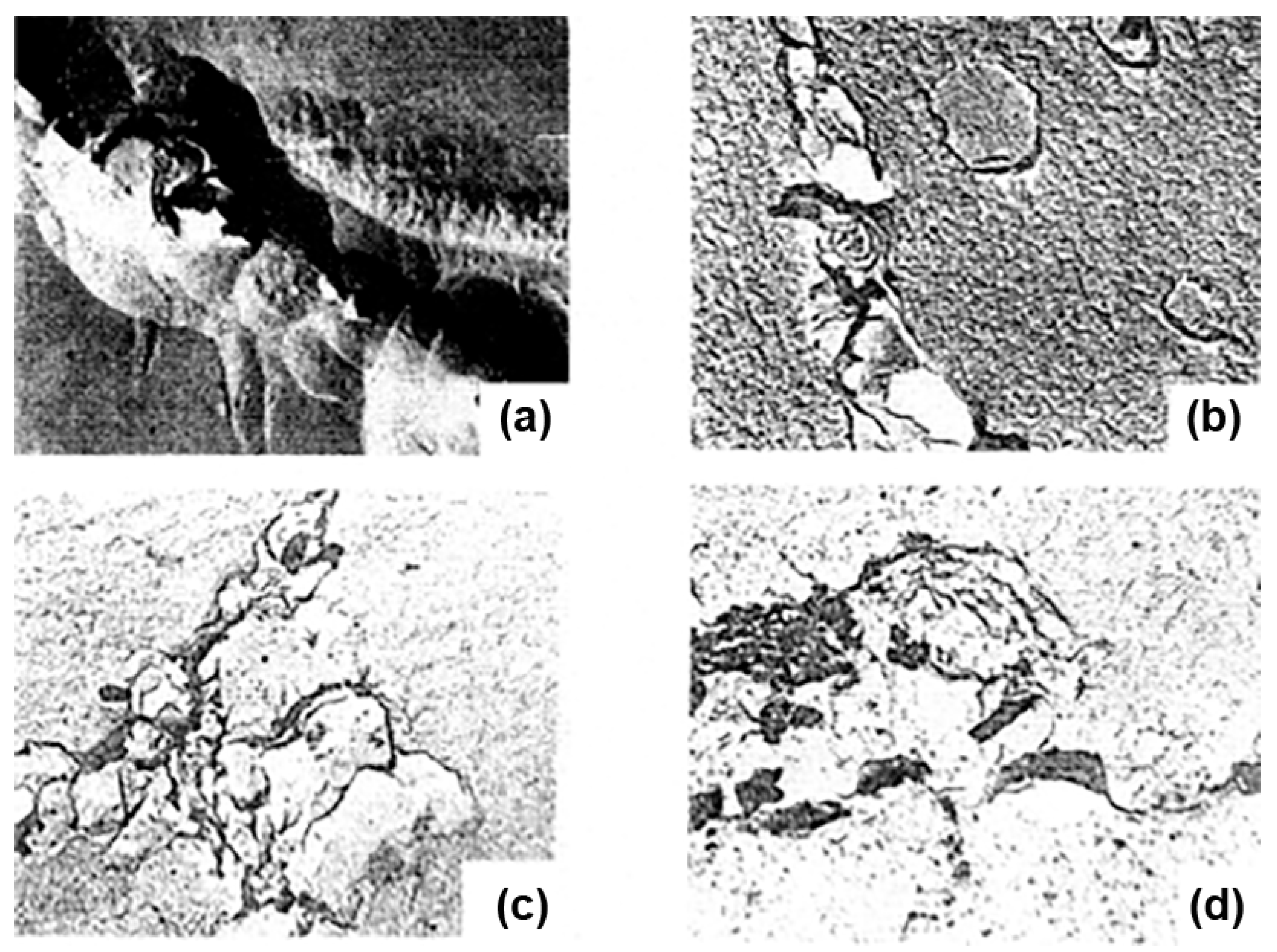
The observed structural response (
Figure 1) to yttrium microalloying (introduced via the electrode coating) indicates that boundary chemistry and boundary morphology are highly sensitive to both the yttrium level and the conditions of its introduction. At moderate yttrium additions in the coating (≈0.75–1.0 wt.%), a pronounced thinning and apparent “purification” of crystallite boundaries is evident (
Figure 1b). This trend is consistent with the generally accepted modifying role of REEs: their strong affinity to oxygen and sulfur promotes the binding of active impurities and the transformation of electrochemically unfavorable boundary features into more stable inclusion products, thereby reducing boundary contamination and improving boundary cohesion.
In contrast, further increasing the yttrium content in the coating leads to a reversal of this beneficial effect: the boundaries become visibly thicker due to the formation of dark particles decorating the boundary regions (
Figure 1c). This behavior suggests the existence of an optimal concentration window in which REE additions refine and clean the boundary network, whereas excessive yttrium promotes the precipitation/segregation of secondary phases or inclusion products at boundaries. In practical terms, when the yttrium level in the weld metal exceeds a threshold (in this system, >0.0027 wt.% Y), boundary “contamination” becomes increasingly likely, which can re-introduce microstructural and chemical heterogeneity precisely at the most critical diffusion and corrosion-sensitive pathways.
A similar tendency was observed when cerium was introduced into the coating in the form of CeO
2: the grain/crystallite boundary regions broaden and precipitates appear (
Figure 1d). Although the chemical nature of Ce-containing products may differ from those formed with yttrium, the microstructural outcome supports the same general conclusion: REE additions are beneficial only within a controlled range, where they act primarily as modifiers/refiners rather than as drivers for excessive boundary precipitation.
A key consequence of REE microalloying is the redistribution and refinement of non-metallic inclusions (NMIs). In the REE-containing weld metal, NMIs are predominantly located inside grains, whereas in the initial (unmodified) condition they are concentrated along grain boundaries. This shift is significant because boundary-located inclusions typically increase interfacial heterogeneity and can intensify local electrochemical activity (e.g., by facilitating micro-galvanic coupling or acting as preferential dissolution/adsorption sites). In the REE-modified metal, inclusions become finer (≈0.8–1.0 μm), more uniformly distributed, and more spheroidal. Such spheroidization and refinement are generally associated with reduced stress concentration and lower local interfacial energy, which can improve both the mechanical integrity and electrochemical uniformity of the near-surface region. Nevertheless, occasional larger NMIs (≈3–8 μm), including some located on boundaries, indicate that the modification is not fully uniform under all conditions, further emphasizing the importance of controlling REE addition level and processing parameters.
Backscattered-electron imaging reveals bright and dark NMI contrast, which reflects differences in average atomic number and therefore composition. In the initial weld metal, the inclusion chemistry is complex: bright oxides are typically enriched in Mn–Si–Al, whereas dark inclusions—identified as carbides—contain Cr–Mn–Mo. After adding REEs, the population of dark inclusions increases and their chemistry changes. Bright oxides incorporate Mn–Si–S together with REEs and Al, while dark inclusions contain C–Mn–Y–Ce. The presence of appreciable Si, S, and Al in some inclusions further indicates that REEs participate in forming multi-component products involving both matrix elements and impurity species. The correspondence of dark inclusions to complex carbides (with no detectable Cr, Ni, or Fe in their composition) suggests the formation of specific REE-containing carbon-rich phases and/or complex carbide-type particles whose exact crystallography may require additional confirmation using complementary local analysis (e.g., high-resolution compositional mapping or diffraction).
Overall, the microstructural evidence indicates that yttrium can act as an effective modifier for the weld metal when maintained within an optimal concentration range, producing cleaner and thinner boundary regions and promoting the transfer of inclusions from boundaries into the grain interior while refining and spheroidizing them. However, excessive yttrium leads to boundary contamination by inclusion products and increased boundary heterogeneity. These features are crucial for interpreting the electrochemical behavior discussed in subsequent sections, because grain/crystallite boundary conditions and inclusion populations directly affect local electrochemical reactivity, passive film stability, and the likelihood of micro-galvanic effects in aggressive acidic environments.
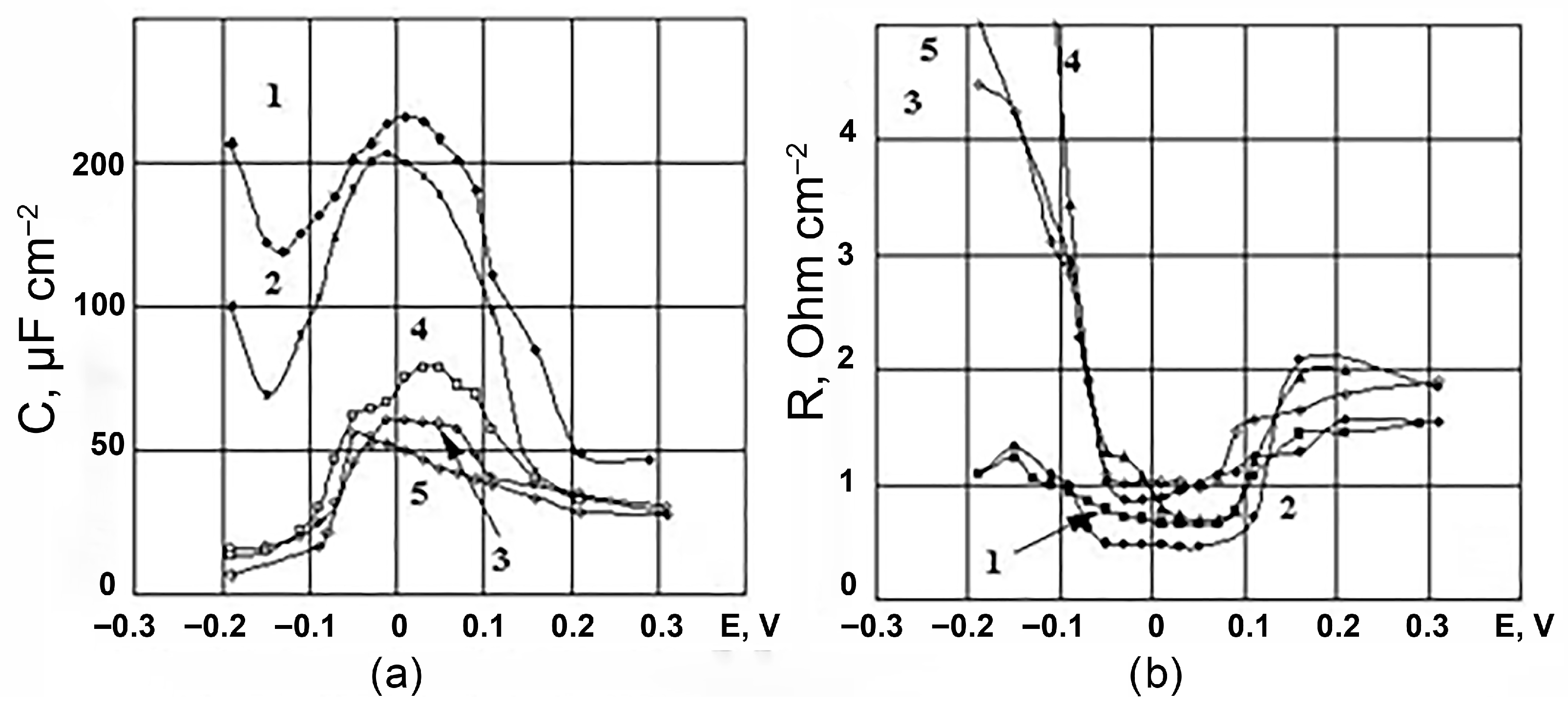
Figure 2 demonstrated a consistent evolution of curves 1–5 with increasing REE content in the welding electrode coating: from curve 1 (without REE) to curve 5 (1% Y
2O
3), the reactive component of impedance decreases while the active component increases over the passive potential range. This trend reflected progressive thickening and densification of the passive film, accompanied by a reduction in defect-assisted charge transport. The most pronounced effect is observed for curve 5, indicating the formation of the most stable and electrically resistive oxide layer.
Figure 2 shows the potential dependence of the impedance components at the austenitic Cr–Ni steel (10Kh20N9G6) –xY/1 M H
2SO
4 interface. In the vicinity of the standard potential of the hydrogen evolution reaction,
a distinct maximum in pseudocapacitance is observed on the capacitance–potential (C–E) curve (
Figure 2a). This feature is attributed to adsorption–desorption processes and the associated restructuring of the double electric layer (DEL) during hydrogen-related interfacial reactions. As the yttrium content in the metal increases from 0.0017 to 0.0029 wt.%, the differential capacitance in the cathodic potential range decreases sharply (by a factor of approximately 2.3–2.7), indicating a substantial modification of interfacial charge storage and/or a reduced contribution of adsorption-related capacitance.
When the yttrium content in the weld metal exceeds 0.0027 wt.%, a splitting of the adsorption–desorption maximum is observed, indicating the adsorption of hydrogen atoms and molecules in two energetically different states. As the yttrium content in the alloy increases, the ratio of the concentrations of these hydrogen forms changes, which affects the potentials of the capacitance maxima in the region of co-adsorption.
Overall, these trends indicated that yttrium microalloying modified the interfacial steps of hydronium-ion reduction on the steel surface, consistent with a hindering of the electrochemical stages of the hydrogen evolution reaction on yttrium-modified weld metal.
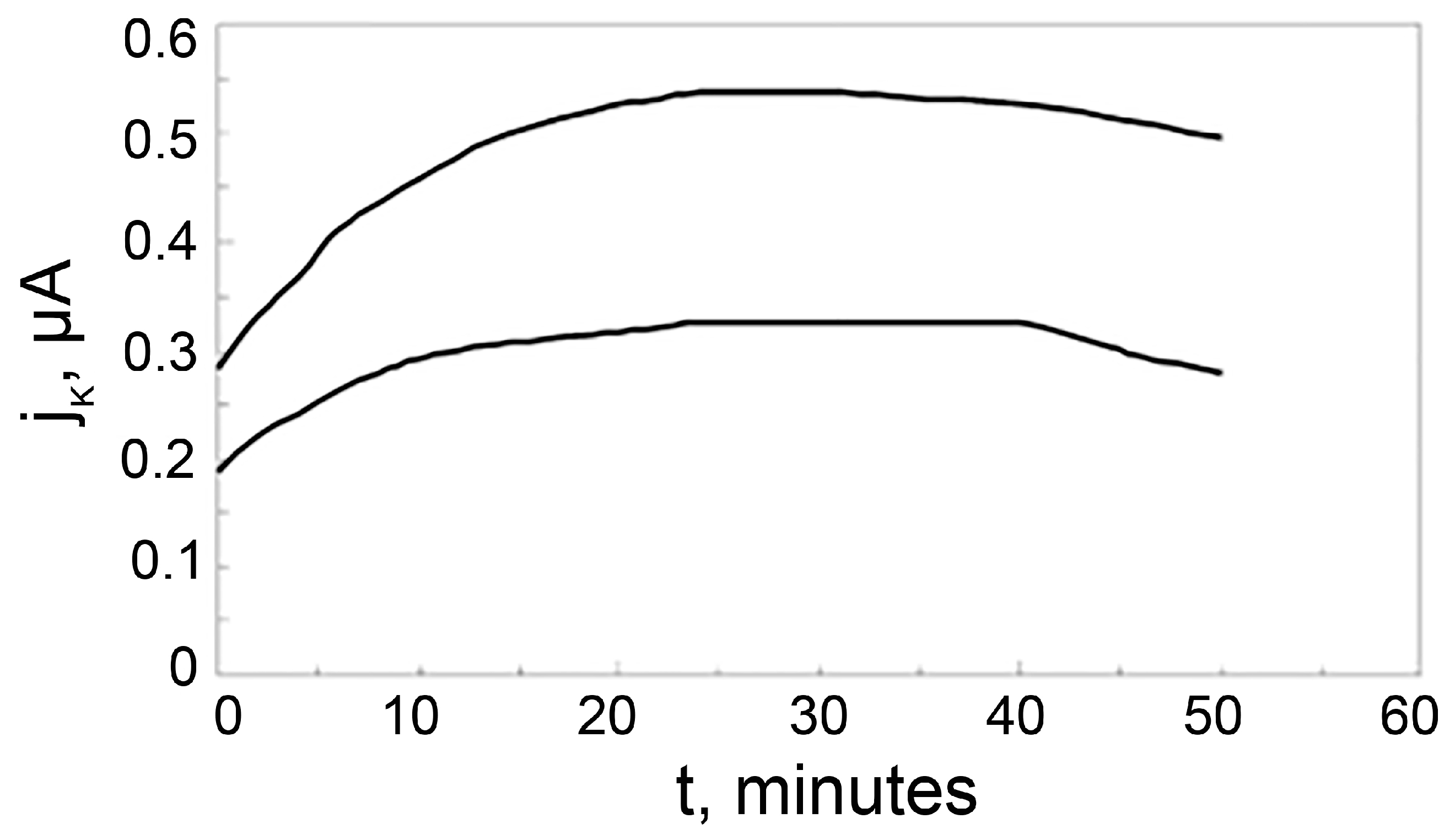
The observed retardation of the hydrogen-ion discharge reaction is apparently largely associated with a decrease in the diffusion mobility of hydrogen atoms in the near-surface layer of the microalloyed metal. This is evidenced, in particular, by the chronoamperometric curves corresponding to the hydrogen flux on the outlet side of the investigated membranes (
Figure 3).
The decrease in the hydrogen diffusion coefficient in the weld metal microalloyed with yttrium (see
Table 3) indicates the presence of hydrogen traps involving yttrium, i.e., phases capable of binding hydrogen.
Microalloying the weld metal of austenitic Cr–Ni steel (10Kh20N9G6) with yttrium makes it possible to reduce hydrogen uptake by 25–30%.
The above-mentioned changes in the behavior of hydrogen in metal microalloyed with rare-earth elements depend on several factors. These include:
Modification of structural constituents;
Changes in grain boundary quality;
Changes in the amount, size, shape, morphology, chemical composition, NMIs, and their spatial distribution;
Changes in the phase composition of the steel;
Changes in the degree of electronic bonding.
Two types of hydrogen diffusivity in metals are generally distinguished—boundary diffusivity and lattice diffusivity. The boundary diffusivity in austenitic structures is higher than the lattice diffusivity [
32].
The factors listed above influence the diffusion transport of hydrogen in different ways: some lead to an increase in the hydrogen diffusion coefficient, while others result in its decrease.
It is known that the main transport pathways for hydrogen diffusion in single-phase austenitic steels are the boundaries of crystallites, grains, and blocks. Fragmentation of structural constituents under the influence of REEs increases the total length of grain boundaries several-fold. Therefore, the hydrogen diffusion coefficient should, in principle, increase significantly. This is even more likely because major obstacles to hydrogen transport—boundary contamination by NMIs—are removed. Complex, finely dispersed NMIs containing REEs, formed during the pre-crystallization period, are uniformly distributed in the matrix [
33], ensuring increased cleanliness of boundary regions.
Thus, the number of traps that hinder diffusion transport of hydrogen—considered the main obstacle according to [
34]—should have decreased. However, as established in our studies, the hydrogen diffusion coefficient did not increase but instead decreased sharply.
The presence of a certain amount of ferrite phase in the metal should increase the hydrogen diffusion coefficient due to the higher diffusivity of the α-lattice compared with the γ-lattice. A decrease in the ferrite content in the investigated steel from 5.1 to 3.8% could, in principle, reduce the diffusion coefficient. However, considering that the difference in ferrite content between the initial and experimental steels is minor, it cannot significantly affect the diffusion coefficient.
The role of REE-containing NMIs in hydrogen diffusion retardation has not been sufficiently studied. In [
35,
36], the reduced hydrogen diffusivity was attributed to the formation of traps at the NMI–matrix interfaces and to the increased total specific surface area of the modified structure.
Without denying this contribution, we believe that the primary factor retarding hydrogen diffusion is the presence of REEs in the metal, both in the NMIs and in the solid solution, which ensures a high energy of electronic bonding with hydrogen [
37]. Chemical interaction of hydrogen with REEs, leading to the formation of hydrides, intermetallic compounds, or adsorption complexes, is also possible [
38,
39,
40]. The mechanism of this interaction has not yet been fully clarified.
Therefore, introducing yttrium into the weld metal of austenitic steels through the electrode coating altered the diffusion mobility of hydrogen. Both metallic yttrium and its oxide reduce hydrogen diffusivity. Microalloying the weld metal of an austenitic Cr–Ni steel (10Kh20N9G6) with yttrium reduces hydrogen uptake by 25–30%.
REEs significantly modify the structure and clean grain boundary regions from NMIs, which represent the primary traps that impede hydrogen diffusion. The newly formed fine-dispersed NMIs, uniformly distributed in the weld metal, have a complex composition that includes REEs.
The main reason for the reduction in hydrogen diffusivity, along with other known factors, is the presence of yttrium in the metal—both in the NMIs and in the solid solution—which apparently provides a high energy of electronic bonding with hydrogen.
Potentiostatic studies confirmed the hypothesis of an energy-based mechanism of hydrogen diffusion retardation in the FCC (Face-Centered Cubic) metal containing yttrium.
The inhibition of the coupled hydrogen-ion reduction reaction, caused by an increase in the overpotential for hydrogen evolution on the surface of the microalloyed metal, leads to a decrease in the overall corrosion rate of weld metals alloyed with yttrium.
The capacitance–potential (C–E) dependencies obtained for the austenitic Cr–Ni steel (10Kh20N9G6) –x%Y/1 M H
2SO
4 interface include contributions from both adsorption-related (pseudocapacitive) and Faradaic processes. Consequently, construction of the Mott–Schottky plots required accounting for the significant influence of Faradaic currents associated with steel dissolution. To minimize the Faradaic contribution, the high-frequency interfacial capacitance, C(ω→∞), was determined from the admittance spectra in the ω→∞ limit, and the resulting values were used to build the Mott–Schottky relationships (
Figure 4 and
Figure 5).
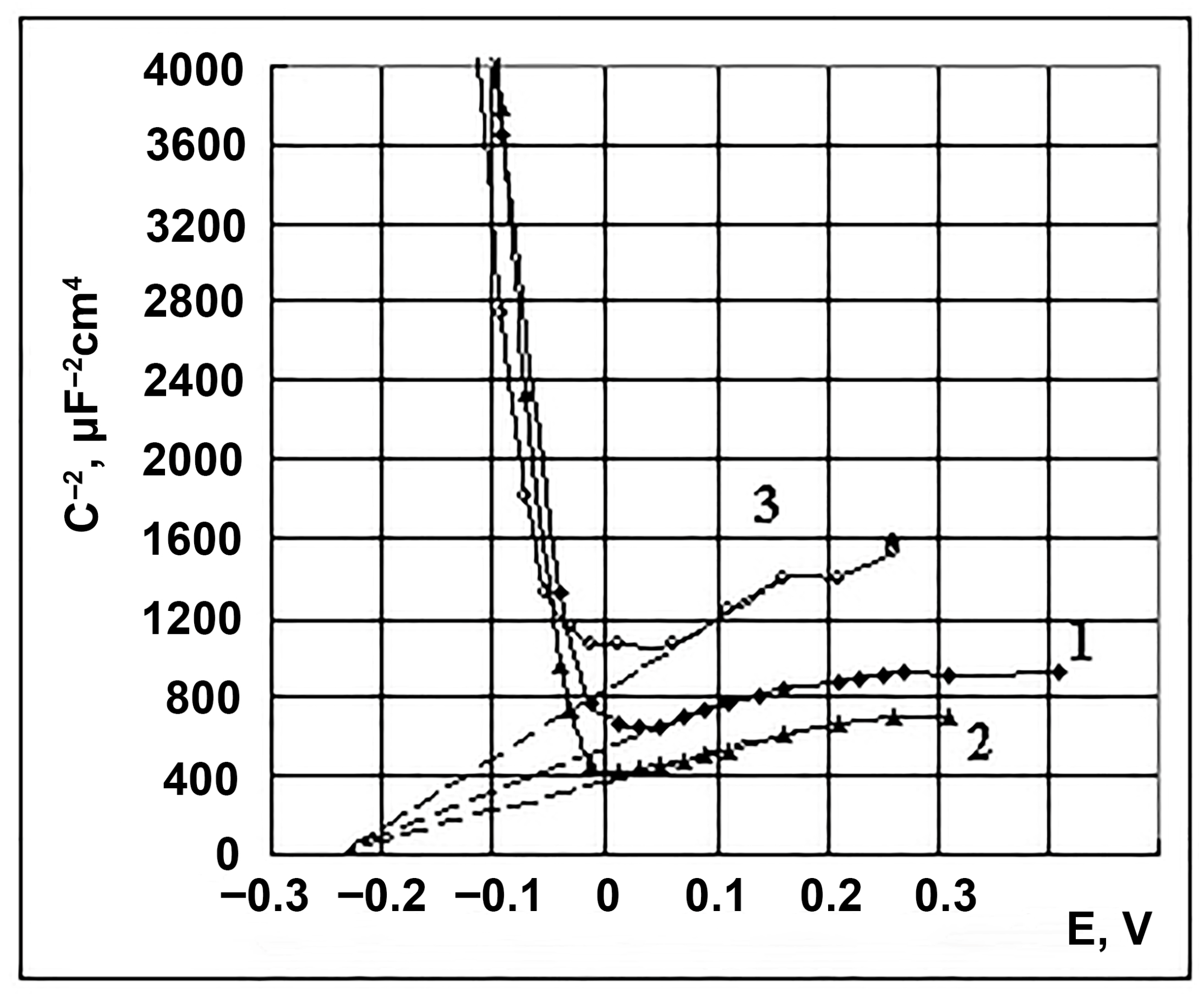
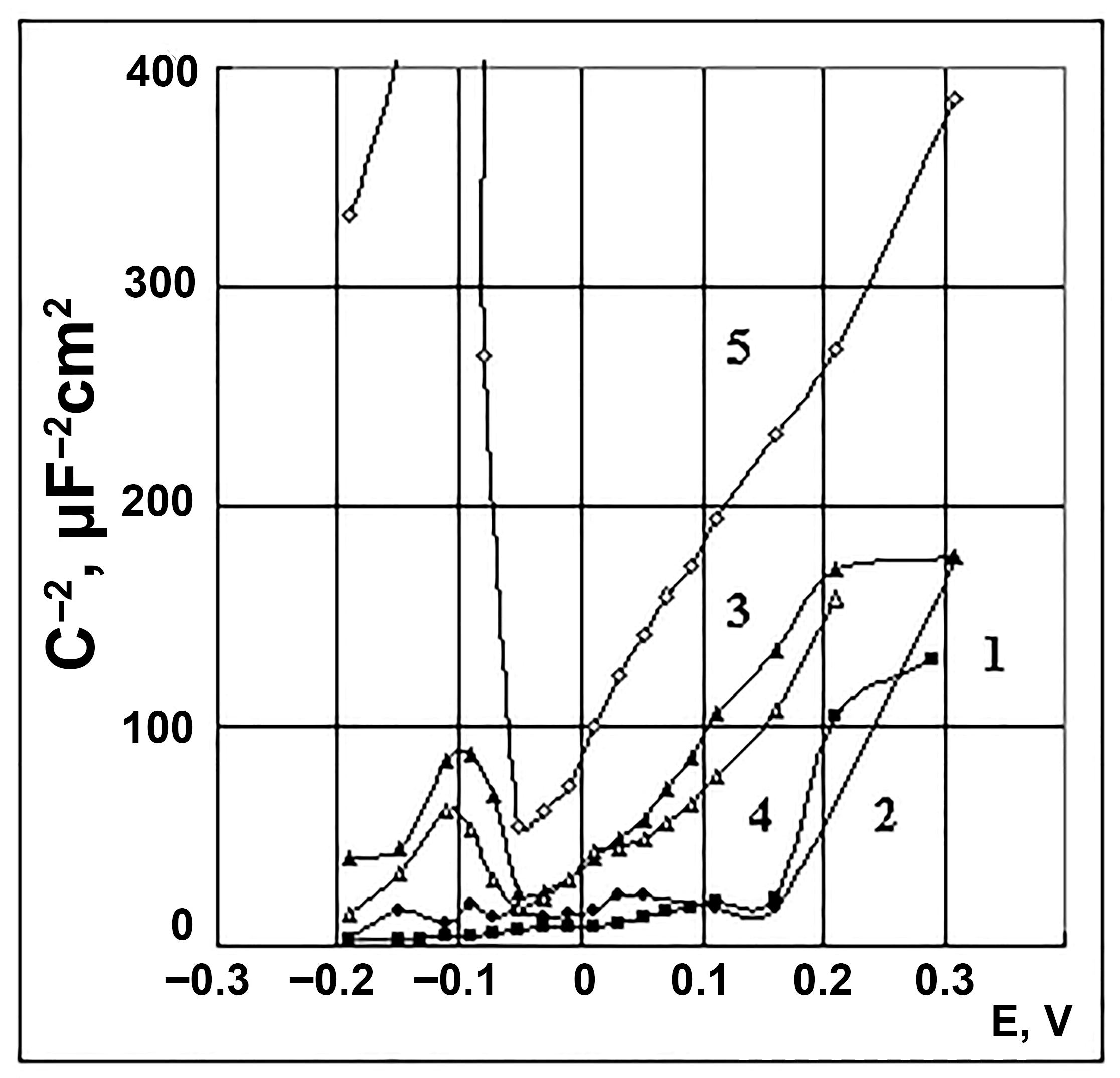
Figure 4 shows that yttrium microalloying markedly alters the Mott–Schottky behavior of the passive layer formed on an austenitic Cr–Ni steel (10Kh20N9G6) in aqueous 1 M H
2SO
4. The Y-free steel (curve 1) exhibits a relatively low capacitance and a weakly pronounced linear region, indicating a thinner and less electronically ordered passive film. Introduction of 1% Y (curve 2) reduces the slope of the C
−2–E dependence, consistent with an increased donor density and improved stabilization of the oxide layer.
Figure 4 shows that yttrium microalloying markedly alters the Mott–Schottky behavior of the passive layer formed on an austenitic Cr–Ni steel (10Kh20N9G6) in 1 M H
2SO
4. The Y-free steel (curve 1) exhibits a relatively low capacitance and a weakly pronounced linear region, indicating a thinner and less electronically ordered passive film. Introduction of 1% Y (curve 2) reduces the slope of the C
−2–E dependence, consistent with an increased donor density and improved stabilization of the oxide layer. At 2% Y (curve 3), a sharp increase in capacitance at negative potentials and a clearer linear segment are observed, evidencing the formation of a thicker, defect-modified semiconducting film, likely associated with excess yttrium-enriched phases that significantly influence charge transfer and space-charge capacitance [
45].
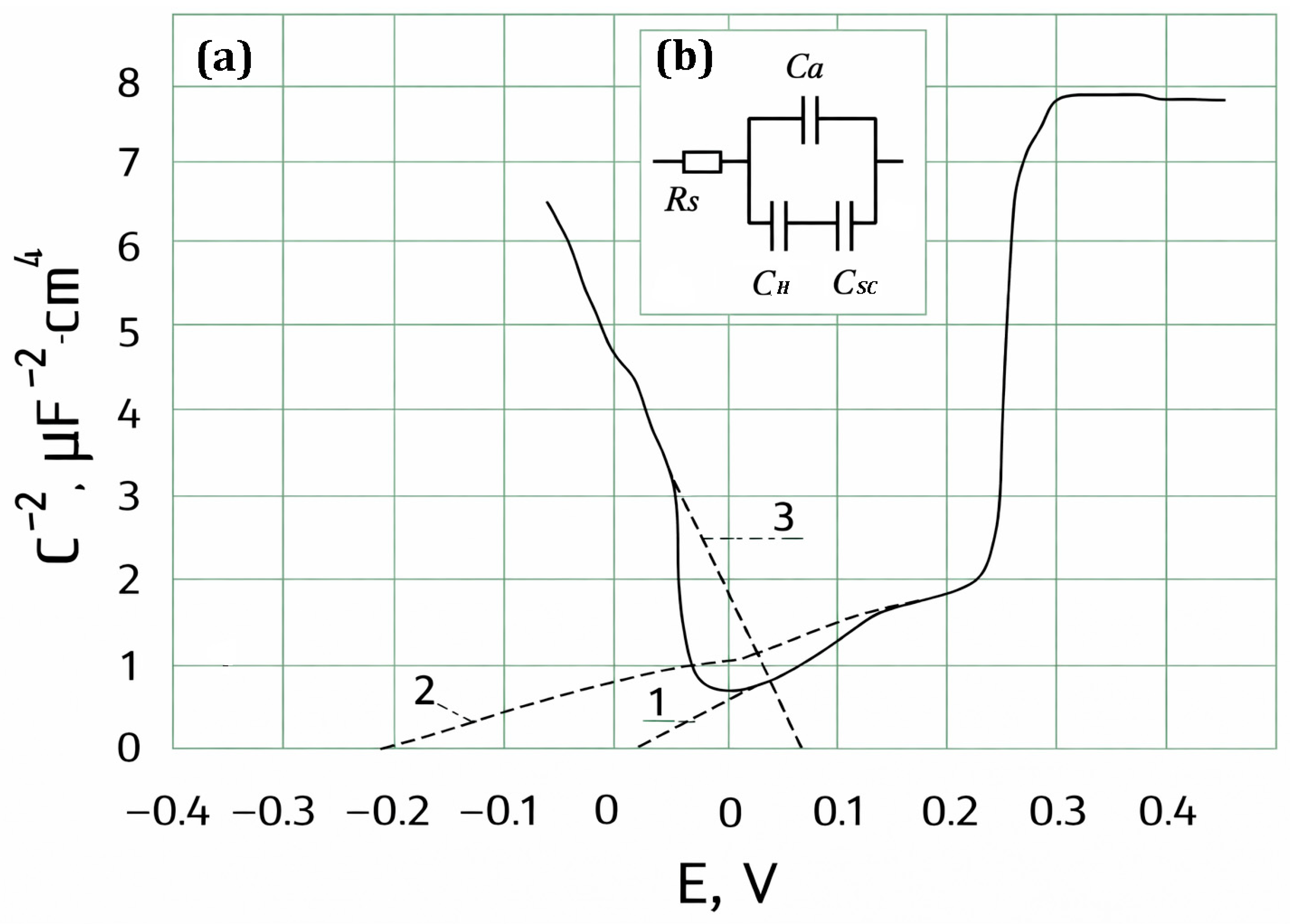
Figure 5 showed a systematic change in the Mott–Schottky curves from 1 to 5, characterized by an increasing slope and a shift in the intercept toward more positive potentials. These trends correspond to a gradual decrease in donor concentration and a modification of the flat-band potential as the REE content increases. The transition from curve 1 to curve 5 therefore indicates suppression of point defects and enhanced structural and electronic stability of the passive film.
The corrected experimental data were analyzed using the Mott-Schottky theory in the coordinates Csc
−2, E (
Figure 4,
Figure 5 and
Figure 6). This made it possible to show that an n-type semiconductor layer exists at the interphase boundaries of austenitic Cr–Ni steel (10Kh20N9G6)/H
2SO
4 – 1 M doped with
x % Y at different temperatures.
The obtained experimental data were analyzed using the Mott-Schottky theory in the coordinates C
−2 = f(E) [
15,
16]. The dependences C
−2 = f(E) were constructed for the interphase boundary of Ch18N9T/4 M H
2SO
4 (
Figure 4,
Figure 5 and
Figure 6), and the electrochemical parameters of the semiconductor electrode were calculated (
Table 4 and
Table 5).
The decrease in capacitance in both cathodic and anodic regions (
Figure 2) reflects the mixed nature of the measured interfacial capacitance, which includes Helmholtz, adsorption (pseudocapacitive), and space-charge components, as well as a Faradaic contribution when dissolution/hydrogen evolution is significant. Yttrium reduces the Faradaic/pseudocapacitive response in the cathodic region (suppression of hydrogen evolution and dissolution) and decreases the space-charge capacitance in the anodic region due to modification/thickening of the semiconducting passive film (
Table 4).
Thus, in these studies, equivalent circuits for semiconductor-electrolyte interphase boundaries (Ch18N9T steel and yttrium-implanted austenitic Cr–Ni steel (10Kh20N9G6)) were calculated. The Csc
–2 = f(E) dependences calculated from admittance spectra were described by the Mott-Schottky theory. The potentials of flat bands, thicknesses, and Fermi energies for semiconductor layers were determined. The obtained capacitive dependences contain both adsorption and Faraday capacitance components. In the passivity region between the Flade potential and the transpassivity potential, the analysis of these data allows us to construct Mott-Schottky graphs under conditions of a significant influence of Faraday processes of steel dissolution. This made it possible to show that at the interphase boundaries of Ch18N10/H
2SO
4 – x%Y and austenitic Cr–Ni steel (10Kh20N9G6)/H
2SO
4 – 1 M doped with
x % Y at different temperatures, there was an n-type semiconductor layer. It was shown that for this system, the semiconductor film was degenerate, the concentration of the doping impurity N
D exceeds 1 × 10
27 m
–3 and, therefore, the distribution of charge carriers obeys the Fermi-Dirac statistics. For this case, the flat band potential is described by the equation of M. S. Griliches [
28,
29]:
where EFD—flat-band potential, the electric potential at the phase boundary at which the band structure is flat;
—energy of the conduction band minimum at zero band bending, which reflects the position of the energy level deep inside the semiconductor bulk; e—elementary charge, 1.602 × 10
−19; ε—relative permittivity (dielectric constant) of the semiconductor; ε
0—vacuum permittivity (electric constant), 8.85 × 10
−12 F/m; N
D—donor impurity concentration in the semiconductor (relevant for n-type material); C
H—Helmholtz capacity (per unit area); E
F—Fermi level, corresponding to the chemical potential of electrons.
Comparison of the obtained experimental value of the dopant concentration N
D with similar values for other oxides and steels [
24] showed that such a degeneracy value was not achieved for any of them. Therefore, in accordance with [
24], electron transfer at high frequencies of alternating current is a quantum process and is carried out by it tunneling through a potential barrier.
To consider the physical processes occurring at the interface between microalloyed metal and solution, a simplified “jelly” model was used. In this model, the periodic distribution of positive charge in the crystal lattice of the metal is replaced by a continuous continuum of charge smeared throughout the crystal and neutralized by the electron gas of valence electrons [
27,
28,
29,
30,
31].
According to this model, the potential energy at the metal/electrolyte interface can be described as a potential “box”. In this interpretation, the periodic arrangement of positive charge in the metal crystal lattice is replaced by a continuous charge continuum, uniformly distributed throughout the crystal volume and neutralized by the electron gas of valence electrons. The energy levels of electrons are located in a potential box with a depth:
where Vex—the exchange energy of interaction with the positive charge of this space, Vel—the electrostatic energy of the electron gas exit from the crystal lattice.
The highest filled energy level—the Fermi level at T = 0 K has the maximum kinetic energy—the Fermi energy E
F:
where h—Planck’s constant, m
e—the electron mass, ρ
e—the density of free electrons in the metal. The depth of the potential well decreases with increasing kinetic energy of the electron. The work function
We of an electron exiting the potential “box” into a vacuum for the “jelly” model:
If, with an increase in the concentration of Y and its compounds in the surface layer of steel, the total potential energy V remains unchanged or changes insignificantly and decreases, then, consequently, the electron work function EF increases, and, as a consequence, an increase in charge transfer resistance is observed. This leads to a decrease in the self-dissolution currents of steels in 1 M H2SO4 with an increase in the concentration of Y in the metal, which follows from the calculated values obtained from the experimental lgj—E dependencies.
5. Conclusions
A monomolecular passive film with well-defined semiconducting characteristics is formed on the surface of yttrium-microalloyed austenitic stainless steel (10Ch20N9G6) in 1 M H2SO4. The electronic parameters of this passive layer exhibit a strong and systematic dependence on the yttrium content in the metal, demonstrating that even trace additions of Y are capable of profoundly modifying the electronic structure of the oxide film. Such sensitivity highlights the crucial role of microalloying with rare-earth elements in controlling passivity at the atomic scale.
Mott–Schottky analysis revealed, for the first time for this steel grade, that the passive film behaves as a degenerate n-type semiconductor with an extremely high donor density (ND > 1 × 1027 m−3). This exceptionally high concentration of electronic defects indicates that charge transport at high frequencies proceeds predominantly through quantum-mechanical tunneling rather than classical drift–diffusion. The presence of a degenerate electron gas at the metal/film interface profoundly affects the kinetics of both anodic and cathodic reactions and represents a key distinguishing feature of REE-modified passive films.
Increasing the yttrium concentration leads to a distinct negative shift in the flat-band potential and a simultaneous decrease in the Fermi energy. This shift corresponds to an increase in the electron work function, effectively raising the energy barrier for charge transfer across the passive film. As a consequence, both anodic metal dissolution and cathodic processes (particularly hydrogen reduction) are suppressed. The observed electronic restructuring of the passive layer strongly suggests that yttrium increases the density of deep donor states and reduces the probability of thermally activated charge transfer events.
Microstructural investigations revealed that yttrium addition results in pronounced purification of grain boundaries, refinement of non-metallic inclusions, and their transformation into more stable spheroidized REE-containing oxides and carbides. These inclusions become more uniformly distributed within the matrix and exhibit reduced electrochemical activity compared with MnS and mixed oxides typically found in unmodified stainless steels. The decrease in boundary contamination reduces local electrochemical inhomogeneity, resulting in a more uniform and mechanically stable passive film that is less prone to breakdown under aggressive acidic conditions.
Hydrogen diffusion measurements demonstrated a 25–30% reduction in effective hydrogen permeability in yttrium-modified weld metal. This behavior is attributed not only to the cleaner and structurally stable grain-boundary regions but also to the presence of energetically strong hydrogen traps associated with yttrium atoms in the solid solution and within modified inclusions. Y-based traps act as deep binding sites that hinder hydrogen mobility and accumulation, thus reducing the likelihood of hydrogen-induced cracking and embrittlement.
Electrochemical impedance spectroscopy and potentiostatic polarization measurements confirmed a significant retardation of the hydrogen evolution reaction and a measurable decrease in cathodic current densities for Y-microalloyed specimens. These effects correlate directly with the modified electronic structure of the passive film, the increased work function of the Y-enriched surface, and the higher charge-transfer resistance observed across the metal/film/electrolyte interface.
An energy-controlled mechanism of hydrogen-transport inhibition is therefore proposed. According to this concept, yttrium increases the binding energy of hydrogen in the near-surface region and modifies the local electronic potential landscape in a manner that reduces the hopping probability of hydrogen atoms. Combined with the enhanced stability of the passive layer, this mechanism provides a coherent explanation for the simultaneous improvement in hydrogen resistance and corrosion behavior.
Overall, yttrium microalloying of austenitic Cr–Ni steel (10Kh20N9G6) offers a highly effective means of tailoring the electronic structure of passive films, suppressing hydrogen uptake, and enhancing the resistance of weld metal to both localized corrosion and hydrogen-assisted degradation. These findings carry significant scientific value for understanding REE-driven passivity and practical relevance for improving the operational reliability of welded joints in aggressive environments, particularly in chemical, energy, and petrochemical industries.





 ,
,