1. Introduction
Electrolyte composition critically affects the lifetime, performance, and safety of lithium-ion batteries [
1,
2,
3]. Even trace amounts of water can alter electrochemical behaviour by accelerating electrolyte decomposition, promoting solid electrolyte interphase (SEI) formation, and destabilizing electrodes [
4,
5,
6]. Detecting moisture in aprotic organic-based electrolytes such as acetonitrile (MeCN), which cannot donate protons, remains technically challenging for real-time monitoring during battery operation or research [
7]. MeCN was used as a model aprotic solvent due to its wide electrochemical window and well-defined behaviour on Pt electrodes, enabling clear isolation of protonic species generated by
hydrolysis. This simplified environment facilitates mechanistic analysis of water-induced degradation processes. While MeCN is not a practical battery solvent, the identified cathodic signatures are expected to remain relevant in other aprotic electrolytes, with possible shifts in potential arising from solvent-dependent interfacial effects. Over time, solvent molecules react with residual water, trace acids, or salt-derived impurities to form HF, POF
3, fluorophosphates, and other products that alter interfacial chemistry and reduce ionic mobility [
8,
9]. Understanding the mechanisms of solvent degradation—particularly how trace water and salt hydrolysis products drive changes in MeCN-based systems—is therefore important not only for improving the long-term stability and safety of lithium-ion electrolytes in these solvents, but also for advancing the broader use of MeCN–salt combinations in electrochemical and synthetic applications [
10]. Industry and best-practice studies typically control electrolyte water to ≤10–20 ppm to avoid LiPF
6 hydrolysis and HF formation [
11]. Ambient preparation and handling of MeCN-based electrolytes often result in water levels in the tens to hundreds of ppm unless specific drying and inert-transfer procedures are applied [
12]. Conventional analytical approaches, such as Karl Fischer titration or spectroscopic techniques (IR, Raman, NMR), provide accurate measurements of water content, but they are typically ex situ and require specialized instrumentation. Accordingly, the development of diagnostic electrochemical methods that can identify the early stages of electrolyte ageing and water-induced degradation in situ, while reducing the need for complex analytical instrumentation, remains an important objective.
Cyclic voltammetry (CV), although not quantitative, is a widely accessible technique to track changes associated with trace water and electrolyte ageing [
13]. Variations in current response may therefore offer qualitative indicators of moisture-related degradation. Nevertheless, the sensitivity of the voltametric response depends strongly on the properties of the electrode surface. Studies have shown that platinum electrodes are particularly responsive to water traces and decomposition products in LiPF
6-based electrolytes [
14,
15], and that modifying their surface morphology can amplify such effects. Nanostructured platinum offers increased electroactive area, thereby improving sensitivity to faradaic processes associated with moisture or hydrolysis [
16]. In addition, coatings such as Nafion provide selective ionic permeability and limit solvent access to the electrode surface, thereby modulating ion–solvent interactions [
17].
Electrolyte ageing and water detection are closely interrelated phenomena. As moisture accumulates and hydrolysis proceeds, both the composition and the electrochemical stability of the solvent evolve, complicating the interpretation of voltametric signals and the identification of genuine water-related processes. In this work, we investigate the electrochemical behaviour of Bu4NPF6 and LiPF6 electrolytes in MeCN under controlled water contamination. Lithium hexafluorophosphate (LiPF6) was selected as the representative lithium salt because it remains a widely used electrolyte component in lithium-ion batteries, owing to its high ionic conductivity, compatibility with aprotic carbonate and nitrile solvents, and ability to form stable passivation layers on metal surfaces. Cyclic voltammetry was employed as a tool to monitor the evolution of redox features associated with electrolyte ageing. Platinum electrodes with distinct surface properties—flat, Nafion-coated, and nanostructured (nanoflower)—were compared to evaluate how electrode morphology influences sensitivity towards moisture and degradation products. The experiments were conducted in anhydrous acetonitrile using pre-dried salts and electrodes under an argon atmosphere to minimize external moisture, but the experimental design permitted conditions where small amounts of water could appear, enabling the early stages of solvent and salt degradation to be examined. The main objective was to identify characteristic voltametric signatures that can serve as early indicators of moisture-induced degradation, and to assess the potential of nanostructured Pt as a sensitive platform for in situ electrolyte monitoring, bridging the gap between laboratory diagnostics and practical electrochemical detection.
2. Materials and Methods
The electrochemical experiments were performed in a two-compartment H-cell operated under a slight argon overpressure to minimize external water contamination. Cyclic voltammetry was performed in the 50 mL cell equipped with a 20 mm diameter and 170 μm thickness proton-exchange membrane (both supplied by Redoxme AB, Norrköping, Sweden). This technique was used to monitor possible electrochemical reactions and provided the basis for the data and figures presented in this article. A non-aqueous Ag/AgCl refillable electrode (6 mm diameter) was used as the reference electrode (RE). For simplicity, herein we will refer potentials as potential against the Ag/AgCl reference electrode. A 99.9% platinum electrode served as the counter electrode (CE), and different samples based on evaporated platinum substrates—bare, Nafion-coated, and nanostructured (nanoflower)—were employed as the working electrodes. These configurations were tested under comparable conditions to evaluate the influence of proton transport and surface morphology on lithium-ion electrolytes.
The electrolytes were prepared using tetrabutylammonium hexafluorophosphate (Bu4NPF6 ≥ 99.0%, Sigma-Aldrich, St. Louis, MS, USA) as the supporting salt and lithium hexafluorophosphate (LiPF6, Sigma-Aldrich) as the lithium source. Anhydrous MeCN, 99.8%, Sigma-Aldrich) was used as solvent. Solutions of Bu4NPF6 were prepared at a concentration of 10 mM in 100 mL MeCN to minimize water adsorption by reducing the amount of salt handled. A 50 mM LiPF6 stock solution was separately prepared in 50 mL of MeCN, which was later diluted to obtain 1, 5 and 10 mM working concentrations. All electrolyte preparations were carried out under dry argon to avoid moisture uptake. The salts were placed in separate three-necked flasks and gently heated using a heating mantle (Glassco 1500.EU.03, Ambala Cantt, India) at temperatures below 50 °C for less than 30 min to promote moisture removal. The central neck of each flask was connected to a vacuum pumping unit (Vacuubrand PC 3001 VARIOpro, McLeansville, NC, USA) to extract residual humidity before solvent addition. MeCN was then withdrawn from the storage bottle under an argon atmosphere using an argon-filled balloon and injected through one of the side necks while argon was allowed to flow by switching a three-way valve from vacuum to argon. Once the flasks were under argon, the solvent was added, and all openings were sealed with septa, wrapped with Parafilm, and stirred until the salts were fully dissolved.
The working electrodes were fabricated on silicon wafers coated with a 5 nm titanium adhesion layer followed by a 100 nm platinum layer, both deposited using an electron-beam evaporator. The wafers were diced into a grid pattern comprising 0.9 cm × 0.9 cm squares and 0.5 cm × 1.5 cm rectangles using a DISCO Dicing Saw DAD3350, Tokyo, Japan. Before using, the samples were sequentially cleaned with acetone and isopropanol, rinsed with deionized water, dried under an argon stream, and treated for 10 min in a UV–ozone cleaner (model 42 series, Jelight Inc., Irvine, CA, USA).
The synthesis of platinum nanoflowers (PtNFs) was mediated by a PS-b-P4VP diblock copolymer and carried out by pulsed electrodeposition using an SP300 computer-controlled potentiostat (BioLogic, Seyssinet-Pariset, France). The mechanism of copolymer-assisted nucleation and anisotropic growth under pulsed electrodeposition conditions, which is transferable to platinum systems, has been described previously in literature [
18]. The electrodeposition was performed in an aqueous electrolyte containing a platinum precursor salt and 0.05 M KCl as supporting electrolyte. To promote the formation of Pt nanoflowers, the effects of metal precursor concentration and electrolyte pH were systematically investigated. After optimization, the platinum salt concentration was fixed at 500 mM, and the pH of the electrolyte was adjusted and maintained at pH = 4 for 1 h without stirring prior to electrodeposition. These conditions favour controlled nucleation and hierarchical growth, leading to flower-like platinum morphologies. After deposition, the samples were thoroughly rinsed with distilled water and dried under a nitrogen flow.
A conventional three-electrode configuration was employed, consisting of a platinum grid as the counter electrode, a saturated calomel electrode (SCE) as the reference electrode, and the Pt chips coated with PS-b-P4VP as the working electrode. The pulsed electrodeposition was achieved by alternating the applied potential between −0.25 V (deposition step) and 0.00 V (rest step), with a pulse duration of 5 s per step over 120 cycles. The total electrodeposition time was fixed at 3 h. The formation of flower-like platinum nanostructures is governed by electrochemical parameters and by the presence of the PS-b-P4VP copolymer film, which acts as a coordinating and templating layer. After deposition, the samples were thoroughly rinsed with distilled water and dried under a nitrogen flow.
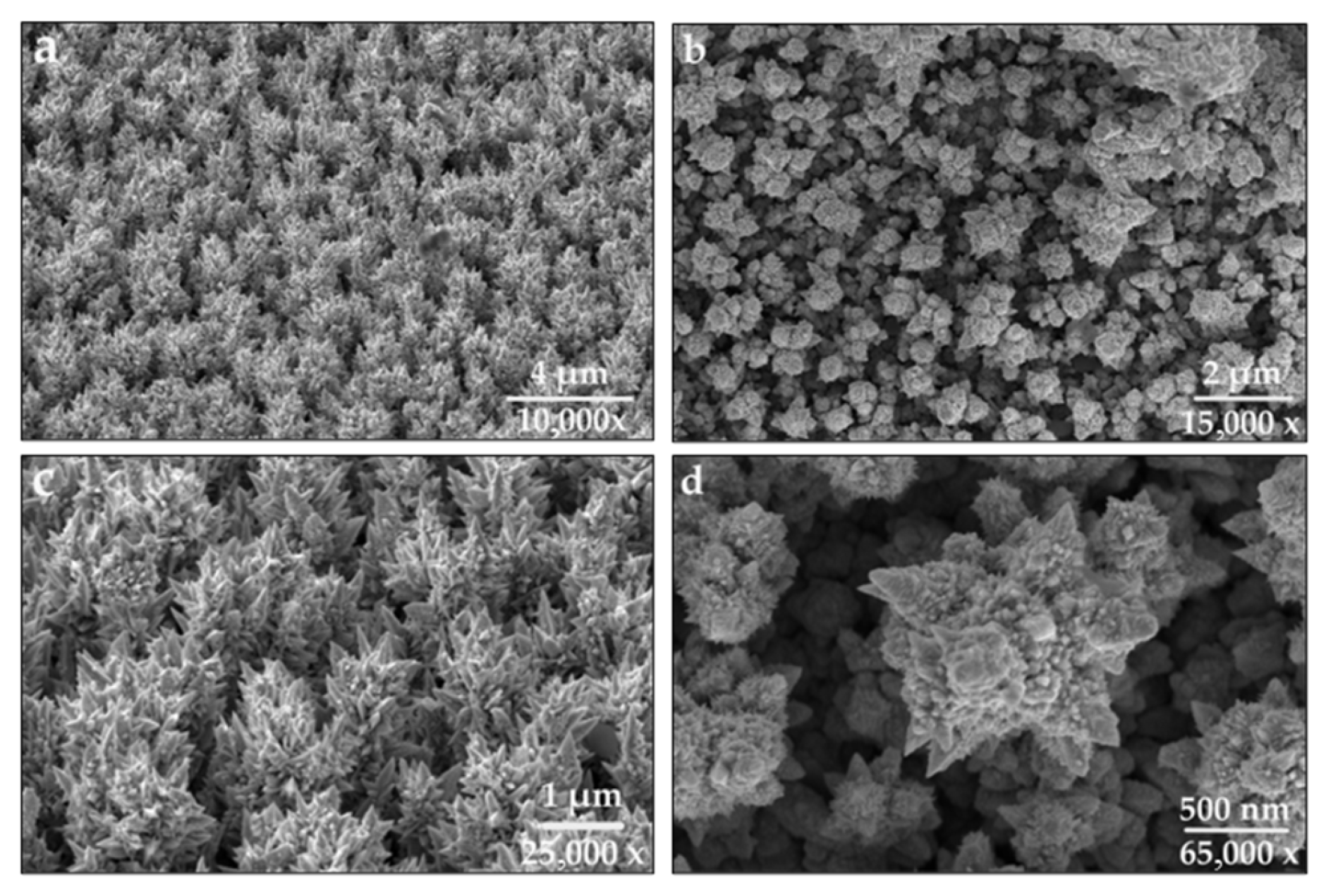
Top-view and 52° angle morphology of the PtNFs was examined by Focused Ion Beam Scanning Electron Microscopy (FIB-SEM) using a Helios NanoLab 650 system (FEI Company, Hillsboro, OR, USA) (
Figure 1). Several magnifications (from ×70 to ×250,000) were used to evaluate morphology, homogeneity, and nanoflower size across different regions of the electrode.
Additional flat working electrodes were coated with a thin Nafion film. Thin Nafion coatings (~450 nm) were deposited by spin-coating (SPIN150i Tabletop, POLOS, New York, NY, USA) at 1500 rpm for 40 s after dispensing a droplet of Nafion solution onto the substrate. The coated electrodes were then cured at 150 °C for 45 min to ensure solvent removal and good adhesion. To standardize the electrode area and enable comparison between measurements, the active area of each electrode was determined using pictures of the submerged electrodes.
Cyclic voltammetry measurements were performed in the two-compartment H-cell placed inside a Faraday cage to minimize electrical noise and external interference. The cell was filled under an argon flow to prevent moisture ingress during electrolyte transfer. The background electrolyte, 10 mM Bu4NPF6 in MeCN, was first added to the CE compartment (6 mL) and then to the WE compartment (18–20 mL) until the sample and most of the proton-exchange membrane were covered. This base electrolyte was used to establish the initial electrochemical behaviour of the system by recording a CV at a scan rate of 10 mV s−1 over a potential range of −2 V to +2 V. Subsequent CV experiments were performed at 20 mV s−1 within the same potential window using a ModuLab XM ECS Electrochemical System (Solartron Analytical, Farnborough, UK). Argon was also flushed in the cells between successive additions of 1, 5, and 10 mM LiPF6 solutions to prevent moisture ingress. All measurements were performed at room temperature (22 ± 2 °C).
4. Conclusions
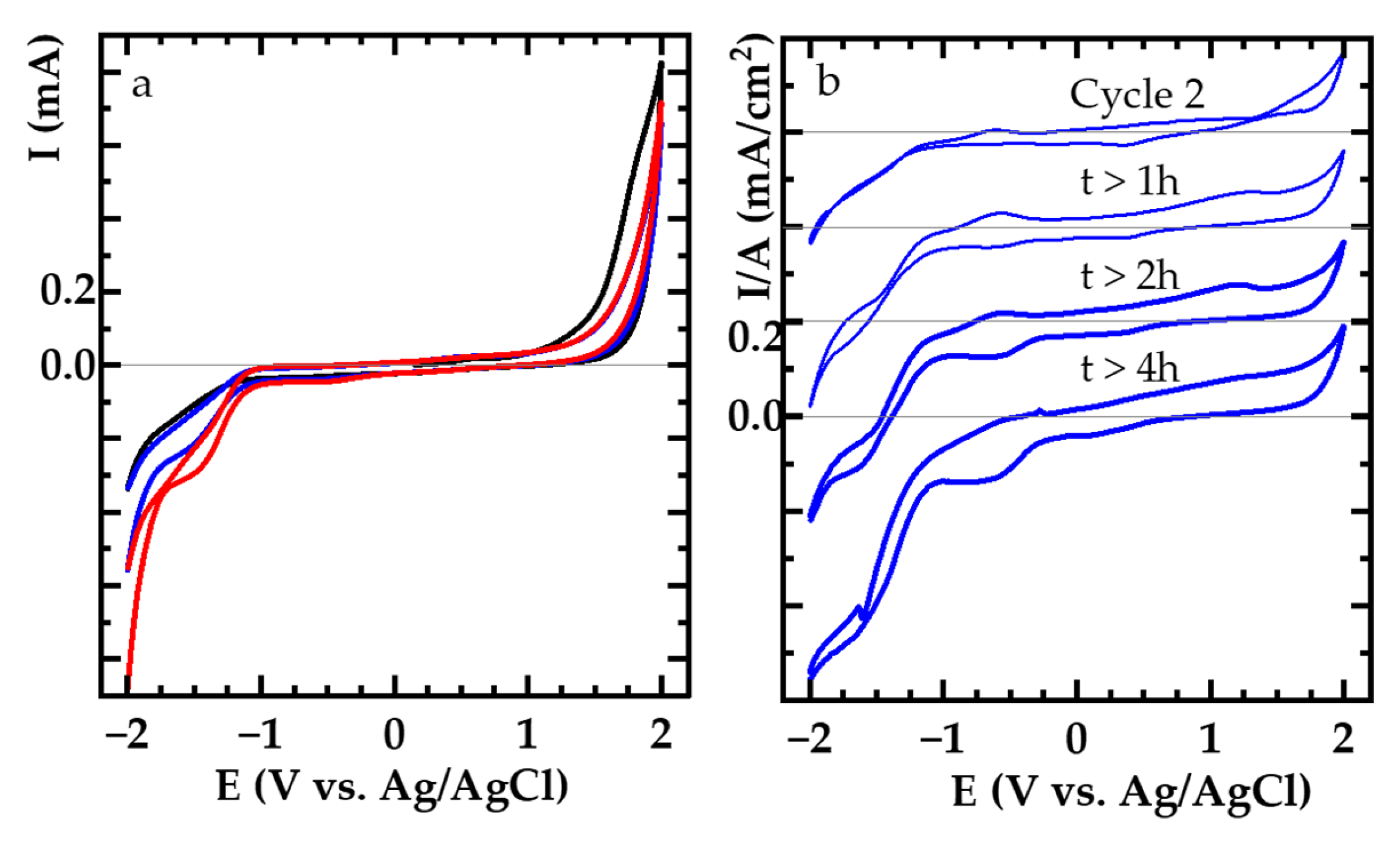
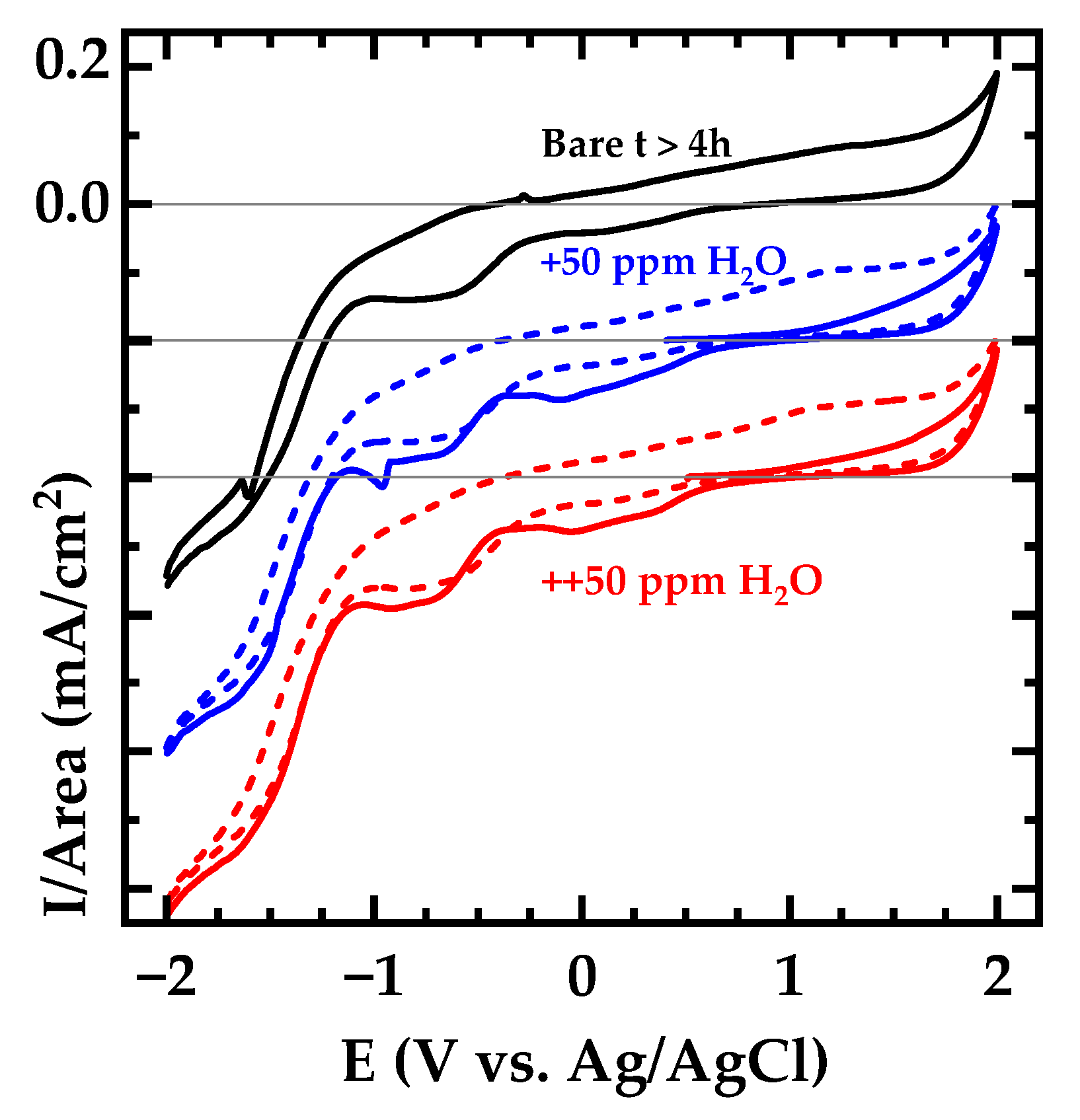
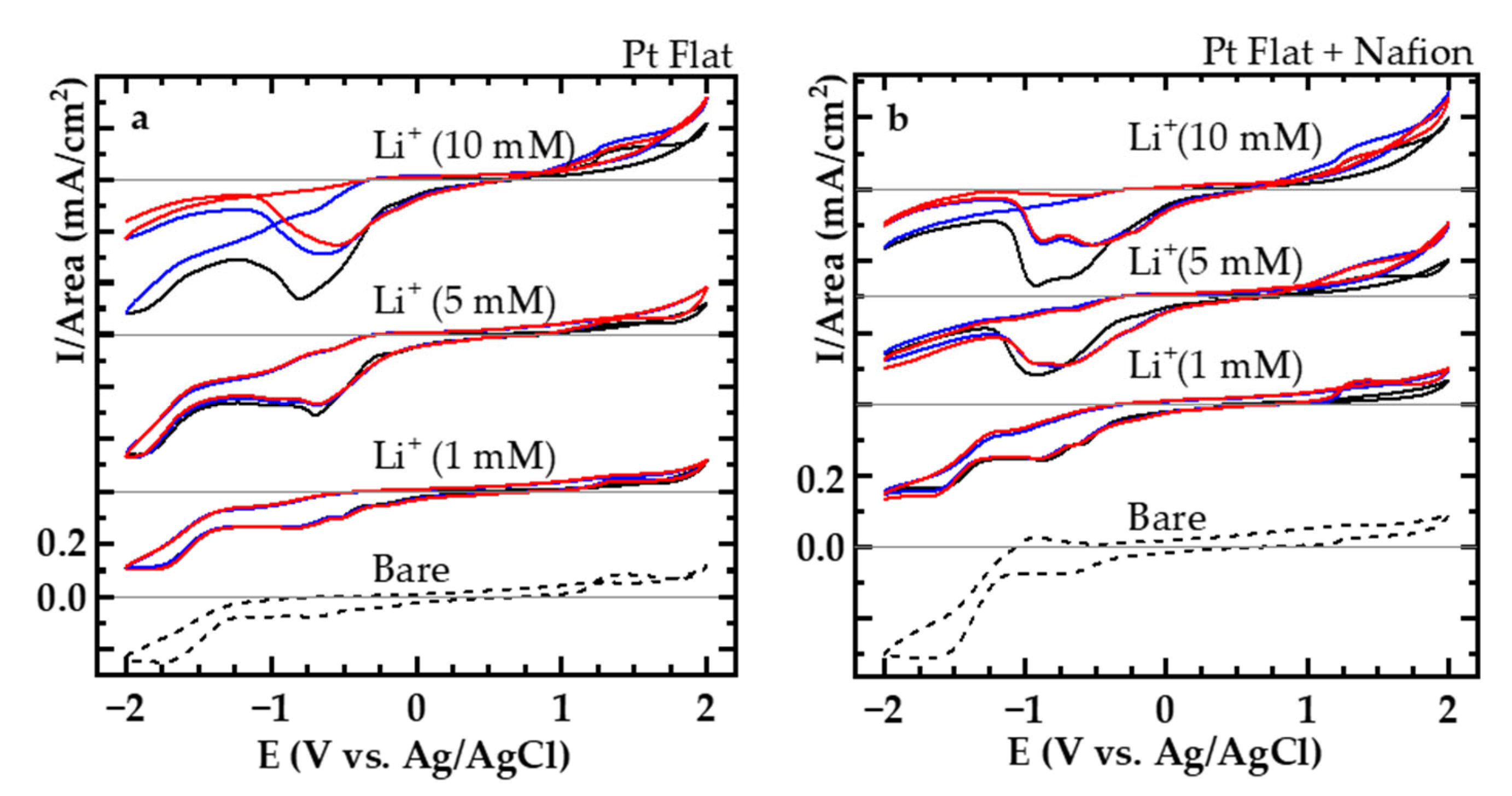
This study presents cyclic voltametric experiments showing that trace levels of water in acetonitrile electrolytes induce characteristic cathodic features attributed to the formation and subsequent reduction of protonic species generated by hydrolysis. The reproducibility of these signals across different electrode morphologies suggests their electrochemical origin and links them to solvent degradation processes. The evolution of the current response with cycling and water addition indicates that electrolyte ageing and water contamination are intrinsically coupled, as decomposition continuously regenerates HF and related complexes, which are detected by the hydrogen-mediated redox reactions.
The introduction of LiPF6 into the system shows an increase in this behaviour due to the higher availability of . The associated cathodic process remains visible at potentials between −0.7 and −1.0 V vs. Ag/AgCl, which is consistent with the reduction of adsorbed protonic species rather than with lithium deposition, which would be expected to occur at potentials more negative than −2.5 V in acetonitrile. The use of Nafion-coated electrodes further supports this interpretation; the cathodic peak persists despite the cationic selective barrier for Li+, indicating that protonic or HF-type species are the dominant contributors to the observed reduction processes.
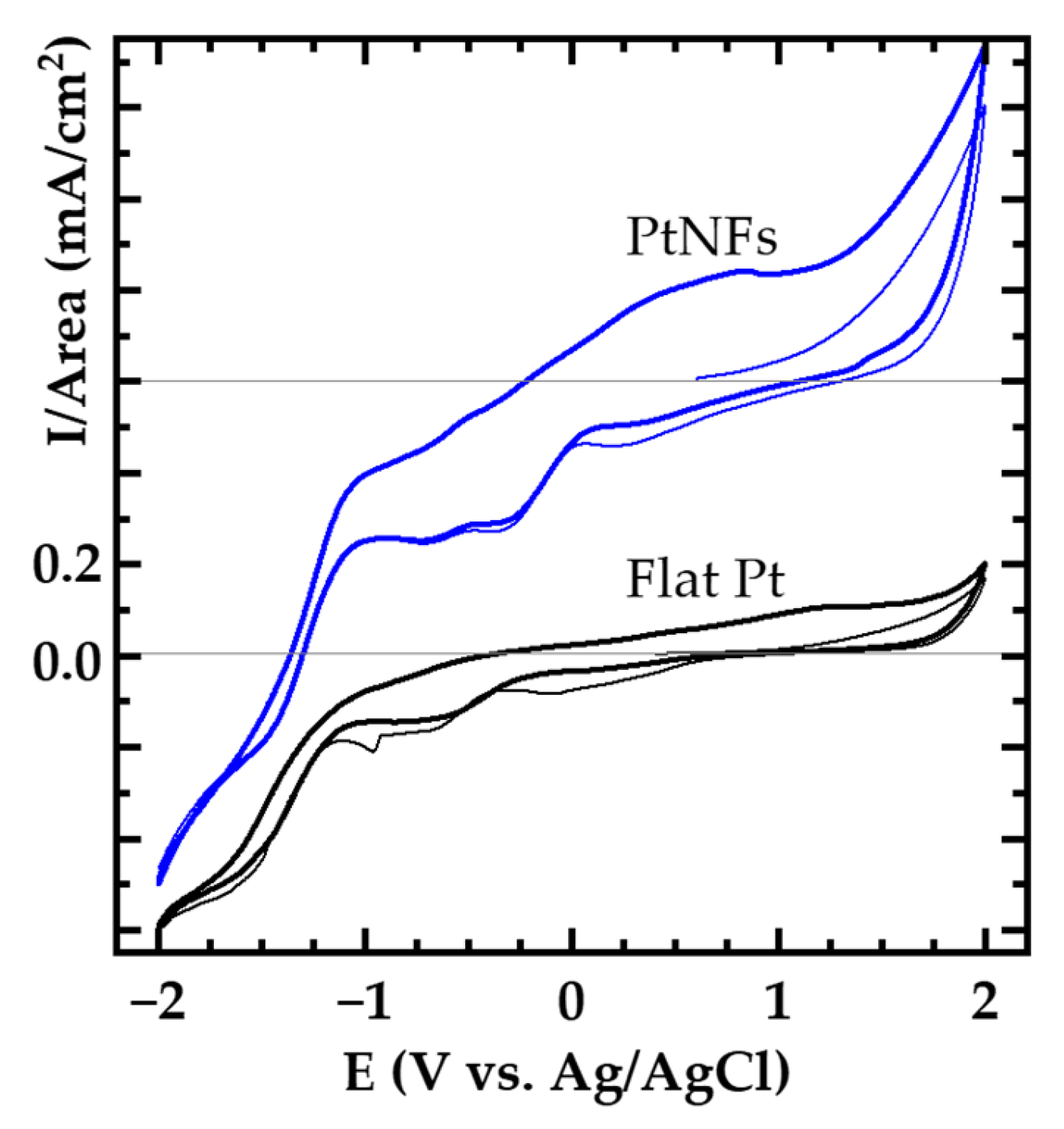
In addition to composition effects, electrode morphology plays a decisive role in determining sensitivity. Nanostructured platinum electrodes (Pt nanoflowers) exhibit higher current densities compared with flat platinum, evidencing a more efficient interaction with protonic species. Long-term stability tests of Pt nanoflowers have not yet been fully completed. However, analogous gold nanoflowers prepared under similar conditions exhibit good electrochemical and morphological stability, suggesting that Pt nanoflowers are likely to display comparable robustness; dedicated stability studies are currently underway.
As a result, the Pt nanoflower morphology provides a clearer and more stable electrochemical signature of water-induced degradation, highlighting its potential as a sensitive diagnostic platform for detecting moisture and ageing in non-aqueous electrolytes.
Our study supports the idea that cyclic voltammetry can identify electrochemical signatures associated with trace water contamination and electrolyte degradation in acetonitrile-based systems containing salts. Future research should focus on establishing quantitative correlations between cathodic current and water concentration, optimizing sensitivity through electrode design, integration with device batteries and extending this methodology to other solvent–salt systems. Such developments would advance the implementation of electrochemical diagnostics as a practical alternative to conventional analytical techniques for real-time electrolyte monitoring.




 ,
,