
Review

Review of Shearography for Dual-Directional Measurement
1
Optical Laboratory, Department of Mechanical Engineering, School of Engineering and Computer Science, Oakland University, Rochester, MI 48309, USA
2
National Center for Physical Acoustics, University of Mississippi, 145 Hill Drive, University, MS 38677, USA
3
College of Electrical and Information Engineering, Zhengzhou University of Light Industry, Zhengzhou 450002, China
4
US Army Ground Vehicle Systems Center, 6501 E. 11 Mile Rd., Warren, MI 48397, USA
*
Author to whom correspondence should be addressed.
Optics 2022, 3(2), 117-137; https://doi.org/10.3390/opt3020014
Submission received: 4 February 2022 / Revised: 15 March 2022 / Accepted: 6 April 2022 / Published: 8 April 2022

Abstract

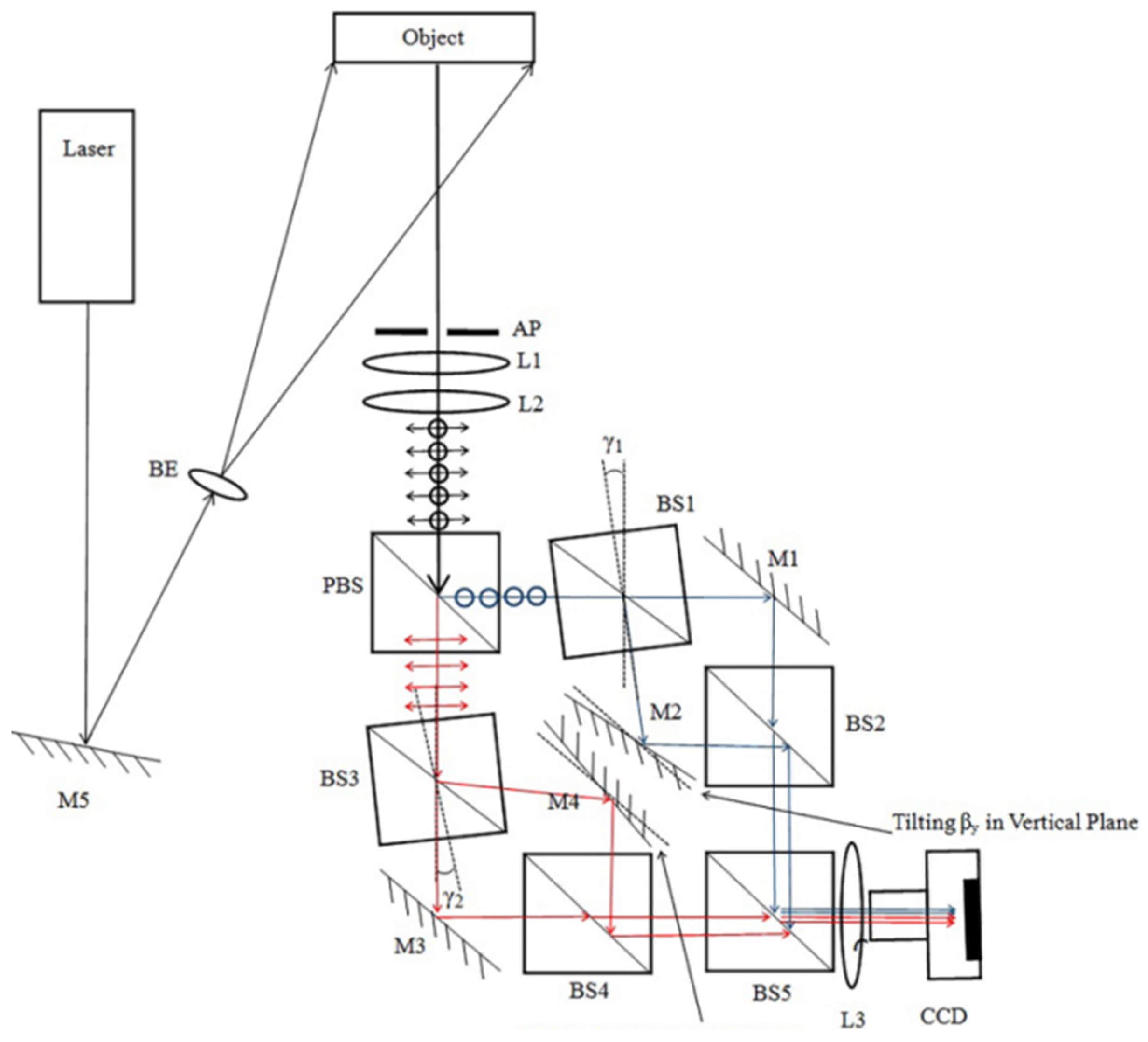
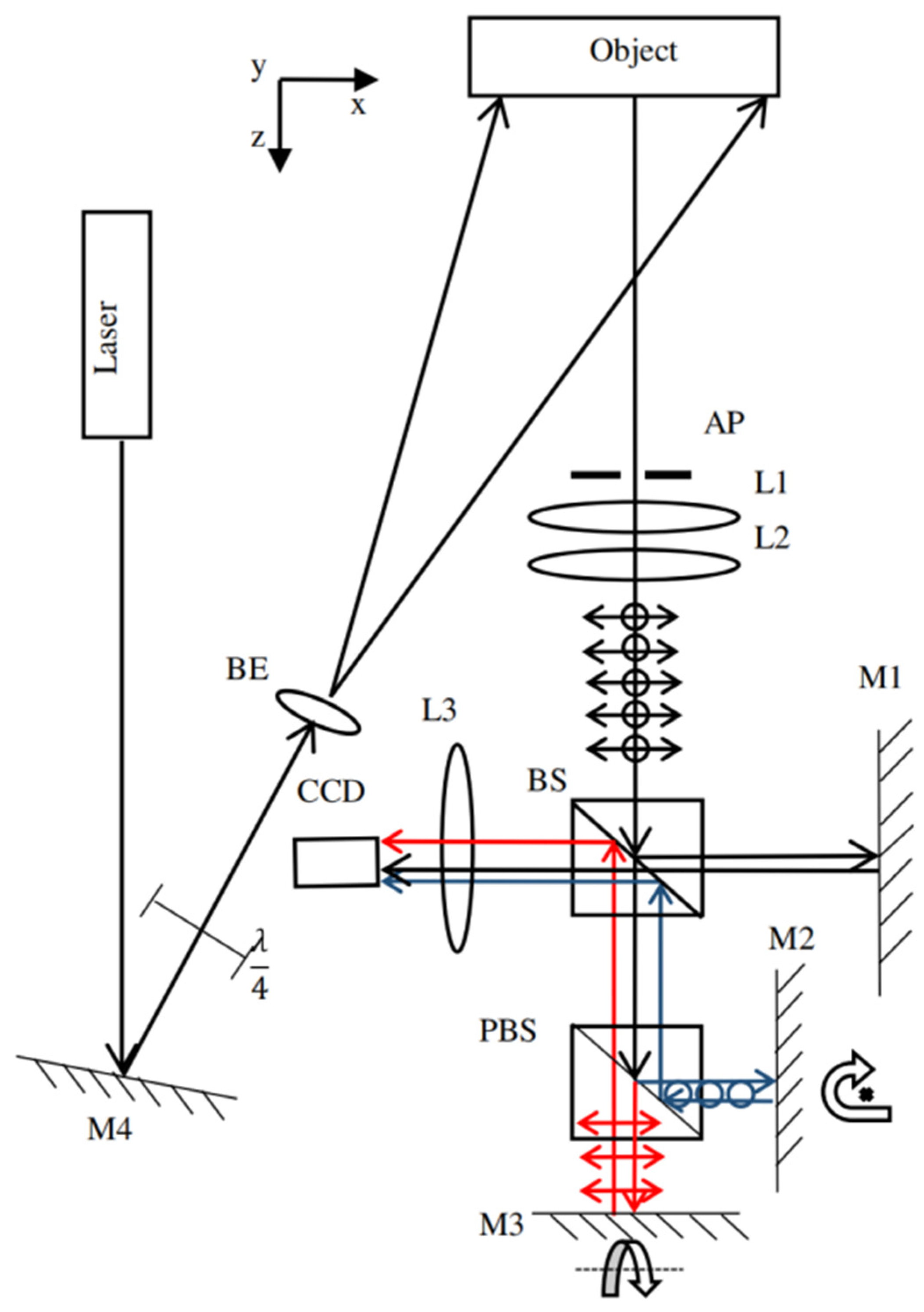
Shearography is a coherent optical technique that allows the identification of the first derivative of deformation in the shearing direction. Due to direct measuring strain information, shearography is suited for non-destructive testing and evaluation (NDT/NDE). However, if there is a small defect parallel to the shearing direction, the first derivative of deformation in the direction has no noticeable change, and the defect is not visible. Therefore, the development of a shearography system with dual-directional simultaneous measurement of the first derivatives of deformation both in x- and y-directions is highly demanded in the field of NDT/NDE. It is suited to inspect complicated defects, such as long and narrow slots, microcracks, etc. This paper presents a review of shearography for different dual-directional systems developed in the last two decades. After a brief overview of shearography, the paper will display two dual-directional shearographic techniques—temporal phase-shift (TPS) and spatial phase-shift (SPS) methods. TPS dual-shearing systems are suited for static measurements, while the SPS dual-shearing systems are useful for dynamic measurements. The basic theories, optical layouts, and comparisons are presented. The advantages and disadvantages of practical applications are discussed.
Keywords: shearography; dual-directional shearing measurement; NDT/NDE; temporal phase shift; spatial phase shift shearography; dual-directional shearing measurement; NDT/NDE; temporal phase shift; spatial phase shift