1. Introduction
Issues pertaining to impact dynamics represent a critical bottleneck in achieving core technological breakthroughs in national defense, military industry, and advanced manufacturing. These issues are ubiquitously encountered in pivotal engineering scenarios, including tank airdrops, missile penetration, and explosive damage, directly influencing the damage efficacy, protective capability, and operational reliability of weaponry and high-end equipment. They provide essential support for the iterative advancement of equipment.
Impact dynamic problems are usually related to nonlinear and multi-field coupling. Therefore, many complex physical phenomena will occur in the impact process, such as phase change induced by high pressure and high speed, multiphase medium interaction, large deformation of materials and structural failure. Thus, numerical simulation has been widely used and has gradually become the main technical means of relevant research. In the numerical solution of impact dynamics, researchers mainly focus on the coupled nonlinearities of geometry, material and boundary conditions. The traditional Eulerian and Lagrangian mesh algorithms have obvious defects in the actual calculation: it is difficult for Eulerian mesh to track the material interface and collect effective dynamic data, while Lagrangian meshes are prone to severe distortion under extreme deformation, which seriously affects computational accuracy and numerical stability. As a result, limited by these inherent defects, traditional methods are not adequate for complex impact simulation. Therefore, it is necessary to develop advanced numerical techniques.
The smoothed particle hydrodynamics (SPH) method has demonstrated significant advantages in simulating impact dynamics problems. The SPH method was originally proposed by Lucy and Gingold and Monaghan [
1,
2,
3], and it has unique advantages in simulating large-scale material deformation, especially in impact conditions. The SPH method combines the interface tracking capability of the Lagrangian method with the large deformation handling capability of the Eulerian method, and uses particles to discretize the medium and solve the control equations. In the field of impact dynamics, Zang et al. [
4] explored the penetration characteristics of curved linear shaped charges. They analyzed the formation of jets and their penetration efficiency, clarified the influence of structural parameters on penetration capability, and verified the effectiveness of the algorithm for simulating the penetration of such charges. This provides theoretical and simulation basis for the engineering application of curved linear shaped charges. Zhang et al. [
5] used the SPH method to conduct numerical simulation of the dynamic penetration process of shaped charges. This analysis examines the impact of charge structure and operating conditions on jet formation and penetration effectiveness, aiming to elucidate the laws governing dynamic penetration. The results provide a simulation reference for the design and performance optimization of shaped charges. Guan et al. [
6] proposed an improved single-layer particle boundary algorithm that avoids boundary penetration issues. By utilizing the SPH method, it completes complex three-dimensional fluid–structure interaction numerical simulations, providing reliable technical support for fluid–structure interaction simulations related to ocean engineering. Chen et al. [
7] employed SPH modeling to simulate the penetration of a shaped charge jet into a ceramic–metal dual-layer medium, aiming to elucidate its penetration mechanism and damage patterns. Kim et al. [
8] developed a GPU-based parallel SPH solver to achieve precise simulation of ultra-high-speed impact of cohesive jets on concrete structures, enhancing the efficiency and accuracy of numerical calculations for high-speed penetration. Deng et al. [
9] relied on the SPH method to build a three-dimensional parallel simulation model for high-speed penetration, completed relevant numerical calculation research, and explored the deformation characteristics, and impact response. This provides a feasible approach and technical reference for efficient simulation analysis of similar high-speed impact problems. Villodi et al. [
10] optimized the solid boundary treatment method for the compressible SPH method, and developed a stable and reliable boundary treatment scheme. They improved the boundary calculation defects in numerical simulation. Wang et al. [
11] conducted research on the penetration of 12.7 mm projectiles into steel target plates of different strengths using numerical simulation methods. They analyzed the projectile’s motion state, penetration depth, and the damage and failure modes of the target plate. They clarified the specific impact of target material strength differences on the overall penetration effect, providing effective data support for the research on the penetration performance of firearms ammunition and the design of target protection. Li et al. [
12] conducted numerical analysis using the SPH method to investigate the two major parameters of shaped charge explosives: burst height and jet inclination. They found that these two parameters significantly alter the jet formation state and motion posture. They clarified the mechanism by which parameter variations affect overall penetration performance, providing a theoretical basis for optimizing the practical application parameters of shaped charge explosives. Wang et al. [
13] improved the SPH algorithm and applied it to the simulation study of projectile penetration into targets. They found that the optimized method could effectively mitigate the numerical defects of traditional algorithms, and enhance the simulation accuracy and computational stability of the penetration process. It provides a superior technical approach for numerical simulation of projectile-target impacts. SPH and the finite element method (FEM) [
14] show notable complementarity in the applicability of computational methods. The SPH algorithm is good at managing large deformations, addressing the limitations of Lagrangian grid methods. However, its efficiency and accuracy fall short of those of FEM in small deformation analyses, and its boundary handling is comparatively less convenient.
Combining the finite element method with the smoothed particle hydrodynamics (FEM-SPH) method has advantages over the single SPH method. Furthermore, the combined method has also seen rapid development in the simulation of impact dynamics problems in recent years.
The key to the FEM-SPH coupled algorithm lies in the allocation method based on the deformation characteristics of different regions. It applies SPH simulation in large deformation regions and uses FEM calculation in small deformation regions. This strategy combines the advantages of SPH in handling large deformations and FEM in solving small deformations effectively. It also enhances the simulation capability and computational efficiency of impact dynamics problems. Wu et al. [
15] constructed an FEM-SPH adaptive coupling model for studying the penetration depth of sapphire. They found that this coupling model exhibited stronger adaptability, and reproduced the impact damage characteristics of sapphire material. They also improved the computational accuracy of simulations for the penetration of hard transparent materials. Liu et al. [
16] conducted research using the FEM-SPH coupling method to analyze the variation patterns of perforation penetration under different geological engineering conditions. They explored the characteristics of how formation environments and working conditions affect penetration effects, pore formation morphology, and operational efficiency, providing a reference for the simulation and scheme design of perforation operations in complex formations. Wang et al. [
17] applied the three-dimensional FEM-SPH hybrid algorithm to the study of API projectile penetration into target plates. They found that this combined algorithm can balance computational efficiency and simulation accuracy, reproducing the mechanical behavior and failure characteristics throughout the entire penetration process. This provides a practical technical approach for similar ammunition penetration simulation analysis. Fang et al. [
18] conducted a study on the penetration characteristics of lanthanum-modified 93 tungsten alloy by combining experiments with adaptive FEM-SPH numerical simulations. They aimed to elucidate the impact penetration mechanism of this alloy material and determine the enhancement effect of modification treatment on the material’s anti-penetration performance, providing a research basis for the development of high-performance penetration-resistant alloy materials. Yang et al. [
19] conducted research using the FEM-SPH coupled numerical method to analyze the anti-penetration capability of multi-layer protective structures, and investigate the impact resistance and failure mechanisms under different structural arrangements and material combinations. They summarized effective approaches to enhance the anti-penetration performance of multi-layer protective systems. Su et al. [
20] conducted numerical simulations of the penetration process of depleted uranium alloy relying on the FEM-SPH coupled algorithm. They clarified the deformation patterns and failure characteristics of the alloy material during high-speed penetration. They identified its mechanical behavior characteristics during penetration, providing simulation support for related research on alloy penetration applications. Shi et al. [
21] developed a three-dimensional multi-resolution FEM-SPH coupled model incorporating boundary penetration prevention technology, designed for studying strong fluid–structure interaction problems. They discovered that this model effectively mitigates particle boundary penetration issues, enhancing the stability and computational accuracy of fluid–structure interaction simulations under extreme operating conditions. Wu et al. [
22] conducted numerical research on the penetration of ceramic target plates by long-rod projectiles, aiming to elucidate the impact process and damage evolution laws of long-rod projectiles penetrating ceramic media. They clarified the influence of material properties and working conditions on penetration effects, providing theoretical references for the anti-penetration design of ceramic protective structures. Jiang et al. [
23] conducted a study on the ballistic penetration characteristics of columnar ceramic fiber laminated composite armor by combining experimental testing and numerical simulation. They aimed to understand the failure mode and ballistic resistance mechanism of this composite armor under impact, and to clarify the influence of structural composition on overall protective performance. This research provides a basis for the optimal design of new composite protective armor. He et al. [
24] utilized the FEM-SPH adaptive algorithm to investigate the ballistic resistance of array-perforated ceramic armor, exploring the influence of perforated structure layout on the armor’s penetration resistance, impact deformation, and damage evolution. This research provides valuable insights for the structural optimization and engineering application of porous ceramic protective armor.
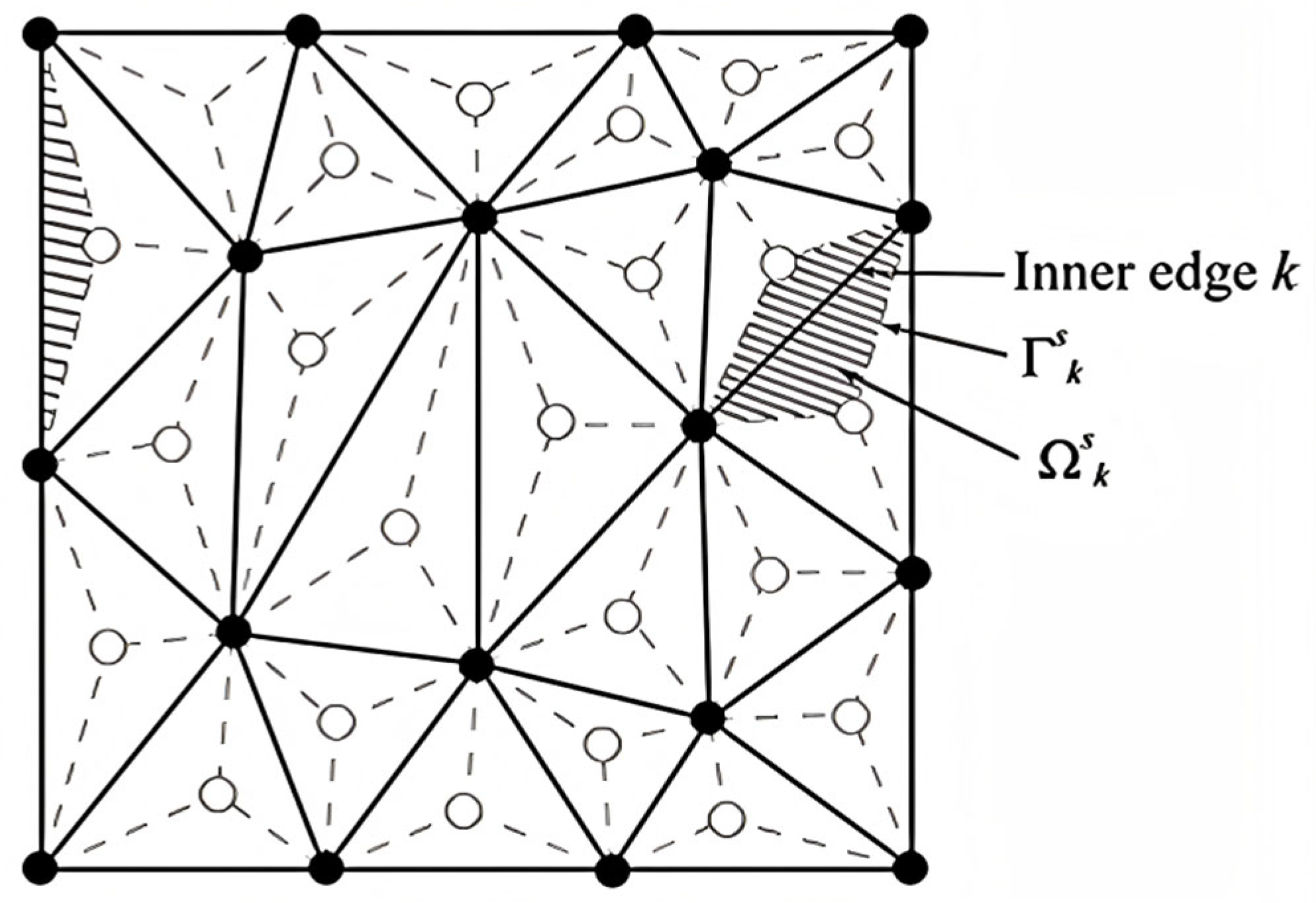
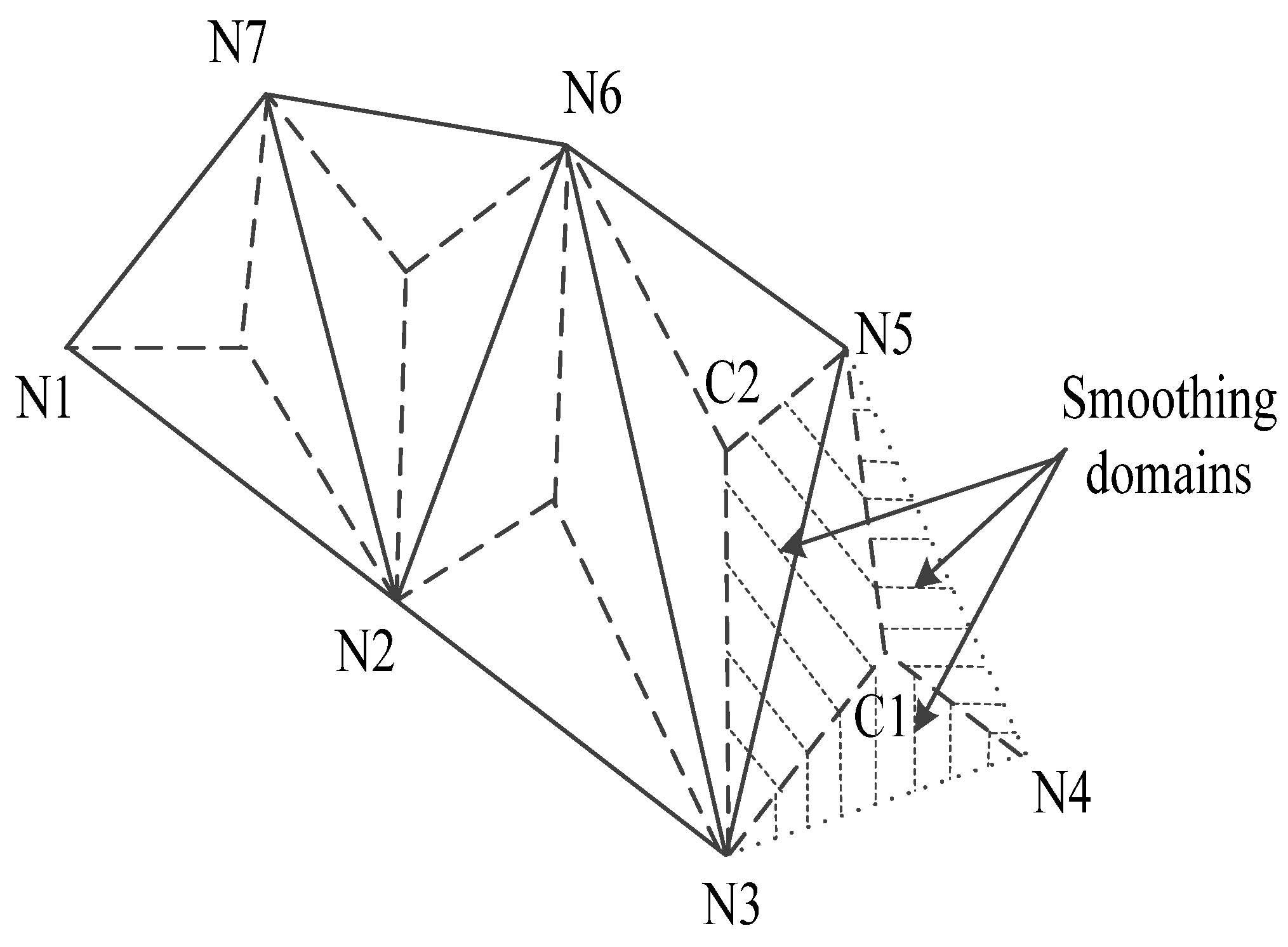
The FEM-SPH coupled algorithm has been applied in numerical simulation of impact problems widely. However, it also faces some challenges, such as the “over-stiffness” of the traditional finite element stiffness matrix, which leads to poor computational accuracy in the case of linear triangular elements. To address this, Liu Guirong et al. with Chen et al. [
25] combined the finite element method with the smoothing gradient technique, and introduced the smoothed finite element method (SFEM). Because the smoothing domains’ construction are different, the SFEM has developed into various forms, including those based on elements [
25], edges [
25], nodes [
26], and faces [
27]. Ma Yu’e et al. [
28] applied the SFEM to the study of thermo-elastic materials under thermo-mechanical coupling effects. Cui et al. [
29] proposed the high-order edge-based smoothed finite element method (ES-FEM) based on four-node triangular elements to solve solid mechanics problems. They found that this method effectively improves computational accuracy and convergence performance, and addresses the operational defects of traditional elements. They provided an efficient and reliable new approach for numerical solution of solid mechanics. Chen et al. [
30] utilized a hybrid ES-FEM/FEM phase field model to investigate the fracture issues of flexible materials with interfaces. They explored the evolution patterns of crack initiation and propagation at the interfaces of such materials, replicated the entire process of flexible material fracture failure, and refined the numerical analysis method for the fracture behavior of soft material interfaces. Zhou et al. [
31] developed a hybrid selective edge-based smoothed PFEM method combined with second-order cone programming for the analysis of large deformations in geotechnical engineering. They explored the computational advantages of this algorithm in scenarios involving large deformations in geotechnical engineering, effectively enhancing the stability and accuracy of complex soil deformation simulations. This provides a new approach for numerical analysis of large deformations in geotechnical engineering. He et al. [
32] employed the edge-based smoothed finite element method to establish a fluid–structure interaction numerical model, exploring the application effectiveness of this method in fluid–structure interaction calculations. They found that it could stably simulate the interaction process between fluid and structure, effectively enhancing the reliability and applicability of fluid–structure interaction simulations. Ho et al. [
33] proposed the adaptive quadtree edge-based smoothed finite element method for structural limit state analysis, finding that this method can flexibly adjust the computational grid. They determined the critical instability and ultimate bearing state of the structure, and improved the efficiency and accuracy of structural limit mechanical analysis.
The SFEM can achieve higher accuracy results in both linear triangular and tetrahedral elements. It offers more advantages than traditional FEMs. This paper integrates the advantages of SFEM and SPH fully, developing the ES-FEM-SPH coupling algorithm for simulating impact dynamics problems.
High-speed projectiles penetrate into thick metal target plates; it is an important engineering challenge in the field of weapon damage and armor protection. This process exhibits axisymmetric characteristics and is accompanied by strong nonlinear features such as local extreme large deformation, perforation and fragmentation. The traditional FEM is prone to mesh distortion in large deformation areas, leading to computation interruptions, while SPH also lacks efficiency and accuracy in small deformation areas. The FEM-SPH coupling relies on manual partitioning and demonstrates poor accuracy when using linear triangular and tetrahedral elements, thereby struggling to meet the combined accuracy and efficiency demands of engineering design. Hence, this paper proposes an adaptive axisymmetric ES-FEM-SPH coupling algorithm.
First, the entire computational domain is discretized into elements at the initial time step and computed using the ES-FEM. During the numerical simulation, once the deformation of an element meets a specific criterion, the system converts it from an element into a particle and subsequently employs the SPH algorithm to update and compute the particle domain. Ultimately, the element–particle coupling algorithm enables collaborative computation within a unified framework. This paper proposes the adaptive axisymmetric ES-FEM-SPH coupled algorithm. This algorithm can capture the large deformation and fragmentation process in the impact area of the target plate accurately. It can provide more precise numerical support for weapon damage and armor protection design.
5. Numerical Examples
In the axisymmetric penetration examples, the domain is discretized using three-node linear triangular elements solved by ES-FEM. When the minimum interior angle of an element falls below 30°, the element is marked for conversion. A group-based strategy is adopted: if any element in a group satisfies the MIA criterion [
39], all elements in that group are converted to SPH particles and removed.
5.1. Taylor Rod Impact Problem
In this example, the adaptive ES-FEM-SPH coupling algorithm is used to numerically simulate the classical Taylor bar impact problem, in which a metal round bar strikes a rigid plane at high velocity. By comparing the simulated deformation contour dimensions of the rod with experimental measurement results, the material constitutive parameters are calibrated, and the accuracy and reliability of the coupled algorithm in simulating impact problems are verified.
At the initial time step, the circular rod is discretized into 948 finite elements. The numerical simulation settings followed the experimental configuration described in reference [
45]. The Taylor rod is an Armco iron circular bar with a diameter of 6.5 mm and a length of 25.4 mm. The constitutive relationship adopts an ideal elastic–plastic model, and the material pressure is determined by the Mie–Grüneisen equation of state. The specific material property parameters are detailed in
Table 1 [
46].
Fixed displacement constraints are applied at the bottom edge of the target, where both radial and axial displacements are completely restricted (). The nodes on the symmetry axis (r = 0) are constrained in the radial direction to satisfy the axisymmetric hypothesis, allowing only axial movement. On the symmetry axis, axisymmetric boundary conditions are also imposed on the SPH particles.
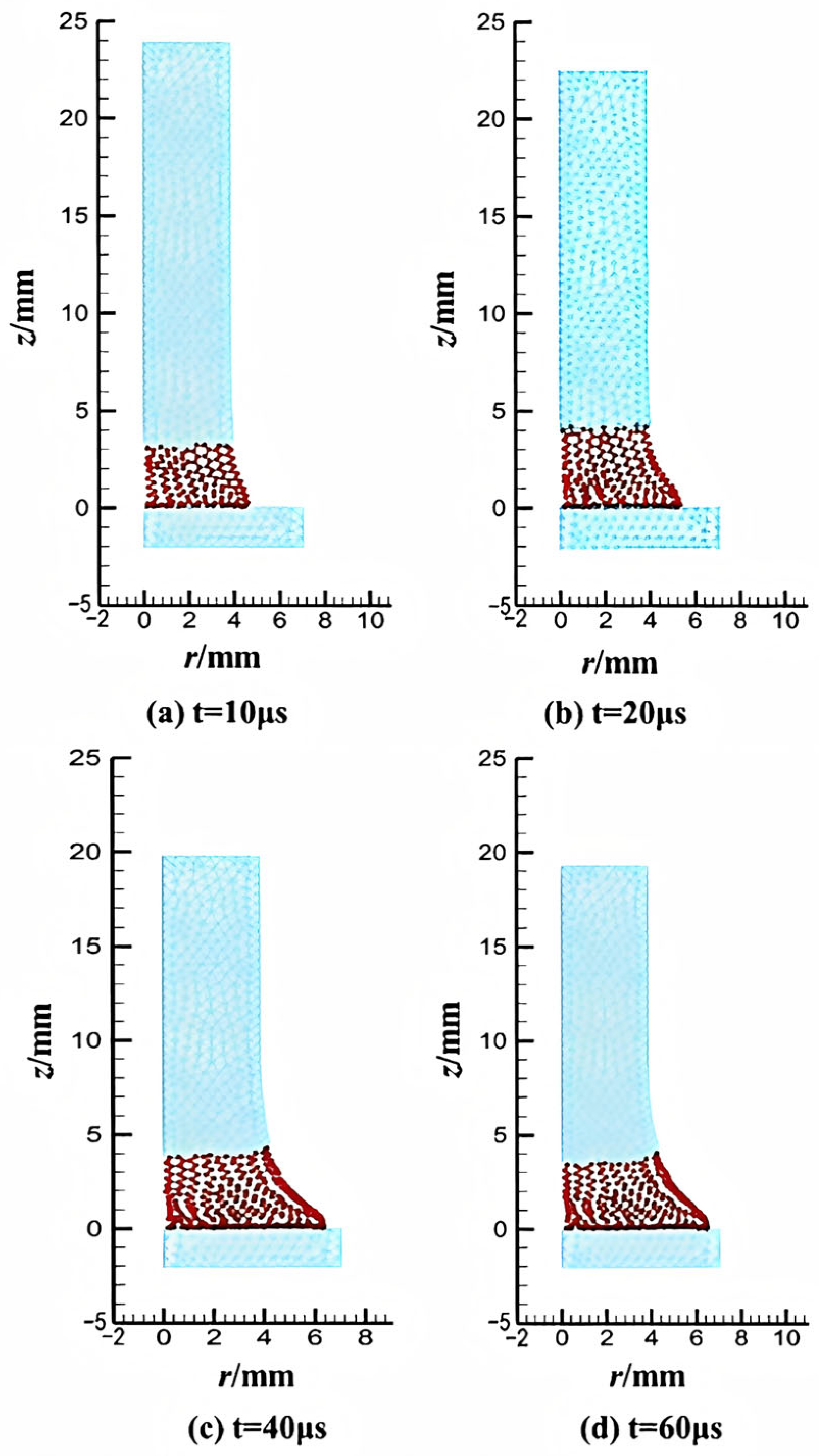
Figure 4 presents the deformation process of the circular rod calculated by the algorithm at four time points of 10 μs, 20 μs, 40 μs, and 60 μs. From the image, it can be clearly observed that as the plastic deformation accumulates, the elements at the bottom of the circular rod transform into SPH particles according to the criteria. The coupling interface between the particle zone and the finite element zone has a regular shape and the particle region exhibits good continuity. The simulation is terminated at 60 μs, when the shape of the bar remains unchanged.
The data that can be obtained from
Figure 4d are as follows: the characteristic dimensions of the deformed rod include a length
of 19.3, the impact-end diameter
of 13.6, and a width
of 8.5 at a distance of 0.2
from the impact end. Finally, the result is approximately 0.01472 calculated by Equation (26), which is close to the errors of the smoothed particle method in
Table 2 and the FEM-SPH adaptive coupling algorithm (0.013 and 0.017) [
38].
where the subscripts “
c” and “
e” represent the calculated value and the experimental value, respectively.
The results indicate that the ES-FEM-SPH adaptive coupling algorithm developed in this study demonstrates excellent performance in terms of computational accuracy and stability, thereby validating the correctness and feasibility of the proposed method.
5.2. Normal Penetration into Aluminum Plate
Piekutowski et al. [
47] carried out a normal penetration test on aluminum plates. The objective of this experiment was to simulate the process of an ogival-nosed projectile normally penetrating a metallic target. The specific configuration was as follows: the projectile was made of 4340 steel, with a diameter of 12.9 mm and a length of 88.9 mm; the ratio of the head curvature radius to the diameter was 3.0. The target plate was a 6061-T651 aluminum plate with dimensions of 304 mm × 26.3 mm (length × thickness).
Figure 5 illustrates the computational model for the normal penetration of the aluminum plate, where the initial computational model consists of 11,444 triangular elements.
The material constitutive model in our study is configured as follows: the projectile adopts an ideal elastoplastic model, with material parameters specified as: density
ρ = 7.83 g/cm
3, Young’s modulus E = 206 GPa, Poisson’s ratio
ν = 0.3, and initial yield strength Y
0 = 1.43 GPa. The target is regarded as a circular target with a diameter of 304 mm. Its model follows the Johnson–Cook viscoplastic constitutive equation and the Mie–Grüneisen state equation. The material parameters of the target used in this paper, including density (
ρ), Young’s modulus (E), Poisson’s ratio (
ν), and the parameters A, B and n (obtained by fitting experimental data in the Johnson–Cook constitutive model), are all taken from reference [
47] and can be seen from
Table 3. For other parameters in the model, their values are set in accordance with those in reference [
48].
In terms of initial conditions, the entire projectile has a constant initial penetration velocity consistent with experimental tests in reference [
47], while all the nodes of the metal target are initialized at zero velocity. For boundary conditions, the right boundary of the target plate is fully fixed with
. The nodes on the symmetry axis (
r = 0) are constrained in the radial direction to satisfy the axisymmetric hypothesis, allowing only axial movement. On the symmetry axis, axisymmetric boundary conditions are also imposed on the SPH particles.
The group-based conversion method integrated with the MIA principle [
39] to determine the elements that should be converted to particles. If one or more elements in an element group satisfy the MIA principle [
39] during the computational process, then all elements in the group are converted to particles. In addition, the leapfrog method is used for time integration.
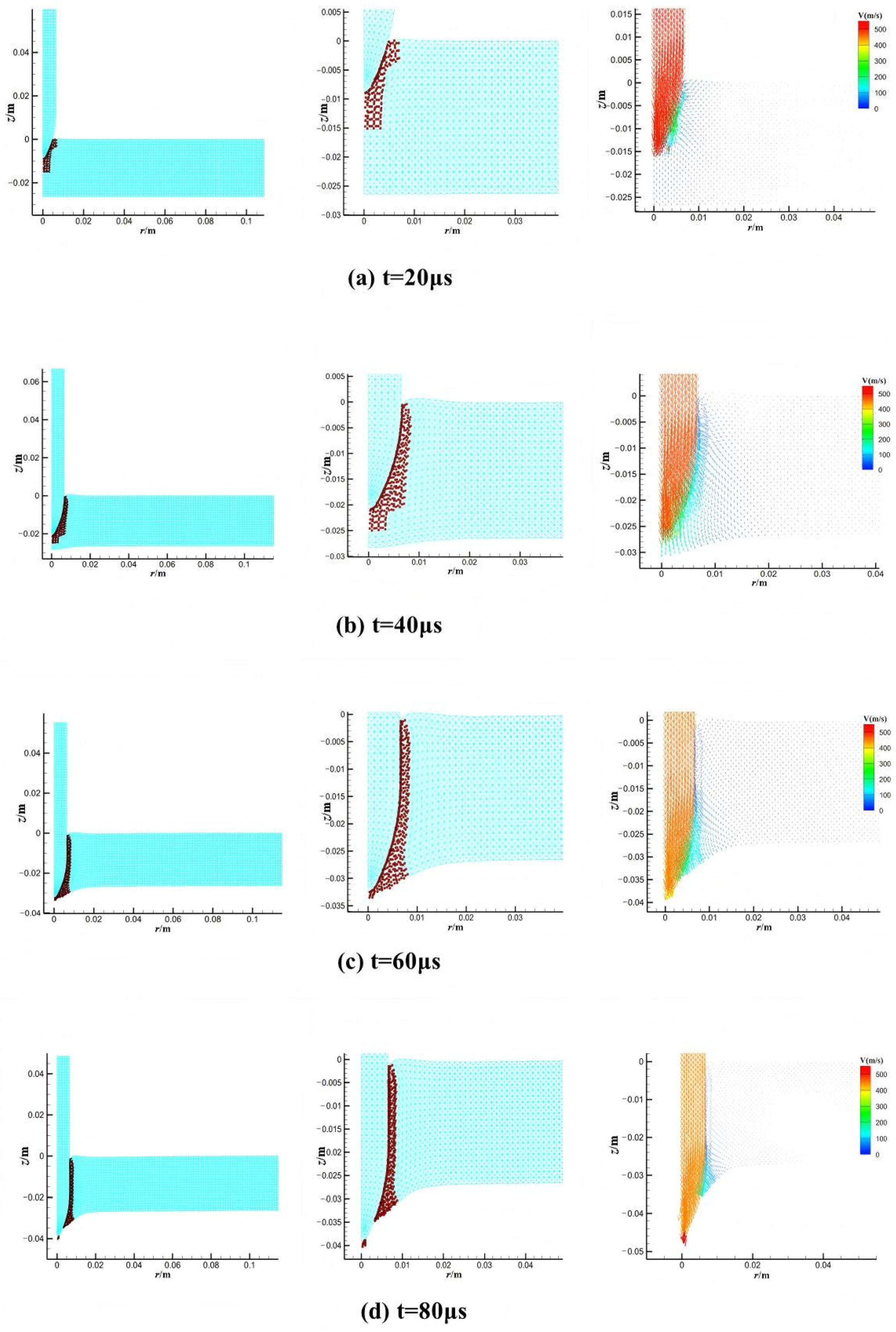
Figure 6 shows deformation images, local enlarged images, and velocity contour plots at four different moments, with an initial velocity of 508 m/s. On the left side of
Figure 6 are the deformation images, the middle are the local enlarged images, and the right are the velocity contour plots. From the deformation images and local enlarged images in
Figure 6, it can be observed that the material at the contact interface between the projectile and the target undergoes severe distortion due to the huge compressive and shear stresses after the impact. This mechanical state directly triggers the transformation of the elements in this region into particles. The continuous penetration of the projectile causes the contact interface to shift in the direction of the projectile, and the new contact front region repeats the above transformation process.
From the velocity contour plots, it can be observed that at t = 20 μs, the velocity of the projectile’s head is the highest (close to the initial velocity), and the tail maintains its original velocity due to inertia, forming a distinct velocity gradient (decreasing velocity from head to tail). A high-velocity deformation zone appears near the impact point on the target plate, and the surrounding material experiences low-velocity disturbance due to the propagation of stress waves. At t = 40 μs and t = 60 μs, the overall velocity of the projectile tends to be uniform (velocity gradient decreases), penetrating into the target plate at an approximately constant velocity. A conical penetration channel forms inside the target plate, and the velocity of the material surrounding the channel decreases from the center to the edge. At t = 80 μs, it can be seen that the projectile has penetrated through, and the material on the back of the target plate has collapsed due to tensile failure (some target plate fragments are transformed into particles by the bullet’s head in the diagram). The velocity of the projectile’s tail is slightly lower than that of the head (with a minor velocity gradient), and the residual target plate fragments near the bullet’s head still have high velocity. It indicates that the bullet’s residual velocity is high at this time. This suggests that the energy loss of the projectile is small and its penetration capability is strong.
The ES-FEM-SPH adaptive coupling algorithm exhibits excellent region identification accuracy. Specifically, this coupling algorithm can identify important regions where large deformations occur under penetration, and convert only a small number of elements within this local range into particles to participate in subsequent SPH calculations selectively. At the same time, other parts of the computational domain continue to use the finite element method, thus ensuring both computational accuracy and efficiency. The ES-FEM-SPH adaptive coupling algorithm is not only highly accurate, efficient, and continuous, but also successfully adopts the minimum interior angle as the criterion for element transformation.
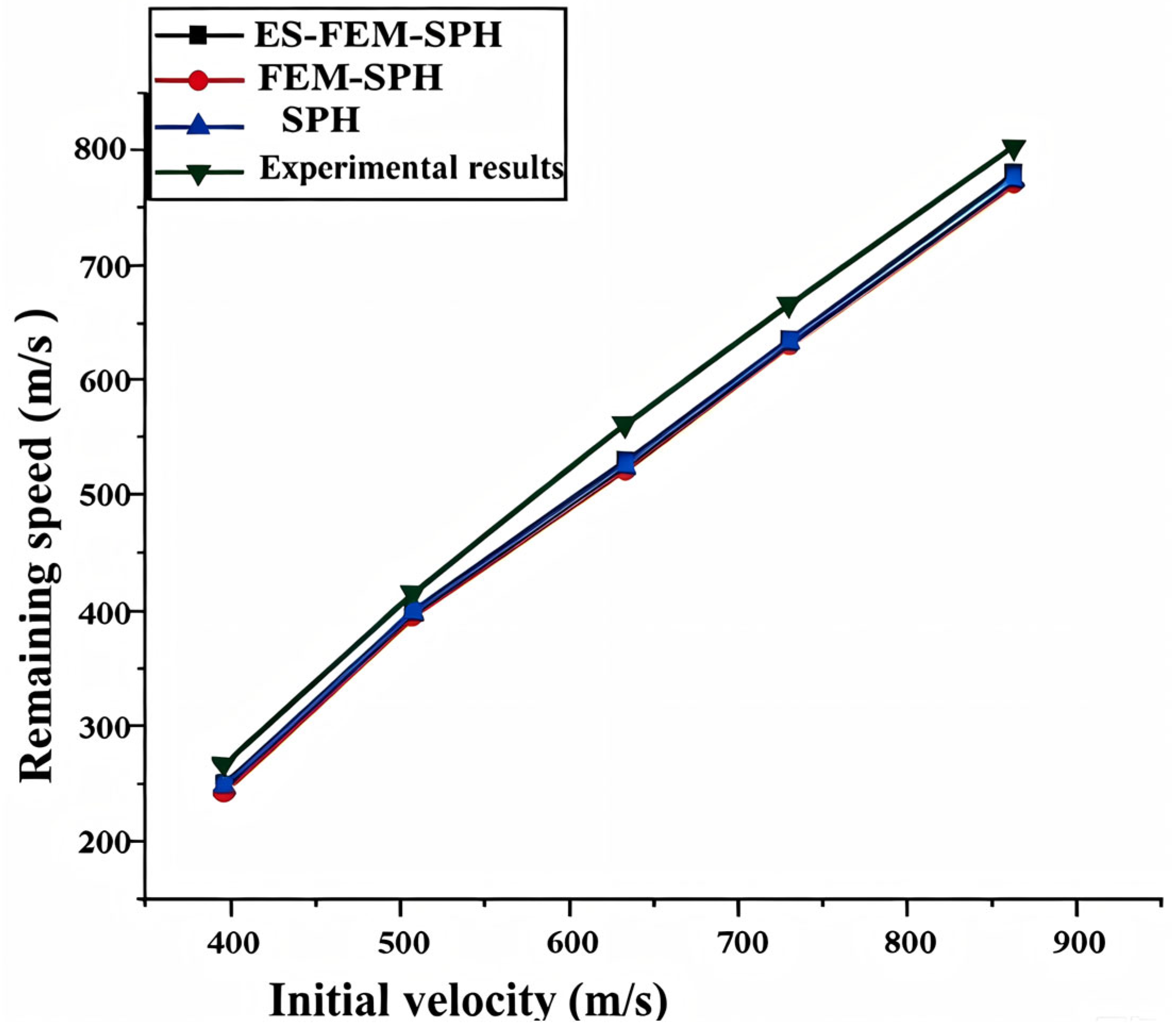
Figure 7 presents a comparative analysis of three numerical methods (ES-FEM-SPH, FEM-SPH, and SPH) with the experimental results [
47]. This figure compares the remaining velocities of the projectile under five initial velocities. The research results indicate that the numerical methods ES-FEM-SPH and SPH are highly consistent with the experimental results [
47]. From an error analysis perspective, the average relative errors for all three methods compared to the experimental results are maintained within 3.5% (ES-FEM-SPH: 3.2%; FEM-SPH: 3.4% [
38]; SPH: 2.9% [
38]), indicating comparable computational accuracy.
5.3. The Plugging Failure in Metal Plates Impacted by Flat-Nosed Projectiles
The numerical example employs the experiment conducted by Børvik et al. [
49], involving a flat-nosed projectile impacting a metal plate, as a basis for simulation. As depicted in
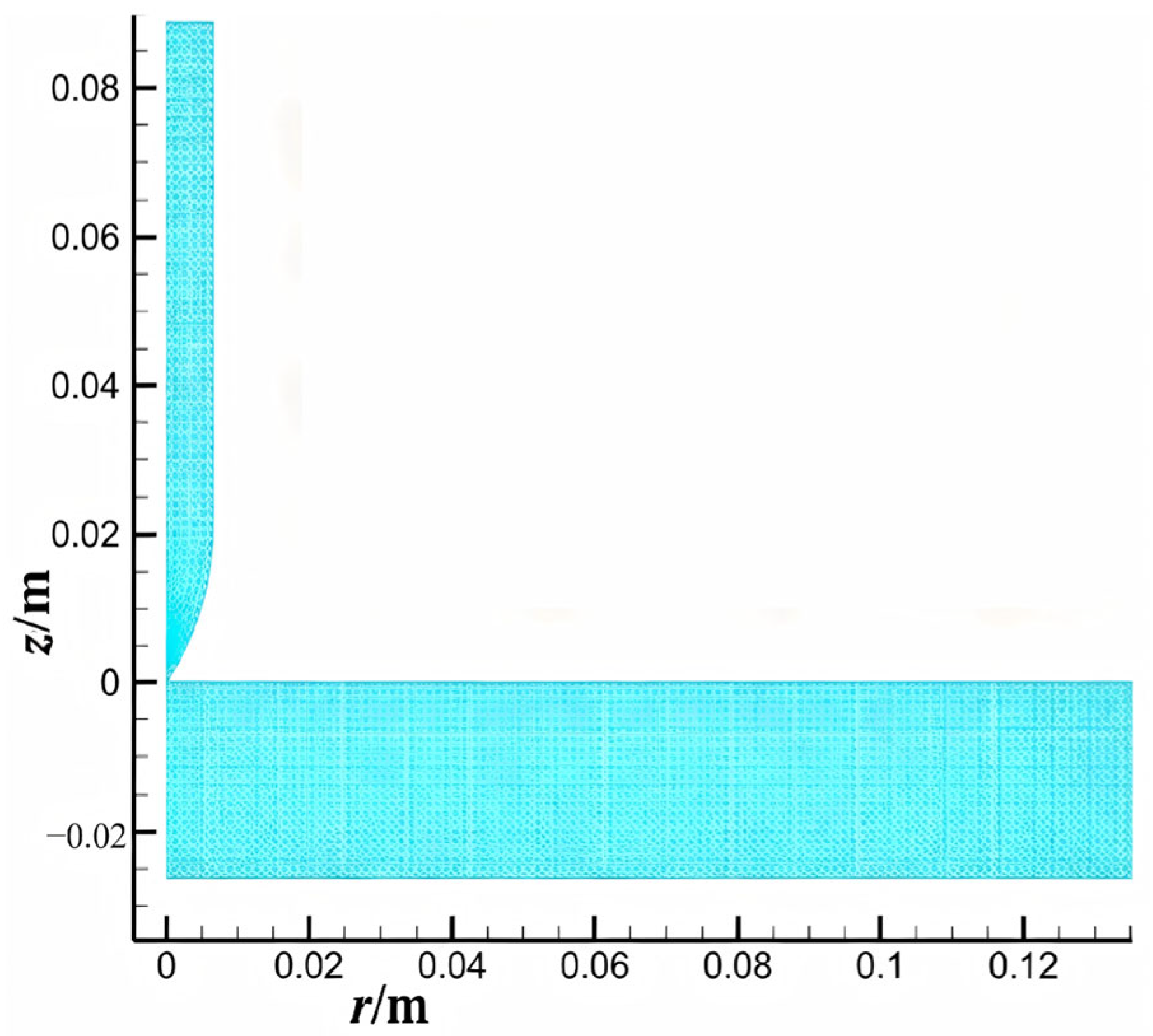
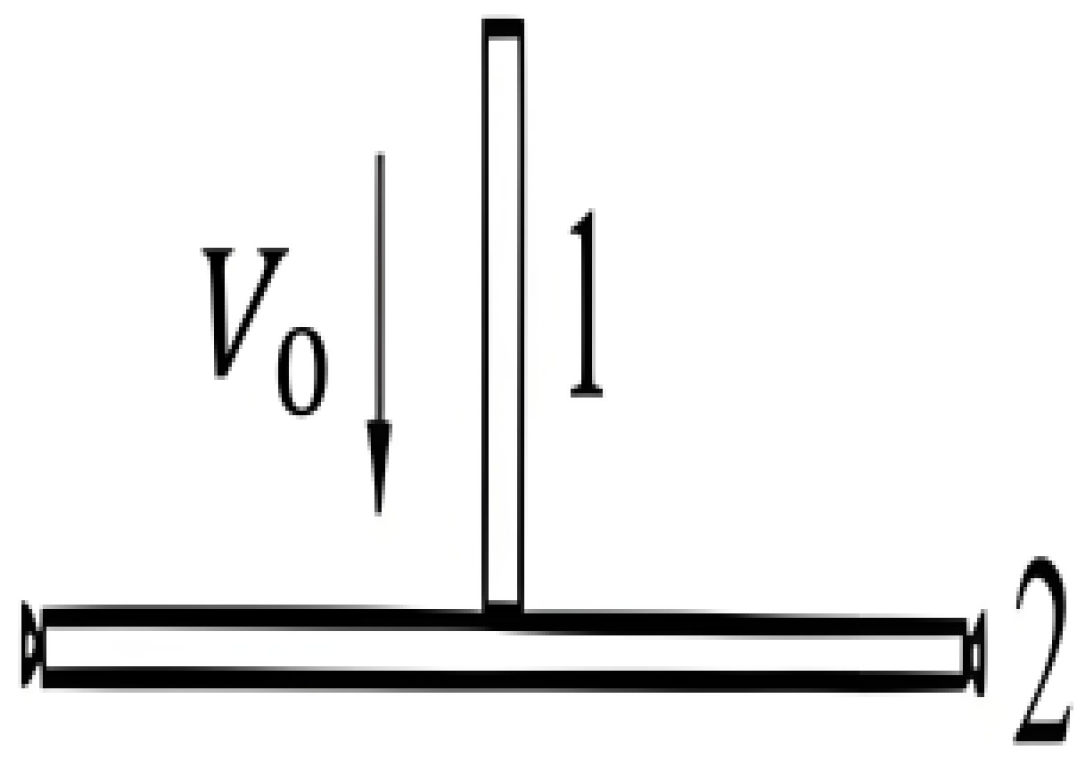
Figure 8, the flat-nosed projectile labeled No. 1 above, with a diameter of 20 mm and a length of 80 mm, is shown penetrating the metal target plate labeled No. 2 below, which has a thickness of 8 mm. The projectile is made of Arne tool steel (with a mass of 0.197 kg), while the target plate is composed of Weldox460E steel.
A two-dimensional axisymmetric model is employed for the calculations. Both the flat-nosed projectile and the metal target plate are discretized using uniform triangular elements, with the initial computational model comprising 22,400 such elements.
The bilinear hardening model is utilized for the projectile material, with the material parameters detailed in
Table 4. For the target material, the Johnson–Cook viscoplastic model combined with the Mie–Grüneisen state equation is applied, and the corresponding material parameters are presented in
Table 5. The target material parameters align with those reported in the literature [
50].
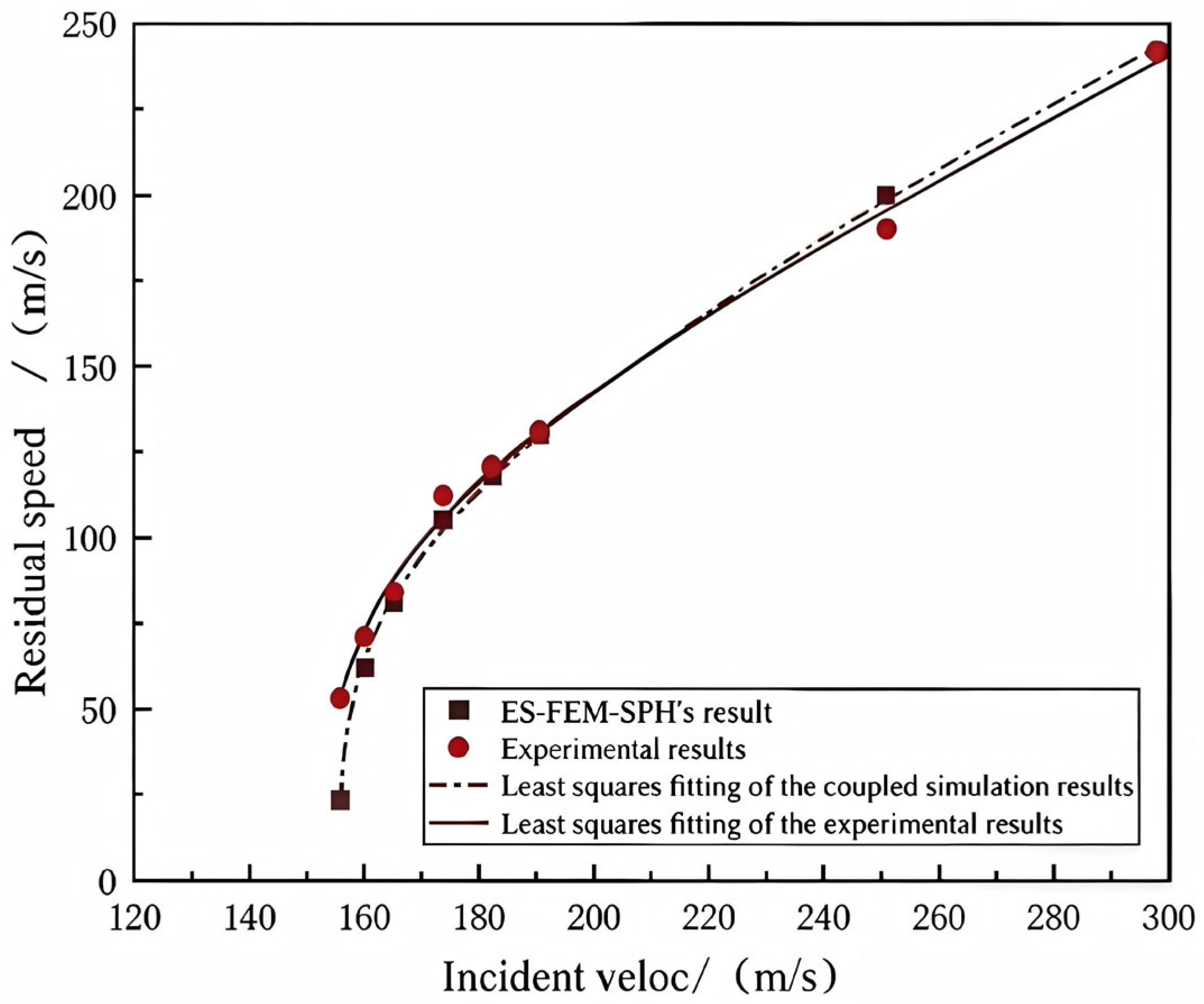
Figure 9 presents a comparative analysis between the adaptive ES-FEM-SPH coupling algorithm and experimental results [
49], considering eight distinct impact velocities and their corresponding residual velocities. It is evident from the figure that the curves exhibit a good fit. The two fitting curves depicted in the figure are derived from the analytical models proposed by Recht and Ipson [
51], obtained through regression analysis of the residual velocity data obtained from both the numerical simulations and experiments, employing the least-squares method.
The expression for the analytical model is given as
where
a,
p and
are constants, while
and
represent the incident velocity and residual velocity, respectively. The physical meaning of the constant
in the analytical model is the ballistic limiting velocity.
The fitted values of the analytical model constants (which characterize the ballistic limit velocities) are presented in
Table 6. As evident from the table, the ballistic limit velocities derived from fitting the coupled computational and experimental results [
49] are 155.7 m/s and 154.3 m/s, respectively. The close agreement between these two sets of values substantiates the reliability of the computational findings. The residual velocity of the flat-nosed projectile exhibits greater sensitivity to the impact velocity. The reason for the reduced residual velocity at lower impact speeds is attributed to the abrupt velocity decrease caused by “slug formation” wherein the slug and the projectile move in unison, thereby increasing the penetration resistance.
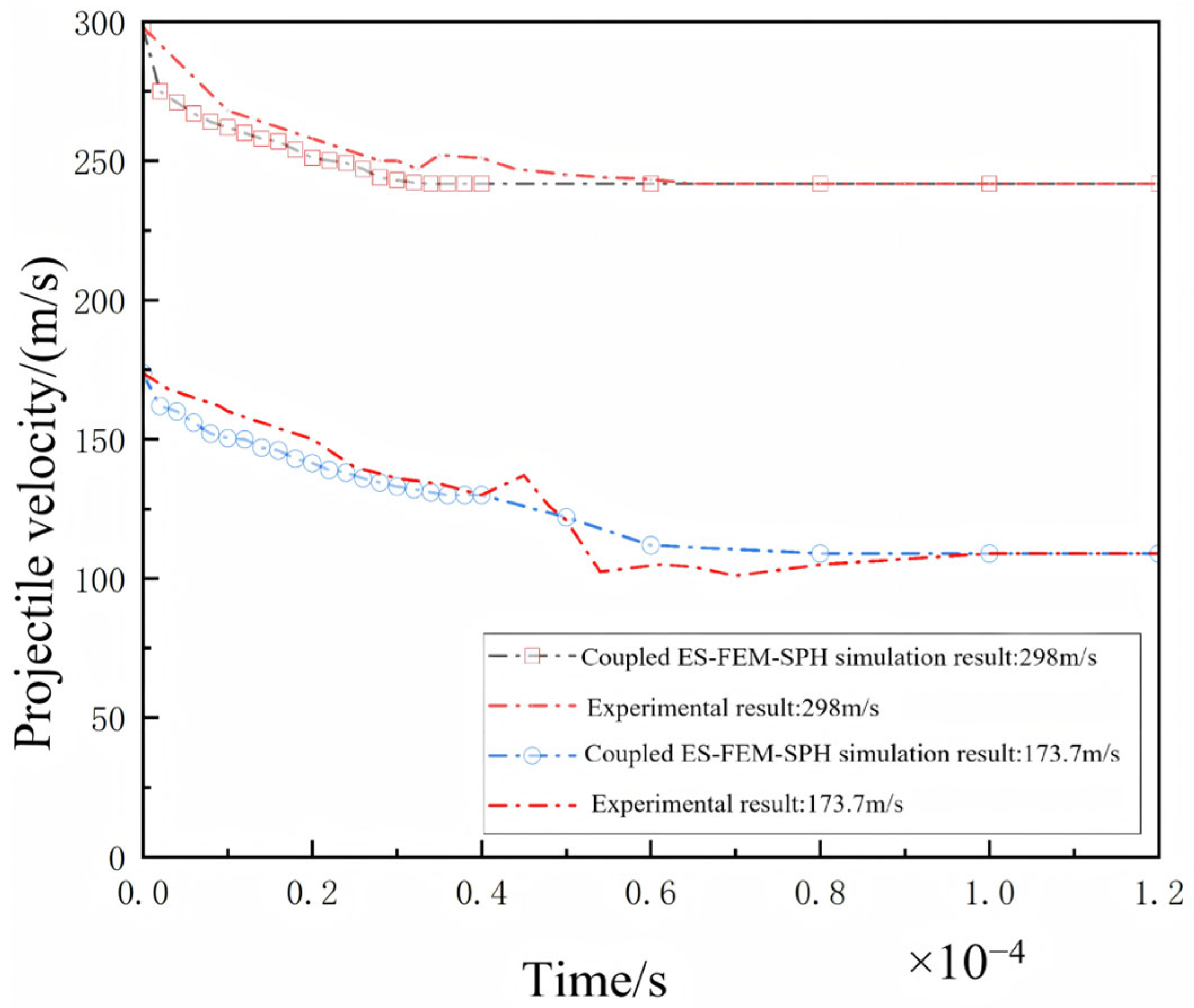
Figure 10 presents a comparison between the adaptive ES-FEM-SPH coupling algorithm and experimental data [
49]. Two initial launch velocities of the bullet, namely 173.7 m/s and 298.0 m/s, were selected for analysis. The figure clearly shows the calculated curve depicting the variation in the bullet’s velocity over time. Both the calculated and experimental results indicate that the trend of the bullet’s velocity variation is consistent.
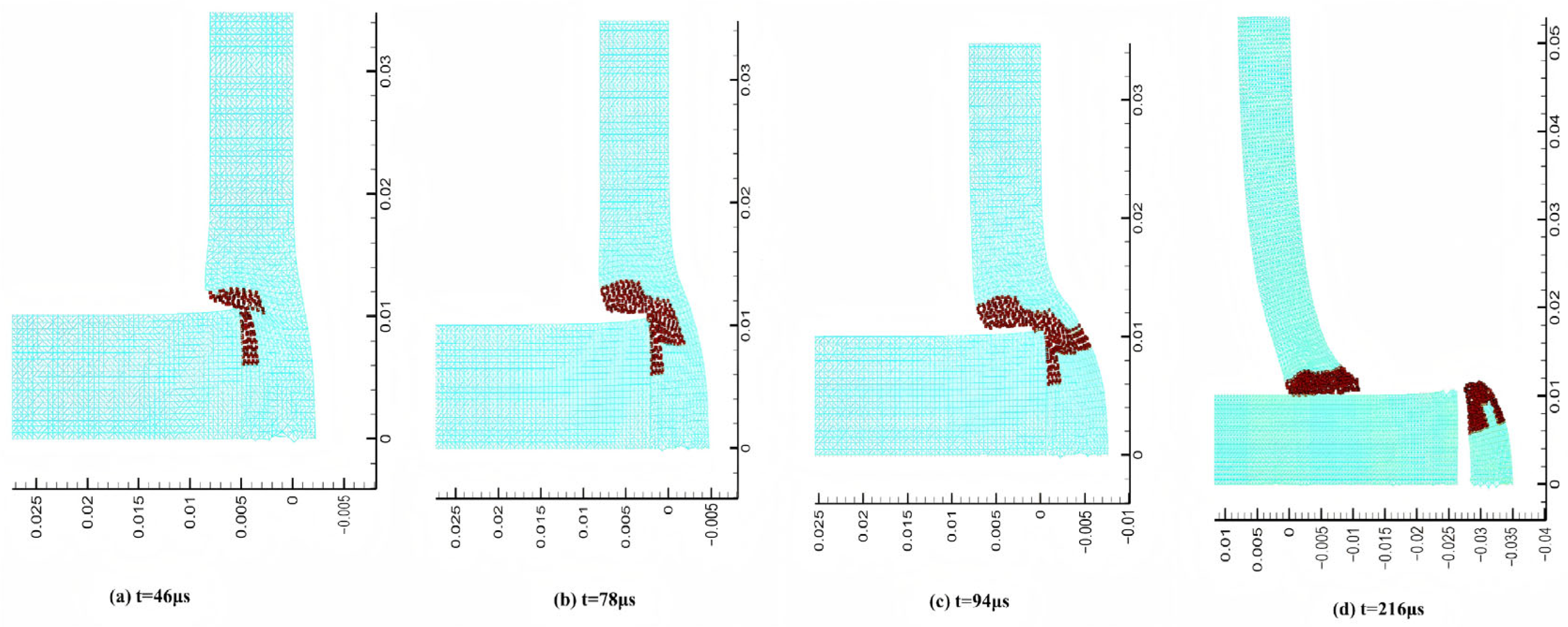
Figure 11 presents the dynamic deformation process at four key time points, simulated by the adaptive ES-FEM-SPH coupling algorithm when the incident speed is 173.7 m per second. It was compared with the corresponding experimental results reported in reference [
50]. The research results show that the deformation processes of the projectile and the target plate obtained through the simulation are basically consistent with the experimental observations. The projectile undergoes minimal deformation, while the target plate experiences a “punching” effect, resulting in the formation of a nearly cylindrical plug in the impact zone due to high stress. Near the shear zone where the plug connects to the target, the conversion of some elements into particles due to stress concentration suggests that this area represents a concentrated region of impact damage.
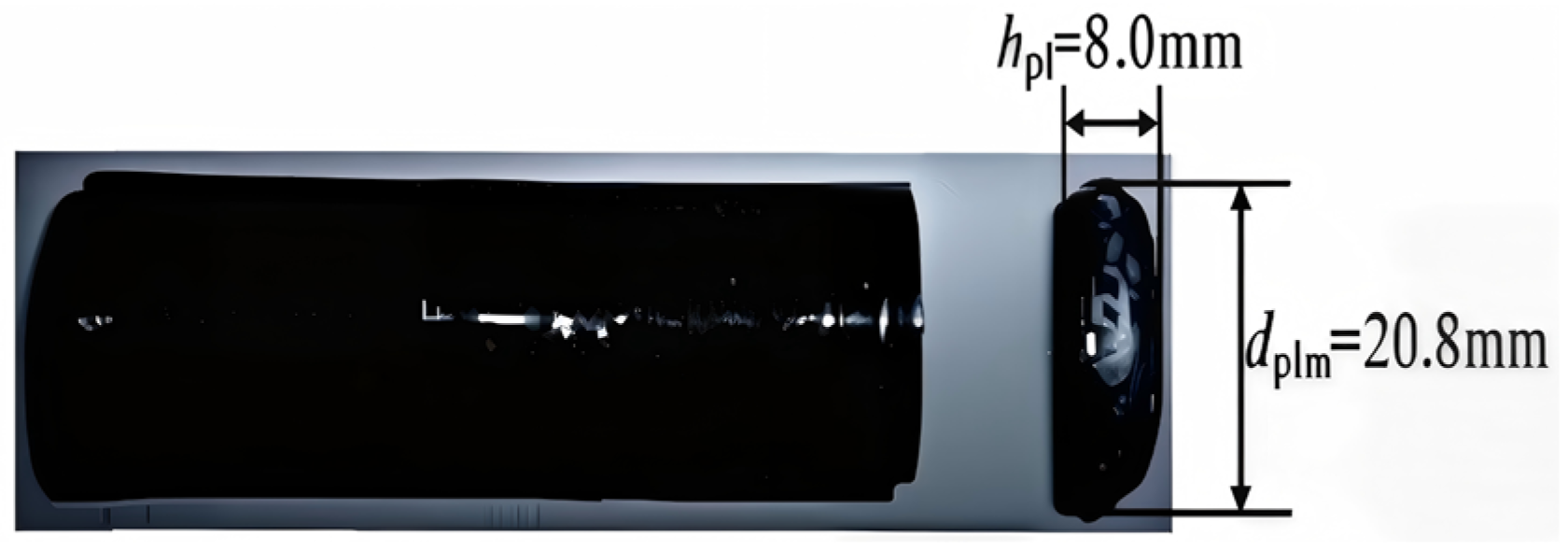
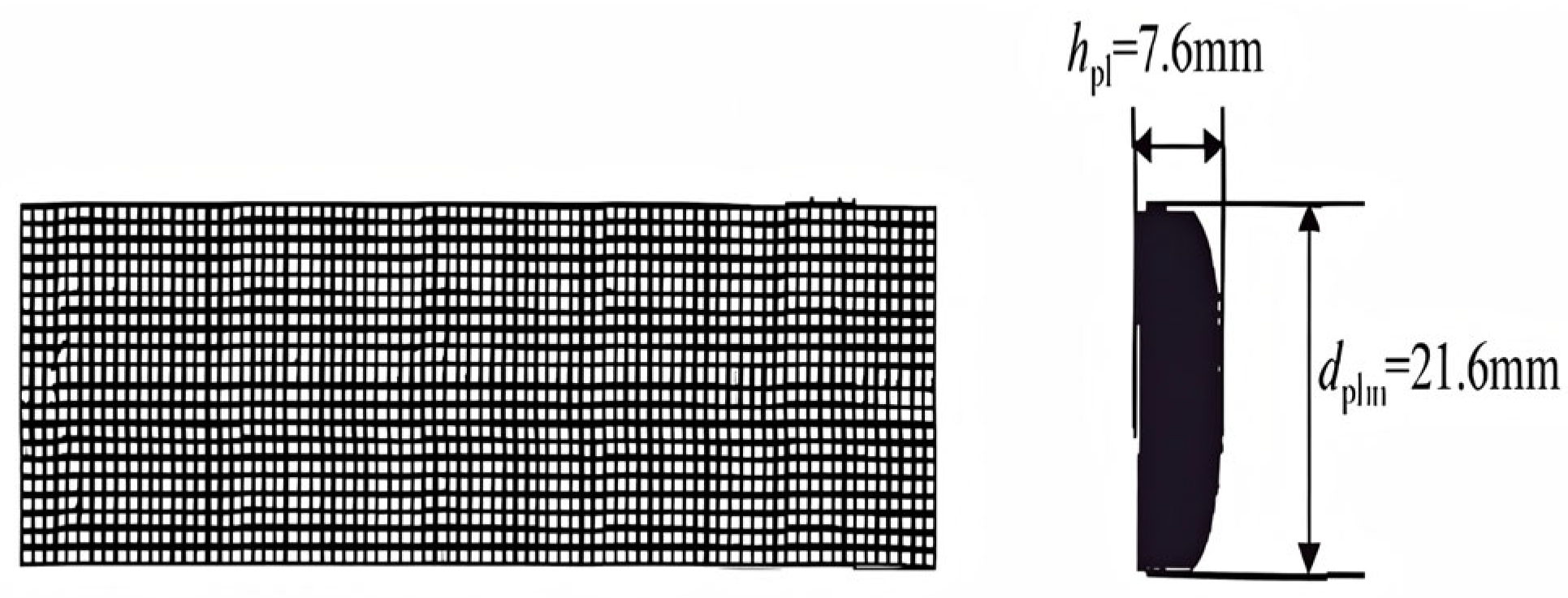
A comparison is made between the experimental plug in
Figure 12 [
49] and the calculated plug in
Figure 13. It is evident from the figure that the calculated deformation of the projectile is minimal. The calculated maximum diameter
of the plug is 21.6 mm, and its height
is 7.6 mm, both of which are in good agreement with the experimental results [
49].