Article

Energy-Tuned Airfoil Control via Twain Co-Flow Jet System

by
Muhammad Umer Sohail
*,
Anees Waqar
and
Muhammad Hammad Ajmal
Department of Aeronautics and Astronautics, Institute of Space Technology, Islamabad 44000, Pakistan
*
Author to whom correspondence should be addressed.
Appl. Mech. 2026, 7(2), 39; https://doi.org/10.3390/applmech7020039
Submission received: 27 February 2026 / Revised: 17 April 2026 / Accepted: 24 April 2026 / Published: 28 April 2026

Abstract

This study presents a computational investigation of an ingenious Twain co-flow jet (CFJ) airfoil system featuring independently controlled micro-compressors for active flow control. Unlike conventional single-point or synchronously controlled CFJ configurations, the proposed system enables independent tuning of jet momentum coefficients at multiple locations along the airfoil surface. Reynolds-averaged Navier–Stokes (RANS) simulations are employed to analyze the impact of this independent control strategy on boundary layer behavior, lift enhancement, stall delay, and aerodynamic efficiency. The objective of this work is to establish a quantitative relationship between jet momentum distribution and aerodynamic performance, while also evaluating the associated energy consumption characteristics of the system. This technology works incredibly well at low speeds, significantly increasing stall angles and lift coefficients; at higher speeds, it uses less energy and improves the lift-to-drag ratio. Twain configuration offers more accurate control over pressure gradients, enabling adaptive performance during all flight phases. In this work, a Twain-compressor-integrated CFJ system is presented, in which jet momentum coefficients (Cμ = 0.05 and 0.1) are dynamically controlled by two independently controlled micro-compressors across various flight conditions (11.34 m/s, 138 m/s, 208 m/s). By optimizing injection at the leading edge and mid-chord—paired with synchronized suction at strategic withdrawal points—the system achieves precise boundary layer control with near-zero net mass flux. Modulating Cμ improves aerodynamic efficiency while limiting the total propulsion energy expenditure, allowing a smooth transition from high-lift takeoff to low-drag cruise, according to computational fluid dynamics (CFD) analysis. Due to these developments, Twain-compressor CFJ systems are now a scalable option for aircraft that need to be extremely aerodynamically versatile without sacrificing efficiency.

Graphical Abstract

1. Introduction

In high-performance aerospace applications, the aerodynamic efficiency of airfoils hinges critically on the behavior of the boundary layer—a thin viscous region adjacent to the surface that governs momentum exchange between the airfoil and the external flow. Even subtle deviations in boundary layer formation can lead to early flow separation, increased drag, and catastrophic stall, particularly when pressure gradients are adverse. Managing this area is more than just an intellectual exercise; it has a direct influence on fuel efficiency, maneuverability, and structural requirements for aircraft in the subsonic, transonic, and supersonic regimes. The aerospace community has developed a spectrum of flow control methodologies that can address such challenges in aerodynamics, broadly categorized into passive and active techniques. Surface texturing and vortex generators are examples of passive techniques that frequently lack adaptability and introduce parasitic drag.
Conversely, precise, condition-dependent boundary layer modulation is made possible by active flow control (AFC) techniques, which introduce external energy or momentum into the flow field. Among the most promising AFC strategies is the co-flow jet (CFJ) concept [1], which integrates suction and blowing processes on the airfoil’s surface to excite the boundary layer and prevent flow separation. CFJ systems, unlike conventional AFC systems, operate in a mass-balanced configuration by employing a closed-loop air circulation strategy in which high-energy fluid injected at the leading edge or suction surface merges with the boundary layer (and vice versa in Twain-slot systems) [2]. At the same time, an equivalent mass flow is withdrawn downstream.
This results in a regulated “jet-augmented” boundary layer that sustains favorable pressure gradients across extended chordwise domains. The injection point is typically the same as the natural transition point, utilizing the Kelvin–Helmholtz instability to enhance mixing. At the same time, withdrawal happens near the trailing edge to decrease wake vorticity [3]. Crucially, the CFJ’s momentum coefficient (Cμ), which is the ratio of jet momentum flux to freestream dynamic pressure, defines the system’s capacity to suppress separation. Unlike conventional blowing techniques, CFJ’s recirculation architecture minimizes mass flow penalties, achieving much exceeded lift enhancements with minimal power expenditures of total propulsion energy paradigm shift in AFC efficiency [4]. These attributes position CFJ as a transformative solution for applications that demand high lift coefficients (e.g., VTOL, wind turbines) or ultra-low drag profiles (e.g., long-endurance UAVs). This entrainment-enhanced flow control system has demonstrated remarkable gains in lift, stall margin, and drag reduction across a wide range of Mach numbers—qualifying it as a pivotal innovation in the quest for next-generation aerodynamic efficiency [5]. The journey of co-flow jet (CFJ) airfoil development began in 2004 when [6] first introduced the CFJ concept as an active flow control (AFC) technique designed to manipulate boundary layer behavior using zero-net-mass-flux (ZNMF) methodology. This approach combined a leading-edge blowing slot and a trailing-edge suction slot, integrated through a ducted fan within the airfoil, to recirculate air and enhance lift without additional mass input from external sources. The CFJ system is based on the deliberate injection of a high-speed jet stream into the suction surface of the airfoil along the leading edge while an equal volume of air is withdrawn from the trailing edge [7]. The whole process sustains an ingenious balance between injection and suction, thus resulting in zero net energy expenditure. Previous research on co-flow jet (CFJ) and active flow control systems has employed a variety of methodological approaches, broadly categorized into theoretical analysis, simplified modeling, and computational fluid dynamics (CFD)-based simulations.
By 2007, Zha further formalized the theoretical framework, deriving analytical expressions for lift and drag coefficients specific to CFJ airfoils. This laid the foundation for subsequent experimental and numerical studies focused on performance under various aerodynamic conditions. A key development came when [8] applied the CFJ technique to conceptual aircraft design. Their work demonstrated that aircraft using CFJ-integrated wings could cruise at higher wing loadings and achieve a high lift coefficient, enabling short takeoff and landing (STOL) capabilities. Notably, they introduced a pivoting wing system to allow a higher angle of attack, further boosting aerodynamic efficiency.
Over the next decade, the CFJ technique was rigorously explored for both subsonic and transonic regimes. It was consistently found that CFJ substantially enhanced lift, expanded stall margins, and reduced drag, especially when applied to flapping airfoils with small camber and leading-edge radius, typical of transonic cruise configurations [9]. In 2021, [10] advanced the field by numerically investigating a 2D CFJ airfoil with simple high-lift devices. Their research specifically targeted low-speed takeoff and landing scenarios. They confirmed that slot geometry—particularly injection and suction slot location—plays a more decisive role in aerodynamic performance than suction angle. Additionally, they introduced the concept of equivalent lift-to-drag ratio, which accounts for both aerodynamic force and power consumption, to better evaluate the net aerodynamic benefit of CFJ airfoils.
Beyond experimental studies, computational fluid dynamics (CFD) simulations have been vital in assisting the understanding of the complicated flow patterns related to CFJ airfoils [11]. CFJ technology moved beyond the realm of conventional fixed-wing aircraft. For instance [12], studied the incorporation of CFJ airfoils into helicopter blades, bringing a great enhancement in control and aerodynamic performance. Additionally, studies have also focused on the actual utilization of CFJ airfoils in commercial and military aviation, including analyses of fuel savings [13] and pollution cuts, and retrofitting to implant CFJ technology on current airplanes. Their results gave strong evidence that CFJ airfoils offer varying environmental and economic advantages, especially for long-haul flights, where drag reduction becomes a major issue. These results give the industrial application a broad play and a disturbing capability for CFJ.
The evolution continued into 2025 when [14] introduced a novel combination of CFJ and leading-edge droop devices—a morphing-based approach aimed at variable camber adaptation. This hybrid design allowed for a seamless transition between low-speed and high-speed configurations by retracting the droop head and closing the jet channel in cruise mode. Their results were particularly promising, validating the CFJ’s efficacy even on supercritical thin airfoils intended for transonic flight. As the CFJ concept matured, attention shifted toward practical implementations. The jets link the primary airflow at higher angles of attack integrated CFJ systems with trailing-edge flaps [15,16], showing that the suction slot could effectively delay flow separation on control surfaces, thus maintaining aerodynamic integrity even at high flap deflections.
In parallel, ref. [17] explored the turbulent interaction dynamics of jet-in-co-flow configurations in a more fundamental fluid dynamics context. While not strictly an aerodynamic application, their findings on momentum transfer, entrainment mechanisms, and turbulent interface behavior offered valuable insights into the underlying physics governing CFJ-like flow systems. They identified how co-flow ratios and turbulent intensity influence jet spreading and velocity decay—parameters that are directly relevant to optimizing CFJ performance in practical airfoil applications. In recent years, computational fluid dynamics (CFD) has emerged as the most widely adopted and reliable approach for CFJ analysis. CFD enables detailed resolution of flow physics, including boundary layer behavior, jet mixing, and separation control mechanisms. Most CFJ studies employ Reynolds-averaged Navier–Stokes (RANS) equations, coupled with turbulence models such as Spalart–Allmaras or k–ω SST, to simulate turbulent flow behavior with reasonable computational cost.
Further studies have extended CFJ technology toward multi-slot and integrated configurations [2,11]. These systems largely employ a single energy source or fixed momentum coefficients, thereby limiting dynamic adaptability across flight regimes. In such configurations, multiple slots primarily serve geometric flow manipulation rather than functionally decoupled aerodynamic objectives.
Together, these studies reflect a compelling trajectory of CFJ airfoil research: from a conceptual AFC idea to a multi-faceted design solution capable of delivering superior aerodynamic performance under diverse operational scenarios. The integration with morphing structures, the shift to multi-element configurations, and the inclusion of energy efficiency metrics have all propelled CFJ technology closer to real-world aircraft application.
Although several researchers have demonstrated the benefits of single co-flow jet (CFJ) configurations, limitations persist, such as limited control authority and stall margin. The present study introduces a novel Twain co-flow jet (CFJ) system featuring independently controlled micro-compressors, enabling spatial variation of jet momentum coefficient along the airfoil surface. This represents a significant advancement over conventional CFJ configurations, where jet actuation is typically applied uniformly or synchronously. The key contribution of this work lies in demonstrating that independent control of jet momentum distribution leads to measurable aerodynamic and energetic benefits, which are not achievable using traditional single-point or synchronous CFJ systems. The results reveal that uniform jet injection leads to over-energization in regions where boundary layer control is not critical, resulting in unnecessary energy expenditure. In contrast, the Twain CFJ system allows localized momentum injection, ensuring that energy is supplied only where separation control is required. This leads to a more efficient redistribution of momentum within the boundary layer, delaying flow separation more effectively while minimizing power input. In addition to physical insights, this study contributes a generalized CFD-based framework for the design and evaluation of multi-point active flow control systems. This framework enables:
  • Independent variation of multiple jet momentum coefficients;
  • Systematic parametric analysis of aerodynamic performance;
  • Coupled evaluation of aerodynamic gains.
Such an approach provides a scalable methodology for optimizing next-generation flow control systems in aerospace applications. Therefore, this study not only demonstrates the aerodynamic advantages of the Twain CFJ system but also establishes a quantitative and computational foundation for the development of energy-efficient, multi-point active flow control technologies. Section 2 presents the computational methodology, including the geometric configuration of the Twain CFJ airfoil, governing equations, boundary conditions, and mesh generation strategy. The validation of the numerical model is also included in this section. Section 3 discusses the aerodynamic performance of the system, including lift, drag, stall characteristics, and flow field analysis under different operating conditions. A detailed evaluation of energy consumption and aerodynamic efficiency is also provided. Finally, Section 4 summarizes the key findings of the study and outlines potential directions for future research.

2. Methodology

The approach used in this study was carefully devised to examine the aerodynamic performance of a unique Twain co-flow jet (TCFJ) airfoil configuration with two internal compressors. This approach was created in response to gaps observed in previous research, as most CFJ airfoils use a single compressor or rely on external airflow systems to energize the boundary layer. This study aims to improve flow control capability while maintaining internal system autonomy, which is critical for next-generation aerospace platforms such as unmanned aerial vehicles (UAVs) and compact stealth aircraft.

2.1. CAD Modelling

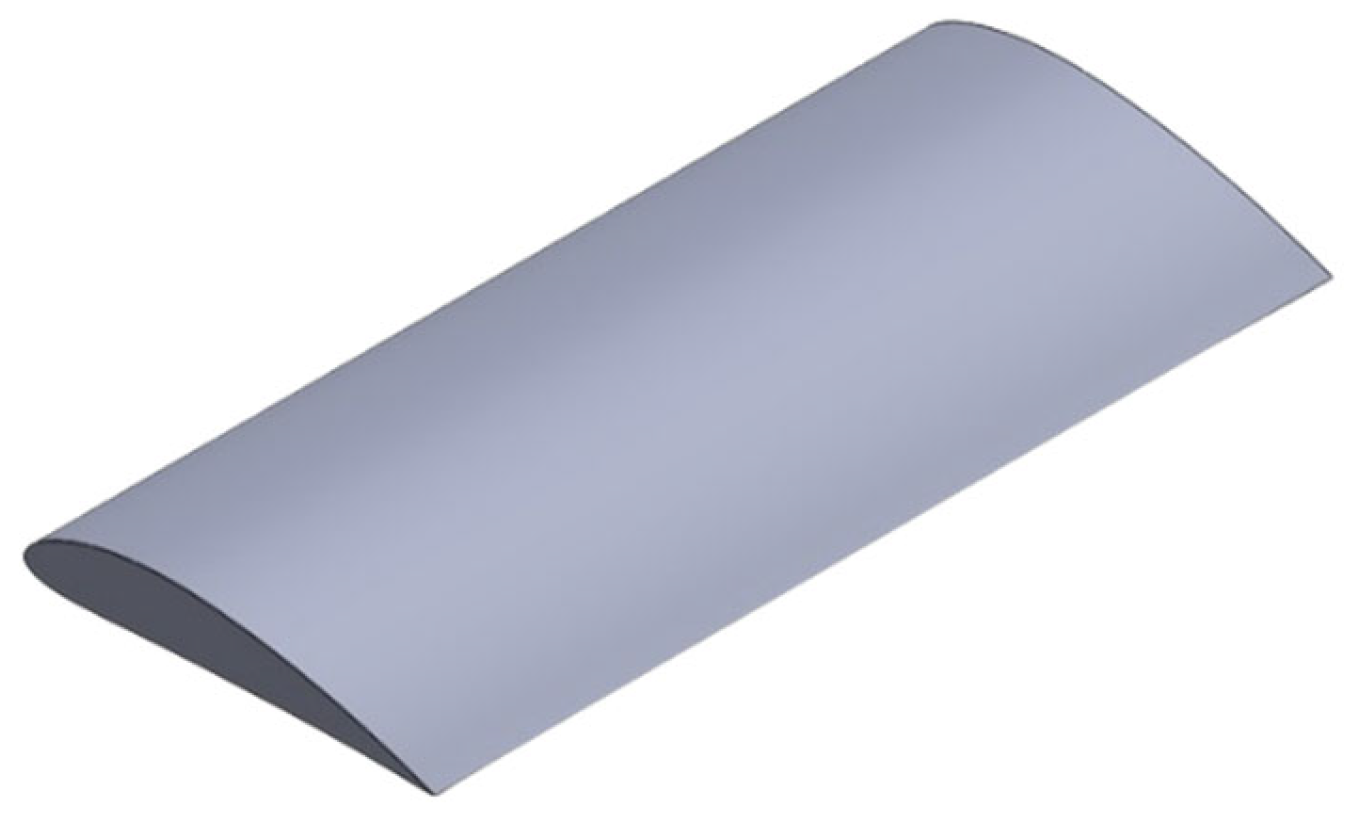
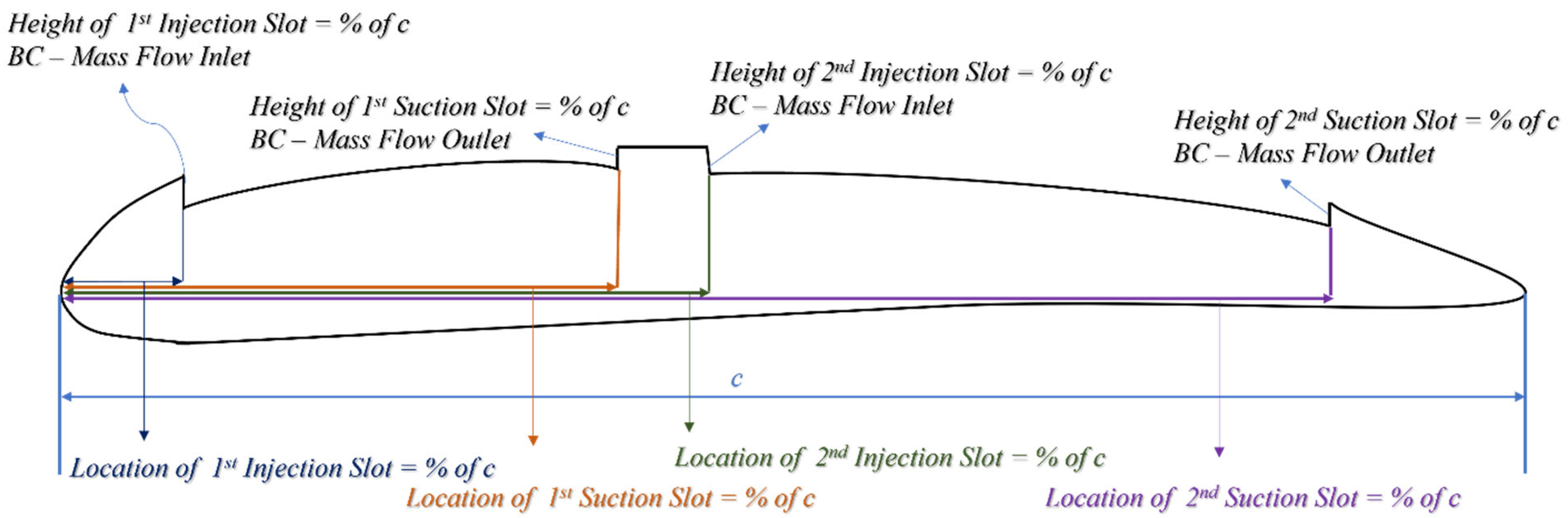
The baseline (Figure 1), having NACA 6415 and the Twain co-flow jet airfoil (Figure 2), was modelled by considering the dimensions of the Wind tunnel present (available at the Department of Aeronautics and Astronautics, Institute of Space and Technology, Pakistan), which are 457 mm long, 304 mm wide, and 304 mm high. Ultimately, the dimensions of both airfoils are 250 mm span, 114 mm chord. The co-flow jet airfoil is modelled by designing two injections and two suction slots via SolidWorks (v2022). It has a blowing slot near the leading edge whose suction slot is modelled at the airfoil’s maximum thickness [18]. Similarly, next to the first compressor’s suction slot is modelled a high-pressure blowing cavity connected to the suction slot at the trailing edge. Considering the maximum height of the airfoil, which is 16.62 mm, the first blowing slot is 9.97 mm, whereas the second blowing slot is of 10.93 mm. As far as the suction slots are concerned, they are 11.27 mm and 8.45 mm, respectively.
The slot locations (along chord) are as follows:
  • First injection slot: ≈12% of chord;
  • First suction slot: ≈38% of chord;
  • Second injection slot: ≈52% of chord;
  • Second suction slot: ≈80% of chord.
The slot heights (relative to chord) are as follows:
  • Height of first injection slot: ≈2.0% of chord;
  • Height of first suction slot: ≈2.2% of chord;
  • Height of second injection slot: ≈2.13% of chord;
  • Height of second suction slot: ≈1.8% of chord.
The Twain CFJ system consists of two independent injection–suction slot pairs distributed along the chord of the airfoil as shown in Figure 3. Each injection slot is positioned upstream of its corresponding suction slot, forming a closed-loop flow control system. The first pair (Injection 1–Suction 1) primarily influences the leading-edge boundary layer development, while the second pair (Injection 2–Suction 2) targets mid-to-aft chord flow separation control. All geometric parameters are normalized with respect to the airfoil chord length (c). This structured configuration enables independent control of jet momentum coefficients at different chordwise locations, which is a key feature distinguishing the Twain CFJ system from conventional single-point CFJ designs. Unlike conventional CFJ systems with a single injection–suction pair, the present configuration introduces dual independently controlled slot pairs, allowing localized boundary layer energization and improved aerodynamic performance through spatial momentum distribution.

2.2. Governing Equations

The flow field is governed by the Reynolds-averaged Navier–Stokes (RANS) equations for a compressible Newtonian fluid. The instantaneous flow variables are decomposed using Reynolds decomposition as:
u i = u ¯ i + u i
where u ¯ i and u i denote the mean and fluctuating velocity components, respectively. The equation for continuity and conservation of momentum can be written as follows:
ρ t + x j ( ρ u ¯ j ) = 0
t ( ρ u ¯ i ) + x j ( ρ u ¯ i u ¯ j ) = p ¯ x i + x j [ μ ( u ¯ i x j + u ¯ j x i ) ] x j ( ρ u i u ¯ j ) + ρ g i + F i
The term ρ u i u ¯ j represents the Reynolds stress tensor, which arises due to turbulence and requires closure. The Reynolds stress tensor is modeled using the Boussinesq approximation:
ρ u i u ¯ j = μ t ( u ¯ i x j + u ¯ j x i ) 2 3 ρ k δ i j
where μ t is the turbulent viscosity. The Spalart–Allmaras (SA) model introduces a transport equation for a modified turbulent kinematic viscosity ν ~ , given by:
ν ~ t + u ¯ j ν ~ x j = C b 1 S ~ ν ~ + 1 σ [ x j ( ( ν + ν ~ ) ν ~ x j ) ] + C b 2 σ ( ν ~ x j ) 2 C w 1 f w ( ν ~ d ) 2
where d is the distance to the nearest wall, and the model constants follow standard Spalart–Allmaras definitions [19]. In this equation, C b 1 S ~ ν ~ represents turbulence production, 1 σ [ x j ( ( ν + ν ~ ) ν ~ x j ) ] shows molecular and turbulent diffusion, C b 2 σ ( ν ~ x j ) 2 represents cross diffusion, C w 1 f w ( ν ~ d ) 2 depicts turbulent destruction (near wall damping), while C b 2 indicate constant. The turbulent viscosity is obtained as:
μ t = ρ ν ~ f v 1

2.3. Jet Reactionary Forces

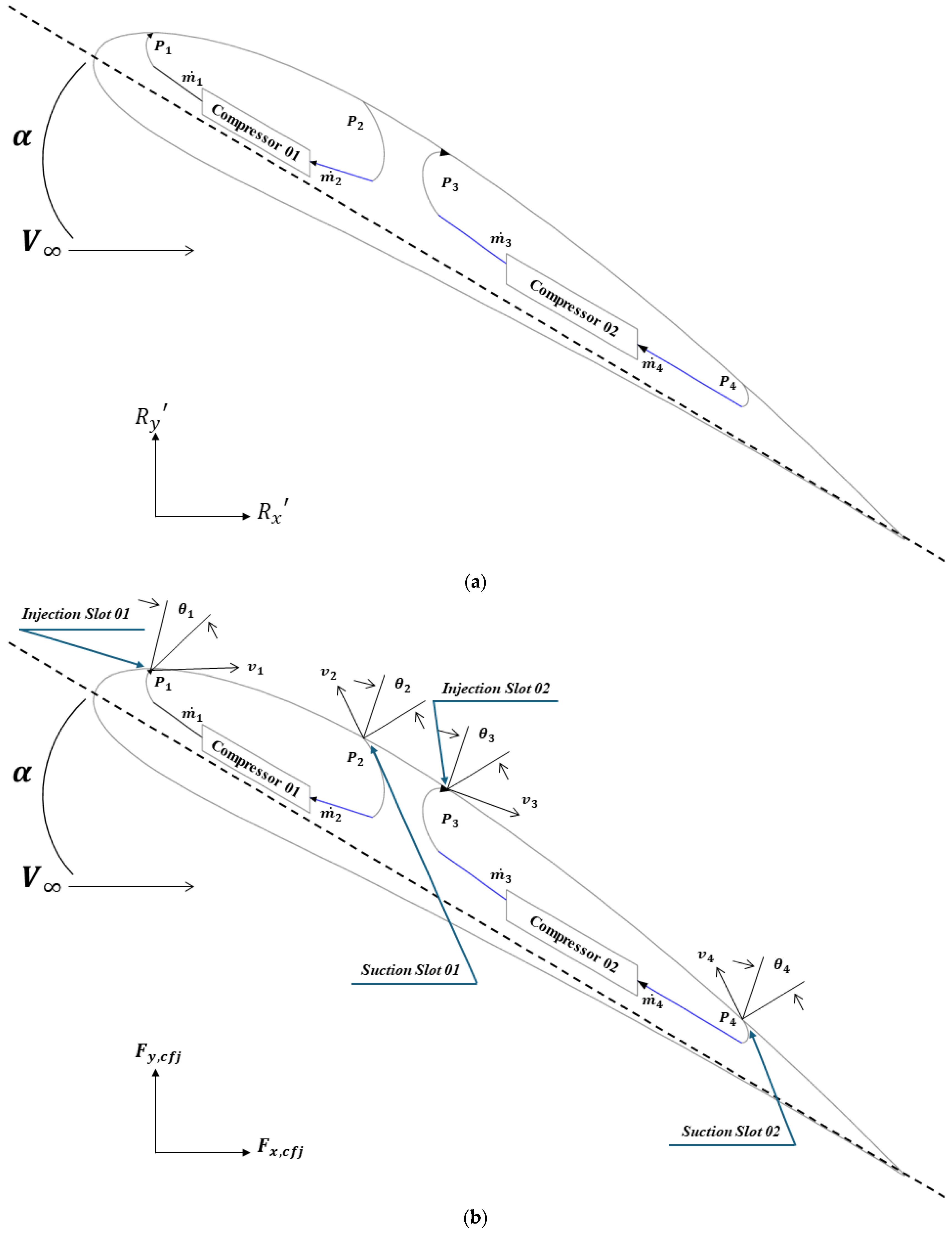
In experimentation, the force balance generally evaluates the reactive force generated at the injection and suction slots. However, for computational fluid dynamics (CFD) calculations, the entire reactive pressure must be included. The reactionary forces may be calculated by analyzing the control volume and the flow parameters at the injection and suction slot surfaces [20]. For a CFD simulation, the lift and drag caused by the jet’s reactionary pressure are calculated using the following formulas:
F x c f j = ( m 1 ˙ v 1 + P 1 A 1 ) cos ( θ 1 α ) + ( m 3 ˙ v 3 + P 3 A 3 ) cos ( θ 3 α ) ( m 2 ˙ v 2 + P 2 A 2 ) cos ( θ 2 α ) ( m 4 ˙ v 4 + P 4 A 4 ) cos ( θ 4 α )
F y c f j = ( m 1 ˙ v 1 + P 1 A 1 ) sin ( θ 1 α ) + ( m 3 ˙ v 3 + P 3 A 3 ) sin ( θ 3 α ) ( m 2 ˙ v 2 + P 2 A 2 ) sin ( θ 2 α ) ( m 4 ˙ v 4 + P 4 A 4 ) sin ( θ 4 α )
Here, the injection and suction are denoted employing the subscripts 1 and 2, 3, and 4, respectively, and θ1, θ2, θ3, and θ4 are angles formed by using a line ordinary to the airfoil chord and the injection and suction slot surfaces. The surface and reaction forces are shown in Figure 4.
The reaction force generated by the co-flow jet (CFJ) system is derived from the integral momentum equation applied to a control volume enclosing the injection and suction slots. For steady flow, the net force acting on the control volume is given by:
F = m ˙ V o u t m ˙ V i n
where m ˙ is the mass flow rate and V is the velocity vector at the control surfaces. In the TCFJ configuration, the injection slots introduce momentum into the flow, while the suction slots remove momentum. Accordingly, the net jet reaction force can be expressed as:
F j e t = i = 1 N i n j m ˙ i n j , i V i n j , i j = 1 N s u c m ˙ s u c , j V s u c , j
where N i n j and N s u c denote the number of injection and suction slots, respectively. This formulation accounts for both momentum addition and removal, ensuring conservation of momentum within the system. The above expression is based on the following assumptions:
  • Each slot contribution is treated independently, assuming limited direct interaction between adjacent jets and suction regions;
  • Pressure forces at the slot exits are assumed to be balanced with the surrounding flow and are therefore neglected in the net force estimation.
While the analytical formulation assumes independent contributions, the full coupling between multiple slots—including jet interaction, entrainment, and suction effects—is inherently captured in the CFD simulations. Therefore, the computed aerodynamic forces reflect the complete nonlinear interaction of the flow field. It is noted that at higher jet momentum coefficients, interaction effects between slots may become more significant, and the present formulation should be interpreted as a first-order approximation of the jet-induced forces. A more complete expression includes pressure effects:
F j e t = m ˙ V j e t + ( p j e t p ) A
For a configuration with N injection slots and M suction slots, the total force becomes:
F t o t a l = i = 1 N ( ρ A i V i 2 + ( p i p ) A i ) j = 1 M ( ρ A j V j 2 + ( p j p ) A j )
To simplify the formulation for this study, steady-state flow, uniform velocity at each slot, negligible jet–jet interaction at control volume scale, and pressure at slot exits approximated locally were assumed. The TCFJ airfoil’s general lift and drag may additionally be written as follows:
D = R x F x c f j
L = R y F y c f j
Herein, Rx′, in addition to Ry′, are the pressure and shear pressure surface integrals in x (drag) and y (lift), respectively, except for the suction and internal injection channels.

2.4. Jet Momentum Coefficient

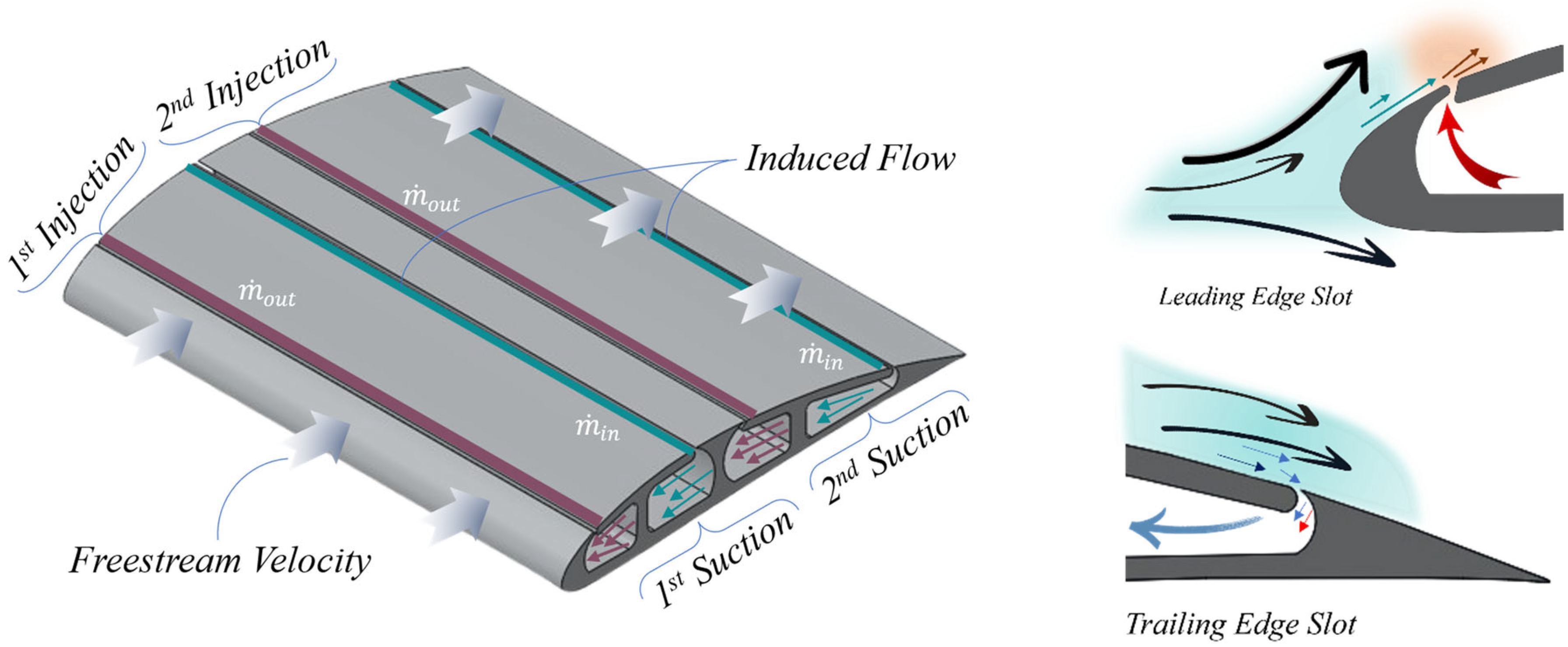
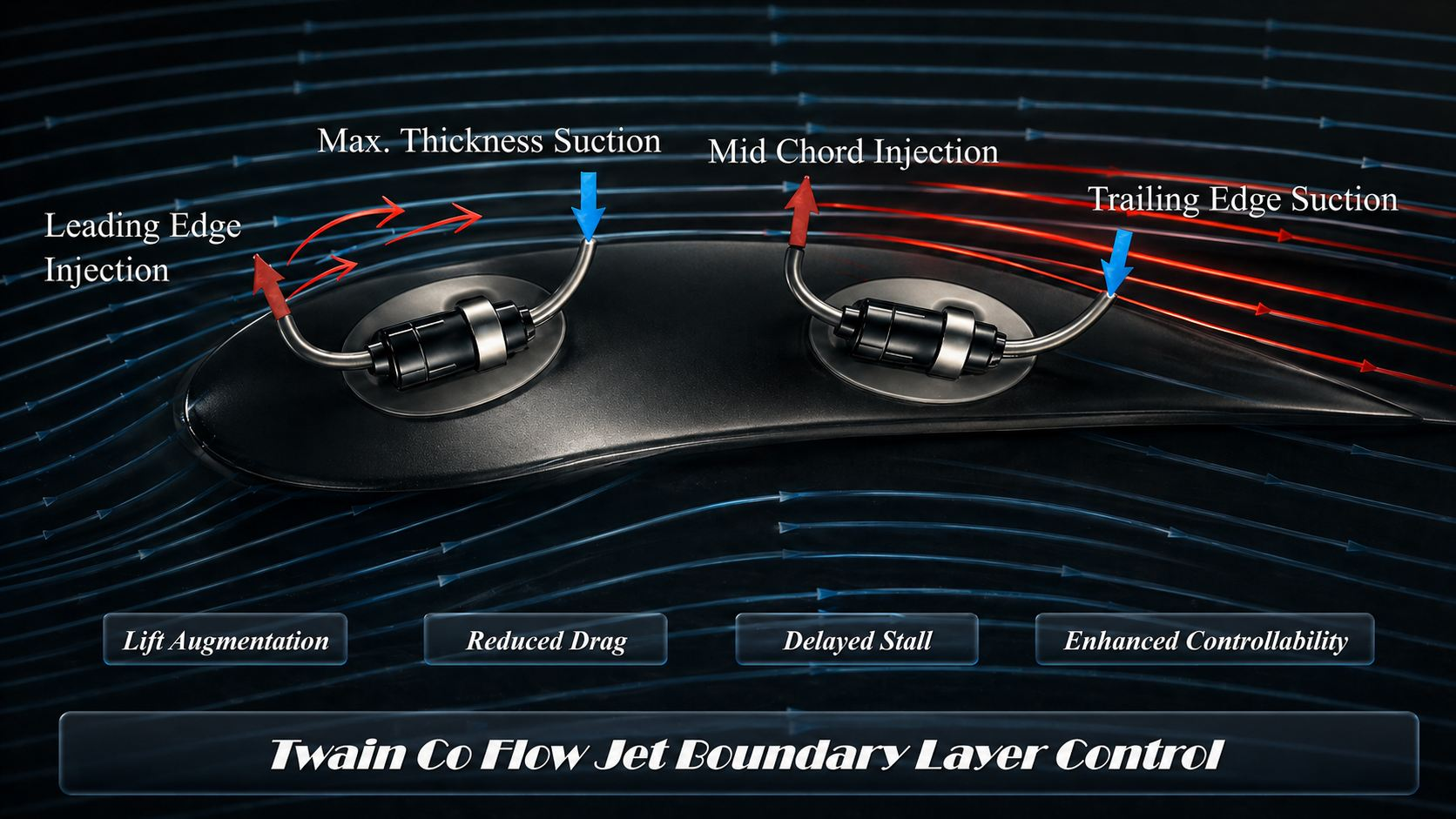
Figure 5 demonstrates the actual working of Twain co-flow jet system.
The parameter used to compute the intensity of the jet of air injected into the flow relative to the primary airflow around the airfoil is the jet momentum coefficient (Cμ). It measures the strength of the injected jet and its influence on the overall aerodynamics of the airfoil:
C μ = m ˙ t o t a l   V j t o t a l 1 2   ρ V 2 S
where m t o t a l ˙ is the mass flow of both injection cavities, V j t o t a l is the mass-averaged blowing velocity, ρ V are freestream density and Velocity and S represents the area. A higher Cμ means a stronger jet relative to the free stream airflow, indicating a more intense injection effect [21].

2.5. Power Coefficient

The co-flow jet (CFJ) transports air from the suction slot to the injection slot of the airfoil. In general, we observe the gains and losses of jet mass float and general enthalpy to know the power consumed in operation by the device:
P   =   m ˙ 1 2 ( Ht 1     Ht 2 )   +   m ˙ 3 4 ( Ht 3     Ht 4 )
where m ˙ is the mass flow rate and Ht1 and Ht2, Ht3, and Ht4 are the total enthalpy values in the injection and suction cavities. The power required by the pump is determined by the amount of air being moved and the difference in energy between the air in the injection and suction cavities [22]. Engrossing power efficiency and total pressure ratio, we can express the power consumption to account for real-world conditions. This approach helps in accurately determining the power requirements by considering both the efficiency of the pump and the pressure conditions in the cavities [23].
P = m ˙ C P T t 2 η 1 ( Γ 1 γ 1 γ 1 ) + m ˙ C P T t 4 η 2 ( Γ 2 γ 1 γ 1 )
where Γ 1 = P t 4 P t 1 and Γ 1 = P t 3 P t 4 and γ is the ratio of specific heat equals 1.4 considering air. Thus, the power coefficient can be expressed as:
P c = P 1 2 ρ V 3 S

2.6. Aerodynamic Efficiency

For a traditional airfoil, aerodynamic efficiency is defined as the lift-to-drag ratio presented as:
L D = C L C D
For CFJ airfoils, this ratio still represents the basic relationship between lift and drag. However, since CFJ systems use additional energy to control the airflow actively (via the pump that moves air through the suction and injection slots), we need to adjust the efficiency to account for this energy consumption. The corrected aerodynamic efficiency for CFJ airfoils includes the energy consumed by the pump. This gives us a more accurate measure of the overall efficiency, considering both aerodynamic performance and energy usage [24].
C L C D c = C L C D + P C

2.7. Setup

This study analyses airflow characterized by a Reynolds numbers of 1 × 10⁵, 1.01 × 10⁶, 1.62 × 10⁶. The Reynolds number (Re) was found to be a critical factor affecting the aerodynamic performance in our study of the Twain co-flow jet (CFJ) airfoil. In conventional airfoils, separation is delayed and boundary layer thickness is decreased as Re increases because inertial forces become much stronger than viscous forces. However, with the integration of CFJ technology, the influence of Re manifests in a more nuanced manner.
At lower Reynolds numbers, where viscous effects dominate, the CFJ system shows enhanced control authority due to the increased relative impact of surface and jet-induced forces on the boundary layer. In such cases, the suction and blowing jets are more effective in energizing the flow near the surface, leading to noticeable improvements in lift and drag even in slow or small-scale flows such as those encountered in UAVs or wind turbines. Conversely, at higher Reynolds numbers, although the baseline airfoil performs better due to stronger inertial forces, the CFJ effect further amplifies lift by injecting momentum into the boundary layer, and concurrently reduces pressure drag by preventing separation. The jet reactionary force also scales with jet momentum coefficient, and at higher Re, the mass flow rate and jet velocities increase, resulting in greater momentum injection and subsequently larger lift increments. The ability of the CFJ system to provide scalable aerodynamic control from low-speed to high-speed applications is demonstrated by the fact that it generally retains its advantageous aerodynamic impact across a range of Reynolds numbers.
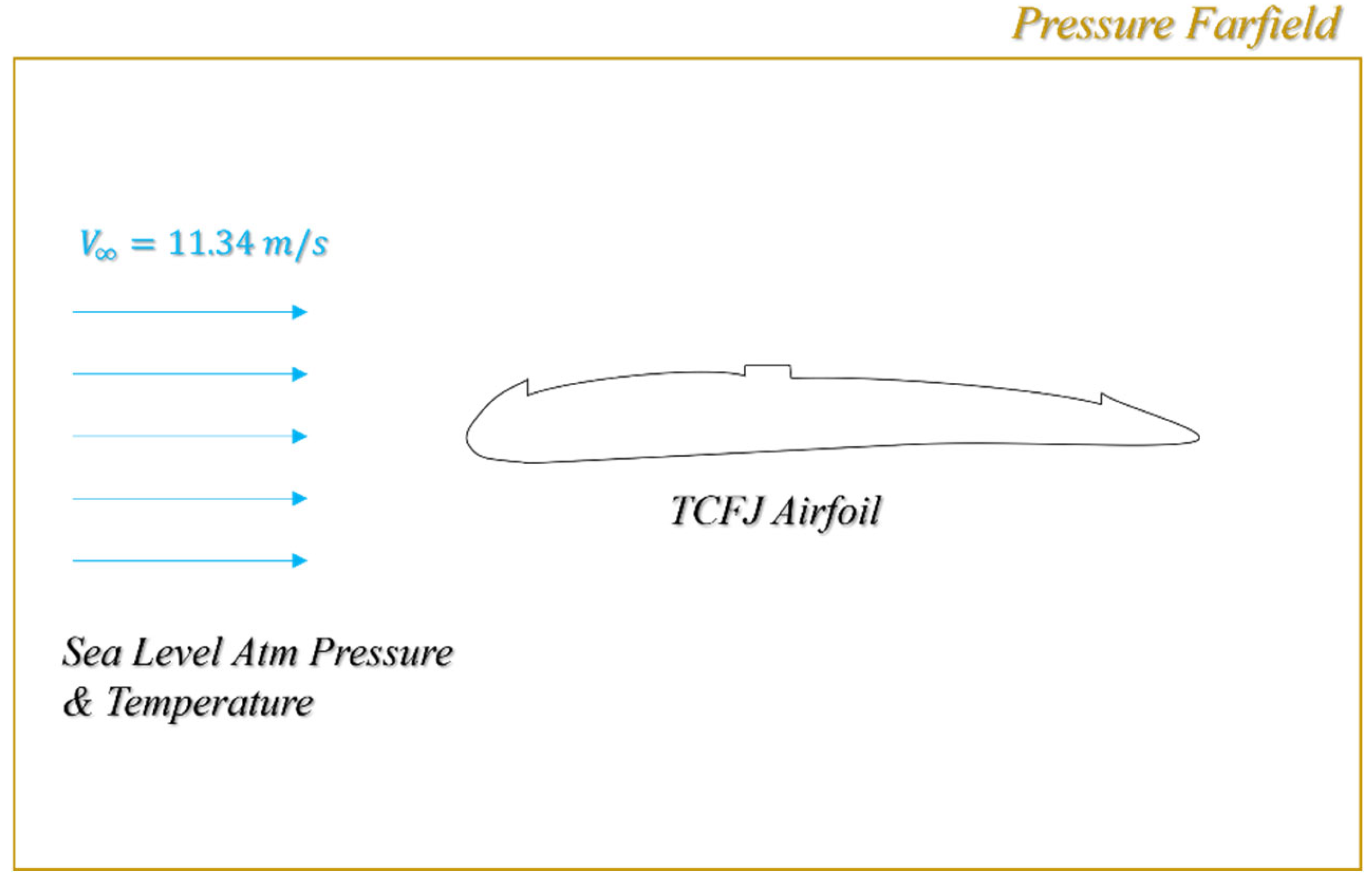
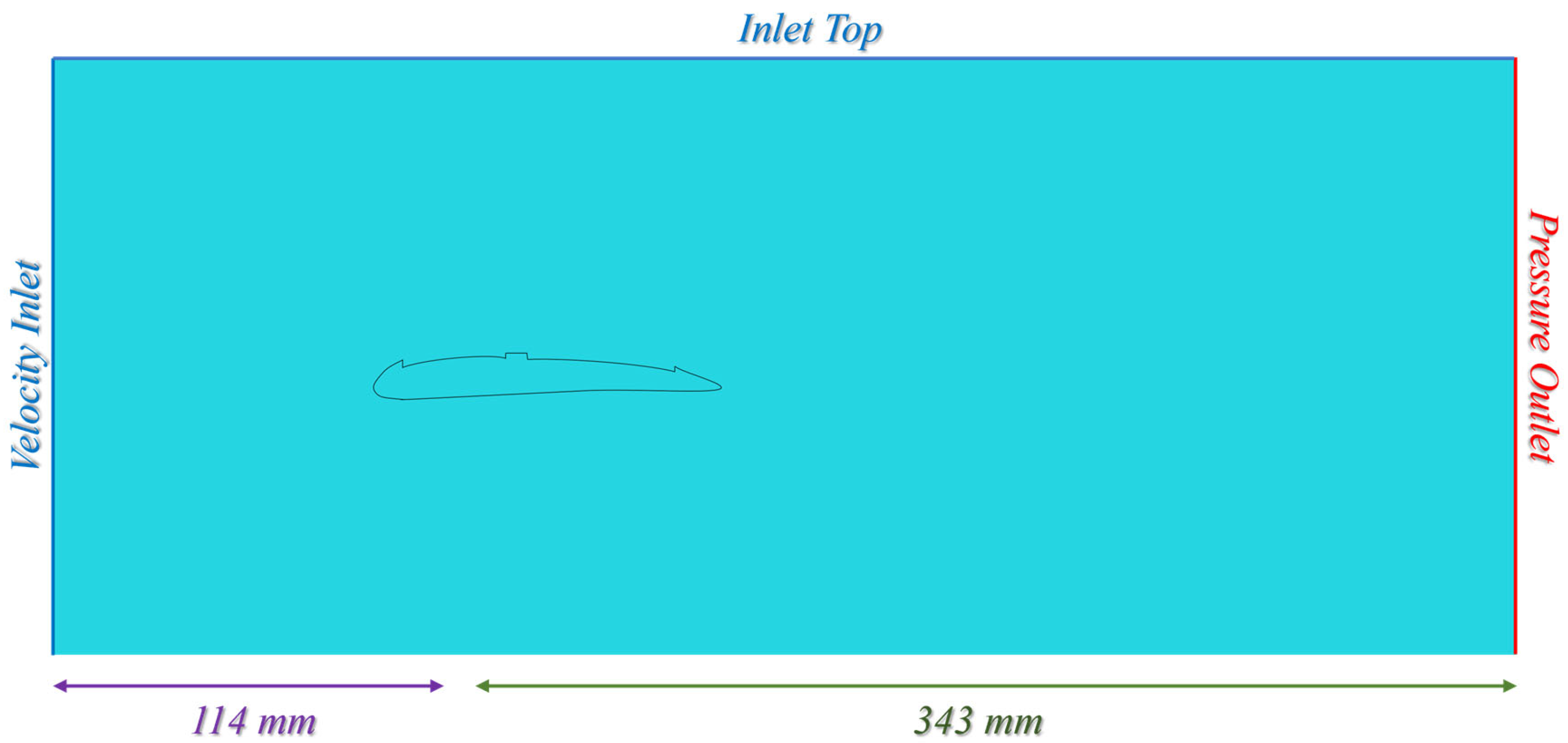
The domain typically includes the airfoil, jet slots, and far-field boundaries shown in Figure 6, modelled to ensure proper representation of airflow around the co-flow jet (CFJ) airfoil as shown in Figure 7. The airfoil used was a NACA 6415 with a chord length of 114 mm, which focuses on maximizing lift augmentation and drag reduction while maintaining computational efficiency.
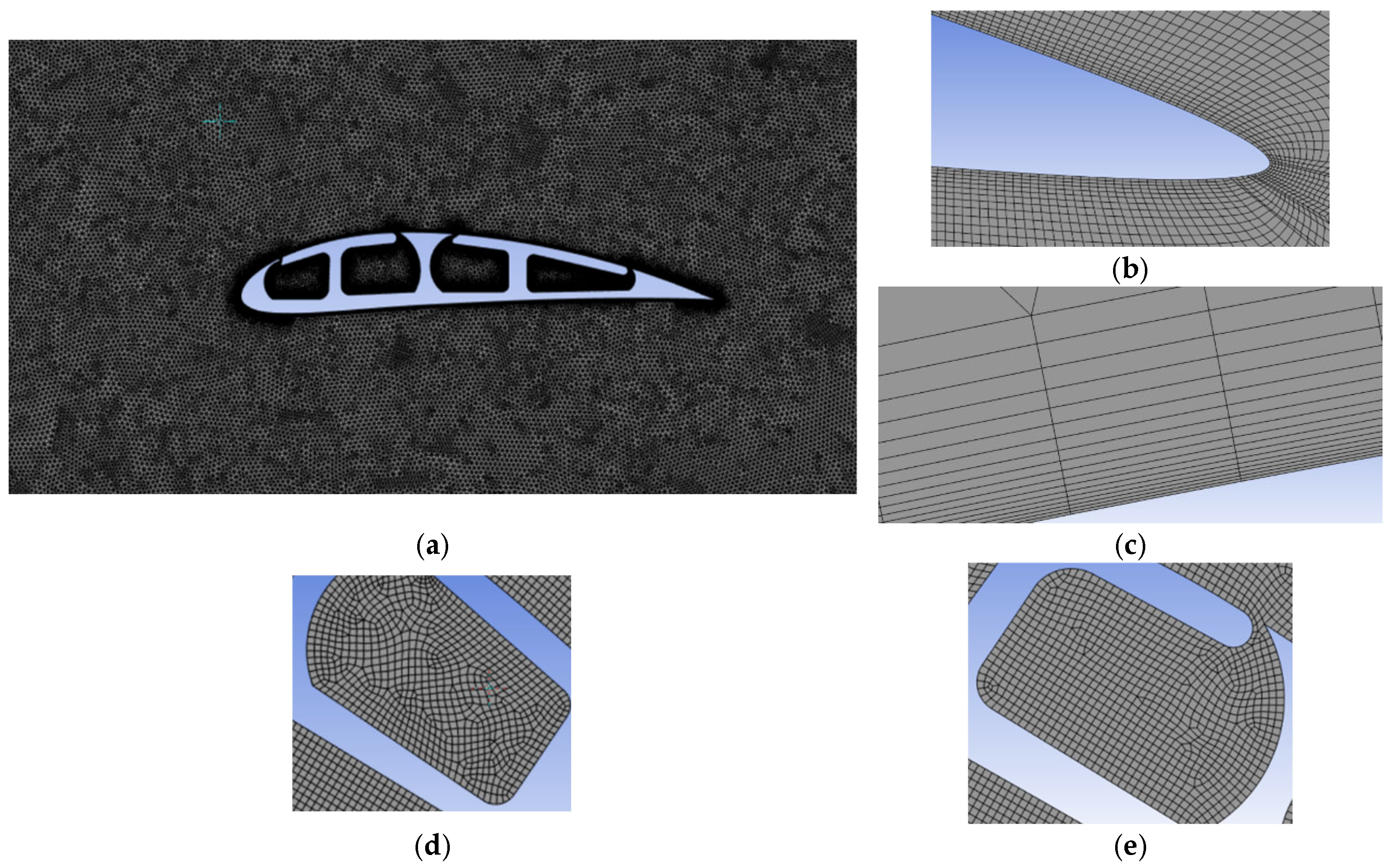
The analysis was conducted using the commercial software Ansys-Fluent (v2022,2024 R1). Uniform velocity is assumed for the inlet boundaries (bottom and left), while a no-slip condition is applied to the walls. The boundary conditions and unstructured grid are illustrated in Figure 8. The coupled algorithm is employed to couple velocity and pressure. Simulations were run until full convergence of drag and lift coefficients is achieved, with the convergence criterion for all governing equations set at a residual of 10−8. Convergence was checked by monitoring residuals of continuity, momentum, and turbulence equations, which represent the deviation from mass, momentum, and energy conservation laws in each iteration.
In addition to residuals, lift and drag coefficients (force coefficients) are tracked to ensure that their values stabilize, indicating a converged physical solution. If the coefficients fluctuate excessively, grid or time-step refinement might be required. The three-dimensional Reynolds-averaged Navier–Stokes (RANS) equations are solved using the one-equation Spalart–Allmaras turbulence model [25]. The model is ideal for capturing flow separation, especially under adverse pressure gradients caused by the CFJ mechanism. This model is widely used for aerodynamic simulations involving complex boundary layers and separation, which are key for CFJ performance evaluation. It provides a balance between accuracy and computational efficiency.

2.8. Solver and Discretization

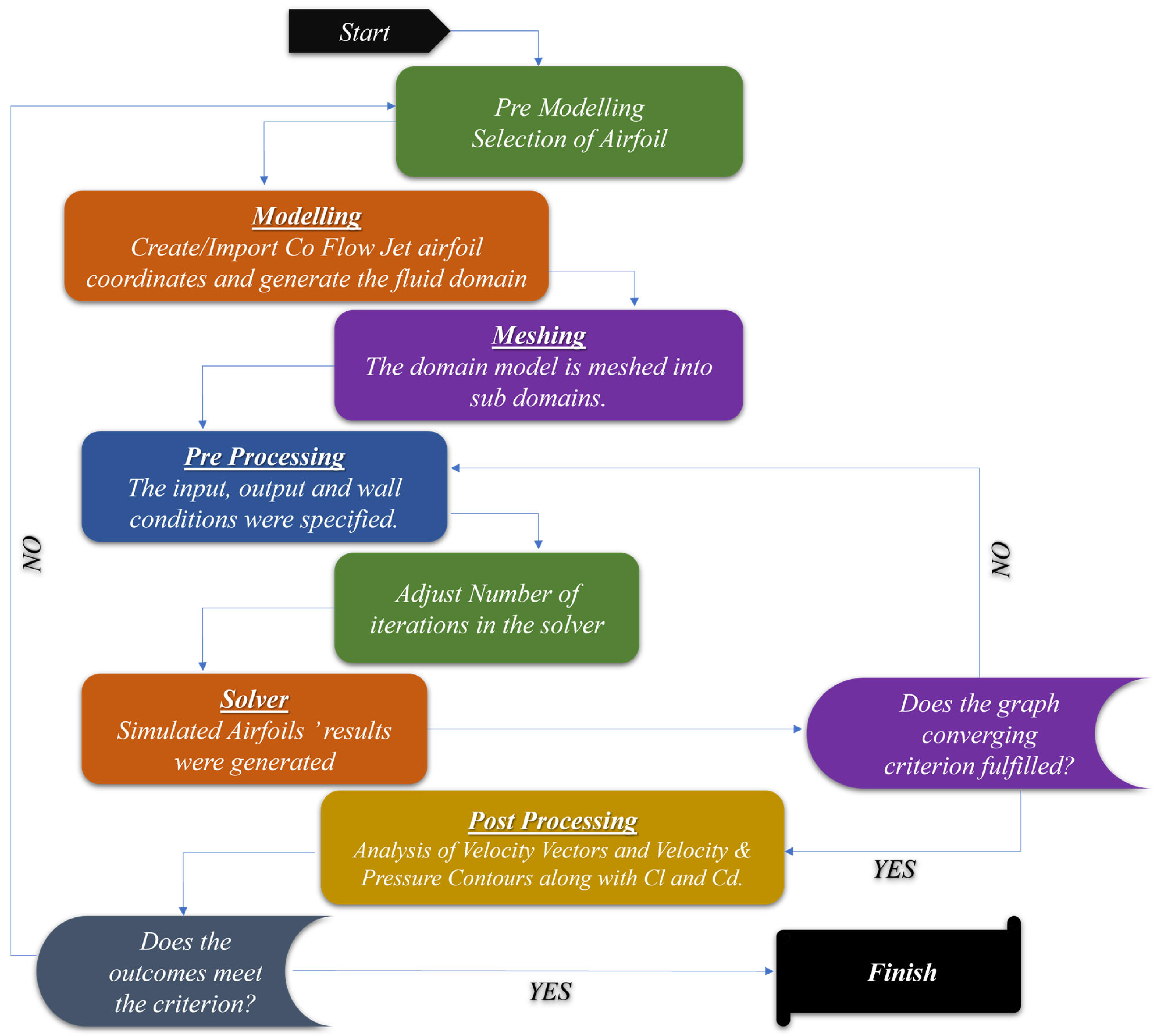
The finite volume method (FVM) was employed for discretizing the governing equations over control volumes. Figure 9 illustrates the computational methodology.
This method conserves fluxes across the mesh elements and is widely used in CFD due to its robustness. The second-order upwind scheme was likely chosen to ensure high accuracy in the spatial discretization of the momentum and turbulence equations, especially near the airfoil’s surface. For pressure–velocity coupling, the SIMPLE (semi-implicit method for pressure-linked equations) algorithm is commonly utilized in steady-state simulations. The SIMPLE algorithm was selected due to its robustness and stability for steady-state Reynolds-averaged Navier–Stokes simulations over a wide range of flow conditions.
This ensures proper convergence of pressure and velocity fields. The solver details are shown in Table 1. To ensure numerical stability and convergence across the range of freestream velocities considered, several measures were implemented. Second-order spatial discretization schemes were employed for both the convective and diffusive terms to maintain solution accuracy.

2.9. Boundary Conditions

The Navier–Stokes equations were employed to model fluid dynamics, likely in their Reynolds-averaged form (RANS) for steady, incompressible flows. This simplifies the complex, unsteady, turbulent flows by focusing on time-averaged effects. For low-speed airflows, incompressibility assumptions were valid, while the co-flow jet introduces additional complexities due to jet injection and suction, modelled as source terms in the governing equations. The continuity and momentum equations (Newton’s second law applied to fluid motion) govern the mass and momentum transport, considering the effects of jet interaction on the boundary layer.
For the Twain co-flow jet airfoil, CFD analysis employed boundary conditions derived from meticulous calculation of mass flow rates that were tailored to optimize the aerodynamic performance. We provided a free stream velocity of 11.34 m/s and mass flow rates of about 0.00827 kg/s using the Spalart–Allmaras turbulence model, known for its ability to deal with complex separated flows. These values are determined by an effective jet velocity of 34.02 m/s and given a coefficient of momentum ( C μ ) value at 0.05, thereby assuring accurate simulation of jet interaction with airflow over the airfoil. The specifications of the compressor used are shown in Table 2.
Besides, the turbulent viscosity ratio as shown in Table 3 was kept at ten times this number to improve the accuracy in predicting transition phenomena during the study. Such a tight set-up is aimed at providing deep insights into aerodynamic characteristics as well as probable performance enhancements, if any concerning the Twain co-flow jet airfoil design through Ansys Fluent program.

2.10. Mesh Independence Study

In ANSYS Fluent (v 2022,2024 R1), a computational fluid dynamics (CFD) analysis was performed on a Twain co-flow jet (TCFJ) airfoil. The airfoil surface was discretized employing a hybrid mesh that incorporates both quadrilateral and triangular elements, with an emphasis on essential areas such as the leading edge, injection and suction slots. The reference conditions are shown in Table 4.
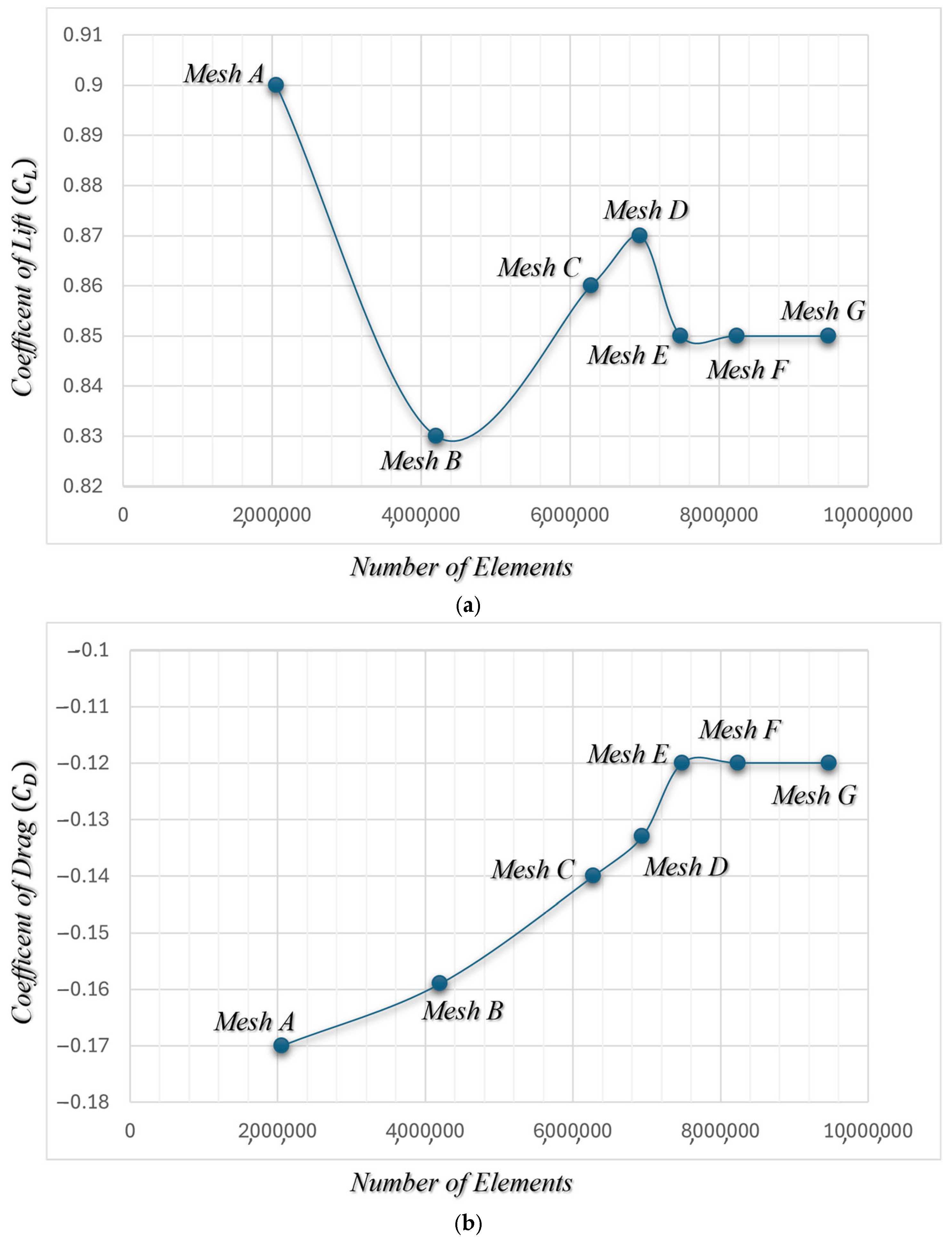
Fine mesh refinement was used in the boundary layer and slot sections to properly capture flow characteristics such as shear layers, separation, and reattachment sites. A mesh independence analysis was also conducted to confirm solution correctness, as seen in Figure 10.
This investigation involves gradually increasing the mesh density until it has no effect on data such as the coefficient of lift and drag, proving mesh independence. The final configuration, an unstructured grid created using a patch-conforming approach and linear element order, with an element size of 5 × 10⁻⁴, was effective with defeaturing size of 1 × 10⁻⁵. The mesh had 3,475,487 nodes and 9,471,013 components, striking a compromise between computing efficiency and resolution. The results of mesh independence study are shown below in Table 5:
The mesh elements had an average surface area of 1.5348 × 10⁻⁴, with a minimum edge length of 6.214 × 10⁻⁵. A smooth transition inflation option resolved the boundary layer at the airfoil surface. The resulting lift coefficient stabilized at 0.85 for 9,471,013 elements, as shown in the graph, indicating that the chosen mesh density adequately recorded key flow features around the CFJ airfoil without incurring additional computational costs. This arrangement enabled high-resolution flow feature capture inside the computational region, which measured 0.59905 m diagonally. Figure 10 displays the mesh independence for cl and cd.

2.11. Validation and Verification

For validation purposes, the NACA 6415 and CFJ airfoil with double suction and blowing slots was fabricated and analyzed in the subsonic wind tunnel. It has been observed that both the computational and experimental results perfectly contribute to each other. However, it is true that in validating computational fluid dynamics (CFD) simulations against experimental data, it is common to encounter discrepancies. A maximum discrepancy of approximately 9% was observed between experimental and computational lift and drag coefficients, which is typical for active flow control studies involving jet–boundary layer interactions. To assess the robustness of the reported performance gains, a systematic uncertainty analysis was performed to evaluate how experimental and numerical errors influence the key aerodynamic metrics.
The wind tunnel test section measured 457 mm × 304 mm × 304 mm, while the airfoil chord length was 114 mm, resulting in a blockage ratio of 3.5%; this value lies within the commonly accepted limit. Both experimental and CFD investigations were conducted at a freestream velocity of 11.34 m/s, corresponding to a Reynolds number of approximately 1 × 10⁵, with Reynolds number matching maintained within ±3% to ensure comparable flow conditions.
Uncertainty propagation was applied to evaluate the impact of measurement errors on aerodynamic performance metrics. Uncertainties of ±2.8% and ±4.2% in lift and drag coefficients were used, respectively [26].
This analysis explores these sources of error and discusses methods to address them to enhance the accuracy of both CFD models and experimental measurements. The errors might have happened because wind tunnel walls can change how the boundary layer develops around the airfoil, affecting flow patterns and, therefore, lift and drag measurements. When walls are too close, they interfere with the airflow, impacting how accurately we can measure aerodynamic forces. CFD models often do not fully account for these wall effects, creating differences between computer simulations and actual test results.
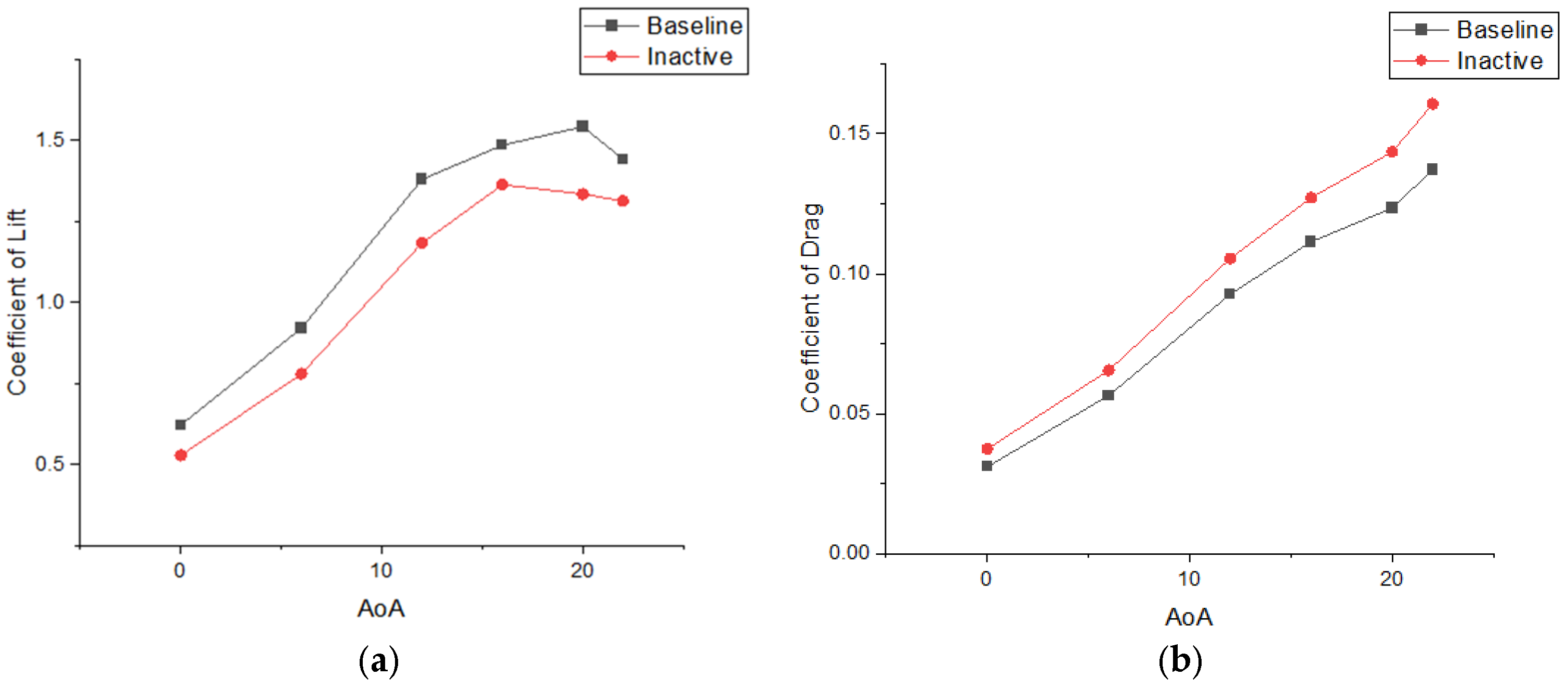
Looking at performance (Figure 11), the CFJ airfoil (red curve) generally shows better lift than the baseline airfoil (blue curve) at lower attack angles. Interestingly, the baseline airfoil reaches a higher maximum lift coefficient, peaking around 18–20° before suddenly dropping off when it stalls. The CFJ airfoil handles the post-stall region much better, with a gradual decline instead of a sharp drop. This demonstrates how the co-flow jet delays stall and sustains boundary layer attachment, improving lift performance beyond angles where conventional airfoils would stall. While the CFJ airfoil enhances lift before stall occurs, it does not quite match the baseline’s peak lift. This suggests that although CFJ prevents separation, it might slightly limit maximum lift generation, possibly due to energy being used within the jet system itself.
At small angles of attack (0° to 10°), the CFJ airfoil exhibits slightly lower drag than the baseline airfoil, suggesting improved flow attachment and reduced separation. As the angle of attack increases (α > 15°), the CFJ airfoil begins to experience slightly higher drag than the baseline airfoil. This could be attributed to additional energy input from the CFJ system, which, while helping lift, may introduce some penalty in terms of increased shear stress and wake turbulence. Even though the CFJ airfoil has higher drag at high angles, it remains more stable and does not exhibit the sudden increase seen in the baseline airfoil. This supports the stall-delay mechanism, where the CFJ prevents a catastrophic increase in drag after the stall point. Thus, the CFJ airfoil demonstrates a favorable trade-off for high-lift applications, particularly in scenarios where stall prevention and flow control are critical.
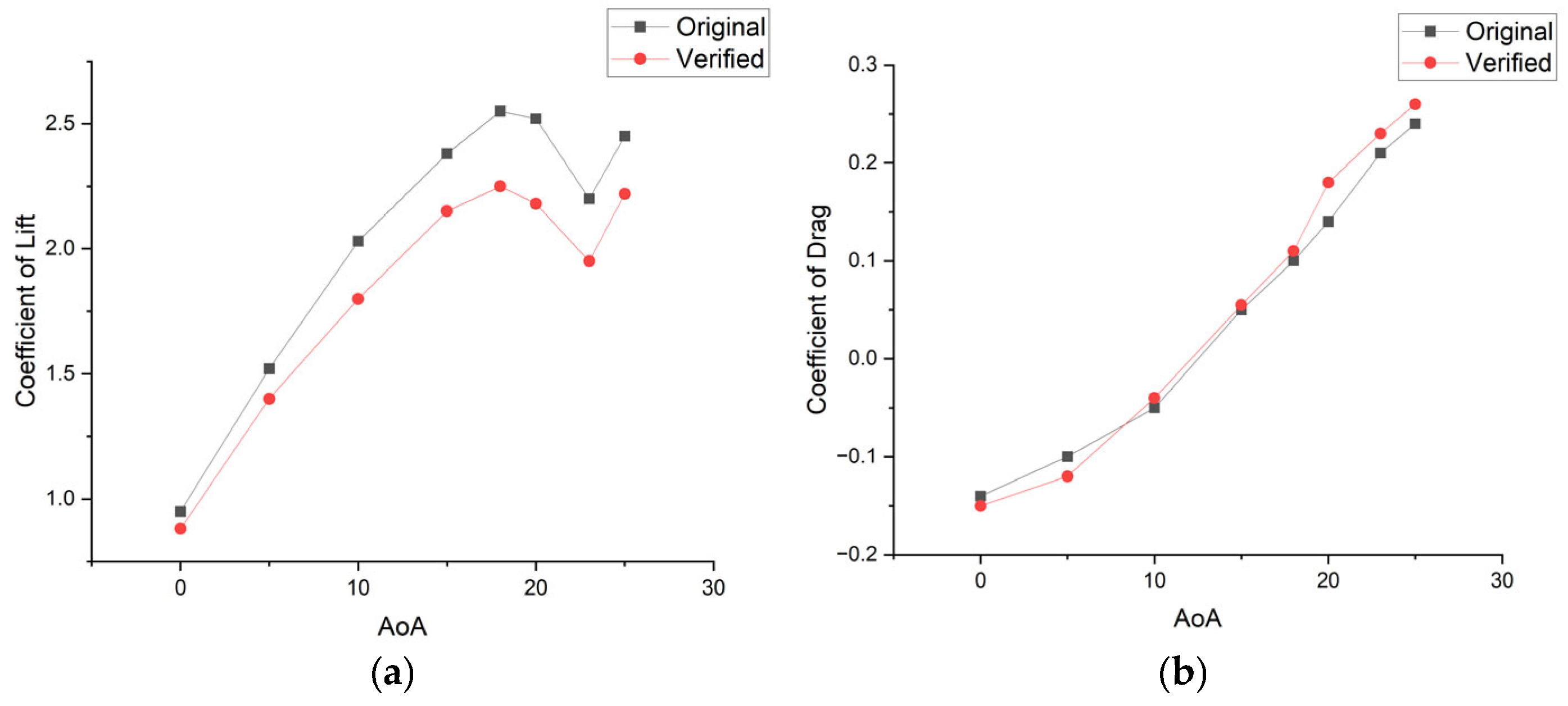
Considering Dr. Zha’s [27] thorough research on this advanced and highly developed technique, the validation (as shown in Figure 12) was carried out keeping in view the model’s (airfoil) parametric dimensions and then performing the rigorous computational analysis under same conditions and the same turbulence model being utilized. The results as shown in the graphs above depict a minor ±8% error in CL and CD curves. Turbulence models like SA are designed to capture flow phenomena over complex geometries. However, these models might not precisely replicate the experimental flow conditions, especially in setups involving co-flow jets, where jet interactions and small-scale turbulence can be challenging to model accurately. The interaction between the co-flow jet and the freestream can be complex, and CFD simulations might struggle to resolve all the small-scale turbulence and flow features, leading to inaccuracies. CFD simulations often assume ideal jet injection conditions. In reality, discrepancies in jet momentum or nozzle performance can contribute to the mismatch between experimental and computed lift and drag forces. Experimental measurements are influenced by factors such as structural vibrations and equipment inaccuracies, which contribute to the overall discrepancy between experimental and computational results.

3. Results

Computational fluid dynamics (CFD) is integral to CFJ design and analysis. However, it comes with its own set of caveats that affect the reliability of results and the overall technology readiness. CFD models rely on mathematical simplifications and turbulence models that may not fully capture all physical phenomena, particularly for complex, unsteady, or separated flows involved in active flow control, such as those in CFJ. While CFD enables rapid prototyping and optimization, its predictions must be validated against experimental or flight test data. Discrepancies between model predictions and real-world performance may be substantial. There is a risk of using CFD to reinforce design preconceptions, rather than as a critical evaluation tool; misplaced confidence in CFD predictions can lead to underestimating real-world integration challenges. As aircraft and systems scale in complexity, CFD’s predictive accuracy may struggle to keep pace unless there are commensurate advances in high-fidelity modelling, verification techniques, and computational infrastructure. Given these factors, the readiness of CFJ systems for broad deployment is promising but not without significant challenges. The combination of mechanical, operational, and methodological uncertainties warrants a cautious and thoroughly validated approach to integration and commercialization.

Computational Results and Analysis

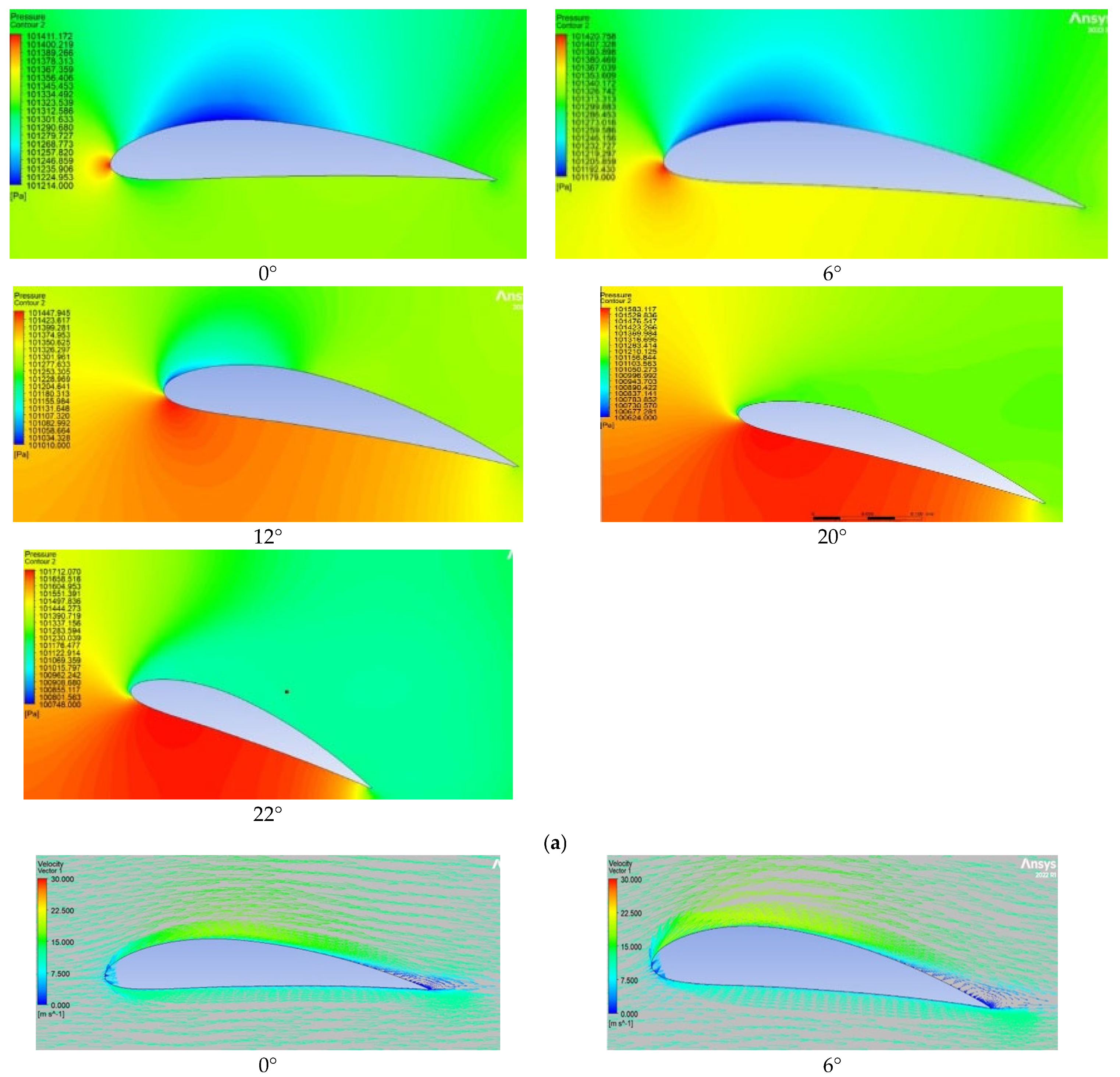
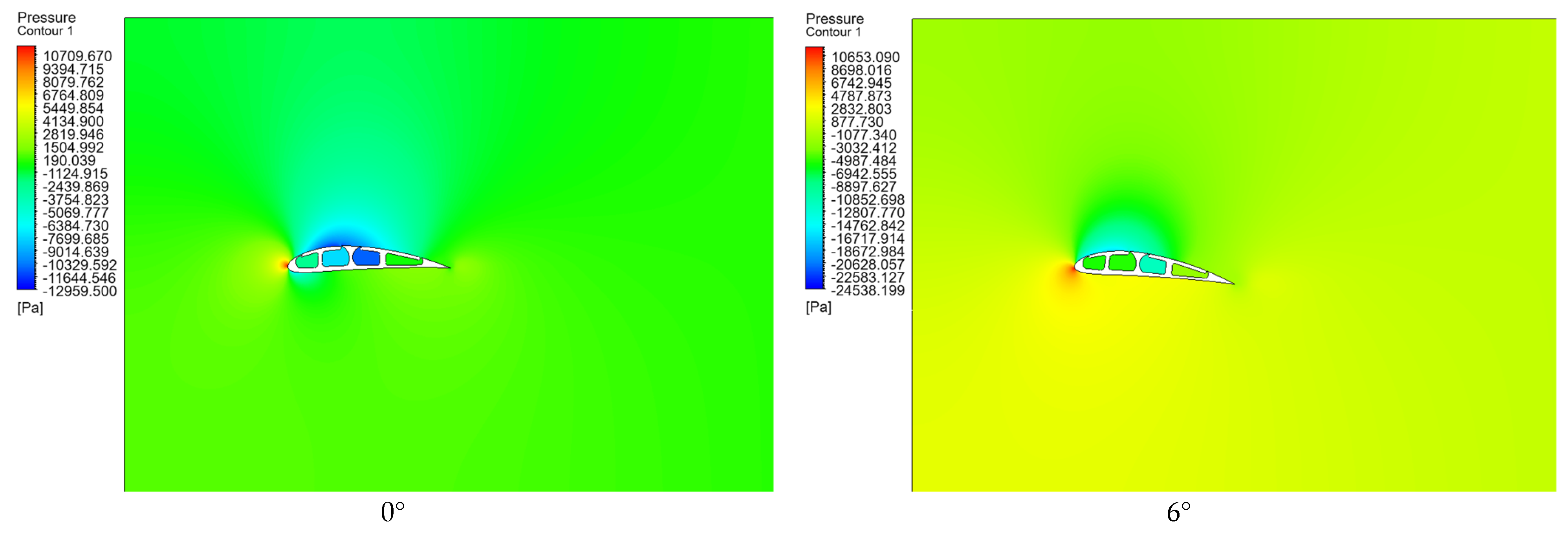
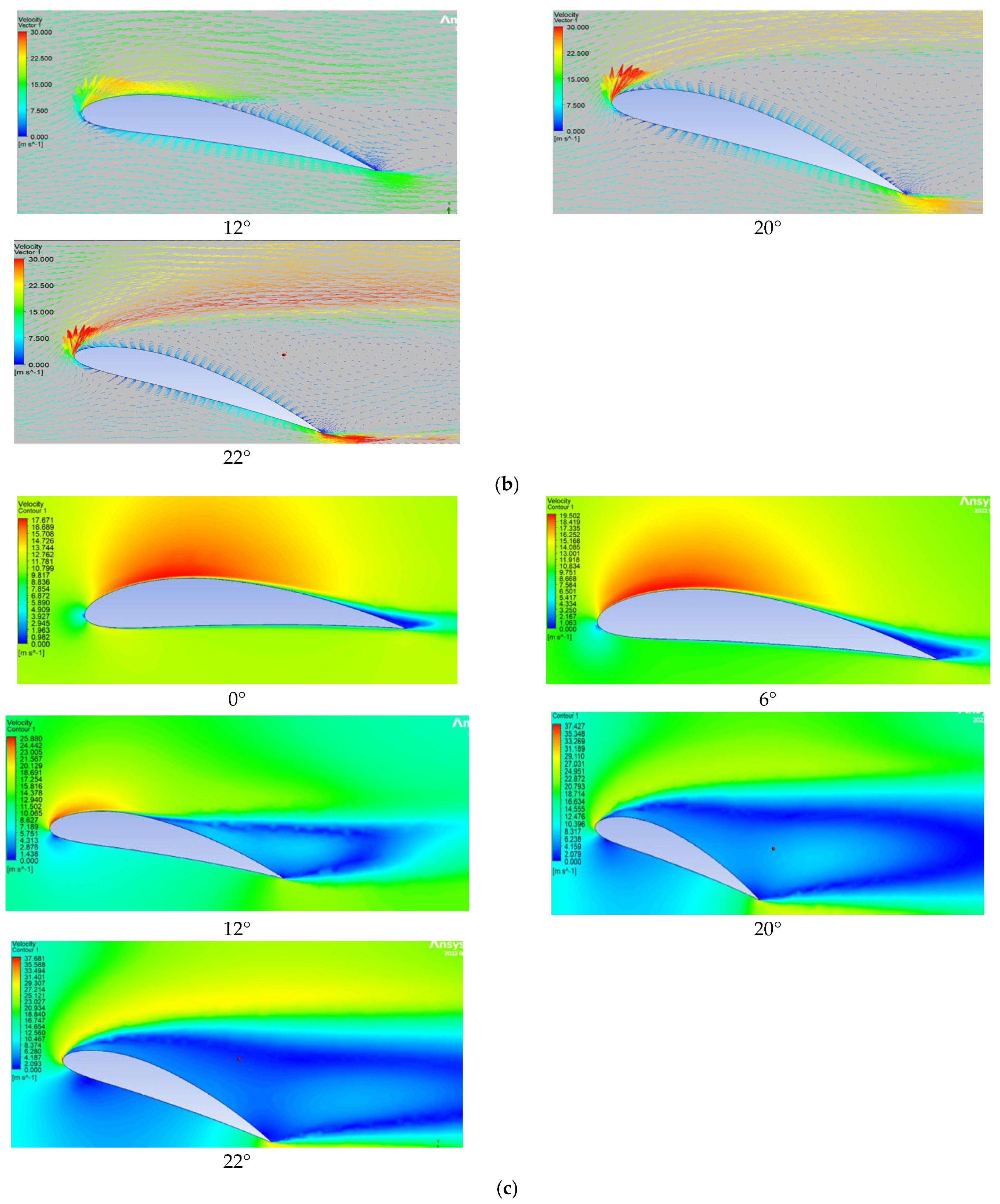
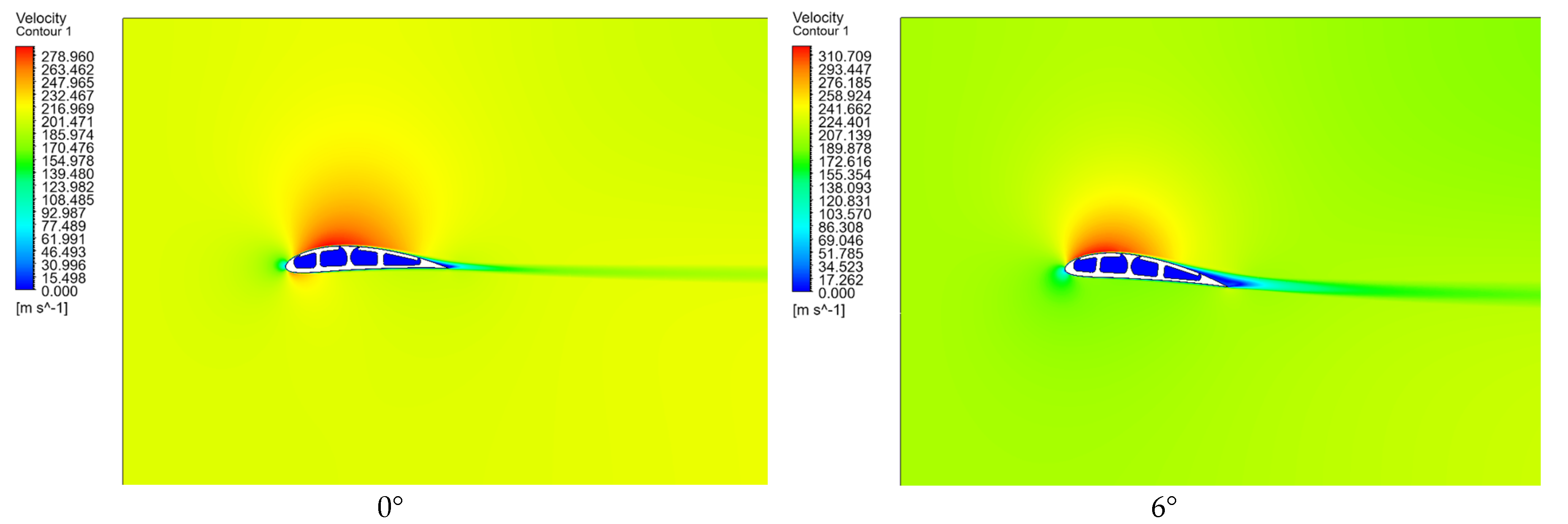
The flow over the baseline airfoil (Figure 13) exhibits classical boundary layer behavior, characterized by gradual deceleration along the suction surface and eventual separation under increasing adverse pressure gradients.
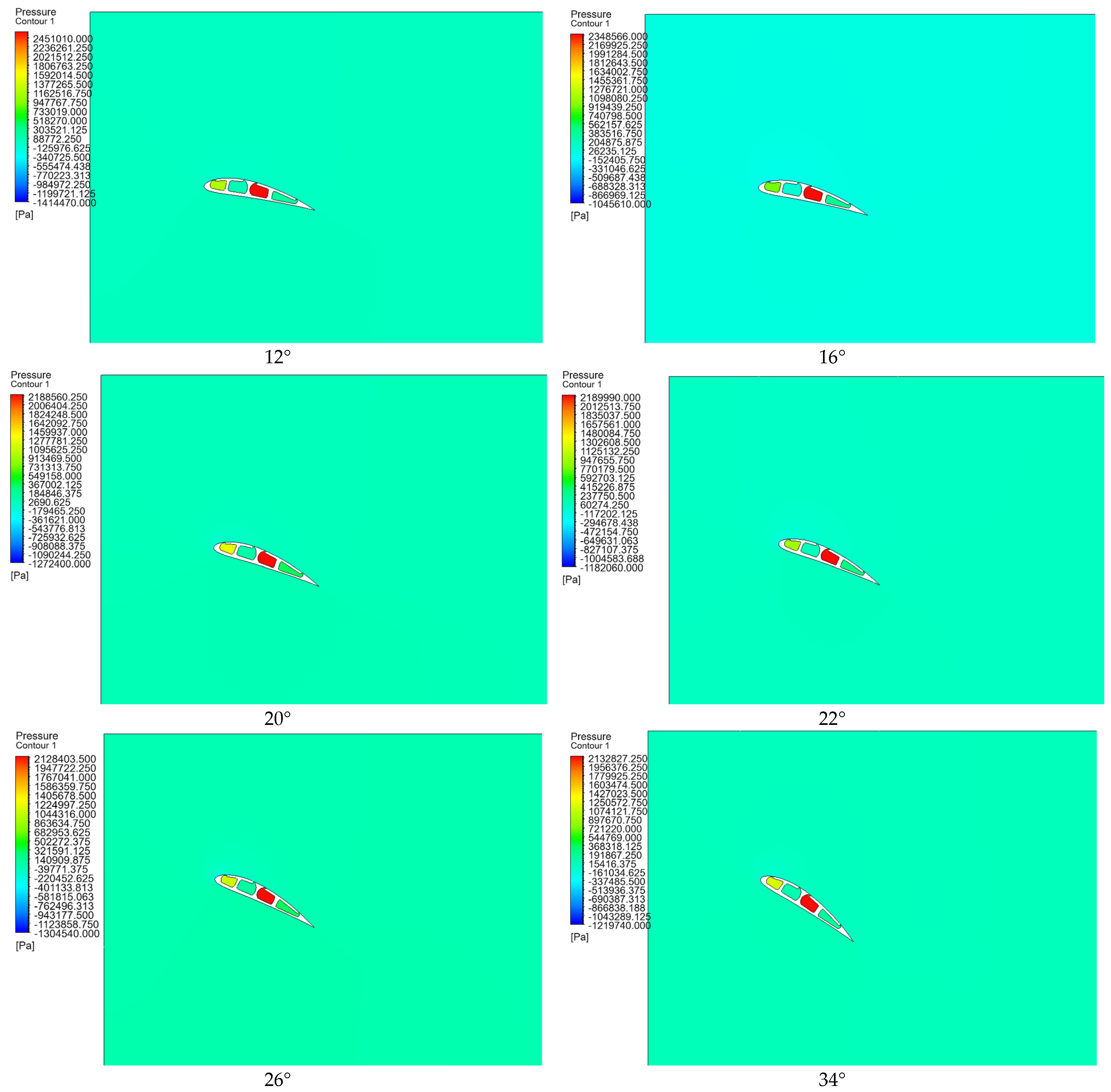
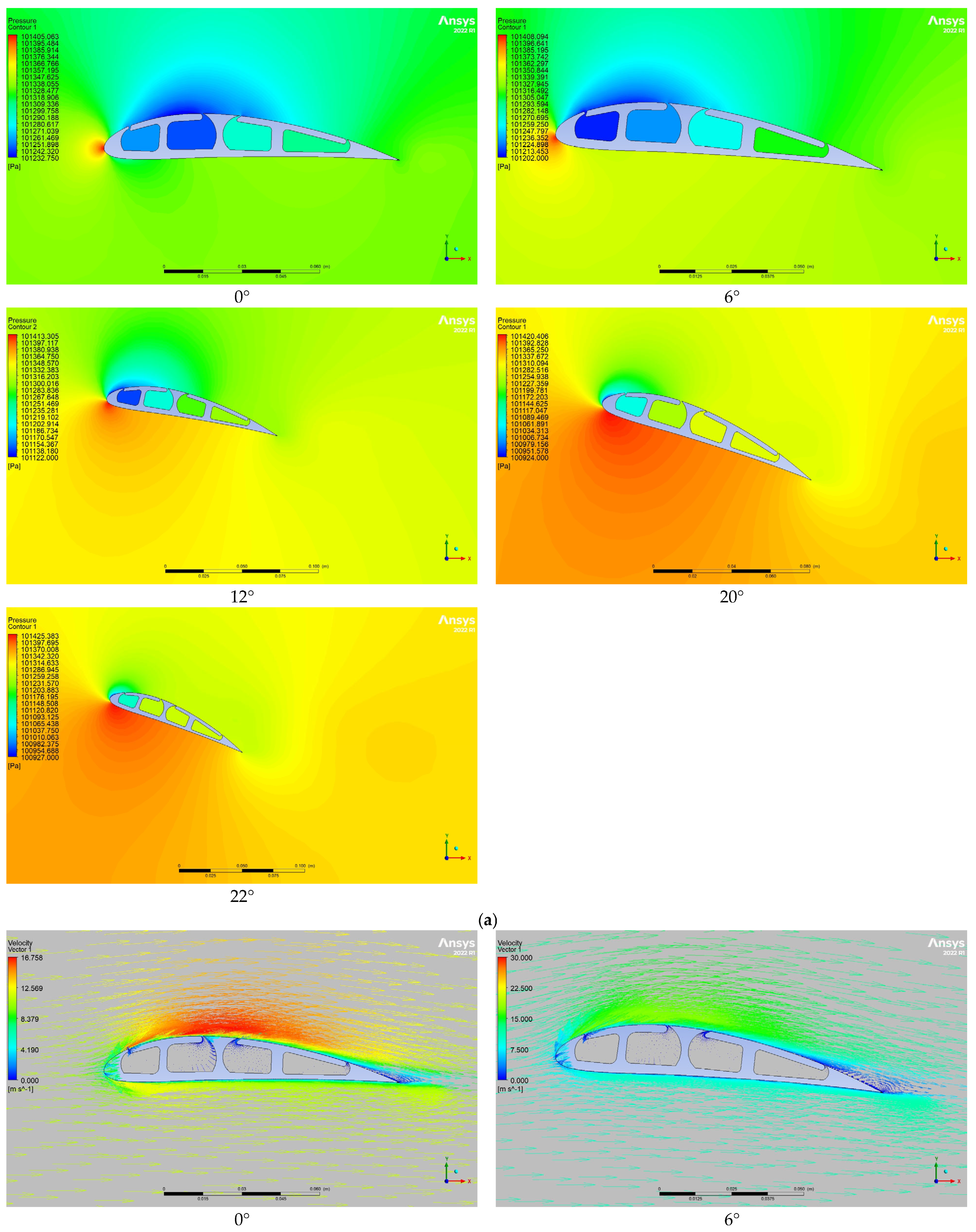
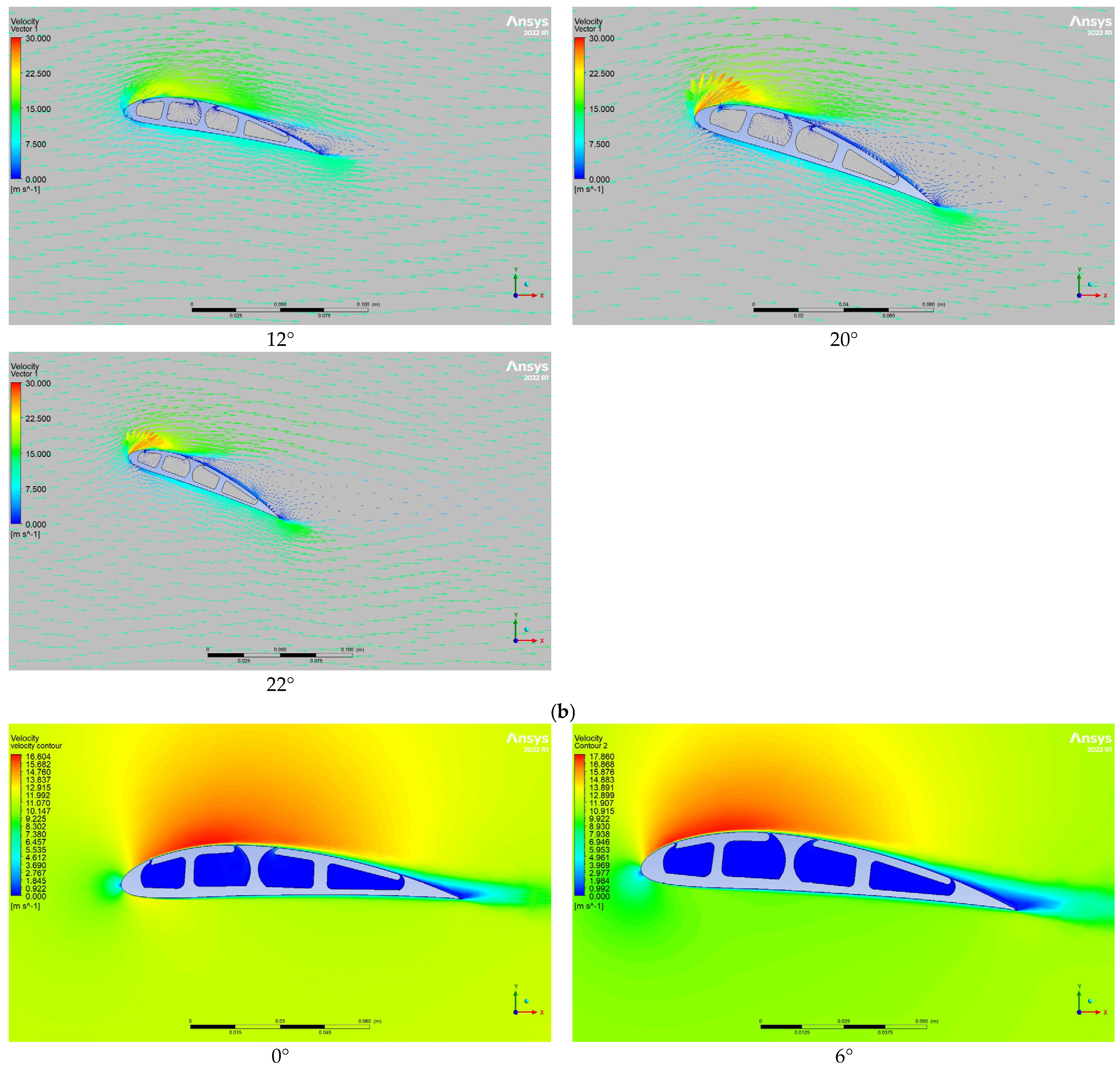
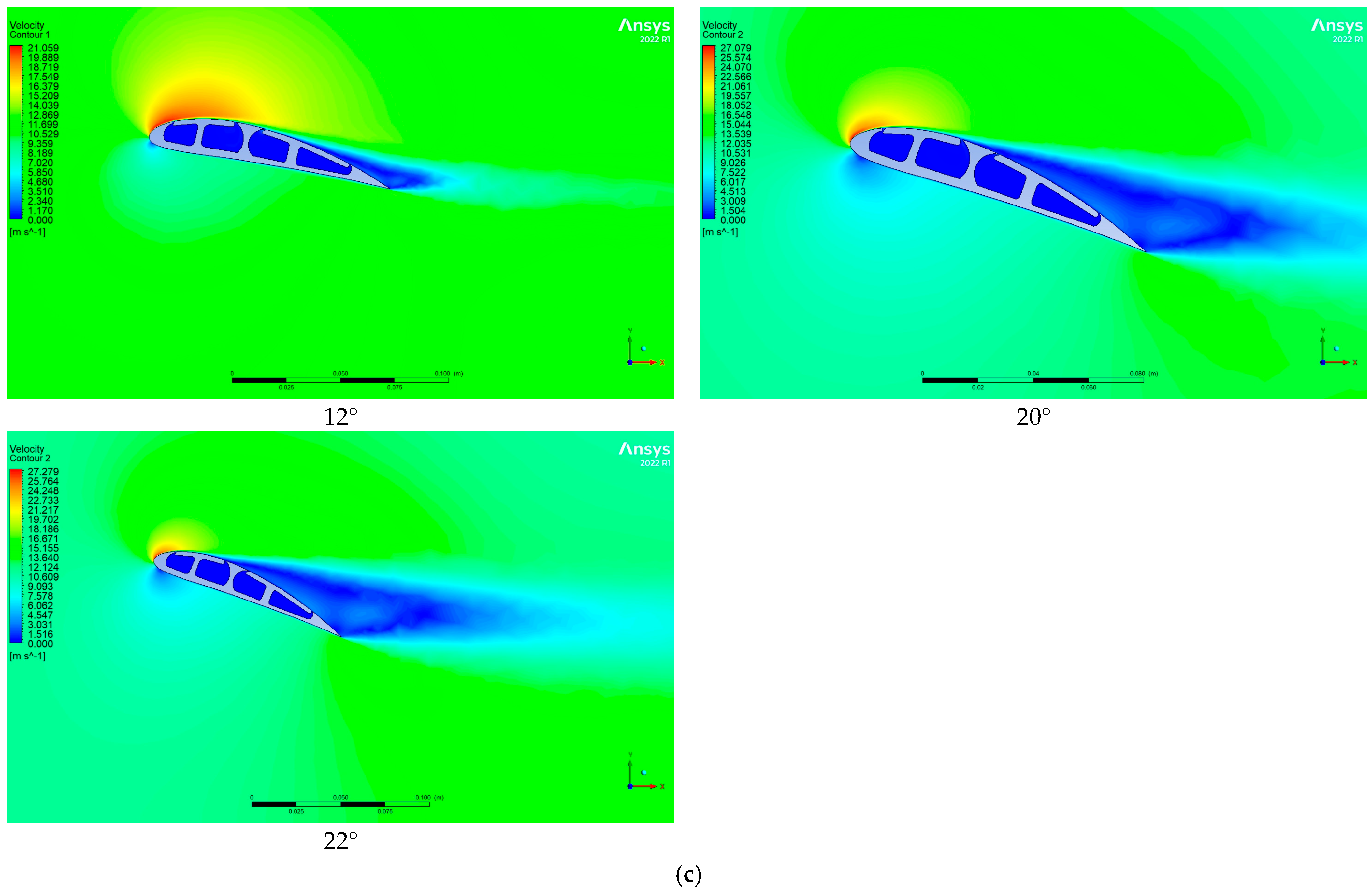
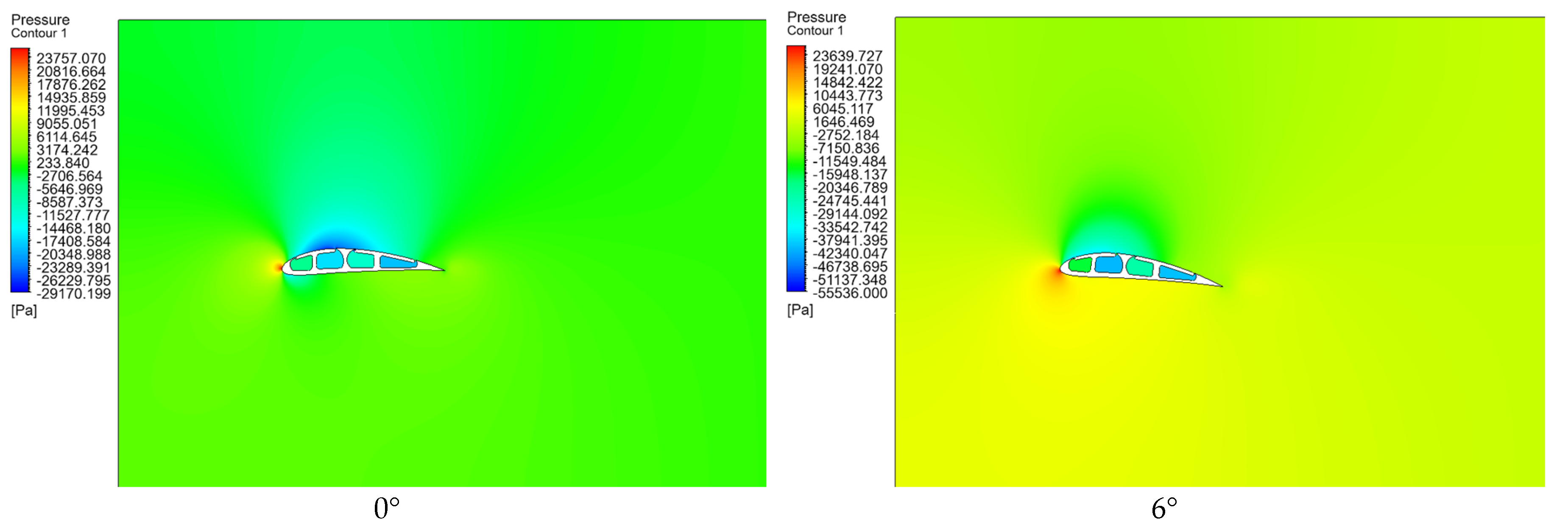
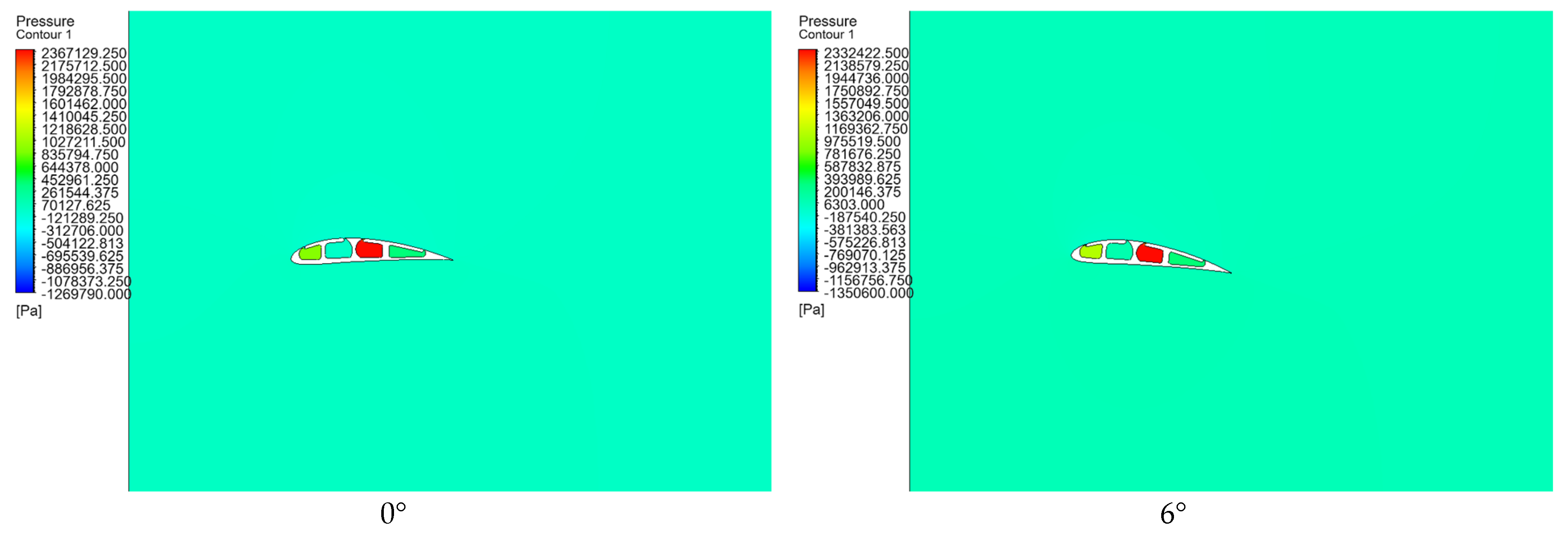
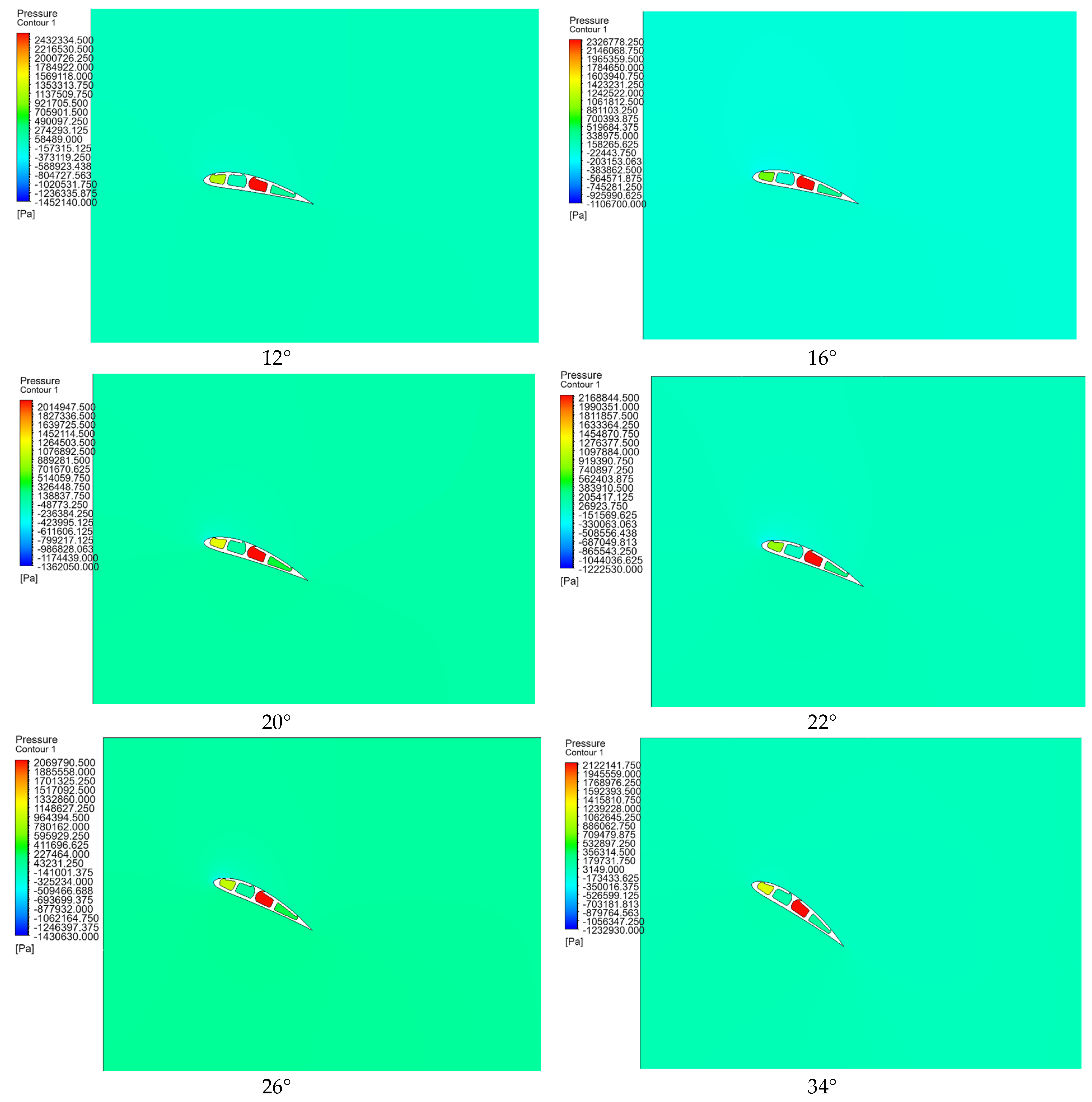
At moderate to high angles of attack (Figure 14), the boundary layer loses momentum, resulting in flow detachment, increased wake thickness, and a sharp degradation in aerodynamic performance. This behavior is particularly evident in the inactive TCFJ configuration, where the absence of momentum injection leads to early separation and reduced lift generation.
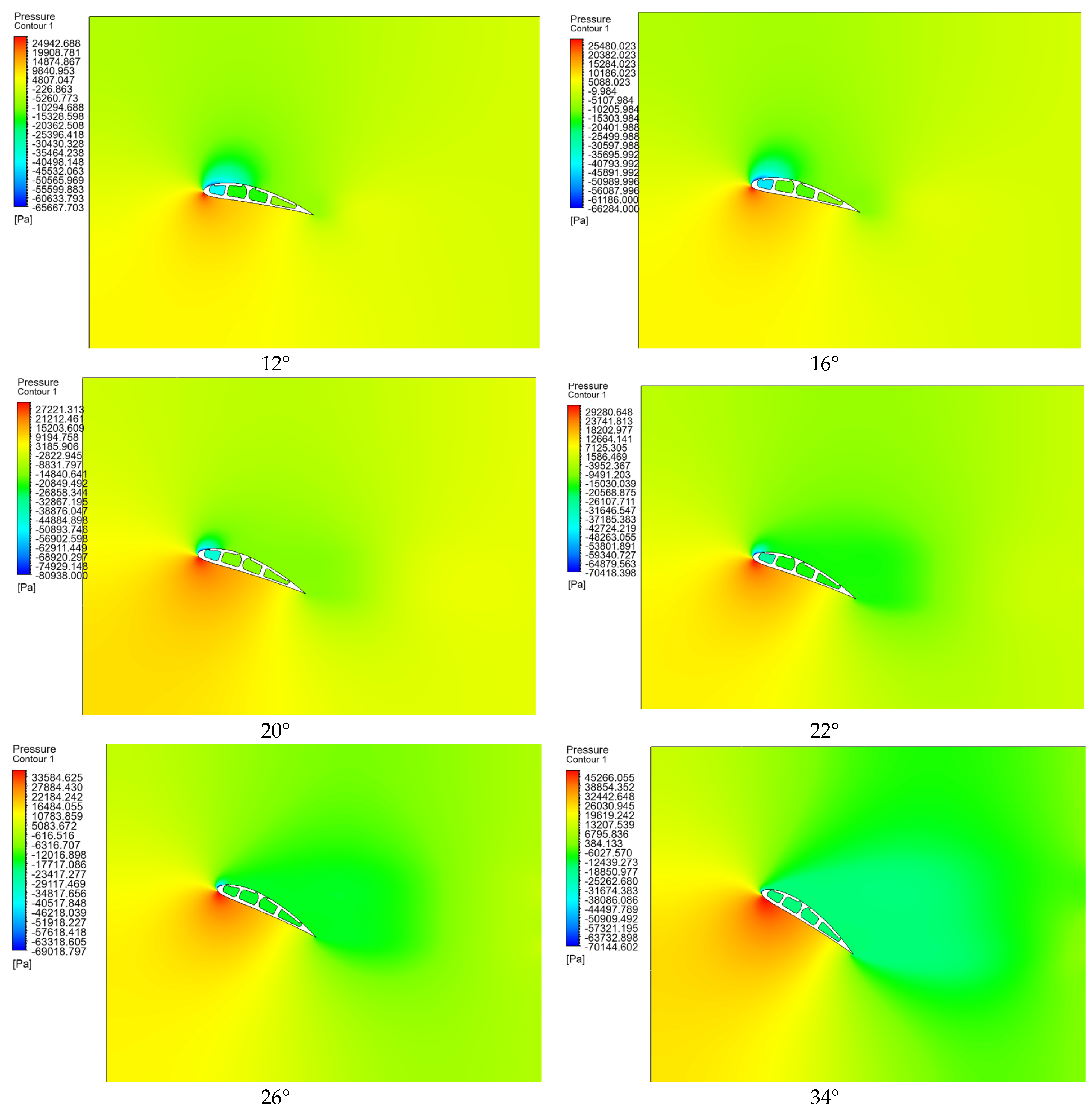
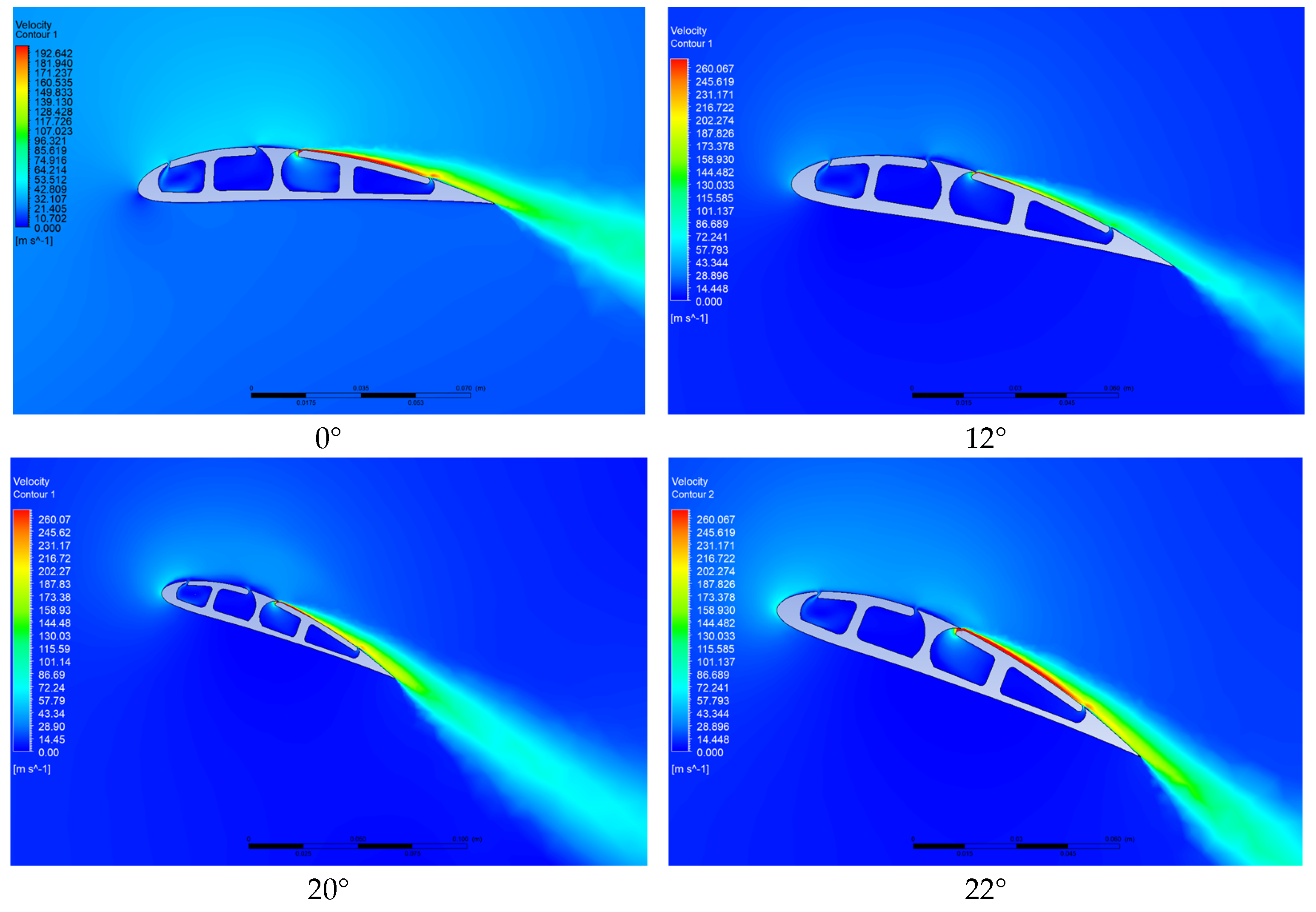
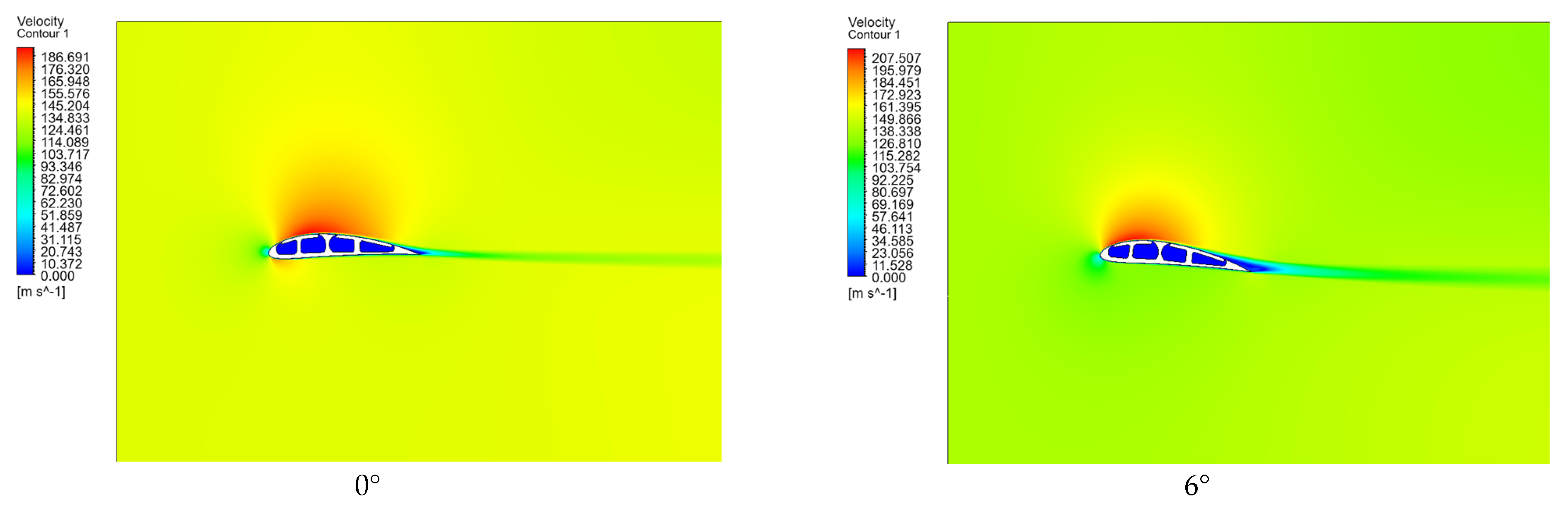
In contrast, activation of the Twain co-flow jet (TCFJ) system fundamentally alters the flow structure (Figure 15). The injection of high-momentum fluid into the boundary layer enhances near-wall kinetic energy, enabling the flow to resist adverse pressure gradients more effectively. As a result, flow separation is significantly delayed, and in several cases, fully suppressed even at higher angles of attack. The comparison clearly demonstrates that the CFJ mechanism transforms the flow from a separation-dominated regime to a predominantly attached flow regime, thereby improving aerodynamic stability and performance.
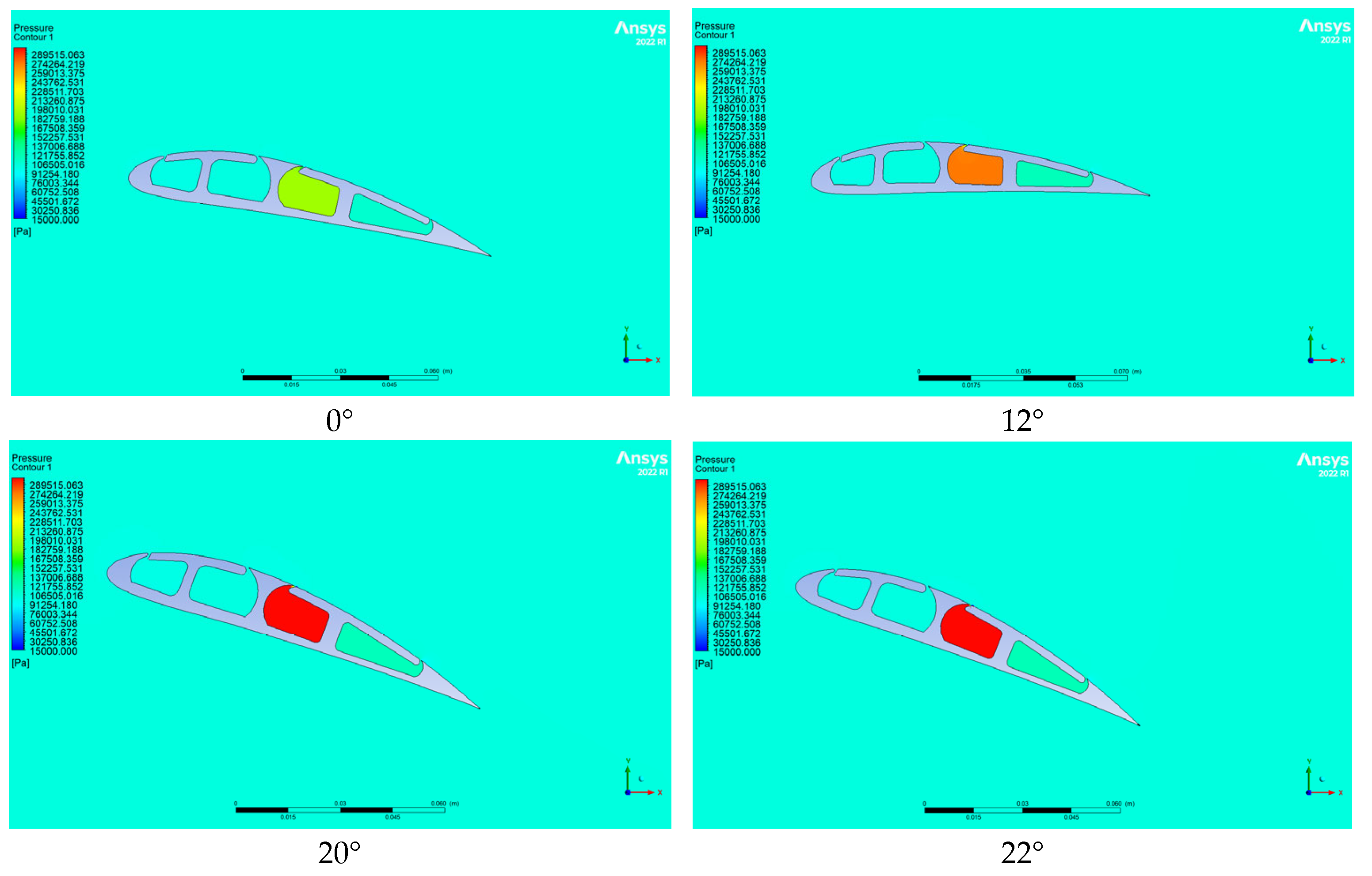
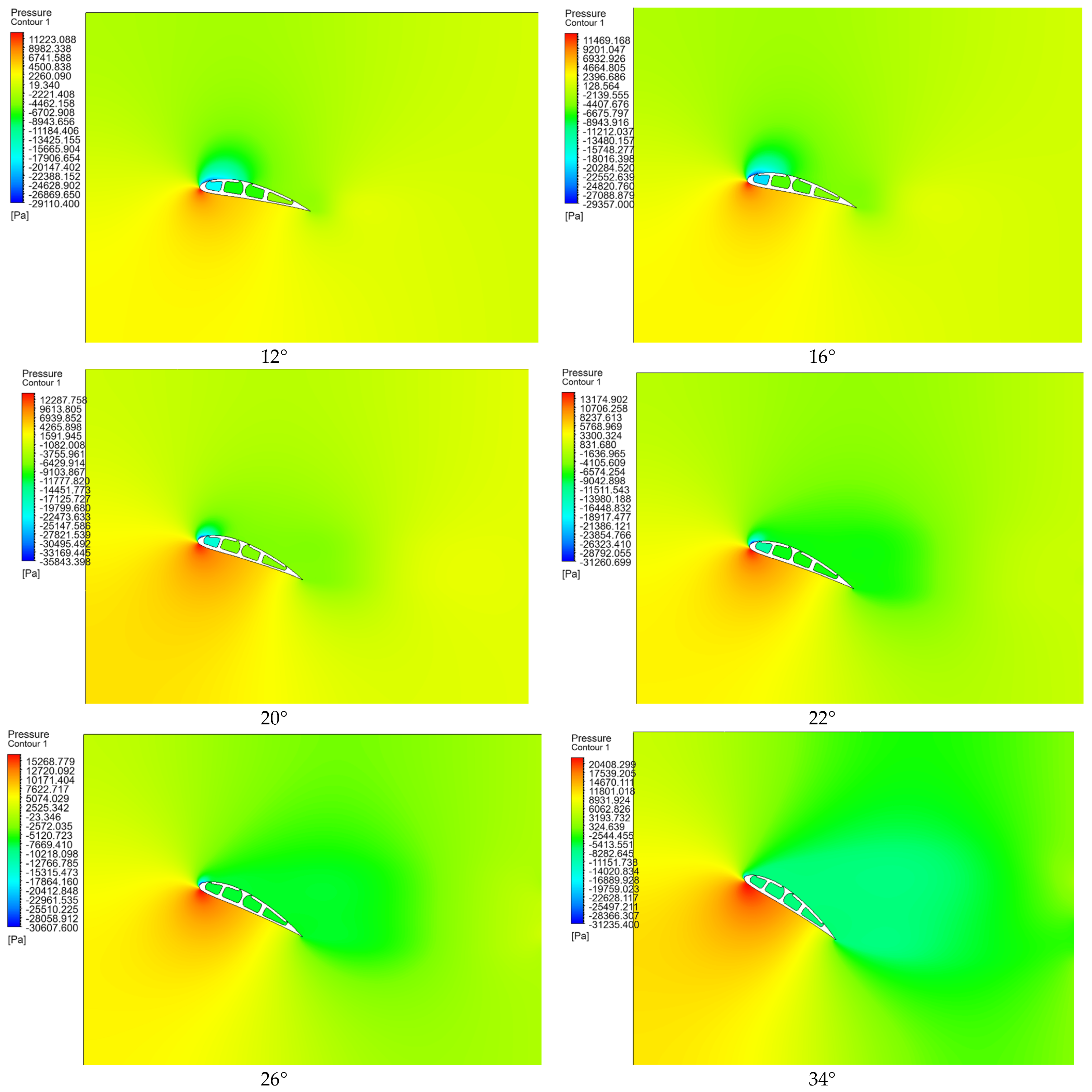
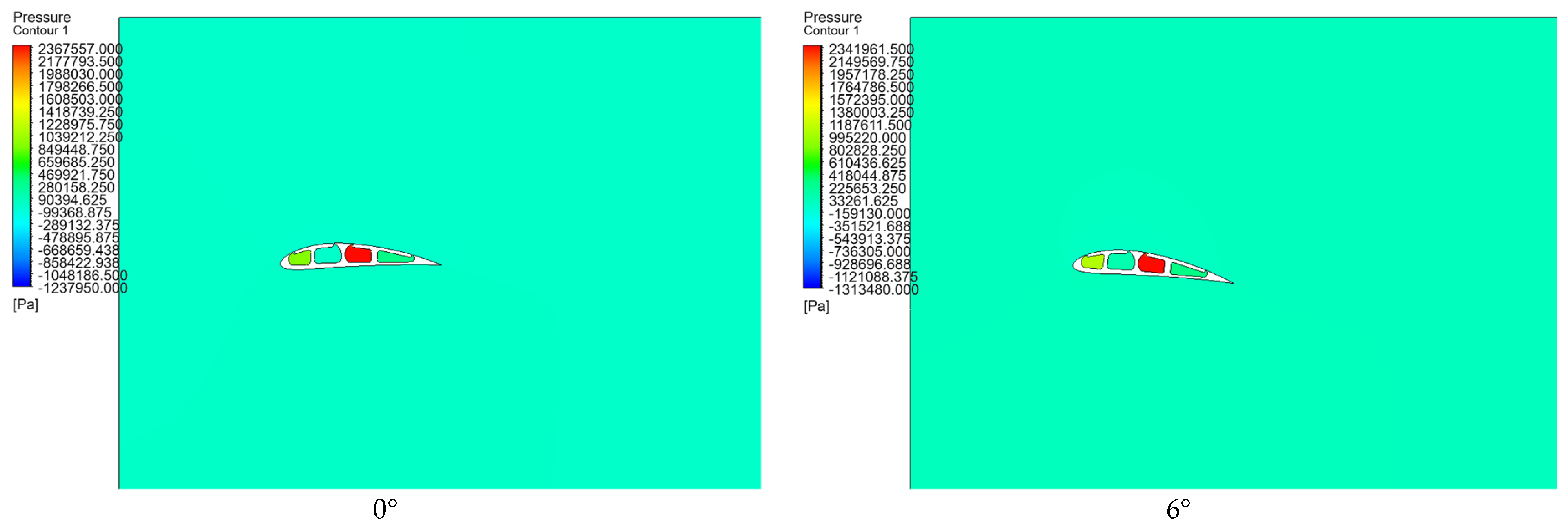
The pressure distribution (as shown in Figure 16, Figure 17, Figure 18, Figure 19 and Figure 20) over the airfoil provides critical insight into the aerodynamic improvements induced by the TCFJ system. In the baseline configuration, a strong adverse pressure gradient develops along the upper surface, particularly beyond the mid-chord region, leading to flow deceleration and eventual separation. This is reflected by a rapid pressure recovery and reduced suction peak. With CFJ activation, a markedly different pressure field is observed. The injection of high-momentum fluid near the leading edge intensifies the suction peak, resulting in lower pressure coefficients over a larger portion of the chord. Simultaneously, the downstream pressure recovery becomes more gradual, indicating improved flow attachment. The combined effect is a redistribution of pressure that enhances lift generation while mitigating separation-induced losses. Furthermore, localized high-pressure regions near the injection slots indicate the direct influence of jet momentum on the surrounding flow field. These regions contribute to modifying the pressure gradient, thereby stabilizing the boundary layer and delaying the onset of separation.
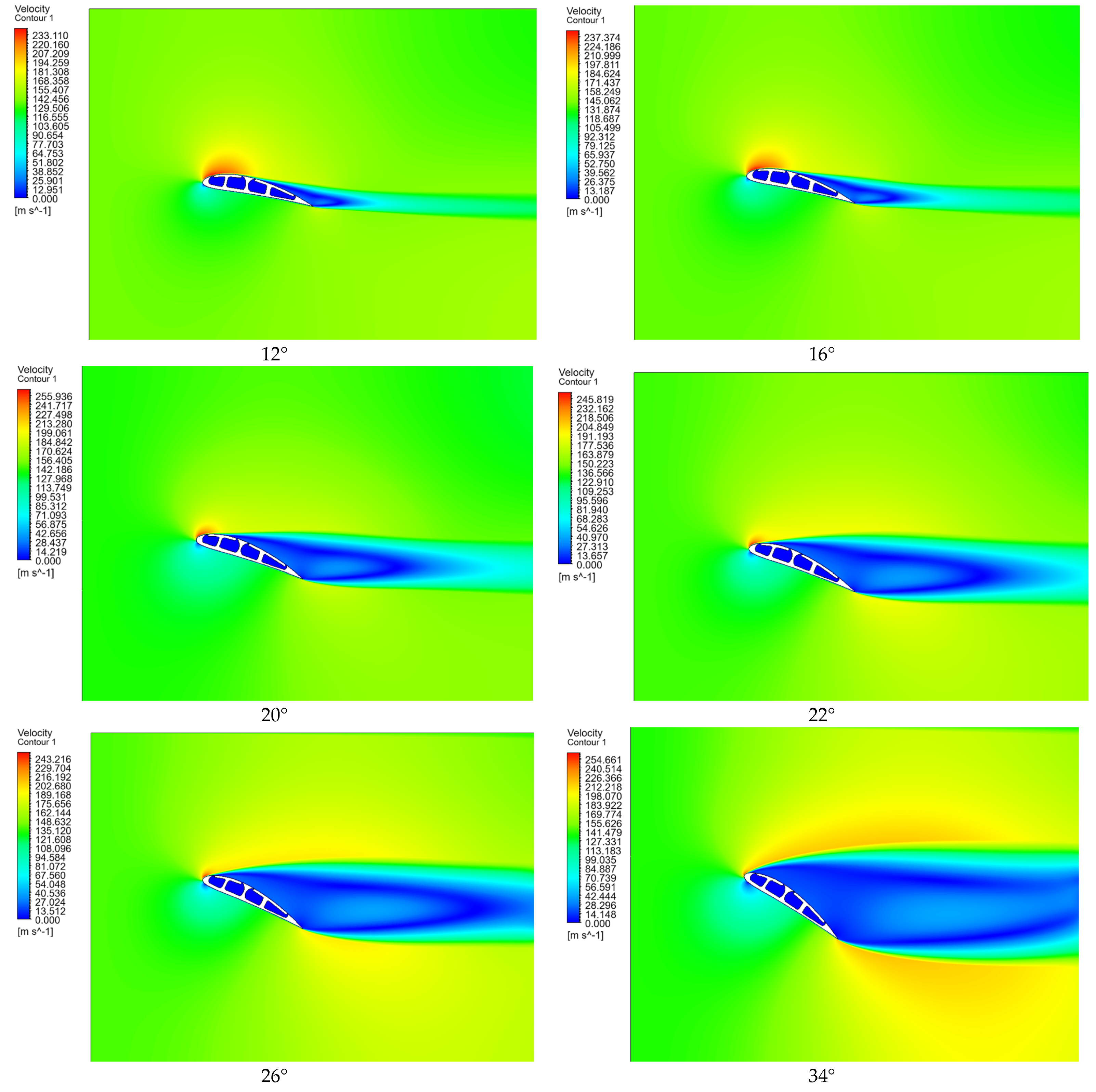
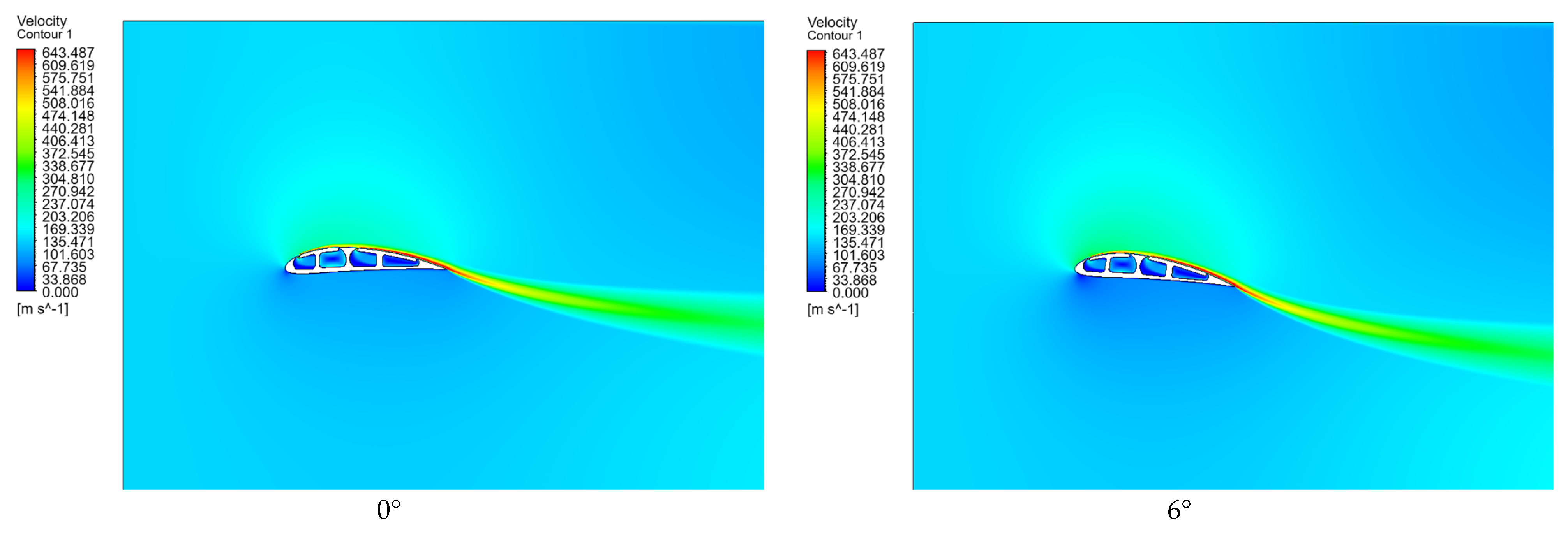
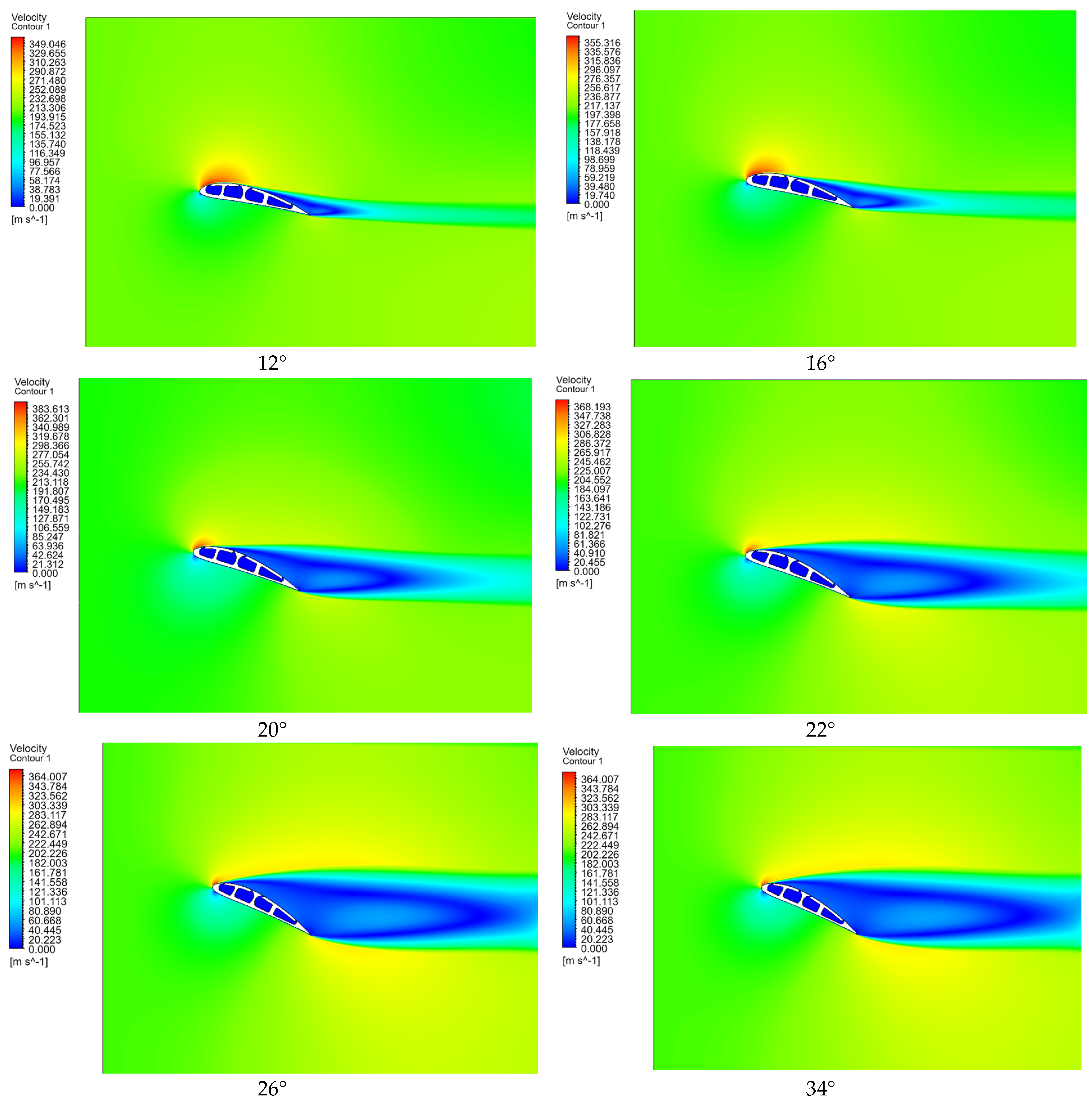
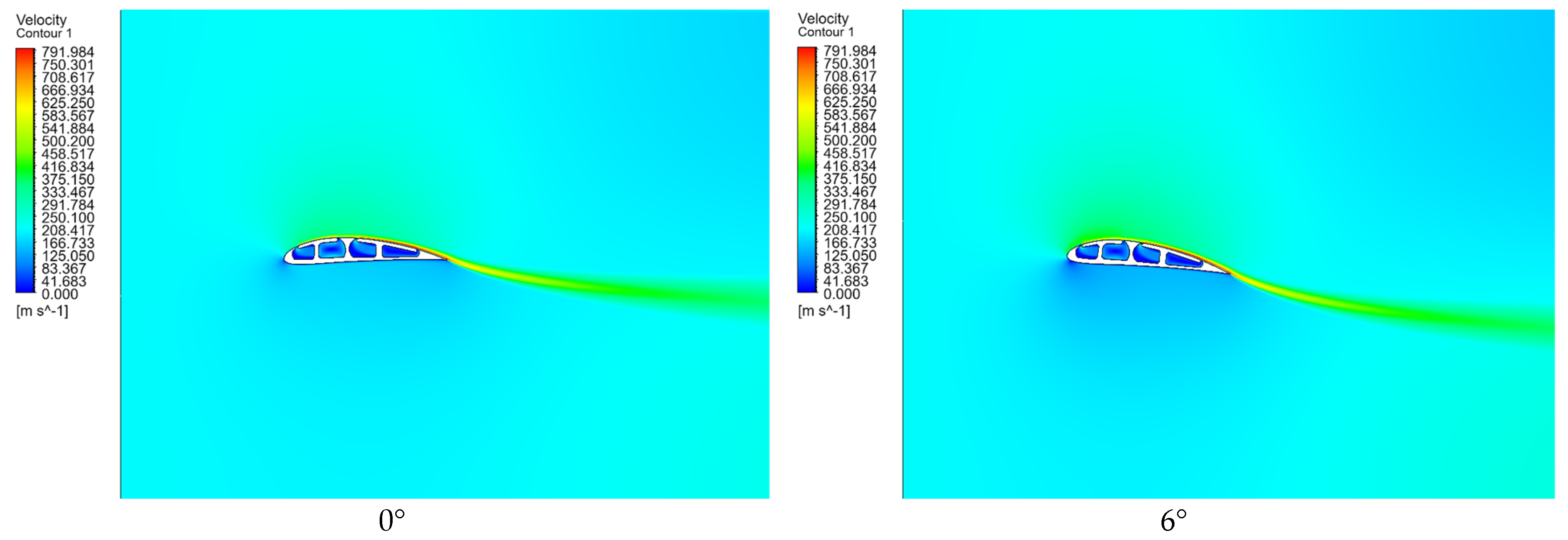
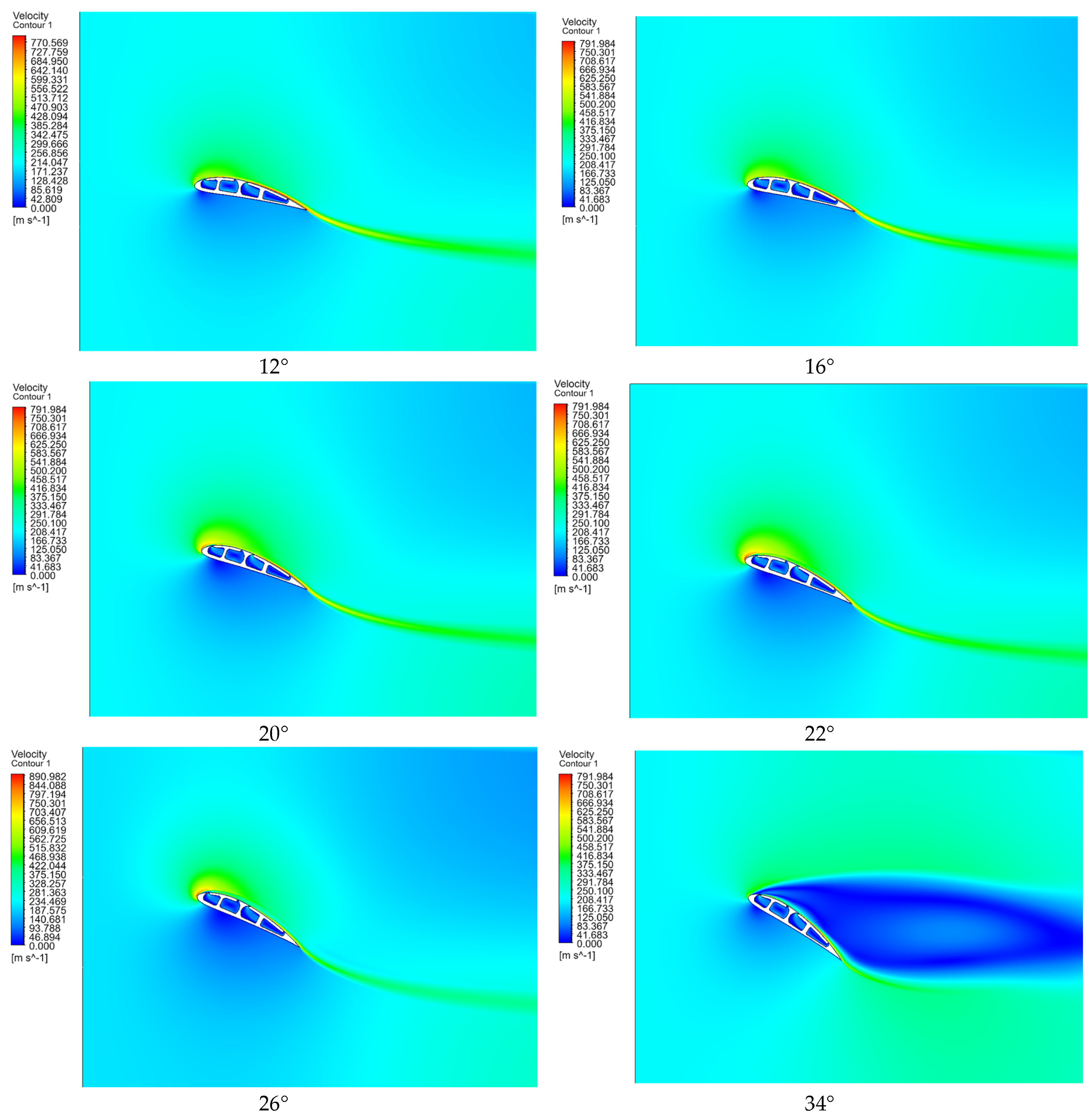
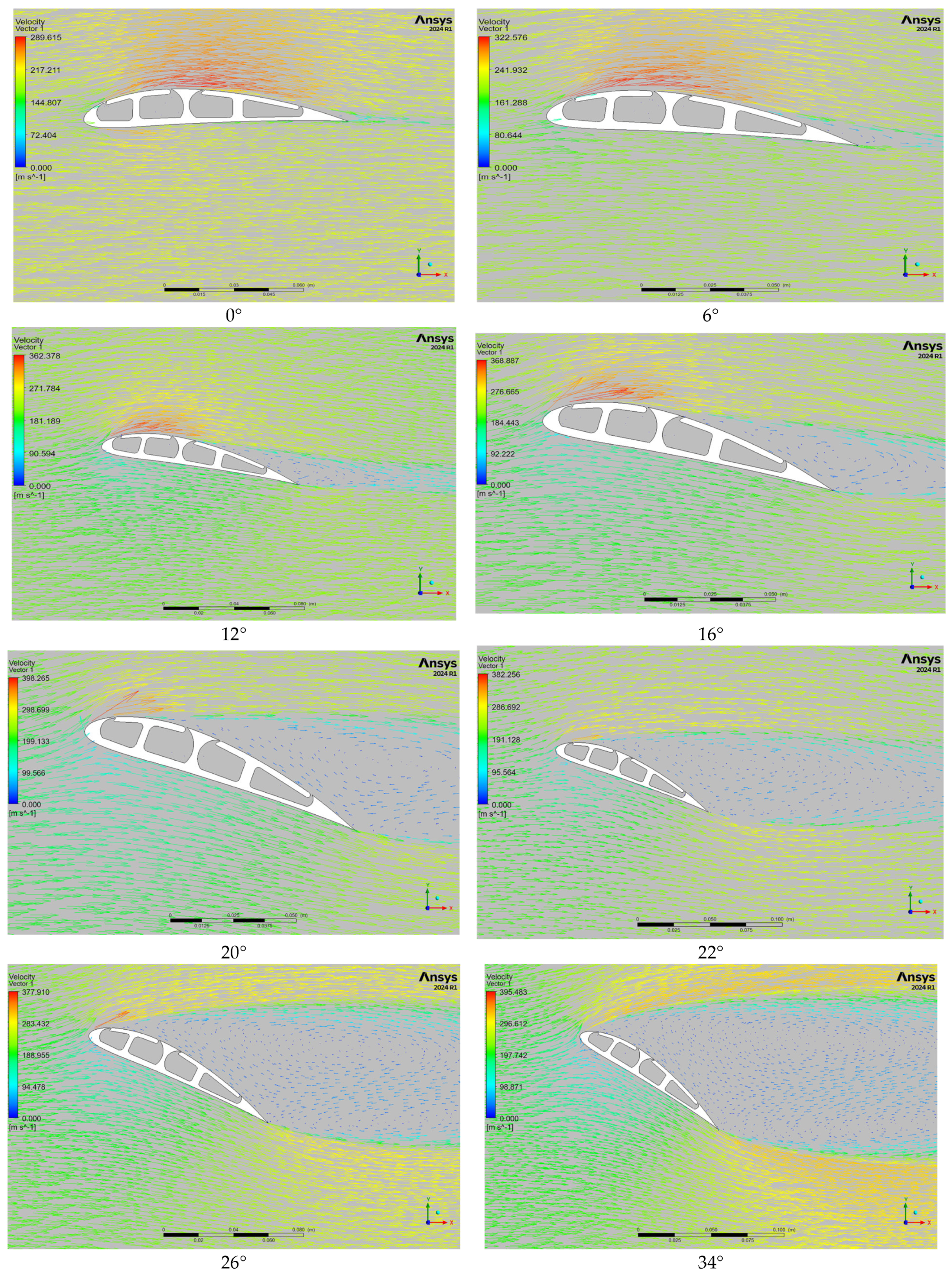
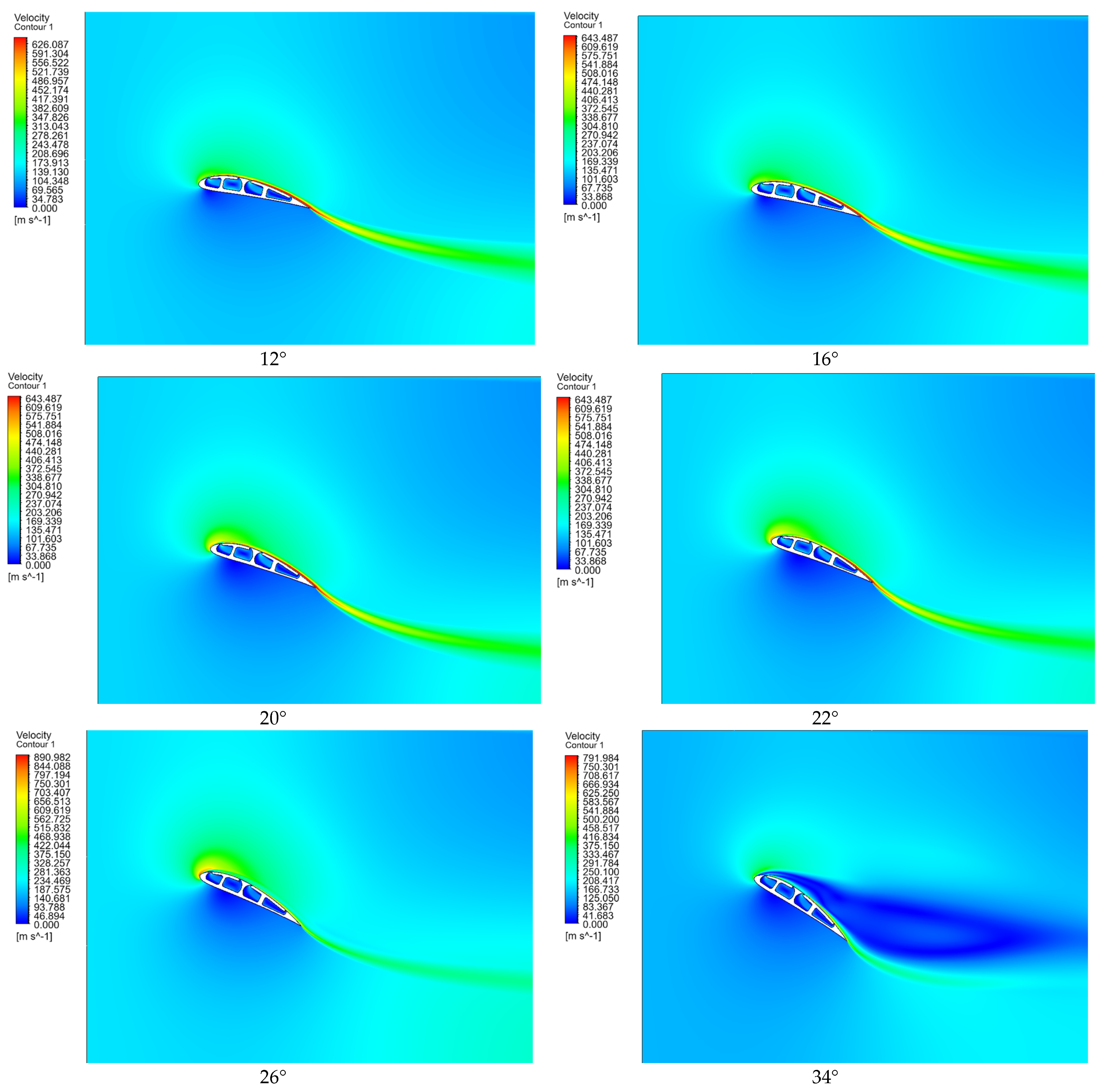
The velocity contours (as shown in Figure 21, Figure 22, Figure 23 and Figure 24) further illustrate the mechanism of flow control achieved by the TCFJ system. In the baseline case, the boundary layer experiences a progressive loss of momentum, leading to the formation of low-velocity regions and eventual flow reversal near the trailing edge.
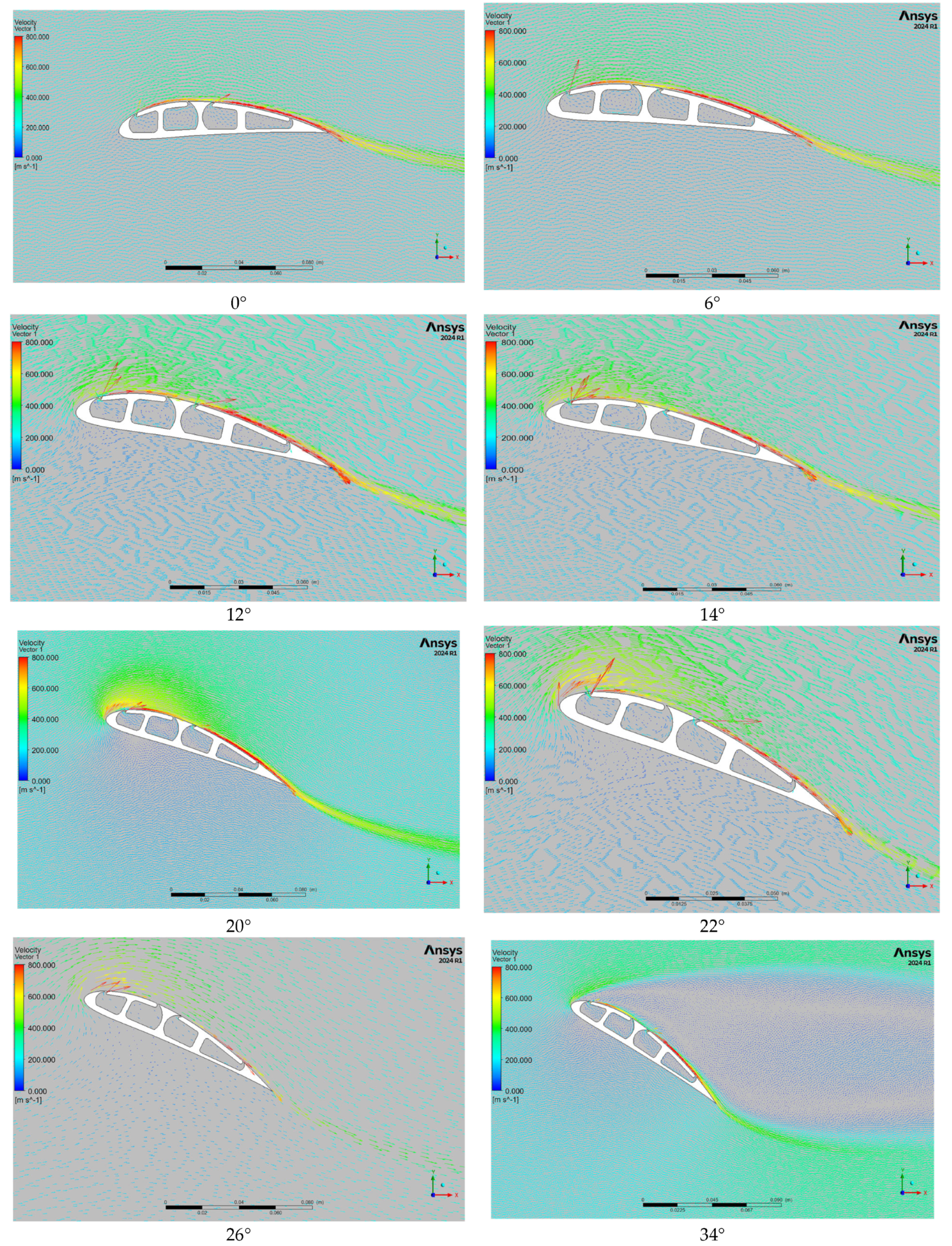
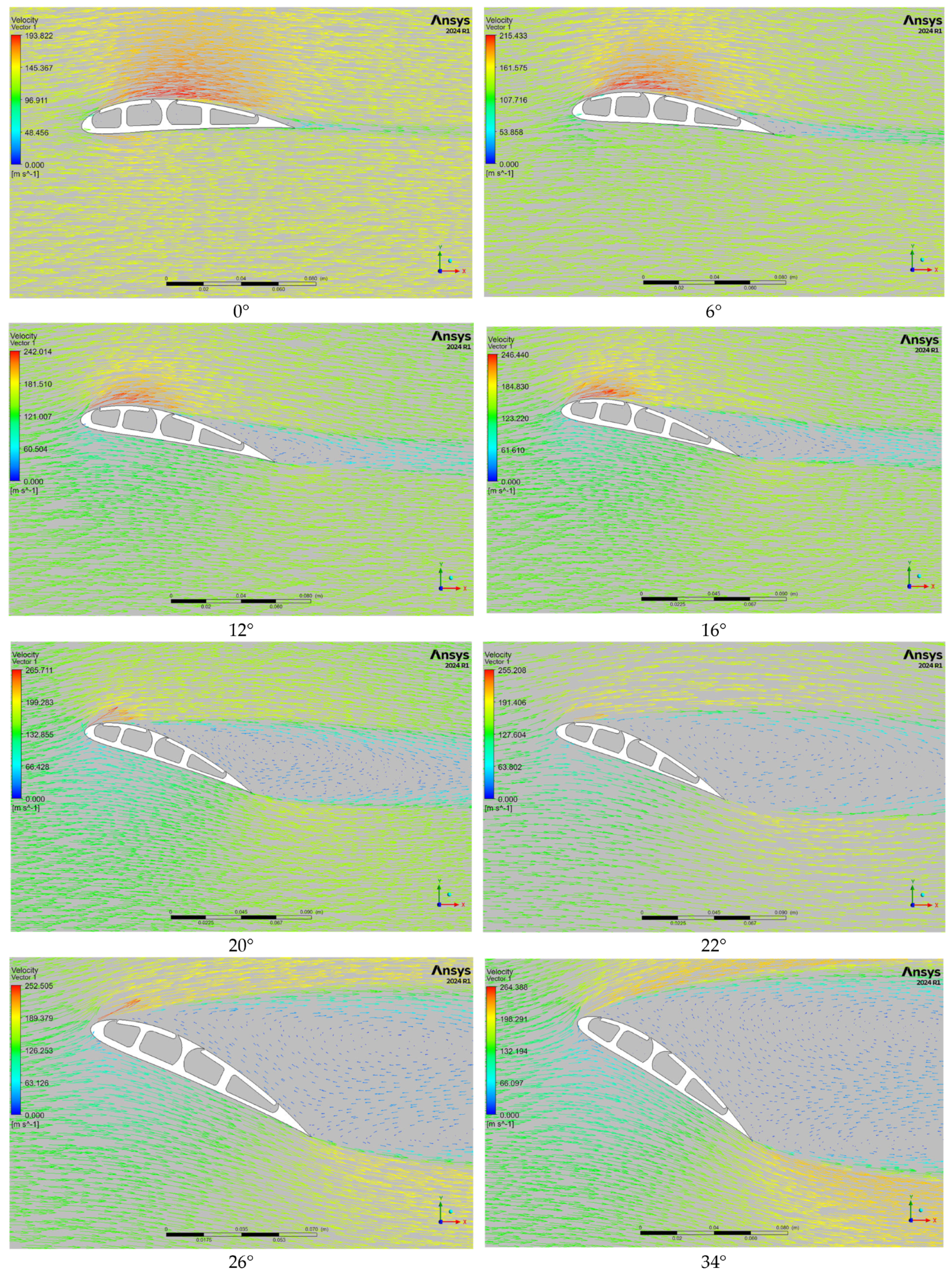
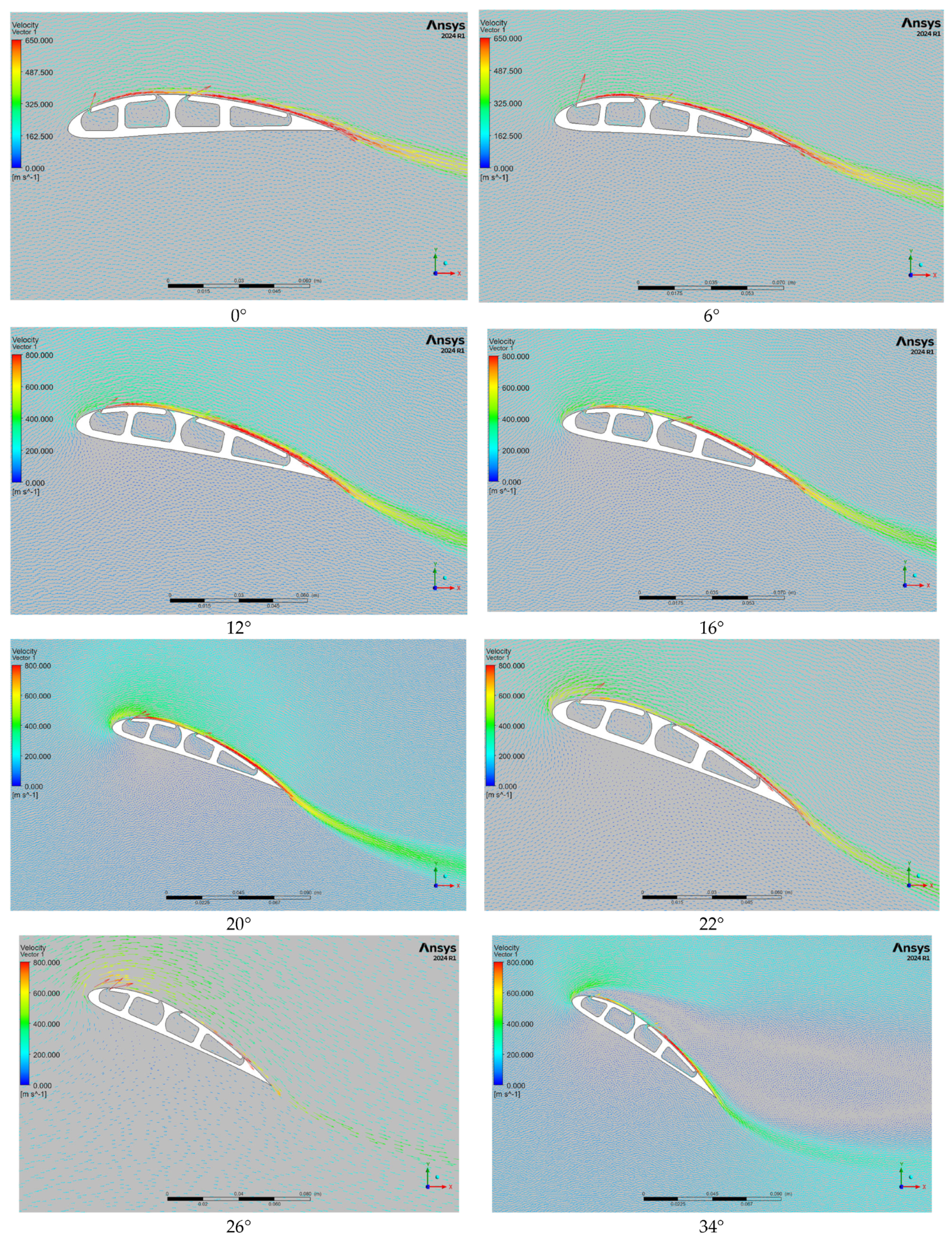
Upon activation of the CFJ system, the injected jet significantly accelerates the near-wall flow, increasing local velocity magnitude and promoting strong mixing between the jet and the external flow. This interaction enhances momentum transfer within the boundary layer, effectively re-energizing it and preventing flow detachment. Additionally, the formation of a high-velocity shear layer between the injected jet and the surrounding fluid contributes to increased turbulence and mixing, further stabilizing the flow. The result is a thinner, more energetic boundary layer that remains attached over a larger portion of the airfoil surface, even under adverse pressure gradients. Velocity vectors are shown in Figure 25, Figure 26, Figure 27 and Figure 28.
The performance of the TCFJ system is intrinsically linked to the operation of the embedded compressors, which supply the momentum required for boundary layer control. These compressors draw fluid from the suction slots and re-inject it through the injection slots, creating a continuous recirculating flow system.
The injected jet introduces additional momentum into the boundary layer, which compensates for viscous losses and counteracts the decelerating effects of adverse pressure gradients. This momentum addition is the primary mechanism responsible for delaying flow separation and enhancing aerodynamic performance. The equation governing the jet velocity (Vjet) after compression and expansion is derived from isentropic flow relations:
V e x i t = 2 · γ γ 1 · R · T ( 1 ( P e x i t P i n l e t ) γ γ 1 )
where Pinlet and Pexit are inlet and exit pressures, T is the temperature, γ is the specific heat ratio, and R is the general gas constant. This equation shows that a high-pressure ratio results in a much higher exit velocity. The high-speed jet energizes the boundary layer, preventing flow separation and enhancing lift while reducing drag. The momentum exchange between the CFJ and freestream flow results in an effective increase in aerodynamic efficiency. Despite the freestream being this low comparatively, the injected CFJ flow significantly alters the overall flow characteristics, improving performance in terms of stall delay, control authority, and energy efficiency. At first, it seems very odd that a co-flow jet can develop velocities much higher than the incoming airstream. To understand this, we must go a little deeper: the freestream flow is the natural air velocity moving past an airfoil, usually done by some external means, such as wind speed or how fast an aircraft is moving itself, but that is not quite the same with the co-flow jet, it is internally generated air, injected through specific slots into the boundary layer. Its speed comes by internal power driving it, not the outside air conditions. Of course, those are the active flow control devices, hence it has a much higher speed. CFJ systems use compressors, turbines, or high-pressure sources to energize and inject air at a high rate. As in our case, we have utilized compressors. In fact, air from the freestream enters, it gets compressed, becomes pressurized, and then eventually expands, and thus increases its velocity. Bernoulli’s Principle and the nozzle effect describe this, in which a rise in pressure inside the system increases the exit velocity. Moreover, the recirculating nature of the system ensures efficient utilization of mass flow, as the same fluid is continuously re-energized and redistributed along the airfoil surface. This closed-loop configuration distinguishes the CFJ system from conventional blowing techniques and contributes to its effectiveness in flow control applications.
Moreover, for the advantages of the Twain co-flow jet (TCFJ) system, it is essential to distinguish the effects of independently controlled dual compressors from conventional synchronous or single-source actuation strategies. While the present simulations employ equal jet momentum coefficients at both injection slots, the resulting flow field reveals inherently non-uniform aerodynamic roles of the two actuators, indicating the potential benefits of independent control.
Analysis of the velocity and pressure contours shows that the leading-edge injection primarily contributes to boundary layer energization and suppression of flow separation under adverse pressure gradients. In contrast, the mid-chord injection plays a secondary but crucial role in maintaining downstream momentum, stabilizing the wake region, and reducing pressure recovery losses. This spatial differentiation of flow control effects demonstrates that the two compressors influence distinct regions of the flow field with different sensitivities to operating conditions. To quantify this behavior, the chordwise distribution of velocity magnitude and pressure coefficient indicates that the upstream jet produces a stronger local acceleration, whereas the downstream jet contributes to a more gradual momentum redistribution, reducing velocity deficit in the wake. This non-uniformity implies that synchronous control, where both compressors operate at identical conditions, does not fully exploit the control authority of the system.
Furthermore, at higher angles of attack, where flow separation initiates near the leading edge, the aerodynamic performance becomes more sensitive to upstream momentum injection. In such cases, increasing the leading-edge jet strength while maintaining or reducing the downstream jet input would result in more efficient energy utilization. Conversely, at lower angles of attack or higher freestream velocities, downstream injection may play a more significant role in minimizing drag by improving wake structure. These observations highlight the inherent advantage of independent control, which allows selective tuning of momentum input based on local flow requirements. In comparison, conventional single-CFJ systems lack this spatial flexibility, as all energy input is concentrated at a single injection location, limiting their ability to simultaneously optimize separation control and wake management. Similarly, synchronous dual-injection systems impose uniform actuation, which may lead to suboptimal energy distribution across the airfoil. Therefore, although the present study employs symmetric actuation, the observed flow physics provide clear evidence that independently controlled compressors offer a superior framework for adaptive aerodynamic optimization. This enables targeted energy deployment, improved flow control effectiveness, and the potential for achieving performance gains beyond those attainable with traditional CFJ configurations.
To evaluate the energy requirements of the Twain co-flow jet (TCFJ) system, the compressor power was estimated based on the jet kinetic energy. Accounting for compressor inefficiencies and auxiliary losses, the practical power demand is estimated to lie in the range of 6–10 W for the present configuration. The corresponding power consumption coefficient P c was computed by normalizing the compressor power with the freestream dynamic power. Due to the cubic dependence on freestream velocity, the relative energy penalty is more pronounced at low velocities but becomes negligible at higher velocities. A comparison of baseline and CFJ configurations shows that, although the active system introduces an additional energy input, the aerodynamic benefits outweigh this penalty at moderate and high angles of attack. Specifically, the observed lift enhancement of approximately 30% and drag reduction of up to 20% lead to an overall improvement in corrected aerodynamic efficiency when P c is included. These results indicate that the TCFJ system achieves a favorable balance between aerodynamic performance and energy input, particularly at higher Reynolds numbers where the relative cost of actuation is reduced. The distributed momentum injection enabled by the dual-compressor configuration further improves energy utilization by reducing localized losses and enhancing flow control effectiveness.
The influence of the jet momentum coefficient Cμ on flow behavior is significant. Increasing Cμ enhances the strength of the injected jet, resulting in greater momentum transfer to the boundary layer. At lower values of Cμ, partial flow control is achieved, with some improvement in flow attachment and delay in separation. However, as Cμ increases (e.g., from 0.05 to 0.1), the injected momentum becomes sufficient to fully suppress separation over a wide range of angles of attack. This leads to a more uniform velocity distribution along the suction surface and a substantial reduction in wake formation. The results indicate that higher Cμ values improve aerodynamic performance, although they also imply increased energy input requirements. Therefore, an optimal balance between aerodynamic gains and energy expenditure must be considered in practical applications.
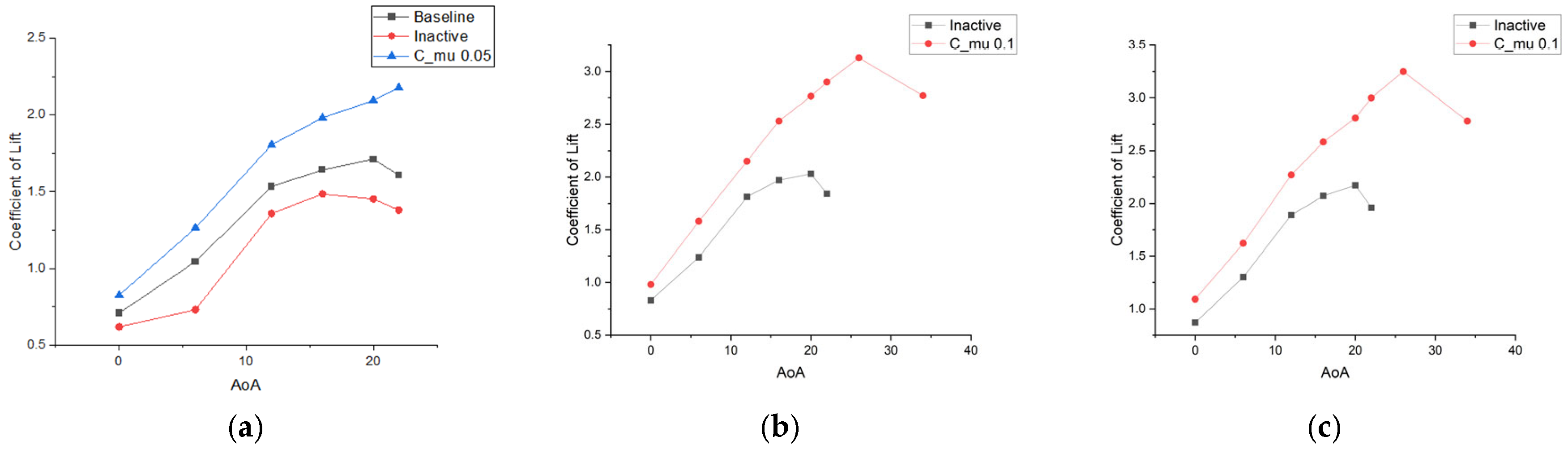
The aerodynamic performance of the airfoil is significantly enhanced by the activation of the TCFJ system. The lift coefficient as shown in Figure 29 increases consistently across all tested freestream velocities. This enhancement is primarily attributed to the sustained low-pressure region over the upper surface and delayed flow separation.
Across all three freestream velocities, the CFJ-activated airfoil consistently exhibits a substantial increase in lift coefficient (Cl) relative to the inactive (baseline) configuration. At low to moderate angles of attack (AoA), the CFJ cases show a steeper lift curve slope, indicating enhanced circulation generated by jet-induced momentum addition. This behavior aligns with the fundamental CFJ mechanism: the injected jet energizes the boundary layer, strengthens suction over the upper surface, and increases effective camber without geometric modification. At 11.34 m/s, even modest momentum coefficients (Cμ ≈ 0.05) yield a noticeable lift increase over the baseline, confirming CFJ effectiveness in low-Reynolds-number regimes where separation is typically dominant. As velocity increases to 138 m/s and 206 m/s, the lift increment becomes more pronounced, reflecting improved jet–freestream momentum coupling and higher absolute circulation levels.
One of the most striking features in the plots is the significant delay of stall for the CFJ airfoil. While the inactive airfoil reaches a peak Cl and then rapidly degrades beyond moderate AoA, the CFJ-enabled configurations continue to produce increasing or sustained lift at much higher angles of attack. At Cμ ≈ 0.1, the maximum lift coefficient increases dramatically compared to the inactive case, depending on freestream velocity. The stall angle is shifted to the right by a large margin, indicating that the CFJ effectively suppresses large-scale flow separation even under strong adverse pressure gradients. The progression from 11.34 m/s to 206 m/s reveals a clear scaling trend that at higher freestream velocities, the absolute lift coefficients increase, the lift augmentation due to CFJ becomes more dominant, and the post-stall lift decay becomes more gradual. This indicates that CFJ actuation scales favorably with dynamic pressure and is particularly attractive for high-speed and transonic-relevant applications, where conventional passive high-lift devices lose effectiveness or incur severe drag penalties. Beyond lift enhancement, the smooth and extended lift curves suggest improved aerodynamic robustness and controllability. The CFJ airfoil avoids abrupt stall, offering a wider operational envelope and enhanced safety margins. This characteristic is especially valuable for applications such as UAVs, STOL aircraft, wind turbine blades, and next-generation high-lift systems.
Drag characteristics are also favorably affected. At higher angles of attack, where the baseline configuration experiences a sharp rise in drag due to flow separation, the CFJ-enabled airfoil maintains lower drag levels. This results in a substantial improvement in lift-to-drag ratio, particularly in the post-stall regime.
Additionally, the stall angle is significantly increased, with the CFJ system maintaining attached flow beyond the conventional stall limit. This delayed stall behavior improves the operational envelope of the airfoil and enhances its aerodynamic robustness. While the TCFJ system introduces additional complexity, its ability to simultaneously enhance lift, reduce drag, and delay stall highlights its effectiveness as an advanced active flow control strategy.
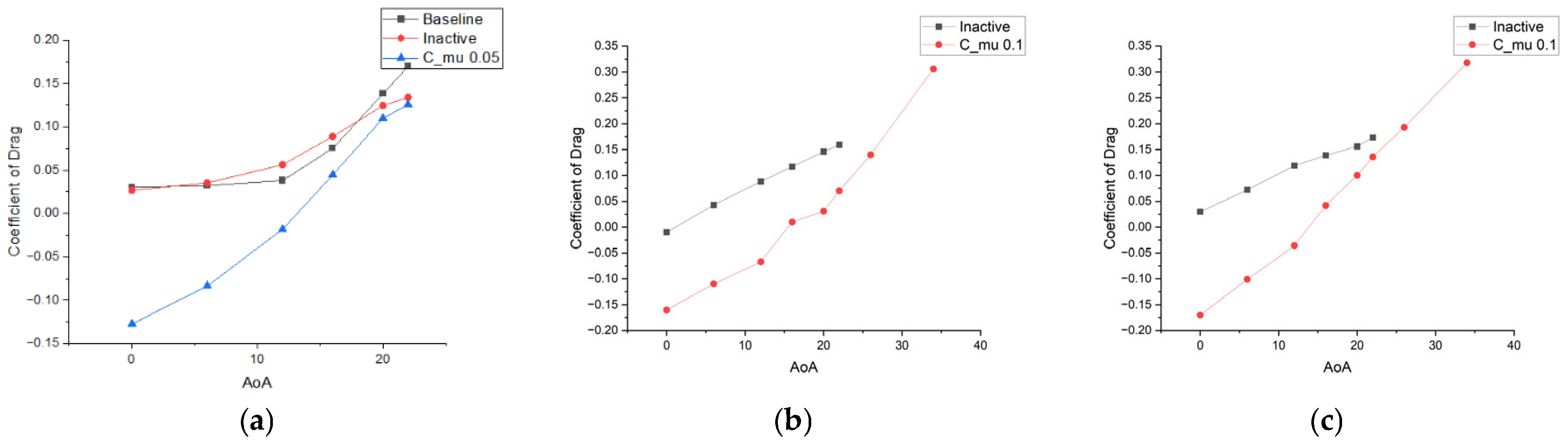
Figure 30 represents that at 0° angle of attack, activating the system Cμ = 0.1 reduces the drag coefficient significantly compared to the inactive baseline under the tested condition. The active system changes how the airfoil generates thrust (negative drag) at moderate angles of attack (6° to 16°), producing more thrust than the baseline at higher AoA within this range. The most significant effect is at high angles of attack. The data show that the active system Cμ = 0.1 prevents the dramatic rise in drag seen in the inactive airfoil. The drag coefficient for the active airfoil remains much lower even at 30° AoA, indicating the system is very effective at maintaining performance in a high-lift, post-stall regime. Comparing Figure 30a–c suggests that a higher activation intensity Cμ = 0.1 and Cμ = 0.05 leads to more pronounced changes in the airfoil’s drag characteristics. A comprehensive tabular comparison of coefficient of lift and coefficient of drag against the operating conditions is illustrated in Table 6.
Despite the promising results, the present study is subject to several limitations inherent to computational fluid dynamics-based investigations. The simulations are performed using a steady-state Reynolds-averaged Navier–Stokes (RANS) framework with the Spalart–Allmaras turbulence model, which, while computationally efficient, may not fully capture complex unsteady flow phenomena, particularly jet–boundary layer interactions and small-scale turbulent structures associated with co-flow jet actuation. Furthermore, the analysis is based on a two-dimensional airfoil representation, neglecting three-dimensional effects such as spanwise flow, tip vortices, and potential non-uniformities in jet distribution that may arise in practical implementations.
In addition, idealized boundary conditions are assumed for jet injection and suction, including uniform velocity profiles and consistent compressor performance, which may differ from real-world operating conditions due to mechanical losses, flow non-uniformity, and system inefficiencies. The absence of fully coupled aero–thermodynamic modeling of the compressor system further limits the accuracy of power consumption predictions and energy efficiency estimates. Moreover, experimental validation is limited to a specific operating condition, and broader validation across a wider range of Reynolds numbers and jet momentum coefficients is necessary to fully establish the generality of the findings.
CFJ systems require precisely engineered suction and injection slots, internal ducting, and actuators, which significantly increase the structural complexity of the airfoil or wing. Integrating these components into existing platforms can be challenging. The system’s performance is highly dependent on several variables, including slot placement, jet angle, mass flow rate, and internal duct geometry. Optimal performance often requires substantial iterative testing and optimization, frequently using advanced computational methods. The inclusion of active blowing and suction, ducts, pumps, filters, and sensors introduce new failure modes and components subject to wear and clogging. Maintenance accessibility for these systems must be proactively designed to avoid significant downtime. The reliance on properly functioning mechanical and control subsystems means failures can negate the benefits or even degrade performance relative to a conventional design. Internal ducts and slots must remain free of contaminants or obstruction, especially in real-world environments (e.g., dust, debris), which could otherwise impair performance.
Therefore, while the present results provide strong insights into the aerodynamic mechanisms and potential advantages of the Twain co-flow jet system, further investigations incorporating high-fidelity simulations (e.g., LES/DES), three-dimensional modeling, and comprehensive experimental validation are required to confirm and extend the applicability of the proposed approach.
From a geometric standpoint, integration of two compressors necessitates sufficient internal volume within the airfoil, particularly near the leading-edge and mid-chord regions. This may require moderate airfoil thickening or the use of high-lift airfoil sections with larger thickness-to-chord ratios. Advances in compact turbomachinery and micro-compressor technology suggest that such integration is feasible for small- to medium-scale platforms, especially unmanned aerial vehicles (UAVs), where internal volume and design flexibility are less restrictive. The additional mass associated with compressors, ducting, and supporting components introduces a design trade-off between aerodynamic gains and weight penalties. For the present configuration, the estimated power requirement (on the order of 6–10 W for the modeled scale) implies the use of lightweight electric micro-compressors, whose mass is expected to remain within acceptable limits for small-scale applications. However, for larger-scale systems, weight optimization becomes critical and must be evaluated alongside aerodynamic benefits. Power supply requirements represent another key consideration. The compressors may be driven using onboard electrical systems, such as batteries in UAVs, or integrated with propulsion systems in larger aircraft (e.g., shaft-driven or bleed-air-assisted configurations). The relatively low power requirement estimated in this study suggests feasibility for electrically driven systems at low Reynolds numbers, although scaling to higher speeds would significantly increase power demand. Thermal and mechanical constraints must also be addressed. Air compression and motor operation generate heat, which may affect system efficiency and structural integrity if not properly managed. Additionally, the presence of rotating machinery within the airfoil introduces vibration and potential aeroelastic interactions, which require careful structural design and damping strategies. Despite these challenges, recent developments in distributed propulsion, embedded actuation systems, and additive manufacturing provide viable pathways for realizing such integrated configurations. The TCFJ concept is particularly promising for applications where active flow control offers substantial performance gains, such as high-lift systems and adaptive UAV wings. Therefore, while the current study demonstrates aerodynamic feasibility and performance benefits, further multidisciplinary investigations involving structural design, system integration, and experimental validation are required to fully assess the practical implementation of the proposed system.


4. Conclusions

This study presented a computational analysis of a dual-compressor Twain C co-flow jet (TCFJ) airfoil, evaluating its aerodynamic performance and energy characteristics across a range of operating conditions. The results demonstrate that activation of the TCFJ system leads to substantial aerodynamic improvements, particularly at moderate to high angles of attack. At low-speed conditions, the stall angle is increased by approximately 6–8° depending upon the conditions, accompanied by a lift coefficient enhancement of up to 30–33% relative to the baseline airfoil. At higher freestream velocities, drag is reduced by up to 20–21%, resulting in a significant improvement in lift-to-drag ratio, especially in the post-stall regime where conventional configurations experience rapid performance degradation. The inclusion of energy analysis through the power consumption coefficient ( P c ) and corrected aerodynamic efficiency demonstrates that these aerodynamic gains are achieved with modest energy input. The estimated compressor power requirement for the present configuration lies in the range of 6–10 W, and the corresponding P c decreases with increasing freestream velocity due to its cubic dependence on V . As a result, the corrected aerodynamic efficiency improves at higher Reynolds numbers, indicating a favorable balance between aerodynamic enhancement and energy expenditure. A key contribution of this work is the introduction of independently controlled dual micro-compressors, enabling spatially distributed momentum injection along the airfoil chord. The results show that the leading-edge injection primarily governs boundary layer energization and separation suppression, while the mid-chord injection contributes to downstream momentum redistribution and wake stabilization. This functional decoupling allows more effective control of flow structures compared to conventional single-CFJ systems. Despite these promising results, the study is limited by its reliance on two-dimensional RANS simulations and idealized jet boundary conditions. Future work should incorporate three-dimensional effects, higher-fidelity turbulence modeling, and experimental validation to further assess the practical applicability of the TCFJ concept. These results highlight the strong potential of dual CFJ systems for next-generation high-lift, stall-resistant aerodynamic configurations and provide a solid foundation for future experimental validation, energy-efficiency optimization, and integrated aero-propulsive design studies.

Author Contributions

Conceptualization, M.U.S.; methodology, A.W. and M.H.A.; software, A.W. and M.H.A.; validation, A.W. and M.H.A.; formal analysis, A.W. and M.H.A.; investigation, A.W. and M.H.A.; writing—original draft preparation, A.W. and M.H.A.; writing—review and editing, A.W. and M.H.A.; supervision, M.U.S. All authors have read and agreed to the published version of the manuscript.

Funding

This research received no external funding.

Data Availability Statement

The original contributions presented in this study are included in the article. Further inquiries can be directed to the corresponding author.

Acknowledgments

During the preparation of this manuscript, the authors used Grammarly for the purposes of text refinement. The authors have reviewed and edited the output and take full responsibility for the content of this publication.

Conflicts of Interest

The authors disclose no conflicts of interest.

Abbreviations

The following abbreviations are used in this manuscript:
m ˙ Mass flow rate
C μ Coefficient of jet momentum
αAngle of attack
HtTotal enthalpy
θAngle in radians (for airfoil’s geometry)
V Freestream velocity
CLCoefficient of lift
CDCoefficient of drag
γSpecific heat ratio
RUniversal gas constant
P c Power coefficient
V j Jet injection velocity
ρ Freestream density
η Compressor total to total efficiency

References

  1. Julian, J.; Iskandar, W.; Wahyuni, F.; Bunga, N.T. Characterization of the Co-Flow Jet Effect as One of the Flow Control Devices. J. Asiimetrik J. Ilm. Rekayasa Dan Inov. 2022, 4, 185–192. [Google Scholar] [CrossRef]
  2. Jiang, H.; Xu, M.; Yao, W. Aerodynamic shape optimization of co-flow jet airfoil using a multi-island genetic algorithm. Phys. Fluids 2022, 34, 125120. [Google Scholar] [CrossRef]
  3. Jiang, H.; Yao, W.; Zheng, B.; Xu, M. Wing design optimization and stall analysis with Co-flow Jet active control. Phys. Fluids 2024, 36, 045155. [Google Scholar] [CrossRef]
  4. Li, X.; Pan, Y.; Liu, C.; Zou, J. Investigation of hydrogen/air co-flow jet flame propagation mechanism in supersonic crossflow. Phys. Fluids 2024, 36, 076109. [Google Scholar] [CrossRef]
  5. Vigneswaran, C.M.; Hasan, I.; Rajkumar, S.; Rajan, S.; Jain, P.S. Lift and stall behavior of a co-flow jet airfoil: A detailed analysis. Phys. Fluids 2025, 37, 023606. [Google Scholar] [CrossRef]
  6. Zha, G.-C.; Paxton, C. A Novel Airfoil Circulation Augment Flow Control Method Using Co-Flow Jet. In Proceedings of the 2nd AIAA Flow Control Conference, Portland, Oregon, 28 June–1 July 2004. [Google Scholar]
  7. Huang, L.; Huang, P.G.; LeBeau, R.P.; Hauser, T. Numerical study of blowing and suction control mechanism on NACA0012 airfoil. J. Aircr. 2004, 41, 1005–1013. [Google Scholar] [CrossRef]
  8. Lefebvre, A.; Zha, G.C. Numerical simulation of pitching airfoil performance enhancement using Co-Flow Jet Flow control. In Proceedings of the 31st AIAA Applied Aerodynamics Conference; American Institute of Aeronautics and Astronautics Inc.: Reston, VA, USA, 2013. [Google Scholar] [CrossRef]
  9. Wu, T.; Song, B.; Song, W.; Yang, W.; Han, Z. Aerodynamic performance enhancement for flapping airfoils by co-flow jet. Chin. J. Aeronaut. 2020, 33, 2535–2554. [Google Scholar] [CrossRef]
  10. Zhi, H.; Zhu, Z.; Lu, Y.; Deng, S.; Xiao, T. Aerodynamic performance enhancement of co-flow jet airfoil with simple high-lift device. Chin. J. Aeronaut. 2021, 34, 143–155. [Google Scholar] [CrossRef]
  11. Ren, Y.; Barrios, P.A.; Zha, G. Simulation of 3D Co-Flow Jet Airfoil with Integrated Micro-Compressor Actuator. In AIAA AVIATION 2022 Forum; American Institute of Aeronautics and Astronautics Inc., AIAA: Reston, VA, USA, 2022. [Google Scholar] [CrossRef]
  12. Liu, J.; Chen, R.; Song, Q.; You, Y.; Shi, Z. Active Flow Control of Helicopter Rotor Based on Coflow Jet. Int. J. Aerosp. Eng. 2022, 2022, 9299470. [Google Scholar] [CrossRef]
  13. Xu, K.; Ren, Y.; Zha, G. Numerical Analysis of Energy Expenditure for Co-Flow Wall Jet Separation Control. In AIAA Science and Technology Forum and Exposition, AIAA SciTech Forum 2022; American Institute of Aeronautics and Astronautics Inc., AIAA: Reston, VA, USA, 2022. [Google Scholar] [CrossRef]
  14. Jiao, J.; Chen, C.; Wang, B.; Ying, P.; Wei, Q.; Nie, S. Active Flow Control Technology Based on Simple Droop Devices and a Co-Flow Jet for Lift Enhancement. Aerospace 2025, 12, 198. [Google Scholar] [CrossRef]
  15. Zhang, T.; Du, H.; Ma, J.; Zhang, X.; He, Y.; Zhang, K.; Gui, H. Study on the control mechanisms of pulsed co-flow jet based on Lagrangian coherent structures. Phys. Fluids 2025, 37, 025159. [Google Scholar] [CrossRef]
  16. Wang, R.; Ma, X.; Zhang, G.; Ying, P.; Wang, X. Numerical investigation of co-flow jet airfoil with parabolic flap. Chin. J. Aeronaut. 2023, 36, 78–95. [Google Scholar] [CrossRef]
  17. Sampat, R.; Schrijer, F.; Rao, A.G. Evolution of a Jet-in-Coflow. Flow Turbul. Combust. 2025, 114, 1087–1111. [Google Scholar] [CrossRef]
  18. Barrios, P.A.; Ren, Y.; Xu, K.; Zha, G. Design of 3D Co-Flow Jet Airfoil with Integrated Micro-Compressor for High Operating Effciency at Cruise Condition. In AIAA Aviation and Aeronautics Forum and Exposition, AIAA AVIATION Forum 2021; American Institute of Aeronautics and Astronautics Inc., AIAA: Reston, VA, USA, 2021. [Google Scholar] [CrossRef]
  19. Spalart, P.; Allmaras, S. A One-Equation Turbulence Model for Aerodynamic Flows. In Proceedings of the 30th Aerospace Sciences Meeting and Exhibit; AIAA: Reston, VA, USA, 1992; Volume 439. [Google Scholar] [CrossRef]
  20. Mondal, T.; Hnaien, N.; Ajmi, M.; Ghachem, K.; Kolsi, L. CFD Investigation of Thermal Characteristics for a Dual Jet with a Parallel Co-flow. ACS Omega 2022, 7, 27864–27875. [Google Scholar] [CrossRef] [PubMed]
  21. Lefebvre, A.; Zha, G.C. Co-flow jet airfoil trade study part I: Energy consumption and aerodynamic efficiency. In Proceedings of the 32nd AIAA Applied Aerodynamics Conference; American Institute of Aeronautics and Astronautics Inc.: Reston, VA, USA, 2014. [Google Scholar] [CrossRef]
  22. Lefebvre, A.; Dano, B.; Bartow, W.B.; Fronzo, M.D.; Zha, G.C. Performance and energy expenditure of coflow jet airfoil with variation of Mach number. J. Aircr. 2016, 53, 1757–1767. [Google Scholar] [CrossRef]
  23. Wells, A.J. Experimental Investigation of an Airfoil With Co-Flow Jet Flow Control. Ph.D. Dissertation, University of Florida, Gainesville, FL, USA, 2005. [Google Scholar]
  24. Noor, R.M.; Assad-Uz-Zaman, M.; Mashud, M. Effect of co-flow jet over an airfoil: Numerical approach. Contemp. Eng. Sci. 2014, 7, 845–851. [Google Scholar] [CrossRef]
  25. Versteeg, H.K.; Malalasekera, W. An Introduction to Computational Fluid Dynamics the Finite Volume Method; Pearson Education India: Bangalore, India, 1995. Available online: https://ntrs.nasa.gov/api/citations/20240007448/downloads/Boris_HIFICFD_aviation_paper_strives_update.pdf (accessed on 15 April 2026).
  26. Waqar, A.; Ajmal, M.H.; Sohail, M.U. Experimental Insights and Machine Learning-Based Predictions of Momentum-Controlled Dual Co-Flow Jet Airfoil. Flow Turbul. Combust. 2026, 116, 41. [Google Scholar] [CrossRef]
  27. Jarrett, P. Human Flight-Seeking the Natural Solution. J. Aeronaut. Hist. 2024, 2, 25–54. [Google Scholar]
Figure 1. CAD model of NACA 6415 (Baseline) airfoil.
Applmech 07 00039 g001
Figure 2. 2-dimensional sketch of Twain co-flow jet airfoil.
Applmech 07 00039 g002
Figure 3. Anatomy of TCFJ airfoil.
Applmech 07 00039 g003
Figure 4. The surface force (a) and the reaction force (b) of the total aerodynamic force of Twain co-flow jet airfoil.
Applmech 07 00039 g004
Figure 5. Schematic and working of the modelled Twain co-flow jet airfoil.
Applmech 07 00039 g005
Figure 6. Pressure farfield for TCFJ.
Applmech 07 00039 g006
Figure 7. Dimensions of the fluid domain.
Applmech 07 00039 g007
Figure 8. Mesh closeups (a) mesh Farfield (Element size 0.0005); (b) trailing edge mesh; (c) inflation layers; (d) blowing slot mesh; (e) suction slot mesh of TCFJ airfoil.
Applmech 07 00039 g008
Figure 9. Flowchart of computational methodology for TCFJ.
Applmech 07 00039 g009
Figure 10. Mesh independence graph of TCFJ airfoil. (a) Coefficient of lift; (b) coefficient of drag.
Applmech 07 00039 g010
Figure 11. Experimental analysis comparison of airfoils at 11.34 m/s. (a) Coefficient of lift vs. AoA; (b) coefficient of drag vs. AoA.
Applmech 07 00039 g011
Figure 12. Computational validation comparison of Airfoils. (a) Coefficient of lift vs. AoA; (b) coefficient of drag vs. AoA.
Applmech 07 00039 g012
Figure 13. Computational analysis of baseline airfoil at 11.34 m/s. (a) Pressure contours; (b) velocity vectors; (c) velocity contours.
Applmech 07 00039 g013aApplmech 07 00039 g013b
Figure 14. (a) Pressure contours; (b) velocity vectors; (c) velocity contours of inactive TCFJ airfoil at 11.34 m/s.
Applmech 07 00039 g014aApplmech 07 00039 g014bApplmech 07 00039 g014c
Figure 15. Velocity contours of TCFJ, C μ = 0.05 at 11.34 m/s.
Applmech 07 00039 g015
Figure 16. Pressure contours of TCFJ, C μ = 0.05 at 11.34 m/s.
Applmech 07 00039 g016
Figure 17. Pressure contours of inactive TCFJ airfoil at 138 m/s.
Applmech 07 00039 g017aApplmech 07 00039 g017b
Figure 18. Pressure contours of active TCFJ airfoil at 138 m/s.
Applmech 07 00039 g018aApplmech 07 00039 g018b
Figure 19. Pressure contours of inactive TCFJ airfoil at 206 m/s.
Applmech 07 00039 g019aApplmech 07 00039 g019b
Figure 20. Pressure contours of active TCFJ airfoil at 206 m/s.
Applmech 07 00039 g020aApplmech 07 00039 g020b
Figure 21. Velocity contours of inactive TCFJ airfoil at 138 m/s.
Applmech 07 00039 g021aApplmech 07 00039 g021b
Figure 22. Velocity contours of active TCFJ airfoil at 138 m/s.
Applmech 07 00039 g022aApplmech 07 00039 g022b
Figure 23. Velocity contours of inactive TCFJ airfoil at 206 m/s.
Applmech 07 00039 g023aApplmech 07 00039 g023b
Figure 24. Velocity contours of active TCFJ airfoil at 206 m/s.
Applmech 07 00039 g024aApplmech 07 00039 g024b
Figure 25. Velocity vectors of inactive TCFJ airfoil at 138 m/s.
Applmech 07 00039 g025
Figure 26. Velocity vectors of active TCFJ airfoil at 138 m/s.
Applmech 07 00039 g026
Figure 27. Velocity vectors of inactive TCFJ airfoil at 206 m/s.
Applmech 07 00039 g027
Figure 28. Velocity vectors of active TCFJ airfoil at 206 m/s.
Applmech 07 00039 g028
Figure 29. Comparison of coefficient of lift against angle of attack at velocity (a) 11.34 m/s; (b) 138 m/s; (c) 206 m/s.
Applmech 07 00039 g029
Figure 30. Comparison of coefficient of drag against angle of attack at velocity (a) 11.34 m/s; (b) 138 m/s; (c) 206 m/s.
Applmech 07 00039 g030
Table 1. Settings of simulation solution methods.
ParameterDefinition
Simulation StateSteady
SolverPressure-based
Velocity formulationAbsolute
Turbulence modelSpalart–Allmaras
Spatial discretizationSecond order
InitializationStandard from inlet
Number of iterations3000
Table 2. Compressor specifications.
Mass Flow Rate:0.00827 kg/s
Pressure Ratio:1.04
Efficiency:81%
Compressor RPM:3500 RPM
Inner Diameter:80 mm
Outer Diameter:200 mm
Number of Stages:1
Piston:1
Table 3. Boundary Conditions for CFD.
ZoneBoundary Condition
Inlet/Inlet topVelocity inlet
V = 11.34 m/s
Turbulence intensity = 5%
Turbulent viscosity ratio = 10
OutletPressure outlet
Gauge pressure = 0 Pa
Airfoil SurfaceNon-slip wall
Stationary
Jet InjectionMass Flow Inlet
Table 4. Reference values for computation of aerodynamic coefficients.
ParameterDimension
Density1.225 kg/m3
Dynamic viscosity1.802 × 10−5 kg/ms
Number of Layers18
First Layer Thickness0.00003
Dimensionless number y+y+ = Uτy/ν = 0.697 mm
Table 5. Results of mesh independence study.
ParameterMesh AMesh BMesh CMesh DMesh EMesh FMesh G
Minimum Curvature Size0.00050.000350.000250.000150.000010.000010.00001
Element Size0.00750.0050.00350.0010.00050.00050.0005
Skewness0.850.880.860.870.890.890.9
Number of Elements2,054,2734,203,3826,280,9346,941,5667,483,4958,237,4169,471,013
Lift Coefficient (CL)0.90.830.860.870.850.850.85
Drag Coefficient (CD)−0.17−0.159−0.14−0.133−0.12−0.12−0.12
Table 6. Tabular comparison of the coefficient of lift and the coefficient of drag against operating conditions.
AOA11.34 m/s138 m/s206 m/s
BaselineInactiveCμ = 0.05InactiveCμ = 0.1InactiveCμ = 0.1
ClCdClCdClCdClCdClCdClCdClCd
00.700.030.600.030.85−0.120.85−0.011.00−0.160.850.031.10−0.17
60.850.0350.750.0351.25−0.081.250.051.60−0.111.300.081.60−0.10
121.050.041.350.0551.80−0.021.600.092.15−0.071.900.122.30−0.05
161.550.081.500.092.000.041.930.122.550.012.100.142.600.05
201.650.121.450.132.100.102.050.1272.750.032.200.152.800.10
221.700.131.350.142.200.121.80.142.900.081.950.173.000.14
26 3.150.14 3.250.20
342.780.302.810.32
Disclaimer/Publisher’s Note: The statements, opinions and data contained in all publications are solely those of the individual author(s) and contributor(s) and not of MDPI and/or the editor(s). MDPI and/or the editor(s) disclaim responsibility for any injury to people or property resulting from any ideas, methods, instructions or products referred to in the content.